← Totally Booked with Zibby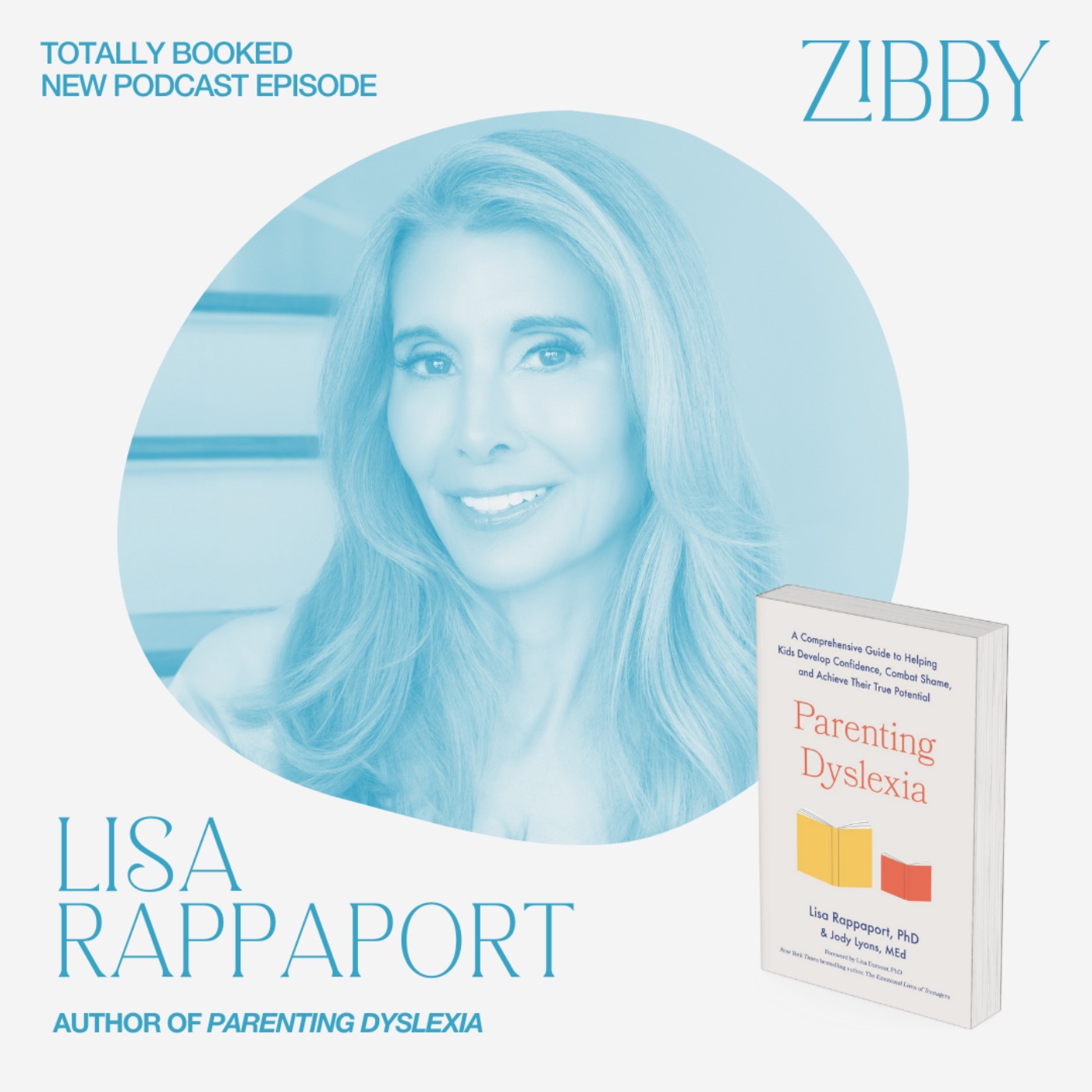
Totally Booked with Zibby
Lisa Rappaport, PARENTING DYSLEXIA: A Comprehensive Guide to Helping Kids Develop Confidence, Combat Shame, and Achieve Their True Potential
00:21:41
Loading summary
Transcript58 lines
- [00:00]
Unknown Speaker 1
This Mother's Day. Show the moms in your life just how much they mean to you with a stunning bouquet from 1-800-flowers.com for almost 50 years, 1-800-flowers has set the standard for high quality bouquets. Right now, order early from 1-800-FLOWERS and save up to 40% on gorgeous bouquets and one of a kind arrangements guaranteed to make her day. Save up to 40% today at 1-800-flowers.com acast. That's 1-800-flowers. Com acastra, the official florist of Mother's Day.
- [00:30]
Unknown Speaker 2
This is a mini meditation guided by Bombus. Repeat after me. I'm comfy. Comfy. I'm cozy. Cozy. I have zero blisters on my toes. Blisters. And that's because I wear bombas, the softest socks, underwear and T shirts that give back. One purchased equals one donated. Now go to bombas.com acast and use code acast for 20% off your first purchase. That's B O M b-s.com acast and use code Acast at checkout.
- [01:03]
Jenna Bush Hager
Hey everyone, I'm Jenna Bush Hager from the Today show and I'm excited to share my podcast Open Book with Jenna. It is back for season two. Each week, celebrities, experts, friends and authors will share candid stories with me about their lives and new projects. Guests like Rebecca Yarros, Kristin Hannah, Ego Wodom, and more. Like a good book, you'll leave feeling inspired and entertained. Join me for my podcast, Open Book with Jenna. To start listening, just search Open Book with Jenna wherever you get your podcast.
- [01:34]
Zibby Owens
Hi, this is Zibby Owens and you're listening to Totally Booked with Zibby, formerly Moms don't have Time to Read Books. In my daily show, I interview today's latest best selling, buzziest or underrated authors and story creators whose work I think is worth your time. As a bookstore owner, publisher, author, and obviously podcaster, I get a comprehensive look at everything that's coming out and spend my time curating the best books so you don't have to stay in the know. Get insider insights and connect with guests like I do every single day. For more information, go to zibbymedia.com and follow me on Instagram. Iby Owens Lisa Rapaport is the author of Parenting Dyslexia, a comprehensive guide to helping kids develop confidence, combat shame, and achieve their true potential. Lisa is a licensed psychologist in private practice in Manhattan. She has extensive training and experience in treating children and adults with dyslexia and attention deficit hyperactivity disorder in Addition to her private practice, Dr. Rapoport is also on the faculty at the Rose F. Kennedy Children's Evaluation and Rehabilitation center at the Children's Hospital at Montefiore Albert Einstein College of Medicine. She lives in Manhattan with her husband and two children. Welcome, Lisa. I'm sorry. So, so excited to welcome you on my show to talk about parenting Dyslexia, a comprehensive guide to helping kids develop confidence, combat shame, and achieve their true potential. Yay.
- [03:04]
Lisa Rapaport
Thank you for having me.
- [03:06]
Zibby Owens
So this is so special because we are parents at the same school and how many years ago did we take a walk and you took for. What was it called? Safety Patrol, and you were talking about maybe doing a book. When was that? Like, wasn't that when I found out I was pregnant? Wasn't that like 10 years ago?
- [03:25]
Lisa Rapaport
I was going to say it was 10 years ago.
- [03:26]
Zibby Owens
Oh, my gosh. Yeah. Because I feel like on the walk I like, pulled over and found out from the doctor that I was officially pregnant or something like that. I don't know. Anyway, and I have a 10 year old, so this. I feel just so excited for you that it has come to be. And just I'm over the moon. Okay. Tell everybody about the book and why. What's happened in the 10 years that has led this book to come into the world.
- [03:52]
Lisa Rapaport
So the book was actually first conceived right after I had graduates, right after I finished graduate school because I'm dyslexic. And I really suffered through high school. I almost flunked out of high school. I was on academic probation. And after I finally graduated from the University of Pennsylvania, which was a long road, and then got my PhD, I realized I had a story. So I wrote a memoir. But then I stuck it away because I got my dream job at Montefiore and Einstein and I didn't want anyone to know I was dyslexic. And then after many, many years, I realized that I really have an interesting lens because I work with dyslexic children. I have a child with a learning issue, not dyslexic, but other issues. And I am dyslexic. And so I really wanted to help parents. And during the pandemic, one of my friends encouraged me to. To really write the book, and she actually became my writing partner. And that's how it came to be.
- [04:50]
Zibby Owens
Well, I was surprised in your introduction because even though we talked about your own dyslexia and whatever, I didn't realize quite how I want to say derailed, but it wasn't derailed. But even just how you and your mother even was like so fed up and was just like, oh, just drop out of school already, I can't take this. And I joke about it and you joke about it a little bit, but it does become, it can become such a point of conflict within families when something is going awry. There's no clear path. Now dyslexia is much more commonly diagnosed and back then it was not. But still you speak to that all up front and share with us. Like that can't have been easy that you watched your friends sort of go off one way and you went off another way in terms of like ability and what that does to your own self esteem when it actually is just the different way of your brain working. Like, can you take us back to your own experience of that?
- [05:45]
Lisa Rapaport
So yes, the shame, I would call it shame started when I was 6 and I couldn't articulate it, but I knew I was different. And my mom was called into school immediately. So I was diagnosed at a very young age, but no one knew how to help me. And so my mom, even though I had tutors, none of them were really helping me. My mom just out of instinct and some education in that area helped me straight through school. But as you said, there were certain parts of school where it really became derailed. In ninth grade, I switched schools. I was a new kid and my biology teacher would give us a test every Friday and every Monday she would hand them back in grade order. I got my test back last. I couldn't make friends at this school because I think I was just known as the stupid one. And so I wound up leaving the school a year later and going back to my old school. And in my old school then I was doing okay. But then junior year, it was junior year, which is hard for everybody. I had tutors in three different subjects. I was failing chemistry. I wasn't doing well in Spanish too, or trigonometry. And I was studying for the sat and my dean called me into the office to tell me that I was being put on academic probation. And she said to me, are you stupid or not trying? I need to know which it is. And that was the weekend after so many years of really hating school. That was the pivotal moment. I had been fighting with my mom for years because I hated school. But that was the weekend that totally derailed our lives. And at that point, my mom was so exasperated with me because I was so hysterical and angry. I was quite angry that she said she couldn't take it anymore. There were days she would drive me to school and then I would leave when I went to the other school. So that was it. And I spent that weekend with a very, very good friend of mine who was older than I was. And we went through my options and I knew I could quit. My mom said quit. I was 16. We thought about it and then we came up together with the idea that really I had already hit rock bottom. I had nowhere else to go. I might as well just go back to school and try, keep trying. And you know, I limped through 11th grade. I graduated 43 out of 40. So in my graduating class, my dean made sure to let me know that. And so it was not pretty. It was hard, it was not an easy road.
- [08:09]
Zibby Owens
But then how did you end up getting your PhD? I mean, the plot twist here is like knocking my feet out from under me.
- [08:19]
Lisa Rapaport
So my school is a very academic, small school. So I had some good skills that I didn't realize I had because the school was so, so difficult and high pressured. I went to college. I really struggled emotionally in college. I did not like the school I went to. It was a party school because that's where my dean sent me. And I felt like I had just worked so hard to get that high school degree. I did not want to be around people that did not take academics seriously. I was so misunderstood. She thought it was a partier, but I really wasn't. I really did care. And I actually ironically, really enjoyed reading. I just couldn't read that quickly. So my mom did read me my homework basically through 11th grade. But I always read for pleasure, very slowly on my own. And so I came back to New York after six weeks in my college. I had nowhere to go. I took classes non matriculated and I got really good grades because college was easier for me than high school was for a multitude of reasons. I could take what I wanted, I could take it at the pace that I wanted to. And I did extremely well. And I transferred to University of Pennsylvania and I did better at Penn than I did in high school. I did find it easier than high school. Your brain as a dyslexic develops more slowly. And so by college, my brain was ready to learn some of the things that it wasn't ready to learn when I was younger and I was becoming a better reader in college. And then I eventually applied first for a master's program because I didn't think I could do the PhD program because of statistics. And then when I was doing extremely well in the master's program. I applied for the PhD. So it was a very long road.
- [09:56]
Zibby Owens
That's amazing. I can't believe you didn't give up. I mean, the fact that you were going to drop out of school at 16 and the fact that so many people actually do drop out of school at 16 and this is such a really, like an epidemic of misunderstanding and, you know, not having the tools. And your book in part is giving people the tools that they lack or that they could use to help their kids. But you were so close. Like, this is like the sliding doors of your life. You could have had a totally different life. And with all that negativity, you know, I know you personally, and so this all comes as such a shock to me. You would never know. I mean, that you have gone through all. I mean, I guess you never know about anybody, but you just wouldn't know. You wouldn't think all of this, that you had been just essentially bullied by the administration and made to feel so terrible.
- [10:48]
Lisa Rapaport
You know, I think that everyone always asks me, what's the gift of dyslexia? And I remember I was on a panel and I panicked because I didn't know what the gift of dyslexia was. And I. My real answer at that point, which was about 30 years ago, was, what gift? I don't find this as a gift, but I have to say the gift is resilience and grit because that's what dyslexics learn and they learn to fail at a very young age and pivot. And I do know how to fail very well. I am definitely willing to take a risk because I know if I fail, I will find another way. And I think that's the real gift and that's what I'm trying to impart to these little children in this book and to teenagers is that there's another way you can pivot but don't give up and have resilience. And also for parents to find an area that builds self esteem for their children, because I did not have that. My mom was amazing in many ways, but never plugged me into anything I was good at because she was so focused on getting me through school. And I never found anything, any talents. So I think finding your child's talent is really important.
- [12:01]
Zibby Owens
Oh, my gosh. Is your mom still with us?
- [12:04]
Lisa Rapaport
Yes, my mom is 89 and thrilled.
- [12:09]
Zibby Owens
Oh, my gosh.
- [12:10]
Lisa Rapaport
She's the reason I know how to read.
- [12:12]
Zibby Owens
Oh, my gosh. And how did this whole. How did this affect your relationship with her? I mean, there it caused so much strife between the two of you. And obviously she's your biggest fan. But like, how does it, how did it affect, how do you, how's your relationship now?
- [12:29]
Unknown Speaker 1
Moms deserve our very best, especially on Mother's Day. There's only one place I trust to deliver high quality mom Approved rose bouquets. 1-800-flowers.com this year, 1-800-Flowers wants to make sure all the mothers in your life get the best with double the roses for free. When you buy one dozen, they'll double your bouquet to two dozen roses. To claim the double roses offer, go to 1-800-flowers.com acast. That's 1-800-flowers. Com acasth, the official florist of Mother's.
- [12:58]
Unknown Speaker 2
Day, BetterHelp Online Therapy bought this 30 second ad to remind you right now, wherever you are, to unclench your jaw, relax your shoulders, take a deep breath in and out. Feels better, right? That's 15 seconds of self care. Imagine what you could do with more. Visit betterhelp.com randompodcast for 10% off your first month of therapy. No pressure, just help. But for now, just relax.
- [13:40]
Unknown Speaker 1
Bombas makes the most comfortable socks, underwear and T shirts.
- [13:45]
Lisa Rapaport
Bombas are so absurdly comfortable, you may.
- [13:46]
Unknown Speaker 1
Throw out all your other clothes. Sorry, do we legally have to say that? No, this is just how I talk.
- [13:52]
Jenna Bush Hager
And I really love my bombas.
- [13:53]
Unknown Speaker 2
They do feel that good. And they do good too.
- [13:56]
Unknown Speaker 1
One item purchased equals one item donated.
- [13:58]
Lisa Rapaport
To feel good and do good, go to bombas.com acast and use code acast for 20% off your first purchase.
- [14:04]
Jenna Bush Hager
That's B O M B A S.com acast and use code Acast at checkout.
- [14:13]
Lisa Rapaport
So we were best friends. It was really interesting. I I say in the book, I couldn't fight with her or be angry with her for too long because I would come home from school, I might be angry at her. But then 20 minutes later, I had to sit down and work with her because she was the only one that could help me. And you know, in that we would talk for breaks. We would talk about stuff because we spent so many hours together. She created the reason my writing partner was so interested in writing the book with me is because she wanted to learn more about our family dynamic. Because I had a sister who was two years younger and basically perfect. She was good at everything. She was reading better than I was by the time she was four and I was six and she was better at math. And then she tutored me in high school because she was ahead of me in Spanish and in math. And so my mom and dad were really good at making sure there was no competition in our family and everybody helped each other. We were actually a very tight knit family and we are to this day. My sister lives three blocks from me. We sent our kids to the same school. We have a house two doors down from each other in Connecticut. We're really close. We've raised our children very closely because there is just no competition amongst anyone in our household. Everybody helps everybody. And that's the message too, that I try to give in the book.
- [15:34]
Zibby Owens
That is so nice. Oh my gosh. Well, so somebody's picking up this book. They're at the end of their rope. They need help. They don't know what to do. What are some of the things they can expect to get out of this book and that will help improve their lives and their relationships with their kids and their kids ability to really function in the world.
- [15:54]
Lisa Rapaport
So I think the one key thing is to be really honest with your kids about areas where you have failed or that you don't excel in. I think parents like to look perfect sometimes to their children or be the ones that know everything. And I think one way to really help your child if they're struggling is to say, this is an area where I struggled and explain to them maybe where you had a failure so you're a real person to them. And it's not as embarrassing or mortifying if a child is coming home with a grade they're not proud of if they know that you've had your own struggles. So I think that's a really important part of the book. And also to bring humor to everything you know, because nothing is that big of a deal, especially when we're dealing with school, it's going to get better. It's not forever. So when your child is in the throes of all this, and that's. My mom used to say that to me. I didn't believe her, but just that, you know, you're not good at reading today this book, but tomorrow you might be better at reading a different kind of book or even with math. You know, eventually I grew up and I was like, you know what? I bet I could do trigonometry now if I was just taught differently. My brain is different. So it's just about that little point in time. And I think if parents can say that to a child, then it helps with the shame and the anger and that will help the relationship. There are also some strategies just about helping your child organize themselves which will just. They're Real hands on strategies that I think will just help your child's day be better and easier. Time management, stuff like that.
- [17:28]
Zibby Owens
I mean, time management is something we can all use help with. I feel like we're all in the. In a moment of overwhelm and no matter what we're doing, it just feels like time constantly is getting away from us. What's something that can help kids and.
- [17:39]
Lisa Rapaport
Grownups, academically or social, emotionally?
- [17:42]
Zibby Owens
I meant even from a time management perspective.
- [17:45]
Lisa Rapaport
Oh, time management, I think just really, you know, writing things down, you know, not on the phone, but taking a piece of paper and making a list and saying, this is what I have to do. This is how long I think it will take. And then pad it because it always takes longer than you think. And building in breaks so that it's just little pieces to bite off. So it's not overwhelming.
- [18:07]
Zibby Owens
Interesting. I know there are some schools that sort of specialize in language based learning differences and all of that. How do you feel, do kids need to go to those types of schools? Is it the first choice? What can they do in their own school if they don't have access to a school like that? How can they advocate for themselves with their own educators?
- [18:27]
Lisa Rapaport
So if those schools are available, I think they're amazing. My, my life would have been different if those schools existed when I was little. I think that would be the first point of contact. But if a lot of people can't afford those schools, they're not cheap. I think partnering with your school is really important. If you get your child tested either through the school or privately, a lot of parents are afraid to share the evaluation with the school because they think the school will take it out on the child or won't think the child is smart. But it's really important to partner with the school to get the child the accommodations they need and that they have the right to have.
- [19:04]
Zibby Owens
Is dyslexia something that you can, this is a stupid question. Outgrow, like, could you be diagnosed with dyslexia? But then, as you said, your brain is constantly changing and you can do things that you couldn't do before. Are you still technically dyslexic?
- [19:20]
Lisa Rapaport
So the interesting part of dyslexia is when you do neuropsych testing. I had a patient, he went to Harvard Business School. He was very accomplished. He was in his 60s. He came to me because he was frustrated they couldn't learn his sixth language as fast as his wife. But the truth is he could read and write. Obviously a graduate school level he read better than I did. But when we did the neuropsych testing, he still had deficits. He could not sound words out. He couldn't do phonetic encoding. He could not sequence the days of the week or the Alphabet. So, yes, you're always dyslexic. You may compensate and you may have skills that you didn't have, but there will be other areas where you will have a deficit. You can't hide it all. It's always going to be there in some form.
- [20:08]
Zibby Owens
Are there careers or trajectories that you've seen that people who are dyslexic thrive in?
- [20:16]
Lisa Rapaport
Everybody's different. A lot of dyslexics go into the entertainment field or creative fields. When I was doing research for the book, I found out that dyslexics tend to be, I think they said, architects or something. That made no sense to me because I'm not good spatially at all. So I think everybody is different. You know, there are some. And dyslexia is really. It affects everybody differently. Some people are good at certain things that I'm not good at. Even though I'm dyslexic, I'm good at certain things that other dyslexics aren't. So it really depends. But definitely the entertainment field. But we have a lot of scientists, we have, you know, surgeons who are dyslexic. So it's open to every field. You can do anything.
- [20:58]
Zibby Owens
Are you in, like, dyslexia, Facebook groups and things like that? Like, is there a support system for. Even though it wasn't there for you as a child, as a grown up now, do you find sort of acceptance? And are there groups that you've joined that have been really beneficial that maybe the kids of today can look forward to being a part of later?
- [21:19]
Lisa Rapaport
I am not personally on a lot of social media, but there are definitely groups on Facebook that offer parents support. And I. I discuss in the book that it's really important to find a community, and they're out there, and there's a lot of support out there, and there are a lot of ideas on how to help each other and support each other, for sure.
- [21:36]
Zibby Owens
I think there's. I think a lot of people hear, or at least I have heard how. And in the book, you talk about how the brain of a dyslexic, even though it's not linear, like, you have this superpower in other ways, and part of it is, like, finding what that other superpower is. Why is that I'm, like, dumb this down for me, you know, who's not a scientist, but, like, what. How does it work that some things light up and some don't do, you know, like, what is the answer?
- [22:07]
Lisa Rapaport
I think everybody has a superpower, and I think that it's just what you develop when other areas are hard. So, you know, I didn't actually know what my superpower was, and there was a chapter in the book that's not there anymore, writing about what my family, Everyone in my family superpower was. And then when one of my readers said to me, what's yours? And I said, well, I don't have one. So, you know, and then they said, well, you're a connector and you're social. And yes, that was growing up. I just compensated by being extremely social because that's where I thrive. And so I think everybody has a superpower. It's not just dyslexics. It's just that they have to pivot when they're younger and find it quicker, I think, but they don't always know they have it.
- [22:54]
Zibby Owens
Amazing. Wow, this is great. Is there anything for parents who do not have a child who is dyslexic but want to help families that do or how can they let their kids help other kids who have dyslexia? Like, everyone should be on the lookout. I know it's really socially acceptable now, but just what can we all do to sort of bring, you know, celebrate dyslexia in all its ways is just another way to learn, I think just kindness.
- [23:24]
Lisa Rapaport
Because, you know, when a kid is struggling or if they misread a word, just having an understanding and not making fun of them or being really supportive is really important because as I said, my own daughter has learning differences and things that children say, they don't mean to be mean, but they don't even realize what they're saying. So I think really understanding that these children are not stupid, they're not less than. They're just different and teaching that and teaching patience and helping each other. You know, if there's somebody who's struggling and doesn't understand, just explain it to them differently and know that they can learn it. They just need it to be explained in a different way, more tangibly.
- [24:10]
Zibby Owens
I love that. Well, congratulations, Lisa. I'm so excited for you parenting dyslexia. Lisa and Jodi Lyons, your co author. Whatever. So happy for you. Thank you for writing this and not giving up. It's another example of you and your own resilience. And I can't believe you don't think you have any superpowers because you so obviously do. And I am holding one product of that in my hands right now.
- [24:34]
Lisa Rapaport
Thank you so much.
- [24:35]
Zibby Owens
Thank you. Thanks for coming on. Yay.
- [24:38]
Lisa Rapaport
Okay, Bye, Lisa. Bye.
- [24:41]
Zibby Owens
Thank you for listening to Totally Booked with Zibby, formerly Moms don't have Time to Read Books. If you loved the show, tell a friend, leave a review, follow me on Instagram, ibbeowens and spread the word. Thanks so much. Oh, and buy the books. Foreign.
- [25:02]
Jonathan Fields
Hey, this is Jonathan Fields, host of the Good Life Project podcast. Boost Mobile reminds me of what I love when someone reimagines what's possible. They have invested billions in building America's newest 5G network, becoming the country's fourth major carrier. They are doing things differently, offering a $25 monthly unlimited plan that never increases in price and letting you try their service risk free for 30 days. With blazing fast 5G and plans for all the latest dev, they're changing the game. Visit your nearest Boost Mobile store or find them online@boost mobile.com the Boost Mobile network, together with their roaming partners, covers 99% of the US population. 5G speeds not available in all areas.
- [25:43]
Unknown Speaker 1
Moms deserve our very best, especially on Mother's Day. There's only one place I trust to deliver high quality mom approved rose bouquets 1-800-flowers.com this year, 1-800-flowers wants to make sure all the mothers in your life get the best with double the roses for free. When you buy one dozen, they'll double your bouquet to two dozen roses. To claim the double roses offer, go to 1-800-flowers.com acast that's 1-800-flowers.Com acast, the official florist of Mother's Day. At hotels.com we know some travelers crave an ocean breeze, others don't want to deal with sand. And oftentimes those two people end up together.
- [26:21]
Lisa Rapaport
Compare properties side by side to find.
- [26:23]
Unknown Speaker 1
Yourself poolside, oceanside and still in a relationship. Find your perfect somewhere with hotels dot com.