← Totally Booked with Zibby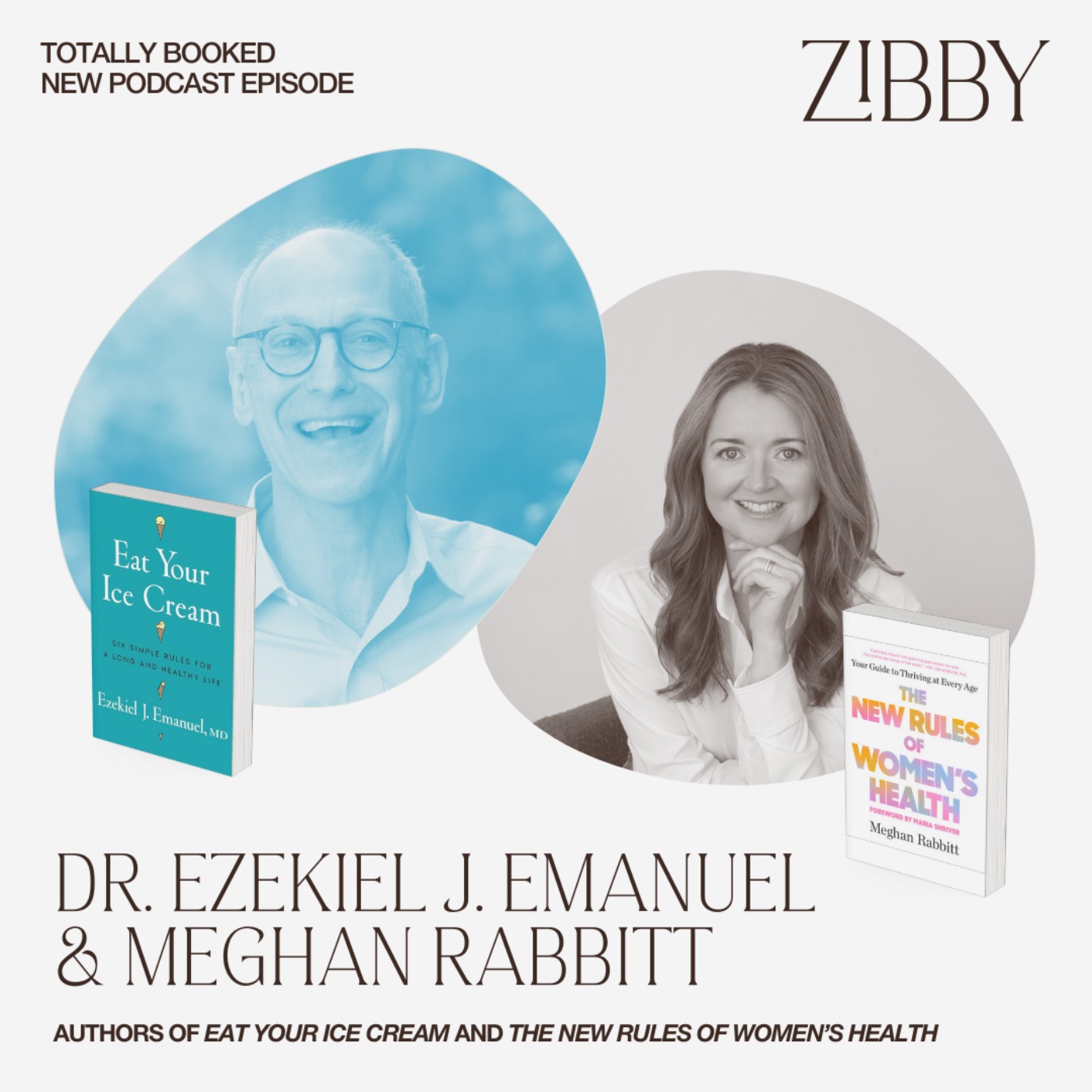
Totally Booked with Zibby
Living a Long, Healthy, Meaningful Life with NYT bestselling author Dr. Ezekiel Emanuel and Journalist Meghan Rabbitt
00:41:18
Loading summary
Transcript62 lines
- [00:01]
Zibby Owens
Hey everyone, it's Zivi. I am so excited to tell you about something I've created just for you, the Zip Membership Program. ZIP stands for Zivi's Important People. It's for anyone who loves books, stories and wants a little peek behind the scenes at what I'm up to and what's on my mind as a Zip member. You'll get exclusive essays, a new podcast called Zivvy's Voice Notes. No interviews, just usually discounts at Zibby's Bookshop, a free ebook, and more perks. I wanted to create a space to connect authentically and deeply, and I'd love for you to be part of it. If that sounds like your kind of thing, become a Zip today. You're already important to me. Now let's make it official. Go to zibioens.com and click subscribe. And if you already subscribe, you can upgrade to the membership program. And now onto today's episode of Totally Booked with Zibby. Thanks for listening.
- [00:56]
Capital One Advertiser
With no fees or minimums on checking accounts, it's no wonder the Capital One bank guy is so passionate about banking with Capital One. If he were here, he wouldn't just tell you about no fees or minimums. He'd also talk about how most Capital One cafes are open seven days a week to assist with your banking needs. Yep, even on weekends, it's pretty much all he talks about in a good way. What's in your wallet? Terms apply. See capitalone.com Bank Capital One NA Member FDIC.
- [01:26]
Christy from Back to the Bar
Hi, this is Christy from Back to the Bar. You've probably heard about GLP1 weight loss medications and the side effects that can come with jumping in too fast. That's why I love Noom. Makes getting started easy. Their microdose GLP1 program begins with a smaller dose and gradually scales up based on how your body reacts. The Noom GLP1 microdose program starts at $99 and is delivered to your door in seven days. Start your microdose GLP1 journey today at Noom.com that's n o m dot com Noom micro changes big results average weight loss eight pounds in first month meds and personalization based on clinical need and not available to all individuals. Medications are not reviewed by FDA for safety, efficacy or quality pricing based on first month only.
- [02:13]
Zibby Owens
We live in a culture obsessed with dieting, weight loss and exercise, and that can make eating disorder behaviors easy to miss. But the reality is eating disorders are serious mental illnesses that take a major toll on your health and your life, but recovery is possible. Eating disorders are more common than you might think. Chances are you know someone who is struggling with one, or maybe you're struggling yourself. If you're concerned about an eating disorder in yourself or a loved one, I want to introduce you to eqip. EQIP is a fully virtual evidence based eating disorder treatment program that helps patients achieve lasting recovery. At Every EQIP patient is matched with a multidisciplinary care team that includes a therapist, dietitian, medical provider, and mentors, and you get a personalized treatment plan that's tailored to your unique goals and challenges. EQIP treats patients of all ages and all eating disorder diagnoses. It's covered by insurance and there's no wait list. If you think that you or a loved one could be struggling with an eating disorder, don't wait to get help. Visit Equip Health to learn more. That's Equip Health. Hi, this is Zibby Owens and you're listening to Totally Booked with Zibby, formerly Moms don't have Time to Read Books in my daily show, I interview today's latest best selling, buzziest or underrated authors and story creators whose work I think is worth your time. As a bookstore owner, publisher, author, and obviously podcaster, I get a comprehensive look at everything that's coming out and spend my time curating the best books so you don't have to stay in the know. Get insider insights and connect with guests like I do every single day. For more information, go to zibbedia.com and follow me on Instagram ibyoens. I did an event at the Core Club recently with two amazing health advocates and just total gurus. The first was Ezekiel J. Emanuel, MD, who goes by Zeke Emanuel. And the day that we did the podcast at the Core Club, it turned out he hit the New York Times Bestseller list. So that was super exciting. His book is called Eat yout Ice 6 Simple Rules for a Long and Healthy Life. If you don't know him, he goes by Zeke. I think I said that. He is a Vice Provost and Professor at the University of Pennsylvania, bioethicist, health policy expert, and oncologist. He was one of the architects of the Affordable Care act and he's a regular guest on CNN and MSNBC and often contributes to the New York Times, Washington Post, Wall Street Journal, and Atlantic. He lives in Washington, D.C. and he is also, by the way, part of a triumvirate of incredibly accomplished Emanuel brothers, so you may know some of them. Megan Rabbit is the Other person who was on this panel, Megan, as you'll hear, was essentially commissioned by Maria Shriver to write this women's health bible. She's an award winning journalist. You'll hear about all of her techniques. She specializes in writing about women's health and wellness and her essays have been everywhere. Women's Health, Oprah, Daily, Prevention, obviously Maria Shriver's Sunday paper, which she works for. And she learns about all these health things so that we can make sense of it. A couple of the things I loved was by the time I left this event, I felt like I was equipped to live a more purposeful life. Armed with the facts, but focused more on finding the meaning and the joy and remembering that sometimes hyper focus on one random health fad does not make up for living a joyless life devoid of meaning. In other words, let's put things into perspective, guys. And that is exactly what these experts did. I hope you'll join me. And by the time you finish listening, I'd love to know if you also feel the same sort of clarity and calm about how to live the rest of your lives.
- [06:12]
Podcast Host / Interviewer
Welcome, Megan. Welcome, Dr. Emanuel. It's such a pleasure to have both of you here today. Thank you so much for coming on. Totally book. And also here at the Court Club Live.
- [06:22]
Megan Rabbit
Round of applause.
- [06:27]
Podcast Host / Interviewer
Very excited to talk about everything. Health, wellness. Let's get everybody here to have better lives, right? It's not to ask for Wednesday morning. Wednesday. Tell everybody a little bit about the inspiration for both of your books. I know you talk about it in your books, but just talk a little.
- [06:46]
Megan Rabbit
Bit more about that.
- [06:46]
Podcast Host / Interviewer
Maybe Dr. Emanuel, you can pick us up.
- [06:49]
Dr. Ezekiel J. Emanuel
First of all, great honor and pleasure to be here. So the inspiration really was the best thing. I was just pissed off. Exactly two years ago, I got Peter AA's outlive. And there are two things which sort of made me mad. I had just finished all my teaching. I had a sort of lull before I had to grade papers. And in his book, he, at some point he says, you know, our only goal is to outlive, which struck me as ridiculous. And then he says nothing in the whole book about social interaction, what you're doing here, right? Together, getting together, meeting people, talking to people, interacting with people, exchanging ideas. Until the very last page and a half of his book is Epilogue. He says, look, you know, you can be in great shape, but if your relationship suck, if you're not having a good relationship with your wife, you know, what's life all about? And that is 100% true. But it's nowhere in the book which is heavily focused, as you know, on exercise. So I said, there's much more to wellness than exercise. Good diet and sleep. Those are the cores. We all know those cores, but they're not even the most important things for living healthy, long and a fulfilled life. Social interactions, keeping your mind mentally sharp. So, literally, in three weeks, I sat down and wrote 35,000 words, which was the first draft of the book. Trying to review all the data and put social relations at the center of a wellness world, but also sort of rebut the idea that you have to be obsessed about wellness. You have to look for perfection. You have to do something called biohacking, which I still have no idea what it means. You know, th. Those are not, you know, wellness is something you're gonna have to do for decades. You have to enjoy it. It has to be part of your life. It has to be a habit that you can easily accomplish, and you don't have to be perfect. You know, as I say in the book, I'm a professor, right? 90% is an A. That's all you need. This isn't, you know, the wellness Olympics, where perfection is necessary or, you know, you're not getting a gold medal. That's just nonsense. Anyway, that was the inspiration. And I want to make wellness easy, accessible, and not something you have to really obsess about. And I hope the writing of the book makes it fun and relatively easy to do the things you can do.
- [09:24]
Podcast Host / Interviewer
Well, technically, that is a minus. So I don't know.
- [09:28]
Dr. Ezekiel J. Emanuel
I say the A range.
- [09:30]
Podcast Host / Interviewer
The A range.
- [09:31]
Dr. Ezekiel J. Emanuel
Boy, oh, boy.
- [09:35]
Megan Rabbit
Yeah. So I have a fun story in that.
- [09:37]
Podcast Host / Interviewer
The book.
- [09:38]
Megan Rabbit
Marie Shriver asked me to write this book for her imprint at Penguin Random House. So I had been working for Marie Shriver on her weekly digital news magazine, the Sunday Paper, for about a year. And I was out in la. We were brainstorming story ideas, and she said, you know, we haven't had a really great comprehensive women's health book since Our Bodies, Ourselves, and even Our Bodies Ourselves. As we started thinking about it, it's really focused on what we now call bikini medicine. It's our gynecologic health, our sexual health, our breast health, and these are all important aspects of our health. But we need to talk about women's brain health and heart health and what we now know, thankfully, because we are starting to research the female body, and due to that, sex specific studies. Yeah, we need a book that talks about all of it. And so she said, I want a manifesto and I want you to write it. And so I got to work thinking about all different aspects of our health from bikini medicine. So my book starts with anatomy, goes into puberty, sexual health, all of the gynecologic, you know, important topics, but then into some of the specialties like heart health, brain health, the immune system, and really highlighting what we as women need to know to optimally take care of ourselves, to have really informed and great conversations with our doctors and, yeah, chart a path forward that feels empowered because we are informed.
- [11:01]
Podcast Host / Interviewer
Both of you took very different tactics in terms of presentation of the material, which you will all find when you see your books. But yours, Megan, is almost like textbook sounds bad in the best, most sexy version of textbook, but it's chock full of information and a reference guide. Yeah. Dr. Manuel, your book is actually also imbued with a lot of found stories. I feel like I've really got to know your dad. He's really funny and know a lot of people who would get along with him. And a very personal take on medicine. So from your different outlooks, tell us a little bit more about cognition and how to improve brain health. My kids are convinced I have dementia because I can't remember their name. I was calling them by the wrong names. I forgot to bring in a certain book. I can't remember the sack. And I'm like, no, I don't have to mention anyway. But I was in your book, by the way, reassuring them last night by saying, okay, well, here in this book are the precursors and the risk factors for dementia to see them fine.
- [12:01]
Megan Rabbit
There we go. Yeah. I mean, I think from the female perspective, what we are thankfully starting to talk about is that the menopause transition is a really important point in a woman's life for brain health, because as we now know, our brain is. We have loads of estrogen receptors in our brain, and as estrogen goes down in the menopause transition that impacts our brain. You know, I think they're in the. In our conversation about women and Alzheimer's, women are two thirds the cases of Alzheimer's, so we as women really need to be focused on our brain health. I think sometimes it can sound a little doom and gloom. We can get really afraid. We can be all like, oh, my gosh, like, I have, you know, I forgot where I put my keys. Is this the beginning of the end? You know, and I think what I learned after reporting this chapter of the book is there are a lot of really, you know, simple. In the end, at the end of the Day things that we can be doing to protect our brain health, exercise being one of the best. You know, it really does move the needle. Some of these lifestyle habits that we talk about a lot and maybe like, you know, roll our eyes and say, okay, I know I have to exercise and eat well and sleep, but they really do help when it comes to brain health.
- [13:09]
Dr. Ezekiel J. Emanuel
Yeah, I have a whole chapter, the third chapter in the book about staying mentally engaged. I don't know about you, but I know what hell looks like. And for me, hell is, you know, my heart's working great, my lungs are working great, kidneys, liver, everything's doing great. But the brain and I have cognitive dementia. Right. That would be hell. That's not the way I want to live. I've told my kids since they were knee high, that's not the way dad's going to live. And so what can we do? Well, it's really important that there are to understand the process of mental decline and why certain things are not about dementia. The first and most important thing you can do is get a lot of education. You know, higher education is sort of on the outs. Everyone's pooh, poohing it and that important. They're only looking at it from the financial standpoint, not from the brain health standpoint. From the brain health standpoint, the more education you get, the more connections you make, neurons make by reading, by studying complicated things, the richer the brain is. And when that decline happens, you push out very far when it's going to be a problem. Now we have what's called fluid intelligence. Fluid intelligence is, you know, how do you solve a new puzzle? How do you approach a new situation? How do you keep two ideas in your head as you're reasoning about it? It's really what we think about as creativity and all the other aspects of really personality. And that's involved in, you know, that's the frontal brain. And the key thing there, as Megan said, is there's a whole set of activities you can do to preserve that and to keep your brain as active and as engaged as possible. Exercise is one of them. But also eating well, let me just distill down. We have very good data from a very large study in Brazil that the more ultra processed foods you eat, the worse, the more rapid your cognitive impairment happen. So not eating ultra processed foods, those packaged items, right? Sticking to fruits and vegetables, you know, fresh meats, fresh fish and things like that, really, really important for brain health. Similarly, sleep, really important, because what does sleep do? It cleans out the brain of Toxic materials. But it also allows the short term memory, which is here, the hippocampus, to actually go here, which is where your long term memory is. And if you have short sleep or you don't sleep well, that becomes a problem. And that's one of the things we see as we age that the sort of longer term memory is declining. In addition, challenging your mind is really, really important. So one of the arguments I make in the book is don't retire. Retirement is associated with substantial cognitive decline. Your schedule, you don't have to get up, so you might 10 in the morning, 11, whatever. You don't have peers, people you're socially engaged with. You don't actually have challenges in your job. So if and when you retire, you have to think about how you're going to do all that stuff, keep to a schedule, have people you talk to, have challenges to your mind. You know, whether it's volunteering, whether it's taking on new activities. You know, Churchill is famous for taking up painting. People can take up pottery. You can volunteer at, you know, food, shelter, or at a school or at a library. Those are very important. They're not just important because you're giving back to your community, they're important for your own mental health. And I think this is something we miss. The single most important thing for your mental health, again, is exactly what you're doing here. Social interaction, right? There is nothing that will make you healthy, live long and more fulfilled than interacting with people, both your close friends and family as well as casually, people you don't necessarily know deeply, but actually can learn something from.
- [17:24]
Podcast Host / Interviewer
And interestingly, you get to have a tiny note that even if you do the wordle every day, your brain gets yeast doing the wordle every day. And that's not a solve for this problem. One of many, right?
- [17:37]
Dr. Ezekiel J. Emanuel
Because you have to remember one of the key things as your brain ages is all those complex connections. First of all, if you don't do new things, you're not making new connections. And if you do the same ones, yes, that pathway gets really heavily emphasized, right? It's sort of your brain neural connections are kind of like Darwinian survival of the fittest. Those that you peeing often, right. The same wordle, they're really strong, but that all the other stuff around them weaken because you're not exercising that. And your brain is just like a muscle, right? Use it or lose it. And so one of the great things you can do as we all age is use it a lot when talk.
- [18:19]
Podcast Host / Interviewer
About exercise a little bit. And One of the things in your book, Dr. Emanuel, is don't be a schmuck. Like, these are the schmuck things, that they're just like, some are obvious, like, don't smoke, all that. But in terms of exercise, and I know it's important for so many parts of so many, even hormonal, even menopause, it just for so many reasons. Exercise is important, but it's not just exercise. All exercise is not created equal. What is the most important for busy people thing for us to do? Is it spending 30 minutes weightlifting? Is it making sure you go on walks? Is it. What is it? What's the answer?
- [18:55]
Megan Rabbit
I mean, I can speak to what I learned for women. Specifically, when I was interviewing experts, they said, it is amazing that we are having the conversation right now as women and how important it is for us to strength train. So I know personally, after all the research I saw, all the interviews I did, I prioritized strength training. But in our focus on strength training and lifting weights, I fear that we as women are losing sight that cardio is still really important. And so I think there's not one. From my view, there's not one magic. 10 minutes of strength training plus 10 minutes of cardio equals, like, you know, optimal exercise regimen, right? But I think, you know, that's what I'm noticing now that we are talking about strength training. And it is amazing because I grew up in the generation where, you know, at the gym, at college, I was on the elliptical machine while all of the guys were in the weight room lifting heavy weights. And man, if I could go back in time, I would tell myself and all my girlfriends, we got to push our way into that weight room. And now that we finally are there, we have to still focus on cardio because that cardio exercise works our heart muscles and the vasculature in our heart in such a way that is really key as we get older, as estrogen impacts that vasculature and makes it stiffer and cardio really keeps it pliable, keeps our hearts healthy. So that's what comes out to me.
- [20:13]
Dr. Ezekiel J. Emanuel
Yeah. So look, there are three kinds of exercise. There is the aerobic exercise for the heart, the lungs, the vasculature, making sure that's really tip top. There's strength training, which is for your muscles and your bones, and then there's balance and flexibility. That is very important so you don't fall over, especially as you age. The probably most damaging thing that can happen as you age from a physical standpoint is, you know, you Fall, you break your hip, and then it's really hard to get out of that downward loop. You got to do each one of them. The important thing is not to overdo them. And one of the things I worry about from the all the wellness influencers, there's, you know, more, more, more that turns out to be false. You know, the recommendation on aerobic exercise is 40, is 70 minutes a week, 10 minutes a day, or 20 minutes three times a week of vigorous exercise. You can go up to 150 minutes and you get some added benefit from a mortality standpoint. Going over that, you reach a plateau. And you know what you risk? Repetitive motion injuries, tennis elbow, a problem with your knees or your hips. I actually like to look for what I call wellness trifectas. What are the things you're doing that can get all three of them? Strength training, aerobic and balance. The number one in my book is cross country skiing. And if you look at the best athletes in the world in terms of VO2 max, that's how well your body uses oxygen. It's always Norwegian cross country skiers. I don't know what they got, but they're the best. They're, you know, just under 100. The top 10 people, I think six of them are Norwegian skiers. Okay, so look for something which does everything swimming, aerobic, but also muscle strength training. Right. I'm a big bicyclist. Right. What does bicycle do? Definitely aerobic. Heart rate goes up, you're breathing hard. But it's also good for the muscles, whether your quads or your hamstrings or your hips. Right. So look for those kinds of exercise that'll get you multiple benefits. That'll get you strength training as well as balance, as well as aerobic exercise. And the important thing, just, you gotta make it a habit. Do it two, three times a week. And that, that is probably the most important thing you can do, is be consistent about it so that you don't lose it. And let me just say, one of the really important things about strength training, and I think Megan's 100% right, to emphasize it, is once we get to the 50s and 60s, our muscle mass really drops. You sort of fall off a cliff. Sounds a little too dramatic, but we decline between 6 and 8% in muscle mass per decade after the 50s and 60s. And so this muscle strength training is really important to keep that muscle mass up. And what you want to do is strain the muscle and strain the bones, where the muscles go into the bones a little bit, those micro tears, micro fractures really important because the body comes back and repairs them and makes them stronger. So women where you're worried about, you know, your osteoporosis effect on your bones, that exercise is really going to help prevent the osteoporosis. Really, really important.
- [23:44]
Zibby Owens
Today's episode is sponsored by Quince. Starting the year with a wardrobe refresh. Quince has you covered with luxe essentials that feel effortless and look polished. They're perfect for layering, mixing and building a wardrobe that lasts. Their versatile styles make it easy to reach for them day after day. Quince really has all the staples covered from soft Mongolian cashmere sweaters that feel like designer pieces without the markup to 100% silk tops and skirts for easy dressing up to perfectly cut denim for everyday wear. Their wardrobe essentials are crafted to last season after season. Their Italian wool coats are real standouts. They're beautifully tailored, soft to the touch and built to carry you through years of wear, not just one season. The quality shows in every detail. The stitching, the fit, the fabrics. Every piece is thoughtfully designed to be your new wardrobe essential. And like everything from Quince, each piece is made from premium materials in ethical, trusted factories, then priced far below what other luxury brands charge. You've heard me say this before because I'm obsessed with quints, but I love my winter coat, which I wear every day, and I actually just got a blue cashmere sweater as a gift from Quint this holiday season and I am obsessed. Refresh your wardrobe with Quint. Don't wait. Go to quint.com zibby for free shipping on your order and 365 day returns. Now available in Canada too. That's Q-U-I-N-C-E.com zibee to get free shipping and 365 day returns. Quince.com zibby.
- [25:23]
Capital One Advertiser
With no fees or minimums on checking accounts, it's no wonder the Capital One bank guy is so passionate about banking with Capital One. If he were here, he wouldn't just tell you about no fees or minimums. He'd also talk about how most Capital One cafes are open seven days a week to assist with your banking needs. Yep, even on weekends it's pretty much all he talks about in a good way. What's in your wallet? Terms apply. See capitalone.com Bank Capital One NA Member FDIC.
- [25:54]
Christy from Back to the Bar
Hi, this is Christy from Back to the Bar. You've probably heard about GLP1 weight loss medications and the side effects that can come with jumping in too fast that's why Ilove Noom makes getting started easy. Their microdose gel GLP1 program begins with a smaller dose and gradually scales up based on how your body reacts. The Noom GLP1 microdose program starts at 99 and is delivered to your door in seven days. Start your microdose GLP1 journey today at noom.com that's n o m.com Noom micro changes big results average weight loss 8 pounds in first month. Meds and personalization based on clinical need and not available to all individuals. Medications are not reviewed by FDA for safety, efficacy or quality. Pricing based on first month only.
- [26:42]
Podcast Host / Interviewer
This is an aside. There's this whole thing on Instagram about how important it is to be able to stand up. Have you seen this?
- [26:49]
Megan Rabbit
Yeah.
- [26:50]
Podcast Host / Interviewer
That is the most from sitting right my son on his rightful. And I was like, just started working with a trainer. He's like, oh yeah mom, you're trying to lose weight. And I was like, actually I'm trying.
- [27:00]
Megan Rabbit
To just get up off the floor.
- [27:01]
Podcast Host / Interviewer
And he said, that is so sad. What do you think about that? There are all these videos there.
- [27:06]
Megan Rabbit
This.
- [27:07]
Podcast Host / Interviewer
Do we ignore this?
- [27:09]
Dr. Ezekiel J. Emanuel
First of all, don't chase a fad. If it really important, it will be established and you will. Everyone will hear about it. The fads come and go. You know, now we're also in a fad on the eating side about protein. Protein, protein. That's going to disappear and it's going to be fiber next. Yes. Standing up off the ground is good. Is it the be all and end all. And so I would, you know, doing squats is good. It exercises, you know, your quads and your hamstrings. You do 10 of them, you will be a little breathless too. So good. No, no, I don't have anything against it. Would I be obsessed by it? That's what's a mistake. You know, there are plenty of other ways of getting that strength training and that aerobic activity.
- [27:58]
Megan Rabbit
When I talk to doctors about this and I would love to hear your take on this as well, it's like really a big theme is like start small. If that's your goal. If your goal is to go from sitting on crisscross on the floor to standing up, great. But even just starting with a brisk walk after a meal, it really does move the needle. And I think it's important, especially when it comes to older women who, let's say, have already had a diagnosis of osteopenia or osteoporosis. It's like all is not lost we talk a lot about prevention these days, which is amazing. And you know, even if you have the diagnosis, it can still move the needle if you start where you are, start lifting weights.
- [28:37]
Podcast Host / Interviewer
You know, I'm asking like prescriptive questions, but that's not really the heart of either of your books. Yours is information. Yours is like use common sense and lip more full, healthy soul gratifying lines as well. And I really like the outlook on what makes life worth living. Are you going to spend your limited time here chasing this idea of a super healthy, long lasting life and what you can do for that? How do you both see? I know you touched on this a little bit, but how can we, from a wellness mental health standpoint really improve our lives and our health therefore?
- [29:17]
Dr. Ezekiel J. Emanuel
So one of my big heroes is Ben Franklin, partially because I'm at the University of Pennsylvania. He founded the University of Pennsylvania, but he's also the most brilliant person ever in the United States, in all of the Americas. The only person I can really think of who rivals him is Leonardo da Vinci. He did everything, and I mean everything in a world class status. And he had three guiding principles for his life. Principle number one, be curious, just try to learn about the world, Try to figure out what's going on. That's how he made breakthroughs in electricity and figured out lightning was electricity. He actually did a lot of advances. He got the equivalent of the Nobel Prize for science in his era. He is still to this day one of the top five inventors of all time. You know him for inventing bifocals, probably. That's probably the thing that comes to mind when I mention Ben Franklin, right? Turns out he invented them at 79 years old. And after that he still had two more inventions that he made. He was always curious, how do I do something? How do I understand something? Second thing he did in his life that guided it was to always try to improve his life. He recognized he had deficiencies, he was disorderly all his life. He had prejudices and he recognized it. I'll just give you one example that surprised a lot of people. As a young man, he owned slaves. And then when he was in his 50s, he went to a school for African American children. And he looked and he says, they're just as smart as white kids, they're just as attentive as white kids and they're just as curious as white kids. They're not inherently inferior, which was the reigning thought. And then he became anti slavery. He actually was the first person to petition Congress to end the slave Trade and end slavery in the United States. He was always trying to grow, recognizing his deficiencies and trying to improve. And the last thing, and I think this is the most important thing, he had a thing of be useful. The important thing in life is to be useful. And what did he mean by be useful? How do you improve the world? One of the things he is most famous for is all his civic improvements. He founded the first hospital in the United States, the Pennsylvania Hospital. He founded the first lending library. He founded insurance company. He founded a fire brigade. He founded the University of Pennsylvania. He founded the first learned society in the United States. And I could go on and on and on. Why did he do those things? And by the way, many of his inventions, like the lightning rod, like bifocals, he could have patent them. He never patented them, Never. He did not make any money from his invention. And he said, look, I'm giving to the world. Someone's going to take it up and improve it and make the world even better. Just like I've taken a variety of things and tried to make them better. And that was his guiding principle. I think for us as human beings, if we can embody that principle, how do we make the world better? How do we make our family better, our communities better, our cities better, the country better? I think that's really what motivates it. Going to keep you young, keep you mentally engaged. It involves all the wellness activities. So when I think about how do we do all of this, I think always think about Ben Franklin because I think he is a fantastic role model. And by the way, if you haven't read his autobiography, it's one of the 50 greatest books in American literature throughout all of history. And it, it's very short, it's under 100 pages, definitely worth reading.
- [32:56]
Podcast Host / Interviewer
Megan, in your book, you advocate for us, advocating for ourselves to our doctors, not ignoring health problems, not putting things up. Talk a little bit about that because I feel like we all need to hear it, even though we know.
- [33:09]
Megan Rabbit
Yeah, I mean, I really think we are living in a time where we have to own our health. You know, when Maria Shriver asked me to write this book, we were talking about it and she said, I think it is crucial that we as women become the CEO of our health care. And when you think about that, it's like, what do CEOs do? They educate themselves, right? They find out the information they don't have. And I think for women that means understanding the sex specific research that is finally being done. You know, we need to know how Our hearts are different than the male heart, how our brains are different. Then I think it comes to hiring the right team, right? Which for us means working with the right doctors. We, if we're lucky, have some choice. And I think we really do have to go to our doctor's appointments, like interviews almost, you know, like, are you the person to take care of me when I bring up the sex specific research I read about, say in a book, you know, is the doctor engaging with, with me? Is, is this clinician really excited when, you know, he or she sees that I'm coming engaged? And then I think also too, we have to be prepared when we go to those doctor's visits. You know, if I am seeing a doctor, I need to come with my personal health history, with my family health history. I need to understand what kind of cancer screenings I might be up for, what cancer scre screenings I've had. I need to come with a list of symptoms. What a doctor beautifully told me is once you write down that list of symptoms, organize it in order of priority. What feels like most important to you? Like, as we say in journalism, don't bury the lead, like come with the most important thing right off the bat. Doctors, nurses, all the people who take care of us have heard everything, they've seen everything. We don't have to have shame when we talk about our bodies, which I think a lot of women can relate to. But if we do those things, I think that really is when we become advocates for our health. And it's really important to do that.
- [35:00]
Dr. Ezekiel J. Emanuel
I couldn't agree more. And I think my experience in the healthcare community is wellness has not been the top of the agenda. Right. We say this over and over. We have a sick care system, not a health care or wellness system to keep people healthy. And I think we have this growing recognition of the importance of keeping people healthy to prevent chronic illness as people age or, or if you can't prevent it all, at least push out further those things that happen. And the best thing I think, as Megan says, is is this doctor engaged in keeping you healthy? Maybe you're coming with no symptoms at all, right? You don't have any symptoms, you don't have any illness, you don't have hypertension, you don't have diabetes. Then their job is to make you hypertension free, diabetes free for as long as possible. And are they advising you on the right diet, the right exercises, and if you come with a problem like, you know, you have some repetitive motion injury or stuff, can they advise you how to change Your exercises, how to mix it up so that you're still getting good aerobic exercise and maybe not straining that particular part. Do they ask about your sleep? Do they ask about your social activities? I'm just going to tell you one sort of interesting story which is I think really heartening. I have a very dear friend who got diagnosed with pancreatic cancer unfortunately in la. And he got chemotherapy, then went to a major, major surgery and he went to his surgeon and his surgeon says, all right, you have to see this psychologist. And he says, I don't see psychologists, that's not for me. He said, no, you're seeing the psychologist. He goes to see the psychologist and psychologist says to him, what makes you happy? And he said he was being a curmudgeon. He just threw the ringer with his cancer therapy. He says, what do you like to do? He says, I like to have conversations with people. And the guy looks at him and says, all right, that's your therapy. I am prescribing to you that you have to talk to people, have dinner parties, go out with people and engage them. Now that's the kind of interaction you want to have with the healthcare system. Figuring out what drives you and prescribing and keeping you to doing that. Unfortunately it doesn't happen that often, but it can happen. And you've got to find, as Megan says, you got to find that doctor or that person in the healthcare system who's going to help you. Maybe it's hard for you to keep a diet. I don't know. You know, it all depends what it is. All right, figure out a doctor who's going to recommend a very good dietitian who can help you with where you're at and how to improve.
- [37:38]
Podcast Host / Interviewer
I listened to this doctor. I was having a medical issue that I thought might be related to my ups and downs weight over the years. And so for my first appointment I this four page very detailed thing, weight loss and gains that this is when I try to act against the Weight Watchers and all this. I sat across the second, he was like, thank you. Very detailed. Nothing to do with that, but it's anyway better to be over prepared. The last thing I wanted to touch on is both of your books really talk about being informed consumers and where the data is about health conditions and where you're extrapolating from. So a lot of the women's health studies are done on men and women obviously are just small men. In your case, you talk about mice that had a lot of research. Is that on Mice. And you're like, I don't know. Do you think about whiskers?
- [38:30]
Megan Rabbit
I don't know.
- [38:32]
Podcast Host / Interviewer
So talk a little bit about that and what we should be aware of when we're making conclusions, reading things in the media.
- [38:39]
Dr. Ezekiel J. Emanuel
Yeah.
- [38:40]
Megan Rabbit
I mean, there's a whole chapter in my book that's basically aimed at helping us understand how to tell the difference between hype and fact. Right. It's like in this day and age, we are bombarded with information. We are on Instagram and it's just like health information, wellness information, and it can be really hard. Even as a health journalist, I sometimes have to really do a deep dive to understand like, can I trust this advice? And I think what I really wanted to do with that chapter is to help readers walk away and feel like they can be a health journalist in their own life. So I feel like all of you have the skills that I have or can pick them up. And really it is some common sense stuff. It is looking at the source of the information. Is this A doctor like Dr. Emanuel, who we can trust? Is it a health influencer who is. Is selling supplements? And you're like, oh, that's interesting. They're selling a ton of supplements and they're telling me to take these same supplements, you know, noted. I think we also have to look at medical consensus. You know, there that is when multiple different medical associations, doctors all agree that this is good, sound advice. There is a skill called lateral reading, which I do a lot, which is you find out a piece of information, you want to know if it's accurate, you open up a new tab on your computer and then you open up multiple tabs, like 20 different tabs. And you just search that information not from a bio biased perspective, but from as objective as possible. And then you see what happens, you see what the search results are. And I think these are all, you know, is it unfortunate that we have to do this in this day and age? Absolutely. You know, and it's crucial and it only is another little step that can really help us, you know, chart the best course based on evidence.
- [40:18]
Dr. Ezekiel J. Emanuel
Yeah. As I have already said, you know, I would stay away from fats. 90% of women report getting information from the Internet, whether it's TikTok or Instagram or X on health unsolicited. And that's a huge amount. And it turns out a recent study was done looking at the TikTok videos. 2% are supported by human data. 2%. So I wouldn't chase all of that stuff and I would leave it to the side. If there's going to be a big breakthrough, you're going to hear about it. You're going to, as Megan says, a variety of sources will say, yes, this is valid. This isn't valid. I'm a cancer doctor, and one of the things I know is in cancer research, we have cured millions of mice with drugs that don't work in people. There are differences between us and mice. There are many similarities. Something that works in a mouse, you test out in people before it works. This area is full of some good research and also lots of unanswered questions. Why are they unanswered? Because a lot of wellness is about doing things for years, and a lot of research is testing people after a few months, and it won't necessarily give you the full results. I'll give you one that I think is sort of unresolved. Intermittent fasting. Right. You got different studies. First of all, you have lots of different things that people mean by intermittent fasting. You know, are you going 15, 16 hours on a fast? Are you going 24? Once or twice a week? You've got to get a uniform protocol. That's the first thing. The second thing is, you know, it's unlikely to have a big effect in two months. Right. What you want to know is, if I do this once a week for several years, is that really going to make a big difference? We don't have those kind of studies going forward, and that's often a big challenge. Well, my advice always to people in those kind of situations is, is this thing potentially harmful to me? And if it's harmful to me or potentially harmful to me, not worth trying. Okay, if it's neutral, what's my biggest risk? Losing some money. And sometimes it'll be big money. All right, not going to do it. Sometimes it'll be small money. I can try it, and I can see if it makes any difference to me or not. And I think that's a reasonable place to go. I will finally say, Megan, really important suggestion. The amount of conflict of interest in this space, just humongous. Whether they're selling you supplements, a specialized test that'll cost you an arm and a leg, specialized treatments that have no evidence, whether they're selling you some special gym membership unneeded, or a consultation, you know, be very, very, you know, skeptical of those kinds of things. I have no conflicts of interest. I have no investments in anything related to this because I want, you know, I just want the data to talk for itself. And where there's no data to be upfront, don't know, you know, we can't. I just can't tell you. That's a really important conclusion. The last thing I would say, and I think this is kind of really important. The sort of wellness industrial complex often tries to go to extremes. Oh, this looks good. Let's do a lot of it. The human body is not like that. The human body is a very finely balanced machine between too much of this versus too much of that. Just think about the immune system, right? Too much immune system function, right? You get autoimmunity, you get a lot of inflammation, too little susceptible to infections, cancers, and other things. It doesn't mean you want to, you know, pump up the immune system. No, that can be bad too. You need to get a middle ground. And I find too much of, you know, all those influencers go to extremes. Like the extreme we're seeing today about, you know, protein. No, it's about 1 gram per kilogram. 70, 80 grams. And by the way, you don't have to measure it day to day, right. Every American, I can tell you, every American almost gets enough protein. Unless you tend to be an older person who's not eating too much or might have some deficiency in their gut. The thing we're really deficient on, fiber. Over 90% of Americans don't get enough fiber. They don't eat enough fruits and vegetables a day. That's actually bad. Fiber is basically the prebiotics. You don't buy them. Just eat your fruits and vegetables, right? They allow the microbiome to grow and to flourish. And they're not just one kind of fiber. Lots of different kinds of fibers for the different gut, microbiome, bacteria.
- [45:06]
Podcast Host / Interviewer
A quick last question and thank you both, by the way, for taking what I'm imagining. It's whole rooms filled with other books.
- [45:14]
Zibby Owens
And just clear the pack and put.
- [45:17]
Podcast Host / Interviewer
These two in their place. Favorite brand of ice cream. Favorite flavor.
- [45:25]
Megan Rabbit
Such a great question. Well, in Boulder, Colorado, where I live, there is a great little homemade ice cream shop. And my husband and I, our favorite flavor is chocolate peanut butter. It's called Larry's Chocolate Peanut Butter and it was named after the owner's son. It was also his favorite. So good.
- [45:44]
Dr. Ezekiel J. Emanuel
I had a book party on Saturday in Washington, D.C. and we had it at an ice cream factory called Dolceza Ice Cream Factory. And they made two special flavors for me, which outstanding one is chocolate hazelnuts with the hazelnuts from Piedmont, Italy, which is the heart of great hazelnuts. That's where Nutella was created. Nutella is sort of junky. They make a much better chocolate hazelnut combination. And then Levna honey pistachio ice cream, which is to die for, frankly. And then they mixed it with pomegranate sorbet. As the owner said. We did this because it's all the flavors of the Levant Lebna and pomegranates from Greece and Turkey and the Middle East. Great, great flavors. I would say when you're trying to eat your ice cream, be very careful that you're eating really wholesome ice cream that has very limited number of ingredients, doesn't have any of those additives like emulsifiers, et cetera. You know, someone said, well, would you endorse this ice cream? First of all, no, I will not endorse your ice cream. And then I was looking at the ingredients. Polysorbate 80. Well, that's an emulsifier that's really not good for you. And they're putting it in your ice cream. You don't want that. So the important thing is whatever flavor you like, enjoy it. Really important.
- [47:07]
Megan Rabbit
What about you, Zibby? What's your favorite, favorite flavor?
- [47:10]
Podcast Host / Interviewer
I'm on a mint chocolate chip cake.
- [47:12]
Megan Rabbit
Ah, okay, cool.
- [47:13]
Zibby Owens
Thank you all so much.
- [47:14]
Podcast Host / Interviewer
Thank you for coming on. And stay tuned.
- [47:18]
Zibby Owens
Thank you for listening to Totally Booked with Zibby, formerly Moms don't have Time to Read Books. If you loved the show, tell a friend, leave a review, follow me on Instagram ibbeowens and spread the word. Thank you. Thanks so much. Oh, and buy the books.
- [47:40]
Capital One Advertiser
With no fees or minimums on checking accounts. It's no wonder the Capital One bank guy is so passionate about banking with Capital One. If he were here, he wouldn't just tell you about no fees or minimums. He'd also talk about how most Capital One cafes are open seven days a week to assist with your banking needs. Yep, even on weekends, it's pretty much all he talks about. In a good way. What's in your wallet? Terms apply. See capitalone.com bank capital1na member FDIC.
- [48:10]
Christy from Back to the Bar
Hi, this is Christy from Back to the Bar. You've probably heard about GLP1 weight loss medications and the side effects that can come with jumping in too fast. That's why I love Noom. Makes getting started easy. Their microdose GLP1 program begins with a smaller dose and gradually scales up based on how your body reacts. The Noom GLP1 microdose program starts at 99 and is delivered to your door in seven days. Start your microdose GLP1 journey today at noom.com that's n o m dot com Noom micro changes big results. Average weight loss eight pounds in first month. Meds and personalization based on clinical need and not available to all individuals. Medications are not reviewed by FDA for safety, efficacy or quality. Pricing based on first month Only flowers.
- [48:57]
Megan Rabbit
Die in three days. Matching underwear from Meundies that's a gift that lasts. Meundies creates matching prints for couples and friends. Same adorable designs in different cuts for each of you. All made from their signature ultra modal fabric that feels impossibly soft. With 30 million pairs sold and 90,000 five star reviews, MeUndies matching prints are the perfect gift. Valentine's Day is February 14th, so don't wait. Get exclusive deals up to 50% off at Meundies.com acast code acast that's Meundies.com acast Code acast.