Loading summary
Transcript77 lines
- [00:01]
Anna Sale
Death, Sex, and Money. These are some of the hardest things.
- [00:05]
Zibby Owens
For people to talk about.
- [00:06]
Anna Sale
But on the award winning podcast, Death, Sex and Money, host Anna Sale, writer and Totally Booked podcast guest, helps you realize how expansive stories around these three topics can be. Which is why I can't recommend the show enough. Produced by Slate, Death, Sex and Money dives into the big questions and difficult choices that are often left out of polite conversation. Not to mention, Anna interviews a range of guests, from famous names and experts to everyday people shining a light on the parts of life that can make us feel bewildered or alone, like motherhood and caretaking addiction and so much more. So go ahead, follow and listen to Death, Sex and Money wherever you get your podcasts.
- [00:52]
Zibby Owens
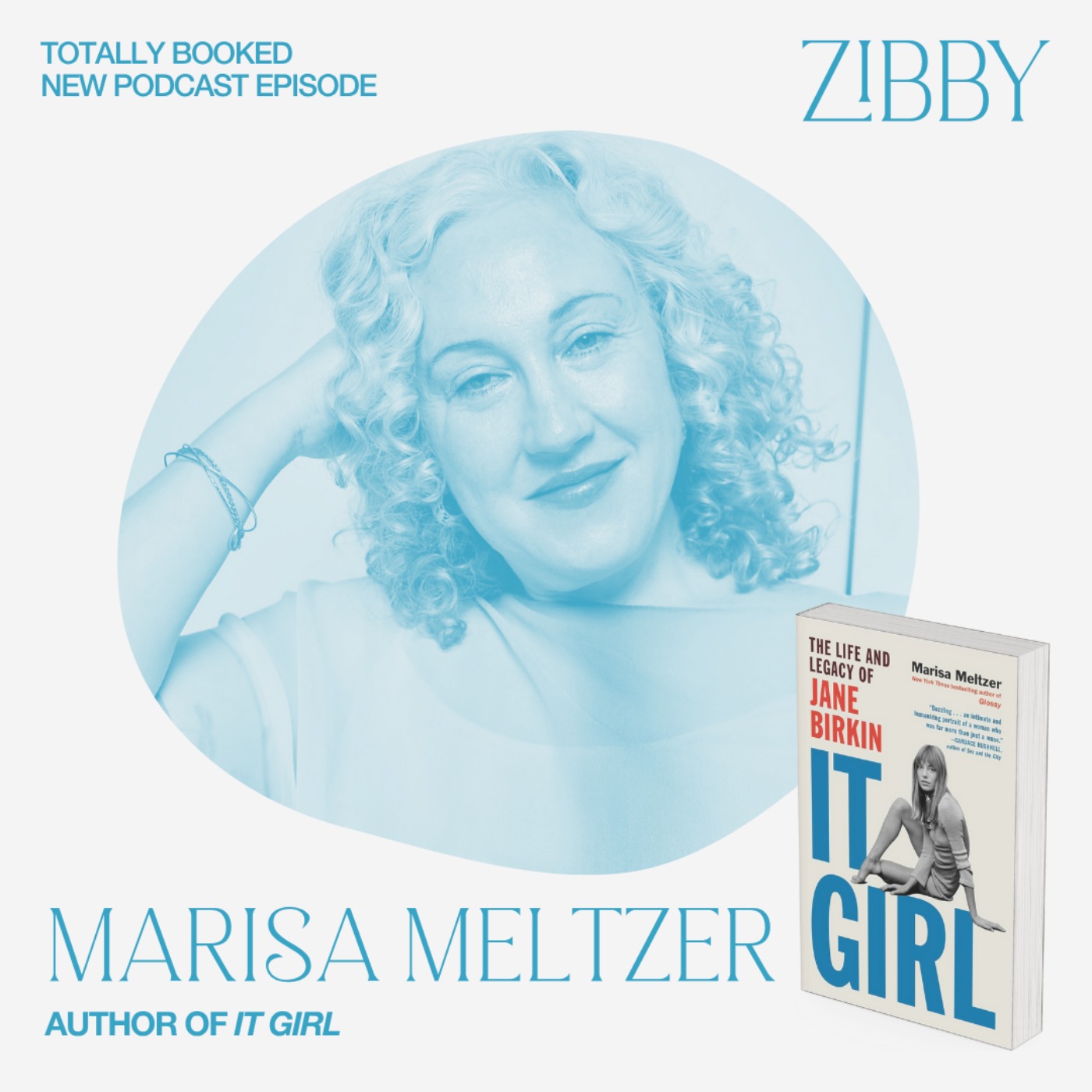
Welcome to Totally Booked live here at the Whitby Hotel in New York City where we are having season two of amazing guests coming on in person to talk about their fabulous books. And today we have Marissa Meltzer, who has written It Girl, the Life and Legacy of Jane Birkin. Marissa was on my podcast already once before and it is a delight to have you back.
- [01:15]
Anna Sale
Welcome.
- [01:16]
Marissa Meltzer
I'm so happy to be back. Thank you for having me.
- [01:18]
Zibby Owens
Thank you for being here. Okay, we've gone from Weight Watchers, the topic of your last book, and really the founder and Gene Natick and all of that. And you had another book and now we're back to It Girl. Why Jane Burke? How do you pick your topics? Why this book now?
- [01:35]
Marissa Meltzer
Well, Jane Birkin is kind of at the nexus of all my nerdiest interests in a lot of ways. Like, I was always, for better or for worse, a Francophile. I loved music and film. And of course, I've spent a lot of my career writing about fashion. And so it just seemed like I knew enough about her life, but I knew that I didn't know enough that there would be a lot to uncover in a story there. And, you know, just wanted to, to explore a woman who had been kind of seen as a muse her whole life or whose name is more famous as a bag than as a person.
- [02:15]
Zibby Owens
And yeah, did you get a bag from Hermes? Did they give you one to say thanks for the book?
- [02:21]
Marissa Meltzer
No, Hermes is. No, Hermes is not giving anyone a bag. But my hope is that I don't expect a free bag for, from anyone. But my hope is sometime on this book tour, someone will be like, I was gonna sell my bag to the RealReal, but I'll just give it to you for like a good deal so I don't have to deal with the intake process or something like that like, I want a hotline on a used black Birkin or something.
- [02:47]
Zibby Owens
Anybody have a hotline on a used black Birkin?
- [02:50]
Marissa Meltzer
Hit me up.
- [02:50]
Zibby Owens
There's a market for it right here.
- [02:53]
Marissa Meltzer
Yeah.
- [02:54]
Zibby Owens
I was really surprised by mostly everything in Jane Birkin's life and how many dark moments that she had. I mean, she's someone who was with three different men, had three children with three different men. She had a lot of loss. She started with a terrible boarding school experience, which I feel like infused the rest of her life with this feeling other having been banished from her house. Maybe just give a little bit of a backstory of her life before she became famous and then how that even really happened.
- [03:26]
Marissa Meltzer
Yeah, so she was born in England to like a pretty upper class, upper middle class family. And her mom was a famous stage actress named Judy Campbell, who was one of Noel Coward's muses. And her mom was beautiful in a very different way than Jane Birkin once. Jane Birkin was kind of boyish, skinny, flat chested, very much the 60s look. But her mom was kind of old Hollywood looking and glamorous. So she always from the start felt like she kind of like not pretty because her mom was this kind of like big personality, glamorous woman. And yeah, she was sent to boarding school like everyone in her family and many people of that class. And she hated it. And she was always trying to get like hospitalized to be kicked out, like eating rocks and scratching herself. She was really unhappy. And her parents finally let her leave and she was, she had a kind of rocky teeny years. She didn't really know what she was doing with herself. She went to Paris as kind of like a finishing school kind of thing and decided to try acting when she was, you know, probably like 16 or 17. And she was fairly successful in a small way. She was in some plays and then she had a small role in that movie Blow Up. She was in this movie the Knack and sort of all of these kind of hot young movies of the moment. So she was an it girl in the 60s and she married. She started dating James Bond's composer John Barry, who was this like hot 30 something guy. And she was 17 and they married when she was 18 and they divorced almost right away, but still, you know, had a kid. And so she was, you know, 20, 21 years old, figuring out what to do with her life with a baby and a divorce and feeling kind of a mess and got offered this role in a European film in Paris with this guy Serge Gainsbourg, who she knew was a Big star in France, but she didn't know who she was and she moved to Paris for work and she never moved back. And that's kind of the story of the beginning of her life.
- [05:39]
Zibby Owens
And who, who is a comparable it girl today?
- [05:43]
Marissa Meltzer
Ooh, maybe like a Chloe Sevigny, Alexa Chung. I think, you know, in some ways you could also say, like, Hailey Bieber is an it girl because she managed to straddle different kind of areas of fame and stuff like that. It's a very different era because, of course, Jane Birkin was doing all of this before the Internet, before social media. But it's that combination I think of an it girl is like, you can't call yourself one. Someone has to bestow you the term, so the turn on you. And then, you know, I also think it's sort of best if your career is hard to describe. Like, well, she kind of acts and she kind of sings and she designed clothes and, you know, multi hyphenates are it girls.
- [06:34]
Zibby Owens
So we're not gonna go on Instagram and find in someone bio like It Girl. That would be.
- [06:39]
Marissa Meltzer
That's a tell. That's a tell. That's a tell. You're manufacturing it. Yeah.
- [06:45]
Zibby Owens
Why should we care?
- [06:46]
Marissa Meltzer
Why?
- [06:47]
Zibby Owens
What is it about Jane Birkin, aside from the bag and her fabulous life? What is it that makes her so relevant to us today?
- [06:54]
Marissa Meltzer
Well, there is this level of glamour which is fun to read about, of course, you know, she was friends with the Beatles and she had the most famous bag in the world named after her. And, you know, a lot of that. But beyond that kind of glossy outer self, she was a woman dealing with a really complicated and sad life. You know, dealing with children, with drug addiction, dealing with domestic violence, suicide attempts, depression, falling madly in love with someone, having affairs, professional jealousy. You know, like, she was on this grand stage and scale, and yet it was still these sorts of things that any person, any woman deals with in some way or another in their lives. And I think that, you know, that humanizes her and, you know, shows a portrait of a very nuanced human being.
- [07:57]
Zibby Owens
Towards the end of her life. And she became a grandmother at 39. So she's someone who.
- [08:03]
Marissa Meltzer
She had kids young and then her kids had kids young and. Yeah, so she was. Yeah, she had children everywhere. Yes, but then she also thought about having another kid when she was like in her 50s, so she didn't. But she's, you know, but one of her daughters has like a 22 year old and a 2 year old, so, yeah, they're Just. They're French. Yeah, they're European.
- [08:29]
Zibby Owens
But tragically, her daughter Kate ended up dying early. And I mean, early. It's all early. But she ended up passing away quite a young age, found in the street after a history of drug addiction and other battles. And you write beautifully in the book about that. Was it for her, like, she was never the same. Jane was never the same after. How could you be? But that her life, and even in the public eye and everything else just took such a turn. Can you talk about that turning point in her life?
- [08:59]
Marissa Meltzer
Yeah, it was, you know, I think that her daughter, Kate Berry, her oldest child, started dealing with, you know, alcohol and drug problems quite young. You know, 14, 15 years old. And Jane Birkin had raised her somewhat unconventionally. She was young and she was going out, and at one point, she holds her, I think, her 12th birthday party at midnight at a nightclub so they can all go dancing. And so she was exposed to an adult world, which is not an excuse, but she started dealing with these addiction issues and depression very young. And then, you know, spent 30 years in and out of rehab and sometimes doing okay and sometimes not. So this was a very long family issue. And she died in uncertain circumstances, falling off of a balcony. Whether it was by suicide or from being, you know, inebriated or on drugs, it's no one's ever really known. And I think at a certain point, the family was like, it doesn't matter. It's a tragedy. So that is when it's pretty much when Jane Birkin stops acting. It's when she stops writing in her diary. And right around the same time, she was diagnosed with leukemia, which she spends about 15 years in treatment for, in n out. And so her life just became unspeakably hard. The love of her life, Serge Gainsbourg, had died maybe 10, 15 years before her father died a few days after Serge. Her mother had passed away at an older age, but still she was very close to her family. And so it just, you know, her nephew died. It was like this series of every few years, someone very close to her died and then cancer. And I think that she was just bereft. And the beautiful thing is she kept touring, even though her doctors hated her for doing it and kept saying she could get, you know, deep vein thrombosis or various other things. But I think that the, you know, being in touch with her creativity and with her fans really was a life sort of blood for her. But at a certain point, I, you know, I think that the illness became unbearable. And it seems from all the evidence that, you know, she had some sort of assisted suicide or decided, you know, that her suffering and treatment of this, you know, incurable cancer was enough. She was 76.
- [11:46]
Anna Sale
Did you know Tide has been upgraded to provide an even better clean in cold water. Tide is specifically designed to fight any stain you throw at it, even in cold butter. Yep. Chocolate ice cream. Sure thing. Barbecue sauce. Tide's got you covered. You don't need to use warm water. Additionally, Tide pods let you confidently fight tough stains with new coldzyme technology. Just remember, if it's gotta be clean, it's gotta be tied.
- [12:14]
Acast Host
Say hello to Mia.
- [12:15]
Marissa Meltzer
Hey there.
- [12:16]
Acast Host
Mia runs a pet grooming service in Chicago. But getting new clients was rough until.
- [12:21]
Marissa Meltzer
I started using acast. I recorded my ad, targeted pet owners in the area and let ACAST do the rest. Now people all over the city know about my grooming services.
- [12:29]
Acast Host
Mia's business is looking sharp. What's your secret for happy pets and happy clients?
- [12:33]
Anna Sale
A fresh cut, a friendly vibe, and.
- [12:35]
Marissa Meltzer
A well placed podcast ad.
- [12:37]
Acast Host
Get the word out about your business through Acast. Visit go.acast.com advertise to get started.
- [12:48]
Zibby Owens
So don't we feel a little odd toting around bags with her name on it? I mean, this is a complicated woman with a lot of pain in her life. And yes, she was carrying the first crochet bag and setting all these trends, but is this really like the right thing to do? Who has right over their names and doesn't it raise a lot of questions about it?
- [13:10]
Marissa Meltzer
For sure. I mean, I. One thing you can do to kind of put it into perspective is the Birkin came out, I think the exact same year as Air Jordan. And look at all the money that Michael Jordan has made off of his name and his business partnership with Nike. But of course, with fashion, with women, it's very different. You know, you're a muse. You are someone that someone takes inspiration from. And you're just so lucky to have your name be put on something. And I don't even think that that's a bad thing. It's just that she. It was a different approach. You know, it was kind of a happy accident instead of going in and kind of saying, you know, this is who I am, this is what I'm worth and that sort of thing. I think it's okay to carry the bag because she wore it, you know, she wore them all her life. I think she had five total and she destroyed them. She would put like, you know, Doctors without Borders and UNICEF stickers. She's very politically minded and would keep a nail clipper on a chain to one. Cause she liked to keep her nails short. And you know, she loved the bag and used it and it was part of her day to day life. And she. The thing is, I think people are much more wound up and unhappy about the Birkin bag one way or another than she was. She had a very carefree relationship with it in some ways. I think it was like the least complicated thing of her life. For most people, it'd be the most complicated, most exciting, you know, thing that ever happened to them. And for her, it's barely. She barely ever mentions it, you know, except for kind of later in her life when people keep wanting to ask.
- [14:51]
Zibby Owens
Her about it and maybe just explain. I know you talk about it in the book. The chance meeting on an airplane where she tells somebody from Hermes, like, you should really make a bigger bag. I need some pockets. Like, what can you do?
- [15:04]
Marissa Meltzer
Yeah. She was on a flight from London to Paris and it's like a meet cute in a rom com. She had been carrying a literal basket for years as a bag and like everything is falling out of it. And the guy who is her seatmate is sort of like, you should get a bag with a zipper at least. And she sort of says, well, when Hermes makes a bag like that, I'll buy one. And he goes, I am Hermes. Because he was part of the Hermes family and was basically like the equivalent of the CEO. And Jean Birkin was actually a very good artist, really good at sketches. And they got to kind of sketching what her ideal bag would be. It was kind of an elevated diaper bag because she had a baby at the time and was trying to tote all her stuff. And she was the kind of woman that would keep a Dostoevsky novel and lipstick and cigarettes and, you know, change, and a passport, another passport, you know, all with her who can't relate is city people. She didn't have a car necessarily, so Hermes has a long tradition of making custom bags for special clients. I don't know how to do it, so please don't ask me. I think you have to be kind of not a mere mortal. And they made it for her and they liked it so much they said, we want to produce it and we want to call it the Birkin. And so it was a very cute story. But then it became the most famous bag probably in the world. Eventually they, instead of her being paid, they donated about €40,000 or so a year to charities of her choice. But considering that the cheapest Birkin is probably around $15,000 right now. It was about $6,000 when it came out in the 80s, which is, you know, a lot of money, or it would have been about that much. It's not that much money. They weren't donating that much. So, you know, it's a. It's a fascinating story and how.
- [17:02]
Zibby Owens
Tell me about how you became this interested in her and how you have picked all your subjects to date and what you get out of doing deep dives into other people's lives.
- [17:12]
Marissa Meltzer
I mean, someday I might write about men, but they've always been women so far. I love women, and I love someone who is emblematic of a certain time period. Like, I was on your podcast from a book called this is Big came out about Jean Nidich, who founded Weight Watchers, and she was a Jewish woman in the outer boroughs in the mid-60s and 70s. And I love having a world, especially one that I. That I wasn't in, but could kind of understand to recreate and to feel like you're living in and you're eating the weird, like, two hot dogs but no ketchup. And, you know, diet that she's configuring.
- [17:53]
Zibby Owens
I know that's had a lot of points, so maybe she wasn't eating that.
- [17:55]
Marissa Meltzer
This is pre points, though. Okay.
- [17:56]
Anna Sale
I know. She never.
- [17:57]
Marissa Meltzer
Yeah, no, the first. Yeah. She also stuck to the original diet. I think her whole life, she never converted points. Too confusing. Yeah, yeah, yeah. Also, of course, they were called frankfurters, not hot dogs.
- [18:10]
Anna Sale
Yeah.
- [18:11]
Marissa Meltzer
But does anyone know what we're talking.
- [18:12]
Anna Sale
About with the points?
- [18:13]
Marissa Meltzer
Yeah.
- [18:14]
Zibby Owens
Did anybody else ever go to Weight Watchers?
- [18:16]
Marissa Meltzer
Just check it. Yeah. Okay.
- [18:17]
Zibby Owens
See, we can all admit I was a leader for a while.
- [18:19]
Marissa Meltzer
By the way. She was. This is one of my favorite things about Zoe. Yeah.
- [18:23]
Zibby Owens
Little known fact.
- [18:24]
Marissa Meltzer
Yeah. Well, someday I will try to bring her back from the dead so she can talk about Ozempic with us. But before. But. So, yeah. I like people with interesting personalities. I like people who. Women who seem maybe like I can understand them a little bit. Maybe it's a city I've lived in, but who are also fundamentally different from me. And then I just love research. It's my favorite thing. So for this book, it was like, oh, twist my arm. I guess I should go live in Paris for two months. And the building I was living in was being sold, so I put all my stuff in storage and took my dog with me, and we flew to Paris for a few months and I went to private archives and Interviewed people and all of the magazine collections, reading everything. I speak French, so I was able to, you know, listen to and read old interviews and, you know, just kind of as much as I can. And some of it is a little bit like a puzzle where one person introduces you to someone else who introduce you to someone else. And so that's what it was for a few months. And then I kind of take all of that information and then start thinking deeply about it and shaping it into a narrative and kind of thinking, how would I tell this story to my best friends at dinner?
- [19:49]
Zibby Owens
And so what are you working on now? Do you have a new topic?
- [19:52]
Marissa Meltzer
I don't. I'm very open. Yeah. I would love to do another biography, but, you know, it's all about finding the right person.
- [20:00]
Zibby Owens
I mean, you could call Chloe Savingde. See what happens.
- [20:03]
Marissa Meltzer
Too young. Too Young might write her own memoir. Yeah, Too much. She's a little bit older than me, but yeah. Okay.
- [20:10]
Zibby Owens
Well, now I'm trying to think.
- [20:10]
Marissa Meltzer
Yeah, yeah, yeah, sorry. We'll keep. We'll take your ideas later. Okay? No, no, we'll give you a finder's fee.
- [20:15]
Zibby Owens
No, no, no, it's fine. So after doing all this research on Jane Birkin, what is the most important thing you feel like you've taken away from her life? What have you learned, and has it affected how you live your own life?
- [20:30]
Marissa Meltzer
Yeah, I've thought about it a lot. I think one is that everyone's life has tragedy. Everyone's life has beautiful, you know, high points, and that connecting and understanding, that kind of universality is good for all of us. But the other thing is that I can be kind of reserved. I think there's a lot of pressure on women to not be too big, too bold, especially in their romantic lives, to not be too dramatic or needy. And Jean Birkin was not concerned about any of that. She literally dove into the Seine once to, like, make a point in an argument. She wasn't afraid to have a big shouting match in public. That is not me. I don't think it will become me. But there was a little bit of me that allowed myself while I was dating people and just, you know, kind of to be myself and to give myself permission to just be like, yeah, I'm a person with needs. Or, like, I can have this argument, and I don't always have to seem composed and like, I'm, you know, I don't want to be crazy or anything like that. And I think just a little bit of that craziness, that sort of, you know, European drama was good for me, I think could be good for a lot of us. There's something really empowering in it that I don't think we're told enough to just. Yeah, let yourself go. Be a little loose. Love it. Yeah.
- [22:02]
Zibby Owens
Live like you have Dostoevsky in your bag along with.
- [22:05]
Marissa Meltzer
Yeah. Yeah.
- [22:06]
Zibby Owens
Along with the passport and see what happens.
- [22:07]
Marissa Meltzer
Yeah. Yes. Yes.
- [22:10]
Zibby Owens
Marisa, thank you so much. Thanks for coming on. Thanks for teaching us about the ditch girl.
- [22:14]
Marissa Meltzer
Thank you.
- [22:17]
Zibby Owens
Thank you for listening to Totally Booked with Zibby, formerly Moms don't have Time to Read Books.
- [22:22]
Anna Sale
If you loved the show, tell a friend, leave a review, Follow me on Instagram, ibbyowens and Spread the Word. Thanks so much. Oh, and buy the books.
- [22:40]
Marissa Meltzer
Acast powers the world's best podcasts. Here's a show that we recommend.
- [22:48]
Acast Host
Hey hoops fans. The new NBA season is here and the Athletic NBA Daily is your daily dose of basketball breakfast. Join me Dave DeFore, Zena Keda, and Esperaheni Monday through Friday, and Andrew Schlecht and Alex Spears on Saturday for the freshest stories, the hottest takes, and all the highlights from around the NBA, all before you finish your first cup of coffee. Whether it's a sizzling performance, a spicy trade rumor, or some smooth stat lines, we'll serve it piping hot and ready for you. So check out the Athletic NBA Daily on Apple, Spotify, YouTube, or wherever you get your podcasts.
- [23:24]
Marissa Meltzer
Acast helps creators launch, grow and monetize their podcasts everywhere.
- [23:29]
Zibby Owens
Acast. Com.