← Totally Booked with Zibby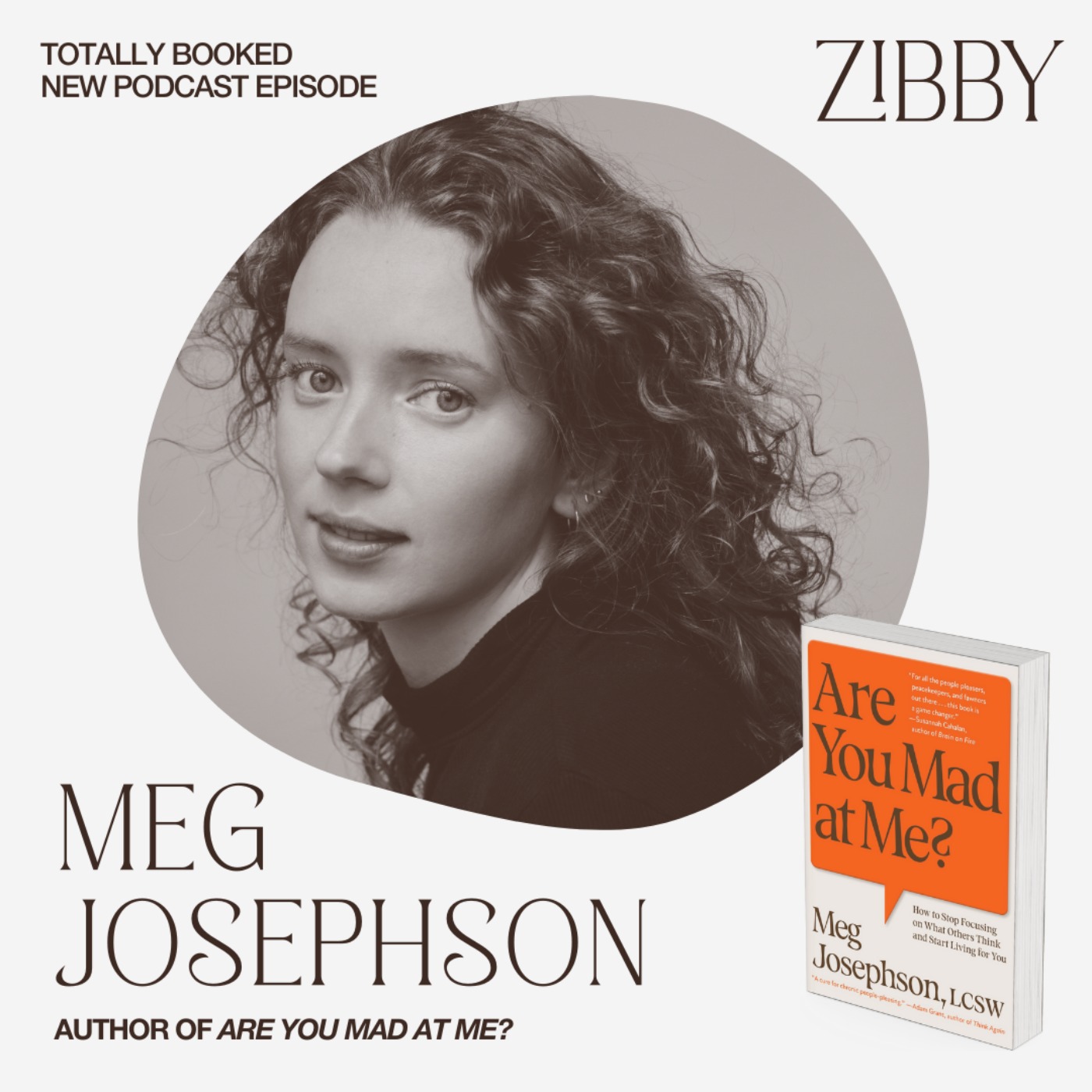
Totally Booked with Zibby
Meg Josephson, ARE YOU MAD AT ME?: How to Stop Focusing on What Others Think and Start Living for You
00:28:15
Loading summary
Transcript69 lines
- [00:00]
Zibby Owens
Hi listeners. We have totally booked live coming up this fall and I hope you'll be a part of it. We have three events in New York City September 19th, 25th and 30th in New York where I'll be doing six interviews live each day. We also have a petite retreat in Greenwich on October 4th. Go to zibbemedia.com and event or and or eventbrite and search the events and please come. I can't wait to meet you in person.
- [00:31]
Meg Josephson
Ready to order?
- [00:32]
Zibby Owens
Yes. We're earning unlimited 3% cash back on dining and entertainment with a Capital One Saver card. So let's just get one of everything. Everything. Fire everything. The Capital One Saver card is at table 27 and they're earning unlimited 3% cash back.
- [00:46]
Meg Josephson
Yes, Chef.
- [00:47]
Zibby Owens
This is so nice. Had a feeling you'd want 3% cash back on dessert. Oh, tiramisu. Earn unlimited 3% cash back on dining and entertainment with the Capital One Saver Card. Capital One what's in your wallet? Terms apply. See capitalone.com for details. Imagine a world of extraordinary comfort where Boland Branch Bedding wraps you in the softest. Embrace the coziest experience made from the world's finest 100% organic cotton, all so.
- [01:13]
Meg Josephson
You can sleep better.
- [01:14]
Zibby Owens
Start building your fall sanctuary with Bolin Branch's iconic signature sheets made with a buttery, breathable weave that gets soft softer with every wash. Enjoy 15 off your first set of sheets with free shipping and returns at B O L L& Branch.com with code BUTTERY. See site for details and exclusions. Today's episode is sponsored by the Foxed Page, a podcast and YouTube channel that dives deep into the very best books. It's basically your favorite college English class, but very relaxed and way more fun. No exams, no participation, and only books you really want to read. Kimberly Ford, best selling author, one time professor and PhD in literature, offers up entertaining, often funny talks that will leave you feeling inspired and a little smarter. She digs right into everything from J.D. salinger to Miranda July, from Demon Copperhead to Madame Bovary, from Pride and Prejudice to Lessons in Chemistry. The talks on individual books are the heart of the podcast, but enriched read segments to tackle ideas like unreliable narrators, while old favorite talks treat you to a fresh adult look at childhood gems like Harriet the Spy and Are you there God? It's me, Margaret. Want to get the most out of what you read and be entertained along the way? The Foxed Page is for you. Hi, this is Zibby Owens and you're listening to Totally Booked with Zibby, formerly Moms don't have time to read books. In my daily show, I interview today's latest best selling, buzziest or underrated authors and creators whose work I think is worth your time. As a bookstore owner, publisher, author, and obviously podcaster, I get a comprehensive look at everything that's coming out and spend my time curating the best books so you don't have to stay in the know, get insider insights and connect with guests like I do every single day. For more information, go to zibbymedia.com and follow me on Instagram. Iby Owens Meg Josephson is the author of Are youe Mad At Me? How to Stop Focusing on what others think and Start Living for your by the way, since we Recorded this has hit the New York Times Bestseller list. Meg Josephson is a licensed psychotherapist. In her private practice, she specializes in trauma informed care through a compassion focused lens. She holds a Master's of Social Work from Columbia University and is a certified Meditation teacher through through Nalanda Institute. Meg also shares accessible insights via her social media platforms, reaching over 500,000 followers. Welcome Meg. Thanks so much for coming on Totally Booked with Zibby to talk about Are you mad at me? How to stop focusing on what others think and start living for you. Congratulations.
- [04:03]
Meg Josephson
Thank you for having me. Excited to be here.
- [04:05]
Zibby Owens
Oh my gosh. I like laughed looking at the I mean, it's just there were so many people I was like, oh my gosh, look at this book. Do you say this all the time? Do I say this all the time? Of course.
- [04:13]
Meg Josephson
You're not alone.
- [04:15]
Zibby Owens
Tell listeners what the book is really trying to do and do it the way you did in the book. How you tell us about your own experience and lead us into your revelations about fawning and all the rest.
- [04:28]
Meg Josephson
Absolutely. Well, it's called are you mad at me? Because I think that question really speaks to a feeling, a feeling that a lot of us have but maybe don't have the language for. And it's a question that's been really familiar to me in my life. I open the book with a scene in my first therapist's office and I say to her, why do I always think people are mad at me? And in my adulthood that was manifesting as when my boss said, can we chat? Oh, I'm fired, I'm fired. That's what's about to happen. Or if someone didn't respond for a while, okay, they're mad at me, I've done something wrong. Just immediate Self blame immediate something is wrong with me. And in my, you know, self inquiry journey and also just through being a therapist, I really saw how protective that was for me growing up. That thinking, that hyper vigilance. My home growing up was quite volatile and my dad struggled a lot with addiction and I was just on edge a lot of the time. And so thinking is he mad at me? Was at least on an unconscious level was so protective. Being aware of people's moods, managing people's happiness, silencing what I need to prioritize what other people need was so helpful and useful when I left. And as I became an adult and I realized, oh, it was, it was helpful. But now it's hurting me and now it's leading to exhaustion and overthinking social interactions and feeling like I don't know who I am. I have that scene of me in Bed, Bath and Beyond picking out towels for my first. I say apartment but like 4x4 closet in new York and shoebox. Shoebox. And just not knowing even what my favorite color was because I just, I felt like I had never asked what do I like? What do I want? And that's what the fawn response was, which we'll talk about. Does it disconnects us from who we are because we're so hyper attuned to our external world as a means of safety? So I'll pause there. We can go into the fawn response. I don't wanna throw too much.
- [06:45]
Zibby Owens
No, no, it's all good. So the fawn response is another term and another way to cope with scary situations. We've all heard about fight or flight as two of the main. Then there's freezing and then as you go in depth into. Into other fawn response. F, A W, N. I don't know how else you would spell it, but.
- [07:07]
Meg Josephson
I'm just gonna spell it like the deer.
- [07:08]
Zibby Owens
Yeah, words like that. And instead of positioning this as any sort of a weakness, you are showing us how incredibly smart a response this is and how it lingers as a self protective mechanism. So what exactly does it mean? Is it cozying up to a boss? Is it enabling me too ish behavior? Like where is. Why are women so susceptible to this particular response?
- [07:38]
Meg Josephson
Yeah. So when the body is detecting some sort of threat, whether that threat is real, like there's a line in front of you about to chase you down, or whether that threat is perceived, like your boss or your friend is being a little standoffish and you're like, oh, are we good? Did I do something wrong? That might be a perceived threat. You think something might be happening regardless of whether it's real or perceived or remembered. Actually, our body has those four responses. Fight, flight, freeze, and fawn. And fawning is about appeasing the threat. It's trying to be liked by it, impressing it, satisfying it, wanting to make sure that you're good with the threat. So it really just says, my safety comes from pleasing you, and I can't feel okay until I know you're okay. And this really is a brilliant unconscious survival mechanism. And what's really important is sometimes we need it. It's in our bodies for a reason, like we need a paycheck. Sometimes we're in situations, whether you're a woman, you're a person of color, whatever identity you may hold, that fawning is genuinely protective to survive in society and within systems.
- [08:55]
Zibby Owens
And.
- [08:56]
Meg Josephson
And when we're doing it all the time, when we're doing it, when we don't need to be, when we're actually safe, like with our best friend or a loving partner, that's when it is exhausting. So I talk a lot about how it stems from childhood and how it can be learned in childhood as a brilliant mechanism for an environment. Maybe that was quite volatile or tense, or yet a caregiver who is critical or emotionally neglectful. But it's also such a socialized behavior. And that's why I think I view it as the most common but least recognized threat response. Because it's the only threat response that we're getting validation for. Oh, you're such a good girl. You're so easy. You know, women especially were praised for being agreeable and easy and malleable. And so it's quite confusing because the fawn response, we receive a sense of safety by knowing that the other person approves of us. So then it keeps it going. Like, we continue to fawn because it works. And so, yeah, it's very protective in those early environments. It's also protective in society, and we don't need to be doing it all the time.
- [10:11]
Zibby Owens
What I found so revolutionary about your book is that it takes away the onus of this on the individual and puts it more on the species. Right. Like, I am not a perfectionist or eager to please. I mean, I am, but anyway. But I have become that way because of my. How I was raised or what my relationship with my family was like. And when I have trouble making decisions about where I want to go or what I want to do or should I go to this friend's party or not. Like when you have that moment in the book where you're like, oh no. I said no right away. But then I doubted myself and had to go through this whole nicer strategy or whatever. It's not because of who I am or any sort of deficiency I the general I, but more because of what's hardwired in us and what a relief that is.
- [11:04]
Meg Josephson
Oh, such a relief. Yeah, it's it not being a personality trait, but an unconscious mechanism. And that's where our awareness is so huge and important. To pause, to notice when we're doing it, to step back, release some of the urgency, look inward for a second. That's automatically bringing it from the unconscious into the conscious mind so that we can at least notice it and maybe choose a different path. But it really is so, so self protective.
- [11:38]
Zibby Owens
So I'm obviously like a grown up, right? I'm in my, I'm in my 40s, I've had a lifetime of this and now reading the book and flip the switch for me and explain it for younger people who are just starting out, like, what can we do? Like for my kids or people's kids who you already hear this starting, right? You can feel it. But instead of having to go through the past 30 years that I went through, like, how can we get this in the butt? Aside from just reading your book, of course, which everyone must do.
- [12:08]
Meg Josephson
Yeah, of course. But you know, I actually, I want to touch on that element, the generational element for a second because I do think it's more prevalent. Maybe that's a big statement. I'm noticing it more in younger people and I think and attribute at least in part to digital communication. And I say this in the intro, there's some line of like, there's so many ways to, to connect and because of that, there's so many ways to feel forgotten where we're not just picking up the phone to connect with someone. We also, why did they see my Instagram story but not respond to my text? And then why did they like that person's TikTok but not mine? And why did they like, there's just so many. There's DMs, there's FaceTime, there's iMessage, there's liking, there's reacting, reacting to why did they, did they not think my joke was funny? Because they didn't say haha to my imessage. Like, there's just so many sources of external validation now. So I do think that especially the younger generation, because that's all they've known they're expecting that. They're anticipating the dopamine of that validation. When it's not received, there's this letdown and it's a big swing to go through in the body. So I definitely think that's an element. Just want to acknowledge that for younger generations, you know, when they're, they're not, they may not have like a whole childhood to process at this point. They may not be looking back with that lens. I think it, I think it's the same framework of viewing this part of you that's people pleasing as a part that is trying to keep you safe. And it's really easy to shame ourselves for it. What's wrong with me? Why am I like this? And to instead create a relationship to this part that's working overtime to try to keep you safe, to be able to pause, release some of the urgency, and to then look inward and soothe ourselves versus immediately seeking external validation. So for example, if you are trying to decide what to wear tonight and you want your instinct, your immediate habit is to text for friends. What do you. What do I look good in? What looks? Tell me, tell me what looks bad? Tell me what looks good? To be able to first look inward. What do I think? What do I feel good in? What feels good to me? And it sounds so simple, but because that ex, that fawn response habit is to immediately look externally for safety, to break that and look inward first before looking out. And we might still look out. And that's okay. We're not meant to be in complete solitude. But just to add that break and that pause, to release some of that urgency around making sure that others like us is very liberating. There's so many other things I could talk about of not taking things personally and blah, blah, but I think we can start there.
- [15:13]
Zibby Owens
Today's episode is sponsored by Quince. Fall is in full swing and it is the perfect time to refresh your wardrobe with pieces that feel as good as they look. Luckily, Quince makes it easy to look polished, stay warm and save big without compromising on quality. Quince has all the elevated essentials for fall. Think 100% Mongolian cashmere from $50, washable silk tops and skirts and perfectly tailored denim, all at prices that feel too good to be true. I'm eyeing their wool coats. They look designer level but cost a fraction of the price and the quality just as good, if not better. By partnering directly with ethical top tier factories and cutting out the middlemen, Quince cuts out the middlemen to deliver luxury quality pieces at half the price of similar brands. It's the kind of wardrobe upgrade that feels smart, stylish and effortless. Quince's sweaters have become staples in my wardrobe. They are reliable and beautiful and I just get excited every time a quince package arrives. Quince has really become a one square stop shop so keep it classic and cozy this fall with long lasting staples from quince. Go to quince.comzybee for free shipping on your order and 365 day returns. That's quincy.comzy to get free shipping and 365 day returns. Quince.comzy today's episode has been sponsored by Live It Up Super Greens Moms. You do everything for everyone else and somehow your own wellness always gets bumped to the bottom of the list. That's where Live It Up Super Greens comes in. It's a daily habit that actually works. No hassle, no fuss, just scoop, mix and go. Whether you're tackling school drop off, conference calls, Zooms or the laundry mountain, this is one easy win that supports digestion, energy and immune health in just 30 seconds. Live it Up Super Greens is an all natural blend of over 20 superfoods formulated with organic vegetables, probiotics, digestive enzymes and naturally derived ingredients. Just one scoop a day can promote gut health, support your immune system and give you the feel good energy you can count on. It's designed by nutritionists, third party, tested for purity and made to be easy on your stomach. No grassy taste or chalky texture. Mix it with water, milk or a smoothie and make it a healthy habit you'll look forward to. You'd never believe a green drink tastes so good. If you haven't mixed Super Greens into your routine, Live it up is a must. Add it tastes so much better than the others and it's way more affordable. Live It Up Super Greens offers premium quality without the premium price. It's one of the most affordable ways to support your health daily. And by the way, it is absolutely delicious. I I love it. Easy to clean up, easy to use, and amazing. Live it up has become a quick and easy way for me to stay on top of my health. So Live it up is offering you 15% off your first order, including subscriptions with code booked. Shipping is always free. Head to letsliveitup.com booked and use code booked for 15% off your first Super Greens order. These statements have not been evaluated by the fda. This product is not intended to diagnose, treat, cure or prevent any disease.
- [18:36]
Meg Josephson
Did you see the game last night.
- [18:37]
Zibby Owens
Of course you did, because you used Instacart to do your grocery restock. Plus you got snacks for the game, all without missing a single play. And that's on multitasking.
- [18:46]
Meg Josephson
So we're not saying that Instacart is.
- [18:48]
Zibby Owens
A hack for game day, but it might be the ultimate play this football season. Enjoy. $0 delivery fees on your first 3 orders. Service fees apply for 3 orders in 14 days.
- [18:57]
Meg Josephson
Excludes restaurants.
- [18:59]
Zibby Owens
Instacart, we're here, in addition to putting out this super helpful framework, which by the way could be interpreted as another way of pleasing people, is that now you are solving everybody's problems. Just saying. I'm going to throw that out there. You also talk about your own relationships with your parents and your mother's early onset Alzheimer's. I'm so sorry about that.
- [19:26]
Meg Josephson
Thank you.
- [19:26]
Zibby Owens
This one moment where you really felt like she was saying goodbye. A moment of sort of lucidity in the midst of a lot of terrible times and a lot of the specific behaviors that your dad did and continues to do in their relationship. So as you're putting this book into the world for the rest of us, thank you. How are you feeling about the, what you're exposing about your own family and how are they feeling about it?
- [19:54]
Meg Josephson
Thank you for asking that. And something that I share in the acknowledgments that couldn't obviously make it in the book is my dad actually passed away.
- [20:02]
Zibby Owens
Oh, no. I'm sorry.
- [20:04]
Meg Josephson
Three days after I turned in the final manuscript, which was so messy and complicated because as you know, in the book I talk so much about my mom's mortality and processing for listeners. My mom started to show symptoms of Alzheimer's when I was 19 and she was 59, so very young. And so for the past my whole twenties was processing her eventual passing and she is still here. She outlived him. And that is so my dad's. My dad passed away through unexpectedly health related concern causes. But it was, it was a big shock. And so it just really adds to the messiness of grief. That grief isn't just as I talk about, it's not just losing someone when they pass, it's also grieving what never was and what can't be. But you know, I wrote it expecting him to read it. And so that was really, I really think that that was an act of healing the fallen response for me because I knew that in order for me to write this book in the way that I wanted to, I had to share something. And I was Very careful, of course. And there's a lot I don't say there's a lot I don't share. I was very careful about it, but I. I knew he would read it, and I knew that there would be some feelings about it. But I feel grateful that I did call him when I was writing the book or when I got the book deal and said to him, you know, I do need to acknowledge some things that I experienced. And he was actually really supportive about it. And I feel really grateful that I had that support, but it was really vulnerable, and I feel like I still don't even think too hard about people reading it like that. That's not happening. People won't know this. Yeah, it was vulnerable and challenging, but to let myself. This is healing the fawn response. To be connected to who I am, knowing that I can't control how it's being perceived, understanding that it might be misunderstood, it might be misjudged, I can't control that. But will that. Should that stop me from speaking what I'm feeling? That's healing the faun response. So it was a bit of a meta healing process.
- [22:37]
Zibby Owens
Wow. Well, I'm sorry that happened.
- [22:39]
Meg Josephson
Thank you. I appreciate it.
- [22:41]
Zibby Owens
You have a lot in here about how not to take things personally, as you referenced. And one of the things along those lines is asking yourself, do I even like the person who I'm worried doesn't like me? And it sounds so obvious, right? But we don't stop to think, like, oh, wait, do I even care? Like, why do I care? Is this even the type of person I would be friends with? So why do I care that they don't want to be friends with me? And why does their acceptance matter when they might not be my cup of tea? Can you, like, talk a little bit about that? And why do we do that?
- [23:15]
Meg Josephson
Of course. Well, knowing that the fawn response finds safety through being liked, so it doesn't matter. And by doing more, the more I do, the more I can be loved. That's. That's the fawn response. And so there's no nuance there. It's just black or white. It's, am I safe or am I not? Do they like me or do they not? Am I good? Are they bad? There's no room for nuance. So to allow for nuance, to allow ourselves to kind of question this immediate instinct, is really liberating where we. We find safety in being liked. But then we recognize, oh, we don't even like everyone, so why would everyone like us? And I Also discuss, you know, the more we know ourselves, the more connected to who we are, to our preferences, our style, our opinions. People may like us less, we may not, because we're not no longer morphing ourselves and contorting ourselves to be pleasing to everyone. No, that doesn't mean everyone hates us and that we're flipping the bird at everyone that bothers us. It just means we're connected to who we are and we can be kind and not be loved by everyone at the same time. And that's okay. I think it's actually a really good thing.
- [24:31]
Zibby Owens
Even just hearing you say that gives me anxiety.
- [24:34]
Meg Josephson
Same. No, of course I'm saying this to myself. And I. My heart's racing just saying it. It's. It's so. It's so real. And I think that healing happens through seeing that it's safe when someone. And it doesn't have to be a big thing. Like, I think for many people that are drawn to this question of, are you mad at me? Like myself learned that in adulthood, if there's a conflict, the relationship is over, it's ruined, there's no going back. Conflict feels like such a big deal in our minds. And if someone doesn't necessarily. Even not liking you feels like harsh, harsh words. If someone. You're not someone's cup of tea. It's not. They're not screaming at you. They're not insulting you. It can just be. They don't text you to hang out again after you got dinner with them one time. Okay, did you enjoy your time with them? And it's okay if you didn't. We only have so much time and energy for so many relationships and taking feedback from people that we respect and admire and look up to, knowing we cannot take feedback from everyone, it would be too conflicting.
- [25:43]
Zibby Owens
So, and wait, go back to what you were saying about this need to stay busy, which you also put in here, about how we have to take on more and more and just like, run at full capacity and how it's actually the stress response and the like sort of addiction to the adrenaline of it all that fuels it. Did I get that right?
- [26:00]
Meg Josephson
Yeah, for sure. I mean, my safety lies in doing more, and there's always more to do. So that's a tough cycle to be in as well. I have these different archetypes of how people pleasing shows up, and one of them is the perfectionist. And I think that archetype. I use that loosely, not as a personality type, but as a pattern. And just this. This idea that if I'm just more perfect. If I'm just have this one extra thing on my resume or this, have this one extra relationship in my network, then I'll be enough. And it's, it doesn't end because then the mind that will be achieved and the mind will then create raise the bar. Because we get used to that achievement quite quickly. And it doesn't mean we're never striving towards something, but you know, it's just being conscious of when is it coming from a place of purpose and when is it coming from a place of survival.
- [26:59]
Zibby Owens
I remember reading kind of a spoof of an essay a while back, like years ago of someone who was lamenting that even though they were on the New York Times bestseller list, they weren't like number three or that they only stayed on for a week at number six. And I was like, oh my gosh, they must be totally kidding. Like, obviously nobody even knows what number it is. But now that I'm like, in this world, people are not kidding at all. People care how long, what number. And I'm like, any of this would be amazing if you hit the list. If you're on the list, you're on the list. But the more granular you get with how you define success, the less easy it is to achieve.
- [27:39]
Meg Josephson
It also speaks to the hedonic treadmill of the great thing. And the horrible thing about being a person is that we adapt so quickly. So even like getting a book deal, that might be the most crazy, life altering, oh my God, this is a life dream. And then it happens, you start writing it and you get used to it pretty quickly. It becomes your reality. And then I imagine if you were like, if you became a bestseller, that's oh my gosh, life dream, oh my gosh. But then once you get used to it, okay, now for your next one, you'll expect it from yourself. And maybe it's no longer as exciting. So just. And that's that voice I think will always be there. Similar to the people pleasing voice that's always there, but managing it, like being checking it a little bit, being a little curious about it. And what I find helpful when that perfectionistic voice comes in is look at, look at your current reality through the lens of your past self. And I think for a lot of people that are in that perfectionistic tendency, their past self would have died to have that or they would be so thrilled to have that reality for a lot of these achievements or whatever we're thinking about here. So yeah, we're not trying to erase that voice, but just become aware of it.
- [28:54]
Zibby Owens
And one other thing. I actually took a picture of the page I was reading and texted it to my friend Isabel because we were playing tennis the other day, and I was apologizing every shot I hit in the net. I was like, oh, my gosh, I'm sorry. So sorry. I can't play today. I don't know what's wrong with me. It's like, I've never played tennis before in my entire life. I'm so sorry. And literally from across the net, she's like, you know, there's this thing called spotlighting where you think that, like, everyone's noticing you. She's like, I've messed up just as much as you, but you feel like it's all on you. And I was like, oh, huh. Store that away. And I literally was reading your book, and there it was. So I had to text it to her. But it's so true. It's like it doesn't go away. You just keep thinking, I know you have some experiment about an ugly T shirt that you mentioned in the book, but we always think that everybody's paying attention. And in truth, and I know I give this advice to my kids, it's just so much harder to take. Oh, it's so hard, you know, that not everybody is paying attention to you.
- [29:47]
Meg Josephson
It's hard to take the advice ourselves for the very reason the study exists, which is we're so focused on ourselves. Like, that might be true for other people, but for me, everyone's really noticing my mess up. So, yeah, we all have our own lives and egos and relationships, and that's not bad. We. We have an ego. We're people. We're not erasing that. It's just managing it. It's just noticing that voice and letting it go when we can. I think so.
- [30:15]
Zibby Owens
Are you worried? Do you still get all this anxiety that you put out a book and is it perfect and are you okay? Yeah.
- [30:23]
Meg Josephson
Oh, my gosh. Yeah. The difference is I just don't believe those thoughts as much anymore. Like, I. My default doesn't feel that way anymore because. But I still have waves of it because those are human emotions. And I think we have this false fantasy that once we quote heal, which is not a checkbox at all. It's ongoing. Once we do this thing, then I won't feel these hard emotions anymore or, like, I'll just be happy and peaceful all the time. And that's a false fantasy because they're emotions and they're human, and we're meant to have them, and they're proof that we're alive in this body. And so, yeah, certainly, I get lots of waves of it, and perfectionistic voice comes in, and I just know when it's useful and I know when it's not. But it doesn't mean it's, you know, it's there. And I think it will be, because the point is that this is a younger part that's trying to protect us. And if we were to say, go away. I don't want you here anymore. I'm trying to get rid of you. For many of us, we're actually just replicating the same story we were told growing up, which is, something's wrong with you. You need to change. So I have a relationship with that part now instead of trying to get rid of it.
- [31:36]
Zibby Owens
Well, I also love that growing up, everybody, even your mom, was like, okay, you're just really sensitive. And I got that too. Like, you're just. You're just so sensitive. And I'm like, okay, and how. You show us, like, a, why and B, that there are a lot of strengths to that. And it's not necessarily us. It's our environment and how we're shaped and all of that. So hats off to the other sensitive souls out there. Absolutely.
- [32:06]
Meg Josephson
You're not broken. There's nothing wrong with you. Absolutely.
- [32:09]
Zibby Owens
I'm hoping that you have a lot of pages in the book that are full pages. I mean, I have the galley, but I'm assuming that it's gonna be the same and that you have, like, a big, powerful quote. Like, I am allowed to acknowledge the loss that I feel. There is enough space. Space in my being for both grief and gratitude in these little check marks.
- [32:25]
Meg Josephson
And I feel like that's there in the final version.
- [32:27]
Zibby Owens
Okay, good. And I'm hoping that there's, like. I hope these become the type of things that people print out for their dorm rooms and that maybe you put on cardstock and like, dormify or something or ways that we. You can make these top of mind early in a preventative way because they're really powerful, everyone.
- [32:48]
Meg Josephson
And to that point of reaching younger people sooner, I think also just modeling. Modeling. We're not supposed to be perfect, perfect parents, perfect partners. So just to even to say aloud, oh, I'm feeling anxious, and this is how I'm moving through it. To have conflict and repair after the fact. Like, we're gonna lose our shit sometime. We're gonna react in a way we're not proud of, to go back to the moment and say, honey, I yelled and I'm really sorry about that. That wasn't your fault. That was on me. And I'm really working on managing my emotions better. Like that is the healing. It's not that the conflict or the rupture won't ever happen. It will. And repair is such an opportunity for closeness. So I think it's just through showing our process to, to whoever we're, we're living with is so empowering and beautiful.
- [33:48]
Zibby Owens
Well, I'm so excited about this book. You're going to help so many people. So many people are going to feel just so free, so free of some of the burdens, psychological burdens. And I'm excited to watch this ripple and see what happens.
- [34:04]
Meg Josephson
Thank you. Congratulations. I just, I wanted to help as many people pleasers, caretakers, perfectionists as possible. So that's the goal.
- [34:14]
Zibby Owens
I have no doubt that you will achieve it. Thank you.
- [34:16]
Meg Josephson
Thank you.
- [34:17]
Zibby Owens
Thank you so much. I'll be cheering for you.
- [34:18]
Meg Josephson
Thank you for having me. Appreciate it.
- [34:20]
Zibby Owens
Take care. Bye. Thank you for listening to Totally Booked with Zibby, formerly Moms don't have time to read books. If you loved the show, tell a friend, leave a review. Follow me on Instagram ibbyowens and spread the word. Thanks so much. Oh, and buy the books.
- [34:43]
Meg Josephson
If this back to school season talking, your teenager sounds like this.
- [34:50]
Zibby Owens
With Boost.
- [34:50]
Meg Josephson
Mobile, make it sound like this.
- [34:54]
Zibby Owens
Come to your Boost store, get a line and take home a Tablet for only 99.99. Perfect for staying connected and studying anywhere they're happy. And you save. Visit your nearest booth. Store requires ID verification. New $20 per month tablet plan and $35 device setup fee. Taxes extra. Did you know Tide has been upgraded to provide an even better clean in cold water? Tide is specifically designed to fight any stain you throw at it. Even in cold butter. Yep. Chocolate ice cream. Sure thing. Barbecue sauce. Tide's got you covered. You don't need to use warm water. Additionally, Tide pods let you confidently fight tough stains with new coldzyme technology. Just remember, if it's gotta be clean, it's gotta be Tide.
- [35:42]
Meg Josephson
Ready to order?
- [35:43]
Zibby Owens
Yes. We're earning unlimited 3% cash back on dining and entertainment with a Capital One Saver Card. So let's just get one of everything. Everything. Fire. Everything. The Capital One Saver card is at table 27 and they're earning unlimited 3% cash back.
- [35:57]
Meg Josephson
Yes, chef.
- [35:58]
Zibby Owens
This is so nice. Had a feeling you'd want 3% cash back on dessert. Ooh, teramasu. Earn unlimited 3% cash back on dining and entertainment with the Capital One Saver card. Capital One what's in your wallet? Terms apply. See capital1.com for details.