← Totally Booked with Zibby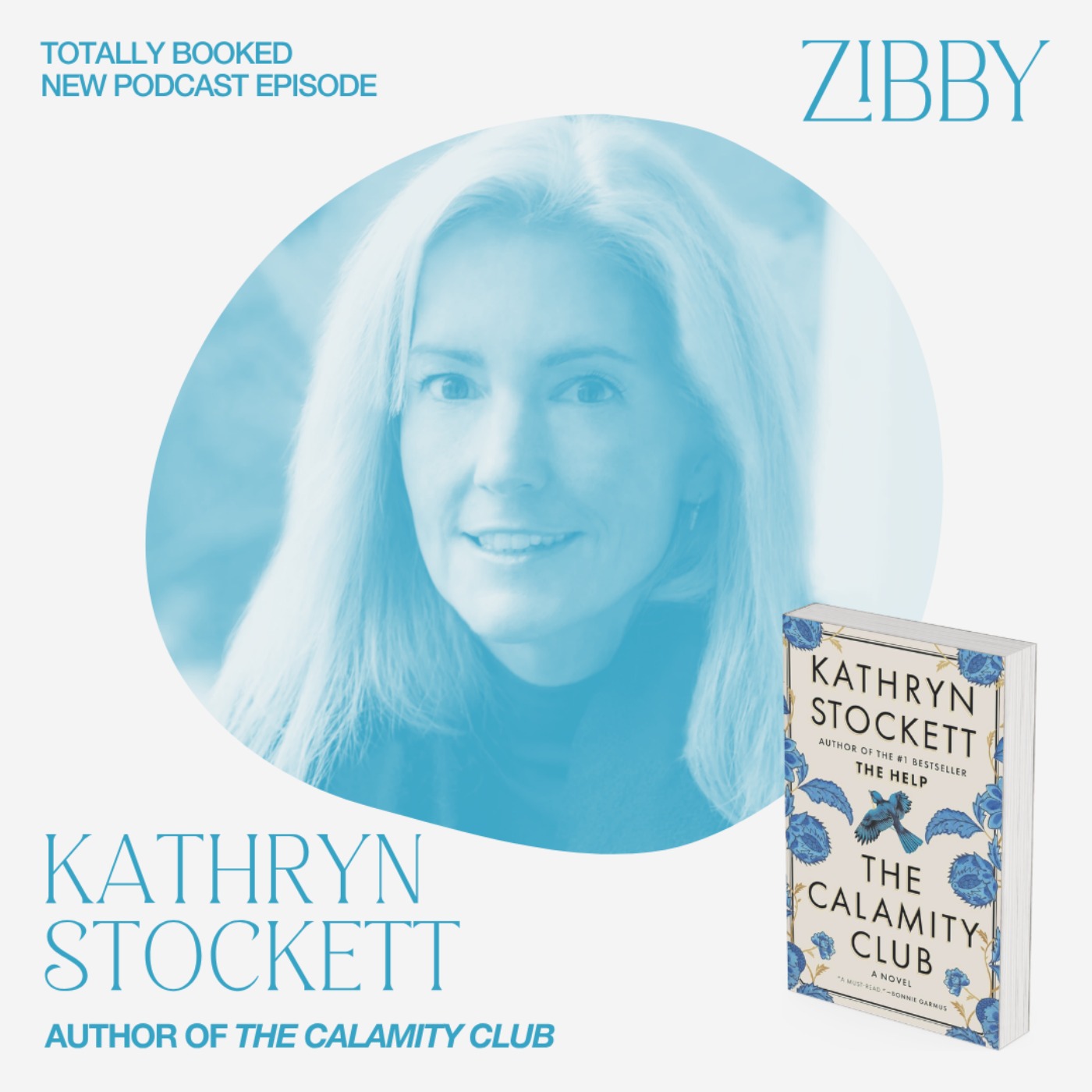
Totally Booked with Zibby
Mega-bestselling author of The Help is back! Kathryn Stockett on The Calamity Club
00:29:50
Loading summary
Transcript63 lines
- [00:00]
Capital One Advertiser
With no fees or minimums on checking accounts, it's no wonder the Capital One bank guy is so passionate about banking with Capital One. If he were here, he wouldn't just tell you about no fees or minimums. He'd also talk about how most Capital One cafes are open seven days a week to assist with your banking needs. Yep, even on weekends, it's pretty much all he talks about in a good way. What's in your wallet? Terms apply. See capitalone.com bank capital1na member FDIC
- [00:31]
Kathryn Stockett
a better help ad hold on one second, I just need to. What if you had a room where no one interrupts? No notifications, no expectations, just space to talk with BetterHelp Therapy happens in a space that's yours. Visit betterhelp.com randompodcast for 10% off your first month of online therapy.
- [01:04]
Zibby Owens
Today's episode is sponsored by Nutrafol. Do you know that feeling when you're brushing your hair and somehow it just looks a little thinner than usual, maybe a little less full? And you're like, what is going on here? Well, Nutrafol supports hair health from within, helping you grow stronger, visibly thicker hair so that those moments happen less often where you're worried about your hair. Nutrafol is the number one dermatologist recommended hair growth supplement brand and it's the number one hair growth supplement brand personally used by dermatologists and by the way, personally by me. This is the brand that I trust. Adding Nutrafol to your daily routine is easy. Order online, no prescription needed, with automated deliveries and free shipping to keep you on track. Plus, with a Nutrafol subscription, you can save up to 20% and get added perks to support your hair health journey. So let your hair be one less thing to worry about. See Visibly thicker, Stronger, Faster Growing Hair in three to six months with Nutrafol For a limited time, Nutrafol is offering our listeners $10 off your first month subscription and free shipping when you visit nutrafol.com and enter promo code Zibby Z I B-B Y that's nutrafol.com spelled N U T R A F O L.com promo code Zibby. Enjoy. Hi, this is Zibbee Owens and you're listening to Totally Booked with Zibby. Formerly Moms don't have Time to Read Books. In my daily show, I interview today's latest, best selling, buzziest or underrated authors and story creators whose work I think is worth your time. As a bookstore owner, publisher, author and obviously podcaster, I get a comprehensive look at everything that's coming out and spend my time curating the best books so you don't have to stay in the know, get insider insights and connect with guests like I do every single day. For more information, go to zibbymedia.com and follow me on Instagram ibbeowens. Okay. Did you read the book or see the movie called the Help? It was out in 2009, written by Kathryn Stockett. I was obsessed. It's an amazing book. You've probably read it. Over a million copies of it were sold. If not, go back and read it. But actually you can read the Calamity Club, which is a novel. And this is her second book after the Help. Kathryn Stockett was born and raised in Jackson, Mississippi, and she lives between New York and Mississippi. Now, be warned, this book is over 600 pages. It is beautiful. It is heavy, it is immersive. It took me a while to get through the whole thing because it's like reading three books in one. However, you have to have a really amazing plot to be able to propel someone to keep going. The Calamity Club by Katherine Stockett. This is going to be a huge book, and I am honored and honored and honored to have had Katherine on the podcast to talk about it before it came out. Welcome, Katherine. Thank you so much for coming on Totally Booked to talk about the Calamity Club. So exciting. Congratulations.
- [04:11]
Kathryn Stockett
Thank you, Zibby. I'm so excited to be here.
- [04:14]
Zibby Owens
So, first of all, how does it feel? I'm sure everyone's going to be asking you this, but as a follow up to the Help, here we are, what, 15 years later, more than 15 years later. How are you feeling about having another book coming out into the world?
- [04:27]
Kathryn Stockett
I'm really excited. You know, it's been a long time. The world has definitely changed since I last had a book out in the world. So I'm really. I'm just excited to share my work with readers. I don't know. It's daunting. At the same time, you kind of wonder, are they going to think I'm crazy? Are they going to think it's funny? Are they going to understand it? It's so long. But I think that, I mean, it made me laugh. I hate to say that about my own work, but I laughed so much through the writing of this book. And I think the readers will, too.
- [05:06]
Zibby Owens
I think so, too. By the way, I think my favorite character, aside from Birdie, is Tom. I love Tom. I can't even. That was like the most. I Mean, I can't. I won't go into. There's so many plot things that I want to talk to you about. But I feel like I need to do it offline after reading the book, like, because I don't want to give all these things away. But. What a special guy. I don't know. I have a special place in my heart.
- [05:30]
Kathryn Stockett
Thank you. I had some really interesting and heartfelt mentors when I lived in New York and I was working in publishing. I mean, just, just, I. I got so lucky. I know so many young women have had horror stories. And I don't know how I landed this job. I was consulting and I was going sort of from like National Geographic to Conde Nast to Rolling Stone. And I had had this wonderful person in my life who I thought of often when I wrote the character Tom. And, you know, he turns out to be a very tragic character and in a way, it mirrors my mentor. So thank you for noticing that.
- [06:19]
Zibby Owens
Oh, my gosh. Maybe I should back up and have you just explain the premise of the book.
- [06:24]
Kathryn Stockett
Oh, yeah, okay. So the Calamity Club, you know, like, the Help. I wrote it really with the same intention. And that is this idea of what happens when you put together a group of scrappy, strong willed, kind of outsider women in a place they're all at the very end of their rope in a place as colorful and complicated as Mississippi. And then you add to that the Great Depression, the 1930s, which were such a different time for women than they are now. And there's no one coming to help these women. They're broke, they're desperate. No men, no brothers, no husbands, certainly no government programs. And from this stems a, you know, terrible, awful, but very profitable idea to. To make money. It's the story of sisterhood and friendships, good and bad, and a little bit of naughtiness. But like I said, I think the reader's gonna laugh. I think the reader's gonna have fun.
- [07:41]
Zibby Owens
Interesting. I mean, there's a lot of heartbreak in the book, too, I'm actually surprised to hear. Not that I didn't have fun reading it. And, you know, Birdie in particular, and Meg, too. They're very smart, fun, you know, quick witted characters. And the situational comedy, too, with Mrs. Tartt and like, some of the other. And Frankie, you know, Frances, who's just like, oh, my gosh, I can't even get over her. You know, it's because of their reflections. But I'm not sure I would lead with this is like the funniest. You Know, it's incredibly moving, and the resilience of the characters is insane. Right. It's. How do you go from just for everybody, from the orphan Meg to her mother to, you know, a family who has fallen from grace? How do you get back up? And I guess humor is one. One of the tools in the toolbox.
- [08:40]
Kathryn Stockett
Absolutely. I mean, it's how. How do we get through any day?
- [08:45]
Zibby Owens
Yeah.
- [08:46]
Kathryn Stockett
How do we get through our darkest times without humor? And I had to keep reminding myself that this was, you know, these were our grandparents or mine. You know, I'm older and. And this was my grandmother. This was my grandfather. Living at a time when you're watching people around you starve to death, you're watching people that were living a very comfortable, high lifestyle fall to have nothing. So many families like that lost everything, bonded together and all moved in one house. And I. I did hear from several people that I talked to that there was a lot of joy in that, you know, also a lot of, oh, this is a real pain in the ass, you know, but they just wa. Edited it out. But, you know, Mississippi was a different situation than a lot of the United States because, you know, the. The Depression hit Mississippi way before, you know, the stock market crash of 1929. We had the. This enormous flood, I mean, maybe the biggest flood in. In history in the Southeast in 1927. And then we had a drought, and then we had a boll weevil, and we just had all these manner of things in a state that was already, you know, not doing great anyway, Mississippi. And so it hit us a little bit later, the real tragedy, right around 1933. And people ask me, you know, why did you pick that time that. That particular year? And that's because that was right before things were bad. But they weren't, like, devastated yet in Mississippi. But also 1933 was right before prohibition ended. So I wanted just something that we sort of take for granted now, just alcohol, you know, to have a real taboo around it. I wanted, you know, if you had a couple of cases of whiskey in your. In your cellar, I mean, that was contraband, but also you were pretty damn lucky to have that. So I wanted. I wanted that to have more value then obviously it does today. These simple things that, you know, I have a whole bar full of alcohol that I don't really drink, but, you know, it's there. But in a college town, you know, having a lot of whiskey means something even.
- [11:15]
Zibby Owens
Yeah, even the way you described the college town and the shopkeepers just sort of sitting there with their, you know, elbows on the table waiting, and the empty stores just waiting for the kids to come back to school. Like, the way you depict place and scene and time, really incredible. And now I have, like, a new view on college towns in general. And like all these, there are just so many minor things in addition to all the major things, like the way you tackle race relations back then and how, you know, even the sheriff is like, you can't reminding everybody all the time you can't mix blacks and whites. And that just the idea of an interracial relationship was, I mean, what they were doing as punishment. I mean, I had to hold my stomach a few times reading the book because there are some scenes in here that are quite brutal, and I'm sure they come from truth.
- [12:05]
Kathryn Stockett
Well, you know, miscegenation, which is the coupling of a black and white, was not on the books, illegal until 1930. So even though it was not done often, it was sort of rose into the spotlight again in the 1930s. And, you know, after that, many more Jim Crow laws came to be. But it was quite scary. I mean, but it wasn't just miscegenation. It wasn't just, you know, the people frowning upon blacks and whites being together. There was this movement in the 1920s and 30s called the Eugenics movement, which, you know, the Calamity Club. A lot of the Calamity Club is about this movement. And basically what it was was this idea that we as Americans needed to cleanse our precious white societies of what we considered undesirables. And in the 1920s and 30s, states began individually passing a sterilization law that made it legal for anyone with epilepsy or autism or had a criminal record or some, in some states, the deaf and dumb and blind to be sterilized so that they didn't propagate and then become a problem of the state. It was a big part of the Christian community, which is, you know, hard to believe, but there's very little love and kindness in that theory of let's take away your basic rights. And this. This happened much more to women than it did to men. But the. The interpretation of this, these sterilization laws in especially in places like Mississippi, and especially in places like California, was that it grew to include if you looked even a little bit promiscuous, you could be taken into custody and you could be tested for sexually transmitted diseases. And I think the idea was if you were promiscuous, you must be of lesser intelligence as a woman, Intelligence as a woman, and therefore let's just go ahead and sterilize you so that you, you know, you don't make more like yourself. It confounded me when I read about all the different cases and it also, you know, broke my heart to think of how many cases we don't know. I think we the estimate, you know, the recorded number is something like 70,000 people in America were sterilized during this time. But really we know the numbers is more like hundreds of thousands.
- [14:56]
Zibby Owens
My gosh. Today's episode is sponsored by Wayfair. After the fire in the Palisades, we had to redo our entire outside area and we found the best stuff on Wayfair. We found adorable throw pillows that looked fabulous. We found warmth, one round carpet, one square carpet. We found coffee tables and all sorts of things that made our outside feel like home again. Wayfair is amazing because it has everything you could possibly need and it's so easy to find. Wayfair made it so simple for us to narrow it down to what we wanted for our style and budget. It also features reviews, filters and visual tools that help us find the right fit. Every Style, Every Outdoor Space Whether your vibe is modern, coastal, farmhouse or eclectic, Wayfair has the options you need to help you create an outdoor space that's uniquely yours. And everything is in one place. From outdoor seating and grills to storage, patio lighting and rugs and decor. Which is what we got. Wayfair is your one stop shop for Home Plus. You can trust in the delivery, installation and assembly services are available for a truly seamless experience. It was so easy for us to order and receive all of our items. Plus over 20 million verified 5 star reviews helped me make the right call. Real customers, real feedback and real homes. You can also shop with Wayfair Verified. Your shortcut to the good stuff. Their team of product specialists vets everything by hand using a 10 point quality inspection so you know you're getting a quality piece no matter your budget. Get prepped for patio season for Way less head to Wayfair.com right now to shop all things home. That's W-A-F-A-I-R.com Wayfair every style Every Home Wayfair Every Style Every Home Today's episode is sponsored by Whatnot. Okay, so Whatnot is a live shopping platform where you can get items across all different divisions from beauty, apparel, bags and more. But what I have found is it is the perfect place to get kids birthday gifts. There are Neatos for those of you who don't know neatos are these little plastic toys which are all the craze people go neato hunting anyway. They have neatos and squishies and everything you can imagine for better prices than competitors. There are great deals and it is so fun to shop in this dynamic interactive platform. My steals included a Jelly cat Heart for $5.38 and Jelly Cat Toasty Marshmallows for $9.89, not to mention Anito for $6.26. I'm not surprised that Whatnot is the largest live shopping marketplace in the country because it's a trusted shopping experience in a real time format and There are over 10,000 fashion, beauty and bag sellers all over and you almost never pay full price, which of course is amazing. So let me tell you, I had the best time with my kids going on whatnot and then there were things for me too. But it was more fun for them in my opinion. So download the Whatnot app today and get free shipping on your first order. Just search whatnot what N o t whatnot in the app store and start scoring amazing deals.
- [18:20]
Capital One Advertiser
With no fees or minimums on checking accounts. It's no wonder the Capital One bank guy is so passionate about banking. With Capital One, if he were here, he wouldn't just tell you about no fees or minimums. He'd also talk about how most Capital One cafes are open seven days a week to assist with your banking needs. Yep, even on weekends it's pretty much all he talks about in a good way. What's in your wallet terms apply. See capitalone.com bank capital1na member, FDIC.
- [18:53]
Zibby Owens
Oh, and of course you tell us one person's story, it feels like we've experienced that. Right. It's one thing to say tens of thousands of people, but just like this one story like that, they could do this to anyone against their will.
- [19:07]
Kathryn Stockett
The American plan after World War I, you could stop a woman on the street just for looking, just because a cop thought she looked tawdry. California enforced the law. They were really the biggest propagators of the sterilization law. They made it such an important part of their policy that Adolf Hitler asked the head of Eugenics in California, how are you doing this? Come to Germany and show us how. And he didn't go. But he sent Hitler a piece of paper with a diagram showing the effect of how one feeble minded woman with low morals could have an effect on all of society. Wow. Yeah.
- [19:58]
Zibby Owens
They really keep this part under wraps. Right.
- [20:00]
Kathryn Stockett
It has been written about enough.
- [20:03]
Zibby Owens
Yeah.
- [20:04]
Kathryn Stockett
So you know, that's One of the reasons why I grabbed onto it, because I felt like this story needed to be told. And, you know.
- [20:12]
Zibby Owens
And again, this is just like one of so many horrific. I mean, not to say the book has a lot of horrific, but just that things happen during that time that we can't even imagine in our world of, like, being canceled for saying one wrong thing. I mean, what they were doing for the gay community also at the time and what they did, what they would do in mental health institutions to try to fix, quote, unquote, you know, the homosexuality disease. I mean, those passages in the book, too. Oh, my gosh.
- [20:43]
Kathryn Stockett
Yeah. Conversion therapy had not quite taken off. And there were some really brutal experiments that they were doing to try to convert a. Usually a gay man into a straight man. And there's a character in the Calamity club that, you know, God help him. I. You know, as much as Rory irritated me and made me so angry as he told me, the writer, what he was gonna do in the story. Cause that's how it works. I. You know, I felt so horrible for him because he was, you know, a victim of the times, but at the same time, you know, so mad at him for the choices that he made and, you know, for being a coward.
- [21:25]
Zibby Owens
Yeah. Wait, go back to the characters writing themselves and the process of writing this book and all of that. Tell me the journey. Tell me the journey of this. Of the novel.
- [21:36]
Kathryn Stockett
Oh, yeah. It took me a really long time to write this. And let me. Let me tell you why. After the help, I. I told myself, okay, this time I'm gonna write a really simple short book that doesn't raise the red flags that the help did, you know, doesn't cause the kind of criticism that the help did. And. And I try to write that story for many years, for over five years. And what I finally had to surrender to was the fact that you cannot write about Mississippi, especially in 1933, and not write about racism and discrimination and, you know, the, you know, repression of women, the repression of black people. All of these things that I was trying to avoid. And so I just. I gave into it. And when I did the voices, I mean, talk about crazy. I sit in this little room, you know, I have to. I have to have this feeling that I'm actually going to work in the morning. So I get up, you know, I have breakfast, and I kind of change clothes, and I go to work, you know, I mean, 10 yards away, to another little house that was the old school house on this property. And I sit down at My desk, and it's tiny, and it has kind of a weird smell. And that's where the. The characters talk to me. And. And they are basically driving this bus. I don't always get a say. And we argue, and I'm talking out loud, and if you ever saw me, you know, just through the window, you'd be like, who in the hell is she talking to? Ye.
- [23:31]
Zibby Owens
Tell me an argument you had with the character. Like, what did someone do that? You were like, no, you can't do that.
- [23:36]
Kathryn Stockett
Oh, my gosh. I mean, just. I mean, Flossy. Flossy was constantly just tempting me with, you know, the stereotype of, you know, the hooker with a heart of gold. And she challenged me a lot. And so did Ruby, her sort of nemesis in the story. These. These women. You know, I was just like, I can't show that. I can't go that far. I don't want to write about. I don't know how to say it, like, illicit sex. I don't want to write about that. And then they would. And then Ruby would say something really wrong to you, and I would just start cackling, you know, but it's. I'm not in control. And there's something else that happens when I write that is very strange. I don't. I don't always remember what I wrote. That's how far away I am, how out of body I am. And I'll. Sometimes I'll go back and read something I wrote just like, three days ago, and I have no memory of writing it and no idea sometimes where I was headed with that, which is always trouble. But, you know, the characters speak up and put me back on track.
- [24:46]
Zibby Owens
Wow. Were there any characters that spoke to you that you ended up cutting and did you feel bad?
- [24:50]
Kathryn Stockett
Yes, I did. I did not feel bad. I felt wonderful. I love cutting. I love cutting a character. I love cutting a storyline. But I had a lot more of a character named Charlie in there, her inner thoughts. And I found out that the nuance that I liked the most about Charlie was that she was a secret keeper. She had one motivation in her life, and that was to get Meg back, her daughter. And I didn't really. It was just. It was good for me to know these things about her as I wrote about other aspects of her life. But it was not important to this story. I wanted her to be of one mind, one mission. Let's make money so that I can get my daughter back. And as a mother, you know, I can understand that. I get that one mission it is the only thing that I would be focused on if my daughter, you know, had been taken away from me.
- [25:51]
Zibby Owens
And yet she showed a lot of restraint because there was an opportunity for her to just like run and grab her at one point. Right. She knew where. When she knew where she was. But she was so methodical, too. Like, she was, like she had to make sure everything was lined up so that she would be okay to take her daughter.
- [26:08]
Kathryn Stockett
That's right. I mean, she made a plan, but I had to keep reminding myself and sometimes reminding the reader that she had had two years to think about this.
- [26:18]
Zibby Owens
Yes, that's true.
- [26:19]
Kathryn Stockett
Sit alone and, and, and just be in pain, figuring out how she's going to get her daughter back. And I'm not saying that the plan itself, you know, came to her in a complete form, but she had a lot of time on her hands to solve this problem.
- [26:38]
Zibby Owens
Well, I'm sorry to hear we lost some of Charlie, but I loved the parts of her that you did share. I feel like we did get a complete understanding of her and who she was and how her life ended up taking these different paths that maybe weren't the plan. But here she is, this super bright lady who has just, you know, fallen victim to the system in a way.
- [27:01]
Kathryn Stockett
Yeah, she had the hardest time of the whole book, the whole sterilization storyline. And Charlie, it was hard to write sometimes, just imagining, you know, I'm a big believer that as a writer, it is our job to actually, to truly imagine what it feels like to stand in someone else's shoes. And I have to do that with so many different characters. It's a lot of, you know, it's a lot of hats to wear. But with Charlie, I could really feel her pain. I could feel the anguish and her anger. She was, I mean, rightfully so. So angry. Yes. And. And that angry anger can be, you know, the reason that can often get you off course if you, if you give into your anger. So she had to learn control.
- [27:54]
Zibby Owens
And did you tap into your own mother feelings like, how old are your kids? How did you feel?
- [27:59]
Kathryn Stockett
Absolutely. I have one daughter and she's 22. And so if you think about it, 17 years since I published the Help. So she was still, you know, she was a very young girl. You know, she was Meg's age. A lot of Meg came from my daughter Lila, because, you know, I was a single mom. I was, you know, living with her and just watching her, watching my daughter just spot the bullshit, you know, see right through the bullshit immediately and call it as so many children do call it like she sees it. And, and I learned that and I picked up on that. And, and she really, you know, she might not know this. She has not read the book yet. She's writing a book and she's a lot like me. She has to be really careful what she. What kind of gas she puts in the tank because we start to pick up on other writers nuances. Sometimes they're very words, you know, we have to really be careful. So she's not ready yet. She said she'll read it after she finishes her book.
- [29:03]
Zibby Owens
Oh my gosh. What do you think she'll make of it?
- [29:07]
Kathryn Stockett
Well, I mean, we all want to impress our children, right? I mean, we want to. I want her to look at it and, and think and be, I don't know, hopefully proud of her mom. Because it was quite the journey, as the reader will find out. You know, 600 pages of story. It was a long trip.
- [29:30]
Zibby Owens
Wow. Well, I love in the book too. I mean, even though there are so many characters and we get a lot of backstories, I feel like it really centers on two families, the Heidelberg family and the Tarts. Right. And we inhabit their worlds and their cousins sometimes and their homes and their living rooms and their help and all of it like we are immersed into those two different but sort of complementary families. And it's almost like who are we rooting for? Which family would I rather be in? How would I operate in this system? You as the reader have to put yourself in there. Would I be comfortable sitting on that living room couch with Mrs. Tart pre fall? How would I interact with the moms by the lake? Chit chatting with the Heidelberg? I don't know. Tell me about how you keep a novel going because you still had me turning all the pages to find out what was going to happen yet having two very different central families.
- [30:41]
Kathryn Stockett
Well, I organized the book so there's a part one and there's a part two. Because I wanted the reader. I wanted the reader to have some relief. Kind of like, you know, you're not old enough to know this, but when I went to the movies.
- [30:57]
Zibby Owens
What do you mean? Thank you.
- [30:58]
Kathryn Stockett
I mean, there was an intermission when you went to the movie theater.
- [31:03]
Zibby Owens
Okay, fine. I did not have an intermission at the movie theater.
- [31:07]
Kathryn Stockett
You got a moment often, like when you go see a Broadway play, you got a moment to sort of think about what you've seen and in this case what you've read. Think about where your characters are and just take a breather so that you can start the second journey of the book. And I think with 600 pages, this was a really important kind of structure to follow. But, you know, I felt there's. I just think there's only so much mileage you can get in this many pages in a story this full of having a girl sit in a room in an orphanage, you know, she's confined more or less to one room. So I wanted to expand Meg's world exponentially and have her, you know, feel a bit overwhelmed by the wonders of the Heidelberg home. This is very different than what, you know, where she came from even before she, you know, became an orphan. And also wanted to show a different kind of lifestyle for Mississippians, I guess. I mean, the Tarts lived, you know, this sort of, you know, wealthy societal lifestyle. But the Heidelbergs are different because you have a, a matriarch running this family. You have a very intelligent woman that is calling the shots and, and it wasn't really expressed in the book, but she's basically running the business and she's in control of all of the family members. And I thought that was really interesting. And I've not read a lot of books about that that were fiction in the 1930s, but we know it happen because there have been strong women throughout all of history.
- [32:59]
Zibby Owens
Even the dividend distribution, the emotional ramifications of that.
- [33:04]
Kathryn Stockett
That's right. And you gotta be loyal to the family. But I wanted Meg to be put once again in a place with like minded people. And I felt like the bond between Meg and Tom was so strong. I love that Meg had never had a father and to have an intelligent F who loves to read, which is Meg's, you know, greatest joy in life. It was like finding a best friend. It was in a way, you know, a non romantic, but it was, it was a love affair. And I really, really loved writing about their relationship.
- [33:45]
Zibby Owens
Yeah, that was incredibly poignant. All of it was so good. Oh my gosh. Okay, what do you want? What is your greatest hope? Like me, for example, I just finished this. I put it down. Now we're talking. What do you want me to take away from the book? With all of the story now in my head, what do I go back into the world thinking and feeling differently? Having read it all and learned about this time and place and everything, how do you want readers to be changed?
- [34:13]
Kathryn Stockett
Okay, well, of course I want us to have an appreciation for what our grandparents went through. And for some people, our great grandparents that like history repeats itself. It is so obvious when you go back in time and look at the choices that people made and the absurdities and the way people are underestimated and the rights. And then I also want women to read this book and think, oh my gosh, look at what we're going through now in America. These rights that women have and we have not had them for that long and they could so easily be taken away. And not just in America. All over the world, we gotta fight for women's rights. They could slip away so easily.
- [35:05]
Zibby Owens
Amazing, Catherine. Thank you. Thank you for the hours of immersion, the things I learned, the people I got to know, the role models I got, in a way, and just being so transported. I mean, that is what good fiction does, right? You are in another space. Even though I'm sitting here today in 2026, like I was in it for a while. And that is so powerful. So thank you for that.
- [35:32]
Kathryn Stockett
Cindy, you are probably the best reader I've ever talked to. Thank you for going, you know, through that journey with me.
- [35:42]
Zibby Owens
Oh my gosh, I barely scratched the surface. There was so much more to talk about. But thank you for saying that.
- [35:47]
Kathryn Stockett
Thank you.
- [35:48]
Zibby Owens
Okay. Thank you so much. I'll be rooting for you. Bye bye.
- [35:51]
Kathryn Stockett
Thank you.
- [35:52]
Zibby Owens
Thank you for listening to Totally Booked with Siby, formerly Moms don't have time to read books. If you loved the show, tell a friend, leave a review. Follow me on Instagram, Zippy Owens and Spread the Word. Thanks so much. Oh, and buy the books.
- [36:14]
Capital One Advertiser
With no fees or minimums on checking accounts. It's no wonder the Capital One bank guy is so passionate about banking with Capital One. If he were here, he wouldn't just tell you about no fees or minimums. He'd also talk about how most Capital One cafes are open seven days a week to to assist with your banking needs. Yep, even on weekends. It's pretty much all he talks about in a good way. What's in your wallet? Terms apply. See capitalone.com bank capital1na member FDIC. If you work in university maintenance, Grainger considers you an MVP because your playbook ensures your arena is always ready for tip off. And Grainger is your trusted partner, offering the products you need all in one place. From H Vac and plumbing supplies to lighting and more. And all delivered with plenty of time left on the clock. So your team always gets the win. Call 1-800-GRAINGER visit grainger.com or just stop by Grainger for the ones who get it done.
- [37:19]
Kathryn Stockett
You do it all. So why not get all the electrolytes hydrate better than water with new Gatorade lower sugar. Now with no artificial flavors, sweeteners or colors. And 75% less sugar than regular Gatorade. New to the fridge. All the Gatorade electrolytes you love.
- [37:38]
Zibby Owens
Gatorade lowers sugar.
- [37:40]
Kathryn Stockett
Is it in you? Now available nationwide.