← Totally Booked with Zibby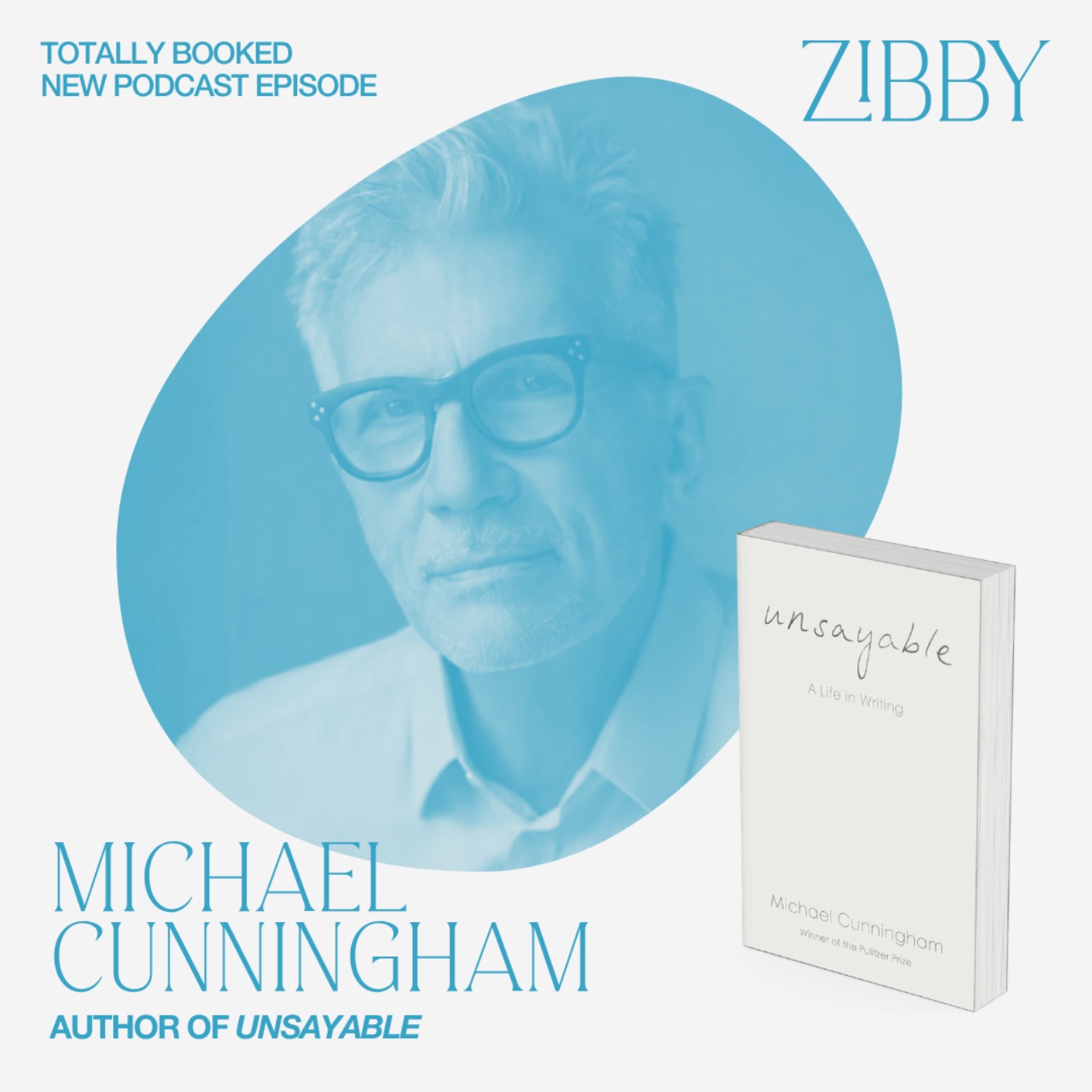
Totally Booked with Zibby
Michael Cunningham, UNSAYABLE: A Life in Writing
00:23:42
On Writing, Relationships, Tight Sentences, and . . . Sex Work
Loading summary
Transcript47 lines
- [00:01]
A
Welcome to Totally Booked. I'm Zibby Owens. I've interviewed more than 2,000 authors on this show and learned endless amounts about storytelling, reinvention, and life itself. Because when you talk about books, you're really talking about life. So get ready to hear from today's best authors, the best selling and the not yet discovered. Come find your next great read and the story behind it. Enjoy. Michael Cunningham is the author of A Life in Writing. Michael Cunningham is a novelist, screenwriter, and educator. His novel the Hours received the PEN Faulkner Award and the Pulitzer Prize for Fiction in 1999. By the way, I loved the Hours. Read it for a book club. He has taught at Columbia University and Brooklyn College. He is currently a professor in the practice at Yale University. Welcome, Michael. I'm so honored to have you on my podcast, Totally Booked to talk about your book, A Memoir. Congratulations.
- [00:58]
B
Thank you you for having me.
- [00:59]
A
I read. I mean, I'm sure you hear this all the time, but I read the Hours years ago and just never forgot it. Loved it so much. Read it with a book club. It was just amazing. So I've kind of been following you ever since. And thank you.
- [01:12]
B
Thank you. No, believe me, I'm not at all tired of hearing that. It's a thrill and an ongoing surprise that that book speaks to people the way it does. So thank you.
- [01:27]
A
Having now read your whole trajectory to getting there, to being the author of it, I feel this investment into you and your career, and I'm so happy to see that it paid off. When I think of you getting dropped off at college and just all the beats on the path. So interesting. So why don't you tell listeners a little bit about why you decided to write unstable at this point and what they can expect to get out of it.
- [01:55]
B
Wow. I will do my best.
- [01:57]
A
Give it a shot with that.
- [01:59]
B
I'll give it my best shot. Moving on. From what you just said, it's not exactly a memoir. It's being called a memoir. What we call it is a life in writing. And what it is, really is a book I've been storing up for decades as I have been trying to learn how to write myself. And you keep learning how to write all your life and reading and then for some time now teaching literature and writing to brilliant young people, which has sort of led me to think more deeply and incisively about what writing is, how does it work, what reading is, what do we read for? And it is a chronicle of two related processes, trying to figure out how to write on my own and Then trying to talk to gifted young people about how they might do it in their own way, with encouragement and some direction from me, but without me trying to pretend like I know how you young aspiring writer, should do this.
- [03:24]
A
Well, it was really neat to see all of the two threads, really, of the book, where you have excerpts, paragraphs, sentences, things for us to contemplate and learn from and that you point out to us. And so that was great, because I felt like I was smarter just reading all of that part. And then, you know, diving deeper into your life. And you had a lot of surprises. I mean, I guess everybody's life essentially is a surprise to strangers, right? I guess that's just part of the course. But it starts with the fact that Michael Cunningham is not even your name. So maybe touch on that.
- [03:58]
B
What about that? What about that? I have found that if you scratch a lot of Americans, you get pretty quickly from American ness to something other. And for me, as it turns out, I have been Michael Cunningham most of my life. And we found out about 10 years ago that my father's father had changed his Croatian name, which you'd pronounce it Grig. It's like, you know, it's Croatian. It's like three GS and four Rs. And he just decided that a sort of Anglo Irish name would be better for his career. And so he just changed it without going through a legal process or anything. So all this time I have been a Croatian guy named Michael Grigg, masquerading as a sort of Anglo Irish guy named Michael Cunningham. I wish I'd learned about it earlier, because, you know, Craig, I love the name Craig. Like, you jump off that first hard G and kind of sail over the R, and then, bam, you're hit by that second G. You know, Cunningham is just sort of a series of speed bumps with a dot over them. Then it becomes your really amazing.
- [05:22]
A
Well, throughout the book, your sort of self analysis and the analysis of the writing itself and how you teach us through different paragraphs. There was one instance where you were trying to tell yourself not to write too much, to keep it simpler. I think it was about take your A, the advice you got not to put some of your A sentences into literature, and that you should stick with the B's so it's not overly flowery or anything, and how even in the book, you were like. And that's why I'm not going to write about the bird fluttering in or whatever it was. That's why I'm going to stick to this right here.
- [05:58]
B
Yeah, yeah, yeah. Just briefly. It was the best advice I ever got from a teacher, Himlo Watts river, who, to whom I still bow down, who essentially told me to try to learn to distinguish between strong sentences that are in service to the story and strong sentences that are a sort of demonstration of my ability to write strong sentences with three parentheticals and four semicolons. And as pointed out to me when I was in graduate school, those sentences are about your talent. They're not. They're not about the story. And keep an eye out for them, which I still do. But, yeah, yeah. A big part of this book is not only my attempt to figure out my own writing process, but once I started teaching writing, I realized that there's nothing you can say about fiction that cannot be contradicted by a great work of fiction. Not even show, don't tell. You say, this is a rule, and then you. Oh, well, yeah, but what about that great book? So what I have been doing all this time and talking to students about writing and literature, but especially about writing, is trying to get a sense of what they're trying to do and talk to the best of my ability, to each student, about what's the story you're trying to tell and how might I help you find your way to a voice and a vision that is your own? It's funny, it's a little counterintuitive, but we tend to start out, most of us, many of us who want to write, writing relatively conventional stuff. When I first started teaching, oh, I'm going to have to really tame these critters down. But it's actually. And it was true for me, too. It just seems so impossible to write at all that you, without consciously deciding to, you try to write something like what you've read. And my job, maybe the heart of. The heart of my job, is to try different ways to tell different students. We've already got those stories. Take us somewhere new.
- [08:22]
A
Amazing. You took us to lots of new places, I feel, in this book. And you shared a lot about your sexuality, about some of your experiences, even as a prostitute in San Francisco for a little bit. You want to talk about that? Today's episode is sponsored by Quint's. The best summer pieces are the ones you end up wearing on repeat. Comfortable, versatile, and somehow right for almost every occasion. That's why I love Quince. They make elevated essentials using premium materials like European linen, organic cotton, and washable silk without the traditional retail markup. Quince's 100% European linen pants dresses and tops are the pieces you'll reach for all summer long. They're lightweight, effortless to style and start at just $32. Their denim is soft and comfy and their organic cotton sweaters are perfect for layering when evenings cool down. Personally, I love my white tank dress that I wear all the time. I've actually pinned it to my Instagram as one of my top three posts. I also love my new jean jacket from there and I'm just so grateful to Quinte every single day. Especially because quince is priced 50 to 80% less than similar brands and it's not just apparel. Quint also offers elevated essentials for your home, from bedding to bath and all the kitchen essentials and furniture so make your summer wardrobe feel easier. Go to quince.com zibby for free shipping on your order and 365 day returns. Now available in Canada too. That's Quince Q U I n c e.com Zibbee Z I b-b y for free shipping and 365 day returns. Quince.com Zivvy Enjoy.
- [10:10]
B
Yes, yes, I put it in the book, which means we can talk about it. I naturally debated about putting that When I was in college, I worked as what we now call a rent boy, what we then called a hustler. I was at Stanford. I would go up from Palo Alto and sort of work out of the front of the St. Francis Hotel. Do I put that in? Yeah, because leaving it out would, would sort of imply that I felt like there was something shameful about it. I believe me, I do not recommend that anyone become a sex worker unless you really that's what you really want to do. But in writing about it, I focused way less on these sort of lascivious details and more on the question of why would I want to do that? And reflecting on it, it felt really clear that I wanted to do that because I'd hoped I was wrong about this, but I had hoped that it would turn me into somebody other than who I was, which was a privileged cosseted white boy from Southern California who went to a fancy university. And I just felt like, what am I going to write about? I need to take a walk on the wild side. And I know, I know anyone who hasn't read it can jump ahead to the punchline. Of course you can't become another person. You can become a person who did that. That's the best you can be. And that's what I really, really focused on, the whole idea, which is not Entirely exclusive to being a teenage prostitute. The whole idea of what do you need to know in order to be able to write about life, your own and others? How far do you need to stray from who you understand yourself to be? What experiences can you seek out? And to what degree are they useful if you're just seeking them out to write about them? By the way, I am still a rent boy. Just my client base is really strong and my prices are very low now.
- [12:34]
A
Maybe you've changed hotels, I don't know.
- [12:37]
B
Yeah, there's not much business anymore.
- [12:43]
A
I actually found that. I shouldn't say, actually, I found that portion of the book quite moving because one of the conclusions you draw is that the men who were hiring you really longed for that. The hug at the end, the snuggle, the connection just being side by side with someone else. And it spoke to the loneliness of them in their own lives, which you theorized at the time that they may have been married to a woman with a job and a golf course club and da, da, da. And yet this is who they were inside. And this was a little window into who they, they really were that you got to envision. So in that way, it was almost like getting insight into character and more about relationships and what happens when you stifle your true wants in life. And that was a very tender moment.
- [13:37]
B
Yeah, it was really meaningful to me. And what finally became sort of intolerable about doing something like that was the sex of the sex. You're 20. It kind of rolls. Your Teflon coating. That kind of rolls off you if you're a certain kind of 20 year old. But yeah, yeah, yeah. That ongoing exposure to these men's sorrow. Remember this? This is a long time ago. I actually don't know who a red boy's clients would be now. But this is San Francisco over 50 years ago. And, you know, they were mostly men in town on business. They were mostly closeted. They mostly had wives and children and lawns to mow and jobs to go to. And that began to be unbearable to me to have this access to the sorrows of these strange men. And then in an hour they were gone. So I didn't, you know, it wasn't like I got to know them. I just sort of got a blast of. Of their desire to. Yeah, more often than not, as you point out, the sex was part of the deal, but it was also kind of secondary. What matter, you know, everyone. It's not like they were all the same person, but there was a certain consistency and a Lot of these guys just wanted to almost get the sex over with and be in a bed with a boy in a room. And well, you know, you age out of the profession pretty early anyway. But I realized after less than a year that I couldn't do that part of it.
- [15:17]
A
Wow. Well, I appreciated you putting it in. I'm glad you made that decision. You also wrote so beautifully about your first real love, essentially the Adonis next door, your friend who it became nothing more than that when he dropped you off at college. And yet your feelings for him and the way that you wrote about those feelings was really exquisite and captures what I'm sure many people feel about a crush or about someone who has an outsize presence in their mind and maybe they don't even know.
- [15:55]
B
Yeah, yeah. I don't think he knew. I know he didn't know, but he didn't. He knew we were best friends in high school. He didn't know that I was going to think about him for the rest of my life. Life. Yeah. Yeah, yeah. Everything in the book is on one hand true to the best of my ability. But a lot of it is, I'm going to say, exaggerated. That's not quite the word I want. But everything happened, but not quite the way I write about it. And I write about that in the book. The impossibility of rendering a living person in post. And the first thing you find yourself doing is sort of taking what actually happened and trying to sort of crack it open and give it its full resonance. Which usually means, well, it didn't happen exactly that way.
- [16:55]
A
Right.
- [16:56]
B
But it could have.
- [16:58]
A
Yeah.
- [16:58]
B
I've had a couple of conversations with friends who've read it about this, about if it's a so called memoir, even though it isn't really. To what degree do you have license to move the facts around? Yeah.
- [17:14]
A
And you talk about if fiction is autobiographical, how people always ask, well, what in this novel is actually true? You're like, none of it. But most of it, because it's all in my brain in some way. How does it get into our brain so that we can process it, turn it into fiction?
- [17:31]
B
Yeah, yeah, yeah. I think, I think of the question, oft question, is this autobiographical? Is this literally true? Is maybe a question that's gained in popularity over time with the implication that we, all of us feel so lied to that we have become more suspicious than we once were of, of anything that didn't actually happen. And we're suspicious of that too. But the first question is, okay, can I at least deal with this as. As fact. And the best answer I have to that is, how about fact adjacent?
- [18:19]
A
I like that.
- [18:20]
B
How about facti
- [18:24]
A
Fact ish, maybe.
- [18:25]
B
Yeah. Fact esque.
- [18:27]
A
Yeah. Like it.
- [18:31]
B
What people don't always realize is you wouldn't want to read the literal account. It doesn't spark enough. It doesn't produce narrative arcs. And the writer comes along and one more time, while trying to honor the truth, you sometimes write about the truth inside the truth. And that's part of your job as a fiction writer. And I guess what I may not say when that question comes up is you wouldn't want the facts, not because they're shocking, but because they're, they're. As readers, myself included, you need it. You need it to be story eyes. So here we go. We've got fact ish and storyized as two additions to the English language.
- [19:17]
A
It's true. I mean, being a storyteller is not just a recounter of the day. Like at dinner, you don't talk about every single moment of the day. You excerpt the details that you think will be relevant and try to entertain everybody or relate or confess. You have to be able to do that. That's the job of the writer.
- [19:36]
B
I play a game sometimes with just a small group of very close friends and, and we call it my day. And you go around the small circle of intimate friends and you, you tell everything that happened that day, every single thing from I stopped by the deli and the sushi was disgusting, I couldn't say, but you know, things like that to I was crossing the street at 2 o' clock and I suddenly felt this weird despair. So it's like it, it's every single recountable hour and it's kind of revelatory because as you say, you realize that even with your mate, your most intimate people, it's highlights only. It's what stories do I have about today? And you don't play this game very often, but it can veer into the profound because it sort of reminds you that you may not quite fully understand the depth and complexity at the molecular level of another person's life. You know your own, but you just don't get that about anybody else until you play the game.
- [20:55]
A
So the game is kind of like the Hours part two. What really happens?
- [21:00]
B
Exactly, Exactly. It's all about aiming the microscope and
- [21:05]
A
say, yeah, is there anyone who you're worried about reading this book? Who you're like, oh, gosh, I'm kind of nervous for this person to read it.
- [21:16]
B
Oh, so many people if my parents were alive, I wouldn't publish it. My sister's gonna read it. I'm gonna have to talk to her a little bit beforehand. She'll be fine. And I included some people who are living and who I call by their names. And I showed all of them their section and said, in essence, this may or may not feel exactly right to you. It probably won't, but let me know if it feels sort of in the ballpark of right. Let me know if you feel like I've sort of gotten the drift of you. And everybody said yes, except one friend, this is in the book, who said yes. But I remembered her. We met in college, and I remembered her as a sort of tortured Catholic. And she responded and said, yeah, it's. It's. It's. It's fine. Except I don't remember myself as an especially tortured Catholic, which led us to talk about. Why would. I thought, well, yeah, but I remember you that way. Why would I project that onto you? And we sort of got to the notion that I was very secular from suburban Los Angeles, and she was the first deeply intelligent, utterly unbrainwashed practicing Catholic I'd ever met. And the great thing about this slightly invertebrate nature of this book is I could just leave my original account of her and then add that. And this is the conversation we had about how I wrote my own version of you, which is not exactly your version. Yeah, the book is all about subjectivity.
- [23:06]
A
True. Very true. I guess we could debate that.
- [23:10]
B
Yeah, we could.
- [23:12]
A
In your teaching, just to wrap up, do you believe everyone could be a great writer, or do you believe it's the few and far between?
- [23:21]
B
It's a good question, Horse. I guess I would say that I don't categorically believe that anyone at that age could not be a great writer. It would be disingenuous for me to say that I don't have some students who seem seriously gifted, and other students, not so much. But I've seen people who are my students. I've seen people who were other. Other teachers, students who didn't seem all that impressive when we worked with them, but they did it and did it and did it and wouldn't give up and wouldn't give up. And one day, 10 or more years later, you see their book and you are reminded yet again that you don't want to falsely encourage anyone, but you don't want to discourage anyone either, because you just don't know. And you can't know, as I sometimes quote Marilyn Monroe to my students who once said I wasn't the prettiest, I wasn't the most talented. I just wanted it more than anybody else. So, you know, in my class, we quote Gogol and Joyce and we also quote Marilyn Monroe.
- [24:38]
A
Amazing. Well, thank you for trying to say the unsayable in this book and for spending the time with me today. I really appreciate it.
- [24:47]
B
Oh, I had a had a very good time. Thank you. Thank you for the conversation.
- [24:51]
A
You're welcome. Thank you for the conversation.
- [24:53]
B
Thank you.
- [24:54]
A
Take care. Thank you for listening to Totally Booked with Zibby, formerly Moms don't have Time to Read Books. If you loved the show, tell a friend, leave a review. Follow me on Instagram, ibbyowens and Spread the Word. Thanks so much. Oh, and buy the books.