← Totally Booked with Zibby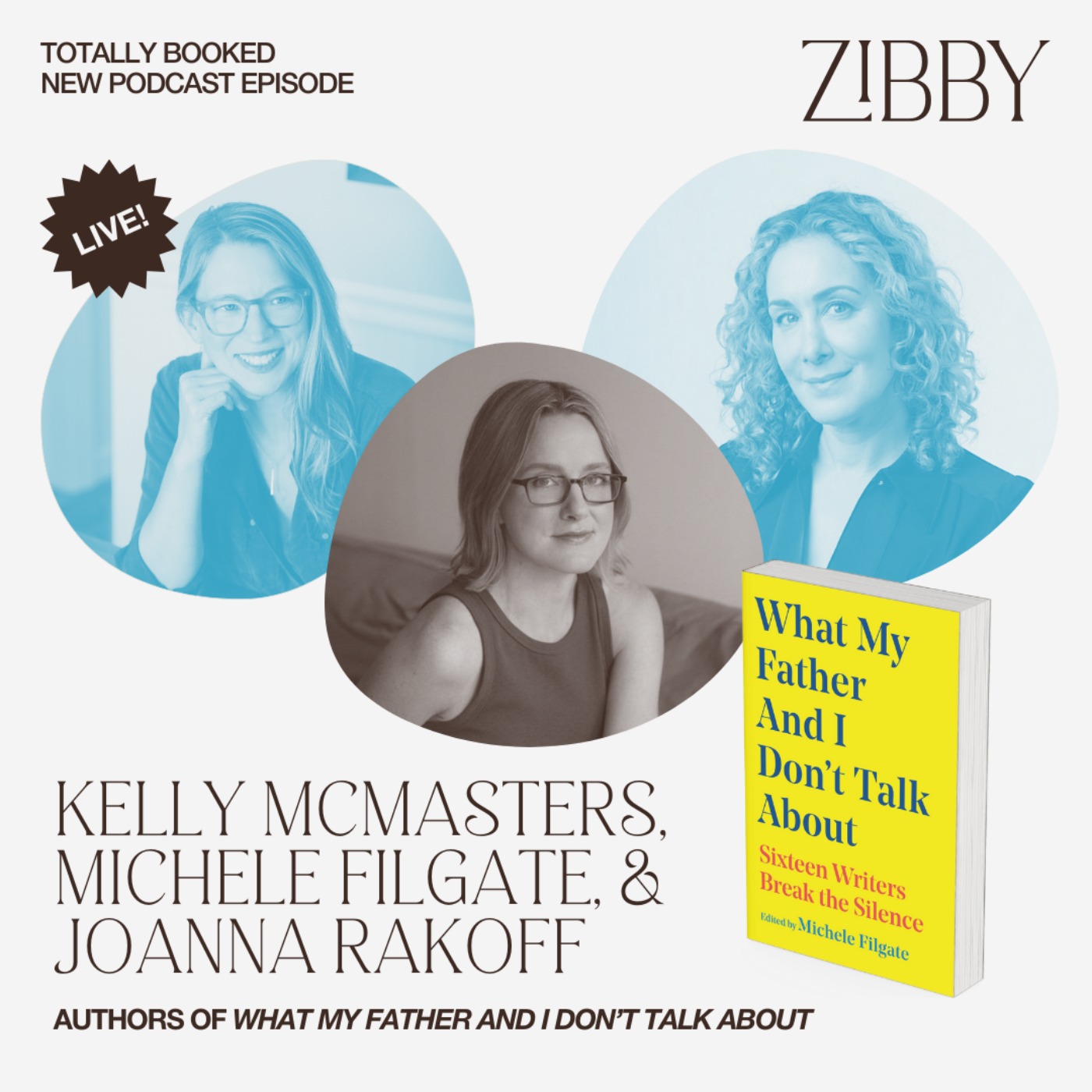
Totally Booked with Zibby
Michele Filgate, Kelly McMasters, and Joanna Rakoff, WHAT MY FATHER AND I DON'T TALK ABOUT: Sixteen Writers Break the Silence
00:28:37
Loading summary
Transcript65 lines
- [00:01]
Zibby Owens
Clips from the Totally Booked Live series are now up on Instagram totallybooked with Zivi. Check it out.
- [00:11]
LinkedIn Ads Voice
Does it ever feel like you're a marketing professional just speaking into the void? Well, with LinkedIn ads, you can know you're reaching the right decision makers. You can even target buyers by job title, industry, company seniority skills. Wait, did I say job title yet? Get started today and see how you can avoid the void and reach the right buyers with LinkedIn ads. We'll even give you a $100 credit on your next campaign. Get started at LinkedIn.com results terms and conditions apply.
- [00:42]
BetterHelp Voice
BetterHelp Online Therapy bought this 30 second ad to remind you right now, wherever you are, to unclench your jaw, relax your shoulders, take a deep breath in and out. Feels better, right? That's 15 seconds of self care. Imagine what you could do with more visit betterhelp.com randompodcast for 10% off your first month of therapy. No pressure, just help. But for now, just relax. My husband and I recently realized that neither of us were getting the sleep we deserved. So we sat down and talked about our ideal beds for him. Soft as feathers for me, firm as a plank. This would be a huge issue if it weren't for the Sleep Number Smart Bed. Thankfully, with our new Sleep Number Smart Bed, we can each dial in our desired Sleep Number settings to our ideal comfort and finally get the sleep we deserve. Plus, the Climate Series feature makes sure our bed stays nice and cool through the warm summer months. Why choose a Sleep Number Smart Bed? So you can choose your ideal comfort on either side. And now it's the Sleep Number Everything Smart Bed Sale. Every Smart Bed and base are on sale during our Memorial Day event. Up to 50% off limited time, exclusively at a Sleep Number store near you See store or sleepnumber.com for details.
- [02:17]
Zibby Owens
Hi, this is Zibby Owens and you're listening to Totally Booked with Zibby. Formerly Moms don't have Time to Read Books. In my daily show, I interview today's latest best selling, buzziest or underrated authors and story creators whose work I think.
- [02:33]
Michelle Filgate
Is worth your time.
- [02:34]
Zibby Owens
As a bookstore owner, publisher, author, and obviously podcaster, I get a comprehensive look at everything that's coming out and spend my time curating the best books so you don't have to stay in the know, get insider insights and connect with guests like I do every single day. For more information, go to zibbedia.com and follow me on Instagram. Iby Owens.
- [03:01]
Michelle Filgate
Welcome back to Totally Booked. I am so Excited to be talking to so many contributors and the editor, Michelle Filgate, of what my father and I don't talk about. Sixteen writers. Break the Silence. And I'm here with Kelly McMasters and Joanna Rakoff as well. Such a treat. Oh, my gosh.
- [03:18]
Joanna Rakoff
Thank you so much for having us.
- [03:20]
Michelle Filgate
Oh, it's so much fun. Okay, I'm gonna read quickly all of their bios, like, really, really fast so that you know who they are. Michelle Philgate is the editor of what My Mother and I Don't Talk About. Her writing has appeared in Long Reads, Poets and Writers, the Washington Post, the Los Angeles Times, the Boston Globe, the Paris Review, I'm Gonna Just Stop, and many other publications. She received her MFA in fiction from nyu, where she was the recipient of the Stein Fellowship. Michelle teaches writing at the New School. We also have Joanna Rakoff. I hope these are alphabetical, and if not. Okay, okay, Joanna Rakoff. And by the way, all of these authors have been on my podcast before, and I love them all. Joanna Rakoff is the author of the international bestselling memoir My Salinger Year and the bestselling novel A Fortunate Age, winner of the Goldberg Prize for Jewish Fiction and the Elle Readers Prize. Rakoff's books have been translated into 20 languages, and the film adaptation of My Salinger Year opened in theaters worldwide in 2021 and is now streaming, which I saw. She has been the recipient of fellowships and residencies from McDowell, Yado, Malay Arts, Sawani, Breadloaf, I'm Gonna Stop There so Many. And has taught at Columbia University, Brooklyn College, and Aspen Words. Her writing has appeared in the New York Times, the Guardian, Oprah, Daily Vogue, Elle, Porter, and elsewhere. Her new memoir, the Fifth Passenger, is forthcoming from Little Brown in 2026. Which we keep teasing for, like, years now, so I would really love to get that out. I can't wait to read it. I can't wait to read it. And finally. Kelly McMasters is an essayist, professor, mother, and former bookshop. She's the author of the Leaving A Memoir and welcome to Shirley A Memoir from an Atomic Town, which was the inspiration for the Sundance Selects documentary the Atomic States of America. She is also the co editor, along with Margot Kahn, of the anthologies Women Writing About Desire and this Is the Women Writing About Home. Her essays and reviews have appeared in the Atlantic, Lit Hub, the New York Times, Orion Magazine, the Paris Review, Daily River, Teeth, vqr, and more. She is an associate professor of English and Director of Publishing Studies at Hofstra University in New York. Find her on Stubstack at the Magpie or@kellymcmasters.com Are you impressed by these women or what? Okay, Michelle, tell us about this project, the. The one that came before and how this one came to be.
- [05:50]
Joanna Rakoff
So my first book came about because I wrote an essay that was published by longreads in 2017, right when the MeToo movement took off and my essay went viral. It was about my stepfather abusing me and the fracture that caused in my relationship with my mom. And I think the essay did not just go viral because of the content, but also the title of the essay, which was what My Mother and I Don't Talk About. I kept hearing from so many writers who said, I have a story about what I don't talk about with my mom. And I realized it was a great writing prompt. So I quickly put together a proposal and sold that as an anthology. I wanted to do an anthology because the subtitle of both of these anthologies are. The first one is 15 writers break the Silence. This one, the father collection, is 16 writers break the silence.
- [06:41]
Michelle Filgate
You just couldn't cut the one extra pack. It would have been so much easier.
- [06:46]
Joanna Rakoff
I know, but I wanted to do this as a group because it's so much easier to stand on a stage with others, to be in a book with others, writing about something that is so vulnerable. No matter how close you are or not to your parents, it's a very difficult thing to write about your parent. And it's something that speaks to so many people because everyone starts to think about what their relationship is like with their parent when they read these books. So the first book went viral on TikTok twice a few years after it came out.
- [07:24]
Michelle Filgate
How did you make that happen?
- [07:25]
Joanna Rakoff
I didn't do anything. I watch TikToks, but I've never made a TikTok myself. But these wonderful young women in their 20s who I had never met before, read the book, loved it. And the first one had 1 million views. The second one got 5 million views.
- [07:45]
Michelle Filgate
What did they do?
- [07:46]
Joanna Rakoff
They just were talking about how much they liked the book. It was like a quick video that was like maybe a minute long about. The first one was talking about the book. The second one had music playing with some text on the screen.
- [07:59]
Michelle Filgate
But I'm looking for tactical tips here.
- [08:01]
Joanna Rakoff
Yeah, I know.
- [08:03]
Michelle Filgate
For a friend, what is it that.
- [08:05]
Joanna Rakoff
Makes a TikTok go viral? Who knows? But I quickly realized in the comments and also as I was traveling the country doing book events for that first book, so many people were asking, where is the book about Dads. And so it just really made sense to have this companion book that could have been, honestly, twice as long. And, you know, there are so many amazing contributors in here, including Joanna and Kelly, who I'm so pleased to be on stage with today. So it was an extraordinary experience to work with all of these writers in this book. And I have two writers in the anthology who contributed to the first one because I thought it would be interesting to see them write about their mom and their dad. So Naomi Minavira and Dylan Landis are both in. In both books.
- [08:49]
Michelle Filgate
And Dylan was in the audience at the LA Times Festival of Books. And we were both there.
- [08:53]
Joanna Rakoff
Exactly.
- [08:54]
Michelle Filgate
It's lovely to meet her. Well, I was so excited when I saw this coming out, and I'm like, it's about time. I loved the first book. Okay, Joanna, talk about your essay, and welcome.
- [09:03]
Kelly McMasters
Thank you so much for having me. It's so great to be here. So I. Well, I'll just say I loved what my mother and I don't talk about. I've read some of the essays in it a few times, and I love anthologies in general. I'm like an anthology person, and I love essays. I think Kelly is the same, probably like an essay junkie. And I was so, so excited when Michelle asked me over a barbecue dinner at an AWP a few years ago to contribute something. And I was sort of like, here's my two second pitch. And the other people at the table were weighing in, like, maybe it should be more like this. Maybe that's kind of boring. Maybe it should be more like this. So anyway, it was very, very exciting to be asked to do this and also to work with Michelle, whom I've known forever and who I love. But my essay, which will be woven, it is woven mostly into my new book, which is called the Fifth Passenger, is about one secret. My family has a lot of secrets, a lot of things we don't talk about. And that book, as you know, Zivi, is about growing up with this enormous secret that I grew up believing. I had one sister who's almost 19 years older than me. People would think she was my mother and that kind of thing, and discovering about middle school age that there were two kids in between us who had been killed and I didn't know why. And in the book, I kind of go and report out what happened, which is taking a very long time. So initially, Michelle said, please. We thought the book, the Fifth Passenger, was going to come out before this book. So she said, please don't write about your Siblings. And thus I chose a different secret. So, finally, what my essay is about is basically something related to this, which is essentially growing up with this idea in my family that my father was from this kind of scrappy, Lower east side, poor socialist background. He'd kind of raised himself on the streets. He was, like, fighting gangs and running away from bullies and that kind of thing, like something you would see in, like, a 1940s movie. And my mother was a kind of coddled, wealthy, beloved child from a rich family in the Adirondacks. And there were lots of holes in this story, including the big one being that my father would always say, don't ask your mom about her childhood. And it turned out that, in fact, this was constructed basically by my father, possibly as a way of kind of glamorizing our life. He had given up a career in the theater to be with my mom. And I think he sort of was always a little bit sad. In a small way, though, he didn't show it, about this loss and about the kind of, like, suburban pedestrianness of our life. I'm not entirely sure my parents passed away, my dad, a long time ago. But in this essay, I kind of look into how this all came out and these holes and what this secret did to our family.
- [12:00]
Michelle Filgate
Your essay was so powerful. I mean, it was amazing. And every time I feel like I read anything of yours, I'm just, like, so eager for more details. Because you share in, like, dribs and drabs all about your life in all these different places. The memoir and this and that. Now I'm like, oh, no way. That's what her relationship with her mom was like. I mean, because it was. There was quite a distance, right? And you had this moment in the car with her where you're just, like, trying to be, like, with your dad, being like, why does my mom not like me? I mean, that's. That's so hard.
- [12:34]
Kelly McMasters
It's true. I'm, like, about to cry. It's true. I think many people were raised by this kind of mother. Like, this is a little bit the plot of Gilmore girls, my favorite TV show. But when that show launched in 2000, people were sort of calling me, saying, is Emily Gilmore based on your mom? And I'm not making that up. And there was this kind of enormous distance between us, I think, because my mom, for lack of a better term, kind of leaned into this mythology and kind of created this Persona for herself of this kind of, you know, fur coat, clad, always perfectly made up, sort of Upper East Side ish lady who really believed. And I know this is partly a generational thing, but it was also a very. Her thing believed that her job was not to be my friend, was not to show me who she really was, but to kind of show me how to be a lady by example, kind of. It wasn't to take care of me emotionally or to get to know me. It was to kind of show me how to properly put on the right brand of stockings and what heel height was appropriate for what occasion did I get it right? I don't know. I don't know. And that kind of thing.
- [13:49]
Michelle Filgate
Well, at the end, when she finally opens up to you and shares more about her own life and you could have that moment, I mean, like, the sense of closure, don't you feel like was so wonderful in a way? I mean, hard earned and maybe not in time, but.
- [14:07]
Kelly McMasters
No, I really do. My mom passed away about a year and a half ago. I wrote an essay about this for cup of Joe. If you want to see it. There's a little more detail. And in the final year or so of her life, possibly because she had dementia, she opened up in ways she hadn't and revealing all sorts of unhappiness and also her actual history. And in the book, you'll see there's a lot. There are these kind of reveals throughout the new book where she does reveal other things to me as well. And it did. When she died, I felt closer to her than I ever had. So there was definitely. And yet I wonder if any of you all you feel this way about anyone in your life. That closeness at the end really made me want just more time with her. It made me wish that we could have had years in which I knew more of the actual her and there wasn't this distance between us.
- [15:10]
Michelle Filgate
I remember when my grandmother had dementia and at Thanksgiving, I overheard my dad talking to my uncle and he said, you know, how's Mom? And one of them said, not good. She said, I love you.
- [15:26]
Kelly McMasters
Exactly.
- [15:30]
Michelle Filgate
Anyway, Kelly.
- [15:35]
Kelly McMasters
How do I follow that? My goodness. And that essay is just luminous. Both your essays, the cup of Joe, one about your mother and. And the one in this book. So. Right. I mean, how do we not cry when we talk about these essays? They're everything for us. And I think when Michelle approached me to be in this book, and I'm so honored to be joined, to be in a chorus in this kind of beautiful chorus of these writers, I thought I was going to write about my father's hatred of grass because we growing up we lived on golf courses. And I grew up in the golf course, not in the way that you may be thinking, but because my dad worked at the golf course. And so I actually, when I was very little, believed the entire thing did belong to us. We were, you know, stuck in sort of the, like, drafty back wings of the clubhouses or, you know, in a little cottage at the very ed. And, well, what I thought was a cottage. When I was reporting out this story that I ended up telling, I realized it was actually a single wide trailer. And my mom sent me the photo, and I thought, because she knows that I loved that house. We lived in many houses, but that was my favorite. And I said, this can't be the house. And she said, this is absolutely that house with the potbelly stove and this and that. And there it was on cinder blocks and this sort of sagging little scrappy place that was so magical to me, right? So as a kid growing up in these situations, I never thought about my dad as someone's employee. And what I realize now is he. I looked at him and he just seemed like the person everybody wanted to talk to as the golf pro or, you know, he would sometimes sell sodas at the tennis court and things like this. And so while I thought that I would be writing about the way we speak and plant, that's what I talk about. He loves gardening, so whenever we talk, we talk about rhizomes. It's kind of a joke. It's his favorite. Every conversation will come back to, well, you know, the way rhizomes work is they go underground, and you have to, you know, so it always comes back to rhizomes. And what I understood through writing this piece is, yes, that's how we communicate. And I understood why. And it's because he actually, although his father lived in the house with him, he was not much of a father. And my grandfather's father abandoned him. And what I learned through writing this, and I'm so grateful to have had the opportunity to write through it, just to see it, was the intentionality that my father brought to being a father and being a parent. And I think for myself, when I was going through a divorce, I have two sons, and my father would not really want to talk about it, but we would garden next to each other, and he would show me how to split hostas and say, look at how much more growth you get when you split the hosta at the right time and things like this. And I realized he couldn't talk to me about what he necessarily wanted to be talking to me about or what I wanted him to be talking to me about, but he did it in his own way. And then as my children were growing up in a home without a father, I felt such a hole and an absence and tried to fill that space myself. And I was so grateful that my father was there to help me fill that space. And so it was plants, but it was, you know, and he hates grass, which I hate grass too. It's just an American thing. And so it's an essay that I thought would be funny and turned out to be probably one of the most vulnerable pieces. And I've written a lot of memoir, but it turned out to be one of the most vulnerable pieces I've ever written.
- [19:55]
Joanna Rakoff
So thank you to both of you for these gorgeous essays.
- [19:59]
Zibby Owens
Honestly, Today's episode is sponsored by Quince. I've gotten tired of clothes that looked cute online but feel cheap when I get them out of the box at home. I want better fabrics, better quality, better fit, just better everything. And with Quince, I got it. Their quality is incredible, everything feels intentional and the prices are shockingly reasonable. It finally feels like my clothes match my standards. For example, take their 100% European linen shorts and dresses from $30 Luxe Swimwear, Italian leather platform sandals, and so much more. The best part is that everything with quints is priced 50 to 80% less than what you'd find at similar brands. By working directly with top artisans and cutting out the middlemen, Quints gives you and me luxury without the markup. And Quince only works with factories that use safe, ethical and responsible manufacturing practices and premium fabrics and finishes. I also love their 100% organic cotton poplin tiered maxi dress in navy. So adorable.
- [21:07]
Michelle Filgate
We'll wear this every day all summer.
- [21:09]
Zibby Owens
Long, so treat your closet to a little summer glow up with quints. Go to Quince.com Zivi for free shipping on your order and 365 day returns. That's Q-U-I-N-C-E.com Zibby to get free shipping and 365 day returns. Quince.com Zibby Today's episode has been sponsored by Fast Growing Trees. Did you know Fast Growing Trees is the biggest online nursery in the US with thousands of different plants and over 2 million happy customers. They have all the plants your yard or house needs, like fruit trees, privacy trees, flowering trees, shrubs, and so much more. Whatever plants you're interested in, Fast Growing Trees has you covered. Find the perfect fit for your climate and space. Fast growing trees makes it easy to get your dream yard order online and get your plants delivered directly to your door in just a few days without ever leaving home. Their alive and thrive guarantee ensures your plants arrive happy and healthy. Plus get support from trained plant experts on call to help you plan your landscape, choose the right plants and learn how to care for them. I am obsessed with the fiddle leaf fig tree, an indoor plant that I got from fast growing trees. It is so beautiful and it just came right to my door. No annoying trip to a nursery or I once had to go in midtown in New York City, not even midtown, all the way to the flower district to find a tree and put it in the car. And that was such a pain. Anyway, now these came right. Everything comes right to my door and it's amazing. This spring they have the best deals for your yard, up to half off on select plants and other deals. And listeners to our show get 15% off their first purchase when using the code readbooks at checkout. That's an additional 15% off at fast growingtrees.com using the code readbooks at checkout fast growingtrees.com CodeReadbooks Now's the perfect time to plant indoors or out. Use readbooks to save today. Offer is valid for a limited time. Terms and conditions may apply.
- [23:25]
LinkedIn Ads Voice
Race the rudders.
- [23:27]
Joanna Rakoff
Brace the sails.
- [23:28]
Paige from Giggly Squad
Raise the sails.
- [23:29]
Kelly McMasters
Captain an unidentified ship is approached coaching over. Roger, wait. Is that an enterprise sales solution?
- [23:37]
LinkedIn Ads Voice
Reach sales professionals, not professional sailors. With LinkedIn ads, you can target the right people by industry, job title and more. We'll even give you a $100 credit on your next campaign. Get started today at LinkedIn.com results. Terms and conditions apply.
- [23:57]
Michelle Filgate
Kelly, in your essay, you have a moment where you're on the phone with your dad. I think you're on the phone and he that he wanted to talk to your son about something and to tell him that how proud he was of him and how he had sort of come through this divorce well, and how he's really just proud of the way he's aging and you choke up on the phone and can barely talk because you're like, of course you can tell my son this. Do I want you to notice, to express that you notice that what I'm doing is working and oh my gosh, it was so moving. I'm not explaining that very well.
- [24:29]
Kelly McMasters
But no, you are. And I couldn't talk to him about what that meant to me either because I realized in writing this I talked to him about implant as well it's just how we communicate. And I hope I did ask him to read this before I sent it in. And actually my mother as well. And he, you know, he thought. He thought, sure, you can write whatever you want. He didn't have any changes. And the only change that my mom had was can you just call that. Just don't use the word trailer. So I think I did change that to just single wide. But, yeah, it's interesting. I think as a writer, I find it so much easier to write him a card or write an essay that I'm going to share with other people and be terrified when he reads it than just be on the phone with him or be next to him and talking. So I'm grateful for at least having that outlet to share with him. So he knows. I think he knows. I think he knew before he read the essay, but so he knows how much the way he fathered me and taught me how to parent really means to me.
- [26:00]
Michelle Filgate
It was really beautiful. And, Michelle, you also wrote about a way of communicating with your dad. Both of you have adhd and the way you kind of talk at each other, but that's the way you're connecting. Talk a little bit about your essay and what that was about.
- [26:14]
Joanna Rakoff
Yeah. So my essay is called Thumbs up, because that's my dad's favorite emoji. That's how he shows he cares, is he often will send me a thumbs up in response to texts or Facebook messages I send him. But I initially, when I started writing my piece, the focus was gonna be more on my uncle, who took his own life in 2019, and he is in this piece. But I realized as the piece was evolving that what this piece was really about was how after my uncle died, my dad, that was his best friend. My dad is one of four boys, and they were so close, they would talk a million times a day. They were in bands together. And so once Uncle Jim died, my dad tried to fill that hole in his life by calling his daughters a ton as much as often as he would call Uncle Jim. But our conversations are very much on the surface, partially because I think this is a common dad thing where it's really hard for dads to have some dads anyway, to have serious emotional conversations. So he shows his love in other ways by calling to check in, just to ask how I'm doing. But it's often at very inconvenient times, like while I'm waiting for the subway or, you know, in a zoom meeting, meeting at work, or, you know, and he'll be like, are you at work? And I say, yes, and thumbs up. It's like he's just. He's just calling to check in. And I've learned that that is his way of showing love. And the piece is also about how objects are something that mean a lot to us, and that's another way we communicate. So my dad. Oh, my gosh. He is obsessed with collecting, like, memorabilia that reminds him of his youth. He's in his 70s, and office at home is lined with toy Studebaker cars, because when he was a kid in the 50s, his dad had a Studebaker. He's got all these things that he has a shrine to his youth, basically in his office. He keeps his office locked at home, like someone is going to break into. And I've learned that I also have this need to hold on to objects, too. So it is about the ways that we understand each other, even when I don't think we understand each other. And I'm very close to my dad. And it was an interesting challenge to write about that. I don't know if either of you felt this way, but it was easier for me, even though it was the hardest thing I've ever written, when I wrote about my mom, who, by the way, I'm in a good place with her now, which is an extraordinary thing. But I. I really love my mom a lot, and our relationship is complicated, and I love my dad a lot, but I'm really close with my dad, and I found that it is really hard to write about someone you are close with. And so that was such a challenge as a writer, but a good challenge. And I enjoyed that challenge.
- [29:28]
Michelle Filgate
I was sitting, reading these, and I was thinking, what essay would I have written? Like, what story? And I feel like, of course, that's probably what we're all thinking when we read a collection like this. Like, what stories would I write about my dad? And should I go write them? And I probably should, but I'm not going to da, da da.
- [29:44]
Kelly McMasters
And then I would anyway.
- [29:45]
Joanna Rakoff
And that's what I'm hoping will happen as people are reading this book. Like, what would they say about their dad? Right?
- [29:50]
Michelle Filgate
Do you feel, like, a sense of relief? Or, like, how do you all feel having gone down this path and explored not only the many things you could have written about, but what you ended up saying?
- [30:03]
Joanna Rakoff
I personally feel like, if you ask me, a year from now, my story is gonna change, just like I would change the essay in my first book. And I feel like our relationships to our parents are constantly Evolving. And so who we are a year from now might transform what we would say. Even if I am happy with what I wrote, but as a writer, I'm always thinking about the evolving relationship, too. What are you?
- [30:29]
Kelly McMasters
I may be slightly different because my father passed away in 2010, so it's been some time, but. And yet my relationship with him, in my mind, my understanding of who he is has changed a lot, especially over writing this book and the endless research for it and uncovering things about him that I didn't know, which we won't discuss. Some good, some bad. But I had a lot of trouble writing this essay, as in, I wrote the first part, and I kind of knew what the framework would be. And then when it got to the point where I had to kind of go deeper to the actual heart of the essay, there was something kind of stopping me. I would sit at my desk and then be like, why not clean the kitchen now? You know, you guys all know what this is like. And I eventually, my closest friend has a country house and was like, you're coming to my country house for four or five days and you're writing this essay. You have to write this essay. And so I did, and it was much easier in that setting. And I remember when I finished it, I almost felt kind of like. I don't know, like I had run a marathon or I had slept for a week, or there was this feeling that I haven't quite had with other essays, in which I suppose what it was was simply that I felt that I had worked something out for myself, that I had figured something out that I hadn't known before. And when you write essays, there are always things you don't know, but sometimes you know a lot more. And with this one, I think I really didn't know fully what the story was until it was done, you know, Definitely.
- [32:05]
Michelle Filgate
We were just at the LA Times Book Festival, and Jordan Blumetti was one of the editors on one of the panels. Said he's found as an editor that often the last sentence of an essay is exactly where it's supposed to begin.
- [32:17]
Kelly McMasters
Yes, that was one of my. When I worked as a magazine editor, I would often, even with reported stories, I would be like, you can all of this. My boss, Blake Eskin, who founded the New Yorker Online, used to say to all of us sub editors, sometimes the whole piece is just throat clearing until the final graph.
- [32:36]
Michelle Filgate
Yes.
- [32:36]
Kelly McMasters
And you just have to cut the throat clearing.
- [32:39]
Michelle Filgate
So maybe that was what he was talking about. Maybe he was quoting that. Okay, well, whatever yeah, same concept. What did you think?
- [32:46]
Kelly McMasters
Oh, yeah, I think, I mean, essay is my primary form of writing. It's the way that I work things out. I think that sounds very similar. This was tricky because usually I think about when an essay occurs to me, it's because of some darker tension. And I didn't know when I started this essay where it was going to go. And I think in one moment when I was interviewing my mom, I had a moment where she said to me, you know, he never really had a father. And I realized she could have been talking about either my father or my grandfather. And I'm so glad that I understand that now, while we still have time to open those conversations and have those conversations, to talk to my sons who are now 13 and 15 about that sort of fatherhood legacy. And it gives me some relief as a single parent that I can change the legacy. Right. It feels empowering and I'm glad that I have that now to know, to have a new understanding of what he had to work against, to parent in the way that he did. And, and I'm glad that I wish I had it when my kids were much younger and I felt so hopelessly underwater with everything, but I'm so grateful now that I have it.
- [34:15]
Michelle Filgate
Amazing. Well, thank you so much to all of you and to all the contributors for contributing to what my father and I don't talk about. Congrats.
- [34:22]
Kelly McMasters
Thank you, Sydney.
- [34:25]
Michelle Filgate
And thank you to everyone in the audience. Thank you all for being here today. Thank you. I hope you had fun.
- [34:31]
Zibby Owens
Thank you for listening to Totally Bucket with Zibby, formerly Moms don't have Time to Read Books. If you loved the show, tell a friend, leave a review, follow me on Instagram ibyoans and spread the word. Thanks so much. Oh, and buy the books.
- [34:53]
Alloy Women's Health Voice
Struggling with hot flashes, brain fog, or midlife weight gain? You're not alone. But why wait years for relief? Nearly half of women suffer for as much as three years before seeking help for menopause symptoms, often because they don't know where to turn. Alloy Women's Health offers science backed physician guided treatment plans for your hormonal symptoms, as well as skin, hair and sexual wellness treatments. And Alloy now offers access to competitively priced GLP1 prescription medication to help manage midlife weight gain. Join the 95% of women who tried Alloy and saw relief in the first two weeks. Visit myalloy.com alloy20 today and use code alloy20 to get $20 off your first order. Start feeling like yourself again.
- [35:33]
Paige from Giggly Squad
Hi, it's Paige from Giggly Squad. Let's be real. Cat dads are in their golden era. Temptations, America's number one cat treat brand, is celebrating how seriously irresistible these guys are. They've got sensitivity, snack, timing, precision and their cats adore them. Add in a handful of Temptations treats and boom, you've got a certified cat dad. Show more love to the cat dad in your life with Temptations Cat Treats. And tag your fave moments with Cat dad sighting. You know we're dying to see them.
- [36:02]
Michelle Filgate
Ever wonder what your lashes are destined for? The cards have spoken. Maybelline New York Mascara does it all. Whether you crave Fully Fan Lashes with Lash Sensational Big Bold Volume from the Colossal A Dramatic Lift with Falsies Lash Lift or Natural Looking Volume from Great Lash. Your perfect lash future awaits. Manifest your best mascara today. Shop Maybelline New York and discover your lash destiny.
- [36:25]
Zibby Owens
Shop now at Walmart. Clips from the Totally Booked Live series are now up on Instagram totallybookedwithzibby. Check it out.