← Totally Booked with Zibby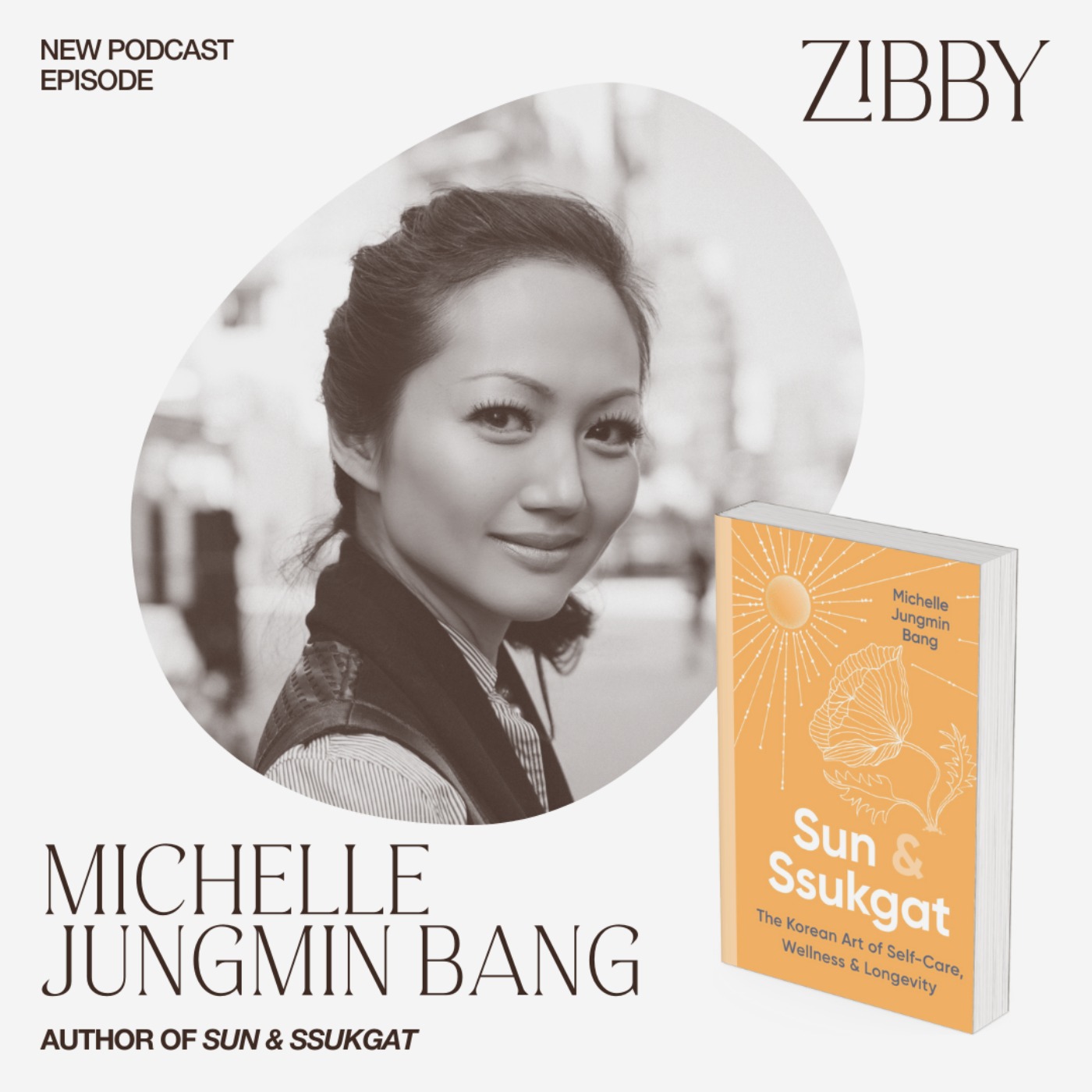
Totally Booked with Zibby
Michelle Jungmin Bang, SUN & SSUKGAT, The Korean Art of Self-Care, Wellness & Longevity
00:26:48
Loading summary
Transcript40 lines
- [00:01]
Zibby Owens
Hi listeners. Just a quick note. I'm super excited because today I found out that On Being Jewish now hit the USA Today bestseller list for the 13th week. Thank you to everyone who supported the book that I edited and came out to events last week and in other weeks to support the book. We have two giant events coming up on Being Jewish now live in New York and LA on March 23 and April 5. We have discounted tickets for $25 for those who need them and would love to see there. You can find them on Eventbrite and also if you go to my Instagram at Zibby Owens I put the link in bio and they're on zibi media.com so anyway, please come and in the meantime enjoy the podcast. Sorry for the interruption. I was just so excited I had to share. And if you haven't left a review or a rating or anything of this podcast and you love it, would you please do that? That would really help with discovery and everything else. Thanks so much everybody.
- [01:02]
Unknown Advertiser
I used to think buying foundation online was impossible. How am I supposed to find my shade when I can't even get it right in store? Then I discovered IL Maquillage. I took their AI powered quiz to find my custom match and wow. This foundation is literally my skin in a bottle. The undertone and coverage are spot on. It's so neutral and weightless I can't even tell I'm wearing makeup. Plus, with Try before youe Buy, you can try your full size at home for 14 days. Take the PowerMatch Quiz now at ilmakiage.com Quiz I L M A K I A G E.com Quiz does it ever.
- [01:33]
Feel like you're a marketing professional just speaking into the void? Well, with LinkedIn ads you can know you're reaching the right decision makers. You can even target buyers by job title, industry company seniority skills. Wait, did I say job title yet? Get started today and see how you can avoid the void and reach the right buyers with LinkedIn ads. We'll even give you a $100 credit on your next campaign. Get started at LinkedIn.com results terms and conditions apply.
- [02:02]
Michelle Jungmin Bang
BetterHelp Online Therapy bought this 30 second ad to remind you right now, wherever you are, to unclench your jaw, relax your shoulders, take a deep breath in and out. Feels better, right? That's 15 seconds of self care. Imagine what you could do with more. Visit betterhelp.com randompodcast for 10% off your first month of therapy. No pressure, just help. But for now, just relax.
- [02:47]
Zibby Owens
Hi this is Zibby Owens and you're listening to Totally Booked with Zibby. Formerly Moms don't have Time to Read Books in my daily show I interview today's latest best selling, buzziest or underrated authors and story creators whose work I think is worth your time. As a bookstore owner, publisher, author and obviously podcaster, I get a comprehensive look at everything that's coming out and spend my time curating the best books so you don't have to stay in the know, get insider insights and connect with guests like I do every single day. For more information, go to zibbymedia.com and follow me on Instagram ibyowens.
- [03:31]
Michelle Jungmin Bang
Michelle Jungmin Bang is the author of sun and the Korean Art of Self Care, Wellness and Longevity. Michelle is an award winning eco entrepreneur and Harvard Business School graduate who spent 16 years living in Asia as a Korean American from New York City. Her wellness guide covers her research, interviews and personal eco conscious journey in uncovering centuries old well being traditions from her time in Asia and Korea where scientists project its people will top longevity charts in 2030. Michelle is the co founder and founding CEO of the R Collective, formerly BYT, a sustainable fashion brand that creates affordable luxury pieces out of high end materials that would otherwise have been disposed of in a landfill. She is passionate about driving social impact and serves as a board director and founding member of various mission driven organizations. Welcome Michelle. Thank you so much for coming on Totally Booked with Zibby. Congrats.
- [04:24]
I am so excited to be here today. Thank you so much for having me. Zippy.
- [04:29]
Well I could, I could use a self care table discussion this morning. I feel like we all could use this. Some maybe anti aging, some make yourself feel better. Oh my gosh. Okay, share your secrets. Why did you write this book? Tell how did you get into this whole field? Discuss the whole thing.
- [04:48]
Yeah, well I'll just go back and say I'm a Korean American and a social impact entrepreneur. So I trained in east west preventative care, Integrative nutrition which extends into training in healthy aging and mother baby care. And the book is actually about my Food is Medicine journey culminating all of these experiences across Asia. But you know, I for two decades and counting I've been living in Hong Kong and New York. I'm a Hong Kong expat so I split my time with my family between the two cities and it's very much integrated into how I wrote the book. It's more of like a East west perspective. I actually was born and raised in Brooklyn so these are all Experiences that kind of led into, you know, my writing in the book. I was a public school kid. I went to Stuyvesant High School. And the other thing too is that I grew up in a world of medicine. So my dad is a doctor. He trained in Korea at Seoul National University College of Medicine. And I spent my childhood sort of with this extended family of doctors who were immigrating to the US From Korea. You know, they sort of melded together and combined, you know, from the same school. So I was exposed really early on to the practical applications of medicine. For example, using whole foods to recover from surgery, colds, pregnancies, injuries. I mean, these were all practices that were very much embedded into our Korean culture that I actually pretty much ignored as I was growing up. And it was only until I got sick in Hong Kong that I started really exploring a little bit more about what my heritage was, about what the wisdom was behind my heritage. And I was living. So that was really the start of me writing the book. I got sick. I ended up. I landed in an emergency room. And at the time, I was actually launching a dream startup. It was driving my passion for social impact. And we were winning all these awards and, you know, gaining these big contracts, and I was working around the clock pretty much 24 7. And, you know, I think we all get into these periods where we are driving ourselves, you know, and I think that's fine. But I just think, you know, at the time, I was just pushing myself beyond my human capacity. You know, no sleep, not eating, you know, just pretty much running on black coffee because, you know, I was just kind of being driven by all these successes and wanting to make a social impact. So I was just really. I feel like a lot of leaders are just, you know, and I include leaders as, you know, parents who are, you know, running their households like you are serving the mission, your family, you know, the impact of whatever you're driving, your business, you know, your team members. And I think sometimes, well, often I think we just forget to take care of ourselves. And that's probably a course that I should have taken when I went to Harvard Business School. I just, you know, in terms of leadership, that is actually part of self care, is so much a part of that. So in the hospital, you know, I. There was a camera stuck down my throat and into my stomach. And I found out later that actually my. My gut lining was completely compromised. There was no part of it that was really healthy anymore. And, you know, mind you, just before the hospital, I never really gotten sick, you know, I sort of prided myself on my health. I grew up playing tennis, and I realized after the hospital and you know, getting sick all the time after that, that this was brewing for a really long time. And it's just that, you know, at that point that I had to go to the hospital, my body was screaming, you know, for me to do something about it. And I think, you know, I wanted to write the book to prevent others from going into this situation, a very similar situation, because you might actually. It's kind of like an iceberg. You only see what's above the surface, but there's so much happening underneath, and, you know, it's not. And the other thing too is that it's not as hard as we think. You know, I think there's all these wellness protocols. And, you know, when I got sick, I tried every diet. I was just really trying, trying to figure out how to get to the root of the cause. And I, you know, at the time, there were several things happening. My husband, who grew up in a traditional Chinese household, he started cooking me things, you know, healing foods that he had grown up with that his parents and his grandparents had taught him. And this is sort of kitchen wisdom that, you know, just was passed down generationally. And it just sort of prompted, you know, a lot of moments in my Korean heritage. When my grandparents and my parents did that for me, I just didn't really think about it. And at the same time, because I was in Hong Kong, I started seeing all these people who were just in incredible health. I mean, just like past 50, you know, going every morning into the cold ocean and, you know, just living a lifestyle that was very natural and healthy, and it was just a very normal thing for them. I mean, one morning I saw a sweet grandmother wielding a huge sword for exercise. And I just started realizing, oh, I'm in this moment of time, living on this continent that's living a different way of life that I, you know, had really, you know, started moving towards as, as an American living in the US And I just started, you know, the whole journey started happening as I was. I started interviewing people, just casually just asking them, you know, what they were doing to stay well. And I was thinking that I was going to take one year to explore. And then it just became so many years as I was just thinking about and seeing all of my friends in these high achieving cultures getting sick, you know, sometimes, you know, in conditions that were irreversible. And I just saw a mirror of myself. So I started training. I actually enrolled myself in two Separate functional food medicine programs. And it was confirming, you know, what. How we used to live is actually being confirmed by the new science. And I started developing this idea, well, actually, there might be a better way to move forward, you know, even in our health care system, where, you know, sometimes I feel like it's food versus medicine. And food is just an example of this way of, you know, all these tiny little things that we can do to take care of ourselves. But food is medicine. We can embrace both to really just empower the individual to, you know, to not get sick, and then, you know, to embrace both the new science and the old wisdom to, you know, to move forward. And that's really how they live in Asia. And I just wanted to bring that into the world. The other thing, too, is that I wanted to sort of find a way to preserve the wisdom because, you know, I went to, you know, different places. Like, I went across Japan, China. I mean, I really dug deep and then kind of went back into my Korean heritage. But, you know, one example was I went into a village of centenarians in Japan. And, you know, you just sort of see all of these older people are outliving their children because they're retaining the ways that they, you know, grew up with. And the younger population is going into the cities, and they're just adop a lot of these modern conveniences, which is, you know, it's great. I think it's great to take advantage of a lot of the inventions that have occurred in our lifetimes, but, you know, to do that in a healthy way. So I. I wrote the book. That's sort of the long answer, too.
- [12:11]
No, that was amazing. Thank you for all of that. That's truly amazing. So when you talk about these modern conveniences and everything, I mean, the image of the elderly outliving their kids, that is so sort of haunting when you think about that from a societal perspective and what that means going forward and are we shortening our lifespan and all of that? Like, what can we do? So when. What are some things we are not doing that are easy for us to start doing?
- [12:40]
Well, one of the major things that I changed was what I put into an empty stomach. So I used to wake up and go straight to a sweetened coffee. And now I understand. You know, and having looked at all the patterns with the traditional diets and what they eat for breakfast, it's a lot about what you put into an empty stomach and helping your body to digest it with certain foods. So I've completely changed my breakfast. And, you Know, the whole idea of the book is there's traditional ways of eating, but how do you translate that into, you know, a way that, like, for someone like myself, you know, I live in New York City a lot of the time, you know, and I don't have access to a lot of the ingredients that I might have found in Asia. How do I, you know, translate that to the way I live? So, you know, if I look at the traditional breakfast, it's a lot of little bowls that have plant diverse ingredients, you know, with protein, but it's moving from sweet to savory. That was the huge change for me. It was just, you know, what I was putting. So it was more salt based. So a lot of times, you know, if I'm really busy, I'll just even eat my leftover dinner. And it's just employing the same type of philosophy that is food is medicine. What I was learning, you know, with the fascinating cultures that I went, I came across. So that would include. So I would. So I start my day with warm water, you know, it's got a little bit of lemon and ginger before I even start taking. And you know, I still take coffee, I just don't. I. And I still sometimes have it with, you know, sugar and milk. But I think it's just what you do on an accumulated basis that starts, you're starting to see the effects in your body. So the leftover breakfast will have something like a, you know, I might have a steak or you know, a fish that's left over and it will have a vegetable and a probiotic rich food which could be like a jar of sauerkraut, which I realized is actually the same as kimchi. It's just a non chili version of it. So it's just kind of little things like that that I've changed have actually helped me to curb my cravings and you know, sort of my weight and my, my glucose spikes. So it's, it's really helped me to energize my mornings.
- [14:58]
Wow, okay, so what about lifestyle changes in general? Like, how do I know food is a huge focus here and incorporating food as medicine and all of that. What about movement and all this? And I know some of this is intuitive, but still, what, what did you see there that we can apply here?
- [15:19]
So I learned that you can actually release internal medicines by sweating and moving. So what I personally do is I do hot yoga in the morning just for 30 minutes and I'm sweating right away. And then the only other thing I do is just make sure that I get steps in. This has actually been the best form of exercise for me. I mean, whether it's like cleaning the house, you know, I'm just getting my steps in no matter what. And, you know, everyone has their magic number walking. And walking outdoors is actually a key factor in longevity in Asia. And there's a hub of longevity. If you look at the data, obesity rates are down to the single digits. We're constantly battling for the top longevity rates in the United nations data. But walking is definitely a singular factor that has really kept their populations living longer. Stanford actually did a study looking at pedometers and Apple watches and the number of steps, and, you know, found that Hong kongers take about 7,000 steps a day, and they really do contribute that to longevity. I take a little bit more steps every day, but it's really beyond running, beyond anything any other exercise. Walking has been the best thing, and it's free. It's something I can do, you know, just getting off, you know, the train, a stop early, or taking the stairs instead of an elevator. It's just kind of thinking of ways to put the steps in.
- [16:48]
Well, you could have easily just left everything you learned for yourself or your family and friends. Like, why devote yourself to helping everybody? Why write the book?
- [17:00]
Zibby Owens
Why?
- [17:01]
Michelle Jungmin Bang
Why spread the word? What is it about you that makes you want to help in that way?
- [17:05]
Zibby Owens
Today's episode is sponsored by Acorns. Acorns is a financial wellness app that makes it easy to start saving and investing for your future. You don't need to be an expert. Acorns will recommend a diversified portfolio that matches you and your money goals. You don't need to be rich. Acorns lets you get started with the spare money you've got right now, even if all you've got is spare change. Here's a fact that may not surprise you. 66% of men are investing in the stock market, compared to just 48% of women. Here's another one that won't surprise you either. Multiple studies have shown that women are better investors than men. Why? Because men are overconfident and women actually do their research. The investing gap means less women have the chance to build wealth now and can have huge repercussions down the road when it comes time for them to retire. The good news is that Acorns makes it easy for everyone to start investing, even kids. I have my kids invest their allowance in acorns, and they get to see it grow over time, which is really exciting and empowering for them and unites us as a family. Sign up now and join the over 13 million all time customers who have already saved and invested over $22 billion with Acorns. Head to acorns.com books or download the Acorns app to get started. Paid client endorsement compensation provides incentive to positively promote Acorns Tier 1 compensation provided investing involves risk. Acorn Advisors, LLC, an SEC registered investment advisor. View important disclosures@acorns.com Books Today's episode is sponsored by Wayfair. My personal style is simple, classic, elegant and timeless. And with Wayfair I'm able to achieve all of that in all of my home and office design needs. Recently my tween daughter wanted to get a vanity for her bedroom and I said, okay, well let's go on Wayfair and check it out. And she said, well let me look at all these other sites. And I said no, no, no Wayfair. So she googled it and guess what came up? The perfect product on Wayfair, which we ordered and we got in our home within two days. Like everything I get from Wayfair, this item is durable, great quality, looks great and fits in with our whole style aesthetic in our home, which is classic and elegant. It goes with her wallpaper and I'm just obsessed with it. As I've said on this podcast before, I've gotten all my office furniture from Wayfair and I am honestly such a huge, huge fan. So head over to Wayfair.com and find something that's just your style today. That's W-A-Y-F-A-I-R.com Wayfair Every style, every home.
- [19:55]
Unknown Advertiser
Will full coverage make me look cakey? Is my undertone neutral or is it cool? We get it. Finding the right foundation is hard, but with Il Maquillage, it's easy to find your perfect match online, customized for your unique skin tone and coverage needs. Plus, with Try before youe Buy, you can try your full size at home for 14 days. With over 600,000 five star reviews, this best selling foundation is going viral for a reason. Take the Power Match quiz now@ilmaquillage.com Quiz Ilmak I a-e.com Quiz.
- [20:29]
Michelle Jungmin Bang
I think that it was saddening me that, you know, I felt like this wisdom was fading. You know, it was just. And you know I'm a perfect example, right? I grew up with it, with little bits of it, you know, and it's. You also grew up with it as well. I'm sure everybody has it within their culture. You know what their grandmother taught them. But it's just kind of reminding people that there is this wisdom that shouldn't be retained. You know, I was speaking to the chef of Kripalu and he was, you know, who's talking about a Peruvian, Peruvian lady who came to his cooking class and just, you know, she was just sort of really sad that she was sort of the last battalion keeping this whole idea of what was kept, you know, generationally and, you know, it would have been left, you know, it would just would have been gone after her. And so I wanted to find a way to preserve that. But also I think the other thing too is just, you know, being part of the conversation to shift how we think about our well being philosophies. And you know, when we start thinking about, you know, the ways we used to live, it was much more in season, environmentally friendly. You know, there's staggering statistics by the World health organization, like 70% of our chronic illnesses that lead to, you know, fatality are preventable. And I think, you know, those are things that are, you know, within our power to control. The other thing too is that, you know, I was just thinking Americans, for example, only focus on basically three crops, wheat, rice and corn. But there's over 300,000 plants that are edible and they're kind of really hidden, you know, within the condiments and you know, the different plates that you might see in Asian cuisine. But I think it's just an opportunity for us to explore how can we live better in this, on this planet. You know, as we're facing a lot of, you know, issues with climate change, with food waste, you know, and, you know, going to food waste, we, you know, 30% of what we produce is actually wasted and 50% of that happens within our home. So just kind of thinking about how we can employ the whole plant from flower to root and the peel and how we used to use it because, you know, a long time ago we would grow things that would take a long time. We're so far away from that because, you know, we just see the package good. But, you know, a long time ago it would take a really long time to, to grow something. So you would try to treasure it and use every part of it. You know, whether it's like making a soup or a tea and definitely not throwing away the peel, which is actually the source of most of the nutrients in the plant.
- [23:07]
So do you just walk around horrified, like watching what everybody does and want to yell out and be like, stop, don't do that.
- [23:15]
No, I Think. I think that, you know, even just my experiences with my own children, I feel like everyone starts where they are coming from. And even for myself, you know, I'm. I'm definitely not perfect, but I just feel like, you know, there's always a place and a time to, you know, to reset. And it's just kind of being part of that conversation to help educate people to learn how to reset when they're kind of in a place where, you know, they're busy or, you know, they're feeling run down and kind of feeling better. I feel like, you know, in this journey, what kind of did it for me was, you hear about these remarkable recoveries. You know, one of the doctors that endorsed my book, she actually reversed her progressive multiple sclerosis. And, you know, you hear about these remarkable stories, and I saw them with my own eyes, you know, what they were doing. And so it was just really, you know, powerful for me and just kind of a reminder that this is really important. And I wanted to share. Share that with the book.
- [24:14]
And how have you kept up with your other life and job and all of that? Are you still doing all the social impact work as. As well, like, or has this primary focus?
- [24:25]
I think this. The lesson learned here is that you can do it. You just don't have to do it so fast. You know, you can. My views of aging have actually really changed a lot. I. I feel like I tried to race so fast to try to, you know, achieve everything before 50. You know, just. You just sort of mentally sort of clock that number. And I'm, you know, I'm seeing people changing, you know, jobs, you know, changing their vision of who they are, you know, learning different things because they're curious about it. Well past 50, and then even just like, living really strong. Like, I. I went to go visit and explore free divers on this island called Jeju in Korea. And, you know, these are women who are diving without equipment all the way through their 90s. You know, they're. They're fighting octopus and. And jellyfish and, you know, going into the cold waters, you know, most of the year. And it just kind of gives you an idea, oh, I can actually do that if I start taking care of myself. And it doesn't have to be so overwhelming. They're, you know, living in cultures where, you know, employing things that are like, well before we invented microscopes, you know, it's just really, you know, kind of isolated cultures, but they're. They're achieving these amazing things that, you know, you don't kind of think that you can do. And I think I've just. I just transformed the way that I, you know, think about what I can do. So one thing that I. I do is that I. I don't stop what I'm doing. I feel like I can achieve it all if I. But it's just, you know, a matter of time, you know, just like we all have our dreams and we all have, like, our wishes of what we want to achieve in life. But now I understand I just have so much more time if I learn to take care of myself. So, you know, in my day, my days are busy, but now I do small things. Like, I know that I can breathe for. You know, I think the one. One of the big things is that I was just shallow breathing. And, you know, watching these divers, I realized, you know, I wasn't breathing. I wasn't deep breathing. So even just, you know, standing on a post line or, you know, taking a break from the computer, because I'm often at my computer, I will just take a little deep breath for a minute, and I just feel everything relax. And, you know, that's actually what your body needs to reset. But I still want to do it all. It's just trying to employ all of these tiny little steps in your day to try to, you know, keep your body functioning better.
- [26:53]
And we're moms at the same school, so how do you impart this wisdom to kids in a way that they will accept it and adopt it?
- [27:01]
I think so. One of the funny things that happened during my journey is that I took my kids to some of the trips, and, you know, they're such city kids. So my son, for example, was just like. I took him out into the country. He was like, oh, my, what is that? And it was a squirrel. He had no idea. He had no idea what nature was. I mean, Hong Kong and New York are both very urban, you know, but. But I had never really taken him out, even though I had, you know, I. I take walks, you know, in both cities. And, you know, one time we were in Bali, you in the middle of a jungle, and he just, you know, and it just reminded me I need to get them outside. I need to get them out in nature. They also learn by example. So they've, you know, they. They've come with me to cooking classes. I experiment with different ingredients. You know, I come back from the. From the supermarket, and I'll come back with something really, really foreign, and we'll try it together. You know, it's just one small way to Kind of bring nature in and to think about, you know, what else is out there on our planet. And you know, the other thing too is I, I think they see what I'm doing, they see what I'm talking about. And you're sort of the first teacher with your children. You know, they will see what you're doing and they'll copy it, they'll use it as a model as they start growing and developing. So I think that was a big part of it. My son in particular, you know, he is an athlete, so he very much uses all of the sun and soak up methods, you know, and so that was actually reassuring that he could. And I've never seen him stronger. He does wrestling and, you know, volleyball. He's very athletic. And so I, I feel like it's not, you know, sun and soka, the. It, it delves into the food is medicine, philosophy, but it's not really about eschewing all the things that we're, you know, that is about modern science. So I, I kind of encourage him to experiment. We talk about it and we have a lot of conversations about what it means to be healthy. Mind, spirit and body.
- [28:57]
Wow. My gosh, I love that. So where are you going to take all of this? You have the book. I mean, I feel like you can accomplish anything you put your mind to. Where do you want to take this?
- [29:07]
Well, I have a lot of ideas. You know, I, I think, I think when you're just curious, you start really expanding. But right now I'm focused on the book. I'm launching in the US and because my second home is in Hong Kong, I'm also launching in Hong Kong as well. So that should be really interesting. I have a lot of talks. I've been invited to Google and other organizations to, you know, spread the wor. So that's been really exciting for me. And yeah, we'll see where this goes. It's like you, Zibby, you know, you've just really expanded from one idea to this amazing enterprise, you know, so you just kind of, you know, I feel like, you know, the one big lesson is just really, I don't have to rush to do it all. I just need to take care of myself and then, you know, it'll naturally unfold.
- [29:52]
You're making me feel so much better, by the way. I don't know, I feel like now that I'm, I mean, I'm not almost 50, I'm 48, but it's out there. And so every day I feel like exactly what you Were saying, like, I feel like there's some sort of cutoff coming or something, even though I know that's not true. But I am very aware of my age all the time now and just the idea of taking a breath and saying, you know, if we play our cards right, maybe there's no ticking clock. Because the ticking clock is what motivates me in so many ways. But, you know, even taking the breath, so important.
- [30:30]
Exactly. And, you know, I feel like everything matters in self care. You know, it's like taking the. My son takes a bath after school every day to, you know, de stress. I feel like it all matters. Like calling your friend, having a nourishing conversation, you know, it just, it's all part of the self care routine. And it's not, you know, it doesn't have to be difficult. It's not, I feel like. And it doesn't have to be expensive either. You know, these. I watched, you know, one morning in China, this like, amazing group of, like, it was like the public park was flooded with all of these older people just gathering socially. Like there was a corner for flamingo dancing. There was another one, you know, playing badminton. Like the entire park was doing something together. And then they all went together to go shopping at the Green Market. It was just. Was so fascinating, but it just kind of gave them purpose. They were doing it together. And, you know, in Asia, community is very much a part of it. I think wellness is very much cemented when, you know, you start integrating other people into the activity.
- [31:36]
My gosh, sometimes I'm just like, wow, I'm doing everything wrong.
- [31:40]
No, we all can learn. I mean, just try to improve every day. I'm always learning something new that I'm trying to incorporate. And, you know, I think we're all very personal too, so it's really what matters and, you know, works for you.
- [31:52]
Well, I'm so impressed by you. So happy that you've decided to put that huge brain of yours at work to help the rest of us. So thank you for that. And I'm so delighted to have had the chance to learn directly from you and hear and be the beneficiary of just all the research and time and energy you've spent figuring out how to live a healthier, longer, more satisfying, more present life.
- [32:16]
So.
- [32:17]
Wow, what a gift.
- [32:19]
I am so excited that we had this conversation. I mean, you know, if you want to have a podcast, you want to be on Zippy Owens, you know, so it's such an honor to be here. Thank you so much.
- [32:29]
Thank you. Thanks so much. Thanks for your time. All right. Thank you, Michelle. This was awesome. All right, bye. Bye. Thanks.
- [32:38]
Zibby Owens
Thank you for listening to Totally Booked with Zibby formerly Moms don't have Time to Read Books. If you loved the show, tell a friend, leave a review, follow me on Instagram, ibbeowens and Spread the Word. Thanks so much. Oh, and buy the books.
- [33:00]
Unknown Advertiser
Oh my God. It's the coolest thing ever. Hey guys, have you heard of Goldbelly? Well, check this out. It's this amazing site where they ship the most iconic famous foods from restaurants across the country, anywhere nationwide. I've never found a more perfect gift than food they ship Chicago deep dish pizza, New York bagels, Maine lobster rolls, and even Ina Garten's famous cakes. Seriously. So if you're looking for a gift for the food lover in your Life, head to goldbelly.com and get 20% off your first order with promo code gift.
- [33:30]
Does it ever feel like you're a marketing professional just speaking into the void? Well, with LinkedIn ads you can know you're reaching the right decision maker. You can even target buyers by job title, industry, company seniority skills. Wait, did I say job title yet? Get started today and see how you can avoid the void and reach the right buyers with LinkedIn ads. We'll even give you a $100 credit on your next campaign. Get started at LinkedIn.com results terms and conditions apply.
- [34:01]
What makes a great pair of glasses? At Warby Parker, it's all the invisible extras without the extra cost. Their designer quality frames start at $95 including prescription lenses plus scratch resistant, smudge resistant and anti reflective coatings and UV protection and free adjustments for life. To find your next pair of glasses, sunglasses or contact lenses, or to find the Warby Parker store nearest you, head over to warbyparker.com that's warbyparker.com.