← Totally Booked with Zibby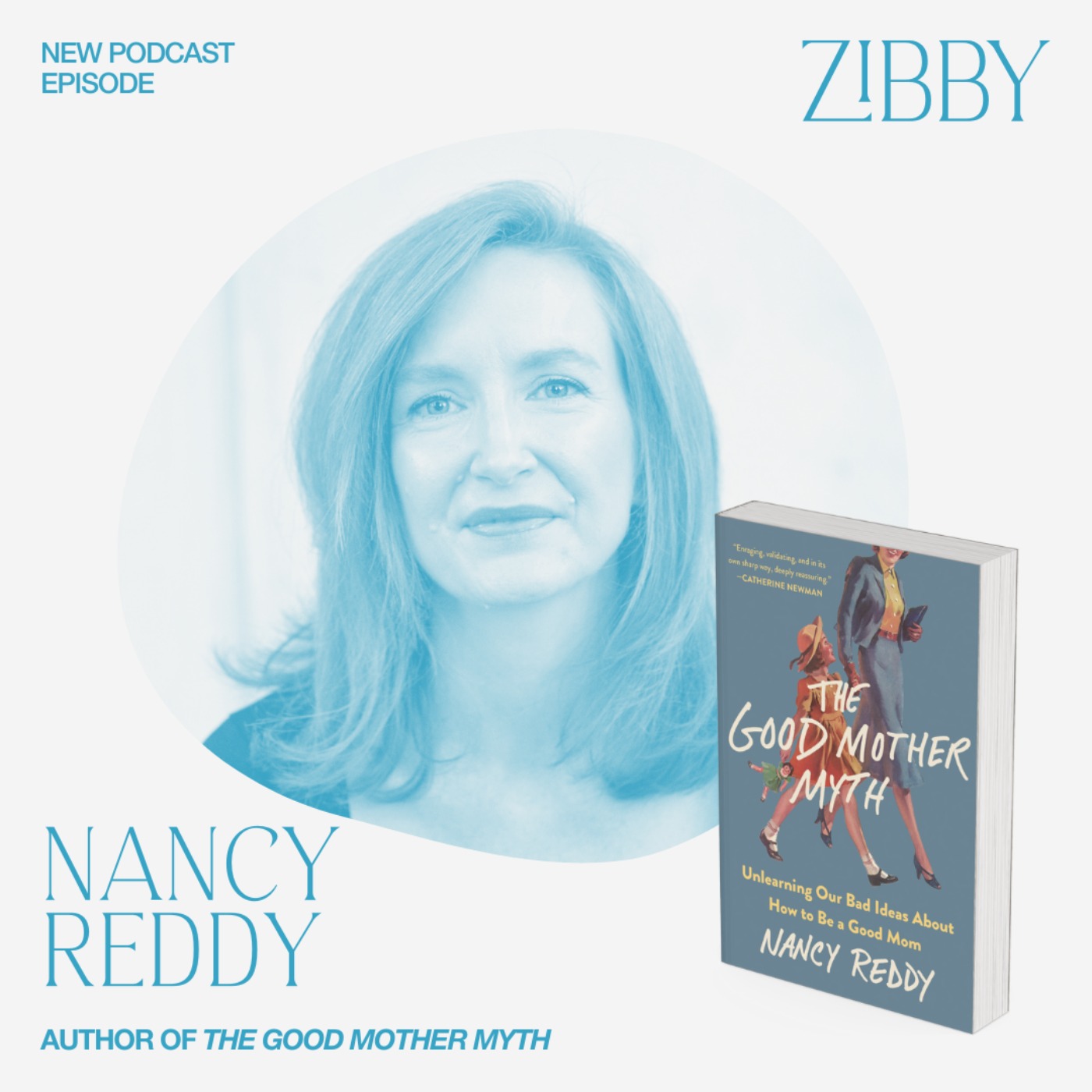
Totally Booked with Zibby
Nancy Reddy, THE GOOD MOTHER MYTH: Unlearning Our Bad Ideas about How to Be a Good Mom
00:22:42
Loading summary
Transcript81 lines
- [00:01]
Zibby Owens
We will be re airing some episodes by authors from this podcast whose homes have been lost in the horrific fires in Los Angeles. We hope that hearing from these authors makes this tragedy feel a bit more personal and real for those who have not experienced it directly and provides a sense of comfort to those who have lost everything. At Zippy's Bookshop in Santa Monica, we are giving away books to anyone affected. We are giving away clothing from 30 brands who have donated their merchandise. We know both of these things are small comfort to the thousands of people who are now homeless, but we are trying to do some good amid the destruction. I hope you understand that I am not recording new podcasts right this second as I am struggling to deal with the fires myself. Our home was saved by by firefighters in the Palisades, but so many loved ones have lost everything and our community is rallying to help. Therefore, I will be airing some older episodes of those who have lost their homes interspersed with episodes that I have already recorded. I will be back to podcasting as soon as I can put on a happy face and really support the authors as I have been doing for the last seven years. Thank you for understanding. I hope you all are safe Hi.
- [01:29]
This is Zibby Owens and you're listening to Totally Booked with Zibby, Formerly Moms don't have Time to Read Books. In my daily show, I interview today's latest best selling, buzziest or underrated authors and story creators whose work I think is worth your time. As a bookstore owner, publisher, author, and obviously podcaster, I get a comprehensive look at everything that's coming out and spend my time curating the best books so you don't have to stay in the know. Get insider insights and connect with guests like I do every single day. For more information, go to zibbemedia.com and follow me on Instagram ibyoans Nancy Reddy is the author of the Good Mother Myth Unlearning Our Bad Ideas about How to Be a Good Mom. Nancy is the author of the Good Mother Myth, As I Said, and her previous books include the poetry collections Pocket Universe and Double Jinx. A winner of the National Poetry Series with Emily Perez, she's co editor of the Long Poets Writing Motherhood. Her essays have appeared in Slate, Poets.
- [02:36]
And Writers, Romper, the Millions, and elsewhere.
- [02:38]
The recipient of grants from the New Jersey State Council on the Arts and the Sustainable Arts foundation and a Walker E. Dakin Fellowship from the Sewanee Writers Conference. She teaches writing at Stockton University and.
- [02:49]
Writes the newsletter Write More.
- [02:52]
Be Less Careful.
- [02:53]
Nancy Reddy
Welcome Nancy thanks for coming on the show to talk about the good mother myth, unlearning our bad ideas about how to be a good mom.
- [03:00]
Thank you for having me. Of course.
- [03:03]
Okay, so how did we think about being a good mom? And how should we be thinking about being a good mom?
- [03:08]
Oh, my God. I mean. So you're starting with an easy question.
- [03:10]
Yeah. Just a layup for you this morning.
- [03:13]
Exactly. I mean, I think the biggest thing that we've gotten wrong is this idea that a good mom can kind of do it all on her own. This idea of the super mom, right. Who can, when she's got a baby, she can, like, nurse and be up in the middle of the night and make the homemade baby food and dress the baby in a cute outfit and, you know, kind of carry it all in her own. And then I think that carries through to older kids. Right. The idea that, like, moms create the magic in the family and, you know, take the kids to the dentist appointments and remember to sign them up for soccer, all of that kind of stuff. I think that's the biggest thing we've gotten wrong. And what I've really been trying to think about with this book is how we could understand mothering instead as, like, a relationship, which is what it is. And to think about the work is being more shared, you know, that it's not just one good mom, but really a whole community of people working together to raise kids.
- [04:13]
So true. Meanwhile, as you were saying all this stuff, I was like, oh, shoot, dentist. And I just had to write it.
- [04:18]
Zibby Owens
On a little sticky.
- [04:19]
Nancy Reddy
I know, I know, I know.
- [04:22]
One of my kids still needs a dentist appointment anyway. Yes.
- [04:25]
Oh, my God. I know. Yeah. I'm gonna return to my own list after this call, probably.
- [04:31]
When did you become excited to delve into this topic and give us a little background about you?
- [04:37]
Oh, sure. So I probably have, like, always been a writer. I started writing as a poet. I had my own kids. When I was in graduate school, I was in a PhD in English, and I really, you know, I've been working on my poems. I was working on scholarly work. I had. I think by the time I started publishing this book or I started writing this book, I had published a poetry and was working on another one. And I really felt like for this topic, I wanted to reach more people. I mean, I love poetry, but, you know, not a lot of people read it. And I think people feel intimidated by it. And when I started working on this book, I felt like, you know, these are these really big questions that I have and a conversation that I want to have. And that prose felt like the right container for that, that writing nonfiction would be able to reach people who maybe wouldn't read it in a poem. And so I started really working on this book in earnest when my kids were 3 and 5. And I kind of, like, came up from that haze of early motherhood and was like, what just happened to me? And the book is kind of an attempt at trying to figure that out.
- [05:45]
Well, I love how you weave in a lot of sort of psychology studies and all of that. I was a psych major, like, a million years ago in college, and Harlow studies and all of it. I had learned about all of the things, and you referenced many of them. And I was like, yes, I remember that. Kind of remember that. Yes, that. So give us some of the context and how Harlow's monkeys and everything can. Can give us some context of how we are parenting ourselves in 2024, 2025.
- [06:14]
I know. I mean, it feels wild to be talking about, like, the historical. The research strand of the book is really all, like, the 50s and 60s, which feels kind of. I mean, it's a very long time ago, but I think those ideas are still really with us in a lot of ways. And so the research that I really started with is Harlow, as you mentioned. And he's someone who, like, I think anyone who's ever taken an intro psych class has that image of, like, the tiny baby monkey clinging to this cloth mother. That's like a terry cloth kind of wrapped wire thing. They're kind of terrifying looking. And I got interested in that research. I had heard about it. I heard about it in my own intro psych class. And I'd heard about it when I was first in graduate school. I went to school at Wisconsin, where he was also a professor for a long time, though decades before. And I had heard the story that he actually did that research in the building that then housed the English department. And so I thought about, like, oh, my goodness, those monkeys. It turns out that's not quite true. He has. His lab was across campus. But I was just fascinated by that image and what it meant about what it meant to be a good mother. Like, do you really have to be totally available all the time? Is that what makes a good mother? And I think that's the message from his research that was spread. And that, I think, is still with us. Right. Like, a good mom will always be there for her baby. And his actual research turns out to be a lot more complicated than that. And that was A lot of what I delved into in the. In my research and then shared in the book.
- [07:41]
So what did you learn about what babies really need and how that can change what we overextended women can give?
- [07:52]
Yeah, I mean, the thing that really, like, resonated with me the most. So there's all these men who were studying motherhood through, like, the 50s and the 60s, and they're all working together and they're sharing their research. But the thing that I discovered is that the anthropologist Margaret Mead was also involved in that. And she was at these meetings and she was, you know, debating them. And she came from a really different background. She was an anthropologist. So she had studied communities, you know, in Samoa, and she had seen really different ways of raising kids. And the thing that she said, which, like, meant so much to me and still does, was the idea that what a baby needs, what children need, is not one perfect moment, but many warm, friendly people. And that actually the best way to raise a kid is in community. And that, I think, is a really powerful idea. That it's not kind of like if you are asking neighbors for help, if you're asking friends, if you have a nanny, if you're sending kids to daycare, you're not kind of settling in some way that that's actually a great way to raise your kids, because kids do really well when they're surrounded by lots of people who love them.
- [08:59]
I mean, it seems fairly obvious. And yet as a mother, it feels counterintuitive. Right?
- [09:06]
Yeah.
- [09:07]
Like it.
- [09:07]
Zibby Owens
Yes, of course.
- [09:08]
Nancy Reddy
How nice. More people to love your child, more wonderful influences. Like, if I'm in the world, like, I wouldn't want to just be with one person who loves me. I would much rather opt for the scenario where many people love me.
- [09:21]
Right.
- [09:21]
It seems like kind of binary. Like, yes, this sounds better. But then when you are that parent feeling that overwhelming responsibility, it feels like a failure to ask for help. Or maybe this is. Now I'm just projecting my own.
- [09:35]
I mean, I think that's a really common sentiment.
- [09:38]
So how are we supposed to hold both of these truths and have it affect our behavior? Like, how do we remember that? And maybe it is like reading books like yours and studies and reminding ourselves and all of that. But how can we help people internalize the findings of the book to make their. To go easier on themselves, honestly? Right.
- [09:59]
Yeah. Yeah. Well, it's not even understand it as going. I mean, it is in one way going easier on ourselves. Right. Like letting go of these. Of these, like, wild expectations that we have for ourselves. But it's also understanding that kind of care, like sending your kid to a daycare where you know they're going to be well cared for. Like, that's a great way to be a good mom, you know? Like, that's actually really excellent parenting and so not actually thinking about a second best. But you're right. Like, how do we. And I think that speaks to the power of these myths that we have that it's so hard to shake it. I mean, I think the way we do it is by doing it right. Like, the thing that made early motherhood start to really get better for me was when I was willing to, like, let people see how much I was struggling and, like, talk to friends who were hanging out about, like, oh, my God, can you just come, like, sit with me as the baby plays on the floor? I just need another human in this room with me. Or taking the baby places and knowing that maybe he was going to cry and I wasn't going to look like a good mom in the way that I had intended to. I think the more we often want to think about building community as offering help, that we're going to show up for other people. But I actually think that asking for help is a really great way to build community, too. And I think that's especially important in early parenthood when you need so much and I think you're so vulnerable.
- [11:22]
So would you consider yourself to be a good mother?
- [11:24]
I really tried, I mean, the argument of the book, and I really tried in my own life to, like, set aside that idea entirely, because I think that goodness. I mean, I spent so much of my life and it still shows up, trying to be good at various things. And that's almost always been about what somebody else thought I should be doing or my idea of how I wanted to look. And it really has so little to do with what my kids actually need, what I need. And so I just think that question of goodness, it's a trap. It just sets us up for failure. Because even if you're good, you could have an afternoon where you're having a fun activity and your kids are cute and everyone's getting along well and you feel like a good mom for a minute, but it only ever lasts for, I mean, a little while, right? Until something else happens. And I think if we focus on goodness, we miss out on, like, a lot of the joy and the love.
- [12:24]
It's true. I feel like, this overlay of perfectionism and doing a good. Doing, like, such a good job and achievement Culture and all the forces on us, especially because so many of us were raised, like, do better, work harder, achieve this. Like, you have all the opportunities. Like, you're no longer part of the generation of women that, like, wished they could do. You guys have to go out and do it. And then applying that to something where all of those things actually kind of make it worse. So it's like if we're trained, it's like we're trained to be like professional tennis players. And then all of a sudden we're like, playing. I don't know what some things we're like in a gymnastics tournament where the same skills actually won't benefit you at all.
- [13:10]
Yeah, I think that's really accurate and I think that's. I mean, that pressure that I think so many of us bring to motherhood, right? Like, I've been good at school, I've been good at my. A good friend. Like, I'm going to be good at motherhood. It doesn't really work because little babies don't work that way. And it also just. I don't know. That's not what our kids really need.
- [13:29]
And I don't think this is just little babies. I mean, my kids are older. I have so many friends with older kids. I have friends who are grandmas. Right. Like, I mean, it doesn't, it doesn't end this. This desire to do well by the people you love the most and therefore think you need to alter your behavior to do so. Also, the fact, like, I don't know about you, but sometimes when I'm having my hardest days or I'm the most hard on myself, I'm like, bad mothers don't think about the fact that they're bad mothers. They are just really bad. Do you know what I mean?
- [14:03]
Like, the fact that you're worried, beating themselves up for like the thing that happened before school drop off. Exactly. Just kind of going about their day.
- [14:11]
Right. And if you care enough to feel bad about your behavior, you're already winning. Like, your kids are already loved. And that is the most fundamental thing. So I don't know that's really true.
- [14:22]
I mean, it's a hard thing to remind ourselves. No, I mean, it's a hard thing to remind ourselves of. But I think that's really true. I mean, I. I feel like I started out writing a book about, like, motherhood and why is it so hard? And da, da, da, what are all of these things? And in the end I really wrote a book about love and like, what does it mean to actually like, to love our kids. And I think a lot of it is, like, getting to know them as particular people and, like, what do they need? And then also letting them know us, which means, like, oh, sometimes we mess up and then we apologize and we try to move on.
- [14:49]
Yeah.
- [14:51]
Zibby Owens
Today's episode is sponsored by Acorns. Acorns makes it easy to start automatically saving and investing so your money has a chance to grow for you, your kids, and your retirement. You don't need to be an expert. Acorns will recommend a diversified portfolio that fits you and your money goals. Acorns lets you invest with the spare money you've got right now. You can start with $5 or even just your spare change, so you don't need to feel like financial wellness is impossible. Acorns gives you small, simple steps to get you and your money back on track. And it's the new year when we all make New Year's resolutions. Last year, I made a resolution to go to the gym more often. I tried to say I would go once a week. Basically, I think I've gone to the gym, like, three times in the whole last year. But I am not giving up on my resolutions. And saving money and making smart financial decisions is a resolution that Acorns makes.
- [15:46]
Nancy Reddy
It really easy to keep.
- [15:48]
Zibby Owens
By the way, I invested with Acorns in 2023, and in my portfolio, I am up 20.24%, which is really awesome. So you should do it, too. It's amazing. Head to acorns.com books or download the Acorns app to start saving and investing for your future today. Paid client endorsement compensation provides incentive to positively promote Acorns tier one compensation provided investing involves risk. Acorn Advisors LLC and SEC registered investment advisor. View important disclosures@acorns.com books that was me.
- [16:23]
Nancy Reddy
Last night being like, okay, I shouldn't have screamed at you about the iPad. I'm really sorry. I lost it. I was tired.
- [16:30]
Yeah, yeah, but that's. I mean, that's the thing, right? That, like, attachment researchers talk about that as repair. And I think that's really beautiful and important is that the work is not actually, like, being perfect and doing the right thing all the time, but repair. And what a lesson to teach your kids, too. They're like, oh, you can mess up and you can apologize, too.
- [16:49]
Yeah. Oh, yeah. Well, I definitely. They have no lack of that.
- [16:54]
There you go. So they've got that model. I mean, mine.
- [16:56]
Do you got that for sure? Yes, exactly. And your kids have your achievement model, too, because you can write a whole book about it.
- [17:02]
Right, I know, I know, right? It's like all these things we give our kids, whether we mean to or not.
- [17:10]
So how do you take your poet sensibility and apply it regularly? I have so much respect for poets. I mean, the way language can be used to create art, essentially, is poetry. Right. Like distilling things down to their most essential and then, like, giving us another way of looking at the world. I just, you know, it's in the most impactful, time efficient little package.
- [17:33]
Yeah, yeah, yeah. And I think poetry is such a great medium for, like, early or maybe parenthood at all. Right. When you have these, like, maybe you can't read a whole novel, but you have, like, three minutes that you can read a poem and enjoy it. And so I think there's something. I think poetry taught me a lot about attention. How to really look at something, how to think about it, how to create an image, how to find a metaphor in something. I really love thinking about how sentences sound. And so I think that's something that probably you can see in the. In the book. There definitely were times, though, where I think my editor had to be like, nancy, just say it. Just write this in a simple sentence. So there's a little balance of bringing a poet's sensibility to prose, but also making sure that it's a little cleaner and more digestible in some ways, or more straightforward, maybe, for the vehicle of prose.
- [18:28]
And are you working on a collection now? Are you gonna continue to delve into poetry and all of that?
- [18:36]
Not at the moment. I feel like this book really filled up my whole brain. Like, it really covers kind of all of my. All of my concentration. And so I have, like, bits and pieces of things. I'm a collector of kind of fragments and notes and things, so I've got little things tucked away, but I feel like I haven't figured out what that next project in poetry would be, at least.
- [18:58]
I feel like I've learned so much lately from Maggie Smith and has. She has really. I mean, democratized is the wrong word, but just sort of, like, with her substack and the way that she is showing us how poetry sort of happens today and that it isn't rushed. And some poems. She's had, like, two sentences scratched on a piece of paper, and she'll come back to it, like, 10 years later. And then it's a poem that, like, some poems can take decades. Yeah, that's just not the way I had thought about poetry prior to that. Like, I thought it was I mean, I don't know what I thought, but I didn't think that. And how did you know you were a poet? Like, more than, like, scribblings in a journal, Right?
- [19:36]
That's such a good question. I mean, I think I just always. It's. The genre was, for a long time, the genre that made sense to me in terms of thinking about the world and understanding how I feel, understanding what I'm. What I'm seeing and what I'm experiencing. There's something really satisfying about, like, the container of a poem, because even a pretty long poem you can mostly keep in your head, you know, and you can kind of perfect it. You can. You can hone it. And I think that the space of a poem really appeals. Really appeals to me that it really captures a moment and kind of zooms in. I feel like it's like a. You know, it's a photograph. It's one. One moment in time or one realization or one big idea, usually.
- [20:22]
Maybe your next book could be the Good Poet myth.
- [20:25]
Maybe. I mean. Yeah, it's an interesting question. And I did. I mean, I was working on. I have a book of poems called Pocket Universe that's like a little poetry, cousin of the Long Devotion. And it was really interesting. I started writing that probably a little bit before this book, but I was working on them both at the same time for a little while. And some of the same ideas and some of the same research show up in both. Like, I have a poem about Harry Harlow. I have a poem about Donald Winnicott, who coined the idea of the Good enough mother. And I really like the project of exploring the same ideas, the same moments, the same stories in both genres. Because you can do really different things if you have, you know, kind of one page or two pages for a poem versus, you know, thousands of words in a book.
- [21:10]
So to the mom who's standing at a bookstore right now in the parenting section and trying to figure out the book for her or him. I mean, I guess it's mostly motherhood, but whatever. Caretakers who are. Who need to take home a book, who is going to benefit the most from pulling out your book on the shelf and going to the checkout? Like, who needs this book? And what are you giving that the other books are not?
- [21:33]
Yeah, I mean, I will say my book is definitely not, you know, tell you, you know, what food you're supposed to feed your baby once they start first food. So it's not prescriptive. And I think that's a benefit. My book is really meant to be a companion. I think that early parenthood can be really lonely. I think it's possible to really feel like you're the only one who is messing everything up. And it's my hope that the book is really a companion to people in alleviating that feeling. I think that, I mean, the book is kind of half memoir and in sharing my own story, it's not an exceptional story. I think I had like a very normal kind of hard time. And I hope that in sharing that people will feel that sense of companionship and will feel like they can reach out. I think it's for anyone who is like, I was so excited to be a mom and like, oh, wow, this is not what I had expected and why is this so hard? And my book really tries to delve into that and also think about ways that we can, as you said, like, be kinder to ourselves so that we can actually enjoy mothering more.
- [22:41]
I wonder. I mean, I totally agree with everything you're saying and I wish, you know, I think about myself those nights I was like pushing the stroller around crowded city blocks, just like praying for bedtime and like sort of longing to be a person who was not pushing. I mean, not to say that, but just like the fact that they could have their night or they wouldn't be nursing or whatever it is, right? When you're just like in that, like, oh, wow, other people are still living their regular lives and now my life has forever changed. Even though I was so lucky and feel so lucky, like, you know, it's just hard to. It's hard to think that I could actually change how I felt. Like, I feel like good hearted people were trying to give me advice back then too. But I was always so dismissive of it.
- [23:27]
Zibby Owens
Do you know what I mean?
- [23:28]
Nancy Reddy
Like, oh, yeah, right. Like, I understand, but like, right, you don't get it. You don't, you know, but this is me, you know, like, can we. And this is not even just parenting but like, can we really prevent the, you know, psychological mistakes that we might have made? Do you know what I mean? Like, can we, can we do it or not?
- [23:48]
I mean, I really relate to that because that's like, I mean, I did. I mean, I remember my mom visiting you. Like, you're doing so great. Like, look at this stuff. I was like, she doesn't know, you know?
- [23:56]
Zibby Owens
Yeah.
- [23:57]
Nancy Reddy
I mean, I think the thing that does. One of the biggest things that helped me was being around other moms and realizing that I was not judging them nearly as Harshly as I was judging myself and trying to be like, thinking like, oh, she's feeding her baby formula because she's back at work and pumping is a pain, and that's a choice she made. That makes a ton of sense and why I'm not judging her at all for that. So why can't I be that kind to myself? And I think that sometimes that can help, trying to extend to ourselves the compassion we bring to others. But, yeah, I don't know. It's so hard to let go of all of those expectations. And I think, as you say, like, the perfectionism. But it's worth trying.
- [24:46]
But it's great to have this reminder, right? It's great to have it, the reminder in the form of a book.
- [24:51]
Zibby Owens
Right.
- [24:51]
Nancy Reddy
And. And obviously the research and everything included in the book, that it's not just like, you know, it's not a quote in a frame.
- [24:57]
Right.
- [24:57]
It's.
- [24:58]
Yeah, yeah, yeah, yeah.
- [24:59]
But it's an important reminder and essential. And all we can do is try to help other people through it.
- [25:06]
Right?
- [25:07]
That's what you're doing so nicely.
- [25:08]
So that's the hope.
- [25:10]
That's the hope. Well, thank you so much, Nancy. Thanks for taking your time to help other moms and grandmothers and everyone else.
- [25:18]
Thank you so much. All right.
- [25:20]
Thank you. Okay, bye.
- [25:22]
Zibby Owens
Thank you for listening to Totally Booked with Zibby, formerly Moms don't have Time to Read Books. If you loved the show, tell a friend, leave a review, follow me on Instagram ibbeowens and spread the word. Thanks so much. Oh, and buy the books.