Loading summary
Transcript41 lines
- [00:01]
Zibby Owens
Hi, this is Zibby Owens and you're.
- [00:04]
Nanda Reddy
Listening to Totally Booked with Zibby, formerly.
- [00:07]
Zibby Owens
Moms don't have Time to Read Books. In my daily show, I interview today's latest best selling buzziest or underrated authors and story creators whose work I think.
- [00:17]
Is worth your time.
- [00:19]
As a bookstore owner, publisher, author, and obviously podcaster, I get a comprehensive look at everything that's coming out and spend my time curating the best books so you don't have to stay in the know, get insider insights and connect with guests like I do every single day. For more information, go to zibbymedia.com and follow me on Instagram. Iby Owens.
- [00:45]
Nanda Reddy
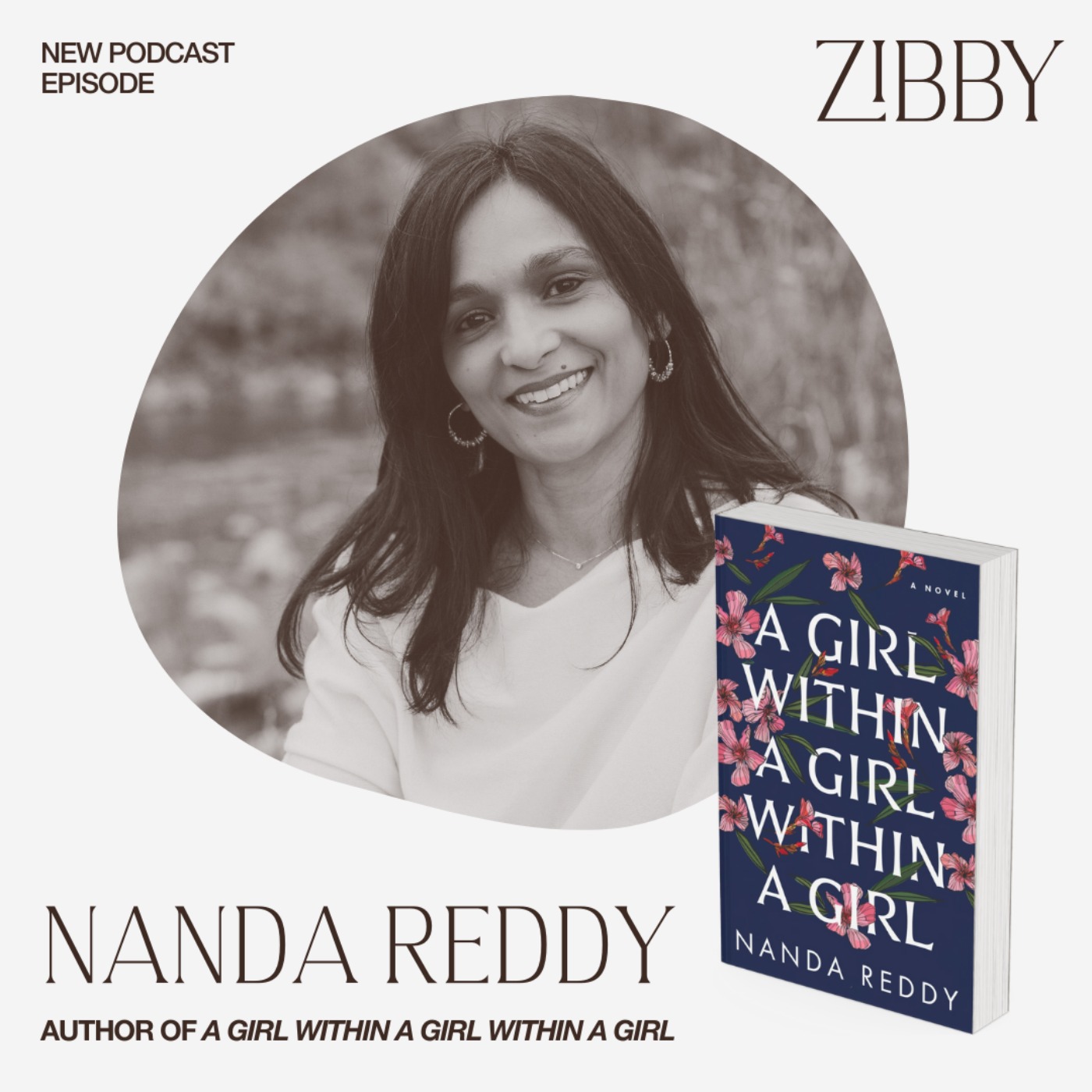
Nanda Reddy is the author of A Girl Within A Girl Within a A Novel. This is the Zibby Publishing book. We are publishing this book with my own publishing company. I'm really excited about this debut. Author Nanda is amazing and I fell in love with Nanda Reddy is a Guyanese American writer and former elementary school teacher. She immigrated to the US with her family when she was nine years old and grew up in Miami, Florida. She loves visiting off the grid places, hiking and painting with watercolors. She currently resides in Reno, Nevada with her husband and two teenage sons. A Girl Within A Girl Within a Girl is her first novel.
- [01:21]
Corey
Welcome Nanda. Thanks for coming on Totally Booked to talk about A Girl Within A Girl Within a Girl. Congratulations.
- [01:27]
Zibby Owens
Thanks for having me.
- [01:29]
Corey
Of course. As we both know, this is a book that we are publishing at Zibby Publishing and so I had the great honor of reading very early draft, the earliest, I don't know what draft that was that you sent in to now where it's all polished and ready to go. Tell listeners about what A Girl Within A Girl Within a Girl is about. Give us the, Give us the rundown.
- [01:49]
Zibby Owens
Well, I mean the elevator pitch is that it's about a woman who hides her identity from her husband and her family and she has to come clean when her sister finds her. And readers learn that she arrived to the country without papers and that she changed her identity multiple times to survive a really difficult childhood. So the story interweaves the present day with the past, heavily on the past, so that readers understand why she was forced to change her identity or felt forced to change her identity.
- [02:21]
Corey
And this is your debut novel.
- [02:23]
Zibby Owens
It is.
- [02:24]
Corey
It's so exciting.
- [02:25]
Zibby Owens
It is. But it's not like the first thing I've ever written, of course, because all writers, we have these shelved novels right before one of them feels good enough.
- [02:37]
Corey
So how at this point in your life, why did you decide to write this book and how did you come up with this particular idea?
- [02:44]
Zibby Owens
So I've talked about this with Corey actually when we were on the Buzz Books panel, that inspiration for this specific novel arrived in. In like an aha moment. I was on vacation with my family in Costa Rica and a tour guide just kind of made the honest assumption this happens fairly often, that I'm. I was from India and yeah, I didn't correct them just because it didn't really matter in the moment and it doesn't really bother me and I am of Indian descent. But I thought of a, like the story popped in my head. A woman who kind of hides her identity lets people's assumptions shape what she kind of presents to the world. And I knew in the moment that she would, I don't know, take on multiple identities. I don't know. That's how the story arrived and it rattled in my head for a while before I actually wrote it.
- [03:38]
Corey
Yeah, I love that. The rattling, how all. How all novels get built. The required rattling. Take us a little bit more through some of the identities because this book spans continents and cities and all sorts of different perspectives and has a lot of trauma built into it. Take us through even the geography of the book.
- [04:04]
Zibby Owens
Right, so the story, you know, at first you meet Maya and she's an adult woman with two boys and a husband and a family life that seems perfect. And her husband, she gets this letter from her sister and she knows that it's time to come clean because her sister is sick, she has breast cancer. And so you go back to the, to the, you go back to Guyana. The first part of the novel is set in Guyana and you meet Maya as 12 year old Sunny on the day that her life changes. She is very close to her deaf older sister who she's served as like a interpreter for her whole, her whole life. And you meet her family, you kind of get a sense of the setting, like what Guyana is like for a gosh, a working class quote unquote family in that in the 80s at that time, what a home would look like and what, what their lives might, might look like. And. And you also get a sense of the kind of desperation people felt at that time to leave Guyana. Guyana was a very, very. A new democracy at that time. It was 15 years old. It had just gotten its independence from Britain in the late 60s and it. Yeah, so people had this. At the time there was a lot of upheaval in the country and there was A desperation to leave. And so massive amounts of people left, and a lot of them had family abroad in different places that sponsored them, which is how I arrived. But if you didn't have that option, a lot of people hired smugglers and. Or tried to. I mean, it was very expensive. And in this situation with Sunny sort of a gift or landed in their family's lap, in that the situation arose that seemed almost perfect to send her abroad and to get, quote, unquote, a foot in the door. And so I wanted to capture that sense of just urgency that. That desperation people have to migrate for economic reasons and complicated reasons, because that's still going on today. That goes on all over. I mean, people, of course, migrate or forced to leave for very traumatic reasons, like war. But a lot of people leave because of these economic forces. And that desperation is something that I don't think people truly understand. I was. And it's. I don't know if I really captured it, but I was trying to capture that feeling of desperation that the family had because they are a loving family. But they. They end up sending Sunny on this journey and putting her in. In harm's way. And, you know, that wasn't their intention, of course. And so. And then to continue, she moves to. She comes to. Moves. She comes to Miami and she's on this. She's at this flower farm where she is with two also undocumented Guyanese people who are abusive and are difficult personalities to, like, they're difficult people. But I wanted to paint them as real people because while they are not good, quote, unquote, good people, they were also acting out of, like, a lot of desperation. The monster in the story is this guy that feels like he doesn't have a lot of control in his world because he doesn't have papers and he doesn't have control in his job, like, job situation. And so he exerts that control on the easiest victim. Like, who is Sonny, who arrives in his life and on his wife. And I. I don't describe that process in his mind explicitly, but I hope it comes across in the way it was written and the way he speaks and what he says and how he behaves and so that people can sort of understand how, like, monstrous behavior kind of grows. Out of. Out of that. Yeah, out of situations. And so there are some hard things that happen in the novel, but I also wanted to show, like, the light side of, quote, unquote, light side of things in that, you know, when you immigrate to a new country, you're A fish out of water. And so many things are just things that are like. That are common every day just to someone here was new to you. So just even, like, seeing a microwave or, like, having pizza for the first time, or the differences in schools and music and TV shows, there's a lot of the 80s built into the book because she moves here then. And I also moved into this country in the 80s. And, you know, a lot of those things, like the pop music, the TV shows and the foods, the zeitgeist of that time was what I, like, studied to assimilate. And she does the same thing. And so there's a bit of that. And then, of course, she. She changes and Sunny becomes she. She becomes Nina, because they call her that from the get go. But then she chooses to become Nina because of a traumatic incident. And then she chooses to become, quote, unquote, Cindy to reinvent herself when she wants to kind of free herself from all of the abuse and from the monster in the story. And then she goes through a stint where she is a stripper and she's Cynthia. And I don't show all the years between Cynthia and Maya, but you do understand why she becomes Maya and when she becomes Maya. And there are flashback scenes to show how she kind of grew into that identity as an adult.
- [10:09]
Corey
So it's almost like you had to write, like, four main characters, right? Yeah, because they're different ages, different places, different. I mean, obviously, deep down it's the same person, and that's the whole point of it. But you really had to do. I mean, this is not a light lift. Let me put it that way.
- [10:24]
Zibby Owens
No, I did. It was like writing four characters, but again, there's that thread of the one person that runs through all of it. And I hope. I mean, I hope it comes across that way. I feel like early readers have gotten it, and it never felt jarring to move from one identity to the next. It felt seamless. Yeah, but it was a little bit like writing.
- [10:49]
Corey
And I certainly didn't mean to imply it didn't work. It worked very well. I was, you know, it was supposed to be a compliment, you know.
- [10:55]
Zibby Owens
Oh, no.
- [10:58]
Corey
Tell me more about immigrating here in the 80s and even what in your own experience can inform some of the. Some of the more painful writing in this book? I mean, there was a. It felt very authentic. Like, where did this all come from?
- [11:12]
Zibby Owens
Well, I mean, I wanted, like I told you, the inspiration, but really I wanted to write a story about identity and especially with as related to, like, being an immigrant, there's. Whenever anyone moves to a new country. And I'm sure it works the other way, too. But if someone. When someone moves to America, there's this realization that so much of what you know and who you are is kind of wrong. Quote, unquote, wrong. Like, and to fit in, especially if you're moving at a formative time, like, Sunny does, like, I did everything you've ever known and every. Like, the way you've behaved, the way you spoke, all of that is wrong. It doesn't fit in. It doesn't work. And you have to kind of erase a lot of that and hide a lot of that. And so there is a lot of her wanting to fix her speech and, like, working on it and thinking about the right way to say things. And so you see her working through all of those issues and then learning eventually how to code switch, how to, like, put on a new skin and embody some. Someone who's accepted and to. And hide the part that isn't. And there's also that sense of feeling like that is inferior. And I wanted that to come across in. In the way that language was. Her initial language when she first arrived, was perceived by the people around her and the way she saw it, too, as inferior. I wanted to show that without actually making the language inferior or come across that way on the page, what I wanted to respect it and. But then show how it was perceived. And so that is actually. That's, you know, from true lived experience in that, you know, I. That even the. The scene where someone corrects her when she says three. You know, I said tree when I. When I first came to America. That's how you said the number tree. 3. And I remember, I'm like. My whole body reddened when someone was like, it's not tree, it's three. And I don't think they meant it to, like, be disparaging, or maybe they did. Actually, I do remember that moment. It was a cousin, and they think they meant it to be mean. But it. That was that moment where I was like, I have to. I can't speak. I shouldn't speak. I'm not allowed. I don't know how to speak. So I leaned into little experiences like that that I had as someone who assimilated to write the book. And it's not like I mined it where I brainstormed a bunch of things. They just kind of sort of came out naturally because I was writing an immigrant. And although Sunny is not me, you know, all of us novelists, we. Mine from our lives. And so there. There's a great amount of us that just gets imbued in the character and. Yeah, like, that's. That's one of those examples.
- [14:08]
Sponsor
Today's episode is sponsored by Wayfair. My personal style is simple, classic, elegant, and timeless. And with Wayfair, I'm able to achieve all of that in all of my home and office design needs. Recently, my tween daughter wanted to get a vanity for her bedroom, and I said, okay, well, let's go on Wayfair and check it out. And she said, well, let me look at all these other sites. And I said, no, no, no, Wayfair. So she googled it and guessa came up the perfect product on Wayfair, which we ordered and we got in our home within two days. Like everything I get from Wayfair, this item is durable, great quality, looks great, and fits in with our whole style aesthetic in our home, which is classic and elegant. It goes with her wallpaper, and I'm just obsessed with it. As I've said on this podcast before, I've gotten all my office furniture from Wayfair, and I am honestly such a huge, huge fan. So head over to Wayfair.com and find something that's just your style today. That's W A Y F A I R.com Wayfair Every style, every home. Today's episode is sponsored by Acorns. Acorns is a financial wellness app that makes it easy to start saving and investing for your future. You don't need to be an expert. Acorns will recommend a diversified portfolio that matches you and your money goals. You don't need to be rich. Acorns lets you get started with the spare money you've got right now, even if all you've got is spare change. Here's a fact that may not surprise you. 66% of men are investing in the stock market, compared to just 48% of women. Here's another one that won't surprise you either. Multiple studies have shown that women are better investors than men. Why? Because men are overconfident and women actually do their research. The investing gap means less women have the chance to build wealth now and can have huge repercussions down the road when it comes time for them to retire. The good news is that Acorns makes it easy for everyone to start investing, even kids. I have my kids invest their allowance in Acorns and they get to see it grow over time, which is really exciting and empowering for them and unites us as a family. Sign up now and join the over 13 million all time customers who have already saved and invested over $22 billion with Acorns. Head to acorns.com books or download the Acorns app to get started. Paid client endorsement compensation provides incentive to positively promote Acorns. Tier 1 compensation provided investing involves risk. Acorn Advisors LLC, an SEC registered investment advisor. Few important disclosures@acorns.com books what about her sister being deaf?
- [16:58]
Zibby Owens
Yes. So yeah, I didn't set out to write a deaf character or deaf characters. You know. Again, when this story came to me, I didn't think about that. But as soon as I sat down to write it, she had a deaf sister. And you know, at first in the back of my head I thought is this a bad idea? Because will people think this is my actual sister? And as I wrote it and Roshi was nothing like my sister in the end, you know, I decided to keep it. But I thought, you know, it's interesting. The representation of course was matters and since I have this experience I can write it. But the things like with her deaf sister in the beginning when you meet her, she's feeling this desire to be separated from her that she's kind of grown tired of kind of always being attached to her. And they also have this very rudimentary way of speaking to each other that's all from lived experience. When I was a kid, I was younger than my deaf sister, but I did serve as her interpreter and I was actually placed up two grades to be her interpreter and I felt attached to her in that way. But I think I really leaned into maybe small feelings I had and made him huge in the novel and I of course fictionalized all of, all of everything. But yeah, it's the mining those small feelings, you know, that are not things we're proud of. Like wanting to just like ditch her. Although I never really did that I think makes the novel honest because you know, it comes from like those honest ugly places right where you were. I wasn't a mean kid, but where you had like a mean kid feeling.
- [18:53]
Corey
And what's your relationship like with your sister now?
- [18:56]
Zibby Owens
I my sister is in Florida. She lives not too far from my parents and I just saw her. She came here to visit for Christmas. We have a great relationship. But because she's hearing impaired and like I don't speak and I'm not proud of this, I don't speak sign language fluently. It's very trans, like surface, we can only go so deep in conversation Right. And so it's. I know how she's doing, she knows how I'm doing and that kind of thing, and if she needs something. But I think with the whole deaf culture, what I wanted to do with this book was to sort of portray a utopia that doesn't exist for. For most deaf families and for deaf people. Because I thought, why not? Right. Sunny is having enough problems. That shows some good. In the 80s, particularly, there was a huge push to force deaf people to speak. So I remember when my. And of course, my sister, she didn't have hearing aids in Guyana at all, and she didn't get them until she was 11, when she came to this country. And she didn't actually start learning sign language until even later, like 13 or 14. So she arrived to that language late. But there was. I remember she'd come home and she'd, like, touch our throats because she's like, that's what they told us we have to do to learn to speak, like, to feel the vibration and then, like, try to mimic it. And there was no push to try to get the families to learn sign language until it was like, maybe I was a senior or junior in high school, and she was too. And she's like, oh, they're doing this program and they want us. But by then, it kind of felt too late, I think. We're all so busy. My parents had two jobs, and it wasn't. So this. The whole. The idea of, like, a whole family speaking sign language and making such a. It's not an effort, but making it a seamless part of their lives is a utopia that does not exist for most deaf kids, like my sister. You know, our circumstance was a little different that we arrived later. And so she wasn't brought up here, but we didn't. My parents don't speak sign language. My other sister doesn't speak sign. We all tried. It's not like I don't know any words. I know the Alphabet, and I can, but I'm not fluent. And it's funny, the words that stick with you, like, I'll always know cookie and, you know, like, there's just some silly words that'll stick with your mother, father, all the simple words, we all know those, but the fluency is just not there because it's a whole other language, and you have to have that effort. She. I mean, I told my sister that, you know, obviously she knows that there's a deaf character in here, and it's inspired by her, actually, multiple deaf characters. And I told her that they all speak sign language to each other, and it's sort of perfect. And she's like, that's great. But, yeah, she. She was not like, you lied. But, yeah, she said it was. She's excited. She's really, really proud, and she's super excited that there are deaf characters and that there's representation in the novel. And I worked really hard to. I mean, I don't speak sign language fluently, but I was around it enough and I'm around her enough to understand the syntax of it and how that all works. And I've read a number of books by deaf people to help with that as I was writing a lot of that.
- [22:30]
Corey
Fantastic. Well, I found that part of the story so compelling, so I'm very glad you put it in. And it's great for everybody who might not have personal interactions with someone who's deaf to learn a little bit more about it and to, you know, have that be a character. I just love that, and it's so meaningful to know it comes from such a personal place.
- [22:51]
Zibby Owens
I appreciate it. No, thanks. It definitely adds a whole dimension to the story that I felt like it enriched the whole thing.
- [22:59]
Corey
I agree. I agree. What should the reader take away? All of us kind of have our different parts, right? And, like, our. You know, there's all that talk about how our cells completely regenerate. We're actually kind of physically different people every 10 years, whatever it is, science, blah, blah, blah. What do we. What do we do with the information that, like, inside all of us, we hold? Maybe not as extreme right here as your characters, but character, but that different worlds sort of live in all of us. Like, where do we go from there?
- [23:30]
Zibby Owens
Well, yeah, I mean, I just kind of hope that readers think about identity as they read the book and their own. Maybe even like just the dimensionality of it. I mean, we all do this mini micro code switching. You know, you're the podcast host right now, and you're a totally different person. Not total, totally different person, but you're different with your kids and you're different with your parents. And often when we return to our childhood situations with our parents and siblings and cousins, a side of us comes out that feels reminiscent of our childhood. Do we become the big sister, the little sister, or the middle sister, the quiet one? When in our everyday lives with our friends, we may not be that person. So I hope, you know, readers kind of see themselves mirrored in this book in some way, even though the situation is so drastic and not at all like anything anyone's living I do feel like sometimes stories like this that are so specific are the best ones to mirror because you go so deep into someone's brain that you see the echoes of your own, like, personal self. So, yeah, I'm hoping readers take away the complexity of identity and think about their own and think about the way we sometimes pigeonhole people and we don't allow them to change or to like, we don't think about the multiple sides that people have when we meet them.
- [25:06]
Corey
I love that. I love it. Nanda, thank you so much. This book was so immersive. I loved it from first reading and it was quite complicated to pull off and you completely did it and we'll make all versions of ourselves relate. So thank you and thank you for trusting us with your book. And yeah, very excited.
- [25:28]
Zibby Owens
I appreciate it. Thanks so much, Zabi.
- [25:30]
Corey
Okay.
- [25:31]
Zibby Owens
Thanks for publishing it and having me.
- [25:33]
Corey
You're welcome. Okay, bye.
- [25:35]
Zibby Owens
Bye.
- [25:35]
Corey
Bye.
- [25:35]
Zibby Owens
Bye.
- [25:36]
Thank you for listening to Totally Booked with Zibby, formerly Moms don't have Time to read Books. If you loved the show, tell a friend, leave a review, follow me on Instagram, ibbeowens and spread the word. Thanks so much. Oh, and buy the books.