Loading summary
Transcript76 lines
- [00:01]
Zibby Owens
Clips from the Totally Booked Live series are now up on Instagram. TotallyBookedWithZibvy. Check it out. Race the rudders. Race the sails. Race the sails. Captain, an unidentified ship is approaching.
- [00:19]
Nicola Krause
Over.
- [00:19]
Zibby Owens
Roger, wait. Is that an enterprise sales solution? Reach sales professionals, not professional, professional sailors. With LinkedIn ads, you can target the.
- [00:30]
Nicola Krause
Right people by industry, job title and more.
- [00:32]
Zibby Owens
We'll even give you a $100 credit.
- [00:34]
Nicola Krause
On your next campaign. Get started today at LinkedIn.com results, terms and conditions apply. I have this nightmare that I never finished college or that someone's going to find out that I don't have the qualifications for this job and I'm like a total fraud.
- [00:50]
Zibby Owens
Sometimes even the most successful people experience imposter syndrome. Check out Mind if we Talk? The newest podcast helping you with tough topics. In this episode, licensed therapist Jesu Jo sits down with award winning journalist Jane Marie to explore why so many of us have imposter syndrome and why success never seems to solve it. Whether you've ever questioned your own success or felt like the odd one out, this episode's for you. Listen and subscribe to Mind if we Talk? Wherever you get your podcasts.
- [01:21]
Nicola Krause
Hi.
- [01:22]
Sarah Gibson Tuttle
Who here loves when their nails are perfectly done? Me. I'm Sarah Gibson Tuttle and I started Olive in June because let's be real, we all deserve to have gorgeous nails. But who wants to spend a fortune or half their day at the salon? And that's why I created the Mani system. So you can have that salon perfect manicure right at home. And guess what? The best part? Each mani only costs $2. Yup, you heard me. $2. No more. 30, 40, $50 salon trips that eat up your day. Now you paint your nails whenever you want, wherever you want. And trust me, you're going to be obsessed with your nails. And everyone is going to ask you, where did you get your nails done? And here's a little something extra. Head over to oliveandjune.com and get 20% off your first mani system with code perfectmani20@oliveandjune.com perfectmanny20. That's code perfectmanny20 for 20% off@oliveandjeune.com perfectmanny2 0. You're all set for a nail glow up. Let's get those nails looking fabulous, shall we?
- [02:24]
Zibby Owens
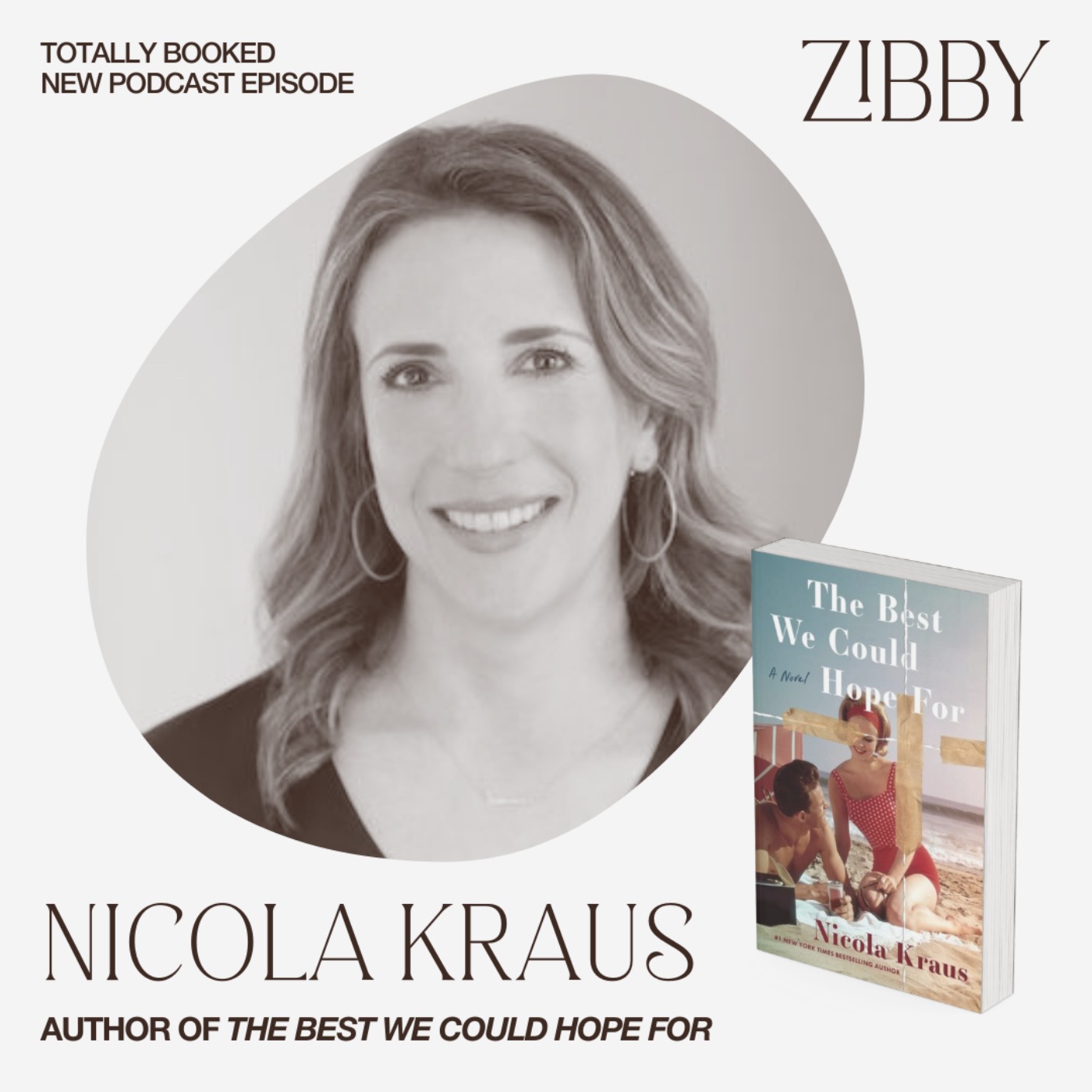
Hi, this is Zibby Owens and you're listening to Totally Booked with Zibby, formerly Moms don't have Time to Read Books. In my daily show, I interview today's latest best selling, buzziest or underrated authors and story creators whose work I think is worth your time. As a bookstore owner, publisher, author, and obviously podcaster, I get a comprehensive look at everything that's coming out and spend my time curating the best books so you don't have to stay in the know, get insider insights and connect with guests like I do every single day. For more information, go to zibbymedia.com and follow me on Instagram ibbeowens. Nicola Krause is the author of the Best We Could Hope For a novel. Nicola co authored the Nanny Diaries, the international number one bestseller and movie starring Scarlett Johansson and Alicia Keys. Nicola has contributed to the London Times, the New York Times, Redbook, Glamour, and Town and country. In 2015, she co founded the creative consulting firm the Finished Thought, which helps the next generation of aspiring authors find their voice and audience. Her first solo novel is the Best We Could Hope for, and Nicola is also a contributor to the anthology that I edited called On Being Jewish Now, Reflections from Authors and Advocates, which has been on the USA Today bestseller list for over 20 weeks. Welcome, Nicola. Thank you so much for coming on Totally Booked with Zibby to talk about the best we Could Hope for a novel. Congrats.
- [03:58]
Nicola Krause
Thank you. I'm so happy to be here.
- [04:00]
Zibby Owens
Oh, it's so great to be with you. Okay, great book. Tell everybody what the Best We Could Hope for is about, please.
- [04:07]
Nicola Krause
It is a multi generational story that goes from 1943 to 2014 because I wanted to look at the way the choices that baby boomers made as parents impacted Gen X and then the way that they live, heal and parent. So in order to encapsulate all of that, I really needed to cover a large span of time, which is why the book took me nine years to write.
- [04:33]
Zibby Owens
So when you first started it nine years ago, what was the nugget that you were like this? And then what kept you going? Like which part of it? Because there's a lot in the book.
- [04:42]
Nicola Krause
I think there was a narrative when the Nanny Diaries came out that my writing partner and I had sort of gotten off the bus and this was our first exposure to the Upper east side. But I actually grew up here. So from the time that I was very small, I was sort of like the Pixar lamp. I just was swiveling back and forth, fascinated by the people that I was surrounded by. Because the confluence of incredible privilege with so much neglect and so much dysfunction, when you think, gosh, with all this money, everyone must be so happy and seeing repeatedly, from a very young age that that wasn't the case. So, in a way, this novel's been brewing in my brain for decades, and it wasn't until Emma and I separated in our 40s. Just professionally. We still talk every day that I had the time and the space to start exploring what this story would look like and how I would tell the way that this parenting Milia that I think you grew up in, as well, like, how it sort of impacted the way that our generation is trying to be more conscious around parenting than I think any generation ever had the privilege of doing before.
- [05:54]
Zibby Owens
Interesting. Well, now I understand sort of the Upper East Sideness of it, which, of course, my brain lights up, given that that's where I'm from as well. But first, Jane is looking at apartments when she's newly getting married and starting her life with Roger, and then later on, she's there. And he referenced some brands that I knew right away, which now, of course, I'm blanking on. But I was like, oh, yeah, of course.
- [06:19]
Nicola Krause
Like, P.S.
- [06:20]
Zibby Owens
I love you, Ballet Academy east you talked about. I'm trying to remember where else. But anyway, I was like. And she finally, like, gets to be on the east side, which she, like, always wanted. The elevators and all the stuff.
- [06:31]
Nicola Krause
Yes, yes. The elegance, the order, all of that appeals to Jane's brain tremendously. She is not an Upper West Sider, sadly.
- [06:40]
Zibby Owens
I love the broker who's like, are you sure you want to live on the east side? Like, there's a whole community of grad students and everything. Like, sure you don't want to be a part of that? She was like, fine.
- [06:50]
Nicola Krause
My mother was the head librarian for the research library up at Columbia. So we had a strong community growing up of people who were in Morningside Heights. And there was a very different milieu. It was a different set of values, a different way of moving through the city. So on one hand, it might seem like a very homogenous environment, but actually, you move 10 blocks, and you're an entirely different community with an entirely different way of parenting and an entirely different system of raising a family.
- [07:21]
Zibby Owens
Wow. So this takes us through generations. It's also about sisterhood. It's also about trauma and the effect on relationships. There's some really dark things that happen. Like, very, very dark. Talk to me about that. And I don't know if it's a spoiler if we can talk about. I mean, I feel like it's sort of halfway through where we learn some of this stuff, and then, like, maybe three quarters where we learn more.
- [07:50]
Nicola Krause
And you Know, I think that we are the first generation to actively talk about trauma, although we are certainly not the first generation to experience it. But having a vernacular around the idea that the things that we experience when we're growing up are going to form the way our brain takes in the world as adults, that's really new language that we have now. And I grew up around so many dinner parties where I would hear these couples talking about their children, and I would see the choices that they made when their children were teenagers. And then fast forward 10 years, and they would say, well, why is my child totally failing to thrive? And I would think, because you broke them. They are broken because you broke them. Remember that time you left the country when your child was in high school and just left them with a credit card and a housekeeper who came occasionally? Yeah. They're in rehab now. That's how that plays out. So I wanted to look at a story that would show what the impact is of the choices that we make, the secrets that we keep, the consequences also of the shame around secret keeping. I was listening to your interview with Amy Griffin and thinking about all the similarities there. Women, especially, coming out of the 1950s. If you get your sense of value and your sense of self from the way you present, and if the standard of that presentation is perfection, it doesn't give you a lot of space to be human. And then if you don't ever allow your children to know you vulnerably as someone who is able to make mistakes, then you cut yourself off from a lot of avenues toward authentic love.
- [09:36]
Zibby Owens
True. That's right. Even in, like, relationships, I mean, I have teenagers who are dealing with the same thing. It's like how, if you only show a side of yourself, how can the other person connect with you fully if you're not, you know, it's like the puzzle piece. You're not even putting the right contours out there.
- [09:53]
Nicola Krause
Absolutely. So I wanted to find a way to look at all of this. I attended a production of Measure for Measure decades ago where the structure of the story was that the twins, who are usually presented as adoring each other, hated each other. So when the brother asks his sister if she will be willing to, you know, sleep with the duke for his benefit or to save him, she does it, but she is just loathing coming out of every pore of her being. And we met with the artistic director the next day, and he said, I'm really interested in taking a story and without changing a word of the text, seeing if the opposite will Hold. And that always stuck with me because I think there are a lot of stories about women who have experienced abuse who are trying to interact that reality into their lives. And I thought it was so interesting to create a story around a young woman who's been told since she was a child that she has been abused, and she's trying to figure out as an adult, if that actually maps onto her sense of self and what are the consequences of that dissonance within her own brain. So that was the origin of that interesting, really delightful thread in the plot.
- [11:03]
Zibby Owens
Oh, my gosh. Well, you know, you talk later in the book about emdr, and I have not tried this, but I feel like I need to, because it's all the rage. Have you tried it to be able to write about it authentically?
- [11:17]
Nicola Krause
Yes. I just wrote an essay about this.
- [11:20]
Zibby Owens
Sorry, I didn't see it.
- [11:21]
Nicola Krause
Sorry. No, no, it hasn't come out yet. I literally. I just wrote it. But I first heard about EMDR in Elle magazine in the 90s. It was just an article about this light bar that would go back and forth that was supposed to be good for healing ptsd. And I tore it out because the Internet hadn't been invented yet. And I kept it in. And it was about 10 years later that someone said to me that they were doing a therapy with lights. I was like, oh, that's it. That's it. I found it, and I did it for seven years.
- [11:52]
Zibby Owens
Did you really? Wow.
- [11:53]
Nicola Krause
I did. And it changed my life. I would not be married. I would not be a parent. I would not be able to have the capacity for joy that I have if I hadn't done it. I think everyone should do at least one session. It will change the way you see the world.
- [12:07]
Zibby Owens
Oh, my gosh. Okay, well, not to totally pry, but what led you to, say, seek it out, aside from, like, intellectual interest? Like, what were you working through? For some.
- [12:16]
Nicola Krause
I knew that I was tremendously anxious, just. And I think I put a little bit of this into Lyndon's life. In her 30s that. Just trying to get to a bus or catch a subway, and my heart would just start racing. And I thought this. It feels like I'm going to die younger than I need to if I don't get my cortisol under control.
- [12:34]
Zibby Owens
Interesting.
- [12:35]
Nicola Krause
So I went into the session saying, you know, I had a perfect childhood, but. But I seem to have a lot of anxiety. And bless my therapist, she kept a straight face. She's like, let's look into that. And what's fascinating about it, And I got the privilege a few years later of working on a book called Every Memory Deserves Respect. Emdr. And it was the first book written by clinicians for laypeople. So it really lays out how EMDR works and why EMDR works. And it turns out that when the brain is in the high state of activation, it splits out its capacity to encode. So the brain will hold a soundtrack separate from a visual or the sense of what happened separate from the sound or the visual. So the process of emdr, and they don't know exactly why, but it allows the brain to reconnect these separate files. And so you're able to come in and make meaning, and you're able to change your narrative around the memory. So let's say your parents divorced, and you've always felt like I was powerless or I was scared or no one was paying attention to me. You go through and reprocess these memories, and the narrative that comes out is, I'm tremendously resilient. Wow. I got myself through that. That's extraordinary. I have such an amazing capacity to get through hard things. So by actively changing how you feel about yourself, you're able to then move forward, living your life completely differently.
- [14:04]
Zibby Owens
Wow. Okay.
- [14:05]
Nicola Krause
I know. It's worth a point.
- [14:06]
Zibby Owens
This episode has been sponsored by emdr.
- [14:09]
Nicola Krause
Emdr.
- [14:11]
Zibby Owens
Oh, my gosh. I mean. Kidding. Wow. Interesting. Okay, so Bunny, Jane's sister Bunny, leaves home early. We reunite sort of with her. I mean, we do. And she. I mean, I never know what to leave, whether it's a spoiler or not, but she basically dumps her kids on her sister when her sister is dying to have her own kids. And she has kids of different ethnicities, which comes back later in the book of how they're processing, particularly one of them. But how are they processing race in today's world, too? Talk a little bit about her. Like, about Bunny's sort of, you know, laissez faire attitude towards life and how race, like, played a thing and what you were trying to say by including that element.
- [14:59]
Nicola Krause
So Bunny leaves her home in Baltimore in the late 1950s and joins a commune, and that is based on a real commune that, of course, blew up because they attracted a lot of attention, because they did. They had blacks and whites working alongside each other, and eventually the community was like, we're not comfortable with that anymore. And thankfully, the 60s came and things changed tremendously. But Bunny then moves from there to South America, and by the time she comes back to New York in her mid-20s, she's had three children by three different fathers of three different ethnicities. And she's overwhelmed. She, I think, thought she was moving away from her very restrictive, cold childhood into a community of love and support. And instead, of course, found that her first opportunity to move away from the damage she experienced. She replicates it, which I think characters continue to do throughout the novel. As soon as they have autonomy, they just play through exactly what they've just escaped.
- [16:03]
Zibby Owens
And.
- [16:03]
Nicola Krause
And so she. She caves. She is willing to acknowledge that Jane is the one who is competent, organized. It seems like leaving the children with her is the answer to everyone's problems. And, of course, it just creates a whole new host of problems. But I also wanted to look at what it was to be not white growing up on the Upper east side, going to these schools. I had and have close friends who were invited into these schools, given the educational opportunity. But the schools, I think, at the time were very bad at the integration part. I think we saw now with the hashtag that came out during the pandemic, which started with Blackapin, where women who I had gone to school with and knew were chronicling experiences of tremendous racism. And so the disconnect, again, between this opportunity, which seems like it's a pure privilege, and what it actually felt like, which was an abnegation of your. Your sense of self, your sense of identity, not being given a real seat at the table. And the schools didn't understand that one of their responsibilities was to be fostering relationships across racial and socioeconomic lines, which I see now with my daughter's schools, so much better. You know, she has really good friends who have very different backgrounds, and they have sleepovers, and they move back and forth to each other's homes. And I think that then you can create change, because these girls are allowed to really impact my daughter. And we were sort of. We were in the same building, but we were moving along separate lines, so. And I felt like thematically, that also really tied into what was happening inside the home life of these characters. So I thought that that was important to represent.
- [17:58]
Zibby Owens
Interesting. Today's episode has been sponsored by Fast Growing Trees. Did you know Fast Growing Trees is the biggest online nursery in the US with thousands of different plants and over 2 million happy customers. They have all the plants your yard or house needs, like fruit trees, privacy trees, flowering trees, shrubs, and so much more. Whatever plants you're interested in, Fast Growing Trees has you covered. Find the perfect fit for your climate and space. Fast Growing Trees makes it easy to get your dream yard order online and get Your plants delivered directly to your door in just a few days without ever leaving home. Their alive and thrive guarantee ensures your plants arrive happy and healthy. Plus, get support from trained plant experts on call to help you plan your landscape, choose the right plants and learn how to care for them. I am obsessed with the fiddle leaf fig tree, an indoor plant that I got from fast growing trees. It is so beautiful and it just came right to my door. No annoying trip to a nursery or. I once had to go in midtown in New York City, not even midtown. All the way to the flower district to find a tree and put it in the car. And that was such a pain. Anyway, now these came right. Everything comes right to my door. And it's amazing. This spring they have the best deals for your yard. Up to half off on select plants and other deals. And listeners to our show get 15% off their first purchase when using the code readbooks at checkout. That's an additional 15% off@fastgrowingtrees.com using the code readbooks at checkout. Fastgrowingtrees.com code readbooks. Now's the perfect time to plant indoors or out. Use Readbooks to save today. Offer is valid for a limited time. Terms and conditions may apply. Race the rudders. Race the sails. Race the sails. Captain, an unidentified ship is approaching.
- [19:56]
Nicola Krause
Over.
- [19:57]
Zibby Owens
Roger, wait. Is that an enterprise sales solution? Reach sales professionals, not professional sailors. With LinkedIn ads, you can target the.
- [20:07]
Nicola Krause
Right people by industry, job title and more.
- [20:10]
Zibby Owens
We'll even give you a $100 credit.
- [20:12]
Nicola Krause
On your next campaign. Get started today at LinkedIn.com results. Terms and conditions apply.
- [20:19]
Zibby Owens
BetterHelp Online Therapy bought this 30 second ad to remind you right now, wherever you are, to unclench your jaw, relax your shoulders, take a deep breath in and out. Feels better, right? That's 15 seconds of self care. Imagine what you could do with more. Visit betterhelp.com randompodcast for 10% off your first month of therapy. No pressure, just help. But for now, just relax. Wow. Well, even just the thought of managing all these different kids because Jane has five. I mean, they're dining five kids. It's like, I mean, I know I have four kids, but somehow five just feels like too many kids. Way too many kids. Way more than four. Can you take us back to how you became an author? How did you team up with Emma to begin with? How did it change your life to have all the success early on? And did it make you feel paranoid about writing your own book? So take us back and then up to here.
- [21:38]
Nicola Krause
So I wanted to be an actor. That is all I thought I ever wanted to do. And I graduated from college a year early because I was so convinced that that was my path and I needed the extra time to get going. And by the last year that I was acting, I hated it. And I was privileged, though, in that I was making enough money acting, I didn't have to have any other jobs. And I think that full immersion was what gave me the perspective. The thought that kept going through my head every day was, this is not a good use of my time on this planet. And every few months I would sob and my parents would say, you should be a writer. And I would say, that's not helpful. You're supposed to tell me to be a CPA or something practical. They saw it. They saw it for me. And they had a great belief in storytelling as a really valuable use of human time and energy. Thank God. And so when Emma, who I'd gone to college with, sent me an email one day saying, I've had this idea for a book for a long time. I really want to partner with someone to write it. You were also a nanny. Would you do it with me? It was at a moment where I was exploring going back to school to do my pre med requirements. I was writing, I was teaching yoga. I thought, one of these is going to be my path out and so say yes to everything. Even though I thought it was a terrible idea, because nannying was the worst job I'd ever had and it was totally heartbreaking, and who on earth would want to read about that? But then we were off to the races and it had a momentum of its own. We relatively, very quickly. I mean, one or the other of us was working on it literally 24 hours a day. Because she'd go to sleep just as I got up, and then I would take it over. And we were just so on fire about it. But at the same time, we had friends who were making sculpture in their bathrooms. We had friends who were doing a lot of theater downtown. This just was an artistic endeavor for us. We had no idea what was coming. And then the extraordinary success of that, which just shocks us to this day, gave us the opportunity to keep going. And we wrote nine more books together. But we started getting funneled into this arena that was an aspect of women's fiction that wasn't. It didn't light us up anymore. And we weren't doing it from the same place of just pure, pure energy, enthusiasm and joy. And so by the time we turned 40, I knew I really wanted to go back to doing the kind of writing that I'd done before Emma and I started working together. And she really wanted to go back to corporate America. She wanted health insurance. So it was a really amicable, loving separation. But I. It took me nine years to do this on my own. It's very different when you're not under contract or under deadline.
- [24:22]
Zibby Owens
Wow. I've never written really with anyone else and I mean, I feel like that would be so difficult. But people, I mean, obviously it works really well for the right people to do it. And who knows?
- [24:32]
Nicola Krause
It's like a marriage. You have to do everything very explicitly and you have to plot everything out because someone can't go rogue. You have to. So it. It requires tremendous communication and a lot of respect.
- [24:44]
Zibby Owens
I feel like there should be a panel with you and like I had Lauren Weisberger on the podcast and even Nell Freudenberger who wrote Lucky Girls. Like people who like peaked and not peaked, but like, who had major success really early on, like before they even knew how hard the industry was. And what does that do to you as a writer going forward? Right. It's like a child star or something.
- [25:06]
Nicola Krause
Oh, totally. Or before your Saturn return. It's really destabilizing, I think fame in general, even though this was mini fame, micro fame, the Hershey Kisses fame. But it's very destabilizing if you don't have other things in your life to ground you. And I was also fascinated by going through that experience. And then it influenced a few books that Emma and I wrote because we wrote one inspired by the Britney Spears story. What does that do? If you have no core sense of self and suddenly you're getting all of this adulation. And the corollary to that is that your body is not experiencing fame as good. Your body is experiencing it as being chased by a saber toothed tiger. You don't know the difference between being on the red carpet and someone wanting to hurt you. It's just cortisol, cortisol, cortisol all day, every day. Which is why I think especially for people who acquire their fame in their early 20s, they buy things all the time because they think this handbag will make me feel successful or this vacation will make me feel successful because what I feel is exhausted and wrung out. And so looking at, how do you, what do you latch onto? What grounds you. What is the thing? I think for people who are very talented, they keep coming back to the work. If you just keep coming back to the endeavor, the Thing that involves no hair, no makeup, no lights, you know, just the endeavor and the love of it, you'll be okay. But if you don't have that to ground you and you're just. It's like the substance, which I loved so much I did not say it. Oh, my gosh. Just watch the first 10 minutes. You know, it starts with her on the Hollywood Walk of Fame, and all these people are photographing her, and everyone's saying, we love you, we love you. And if you don't go home to even a pet who's like, I love you, and I have no idea what movies are, then you can eventually get very far off center of what matters in life.
- [27:04]
Zibby Owens
So interesting. Oh, my gosh. Okay, so in addition to this book that took nine years and all the rest you contributed to. I'm Being Jewish now. Thank you so much for that.
- [27:16]
Nicola Krause
Yes.
- [27:16]
Zibby Owens
Can you talk a little? Just about, like, did you debate doing that or not? Are you happy you did it? And is there a part of your story that you feel comfortable sharing?
- [27:25]
Nicola Krause
Oh, yes. Oh, no. I loved doing that. I was so thrilled that you asked me. And I think I wrote the whole thing in about an hour after I got that email from you. I mean, it happened to be perfect timing in that I was at the end of year one of my Hebrew studies, and at the beginning of my year two, I have my Torah portion right here, which I'm memorizing every day. Every minute I have, when a zoom starts late, I just sit here and sing. So my essay was inspired by the story of my family, who they were refugees on both sides, Holocaust refugees. But I was raised without any awareness of that. There was no discussion of any Jewish heritage. And it wasn't until I was an adult that I started trying to get to the bottom of what happened and why isn't anyone talking about this? And then trying to reconnect to my Jewish heritage and learning about the religion. And I've been in this phenomenal community for the last two years at East End Temple. I love my classmates. We are all inquiring together and studying together and having headaches together. And it's just so beautiful to be accepted. Everything about it fills me with joy.
- [28:37]
Zibby Owens
Oh, my gosh. And now you're getting ready for this bat mitzvah. Yes.
- [28:40]
Nicola Krause
June 1st.
- [28:41]
Zibby Owens
Oh, my gosh, that is so cool. And you've said something so funny about, like, ice sculptures and hot flashes. Oh, yes, yes.
- [28:47]
Nicola Krause
My paramedical ice sculptures. Hot flashes. That is the theme.
- [28:51]
Zibby Owens
Oh, my gosh, that's so Interesting. Wow. You have, like, so many different things and interests and book publicity. I mean, there's a lot going on. How do you manage your time? I'm always looking for tricks.
- [29:06]
Nicola Krause
I read an interview with Aaron Sorkin once, who was also working on multiple things. So he says, whatever's at the top of the pile gets my undivided attention. And I was like, oh, yes, me too. So I just try to block out my day where I'm doing a little bit of time for my creative pursuits, which right now means all the things that have to do with a book launch. And then when my clients who I'm helping write their books, when I'm focused on them, everything else goes away. And then when my daughter gets home from school, she gets my undivided attention. And then I watch tv.
- [29:38]
Zibby Owens
Oh, my gosh, I love it. Okay, well, just to close, there are family secrets that permeate the best we could hope for and the effect of those and the things that we don't talk about or the things that those closest to us can't even articulate. What do we do with the fact that there are people who might be keeping secrets from us? Like, how do we go through the world where there is all this, like, parallel narrative and sometimes it could be quite dark and yet preserve a sense of optimism and vulnerability?
- [30:16]
Nicola Krause
It's so hard. I think it can go both ways. So you might have someone older in your family, just the way I did. Even with the Jewish narrative, where you want to make space for them to know that it is safe for them to give you their truth, that you won't judge them for it, even if they have a narrative that was inculcated in them decades ago, that their sense of self worth and their sense of belonging will disintegrate if anyone knows the full truth of them. So you may not succeed. Right. And that's also what the book is about. Someone who you love very much may die and take their truth with them, but that doesn't mean that they didn't appreciate that you still opened yourself up and made that extension to them. And you just have to make peace with it. And on the other side, I think, trust that the people around you love you, thorns and all, and that we don't have to be perfect to be valuable.
- [31:12]
Zibby Owens
I love that. That's a good. A good message to close. Thank you.
- [31:17]
Nicola Krause
Oh, thank you. This was so fun.
- [31:19]
Zibby Owens
Thank you so much, Nicola. And thanks again for contributing to the anthology. Thanks for this read. Oh, I didn't even mention that we have the Same editor at Little Egg. Yes.
- [31:26]
Nicola Krause
Yes.
- [31:27]
Zibby Owens
Oh my gosh. Actually just interviewed Jordan Roeder who has the same. We should have like a little party. Yes.
- [31:32]
Nicola Krause
Oh, that would be great. Yes, I would love that.
- [31:35]
Zibby Owens
Okay. Congratulations on the book. Best of luck. And now I guess I'm off to schedule an EMDR appointment.
- [31:40]
Nicola Krause
Thank you. Oh my gosh. You should change your life and then let me know how it went.
- [31:43]
Zibby Owens
Okay. Okay, bye. Thank you. Thank you for listening to Totally Booked with Zibi, formerly Moms don't have Time to read Books. If you loved the show, tell a friend, leave a review, follow me on Instagram izibbyowens and spread the word. Thanks so much. Oh, and buy the books. Meet Suvi, your new personal chef. Sous Vide is a smart countertop oven and a flexible meal delivery service. The Sous Viden robot has built in refrigeration so you can set up dinner in the morning and come home to a hot home cooked meal. Enjoy balanced chef prepared meals without shopping, prepping or exhausting cleanup, stop spending hours in the kitchen and a fortune on takeout. Right now, Sous Vide is on sale. Order today. To get $100 off plus 16 free meals, go to suvie.com podcast that's s u v I e.com podcast Want a workout that actually works? Hydro delivers a full body workout that hits 86% of your muscles in just 20 minutes. Rowing with Hydro combines strength and cardio with thousands of workouts led by Olympians in breathtaking locations. No wonder nine out of ten members are still active one year later. Try hydro risk free@hydro.com and use code row to save up to $475 off your hydro. Pro rowers, that's H Y-R-O-W.com code RO. You were made for going the extra mile for your pet and Farah Pets was made to do the same. Farapets supplements are vet created with innovative ingredients that combine eastern and western therapies so your pet can thrive. After all, you would do anything to help your pet feel their best. And so would we. Visit farapets.com pod to get 20% off today. That's f e r a pets.com p o d Fara Pets we were made for this. Clips from the Totally Booked Live series are now up on Instagram. Totally Booked with Zibby. Check it out.