← Totally Booked with Zibby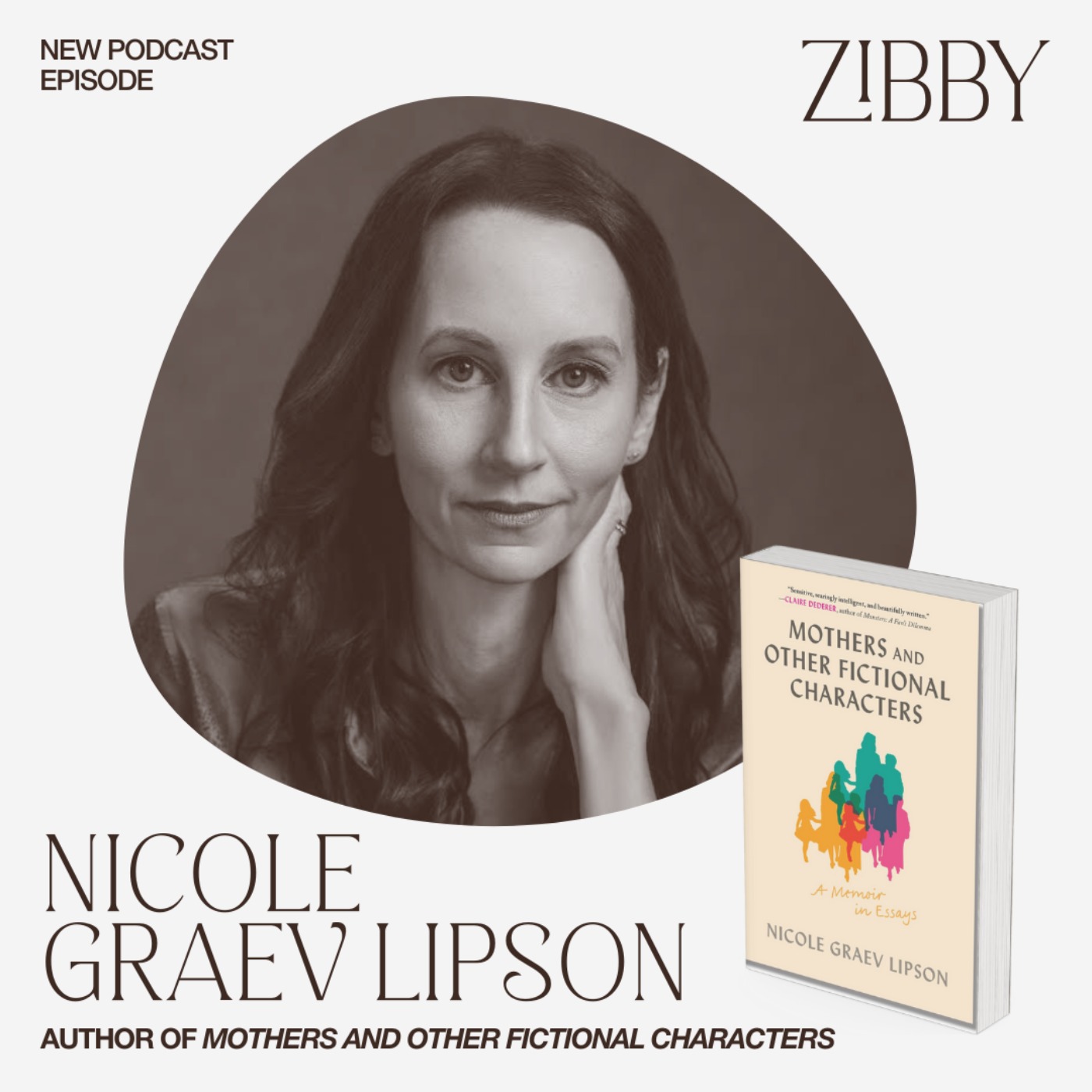
Totally Booked with Zibby
Nicole Graev Lipson, MOTHERS AND OTHER FICTIONAL CHARACTERS: A Memoir in Essays
00:21:36
Loading summary
Transcript50 lines
- [00:01]
Zibby Owens
My episode with Amy Griffin was recorded a little while ago. She's the author of the Tell. If you didn't know, this is the Oprah's Book Club Pick of the Month. But also at her launch event, Rhys and Jenna and Oprah were there and they were all on stage hugging her and celebrating the Tell. You should go on Instagram and check out any of their pages to see the triumvirate of book club women supporters hugging Amy. This book was fabulous. Amy is a powerhouse, knows everyone in the world, and is the kindest person. So I just wanted to give you that background as you listen to Amy Griffin's episode with me about the Tell.
- [00:45]
Captain
Race the rudders. Race the sails. Race the sails.
- [00:49]
Zibby Owens
Captain, an unidentified ship is approaching. Over.
- [00:52]
Captain
Roger, wait. Is that an enterprise sales solution?
- [00:57]
LinkedIn Ad Voice
Reach sales professionals, not professional sailors. With LinkedIn ads, you can target the right people by industry, job title, and more. We'll even give you a $100 credit on your next campaign. Get started today@LinkedIn.com results. Terms and conditions apply.
- [01:14]
Bombas Ad Voice
This is a PSA, or Public Sock announcement. Experts have declared Bombas socks as the best way to warm up chilly feet. These pairs are super cushy, soft and designed for maximum coziness. Plus, for every pair purchased, another pair will be donated so someone in need of essential clothing can stay warm this winter. Go to bombas.com acast and use code acast for 20% off your first purchase. That's B O M B-A-S.com acast and use code Acast at checkout.
- [01:44]
Noom Ad Voice
Weight loss. It needs to be fast and sustainable. Noom GLP1 starts at just $149 and ships to your door in seven days. Take it from Lauren, who lost 22 pounds on no.
- [01:54]
Zibby Owens
If I come off of the GLP1, it's not going to automatically make my weight.
- [01:58]
Noom Ad Voice
Yo yo back $149 GLP1s. Now that's Noom Smart. Get started at Noom.com Real Noom user compensated to provide their story. Individual results may vary. Not all customers will medically qualify for prescription medications. Compounded medications are not reviewed by the FDA for safety, efficacy or quality.
- [02:18]
Zibby Owens
Hi, this is Zibbee Owens and you're listening to Totally Booked with zy. Formerly Moms don't have time to read Books. In my daily show, I interview today's latest best selling, buzziest or underrated authors and story creators whose work I think is worth your time. As a bookstore owner, publisher, author, and obviously podcaster, I get a comprehensive look at everything that's coming out and spend my time curating the best books so you don't have to stay in the know, get insider insights and connect with guests like I do every single day. For more information, go to zibbymedia.com and follow me on Instagram ibyoans Nicole Gravelipson is the author of Mothers and Other Fictional A Memoir in Essays. Nicole's writing has appeared in the Sun, Virginia Quarterly Review, the Gettysburg Review, River Teeth, fourth Genre, the Millions, the Washington Post, the Boston Globe, and Marie Claire, among other venues. Her work has been awarded a Pushcart Prize, nominated for a National Magazine Award, and selected for the best American essays 2024. Born and raised in New York City, she lives outside of Boston with her family. Welcome Nicole, thank you so much for coming on Totally Booked with Zibby to talk about Mothers and other fictional characters. A Memoir and Essays. So good. Congratulations.
- [03:40]
Nicole Gravelipson
Thank you. Thanks so much for having me.
- [03:42]
Zibby Owens
I'm thrilled even rereading the book like it's your sentences, the way you describe everything, how much I feel like I have lived in your shoes, seen what you have seen, and how well you captured moments in time, particularly like growing up when we did and our mothers and that whole world. You just nailed it. Not to mention today. So I just am obsessed. It's so good.
- [04:10]
Nicole Gravelipson
Thank you. I feel like I can retire now. Thank you.
- [04:14]
Zibby Owens
It's so nice to hear you have so many themes. Well, let me let you talk talk about where did the inspiration for this come from? What do you how would you describe it? Tell me the backstory and the regular story.
- [04:27]
Nicole Gravelipson
Sure. So Mothers and Other Fictional Characters is about the strange and relentless desire that the world has to reduce women to ready made templates and archetypes. And it's also about the ways that women can we as women can become complicit in this process and how easy it is to find ourselves sort of performing fictional versions of who we are. And I find this way and I find my way into this territory by I always write, I always start from the personal. And so I find my way into this territory by writing as honestly and truthfully as I possibly can about my own experience embodying these templates as a girl, a young adult, a mother of three, and a woman now standing in the shallows of middle age, gazing out at the rest of her life. And so they all of these essays sort of tease out my own attempts to tease out truth from fiction in my own life. One of the epigraphs of the book is a quote from the Philosopher Simone Vale's notebook. And she writes that imagination and fiction make up three quarters of our real life. And that was sort of one of my inspirations as I wrote the book.
- [05:46]
Zibby Owens
Wow. Well, what you capture, the way you intimately write about marriage, and even the way you describe when you go for, like, a date night with your husband or away for the weekend, and how many things you have to line up and how when you finally get to the hotel, it's like slamming an overpacked closet door. You said it better. But, like, just the image, right? That, like, you're. You're just, like, holding it and you know it's gonna, like, collapse as soon as you open it again. And, like, how can you really relax in that case? Like. But you don't say it that way. You write it in, like, this very poetic, almost way where you're forced to take it in kind of slowly and imagine yourself. I don't know. I was. I'm so into it. And you write about your own relationship with your body and makeup and eating disorders. Tell me a little bit about that, because I found it beautiful the way you wrote about your experience in college.
- [06:42]
Nicole Gravelipson
Yeah. So I think, sort of building on this idea that I just mentioned that I'm exploring in the book, the ways that we as women sort of can step into these fictional versions of who we are. I've given a lot of thought over the course of my life to the weight to beauty standards and the ways that we can end up fictionalizing ourselves in, like, the most literal and physical way possible. Right. Which is to actually transform our bodies and fictionalize them in ways, whether that's through, like, in my own. My own experience. And I write about the eating disorder that I had that I struggled with in college and a little beyond, so really controlling my body and kind of as a way to step into that fiction of the ideal, like, young woman, especially growing up in the 90s when the ideal young woman looked like Kate Moss. And so I write about that, and I write about, again, my personal experience as a window into the culture, our culture at large. And one of the things that interests me about beauty standards in particular is I feel like there's so many realms of life where there's almost this schism in us as women where we can know something intellectually and we can know intellectually. Like, of course, it's a waste of time to, like, be wandering the aisles of Sephora for half an hour searching for, like, that serum that is magically somehow going to make me young again. Right. Or like, of course we know that it's, you know, absurd that we should hold ourselves to these standards, these physical standards of thinness. So we can know that intellectually, but we cannot help but be part of the culture in which we live, and we absorb those messages into ourselves in a bodily way. And so I think there always is this divide in us. And that's really what I was trying to capture in that specific essay that you're talking about right now. How can we know something intellectually as women and yet at the same time try to embody these ideals?
- [08:58]
Zibby Owens
Well, in the story, you talk about going to get your hair done to cover up the gray, which is now, like, sadly, I don't know, every three months situation that I, like, I keep putting off. And I'm like, oh, no, I couldn't possibly need to do this again. I just did this. And the kids are like, oh, you only have gray hair. And I'm like, okay, I guess it's time that you came home and your daughter. And you asked your daughter, like, how you looked, and she said, well, I like it when you look like you. Right?
- [09:23]
Nicole Gravelipson
Yes.
- [09:23]
Zibby Owens
And that. And that kind of freed you, it felt like, to be who you are and maybe not wear makeup all the time. And you were so funny. You're like, I'm not sure anybody's even noticed, but I have decided not to wear makeup. Right, Right.
- [09:36]
Nicole Gravelipson
Exactly. Yeah. I think, like, that scene right where I go. It's when I color my hair for the first time, when the grays had. I think I write that it's like they could no longer pass as highlights.
- [09:47]
Zibby Owens
Right?
- [09:47]
Nicole Gravelipson
Like, it crossed that tipping point. And I came home, and my daughter. I could tell, like, she didn't come right out and say, like, I hate your hair, but she. You know, she recognized on some level, like, this doesn't really look like my. My mom as I know her anymore. And what's the. What's the point, right? And I think that's so true. I mean, you know, if I think about myself personally, if I'm trying to put myself together right, or look nice, and I guess this is a wonderful thing. As I. As I'm saying it, I'm recognizing what a wonderful thing this is. But my husband doesn't really care. You know, like, my husband, like, I. If I'm getting dressed and I'm like, how does this dress look? He, like, barely glances up, and I think, you know, the truth is, like, he doesn't really care where. Whether I'm wearing sweatpants with my hair Like a mess and in a top knot or whether I'm wearing a beautiful dress and it, you know, I think goes to show or makes me question, like, for whom do we go through these performances? Right? If our. The people we love most in the world, our partners, you know, our children, our friends, love us, right? Just the way we are, you know, what is it that is causing us to strive for impossible standards of physical appearance?
- [11:11]
Zibby Owens
Right? Isn't it that we all just, like, get dressed for each other? It's for other women. It's mostly for other women, isn't it.
- [11:16]
Nicole Gravelipson
At this point for other women? And I also think some internalized standards, like we are holding ourselves to, like it's almost for ourselves, which is so peculiar and really interesting. So I'm really interested in things like that.
- [11:31]
Zibby Owens
In the book you wrote really beautifully about motherhood. Can I read this one from? I don't even know what essay it's from, but I loved it. Let's see. It's from the essay called Witch Lineage. Can I read this about your daughter, Lee?
- [11:48]
Nicole Gravelipson
I would love that.
- [11:49]
Zibby Owens
Okay. He said how easy it was to imagine in the first weeks of Lee's life that I would never fail her. Every part of her being. The soft hill of her belly, her blinking eyes, her parted lips with their tiny slips of breath, insisted that perfection was possible and that it could be sustained and nurtured if only I remained up to the task. Not every woman perhaps was up to this task, but my God, I would be new to motherhood. I had the conviction of a convert, the enthusiasm of the freshly arrived. The hardest thing for me about motherhood, 11 years and two more children later, has been the gap between this desire and reality. The truth is, I have failed my children again and again. I've failed them with my laziness, my preoccupation and my insensitivity. I've failed them with my habit of murmuring, oh, and that's funny. While they tell me stories I cannot bring myself to focus on. I failed them by rushing them past ant hills, past robin's nests, past the imprint of copper leaves on the rain washed sidewalk for no purpose other than getting going. I've failed them by comparing them to others because look how polite Miles is and how Julia hustles like wildfire to get open for the pass. And why can't you say please like that. Hustle like that, too. I failed them every time. I forced their squirming torsos into car seats, wrangled their flailing bodies up the stairs, gripped their Arms more tightly than I should. I've failed them by snapping, shouting, and worst of all, out of all proportion to the cause. Rising out of some hideous, stifled place inside, screaming at them at times of the rage so unbridled it terrifies even me. Can I redeem myself if I describe my love for my children, heavy and silver, dark as mercury, so dense at times that it traps my breath in my chest? Let me tell you about the songs I've sung them, the stories I've told them, the picture books I've read so many times I have them memorized. Let me describe our traditions. The lighting of Shabbat candles on Fridays and the double layer cookie cake on birthdays. And the sharing of our day's highs and lows. Before we turn out the lights, let me conjure the months I nourish them with nothing but milk from my breasts. Gallons of myself drained away in a million tiny sips. And the hours I've spent soothing their fevered bodies. Let me speak of the sacrifices I've made, the desires I've tamped down, the career I've delayed, the dreams I've tucked away in service of their desires, their passion, their dreams. Ah, but look. Already I find myself slipping from tenderness towards something more toothed and suspect, sabotaging my own defense. So you see, it is not so easy to separate the angel from the witch, the goddess from the monster. Our goodness has made monsters of us all. Oh, so good. So good.
- [14:21]
Nicole Gravelipson
It's really amazing to hear it through your voice. Yeah. Thank you for reading that.
- [14:26]
Zibby Owens
I mean, who cannot relate to that? That there. That we all try to do our best, and yet there are times we fail our ideals of ourselves, fail the moms we want to be, fail the people we want to be. Even if it has nothing to do with kids. That despite our best intentions, other behaviors come out and we can regret them. We can do lots of good. And yet they're still there. And what do we do with that information? How do we move forward?
- [14:59]
Captain
Picture this. You're halfway through a DIY car fix, tools scattered everywhere, and boom. You realise you're missing a part. It's okay. Because, you know, whatever it is, it's on ebay. They've got everything. Brakes, headlights, cold air intakes, whatever you need. And it's guaranteed to fit. Which means no more crossing your fingers and hoping you ordered the right thing. All the parts you need at prices you'll love. Guaranteed to fit every time. EBay. Things people love.
- [15:30]
Il Makiage Ad Voice
Did you know one in two women wear the wrong foundation Matching foundation is hard, but il maquillage makes it easy. Take the Power Match quiz to find a perfect match in seconds. Customized to your unique skin tone, undertone and coverage needs. With 600,000 5 star reviews woke up like this is our best selling foundation for a reason. Available in 50 shades of weightless natural coverage and with Try before youe Buy, you can try your full size at home for 14 days. Just pay shipping. Take the quiz@ilmaquillage.com quiz that's I L M A K I A G E.com quiz.
- [16:00]
Bombas Meditation Voice
This is a mini meditation guided by Bombas. Repeat after me. I'm comfy. I'm cozy. Cozy. I have zero blisters on my toes. Blisters. And that's because I wear Bombus the softest socks, underwear and T shirts that give back. One purchased equals one donated. Now go to bombus.com acast and use code acast for 20% off your first purchase. That's B O M b-s.com acast and use code Acast at checkout.
- [16:32]
Nicole Gravelipson
Yeah. What do we do with that information? It really is amazing. I can, you know, even as you're reading that I can put myself back in that mind frame of having, you know, a newborn baby and just, I actually remember so clearly thinking, how can anyone. This was my first child. How could anyone ever yell at their baby, right? Like, and, and you know, on some level, that belief is still in me right when I, when I, when I'm in my best moments, you know, and I'm lying with one of my children in bed in like a tender moment. And, you know, that other part of me is not there, you know, the part that can snap or the part that can be totally distracted when they're telling me something or. And I think it's so true that, that we have to just keep moving forward, doing our best to put our best foot forward. In one of the essays in the book Tikkun Olam, Ted, I talk about the sort of the Jewish value of Tikkun olam, which is repairing the world. And that whole idea comes from this belief that the world is imperfect and that that kind of standard or ideal of perfection is always there. And it is. Humans work to try to constantly, constantly repair. And so the best I can do is, when I have aired, which we all do because we're human, is to admit that to my children, to my spouse, to whoever I've let down, you know, according to my own standards of letting someone down. And I think that's something I've personally become more comfortable with as I've aged and gotten older. I don't know about you, but, you know, I feel like I used to have like so much pride and now I. I realize how good it feels to recognize and acknowledge and speak the wrongs I've done.
- [18:41]
Zibby Owens
Yes.
- [18:42]
Nicole Gravelipson
Yeah.
- [18:43]
Zibby Owens
Yeah. It's much easier to say I'm sorry, like right away. Like I was wrong. I got it. I get it. You don't even have to keep saying that. I messed up. Moving on. I messed up. I'm sorry.
- [18:53]
Nicole Gravelipson
Yeah. And mothers especially, because I think we carry so much, we hold ourselves, ourselves to such high expectations, which is, you know, a result of the very high and impossible expectations that were held to our culture. And I think it's so, you know, it's a struggle that I. That I outline in my book. It's. It's not easy, right, to kind of learn the self forgiveness that lets us out of that guilt. It's a constant struggle. But it's so wonderful when you slowly allow yourself to let go a little bit.
- [19:35]
Zibby Owens
And you show us through this one outing to your poetry class what it's like to be in it. And then what it's like when you just pull out of the rainstorm for a second and remember who you are. Because that's really what it felt like. There you were like on your way, and then there. And then you even end up in this flirtation because you're really flirting with the fact that like you could actually still be who you are. And what would that life even be?
- [20:04]
Nicole Gravelipson
I'm so glad that you saw that and said that because that's exactly what I was trying to get at in that piece. Yeah, I think especially when we have younger kids, the essay you're talking about, my kids were still pretty young, I think, like 4, 6 and 9 or something like this. And it's almost as if we are in some ways trapped in this very particular routine, this very particular set schema to our days. I definitely felt that way. And then to have an escape from it, to have something out of the norm, open up in our world can be, you know, not just freeing for that moment in our day. But I felt going to this poetry class, which was so out of the norm for me at that stage of my life when caregiving was so urgent, you know, felt this kind of release back into other parts of myself, you know, other sensuous parts of myself, other intellectual parts of myself that obviously hadn't gone away when I became a mother. They just sort of were Sublimated a little bit or pushed aside or not. Not at the center of things. Yeah.
- [21:22]
Zibby Owens
Wow. Well, describe how it, how you wrote this book. Was it like one essay at a time? Did you have it outline? Like, tell me about the process of it and when it became a book. And I know you have won a pushcart recently, which is so exciting. So just like, when did everything happen and how.
- [21:41]
Nicole Gravelipson
So the. The book. I guess when I started writing the book, I wasn't yet aware that I was writing a book. I was writing, when my kids were younger, individual essays that I sort of intended to be standalone essays. And I had written maybe three or four of them when I started to recognize that even if on the surface they were about quite different things. You know, like maybe one was about trying to figure out what to do with my frozen embryos left over from a round of ivf. Right. Or another one was about my friend, my dear friend Sarah, and the closeness of our relationship. I began to realize that all of them did circle around this theme of the blurry boundary between truth and fiction when one is a woman. And it was then that I started to think of this as possibly a book project, a project with a larger scope. And at that point, I started then thinking, okay, well, what would the arc of this memoir and essays be? And then began writing pieces that I thought would fill in that arc. But I also, I just want to say that I've written for as long as I can remember. Like, it's always been my passion and loved it. And, you know, my favorite subject in school is English and all of this, so the same experience that so many writers have. But, you know, like, when I graduated from college, there was no one, like. Like McKinsey wasn't recruiting essayists. Like, there was no clear path. And I was so jealous of my friends who are like, I know I want to go to law school, or, you know, I. I'm being recruited by McKinsey and getting paid a lot as a 22 year old. And so for a number of years, I did, like, writing adjacent things. Like, I worked in book publishing and I was a high school English teacher for a number of years. And I was always sort of circling around the writing, and I was. I did continue to write and freelance on the side, but it was never my central thing until ironically, because I think there is this, understandably, this belief that becoming a mother, you know, pulls you away from your passions. But for me, it was sort of the opposite, that once I became a mother, once I got past the sort of infancy, like, you know, the innate postpartum phase. I was sort of overcome by this fierce determination and resolve to center writing in my life in a way that I never had before. And so, I don't know, sometimes I think of motherhood as like the fire in my forging process. Like, it is the thing that made me center writing and it is the thing that made this book happen.
- [24:39]
Zibby Owens
I love that. Well, it's really beautiful. Congratulations.
- [24:44]
Nicole Gravelipson
Thank you.
- [24:44]
Zibby Owens
I'm really excited for you. And it's like, not too literary, but beautiful. Like, it is literary, but it's not overly like, so it's not off putting. I don't know. I feel like it just hit the sweet spot. And, yeah, I just. I got a lot out of it. So thank you so much.
- [25:01]
Nicole Gravelipson
Thank you, Zibby. Thank you. Thank you having me on.
- [25:05]
Zibby Owens
My pleasure. Okay. All right. Thanks, Nicole. Okay, bye. Bye. Thank you for listening to Totally Booked with Zibby formerly Moms don't have Time to Read Books. If you loved the show, tell a friend, leave a review, follow me on Instagram, ibbeowens and spread the word. Thanks so much. Oh, and buy the books.
- [25:32]
LinkedIn Ad Voice
Does it ever feel like you're a marketing professional just speaking into the void? Well, with LinkedIn ads, you can know you're reaching the right decision makers. You can even target buyers by job title, industry, company seniority, skills. Wait, did I say job title yet? Get started today and see how you can avoid the void and reach the right buyers with LinkedIn ads. We'll even give you a $100 credit on your next campaign. Get started at LinkedIn.com results, terms and conditions applied.
- [26:03]
Bombas Meditation Voice
I know I'm not alone when I say adulting can be overwhelming. And what we all could use is a drink. That's where Apple and Eve juice comes in. As the rulers of the juice box, they've been making juice joyful for 50 years with refreshing juice blends bursting with bold flavor. One sip sends you right back to childhood. So when the grind dulls your shine, remember to kid yourself. Apple and Eve has delicious juices for at home and on the go shop today.
- [26:33]
Noom Ad Voice
If you work in quality control at a candy factory, you know strict safety regulations come with the job. It's why you partner with Grainger. Grainger helps you find the high quality and compliant products your business needs to inspect, detect and help correct issues. And the sweetest part is everyone gets a product that's as safe to eat as it is delicious. Call 1-800-GRAINGER clickgranger.com or just stop by Granger for the ones who get it done.