← Totally Booked with Zibby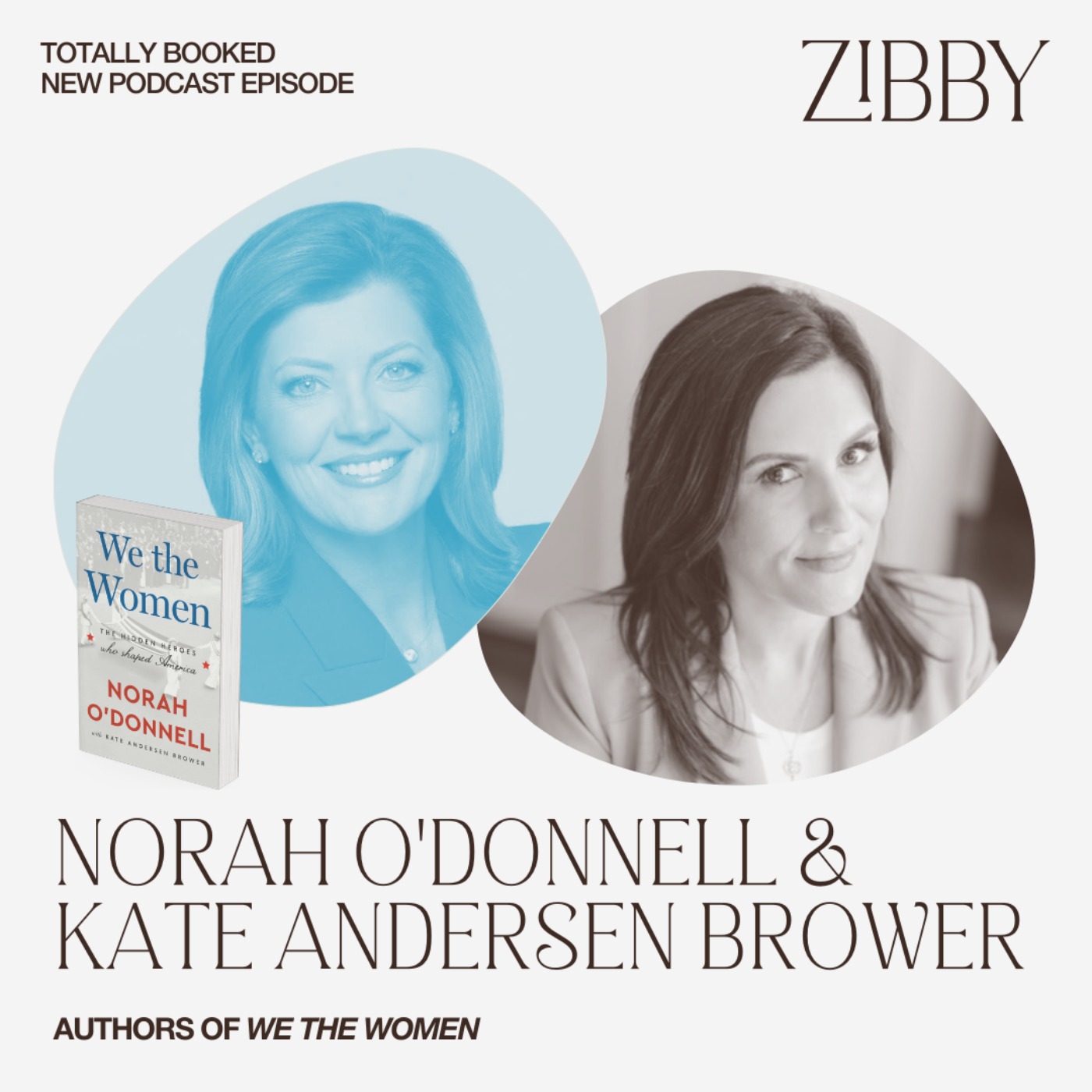
Totally Booked with Zibby
Norah O’Donnell Writes The Ultimate Guide to American Women in U.S. History
00:25:00
Loading summary
Transcript84 lines
- [00:00]
Narrator/Host (Various Ads and Introductions)
We live in a culture obsessed with dieting, weight loss and exercise, and that can make eating disorder behaviors easy to miss. But the reality is, eating disorders are serious mental illnesses that take a major toll on your health and your life. But recovery is possible. Eating disorders are more common than you might think. Chances are you know someone who is struggling with one, or maybe you're struggling yourself. If you're concerned about an eating disorder in yourself or a loved one, I want to introduce you to Equipment. Equip is a fully virtual evidence based eating disorder treatment program that helps patients achieve lasting recovery at home. Every EQIP patient is matched with a multidisciplinary care team that includes a therapist, dietitian, medical provider, and mentors, and you get a personalized treatment plan that's tailored to your unique goals and challenges. Equip treats patients of all ages and all eating disorder diagnoses. It's covered by insurance and there's no wait list. If you think that you or a loved one could be struggling with an eating disorder, don't wait to get help. Visit Equip Health to learn more. That's Equip Health.
- [01:08]
Zibby Owens
When the flu is keeping you up at night, don't try to tough it out. Knock out your flu symptoms with nyquil Intense Flu.
- [01:14]
Nora O'Donnell
You got this.
- [01:15]
Zibby Owens
It provides powerful relief of your flu symptoms so you can sleep well through the night. NYQUIL Intense Flu the nighttime Sniffling aching aching fever Best sleep with a flu medicine Use as directed.
- [01:27]
Nora O'Donnell
Keep out of reach of children.
- [01:32]
Narrator/Host (Various Ads and Introductions)
Hi, I'm Debbie Millman and I host a podcast called Design Matters from the TED Audio Collective. Every episode I have conversations with designers,
- [01:41]
Zibby Owens
writers, artists and other luminaries of contemporary thought. People like Roman Mars, AI Wei Wei,
- [01:48]
Narrator/Host (Various Ads and Introductions)
Ethan Hawke, and Ashley Ford.
- [01:51]
Nora O'Donnell
We not only talk about their crafts
- [01:53]
Narrator/Host (Various Ads and Introductions)
but but how they design the arc of their lives, what they've learned, what
- [01:57]
Zibby Owens
obstacles they've overcome, and how they've done
- [01:59]
Narrator/Host (Various Ads and Introductions)
it, and how they see the world. Join us for an inquiry into the
- [02:03]
Nora O'Donnell
broader world of creative culture.
- [02:06]
Narrator/Host (Various Ads and Introductions)
Find and follow Design Matters with Debbie Millman wherever you're listening to this.
- [02:15]
Zibby Owens
Hi, this is Zibby Owens and you're listening to Totally Booked with Zibby, formerly Moms don't have Time to Read Books. In my daily show, I interview today's latest best selling buzziest or underrated authors and story creators whose work I think is worth your time. As a bookstore owner, publisher, author, and obviously podcaster, I get a comprehensive look at everything that's coming out and spend my time curating the best books. So you don't have to stay in the know, get insider insights and connect with guests like I do every single day. For more information go to zibbymedia.com and follow me on Instagram ibbeowens I really enjoyed interviewing Nora O' Donnell and Kate Anderson Brower together on Zoom. They are the authors of we the the Hidden Heroes who Shaped America. And boy did I learn a lot in this book. I read it on an airplane with my pen poised underlining dog earring and then whipped over the course of a trip many times taking in different profiles of women in history who not only made news but should have been remembered themselves. I learned even more about the US than I thought I knew and through the eyes of trailblazing women, which was really, really interesting. Nora o', Donnell, no surprise, is a multi Emmy award winning journalist with nearly three decades of experience covering the biggest stories in the world and conducting impactful newsmaking interviews. She is CBS News Senior corresp and she focuses on big interviews and projects for the network. She spent five years as the anchor and Managing editor of the CBS Evening News, which is the oldest and most revered evening news broadcast in America. She anchors CBS News election specials and is a 60 Minutes contributing correspondent. And she's married to Jeff Tracy, otherwise known as Chef Jeff, and is the mom of three. Kate Anderson Brower is the author of the number one New York Times bestseller the Residents and First Women, also a New York Times bestseller as well as Team of five first in line in the children's books Exploring the White House and the the Residence is being made into a television series produced by Shonda Rhimes for Netflix, which unfortunately we did not discuss in our interview but probably should have. Her book, Elizabeth Taylor, is the first authorized biography of the icon. She covered the Obama administration for Bloomberg News. She is also a former CBS News staffer and Fox News producer. Kate has written for the New York Times, Vanity Fair and and the Washington Post. She lives outside of Washington, D.C. with her husband, their three young children and their Wheaton Terrier. These two women are total dynamos and should a collection be written about women today, they deserve to have a place in that collection a hundred years from now for all of the research that they uncovered and the women that they spotlit in this book. Welcome Nora and Kate. We have both of you here so excited. Nora o', Donnell, Kate Brower talking about we the Women, the Hidden Heroes who shaped Americ. Congratulations on this huge accomplishment of a book. Congrats.
- [05:27]
Nora O'Donnell
Oh my gosh, Siby, thank you so much for having us.
- [05:30]
Zibby Owens
I feel like this is the history textbook that we didn't have growing up that we should have in every classroom. This should be like required reading at every school. Is that the goal? Tell us a little bit more.
- [05:43]
Nora O'Donnell
Oh, my gosh, Siby, you're so nice to say that. You know, I love history, but I must say I feel like a lot of the history that I learned in school was pretty boring.
- [05:51]
Zibby Owens
And.
- [05:51]
Nora O'Donnell
And I think the reason is because it was mostly about men in history. And, you know, Kate and I started off writing this book almost three years ago as a way to celebrate America's 250th birthday. And what I didn't realize is that this would actually unlock something in me personally. And so the goal was to lift up women's stories, lift up women's voices. And then we ended up, over this three year period, doing all the research and calling each other and being like, I never heard of this woman. And she's unbelievable. Can you believe this? And so I think, Kate, would you agree that was sort of, you know, the goal and our intention started as one thing, but then it turned out to be such a labor of love.
- [06:32]
Zibby Owens
Oh, how about you, Kate?
- [06:33]
Kate Anderson Brower
Yeah, absolutely. I mean, I think like Nora, I consider myself. I consider myself a history buff, but I hadn't heard of so many of these women. And we got to know the scholars who have been studying these women, like Mary Beth Norton. And I remember reading her work at the time about the American Revolution, and just to know that she kind of created women's history, the study of women's history, that people hadn't even bothered to look at these stories before. And I think we want this book to be part of that long and hopefully growing group of books about women and their role in American history.
- [07:11]
Zibby Owens
I'm always so surprised when there's someone who was so well known in their day, and yet we have no idea who they are now. And I feel like that keeps coming up in the book. You know, I think about the Amanda Gorman, like, poet. I think her name, Phyllis Wheatley. Was that Phyllis Wheatley?
- [07:26]
Nora O'Donnell
Phillis Wheatley, Right.
- [07:27]
Zibby Owens
Who was just known by everybody with the president. Like, everybody knew what a talent she was. And then first of all, that she passed away so young and accomplished so much, and yet where was the record of that? And it only just came up. How did you find her?
- [07:43]
Nora O'Donnell
You know, it's a great point you make. I mean, Amanda Gorman, who of course is the celebrated poet who spoke at Obama's inaug. She actually says that Phillis Wheatley is one of her heroes. And Phillis Wheatley was an enslaved girl who was brought from Africa, she was named after, by the family that enslaved her after the ship that brought her. And they actually taught her how to read and write. And she ended up being the poet laureate of the American Revolution, who knew one of the first black women published ever. And of course, her ideals of freedom, which she tied closely to her own enslavement, to the enslavement of the idea that Americans now have freedom under British control, inspired George Washington, inspired others. And so she's a remarkable story. In the beginning part of this book, what I like to think of, we talk a lot about the founding fathers of America, but there were a lot of founding mothers in America. One of my favorite stories, of course, Julie start off as well, is Mary Katherine Goddard. I mean, you know, July 4th, we talk about the Declaration of Independence. And those 13 words are some of the most important in American history, right? We hold these truths to be self evident that all men are created equal. And there's actually a woman's name on the Declaration of Independence. I mean, we all know John Hancock's signature, of course, John Adams, but she printed the first official copy of the Declaration of Independence. And you know, I think too, in, in restudying American history, it's like, yeah, remember actually how dangerous and treasonous it was to put your name on the Declaration of Independence. So she risked her life, a brave and courageous woman, to put her name on that document. She didn't put MK Goddard, she put Mary Catherine Goddard. And then as we tell in the book, and you have to read, she was later fired from her job.
- [09:36]
Zibby Owens
Well, I love that you put this publisher basically as the badass of the book. You know, I just love it that she went against all her fear and just did it anyway. And yet nobody pays a lot of attention to the name and that it's not on every document, but it is on some. And the one that's in the museum or whatever you said, it's just amazing. It's just truly amazing. All the stories though, have seen something like that, something that you're like, wow, I can't believe that. Or isn't that interesting? And I'm sure uncovering it all was absolutely fascinating. I also really liked Deborah Sampson, the war fighter. Can I read a little bit about this from the book?
- [10:15]
Nora O'Donnell
Yes.
- [10:16]
Zibby Owens
You said Deborah Sampson was one of the first women to take a bullet for America after she secretly joined George Washington's army when she was 21 years old until her death in 1827. She had a musket ball lodged in her body, one of the many injuries she endured as a trailblazing woman warrior. But for Deborah, the pain of her injuries was nothing compared to the sickening terror she felt at the possibility of being discovered. She would rather die on the battlefield than have it be known that she was a woman disguised as a man. And then later you say she was not the only woman to disguise herself as a soldier to fight in the war, but she may have been the most successful. Excitement and danger surrounded her every day. I can imagine that Deborah may have felt that for the first time in her life, she mattered. I found this so interesting, perhaps also because I recently interviewed Jenny Wallace about her mattering book. I'm sure you know her talk a little bit about that and how all these women came to matter.
- [11:08]
Nora O'Donnell
And we want these stories and lives to matter, and that's why we are telling this story. I'm almost gonna get emotional about saying that because their lives were so revolutionary and so extraordinary. And what Deborah Sampson did to disguise herself to fight in the American Revolution and the fear that she faced about being discovered, she then went on the road and was able to tell story in a public way, as we tell in the book. Kate and I were talking about this earlier. There's so many examples in this book of women who fought for this country, who took a bullet for their country, and yet didn't even have the right to vote. Dr. Mary Edwards Walker was the first female surgeon in the U.S. army during the Civil War. She was there at Bull Run and Fredericksburg, the bloodiest battles of the Civil War, was imprisoned, and now to this day, she is the only woman to have received the Medal of Honor. There are more than 3,500 people who have received it. She received it from President Andrew Johnson, who took over after President Lincoln. Then it was taken away from her in 1917 because she wasn't technically in the army because she was a woman then, and they didn't let them. She refused to give it back. She wore it every day until she died. And like, my sister is a surgeon in the army, so they know about Dr. Mary Edwards Walker. But these are such brave and courageous, courageous woman. And I know one of Kate's favorite stories, too, is about the hello Girls, which we were talking about earlier today, because it should be a movie.
- [12:36]
Kate Anderson Brower
Yeah, it's. I mean, to me, the book. One of the things that sums up the book for me is a quote by one of the hello Girls and these are women who were switchboard operators during World War I. So before women had the right to vote, they were on the front lines to convey them, General, to the troops in the trenches during this very bloody war. And they were sent over in 1918. They were in France, this incredibly dangerous place to be during World War I. And at one point, their switchboard operating headquarters was actually on fire. It was almost burned to the ground. And they refused to leave their post because they knew that every second counted. And at one point, they were even threatened with court martial if they didn't. You know, if they didn't leave, they were, they were going to risk their lives to stay there. And afterwards they came home and as Nora is saying, they were not treated as members of the military. They didn't get benefits. There was no great parade for these women when they got back. And they had to fight and fight throughout their entire lives. And we know that until 2024 that Joe Biden gave them the congressional gold medal for their work. But the quote that I love that just has really stuck with me. And all this exhaustive research that Nora and I did was from Merle Egan Anderson, who was one of the hello girls. And she said, just simp I love my country. Consequently, I want that country to be worth loving.
- [14:05]
Narrator/Host (Various Ads and Introductions)
We live in a culture obsessed with dieting, weight loss and exercise. And that can make eating disorder behaviors easy to miss. But the reality is, eating disorders are serious mental illnesses that take a major toll on your health and your life. But recovery is possible. Eating disorders are more common than you might think. Chances are you know someone who is struggling with one, or maybe you're struggling yourself. If you're concerned about an eating disorder in yourself or a loved one, I want to introduce you to Equip. Equip is a fully virtual evidence based eating disorder treatment program that helps patients achieve lasting recovery at home. Every Equip patient is matched with a multidisciplinary care team that includes a therapist, dietitian, medical provider, and mentors. And you get a personalized treatment plan that's tailored to your unique goals and challenges. Equip treats patients of all ages and all eating disorder diagnoses. It's covered by insurance and there's no wait list. If you think that you or a loved one could be struggling with an eating disorder, don't wait to get help. Visit Equip Health to learn more. That's Equip Health. Big news. Wayfair's tax refund sale is on now.
- [15:15]
Zibby Owens
Right now through March 2, you can
- [15:17]
Narrator/Host (Various Ads and Introductions)
score up to 70% off furniture, decor, appliances, rugs and more, with fast and easy shipping straight to your door.
- [15:27]
Nora O'Donnell
Plus amazing flash deals. Shop Wayfair's tax refund sale now to
- [15:32]
Narrator/Host (Various Ads and Introductions)
make the most of your refund with
- [15:34]
Zibby Owens
huge savings through March 2nd@wayfair.com Wayfair Every style, every home.
- [15:41]
Kate Anderson Brower
Picture this.
- [15:42]
Nora O'Donnell
Me, Reese Witherspoon in London, ordering fish and chips so often they might start wrapping me in paper. I'm traveling with my Wells Fargo Autograph
- [15:50]
Narrator/Host (Various Ads and Introductions)
Journey card, so I earn rewards wherever I book.
- [15:53]
Nora O'Donnell
Travel five times points with hotels, four times with airlines, three times on restaurants and other travel and one point on other purchases. Imagine getting rewarded for eating a toad in the hole. Wait, what is a toad in a hole?
- [16:05]
Kate Anderson Brower
Visit Wells Fargo.com autographjourney Terms apply.
- [16:14]
Zibby Owens
Well, I love stories like that. These are all really empowering stories. And you do it all. Each story is just maybe, what, three or four pages, like little snippets, but yet you dive deep into each woman's life and in so doing, give us the context of what was going on in history at the time. So you could almost rewrite, you've almost rewritten the narrative of history through these stories versus the stories we've been told a million years. So it's not necessarily that you're just adding interesting stories about women. Like, this is literally the story of America and the many things that have happened to us as a nation with just a slightly different lens, which I think is so important because there's often too much focus on just, oh, yeah, women try to get the right to vote. Like that gets so much attention, which is important, obviously. Obviously. But there's so many other important things that have happened that you shed light on.
- [17:05]
Nora O'Donnell
Yes. And, you know, whether it was from the battlefield to the courtroom for fighting for equality in sports or in business, all of these incredible stories which we tried to take and find women from different parts of, you know, American history in different fields. I mean, one of my favorite people that I learned about is Constance Baker Motley. We all know Thurgood Marshall right? Well, his right hand was a woman named Constance Baker Mottley, who was there to litigate every major struggle of the civil rights era. She was MLK Jr. S defense attorney in Birmingham. When Martin Luther King Jr. Gave that speech, the I have a dream speech in 1963, who was standing with him on the steps of the Lincoln Memorial? Constance Baker Motley. And when Thurgood Marshall becomes the first black Supreme Court justice, Constance Baker Motley probably should have succeeded him at The NAACP Leo Defense Fund. But it was a man who succeeded her. But you know what? One door closed and another one opened. And then she ended up going to the New York State Senate. She was then appointed to the federal bench and became one of the most important female judges in America and inspired Ketanji Brown Jackson, who is now on the Supreme Court. She inspired Kamala Harris. So there were little girls at the time who knew of her, and she inspired them. And so I do hope, too. And part of. When reading about a lot of these women, I kept thinking, I wonder how my own sense of self and courage and power would have changed about my own possibilities and my own power if I had learned about these women in school.
- [18:49]
Zibby Owens
So interesting. Well, you started off by saying that it did end up changing you in a fundamental way. How so?
- [18:54]
Nora O'Donnell
You know, I think Zibby, I'm a journalist, so I ask questions of people. I don't usually have people ask me questions. And my opinion is not important because I'm a journalist and I'm objective. But I find myself finding my own voice in learning about the power of these women and what they endured, you know, and how they still maintained such confidence. You know, most of the stories in this book are about hidden heroes, but we did include a chapter on Eleanor Roosevelt. And while many biographies have been written about her, Kate and I talked about this, and Julie Morse, who is our researcher, walked on this because we tried to find stories about her, because I just can't believe that I don't know more about Eleanor Roosevelt. I mean, her. She's orphaned by age 9. Her mother kind of insulted her a lot, called her little granny. And yet she goes on to be a moving force in American history for 50 years. I mean, she was a shadow commander in chief in many ways, traveling the world through World War II. I mean, Kate found this incredible anecdote about the White House usher had to send her new shoes because she wore them thin from just traveling so much. She lost 30 pounds on a trip around the world, visiting with soldiers, and she endured rejection. Her husband cheated on her. I mean, and she nursed him back to health. And yet Eleanor Roosevelt was so prolific. She had a newspaper column that went on for nearly 50 years. There's 300 press conferences. Like, how do I not know all of that? Like, how is that not seared into my memory? And I just think, now, if more little girls knew about that, would more little girls want to run for office? Run for the presidency? I don't know. I think maybe.
- [20:33]
Zibby Owens
Have you seen the Show. I can't remember if it was called First Ladies. I think it was, but it was a show that profiled four of the first ladies interspersed maybe three or four of the stories. It was. Was so good.
- [20:44]
Nora O'Donnell
Well, Kate has written so much about them.
- [20:46]
Kate Anderson Brower
Yeah, yeah, yeah. There was something CNN did that was really amazing about the First Ladies. And it's just like again and again, no matter how much you think, you know, there is so much more that we don't know. And there were so many times when Nora, Julie and I would just be like, can you believe this? And I do think it would help girls and young women and older women everywhere to feel the confidence that these women showed in times of great adversity. It's really. It was very inspirational working on this book, I bet.
- [21:21]
Zibby Owens
Nora, not to pry, but why do you feel that even though you are a journalist and obviously you have to be objective in most of your reporting, that you can't share how you feel about it? Like, people want to hear how you feel, too. You know that, right?
- [21:35]
Nora O'Donnell
Yes, absolutely. My feelings are important. Everybody's feelings are certainly important. But I mean, in terms of, you know, my life is listening, you know, and listening to people and gathering stories. And so while I certainly represent those stories and retell those stories, you know, it's their story that's important. And excavating the truth of a matter is what a journalist does. And that's what we did was excavate the stories of these women's, you know, lives in some ways. But I did feel something awakening in me by listening and learning about these women, you know, women who fought on the front lines, women who were in courtrooms across America and then kind of also, too, just like, what lies ahead. I mean, I've been trying to write about women and tell women's stories as a journalist for a long time. And I keep waiting for that moment when there will be equality in terms of. In the business field and in the political field. And still it's hard to believe that on the 250th anniversary of America that women are just about a quarter of federal office in Congress or less, that we don't have equality in terms of female governors. It's changing slowly. Slowly it is. But shouldn't we be further along in that journey? So I think by celebrating and highlighting the stories of women, I hope that it allows more women to see that using our power for great things within community. And that's actually. That's the other thing I think we discovered, too. We wrote a lot about how women used community so much to change the course of history. You know, Harriet Beecher Stowe said, women are the real architects of society. They are. They're behind every great social and political movement in America, from the abolitionist movement, civil rights movement, the suffrage movement. They are. Women really are.
- [23:31]
Zibby Owens
And how did you become a journalist? Can you just share a little bit about your own career trajectory?
- [23:36]
Nora O'Donnell
Oh, sure. So my father was drafted during the Vietnam War, and so I grew up as an army brat traveling the world. And so what happened in the world always mattered to my family. It affected us. And my parents always had tons of newspapers all over the place. You know, dining room table and Time and Newsweek and jama, which is a medical journal everyone was reading in my, in my house growing up. And then I also think, because we watched the news every day, I truly admired Barbara Walters. And I thought, who is this woman who gets to interview the most powerful people in the world? And that's why I do fundamentally believe to see it is to believe it. And I think, and luckily, you know, Barbara and I got to know each other and become friends. That, you know, she inspired in me an idea like, wow, I could hold a front row seat to history and be a journalist. And so I think that was the combination of my parents, public service and interest in the news and being able to see a powerful woman on television really inspired me to become a journalist. And then I just had many great mentors along the way.
- [24:43]
Zibby Owens
Amazing. So for both of you, Kate and Nora, after the book ends, whose stories would you want to include? Maybe from people who are alive today, making change in current.
- [24:54]
Nora O'Donnell
In current history.
- [24:56]
Zibby Owens
Yeah. Or people you see as becoming people who. In volume two, for instance, who has caught your attention lately?
- [25:03]
Nora O'Donnell
Well, I mean, the last 50 years, because the book is broken up into 50 year parts. There's five big parts that make up 250 years. The last 50 years, we actually really struggled with this because choosing particular women who are in contemporary America, we would leave some. Someone out. Right. We talked about, you know, certainly Billie Jean King is in the book, but there are so many great female tennis players of today. We couldn't certainly write about all of them or, you know, the four women who are on the US Supreme Court and the six women who have been on the US Supreme Court. So we write about them in, you know, in parts. I mean, I tried. That's why the back chapter is more thematic. But I guess what I would hope is that we, if I could focus on. I'd focus more on women in national Security. And I say that because I believe that in order to get women in the military, which is what I've done as a journalist, because I think ultimately to get to the presidency, that women are going to need to have a national security or military background in order to crack that glass ceiling.
- [26:03]
Zibby Owens
Maybe it should be you.
- [26:04]
Nora O'Donnell
Why do I have a background in national security?
- [26:07]
Zibby Owens
But I'm just saying, you know, I
- [26:09]
Nora O'Donnell
mean, I have family members. I mean, it's interesting. We have two governors, new female governors.
- [26:15]
Kate Anderson Brower
Right.
- [26:15]
Nora O'Donnell
Abigail Spanberger, Virginia CIA, and Governor Sherrill of New Jersey, of course, who has a military background. They're, you know, both Democrats. Condi Rice is in the book, former, you know, many people, Republican, who many people thought should. Should run for president of the United States. So all of these incredibly important stories, you know, but I don't have a specific person yet. Zippy, do you have one?
- [26:38]
Zibby Owens
Kitty?
- [26:39]
Kate Anderson Brower
I don't. It's really hard to look at history as it's unfolding. You know, I think in. You can look back and see who the pivotal players were today. But I think that's why, you know, Congresswoman Schroeder is somebody that I know that Nora really wanted to include in the book. And so, you know, while she has passed away, I. I didn't. She is a more modern. A person who was alive, certainly, and pivotal in the 90s, 2000s, and. And that was an example of a woman who I had heard of but didn't know much about. I mean, the fact that she had to share a seat on a committee that she served with. The only other person, a black man who was also on the committee, they physically had to share a seat. Just these. These incredible things that women had to face. And I'm sure in 50 years, you look back at 20, 26, and there are some women right now who are taking the lead. And I agree with Nora that women in the legal. I think we're seeing how important lawyers are now and the work that's being done around the country. You know, a lot of women now are taking a page from Constance Baker Motley, and I think that we're seeing the power of the law in a way that we haven't seen it before in my lifetime.
- [27:58]
Zibby Owens
So clearly amazing. Well, I feel the work that you did, which. How long did this take? I mean, I think you mentioned how many years, but I was actually looking
- [28:08]
Nora O'Donnell
back in my emails and it's almost three years from the conception of this idea. Almost three years.
- [28:15]
Zibby Owens
Well, you did the work for the rest of us, so thank you for that. Thank you for all the digging. And this is again, just such a phenomenal accomplishment and so important. And this is how history does get written, because then the next generation sees this book and this becomes part of the conversation. And not just a book to promote when it comes out, but, but like a serious historical document which will become, I think, really important in the narrative going forward. So congratulations on spending your time now doing this work for the rest of us. It's really impressive.
- [28:49]
Nora O'Donnell
Well, I know you, Zibby. You do it full time, you know, lifting up the voices of authors and females and these powerful stories. So thank you for what you do.
- [28:59]
Zibby Owens
Oh, thank you. All right, well, congratulations. Thanks for coming on. We the women.
- [29:03]
Nora O'Donnell
Thank you.
- [29:03]
Zibby Owens
Okay. All right, take care. Bye Bye. Thank you for listening to Totally Booked with Zibby formerly Moms don't have Time to read Books. If you loved the show, tell a friend, leave a review, follow me on Instagram ibbeowens and spread the word. Thanks so much. Oh, and buy the books.
- [29:27]
Kate Anderson Brower
The longer you stay alive, the longer you can enjoy Boost Mobile's unlimited plan with a price that never goes up. So here are some tips. Do not parallel park on a cliff if you want to enjoy an unlimited plan with a price that never goes up. Do not mistake a wasp nest for a pinata if you want to enjoy an unlimited plan with a price that never goes up. Do not microwave a hard boiled egg if you want to enjoy an unlimited plan with the price that never goes up. Stay alive and enjoy Unlimited Wireless for $25 a month forever with Boost Mobile. After 30 gigs, customers may experience slower speeds. Customers will pay $25 a month as long as they remain active on the Boost Mobile Unlimited plan.
- [29:59]
Nora O'Donnell
We interrupt this program to bring you an important Wayfair message. Wayfair's got style tips for every home. This is Stiles Mackenzie helping you make those rooms sing. Today's Style Tip when it comes to making a statement, treat bold patterns like neutrals. Go wild like an untamed animal. Print area rug under a rustic farmhouse table. From wayfair.com fierce this has been your Wayfair style tip to keep those interiors superior.
- [30:25]
Zibby Owens
Wayfair Every Style, Every Home
- [30:30]
Kate Anderson Brower
Acast powers the world's best podcasts.
- [30:34]
Nora O'Donnell
Here's a show that we recommend
- [30:37]
Narrator/Host (Various Ads and Introductions)
if you've ever dreamed of quitting your job to take your side Hustle full time. Listen up. This is Nikayla Matthews Akome, host of side Hustle Pro, a podcast that helps you build and grow from passion project to profitable business Every week you'll hear from guests just like you who wanted to start a business on the side.
- [30:55]
Kate Anderson Brower
If you can't run a side Hustle,
- [30:56]
Nora O'Donnell
you can't run a business.
- [30:57]
Narrator/Host (Various Ads and Introductions)
They share real time tips and so I started connecting with all these people on LinkedIn and I saw Target supplier diversity was having office hours. Real advice Procrastination is the easiest form of resistance and the actual strategies they use to turn their side hustle into their main hustle.
- [31:14]
Nora O'Donnell
Getting back in touch with your tangible cash and sitting down and learning to give your money a job like it changes something.
- [31:21]
Narrator/Host (Various Ads and Introductions)
Check out Side Hustle Pro every week on your favorite podcast app app and YouTube.
- [31:28]
Kate Anderson Brower
Acast helps creators launch, grow and monetize their podcasts everywhere. Acast.com.