← Totally Booked with Zibby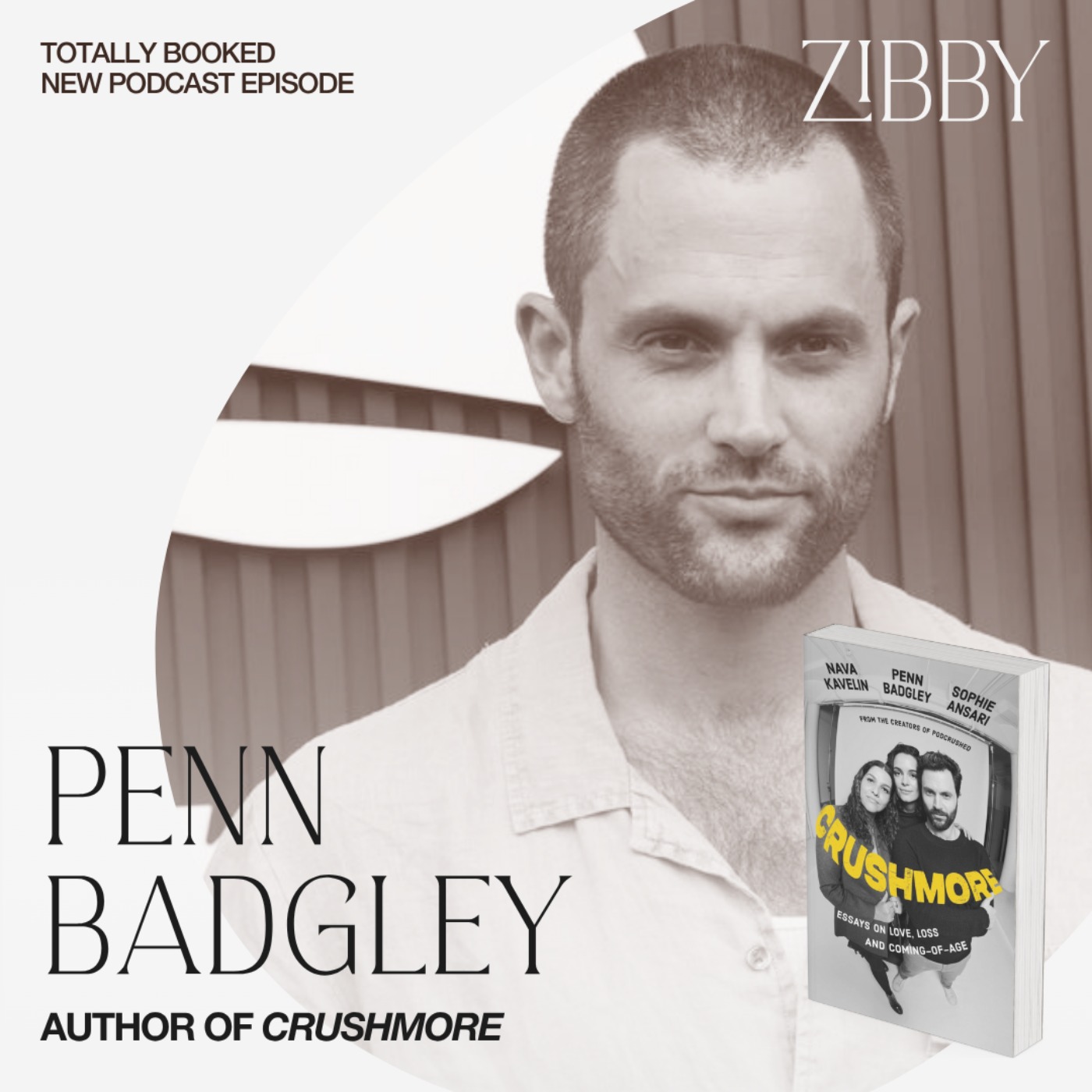
Loading summary
Transcript78 lines
- [00:00]
A
Ready to order?
- [00:01]
B
Yes. We're earning unlimited 3% cash back on dining and entertainment with a Capital One Saver Card. So let's just get one of everything. Everything.
- [00:09]
A
Fire everything. The Capital One Saver card is at table 27 and they're earning unlimited 3% cash back. Yes, Chef.
- [00:16]
B
This is so nice.
- [00:18]
A
Had a feeling you'd want 3% cash back on dessert.
- [00:20]
B
Ooh, tiramisu.
- [00:22]
A
Earn unlimited 3% cash back on dining and entertainment with the Capital One Saver Card. Capital One what's in your wallet? Terms apply. See capital1.com for details.
- [00:30]
B
You know, Hannah and I love a good bedrotting session. Reality tv, snacks nearby. And now I've leveled up with my self care game with this Shark Beauty Cryoglow, the number one skincare facial device in the U.S. wait, I'm obsessed with it. I've had it for a while actually, and it's the only mask that combines high energy LEDs, infrared, and under eye cooling. I really need this because nothing wakes me up in the morning. You could do four treatments in one. Better aging, skin clearing, skin sustain, and my favorite, the under eye revive with Instachill Coldtech. You put it on and it just feels so good under your eyes. Like I actually feel like I got eight hours of sleep. It's truly like a luxury spa moment. While you're literally horizontal, it's perfect for post workouts, Sunday scaries, or when you just want to glow while rotting. To treat yourself to the number one LED beauty mask this holiday season, go to SharkNinja.com and use promo code Giggly Squad for 10% off your cryo glow. That's SharkNinja.com and use Promo Code Giggly Squad for 10% OFF your cryoGLOW.
- [01:29]
A
Did I talk too much? Can't I just let it go?
- [01:38]
B
Take a breath. You're not alone. Let's talk about what's going on. Counseling helps you sort through the noise with qualified professionals, and online therapy makes it convenient. See if it's for you. Visit betterhelp.com random podcast for 10% off your first month of online therapy. And let life feel free. Better. Hi, this is Zibby Owens and you're listening to Totally Booked with Zibby, formerly Moms don't have Time to Read Books. In my daily show, I interview today's latest best selling, buzziest or underrated authors and story creators whose work I think is worth your time. As a bookstore owner, publisher, author, and obviously podcaster, I get a comprehensive look at everything that's coming out and spend my time curating the best books so you don't have to stay in the know, get insider insights, and connect with guests like I do every single day. For more information, go to zibbemedia.com and follow me on Instagram ibyoans Penn Bagley is the author of essays on love, Loss and coming of age. Penn is an actor, director, producer, writer, and podcaster, best known for his starring roles in the CW's Gossip Girl and Netflix's you. He lives in New Paltz, New York, with his wife, children, and dogs. He is a co host of the very popular podcast PodCrushed. Welcome, Penn. Thanks so much for coming on Totally Booked to talk about your book Crush essays on Love, Loss and coming of age, which you co wrote with your co host. So there you go.
- [03:21]
A
Yeah, yeah. Thank you for having me.
- [03:23]
B
You guys just don't want to do anything without each other anymore.
- [03:27]
A
Oh, yeah, we do. No. Well, Nava Kavlan is one of my co hosts, and she's really the founder of the podcast. She. It was her idea. She and I have a production company that we had loosely started the same year that she had this idea back in 2020. And so that's sort of, you know, there was like early Covid days where everybody wanted to start a podcast. Right. And I mean, I knew well enough being in media as I was never wasn't at that point, but I knew it would be a lot of work. But I did love the idea of loosely as we do starting at 12. You know, that's what we do on the show. We start at 12 years old. We explored this unique period of adolescence. You know, we had all this kind of stuff behind it as to why we thought this period of life is so unique, so incredible and kind of mortifying. You know, it can be. Obviously, I think what we didn't anticipate. What I didn't anticipate is how much we would have to patiently sideline those ideas and notions. Because when you're interviewing other people, you're interviewing celebrities, of course, you need to let those celebrities talk.
- [04:37]
B
Why do you think I'm listening to you?
- [04:39]
A
Right. Exactly. Exactly. Now it's my turn again.
- [04:43]
B
Go ahead. Just get back at all those other people right here.
- [04:47]
A
And so the book is kind of like returning to the seed of the idea in a way, but then doing it in the form of that we discovered and learned, which is through, you know, telling a story rather than exploring a philosophical concept, you know, so. So. So the book is just. Is essays as the subtitle says, or whatever you would call that the essays on love, Loss and coming of age, that that is what it is. You know, it's pretty universal. We actually did hem and ha a lot with our editor, of course, over what that subtitle should be to give people a sense of what this encompasses. And it is that. I mean, love and loss are. Are universal, universally appealing or interesting, hopefully. And then of course, coming of age is. Is too. It's just maybe slightly less. It's not as. It's not always included in the same breath, you know, as love and loss. It's not as alliterative, I guess.
- [05:46]
B
I actually love that that's your entry point into conversation with people, because middle school and I have two middle schoolers right now. It is such a time of change and pain and insecurity. Not to out my kids, this is not about them. But how can you not relate to someone when they share a time like that in their lives? I listened to your Matthew McConaughey episode really recently and I was like, oh my gosh, he didn't think he was the coolest thing since sliced bread. So anyway, I loved it. I love that concept.
- [06:16]
A
Thank you, thank you.
- [06:17]
B
And you, of course, share so much of yourself in this book, which I deeply appreciate. I'm sure all readers deeply appreciate, laying bare everything from your parents troubled marriage to your own insecurities, your own body, even your hair. And speaking of my middle schoolers, your passage about your hair. Can I read?
- [06:35]
A
Oh, I'm so glad that you appreciate that, because hair for middle schoolers and what they do to it is insane. It is insane. It's such a a process.
- [06:44]
B
It is such a process. And your words made my fifth grader feel better, just so you know. Here, hold on. Let me find this. Page 117. I just want to read this to make anybody with curly hair feel better. You said because I was short and squat, I believed my hair was my one shot at appearing tall and thin. When I worked on any TV show or film, I had a minor existential crisis because every hairstylist on every project had demonstrated that they just couldn't handle curly hair. I don't know what it is about curly hair. There are countless millions of people of nearly every ethnic background with curly hair, right? Somehow, though, no one wants to see it in Hollywood unless It's a reconstructed 1920s era finger wave on a blonde bombshell in a sequined period mini dress. Rather than letting my hair be, I learned all about the things my hair couldn't do without a blowout or being flat ironed, and then you go on to say what you ended up doing.
- [07:39]
A
You know, it's actually kind of gratifying to hear you say that because I really thought about cutting that.
- [07:44]
B
What? No, that was one of my favorites.
- [07:46]
A
I'm glad. I'm glad. I mean, it's so interesting when you're writing because you just. I mean, also with deadlines, there comes a point where you're like, I don't even care. I don't care. I don't care what stays or goes. I just need to finish this, you know? And that was one where. Well, I mean, look, to be transparent, I think, with that particular essay that was. That essay is part of. I think I've called it 40 days and 40 nights, which is about how long I went to high school, which is actually true. I only went to high school for, well, less than 40 days and 40 nights, which I get into in the book. That's like. Because I was professional. There's all these reasons why, but I didn't know quite what to make of that one because I feel. I felt like I should tell the story of high school because the book is ostensibly about middle and high school. Right. But I. And I didn't really go to one of them. And so I'm trying to think, like, what did I learn there? What did I do there? And I. And I don't recall, really. I don't feel like I have life lessons or any insight to offer anything other than remembering, like, how I did my hair. To be honest, that's really the extent of it. And how this one kid responded to it. And that's just how we remember that time. You know, it's like a lot of feelings, so many feelings.
- [09:03]
B
And I think it's hard to explain to people at that age and at that sort of tender moment that, like. No, really, not everybody is looking at you. Like, everyone is just concerned about themselves.
- [09:14]
A
Yeah, Yeah. I mean, yeah, it is. You're right. It actually might be. I don't want to say that it's impossible because that's defeatist. But you're right, it is nearly impossible to get through to a fifth through 10th grader. Like, actually that thing you're freaking out about on your body, it's just like you can have all your feelings about it, but it's not what you think it is. It's. Nobody is thinking about it. And then, yeah, I guess there is that one person who thought about it in that moment, like you thought. And now you're harping on that, but it's just if you could let that go, you would relax so much.
- [09:50]
B
It's true. I know. I mean, some. Some grownups are still like that, so.
- [09:55]
A
Yeah. Well, of course, we all have our. We all have those. We all have. Try being famous for a little bit of time. It takes you right back. Right back. Every. Every couple days, probably. At least.
- [10:05]
B
Actually, I loved what you wrote in the book about fame because a lot of famous people don't like to write about it. And I often ask them. I feel like people don't ask them enough. Like, whatever. It's a big part of your life. Like, it is an identity marker. Like you talk about it. Yeah.
- [10:20]
A
To be I. Being transparent about the process, I wanted to. And intended initially at the outset of that essay to write way more specifically about what fame is or isn't or what at least my experience of it is, because I do think, as you said, I mean, it's not just a huge part of, like, a celebrity's life. It's a huge part of everybody's life. Our culture is just inextricably, undeniably entangled and obsessed with celebrity. Right. Like, that's just. We live in a celebrity culture. It's so impacted by not just celebrities, but celebrity. You know, like, what is that? Why do we do that to people?
- [11:00]
B
What. What.
- [11:01]
A
What is. And I'm not saying, like, we do it to them like, celebrities are all, you know, suffering. I actually think to some degree they might be. But I don't mean it in a woe is me way. I just mean it like, look at this phenomenon we're all a part of.
- [11:12]
B
Yep.
- [11:12]
A
We hear a lot about it from people who are not famous. You know, that's. And because there's commenting and critiquing and. Okay, fine. I think we should hear more also from people who are famous because it just gives us more of the. Of the pie of experience. You know, it gives us more of that. Of a share of, like, all right, let's just examine this from all angles. But I think the weirdness of celebrity is that it. At worst, I think it really clouds the vision of the person suffering under it, the celebrity, and. Or at best, that kind of, like, you kind of want to not talk about it, maybe because of how much you work with it. And you're like, I don't want to talk about it with somebody who's not famous. You know what I mean? Because it's like. So I do understand that. But personally, personally, like, the. The whatever Degree of fame I do have, whatever that is. I'm not. I'm not measuring it, but it's there. It's not the biggest, it's not the right, but it's not the lowest. I mean, it has. It has impacted my life no less than any other thing. You know, being a father, being a man. For me, eventually becoming a Baha', I, which is my. My faith, my religion. You know, when I was in my late 20s, I can't think of any part of my identity, you know, thank God, when I die, the celebrity will go. But until then, like, it's a huge. Well, you know, as long as my celebrity lasts, it's a huge part of my life. A huge, huge part of my life. So, yeah, I did in that essay, try to make it maybe a bit more relatable or interesting by being like, all right, it's not just about my relationship to fame. It's. It's also about my relationship to the camera.
- [12:45]
B
That was also very interesting.
- [12:46]
A
You know, it's like. And then, I think also something that I didn't explore as much in the essay, but it was coming from. You know, I really do feel like we as a culture have been hugely impacted by the invention of the camera. You know, that's a. You know, it just is. It's like. It's just. It's had an enormous impact on the way we see things because of how it can manipulate and emphasize just different aspects of whatever. You know, you could. You could think about it in so many ways. And then the part of the camera that no one ever saw, not just it becoming a tiny little miniaturized part of a phone, which isn't even mostly a phone, but that people would then turn. Turn it on themselves, you know, and then the cell, the. Like, the invention of the selfie, advent of the selfie, That's a huge moment in. In culture, you know, like, in terms of the way we view ourselves. And so, yeah, so that's what this essay is doing, somewhat loosely. It's exploring all that.
- [13:41]
B
Well, in the essay, you talked about the traumatic aspects of fame. And to your point, I feel like any celebrity who complains about it is like, people are like, okay, really? Like, try my life for a day. But that doesn't. But that is a comparison. That's not fair. Everybody has their stuff, right? Like, everybody has the stuff they deal with every day, and you still have to contend with the world as a celebrity and whatever that means to you, good or bad. So do you ever feel like. To what extent do you feel you have to give back or you have to do something good with it, or, like, how much do you wrestle with it as its own sort of entity?
- [14:21]
A
That's a good question. I mean, I'm not sure. I think if I can maintain humility, which is not to say celebrity, I don't know. But I think it's everybody's duty to give back, no matter who they are, and that's a unifying principle. I think what's unfortunate about celebrity is how it divides us, you know, and everybody's duty, I think it is, and their right, their privilege in life is to give back. I'm sure there's a stat somewhere about it that's one of the things that makes us happiest and most content. And probably in our culture, we're losing a sense of what that means, or we're losing a sense of how to do it. We might know that we want it, but how? Look, I actually struggle with that myself. And so one of the ways I think I do is I'm like, all right, okay. I'm in this position. I'm in this position for now, and I've been in it for a while. I'm about to turn 40. Well, I just turned 39. So when I say that, I just mean in the scheme of things, I'm about to turn 40.
- [15:24]
B
I'm. I'm 49, and I'm like, don't say 50. Just don't say it.
- [15:29]
A
But, you know, I once actually, Once I pass 40, once I hit 41, I will have been assuming that things stay the way they are, which even if. Even if I was. Even if I became infamous and, you know, somehow was scorned, that's a kind of fame. I will have been famous longer than I've not been, you know, because it really hit at 20. It hit maybe a bit earlier. My experiences with all this stuff, like in Hollywood, but, like, growing up, coming of age 12 to 20. But 20 was when gossip Girl happened. So, you know, I do wrestle with it as. As I think you. You only can. That's not. That's like the. The natural state of. Of it. But, yeah, I think as long as I'm here, I want to be forthcoming and transparent about what it is and what it isn't. And I. And I do think that. I mean, how many more times do we need to see a documentary about how one pop star or another is absolutely miserable and isolated to a. To a. To such an intense degree and exploited and objectified, you know, and that they Cannot escape it, because that's for. And I don't really include myself in this class. I think for people who are like the Britney Spears, you know, the Brad Pitt, the whomever, they cannot escape it. They are living Justin Bieber. Zadie Smith explores this really beautifully as somebody who is not that kind of celebrity. I mean, she is her own, you know, kind of icon, but she brilliantly explores this in an essay. Can't recall the title of it, but she gets into all kinds of stuff. It's really, really interesting. But. But she. She refers to, like, Michael Jackson and Justin Bieber and these sorts of people who've entered into this state of, like, the love object. And what we do is we objectify celebrities completely in a way that no matter the fact that we are actually, we believe we're idolizing them. It doesn't really matter if. If you think it's veneration or degradation. Objectification is objectification, and a person who is rendered an object is a person who is rendered an object. You know, and that's the strangeness, I think, of celebrity, is that it really, really does feel to the person experiencing it like a form of oppression. But that oppression is. It comes with so many material privileges that it. That, it. That it seems to call it that. And so it's therefore all the more isolating, you know, and, and, and. And that's specifically because we live in an age where material privileges is. Is the privilege of so few. So to be a celebrity in, you know, this era of human humanity, you know, it, It. It's crazy. It's frankly, it's just. It. It induces craziness. Look, it does. It. It induces craziness just straight up. How could it not? And, you know, and so I'm just always a little bit like, oof, all right, how am I going to. How am I going to do this today? You know, I mean, of course I don't think about it directly like that, but it's. Man, one of the greatest struggles and lessons in my life, you know?
- [18:43]
B
Today's episode is sponsored by Aura Frames. I'm so grateful to Aura Frames because I loaded mine filled with pictures of my late stepfather right after he passed away. Images of him with all of his grandchildren, my mom, my brother, everyone in our family. Not only did I display it during our memorial service, but I have it in our kitchen. And every time I make a cup of coffee or walk in the kitchen, which is a million times a day, I get to see him with different images and even videos up to 30 seconds showcasing how great he was. It's helping keep my family together. My kids get to look at it and be reminded of him and it makes me feel closer to my mom who's across the country. It's become such a personal, important thing in my home and I am just deeply, deeply grateful. Plus, I have to say, in a time when I was really stressed, it took only about two minutes to set up and was so easy to collaborate on that I could ask all of my stepfather's grandchildren and kids to upload their own photos without my having to do it. And it's really amazing and I am so grateful. For a limited time, visit auraframes.com and get $45 off Aura's best selling Carver mat frames named number one by Wirecutter by using promo code Zibby at checkout. That's a U R A frames.com promo code Zibby this exclusive Black Friday Cyber Monday deal is their best of the year, so order now before it ends. Support the show by mentioning us at checkout. Terms and conditions apply. Thank you Aura Frames for bringing meaning into my life and joy into so many others. Today's episode is sponsored by Quince. As the air turns crisp and the holidays draw near, comfort becomes the best gift of all. Quince delivers layers that last, sweaters, outerwear and everyday essentials that feel luxurious, look timeless and make holiday dressing and gifting effortless. Quince really has it all. $50 Mongolian cashmere sweaters made for everyday wear. Denim that never goes out of style, silk tops and skirts that add polish and down outerwear built to take on the season. Perfect for gifting or upgrading your own wardrobe. Honestly, Quint's Italian wool coats are at the top of my list. The cuts feel designer and the quality rivals high end brands, but without the high end markup. By working directly with ethical top tier factories, Quince skips the middlemen and offers prices 50% less than similar brands. Personally I just got a new down parka in Storm Blue which is so gorgeous and at retail would have been like 10 times the cost. Go check it out. So step into the holiday season with layers made to feel good, look polished and last from Quince. Perfect for gifting or keeping for yourself. Go to Quince.com Zibby for free shipping on your order and 365 day returns. Now available in Canada too. That's Q-U-I-N-C-E.com Zivi Z I B-Y to get free shipping and 365 day returns Quince.com Zivvy.
- [21:55]
A
Did I talk too much? Can't I just let it go?
- [22:00]
B
Take a breath. You're not alone. Counseling helps you sort through the noise with qualified professionals. Get matched with a therapist online based on your unique needs. And get help with everyday struggles like anxiety or managing tough emotions. Visit betterhelp.com randompodcast for 10% off your first month of online therapy and let life feel better. But then on the other hand, you're a dad. And congratulations on your twins. That's so exciting. I have twins. If you ever need any advice. I do. Whoa.
- [22:35]
A
Those are your middle schoolers, you're saying?
- [22:37]
B
I have 18 year old twins.
- [22:38]
A
18 year old twins and two middle schoolers.
- [22:42]
B
And two middle schoolers usually have four children. I do. You did the math. There you go.
- [22:47]
A
I also can.
- [22:48]
B
And you say you didn't go to high school.
- [22:50]
A
Can I do with my fingers? Wow. Okay. All right. Touche.
- [22:56]
B
Yeah. But anyway, you're starting out and it's.
- [22:58]
A
Oh my God, wow.
- [23:00]
B
Yeah, that's a lot. It's a lot. But I felt particularly excited having read the book and knowing the struggles that went into it. And thank you for sharing your, you know, your lost pregnancy because so many people have gone through that and the loss and the effect on a marriage and all that. You know, you could have written far more on that. It was kind of slid in at the end.
- [23:21]
A
But if I keep writing, that's where basically, honestly, that last essay, lineage is kind of where I would start. Anything else I'm writing, it's. That was going to be an essay of much greater proportion that had to do with identity and all that race because I don't find a lot of white people talking about whiteness. And I just thought, I want to do that. I've always wanted to do that. Don't do that as your last essay. That's not easy. Just a heads up. Anybody else who's trying to. Yeah. Didn't have time for that one. But yeah, I got into. So I got into. That's when I started to find some ability as a writer and like including the things that are really, you know, I think what, what I want to write about.
- [23:59]
B
Yeah. Well, I'm sorry that you went through that as a family and I'm so happy for you that your family is taking, taking shape.
- [24:06]
A
And that sort of loss, as you said, is really common. And we should, I don't know if talking about it alone is what we need. We at least need to start by talking about it more and of course, just to be clear, I'm speaking about miscarriages. They do happen all the time and they are. And they can be. And they can be really, really painful. I think I would say they universally are painful. Not. Maybe not everybody's fully allowed to feel that way, but.
- [24:28]
B
And you wrote, you said, my wife and I. You said this was our second loss together, a time when it did not feel as though the cycle would break. My wife and I neared separation, as many do after losses like that, largely because we felt separate, so isolated in a culture that doesn't talk much about these things or know how to support those going through it. Seeing our still baby in that tripped out black and white Sano imagery is a dreadful memory. I can't shake every time we go for a sonogram now.
- [24:56]
A
Yeah, no, it's there. It's definitely one of those things. Yeah. I mean, it's funny because I wrote this before the twins were born, and now I feel like I am. I mean this with love, but I feel like I'm drowning in children. So I, so I. It's harder to get in touch with that feeling of loss because my cup truly runneth over. Yeah, yeah. But I mean, especially for us, me at that point not having any biological children, my wife having her firstborn, who's now 16, almost. God, he's almost 17. Yeah, that was a real inflection point, you know, I mean, yeah, one of the greatest of life, because of my life and my wife's because we did near a separation. And of course we didn't sort of give into the gravity of that, the sort of entropy of that. And here we are with three biological children since. And we're engaged in. It's funny, I feel like no matter how ready you, even when you're quote unquote ready, you know, ready with air quotes for children if you've had them already. And, you know, I mean, you can't. There's no way to really be ready. There is no readiness that that makes any sense or does anything. It's phenomenal how much care children take. And, and I, and you know, I, I, you know, as a, as a spiritual person, I believe in the soul and the existence of God and stuff. To me, it's such a sign of how actually tender and spiritual we are, how noble and dignified and careful we are. Because when you go through pregnancy, okay, conception, I mean, these are all delicate processes like some people for. It's not delicate. And it's like, oh, my God, how did we do to do this. We're. We're children ourselves. But then, you know, for some people, it's tenuous. You can barely get pregnant, right? Can you carry to term? Can you raise? Can you. Can you latch? Right? Can you latch just to provide milk? Are you going to need formula? Can you stay up every night, like, and that doesn't stop for, like, 10 years.
- [27:11]
B
I would save longer.
- [27:12]
A
Yeah. But at least the physical tenuousness of it, like, the mortality of it, the sensitivity of it, like, oh, my literal God, that is so crazy. And so to me, I feel like when you have children and it's hard to maintain. I mean, I say this now, meanwhile, like, I'm sure. I'm sure within the last 72 hours, I've looked at one of them and been like, can you just go. But. But when I'm of my best mind, to me, it's just. It's just such evidence that we are gonna make it. And by us, I mean, like, humanity through this really challenging period of transition, we're in where we're not sure that we're gonna make it. A lot of people doubt the future, right? I'm like, if you've raised the child and you just actually stop and think about it, which is hard when you're raising a child. Just stop and think about. Takes so much care for one human being to make it to maturity. I mean, an insane amount of care. More care than you can. It's immeasurable. It's the most immeasurable thing in existence to me. I'm like, y', all, we have made it so far. We have made it so far.
- [28:32]
B
There's no way.
- [28:32]
A
We're not making it through the. I mean, it's gonna be hard, undoubtedly, but, my God, we have made it so far. So far. Like, just don't forget that. Don't forget how much care it has taken. How much, like, collaboration and social evolution it's taken to get here. Okay, that. I'm done with that.
- [28:52]
B
See, I told you I was just gonna, you know, give you.
- [28:54]
A
Give you the floor here.
- [28:55]
B
I just, you know, you told me I'm doing it. I do think, though, that your point about how can you ever be prepared? I mean, isn't that the case? Human things like, you can't be prepared for death when even though somebody's older, there is no way to prepare for things. Because we think we're these smart, evolved species, right? But really, we're. When we have something emotional happen.
- [29:17]
A
Oh, yeah. Well, I mean, we just. Yeah, we just don't. We just. And I actually think that's, that's, that's the, that's a, that's a real beauty of life, because if you could be ready for, let's say, birth or death, I mean, look boring, if you're ready for those things and everything else would be boring, would be rendered boring. And those things, I mean, we have. So we have. Well, we have no control over as much as we try. Yeah. It's really amazing.
- [29:41]
B
Wow. Well, I could go on forever, but.
- [29:44]
A
But we only have 30 minutes, so.
- [29:47]
B
I know. So I guess I won't. But congratulations on your book and your show and I see you're at the Strand tonight, so good luck with that.
- [29:56]
A
That's right.
- [29:56]
B
Yeah. I'll be looking forward to part two where you really dig in there and go the rest of. With the stories you started. So keep, keep going, please.
- [30:05]
A
Thank you. I appreciate that.
- [30:07]
B
All right. Best of luck. Good luck. Thank you. Take care. Bye. Thank you for listening to Totally Booked with Zibby, formerly Moms don't have time to read Books. If you loved the show, tell a friend, leave a review. Follow me on Instagram, ibbeowens and spread the word. Thanks so much. Oh, and buy the books. If you love to travel, Capital One has a rewards credit card that's perfect for you. With the Capital One Venture X card, you earn unlimited double miles on everything you buy. Plus, you get premium benefits at a collection of luxury hotels when you book on Capital One Travel. And with Venture X, you get access to over 1,000 airport lounges worldwide. Open up a world of travel possibilities with a Capital One Venture X card. What's in your wallet?
- [30:59]
A
Terms apply. Lounge access is subject to change. See capitalone.com for details. Why choose a sleep number? Smart bed.
- [31:04]
B
Can I make my site softer?
- [31:06]
A
Can I make my site firmer? Can we sleep cooler? Sleep number does that cools up to eight times faster and lets you choose your ideal comfort on either side your sleep number setting. Enjoy personalized comfort for better sleep night after night. It's our Black Friday sale. Recharged this season with a bundle of cozy, soothing comfort. Now only $17.99 for our C2 mattress and base. Plus free premium delivery. Price is higher in Alaska and Hawaii. Check it out at a sleep number store or sleepnumber.com today.
- [31:33]
B
Hey, I'm Paige Desorbo and I'm always thinking about underwear. I'm Hannah Berner and I'm also thinking about underwear, but I prefer full coverage. I like to call them my granny panties. Actually. I never think about underwear. That's the magic of Tommy John. Same. They're so light and so comfy. And if it's not comfortable, I'm not wearing it. And the bras? Soft, supportive and actually breathable. Yes. Lord knows the girls need to breathe. Also, I need my PJs to breathe and be buttery, soft and stretchy enough for my dramatic tossing and turning at night. That's why I live in my Tommy John pajamas. Plus, they're so cute because they fit perfectly. Upgrade your drawer with Tommy John. Save 30% for a limited time at tommyjohn.comfort. see site for details.