← Totally Booked with Zibby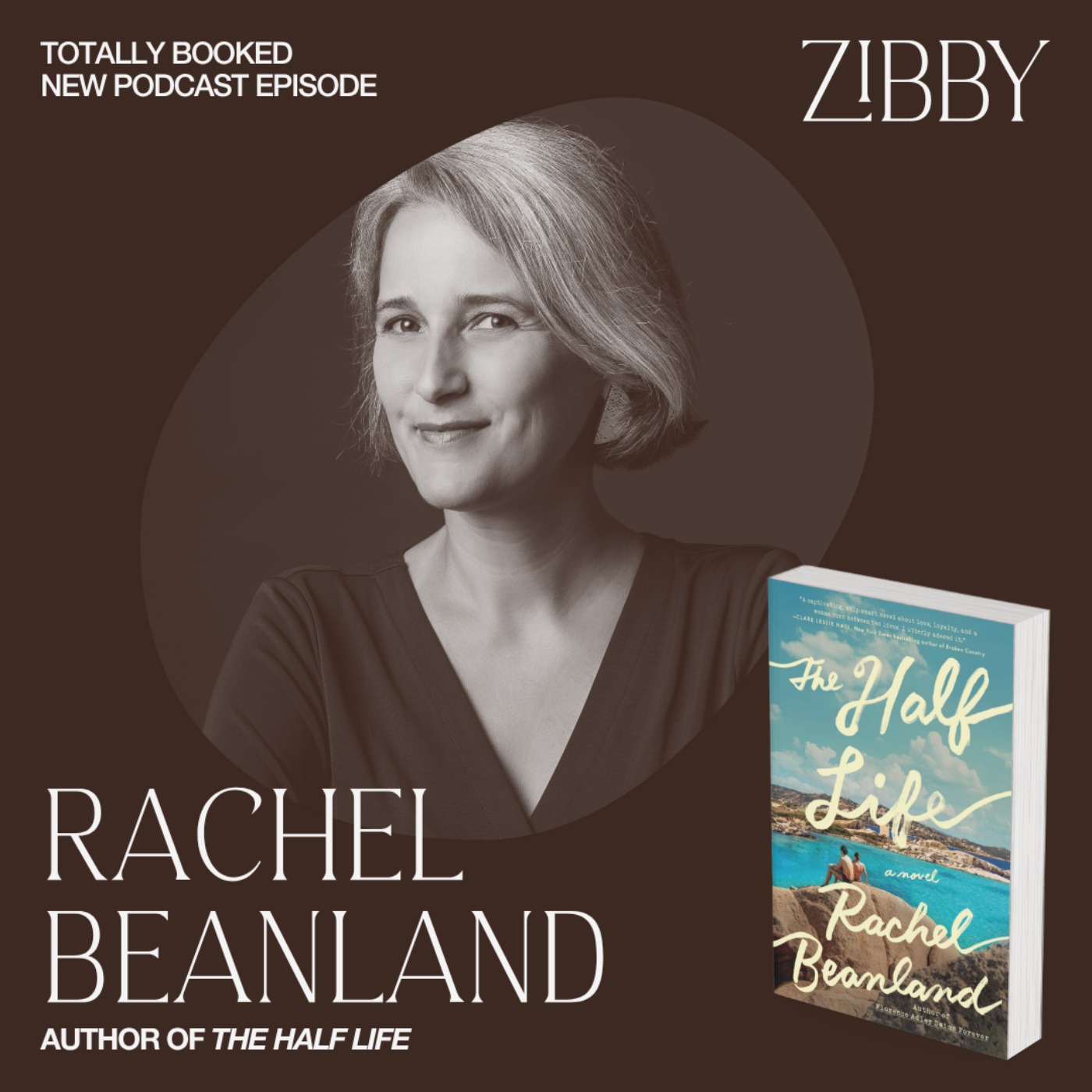
Totally Booked with Zibby
Rachel Beanland, THE HALF LIFE
00:19:53
On Home, Belonging, and the Stories We Inherit
Loading summary
Transcript57 lines
- [00:01]
A
Welcome to Totally Booked.
- [00:03]
B
I'm Zibby Owens. I've interviewed more than 2,000 authors on this show and learned endless amounts about storytelling, reinvention and life itself.
- [00:12]
A
Because when you talk about books, you're really talking about life. So get ready to hear from today's
- [00:17]
B
best authors, the best selling and the not yet discovered. Come find your next great read and the story behind it. Enjoy. Today's episode is with Rachel Beanland, who's the author of the Half Life. Rachel is the author also of the House Is on Fire and Florence Adler Swims Forever, which she was on this podcast discussing. So you can go back and listen to those. Florence Adler Swims Forever won the National
- [00:43]
A
Jewish Book Award for Debut Fiction.
- [00:46]
B
She is a graduate of the University of South Carolina and earned her MFA in Creative Writing from Virginia Commonwealth University. She lives with her family in Richmond, Virginia.
- [00:56]
A
Welcome, Rachel. Thanks for coming back on Totally Booked to talk about the your latest novel. Congratulations.
- [01:04]
C
Oh, thank you so much for having me.
- [01:06]
A
So this novel comes after two phenomenal hits. You had Florence Adler Swims Forever, which won the National Jewish Book Award for debut fiction. You had this House is on Fire, right?
- [01:19]
C
Yeah, yeah, the house is on fire.
- [01:20]
A
Yep, the house is on fire. Both of which we talked about. We talked and I loved. And I was so excited to see you had a new book out. Take us into the Half Life. Why this story? What is this story and how did we arrive here on this beautiful coast?
- [01:37]
C
Well, I think readers who have been following me from the beginning will realize that I never take you to the same place twice. So, you know, I had 1934 Atlantic City with Florence Adler Films Forever. We were in 1811 Richmond, dealing with the Richmond Theater fire in the House Is On Fire. And then with the Half Life, we're going to La Maddalena, Italy, which is a tiny island off the northern coast of Sardinia where I lived when I was a little girl. My father was an officer in the US Navy and there was for a time about, about 35 years there was a US Navy presence on, on the island. Really, when we're talking about a Navy presence, we're talking about nuclear submarines. There was a submarine tender and nuclear submarines coming and going. I, I lived on the island between 86 and 88, but I did not return to the island until 2019. And when I, when I returned with my family, just kind of on a vacation, wanting to see where I had lived as a little girl, suddenly I realized, like, this wasn't just this idyllic island that I was living on for two years. But also there were, there was all this geopolitics. There was so much going on between the Italians and the Americans. And I knew that I wanted to set a novel there. And so it took me a couple of years reading and researching and I was, I was writing the Houses on Fire at the time. And ultimately I decided on the story of Eileen Archer, who is this young 23 year old woman who has grown up in Charleston, South Carolina. She meets a guy in the Navy. She marries him very quickly, which is a common story in the military because you want to follow the person you're dating to wherever they're off to next. And so she ends up on this Italian island with really no idea who she is, let alone what she's meant to be doing there.
- [03:22]
A
Wow. And then as a fish out of water, so to speak, she lands there, learns how to speak Italian, learns how to navigate everything from, you know, buying the things that she needs and using the little hot plate in their tiny little apartment, to making friends and infiltrating the group of women that's already on the island and trying to find herself. I mean, it's hard enough coming of age, but doing so in a foreign country, in a group of new people, I mean, it's crazy.
- [03:50]
C
Yeah. I always had the experience as a Navy kid of kind of showing up somewhere new and having to figure out, you know, the culture and what I was doing there and how to fit in and, you know, so it wasn't a leap for me to figure, you know, okay, here's this young woman who's never traveled anywhere and she's in Italy and she's trying to figure all of that out. But I also wanted to write the story of a woman who was trying to figure out marriage. You know, I got married young. I think I was also influenced by my father. He had had an early marriage that didn't work out. I am still married, and I was very interested in that too. What do you do when you get married so young that you don't really know who you are, let alone what you're meant to be to this other person?
- [04:37]
A
Interesting. Well, I love how you explore their early marriage, especially because he is working so hard, which is also common in many relationships in the beginning and especially when you move for work. Right. I remember moving for work for around the same age for the person I was dating, which ended up ending perhaps as a result.
- [04:57]
C
Sometimes you're just like.
- [04:58]
A
Right, just like plopping down in a new place and it's centered around the other person's career. And how do you. How do you navigate that?
- [05:05]
C
Well, and I think military careers in particular are tricky because there's so much that these guys, I mean, in the 1970s were mainly talking about guys couldn't talk about. Right. Particularly when you start talking about the Navy's nuclear propulsion program. There's so much stuff that's top secret. And so, you know, these women like Eileen were kind of forced to just kind of accept the. The bits of information they were given and then kind of create a story around. Around that.
- [05:33]
A
Then we meet Teo. She befriends a local journalist of sorts, and.
- [05:39]
C
Right.
- [05:39]
A
And that. Some other narratives.
- [05:42]
C
Yes. Yeah. Without giving too much away. I mean, you know, she doesn't know who she is. And, you know, I didn't want to write a perfect character. You know, I wanted to write someone who was real and who was struggling. And, you know, in Eileen's case, she's lost her brother several years before she marries Paul, and she's still very much grieving and trying to kind of. I think maybe she's guilty of compartmentalizing some of that, but it's, of course, all right below the surface. So here she is, away from her parents for the first time, finally maybe figuring out what it means to have lost her brother and then also dealing with this marriage. And, of course, Teo is able to not just kind of help her see, you know, what Italy really is like or what Sardinia in particular is really like, but he's also the journalist who's doing a lot of research on what these nuclear submarines are doing, you know, to the environment and to the. To the people around them.
- [06:38]
A
Well, the loss of Eileen's brother, that narrative was so powerful. And the way that you portrayed that, both her and the impact of the family and her guilt at leaving and how they pushed her to go, and then how, years later, it was only her mom who was. Who Paul invites to come, and she's like, what about. What about my dad? And he's all alone. And just that. That emptiness and the reverberations of that loss are so widespread throughout the book. And, I don't know, it's kind of the heartbeat of the story, I think.
- [07:13]
C
You know, I lost my father young, and I think that to some extent, I will always be writing about it. I think grief is a territory that I'm sadly, very comfortable in. And, you know, I think if you look at my books, you know, Florence Adler, the House is on Fire, and then now this one that is a through line you know, I'm always interested in not just how people deal with loss in the kind of immediate, you know, events, you know, after someone's death, but also just how they deal with it long term. Because I think that's the thing that we all realize, right, when we lose someone we love is that it keeps going. Right. It's not. Grief isn't just something you kind of get. Get to the other side of.
- [08:03]
A
Can you talk about losing your dad? How old were you at the time and what happened?
- [08:08]
C
I was 29 when he died. He was 58. He died of pancreatic cancer. He had had prostate cancer, first in his early 50s, and then pancreatic was his second cancer diagnosis. And so I think one of the things that I was very interested in with this novel, and I think that this. This story in particular is kind of the closest that I've come to exploring some of this stuff with my dad is I was just interested in, like, we can never figure out, right, when someone we love dies of cancer, like, what caused it, what. What's the reason? Right. And it's also. There are a million ways we have introduced risk into our lives. What we eat, what we drink, you know, the. The air we breathe, right? Like the pollution all around us. There are so many different kind of factors that can be influencing why we're we getting cancer, why we're dying of it. And I was interested in how people deal with that risk and make sense of that risk. And, you know, in cases like my dad's, who, you know, who he did work on nuclear submarines for, for many years. Did the nuclear submarines have anything to do with his death? I don't know. I'll never know. Right. And I think that's one of the things that's so hard.
- [09:24]
A
So interesting. Well, how you explored that here and the way it pervaded the community and some of the side effects, perhaps, who knows? And how that happened throughout the book, that was also sort of like an underlying medical mystery going on. And it really explores responsibility and what are the costs to serve.
- [09:46]
C
Right. Yeah. And there. And there are costs with everything, right? Like, I mean, there are all kinds of advancements that we get. You know, nuclear submarines is one example. We can point to so many others in our world, and. But with so many advancements, there are costs, and. And sometimes when we're just kind of the civilians sitting around, we don't understand the costs.
- [10:09]
A
So. Interesting. Well, I'm so sorry, you know, about your father, and I'm sure.
- [10:12]
C
Well, thank you. Yeah, yeah. I mean, I, I, I like to think he would really enjoy this book. He, you know, he certainly would have been the number one person I would have called because of course it was very difficult to write a book kind of set in the midst of this naval environment. US Navy plopped down on the Sardinian island, and of course I was a little girl when I lived there. So I would call my mom, I would call other guys who had been in the Navy. I had a whole kind of network of naval folks that I would call. But of course my dad would have been the big guy I would have loved to have talked to.
- [10:52]
A
Well, the research you did clearly shows I feel like you included 8 million details about this time and this work and the place. And it definitely was like a flight for me to another time and place that was completely immersive. So thank you for that.
- [11:11]
C
Thank you. Thank you. I try. I mean, you know, I don't know how to do it any other way. I mean, it's like the details I think make the story and so I always want to get all of the details right.
- [11:23]
A
So interesting.
- [11:24]
B
Today's episode is sponsored by Quint. The best summer pieces are the ones you end up wearing on repeat. Comfortable, versatile and somehow right for almost every occasion. That's why I love Quince. They make elevated essentials using premium materials like European linen, organic cotton and washable silk without the traditional retail markup. Quince's 100% European linen pants, dresses and tops are the pieces you'll reach for all summer long. They're lightweight, effortless to style and start at just $32. Their denim is soft and comfy and their organic cotton sweaters are perfect for layering when evenings cool down. Personally, I love my white tank dress that I wear all the time. I've actually pinned it to my Instagram as one of my top three posts. I also love my new jean jacket from there and am just so grateful to quints every single day. Especially because Quint's is priced 50 to 80% less than similar brands.
- [12:23]
A
And it's not just apparel.
- [12:24]
B
Quince also offers elevated essentials for your home, from bedding to bath and all the kitchen essentials and furniture so make your summer wardrobe feel easier. Go to quint.com zibby for free shipping on your order and 365 day returns now available in Canada too. That's Quince Q-U-I-N C E.com zibbee Z I B-B-Y for free shipping and 365 day returns quince.com zivi Enjoy.
- [12:56]
A
You said you have a writing group, and you kept coming back to whether you should write the Italy novel or not. Tell me more about your writing group, which I know includes Claire Gibson, right? Yes.
- [13:05]
C
Yes, it does. I mean, we're such a funny group because we very rarely exchange pages. Like, we don't actually read each other's work until the very end when it's like, hey, I have a whole book. Do you want to read it? You know, but we are in a. We're in a WhatsApp group because one of us is in Canada. And so we, you know, have international texting going on. And it's like, the only reason I ever check WhatsApp is, like, for this one group. And. But we are just like, kind of great sounding boards, and we're all in approximately the same place in our careers, like, second, third books, all fiction writers, you know, all kind of just like, bumping along with the ups and downs of, you know, of this crazy career that we have decided is worth pursuing. So it's Lauren, Frances Sharma, Blair Hurley, and Claire Gibson. And they were right. They said, go write the Italy book. And so I did.
- [13:59]
A
Awesome. So what did you get out of writing this book?
- [14:01]
C
I mean, I got to spend two years in La Maddalena in my head, right? I did a research trip to La Maddalena two years ago, as well as, you know, of course, the family vacation I had done in 2019. And, you know, any opportunity I get to go back to La Maddalena. I mean, La Maddalena is a tiny island a couple of miles across with, like, dozens of beaches. And it's just. I mean, it's paradise, like, crystal clear water. They did not get it wrong on the COVID You know, this is La Maddalena. It's just really a paradise. So I loved spending time there. And I also loved, because I grew up in the Navy and then, you know, of course, married a guy who was not in the Navy, and I never joined the Navy. And, you know, it was like when you. When you've been a military dependent your whole life and you get to be an adult and, like, suddenly you're not even allowed on the bases anymore, or you, like, can't shop at the commissary or do all of the things that you used to do your whole childhood, it. It's like a shock, you know. So I did enjoy just spending a couple of years back on kind of like my home turf, where I know what many of the acronyms mean, and I, you know, I kind of speak the lingo to an extent, and so that. That was also fun. Yeah, it was. I mean, to the extent that writing a novel is ever a good time. Right? It was a good time. I go back and forth on that because I love editing, drafting. I mean, there are days where it's going smoothly, and then there are days where I just want to fall on the laptop keyboard.
- [15:38]
A
Did you make any huge changes, like cut entire characters or have things go in a different direction than you set out?
- [15:46]
C
I probably wrote 200,000 words that did not end up in the book.
- [15:50]
A
Oh, my gosh.
- [15:52]
C
I know. Yeah.
- [15:53]
A
That's crazy. That's like, another couple books.
- [15:55]
C
I unfortunately, I just, like, don't know another way to do it. I, like. I write with my document, and then I have another document called Stuff I Chopped, and I just, like, throw everything and stuff I chopped as I. So 200,000 is like, sometimes I take the same paragraph and it ends up there four times or something. But it was a lot of words that got chopped. I was very much kind of feeling my way with this story. You know, the House Is on Fire and Florence Adler Swims Forever are both aftermath stories. And so something bad happens in the beginning, and then everyone is kind of left to pick up the pieces and figure out what it all all means. And so I feel like I kind of had that structure down, but with this one, I was building towards something, and I knew roughly what I was building toward, but it was a very different book to write because of that. And it was also my first time writing a book in first person, which I know some people find first person to be the easiest, but, like, I find it to be very difficult. So that took me a while.
- [16:55]
A
And what about your next book? What are you thinking?
- [16:59]
C
I mean, I'm hard at work, but I am way too nervous to say anything aloud. I think it will be contemporary. That is what I will tell you. I think I am coming 100% into the present, which is nutty, because I've never had to write anything where a character has a cell phone. You know, like, I never have to deal with texting. I've never had to deal with email, even, whatever. But so that will all, I guess, factor in.
- [17:28]
A
So after winning the Jewish Book Award for Debut fiction, how do you think about including Jewish themes in your work?
- [17:37]
C
You know, I think about it every time, but it doesn't mean that they actually work their way in. Like, it really depends on the story. And I think because I was raised in such I was raised in an interfaith household. Like, my dad was, you know, Methodist, and my mom was Jewish, and they raised us to be Jewish, and I'm raising my kids to be Jewish, but I'm married to a Catholic guy. And so I always. When I'm writing and thinking about what the story demands. And so, like, for this. For this novel, I knew Eileen needed to be. It needed to have been raised Catholic because I wanted her to be kind of in conversation with the. The Catholicism that was going to be around her when she got to Italy. And that felt kind of important to the story. With the houses on fire, I kind of reference there was a thriving Jewish community in Richmond in 1811, and there was a family that, in fact, was Jewish and had had a lot of loss in the fire. But it was actually just such a tragic story. Like, they lost almost everyone that I. I found I couldn't write about it. It was like it was too much. But I think my Jewish values end up in every story. There are certain things that I do or think that I don't even realize are Jewish things, and they. And they always work their way in. And in fact, in the final couple of weeks, you know, going through edits for this book, my mom and my sisters and other people were reading, and they're like, rachel, you can't, you know, you can't call that guy a putz. Like, you know, no, nobody would use that if they weren't Jewish. Or, you know, like, certain words that I was like. And I was like, oh, yeah, you're right. Sometimes it's a question of editing it out. It just depends.
- [19:29]
A
Have you felt any impact from being a Jewish author writing in the current environment?
- [19:34]
C
Gosh, I probably have, but I am not sure. I always know when I have, if that makes sense. Yeah.
- [19:42]
A
All right, well, any advice to aspiring authors?
- [19:46]
C
Advice? Keep going. It's a long road. Yeah. I mean, I don't know. My advice is always kind of like the straightforward stuff. Like, I'm still a person who tries to write every day. I try to get something on the page, even if it's like, crap or, you know, it's me writing capital letters. Come back here. Write more on this. Or, you know, and then I'm always just reading. I mean, you know, it's been really fun for me because I. I was judging a couple of things this last year, and so I was reading a lot that was, like, required, you know, and then in the last couple of months, I have just been able to read, like, whatever my little heart desires. And I do find that that just gets my juices, you know, flowing. So, yeah, I just try to read widely and right every day. Ish. Even when it's crap.
- [20:41]
A
How eloquent. Thank you so much for that. Anyway. Well, Rachel, thank you. I really lost myself in this story. It was so immersive and I loved the time I spent. I mean it. It's a thick book full of so much and I read every word and really loved it and got so much out of it. So congratulations.
- [21:03]
C
Oh, thank you so much. I really appreciate it.
- [21:06]
B
Thank you for listening to Totally Booked with Zibby, formerly Moms don't have Time to read books. If you loved the show, tell a friend, leave a review, follow me on Instagram ibeowens and spread the word. Thanks so much. Oh, and buy the books.