← Totally Booked with Zibby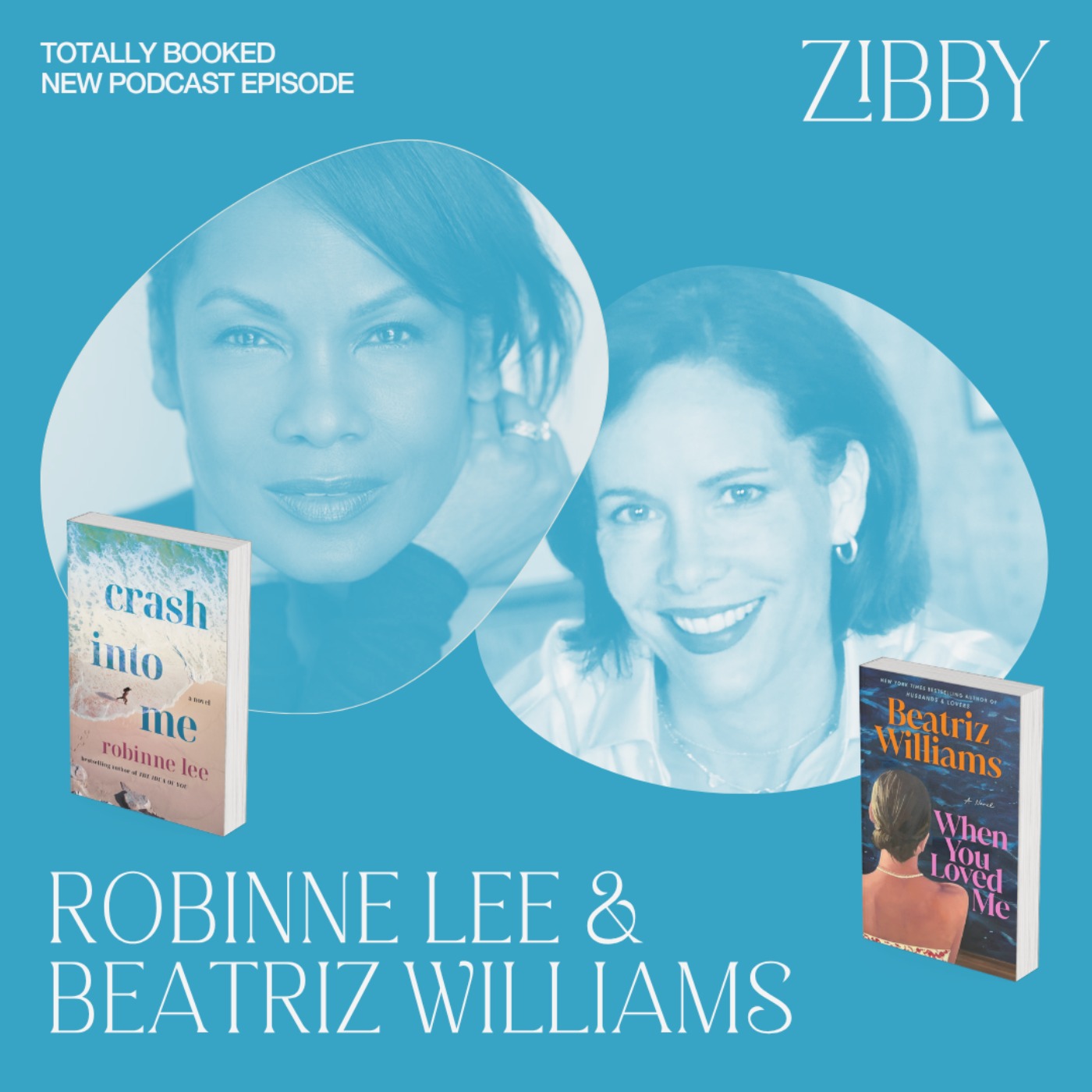
Loading summary
Transcript64 lines
- [00:00]
Capital One Bank Announcer
With no fees or minimums on checking accounts, it's no wonder the Capital One bank guy is so passionate about banking with Capital One. If he were here, he wouldn't just tell you about no fees or minimums. He'd also talk about how most Capital One cafes are open seven days a week to assist with your banking needs. Yep, even on weekends it's pretty much all he talks about in a good way. What's in your wallet? Terms apply. See capitalone.combank Capital One NA Member FDIC
- [00:31]
Michaels Party Shop Announcer
is your kid's birthday coming up? Don't stress the prep. The party shop at Michaels is your one stop shop for everything from Bluey to Rodeo. Transform your space into a birthday wonderland with dream worthy tablescapes and decor starting at $0.99 plus get free helium inflation on select balloon styles. Whether you're crafting a one of a kind bash or grabbing the essentials, Michaels has everything to make their big day legendary. Shop now and order ahead for delivery or in store pickup. Michaels Everything to celebrate anything
- [01:04]
Capital One Bank Announcer
I am called Corallium Rubrum Red Coral. Am I a mineral, a plant, or an animal? I have sparked many lively debates in my time. Not only was my classification difficult to determine, but to find me, curiosity is required. One has to dive deep, deep into the depths to locate me. Listen now to Voice of Jewels, a podcast by l' Cull School of Jewelry Arts, supported by Van Cleef and Arpels.
- [01:37]
Zibby Owens
Welcome to Totally Booked. I'm Zibby Owens. I've interviewed more than 2,000 authors on this show and learned endless amounts about storytelling, reinvention and life itself. Because when you talk about books, you're really talking about life. So get ready to hear from today's best authors, the best selling and the not yet discovered. Come find your next great read and the story behind it. Enjoy. Today I have a joint episode with two amazing women novelists, both of whom have been on the podcast before and are back with their new books. And then, I don't know, they just keep getting better and better. Everybody's such an amazing writer. It's so fun to watch people's careers evolve and get to talk to them along the way. First up we have Robin Lee who is the best selling author of the Idea of youf which became a record breaking feature film for Amazon Studios which was, if you haven't seen it, so good but then go back and read it. Robin Lee, the Idea of youf Robin and I live near each other in the Palisades and she is just fabulous. This is before she moved to Paris with her husband and two kids. She is also an actress and producer with numerous credits in both television and film. A graduate of Yale University and Columbia Law School, she lived in New York and LA and as I said, now lives in Paris. Her new book is Crash Into Me. It was so good that I had to DM her right away as I finished it and was like, oh my gosh, I can't stop thinking about this book. So definitely read Crash Into Me and you will hear us discuss all about it in a minute. Then we have Beatrice Williams, who is also fabulous. Her latest book is called when you loved Me. And don't be fooled by the COVID of a woman sort of looking off into an ocean. It is, of course, about love and from a woman's perspective, but it is also about football and has some really interesting backstory to it. Beatrice Williams lives with her husband and children in Connecticut and is a New York Times best selling author of along the Infinite Tiny Little Thing, the Secret Life of Violet Grant, 100 summers, and overseas, among others. She also writes under the pseudonym Juliana Gray. I did not ask her about that, but I probably should have. Okay, enjoy these two and put these two books on your summer reading list. I know they are on mine. Welcome, Robin. Thank you for coming on Totally Booked to talk about Crash Into Me, a novel. Congratulations. So good. Oh my gosh.
- [04:04]
Robin Lee
Thank you so much. Thank you, thank you, thank you. That means a lot.
- [04:08]
Zibby Owens
I'm sorry I had to DM you just to be like, wow, which I don't usually do, but as I told you, I read the Idea of youf. I am obsessed with the movie. It's like one of my favorite movies ever.
- [04:21]
Michaels Party Shop Announcer
And.
- [04:22]
Zibby Owens
And I was expecting something similar, but this is not that similar to that. It's a literary deep exploration. Well, I'll let. Why don't you talk about what it is? But I was so. Not that I wasn't impressed before. I'm impressed with both. It's just they're so different, that's all.
- [04:38]
Robin Lee
They're very different. Yeah. I was coming out of the idea of you, and I was trying to figure out what to write next. And I'd had like, I really went through about three years of writer's block. Like, I'm not so sure I want this. I want that. And I'd written about this character, Cecilia Chen. She had a small cameo in the Idea of you in the book, but it was a character that I'd written that was kind of similar to biographical before I wrote the Idea of youf. I'd worked on a project with her and the Laurie character, and I was working it for years, and I couldn't get it quite to where I wanted to be. So I kind of set it aside, and then I used her in this tiny role in the idea of you. And then when it was time to go back and write the next book, I thought, you know what? I. I love that character. I love the two of them and their story and their history. What if I were to take them and move them to present day? Which is because it took place in the 90s. Originally, present day was 2015, when I was writing it, when I started it. And so that's kind of where it started. And so it was a story about this Jamaican Chinese artist who's raised in the States but goes to live in France for 20 years. And she's married to this French filmmaker, and she's got two kids, and she's got this great life in Paris, and her husband books this gig shooting this really high profile trilogy, and they pick up and they move to Hollywood, and she's, like, thrown into, like, this wealthy enclave on the west side of Los Angeles, which you and I know very well. And it's kind of like a reverse culture shock. And very early on in the story, she runs into, quite literally this person from her past, and they develop this very intense and complex relationship that threatens to upend her entire life. And it's another woman. And I thought, oh, if I could do this and I could layer in all these ideas about motherhood and sexuality and fame and wealth and identity and privilege and trauma and betrayal, and do it in a story that feels, you know, real and authentic and propulsive, but at the same time has all these, you know, underlying themes that are a little more serious and heavier. I think I could get the story that I really, really want to write, and that's crash into me and beauty,
- [06:59]
Zibby Owens
which is another huge. And beauty, another huge theme. And actually, you say early on. Can I read this one little passage?
- [07:05]
Beatrice Williams
Yeah, yeah, yeah, yeah.
- [07:06]
Zibby Owens
Please. Okay. How their explanation was that attractiveness for both men and women decreased with age, but the decline was greater for women. It touched a nerve. Who makes the decisions about perceived levels of attraction and beauty in the media and entertainment? Who makes the assumption that older women as a class are more unattractive than older men? And how does that affect what they market to us and how we see ourselves? How much is earning potential tied to beauty and not skill or talent? Who controls the conversation? But I don't say any of that, my goal is to make art and let it speak for itself. Was that your goal with this?
- [07:41]
Robin Lee
That's exactly my goal. So, as you know, I lived in LA for several years and I worked as an actress. And it is. LA is that entire culture just rampant with this celebration of youth and this feminine ideal, which is tied to youth. And it was just fascinating to age in that business and watch what becomes of other actresses my age, of the roles that are available to actresses my age, of the way we see them and ourselves while watching what happens for men and, like, how men really kind of can hit their stride. Like, just start really in their late 30s. And all those media roles are, like, the 30s, 40s, 50s. I mean, there's still. I don't know how much like, George Clooney, let's say, is making per film, but he's no less sexually desirable than he was 20, 30 years ago. Whereas we wouldn't say that about female actresses, unfortunately, even though they're, like, hitting their stride and doing their best work. And so that's something I delved into a little bit in the idea view, but that was mostly about our value and our viability. But I wanted to talk about beauty here more. And, like, and how. What. What the idea of beauty is and how we commodify that and consume it, and what we're taught to believe is more beautiful and what is less beautiful and when that changes and how we. How we just, you know, portray that and. And. And the damage it can do.
- [09:26]
Zibby Owens
Or as you say, as how beauty consumes. You hit subjects. Exactly. In the book, you structure these conversations about beauty, and we can move on from beauty in a second. But I just found it so interesting because that becomes sort of the narrative framing for Cecilia's work and how she is interviewing other beautiful people or aging people, from people in her family to celebrities, and really getting to the heart of it and having open conversations about what it means, how it feels, all of that. You could almost call this, you know, the idea of you meets the idea of beauty. Right. That's like the next. Were you having these conversations with people and then sort of transcribing them and using them in a way. Did you think about doing, like, a nonfiction piece on beauty? Like, tell me where all this input comes from.
- [10:21]
Robin Lee
Oh, goodness, I never. No, I did not think about doing a nonfiction piece. I really love fiction, and that's kind of where I love to read and I love to write, and I kind of lose myself, and I like, not, you know, like, making it A little. I don't know, just. It's more liberties you can take with fiction. But I'd worked as a student. When I was in college. I'd worked at Elle magazine, like, during my summer vacations and winter breaks in New York. And I spent my junior year of college working in Paris and working for the French office. And it was, like, at the height of the supermodel period. I had a cousin who was a really big model at that point in time, and she'd been on the COVID of Elle. And that's, like, how I got my first. My job there. And she was really big, late 80s, early 90s. And it was so interesting to see her. She had a very healthy idea about, like, getting older. And I was seeing in our popular culture, others who did not have such a healthy idea. Like, she never touched. Like, she never dyed her hair. She never put anything in her face, whatever. And I was seeing so many other actors and models, et cetera, doing that, and also falling prey to it. Like, I'm looking at what all my girlfriends are doing. Like, who's doing? Touch up to this and who's doing. I had this idea that I want to get out of L. A before I did too much or before I stopped, because it's. It's a slippery slope. Right. And before I could stop seeing what looked to. I didn't want to get so sucked into that culture that I. I could no longer see what looked absurd and what didn't. And then also, like, buying into, like, what are you comfortable doing? Like, what are you not comfortable doing is if it's. If it's permanent, is that too far? Like, what?
- [12:03]
Zibby Owens
Yeah.
- [12:04]
Robin Lee
And I just kept seeing us do more and more and then feeling like the bar was being raised more and more, and I wanted to kind of, like, give voice to that.
- [12:15]
Michaels Party Shop Announcer
Yeah.
- [12:16]
Zibby Owens
Wow. Well, you give voice to a lot. There's a lot in here about race, which is really interesting, about interracial marriage, about passing, not passing, the kids, relationships, acceptance, generational acceptance, how that trauma can pervade throughout time. While the book is taking place, a lot of terrible things are happening in the media. And you weave all that into the narrative as one sort of plot line, as one way in which Cecilia is forming a stronger identity for herself and for the reader, really.
- [12:54]
Robin Lee
Right.
- [12:54]
Zibby Owens
Talk a little bit about that. You have one line sort of late in the book, and you were just like, can somebody. Can some other person in an interracial relationship, please tell me how I'm supposed to get through this? I was like, Is she talking to the reader directly at this point?
- [13:10]
Robin Lee
I think that actually came from a real experience in my life.
- [13:15]
Michaels Party Shop Announcer
Yeah.
- [13:16]
Robin Lee
I mean, I feel like there was so much going on when I was writing this book. I wrote it between 2019 and. And 2024, and then I was doing, like, edits up until, I don't know, January. But so much was going on in the States. I wrote maybe first half of it or so in the US before moving. I'm in Paris now, but before moving here and just, like, politically and racially and, you know, like, George Floyd was happening, BLM was happening. There were all these, like, murders happening. There were school shootings happening. There was just a lot. And I felt like to continue to write a story as if I were in a bubble and not being affected by all that would have been completely false to me, would have. Like, I like the idea of escapism. I like being able to kind of lose myself in a story that takes me away from all that. But I couldn't do that and write it and be living it for five years and not be aware and not have some of that seep into the conversation. And so it was really kind of important that, like, that I'm showing you all these facets of a person's life, because I think it's. I mean, it's real. It's who we are as women, right? Like, we can have these thoughts that feel a little lighter or more frivolous or more superficial and weigh on us a lot, while at the same time we're dealing with heavier things about motherhood or identity or raising our kids and what our kids might be dealing with at school or in their communities and whether or not they're feeling comfortable and adjusting and how they see themselves vis a vis their friend groups. And so all of that was happening to me as I was writing this story. And so I kind of kept the doors open in that way that I didn't want to pretend that, like, the story was happening. Like in. It's so funny because she talks about being in a bubble, but it's like, you're not. She's not fully in the bubble, that she's not aware of what's happening around her.
- [15:15]
Zibby Owens
You made a lot of references to being sort of the only black person in the room at a lot of events, particularly on the west side of la. We are on the same.
- [15:26]
Michaels Party Shop Announcer
We.
- [15:26]
Zibby Owens
Back in the day, we're on the same street in the Palisades, right? And I'm aware of the makeup of the Palisades Community in particular, and the Brentwood and West side moms and all of that. You definitely call out a lot of that in the book. I'm wondering. I'm sure you have so many friends in that community, too. The rejection of it, in a way, and the let's go back to France narrative that courses through the whole thing. What am I doing here in America? This wouldn't happen in Paris. Talk a little bit about that and how you feel about it and everything.
- [16:00]
Robin Lee
Unlike Cecilia, I chose to live on the west side, and I chose to live in the Palisades. There was, anyway, so much beauty there, so much of this kind of, like, idyllic little community. It was a beautiful, safe place to raise my kids. We had an incredible house and a gorgeous view, and it also felt most east coast to me than any place else. And the palace from the very first time I visited felt to me like Connecticut in a weird way. Like, it feels like it could be Greenwich or, like, you. Canaan or Darian, like just one of those tiny little. Little. Or Westport or one of those tiny little city. Or Weston, like, little enclaves, like, along the water. So it felt familiar to me in a way that, like, the Hollywood Hills never really felt familiar, even though we spent years living in Laurel Canyon as well. But I. You know, my kids went to. They went to a private school, but it was a very diverse private school. And I kind of felt like, okay, they're getting their diversity here. I don't. I don't feel so badly living in a place where they're not seeing as much diversity because they're still hanging out with their friends and they're doing all these school events, and so they're getting the full range. But it was like. It was very. It's one of those things that, like, becomes apparent when you're looking for it. But then you can forget, like, my husband's white. We've been married for almost 25 years. We've been in so many rooms. When I'm the only white black person, he's been in rooms where he's the only white person. 95% of the time. I'm not noticing that, and he's not noticing that. But the other 5%, like, every once in a while you do, and it's like you become very comfortable with it. But at times, like, you're like, wow, there's no one else here like me. And that would happen a lot in la. And I remember when I first moved to. And it's changed a little bit, but when we first moved from New York. We moved to Brentwood, and I moved from the Upper west side of New York, which is very diverse. And obviously, you get on the subway in New York and you see the full spectrum and that. We were living in Brentwood and there would be, like, if I didn't leave Brentwood, there'd be entire days when I would not see another black person. I was like. And I would. There are days I'd go out and go for a run and, like, and still not see anyone. And it was crazy to me, like, how stratified LA was. And I remember thinking, I don't want to stay here because I want my kids to have the full spectrum. But LA is one of those places that you get sucked in. You make friends, the weather's lovely, your life is easy. Like, our lives were easy and beautiful, and we had a community, and there was a lot about it that was just comfortable. And my best, best friends are there and like, you know, the moms. Like, the moms. I hate calling them mom friends, but the woman I met, like, in baby group, we raised our kids together. They're still my, like, you know, we're still on our WhatsApp chat now and like, and. And we talk, or we were, you know, exchanging messages every day. But it's hard to have that kind of, like, that push, pull. Like, I'm. I'm. There's a lot I love here, but I want my kids to see something else, and I want them to know there's more than just this. And so I'm glad that I've given them this other experience. And at this point, one of them has chosen to stay in. Like, he's like, I just want to stay here. He's. He's in his college here. He's like, I'm really happy in Europe. And my daughter. Daughter is a junior in high school now, and she's like, I want to go back to America. He's like, you robbed me of my. My American high school experience. I want an American college experience. Like, I want to go back to the U.S. but it's like, it's for them to figure it out. But I wanted them to. To know that there was more out there than just the west side of la.
- [19:40]
Zibby Owens
Yeah.
- [19:40]
Robin Lee
I remember my son, like, saying when he was, like, 3 or 4 years old, and, you know, as a boy, he was obsessed with cars, and he would just notice cars and remember him saying, so all the cars, the only cars there are, are BMWs and Range Rovers and Mercedes, right? Oh, my God.
- [19:58]
Zibby Owens
And you're like, great, great. What did I do?
- [20:04]
Robin Lee
What have I done? No, honey, there are lots of other cars in the world. But, like, yeah, that was
- [20:15]
Zibby Owens
another through line of the book is wanting is desire itself, and wanting to feel wanted and infidelity. And, yes, there's some retribution, but it's really about, like, the sensual and the connection and almost like inhabiting the body. And it's like a love letter to the female body in a way, right? From goosebumps to beautiful necks to all of it, Right. It's like a. If we went back to art history, right? It's like the gaze. Like, the gaze here is on the woman. And at times, it's very hot and heavy as well. And you're taking us through the lens of someone who has not been with a woman before and all of that. How did you end up with that? And then, of course, I find myself saying, what is going on in Robyn's
- [21:09]
Robin Lee
marriage, in my life?
- [21:11]
Zibby Owens
Like, go, Robin, look at that. Who knows what is going on behind closed doors?
- [21:16]
Robin Lee
Not telling my husband this. I. You know, I started writing this story, and I didn't know where it was going to go. Like, I had these two characters, and they run in, and they have this car accident, and then she goes over to Cecilia, goes over to Nuke's home, and then it's like, it's. I think I was just allowing myself to kind of live in the moment and see, and I. I honestly did not know where the story was going to go when I started. Like, I didn't really have an outline in the beginning, and I. Just. As I wrote it, it just kind of felt like that's where it was leading to. Like, that's who these characters were. And feeling. Observing her, because I'm so used to observing men in that way. It's like, what is it like to observe women in that way? And so I just. Like, I did a deep dive in finding all the pictures of women that I found attractive. And, like, what is it about them that I find attractive? What is sensual? What is sexual? What is something that I have. I find attractive now that I hadn't or I hadn't. I didn't even think about looking at. And what. How do men look at us? And, like, what is it about us that makes us different than men? I mean, that sounds like an obvious thing, but, like, if you were to be in a relationship with another woman, what. What is something about our femininity or our softness or our, like, oh, gosh, I feel like it's like this. Yeah. It's like the lack of hard edges, like, that makes it attractive. And then I just started reading other Experience, women's lesbian experiences and talked to friends of mine who slept with other women or like, tell me about this and tell me about that and blah, blah, blah, and how did you feel and what was weird and what was not weird? I mean, it's a lot of, like, what I did, you know, with the idea of you and you're just interviewing people and, like, and looking up online and, like, and just getting ideas. And then you kind of let your imagination run wild with you, I guess. Like, that's. That's part of the job. Like, you research as much as you can, and then you've got to just kind of trust that you've done the research and then put yourself in that character's shoes and just let your imagination take you.
- [23:24]
Zibby Owens
Amazing. Well, you. You also lead us from one beautiful home to another. I feel like the book is also flipping through, like, House Beautiful or Architectural Digest in a way, because the way you describe it, I feel fully see the houses. I can picture each one, like, could do a tour. You should do, like, a tour of homes that you referenced in the book. But in addition to just the physical places in la, you really nail the culture of fame and conversation and how you have to become somewhat accustomed to famous people when you live there, because those are the people who, like, do all the things. They're in the mom group. It's not such a big thing. But what happens when someone starts to hit is also so good. When her husband just starts to really make it and gets all the buzz and what does that mean to her identity? And tell me a little bit about that.
- [24:25]
Robin Lee
Oh, goodness. I'm trying to think of what I used for that, but I think it's just. Just being super observant. Like, I've always been that kind of person who's. I'm constantly in my head. I've never been able to, like, fully relax and, like, be in the moment. It's happened so infrequently. I'm just constantly, like, if I'm at a party, if I'm like. I remember thinking this in college that, like, I can't just step out of myself and just be here. Like, I am looking at everyone, taking everything in, like, memorizing it. And it served me well as a writer and as an actor, because I feel. But I used to think, like, just let go. Just let go. Just relax and be here. Stop thinking, like, what is he thinking of me, Am I wearing the right shoes? And, like, just let go and just be. But so, like, you know, it's. It's a blessing and a curse. And so I've been in enough experiences with celebrities that I'm totally focusing on everything, and I can't. I can't fully let go of that. Like, and even when I'm. Even when I'm comfortable, I'm still observing and. And I don't. I used to. I was really, really good about keeping a journal from, like, age 8 to 28. And then I stopped, and now I only write. I write every so often. It's really bad as a writer. I mean, as a writer, keeping a journal should be what I do every, every, every single day. But I. I've managed to still hold on to all those thoughts. And those observations used to go in my journals. Now they just kind of stay in my head. And so when I need them, I'm just able to kind of, like, find them in here somewhere and, like, and just remember all those homes, all those experiences, all, like, who was wearing what, when whose hair was done, how, what the jewelry was. Like. I just. It's all in there.
- [26:12]
Zibby Owens
It's amazing. But a lot of people can't pull that off, so I'm totally impressed.
- [26:17]
Robin Lee
Well, thank you so much. I appreciate that. I really appreciate that.
- [26:20]
Zibby Owens
Thank you.
- [26:21]
Robin Lee
It means a lot to me.
- [26:23]
Zibby Owens
Today's episode is sponsored by Quince. The best summer pieces are the ones you end up wearing on repeat. Comfortable, versatile, and somehow right for almost every occasion. That's why I love Quince. They make elevated essentials using premium materials like European linen, organic cotton, and washable silk. Without the traditional retail markup. Quince's 100% European linen pants, dresses, and tops are the pieces you'll reach for all summer long. They're lightweight, effortless to style, and start at just $32. Their denim is soft and comfy, and their organic cotton sweaters are perfect for layering when evenings cool down. Personally, I love my white tank dress that I wear all the time. I've actually pinned it to my Instagram as one of my top three posts. I also love my new jean jacket from there. And I'm just so grateful to quints every single day, especially because quince is priced 50 to 80% less than similar brands. And it's not just apparel. Quint's also offers elevated essentials for your home, from bedding to bath, and all the kitchen essentials and furniture. So make your summer wardrobe feel easier, go to quince.com zibby for free shipping on your order and 365 day returns. Now available in Canada too. That's Quince Q u I n ce.com zibby z I b-b y for free shipping and 365 day returns. Quince.com zivi Enjoy
- [27:57]
Capital One Bank Announcer
with no fees or minimums on checking accounts, it's no wonder the Capital One bank guy is so passionate about banking with Capital One. If he were here, he wouldn't just tell you about no fees or minimums. He'd also talk about how most Capital One cafes are open seven days a week to assist with your banking needs. Yep, even on weekends it's pretty much all he talks about. In a good way. What's in your wallet? Terms apply. See capitalone.combank Capital One NA Member FDIC
- [28:27]
Michaels Party Shop Announcer
is your kid's birthday coming up? Don't stress the prep. The party shop at Michael's is your one stop shop for everything from Bluey to rodeo. Transform your space into a birthday wonderland with dreamworthy tablescapes and decor starting at 99 cents. Plus get free helium inflation on select balloon styles. Whether you're crafting a one of a kind bash or grabbing the essentials, Michaels has everything to make their big day legendary. Shop now and order ahead for delivery or in store pickup. Michaels everything to celebrate anything.
- [29:02]
Zibby Owens
Hey, welcome Beatriz. Thank you so much for coming back on Totally Booked to talk about WHEN you loved me. Congratulations.
- [29:09]
Beatrice Williams
Thank you. It is such a thrill to be back. We had such a great conversation back. I think it was for her last flight. So I'm delighted to be back.
- [29:18]
Zibby Owens
I'm delighted to have you back. And of course I've seen you in real life several times since. Many times since. But anyway, okay, when you loved me. By the way, for those listening, I'm sure you've all seen the COVID by now of the back of a woman's hair with a bun and a little necklace and pretty dress and the water. But what you might not know is that as soon as you open it up, you are in the middle of a football game. Like. Like right there on the field, as if you are a player. So, just FYI. So maybe you want some men to pick this up too. Anyway, why don't you talk about the book?
- [29:49]
Beatrice Williams
Yes, so the book is set in two narratives. One that takes place in colonial New England during the summer of what's called the great snow of 1716-1717, which was a real weather phenomenon. And a pirate lands on Winthrop island during that Winter and kind of overturns the lives of this family and particularly two sisters living there. And what happens that winter then kind of reverberates down the generations to modern day Winthrop island when a young widow named Lucy Cooper returns to her decayed family Estee State to clear up the affairs of her father, who has disappeared into the ocean and in search of this sort of rumored pirate treasure that's supposed to be buried on the family property. So Lucy is trying to deal with her father's disappearance and discovers that the last person to see him alive is none other than her own long lost love, Ben Ressler, who is a former NFL football player now disgraced after a tragic on field accident. So that all kind of weaves together with the story of Lucy and Ben back when they were teenagers together. So that love story, her friendship with the girl next door, and that pirate story that takes place 300 years earlier all kind of weaves together.
- [31:24]
Zibby Owens
So interesting. Oh, my gosh. So back to this accident for a second. I feel like we can talk about it. Cause it happens so early, right?
- [31:30]
Beatrice Williams
Yes, it is like the whole sort of orbit origin story of Ben's redemption arc, I guess.
- [31:35]
Zibby Owens
So is it like what happens when there is an injury like that on a football field where it's so powerful and someone's neck snaps? Is it really the fault? Can they be tried? What are the legalities behind that?
- [31:48]
Beatrice Williams
I did, interestingly enough, a friend of my husband's from boarding school is now the chief legal officer at the NFL. I had already written the manuscript when I talked to him and sort of, I knew a bit about the legalities just because I had been a manager for my college football team when I was there. It was sort of a accidental thing I stumbled into that turned out to kind of transform my life and the course of my life. And I did know I still have. I'm in contact with a number of my old teammates, one of whom helped choreograph this play that takes place in that first scene. And so there is, you know, you're basically protected. Like this is a game and there's an assumption of risk. And again, I have not gone to law school, so I'm not going to give you the correct legal terms here, but there is a sense, there is this sort of presumption of risk and that this is a risky. Just like when you're horseback riding and things, this is a risky game and people are going to get hurt. So you would have to prove like, intent to, you know, injure somebody, you know, intent to cause, I think, you know, grievous bodily harm above and beyond, you know, the fact that you're playing a violent game and, you know, that legal standard has pretty much, like, never really been met. And in this case, of course, Ben obviously does not intend to cause grievous bodily damage to this other player, other than just, you know, stopping, you know, the ball from being caught. So. And that was. I was very specific when I was asking my football player friend to help choreograph this. I was like, I need something where this guy, he's, you know. And I've seen this. And one of the things that intrigued me, one of my starting points for this book, was, you know, human violence and the human capacity for violence and how we channel that, because it always interested me when I was on the football field, how you have these guys who were perfect gentlemen off the field, like, couldn't be nicer. Like, really nice guys. And you get them on a field, and it's like, they enjoy hitting people. I mean, like, you can't play this game unless you enjoy that violent aspect of it. So I went through this kind of journey where I talked to someone. I'm like, so how does that work, like, psychologically? And that will kind of all fed into who Ben is. That Ben can be this very upstanding person and be a kind person in many ways, but also enjoy hitting people. And he's good at it. And he, you know, there is just. I said, I need you to choreograph me a play where he's laying a perfectly legal, legitimate hit that ends badly just by a twist of biomechanics, and the other player dies. And my dear friend came through for me, and, you know, I've had a lot of people tell me, even now, that, you know, this is just a. It is a very powerful opening chapter, and it really kind of sets in motion, you know, what happens in the rest of the book and the themes that play out in the rest of the book.
- [34:49]
Zibby Owens
Yes, well, super gripping, but your writing is always gripping. You have an author's note in the back as well, talking about your time as the manager. Can we go back to that? Because I found that totally fascinating. I'm like, who would have known? And you said that you were hiding that you were an author or wannabe author at the time. How did you fall into that, and how did it change your life?
- [35:10]
Beatrice Williams
It's kind of crazy. I mean, I'm a very nerdy person. I grew up, you know, like. And we were a weird family Group. My father's British, and he sort of moved to America right after college, so. And really wanted to become American. So he got very, you know, into American sports. There was never any cricket around the house growing up. There was never any rugby. It was like baseball, basketball, football. And I was one of two girls. And this is kind of how we, I guess, you know, spent time with our dad, would be to watch football with him on Sundays. So I loved football. But, you know, like, we were a very weird family. Like I said, like, we had zero pop culture references. They would take us down to this Shakespeare festival in Southern Oregon as our vacation every year. And we had, like, season tickets to the Seattle Opera. And. And so that was, like, the cultural stuff that I. That kind of informed my childhood. But also football. And football has this great dramatic arc to it and kind of like opera, it's very like, you know, life and death, There's a lot of drama. So it appealed to me, you know, and when I got to college and I'm there on financial aid and I need to find a job, and, like, all the good jobs were, of course, already taken. I'm a freshman. And then I saw this flyer that, you know, Stanford football needs managers, you know, and you get paid and you get to eat at the training table. And I'm like, well, that sounds. I mean, free food. Like, who's going to turn down free food? And I love football. So I volunteered, and it turned out to be absolutely transformative. You know, my first full year there, we went to the Aloha Bowl. So I'm like, off to Hawaii, and it was so much fun. And then our coach got hired away by the Minnesota Vikings to be their head coach. And we were sort of like, oh, no, you know, what are we going to do? We had this great coach. And then this rumor started going around that Bill Walsh was going to step in and come out of retirement. And Bill Walsh is this legendary San Francisco 49ers coach of. Won all these Super Bowls. And it'd be like, in the present day, like the whole Bill Belichick story, coming to coach at University of North Carolina line. It's the same idea. You know, it was like, are you kidding me? And yet he came, and it was, you know, such a. Just tremendous experience to be around people who are that successful and yet that sort of humble about who they are. And their discipline and their focus and their ability to commit to things had such an impact on me. And it was fun. I mean, we just. We had a lot of fun and I had 99 brothers around campus. Like, I never had to worry. Like at a party I'd just be like, excuse me, this guy's giving me a little trouble over here. It was over, right? It was, it was great. I had brothers for the first time in my life. And I was like, I love this brother thing. This is great. Aww.
- [38:00]
Zibby Owens
So then how did you go? The short version, I guess, from being a wannabe, nerdy, self professed nerdy, I can imagine, but to a real published author. How did that happen?
- [38:12]
Beatrice Williams
So, you know, and again, it all came about because of football. I sort of kind of got my first job in New York, you know, connection of a connection of a connection from football. And that was where I met, you know, my husband, who is a New Englander. And so I end up staying on the east coast, which was not part of my plan. And, you know, and I ended up kind of pursuing a finance career in the beginning because I think I felt a lot of pressure, you know, to do successful things, you know, and I did that. I didn't really enjoy it very much. And as soon as I went on maternity leave, I was quite happy to be home with my kids. But then my husband loses his job and literally I am about to give birth to my third child and, you know, and my husband lost his job. And things were okay for a little while with consulting gigs, but then it kind of dried up and I literally was sort of panicking, like, you know, how are we going to pay for groceries? You know, and so I thought, okay, I'll start writing like I always wanted to write. And of course, Zibby, you know how incredibly naive that idea was. But I really, you know, I think when your back is against the wall, when it's life or death, I mean, it transformed me as a writer. I mean, I had to. And I think the whole experience, I had to sort of find depths in myself that I had no idea existed. Like, you do not know how strong you are until you are put to that kind of test. With ultimately four children that I'm taking care of and being a mom for and being a full time mom and then also learning to be a writer and to write books. And I've been incredibly fortunate to be able to provide for my family all these years. I've got my 18 year old, youngest is now off to college in the fall and. And I think that I really forced myself to be the best writer I possibly could be because every single book for me is life or death, not just because I am so invested in my characters and love my characters so passionately. But because I also need to balance that with writing a book that people are going to want to read, that is going to have meaning to people, that is going to touch some chord. So it challenged me to be the absolute best writer I could be. And I just try to meet that challenge with every book. And every book is, every book is something that I dig deep inside me for. And the characters become very real to me. And I don't know, maybe that's how I deal with my trauma, if you will, is just by channeling it all into my book. Books.
- [40:56]
Zibby Owens
Oh, my gosh, that's amazing. But what would you say? What chapter are you leaving and what chapter are you entering in your life?
- [41:02]
Beatrice Williams
My life? Well, I, I, you know, I am. First of all, it's, you know what's interesting? So my daughter, my youngest of all the schools in the world, she decides she wants to go to lsu. So football is obviously going to be playing a big part of my life for a few years to come. I am really excited for this chapter. I would say that I'm now entering that sort of empty nest chapter. And, and, you know, the, the, the post menopause chapter, the whole thing where, you know, all of a sudden you're kind of like you, you know, and you're, you're always a mom. Like, you're always like, emotional, emotionally available. One thing I've learned is that you're never really an empty nester. I was so excited when I first started going off to college. I'm like, phew, less work, right? No, they keep coming back or they need things or they have a bad job interview or whatever. You know, you're always there being present for them. And I kind of like that. I like having that energy in my life. But I also like the idea of just like, you know, me and my husband just getting in the car and driving down to Baton Rouge to see our daughter. You know, that part of it. And we really enjoy now coming into the city. And I'll take any excuse now to come into the city and we'll stay overnight and we'll take my daughter out to dinner and, you know, and that's really neat. Once you start interacting with your children as adult human beings, once you get them through the teenage years and all of a sudden they're like, wow, people you really want to spend time with. So that is the chapter that I'm really excited about. Less sort of full time, hands on stay at home mom and more figuring out who my kids are as adults. It's really. It's exciting.
- [42:39]
Zibby Owens
Oh my gosh, I love that. Well, congratulations. When you loved me. Congrats.
- [42:45]
Beatrice Williams
Thank you so much. Zibby. It's been a pleasure speaking to you as always.
- [42:48]
Zibby Owens
You too. You too. Thank you for listening to Totally Booked with Zibby, formerly Moms don't have Time to read Books. If you loved the show, tell a friend, leave a review, Follow me on Instagram Iby Owens and Spread the word. Thanks so much. Oh, and buy the books.
- [43:12]
Michaels Party Shop Announcer
Is your kid's birthday coming up? Don't stress the prep. The Party Shop at Michael's is your one stop shop for everything from Bluey to Rodeo. Transform your space into a birthday wonderland with dreamworthy tablescapes and decor starting at 99 cents. Plus get free helium inflation on select balloon styles. Whether you're crafting a one of a kind bash or grabbing the essentials, Michaels has every everything to make their big day. Legendary. Shop now and order ahead for delivery or in store pickup. Michaels Everything to celebrate Anything with no
- [43:45]
Capital One Bank Announcer
fees or minimums on checking accounts, it's no wonder the Capital One bank guy is so passionate about banking with Capital One. If he were here, he wouldn't just tell you about no fees or minimums. He'd also talk about how most Capital One cafes are open seven days a week to assist with your banking needs. Yep, even on weekends, it's pretty much all he talks about. In a good way. What's in your wallet? Term supply? See capitalone.com bank capital1na member FDIC I am called Corallium Rubrum Red Coral. Am I a mineral, a plant, or an animal? I have sparked many lively debates in my time. Not only was my classification difficult to determine, but to find me, curiosity is required. One has to dive deep, deep into the depths to locate me. Listen now to Voice of Jewels, a podcast by Lecole School of Jewelry Arts supported by Van Cleef and Arpels.