Loading summary
Transcript148 lines
- [00:00]
Rhea
Hotels.com knows that planning your book club's annual field trip can get chaotic. Rhea, the romance reader, wants to stay in Prince Charming's castle Self improvement. Steve needs a hotel gym. Lila and Jeff, the horror fans, ghosted the group. Chat about budget and you've read enough true crime to know that murdering them isn't a real option. With the Hotels.com app, invite all your friends to collaborate and find the perfect hotel together. Share properties, vote on your favorites, and book all in one place. Find your Perfect somewhere with Hotels.com hi.
- [00:31]
Hilary Frank
I'm here with an exciting update. After a five year hiatus, the beloved parenting podcast Longest, Shortest Time is back. And it's picking up right where it left off, sharing the most unexpected, heartfelt and downright fascinating stories about parenthood, reproductive health and beyond. Host Hilary Frank started the show in 2010 after a difficult childbirth and recovery, hoping to connect with parents and non parents alike. But what she created became so much more conversations that are funny, poignant, sometimes edgy, and always full of surprises. In fact, Hillary was on my podcast as well. These stories are about life in all its messy, emotional and incredible forms, so don't miss out. Follow and listen to Longest, Shortest Time wherever you get your podcasts.
- [01:23]
Zibby Owens
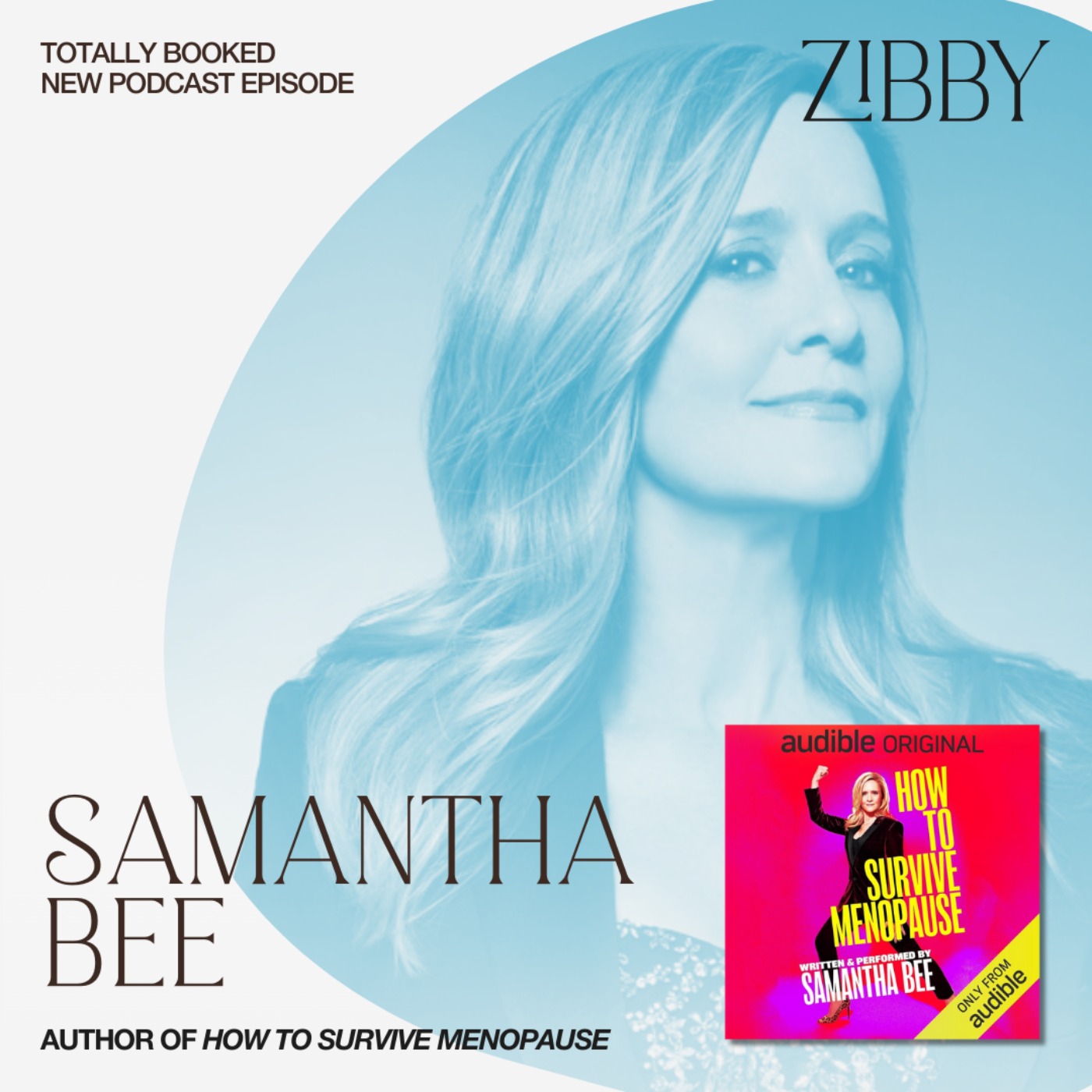
Hi, this is Zibby Owens and you're listening to Totally Booked with Zibby, formerly Moms don't have Time to Read Books. In my daily show, I interview today's latest best selling, buzziest or underrated authors and story creators whose work I think is worth your time. As a bookstore owner, publisher, author, and obviously podcaster, I get a comprehensive look at everything that's coming out and spend my time curating the best books so you don't have to stay in the know. Get insider insights and connect with guests like I do every single day. For more information, go to zibbymedia.com and follow me on Instagram. Ibby Owens Samantha Bee is the author of how to Survive Menopause. It's an Audible original. She currently hosts the weekly podcast Choice Words with Samantha Bee and the Daily Beast Podcast with Joanna Coles, both of which you should immediately subscribe to. Literally stop reading this and do it. That's in the bio. That's so genius. Anyway, in case you were curious, Samantha Bee was born and raised in Toronto, Canada. She joined the Daily show with Jon Stewart's Best Effing News Team on Comedy Central in 2003 and later received global recognition from the success of her very own weekly late night comedy series, Full Frontal with Samantha Bee. Full frontal premiered in 2016 and ran for seven seasons on TBS but no longer exists. Bea is the author of the essay collection I know I Am, but what Are you? And has been honored as one of Time 100's Most Influential People. In 2023, be embarked on her first national tour, your Favorite Woman, the Joy of Sex Education, where she completed a 31 city run including sold out dates at the Kennedy center in Washington D.C. r.I.P. her new show, how to Survive Menopause is currently touring and she hopes the run will last as long as perimenopause 2 to 14 years.
- [03:18]
Samantha Bee
Hi Sam, Welcome. Thanks so much for coming on. Totally booked. I'm so excited to talk to you about menopause and everything else.
- [03:24]
Thank you. I'm so excited to talk to you too. Oh my gosh, I love the flower on your jacket. I know. Now people see it. So pretty. Yeah, very pretty.
- [03:32]
I wasn't sure if this was too, you know, grandma ish or if it was. No, I just, I just went with it.
- [03:38]
I determined that it was cool. I said so.
- [03:41]
Therefore, it is therefore, thank you, the ultimate authority on anything. I will defer to you for all future outfits. I loved listening to your live show. It was so cool that you released it even as an audible original. Like, so genius to do that so that everybody who wasn't there could feel like they were a part of the audience and all of that and just get to feel like they could listen instead of having to like sit and watch a show and all of that.
- [04:05]
So, yeah, I like, I like that. But I think it's because I am such a listener. Like, I always, I don't always have something in my ear, but I really, I do love to listen to people talk and I like to listen to comedy shows in that format and I listen to audiobooks and I, I really, I just, I love that experience. I've always been kind of a radio kid.
- [04:28]
I love that. And of course, now you could just listen to my podcast all the time.
- [04:30]
So 100% right? Of course. Yes, exactly.
- [04:34]
On the rotation. Exactly. Kidding. I can't even pick which, like many of the jokes I related to the most because I related to basically all of. Thank you. The shoulder one is. The frozen shoulder is the one that got me the most because I literally, with my son the other day, I was like, look at this. I can't raise my hand. That's my shoulder. And he's like, why? I'm like, I don't know what you.
- [04:54]
Have frozen shoulder right now.
- [04:56]
I went to the doctor and they gave Me, like an injection or whatever. So. Okay, I had that much better. But you had that, too.
- [05:02]
I had that. I had that injection also. But guess what? The. Well, this is not. I'm not going to make you feel good when I say the next thing.
- [05:09]
Yeah, it's going to come.
- [05:10]
I'm so sorry. I'm so sorry.
- [05:11]
Zibby Owens
I'm.
- [05:12]
Samantha Bee
I'm actually getting it on the other side.
- [05:14]
Oh, no.
- [05:15]
Years later, and they did tell me that that happens so often. It's so common. I think that the main difference and the reason why it's not so terrible is because I actually know how to deal with it now. Whereas previously, like, what your experience. I bet for a long time you thought that you had an injury and you kind of let it rest.
- [05:39]
Yep.
- [05:39]
Which actually makes it deepen and get so much worse.
- [05:43]
Yeah.
- [05:44]
So at least there's that.
- [05:46]
That's true. Yes. Knowledge is power.
- [05:49]
No, I'm so sorry. I honestly think that frozen shoulder is one of the worst things that I've experienced. Like, I definitely thought my arm would never be restored to its previous levels of mobility, but it was. It is fine.
- [06:05]
So I had, like, a renewed empathy for people who struggled to put things in the head compartments. I was always like, why is this such an issue for people? They're like, I can't do it. And all of a sudden I was like, honey.
- [06:18]
I don't, like. I. I want to add a joke to the show, actually, which it's not really a joke, but it's just the truth that I have not put on a bra in a state of comfort and ease since 2017. That stands. That holds true even today.
- [06:35]
I mean, the fact that bras are still so impossible to put on is a thing in and of itself. You should talk about on your next show.
- [06:42]
Wayfair Ad Voice
You know what?
- [06:43]
Samantha Bee
That's so funny. That's a great joke. I'm gonna write that down.
- [06:46]
I, like, have to put it in and I turn it around every time. I mean, it's, like, ridiculous.
- [06:50]
It's very unfair when you think about it. Why don't they open in the front? It's just to keep us. Just to keep it real for us. Just to keep us humble.
- [06:59]
So antiquated. I mean, obviously they're sports bras, but still, even now, the sports bras have that thing.
- [07:04]
The sports bras are terrible, too, because then you're struggling into it. It's like putting on a Spanx or whatever. It's like. It's a.
- [07:11]
It's.
- [07:12]
It's humiliating to put on and off.
- [07:14]
If it's ever.
- [07:15]
And, like, sweaty or whatever.
- [07:16]
It's grow. You know, it's so hard. You're, like, struggling. It's.
- [07:18]
You struggle. You look awful. Your boobs go into a tube. They're just.
- [07:23]
They're. Yeah.
- [07:24]
There's a better way. We should go into business together.
- [07:27]
Let's do it. I'm. I'm all for it. Yes. I would love a better solution. Yes, for sure. And you're so funny in the show. Just saying, like, there obviously is not a God, because all these things could not happen if there was a God. They would not let this happen to our bodies. Women's bodies would not be, like, punished in this way.
- [07:50]
If there was a. If we had a merciful God, we wouldn't be. They wouldn't be like, you know what? Perimenopause starts whenever. And it lasts from, I don't know, seven years to forever.
- [08:02]
Yeah.
- [08:02]
Anyway, good luck.
- [08:03]
Yeah. No way to know, you know? No way to know.
- [08:07]
You're definitely going to get it wrong. Everybody's going to. We're all just taking guesses. And there it's. We kind of frame our entire medical system on, like, you know, like, 100 years ago, you wouldn't have lived this long. So we don't really know anything.
- [08:20]
Yeah.
- [08:21]
We stop trying to figure it out.
- [08:23]
And, of course, you contrast that with all that we know about men, which is extensive, and that there is a remedy for everything. And you are so funny when you're just like, oh, yeah, your. Your kidneys. There's something for that, like, for everything. But your ovaries just stop making eggs. And everyone's like, okay, yeah, yeah.
- [08:41]
It's like the only organ in the human body that it stops. Like, even. It just slows down. And everybody's like, well, I don't know what to do about that. I guess we just let. I guess we just let them wither. Anyways, whatever.
- [08:55]
Yeah.
- [08:56]
Good luck again. Once again, good luck, ladies. Yeah, enjoy. We don't know what happens to you after you can't make babies anymore. I think you just take care of your children's children. Anyways. We don't care.
- [09:12]
I mean, really, your whole show is just a way to make all of us feel a little bit better about aging and, like, the. All the indignities of it and the things that we have to wake up and deal with each day and, like, not even necessarily want to tell anybody because we're like, oh, is that just me?
- [09:28]
Right? And, you know, I do think that really aging. Listen, aging is definitely not for the weak. We all know this, but there's glory to it. I mean, there. It's not all bad things, but we should be able to freely talk about the things that do happen. Like, I don't know why we've just framed it as this, like, embarrassing time period. I love talking about it. I actually think that finding community and talking about these very real things, it's not complaining. Of course I'm complaining. But it's. But it's not just that. It's not just bellyaching. It's like community. Like, can we just say this stuff out loud? Like, I still. I'll say this. I'm going to say this right now. I still say the words vaginal dryness and people cringe. They physically cringe. I'm like, you've got to make it nicer for us. You've got to. Let's all learn how to look placid when someone says vaginal dryness. Because, honestly, if I watch a baseball game, I hear the words erectile dysfunction 800 times and I don't. My face doesn't change. I don't do anything. I'm just exposed to. We have full exposure to the, you know, to the myriad of conditions that can befall a man's body as he ages. And that's wonderful for them. I just want that for us.
- [10:51]
I think we might need a better phrase, like, sure. Erectile dysfunction can sound medical enough.
- [10:58]
Medical enough.
- [10:59]
You don't immediately think of, like, the name of the body part and, like, get an image. Do you know what I mean?
- [11:05]
Yeah.
- [11:06]
Whereas I think. Yeah, I think we need a rebrand.
- [11:09]
A rebrand would be nice if we.
- [11:10]
Want people to really accept and start talking about it.
- [11:13]
I think it's the idea. Really? Really.
- [11:14]
I want that you work on that name and.
- [11:16]
Okay, I will. I'm going to workshop.
- [11:18]
You're going a whole to do list after this conversation. Sorry.
- [11:22]
I'm literally writing myself a note. Workshop, new term.
- [11:28]
I just interviewed a bunch of the contributors to this new anthology called Midlife Private Parts, which you have to read. It's coming out soon. But as I did this 30 minute podcast, I was like. And we do retreats at my company. I'm like, we need to do just like an aging day. So you have to come if it's. I'm going to ask you.
- [11:46]
Yes, please.
- [11:47]
Because this is all people our age kind of want to talk about, like, your joke about Jordache jeans. And you're like, if you know, you know, you know, like, if you don't know, get off this, get away from this whole thing. Like it just, it is the thing that I feel like is most isolating right now. All of this stuff.
- [12:01]
It's quite isolating. And I do talk, you know, as I do the show, it's actually kind of. Because I'm still touring it and it's growing and changing and I've kind of added a chunk which is about really Gen X women because we say all the hard parts out loud. And that's been the tradition that's been kind of our way. Like as a generation of women, we've been the first. We're like right out the gate, we're like, we talk about our periods, we're not afraid to talk about that. Right. Like, and so I think that is continuing and to. We're going to make it nicer for everybody else. That's our job. We kick open those barn doors, we say all the hard parts so that everybody can live in a state of greater comfort. Not to say perfection, but we are very good at opening those conversations because I think that the generation directly prior to us still was not talking about it. I never heard one word about menopause growing up. Not, not a single word. I saw it on. I saw Edith Bunker have a hot flash.
- [13:06]
Did you?
- [13:06]
I don't remember that. Yeah, Edith Bunker had a hot flash and Maude for sure mod. And then I don't think I saw it really rendered again on television until I watched a Danish show. So, you know, we're not really. Our levels of exposure to very real, very normal things is quite low.
- [13:30]
So really what we're doing is paving the way for like our daughters and their daughters. Right, so they can complain openly all the time without a blink of an eye.
- [13:41]
Yes, that's right. I mean definitely. My 16 year old son has begged me openly to stop saying the word menopause in our household. He's like, can you just cool it for the rest of today? So he's very familiar with the concept and I think that's, you know, this is trend setting stuff.
- [14:01]
When I started listening to your audible original, my 10 year old son was nearby and I was like, hey, want to listen to this audible original about menopause? And he was like, what's menopause? And I was like, let's find out out together.
- [14:15]
There you go. Yes, I'm getting a lot of feedback. I'm actually have a lot of men in the audience for when I do these live shows. Like a lot of partners. There's a lot of like couples elbowing each other during the show. There's just a lot of like, physicality and it's actually very interesting. And as I go, I do interviews and stuff like that. And male hosts are like, that's so funny. My wife is going through this. Should I tell her to listen? I'm like, you listen. You listen too. It's for both of you.
- [14:46]
It is on a societal level, kind of crazy the way you talk about it, that like all women at the same time are going through this complete mood shift of craziness. Right? Not craziness, but just to have a huge bedrock of society suddenly be like shaking and having everyone ignore the earthquake that's going on over there. What does that do? Especially when women of our age are supposed to be like holding the ship, like driving the ship and keeping everything steady.
- [15:18]
Yes. Well, I am writing about this more and more, but it is like, I mean, we really is. It really is kind of, I mean, to very much simplify things, it really is reverse puberty. And so imagine having all the responsibilities that we have in our adult lives at the age of 14 as we're going through puberty the first time. That's kind of what it is.
- [15:40]
Yeah.
- [15:40]
Like we, our burdens are greater. Our, you know, are the things that we juggle are immense. We are working to, I don't know, we're providers, we are counselors, we have children, we have lives, we have partners, we have big careers, we have to make money, we have to do all these things. But also be a 14 year old going through puberty, I couldn't have done. I couldn't. The only thing I could think about at the age of 14 or 15 was, is everybody looking at me and does everybody see this zit on my nose? And just taking like the obsession, the trying to cover a zit was like a full time job. So it's unimaginable really. And you know, that's kind of, that's how I'm reflecting on it now. I'm like, it makes sense that we're feeling this inner turmoil.
- [16:35]
But meanwhile, we all, not we all, but many people at this age also do have kids who are literally going through that right now.
- [16:42]
Going through it.
- [16:43]
Yeah. So it's not like we can forget it. It's like, so it's like almost like, you know, like surround sound in a way. But anyway.
- [16:49]
Surround sound, yes. It's every. Hormones are everywhere. They're going all over the place.
- [16:53]
These are deep thoughts this morning.
- [16:55]
Deep thoughts. There's pheromones everywhere in your home you are getting sprinkled every every room in the house.
- [17:03]
Wayfair Ad Voice
Today's episode has been sponsored by Wayfair. Oh my gosh, it is so nice outside today. It's one of the first spring days and it makes me so excited to just get outside and soak up the sunshine as the days get longer and warmer. And it makes me want to refresh my outdoor space and make it feel more mine. I don't know if you feel the same way, but with summer on the way, I have found so many great things on the Wayfarer site to spruce up my outdoors. There are these adorable throw pillows that I love that are blue and white. Blue is my favorite color and they have these fabulous outdoor games like Connect 4 and Croquet and things from my childhood that I am so excited for my kids to play with too. Delivery is always fast, free and hassle free which makes life so easy. I can always trust Wayfair to deliver. So if you're looking for outdoor seating or outdoor structures and gazebos or something small like, I don't know, a patio cushion, Wayfair has everything and it's everything your home needs. During the warm weather season too. Wayfair makes it easy to tackle all areas your home summer goals. So shop a huge selection of outdoor furniture online this summer. Get outside with Wayfair. Head to Wayfair.com right now. That's W-A Y-F-A-I R.com Wayfair Every Style Every Home.
- [18:35]
McDonald's Ad Voice
McCrispy strips are now at McDonald's tender juicy and its own sauce. Would you look at that? Well, you can't see it, but trust me, it looks delicious. New McCrispy strips now at McDonald's bottom.
- [18:49]
Rhea
Of book book Hotels.com knows that planning your book club's annual field trip can get chaotic. Rhea, the romance reader wants to stay in Prince Charming's castle. Self Improvement. Steve needs a hotel gym. Leila and Jeff, the Horror fans ghosted the group chat about budget and you've read enough true crime to know that murdering them isn't a real option. With the Hotels.com app, invite all your friends to collaborate and find the perfect hotel together. Share properties, vote on your favorites and book all in one place. Find your perfect somewhere with hotels.com.
- [19:23]
Samantha Bee
Did you have any second thoughts about talking so openly about this? Did anyone like on your team say.
- [19:29]
Zibby Owens
Are you sure you want to go down this path?
- [19:31]
Samantha Bee
Was there anything like that?
- [19:34]
I would say yes. I wouldn't say that it didn't come from my team, but it did come from the outside world a little bit. And everybody on my team has been really super supportive the whole time. But I have heard. Heard that from people. They're like, are you sure? Which, I mean, I. Yeah, I mean, I'm sure. I never really wavered from it. I think that it was very. It actually was very difficult for me to talk about at first. When I first launched or lurched, I guess, into perimenopause, I was. It was around 2018, like, 2017, 2018. So I was in my late 40s, and it was really. It was tumultuous. Like, it was a really rocky road. It was really not fun. I was fine. Like, it didn't ruin my life or anything, but I definitely was, like, white knuckle gripping my life and really pretending, really pretending hard to have it all together, and had a very wild inner life, which was difficult. And then I started being able to talk about it, and then I did. I wanted to do an episode about it on Full Frontal, which I did. But even then. Even at that point, I found it very vulnerable to talk about. I was really vulnerable. And I had this incredible writing staff, and they were writing hilarious jokes for me. And a lot of the jokes, I simply couldn't say. I couldn't say them out loud. They made me cry. And they weren't intentionally me. They weren't. They were just funny jokes that I wasn't ready to tell because I was right in the heart of it and that. I never forgot that that held a lot of meaning for me. And so I just started writing about it, really. I just started writing about it and thinking about it. And it became. When the opportunity came along to do a show, to do a performance for Audible, I really leaned into it. I thought, this is what I want to talk about because it's a burden for people. And I'm not afraid to talk about myself. I say embarrassing. I say and do embarrassing things. That's my job. That is my literal job. And so couldn't I just tell people this story? Like, if it makes one person feel seen at all? I needed that. And I couldn't find that. That didn't exist. I'm talking, like, 2018. Nobody was talking about menopause. And, I mean, not a damn soul. And that is not even 10 years ago. So we are talking about it now. We are talking about it. The conversation is cracking open. The word is on everybody's lips. But that absolutely did not exist when I was in it. So I feel like that's my job. I feel like that's my job, and it's a pleasure because when I perform this show in front of people and I see their faces and I. I can feel, feel. There's a synergy. There's a. There's a. There's a communion. When you're performing live and you feel it, you're having a shared experience with people who are in the audience with you, and you feel how hungry they are to have an entertainment that is directly for them. It's exciting. I love doing it, and now I can talk about it very freely, and I don't care. And when I say vaginal dryness, which, again, we are workshopping a better terminology, that's not. We don't want it to be anodyne. Like, it shouldn't be too generic.
- [23:06]
No, it's not.
- [23:07]
Just say the thing.
- [23:08]
Yeah. It's just maybe not the body part. Maybe, Maybe, maybe, maybe.
- [23:12]
Maybe. I'll think on it. We'll say we're thinking. But when I talk now, I can really talk about that stuff. And I've. It's like, I've said it so many times now. It's like doing Scientology. It's like I've been hooked up to an E meter, and I just keep repeating the same concepts so that I can talk about them. And I actually think that's what we do need. So I'm doing it. So I love it.
- [23:34]
Are you gonna do, like, a part two? Maybe not about menopause specifically, but just, like, keeping this going. This, like.
- [23:42]
I think keeping it going is a very. It's very helpful to me as well as an exercise. I like talking about aging. I'm not really afraid of it. I really grew up, you know, I grew up around older people. I grew up, you know, very kind of raised by my grandmother in a lot of ways. And so I've been around older people and embraced. Been in their embrace my whole life. It's not as. I don't have. I don't love how janky my body is. I don't love, like, waking up in the morning and sort of struggling to bend over and pull my socks on. Sometimes. I don't love my frozen shoulders. But everything else, I do love the wisdom, and I do love. I mostly like it more, if that makes any sense at all.
- [24:30]
Yeah. I mean, if you're not getting anything out of it yourself, why do it also? Right.
- [24:35]
I mean, I'm doing it. I guess I'm primarily doing it for myself.
- [24:39]
Zibby Owens
Yeah.
- [24:40]
Samantha Bee
I mean, it's. There's an un. I Wouldn't have known about it before. I wouldn't have been able to predict it. But it has become. I'm a very. I'm very passionate about writing about it, and I enjoy it thoroughly. I feel better, I feel good. I feel good when I walk down the street and I get mad about something that has happened and then I go, oh, I gotta write that down. That's an indignity. It's not just me experiencing it, and I'm not even getting the worst of it, so I love it.
- [25:10]
That's amazing. How do you feel when you're doing interviews and talking to people all the time? What else is coming up the most for you? Like, this is one issue that's on your mind. Like, what else are you. Do you find conversations veering towards.
- [25:25]
I mean, a lot of. You'd be shocked how many people want to talk to me about menopause. So many people. I'm finding everywhere I go, people are like, by the way, did you know that you can have a reverse hot flash, which is called a cold flash? Horrible.
- [25:41]
I did not. I did not know that.
- [25:42]
Yep. You can be also something new. Freezing cold. You could turn into a block of ice. I do think that people want to talk to me about the political world. Certainly most converse. I think most conversations in the general population turn to politics now. I certainly. It dovetails. You know what I think and write about the most certainly dovetails with the political system we're living in and the people who represent us. And the head of Health and Human Services, who is really just stalling. All research into women's bodies, anything gendered at all is, like, off the table. All money that has what had been previously allocated to actually studying menopause is paused or off the table now. So that is. It's incredibly worrying. And I could, you know, talk about that kind of endlessly, too. So conversation does go in that direction as well as I'm sure you would expect. We don't know what to do. Nobody knows what to do.
- [26:41]
How did you become you, like, how did you get to this point in your life? How did you become, like, the comedian, the talk show host, everything? Did you grow up thinking, what did you want to be? Like, how did this happen?
- [26:59]
This was never. This. I can honestly say that this was never an aspiration. Never. I did not. I certainly absorbed and, you know, I ingested a lot of comedy by women growing up. It was just in my world to watch Carol Burnett every day, to watch sketch comedy, to watch sctv, like, I Love Lucy. It Was all. It was all there for me. And I. And it enriched my life completely. I was the first person in my family to go to college. So I. I knew that I would go to college just. Just in order to go to college. I knew that I wanted to be professional. That was the only. I'm an only child. That was really the only thing that I knew was that I would take that mantle and run with it and go to college and make good. I thought that I would end up in law school because I'm smart and good at school, like, you know, in that Catholic school girl way, people pleasing. And nobody really had any aspirations for me on my behalf. Nobody was like, you have to go to college and do that. But I thought, this will be my. This is my job. And I took an elective at college. It was theater. I thought it would be very easy. And I was. I'm kind of shy. I was always funny, but shy. Not the class clown. Nothing like that. Very funny to my friends. Wry sense of humor. My dad is very funny. I took a theater class. I stepped out onto stage and I thought, oh, I should do this. This is actually what I want to do. I actually love being on stage. I am not afraid when I'm on stage. I am my full. I am a full self. I'm a full being. I feel my back, I feel my sides, I feel my front. I can breathe. I'm so comfortable on a stage. I don't know why. It's innate. I didn't know anything about theater. Absolutely no aspirations. And then when I stepped onto a comedy stage, which really was an opportunity that came to me just because people, people who I knew who did comedy, thought, well, why aren't you doing comedy? You know, you can just do it. And that's a stage you can step on anytime you want because no one ever pays you for it. So actually, it's very easy. Never expect to get paid or go anywhere in your future. You can do comedy anytime you want. And so I started doing that and it just kind of kept growing and growing. And eventually, after many years of not working at all, and I mean, not at all, because I didn't. I wasn't really an ingenue. I'm just me. I'm not like, I don't walk into a room and light it up. Like, you don't. I don't walk into the grocery store and everybody goes, I gotta get her for something. I just am like a normal person. She's got to be in my movie. Like, not at all. And eventually I started doing comedy more. And then I started doing this comedy with this all female comedy troupe. And just kind of opportunities presented themselves. And I always said yes to it, even though it was very difficult and there was no expectation of success. And it has just been a story of saying yes and working really hard. I have worked really hard and learned from the people around me. I met my husband and my partner when I was doing comedy. He was also doing comedy. I learned from his work ethic. Like, he taught me how to sit down and. And write for myself. He taught. I. I learned by looking to his example. And I've kind of always done that, and I've somehow finagled these opportunities. Yeah, I got an opportunity to audition for the Daily show, which was my favorite show in the world in 2003. And I thought, oh, I'll just. I'll try. I won't. Not going to get this job. This is too good a job. Impossible. But I'm gonna try for it. Like, I've never tried for anything in all my life. I'm gonna put everything I have for the next two weeks into this audition, and I'm gonna be so comfortable when I go in there that I will be, like, undeniably, it will be a great experience for me, not for them. They're not gonna hire me. That's not my problem. I just wanted to walk out clean. I walked. I wanted to walk out clean, clean. To know that when they didn't hire me, it was their mistake and I had done the best job and I had. Could have no regrets. And I did, and then they hired me. So I just kind of. It just was building, like, literally building block, building block, building block. Writing, writing, writing with no expectation of anything. Learning, growing, failing, succeeding. It's a big stew. And that is truly, you know, 30 years of that and here. And here we are today. But really, it's not a sexy story of instant marvel. It's a long, normal story of working very hard and finding a way to. I don't always even, I want to say, finding a way to believe in myself, but I don't always believe in myself. Often I'm like, oh, stop it. I don't always believe in myself, but in general, you know, at the same time, I've just. I am a confident person, and so I just step into opportunities when they come my way, and I say no to things that I know are not right for me very confidently. So I don't want to say it's accidental, but, you know, I don't want to say, and it's not really, can't really imitate it. You can never take someone else's path. This just was my path of sort of a very Canadian tractor like continuous forward motion. I love that slow, continuous tilling of a field.
- [33:14]
But how do you know how to say no? I mean, I feel like for the people pleasers among us, right? I feel like there's this instinct to always be like, okay, sure, I can fit that in.
- [33:25]
I think it's just, well, actually getting a little bit older is a gift because it gives you that, it gives you an understanding that your time on earth is finite. And it does, I think, or it can or I hope it does for people. Order the priorities very naturally because you do start to understand that your resources are finite and you need to focus on the things that you love. Like at this stage of my personal life, I am focusing only on the things that feed me either creatively or, you know, financially. Sometimes you have to do that too. But like the things that are creating forward motion, the people that I love, the friendships that are, that don't make me feel small. You get better at cutting out the people in your life and the things in your life that make you feel small. You get better at cultivating, at kind of curating experiences. You get better at saying, I don't, I'm not gonna. Thank you so much. I can't go to your party. I'm not available for that. And I'm not gonna tell you why. I'm not gonna lie. You just, you get better at ending the sentence and offering no opportunity for follow up questions. And it's so. Okay. Like, you get good at answering questions in a way that people don't go. But why though? You're just like, it's not happening. Let's just, we're still friends. I love you. I can't go to I hate parties. I love you and I hate parties. And I get very anxious at them. So I don't go to them. I hope you have a great night.
- [35:10]
Oh gosh, I love that. I just said to my husband the other night, because we, we were going to go to this like cocktails and program and dinner and I was like, why do we have to stay for the dinner? Like we're getting, we'll see everybody at the cocktails, the program I'm really interested in. But like, why do I have to sit next to a stranger and have a longer talk with this person than my best friend who I never get to see?
- [35:31]
No, I was like, what if we.
- [35:33]
Zibby Owens
Just stop staying for dinners?
- [35:35]
Samantha Bee
Is that a thing? Are you allowed to do that?
- [35:36]
You are, too.
- [35:37]
Oh, shoot. And I'm totally overtime. I'm so sorry.
- [35:39]
Oh, no, I have not. I. I don't. You can use me as you will. I'm not. Yeah, no, you can leave. You should leave.
- [35:46]
Yeah.
- [35:47]
And you know what? The thing is, nobody will even know.
- [35:49]
Yeah. Nobody cares.
- [35:50]
Nobody. It's fine. They all want to leave, too. You can be the pioneer.
- [35:54]
I'm going to be the pioneer. No more.
- [35:57]
McDonald's Ad Voice
Yes.
- [35:58]
Samantha Bee
I love this.
- [36:00]
Sam, thank you so much. I had so much fun. Obviously, I could talk to you all day and thank you for your show, but also just your voice in general. So thank you.
- [36:07]
Thank you for yours. This was a lovely opportunity. It was so nice to see you. See you. And talk to you.
- [36:11]
You too. All right, thank you.
- [36:13]
Bye.
- [36:14]
Bye.
- [36:15]
Zibby Owens
Thank you for listening to Totally Booked with Zibby, formerly Moms don't have time to read books. If you loved the show, tell a friend, leave a review, follow me on Instagram, ibbeowens and spread the word. Thanks so much. Oh, and buy the book.
- [36:39]
Samantha Bee
Acast powers the world's best podcasts. Here's a show that we recommend.
- [36:46]
H
Hey, guys. Welcome to Giggly Squad, a place where.
- [36:49]
I
We make fun of everything, but most importantly ourselves.
- [36:51]
H
I'm Paige Desorbo.
- [36:53]
I
I'm Hannah Berner.
- [36:54]
H
Welcome to the squad.
- [36:55]
I
Giggly Squad started on Summer House when we were giggling during an inappropriate time.
- [36:59]
H
But of course, we can't be managed.
- [37:01]
I
So we decided to start this podcast to continue giggling.
- [37:04]
H
We will make fun of popcorn, pop culture news. We're watching fashion trends pep talks where we give advice, mental health moments and games. And guests.
- [37:13]
I
Listen to Gigli Squad on Acast or wherever you get your podcasts.
- [37:18]
Wayfair Ad Voice
Acast helps creators launch, grow and monetize their podcasts everywhere.
- [37:23]
Samantha Bee
Acast.com.