Loading summary
Transcript50 lines
- [00:00]
Commercial Narrator
This is the table, the one with the view. This is how you reserve exclusive tables with Chase Sapphire Reserve. This is your name on the list. This is the chef sending you something he didn't put on the menu. This is 3 times points on dining with Chase Sapphire reserve and a $300 dining credit that covered the citrus pavlova and drinks and the thing you didn't think you liked until you tasted it. Chase Sapphire Reserve now even more rewarding. Learn more@chase.com Sapphire Reserve call issued by JP Morgan Chase bank and a member FDIC subject to credit approval.
- [00:31]
Dr. Susan Swick
I'm Dr. Susan Swick, a child psychiatrist and the host of Talk About Able. This season I'm talking with parents and experts about how we tackle the everyday challenges of raising kids. We'll get real about those pebble in the shoe issues we all face as parents and how to build resilience and community through our own experiences. Talk About Able Season 2 from Lemonada Media in partnership with Montage Health and their Ohana center for Child and Family Mental Health Health is out now.
- [01:03]
Zibby Owens
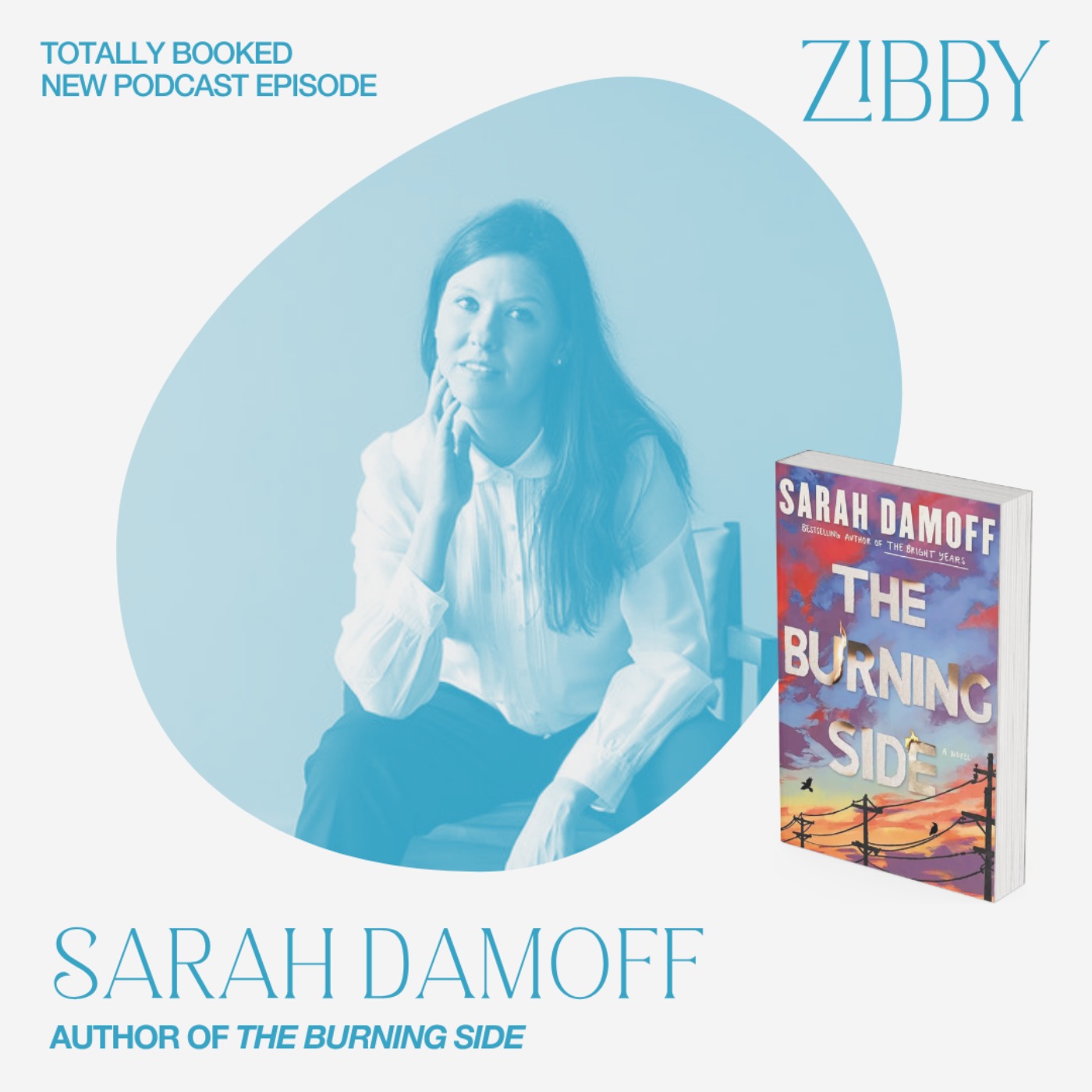
Today's episode is sponsored by Nutrafol. Do you know that feeling when you're brushing your hair and somehow it just looks a little thinner than usual, maybe a little less full? And you're like, what is going on here? Well, Nutrafol supports hair health from within, helping you grow stronger, visibly thicker hair so that those moments happen less often where you're worried about your hair. Nutrafol is the number one dermatologist recommended hair growth supplement brand. And it's the number one hair growth supplement brand personally used by dermatologists and by the way, personally by me. This is the brand that I trust. Adding Nutrafol to your daily routine is easy. Order online, no prescription needed, with automated deliveries and free shipping to keep you on track. Plus, with a Nutrafol subscription, you can save up to 20% and get added perks to support your hair health journey. So let your hair be one less thing to worry about. See visibly thicker, stronger, faster growing hair in three to six months with Nutrafol. For a limited time, Nutrafol is offering our listeners $10 off your first month subscription and free shipping when you visit nutrafol.com and enter promo code Zibby Z I B b y that's nutrafol.com spelled n u t r a f o l.com promo code ZIBBY. Enjoy. Hi, this is Zibbee Owens and you're listening to Totally Booked with Zibby. Formerly Moms don't have time to read books. In my daily show, I interview today's latest best selling, buzziest or underrated authors and story creators whose work I think is worth your time. As a bookstore owner, publisher, author and obviously podcaster, I get a comprehensive look at everything that's coming out and spend my time curating the best books so you don't have to stay in the know, get insider insights and connect with guests like I do every single day. For more information, go to zibbymedia.com and follow me on Instagram ibbeowens Sarah Damoff is the author of the Burning A Novel, which by the way, is one of my favorite books ever. I posted a picture of myself basically sobbing when I finished it. It is my book club pick for this summer and you can find information about that. I'll add it to the show notes, but also it's on Zivi Media under Book Club and you can join me in asking Sarah any questions you want. Sarah is the author of the Bright Years also, which was a USA Today bestseller and is being translated into 12 languages. She lives with her husband and children in Texas, where she has been a social worker. You have to listen to this episode. Welcome Sarah, thank you so much for coming on Totally Booked to talk about the Burning side. Congrats.
- [03:54]
Sarah Damoff
Thank you so much for having me.
- [03:56]
Zibby Owens
Zivi, I have to say, I posted as I know you saw after I finished the book, I was like sobbing on an airplane and I think it's one of the most popular posts I've ever done. Like I have like 200,000 people who are like saving it and wanting to read it. And I was like, okay, this is. This is it. The secret sauce. Like you write a book like this, you get people to just feel so connected to the characters and that's like the holy grail of books right there.
- [04:21]
Sarah Damoff
Yes. I think emotional. It's so interesting because people will just respond by telling me how hard they sobbed and I just kind of wait to. I'm like, I'm sorry slash thank you. I always want to give a big hug, but then people will always reassure. Like, no, no, it was good. It was cathartic. It's good to cry. Yeah. You know, most people.
- [04:43]
Zibby Owens
And it's not to say the book is sad because I feel like I'm spending a lot. There's a lot of attention based on people crying at the end. But it's not necessarily. It's not like painful and sad. It's just so moving. It's so beautiful and moving and it's just life itself passing by in a way. And that's not something you have to necessarily mourn it. You celebrate it, too. So I don't view this book as all sadness. Like there's so many moments of joy and connection and love and everything. But maybe we should go back because I could just go off. Why don't you tell us?
- [05:16]
Sarah Damoff
I want to thank you for saying that because that means a lot. I think that it's a heart opener rather than only a heartbreaker.
- [05:24]
Zibby Owens
Totally.
- [05:25]
Sarah Damoff
So thank you for saying that. Look at you.
- [05:26]
Zibby Owens
You just find the words. That's the other thing I want to say. Like, there were so many lines in here that were so beautiful. Like little pieces of poetry sprinkled throughout that I wanted to underline and I'll try to find while we talk. But they're just so beautiful. Like the way you see the world and the way you condense it into these succinct little missives that just shoot right into people's hearts. It's just really amazing. Thank you.
- [05:53]
Sarah Damoff
As an avid poetry lover, that is a gift to hear. So thank you.
- [05:57]
Zibby Owens
Okay. Well, I'm not surprised. Okay, let's find out more about you. First of all, the book.
- [06:01]
Sarah Damoff
Tell listeners about the book, of course. So the Burning side is a multi generational family saga. We open. This is not a spoiler. We open with a house fire. April and Leo and their two young kids just narrowly escape, but they lose their home. They are. They take shelter with April's parents. Nobody else knows except for them. Is that a few hours before the. The fire, they had decided to pursue divorce and everything was just kind of in shambles before the fire happened anyway. And then April's parents also have something they haven't shared with her or her siblings, which is that her father has recently been diagnosed with early onset Alzheimer's. So here we have two couples under one roof over this period of time, really, for one summer, where they are having to decide how to move forward and who to move forward with in two very different marriages, in very different stages of their marriage, with very different histories in their relationships and individually as people even going back to their families of origin. So really exploring all the interweaving of those relational dynamics and family relationships through the lens of specifically these two marriage partnerships.
- [07:17]
Zibby Owens
And where did this idea come from?
- [07:20]
Sarah Damoff
So about a year after my husband and I got married, which we're. We've. We're at 16 years now, so it was a while ago now. We moved in with his grandparents. His grandmother was sick and his grandfather was Healthy and his grandfather just needed some support in taking care of her. So I had this very profound, unique experience of being at a very early new chapter of my life and family. Sitting across the table every single night for about a year and a half. We live with them, with these two people who are at the very end of their story. There's really no way to put into words the profound challenge, sadness or profound beauty that came from that. I knew even at the time. I'm gaining some perspective here on the passage of time and the seasons that we go through and the changes that our families go through that most 24, 25 year olds don't get to have very up close and personal. And so the details were also different. But, but a few years ago I just was reflecting on that time and how interesting it was for me to experience that multi generational living where you just get close to people's stories in a way. There's no other way to do that other than being under the same roof for a while. And again, like I said, this daily struggle that was present with that, but also the moments of extreme beauty that wouldn't have otherwise happened. And so as I was reflecting on that, it just was too much of a story not to try to explore like how could I do this where I also have these characters under one roof together? And what they. How might that change their trajectory, you know, because I still think sometimes I don't know if it would or wouldn't have, but changed my own trajectory. We had our first child in his grandparents home and what might it have looked like? What different choices might we have made if we didn't have that experience? And so I really wanted to explore that with these four characters in the burning side. So that's kind of where that came from.
- [09:41]
Zibby Owens
And how did you pick the fire as the vehicle? Because obviously now there have been, I mean there are always many wildfires, but it feels like they're increasing every single day. Yes, and this is not a wildfire, this is a house fire.
- [09:55]
Sarah Damoff
But still, no, that's a great question and thank you for asking it. It was originally just okay, I need a tool to get them all under one roof at this kind of moment in crisis when they wouldn't necessarily pursue to all live together, they wouldn't necessarily choose that, but it's like all of a sudden they have no other choice. And even though, you know there's all this going on in their marriage, it's like the tyranny of the urgent, the priority becomes okay, we have nowhere to live. Right now we're homeless and we just need to. We for, you know, these parents slash in laws to go take shelter with. So it was the first, like, tool, I would say, that came to mind. But then as I began to write about it, it's an extremely powerful metaphor. Just what is the meaning of home? And a house is a. Is a very real and important part of that, but only a part. So there's more to it, you know, the meaning of home. And very interestingly, as I was about halfway through the first draft, is when the wildfires in LA happened and I was just completely sucked into, like, the. The interviews and the footage and the personal stories of what people were going through. And it only. And I know you're in la, I haven't talked to anybody in LA about this, so I know that's extremely sensitive and close to home. And I just remember feeling like this is so major. Whether you've lived in your home, it's your starter home, and you've lived there for a year and a half, or it's your childhood home, or. I mean, our material possessions, I think our homes first and foremost are like memory holders. And they all represent something to us, whether it's safety or danger or whatever it might be. They're. They're very. Our material possessions are just so powerful. This gateway to memory and this extremely important thing. And so the absolute devastation of the LA wildfires happening as I was drafting a book that opens with a fire, you know, really meant something to me in terms of I felt the responsibility to due diligence, even though that's not the main plot point, but it's in the background the whole time, because the logistics and the emotions that come along with, we lost our house, what are we going to do? And then, of course, you have the layer in the burning side of. And we're also losing our marriage kind of all at the same time. What do we do with that?
- [12:30]
Zibby Owens
Wow. Well, I'm not in LA right this second, but yes, like, our home was in the area and it survived, but so many people I know and care about their homes did not. And obviously just thousands in my neighborhood. And it's even more, I feel like, than just the possessions. It's like it is where you are rooted in the world. And it's so disorienting, even when we were just out of that house for a year, to be nearby but not feel settled. And I feel like that is what April and Leo also had. They can see it. It's like an hour away, basically, and they keep going. And also the way that you. And not to belabor the fire, because that's only just one small piece of the story, but it is an important piece because you also, you don't just use it as some like, literary thing. Like, we're in it with you. We're, we're every step of the actual, like, what happens this day, what happens that day? Who has to get involved? Like, do we, like, ensure, like the whole nuts and bolts of it. We're also here. And I feel like it actually is quite a gift to people who have lost their home. And especially because of the scale of that recently, like feeling seen in the way that, that April and Leo have had their lives uprooted. And the little things that you realize make a huge difference and just having that safe space. But anyway, yes, I talked to an
- [13:52]
Sarah Damoff
insurance guy, like a home insurance guy, because I just was like, you know, I can maybe read what my policy says, but I haven't experienced this firsthand. So what do you see and what actually happens? And you know, most of that, those details don't go into the book, but it informs, forms. What's the real life lived experience of people who go through this?
- [14:14]
Zibby Owens
And not to dissuade anyone who has been through this, I feel like if you have, this is even more relevant. But it is a background thing in a way. I feel the real story is the relationships. The way that you just like with a fine tooth comb, go through every little piece of, of history and present day interaction and feeling and resentment and dashed expectations, but deep love and oh my gosh, like, these people actually aren't real. Like, I had to keep reminding myself, how do you do that? Like, what is the dialogue and those little feelings? Like just the, and the tiny little shifts and the little moments and the little movements, even like all of it is all like in a painting or something, almost like in slow motion.
- [15:07]
Sarah Damoff
That's beautiful. I mean, can I just take you everywhere to tell people about me? Because it's just beautiful to hear you say that, especially because it's so much what I want. And you never know as a writer. Is this translating to the page? Is this what readers are feeling? So thank you for saying that's beautiful to hear that. I think there's a multifaceted answer to this. So first of all, something I did not realize until I became a writer, or I didn't realize how it had impacted the way I see and talk about things until I became a writer, is that I was raised by A single mom who was blind. And so I was describing the world to her. That was just ingrained. It was natural. It was my norm. And that included, like, I have so many thousands and thousands of memories of not only maybe telling her what the sunset looks like or a tree looks like, but also telling her, like, okay, those people ahead of us in the grocery store line, there's like some tension going on, like, really relational attention as well. And so I always will say that she taught me to see because she would always say I was her eyes. And I think that now that people have asked me questions exactly like what you're asking, I kind of realize, oh, that's not necess. Not everybody notices these little things. But it was ingrained in me, and I was taught how to see the world that way because I was describing it to someone else every day. So that has really come into my writing in a way I didn't realize was happening until it, you know, the books were out and people were asking me about it. And another thing that's. So both of my books so far are very character driven. The characters are really what I follow. I don't outline. I have characters in mind, and then I just kind of follow them on the page. It's so fun. It's like reading, but better because it's just, where will they lead me? And I might have an idea in my head, but similar to how we have ideas about people, when you get close to them, whether real or fictional people, you start to feel like, well, that actually that's not realistic, or that idea I had of wasn't. And so once I get on the line level on the page with them, they kind of reveal themselves, you know, and I did. I was a theater kid. And so it feels really similar to, like, getting a script and starting to ask questions about what is my character's motivation? Why would they. You know, to make it feel real. And so it's. I mean, sometimes I'll be working on a draft and I'll. I'll, like, get up and move around to think, like, what how would their face really look like? Or what would their body really do? Would they. You know, saying it out loud would. Just to test the reality of it. So, yeah, I think that's.
- [17:50]
Zibby Owens
Can we go back for a second to growing up with a single mom who was blind? Tell me more about where you grew up, what that was like. Was she always blind? Did she become blind? Did you have a relationship with your dad? Like, how did that work logistically? Tell me everything today's. Episode is sponsored by Quints. As you guys know, I am obsessed with quints. I've been talking about them for a while because I love the quality of the clothes, the fit, the price, really everything about it. My two latest finds, which I'm sure you'll see me wearing on Instagram, are this adorable white dress. It goes to the ankle basically and has a tank top on top. And I also got a jean jacket from Quince and I plan on wearing them together all summer long and I'm just super excited about it. Quince has always been my go to but now the fabrics just feel elevated. The fits are so flattering. Everything just works and I don't have to overthink it. Quince uses premium materials like 100% European linen, organic cotton and ultra soft denim. Maybe that's why I like it all so much. Their lightweight linen pants and dresses and tops start at $30 and are effortless, breathable and easy to wear on repeat. Everything at quints is priced 50 to 80% less than similar brands. It's amazing. They work directly with ethical factories and cut out the middlemen. So you're paying for quality and craftsmanship, not brand markup. Refresh your everyday with luxury you'll actually use. Head to quince.comzivi for free shipping on your order and 365 day returns. Now available in Canada too. That's quince.comzivi for free shipping and 365 day returns. Gwens.comzivi Today's episode is sponsored by Whatnot. Okay, so Whatnot is a live shopping platform where you can get items across all different divisions from beauty, apparel, bags and more. But what I have found is it is the perfect place to get kids birthday gifts. There are neatos for those of you who don't know, Neato's are these little plastic toys which are all the craze People go neato hunting anyway. They have neatos and squishies and everything you can imagine for better prices than competitors. There are great deals and it is so fun to shop in this dynamic interactive platform. My steals included a Jelly cat Heart for $5.38 and Jelly Cat Toasty Marshmallows for $9.89. Not to mention Anito for $6.26. I'm not surprised that Whatnot is the largest live shopping marketplace in the country because it's a trusted shopping experience in a real time format and There are over 10,000 fashion, beauty and bag sellers all over and you almost never Pay full price, which of course is amazing. So let me tell you, I had the best time with my kids going on whatnot. And then there were things for me too, but it was more fun for them, in my opinion. So download the whatnot app today and get free shipping on your first order. Just search whatnot wh a t n o t whatnot in the app Store and start scoring amazing deals.
- [21:08]
Commercial Narrator
With no fees or minimums on checking accounts. It's no wonder the Capital One bank guy is so passionate about banking with Capital One. If he were here, he wouldn't just tell you about no fees or minimums. He'd also talk about how most Capital One cafes are open seven days a week to assist with your banking needs. Yep. Even on weekends, it's pretty much all he talks about in a good way. What's in your wallet? Terms apply. See capitalone.com bank capital1NA member FDIC.
- [21:40]
Sarah Damoff
Okay. Wow. Okay. I am in Dallas now and I was born and raised in the Dallas area. And my. I did have a relationship with my dad. He left when I was 11, and I had a younger sister. So then my younger sister and I continued to live with my mom. She had a disease called retinitis pigmentosa. It's hereditary, it's genetic. There is no cure. So they chose not to test my sister or I for it because there's no cure. And my mom started going blind when she was 30, and that's about the time when she had kids. So she still chose to have kids and she was almost entirely blind. I mean, I remember being in kindergarten and that's when she like, had to give up her driver's license. Like, I have vague memories from being really small, being in the car with her and like hitting curbs and her being like, we're done with like, I can't do this anymore. It's not safe. So yes, she. It was a degenerative disease that runs in families, so.
- [22:50]
Zibby Owens
Wow. Oh, my gosh. That's a lot of responsibility though, on the kids. Right. On you and your sister.
- [22:57]
Sarah Damoff
It is. It's interesting too. There was a very mutually. I mean, my mom was still a mom to me and a good mom, but a kind of mutually caretaking especially, you know, once my dad was gotten really very mutual caretaker relationship there that I do know is different and unique than. And I knew at the. I don't know if I knew at the time, but like fully, you know, that it was just so different than maybe how my peers were living life. But yeah. Understand it more now. Especially as I have kids that are. I have three kids that are in the home and, you know, still young and just thinking sometimes seeing them at the same ages where I'm realizing, oh, yeah, like, I was helping my mom with XYZ at that age. So it definitely was.
- [23:43]
Zibby Owens
How old are your kids? Not to keep prying into your life.
- [23:45]
Sarah Damoff
No, you're good. I haven't had. I've never talked about this. So you'll be like the exclusive interviewer. I talk about my family. My kids are 10, just turned 13 and almost 15.
- [23:57]
Zibby Owens
Awesome. I have an 11, 12 and then two 19 year olds. The middle school years are quite interesting.
- [24:07]
Sarah Damoff
Yes, I know. Well, so we're kind of similar there with our kids.
- [24:11]
Zibby Owens
Oh, my gosh. Okay, back to the no. Okay. How did you become a writer? How did you. How did this start? And I also want to hear about the bright years, which I have to go back and read, and how that happened and how the success of that affected this book and give me a little more backstory on that. So you grew up, you were helping your mom, and then what happened? You went to college or what happened?
- [24:33]
Sarah Damoff
Yes, I did. I did go to college. I studied family studies and psychology. I started with education and then realized I really wanted to focus on, like, nonprofit. I had already started when I was like 17 years old, you know, from a broken family myself. I also lost my mom as a teenager and she had, yeah, died suddenly when I was 16. And so very like a year after that, I started volunteering with foster kids and foster.
- [25:01]
Zibby Owens
How did your mom die?
- [25:02]
Sarah Damoff
Heart failure.
- [25:03]
Zibby Owens
Oh, my gosh, Sarah. Okay, keep going.
- [25:08]
Sarah Damoff
So, yeah, I was. I had been, like I mentioned, I was a theater kid. It was pretty much my whole life. And after she passed, I really. I couldn't do that at the time anymore. And I was already teaching theater. And I realized, you know, how much I loved being with children. And so I really studied family studies specifically, like families in the community. I know some people are like, family studies is a degree. It is. It pretty much only qualifies you for nonprofit work, which is what I did. I worked writing curriculum. I worked in different facets of the foster care system. So I worked in residential treatment. After I was married. My husband and I were foster parents for a little while. And then I worked on the court side of foster care for about seven years until I just recently, a couple years ago, started writing full time. And really working with foster families for so many years from so many different angles is what led me to writing. To me, it's a very clear, like, through line of. I was working with families, and now I'm writing about families. Five or six years ago, I read a novel called Lost Children Archive. And it is about a family, and the backdrop is the crisis at the southern border, specifically with children. And because it sounds obvious, and I've been a reader my whole life, but I just had this moment of, like, anything I'm interested in or passionate about, I can take that to fiction. It was just this exciting, exhilarating thought challenge. And I joke with people. I had the right mix of ignorance and arrogance to then lead me to just decide to try to start writing a novel. So I didn't have any writing background or formal training and definitely did not know a single thing about the publishing industry, which was a whole other part of my brain and process to learn about. After I started writing, I had one manuscript before the Bright Years. I call it my learning Manuscript. I had too much to say in that manuscript, and so I kind of came to the end of it and realized I tried to write about foster care, and I'm very passionate about that, and I'm fine with people knowing that. But as a reader, I'm reading back over my own work, kind of thinking I'm telling people too much instead of just following the characters. But I loved just creative writing, and I will be doing it my whole life, whether it's published or not. I will always be doing that. And so a few months later, I sat down at the blank page and wrote what would become the Bright Years. And I said out loud, my only agenda is to tell a beautiful family story. I just felt like I had too much agenda in that first attempt at writing a manuscript. And so I took that all the way. I just was like, I had no idea. The Bright Years, one of the three main characters really struggles with addiction. I didn't know I was gonna write about that. I discovered it as I was going, and I think that was. It worked out a lot better than coming with, like, things I wanted to say. And it was freeing, too, because I was like, I can, through these characters, relationships, and what they go through, I can leave questions on the page. I don't have to answer them. I don't have the answers to all these very intimate, intricate, relational, dynamic type questions. I don't have solutions. But so many of these things we can all relate to. And to see bits of our own experiences or someone's experience that we might know in real life on the page is something beautiful about literature and about fiction and so that was. Yeah, that was how I came into this.
- [28:44]
Zibby Owens
Wow. Well, I think you nailed the beautiful family story, certainly from this one. What was the main basic premise of the Bright Years?
- [28:56]
Sarah Damoff
So the Bright Years began as the bright letters. It was fully told in letters. It did not say stay that way. It was going to be a mother daughter story, and it still is a mother daughter story. But the husband and father made himself, put himself on the page much more than I was expecting. I tried to write him off the page. And it was like everyone I've ever known or known about who has had any kind of addiction or alcohol dependence was like tapping me on the shoulder and saying, don't make me a stereotype. Give me a full story and a voice that in this, this is my story, too. And so the book is told in three points of view. It starts with Lillian, who marries Ryan, and they have Georgette, their daughter. And these points of view are not alternating so different from the Burning side. We are with Lillian for the first third, really almost half of the book. And then we hear from Georgette as she comes of age, and she has to make sense of what her. The intangibles that she's inheriting from her parents. So her father, by that point, is really struggling with addiction. Her mother had placed a child for adoption before, like, long before she got married and started this family, and she hadn't told anybody about that. And so Georgette comes of age, discovers these things about her parents and what they're going to mean to her, has her own experiences, losses, tragedies, and triumphs of those coming of age years, and has to figure out what her relationship with her parents is going to be. And with her, just life and love and all of that. And our last point of view that we hear from is Ryan in the bright ears. And their last name is Bright. And we span. We start with an opening where Ryan is a child, and then we skip 20 years. But overall, including that, we span 60 years. And we follow them through the decades and see what we just get real close with this family's journey and just see how parents really, how parents impact their children and how children impact their parents was, I think, the heart. You know, I always say it's like not everybody has kids, but everyone has some family context that we're born into that we have no say over. And we have to make sense of it as children. And then once when someone is a parent, they have to kind of figure out how and when will I share with the next generation with my children? Who I was before they were here and what might that mean to them? So that's very much at the heart and the core of the bright years.
- [31:25]
Zibby Owens
Oh, my gosh. Well, I love just seeing some of the threads or inspiration for some of this, you know, even down to the testing and, you know, the slow disintegration of memory as it aligns not to, you know, draw too straight a line. Obviously, the brain, creative juices flow and you churn out fictitious people and all of that. But even hearing where some of this may have come from is just absolutely fascinating. And I see why. You know, it's like you've almost lost a layer. Like, you're so in touch with the world and emotions and grief because you've had so much yourself and you can sense that it's, like, tangible in the book. And I think that's where the beauty of it really comes from. It's like that immediacy and rawness translated into beautiful prose. It's really original. And I just. You did such a good job. And this book is going to blow up. And if it doesn't, it's like the biggest travesty ever. But it will because it's so good. So, Sarah, I'm so excited for you. Thank you so much. I have, like, eight zillion more questions. I can't believe our time is up already. But to be continued at our retreat in January. Thank you so much for coming on and coming. Congratulations and bravo to you. Standing ovation.
- [32:38]
Sarah Damoff
Thank you for having me. Thank you for supporting the book and thank you just for who you are in the book world. It's really meaningful to a lot of people.
- [32:47]
Zibby Owens
Thank you.
- [32:47]
Sarah Damoff
Okay.
- [32:48]
Zibby Owens
All right. Thank you, Sarah. Okay. Okay, bye.
- [32:52]
Sarah Damoff
Bye.
- [32:53]
Zibby Owens
Thank you for listening to Totally Booked with Siby, formerly Moms don't have Time to read Books. If you loved the show, tell a friend, leave her review. Follow me on Instagram ippyowens and Spread the word. Thanks so much. Oh, and buy the books.
- [33:15]
Dr. Susan Swick
I'm Dr. Susan Swick, a child psychiatrist and the host of Talk About Able. This season, I'm talking with parents and experts about how we tackle the everyday challenges of raising kids. We'll get real about those pebble in the shoe issues we all face as parents and how to build resilience and community through our own experiences. Talk About Able Season 2 from Lemonada Media in partnership with Montage Health and their Ohana center for Child and Family Mental Health is out now with no
- [33:46]
Commercial Narrator
fees or minimums on checking accounts. It's no wonder the capital One bank guy is so passionate about banking with Capital One. If he were here, he wouldn't just tell you about no fees or minimums. He'd also talk about how most Capital One cafes are open seven days a week to assist with your banking needs. Yep, even on weekends, it's pretty much all he talks about in a good way. What's in your wallet terms apply. See capitalone.com bank capital1na member FDIC
- [34:17]
Sarah Damoff
pool
- [34:18]
Commercial Narrator
days call for cookouts and lots of laundry this Memorial Day at Lowe's, save $80 on a Charbro Performance Series 4 burner gas grill. Now just $199. Plus get up to 45% off. Select major appliances to keep dishes, clothes and food fresh. Having fun in the sun is easy with us in your corner. Our best lineup is here at Lowe's value through 527, while supplies last. Selection varies by location. See associate or lowe's.com for details.