← Totally Booked with Zibby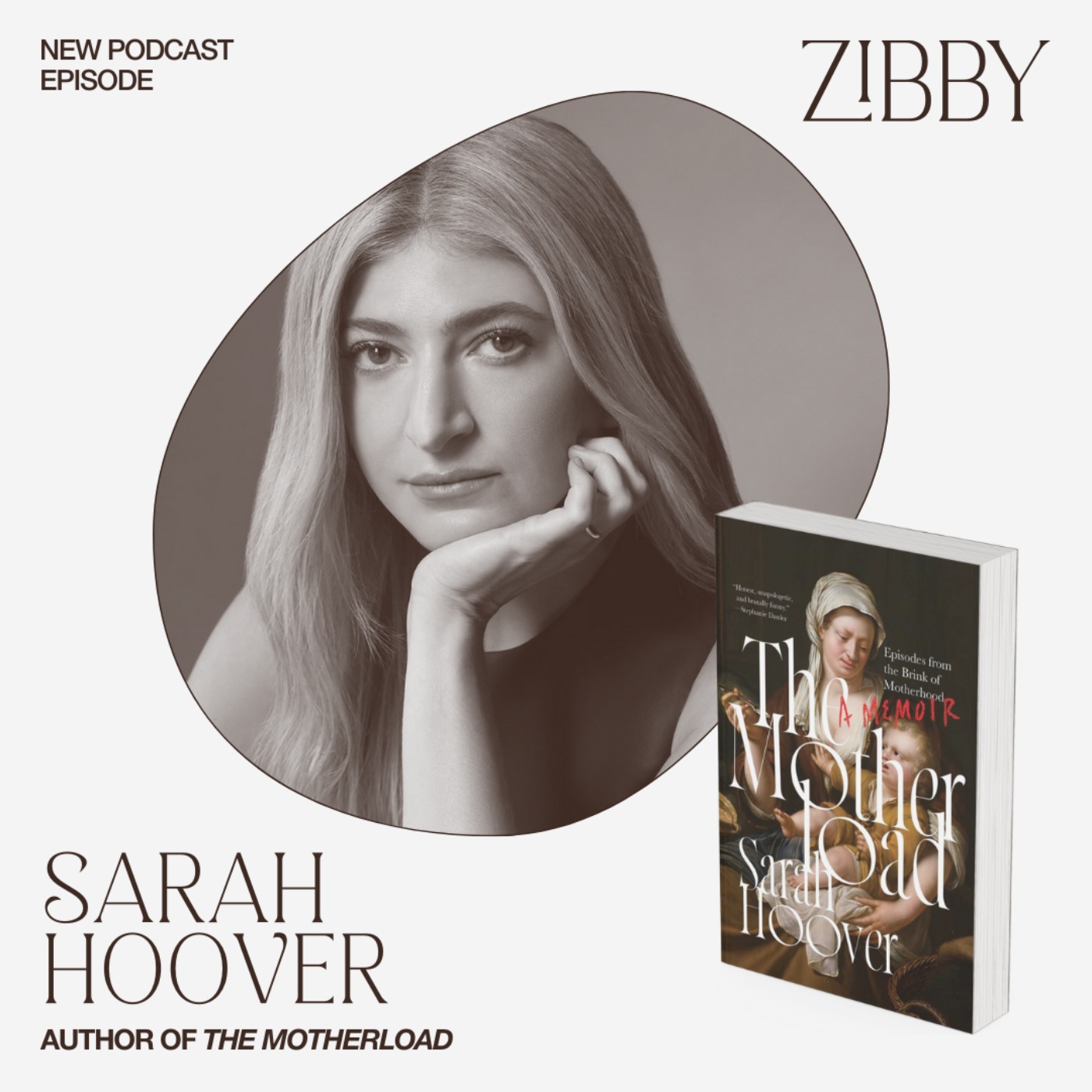
Totally Booked with Zibby
Sarah Hoover, THE MOTHERLOAD: Episodes from the Brink of Motherhood
00:27:22
Loading summary
Transcript59 lines
- [00:01]
Zibby Owens
Hi, this is Zibby Owens and you're listening to Totally Booked with Zibby, formerly Moms don't have Time to Read Books. In my daily show, I interview today's latest best selling buzziest or underrated authors and story creators whose work I think is worth your time. As a bookstore owner, publisher, author, and obviously podcaster, I get a comprehensive look at everything that's coming out and spend my time curating the best books so you don't have to stay in the know, get insider insights and connect with guests like I do every single day. For more information, go to zibbymedia.com and follow me on Instagram. Iby Owens Sarah Hoover is the author of the Motherlode Episodes from the Brink of Motherhood. Sarah holds a master's degree in cultural theory from Columbia and a BA in Art History from nyu. Her writing has been featured in Mother Tongue, the Strategist, and Vogue. The Motherlode is her first book. Welcome Sarah.
- [01:01]
Unknown Host
Thanks so much for coming on to discuss your memoir, the Motherlode Episodes from the Brink of Motherhood. Congratulations.
- [01:09]
Sarah Hoover
Thank you. Thanks for having me.
- [01:11]
Unknown Host
Oh my gosh. Thank you for this immersive New York art world meets postpartum depression meets mother daughter relationships story. It had so many elements of books that there are just like so many. Like, if I could make a checklist of things I am particularly into, it would be in your book. So.
- [01:32]
Sarah Hoover
Oh my gosh. I know. It's kind of the kitchen sink, right? Like, I didn't hold back.
- [01:37]
Unknown Host
You did not hold back. Okay, give. Give listeners like a general, a general overview of the story.
- [01:44]
Sarah Hoover
Okay, so I had my first child in 2017. I was working in an art gallery at the time, like a large international gallery, and had been working there for many years, based in New York. And the birth of my son, like, irreparably rocked my world as it does for everyone. But I had a total crisis of identity after he was born, and I had a arduous postpartum depression that lasted over a year. And the book is about my struggle, reconciling all of that. Like, I had. I'm one of three. I had known that I wanted a family, but I had no idea what that really looked like. And I had no idea what a first birth could do to a person and could do to their sense of self and their identity and their entire life. And it just totally shocked me. And it shocked me into this, like, miserable depression that stole a year from my life. And I just kept thinking to myself, I want to write A book that, like, I would have been helped by had I read it at any point in that process. And I just kind of like couldn't not write the book, you know, I felt really called to it. So it just kind of like poured out. And because it's true and it's about my life, it ended up also being a story of my marriage and my relationship with my mom, which I think are kind of like universal things that mothers struggle with. Because once you have a kid and you realize how you want to parent, it forces you to analyze how your own mother parented. And so, yeah, I bring in a lot of other things that I feel like we all kind of grapple with, but the story is primarily about my postpartum depression and anxiety. Did I do that?
- [03:20]
Unknown Host
You did that. Great. That was amazing.
- [03:22]
Sarah Hoover
Oh, it's scary to talk about your own book.
- [03:24]
Unknown Host
I know, right? Especially when it's your life. I know, exactly. Ask me about my memoir. I'm like, how do I sum this up in a sentence? Like, this is my life. Welcome to my life. I'll try to make it for you, but give me some grace since I'm living it still.
- [03:39]
Sarah Hoover
Yeah, exactly. It's ever evolving.
- [03:41]
Unknown Host
Well, let's talk about your marriage because that is an element of the book which is front and center and you go through many different phases. I actually really. Well, I shouldn't say actually. I really appreciated towards the end, and I feel like I don't want to give things away, but I don't know if that's okay in memoir. But whatever. You have sort of a decision making moment in the marriage and you confront or not, consult your two friends who have been like supporting characters in the narrative all along. And in this instance, they give you some perspective that we as the reader don't have either because we're in it with you, which is, you know, from the outside what it was like to be friends with you or to be married to you or whatever when you were going through this horrible depression and didn't necessarily know what to do or have it treated properly or whatever. So I thought that scene was so important to the book. And I feel like it changed sort of how you were thinking of things as well. So maybe just talk about the trajectory of that and maybe your friends input and how friends can help or hurt a relationship.
- [04:43]
Sarah Hoover
You know, I don't know if other people experience this, but like, especially in my 20s, before I had kids, before I felt like, I don't know, like I had as much of a voice as I do now. I was always, I had like, so much shame and so much embarrassment about how men treated me and what I was so desperate for a relationship always. I was like, so desperate for male validation, even when I felt secure in my career and secure in my integrity and the way I treated people and other things about myself. Like, I just always really wanted, like, a man to love me. And I thought that I hid that well. But looking back, I think that it was so apparent. And then I let so much behavior slide because of that sort of desperation. And I obviously would have made so much better dating choices had I not had that desperation. Like, I, you know, my life, my trajectory would have been really different. But I always thought that I was like a Oscar winning actress who no one could tell was like, secretly had my feelings hurt all the time. And when I reached the sort of turning point in my marriage after I had a kid where I had. I just didn't have capacity to raise a child and also feel like I had to deal with a husband who wasn't totally on my level and wasn't treating me the way I wanted to be treated. Like, for years I was willing to put up with any sort of love I could get. And then I got to the point where I was just like, I actually can't manage any emotional crisis that doesn't have to happen. And if my husband isn't supporting me exactly how I want to be supported, I. My brain's not capable. Like, I'm not smart enough to handle that and drop my kid off at school on time. Like, I don't, I don't have that ability. And I have to. The thing that I was willing to cut was my marriage. I was like, I got to the point where I was like, this isn't like an ultimatum for strategic purposes or for manipulative purposes, but, like, I think I'm done. I think I'd rather just be single than have to like, deal with a man, baby, or whatever. And I thought that I had hidden all the dark times so well from my friends, and they were like, no, no, no. Like, we saw it. You're not fooling us. And also, kind of every woman I knew was in the same boat as me. Like, we were all sort of putting up with BS from men because we were just so grateful to have a man be interested in us. And like, we live, you and I live sort of different New York City lives. But I think of, like, something that probably happens to all of us here is that like, your, your friends see you in public with your partner and. But a lot happens behind closed doors, you know, and I was surprised that they picked up on as much that was going on behind the scenes as they had. But they were just sort of like calling me out too and saying, you know, you're not, you haven't been easy to deal with and like, you should expect more from your partner. You should get the relationship that you want. But you also have to be willing to like see your own part and why things maybe aren't going the way you want them to. And I feel like I'm being really abstract because I don't want to give anything too excited away.
- [07:53]
Unknown Host
But yeah, no, no, I think, I mean it's, it's sort of heartbreaking to hear you say that because it's so true. Like there is a fundamental need in all of us to be loved. I mean that is a very human fundamental need and from an evolutionary perspective, essential so that we can keep species going. You know, it's ingrained.
- [08:16]
Sarah Hoover
And I also like, I remember in my 20s being like, I just want a nice boyfriend. Just like one time, can I just have a nice boyfriend? But like, unfortunately the culture that I was dating in like was not respectful to women. I think I follow like younger influencers and stuff who talk about dating in New York now. And I think things have shifted because women feel so much more empowered. But like in the early aughts I didn't experience life that way. I was just always, I was always like chasing someone. I always just wanted someone to pay attention to me, which is not a good way to date. Like you're never going to get treated the way you should be treated. And when I looked around, like the women around me were dealing with the same thing. So I didn't think to myself like, oh, you're doing this wrong. I was doing it the way everyone else was doing it. We were all getting ghosted. We were all getting like, you know, groped at bars and whatever. It was the culture of the time.
- [09:07]
Unknown Host
Yep.
- [09:08]
Sarah Hoover
Yeah, dark days.
- [09:09]
Unknown Host
There's also an easy not excuse, but it's always. And a friend just said this to me yesterday, you know, when I was asking her, how's everything in your marriage? Whenever, like we're really close and she was like, you know, it's fine. And then she was like, you know, I look at all these other terrible guys and I'm like, everything's fine. Right? Like there's a way, it's like this self protective instinct that like, well, it looks, you know, at least he's not that guy.
- [09:33]
Sarah Hoover
I mean, the thing is, like. It's like the w. No. And I also. Part of my depression was that I, like, lumped my husband in with every bad man I had ever met. I was incapable of teasing out the ways that he had, like, hurt me or that I had felt disrespected in our relationship with him from, like, the really bad guys who groped me in bars. Like, I was just. I was so mad at the world and so filled with rage, which was obviously, like, a protective instinct to cover up serious trauma and grief. But I hated everyone, so I lumped him in with all of that, and I just wasn't capable of getting to a place where I could be, like, we need to have a really honest conversation and, like, reset the boundaries of our marriage and reset what we want it to look like for each other. I just hated him. And, like, rage I actually think is part of, like, a lot of women. I think that's how their postpartum depression manifests itself, and they don't understand that. They just. It's, like, confusing because you do have reasons to be mad. It's really hard being a new mom. You know, there's a lot to feel is unjust, and so I would, like, feel really upset and mad about things and be like, but I'm right. Like, I'm not wrong. I kept thinking to myself, like, this is a rational response to a completely irrational thing that just happened to me. I'm not the crazy one. Everyone else is crazy for not saying what I'm saying, but I wasn't capable of, like, finding nuance in that or teasing out the different threads of it.
- [11:01]
Unknown Host
You referenced your past trauma, and in the book, you reference it throughout. Can you talk a little bit about that or do you feel comfortable?
- [11:10]
Sarah Hoover
Oh, I feel more than comfortable. I. It's like. It's actually, like, scary how easy it is for me these days. But, yeah, I mean, like, everyone. I've had, like, layers of trauma throughout my life. Ones things that I knew messed me up and things that I discovered along the way, like, oh, that actually messed me up more than I thought. You know, something that was, like, strongly traumatic. And that really, I think, played into the postpartum depression in particular, was how traumatic my birth was for me, and I have, like, imposter syndrome. Even saying that because everyone's like, oh, did you have an emergency C section? Oh, did you have preeclampsia? Oh, this. I'm like, no. Like, nothing went wrong, and it was still so freaking scary. Like, I Felt my doctor wasn't nice to me. She made me feel bad when I told her things hurt and that I was scared. She, like, kind of gaslit me. I told her that she broke my water after I had been given Pitocin, but before I had any form of pain relief, like an epidural. And it hurt like, it just did. I don't know why. I know I've learned since that, you know, your placenta doesn't have nerve endings in it. I can't explain, but it was a terrifying experience for me. And it physically hurt. And it left me, like, shaking and gasping for air. And I screamed. It was out of my control. And she looked at me and she said, I don't know why you're crying. I've done this, like, two other times this week, and no one else complained. And it just, like, broke me because I felt like this person who I thought was there to keep me safe was not actually concerned with my safety. She just, like, wanted to get the job done and wanted to get the baby out, but didn't care what that did to me in between. And. And I had gone in terrified. Like, I had gone in thinking something horrible could happen. Like, I was already a little bit depressed in my pregnancy, looking back. And one of the ways that depression and anxiety manifests for me is, like, extreme superstition. Oh, I don't know why I just got a thumbs up when I said that, because let me tell you, extreme superstition doesn't get you anywhere. And I was already, like, I could die today. And I was freaked out by everything. And just the way that I was treated in labor and delivery, it really, really broke me. Like, I went into some sort of medical shock, which I'm not naming it, that. Like, I've had that confirmed by doctors and therapists subsequently. And when it was time to actually push and the baby came out, I was just so shut down and so scared and so desensitized that I, like, couldn't find any emotion for him or curiosity or love or anything. And I had expected, like, a fireworks display inside my brain. And I didn't get that. And when that didn't happen, I was like, I think I'm not suited for this. And I'm horrible at being a mom, and I'm not. This isn't natural for me. And, like, I'm from the Midwest, from Indiana, and I was like, I really just don't fit the ideal that I grew up with thinking I was supposed to turn into. I'm, like, a bad mom and a bad woman if I can't even love my newborn. And that trauma, that trauma in birth, it also, like, it reminded me of other violations I had felt in my life. Like, reminded me of what it felt like to be disrespected by men. So it was really triggering, and it really messed me up for. It's. It's like the catalyst for a postpartum depression that was, like, you know, borderline. I was hearing voices and thinking my baby cried when he didn't, you know, eventually suicidal. And, of course, like any mental illness, it was a combination of things. It wasn't just that delivery. It was many things layered on top of each other. But that moment was when the wheels totally came off.
- [14:55]
Unknown Host
I'm so sorry.
- [14:57]
Sarah Hoover
You know what? Thank you. But I get to talk to women about this now as a job. That's such a dream. I will never tire of hearing women's birth stories and getting to, like, talk to you and have these conversations. It feels like a calling, and I don't think I would have gotten there if that hadn't happened. And it sucks, but it also feels like a gift.
- [15:25]
Unknown Host
Well, that's a really wonderful way to look at it. I mean, it's very healthy. Your therapist would be happy with that response.
- [15:32]
Sarah Hoover
I have a lot of time with her, so.
- [15:33]
Unknown Host
Yeah, you should bring that back as progress made.
- [15:39]
Zibby Owens
Today's episode has been sponsored by Wayfair. I don't know about you, but I am so excited to get rid of all the holiday clutter and make room for spring refresh in my own home and office. I trust Wayfair more than any other brand, and I'm probably their most frequent shopper because I decorated all of Zibby's bookshop on Wayfair and then all of the Zivi Media offices in New York City on Wayfair. Plus my own home. I am obsessed. Wayfair has stuff for everyone and everything. Think carpets. Think comfy poofs for kids. Think couches and tables and office chairs and cute knickknacks and everything you can need to make your space feel refreshed and cozy and wonderful. Plus, it comes so fast, and the prices are amazing. There's something for every style and every home and office. No matter your space or your budget, Wayfair will make it easy to tackle all your New Year's home goals with endless inspiration for every space and budget, whether you need a light refresh or an organization overhaul. So give your home the refresh it needs with wayfair. Head to wayfair.com right now, that's W A Y F A I R.com wayfair every style, every home.
- [17:08]
Unknown Host
You know, you could feel your resistance. I mean, you were quite open about it, about how you sort of ambivalence about being pregnant even from the start. And then how you couldn't quite wrap your mind around the fact that you were having a baby. And you're like, oh, okay, well, it's time. But I have this highlights appointment and I'm not gonna skip that. And the doctor's like, no, no, you're putting your baby at risk. And you're like, right, I know, but just my roots.
- [17:33]
Sarah Hoover
And it's, like, so delusional. I mean, telling you how, like, I was already out of body, you know?
- [17:40]
Unknown Host
Yeah, no, just. But I'm so glad you put some of these things in because people don't often wanna share things about themselves. Not that that's so bad. I'm just joking. It's like one thing, but the book as a whole. People often want to present a very scrubbed, lovely version of themselves. In fact, it's essential to their self image and who they are and their attempts at peace and stability and all of that. But you just go there in every way, showing the things you're not proud of, showing the things you are proud of, showing physical things and things that are out of our control as women and things that, I mean, you just, like, run the gamut here. So I have a lot of respect when memoirists do that because that is what the form calls for, to really connect. Right. But was that hard for you at all? Were there some pieces that you wanted to keep closer to the vest or some things you decided not to include? And has there been any blowback from people in your life as a result yet?
- [18:45]
Sarah Hoover
Okay, so I made a decision when I started writing the book. And I was like, I'm not gonna lie. Like, I'm not going to not share parts of my, like, things that I'm ashamed of because otherwise this is, like, a futile exercise. I feel that I sort of owed it to the story. And also, I have learned for myself that when I'm honest about things that I have shame about, like my looks or, I don't know, like, I should probably have gotten a nose job when I was 16. Whatever, it, like, takes away the power of that shame and it makes me more comfortable with those things that I have long perceived as being wrong with me. So I just made the decision. I was like, I'm just gonna talk about everything. That brings me shame. I understand why people don't want to do that. Like, the Internet is vicious and it's really, really vulnerable. And like, I'm terrified for my book to be out there. But I also was like, I don't really have a choice. I don't want to do this any other way. And if people hate it or hate me because of that, like, at least it's me. At least I know that I was. Emotionally, I can stand behind every feeling, every moment of shame that I put into that book. It's true. And like, I don't know, I don't think anyone's ever, like, wrong for being true to who they are, you know, but every. My. My husband, my mom, all the, like, main characters of the book have read it and have read many drafts and have read it since back in the day. And like, I feel really fortunate because everyone in my life, you know, I told my experience of interacting with them in this story truthfully too. So, like, some of their truth is exposed. And I feel really fortunate that everyone who has read it has been like, really just glad for me that I got to tell my tale. And like, my husband was like, you can make me sound worse than I am if you need to. Like, whatever suits the story. You know, like, they've. Everyone's been really supportive of that endeavor and really kind of happy for me that. Because it's obviously been very therapeutic. I mean, I have been in a lot of therapy before I just started writing. I had kind of like mastery of the trauma already. It's not like I was. It's not a journal, you know, it's. But I think, like, the people who are closest to me have been like, I'm just really glad that you were able to turn this trauma into something that might help other people and don't hold back on account of us. It's kind of been everyone's vibe, which is really generous.
- [21:10]
Zibby Owens
That is.
- [21:10]
Unknown Host
That's wonderful. I'm really glad to hear that.
- [21:13]
Sarah Hoover
That's.
- [21:14]
Zibby Owens
I felt so bad for your sister.
- [21:15]
Unknown Host
At different points in the book too, you know, with what she had to go through and. Oh my gosh.
- [21:20]
Sarah Hoover
Anyway, yeah, that's a worst case scenario, you know.
- [21:22]
Unknown Host
Yeah.
- [21:23]
Sarah Hoover
And like, once you've seen the story of it is that a sibling of mine had a stillbirth. And the. Once you've seen that and you know that that's like, when that happens. I had no idea. I thought like, people had miscarriages and that's awful. But I didn't know like a Stillbirth of a full term baby. I had no idea was a possibility. I know that sounds stupid, but like, I had never seen it in a movie. I had never read it in a book. If I had, I probably thought it was fictional. And once you know that that's a possibility, it's really hard to go into once you see that firsthand. It's really hard to have your own baby without thinking that, that like, without knowing that that might happen to you. And the statistics. I think it's like one out of 100 births. And in a late term still, it's.
- [22:10]
Unknown Host
Not one in 100.
- [22:12]
Sarah Hoover
Oh my God, I think it's one in 100.
- [22:15]
Unknown Host
Yeah, I hear about it so rarely. But anyway, thank you for including that as well. Anything that you felt like was too personal, is there anything you left out?
- [22:24]
Sarah Hoover
Oh, okay. Well, I didn't talk that much about my sex life and I don't think it was like conscious at the time that I was writing it. But it makes me want to write another book. It's so hard, you know, like usually when you read it you're like, oh, this is gross. Or like, this doesn't apply to me or whatever. It's a real like Sally Rooney does it so beautifully and there, you know, there are people who are nice and whatever. There are people who nail it. But like, I think I didn't feel like I could nail it. And also like, my dad's gonna read this and my mom. So I think I like shied away from it. But it does make me want to write another book.
- [23:02]
Unknown Host
Interesting. How old is Guy now?
- [23:06]
Sarah Hoover
He's seven. He's a big boy. But I had a baby about seven months ago. My second. Took me a long time to get there, you know, I had to write this book and then I ended up having to do IVF to have her. So I have a seven year old and a seven month old at the same time, which is kind of funny and feel like not that common.
- [23:23]
Unknown Host
I have that age gap too, by the way.
- [23:25]
Sarah Hoover
Do you really tell me.
- [23:27]
Unknown Host
I have twins now who are 17 and then I have an 11 year old and a 10 year old.
- [23:32]
Sarah Hoover
How do you have 17 year old twins? Yeah, like on what planet?
- [23:37]
Unknown Host
It just happened. It's just one day after another and now all of a sudden they're like turning 18 this summer. Yeah, I know, it's crazy, but yeah, I actually love the gap now. I love it. It's so great.
- [23:46]
Sarah Hoover
I had no choice, but I love how much perspective I have going into this pregnancy. This Birth. And now having this baby at home, like, it's just so different because I know that at the end of the most sleepless, hardest night, whatever, that I get the relationship I now have with my son. Yep. It's a totally different. Like, when I went into it the first time, I was just like, this is my life now and it's never gonna change. And I'm never sleeping again and I will never find happiness. And I don't even feel love for this baby. That, like, God forbid anything bad happened to you because that will crush me in a different way. But, like, I can't believe that I built that. I made this happen and it took away everything that I loved from my life. I couldn't work, I couldn't think right. I couldn't see my friends and go to parties. It took away my freedom, all this stuff. But, like, now I'm like, even in the worst part of having a little newborn or whatever, I get another chance. I get another little hymn someday. And I'm so excited because, like, he's my best friend, you know, there's like, no one I would rather spend time with ever in the history of the world. Like, sorry, mom, but that kid is my everything. And, like, I get another one. I feel so freaking lucky. You get it. You're a mom.
- [24:57]
Unknown Host
I totally get it. I totally get it. And I also did not want that much time in between, but this is the way the world works sometimes, so totally.
- [25:04]
Sarah Hoover
There you go. Right?
- [25:05]
Unknown Host
Lots of benefits now that this is the way it's played out. Okay. For new moms out there or for grandparents who have, you know, have a daughter or daughter in law who's just had a baby or have they have a new baby in the family, like, how can the loved ones of new moms be most supportive? And like, what do you want the new moms to know?
- [25:28]
Sarah Hoover
Okay. I think for loved ones, like, if you're talking specifically about postpartum depression, I would have gone to the ends of the earth to never let anyone know that I was depressed. Right. Like, if anyone asked how I was, I was like, full Indiana cheerleader all the time. Like, great, everything's wonderful. I love my baby. Like, so I don't think anyone's going to, like, straight up tell you that they're depressed. I feel like it's women's default to just be polite. But I think, and this is like, unrealistic because of the way health care is set up in our country, obviously. But I think, like, every pregnant person should be in therapy. It is the first time, especially because it's just such a drastic change to your life and it's so limiting and it's so nerve wracking. And it's really hard when you're like in a depression to know that you're in it while you're going through it. Right. So I think being in therapy is great and postpartum too. But for people in your family, I think if they sense that something's wrong, it likely is wrong. You don't have to have a lot of postpartum depression to have it really mess with your life. You don't have to get to the point where I got to have it be incredibly disruptive and unhappy. Mothers cannot be good mothers. They can be trying as hard as they can be, but it requires joy and humor to really excel at being a parent. And you just can't have those things if you're depressed, you know. And so I think if you're like looking at someone and they seem different and they seem unwell and they seem like they're hiding something or faking it at all, like, it's likely way worse beneath the surface. That person needs help and there's so much help out there. Like, I was really resistant to going on meds and I finally did and I felt better in like three days. It was incredible. It was like I had such stigma about them, you know, and it was so easy once I finally could admit to myself that something was wrong. So I think for like family members and close friends just really keeping an eye on people and knowing that they likely won't be fully upfront truthful for pregnant women themselves. Like, something that really helped me was complaining because for a long time I was afraid to complain and I was like, I don't know, I mean, I feel like complaining is almost like gendered the way like nagging is or something where like, as a woman, you feel guilty about it. Certainly as a woman with like, like, I'm so lucky. I have a lot of, you know, resources in my life and I felt very guilty about complaining. But like, actually it's really, really good to not be ashamed of that things aren't going right for you and that something doesn't sit right for you. And like, you have to be able to put words to those things. So just like being like, I'm going to complain, I'm not going to be embarrassed and I'm not going to like shut my mouth because I feel rude was really the first step to get me to be like, wow, I'm complaining a lot. I should probably go to therapy. Wow. My therapist thinks I'm depressed. I should probably consider meds. You know, like, becomes a snowball effect. So, like, you're allowed to complain. It's okay.
- [28:13]
Unknown Host
I love that. Sarah, thank you so much for coming on to discuss the Motherlode. Congratulations on the book. I wish you all the best with your launch and everything that comes, and I will be following along.
- [28:26]
Sarah Hoover
Awesome. So nice to meet you. I'm really honored to be here. Thank you for having me.
- [28:30]
Unknown Host
My pleasure. All right, bye.
- [28:32]
Zibby Owens
Thank you for listening to Totally Booked with Zibby, formerly Moms don't have time to read books. If you loved the show, tell a friend, leave a review, follow me on Instagram, ibbeowens and spread the word. Thanks so much. Oh, and buy the books.