← Totally Booked with Zibby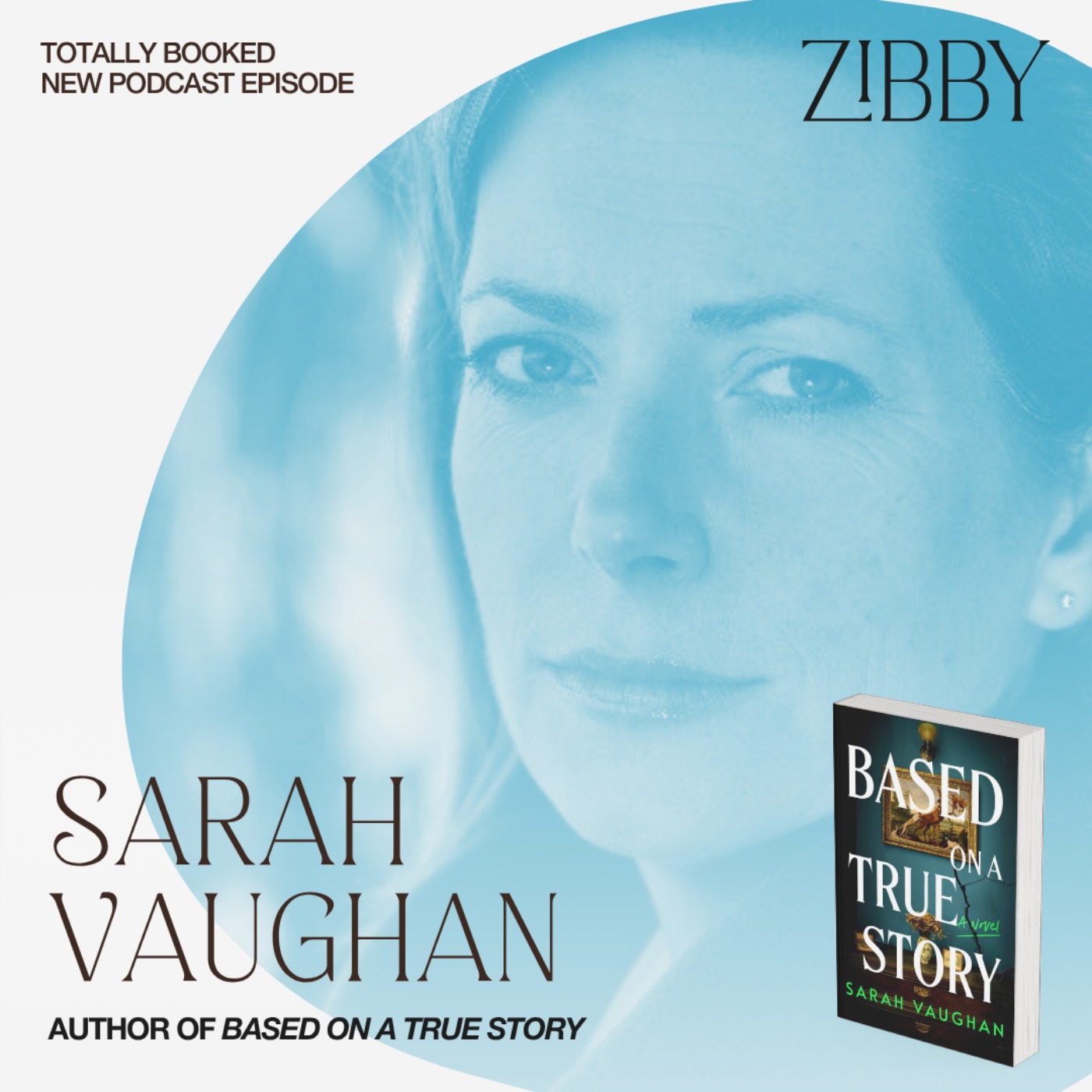
Totally Booked with Zibby
Sarah Vaughan, BASED ON A TRUE STORY: A Novel
00:21:47
On Family, Secrets, and Bestsellers
Loading summary
Transcript31 lines
- [00:01]
A
Welcome to Totally Booked. I'm Zibby Owens. I've interviewed more than 2,000 authors on this show and learned endless amounts about storytelling, reinvention and life itself. Because when you talk about books, you're really talking about life. So get ready to hear from today's best authors, the best selling and the not yet discovered. Come find your next great read and the story behind it. Enjoy. Sarah Vaughan is the author of Based on a True A Novel. Sarah is the Sunday Times and internationally bestselling author of Anatomy of the Little Disasters and Reputation, plus two earlier novels translated into 26 languages. Anatomy of a Scandal was a Richard and Judy book of the decade and a global number one Netflix limited series. Then Little Disasters was a number one Paramount plus series while Reputation is being developed for TV. Before writing fiction, Sarah spent 15 years as a journalist, including 11 at the Guardian as a political correspondent and news editor. Brought up in Devon, she lives near Cambridge, England with her family. Based on a True Story is her sixth novel. Welcome Sarah. Congratulations on Based on a True Story. Welcome.
- [01:18]
B
It's really lovely to meet you and I'm sorry I'm not in person. I'm not your party in person. I really regret it.
- [01:24]
A
Another Time. There will always be another time. Tell listeners what Based on a True Story is about.
- [01:29]
B
So Based on a True Story is a psychological drama about power, lies, money and family narratives. It starts with a body found on a warm storm lash north Cornwall Beach. Best selling children's author Dame Elena Kingman has gathered together her family and friends to celebrate her 70th birthday party and her latest number one bestseller. But somebody's been sending her emails threatening to unmask her and the narrative she spun for half a century. She's got a TV arriving to produce what she assumes is going to be a really glowing documentary, and she's sort of determined to sort of unearth her nemesis before they get to her, you know, so it's kind of about, it's about power like my previous books were, but in a domestic setting. Kind of a feminized King Lear and it's kind of a Christie for an Instagram age. I wanted to write a bit more of a puzzle.
- [02:18]
A
Amazing. Amazing. Well, as you mentioned, wealth and career and power and all of that come into play. And you start off with Eleanor, you know, saying that to Ned, one of the other characters in the book, you know, Ned, do you even know what it's like to be hungry? Like can do you ever. Have you ever felt that? And then we go on to much later in the book where she's like, wait, hold on, I'm just gonna read this, this passage, if that's okay. Is that okay?
- [02:41]
B
Oh, it's perfect. Okay.
- [02:43]
A
She says Eleanor is furious and hurt. If she is entirely honest, she's hurt. All anyone wants from her these days is money, an open checkbook, or rather bank transfer. That's how she is perceived. So. So there's a huge trajectory there with the characters. Talk a little bit about that and even the effects of fame and trust.
- [03:03]
B
Yeah. So Eleanor is probably the same thing over in the States. You're a boomer. So she was born in 46 and she is part of. My parents were both born in 46 as well. And she's part of that generation who have over here, through education, through the welfare state, through free grants, has been able to go through massive social mobility, property prices have also. So she has, in a way that, you know, Gen Z and millennials now don't feel that they can. You know, she has managed to accrue wealth. She's also managed to do it through her own talent. So she's come from very humble background and she has completely reinvented herself through her skill, through her writing. She's. She's got an ex husband who has come from a much more moneyed background. He's the son of a judge. He's kind of been at Cambridge, which is kind of like your Ivy League, and she hasn't done that. And she's more of a grafter. I mean, she's gone to a very good London university. But she'. While he's been writing beautiful literary novels, she's been writing stories for women's magazines. She's really sort of pulled herself up from her bootstraps and sort of reinvented herself and amassed, you know, she sold 40 million books, she's got four properties. She's really. She's a success story. But she is also. She's. She never has. She's. She's always kind of conscious of that hunger of her roots. And I was really struck actually talking to actually a late neighbour who had had quite unsettled childhood, you know, bailiffs at the door and things. And he'd been very wealthy later in life, but his wife said to me, he never forgot that sense of being unsettled, you know, and moving on from one property to another. So property became a form of security. So we see that with Eleanor. She has kind of reinvented herself. And it's kind of slightly surprised me because some people have. She is narcissistic you know, she's a difficult woman. I was interested in writing an older woman who was. Who wasn't necessarily nice all the time. You know, it was because I think actually to have succeeded as a 70 year old in that world to smash those glass ceilings, she's had to be quite ruthless. And that's something that as a sort of people pleasing woman, middle aged woman, doesn't come very naturally to me. But actually I think is to be admired. But yeah, so she's had to do that and yeah, it was just. But she's always got this, her daughters say about her, you know, she sort of uses out of date milk or you know, saves the heels of bits of Parmesan which they can't understand that frugality. But I think if you've probably come from not having that, you're always slightly conscious about hunger. So I wanted. That was one of the things I wanted to explore. Yeah.
- [05:39]
A
So interesting. You also have someone quite threatening who is sending her emails and I was wondering if you had gotten that email address from Google. Because if you have not, you better go do that like right now.
- [05:52]
B
It's actually a line from a Shakespeare book play. So it was. It's a line from. There is lots of sort of literary Shakespearean allusions throughout particularly it's a kind of. I say it's a feminized layer, but that's quite lightly done. Hopefully there are little bits of Macbeth in there and so it's actually a line from. I think it's Troilus and Questa. Yeah, so. So maybe I should go and nab it.
- [06:13]
A
Do you think that's what I'm saying, you should go and nab it. Absolutely. But anyway, she is getting these threatening things and you keep alluding to what is lurking in her and all of that and you give us little clues and then at one point later in the book you say, well there's a good plot twist for you or something like that. I was like, oh my gosh, how funny is that? But then you have this part here and I'll. Can I read one more little tiny section? You said? Let's face it, she thinks as he pours lapsing. Why did I pick apart. I can't even pronounce lapsing. Suchong her even greater fear. Beyond him remembering this and revealing it is that he has lied about no longer possessing the manuscript. There has only ever been one version of her unpublishable first novel hammered out on a Remington Idol typewriter because she didn't have the resources to make a second. The thought seems unimaginable, but it was perfectly normal in those pre digital times. When he rejected it, she was so grief stricken she refused to take it back. And then he claimed it was lost. It didn't matter, she told herself. It was unreadable. A baggy mess of pretension, more of a confessional than a novel, and not entirely honest. Based on a true story. Her first attempt at rewriting her life. Besides, it was all her fault. She knew his office was notoriously disorganized and chaotic. Only during the legal action, she became convinced he had retained it as a form of collateral, that he was intent on playing the long game. Interesting. Oh, my gosh.
- [07:37]
B
It's so fascinating seeing the bits that you picked out, because I haven't been asked about these questions before. So it's really fascinating seeing the bits that resonate. And it makes sense that, you know, as you as a writer and a bookshop owner and CEO of all of this, would be picking on the bits about writing stories and, you know, the plot twists and the little asides. I think it's quite interesting. I just interviewed Evelyn Clark on their tour in the uk, and I think it's really interesting that we're all getting. We're all interested in the art of writing and we're creating books about the act of writing. Sounds a bit meta, but I mean, I think that's. I think that's what, what we're all trying to do. We're all trying to understand ourselves as we write. And so it made sense to make a character like that. Anyway, I'll stop interrupting you about to ask a question.
- [08:20]
A
No, no, I mean, just talk a little bit about this notion of the first draft that is in the, you know, what can happen with what we create at different parts in our life. And I think that in today's day and age, with AI and all of these things, like, what does it say about us that we have IP essentially that we haven't released and it's there and can be used against us, but whatever, like, who owns what? I don't know. Just talk about this whole thing of the. Of the unpublished.
- [08:51]
B
Well, I thought what's so interesting is that in that era. So we're talking about. She's in her 20s, so she's. Now when she, when she, she creates her first novel, which is, you know, first novels tend to be quite sort of confessional, don't they, I think. And she hadn't disguised it very well. And her agent kind of says it's a bit of a spoiler here, but, you know, that's unpublishable. And I think you might be kind of betraying something that might have happened. Dum, dum, dum. If we, if we do publish it. So we know that she's kind of. There's effectively a confession, I mean, in that novel. But of course, in the days when she wrote that, that's pre computers or pre, you know, computers being widespread. So it is a typed out document. And I spoke to authors who were, you know, writing 40 years ago or whatever, and they did say, you know, yes, we didn't make, we didn't photocopy them. That was it. You know, you heard of people losing their copy. So that is. That is one form that hasn't been altered or changed from a computer, has it? Whereas, you know, if you look at all my drafts, they kind of all merge into one really. And you'd be quite. Just clearing out a cupboard actually earlier. And I found I'm writing the script at the moment and I, I'm trying to work out how many drafts I've done and I've done at least seven. But I was kind of looking at all the different iterations of it, you know, like had this great. And I printed them out because I am old school as well as obviously them being. But, you know, they, they may only have shifted subtly from one draft to another, but they're constantly being altered. Whereas back in the day, if you had that physical one copy. I suppose that's one interpretation. But she, I think towards the end of the book, she also talks about as a quote about, isn't that what every writer tries to do? Rewrite their story and sort of become a better version of themselves? And I think I was really interested in Nick exploring that. I'm sideswiping your question about AI because I don't feel, apart from being absolutely terrified about AI, I don't feel equipped to answer that in a pithy way.
- [10:36]
A
No, that's okay. I don't know. It's been on my mind lately.
- [10:38]
B
Yeah, well, it's terrifying, isn't it? My boy put into chatgpt write an opening chapter in the style of Sarah Vaughan, involving a character with his name and his girlfriend's name. And it was scary how quickly something came back which didn't. Which wasn't quite me, but it was a thriller and it did involve those. And he put in the idea and, you know, I was a bit furious that then now got my idea in it, you know. But yeah, it Was quite. It was quite scary. Yeah. But I have to hope that actually the novels with Heart at the moment, you know, you can still detect. But I think the problem is it's going to get more and more sophisticated, isn't it?
- [11:20]
A
Yes. Okay, well, we can just table that conversation. Well, you mentioned the script you were writing and you've had like, blockbuster hits with previous novels, Paramount plus and Netflix and Anatomy of a Scandal and everything. I mean, it's just amazing what's gone on when you sit down to write another book after that. And I'm not sure exactly when this book began versus when those aired and everything. Does that make you nervous? Does it. Do you feel like you're trying to write for screen now or like, how do you.
- [11:51]
B
So I think they're very distinct beasts. And I, you know, Anatomy of the Scandal was auctioned in February 2018. It had come out in February and it came out as a book in the January. And when it was auctioned, I'd already had my first novel optioned, that is my third novel, and nothing had come of it. And I knew very much that lots of books get optioned and I think there's only like a 5% chance that it's ever going to be made. So it's very much like, take the money, you know, it's a nice little extra. Probably nothing going to happen. Don't get your hopes uptight. But obviously Anatomy did get made and that was obviously life changing. And I would say that the fact of the scripts have influenced my writing a lot, but I don't write with a view to things becoming scripts. So, for instance, when Anatomy was. The scripts were being written, the filming was actually delayed because the pandemic happened. So it was meant to start filming in June 2020 and actually started at the beginning of November. So that meant that I was an executive producer and I had a lot more sort of sight of different drafts of scripts. And I really felt I learned from reading the David Kelly scripts, really learned from reading them. And I was writing Reputation, which is my fifth book, while I was reading them. And I know that that influenced my writing of the book because I saw it sounds really naive, but I think my books translate quite well to screen because I write multiple points of view and I have strong female characters and I have a really strong sense of place. And so I think I hadn't realized that those are all things that producers really like and obviously quite a lot of plot. And so when I was writing Reputation and I was looking at the anatomy scripts, I was consciously thinking, okay, that bit of London's really pretty, or I had shorter chapters, or I switched points of view more often, or I ended up on a cliffhanger a bit more often. So that sort of influenced reputation. And, you know, it would be disingenuous to say that when I was writing this, I wasn't thinking, okay, corn will look really pretty. And I have a. I've got a ticking clock. I've got. I really tried to make this quite propulsive. You know, I've got a sense of threat in the sort of B story involving Tom, the. The son in law. And I've got lots of different strands that are sort of going to be quite complicated. I mean, people have said it's a slow burn, but I think it kind of speeds up towards the end as they all kind of get woven together. So I was sort of consciously thinking that as I was writing that. Having said that, I think the books. So two of my books, Anatomy and Little Disasters, have become TV shows. And Anatomy is very faithful, I would say. Although Sophie becomes the more. She becomes like a detective, she's a more prominent character. But with Little Disasters, we needed a lot more plot. We had. Although there are four women in it, in the book, it's kind of a duo that are really important. And we kind of expanded the arcs of all four female characters and we also changed the villain, so we altered that a lot more. I say we. I mean, the writer did, but I was an executive producer and okay with it all. So, yes, they're both. So I think very much of the books and the shows as distinct entities, even though NATOM is very faithful to it. And I think that's a positive thing. And I'm not writing a book thinking this has become a TV show, otherwise I would just be writing it as a script to start with, wouldn't I? I think it's a sort of distinct thing, but obviously it's really lovely if it finds a bigger, much bigger audience, if it's. If it goes on tv.
- [15:15]
A
And what compelled you to start writing to begin with? Like, why do you write and what does it do for you emotionally?
- [15:21]
B
Oh, I think. I mean, I think you're not meant to. I think this might be a line in the book as well. I think you're not meant to use it as therapy, are you? But I think I've certainly exercised formers in my. In my writing. I've drawn on a lot. I mean, when I finished writing the first draft of Anatomy, I'm on the record of saying This I realized that I was sort of working through a section of thought I'd experienced in my early 20s that, you know, had happened at party. And I told her a school friend, male friend, I'd gone with, and he didn't believe me. You know, I think I need to go to the police. And you know, it wasn't a rape, but it was horrible. And you know, I realized that after I written Anatomy, that's what I was dealing with and little disasters. I didn't realize until I finished the first draft and I'd given it to my then editor that I was writing about what we then call maternal ocd, but now you call perinatal ocd, which I had after I had my second baby, you know. And so I think the two really sort of major things that really impacted on me, my life I've kind of obviously worked quite through, but I think I've always. When I was a child I wrote, you know, I wrote stories like When I was 10, I won Devon Young Writer of the Year, which actually was a. Which is just my sort of local county, but it was actually they gave me £75 in cash and £50 in book vouchers, which was, you know, you could get a book for a pound in those days. I bought all the Judy Blooms and, and leatherbound set of Jane Austen's that my mum insisted I buy. But then I. In my teens I was quite academic, so I didn't write. I stopped writing. I just did sort of schoolwork, went to university, read English. Did not occur to me at all that I could write a novel because I went to Oxford and the course is very traditional. You didn't have to read anything after 1832. You just sort of bear wolf and so. And I was also reading lots of literary. I was reading, you know, Martin Amos, Ian McEwen and Graham Swift. So I kind of thought that fiction was something that was written by older men. I mean, sounds awful but you know, I hadn't really discovered commercial women's fiction then at all. And. And then I. But I knew I wanted to be a journalist, so I knew that I wanted to write, to write for a career. So I had a, you know, at 23, I went off to be a journalist, did a journalism course and then had a staff job at that. And then it was. Wasn't until I was forced by a difficult second pregnancy during which I couldn't walk to take voluntary redundancy. At five years of trying to freelance as a journalist and hating it because something called the Internet had come along. And so, you know, it was suddenly very. I mean, I think you probably know about this, being at home with little children, you know, your identity has completely changed, your confidence has completely changed. I was pitching ideas and being told by people, you know, 15 years younger than me or 13 years younger than me that that wasn't a news story, and I knew it was. Or them trying to pay me less than the NUJ rates because they could get away with. I thought they could get away with that, you know, so it was very, very unsatisfying. And I ended up writing, you know, little pockets of time where, while my son was at nursery, when I should have been writing my feet, my articles that weren't selling. And I ended up standing up at my 40th birthday, which was the same week that my youngest started primary school, and someone said, what are you going to do this year? And I said, I'm going to write a novel and get it published. So that was. That was my real. So I think I'd had a real. I knew I had to get a proper job, another job, and I sort of negotiated my husband. I said, look, I've. There's still a bit of redundancy money left. You know, I'm not getting any of these features written, published. You know, can we just manage for a year with me, you know, not buying any clothes? Not. And. And I think I've got this really good idea. And so I did it. I mean, I think it's like, at 40, you have to. I was listening to a podcast, I think it was one you did with Elizabeth, day one of your sessions, and you were talking about how your 40s. I mean, look what you've achieved in your 40s, I think. But I mean, I think it was a real sense of. Okay. I mean, you know, my kids were 4 and 7 when I started writing my debut. So you still slightly feel you're like you're in the trenches of that sort of, you know, you have to be there for them all the time, don't you? But actually, it's been a decade where I learned to write and I think, well, this is my sixth book and, you know, I've been a lot slower than I'd like to be, but I've had a couple of TV shows and I'm trying to write one as well. So, yeah, it's been an exciting time.
- [19:35]
A
Oh, my gosh, amazing.
- [19:36]
B
But I think we do. I think we do reinvent ourselves, and I think I brought a lot of that to Eleanor, actually. The cat you know, my character, that she has had to. She's been a. I'm not a single mom, but she was a single mom, and she has had to adapt and be resilient, and she has had to think, okay, I want to write. I've got little children, so I'm going to write stories for children because I don't like reading Roald Dahl. He's really sexist. So I'm going to write my feminized version of this in the 80s, or I'm going to write the sort of things that I think women like me would want to read to their children. So she's very practical, and she hasn't got time to write a beautiful literary novel. She's going to write children's stories, and she's then immensely successful.
- [20:13]
A
Amazing. Oh, my gosh. Well, I love how you structured the book. I love, as you mentioned, the multiple perspectives and even how some people's perspective came in later. Like, it wasn't an even. I'm going to alternate and keep it throughout. But it's like, oh, okay, well, now we're going to this perspective and look at this. And oh, my God, I think I
- [20:30]
B
know what twist you're talking about then.
- [20:32]
A
Oh, my gosh. Anyway, so that was. That was quite interesting. Anyway, I found the book to be so propulsive, and I am embarrassed to say this is the first book of yours that I've read, but now I have to go back and read the previous ones because it's just so immersive. I just. It's hard to put. It was hard to put down. And lots of really interesting themes layered on with family and daughters and marriage and betrayals and, you know, control. I mean, there's so much in here, we could talk all day. So, anyway, Sarah, congratulations on Based on a True Story. And it was a delight to talk to you.
- [21:07]
B
Lovely to have you. Lovely to have you. Love me to speak to you. So thank you. That's the best response for somebody to say, oh, I need to go and read one of your others. That's. That's. Yeah. We didn't talk about siblings, did we? Or motherhood or anything like that.
- [21:19]
A
I know. There was so much more. I don't know. I don't know. Anyway, part two to come. I don't know. All right.
- [21:25]
B
Nice to meet you.
- [21:26]
A
Lovely to meet you. Take care. Okay, bye.
- [21:27]
B
Bye.
- [21:28]
A
Thank you for listening to Totally Booked with Zibby, formerly Moms don't have Time to Read Books. If you loved the show, tell a Friend, leave a review. Follow me on Instagram, ibbyoans and spread the word. Thanks so much. Oh, and buy the books.