← Totally Booked with Zibby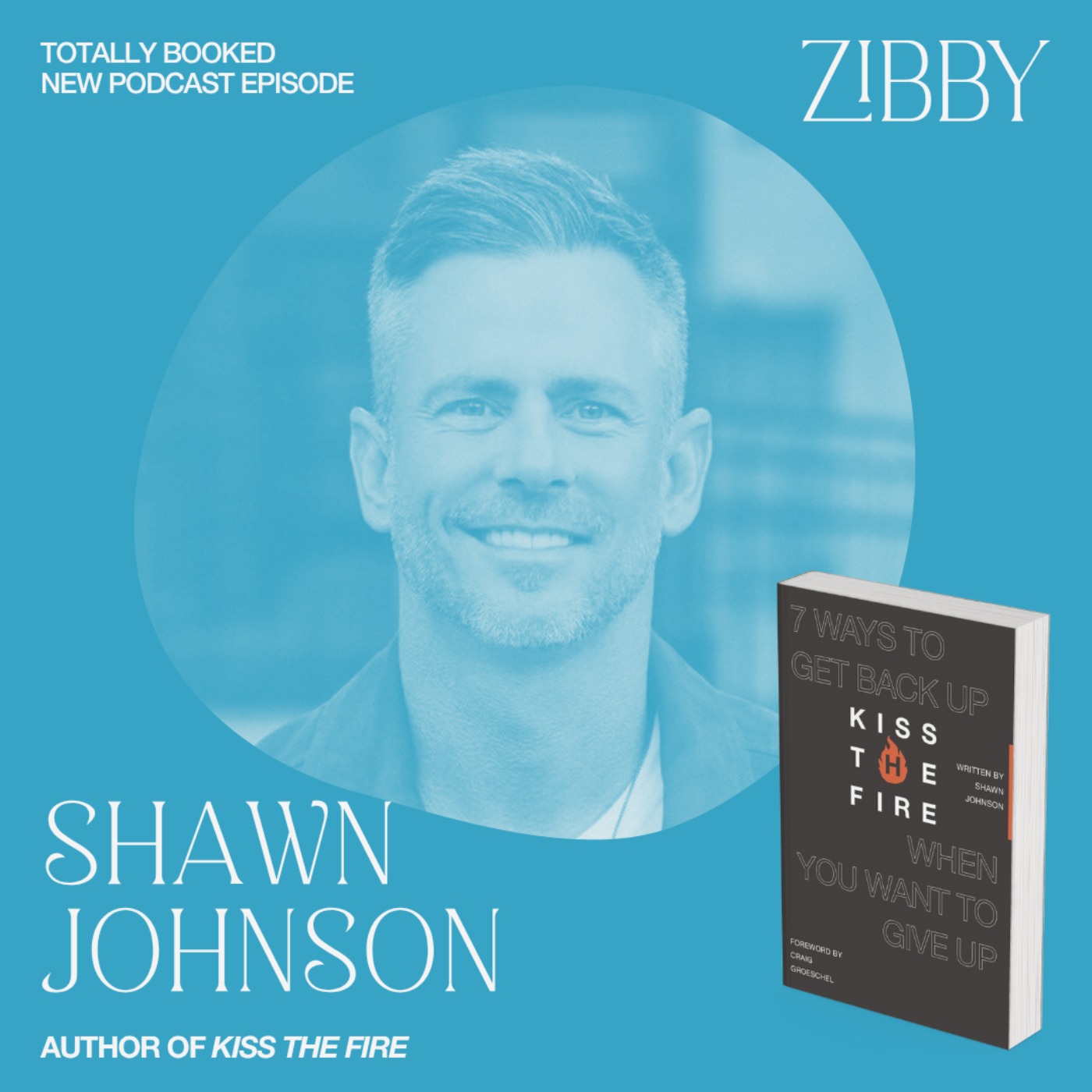
Totally Booked with Zibby
Shawn Johnson, KISS THE FIRE: 7 Ways to Get Back Up When You Want to Give Up
00:25:20
Loading summary
Transcript89 lines
- [00:00]
A
Ready to order?
- [00:01]
B
Yes. We're earning unlimited 3% cash back on dining and entertainment with a Capital One Saver Card. So let's just get one of everything. Everything.
- [00:09]
A
Fire everything. The Capital One Saver card is at table 27 and they're earning unlimited 3% cash back.
- [00:15]
B
Yes, Chef. This is so nice.
- [00:18]
A
Had a feeling you'd want 3% cash back on dessert.
- [00:20]
B
Ooh, tiramisu.
- [00:22]
A
Earn unlimited 3% cash back on dining and entertainment with the Capital One Saver Card. Capital One what's in your wallet? Terms apply.
- [00:29]
B
See capitalone.com for details. A PSA from Instacart. It's Sunday, 5pm you had a non stop weekend. You're running on empty and so is your fridge. You're in the trenches of the Sunday scaries. You don't have it in you to go to the store, but this is your reminder. You don't have to. You can get everything you need delivered through Instacart so that you can get what you really need. More time to do whatever you want. Instacart for one less Sunday. Scary. We're here.
- [01:01]
A
Tonight's meal, Tilapia Surprise with boiled cabbage. Begin cooking steps 1 through 50 now.
- [01:06]
B
Are you kidding me? Making dinner shouldn't feel like doing a thousand piece puzzle. With Blue Apron's new one Pan assemble and bake meals. The hard part's already done. Pre chopped ingredients, zero stress. Just assemble, bake and enjoy. No complicated steps. No mountain of dishes. Try assemble and bake today. Get 20% off your first two with code APRON20. Terms and conditions apply. Visit blueapron.com terms for more. Hi, this is Zibby Owens and you're listening to Totally Booked with Zibby, formerly Moms don't have Time to Read Books. In my daily show, I interview today's latest best selling, buzziest or underrated authors and story creators whose work I think is worth your time. As a bookstore owner, publisher, author, and obviously podcaster, I get a comprehensive look at everything that's coming out and spend my time curating the best books so you don't have to stay in the know. Get insider insights and connect with guests like I do every single day. For more information, go to zibbymedia.com and follow me on Instagram ibbyoens. Shawn Johnson is the author of Kiss the Fire and Attacking Anxiety. Sean serves as lead pastor of Red Rocks Church, a community he and a small group started in 2005 in Denver, Colorado. Red Rocks Church is a single church with multiple locations. Sean is passionate about seeing people transformed by the word of God and making heaven more crowded. He and his wife Jill, have three active sons, Ethan, Austin, and Ashton. So when they're not at church, they're usually watching or playing sports. Welcome. Sean, thank you so much for coming on. Totally Booked to talk about your book, Kiss the 7 Ways to Get Back up when youn Want to Give Up. Congratulations.
- [02:58]
A
Oh, thank you so much. Thanks for having me on your podcast.
- [03:00]
B
You're welcome. This is one of those examples of when the right book comes into your life at the right time. I recently lost my stepfather, and I was in those first two weeks and barely opening mail and all this stuff. And this is the only book, and it came in and I was like, oh, I could use a book like this. And I read the whole thing. I couldn't even focus before this book, and I read every word and I was like, I just have to talk to him now. So thank you for coming on.
- [03:26]
A
Thank you so much, and I'm so sorry for your loss.
- [03:28]
B
Oh, thank you very much. Thank you. Tell listeners about your book. I know this is your second book and you write about the first book in here as well, but take us to now, maybe take us through the first book, how we got here to this one, and. And why we're even talking.
- [03:44]
A
That's a lot.
- [03:46]
B
And then we will be done. Okay. I'm kidding.
- [03:48]
A
Sure. So. So the, The. You want me to talk about the first book first?
- [03:52]
B
Sure. Well, why don't we do this? Tell us about this book and what inspired you to write it.
- [03:56]
A
Yes, for sure. Okay. So about three years ago, I was at a doctor's appointment with my wife, and I thought I had a pinch nerve in my left arm, and they had been doing some scans around my head and neck to see what was going on. And, and just to our utter surprise, we were told, you don't have a pinched nerve. You have a incurable brain disease. And, you know, obviously incredibly shocked and not, I don't think anyone ever thinks, like, that's going to be my story. And so I had no intention of writing about it. In fact, my. My agent called and, and about, oh, six months, a year after my diagnosis and was talking to me about my last book and said, hey, you know, we'd love to work with you again. Would you like to write again? And I said, I don't really think I can. You know, I told him about this diagnosis and that we'd been having kind of a hard time and, and he asked me if I'd be interested in writing about it. And I said, no, I wouldn't. And then after a while, I just kept thinking about it, praying about it, and I just felt like, you know, we all go through tough times, and if. If I can write about going through a tough time and some things that I believe have helped me get through it thus far and that could help someone else going through a tough time, then I thought, well, that'd be something really worthwhile. So. Yeah. So that's kind of how I arrived at deciding to write about this topic, was getting that diagnosis, going through all the emotions of wanting to give up on, you know, kind of everything. Faith calling, career, some days, life. And. And, yeah. And then feeling like. And I think I've learned some great lessons along the way so far, and that my last book was about anxiety, but it was more of a. I went through this crazy season of life and kind of wrote it from the perspective of having gotten through it. The difference with this book is, is it's written from the perspective of I'm. I'm still in it. Yeah. Yeah.
- [05:59]
B
Oh, well, first of all, I'm sorry that this diagnosis entered into your life at all. You've handled it with such grace. I mean, to turn it into a book like this, to share your innermost feelings. I mean, you really take us to you just totally despairing, wondering about, why is life worth living? And then show us how it is possible to work your way through. I mean, in such detail. That's. And I know that you get a lot of pleasure, in a way, from having told your story, because in the book, you then share with us how it is when you share your story with even more people. And then how it's this whole cycle of connecting with others, and you tell the story. Maybe you could tell it now, which is one of the most powerful, when you were saying you couldn't do your job anymore as the pastor at Red Rocks, because how could you inspire people when you're so broken? And your friend, well, why don't you tell the story? I think you know what I mean.
- [06:53]
A
Yeah. About six years ago, I started having really bad panic attacks and couldn't get them under control, couldn't figure out why, Tried to hide it for a long time. I had been dealing with anxiety and depression for quite a while, but I really hadn't told anybody the depths of it. I was just. I was embarrassed. I felt weak. To be honest, I kind of felt like a hypocrite, too. Like, how can I be a pastor and talk about, like, peace and Joy. And yet I'm having a hard time finding either. And so it's just a really hard thing for me to process. And then the panic attacks got so bad that I couldn't hide them anymore, and I finally had to leave work for several months. And I actually checked myself into an inpatient anti anxiety treatment center for several weeks and went through a bunch of counseling and therapy and childhood trauma and all kinds of very helpful things. But I was talking with a counselor and it was like, okay, I need to go back to work. And I was talking with my counselor and I said, I don't know if I can. And he said, well, why not? And I said, well, I'm not fixed yet. And granted, I was so much better and healthier and stronger than I honestly ever thought I would be, but I still was very aware of how broken I was. I wasn't having panic attacks on a regular basis anymore, but still dealing with anxiety and depression at certain times and taking medications and still doing counseling. And so anyways, I said, yeah, I'm just. I'm not fixed yet. And then he asked me this crazy question. He goes, okay, if. If you were God, and it was his church, which obviously it is anyways. But he, you know, he's being facetious. He said, you've got two guys that you were going to pick from to run this church. He said, would you want the. He said, one of the guys is like, almost perfect. Like, he's just great at everything, really. Has no struggles, no issues. He's so good that he hardly ever even needs to talk to you. Or he said, you've got a broken guy and he knows that, like, his only shot at being able to do this job is to rely 100% on you and be in constant communication with you and lean on you. He's like, which one would you want running it? And I was like, huh? I was like, I probably want the broken guy. And then he said something that was so profound. He goes, yeah. He goes, sean, God only uses broken people because what other kinds are there? And it was, you know, sounds simple, but it was really very profound and helpful to me. And I just had to get to a place where I could go, hey, I can be a pastor and tell people that I'm really broken at the same time. And it was really interesting. I went back to the church and I told him everything. I told him about the anxiety, the depression. The depression, the panic attacks, even the occasional suicidal thoughts. And I kind of thought, well, the church is probably going to crumble. Because like, who wants that guy to be their pastor? And I said, at the end of the talk, I said, hey, you know, I'm way better than I was. I'm still definitely broken, you know, but if you'll have me, I'll still be your pastor. And I thought the thing was going to fold. And I think the church doubled. It was the craziest thing. Like, I didn't see any of that coming. And what I learned is, is that when we're willing to share, like, our struggles, it actually really helps us connect with people. And I think for me, people in the church seeing me admit all my brokenness and mental health issues, I think was pretty freeing for a lot of people because they went, oh, well, then, then I guess I could talk about my issues. Then I guess I can be broken too. Then I guess I don't have to hide my stuff. And so it was interesting. It was not what I thought was going to happen. I didn't see it coming, but I learned a lot from it.
- [10:43]
B
Oh, wow. Well, it's really powerful and inspiring. And when you tell us about the man who came by who was having suicidal thoughts and confessed just to you, and then you circle around later to show us how well he's doing, I mean, it really gives you goosebumps to read. In addition to sort of laying out your own journey through all of this, you do spin things around to give us some actionable tips that we can all use and take home. And I really love the story you told. I mean, I think your power is in these little vignettes and stories that teach so much. When you were weightlifting, can you tell that story when you were weightlifting and your buddy said, you know, you didn't know you needed help?
- [11:24]
A
Yeah. So, you know, I was in the gym one day and I was working out, and a really good friend of mine who actually helped us start the church that I work at, he was working out. We weren't working out together, but we were both in the gym. He was probably about 15ft away. And so I don't know. For guys, I feel like even when we're not working out with people, if we know that we know people in the gym, we're always kind of checking out how much they're lifting and am I stronger and how do I measure up and all this kind of stuff. So I was about to do this decline bench press, which is kind of this almost inverted upside down bench press apparatus, and I put too much weight on it. I didn't ask for any help. And I knew I should have, but I just wanted to appear stronger than I was. And I did a few reps, and then I couldn't lift the last one up. And this particular machine, your head is closer to the ground than your feet, so if you can't lift it up, it kind of just starts to come down towards your neck. And I'm like, oh, great. I'm going to choke myself right here in the gym because I didn't ask for help. And this stranger comes over and picks up the weight for me and gets me out of the jam. And then I looked over at my friend, and he looked over at me, and I said, bro, I almost died over here, and you didn't even help me. And he's like, I didn't know you were struggling. I would have helped you. I didn't know you were struggling. And I thought, man, that's how I had been going through life for a long time with my anxiety and depression and mental health issues. I was surrounded by people who would have loved to help. They just didn't know I was struggling. And so I think, you know, for me, I kind of at the time thought it was almost not heroic, but. But honorable to keep it to myself, because, like, I'm protecting my friends, I'm protecting my family. They don't have to deal with my issues. But what I was doing was suffering in isolation, and it was almost to my detriment. And so there's a lot of freedom in finally admitting to people around me how bad I was hurting. And then you find out, wow, you really are surrounded by some really good people who would love to help you.
- [13:33]
B
Wow.
- [13:36]
A
Ready to order?
- [13:37]
B
Yes. We're earning unlimited 3% cash back on dining and entertainment with a Capital One Saver Card. So let's just get one of everything. Everything.
- [13:44]
A
Fire. Everything. The Capital One Saver card is at table 27, and they're earning unlimited through percentage.
- [13:51]
B
Yes, Chef. This is so nice.
- [13:53]
A
Had a feeling you'd want 3% cash back on dessert.
- [13:56]
B
Ooh, tiramisu.
- [13:57]
A
Earn unlimited 3% cash back on dining and entertainment with the Capital One Saver card. Capital One, what's in your wallet? Terms apply.
- [14:04]
B
See capitalone.com for details. For adults with Crohn's disease or ulcerative colitis symptoms, every choice matters. Tremphya offers self injection or intravenous infusion. From the start, Tremphya is administered as injections under the skin or infusions through a vein every four weeks, followed by injections under the skin every four or eight Weeks. If your doctor decides that you can self inject Tremphya, proper training is required. Tremphya is a prescription medicine used to treat adults with moderately to severely active Crohn's disease and adults with moderately to severely active ulcerative colitis. Serious allergic reactions and increased risk of infections and liver problems may occur. Before treatment, your doctor should check you for infections and tuberculosis. Tell your doctor if you have an infection, flu like symptoms or if you need a vaccine. Explore what's possible. Ask your doctor about tremphya today. Call 1-800-526-7736 to learn more or visit tremphyaradio.com.
- [15:07]
A
When the flu is keeping you up at night, don't try to tough it out. Knock out your flu symptoms with Nyquil Intense Flu. You got this. It provides powerful relief of your flu.
- [15:17]
B
Symptoms so you can sleep well through the night. Nyquil Intense Flu. The nighttime sniffling, aching, aching fever. Best sleep with a flu medicine.
- [15:26]
A
Use as directed. Keep out of reach of children.
- [15:32]
B
In the book, you talk about these mornings where it's hard for you to get up, where you're just. And from a chemical perspective, I guess your disease does something interacts with the brain in such a way that dopamine isn't produced at enough, at high enough levels. And so you literally are waking up depressed. It's not just like, I mean, I was gonna say it's not just in your head, but it's all in your head, but you know what I mean? And how sometimes you have to wait and see what the day brings and then you're so feel so lucky that you can get out of bed and all of that, but that you didn't know what it felt like to be so depressed you literally physically couldn't get out of bed. Can you just talk about that and how, how you can even push through that little bit to be open to the positive experiences of the day?
- [16:14]
A
Yeah, it's interesting. I've never been a morning person. My wife is a total morning person. And so, but part of this, this brain disease, it's, it's a degenerative disease. And so as parts of the brain are trying to degenerate, one of the things that is happening is it's not producing dopamine. And so there's so many things that dopamine does. It helps you when you think about wiggling your fingers, it allows you to do that without really thinking. But it is also sort of the feel good chemical. And so I take medicine four to five times a day right now to keep dopamine at a certain level. But when I wake up in the morning, obviously I haven't taken it overnight. And so I wake up at a deficit. And so I remember one of the doctors was like, so you should just kind of plan on feeling really down when you wake up. I was like, oh, awesome. Yeah, so it's definitely not a great way to start your day. The first thing I do when I wake up in the morning is take medicine, and then, you know, it usually takes about 30 minutes to an hour before it starts to kick in. And so. Yeah, so. So each day for me right now kind of starts as far as feelings go, with a bleh. And so that definitely is something that I've had to learn to. You got to push through that, because I got to. You know, I do want to go live today. I do want to go be a dad and a husband and a friend, and all the things that I love doing, I just have to remind myself that they're really worth doing, and I.
- [17:44]
B
Need to start well. Amazing. When you share some of these tips and what you've learned and how the rest of us can sort of harness the good in the world and the optimism and, you know, really just take advantage of each day, even when we're feeling low, what is the one thing that you feel has either helped the most or that we need to take away? Like, what is the. I know there are many, and you outlined seven tips and all of the rest, but if someone's listening and they're having a worse day than they can imagine, what is it that they need to take away from. From your story?
- [18:24]
A
Gosh. Someone just asked me recently, because I do have a crazy story, a crazy upbringing as a child. They said, you know, we just. It's a friend, a podcast. He said, I know your story. I know you've went through these different trials. You know, how do you not give up? One of the things that life has taught me is in that choice to not give up. I always find that when I look back that it ends up that God attached some sort of purpose to that pain. And by not giving up, you get to eventually see what that purpose is, and that there's so much peace and joy and fulfillment in life when you experience that. Like, man, I like I made a difference in someone else's life. Like, that kind of purpose is very energizing and makes life really exciting. And so, for instance, you know, when I. Six years ago, when I was in that anxiety counseling center, there was a time when I Thought, I'm not going to make it. I'm not going to get out of here. I'm never going to be normal. And I did get really suicidal in their feeling. And so, yeah, so I was in that counseling place and really did want to give up. And then I got, like I said, ended up coming back, told the church about it. And as soon as I did, we started getting all these messages from people saying, thank you so much for talking about it. And one of the most touching ones I actually put in the book was from a moment, and I think her daughter was about 12 when she wrote me. And she said her daughter had been suicidal, dealing with suicidal thoughts since she was like six. And they were a part of the church, they were doing counseling. She just couldn't find any, like, anything to hold on to. She never felt like she was making any progress. And somehow the mom came across my talk at the church when I was admitting how broken I was and really describing what my panic attacks felt like. And. And this little girl said to her mom, oh, gosh, I'm getting choked up. Little girl said to her, mom, mom, I finally found someone who understands me. And you know, the mom then finished this letter with, she now has some. The daughter has so much hope and doesn't want to die anymore and wants to fight for her life and her future. And it's just things like that that you go, wow, like, not giving up in the middle of really hard times is what allows you to really help people on a different level if you're willing to just not give up. And I think I've just learned that enough. And to be honest, that's probably even a better answer to one of your earlier questions. Why did I write this book? That was me going, I'm not going to go through something really hard and not try to attach some purpose to it.
- [21:10]
B
This is sort of a flip on everything. Everything happens for a reason, right? This is like the corollary to that, yes, it will all yield purpose later. You know, as I was reading, every so often you would reference that things had been hard for you in the past. And in one chapter earlier, early ish on, you talked about a difficult relationship with your stepfather. And then I kept thinking, okay, well now this is going to be the chapter where he tells us what happened to him. And I kept going to the next one. I'm like, no, still no, no. And then you would get us get close and then you'd, like, pull back. And then it wasn't until almost the end where you Just had like a couple, maybe three lines. And you were like, I had, you know, an abusive past or this or that. And that was it. So not to pry. You obviously made a choice.
- [21:54]
A
You're welcome to.
- [21:55]
B
But do you. And then I was like looking on you. I'm like, what happened? Like, what happened? And was it in your first book? And can you share a little bit more? Do you mind? I know it's like a very personal, painful past.
- [22:07]
A
I think I. You know, that's a good point. I hadn't thought of that. I shared a lot of that detail in Attacking Anxiety the first. And so my mom had me. My mom was a 17 year old heroin addiction when she had got pregnant with me. And when the biological father found out, he moved to another state, never to be seen again. And so I've never met him. And then she was just really struggling and heavily addicted to some really bad stuff and a scared teenager. And so she took me in a little car seat and put me on a stranger's porch with a note attached to me saying, please take care of him. And. And she went and jumped off of a bridge into oncoming traffic on a highway to take her own life. And so she ended up not dying. Just crushed so many bones in her body and bad stuff, but she ended up not dying. And when I was 2, she married her drug dealer. And so, yeah, so I just grew up in this just very kind of volatile, fearful, dysfunctional environment.
- [23:14]
B
Oh, my gosh.
- [23:15]
A
Yeah.
- [23:15]
B
All right, well, I'm so sorry and I'm definitely gonna get that book, but my gosh, so much trauma before you could even process. That's a lot. Now it seems like you've created this idyllic family with your three sons who are all in the church. And it sounds like just like a TV show family. What you've made out of your life.
- [23:37]
A
I can promise you we're real messed up, like everybody. But I love my wife and we do have three boys and love them like crazy.
- [23:45]
B
Yeah, Amazing. Where do you want this book to go? How do you want this book to get out in the world? What is the big game plan? What happened last time that you want to repeat?
- [23:58]
A
You know, I never intended to be an author. And in fact, if I didn't have a really good friend who helped me write, no one would read anything because I'm not that eloquent. And he makes it sound like I understand the English language and so fine.
- [24:14]
B
You're totally fine.
- [24:15]
A
I never really had any big plans to try to like, be well Known or sell X amount of copies. I really just thought, like, I'm going to do my best to be honest about what I've been through. And I really hope it gets in the hands of somebody who's hurting and that it helps them. And like, that's. That's it for me. And so I'm doing whatever the publisher tells me my ability.
- [24:42]
B
You're like. And that's why I have to talk to you this afternoon. Something else planned?
- [24:47]
A
No, no, not at all. I just. You know, the thing I actually hate about releasing a book is talking about it.
- [24:55]
B
Oh.
- [24:55]
A
And it's really hard for me. I don't. Like, I just. Because I've just never wanted anyone to think, like, oh, he's a kind of check me out guy. Or like. Or, you know, I've always had a. It's weird. And I think it's weird for a lot of people. When you see people at church kind of selling products and things, you kind of wonder, like, that's kind of sketchy. And are they. Do they care about people? Are they trying to make money off selling things or do, you know. So it's a weird thing because I feel like this book can help people, and so I want them to get it. I just don't want to talk about it. And I know that's awful. And the publisher and friends who do this are always like, well, you have to. And so I'm trying to get better at that. If it was someone else's book, I'd have no problem telling you all, you know, I just, you know, I. And so that's been the hardest thing for me, is promoting it. Because on autopilot, I would rather not do that. I would. Rather than magically just get it. And if it's helpful, awesome.
- [25:53]
B
Yes.
- [25:54]
A
But that's not how the world works.
- [25:56]
B
And so that is how authors want the world to work. Though I would say 99% of authors feel the same way. If only. Haven't I done enough? Just read the book.
- [26:07]
A
And so. No. So I am doing the best I can to take advantage of people like yourself who are interested in talking about it, because I do want people to get it, because I think it'll help. And I know what it feels like to go through really hard times and want to give up. And because I'm a pastor, you know, I am the person that a lot of people call when they're at the end of their rope. And I'm also the person, unfortunately, that family members call when someone has taken their own life And I've done too many of those funerals, and I felt it too many times for me not to try to do something about it. And so that was another big reason why I wanted to write this was I just know what it's like to feel like you're at the end of your rope. And the more I've been honest about that, the more I've talked to so many people that are like, me too. Me too. Me too. But they never felt like they could admit it. Yeah. So my plan is to listen to the publisher, because this is their world. And I'll try to do, to the best of my ability what I can to help people hear about it, because I do think it'll help.
- [27:10]
B
Well, I have to say, you know, I'm Jewish. I'm not. You know, there was a lot of scripture and Jesus references and everything. And I'm, like, just gonna go along with this.
- [27:21]
A
Like, take what helps. Yep.
- [27:23]
B
But, you know, it just goes to show, it doesn't matter if we all. If you believe in something, if you believe and you have sort of a guiding light in your life and you want to help other people and you want to connect and the most vulnerable, authentic emotions that we all share, like, this is the way to do it. You put yourself out there and all the fighting and, you know, this. That. This. God that, I mean, doesn't matter. It's about who we are and how we get through this one life that we get and how great that you model that we can all just help each other and whatever we believe in. So I think that's great.
- [28:05]
A
Well, thank you so much.
- [28:07]
B
You're welcome. Okay, you're done. You don't have to talk about it anymore. Goodbye.
- [28:11]
A
Go.
- [28:11]
B
Have a nice day.
- [28:12]
A
I'll talk about whatever you want.
- [28:13]
B
No, no, I'm good. All right. Congratulations on just, like, the monumental effort of getting all these dark feelings down and inspiring feelings up. So, thanks.
- [28:25]
A
Oh, thank you so much. Thank you.
- [28:27]
B
You're welcome. You're welcome.
- [28:28]
A
Appreciate it.
- [28:28]
B
All right, take care. Good luck.
- [28:30]
A
Have a good day. Bye.
- [28:31]
B
Bye. Bye. Thank you for listening to Totally booked with Siby, formerly Moms don't have time to read books. If you loved the show, tell a friend, leave a review, follow me on Instagram, ippyowens, and spread the word. Thanks so much. Oh, and buy the books.
- [28:54]
A
If you love to travel, Capital One has a rewards credit card that's perfect for you. With the Capital One Venture X card, you earn unlimited double miles on everything you buy.
- [29:03]
B
Plus you get premium benefits at a.
- [29:05]
A
Collection of luxury hotels when you book on Capital One Travel. And with Venture X, you get access to over 1,000 airport lounges worldwide.
- [29:14]
B
Open up a world of travel possibilities with a Capital One Venture X card.
- [29:18]
A
What's in your wallet? Terms apply. Lounge access is subject to change. See capital1.com for details.
- [29:23]
B
Hey neighbor. Celebrate the holidays with Birch Lane. Our timeless furniture and decor are delivered for free in days, not weeks. Its classic style for joyful living. Shop Birch Lane, a Wayfair specialty brand, at birchlane.com.
- [29:39]
A
Acast powers the world's best podcasts Here's a show that we recommend.
- [29:47]
B
Hi, I'm Joanna Coles.
- [29:49]
A
And I'm Michael Wolff.
- [29:50]
B
No other modern American president has impacted the world like Donald Trump. To understand his mercurial whims, we dive deep, deep inside Trump's head.
- [30:01]
A
Three days a week, Joanna and I deliver behind the scenes access and recount insider stories. From hidden health concerns to alleged Epstein connections. We unravel the 47th president in a way you will not find anywhere else. So search for Inside Trump's Head wherever.
- [30:20]
B
You get your podcasts. New episodes are released three times a week on all major podcast platforms or.
- [30:27]
A
Tune in a day earlier on The.
- [30:29]
B
Daily Beasts YouTube channel.
- [30:33]
A
Acast helps creators launch, grow and monetize their podcasts everywhere. Acast.com.