← Totally Booked with Zibby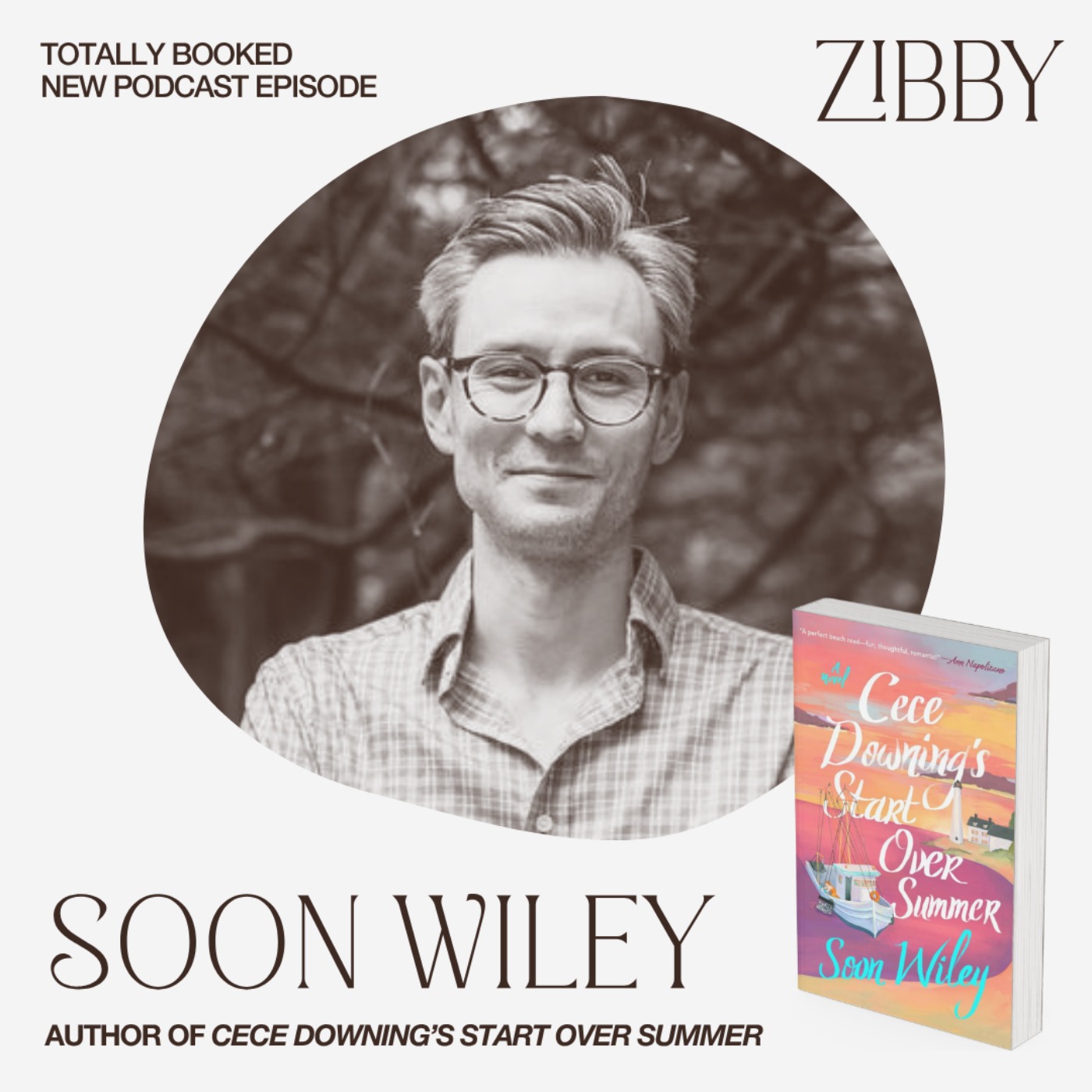
Totally Booked with Zibby
Soon Wiley, CECE DOWNING'S START OVER SUMMER: A Novel
00:14:50
On Turning Points and Coming-of-Age
Loading summary
Transcript25 lines
- [00:01]
A
Welcome to Totally Booked. I'm Zibby Owens. I've interviewed more than 2,000 authors on this show and learned endless amounts about storytelling, reinvention and life itself. Because when you talk about books, you're really talking about life. So get ready to hear from today's best authors, the best selling and the not yet discovered. Come find your next great read and the story behind it. Enjoy. Soon Wiley, author of CeCe Downing's Start Over Summer Soon Wiley is a native of Nyack, New York, and the author of the novel When We Fell Apart. He currently teaches English at the Upper School at Greenwich Country Day School, where he also serves as chair of the English Department. He resides with his family in Connecticut, although he told me in this episode that they are all moving. So stay tuned for his next assignment. Welcome. Soon thank you so much for coming back on to talk about so Cece Downing's Start over summer. Congratulations.
- [00:57]
B
Thank you so much. Thanks for having me again.
- [01:00]
A
Of course. Let me just start by saying how well you captured the point of view of a woman. I know that people have different views on can we all write from different perspectives, but I feel like you totally nailed that. So I don't know if that was even a question or what.
- [01:15]
B
Yeah, I think for my debut, one of the points of view of that book was from a woman as well, like a young female college student. Although I think it was like Eleanor elementary through college. There were some flashbacks. So a lot of the feedback for that book was about the female perspective and readers being interested in how I had done that. And yeah, it's just been something I've always written from the male perspective. Nothing published other than my first one. But this novel actually came from a short story that I wrote for my thesis way back in 2014. So she's always existed. She's existed as a character for quite some time. And some of my favorite books are also, you know, from the female perspective.
- [01:58]
A
Why don't you tell listeners a little bit about what the book is about?
- [02:02]
B
CeCe is 32. She's freshly, unfortunately been fired from her job as an actuary, which for folks that don't know, actuaries are people that essentially use data and numbers. I'm not smart enough to be one, but in the research that I did, you know, they essentially help predict outcomes. Right. The probability. So like life insurance companies have a lot of actuaries. Right. And their job is to kind of predict, maybe a bit morbid. Right. But like what kind of policy might the insurance company take out for you, given your health and et cetera. But the job is kind of very much logical and numbers based and all kind of rational. And she's fired from that. And then that leads to a breakup with her fiance who is also very nice guy and well off and makes a lot of sense for her, but something doesn't quite feel right. And his kind of response to her firing also kind of throws a little bit of gasoline on the fire. So she decides to kind of move up to New London and escape of sorts and ends up meeting a few characters and ends up working on an oyster farm. And so that's kind of it. And you know, hijinks ensue and adventure ensues, romance and you know, it's one of those. I always like writing about characters that are in crisis. This crisis, compared to my first book, felt a little bit lighter and a little bit more. There are certainly moments of drama, but there's a lot of kind of light hearted feel good moments. So that was nice.
- [03:38]
A
Well, there are so many really interesting threads, one of which is the oyster farm itself, which I am really interested in. We published a book called Pierce Oysters a while back and I got involved with the Billion Oyster project. And so it's become sort of an area of fascination for me over the last several years. So I loved all of the things that happened with that and the trajectory and the pro. I mean there was so much with that subplot which actually made me talk about that. Where did that even come from for
- [04:06]
B
you as a writer? You spend, and you know this too. I mean you spend a lot of time just writing, sitting at your desk. So one thing that I find important is like write about your passions, right? If you can slip in a passion, it kind of makes things a little bit even more exciting when you're writing a book. So I've always loved eating oysters. That's the first thing. But I'm also fascinated with them. I think it's such an interesting. They're such interesting organisms. It's also such an interesting metaphor. Oysters taste different and are different based on their environment, right? So the temperatures of waters and west coast oysters are different than east coast oysters and they taste completely different. They're also really good for the environment. They filter the water. They're kind of really a plus for the ecosystem. And also just being from New York, you know, there are these accounts of oysters being like just the Hudson, right? You could look down and there were these incredible oyster beds. And even there are all these really cool accounts of when Manhattan was settled, right, that there were, like, oysters lining the streets. And basically there's so many oysters that we didn't know what to do with. The Dutch kind of wiped those out. And then there was some other commercial farming, but they're kind of coming back now, which is great. But that was just something that when you write, things happen. Characters end up doing things that surprise you. And so when she ended up working on the oyster, it was like, the complete opposite of what she's done. So once I kind of written a draft, I realized it was kind of a nice plot point and a point of, like, conflict, but also something, you know, I'm a teacher by trade, and. And I also, in my spare time, write, which is all very, like, kind of soft. A lot of sedentary work. So it's always nice to do something physical, right? Whether that's exercise or actually, like, yard work or gardening or whatever. You know, I always love to get out a chainsaw and cut down a tree or something. It feels like the opposite, right? It's, like, tangible, like, okay, I actually did something. Whereas with writing, you know, sometimes you spend hours working on something and you just, okay, did I get anything done? Was anything actually. Was any progress made? So I think that's one of the appeals for cc, right? Is that it's. It's something where the pressure's off. It's manual labor. It's something that she actually loves to do, even though being an oyster farmer is actually quite hard and you don't make much money, and there's all sorts of unpredictability in the business. So it was kind of nice, a nice plot point. When the draft took me there, I was excited when she ended up on the oyster boat.
- [06:35]
A
This is when people think writers are nuts, when we're like, and then she ended up on an oyster farm. I was so happy about it. It's like, wait, didn't you write that?
- [06:44]
B
Yeah, I had no power and no agency in that choice.
- [06:48]
A
Just happy.
- [06:48]
B
But, yeah, as you know, I mean, just, you know, characters. Characters surprise you, and they. They do all sorts of wacky things that maybe at the moment don't make sense. But I think if you kind of trust your instincts and at least follow those decisions, it's always fun to see at the end whether those were the right decisions or not.
- [07:06]
A
So interesting. Sisi's also going through something that many people, I'm sure, have been through at one point or another in their lives after a breakup, wondering, was that the right thing? Right. Like, I think so, but the other person doesn't think so and they're trying to convince me otherwise. Are they right? Am I right? Do I listen to myself? There's no logic. Right. Emotions and relationships are so complicated and there's never a right answer necessarily. So I feel like we're so in this with CeCe as she wrestles with this, and I love that as she, you know, has a very interesting experience with Morgan that I won't.
- [07:43]
B
Yep.
- [07:44]
A
You know, as that relationship takes off and we find out more things as the novel goes on about Jonathan that maybe lead her one way or another into her decision making. At the beginning, she's very much like, I think this is right, but maybe it isn't. Like, talk about that, because that is a tough place to be. Writing can be hard, whether you're a prolific author or just starting out. You know, the struggle, writer's block, rejection, edits and revisions, the list goes on. Which is why I recommend checking out the podcast the Writer Files, which pulls back the curtain on the mystique of the writing life. Host Kelton Reed studies the habits, habitats and brains of the biggest and brightest authors of our time. Each week you'll learn exactly how acclaimed writers keep the ink flowing, the cursor moving, and avoid writer's block. Featured guests include New York Times best selling novelist Emma Straub, Pulitzer Prize finalist Hernan Diaz, and National Book Award winner Jason Mott, among many others. Don't miss out. Follow the Writer Files wherever you get your podcasts.
- [08:49]
B
Yeah, so I try to treat every character kind of with, with grace. I don't want my characters to be villains. And in many ways he is a great guy and I think many, many people. NCC acknowledges this. Right. Like any girl would, would, you know, die to be in the position that I'm in. And, and I think even her, her sister and her mother say that to her. And you know, she's also someone that is obsessed with like the right decision and that there is actually like an objectively, like a formula almost. And that's kind of what drives her crazy about the whole thing, is that it still doesn't feel right. Right. And there is something, even though throughout the book she's kind of, she's trying to figure out kind of, and she does kind of go back and forth. And then Morgan, who's kind of this summer fling, who comes in her life, who she very quickly identifies right as this is something temporary, this is something that's just kind of, it's a fleeting thing and it's not going to last. But I think I was interested in, you know, and the older I get, I feel like I think about this, that I was interested in CC's predicament because I think what happens when, like, you meet the right person, but it's like the worst time, or it's like the worst timing, and right when you've just gotten out of a marriage or gotten out of a relationship or, you know, and it can be any relationship, really often. I think, at least in American culture. I don't know what it's like in other cultures, but there's this insistence on, like, I need time to, like, I need six months or a year. I'm not gonna, you know, date or I'm not gonna see anyone, or I'm gonna be celibate for five years, and then I'm, you know, I'm gonna clear my head. I don't think we're that good at that. Usually people fall into something very quickly or, you know, there's oftentimes there's something like that that maybe it's began right before the end of something, and then that kind of bleeds into one another.
- [10:39]
A
There's one other piece of the story that I found really interesting, which is Cece's mom. So she's really pressuring cece to end up with Jonathan. And she even has a line about how it's not. What did she say? It's like it's. Can I read this line from her letter? Yeah, of course from her letter. She's talking about. She's pressuring her to get back together with her. She said everyone loses their. And she's saying, okay, I'll start here. I can only hope that you've reconciled with Jonathan. He's a good man, Cece. He is dependable. And yes, he is rich, and that matters. There, I've said it. Sure, money doesn't buy happiness, but it buys so much else. Space, time, safety and consistency. You might not think much of these things, you're still young. But trust me, there is nothing worse, nothing dingier than getting old and worrying about money. I don't know why I've never said it so plainly to you before. Perhaps because it sounds crude. But it only sounds crude to those who are unwilling to admit its truth.
- [11:35]
B
I actually hear myself. I actually think Cece's mom is. I think maybe qualifies as an unlikable character. I think she doesn't have that many redeeming qualities. But there is a lot of truth in what she says, right? Maybe not the Dingy part that's a little bit cruel and. Right. It isn't. Like, I don't think she's talking about an amount of money. Right. She's talking about what are the things that you want when you're older, not when you're 30 and figuring things out, but down the road, here are the things that if you want space and time and good health, well, then you're going to need kind of money to buy those things. And, you know, cece, I think, obviously her two choices, if they are choices, maybe represent kind of having to decide between those things. And she probably sees them in a very kind of black and white way, which of course, isn't really the case. But. Yeah. Cece's mom, I think, is someone that we probably. I'll be interested to hear what readers think of her, because I think in some instances, she is really tough, kind of in her. In her. The advice that she's giving to cece, and. Right. Often we probably would not want our parents telling us, you know, who to marry and who not to marry and who to choose and who not to choose. But I think there is actually a lot of wisdom in what she's saying. So, Yeah. I don't know what that says about me, that I'm siding right today.
- [13:04]
A
I'm. That's okay.
- [13:06]
B
She probably isn't going about it in the best way, but. Right. She herself is in a position where she's older. She's, you know, because she feels like she hasn't made enough money, she's having to work kind of closer. She thought she would have been retired already. So she's coming from the perspective of like, hey, I didn't think about this stuff enough. And, you know, that's kind of the. The pattern. Right. As parents, we want to make sure that our kids, whether we want to call them mistakes or challenges or whatever it is, but we want to make sure that our kids, you know, maybe don't do the same stuff that we did that we think gave us a really hard time.
- [13:42]
A
Interesting. And yet cece's mom is having her own start over summer in the end as well. I mean, that could be the next book. Cece's mom's Start over, Start over Fall. And then we just keep it up. So I know you have a lot of personal change on the horizon. Like, what chapter would you say you are leaving in and entering in your life?
- [14:04]
B
Oh, gosh, that's a good question. I think creatively so. I mean, this book is very different from my first book. My first book was more of a mystery like self discovery book about identity. And this book is kind of a much more kind of feel good romantic beach read. And so I guess creatively, like, I'm kind of wondering what my third book will. Will be about. I have some ideas and I'm working on stuff, but when I was kind of working on my second book, I had a couple of different directions that I could go and this is the direction that kind of ended up. It was the most fun for me. It was. It was the one I wanted to keep working on past, you know, 80 pages or whatever it is that where you usually hit that wall. So yeah, I'm interested in kind of what chapter that is. I also, you know, was writing and finishing this book during the birth of my daughter, so that was. That's also a big change. So I'm trying to figure out how to find time to write and how to, you know, while I'm giving her as much attention as I can.
- [15:10]
A
Amazing. Yeah, a very busy chapter. Good luck with your move this summer.
- [15:15]
B
Thank you so much.
- [15:16]
A
Okay, bye. Bye. Thank you for listening to Totally Booked with Sibi formerly Moms don't have time to read Books. If you loved the show, tell a friend, leave a review, follow me on Instagram, ibbeowens and spread the word. Thanks so much. Oh, and buy the books.