Loading summary
Transcript79 lines
- [00:03]
A
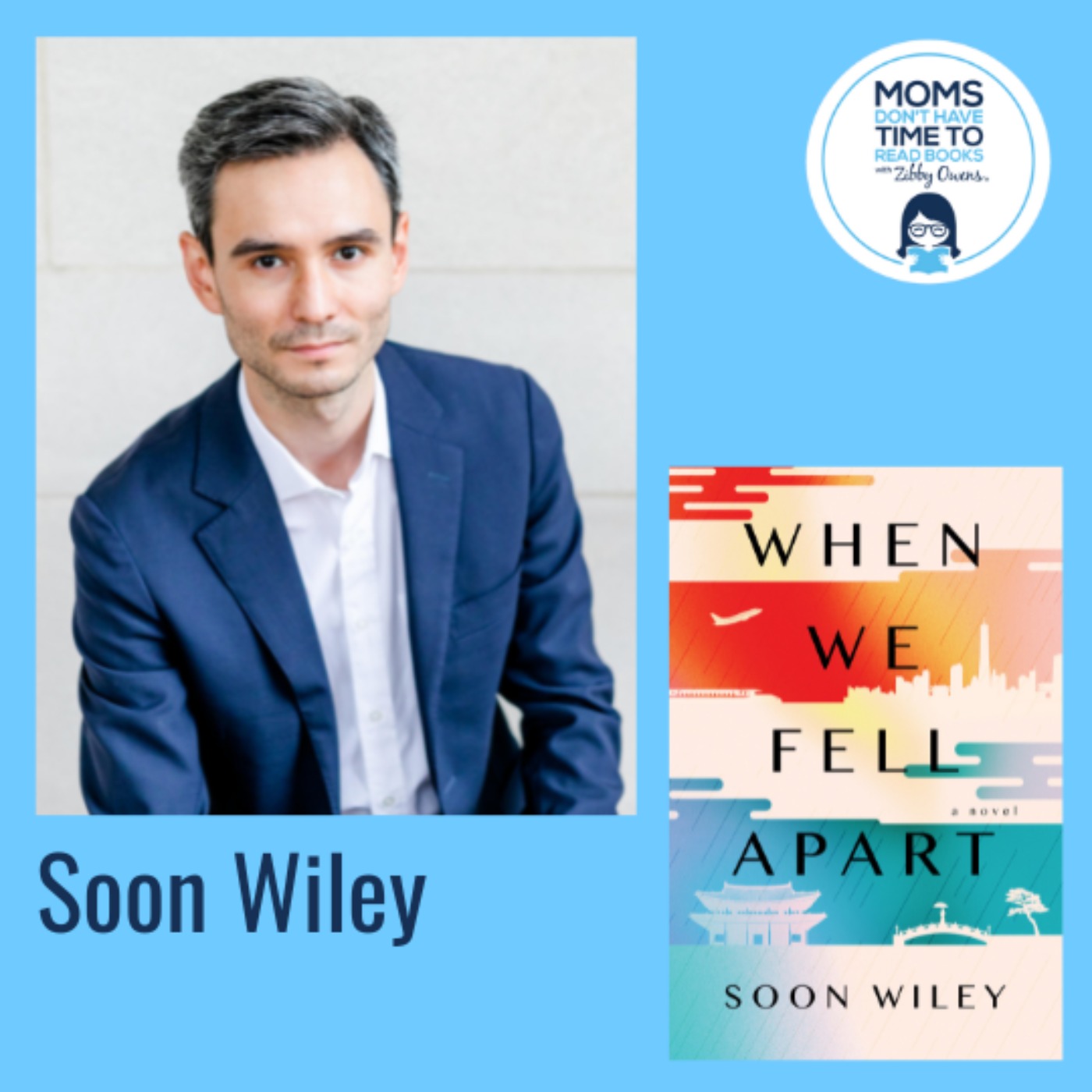
Hi, I'm Zibby Owens, the creator and host of the award winning podcast that you're listening to right now. Thank you so much. Called Moms don't have Time to Read Books. It is a daily podcast, 365 days a year and each day we talk to an author about all of the things related to their career, their book, their life and more in 30 minutes or less. Because who has time? I am now an author myself, although I wasn't when I started this podcast. And you can get my new memoir, A Memoir of Love, Loss and Literature wherever books are sold starting July 1st. And my children's book, Princess Charming. You can learn more about me@zibioens.com, but really you're here to learn more about the authors and that is what we're going to do. Also, be sure to check out all the other podcasts in the ZCast podcast network. You can learn more@zcastnetwork.com and definitely check out those shows as well. Also, just a quick note that submissions for the Zibby Awards are open and will close on September 15th. Go to zibioens.com and you will find the Zivvy Awards open submissions where we celebrate all the under celebrated parts of a book like the best spine, the best author's note, the best table of contents and authors can nominate their own best publicists, best editors, and so on. There will be an in person award ceremony in October in New York. You will not want to miss it. Go to zibbyowens.com soon. Wiley is the author of When We Fell Apart, a novel. A native of Nyack, New York Soon, Wiley received his BA in English and Philosophy from Connecticut College. He holds an MFA in Creative Writing from Wichita State University. His writing has been nominated for a Pushcart Prize and earned him fellowships in Wyoming and France. He resides in Connecticut with his wife and their two cats. Welcome Soon. Thank you so much for coming on. Moms don't have time to read books to discuss When We Fell Apart.
- [01:56]
B
Thanks for having me.
- [01:57]
A
The answer to this for me is like every single day. But that's okay. Yeah, every morning. Every morning before 8.
- [02:04]
B
It could just be present tense, right? Or just continuously falling apart.
- [02:08]
A
Yes, mine would be When We Fall Apart. But anyway, can you tell listeners a little about what this book is about and your inspiration for it?
- [02:17]
B
Yeah. So the story follows our protagonist Min, who's a Korean American. He's also biracial and he's of recently graduated from college. And the book begins set in Seoul. And he's decided to move to Seoul in the hopes of kind of finding a sense of belonging in terms of his identity, but also in terms of his career. So he. A few years before this, he's graduated. He doesn't really love his job, so he decides to take a job in Seoul, in Korea. But the book actually opens with the death of his girlfriend Yujin. And the police are kind of adamant that it's a suicide, but Min is kind of has his suspicions. And so the novel opens with kind of the announcement of her death and we actually get her perspectives as well. So for Min's chapters, he's kind of searching for answers in the present of the novel, trying to figure out what exactly happened if she did kind of take her own life and if she did, why. And Yujin's chapters, we also get her perspective. Those begin well before she's actually even met Min, so those begin kind of when she's in high school. And her chapters kind of at some point they cross. So in the middle of the novel, eventually she catch her timeline catches up to his while he's searching. But her kind of sections unravel the mystery of why exactly she might have done what she did. So there's kind of this back and forth and we do kind of hear from both of them, but that's kind of the book in a nutshell.
- [03:47]
A
When he finds out about her death, it was just so. Like the scene that you have where he's just like, this is impossible because I just saw her right there. Is that sense of when someone dies suddenly that you're just like, well, it couldn't possibly happen like that because I have proof that this person was alive because it was just a few hours ago. It's somehow just so hard to wrap your mind around the instant you know that there's just the second that you go from being. This is sounding ridiculous, but I don't know, you captured it very well. His complete shock and initial just unwillingness to accept what's happened, given what he knows of recent events.
- [04:24]
B
Yeah, no, it's funny. I worked on that scene where the detective is kind of explaining to him what's happened. And to be honest, that chapter took the longest to write, even though it's one of the earliest ones. But yeah, I wanted to capture that sense of. I think we've all experienced that sense of kind of disbelief of death in general. Right. Kind of. It feels so immediate and it feels so sudden. And then especially in the case of. Of kind of someone taking their own Life. That kind of adds another layer of disbelief. Especially if this is someone who showed no signs of any kind of distress, which is something that adds kind of another layer of doubt for Min that he kind of can't even really comprehend that this is what's happening.
- [05:09]
A
Wow. And by the way, it does not open with that. It opens with this excruciating shoulder injury on the rugby field where. It's so funny with books because you never know exactly what you're going to get when you open up a book. And then here I am just sitting, trying to read, and next thing you know I'm like in the midst of a rugby field with like my shoulder hurting. You know what I mean? How you can just totally lose yourself in these characters. And I was thinking to myself, like, it's very rare to open. Or maybe it's the books I read mostly, I don't know. But I feel like it's very rare to open mid athletic event. Which is silly because athletic events have. In competition and physical. I mean, those are some of the most edge of your seat events and things that can happen around. Like, why isn't that an opening scene more often? Do you know what I mean? Because you're.
- [05:59]
B
I'm setting the trend of, you know, now we're gonna see all new novels are gonna be opening mid athletic injury event.
- [06:07]
A
Yes.
- [06:08]
B
Yeah, totally.
- [06:09]
A
I'm rewriting my next book.
- [06:12]
B
Just.
- [06:13]
A
No, I'm kidding. But I found it to be a very. It was a great opening scene. And then I also found it really. And tell me if this is actually true and if it is, and I'm just totally ignorant, so be it. I wouldn't be surprised. But do they really pause all the things in Seoul for these exams?
- [06:32]
B
Yeah.
- [06:32]
A
Is that a true thing?
- [06:33]
B
That's a real thing.
- [06:34]
A
Oh my gosh.
- [06:35]
B
You know, and I was. I was there. So I lived in Seoul for a year teaching English as a foreign language. And this was well before I was thinking about writing a book or anything. But I remember the day quite well that it was just. Everyone knew about the day. I mean, it's essentially almost like a national holiday, right? Or like a bank holiday where the country pretty much shuts down and there's this. I don't know, I think you could look at it as a positive and also a negative. So it's a positive in the sense of like, the country comes together and like collectively makes it easier for kids to get to school on this really important day where they have to take exams. But then there's also this kind of immense, like, national collective pressure. Right. Because, like, you're kind of aware of the fact that everyone knows that this is the day. But, yes, they. That experience of kind of taking that. That test for high schoolers, a little bit different than when I took my SATs or my GRE, which I remember just being a total disaster.
- [07:40]
A
Yeah. I was in this, like, terrible high school situation that I've never been in before, and. Oh, my gosh. Anyway, whatever. My SAT doesn't matter. It was a long, long time ago. Yes. Okay, so tell me about the dual timeline of this whole. The dual points of view, because there are sometimes there's controversy of whether different genders can inhabit different characters roles, and, you know, all of that. And then I know you focus a lot on. On this sort of identity as being in which you've written about. And in the book club guide, you wrote really interestingly about growing up where people didn't know your ethnicity and would always ask and make guesses, and you never kind of felt like inhabiting anything. So tell me about that and sort of ownership of identity and the ability to write about it. Just, like, go off on that tangent.
- [08:32]
B
I mean, so, I mean, George Saunders, you know, he had a book, his most recent book, A Swimming. I think it's a really complicated title, but A Swim in a Pond in the Rain, I think. And he talks a lot about writing from different perspectives. And I think, in general, Right. It's really important for writers. Like, the whole point of writing fiction is to inhabit characters that aren't you. Right. I mean, that is the act of fiction, right. Is that you sit there and you imagine deeply and you kind of enter this headspace where you're in an imaginary character. And I think most books would be pretty bad if writers only inhabited characters that were like themselves, or at least that doesn't really sound that fun to me. But Saunders, in one of the essays in that book, talks about sometimes when that can go wrong or when readers feel as if, okay, this is no longer. This is now bordering on offensive, right? Where we've got a writer of a certain identity writing about something that isn't a shared experience for them. And there's some. Something happens, right, where the reader maybe feels as if, I don't know if I'm still on board with this, knowing what I know about the writer. And Saunders actually just says, which I quite like, is that it might just be that the writing is bad. And that's what offends you. Right. It's not that the writer is a bigot or that they have, you know, specific offensive ideas about this person that they're characterizing. But it might just be that the writing is bad, which I kind of like that explanation. And for me, I mean, so I. You know, Min is a character who. We have a lot of shared experiences. We're both biracial, we're both Korean. We both went and lived in Korea for some time. And I think that, you know, for a lot of debut novelists, I think, I mean, this is painting with broad strokes. But their first book is close, right, to them in some way. And so that was an avenue in for me at least, into his character. But the funny thing is, is that when I first wrote the book, it was only from. From his perspective. And then I finished a draft of it and I thought, you know, this is okay. It got me an agent, which I was thankful for. But it didn't. I knew that there were some things lacking. And it also felt a little bit. Felt odd to me that, that we are going to follow this male character who then finds himself, like, through the death of his girlfriend, who we never got to hear from. It just felt a little bit odd, right? Like, boy meets girl, girl dies, boy finds himself and is, like, happy. Right. It just feels. It felt a little bit odd not to hear from her. So I put his sections aside and then I actually wrote her point of view. And I actually, you know, I said to myself, okay, well, let's like, what would her voice sound like? And she was already a character in the book. She was already fully formed, she had lines of dialogue, but we just never got her perspective. And so I started writing her chapters and, you know, from the first. First person perspective. And those chapters were actually far more fun to write, and they were actually easier to write than Mins. So kind of, if I could aggregate, like, time spent, it was like 60%, 70% on Min's chapters, and the rest was on Eugene's chapters. And for some reason, her character, her voice and her experience, which are obviously have nothing to do with anything that I experienced, were far easier to write, which I kind of speaks to kind of what your initial question is about is just that, you know, fiction is really about imagining and kind of putting yourself in the shoes of characters that you really have nothing in common with. And so sometimes the characters that you're actually closer to personally, right? And that you do have shared experience with, sometimes those are harder to write because I think you're then bringing all sorts of, like, personal baggage, right? Which isn't Always that helpful? In some ways it is, but in some ways it isn't.
- [12:39]
A
Wow. Well, that is very interesting. See, this is what you never know. Like, I would never have thought that her chapters were not part of this initial thing. Cause that felt so. That feels so integral to the whole story. But there you go. This is why these conversations are so interesting to me.
- [12:57]
B
Yeah. And it's probably, you know, and it's a good thing, too. Cause I think it certainly makes the book better, I hope.
- [13:03]
A
Yeah. No, I was, like, totally rooting for her in her success to, like, get out. When her parents were like, we're gonna come move to Seoul, too, or we're gonna come move in with you for college. She was like, please don't.
- [13:17]
B
Yeah, I know. I'm sure some. Some kids, depending on what age they're reading it, are going, God, I hope. Hope that doesn't happen to me.
- [13:25]
A
Yeah. Although I kind of get it as a parent, I'm like, oh, well, how great. Let's pretend my kid went to, like, you know, Santa Barbara. That would be nice to live in Santa Barbara.
- [13:34]
B
You know, we'll move the family for four years.
- [13:37]
A
Yeah, exactly. Real estate college at the same, you know.
- [13:40]
B
Exactly. Perfect.
- [13:42]
A
Perfect. So this was your first novel. Tell me about getting into fiction writing at all at this point, like, what you've been doing alongside it.
- [13:51]
B
So I guess I first started writing when I was, you know, kind of in college. I was trying things out. I didn't, you know, I didn't consider myself a writer. I wasn't. I was an English major. But I don't even think we could major in creative writing at the school I went to. And I. On a whim, I kind of entered this short story contest at my college. And I didn't win first place, but I shared first place with one of my good college friends. And I had. There was a writing teacher there named Blanche Boyd. And she emailed me, and she was like, who are you? Why don't I know who you are? Why aren't you in my class? So I ended up taking one creative writing class with her my, like, last year, basically, in college. And she was very adamant. You know, she said, don't get your mfa. Just go, like, kind of live your life. And, you know, you can always go to school later. And so I did that. I went to Korea, and then I ended up applying to MFA programs two years after that. And I was, you know, just predominantly working on short stories. But I still, you know, and I think a lot of writers feel like this. I didn't feel like a writer. I mean, kind of when. When your friends are all doing normal jobs, like making money, actually living their lives in the real world, like, going to graduate school is a very kind of bizarre thing, especially for creative writing, because you don't actually need a degree to write creatively, so it already feels kind of stupid. So I was doing that. So that was actually in Kansas, funnily enough. So they gave me, like, the most money. So I just went there and, you know, I was writing creative writing stories, and then. But then I kind of saw the writing on the wall in terms of jobs, and so I ended up becoming a high school English teacher. So I got a great gig teaching English in D.C. and that was. I worked there for seven years. And pretty much when I started my job there, I started working on this book. And I didn't really know, you know, it was my first novel. I didn't know what it was, was, or what was going to happen, but it felt good to write something that I knew I didn't have to workshop, because in graduate school you have to workshop everything and you have to get feedback. So the book basically took me seven years. So from the time I started that job in D.C. and then I live in Connecticut now, but I. I worked at that job in D.C. for seven years. And so basically, from start to finish, that's how long it took me to get kind of the book kind of everything written, revised, agents, editors, that whole kind of thing. So it's kind of wild because I think in some parts of the book I wrote seven years ago, and then other parts I wrote a year ago. So it's very odd to kind of think about, well, you know, this, like, you're a different person, right? You're different and you're the same. But then it's weird that the book is this kind of single entity. So there's kind of this magic trick. I think that as a writer, you kind of have to inhabit this weird book space that isn't reliant on time or anything like that, just so that it can be like a single entity. That makes sense.
- [17:05]
A
Totally. Plus, maybe you're getting better as a writer as the years go on.
- [17:09]
B
I hope. Well, I think that's true also. Right. So then it's like, that's also the concern, right? It's like, okay, if I'm getting better as a writer, which you hope, does that mean that the beginning of the book is like crap and the end of the book is really good, and then you kind of have to go back. And then I also think one of the things I was really paranoid about is, okay, I've revised the first like 80 pages of the book probably 100 times because those are the pages that you're working on the most. Those are the pages maybe you're submitting to agents or editors. And also if you're editing, you usually start from the beginning, or at least I do. So then the end of the book, I probably didn't revise nearly as much as the first. So maybe that's actually how it works, is that you're better by the end so you don't have to revise as much. And that's why you've had to revise so much in the beginning. But I'm not sure how it works.
- [18:01]
A
Yeah, maybe everybody should read our books backwards.
- [18:04]
B
I mean, maybe that. I kind of like that idea. Actually.
- [18:09]
A
The sample chapter out there should not be at the beginning. It should definitely be a later chapter.
- [18:13]
B
Exactly.
- [18:14]
A
It's funny. Hi, it's Zibby. If you're looking for a companion podcast, totally booked, check out behind the Mic with Audiophile. Behind the Mic features reviews and recommendations from Audiophile Magazine, the number one audiobook review source every Monday through Friday. From thrilling mysteries to sweet romances and page turning memoirs, behind the Mic brings the best audiobooks right to your ears in six minutes or less. Not to mention, there are exclusive bonus interviews for with buzzy narrators, bestselling authors, and audiobook industry insiders. So go ahead, follow behind the Mic with Audiophile wherever you get your podcasts. You can also visit audiophilemagazine.com to read thousands of reviews, listen to sound samples and Explore behind the Mic's 1000 plus episode archive. Today's episode is sponsored by Quints. Does anyone else feel like August is like the Sunday of summer? It's the perfect time to hit reset before the autumn rush. And for me, that always starts with my wardrobe. Quince proves you don't need a crowded closet to look incredible. You just need the right pieces. Quince specializes in effortless high quality essentials like ultra soft organic cotton and premium Mongolian cashmere sweaters. They are beautifully tailored, built to last and transition seamlessly from morning meetings to dinner. I have been wearing my sweatshirt striped sweater from Quint all summer long, plus a beautiful skirt that I got there and a white dress that I can't stop wearing which I switch up with different sweaters and I just love everything that Quince makes. Plus my jean jacket is my go to and I'll be wearing it all through the fall. Quince has premium stretch denim, by the way, starting at just $50. So you're all covered. And it's not just apparel, by the way. Quince also brings everyday elevation to everything from hotel quality bed and bath to kitchen staples. Upgrade your everyday Download the Quince app for app exclusive offers or go to quince.com zi get free shipping on your order and 365 day returns. Now available in Canada and the UK too. That's Q-U-I-N c e.com zibby so are you working on a new project?
- [20:25]
B
Yes. So I was fortunate enough to get a two book deal. So I am kind of working on something which also is a very weird process because when I was working on the first book I didn't know that it was going to be published. So there was a certain kind of freedom to that because freedom and anxiety. Right. Of like, okay, I'm working on this thing for seven years. It might never get published. That's scary. But now I'm working on something and I'm like, this is definitely going to get published. And that's actually scarier. And again, I mean, to work on something for seven years, it feels, I think, I feel like the time spent on it has made it a strong fiction kind of effort. But to then write a book and I don't know, I'm going to have to. Can't be seven years, that's for sure. So it's going to be interesting. I think the process will be really different.
- [21:22]
A
Wow. And you can't say anything about that.
- [21:24]
B
I think it will be in the same vein as so in When We Fell Apart. I was very interested in trying to write, you know, successfully, hopefully a mystery and a literary book. So, you know, those are the kind of books that I that I really enjoy. So I think I'm going to write something. I'm working on something in a similar vein of kind of a mystery at the center of it, but hopefully something with some kind of literary aspirations.
- [21:51]
A
So what are some of those books that you love that are in that genre?
- [21:56]
B
You know, it's so funny. A book that I didn't read until so Celeste Ng's Everything I Never Told you'd.
- [22:02]
A
Mm.
- [22:02]
B
I was working on my book and that book came out and I had a friend mention it to me and I was like, I can't read this book right now. Because, you know, sometimes when you read stuff that is a little bit too close to home, it can be a little bit Demoralizing. Right? Like, well, yeah, you know, she's done it, so I might as well just pack it in now.
- [22:22]
A
Yeah.
- [22:22]
B
But I did eventually read that. And that, to me, is kind of a really fantastic example of a. Of a. Kind of a mystery, but with kind of real kind of meaty questions. Right. And kind of big questions to discuss, you know, something we don't. I don't think Sally Rooney's Normal People is billed as a mystery at all, but there is real mystery there. Like the characters are mysteries and kind of what's going on at home and what's the deal with the families and kind of the family dynamics there. So that's one of my favorites as well. And then I'm also a huge Haruki Murakami fan. So the Japanese author, and he's always got kind of some mystery bubbling beneath the surface, even if it's really something dumb, like this green little monster showed up in my backyard and I don't know how to get rid of it. I think that's how one of his short stories begins. And then the British writer Kazuo Ishiguro, who I think his most recent book, Clara and the sun, but he's always got some type of. And again, those aren't really traditional mystery novels, but I think they always have some kind of narrative thread that's pulling us through that we kind of want to know, even if it's as vague as I don't really know what's going on here. So I'm going to kind of keep reading to find out.
- [23:39]
A
Well, I have to admit, I did not read Klara and the sun, although I knew all about it and wish I had done so. But I did get to see him accept an award at. I think it was either the Poets and Writers or center for Fiction.
- [23:53]
B
Yeah, center for Fiction, I think last year. Yeah, two years ago.
- [23:57]
A
So I feel like now I got to know him a little bit and, you know, he was so humble and yet so well spoken. And anyway, it's on my list.
- [24:05]
B
It's on the list for me, like his Remains of the Day, which is also an amazing movie with Anthony Hopkins and Emma Thompson. I probably shouldn't plug the movie. That's sacrilegious. But that book is, like, phenomenal. It's one of my favorite books and very much has kind of a mystery to it. So.
- [24:25]
A
Yeah, if only there were more time.
- [24:27]
B
I know. I know you well, you need a lot more time because you've got a lot of books to read, a lot more books than I have to read.
- [24:33]
A
I should start another podcast of just, like, books I've missed. You know, I mean, like, books I wish I'd read.
- [24:38]
B
Yeah. Just listing. Or just listing books that you need to read.
- [24:41]
A
Oh, I could do that. Yeah. Well, then it's embarrassing to me. Then it's like, then people can see how completely, you know, how many holes I have in my. In my reading repertoire. So let's not call attention to that.
- [24:54]
B
I mean, it's a. It's a Herculean effort, though. I mean, I think, you know, for. For people that don't know the publishing industry, once I've had a few friends just say, I can't believe, like, how many books come out every week. Right. It's like this machine, and it's endless. And, you know, there are more books released than, like, Netflix shows, and it's endless. So I think you should be commended regardless of your number of books read.
- [25:26]
A
Thank you. It is impossible, and I think a lot about this, but this is a whole separate conversation. So the supply and demand of the publishing industry and how there is just not. Is there enough time and are there enough readers to justify how many books are always coming out? Does it make sense? Should there be some more limits? I don't know. I feel like there's an impact.
- [25:47]
B
I totally agree. I mean, I feel like. And again, this is probably not content that no one wants to hear tuning into this podcast. But, you know, I was thinking about. I haven't seen Top Gun yet, but, you know, it's like that harkens back to a time when there were like three or four summer movies, right? And it was like, okay, Top Gun, let's go see the. The one summer movie that's out. And I do wonder about that in terms of books where it does seem like, you know, there. There can't possibly be this many people that want to read this many books. So it's kind of interesting to see, I think, what. What will happen in the future.
- [26:29]
A
I think that is why I felt so relieved seeing the new Top Gun. Because. Because I literally felt like it. It was like, oh, there are still, like, big movies that keep me riveted. Like, my attention span for movies and TV has declined, I think as I read more. I don't know. I don't know. But I'm just like, oh, great, we're all gonna see this movie. How nice. We can talk about the same thing. But I think that's why there's now this over reliance on book club picks. Right?
- [26:58]
B
Right. Like Just tell me what to read. Tell me.
- [27:00]
A
Just tell me what to. Which I'm kind of trying to do with this podcast. Right. With curation, but yet I have, like 365 episodes a year. So it's not totally curated, but I'm hoping people find at least. Honestly, even picking this many is winnowing it down from the bazillions that could be read.
- [27:19]
B
I think in 10 years, we're going to have a podcast that aggregates the podcast that you should listen to. I mean, that's where we're at. We've got so many podcasts that we're going to need someone to tell us which podcast to listen to and also which book club picks to pick.
- [27:35]
A
Maybe we can do that. There is a thing called good pods where you can follow recommendations of your friends.
- [27:41]
B
Got it. See, it's already happening.
- [27:43]
A
It's already happening. You're behind already. I'm sorry. Good luck. Okay, last question. What advice do you have for aspiring authors?
- [27:52]
B
I'm a big believer in just keep writing. I think that's what separates people that succeed and people that don't. And if you're willing to, at whatever stage you're at, to keep writing regardless of setbacks and regardless of, I think, time spent. I think we have a very warped perception of, like, years. Years spent working on something and the kind of payoff. So if you're okay with working on something for 10 years, which. Which again, sounds crazy, but then I think in novel years, 10 years actually isn't that long, which is also scary to think about. So, yeah, just keep writing no matter what. I think that's really what separates the people that find success, people that maybe tap out. Just. It's not for me. I'm out of the game.
- [28:39]
A
I wonder what other art forms or whatever take so long and then to read doesn't take that long at all. Like, I spent almost 18 years on this memoir on and off, and people are like, I read it in three hours or something. I'm like, that's great. Does that even make sense? Like, should I. You know what I mean? Like, all that time for me, and then, you know, then up and then they put it down onto the next.
- [29:02]
B
It's like, Well, I think I completely agree with that sentiment. I've experienced that as well. When people say, I read it in one night, it's like, I'm so happy that you did. But also, how is that possible, that you consume something in a single night? But I agree also to your point about the worst part about Writing is that you can't even show people what you've been working on. So at least if you're like a sculptor, you could be like, look, I've been carving this piece of Rock for 18 years, and here's what it was before, and here's what it is now. You're painting or you're writing music. You can kind of play someone a sample. But when you're writing, it's just like, you're just going to have to take my word for it. Like, I'm working on something. It exists. You can't see it. I don't want anyone to look at it. I don't want to talk about it. And yet I'm going to spend a decade working on it, especially because.
- [29:54]
A
Okay, sorry, we should go. But I'm thinking, obviously, movies take a long time, right? There's so much truth, but there's so many people who work on those movies. Right? You could have hundreds of people.
- [30:04]
B
True. It's a team.
- [30:06]
A
And writing is just like, okay, I'm gonna change the sentence again. I don't know.
- [30:11]
B
Anyway, the struggle is real,
- [30:15]
A
but the payoff is great. I mean, then you get these fabulous books, and it's amazing. So, anyway, congratulations.
- [30:21]
B
Thanks for the time. Thank you so much for having me.
- [30:23]
A
It was my pleasure. All right, take care.
- [30:25]
B
Thanks so much, Zibby.
- [30:26]
A
Thank you. Bye. Bye. Thanks for listening to this episode of Moms don't have Time to Read Books. Don't forget to follow me on Instagram, ibioens and omsdon't have Time to Read Books. Also, sign up for my newsletter@zibbyowens.com and sign up for my virtual book club and meet lots of authors on Zoom every other week. Thanks so much to Steve and Ryan at texturesound for the sound editing. And thank you to Morning Moon Productions for providing this fantastic intro and outro music.