Loading summary
Transcript57 lines
- [00:00]
Wade Rouse
With no fees or minimums on checking accounts, it's no wonder the Capital One bank guy is so passionate about banking with Capital One. If he were here, he wouldn't just tell you about no fees or minimums. He'd also talk about how most Capital One cafes are open seven days a week to assist with your banking needs. Yep, even on weekends it's pretty much all he talks about in a good way. What's in your wallet? Terms apply. See capitalone.com Bank Capital One NA Member FDIC
- [00:31]
Hannah Berner
hi, this is Hannah Burner from Giggly Squad. Have you ever put on a bra that makes you feel like a goddess? Prepare to be obsessed with the Dream Angels Wicked Bra from Victoria's Secret, the iconic brand behind the world's most comfortable bras. And I only wear the most comfortable bras. The bestseller features an innovative sling for perfect lift without padding and the fit is Chef's Kiss. Awaken your inner goddess with new colors and super femme lace embroidery fabric. Find out why this bra has thousands of five star reviews and counting. Shop it in stores and online@victoria's secret.com
- [01:08]
Zibby Owens
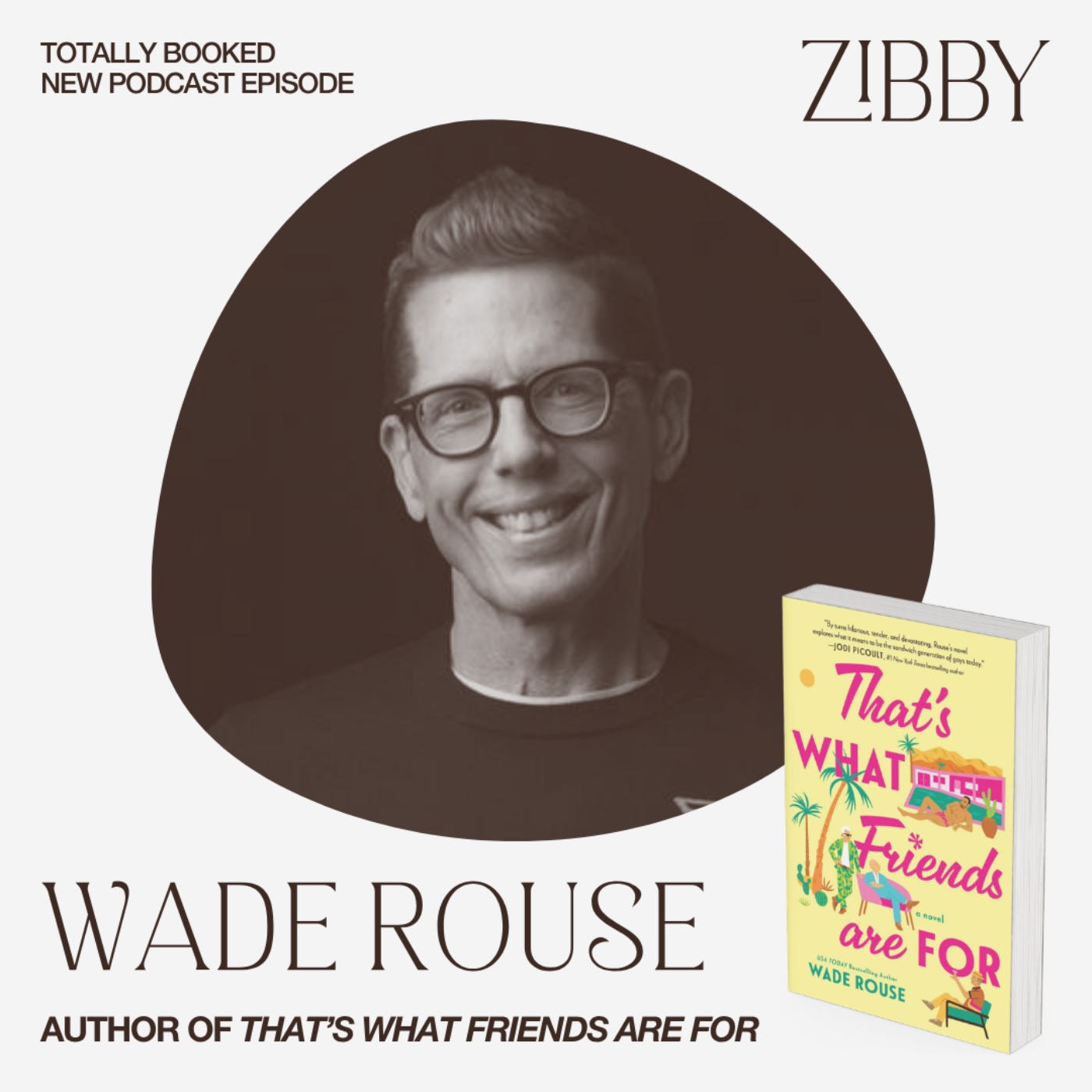
Today's episode is sponsored by Nutrafol. Nutrafol is the number one dermatologist recommended hair growth supplement brand and it's the number one hair growth supplement brand personally used by dermatologists. I love Nutrafol. I started feeling like my hair was thinning a little bit. So I started researching and found that Nutrafol has growth supplements that are peer reviewed, NSF certified for sport and clinically tested. They seem to be the best and I only want the best for my hair. So I want you to worry less. Don't let hair be something on your worry list. See Visibly thicker, stronger, faster growing hair in three to six months with Nutrafol For a limited time, Nutrafol is offering our listeners $10 off your first month subscription and free shipping when you visit nutrafol.com and enter promo code Zibby. So please go do that. That's Nutrafol.com spelled N U T R A F O L.com, promo code ZIBBY. Please do it right now. You won't regret it. Hi, this is Zibby Owens and you're listening to Totally Booked with Zibby. Formerly Moms don't have Time to Read Books. In my daily show, I interview today's latest best selling, buzziest or underrated authors and story creators. Work I think is worth your time. As a bookstore owner, publisher, author and obviously podcaster, I get a comprehensive look at everything that's coming out and spend my time curating the best books so you don't have to stay in the know, get insider insights and connect with guests like I do every single day. For more information, go to zibbymedia.com and follow me on Instagram. Iby Owens Today's episode with Wade Rouse was filmed at Zivi's Bookshop, where I had the opportunity to interview Wade live in person in front of the fabulous Santa Monica community that regularly attends our events. Wade Rouse is the author of that's what Friends Are For. Any Golden Girls fans out there? Anyway, this book is amazing. Wade is an internationally bestselling author of 13 books. He writes under two names, his own name, Wade Rouse, and his grammar mothers named Viola Shipman, and has written many fabulous books. I have had him on my podcast before. Some of his other books under his name include America's Boy, A Memoir, also Magic A Son's Story, both of which were absolutely beautiful. Under Viola Shipman's name. He has written many other books including the Page Turner, the Wishing Bridge and A Wish for Winter, among many other titles. And really excited to have had him in the store and just think he's pretty awesome. Welcome Wade. Thank you so much for coming on. Totally booked. I'm so excited to have you back.
- [04:04]
Wade Rouse
Thank you. No, I adore you.
- [04:06]
Zibby Owens
Oh, I adore you too. In fact, this is what friends are for, right?
- [04:09]
Wade Rouse
That's exactly right. And we're done.
- [04:15]
Zibby Owens
So excited about your latest book, which is really beautiful. It's a love letter to friendship and overcoming hate and pain, resilience. And there are just so many important themes that relate to so many people and are just incredibly uplifting. None more so than how friends lift each other up. So talk a little bit about. My kids are making fun of me. I always ask authors, tell everybody about your book and they're like, I know, now I'm embarrassing them even more. They're like, you're just asking because you didn't read it. And I'm like, no, I did. That is not why I asked that question. It's not for me. It's for everybody else. So anyway, what is your book about?
- [04:53]
Wade Rouse
Elevator Pitch as we know it follows four gay men over the age of 60 who all live communally, like in Joshua Gabor's very real, very pink former mid century mansion in Palm Springs, California. Each of the men has one of the characteristics of one of the Golden Girls, which inspired the novel. And they kind of have this never ending happy hour going in their retirement Years. And they perform episodes of the classic sitcom. They bring it to life for new audiences in Palm Springs as a troupe known as the Golden Gaze. And it's funny, they're bound together forever, but each is kind of harboring a secret that they don't want the other to know about because they don't want to burden them in their older years. Until one of their estranged sisters shows up on their doorstep with her teenage granddaughter in tow, which we all know what that means. And kind of everything comes unraveled more quickly than one of Dorothy's caftans. As you said, this is a story about friendship, found family, fighting like hell to find the people that get you and love you. Aging. We talk about aging with grace, but this is about aging with grit. You don't get to a certain age in your life without fighting like hell to have gotten to that point. And as you also said beautifully, this is about battling the inhumanity of the world. You know, 40 plus years ago, the Golden Girls came out and tackled some huge topics of the time. And I came out around the same time. And so little and so much has changed over the course of the last 40 years. We're battling the same crap that we battled back then. And I wanted this to be a history lesson wrapped in a hell of a lot of humor, just like the sitcom itself.
- [06:48]
Zibby Owens
Amazing. Well, like you, I used to watch the Golden Girls with my mom, with my grandmother.
- [06:53]
Wade Rouse
Oh, my gosh.
- [06:54]
Zibby Owens
Who here watched the Golden Girls? Like, everybody. And you raised this interesting question in the book, like, how could it connect so many people? You wouldn't think you would necessarily have so much in common with four retired women, but you were talking about the fact that they feel a bit discarded, overlooked. And who doesn't feel that way occasionally? What group can't relate to that in some way?
- [07:15]
Wade Rouse
Yeah, that's exactly it. I mean, if you remember the sitcom, there were four women, you know, over of a certain age, as we like to say, that really had been discarded by society. You know, they were divorcees, you know, job traumas. They needed to pool resources to live together. They had caregiving to do all of the things that so many in our society do. And it was remarkable because there aren't many shows at that time that really showed that many women and their friendship. And that's really what I wanted to do with this novel, was show especially male friendship, gay male friendship over the age of. Over the age of 60. And, you know, you talked about that. I grew up watching this with my mother and grandmother. I was a 19 year old college fraternity boy when the Golden Girls first aired. And that was not a show for like a 19 year old fraternity kid who could chug beers and time Domino's Pizza drivers. And I had lost my older brother a couple of years earlier and he, you know, I emerged from my mother's womb like this. I was dressed like this. You know, I wrote poetry and played the trombone, which is things growing up in the ozarks in the 1970s. The boys did not do so. I had a big target on my back. But my mother and grandmother loved me unconditionally and they really pushed me out of the nest to go to college. And I heard about this sitcom and as a way to connect with them because we were not together any longer, before fraternity parties started, I would snake the cord of a rotary phone. Do people remember a rotary phone? Into my room. And I would watch this long distance with my mother and grandmother as a way to laugh and connect. But it also was a way we learned to understand each other. You know, it broached topics such as aging. I got to know my mom and grandmother on a deeper level. One of the main episodes was about coming out, which actually paved the way for me to have a conversation with them. So, you know, great art, TV shows, movies, theater, books. That's the connection is that we do not really understand the impact that they will have on our lives. But it's always profound in some way.
- [09:33]
Zibby Owens
Wait. I'm so sorry about your brother. And I didn't realize that till I read your author's note at the end of the book. Can you share how he passed away?
- [09:42]
Wade Rouse
Yeah. No, he. My brother was. I mean, he was everything I was not. Fisherman, hunter, tinkerer of engines. You know, I still think gnomes are under a car hood. I don't know how things work. And he rode a motorcycle and a. In the Ozarks, there are a lot of one lane bridges and a truck driver fell asleep and hit my brother. And you can imagine what that does to a family. I mean, it devastated my family. But my mother and my grandmother refused to let him die. They talked about him openly and honestly. They asked me to write about him. And you know, it was the worst moment of our lives, but in a way it also made us who we were and who I am today. So I. That's. You know, every book I write is. It's not going to be historical fiction, but it's my personal history. That's. That's what I love to mine. I think that's what we all. We all have our own beautiful stories that we. That are painful and beautiful and horrible. And that's what I love to write about, of these universal things that connect all of us.
- [10:55]
Zibby Owens
Well, I'm glad you shared that, and I'm so sorry. Especially when you said, I felt like they took the wrong brother. Like he was such a perfect brother for my family.
- [11:06]
Wade Rouse
I did. You know, I grew up in a time when they're, you know, and a place. Have you all seen the TV show Ozark? They sugarcoated it. It was way worse than that. I mean, people. I don't know if people get what it was like in the 70s and early 80s. There was no. There wasn't even a vocabulary to discuss me. You know, my father didn't understand. Nobody understood. I didn't even know there were people like me that existed. You know, we thought Charles Nelson Riley and Liberace were showmen. We didn't really. We didn't even understand. And so it was hard. And yet I felt kind of forged and ironed to become the person I am. You know, people talk about publishing these days and how difficult it is, and it is. It's a tough world we're in. It's a tough industry. But also with what I've been through, but also feels kind of like a gentle shower sometimes, too. It's nothing compared. It actually has made me good with whatever happens in life. Wow.
- [12:14]
Zibby Owens
Well, all of your characters are, as you mentioned, going through something. And some of the secrets that come out are very dark and painful. They're hiding things, they're wrestling with things, learning information themselves. Can you talk a little bit about some of the struggles and how did you assign different things to different characters? Like, there could have been endless things that four men could have been going through. Why these things?
- [12:37]
Wade Rouse
Yeah, that's a great question. You know, one on the surface and even deeper. I didn't want these four men to be caricatures of the Golden Girls. I just wanted them to have their internal traits, but in totally different bodies and souls. Each of the men, yeah, is struggling with something very difficult in their lives. And it's all from my own personal history or the histories of our friends who, you know, we tend to forget. And it still happens every single day. Kicked out of their home, familial abuse, addiction to alcohol or sex. Because so many of us are simply wanting to be loved or needed. There's a plethora of very deep issues that, you know, we think have passed but are still. That we're still struggling with every single day, you know, every week, I get an email from somebody from not going to exaggerate 8 to 80. That is experiencing something that these men are going through again. We think so much has changed the last 40 years, but it hasn't. So I wanted. I did. I wanted this to be really an important history lesson for readers. I wanted them to understand the struggles that are still occurring today. You know, one of the narrators is here, and we're talking about. We were talking about one of the main characters, Barry, who's actually based on a real character from the Golden Girls. If you ever saw the premiere episode, there was a character named Coco, who was the women's openly gay housekeeper and chef. And he was cut from the premiere because, you know, they said five people wouldn't fit in the kitchen. But I think we kind of understand now. Maybe audiences weren't ready for that. But he was just saying, you know, there were. So being in Hollywood, being an actor, having experienced a lot of these things firsthand, those are the stories that I wanted people to see.
- [14:34]
Zibby Owens
Amazing. Well, you also said Sofia was such a fan favorite that they had to.
- [14:38]
Wade Rouse
Such a fan favorite. Yeah.
- [14:39]
Zibby Owens
Dorothy's mom in the show, and she's great. Yeah.
- [14:41]
Wade Rouse
I mean, we all love her.
- [14:42]
Zibby Owens
It's okay. We forgive it. Can I just read, like, two paragraphs about the different characters and the role of friendship in the story? Because I thought it was so beautiful, he said. My eyes drift to my three best friends listening to me. How many fights have we been in? How many losses have we endured? I think of Teddy losing John and finding him floating in the pool, face down next to three bottles of champagne and an empty bottle of pills. Me fighting to breathe life and hope back into him again. I can still see Sid after his family disowned him for many years. His wife remarrying, and how he would sit on the patio and stare at the mountains for weeks at a time. And as if they were speaking only to him in silence. And the men that Barry has kicked out and discarded onto our driveway, like Frank did to Ava and Lana. A house can be filled with historical significance and unparalleled beauty, but it is simply walls and a roof without love, family, struggles and stories to fill it. My golden gaze sense that I am staring at them. BFFs have that instinct, don't we? And when they look me in the eye and smile, I know that I am seen, even if just for a moment. Oh, how nice is that?
- [15:49]
Wade Rouse
Thank you.
- [15:50]
Zibby Owens
Oh, my gosh. How have friends helped you through your life. And who are your BFFs?
- [15:56]
Wade Rouse
Well, we've got some here tonight. I've lost both of my parents. My husband Gary in the back who's growing his hair out and this has been a thing for the last two years, has lost both of his parents and, and it's our friends that have come in and filled the void. You know, we're, we're having a big Easter brunch on Sunday and it's our friends that are coming and our family now. And so they've, they've been everything to us. I mean, they've kept us upright and going. And that's what this book celebrates, is finding your people. Because we, we all go through held them back to find those people that love us unconditionally without any conditions. They simply love us. And that's a rare gift to find those people.
- [16:47]
Zibby Owens
So true. Today's episode is sponsored by Wayfair. It is Way day at Wayfair. From April 25th through the 27th. You can score the best deals in home. Think 80% off with free shipping on everything. As you all probably know by now, I am obsessed with Wayfair and use it for every single home need I have. It has all your different furniture for styles, needs, decor, home improvement, outdoor essentials. And it is all on sale during way day so you can upgrade your space with quality pieces that fit within your budget. Remember, everything ships free and fast during weigh day. We recently got a few cute little ottoman poufs, some white bookshelves that retract, making it easy for my team and me to use on the road when we're showcasing our books and and so many others. Oh, and this adorable new blue and white rug. I am a sucker for anything blue and white. So Wayfair helps me decorate not just my home, but my office. And when we take it on the road, it's so easy to shop. Everything comes so fast and I just love it. It's the most dependable and happiness inspiring e commerce experience. And now Wayday is the sale to shop the best deals at home. We're talking up to 80% off with fast and free shipping on everything. Head to Wayfair.com April 25th through the 27th to shop Wayday. That's W A Y-F-A-I R.com Wayfair Every style, every home. Today's episode is sponsored by Quints. I've been doing a little bit of a spring reset with my closet lately. It's finally not snowing all the time. And I'm ready for a little more color and fun. Quince helps me focus more on quality over quantity. And now I can build a wardrobe of pieces that are well made, versatile, and easy to reach for every day. And that is why I keep coming back to Quince. The fabrics feel elevated, the fits are thoughtful, and the pricing actually makes sense. I just bought this beautiful white summery dress in cotton with, like, an A line shape, which I just cannot wait to wear. I'm going to put it with a beautiful necklace and maybe a little cardigan and probably wear it all the time. And I also just got a perfect new summery Jean jacket. Not even summery. Good for spring and whatever I need it for. I haven't had a new jean jacket in, I don't know, 10 years, and this one is so cute. So for under $50, I got a new Jean jacket. It's very exciting, and I know that it's going to be great quality because, you know, it's Quint's. Refresh your spring wardrobe with quince. Go to quince.com zibby for free shipping and 365 day returns. Now available in Canada, too. Go to Quincom Zibby for free shipping and 365 day returns. Quince.com Zibby Today's episode has been sponsored by Whatnot. Oh, my gosh, you guys, if you haven't heard of Whatnot, this is. It's like the Home Shopping Channel meets Instagram Live meets. I don't even know. It's addictive and amazing, and it's been all over my feed, and now I finally got to go shopping on it, and it's amazing. Okay, let me explain. Whatnot is an app, which is the number one live shopping app in the US where shopping happens in real time with regular real people and real conversations and incredible deals. So, for example, my kids are obsessed with needos right now. I have no idea why. They're like little plastic balls that I don't even know. They're the new thing. So this one guy randomly was selling all these neatos, and you have to bid on the neatos against all these other people by swiping. And actually, I lost the first two, and that was really, really upsetting. So you have to, like, keep swiping to win. And I actually won a neato for $8. Anyway, that was fabulous. And then I got jelly cats for my kids at a huge price reduction. Anyway, it was so fun. And you watch all these people all over the world, I guess, in their closets or reselling things or people who work at companies selling things. And then there are a bunch you can buy right outright. So it's just super fun and you get amazing deals and are connected with other shoppers and sellers. And it's like just hanging out with a really fun group. And you almost never pay full price across makeup and perfume, clothes, handbags, jewelry. I almost got a pair of shoes, but they were a little too small. Anyway, you have to check it out. This is a must try app. Download the whatnot app today and get free shipping on your first order. Just search wh a t n o t whatnot in the app store and and start scoring amazing deals. Enjoy. In the book, you talk about Passover, which, as we're recording this, it is the second night of Passover, and you talk about the significance of the afikoman and how children are the ones who always have to hide it, find it, and the reason why it's the children and how inspiring that can be to think of how the next generation can usher in tolerance and acceptance of things that in this generation aren't so. Aren't going down so smoothly, so to speak. Talk a little bit about that.
- [22:13]
Wade Rouse
And, you know, two very dear friends of ours at a holiday dinner actually shared the story, their stories with me, which kind of inspired all of this. Yet, you know, that's why I had a teenager in this book. Ava's the teenage granddaughter and she gives it as good as Teddy does. He's the Dorothy character. She gives it back at him as good as he gives it. And it's because Gary and I are godparents to my best friend from college's twins. His wife died when they were only two. And so we've stepped in in many ways for them over the years. And as they've aged and are now in college, who do they call? They need crap done. It's not dad or the grandparents. It's us. And the beautiful thing about them and so many children that we're meeting today, and I'm not going to say children because they're so wise beyond their years, is that, as you said, I think they're going to save our butts.
- [23:18]
Zibby Owens
They see you said that nicer than I did, but okay, we'll go with it. Okay?
- [23:22]
Wade Rouse
They see me and Gary is only me and Gary. That's all they've seen their whole lives is people that simply love them and they love us, nothing else. And I mean, we're going through it right now, but that's what gives me hope. And that's why I wanted to include this. There's a theme of this. You know, we have the battle scars. All of these men have the battle scars. And yet there's so much hope still in their lives that we're going to get it right one day.
- [23:57]
Zibby Owens
Well, you also. Not to bring down the mood further, but there is a hate crime, really, that happens, and that sort of resurfaces throughout the book in different times and with different approaches to dealing with it. I have to talk about this delicately so we don't give things away that are towards the end. But this person who is just so mean to one of your characters and in a totally unacceptable way and then even a violent way, how you. How. Especially after a performance, why don't you tell that. Why don't you tell a little bit more about that if it's not giving it away and what an act like this does because the effect of it was so damaging.
- [24:39]
Wade Rouse
It is, yeah. And it's actually based on things that have happened to friends of ours. There are, if, you know, there's people do drag queen reading hours for children. And in the book, Sid, as he's the Sophia character, actually reads to children the Very Hungry Caterpillar, which is such a horrifying book, isn't it? Dressed as Sophia and is attacked when he leaves by a woman. And I included it because it's happening. I mean, it's. My books are. I have banned books right now in Florida. I have banned books in other states. It's happening in real time as we're living right now. And it's mortifying and horrifying. And people need to understand that when hate is given oxygen, it just takes fire. And that's what's happening. And that's what I wanted to show in the book.
- [25:40]
Zibby Owens
Do you feel you're going through it? You said going through it earlier, more today than in past years. You feel like it's at an apex.
- [25:49]
Wade Rouse
I do. I do. I mean, you look at just rights in the gay community. We. This is horrible to admit. I mean, we wake up almost terrified to look at our cell phones. You know, what transpired before we woke up. You know, was there a federal court or decision that hurts us in some way? And yes, there has been in the course of the last week. So, you know, I feel like we're all me, you women, we're walking on quicksand right now. We better be ready to battle.
- [26:30]
Zibby Owens
So another thing that you and the Golden Girls, your book and the Golden Girls have in common is this Great sense of humor, comedic timing. Your characters are funny, the dialogue is hilarious, just like with them. And not just when they're performing. I mean like when they're just having their regular conversations. Even just two people walking around a track or just, you know, all the dating things. Just. It's so funny. Talk about how you use humor in your books. And by the way, this is what, your 12th novel, but the first under your own name, which is a big decision. So I want to talk about that too.
- [27:03]
Wade Rouse
It's a biggie.
- [27:04]
Zibby Owens
Yeah.
- [27:04]
Wade Rouse
And thank you. This is a really frickin funny book.
- [27:08]
Zibby Owens
So it's a really funny book.
- [27:10]
Wade Rouse
You know, humor is. And it was an interesting conversation with my editor and agent too on this because the humor sometimes can be biting, which is how friends that really know each other are. When you know somebody better than anybody else, you know which button to push and you'll push it. But like this, I wanted. There's so many heavy topics in the book. I've always been a person in my life that kind of elevates myself out of it with humor. It's how I talk to my friends. It's, you know, you know, when my head was getting bashed in a locker and you know, in school I could, I could rally the girls around me with a joke and kind of hold the bullies at bay, or if somebody was coming at me, I was quicker, funnier than they were. I could cut them off at the knees. So humor has always been kind of the way I've drawn people in, but also can keep them back. And humor is very important to these four men. When you've been knocked around a lot in life, the only, only thing you have is to be able to laugh at it and yourself and life. And I want. It was hard, you know, getting this, the humor right was hard because my first draft of this book, my editor was like, there's a few too many one liners and they're not hidden. You know, she goes, this really has to be like a great stand up act or a great sitcom. It's got to move, it's got to, it's got to have pacing that is moving people along. And if it's that joke's not working or is it not coming from a real place and the story, then it's gotta be cut. And I had the best conversation with a gentleman that has another podcast and he's the casting director for Shrinking. And he said, I love that show, I love that show. And he goes, this book is like the best script that I've ever gotten in my life. He goes that it balances the funny with the tragedy perfectly and just keeps moving along. So I worked really hard at it. I just. I love funny, you know, I think it's easier to make people cry than it is to make people laugh. You know, I can tell a story about my dog getting sick and you'll probably all cry, but I tell a joke, and half of you will think I'm great and half of you think I'm a jackass. So it's. It's hard. It's hard to get right, but it comes from a wellspring of honesty.
- [29:44]
Zibby Owens
Anyone raise your hand for the jackass section? No, I'm kidding. I'm kidding. That's amazing. So can you talk a little also about your pen name situation? So you have many books you've written under the name Viola Shipman, who's named after your grandmother. You have several memoirs written under your actual name. And this time you were like, I'm doing it. I'm writing a novel under my name. Why?
- [30:11]
Wade Rouse
This was. Yeah. For those who don't know, I've written 12 novels under Viola Shipman, a pen name to honor my working poor Ozark's grandmother. And it's women's fiction, but stories that honor women like them. And I had signed a new three book Viola Shipman contract, and I had these wonderful proposals I was sending for my first book in the contract. And this one has always been sitting there since COVID it's just been kind of sitting there. I had it fleshed out. I always wanted to write it, but it didn't really fit with what I was doing, and I couldn't hit. There was so much going on in this world. I sat for days before I hit send, and at the very last moment, I tacked this proposal on to the very end. And I'm a pitcher. Like, I pitch four or five projects to my editor and agent instead of just one idea. And within 24 hours, my editor called me back and she said, you've written so many beautiful stories that honor your family and your grandmother. She goes, this one actually will honor you. And we need to. This has to happen, and it has to happen under your own name. And that's, you know, publishing doesn't happen all the time. If something's going well in one lane, then they want you to stay in that lane. So it was. It's been great. I've been thrilled.
- [31:35]
Zibby Owens
Wow. And talk about your tour. It sounds like it's been amazing.
- [31:38]
Wade Rouse
We did 11 states in two weeks. And I've been thrilled with the reception. This was named the Today Show. Must read for March. Kwame Alexander said it was a book that made him call every one of his best friends and tell them how much he loved them, which was the highest compliment. And so it was been amazing. We got a little tired, but your hair. His hair held up and we did fine.
- [32:05]
Zibby Owens
Well, from the book, it sounds like you have a nice respite in Palm Springs in order afterwards.
- [32:09]
Wade Rouse
We're heading back tonight. Yes. So we'll get. I'm working on my next bite of a Christmas novel out called the Bluff in October. It's set on Mackinac Island. It's like the fam. If you've seen the family stone, it's the family stone meets succession kind of. And very a lot of family dynamics going on in that book. Then I'm working on my next book after that.
- [32:31]
Zibby Owens
And can you just go back to the first book that you wrote and how you got the confidence to write it and became an author?
- [32:39]
Wade Rouse
Very first book I wrote came out 20 years ago this month, and it was called America's Boy, and it was originally published by Dutton Penguin. And it was about me growing up gay in the Missouri Ozarks with a family that loved me and had no idea what to do with me. And it was funny and sad and I had no idea. I had no idea. I just knew I had to write. I always wanted to write. I was a PR director at a very exclusive prep school and I was miserable. I actually ended up writing a memoir about that called Confessions of a Prep School Mommy Handler, about all of the how I was treated by a lot of the wealthy mothers. And I felt like I loved. We talked about Annabel Gurwich, David Sedaris, Nora Ephron, Augustine Burroughs. These were my peeps that I loved reading. And I thought But I, you know, you start and you think, who's going to like this? Who would ever read this story? What's it? And I spent about three or four years writing it. And I remember going home to visit my mother in the Ozarks. My mother was a hospice nurse at the end of her career. My mother loved to work. If you wanted to see my mom, you had to ride around with her all over as she visited patients. And she came out one day at the end of a long day. I would sit in the car, she'd go in and she said, you know what all of the people I've cared for today have in common? She goes, they are filled with some sort of regret. And I beg of you not to end your life with regret. And I truly went home and started writing after that and started querying agents and doing all the things you do, not thinking anything would happen. And I ended up getting three formal offers from agents and chose the agent I still have to this day. And she published the book in a week and it went out of print and was actually just republished last year by a new publisher called Open Road Media that finds out of out of print books they think are of quality and brings them back to life. So. And I got a few memoirs for you too.
- [34:46]
Zibby Owens
Oh, great.
- [34:47]
Wade Rouse
I've got a few memoirs. This one. I'm going to get to her too.
- [34:50]
Zibby Owens
Do you have any regrets?
- [34:54]
Wade Rouse
I do. I regret not loving myself more. You know, I was 30 when I came out. I missed my entire youth. I missed everything people take for granted. I missed holding hands, first dates, you know, first kiss, prom. I do. I regret that. And I. I was bold and powerful in my own right, but I did not know how to navigate that at the time. And yet I do not believe I would be who I am today without any of that. You know, I look back, people always ask, would you have done something differently in a book you'd written? And I say no. Now I've changed as a person as much as I've changed as a writer, but that is a time capsule of who I was at that moment. And that's a beautiful thing.
- [35:50]
Zibby Owens
Amazing weed. Thank you so much. This is absolutely beautiful.
- [35:53]
Wade Rouse
Thank you.
- [35:53]
Zibby Owens
Thank you. Thank you for listening to Totally Booked with Zibby, formerly Moms don't have Time to Read Books. If you loved the show, tell a friend, leave a review. Follow me on Instagram Ibioens and spread the word. Thanks so much. Oh, and buy the books.
- [36:16]
Wade Rouse
With no fees or minimums on checking accounts. It's no wonder the Capital One bank guy is so passionate about banking with Capital One. If he were here, he wouldn't just tell you about no fees or minimums. He'd also talk about how most Capital One cafes are open seven days a week to assist with your banking needs. Yep, even on weekends, it's pretty much all he talks about. In a good way. What's in your wallet? Terms apply. See capital1.com bank capital1NA member FDIC.
- [36:47]
Hannah Berner
Hi, this is Hannah Berner from Gigli Squad. Have you ever put on a bra that makes you feel like a goddess? Prepare to be obsessed with the Dream Angels Wicked bra from Victoria' the iconic brand behind the world's most comfortable bras and I only wear the most comfortable bras. The bestseller features an innovative sling for perfect lift without padding and the fit is chef's kiss. Awaken your inner goddess with new colors and super femme lace embroidery. Find out why this bra has thousands of five star reviews and counting. Shop it in stores and online@victoria secret.com hi, it's Hannah from Giggly Squad. Bottomless apps for $9.99 are back at Buffalo Wild Wings so you can mix and match favorites like mott sticks, fried pickles, onion rings, hatch queso and chips and salsa. It's perfect for a girls night, a double date, or just a full on yapping session. Order your apps and keep them coming while you spiral on the same gossip from every possible angle. So grab your besties or your frenemies and head to Buffalo Wild Wings to get bottomless apps for $9.99 while you still can.