← Totally Booked with Zibby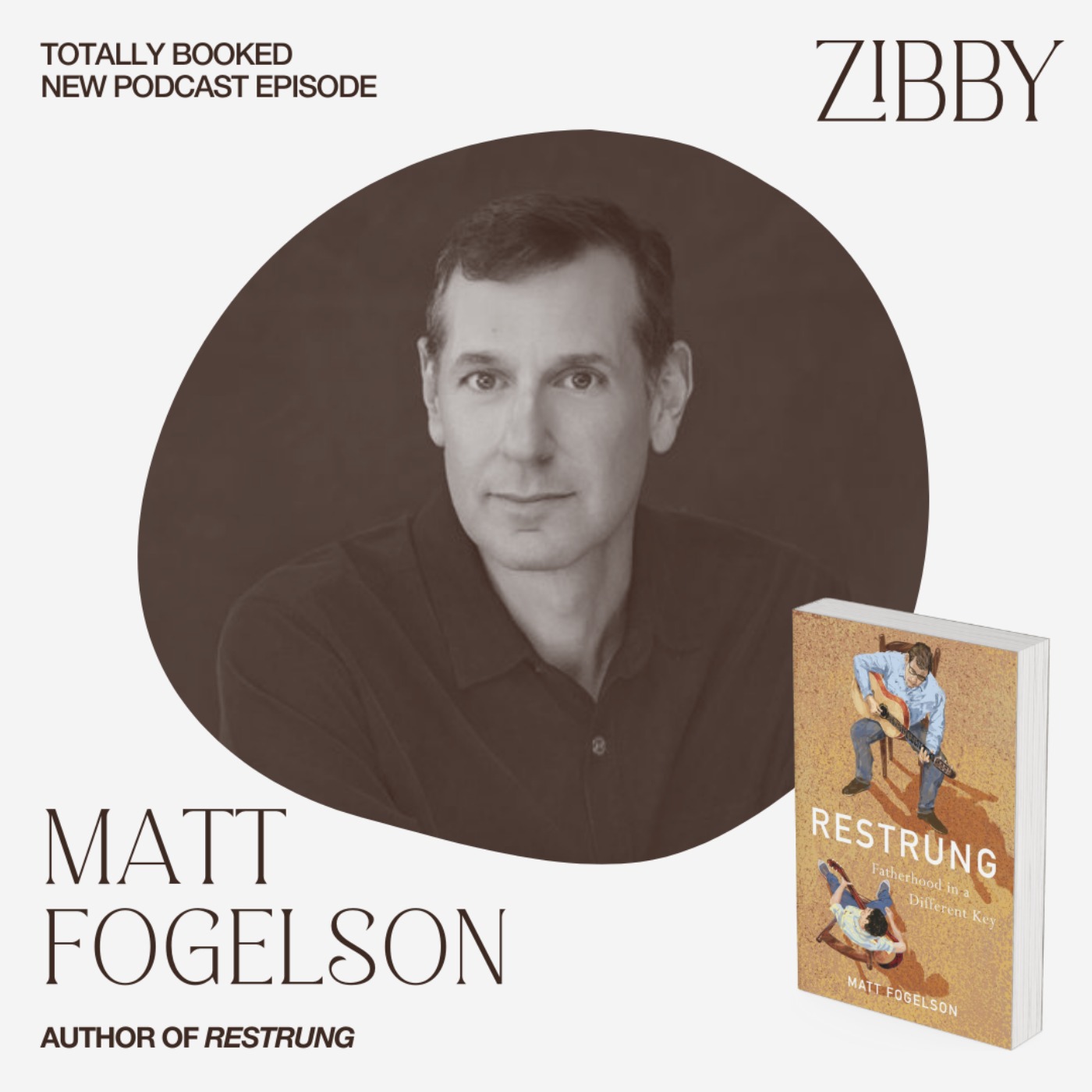
Totally Booked with Zibby
The Truth About Fatherhood: Becoming One and Coping with the Loss of Another with Matt Fogelson
00:21:49
Loading summary
Transcript45 lines
- [00:01]
A
Hey, everyone, it's Zivi. I am so excited to tell you about something I've created just for you, the Zip Membership program. Zip stands for Zivi's Important People. It's for anyone who loves books, stories and wants a little peek behind the scenes at what I'm up to and what's on my mind as a Zip member. You'll get exclusive essays, a new podcast called Zivvy's Voice Notes. No interviews, just usually discounts at Zibby's Bookshop, a free ebook, and more perks. I wanted to create a space to connect authentically and deeply, and I'd love for you to be part of it. If that sounds like your kind of thing, become a zip today. You're already important to me. Now let's make it official. Go to zibioens.com and click subscribe. And if you already subscribe, you can upgrade to the membership program. And now onto today's episode of Totally Booked with Zibvie. Thanks for listening. We all prefer things a certain way. Like groceries. If you want groceries just how you like them, you gotta try Instacart. They have a new preference picker that lets you pick how ripe or unripe you want your bananas. Shoppers can see your preferences upfront, helping guide their choices. Because when it comes to groceries, the details matter. Instacart g get groceries just how you.
- [01:19]
B
Like, with no fees or minimums on checking accounts. It's no wonder the Capital One bank guy is so passionate about banking. With Capital One, if he were here, he wouldn't just tell you about no fees or minimums. He'd also talk about how most Capital One cafes are open seven days a week to assist with your banking needs. Yep, even on weekends, it's pretty much all he talks about. In a good way. What's in your wallet? Terms apply. See capitalone.com bank capital1NA member FDIC.
- [01:52]
A
Hi, I'm Debbie Millman and I host a podcast called Design Matters from the TED Audio Collective. Every episode, I have conversations with designers, writers, artists and other luminaries of contemporary thought. People like Roman Mars, AI Weiwei, Ethan Hawke, and Ashley Ford. We not only talk about their crafts, but how they design the arc of their lives. What they've learned, what obstacles they've overcome, and how they've done it, and how they see the world. Join us for an inquiry into the broader world of creative culture. Find and follow Design Matters with Debbie Millman wherever you're listening to this. Hi, this is Zibby Owens and You're listening to Totally Booked with Zibby, formerly Moms don't have Time to Read Books. In my daily show, I interview today's latest best selling, buzziest or underrated authors and story creators whose work I think is worth your time. As a bookstore owner, publisher, author, and obviously podcaster, I get a comprehensive look at everything that's coming out and spend my time curating the best books so you don't have to stay in the know, get insider insights and connect with guests like I do every single day. For more information, go to zibbymedia.com and follow me on Instagram ibbeowens. I loved talking to Matt Fogelson about his story with his father, the loss of his father when he was in college, how he coped with grief, how he became a father now and is parenting differently because of that. Actually, Matt's mom felt Phyllis has been friends with my mom for my whole life, but I actually never met Matt until now and it was a delight to talk to him about this. I think his introspection is really amazing and the book was really lovely. This is a great Father's Day gift, by the way. So it's called Restrung Fatherhood in a Different Key. It's good for new dads, it's good for old dads or whoever and women. I got a lot out of it myself, seeing the male point of view and anybody grieving. I mean, it's, you know, anyway. Matt Fogelson is a writer and former lawyer whose true passion in music is primarily of the classic rock variety. R.E. strung examines father, son relationships, the pain of early parent loss, and the importance of embracing your passions, all framed by a lifelong love affair with music. His substack Fine Tuning blends personal storytelling with a love for the music that makes sense of life. Centering on new artists and the intersection of music and parenting, his work has appeared in the New York Times, the Washington Post, Scary Mommy, and npr. Matt resides in O, California. I hope you enjoy this lovely meditation on family and loss and love. Welcome Matt. Thank you so much for coming on Totally Booked to talk about Restrung fatherhood in a different key. Congrats on your book.
- [04:52]
C
Thank you. Thank you so much for having me.
- [04:54]
A
Of course. Oh, you have a lot of really poignant, meaningful themes in the book. Love, loss, family, fatherhood, music, growing up, the city, Jewish stuff. You like packed a big punch in here and got a lot in. And it was really a beautiful ride to see where your life took you and how you navigated grief and all of that. So I really enjoyed it.
- [05:20]
C
Thank you. I appreciate that.
- [05:22]
A
That was my sort of summary. Why don't you talk a little bit about why write this book? What was this book about? What did it do for you?
- [05:30]
C
Sure, sure. So the book is sort of about. A memoir about coming to grips with the death of my father when in college, he died of cancer. The realization I didn't really know him, and my effort to not pass down that emotional distance that I felt from him and that I feel is almost endemic, sort of, to the father son relationship in some ways, to not pass that on to my own son, and hopefully solving for that in part by sharing with my son my passion for music so he knows what makes his dad tick, which is something I never knew about my own dad. And it sort of came about, you know, I. Certainly after my father died, but maybe even a little bit before that, certainly when he gave me the prognosis, kind of had this dark cloud hanging over me for decades, really. And, I mean, it wasn't debilitating. You know, it wasn't like I was curled up in the fetal position at home or something. And, in fact, a friend of mine, a close friend who read the book, was sort of shocked to learn that I kind of was probably clinically depressed, but nonetheless, you know, I sort of felt this weight, and particularly after my son was born, which is, you know, obviously a very joyous thing. And there were these moments of unbridled joy, but most always it was met with some sort of opposing. I won't say equally opposing, but some sort of opposing kind of darkness and sadness. And so for me, the writing became a way to kind of try and kind of mine some of those emotional veins and exorcise some of that. So that's sort of where the book came from.
- [07:11]
A
And did it help?
- [07:13]
C
Yeah, I think so. Absolutely. You know, it was funny. It was like I sort of had trouble landing the plane and ending the book. And I think part of it was I didn't want to let my father go. You know, I felt like in a way that was gonna, you know, this is deeply buried stuff, but I think that might have been part of what was going on. And then finishing the book, it was like, okay, you. I've. I've done it. I've kind of explored these issues and these themes. I kind of understand my, you know, how my reactions were influenced. My. My life has been influenced by all that. So, yeah, I think it's helped. I don't think grief is something you ever totally get over I mean, I think it's still there, but it's just, you know, more. More background noise than like this brooding thing hanging over me.
- [08:07]
A
Well, in a way, you know, there's this notion of complicated grief where something is not perfect necessarily about the relationship. And then you confront both that and the loss. And I feel like in the book you were showing us the times you would have wanted to feel closer and wondering, did he regret? Like you have a moment where he is saying, gosh, I would have done it differently had I known. And you're like, well, would you have parented differently? Is that what you mean? Or would you have stayed at the office? Would you have. You know, you have this lovely image at one point when he's telling you and your brother about his diagnosis, where he takes the papers from his high power attorney job and tucks them under one of the plastic straps of a beach chair so they wouldn't fly away. And I just love that. Like a dad who just can't totally, you know, disconnect. And what does that do to the family, even when right after he tells you this really intense emotional thing. And yet there it is. So I feel like part of the book and you do a nice job weaving in music and all of that was you just being like, well, what was the distance really about? And you go into like, your grandpa Dave, and I don't know, did you come to terms with that? And then the letter that you find that he writes you later, like, talk about that and how you can recalibrate, like, your thoughts on. On him as a dad, even post facto.
- [09:30]
C
Yeah, yeah. So I. I feel like I did come to understand him a lot better. You know, there, there. I did come across a memoir of sorts that my grandfather's. You mentioned his. His father, Dave wrote it. It's like this 40 page, single space, typewritten thing. And what was fascinating to me about it was there were six sentences about my dad, and it was just the facts. Jimmy was born here on this date. He went to this school, graduated, married. This was it. And similarly, like his wife, my grandmother, very short shrift. It was basically 40 pages of his career as a lawyer. I mean, the first few pages are like a Hollywood script of kind of the Jewish immigrant experience. Ellis island, no money and kind of a bootstrap situation. But after those first five pages, it's just about work. And it really was sort of stunning to me to read that no foibles, discuss my dad or cute stories or anything. And so it kind of gave me the impression of what life must have been like for him growing up in that household. And you know, as I say in the book, I think, you know, this desire for sons to feel close to their dads is like so powerful. Right. And I think for my dad, I think work became the way for him to feel his dad's love and the way to keep his dad close. And so if that meant kind of treating us as second class citizens, well, you know, that's sort of what, what had to happen. So I think that was something I hadn't really thought about before. And, you know, did he have regrets about that choice later? Maybe, Maybe. I don't know. These are things. And one of the things I mentioned in the book, you know, we don't, we didn't really talk about this stuff, you know, like, I mean, I felt loved by him. Like, I'm not saying this was like a horrible situation or anything, but it's like we never, even after he was diagnosed and given, as he put it, five years on the high end, we never talked about the fact that he might die or was going to die. You know, he just sort of, you know, pretended, I guess, or maybe really believed that he was going to beat it. And so there was, it seems like that would have been a good opportunity to kind of open up. I mean, I was 19. It's not like I was a child when he was diagnosed. But he just wasn't his thing. And I think some of that came from a place of love. Right. I think he was trying to, you know, I was in college. I don't think he wanted to bum me out, you know, but on the other hand, and it was, you know, this, I just looking back on it, it's like incredible. This sort of wall that we had built up, we just couldn't break through to each other. Yeah, it's kind of too bad.
- [12:27]
A
Today's episode is sponsored by Quints. Quints is all about elevated essentials that feel effortless. Designed for layering and mixing, each piece helps build a timeless wardrobe made to last with versatile silhouettes and thoughtful details. They're the kind of styles you wear again and again. I have not taken off my quince parka this entire winter season. There's been a huge snowstorm lately. I wore it in and out of the snow every day. I mean, I just wear it every day. It's amazing. Quince has wardrobe staples with quality that is made to last like 100 organic cotton sweaters. Premium denim with stretch for all day. Comfort luxe cotton cashmere which blends perfectly for changing seasons and basically everything you need for a wardrobe that last. Quince works directly with safe ethical factories and cuts out the middle mint so you're not paying for brand markup, just high quality clothing. Quince uses the highest quality materials like 100% European linen and organic cotton. Speaking of which, my podcast producer Chelsea, who is undoubtedly listening, got a new comforter off of quints, which she also loves. We are both Quince fans, so refresh your wardrobe with quints. Go to Quince.com Zibby for free shipping on your order and 365 day returns. Now available in Canada too. That's Q-U-I-N-C-E.com Zivi to get free shipping and 365 day returns. Quince.com Civvie Today's episode is sponsored by Wayfair. The new year is here and it is time to get back into an at home routine you love and elevate your space with Wayfair. From bedding and mattresses to storage solutions for every room in your house, Wayfair is your one stop shop. I actually have used Wayfair so much because over the holidays I stayed with my mother in Arizona and told her it was definitely time to redo the guest. She has my kids stay because she hasn't touched it in decades and it needed a refresh and I said you know what Wayfair? So we got beds, lamps, side tables, we've been doing the whole room. It looks amazing. Everything came within a few days in perfect shape. It has been so fun. Wayfair has everything like the most enormous selection of home decor items and exactly what we wanted for the space we had. And it's still a work in progress and and I will share some pictures on Instagram. We're obsessed so you should get organized, refreshed and back on track this new year as well. For way less head to Wayfair.com right now to shop all things home. That's W a Y-F-A-I-R.com Wayfair Every style, every home.
- [15:24]
B
With no fees or minimums on checking accounts. It's no wonder the Capital One bank guy is so passionate about banking with Capital One. If he were here, he wouldn't just tell you about no fees or minimums. He'd also talk about how most Capital One cafes are open seven days a week to assist with your banking needs. Yep, even on weekends it's pretty much all he talks about in a good way. What's in your wallet terms apply. See capitalone.com bank capital1NA member FDIC.
- [15:57]
A
If he could read this or if he was like, looking down, so to speak, you know, not to be woo woo, but what do you think he would make of you investigating your relationship with him? I mean, you take us through such tender moments. Like the one time you went to chemo with him and you were like, he probably didn't care that I was here. And we both just read and we barely talked. And then you have to take your formerly really strong, powerful dad and just usher him into this taxi. And then he could barely get into the apartment. And then later that night, you wait at the door as he's. As you hear him vomiting and you don't know whether or not to go in and instead you just like walk past and go back to your room. I don't know. I found that to be one of the more heartbreaking moments of the story. What would he think of all this?
- [16:42]
C
Yeah, that's a good question. I think he would be pleased with it. I think he, you know, I think he. I do. As I say, I sort of came to understand him a little bit better. I think he would probably read it and feel a little sad, maybe that. Cause I do feel like if he had known sort of how he was, how that sort of impacted me, that he would have made a change. I think there was a blind spot there. I mean, I think, I think any. I mean, you know, certainly if I was aware that some somehow, you know, what I was doing or how I was parenting was impacting my son negatively, I would move heaven and earth to remedy that. So, you know, so there's an understanding of that. So I think he would sort of, you know, cut me some. Cut himself and me some slack there. And there's also, I think it comes through that, you know, we were, we were close in a way. You know, there was sort of just this unspoken love, which is powerful in its own way, but it just would have been, I don't know, so much better to like, have. Have it expressed in the real world rather than, as you mentioned, that, you know, this letter that he wrote when he was diagnosed in which got handed to my brother and me at his funeral by one of his law partners. You know, it was a very nice note. He expressed some emotion in there that he was not capable of doing, I guess, to our face. But, you know, it would have been. Would have certainly been nice to have those moments in the real world.
- [18:15]
A
I was also interested in that letter, by the way, and I know our moms have known each other for a very long time, but how. He talked about some regrets he even had about his marriage and yet didn't write a goodbye note to your mom. And she's like, oh, my gosh, he didn't even write me a letter.
- [18:34]
C
Yeah, yeah, yeah. You know, so one of. One of the lines in there, which is actually something I've taken to heart, so this letter was sort of like. I think he viewed it as his sort of last chance to pass on his, you know, fatherly wisdom. He said, you know, don't. Don't ever be afraid to tell your Phyllis. My mom is Phyllis. That you love her. You know, life's too short and unpredictable. And so I showed my mom that. She was like, he never actually said that to me. And, you know, that that is one lesson. I try and say that every day to my wife, you know, like, because it's true. I mean, you just. It's just obviously, you never know what's happening down the line.
- [19:17]
A
It was interesting to see the contrast with their relationship and then you and embarking on your own relationship and the closeness with your wife. And, you know, you take us through. I feel like that you're outward bound in Alaska, where you're just literally, like, disconnected, trying to overcome, like, if that's like the embodiment of the challenge of the book. Right. Is can you get through this? But then you take us into this really sort of peaceful, loving dynamic which you've recreated for your own family. So when you read that and write that, like, do you see that trajectory and end up feeling really good? Like, do you feel good about what you've created? And how old is Jed now, by the way?
- [19:59]
C
He's 20.
- [20:00]
A
He's 20. Oh, my God.
- [20:01]
C
He's in college now. Yeah. So the book kind of ends with him, I guess he's probably at his bar mitzvah, basically. But, yeah, so he's 20 now and told me last night that he actually just started reading it. He's up to chapter five. He's actually in that Alaska chapter, so we'll see if he gets through it. You know, I, as I say in the book, and still feel, you know, there are still moments where I feel like I struggle with that issue of closeness. I think it's a lifelong project. And I don't know if that's just because my grandfather instilled it in my dad, and my dad kind of instilled that sadness or distance in me that I just. It's just really hard to Shake. I mean, I think I've come a long way from where my dad was, I will say that. And so I definitely feel good about that. I don't think, you know, that my son wonders who I am.
- [20:53]
A
Well, certainly not after this book.
- [20:55]
C
Yeah. Right. Yeah. If he gets through it.
- [20:57]
A
Yeah. Got rid of that. Got rid of that problem.
- [21:00]
C
Yeah. I mean, you know, he knows who my friends. My friends are. Like, something I didn't even know about my dad. Like, who were his friends growing up? Like, what. What was he into? Like, So I think he at least knows all that about me, which for some reason, I feel is important.
- [21:16]
A
Of course it's important. I mean, how you get close to people. The role of music. Let's talk about that for two seconds. Because you include so many different performers, from Pearl Jam to Bruce Springsteen and obscure bands, and one time where you, like, jump on stage and you're performing with, like, a band in the East Villager. I don't know where you were and how. And you have a. Of course, you. This beautiful scene of you singing to your son and how music is a through line in many, many ways in your life. Talk a little bit about the importance of that.
- [21:47]
C
Yeah, so. Yeah. So music was always something that was really important to me as a kid. You know, it was something that I spent all my time and money on going down to Greenwich Village, as you mentioned, I grew up in the city buying records and going down there with my friends and going to concerts. One thing about growing up in New York is, like, all our favorite bands came through, so we were super l. So I went to a lot of shows. But there was something. I never really thought that music was something that I could really take on. It was a hobby, you know, it wasn't something that serious people pursued, you know, And I was a serious person. Like, all my parents, friends were professional types. I didn't know anybody who was really that into music or really into anything, frankly. And so other than my Aunt Wendy, who is a pivotal figure in this book, my mom's sister, kind of a flower child, definitely of a different world, ended up having this outsized influence on me, as I kind of recount in the book. But so I never really took on music in any kind of serious way. I mean, I played guitar, played a couple of shows with some friends in high school, but. And it was really only after. And I became, you know, became a lawyer and did all that kind of professional stuff. And it was really only after my son was born that I reconnected with. With that because I. It just sort of came out of me, this. This desire to. To sort of express who I was. And it turned out that's who I was. And I started a music blog and. And all this stuff. And so it kind of helped wake me up to this idea that, you know, am I living the life that I want to be living? You know, obviously we all have external constraints imposed on, you know, financial health or whatever, but sometimes we also impose some constraints on ourselves. So that's kind of one of the themes of the book. And I feel like I definitely did that to try and maybe keep my dad close was to kind of take on his Persona as the lawyer. I mean, I literally wore his suits to work. But so music. And so it kind of helped show me the way a little bit. But also it just. It was like therapy for me when I was going through that period, particularly that grunge, you know, period. I kind of. My dad died in 1991, so it was like right when grunge exploded. And that music, to me, particularly Soundgarden and Pearl Jam, was like. I don't know, it was like medicine or something. I mean, I would just. It created this space where I, you know, could kind of be myself. I didn't have to tell people I was okay. You know, I could just put those headphones on and enter this world of just sadness and. And feel those emotions in a way that, you know, your society kind of, you know, discourages, you know, sort of in public. And it was a real lifeline for me. And I would kind of come out of those listening sessions kind of feeling revived, like I could carry on. And particularly, you know, not to turn this into a music blog discussion, but, you know, particularly like Soundgarden and Chris Cornell and. And just the rawness and like, the screaming, literally screaming in some of that music. Like, he. He like, screamed for me. When I couldn't scream, I didn't know what to do. I was kind of roiled with all this grief and sadness and. And anger, and I couldn't really scream. You know, I was in law school. I had a roommate. I was in New York. I didn't have a car. I could drive around and scream, you know, and so, you know, that music was kind of my way to off gas. This toxicity and was really a lifeline. And I gotta say, like, even now, decades later, when I listened to that album in particular, Super Unknown brings me right back in a way that I feel like it was a gift, that album. It was dark, but it. I don't know, now it's still like a portal into this, you know, part of me that I am and was. So. Yeah. So music is definitely a big, big deal in the book, in my life.
- [25:59]
A
Oh, I love that. I mean, we think about all the different things that can help us through grief and like there are all these different pieces of advice, but screaming at the top of your lungs to grunge music from the 90s, you know, that's not like top of the list for most people. So now, like, this is. If nothing else, this conversation can give people another perhaps unexpected tool for processing and getting rid of all that rage.
- [26:24]
C
Yeah. I mean, if I thought of it, you know, if you're going to just go out in public and scream, probably New York City is not a bad place to do it.
- [26:30]
A
Oh, yeah. I'm probably past three people today doing the same thing.
- [26:34]
C
Yeah. So I don't know. That didn't occur to me that actually you could just go out and starts.
- [26:38]
A
Better that you didn't. Could have ended up with some extra problems. Yeah.
- [26:43]
C
Right, right.
- [26:45]
A
Well, Matt, thank you so much for the book for showing us what it feels like to both lose your dad and parent your son at the same time. There aren't a lot of books where men open up in this way, even though to this particular moment in time and the processing. And I think it's really helpful. I have to introduce you. There's another author, David Israel, who has a book coming out soon called the Last Mozart or anyway, I feel like you two would get along. I'm going to introduce you after this. He'll come on the podcast soon, but musician and grief and Anyway, but there are few of you and far between and I applaud you all.
- [27:26]
C
Oh, well, thank you. Appreciate that. Yeah.
- [27:29]
A
All right. Thanks so much, Matt. Take care.
- [27:31]
C
Thank you, Zidi. I really appreciate it.
- [27:33]
A
Okay, my pleasure. Bye Bye. Thank you for listening to Totally Booked with Zibby, formerly Moms don't have Time to Read Books. If you loved the show, tell a friend, leave a review. Follow me on Instagram, ibyohans and Spread the word. Thanks so much. Oh, and buy the books.
- [27:57]
B
With no fees or minimums on checking accounts. It's no wonder the Capital One bank guy is so passionate about banking with Capital One. If he were here, he wouldn't just tell you about no fees or minimums. He'd also talk about how most Capital One cafes are open seven days a week to assist with your banking needs. Yep, even on weekends, it's pretty much all he talks about. In a good way. What's in your wallet? Terms apply. See capitalone.com bank capital1, NA member FDIC.
- [28:30]
C
ACAST powers the world's best podcasts. Here's a show that we recommend.
- [28:39]
A
La Brega is back this season. We're spending time with the people and symbols that represent Puerto Rico.
- [28:45]
C
We're proud boricuas.
- [28:46]
A
And what does that mean? And we are still in the fight. We're telling stories about champions from a place worth fighting for. Stories that will inspire you no matter where you're from. Wow. This is La Brega Campeones. Listen early and ad free with Futuro Plus.
- [29:09]
C
ACAST helps creators launch, grow and monetize their podcasts everywhere. Acast. Com.