← Totally Booked with Zibby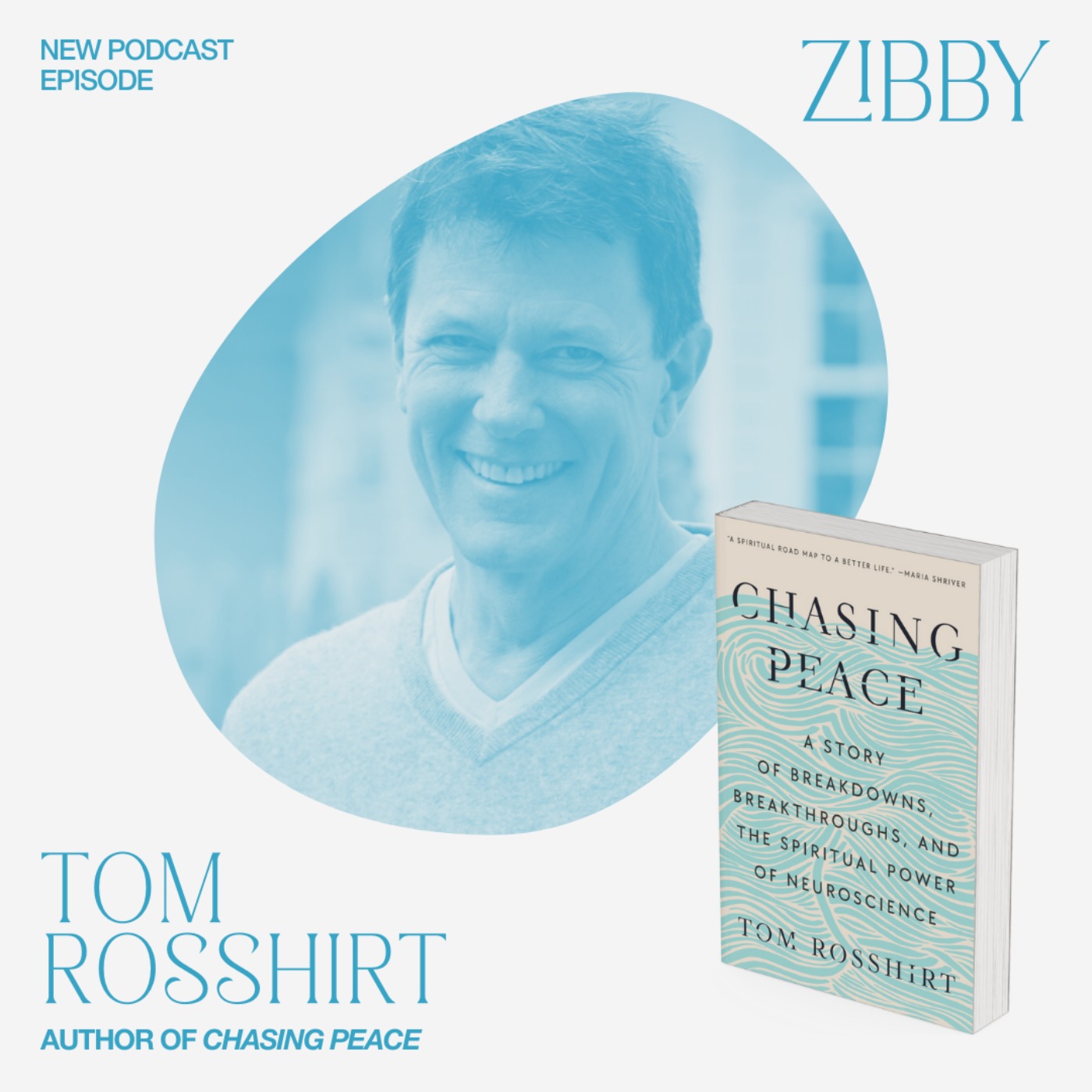
Totally Booked with Zibby
Tom Rosshirt, CHASING PEACE: A Story of Breakdowns, Breakthroughs, and the Spiritual Power of Neuroscience
00:29:11
Loading summary
Transcript35 lines
- [00:01]
Zibby Owens
We will be re airing some episodes by authors from this podcast whose homes have been lost in the horrific fires in Los Angeles. We hope that hearing from these authors makes this tragedy feel a bit more personal and real for those who have not experienced it directly and provides a sense of comfort to those who have lost everything. At Zippy's Bookshop in Santa Monica, we are giving away books to anyone affected. We are giving away clothing from 30 brands who have donated their merchandise. We know both of these things are small comfort to the thousands of people who are now homeless, but we are trying to do some good amid the destruction. I hope you understand that I am not recording new podcasts right this second as I am struggling to deal with the fires myself. Our home was saved by by firefighters in the Palisades, but so many loved ones have lost everything and our community is rallying to help. Therefore, I will be airing some older episodes of those who have lost their homes interspersed with episodes that I have already recorded. I will be back to podcasting as soon as I can put on a happy face and really support the authors as I have been doing for the last seven years. Thank you for understanding. I hope you all are safe.
- [01:28]
Hi, this is Zibby Owens and you're listening to Totally Booked with Zibby, formerly Moms don't have Time to Read Books. In my daily show, I interview today's latest best selling buzziest or underrated authors and story creators whose work I think is worth your time. As a bookstore owner, publisher, author and obviously podcaster, I get a comprehensive look at everything that's coming out and spend my time curating the best books so you don't have to stay in the know, get insider insights and connect with guests like I do every single day. For more information, go to zibbemedia.com and follow me on Instagram Ibbeowens. Tom Rushert is the author of Chasing A Story of Breakdowns, Breakthroughs and the Spiritual Power of Neuroscience. Tom is a co founder of Unite, a co creator of the Dignity Index, and an editor of the Call to Unite. Previously, Tom was a high school teacher, a Capitol Hill press secretary, a White House speechwriter, and a co founder of West Wing Writers.
- [02:34]
Welcome Tom. I'm so excited to have you on the show today to talk about Chasing a Story of Breakdowns, Breakthroughs and the Spiritual Power of Neuroscience. Congratulations on your book.
- [02:44]
Tom Rushert
Thank you, thank you.
- [02:45]
Zibby Owens
I'm also obsessed with this cover because this is the wallpaper. Very close to the wallpaper I have in my bookstore in Santa Monica and My home and everywhere in my office here in New York. And like I'm just Zibby, look behind.
- [02:58]
Tom Rushert
You, you can see that I've got the same color. And I didn't even notice it until the COVID came. And I thought they don't know what my wall coloring is on my office. But anyway, thank you, I appreciate that.
- [03:09]
Zibby Owens
I can give you the faro and ball, you know, wallpaper info if you need another little, you know, matching. Matching room. But. And next time I'm in the store, I'll hold your book up and I'll show you. But anyway, of course this is the most superficial way to start because your book is incredibly deep on so many levels and actually is sort of changing the way I think about things. And I was saying to you earlier that there were no parts of this book that I could skim because you had personal information scattered throughout. And in every chapter you're telling us stories about you and then philosophy and perspective. And it's just so much good stuff as an overly simplistic way to say it. So why don't you give a sort of a general description and so people know what we're talking about?
- [03:56]
Tom Rushert
Sure. Well, the centerpiece of the book and the reason I came to write the book is that I had been trying meditation of all kinds for a very long period of time. And I prided myself on that. But the truth of the matter was I. I developed some mysterious stress related illness that drove me out of my life. And just let me give you a short story which is really hard for people who have gone for eight years of Dr. Journeys to make it short, but basically I had reached 50 or so and I felt I was in a decline. I was more often depressed. I didn't have the same level of energy. And I started writing down my symptoms in a book, which I don't recommend because it compounds them. But then one day I woke up with terrifying brain fog and depression and anxiety bordering on panic. It was closer to panic. And I was driving later that day and I thought, how did I end up on this road? And then later that same day, I went into the cupboard to grab something and I found vegetables that should have been in the refrigerator. And then I went to the doctor and she said, yeah, I don't see what's going on with you, but go to neurology and neurology. They gave me a bunch of tests and many of them were abnormal, abnormal. But they didn't have any diagnosis and they didn't have any treatment. So I started wandering among doctors. And let me just interrupt right now to say the moral of this story is that running from fear can make us sick and facing fear can make us well. So I was super souped up on fear and I was hearing more frightening diagnoses and test results. And then I went from one to another and they started to identify, oh, you're reacting to mold or oh, you're reacting to chemicals or you're reacting to this kind of food. And everything I reacted to, I tried to remove from my environment. So my diet got smaller and smaller. I tried to get my environment cleaner and cleaner, but it kept accelerating and I kept finding doctors willing to enable this fear quest that I had. Until finally someone said, you need to move out of your house. It's 100 year old house in a humid area of Washington D.C. you're not going to get it clean to the level that you need. You need to move out. Meanwhile though, the thing that really terrified me or the image was dementia. I, I thought that was the thing that drove me. If I look at fears and various intensity of fears, I can measure the intensity of the fear in me by how crazy is the thing I'm willing to do to get away from the fear. So I moved away from my home, my neighborhood, my wife, my kids, my dog, my yard, my life. And I went 30 minutes away and lived in a very clean apartment with great air purifiers and I was taking saunas and from one thing after another. And then in one of the luckiest turns of my life, someone said to me, would you like to join a support group of people who have what you have? And I said, well, if they're able to identify what they have and they think it's my, yeah, I want to join. And she said, but let me make this caution. It's not about the best supplement. It's not about some new tea, it's not about a new diet, it's not about taking the right kind of sauna. It's about retraining your brain. And I said, okay, I'm a hundred times in. And I read this book, Wired for Healing by Annie Hopper. I got the DVDs, I went to the workshop in five day in person workshop. And then within a month, I cleaned out that apartment. I cleaned out the COVID of 81 bottles of supplements, put them in a trash bag, dropped them down the chute, headed to the elevator and went home. And that was six years ago. And it just, the essence of it was reversing avoidance. The essence was changing my Relationship from fear, from doing everything I could to avoid it. Like, if I had any sensation that scared me, I would want to track it down. What caused that? Was it a food? Was it a violent? Was it exposure? I got to find out what it is and eliminate it so I never have to feel that again. So. So I was in a very ironic state that I had done meditation for years that was about have equanimity with every sensation. And I stumbled into a pit where I didn't have equanimity with any sensation. And I knew people who were watching me were very worried about me. And I knew I was headed to a smaller and narrower life. And I had depression, which, when you read the book, I had depression that had me, like, worried that I'm not going to be able to live a natural life feeling as badly as I do. But I found someone who had cured herself from extreme reaction to chemicals by going on a house boat where she didn't react. And reading neuroscience and saying, look, I go down the detergent aisle, and I react like crazy, but no one else does. So it's not in the stimulus. It's in my response. How can I rewire my response? And she did it for herself, and now she's doing it for others. And that's basically what led to the book. But that was the first move. That was like the mother of all the other breakthroughs, but that was the start, and it was reorienting my response to fear.
- [09:27]
Zibby Owens
I think the conclusion in the book is that your mind is in control of your brain, which I love, because that empowers everybody to fix or handle whatever comes their way.
- [09:39]
Tom Rushert
Right, Right. Well, Jeffrey Schwartz, the research psychiatrist, put out that book. Your mind is not your brain. But he says your mind definitely can control your brain. And frankly, there are so many false signals, and neuroscience is supporting this. There are so many false messages that the brain sends to the body. And for me, long ago, my brain sent to my body, this is dangerous. And I believed it, and I obeyed it. And then I had to undo it.
- [10:11]
Zibby Owens
So.
- [10:11]
Interesting. Well, you talk about this health journey, which is full of ups and downs and meetings with doctors where they're like, this is so sad. You're just gonna have to live with this. Conversations nobody wants to have with a doctor.
- [10:28]
Right.
- [10:29]
But then you take us back, too, to you growing up with your three brothers and one of whom tragically died of aids. And that whole story, which was so poignant and beautiful and also funny. I mean, you know. You know, that dark humor was so amazing. Just the way you all interacted and your own addictions, right, how things started for you really early. I feel like you were self medicating from a super young age and only able to stop it when you realized it was really impacting your life. So maybe talk a little bit about that storyline which was incredibly powerful. Or your brother too, I mean, oh my gosh.
- [11:08]
Tom Rushert
Yeah, I talk about in the book six states of breakdown. And they can come in any order. They can come numerous at once at a time. And they're all an internal battle, a fight between who you want to be and that part who is also you that you're trying to shove out. And the states of breakdown I describe are anxiety, depression, addiction, illness, crisis, grace. And addiction is a chapter unto itself, as they all are. But addiction for me, I. I came to realize that, yeah, I was addicted to alcohol at different points, certain kind of foods, caffeines, certain habits, drugs, all of that. But the ultimate addiction was to the story I had of myself, who I thought I had to be. And I'm convinced, I'm convinced that if you could get a transcript of my brain and if you could bear to read the transcript of my thoughts, you could see how much each person is obsessing over their story. Because we all. A core concept in the book is the self image. And this is really our defense against fear. If we want to face fear, we have to realize that the self image and the story we create about ourselves is a defense against fear. And if we want to really face fear, which is to really get well, we have to slowly dismantle the self image. So the self image, the story is what we get addicted to. So I decide, here's the person I am. I'm a really good writer, I'm a spiritual person, I'm a reliable friend. But there's all kind of evidence that I am other, the opposite of those things too. So I start denying those things. And then when I come to a breakdown, and the book really is about how one angle on the book could be, how do you flip breakdowns into breakthroughs? And breakdowns are good news if we can step back, watch what's happening when we're in pain, and see what is breaking down. And as I see it, there are three things that's breaking down. When we feel absolutely defeated, we can't go on. Everything is broken. There are three things that are breaking down. One, our self image is breaking down. We create a story of ourselves and we tie our happiness to a story of who we are. And we need other people to tell that story back to us. But when people don't tell that story back to us, when events start to contradict the self image, the self image starts breaking down. Then the body starts breaking down because we exhaust ourselves trying to defend the self image. And the third thing that breaks down is our plan for happiness. Because our plan for happiness is all premised on if I am this thing in the world and I get people to affirm that I am this thing, then I'm going to be happy. And either you are that thing and you're not happy, or you never get to be that thing. But then you're left with, now, now what do I do? Because I think this, this book, this book is not for people whose lives are going well and they're not really even for people whose lives are okay and they want to tweak it a little bit. It's really for people who don't know what to do. Their lives in our broken down state and they don't know what to do. And so just to jump back briefly to addiction, I found that the more command I have, because when we quit drinking, we have to still have to deal with the things that made us want to drink, right? So that's not the cure, that's the beginning of the cure. And in the end, the thing that made me want to drink is I wanted to be somebody that I wasn't. And that's like an internal battle. And the more I began to concede, okay, I'm not this all the time, and I'm actually not that all the time. And I am some things I don't like. And I, and I got to admit it. And this, this is also the essence of intimacy. Like, here's some things I don't want you to know about me so that when you get to that level and you start to give in on your self image, the pressure drops. And then the need to soothe yourself with addictive substances is less urgent because you don't have the inner battle going on between the person you are and the person you're pretending to be.
- [15:32]
Zibby Owens
Today's episode is sponsored by Acorns. Acorns makes it easy to start automatically saving and investing so your money has a chance to grow for you, your kids, and your retirement. You don't need to be an expert. Acorns will recommend a diversified portfolio that fits you and your money goals. Acorns lets you invest with the spare money you've got right now. You can start with $5 or even just your spare Change so you don't need to feel like financial wellness is impossible. Acorns gives you small, simple steps to get you and your money back on track. And it's the New year when we all make New Year's resolutions. Last year I made a resolution to go to the gym more often. I tried to say I would go once a week. Basically, I think I've gone to the gym like three times in the whole last year. But I am not giving up on my resolutions. And saving money and making smart financial decisions is a resolution that ACORNS makes.
- [16:27]
It really easy to keep.
- [16:29]
By the way, I invested with Acorns in 2023 and in my portfolio I am up 20.24%, which is really awesome. So you should do it too. It's amazing. Head to acorns.com books or download the Acorns app to start saving and investing for your future today. Paid client endorsement compensation provides incentive to positively promote Acorns tier one compensation provided investing involves risk. Acorn Advisors LLC and SEC registered investment advisor. View important disclosures@acorns.com books so interesting.
- [17:05]
I mean, it's very philosophical too. A part that I feel like I responded to a lot was this notion that we are all almost addicted to this current chapter that we're discussing, to the feedback of what we're doing. And so we work all the time and have no boundaries. Like you gave examples of when you would accept when you were starting your business and accepting speeches that you would write in the middle of the night. And you're like, sure, totally, I could get that done by the morning. And you know, as I'm reading in the middle of the night and I'm like, uh huh, yeah, I get that. Like I have no boundaries because you're trying so hard to defend who you are. And when you try that hard to be that person, you can't relax enough to say sort of, you know, I have to let go and I am who I am. And that is, it's not a failure. It just has to be acceptance, right?
- [18:00]
Tom Rushert
So I am who I am. But we come into the game with the idea that I can't be who I am and get what I want. So I have to make up this thing like, I'm the Iron man speechwriter. You can test me, I can do anything. And yet that is exactly what drives the breakdown. So this interesting thing about working at the White House for me was, on the one hand I felt, okay, I totally belong here. I know I can write at this level. I get Praised for these speeches. On the other hand, I had to completely exhaust myself because I was terrified of, of handing in something mediocre. So that was trying to be your self image and then exhausting yourself in the service of your self image. So that was, you know, that was a valuable tour of duty on the path to breakdown. Whereas, you know, I just, I broke down from the strain of trying to defend and promote this self image.
- [18:56]
Zibby Owens
Yeah, I love your handing Al Gore like this over prepared speech with like a huge packet of anything he could possibly ask, question that question. And he just like looked at it and was like, yeah, no, I'm not doing this.
- [19:10]
Tom Rushert
He became the victim of my obsessive overwork. But he knew what it was and he just glanced and put it aside. But yeah, that, there was a lot of that going on there as you, as you can imagine. But the thing is, what, what the self image ultimately. And again, I'm just trying to understand this more deeply now, but the self image is a defense against all the feelings we don't want. Right? Well, I have arranged and organized my life to avoid the feelings I'm afraid of. And we heal. And there's a big difference between what's soothing and what's healing. Right. Soothing is, oh, this feels good. Someone gave me some praise, oh, you're a really good writer or something like that. And you know, I respond with a false grace of an addict who just got a fix and everything's great in my world. But, but actually I have these feelings of fear, terrified that you know what, I'm going to get kicked out. I'm going to be mocked, I'm going to be laughed at, I'm going to be publicly humiliated. I'm going to not measure up. And all these fears are so terrifying that we're running from them. And if we can turn and face those fears, then not only do they lose their power, but the energy we've been using to fight them becomes available for other uses. One of my favor favorite stories in the book is not my story, but it came out of James Pennebaker's book Open up by Writing it down. And it's a fascinating story about, about bringing out the things we're hiding is healing. Bringing out, expressing and experiencing the feelings we're hiding is healing. And he told the story of a kid named Warren who was a valedictorian in his high school. And he went to college and was doing well for a while and then suddenly he developed debilitating testing anxiety. And so he went, he ended up Having to drop out of college. And he went for two years from one therapist to another. And then he went to Dr. Pennebaker, who said, warren, would you mind if I talk to you while I rate your heart? Wearing a heart monitor? And he said, fine, let's do it. So they started talking. They talked about school, they talked about his life, they talked about his girlfriend. And his heart rate was steady at like 75. And then, then. So one, let's talk about your parents divorce. And it spiked to 1, 105. And even as his heart rate was beating at 105, he said, it's really fine. You know, they're happier now. And it's like lies. We're telling lies to protect ourselves from feelings. And the feelings that he was protecting himself from are classic feelings. He was furious with his parents. And that kind of fear. I mean, this is sort of standard psychotherapy, right? We all start out with feelings and impulses that are natural and universal, and we get scared of them because they can endanger the bonds with the people we love and we need. And so we begin to suppress them. But when we start suppressing feelings, all hell breaks loose, both emotionally and physically in our health. So Warren then talked about his. How angry he was with his parents, talked to his parents about how angry he was. And then he went back to school, still unhappy, still sad. But he wasn't suppressing the sadness. And so he was functioning at his level. So there are a lot of ways. Some people don't like to talk about the unconscious, but whether you're saying unconscious or non conscious or semi conscious, or whether you're shoving it down or pushing it in whatever name you have for it, bringing out the feelings we're hiding is healing.
- [22:51]
Zibby Owens
And the whole notion of the body's relationship to this, that this is not just like, let's go to psychotherapy and deal with this. But it affects every system. I had something happen when I was going through a divorce myself, which I don't usually discuss. It was this weird thing where suddenly I became allergic to everything. I went to the allergist, like you had happen in the book. And they were like, actually, you're allergic to every food. I'm like, what? I haven't been allergic to any foods. Why? And they were like, yeah, basically your body's freaking out and you're allergic to everything. And I was like, sorry, guys, I can't eat this carrot because I'm allergic to it. All of a sudden, even carrots. Every, like the most random things, like my list was like, beyond long. And of course, now, were your doctors.
- [23:37]
Tom Rushert
Understanding, did they understand the brain firing danger signals is going to create this or.
- [23:43]
Zibby Owens
Of course not. No. Because when you see a doctor, you go in and you have a symptom and they do a test and then they give you the information and then they send you on your way, right? Because they're, you know, they're looking at like, you know, it's like a skin cancer doctor who only looks at like one mole. Well, what about the rest of your body? Right? You know, they have such a micro. Every doctor like, zeroes in on what their specialty is, and they often miss exactly what you're talking about, which is like, let's evaluate the entire system and like, why is this happening? And I feel like this book is so useful to anybody who could, who needs to just, like, take a minute, right? Like, just take a minute and step back and think about things. Not to say that, like, you can cure every illness, but just what is going on here and what else is going on here.
- [24:31]
Tom Rushert
Exactly. And so Dr. Howard Schubner, who I quote extensively in the book, and he's now actually working on a book now with Penguin Random House about mind, body, but he was a lead researcher in the Colorado Back Pain Study that I talk about in chapter one, and it shows. Okay, let me just. I love this story. I love this study. They had 151 people who had suffered chronic back pain for years. And they separated it into three groups. And there was a group that kept doing what they were doing, another group that did nothing, another group that did pain reprocessing therapy. And this is a technique developed by Alan Gordon at the Pain Psychology center in Los Angeles. And for eight weeks, the people with the chronic back pain were training themselves to reinterpret their feelings from the back pain so that what the brain was sending out was danger signals. And they invited the patients to reinterpret that from not dangerous signals, unpleasant, but not dangerous. And over eight weeks, as they learned to practice this, the danger signals went down, the fear went down, and the pain went down to the point that 98% of that group said they felt better, and 66% said they were nearly or totally better. And this is chronic back pain, of course. I read a recent study from the Journal of Pain sent to me by Dr. Schubner that said in the last 20, in the last 18 years, there's been a 25% increase in chronic pain. And so it's pretty evident that Dr. Sarno, who I also Mentioned who died some years ago and was a leader in the field, said the problem with mainstream medicine now is it has a deep bias that emotions cannot cause physiologic change. And he said, that's poor medicine and poor science. The, the beneficial aspect to this is they can sort out, is your back pain due to tissue injury and then we need to treat it at the site, or is it potentially due to, does it start in the neural circuits of the brain brought on by fear and a sense of danger? And it gets your limbic system firing and you get stuck on high alert. And then the raging fear in your brain starts creating havoc in your body. And it can be IBS for one person, pelvic pain, it could be back pain, neck pain, shoulder pain, fibromyalgia. For me, it was brain fog and neuropathy and a host of things like that. But the striking thing about this is this is a treatment that is, that can cover a range of mysterious. And there's no, ultimately, there's not a serious competition going on between mainstream medicine and, and treating backs and neuroplastic approaches in treating backs, because mainstream medicine is not doing well. So it's not as like, hey, we're fighting over. But, but, but neuroplastic approaches to back pain. They're safe, they're quick, they're non invasive, they're effective. And if they don't work, you can do physical therapy and get steroid shots and opiates and do surgery. There's nothing preventing you from trying this and then trying that. But the, the, the understory of this, and Dr. Shubner is going to write more fully about this in his book. Is mainstream medicine right now, the great centers of medicine in the United States, Mayo Clinic, Johns Hopkins, Cleveland Clinic, they do not greet someone who reports with fibromyalgia with this kind of inventory. Right? They go straight to the standard of care, which is not working.
- [28:37]
Zibby Owens
So the last piece of this whole book, because I feel like, honestly, I could talk to you about every chapter. Like, I have so many questions and thoughts and whatever this is, like not feeling satisfying to only have the 30 minutes. But your whole notion of chasing peace itself is like an oxymoron in a way, because the fact that you are chasing it means that you do not have it. Like, you cannot actually try to achieve peace. You have to accept it. You just, you have to like, shift your whole mindset to achieve peace. And that, of course, is one of the goals of the book, right? It's teaching you how to live a Happier life. Because you are not one of these people out there trying to have a happier life.
- [29:13]
Tom Rushert
Right, Right. So what I talk about a little bit in the book is the first and second half of life. And the first and the first half of life I describe as. And we all do it. We all should do it. We can't help it. And if we do it well, it's better than if we do it poorly. But it's about taking a goal of who you want to be and striving super hard to be that. And that's the first half of life. And some people excel at it for great benefit for others. So we can't sidestep that. We can't vault over it. We all got to do it and do it intensely. But in many cases, if we're paying attention to what's going on, when we're in pain, we notice we break down and that self image can't work anymore and our body's exhausted trying to make it work. And so then instead of trying to achieve our self image to be happy, we start letting the self image go to be happy. And that, that's the breakthrough. And it means ultimately, to put it in concrete terms, it means accepting all the things you've been trying to deny and shut out. So one line, I think one of the most important lines of the book for me, and I would like to leave you with this, is Dr. Coughlin, who wrote the book Lives Transformed, which was a seminal work for me to read and learn from, said the full and direct experience of previously avoided feelings is the key to healing. And I just circled it. And what's striking to me is I talk about three modalities of self improvement. There's the neuroscience insights, there's psychology and their spiritual practice. And what Dr. Coughlin said is absolutely true. In each discipline, in each domain, we've got to let those feelings that we're running away from, we gotta turn and face them.
- [31:09]
Zibby Owens
Wow. Well, I appreciate that you're Facing Them became a book and that we all got the benefit of the deep dive that you have done over the years into so many different things, from philosophy to medicine and addiction and mental health and all of the things. And I am delighted that Maria Shriver found you and asked you to write a book. And thank you for the really in depth, interesting, thought provoking book that this is. And I really hope people discover it and enjoy it as I did.
- [31:39]
Tom Rushert
Well, thank you so much. New authors need friends, so thank you for being my friend.
- [31:45]
Zibby Owens
My pleasure.
- [31:47]
Best of luck, Tom. Thank you so much.
- [31:49]
Okay, bye.
- [31:50]
Bye.
- [31:51]
Thank you for listening to Totally Booked with Zibby formerly Moms don't have Time to Read Books. If you loved the show, tell a friend, leave a review, follow me on Instagram ibbyoens and spread the word. Thanks so much. Oh, and buy the books.