Loading summary
Transcript41 lines
- [00:01]
Zibby Owens
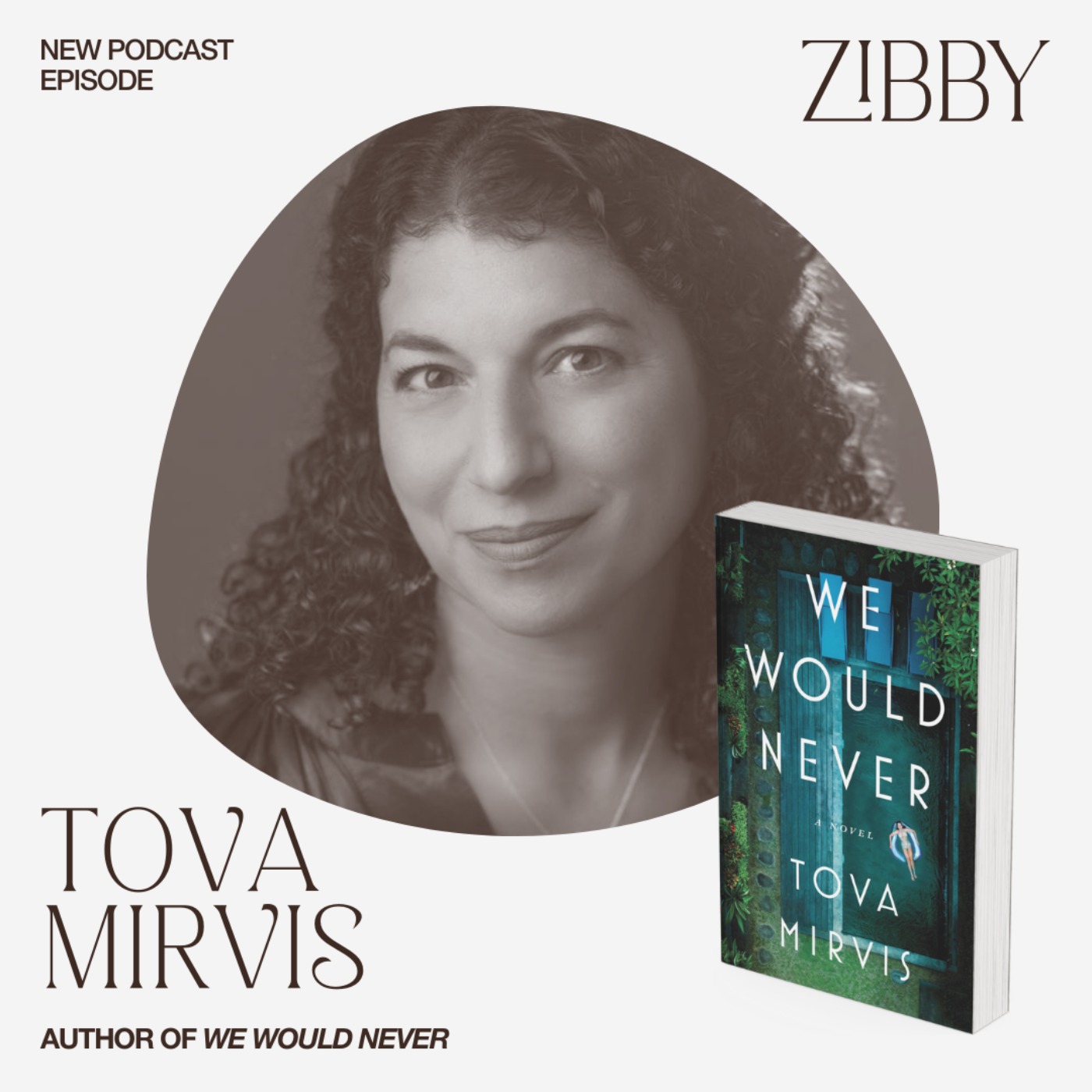
Hi, this is Zibby Owens and you're listening to Totally Booked with Zibby, formerly Moms don't have Time to Read Books. In my daily show, I interview today's latest best selling buzziest or underrated authors and story creators whose work I think is worth your time. As a bookstore owner, publisher, author, and obviously podcaster, I get a comprehensive look at everything that's coming out and spend my time curating the best books so you don't have to stay in the know, get insider insights and connect with guests like I do every single day. For more information, go to zibbymedia.com and follow me on Instagram ibbeowens Tova Mervis is the author of We Would Never A Novel. Tova is also the author of the memoir the Book of Separation, which was a New York Times Book Review Editor's Choice and excerpted in the New York Times Modern Love column. She is also the author of the novels Visible City, the Outside World, and the Ladies Auxiliary, which was a national bestseller. Her latest novel, We Would Never, is being published this month. Her essays have appeared in many publications including the Washington Post, the Boston Globe Magazine, Real simple, and Psychology Today, and her fiction has been broadcast on npr. Welcome Toba. Thank you so much for coming on Totally Booked to talk about We Would Never A Novel.
- [01:24]
Tova Mervis
Thank you.
- [01:25]
Zibby Owens
Congratulations.
- [01:26]
Tova Mervis
Thank you so much.
- [01:27]
Zibby Owens
Okay, I have to say, in my entire life, I have never read a first book of a chapter that ended with me gasping. Like, I literally was like, my kids were in the room and they were like, what? What? I was like, no, it's the book. It's the book. So to have a twist and a beginning even like that, it's like, okay, settle in, here we go.
- [01:47]
Tova Mervis
Oh, thank you so much. I really appreciate that.
- [01:50]
Zibby Owens
And then of course, the rest of the book was fantastic. And these characters, oh my gosh, I feel like I would recognize them walking down the street. Tell listeners what We Would Never is about, please.
- [02:00]
Tova Mervis
Sure. We Would Never is about a close knit family in Florida who might or might not have done something unimaginable in the wake of their daughter's divorce. And I guess it's a mystery about a murder, but I think really it's a mystery about family love and loyalty and about like, very hard to solve questions of anger and escalation and forgiveness.
- [02:23]
Zibby Owens
And I know that you wrote a memoir, which now I have to go back and read and I'm very excited to do so, about how you grew up in the orthodox faith and you ended up getting divorced and the main character in this book is divorced. And there are all sorts of text messages and all this, like, how much, like, did you bring? How much did you bring your own? Like, I'm divorced and I don't know, there are also, like. Like, what could you say? What could you not say? What was true? What was not true?
- [02:50]
Tova Mervis
I really appreciated a lot of your writing, which I read about divorce as well, because, you know, when you write memoir about divorce, it's a tricky subject. You know, a no one's wish list in a divorce is an ex wife who's writing a memoir. And so it's just. No, you just tread carefully because there's children and family involved. And so my memoir, the Book of Separation is about, you know, is about a divorce and leaving a religious community.
- [03:11]
Zibby Owens
Really.
- [03:12]
Tova Mervis
I guess it's sort of a late stage, coming of age story about trying to find my own voice. But in writing that, you know, I had to be careful to some degree. It wasn't the place to, like, dish it. All fiction is so great because you get that freedom. And so, you know, my divorce was not like this one. It was not murderous. It was not, you know, it wasn't fun, but not this bad. But in writing about this, you know, I wrote. I took a true crime story, this real life story in which a divorce ended in a murder. And, you know, we hear about these stories from time to time. And I always feel like, you know, how does, you know, what's the difference between that kind of divorce and the regular divorce? That is horrible. But you get over it and you move on. And everyone, to whatever degree is possible, carries on. You know, no one kills each other. And. And I think. But so what I did use for my divorce, I didn't use the facts of it. It wasn't what happened, but I was able to pull on, I think just the emotional texture, the way that divorce is so destabilizing, it unmoors you from, I think, who you imagined you were in the world or what your life was gonna look like. It shakes the way people see you, how you see, you know, even friendships, everything is caught up in that divorce vortex. And so that was something I was able to pull on for this book.
- [04:28]
Zibby Owens
Wow. And I know that's only part of it, but it's sort of the basis of all of it, is this fracture. And what I particularly loved is how you showed. What is her name? I'm so bad with names. Every single book. What is the main character's name? Haley. Sorry. Sorry.
- [04:43]
Tova Mervis
Anari.
- [04:44]
Zibby Owens
I loved how you showed Hailey sort of losing her light, so to speak, and how their relationship slowly unraveled because Jonah was pulling her away. And how it's so easy for this toxicity to get into your family of origin, as you like, are eager to please your husband, trying to save your marriage like that, slow pulling away. And Sherry's reaction to this was just so great. As her desperation to maintain close ties with her daughter escalates.
- [05:15]
Tova Mervis
I mean, a marriage, people say you don't just marry the person, you marry the family. And I feel like you don't just divorce the person, you divorce the family. And it has repercussions, you know, for a family is a system of interlocking pieces. And so when Hayley's marriage becomes complicated, it affects the family structure, especially because the main issue that she and her husband Jonah fight about is about the family. And what was the most common things people fight about in a marriage are money, sex and family. I think I once heard they fight about family and how involved, how involved this family is going to be with their marriage. Are they going to see them every week, every month? Are they never going to see them? And I was interested in the in law relationship, how Haley is able to forgive her mother for being maybe, you know, a little intrusive, a little much, because she knows that that intrusiveness comes from a place of love. But it's harder when you're an in law. It's harder, I think, to hold on to that understanding that, yeah, you know, roll your eyes, maybe get a little annoyed, but my mother loves me. And so that was so fraught in their marri. And so, you know, in writing the book, I kept thinking of, you know, what are the things I have to lay out to, you know, what are the sort of explosives I have to lay down in order for everything to come together. And that sense of, you know, for Sherry, this mother in law, she wants to be close to her kids, she wants her children to love her, she wants her in laws to be close to her. And when her son in law, Jonah, really does not like her, it wounds her. And that wound, I think, is also part of what lays the groundwork for what eventually happens in the novel.
- [06:51]
Zibby Owens
Yes, very true. Oh my gosh. Well, you could look at Sherry from the outside and think like, as you're saying, intrusive and all these things, but you make her so likable no matter what she does. Like, you see all her intentions. And I love the scene where her husband Saul is sort of overhearing this Time where Jonah is sort of bad mouthing his wife and he doesn't interfere, but he's standing there saying, like, if you only knew she would do anything, anything for us. Like, you totally don't get her at all. And he doesn't say anything but just that, that instinct that even though she can be annoying or whatever, like she would do, you know, like this, this is such a good, good hearted woman.
- [07:36]
Tova Mervis
I mean, I feel like, you know, it's so easy to knock, like, you know, the overbearing mom, but I feel like, you know, I have three kids. Who among us has not had our overbearing moments when you feel like your child is being hurt or you feel like your child is in danger? I think that question was really at the heart of the book. We all say, you know, I would never do that and I would never. And I don't think I would ever, you know, murder someone, for example. I really don't believe I would. But most of us I don't think would. But, you know, but do you know for sure what you would do in situations that you really cannot imagine, especially when it comes to your children? And I felt like for Sherry, you know, you know, I spent a lot of time trying to craft that her as a character where she was intense and, you know, somewhat intrusive maybe, but I never wanted to let go of the feeling that this is from love and protectiveness. And I felt like I always wanted to have those two pieces of her in conversation with each other so that you couldn't just be like, oh, terrible mother, overbearing. I'm like, it's never so simple. And maybe with all the characters, you know, in any book, it's never so simple. I mean, I think part of what I love about writing fiction is you get to go inside, you get to see people in all their complexities. Even people who do something really bad. Like my character is ultimately, or maybe don't do it, we'll give everything away. But you get to see people in their complicated states. You get to understand their pain, their weaknesses, their fears and that. And I think that's the real pleasure of writing and reading fiction, to be able to do that.
- [09:06]
Zibby Owens
It's so true. Well, you have early on when you're describing Sherry and you're saying, you know, she keeps busy. Like she has this in her day and that in her day and she's in a book club and, you know, she sees her friends and plays tennis or whatever she does, you know, but it just like doesn't replace what it was like having three kids at home. And it made me so sad. It was just like, you know, what does happen? I mean, I still have kids at home, but they're gradually growing up. And you know, what happens in that aftermath stage which takes up the rest of life and how do you fill it?
- [09:42]
Tova Mervis
Right. I thought so much about the idea of empty nesting. So my three kids, you know, and I started the book five or six years ago. They were a little younger, but now I have a 25 year old, a 21 year old and a 17 year old who's in 11th grade. And so I think, you know, you always take parts of yourself when you wrote. I think I just channeled that anxiety. I feel like, you know, I feel for the idea of my youngest leaving home. I mean, for, oh my gosh, so, you know, decades, my entire life, you know, besides, I've written and I've, you know, done lots of other things, but the core of my life has been, you know, what time do I have to pick the kids up? You know, what, who has to be where, when, and what do I need to do for the kids? And of course you still have those relationships when they're adults. But I think I have a lot of anxiety about that change and that question of it's an identity shift, I guess, as you moved on to a different phase where so much of my identity has been about having the hands on work of kids at home. And so I think I was able to sort of give that to Sherry and maybe turn the volume up on a little bit and explore what happens to your sense of self. And I think for Sherry in particular, I think she feels like everything has been invested in the kids. There hasn't really been anything else. And what if they don't just leave home? But what if there's a distance? What if they don't want to come back home? What if one of Sherry's children is estranged from her? Which felt to me like, you know, one of the most horrifying things that could happen with a child. And that sense of what if you've given your life to your family and in the end you end up alone? And that, that anxiety, I think, is what fueled a lot of her character. And I was able to just take my little nagging worries about like, oh, no, they're getting old, they're growing up. And just, you know, something about putting it on the page and then pushing it further, be like, okay, what if you were really crazy? What if you did something really radical because of that Fear.
- [11:25]
Zibby Owens
Wow. Well, I so relate to that. I feel like, I mean, you must have. Well, maybe not, but I have days without my kids when they're with my ex. And then when like pickup time comes, I can't even work. Like, I'm so used to pick up at a certain time, like, even in my workday, like, I have to like get up or like go do something else or like, because I'm so used to that, that rhythm of life and to think it's like stopping altogether. I don't know.
- [11:50]
Tova Mervis
Right. I mean, one of the really hard things about divorce is of course not being with my kids every single day. We had a schedule where I did all the pickups, just logistically, even if they weren't with me one of the nights. But there were weekends when I wasn't with the kids and, you know, when I had three little kids running circles around me. If you had said to me, you know, you're going to have two days without your children, I would have been like, oh, a vacation. But, you know, when it came, it didn't feel like that. You know, it felt bad. I felt like a piece of myself was taken away and they always come back and I, you know, it's been years now. It's been 12 years. But, you know, I got used to the rhythm of that. But it's hard. And, you know, that was one of the things I was able to pull on for the book too. The sense that, you know, in the novel Haley and her ex husband Jonah have a small child where it's even harder. You know, they have a 3, 4, 3 and 4 year old little girl as the book goes on. And just that sense that the child not being with you, you feel like a piece of you is living other life in another house and you don't have access to that. And that is so unmooring, I think, as a parent. And that was one of the other, you know, I guess maybe writing about it is, I don't know if I'd say cathartic, but it's something, it's a way of like thinking about it on the page and, and getting to think about just the pain of your children not always being with you. It's, you know, there are many pains of divorce and that is certainly one of, you know, one of the biggest ones, I would say.
- [13:04]
Zibby Owens
Yes, thank you for that. You have another storyline where, where not really another one. It's all about the family. But Nate is striving to please his dad. He goes into the same medical field and he's just like, was never the perfect kid and now wants to redeem himself by being this top doctor and revolutionizing the practice. And his dad is like, not that into it. Tell me a little bit about this push pull of like, the older generation and wanting to please. And yet are you pleasing or are you further antagonizing?
- [13:38]
Tova Mervis
Right, right. In the novel, Saul, the father runs a dermatology practice and his son decides to. Goes to medical school and decides to also become a dermatologist, which everyone is sort of surprised about because he was always sort of the antagonizing child, the kid who enjoyed pushing his father's buttons and making him angry. And then he decides to follow in his father's footsteps, I guess both as an homage to him, but also maybe in some ways to sort of increase that sense of competitiveness or maybe most of all, desire for approval. And I think that, you know, Nate as a character, the son is kind of impetuous. He's brash. He's a little, sort of has a dark sense of humor. But I think he was probably my favorite character to write. I think underneath his sort of jokey exterior, I felt like he was this, like, broken little boy. And that part really, like, was fascinating to me. Maybe. I felt for him a lot as a character. And so he goes into practice with his. With his father, and he has lots of ideas for how to change the practice. His father is sort of an old school dermatologist and he wants to turn it into more of a cosmetic dentistry practice. I spent many, many hours down the rabbit hole learning about dermatology practices and tensions in the field and Googling things. And sort of sometimes you feel like, why am I Googling this? Like, where am I? Why am I on this? Watching a webinar about, you know, currents and dermatology, but yet here I am doing this. And it was very fun. You know, it was a fun theme. I, you know. The novel is based on a true story that was set in Florida. And the family that allegedly or has been arrested for, for committing a murder, they were a nice family of dentists in South Florida. And I knew I was going to change a lot of things, so I gave up. It was a painful day when I decided they couldn't be dentists. There's something about, like, the sharp little tools and like the cavity in the teeth and like the cavities in their souls, kind of like I could make use of. But I thought of dermatology, which felt like it had a good. It felt similar enough that I had metaphorical possibility. I was, you know, I thought about like the malignancies inside of us and what's visible on the surface. And because the book is set primarily in Florida, I felt like dermatology was a good, a good place. I spent a lot of time in Naples, Florida because my husband works there part time. And so there's just so many dermatology practices. So I was able to sort of use that a little bit. But it was fun to write. It was fun to write about a medical practice also. And dermatology just, you know, I would also Google like skin condition. Just the descriptive possibilities was really enjoyable too to write about.
- [16:08]
Zibby Owens
Well, you definitely wrote about Florida in the most positive way. I feel like Florida has ever been depicted in an album.
- [16:15]
Tova Mervis
I have come to love Florida. I mean, it's a crazy place in so many ways. It's, you know, there's much to be said about Florida, but I think what I, what I, the real story was said in Florida. I couldn't give up Florida. I was like, I will give up every detail, but I will not give up because it just, this book had to take place in Florida. It just, I felt like I wanted to think about the landscape of Florida. The, the lushness, the greenery. Sometimes when I'm down there, I just feel like if I can not think about anything else to do with Florida, I feel like it's so green, it's so beautiful and lush and tropical and also so swampy and so sticky. And I felt like for a family that is so enmeshed, I felt like Florida was the right landscape to do that. And I also thought about in Florida, I feel like there's this contrast between, you know, the manicured botanical gardens where every flower is like beautiful in place. And I drew a lot from Naples. Even though the book is set in West Palm beach, every single. There's nothing in Naples, Florida that's not absolutely beautiful. Like the. Every little park is just. I feel like someone spends their day tending to this, this little flower bed. But at the same time there's always this potential for like a wild storm to come through and uproot everything where like it's civilized, you know, the phys. Physical beauty is structured, ordered and yet always on the verge of crazy. And I felt like that in some ways was a theme I wanted to play with in the book. I feel like my marriage is like the world of civilized order and law and everything follows the, you know, the so called rules and then divorce rolls through and you're just in the wild. You're in this swampland. You're in a hurricane where nothing is ordered anymore. And so. And I just. I loved writing about the gardens. And Sherry swims laps. You know, she's a big swimmer. And so I don't really swim much, but I love to run. And so I used my, like, running obsession for her with swimming. That sense that sometimes, you know, when I feel myself, like, over overwhelmed with things, there's something about the back and forth or the repetitive, repetitive motion that is soothing. And so I use that. And, you know, I spent much time also, you know, my Google searches, if someone ever looked at my Google searches, it would be like, dermatology, hitman murder, beautiful pools in Florida. And so just Googling, you know, just trying to get the landscape right. Because I think, you know, as a writer, there's certain things that was just fun. It was just fun to like, look at pictures of pools and be like, what color tiles should they have? You know, what does this swimming pool look like? To just create the visual world that I wanted the book to take place in.
- [18:44]
Zibby Owens
Well, it. It's a good symbol because of how immersive the book is and how the pool brings people together. Like, it was such a happy place for the kids when they were little. And then even Sherry, in her most desperate moments is swimming again. And Jonah, like, hating the statue and all of that. So I just love it. Plus, who doesn't want to spend time thinking about swimming in the sunshine? It's like, it's like the pitch blackout at like the morning.
- [19:13]
Tova Mervis
There's like a freezing rain ice storm right now. And I was like, I don't know if I can get down my driveway for a few hours because it's a sheet of ice. Yes, it was very nice. I wrote a lot of the book during the pandemic also, so in this room right here. So it was just very nice to be able to imagine myself into like a lush, swampy Florida world while I felt so holed up here.
- [19:34]
Zibby Owens
And how about writing about the Jewish faith and all of that?
- [19:38]
Tova Mervis
Well, in my. Most of my other books, I've written four other books, and really, for the most part, they have been very much about Jewish community life. My first book, the Ladies Auxiliary, was set in the Orthodox Jewish community in Memphis that I grew up in. My family has been in Memphis since 1873. So I have this long standing Memphis connection.
- [19:56]
Zibby Owens
Wait, how did you get to. How did they end up getting to Memphis?
- [19:59]
Tova Mervis
So they. The ones in 1873 came from Germany, and you Know the joke is always that someone went to Memphis because someone had a cousin there. But no one knows who that cousin was. But they, they I think did have a cousin. And Memphis is on the Mississippi river and at the time it was a big trading center and so the first cousins went there and then more people came. And I recently have been doing a lot of research into my family history because of a new book I'm writing that is going to be a several gener Southern Jewish novel. And I found the shipping records that my great grandmother who came later in 1921 came to Memphis. I went to Ellis island and was able to find the records when she came. And you know, it's amazing. It has like the family came from Gretna, Poland and it has destination, it says Memphis, Tennessee. And just you know, it was, it was amazing to see it. I knew I've known this story but something about seeing the actual records of when they came. So, so much of my writing, for me being a writer was always so tied up in wanting to write about this small, close knit community. On one hand, you know, what feels so nice about being part of a tight knit community, that sense of belonging somewhere and being rooted and yet at the same time what is hard sometimes about feeling like there's one way to be or if you don't fit in, you're on the outside. And then certainly my memoir was so much about wrestling with my own Orthodox community, my own questions of what was I born into and what do I actually believe for myself. And, and maybe just the coming of age moment of deciding to reshape my Jewish identity, to still hold on very strongly and proudly to my Jewish identity. But my observance and my affiliations within that shifting and asking questions about, you know, what do I actually believe in and what do I want to belong to. And you know, in this book the characters are Jewish and you know, I was always in conversation with the true story. And so the true story, you know, it was, I think part of why it was so shocking to me was it was a nice Jewish family in South Florida who apparently murdered their son in law. And the shock, it felt close. I knew the person very tangentially and had many friends who did as well. So it felt this close sense of Jewish connection. And so I decided to maintain the fact that they were Jewish. But it wasn't really at the forefront of what I was thinking about and writing about them. I didn't feel like their Jewishness was central. But the one way that I was really interested in Exploring it from a Jewish perspective was thinking about the theme of forgiveness, which is of course a universal theme. But in particular, I was interested in the idea of Yom Kippur, the Jewish holiday of forgiveness. And you're really interested in asking the question of what does it mean to be able to forgive someone and what happens when you're not able to. I felt like in the book every character has some relationship to the idea of forgiveness. And Sherry thinks about it in terms of Yom Kippur. This sense that, you know, it's one thing to say, will you forgive me? And ton to give you a quick apology, but, you know, what is the real process of forgiveness? Like, it's, you know, it's a process of letting go of pain and being willing to talk about pain. And I think a lot of the characters in the book are very focused on this word, never. You know, I will never forgive you. I will never let go of this. I will never do this. And I feel like never in some ways is the opposite of forgiveness, where you get to turn back and you get to relent. And that for me, you know, I think maybe my favorite Jewish holiday is Yom Kippur. It's certainly not the most fun holiday, but I feel like the one that feels, you know, I have a real sense of meaning connected to it, you know, still about just that sense that you can undo, you can undo the past or you can move differently, move forward differently from the past. And so that was a theme that really was close to me when I was writing the book.
- [23:32]
Zibby Owens
Oh, I love that. Yeah. I would not say am Kippur is my favorite holiday, but anyway, it's not my.
- [23:39]
Tova Mervis
It's the one that speaks to me. I would much rather like make, you know, potato latkes. But it moved me.
- [23:46]
Zibby Owens
Wait, tell me more about this new book.
- [23:48]
Tova Mervis
So I, you know, it's funny, after every book I've written, I always say that I'm going to write a several generation Southern Jewish novel. I've been really, you know, I have this long standing family history and, you know, and everyone always asks, you know, how did your family get there? And I grew up with this sort of this anomalous world of Orthodox Jews in Memphis, which, you know, growing up, I thought that was like a very normal thing to be. And then when I went to school in New York, my friends were like, you know what? You know, Jews in Memphis. And after every book, ever since my first book, which was 25 years ago, which is crazy to believe, I was like, okay, I'M going to write the Southern Jewish novel. Novel. And I keep getting weighted after every book. I start it and then I don't know why, sometimes I just always sigh. I'm like, oh, I'll do that next. And then it happened after every book, after my memoir, I was like, no, this is the time. This is the time to write this big novel. Research, you know, dive in. And I started it. And then I got waylaid into a different novel. I was going to write a novel. We have live in a very interesting old house in Boston that Timothy Leary lived in for a year. And I was like, I want to write a novel about the house and Timothy Leary. And then after a few months I was like, I'm not interested in Timothy Leary. I can't stop. Like it takes me forever to write a book. I was like, I can't do Timothy Leary for four years, five years. And then I was like, oh, my Memphis novel. And then I got interested in this true crime story. So I was like, no. But right now, though, I am writing it. There is no, no way late. I feel like I, if I don't write it now, I'm not going to. But I'm interested in exploring these several generations. And in particular there's a story that is told about my great grandmother, the one who came in 1921. So she was sort of the late arrival to Memphis and she came from Grudno, Poland. And the only story I really know about her, even though I'm named after her, was that one day she went digging for potatoes in Grudno and her shoes were stolen. And just this little story, everyone in my family tells it differently. My grandmother used to tell it as sort of this coming of age story coming up coming to America story, you know, this happy immigrant story of they left because of the danger and now look, they settled in Memphis. And my mother told it as a fairy tale. She wanted to write a children's book about the little shoes. And then once my mother and I started digging into what was 1920, 1919 Grudno, like a war torn chaos. And we started to ask questions about this story and wonder what the story really held, what story was not being told underneath it. And so I wrote a few short stories about it. They're all called potatoes. And so I'm really taking those early short stories and turning it into a larger story about what happened to this great grandmother. And also what family stories do we tell and how do they change with each generation of telling it? And of course, right now it's called Potatoes, which will probably change.
- [26:29]
Zibby Owens
Oh, I love that. Amazing. I can't wait to read it. Well, first I'm going to read your memoir.
- [26:36]
Tova Mervis
Thank you very much. I appreciate it.
- [26:38]
Zibby Owens
Well, Tova, thank you for this totally riveting and really deeply resonant, sort of personally to me, at least, you know, book. And it's, it's really great. And I'm so glad to have talked to you about it.
- [26:54]
Tova Mervis
Thank you so much. I so appreciate it. It's great to talk to you.
- [26:57]
Zibby Owens
Okay. Thank you. Thank you for listening to Totally Booked with Zibby, formerly Moms don't have time to read books. If you like, if you loved the show, tell a friend, leave a review, follow me on Instagram Iby Owens and Spread the word. Thanks so much. Oh, and buy the books.