Loading summary
Transcript68 lines
- [00:01]
Zibby Owens
Hi, listeners of Totally Booked with Zibby. This June, we have one episode coming out every single day. And to celebrate that, I've started the June listening club. You can sign up on zibbedia.com or you can just keep listening and every day there'll be a little quiz on Instagram. We're giving prizes away every single day this month. You're gonna get amazing stuff. You would all be invited to a party and a zoom at the end of the month to celebrate with a special certificate. So sign up on Zibbe Media today. Make sure following Totally Booked with Zy on Instagram and get ready to listen. Make it a challenge. June is crazy. Find some airtime for yourself. Put it on in the background. Get ready to listen, learn, laugh, and enjoy life.
- [00:50]
Virginia Evans
Ready to order?
- [00:51]
Zibby Owens
Yes.
- [00:52]
Virginia Evans
We're earning unlimited 3% cash back on dining and entertainment with a Capital One Saver Card. So let's just get one of everything. Everything.
- [00:59]
Zibby Owens
Fire everything. The Capital One Saver card is at table 27 and they're earning unlim 3% cash back. Yes, Chef. This is so nice. Had a feeling you'd want 3% cash back on dessert.
- [01:10]
Virginia Evans
Ooh, tiramisu.
- [01:12]
Zibby Owens
Earn unlimited 3% cash back on dining and entertainment with the Capital One Saver Card. Capital One what's in your wallet?
- [01:18]
Virginia Evans
Terms apply. See capital1.com for details.
- [01:20]
Zibby Owens
Better Help Online Therapy bought this 30 second ad to remind you right now, wherever you are, to unclench your jaw, relax your shoulders, take a deep breath in and out. Feels better, right? That's 15 seconds of self care. Imagine what you could do with more. Visit betterhelp.com randompodcast for 10% off your first month of therapy. No pressure, just help. But for now, just relax.
- [02:02]
Hannah Berner
Hi, guys. It's Hannah from Giggly Squad with some around the corner. I wanted to tell you guys how I'm staying comfy and stylish. Lululemon is my secret weapon. There are plenty of copycats out there, but nothing compares to the Lululemon fabrics and fit. I've literally had my pair of Lululemon leggings since college. And I'm out of college. I know I don't look it, but I am. The quality is next level. I I especially love the Lululemon Align collection. It's made with this weightless, buttery, soft nulu fabric that feels like next to nothing. It's so soft. Whether you're in align, pants, shorts, a bra, tank, skirt, a dress, you get non stop flexibility in every direction so you can stretch the summer limits align, even wick sweat and as a sweaty girl, I love this. You know it's going to be my best friend when I play tennis this summer. Shop the Aligned collection online@lululemon.com or your nearest lul.
- [03:01]
Zibby Owens
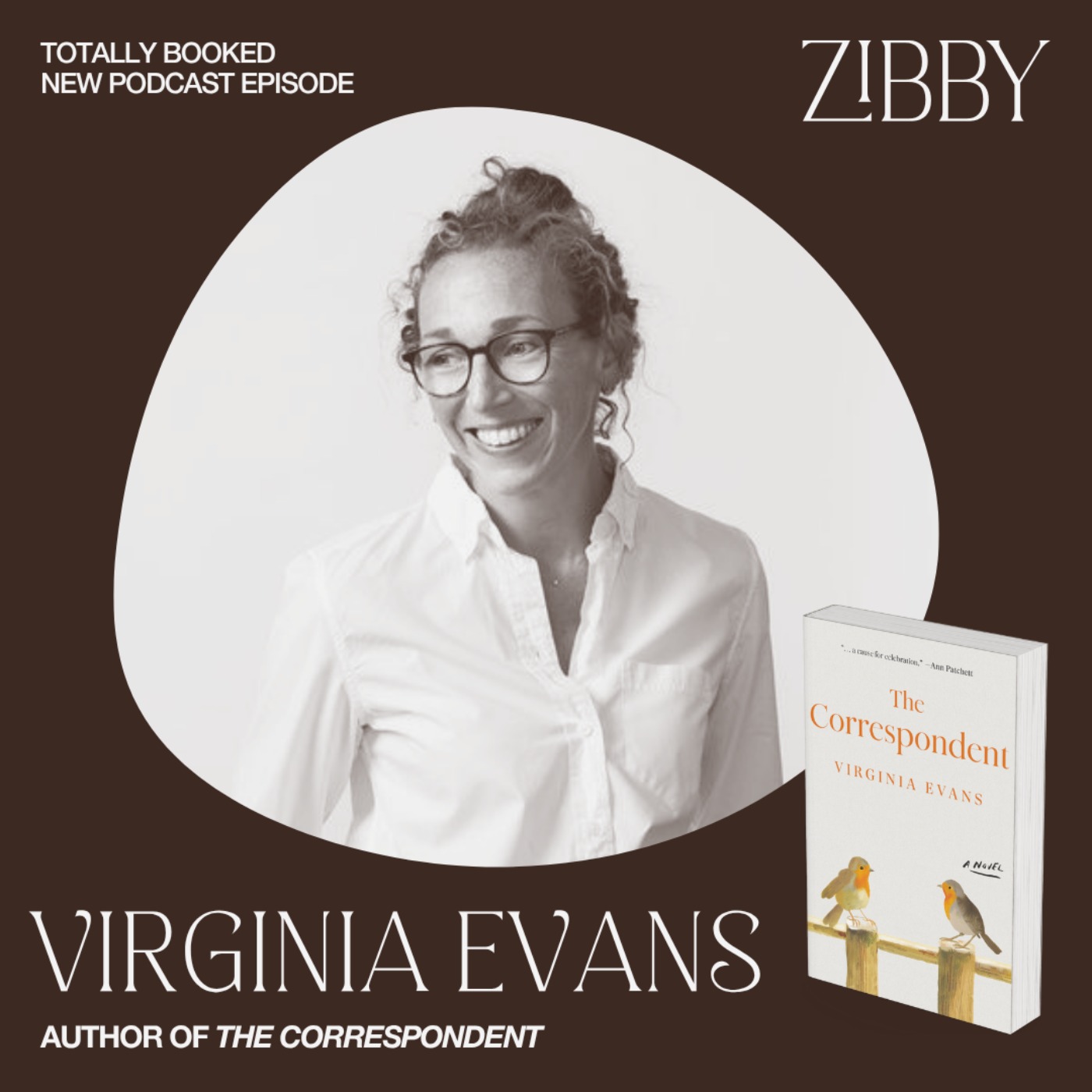
Hi, this is Zibby Owens and you're listening to Totally Booked with Zibby, formerly Moms don't have Time to Read Books. In my daily show, I interview today's latest best selling, buzziest or underrated authors and story creators whose work I think is worth your time. As a bookstore owner, publisher, author, and obviously podcaster, I get a comprehensive look at everything that's coming out and spend my time curating the best books so you don't have to stay in the know. Get insider insights and connect with guests like I do every single day. For more information, go to zibbedia.com and follow me on Instagram. Iby Owens Virginia Evans is the author of the A Novel. Virginia is from the Northeastern United States. She attended James Madison University for her bachelor's in English Literature as well as Trinity College in Dublin, Ireland for her master's of Philosophy and Creative writing. She lives in Winston Salem, North Carolina with her husband, two children, and her red Labrador. Welcome Virginia. Thank you so much for coming on. Totally Booked to talk about the correspondence.
- [04:11]
Virginia Evans
Thank you so much. Thanks for having me.
- [04:13]
Zibby Owens
And I know this episode will come out later, but we are talking just after your pub day, which is so exciting. So how did that feel getting the into the world?
- [04:21]
Virginia Evans
It was honestly just defied. It defied description for me. I waited so many years to have this happen and I I don't think I ever, maybe never really thought it would. And so all during pub day I felt a little bit like I was floating above my life and observing it or something magical. Sort of doesn't even touch it. But that's the closest.
- [04:45]
Zibby Owens
That's so amazing. Okay, tell everybody about the book and then I want to hear more about this journey to becoming a published author as well.
- [04:52]
Virginia Evans
Thanks. The book the Correspondent. It's it's about a woman named Sybil Van Antwerp. She's in her 70s when we start. The book is written entirely in her letters and emails, primarily handwritten letters, but some emails thrown in. And it starts off at the beginning. She's just turned 73, I believe. I was just thinking was it 73 or 74? But I think she just turned 73. She sort of is. She's retired, she's divorced, she lives alone. And her attitude and kind of her perspective is this is the last kind of era. This is my last kind of movement of my life. But at the beginning of the book, some things start to happen. One of them, you know, from right off the bat, that she's starting to go blind. And then she starts to receive some. She's a big letter writer. She starts to receive some letters that she wasn't expecting. There's a little bit of a mystery of a connection from previously in her life. But I think. And so the book is really about this era of her life that she thought of as the end and sort of the denouement. But it turns out. I don't think it turns out to be that way. It turns out to be very full. And when I really. What the book is, to me, it's like a puzzle, and every letter is a piece. And so as you're reading the letters, you're sort of taking a piece of information from her life and putting it in this puzzle. And I hope, and I think by the end, you have this full image of a person and the whole story of her life, and you get this, I guess, a portrait of her, of this woman.
- [06:25]
Zibby Owens
That's amazing. When I first heard about the book, I assumed it would be set 100 years ago when people wrote letters, maybe not 100 years ago. I was literally just cleaning out my desk and finding all these personalized note cards, and I was like, gosh, I haven't sent one of these in years at this point. So bad. But, no, it starts in, I think, 2012 and extends on to 2019, something like that. So it is contemporary. And then I also saw on the COVID how Ann Patchett had blurbed it. But then in the book, she writes a letter to Ann Batchett, like, right off the bat. And I was like, whoa, this is like fiction marrying reality. What is going on here?
- [07:03]
Virginia Evans
Yeah, she. She does. She's very bold. And. And Anne's blurb on the front has been such a. You know, that was such a kindness of her to read my book and. And to blurb it that way. But, yeah, letter writing is sort of thought of as very passe, but I did want to kind of bring it into. Bring it into modern, you know, modern times.
- [07:23]
Zibby Owens
And you have a couple emails in there, but mostly letters. And I have to say, by the end, especially, like, the last few missives and whatever, anyway, you just ended it on such a. It was just very emotional and just so great, you know. Anyway, I won't give things away, but thank you. It was such a great way to sort of wrap it up. Wrap up this chapter, really, of our reading chapter of this book. So anyway, why this format? Like, there are. Obviously, there's a whole epistolary genre, but I feel like, aside from Kim Fay's recent books, I don't know if you've read those.
- [07:59]
Virginia Evans
I keep hearing about them and now I've added. I've added them to my notepad of what I need to read.
- [08:04]
Zibby Owens
I mean, they're different, you know, and also they're smaller and, you know, just. I mean, that shouldn't be it, but, you know, different in terms of, like, those are two sides of a friendship. So it's. That's. It's a different. But it's a similar device. But anyway, why go back to this epistolary form, like 84 chairing crossroad. Wasn't that, like, okay, I'm so glad.
- [08:26]
Virginia Evans
You said that because I read that book with my book club and I loved it and I was so moved by it. And that book is very short, and those letters are, you know, those letters are so brief, and the book is so brief. But the letters. Spanish, I think 20 years or 25 years, but it was so moving, and I love that. And I think, you know, sometimes when I pick up. And I. And I have always been a reader, I feel I read pretty widely. But sometimes you pick up a book and you sort of feel like you have to take a deep breath and dive in and say, like, okay, I'm going to commit. I remember when I read Anna Karenina for the first time, I had to force myself to read like 35 pages a day. It was sort of like, you have to read 35 pages a day or you will never finish this book. And so that. That is one kind of, you know, one kind of important book. But then I remember reading 84 Charing Crossroad, and it was such a delight. It just felt so easy to read the book. It felt, you know, you would read the page. There's a Sincerely, you know, and it's done. And you can. And there's always a nice stopping point. You finish a letter, you can put the bookmark in, you can put it down. But also what I found is that I'd never really wanted to put the bookmark in. You know, I never wanted to. You know, sometimes when you're taking a. Eating a book that's like a steak, you sort of are, like, waiting for the moment you can put the bookmark in to, like, breathe and come up for air. When books are so dense. And I love those sometimes but with a book of letters. And I felt this way. There was that book, the Guernsey Literary Potato Peel Pie Society. That's a long title, but I think everybody knows what I'm talking about. And that was one, too, that, you know, you just kind of feel like, oh, this is kind. I'll just read one more. It's just one more page. I'll just read one more. It's one more page, and then you get to the end. And I love the. The lightness of that. There was like a sort of just an airiness about that book that I loved. And when I finished it, I thought, I can do that. This is sort of this, like, madness that has pushed me through throughout my writing life is reading something like. I remember the first time was in high school. I read the Grapes of Wrath, and I thought, I can do this, which is so insane. But I did think that. And I always kind of had that thought, I could do this. And so I. I thought, I want to try to write a book in letters. And that. So that was really the. That was really the catalyst was, I want to write a book in letters and see if I can do it. And then the story kind of started to grow after that. But the letters were my. Were my opening kind of incision.
- [11:01]
Zibby Owens
Oh, my gosh, I love that. And then. Am I making this up? Did you say that you had a family friend who lost a son, or am I confusing this? You did, right?
- [11:11]
Virginia Evans
Yep, it's right. And it's in the acknowledgments, which I had their permission to put in the acknowledgments. Obviously, that's very sensitive to them. But, yes, some really dear friends of mine, I had written the first, I think, draft or two of this novel, and their son got sick suddenly and was hospitalized. And over a really terrible three months, he grew sicker and sicker. And there was a lot of hope at the beginning that they would figure out what it was. And there was, I mean, hundreds of ideas of what it. Maybe. Maybe what was going on. And finally, after a couple months, it became evident that it was a matter that was not solvable. And he passed away on December 2nd of that year. He went into the hospital at the end of September. And so that whole era, I had been working on this book, and that the element. That element of grief and losing a child was already in the book. And then I walked through this very closely with these friends. I mean, my husband and I spent many days with them in the hospital, out of the hospital. You know, my Husband brought coffee to them, like, you know, every morning for weeks on his way to work. And, you know, during that time, that really shut down my brain to everything else and, you know, the books over here and my life's here, and that became sort of like, the only thing. And it was so strange because I had been writing this book, and then I. And then I was actually dealing with that situation, and it changed. I mean, it. It changed. It changed me. I mean, it certainly changed me, and it changed my husband and our family, but it also changed the book. And I went back into it when I finally kind of emerged from the pit later, kind of the following year in the spring, I went back to the book with this new. This new frame of reference of what that is for someone and what happens. And then I sort of went back and changed things and added things and took things out and realized. And still I haven't had that lived experience, although I think I originally wrote that aspect of the book out of my sort of primary primal fear as a mother of losing a child. But then, you know, we went through that, and it really did. It really did change the book. And I'm so thankful that you asked, because that's a huge part of. That's the story, and it's something that I want to say, and I want to say his name was Wade. His name was Wade. So I want to say that. Thanks, Frost.
- [13:56]
Zibby Owens
I'm so sorry for Wade's family, for all of you. I mean, it doesn't matter sometimes, like, you know, what the relation is. Is it a nephew? Is it a close friend? The labels don't matter. It's your emotional connection to somebody and the closeness and just that image of the coffee. I mean, how could it not change? You know? How could it not? It's, of course, it's everybody's worst nightmare, and.
- [14:21]
Virginia Evans
Right. Oh, yes.
- [14:22]
Zibby Owens
Oh, my gosh. Well, I'm glad, you know, selfishly, for the readers, that you didn't give up on the project, you know, because I would imagine at times you were just like, what does it matter? I feel like I get that way, like, whenever anything really bad happens, anything else, I'm just like, what does it even matter? Why am I even doing this?
- [14:41]
Virginia Evans
Yes, I definitely did. I definitely did have that. And I think, you know, there's a lot in this book that comes out of my own life experience. This book. I had written a different book that my agent had been trying to sell for a while, and it didn't sell, but she did this sort of beautiful dance of always saying, it's not selling yet, but maybe you should work on something else. I mean, she was very good at like not crushing my spirit but saying, you should probably start working on something else. And so I. When I had started writing this book, it was during COVID and we had been living abroad and we had moved back sort of before we wanted to and had maybe started discussing maybe we didn't want to move back and we had had to move back. And so I was writing it during that era of just a lot of sadness and a lot of grief and a lot of aspects of this book are pulled out of things that I was either dealing with then or had had been dealing with or people that I knew. And so I was writing this book because I was exhausted from the failure. And I've written several books before this and none of them have ever, none of them have ever gotten through the finish line of publication. And so I think I had so much grief and so much, I mean, really being crushed. I just was crushed. And I started writing this book as an exercise, I think, for myself, which is probably why the book has such audacious moves like writing in the voice of Joan Didion or. I mean it was things I just wasn't planning to show anyone. I was just writing it. I wrote it inside my closet. We didn't have space in our rental at the time. I shoved a desk in a closet. I mean, it's very, it was just low. It all came out of this very low kind of sad time. And then I. And I'm trying and I still can't quite remember how it happened. But my agent ended up. I gave it to her, she asked me for it or, or however. And she said, I think we could keep going with this if you want to. I mean, she was very open handed with me, but she sort of said, I think maybe it has what it take, what it would take to get through the, through the gate. So thank God, thank God she did because I, I told, I've told people. I had just started to think, I'm going to law school. I'm just going to go to law school. I'm going to do something else. I can't do this anymore. That's crazy.
- [17:12]
Zibby Owens
If you love to travel, Capital One has a rewards credit card that's perfect for you. With the Capital One Venture X card, you earn unlimited double miles on everything you buy. Plus you get premium benefits at a collection of luxury hotels when you book on Capital One Travel. And with Venture X you get access to over 1,000 airport lounges worldwide open up a world of travel possibilities with a Capital One Venture X card. What's in your wallet?
- [17:38]
Virginia Evans
Terms apply. Lounge access is subject to change. See capitalone.com for details.
- [17:42]
Zibby Owens
BetterHelp Online Therapy bought this 30 second ad to remind you right now, wherever you are, to unclench your jaw, relax your shoulders, take a deep breath in and out. Feels better, right? That's 15 seconds of self care. Imagine what you could do with more. Visit betterhelp.com randompodcast for 10% off your first month of therapy. No pressure, just help. But for now, just relax.
- [18:23]
Hannah Berner
Hi guys, it's Hannah from Giggly Squad. With summer around the corner, I wanted to tell you guys how I'm staying comfy and stylish. Lululemon is my secret weapon. There are plenty of copycats out there, but nothing compares to the Lululemon fabrics and fit. I've literally had my pair of Lululemon leggings since college and I'm out of college. I know I don't look it, but I am. The quality is next level. I especially love the Lululemon Align collection. It's made with this weightless, buttery, soft nulu fabric that feels like next to nothing. It's so soft. Whether you're in align pants, shorts, a bra, tank, skirt, a dress, you get non stop in every direction so you can stretch the summer limits. Align even wick sweat and as a sweaty girl. I love this. You know it's going to be my best friend when I play tennis this summer. Shop the Aligned collection online@lululemon.com or your nearest Lululemon store.
- [19:21]
Virginia Evans
See?
- [19:21]
Zibby Owens
Did you like from what age did you want to write a novel? Like how long?
- [19:27]
Virginia Evans
Yeah, I wrote my first novel when I was started when I was 19 and I think this is my ninth. I was just yesterday counting them on my fingers. I was like naming the titles and you know, kind of going through and then I realized there was one I had forgotten about. I think this is my ninth novel and obviously like some of the really early ones, that's all you're young and you know, maybe I wrote one when I started 19 and then maybe I'm 22 and then maybe I'm 25 and getting. But all those, through all that, that's me. That's my life. That's me growing up. That's me coming into my, you know, knowledge of. I don't know. I, I'm, I'm thankful, I'm thankful that maybe that this is the first one and it has it shows a little more of that. I'm a weather beaten sort of person and not so like fresh faced. I might have been my first, my first eight novels. But yeah, I think, I know the whole thing has been a huge learning experience and I'm grateful, but it was grueling. I mean it was, it'll be 20 years this fall. I'll be, I'll be 39, so 20 years.
- [20:35]
Zibby Owens
I had the same thing, by the way. I really tried to sell my first novel when I was 27 and it went out in submission and was rejected everywhere. And I was so crushed, like you said that I like didn't even try fiction again for over a decade. I was just like, I can't, it wasn't meant to be. I can't believe is so hard. I mean readers are fragile. You know, you can on the one hand think you can outdo John Steinbeck, right. And then on the other you're like, I can't even write an email.
- [21:05]
Virginia Evans
I know, and that's so true. And it's, you know, that, that whole experience, it's now, you know, now I have this experience of being published and having this really exciting start with a, with a cool publisher and with a great team and all that. And I think I do appreciate it more. I feel like I appreciate it more than anyone appreciates it. Like every time someone writes me an email, hello, you have a, you have a publicity call. I'm, I'm like, thank you so much. I just feel so grateful. I'm like, thanks. I'll go anywhere, anytime, whatever. You know, my agent's like, you can demand a little more. I'm like, no, I'm just so happy to be here. But I think that sometimes now people will say, you know what, it was all worth it. Like it was worth that. And, and I, and there is one part of that that's true. And I, and would I do it again? Yes. But it doesn't delete like the agony of being alone, rejected thousands of times. I mean hundreds, hundreds to board, like hundreds of queries to agents, you know, putting essays out on submission, putting short stories on some, you know, just this. I mean if I had a bucket of failure points and, and then this like one sort of beacon of okay, we did it. It doesn't, this doesn't delete that. But I'm not sorry for it. But it's still there. It's still part of like who I am, I think all of that. So it was tough, tough years.
- [22:37]
Zibby Owens
Maybe there is hope that one of the older ideas now with your new vantage point and now you have like a platform and such a big deal book coming out and all of you know, you could maybe resurrect.
- [22:49]
Virginia Evans
Yes, I have thought that and I do wonder. So we'll see. I feel open handed. If it does, great. If it doesn't, we'll just keep writing some new things.
- [22:59]
Zibby Owens
Well, I really appreciate you sharing all that vulnerability, which so many people can relate to. And it doesn't often get really adequately shared. So, you know, I think it. People are afraid. It makes them seem like, well, if I've had more rejections, then I must not be as good a writer as someone who just had their first thing right. They must have just been better. But that's totally not it. Yeah, at all. But still, it's hard to get past that.
- [23:25]
Virginia Evans
Yes, it is. And I, and if I had, if I wasn't here now, I would still be in the pit. So I just want to, I just never want to forget that. I don't want to forget that. And I want to say that. I will say it. I'll stand on every roof and scream it. Because I needed people to say that along the way. I'll never forget reading an interview with Elizabeth Strout and she talked about her journey and how many, like, job, jobs she had. You know, writing on the sides, writing in the wings, how many rejections, how many failures and getting to an older age and finally kind of breaking through. I always call, I always felt like. I feel like I'm like rocketing up like in Willy Wonka. And then you slam your head into that glass ceiling and that's how it felt for so long. And then finally it like shatters and you get through. And I needed to hear that. I needed to hear someone else say, this was my story. It. And, and, and now I'm. I did it. I just kept doing it and I did it and that. I can't tell you how many times I would read those little things or hear those little things along the years. You know, every couple of years hear an interview like that and think, okay, okay, I guess I can. I guess I'll try again. Roll it back, start over, you know, do something else. I'm thankful, I'm really thankful for that, for her specifically, but other people too.
- [24:43]
Zibby Owens
That's amazing. I love it. Okay, so what should we learn from Sybil? Like, what is, what do you want us to take away from her story, her life, her point of view? We put the book down and you want people to feel or think what?
- [24:58]
Virginia Evans
Yeah, I don't know that I would say I had, you know, a goal like that. When I was writing, I was just writing the story about a person. I was just. I think what I thought was I just want to tell some very normal person's story and show that every person's story is interesting. Every single person, no matter how sort of normal or boring or simple on the outside they seem to be, that everybody has this story. I mean, I think about how I see my own life and what I think about. I think, look at my life. Look. Look what has happened in my life. But maybe someone else would be like, oh, she just. She's just a lady that lives, you know, lives on the street, whatever. But, you know, that inside, you know, I have had this big life. And I think when I started writing, that was what I was wanting. That was what I was wanting, was to take a simple, kind of distant view of a person and then open the door, climb inside and tell the story of what had happened and what was happening. And so at the end of the book, I think now, in hindsight, looking at it and kind of. I haven't really fully reread the whole book in its entirety again, and maybe I never will, but I've sort of flipped through and reread some things, and I know what. End of the story, I think. I hope people will feel the freedom to forgive themselves and to say, we all make huge mistakes. All of us make huge mistakes. I've made huge mistakes and small mistakes, and I've messed up and hurt people. But also, I'm a human being with dignity, and this is my life, and I can be forgiven. Like, I can have forgiveness. I can forgive myself. I can. Like, I. That. That's what I hope at the end of the book. That's the feeling, is that she can be at peace. Like, have peace. And I think, as you read the book, it is her story, but it's also all these other stories of the lives of people that are in her life. And everyone with their own massive portion of heartache and joy, like joy and sorrow in the same hand in every character's life. And I. And I want. I hope that the book shows how every person. People in this book, there's people all over the world in lots of different families and backgrounds and socioeconomic levels and political backgrounds and faith backgrounds, and that everybody in some way is the same. That they have joy and success and hope, and they also have sorrow and loss. And. And that's true for me. And I think that's true for everyone. And I hope that's like the book seems to resonate with readers from what the feedback I've received personally. And when I think about why, I think that's why, because everybody can read the book and say, yeah, that's me, or yes, that's my mother or, or that's some somebody I know or something. And so I hope when, I hope the feeling when you close the book is satisfaction and like fullness and warmth or something of. I don't know, just that it's okay. Like, it's okay. You're just a person and you are. You did your best, you're doing your best and if you messed up, it's okay. There's people that love you, you're loved, you can. I don't know, I just. I hope there's something in that, in the book which was probably what I was needing to hear when I was writing it. It was probably what I was needing to feel when I was. When I was writing it.
- [28:52]
Zibby Owens
You must be such a good friend. No, really. I bet your friends are like so lucky that you're a close friend because you are so like empathetic and present and have that like old soul wisdom to you and all that. So you can just tell.
- [29:08]
Virginia Evans
Thanks.
- [29:08]
Zibby Owens
Anyway. Are you making cards with this? Like, are there going to be the correspondent cards with these little birds and everything?
- [29:16]
Virginia Evans
I love that. Thank you for asking. I'm kind of. So have you seen the. There's a German book cover that is.
- [29:22]
Zibby Owens
No, I haven't seen it. I'll go look. Sorry.
- [29:24]
Virginia Evans
No, it's great, but it just kind of came out. But I have a dear friend who I grew up with and she's a painter in Charleston, South Carolina. And she's rather well known and you know, is already has her own big thing going, but she designed a cover and I sort of pitched it raw to crown and they didn't want to use it. And then I pitched it to Michael Joseph, which is my publisher in the uk, and they were doing their own thing. And so when Germany was looking for their cover, I sort of said it there, you know, I said, my friend designed this, she's a painter. And they took the COVID And so the COVID is her design of this painting of the writing desk. And so she and I have been talking about maybe she would design some stationary or some. Some like letter writing paper. But I do think it would. Do you think it would be perfect? I know that they were talking to Rifle Paper company about doing something, but I think it was like a giveaway. I'm not sure, but it would be. I do think that would be a perfect kind of.
- [30:23]
Zibby Owens
I have. I have this like, collab stationary thing with a company called Felix Doolittle. They, they paint too, though, so I don't know, but I feel like I should introduce you and maybe you could do something.
- [30:34]
Virginia Evans
Yes, I would love that. If only. Even if only for myself and for you. We can have a set. But.
- [30:39]
Zibby Owens
Yeah, I would love that for the letters that I don't write, but I wish I were writing every day. It's like Aspir stationery.
- [30:46]
Virginia Evans
Yes. I think that's. I think that's good. I think you can lean into that. It's like people who say, I want to be a reader, but I'm not a reader. I'm like, it's okay.
- [30:53]
Zibby Owens
Get a stack of books, look at it sometimes. Non practicing reader.
- [30:56]
Virginia Evans
That's right.
- [30:57]
Zibby Owens
Non practicing letter writer.
- [31:00]
Virginia Evans
That's right. It's okay.
- [31:02]
Zibby Owens
Well, Virginia, congratulations. I'm so excited for you. And now I'll just be, you know, watching as you launch into this world and, you know, live vicariously with all of your enthusiasm, which is so wonderful and something that I think people who sometimes stay in the industry too long get jaded and forget. And this is at the heart of why people write and why people read. And it's so wonderful to see. So congrats.
- [31:28]
Virginia Evans
Thank you so much. What a treat to talk to you.
- [31:30]
Zibby Owens
You too.
- [31:31]
Virginia Evans
Thanks.
- [31:31]
Zibby Owens
Okay, take care. Bye.
- [31:33]
Virginia Evans
Bye. Bye. Bye.
- [31:34]
Zibby Owens
Thank you for listening to Totally booked with Zibby, formerly Moms don't have Time to Read Books. If you loved the show, tell a friend, leave a review, Follow me on Instagram ibyoens and spread the word. Thanks so much. Oh, and buy the books. If you love to travel, Capital One has a rewards credit card that's perfect for you. With the Capital One Venture X card, you earn unlimited double miles on everything you buy. Plus you can get premium benefits at a collection of luxury hotels when you book on Capital One Travel. And with Venture X you get access to over 1,000 airport lounges worldwide. Open up a world of travel possibilities with a Capital One Venture X card. What's in your wallet?
- [32:22]
Virginia Evans
Terms apply. Lounge access is subject to change. See capital1.com for details. What makes a great pair of glasses? At Warby Parker, it's all the invisible.
- [32:30]
Zibby Owens
Extras without the extra cost.
- [32:33]
Virginia Evans
Their designer quality frames start at $95, including prescription lenses, plus scratch resistant, smudge resistant and anti reflective coatings and UV protection and free Adjustments for life to find your next pair of glasses, sunglasses or contact lenses, or to find the Warby Parker store nearest you, head over to warbyparker.com that's warbyparker.com hi guys, it's.
- [32:57]
Hannah Berner
Hannah from Giggly Squad. With summer around the corner, I wanted to tell you guys how I'm staying comfy and stylish. Lululemon is my secret weapon. There are plenty of copycats out there, but nothing compares to the Lululemon fabrics and fit. I've literally had my pair of Lululemon leggings since college and I'm out of college. I know I don't look it, but I am. The quality is next level. I especially love the Lululemon Align collection. It's made with this weightless, buttery, soft nulu fabric that feels like next to nothing. It's so soft. Whether you're in Align pants, shorts, a bra, tank, skirt, a dress, you get non stop ability in every direction so you can stretch the summer limits align even wick sweat and as a sweaty girl. I love this. You know it's going to be my best friend when I play tennis this summer. Shop the Align collection online@lululemon.com or your nearest Lululemon store.