← TranscendingX - Raw Conversations and Practical Tips to Break Through Stuttering, Communication Fears, and Become Who You Truly Are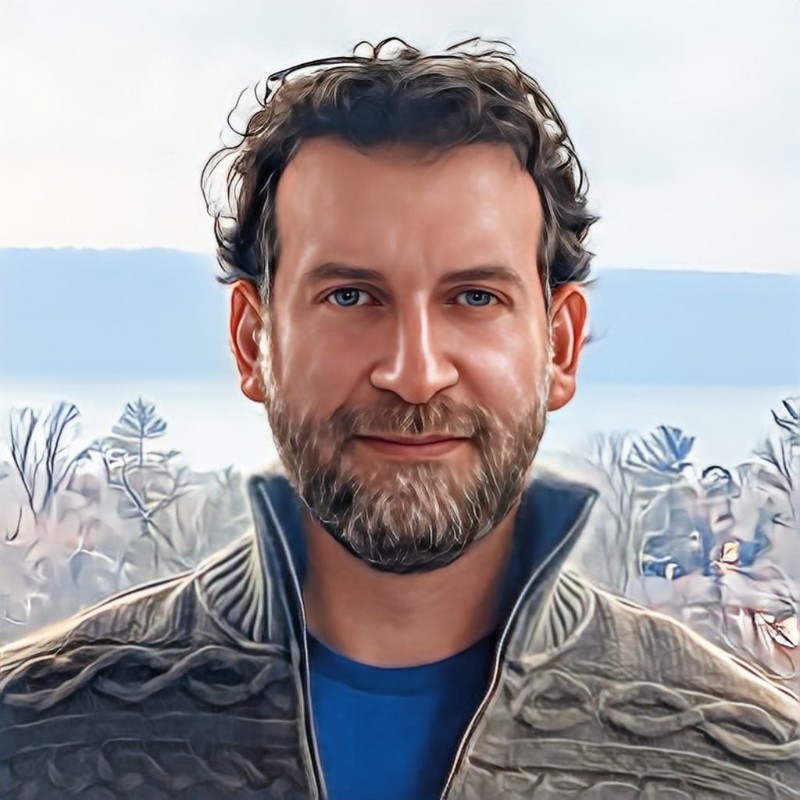
TranscendingX - Raw Conversations and Practical Tips to Break Through Stuttering, Communication Fears, and Become Who You Truly Are
#85 Turn Fear into Opportunity: Using Self Awareness and the Courage Muscle with Dan Greenwald
01:05:17
Loading summary
Transcript172 lines
- [00:00]
Dan Greenwald
I can't build a company. I can't be on a podcast. I stutter. I can't any. I can't story any language of scarcity. Story is story. You capture a story and you ask, how is it serving me?
- [00:19]
Ori Schneider
Because it's doing something.
- [00:20]
Dan Greenwald
It's doing something. Why is it there? It's aiming to keep us safe. If we could uncover how this story is keeping us safe, then we could decide what we want to do with it and then we're able to show ourself. I can be on a podcast. I can build a company.
- [00:40]
Podcast Host / Narrator
Welcome to TranscendingX. Whether it's stuttering public speaking or crucial conversations, all of us have something that holds us back.
- [00:51]
Ori Schneider
What if there was a way through it?
- [00:53]
Podcast Host / Narrator
I'm Ori Schneider from Schneider Speech, where we help people talk more and fear less. And I'm the host of the TranscendingX community. Join me as we talk to high performers, researchers, and everyday heroes to discover how they transform their challenges into breakthroughs. And most of all, find ways for each of us to transcend X in our own lives.
- [01:24]
Podcast Intro Narrator
In this episode, you'll learn what happens when you stop letting fear call the shots. My good friend Dan Greenwald shares his journey. As a six year old kid, he knew something was holding him back. What he didn't realize was that his stutter would ultimately be the key that would unlock everything that he would become. It would also help him discover a system to help other people tap into their potential and break through the barriers holding them back. Dan takes us on a walk through his journey, going back to retrace the steps of his family, Holocaust survivors. He takes us through the idea that everyone's got a stutter. He shows us how he went from a kid with minimal talking trying to say as little as possible, to becoming a master educator. And how the very things he struggled with became the credentials that empowered him to do so much of what he does today. We'll go through the background of how he built a system called3010.0 and you'll get some behind the scene insights of how Dan helped me build TranscendingX. I'm excited to share this candid conversation with my good friend, Dan Greenwald.
- [02:43]
Ori Schneider
All right, we're here. We're live.
- [02:46]
Dan Greenwald
Hey, hey.
- [02:47]
Ori Schneider
We are transcending X. Transcending X. So very few people know me as well as you, Dan. Been with the on this project from the very beginning. A lot of credit to you. A lot of this wouldn't exist if not for you. So I'm Excited. I think this is our third episode together, and we'll be going a little bit behind the scenes. People get to hear about, like, where we come from, how it came together, what we're doing now. Great and super excited and honored to have you.
- [03:13]
Dan Greenwald
Excellent. As you know, I love the time we get to spend. Love it.
- [03:18]
Ori Schneider
Awesome. Yeah, awesome. For the audience sake, we'll keep it to an hour for today.
- [03:22]
Dan Greenwald
Okay.
- [03:22]
Ori Schneider
But we'll.
- [03:23]
Dan Greenwald
We'll try.
- [03:24]
Ori Schneider
It's hard for us, but we'll do our best. What would you want people to know about you? What's the intro to Dan Greenwald? Everyone knows on the outside, but what would you say? What would you want people to know?
- [03:34]
Dan Greenwald
You know, I'm someone who grew up with a stutter, someone who, from a very young age was really trying to figure out how to navigate forward. And the thing that I was thinking about before I came in here was I always knew that there was more to the life that I was living. Even at age 6, I realized that at age 6, I had a stutter. It kind of set me on a journey of it's not going to define me. How do I change me? How do. How do folks change? Why do people change? That kind of set me. I think that put me on some sort of path that I didn't even know I was on until probably, you know, later in life. And looking back on that, I really been figuring out in this search for being in flow. And eventually, as we've talked about it, went beyond my speech and stuttering, and I realized that being in flow is. Is not just for people who have a difficult time speaking, but for all of us. And that the path of a like, stutterer into how do people change? Why do. Why do people change? Turned into this hunt for how can I. How can we. How do all of us consistently live in quote, unquote, flow, as cliche as that sounds, but that's what I think I want folks to know about me.
- [05:38]
Ori Schneider
You often say something, and you said. And I always say it's harder for me to say it, but you said, everybody's got a stutter. What does that mean?
- [05:48]
Dan Greenwald
Everybody's got. Everyone has a stutter. What's your stutter? That's what it is. What's your stutter? What's that thing that stops you from being your most true, authentic, strongest self that's there to tell you why you're not. Why you can't. Why you're living in a world of scarcity. Everybody's got their thing. And so what's your stutter? Everybody's got their stutter. And that kind of dawned on me when I stopped thinking that all of the negativity in my life came from my speech stuttering. And I was like, wait a second. I'm so full of fear. I'm so full of fear of, you know, speaking in, like, public. I'm so full of fear of shame. You know, as a stutterer, you live. And I think most of us could know what it's like to be at that fork in the road of being true to yourself, or, I want to avoid shame. What do you do? So it all comes back to there for me.
- [07:05]
Ori Schneider
What does Dan look like? Younger Dan, driven by fear, you know, acting out of whatever's going to keep them safe, playing smaller. And then what does it look like as you kind of grow out of that?
- [07:18]
Dan Greenwald
Sure, sure, sure, sure.
- [07:20]
Ori Schneider
I've heard you say you could. You could pick any age, and you have a memory. So take us through a couple memorable touch points of the childhood of Dan Greenwald.
- [07:27]
Dan Greenwald
Yeah. So when I give these talks, I ask folks to, you know, pick an age, pick a grade, pick or whatever, especially for other folks or kids that are stuttering and in a place of not sure how to navigate forward. In all of my schooling, it was always a fear of, am I going to get called on? It was always a fear of, can I read this out loud? And so there was always that element in school of, how do I stay safe? I also, when I would actually get stuck in a stutter, in a block, Those that do actually stutter, they know that sometimes that block feels like an hour when it's like, microsecond, but it feels like an hour. And so I was trying to avoid that at all costs. And so I got very good at thinking 12 steps ahead. Circumlocution, it's called, in which you're thinking 12 steps ahead, knowing what words you could say, what words you don't want to say, what words are like, something. So that was me for a big chunk of my youth, and. And I just have to say, like, you know. You know, when you grow up. And I think it's not just like stutterers. I think all of us go through the, you know, the teenage awkward. Who am I? What am I? I'm not like them. I want to be more like them. I want to fit in or whatever. Whatever. That's. I think humans, right? All of us are like that. And so I was a lot just, can I just be normal? Can I Just be normal. Can I just fit in? And so I made the, like, stutter play a bigger role in who I was. Good and bad, right? Good and bad. Looking back. And eventually, eventually I realized that it was more about fear than it was my, like, stutter. And I started to explore what am I fearful of?
- [09:51]
Ori Schneider
Well, give us like an example. Like grade school, high school. Give us one or two.
- [09:55]
Dan Greenwald
So grade school. Okay, grade school. There was this one, like, teacher. I had a rabbi. I don't want to mention his name. And so I think it was 4th grade. I know it was 4th grade. I don't think. I know it was fourth grade. And it was my time to read and read, read, like sentence, whatever. And I felt myself. And I still, I could feel it now. I feel my, you know, like I would tense up, sweating. I would just try to make my way through it. And this like, teacher was like, come on, Dan, come on, come on. And. When it got done, when I was done with that one, like, sentence, the look on his face was one of like, I'm disappointed. There was a level of disgust. And then I. And I remember looking around the room and thinking, okay, how do I just be cool? There's a lot of those throughout my.
- [11:08]
Ori Schneider
And then you got to go back the next day.
- [11:10]
Dan Greenwald
And then I have to go back the next day. And then there was also somebody in ninth grade who's actually my. My science teacher, bio teacher. We got our test back. We're going around the room and I'm like, okay, I'm going to go out, you know, like to the bathroom, seeking safety. He's like, dan, I got you. You got this. And he. I didn't like it at the time, but he made me sit down knowing I was fear. I had a fear of speaking in class. And he's like. And I didn't like it then, but I really appreciated the fact that there was someone recognizing where I was. Even though he really didn't know where I was, but he was just there to help me. I felt looking back, that was an okay move. But I mean, I think a lot of teachers don't really know what to do. But that's a side note. Then I think like college, college I had a lot of. Throughout my entire life, I was doing a lot of self work really out of survival. Wasn't. I didn't know it was self work. It was more out of survival. It was more of like, hey, sometimes I'm in flow, sometimes I'm not in flow. Why is that? I gotta figure this out. Because like that fork in the road is. It's to the point of survival. Right. Shame is the ultimate pain. Like physical pain is one thing, emotional shame. And I think that's the case with everyone. Right. But I had something. Stutterers. It's very hard for us to hide it. From the first quarter third of my life that was painful also built up a lot of muscles, right. I mean also builds up superpowers for us stutterers. And everybody has a stutter. Right. So that thing that you have, it's also building up your superpowers for all of us. We all have it. And so when I, when I went into like college and I was really committed to self growth and really from a place of survival wasn't I was into.
- [13:20]
Ori Schneider
Right.
- [13:20]
Dan Greenwald
It was a place of surviving and yeah, it was, it was, it was along the road you find these different teachers that would get, I felt like, got me. But also they would be like teaching things that were really important about the self, about, about. You know, I learned about Young in my freshman year that was so incredibly. It was so like there were these, the people you learn about. Emerson, Young, the Besh, the baal, the baal, the baal, Shem Tov, Rav Cook, the Rolling Stones, Keith Richards, who my like second son's middle name is Keith Over. He's got the all. He lives a certain way that is free, strong.
- [14:18]
Ori Schneider
It's just Keith Richards, his bar mitzvah guitar rendition.
- [14:22]
Dan Greenwald
That was, that was, that was pretty good channeling. But I, I really got into this place of exploring and learning and then I found that there were other like teachers and other people on somewhat of a similar, you know, know that journey and yeah, and then I, I started the like process to transcend stuttering.
- [14:48]
Ori Schneider
So as you pull on through to the other side, thanks to some of these influences, what do things start to look like? What's opening up as compared to some of those previous experiences of being driven by fear, like the self work. It's one thing to read about it, as another thing to live it.
- [15:05]
Dan Greenwald
Yeah, yeah. And Kant and these like moral, you know, these like, you know like moral imperatives and like Emerson that led me into the world of education of. I was kind of upset that education or the people, you know, guiding me, so to speak, and that includes like speech therapists, teachers. They weren't able to really connect with me. It was outside in, not inside out.
- [15:46]
Ori Schneider
And maybe even worse contributed to like the concealing and the hiding, not just not helping you.
- [15:53]
Dan Greenwald
I believe people try to do the best job that they can. And I mean well.
- [15:56]
Ori Schneider
It's really interesting because, like, someone can mean well and still do harm.
- [16:01]
Dan Greenwald
Absolutely.
- [16:02]
Ori Schneider
So you can have the best intentions with the person on the receiving end. Like, if it's not landing for them, it can lead them into more hiding, concealing, shutting down, not believing in themselves. Even if it came from the best place. Best intentions, sure. So the intention and the outcome has to be matched up. This is something that Hope Gerlach is looking at in her work. And she says that for a lot of adults who grow up with stuttering, but it's true for so many things. They report that. Where did they start hiding? Where did they start feeling crummy about just showing up as who they were authentically? Ironically, it started with speech therapy experiences, as ironic as that is.
- [16:36]
Dan Greenwald
Well, listen, there's also our worldview. All of us is formed between ages 4 and 12.
- [16:42]
Ori Schneider
Very impressionable. So you go into education to kind of see if you could do better for others.
- [16:47]
Dan Greenwald
Yeah, I mean, I went into the world of, like, education really from a. More from. From a. From a, like, Kantian moral imperative of, like. I was upset that the world that I came from didn't help me, didn't guide me, didn't get me. So I could either bitch about it or if I'm all about now being true to myself, because I spent most of my first part of my life, like, grappling with it. And now I could. I know the importance. I know the power of what it means to live my truth. One's truth. Okay, well, I guess I have to go and try to rectify some of the stuff that I went through. And that led me into the world of education and into, like, curriculum design. I'm a backwards design thinker, endgame goal. How do we try to get there? Involving humans and the intrinsic motivation of us. And that's really put me into the trajectory as to who I am, what I am, what I do.
- [17:49]
Ori Schneider
As, you know, I consider myself one of your students.
- [17:52]
Dan Greenwald
Oh, please.
- [17:52]
Ori Schneider
But if you. If you think about it, you go back to work in education. You don't go back to the schools you went to. You go into New York City public schools. Right?
- [17:59]
Dan Greenwald
I.
- [18:00]
Ori Schneider
So what was it like to be a student in your class?
- [18:02]
Dan Greenwald
Let me just even back up for one quick second, which is a good story for here. So at the end of, like, college, I went on a trip. We went on a family trip to, like, Czechoslovakia to trace my mother's roots. Right. My mother was. My mother was a, like, child survivor of the, of the, the, the Holocaust. And my, my father, mother, brother, sister and aunt, we took a trip back to where she like grew up. And eventually we were in Prague after. And then I met a friend there, very close friend who really knew me. And I met up with her and we were in this town square in June. It was, it was sunny and hot. And I told her, I'm like, I gotta deal with the stutter. I went to a point, I've grown to a point of being true to myself and it's stopping me. I gotta deal with it. I was ready all of what it means. I hit the wall of enough. Somehow she took out a paper with four names on it right there in Prague. In Prague. And one of them was someone who was running a month long intensive for teens. I was 22 and I had to convince her to let me in. And I went through this month long intensive and I was so determined and I learned how to. That was when I learned how to deconstruct and reconstruct a huge part of myself, like, you know, physiologically, breathing, speaking, and also psychologically. And came out of that month and I was determined to not have stuttering stop me ever again. And a week after that I got my first job teaching fourth grade in the public school. Washington Heights, right? Fourth grade, District six. Why was there. I got the job the day before, the first day of school. Why was there a job available? Well, this was not the best part of town. And it was made up of kids that had just passed or failed summer school. That was my class. And it was awesome. It was so hard. It was so hard. Probably the hardest job I've ever had, but it was awesome. I was determined to not fail that, that, that. And so one of my like mentors who really helped me, really helped me, she goes to me at the end of the year, she's like, Danny, now I know you're really good at this because when your fourth graders were really upset with you, they would come into my office, they would, they would like complain about this and that and this and that. And they never mention, they never mention your speech, your stutter once. And it was so easy to do. I mean, I started my face off, I wasn't fully fluent. Now I'm, now I'm like rather fluent. And I wasn't then, but I was determined. And that still rings that regarding this quest of figuring out how does one be in flow? Such a huge part of it is finding your groove, finding what you could do, finding when you're in your Zone. And for me, teaching, guiding, being a part of other people's growth is where I'm in my zone. And so that was a big part of my story and education. And now I think the work I do now is still part of the education world. Right.
- [22:13]
Ori Schneider
We're gonna get to that. I'm just saying that seeing the backstory is so helpful. I think you talked about it being an enough moment, like, you hit rock bottom or, like, I'm not going on like this. When you were in the square in Prague.
- [22:26]
Dan Greenwald
Yeah.
- [22:27]
Ori Schneider
What do you think led up to, like, that being that moment? Like, what was the. The straw or that thing that tipped that moment? Because it sounds like it was a nice family trip.
- [22:36]
Dan Greenwald
Yeah.
- [22:36]
Ori Schneider
And you're like, what led up to that? And also, like, I don't know, revisiting your mom's story of resilience and survival or. What do you think brought you to that moment?
- [22:46]
Dan Greenwald
I was really determined. I spent a big chunk of my life, big chunk of my life avoiding being true to myself, because I wanted to avoid shame. I wanted to stay safe. The role of staying safe is inherent in us as, like, creatures. But I didn't know that at the time. I was more focused on me. And throughout my, like, college experience, I really uncovered what it means to be true to myself. As, like, cliche as that might sound for me, it's not. And because of. Because I was. Because I did grow up with that constant fork. True to yourself, avoiding shame. I was determined that that became my. That became my, like. That became my flag, the, like, revolutionary war flag of true to myself. Almost like Kutzker. Right. And I realized that in order to live like that and to, like, continue living like that, I needed to deal with my stutter. And I was willing to do everything in my. In my power to do it. And it wasn't just about me. It was about letting go of being safe, of needing to be safe. I wanted something more than that. And I really believe that when we come to a point of when we could let go, of realizing. Of letting go, of needing to feel safe, and we want something else more that's kind of connected to being true to who we really are, the world kind of brings the people the opportunities to help, support, and even, like, catapult you.
- [24:56]
Ori Schneider
You mentioned the Rebbe of Kotsk.
- [24:57]
Dan Greenwald
Yeah.
- [24:58]
Ori Schneider
He has a famous teaching, famous line. He says, where is God? Not here, not there. He's where you let him in.
- [25:06]
Dan Greenwald
Absolutely.
- [25:07]
Ori Schneider
And, like, all the good stuff that we really want is not going to come if we're putting so much energy into holding on to the old stuff to stay safe. And we're so busy with so many things. We're filling our time, we're consuming our energy. So it sounds like, you know, on the one hand, everyone should be safe. You can't, you know, put yourself at the precipice at the edge of a cliff. On the other hand, you got to be ready to get a little bit uncomfortable, because if you really want something, it's going to be uncomfortable. Right. The good stuff comes on the other side. What were the things that you wanted or started to pursue that you weren't pursuing before and then bring you to what you're doing today?
- [25:41]
Dan Greenwald
Sure. Well, Two things regarding what? You know, like the, like, Rebbe of Kusk and the idea about, like, staying safe. It's kind of natural for all of us to want to stay safe. It's just who we are as, like, creatures. Not good, bad. It is what it is. And then what often helps keep us safe is the idea of, like, ego. Right. And ego plays an important role, but sometimes when it plays a role of keeping us safe, along the lines of what you were saying. I've heard someone. I forget where I heard this from, but ego edging God out.
- [26:32]
Podcast Intro Narrator
Ooh.
- [26:35]
Ori Schneider
Wow.
- [26:36]
Dan Greenwald
So just, you know, like, connect with the Cutsker. Right.
- [26:41]
Ori Schneider
Truth.
- [26:42]
Dan Greenwald
Just saying. And as far as. What was your question?
- [26:49]
Ori Schneider
What were the things you started to pursue? You said, like, you decided, I'm not going to continue to hold back.
- [26:55]
Dan Greenwald
Yeah.
- [26:56]
Ori Schneider
Like, I was. So, like, what were things that you started to do? Yeah. So after that trip, after that experience, sure.
- [27:02]
Dan Greenwald
Teaching. Teaching education, being able to be in front of people, but also knowing that, you know, playing a role in. Not just like. Not just like, speaking, but also figuring out that, you know, guiding people forward, that became a real love passion of mine. I really. And now looking back, I've. I have no qualms about it. It's. I really am really incredibly grateful that I could be a part of other people's growth. It's what I. It's what I love doing. I. You know, growing up as a teenager, I thought I was going to have to drive a truck. Not saying that there's anything wrong with that, but that's. I was very good driver.
- [27:51]
Ori Schneider
Not a lot of talking.
- [27:52]
Dan Greenwald
Not a lot of talking. So there was a big shift for me.
- [27:58]
Ori Schneider
Truck driver. Classroom teacher.
- [28:01]
Dan Greenwald
Yeah, like, classroom teacher. Then it turned into. Then, then, Then, like, you know, like, education was great. Loved it. Also didn't, you know, I like the formal aspect of education. Then I got a job. Then I got a job at a, I got a job at a like private school overseeing, overseeing this like Jewish studies department of a reformed Jewish day school, which was fascinating and amazing and a real gigantic challenge from a very young age how much God is too much God. But that really, that was also great experience. And while I was doing that, I was also doing some like real estate work and you know, navigating the world of money and, and you know, eventually I stepped out of the classroom and I started doing, you know, like work around, helping to build things. I like building things, same thing. Like curriculum, kind of like blueprint for endgame, goal building things, same thing. And I started doing, started doing consulting work around edtech projects, you know, education technology stuff and like human related human dynamics. And so did that for a bunch of years. Loved IT projects work with like, work with larger companies. And then as I was also doing that, I kind of created a system for me and my personal growth because that's really what the key is. I mean, at the end of the day, at the end of the day, the real key for people to feel fulfilled, happy, power, being in flow is when we know our growth, seeing, experiencing our growth. We have goals, we have targets that we aim to hit. Those are awesome when we hit them. But as many of us know, you hit them and now what you're not, you feel happy, but it's kind of fleeting. It's, you know, knowing that we could be a part of like continued growth. That's where being in flow comes from. That's what I've learned over the years. And so I created a system for me before it was, you know, before it was termed anything. And while I was doing this work consulting these two, these two guys, really smart guys, you know, was helping them build out their, their revamp, their vision. They saw that I had this system in which you get a weekly score, guiding you for what it is that you want. And you know, you know, like the 30100 system, before it was called it, they're like, I want that. Forget about this business. I want. Can you do that for us? I'm like, really? Like.
- [30:48]
Ori Schneider
So you built it for you?
- [30:50]
Dan Greenwald
Yeah, it was my own, it was my own system. It was my own operating, it was my own like guidance system in which it's all about having what's most important in my front and center, no matter what's going on around me, and kind of organizing different core key tasks on a weekly basis that lead to a weekly score that I could see how well did I do showing my growth.
- [31:22]
Ori Schneider
You know how transformative that can be. It was for me.
- [31:26]
Dan Greenwald
Yeah.
- [31:28]
Ori Schneider
One of the really powerful things is story watch.
- [31:31]
Dan Greenwald
Sure.
- [31:31]
Ori Schneider
Another is the courage muscle.
- [31:33]
Dan Greenwald
Sure.
- [31:33]
Ori Schneider
Can you just give us a short overview?
- [31:35]
Dan Greenwald
Sure. So, so, so you know, you're talking about this concept 3010:0 and the idea is, you know, it's the idea of like identifying your like 30,000 foot view of what it is you really want. Not just the generic air is good Stu. What do you really want? That's the like driver for us. The reason why it's so hard for most of us to figure out what it is that we really want is because we're, we're these like humans with this human mind, heart. How do you navigate all that? And so over time, the tools in order to figure out what it is that we really want is how do we harness our self awareness. So there are three different ways of harnessing our self awareness that I share, I guide, I, you know, and one of which is like other three tools. Energy farming. We are in control of, we are in control of the energy we engage waking life with dictates everything. What do I need to do that supports my mental, spiritual and physical health? When one is weak, our overall energy state is going to be weak. And when that's weak, everything feels like we're going uphill no matter what it is that we try to do. That's number one, energy farming. Number two, Story watch. The mind creates stories that drive us right? Like beliefs. So what if there's a way to use this self awareness to capture the stories before they turn into action and storywatch. When I work with folks, they, a lot of people say this is the most powerful tool because it helps identify what's standing in our way. It's only a story that was formed between ages, usually 4 and 12, showing up in different experience, clothed in different experiences now. But it's designed to drive us to stay safe.
- [33:43]
Ori Schneider
What are like popular stories people are
- [33:44]
Dan Greenwald
running around with, um, I can't build a company, I can't be on a podcast, I stutter, I can't any, I can't story any language of scarcity. Story is story. And stories are not good or bad. They are what they are. So it's the idea of Story watch is you capture a story and you ask how is it serving me right? You know, I know you know, how is it serving me? And the answer if it's not is never an answer. Right.
- [34:18]
Ori Schneider
Because it's doing something.
- [34:19]
Dan Greenwald
It's doing something. Why is it there? It's aiming to keep us safe. If we could uncover how this story our mind creates is keeping us safe, then we could decide what we want to do with it. Then we could even see, oh, it's here again. Oh, it's here again. And then we're able to show ourself of, like, wait, I can be on a podcast. I can build a company. I can reach out or speak to or do whatever we think we can't do. That's, I believe, is someone's weapon. I think it's our greatest weapon. Story watch becomes a weapon for anything standing in our way. And then the third tool, energy farming, Story watch and then the third tool of self awareness, and they all work in three is this idea of a like courage muscle, which is everyone's default mode is what should we be fearful of? What should I be on alert for? Especially in a world of media and today, it feeds that, right? It feeds the news. What should be scarce? What should I be fearful of? And so I thought, instead of trying to change that, how do we actually use that? How can we actually harness that? It's a big part of stop trying to change. Let's try to use reef, you know, take who we are and really use it, utilize it, harness it. So the idea of a like courage muscle, when we identify a fear, we say immediately the mantra, fear equals opportunity. Fear equals opportunity. We say it. The reason why we say it. We could redo our mind, program our mind that when we're in that fear, oh, opportunity. What do I want to do with it? Each time we intentionally lean in to that fear, we should also write it down. We got to get it out of our head. We intentionally lean in. We build another strand of our courage muscle. Literally that. Not literally, but literally. Literally. And the idea there is that the more we do that, the bigger it gets. And like any other physical muscle. Runner any other physical muscle, the more we work it out, the more our being craves it. So the more you work out your courage muscle, it ensures your momentum of whatever it is that you're trying to do. So energy farming, Story watch, and like courage muscle, you use all three of those together, then you're able to define what it is that you really want.
- [37:02]
Ori Schneider
You know, you look at kids, we look at our own kids. We're both dads. I often like to say I'm imperfect dad number one, you know, imperfect parent number one. I don't have all the answers, but I certainly learned a lot of lessons and it's good to have friends to talk to about parenting.
- [37:16]
Dan Greenwald
Sure.
- [37:16]
Ori Schneider
Not to do it alone, obviously, we have partners, but also to talk to one another. And one of the things that I think about a lot is I tell my kids, like, the number one subject or the number one skill is problem solving. We're all going to face problems. And this subject, this class doesn't really matter what the subject is. What's most important is the skill of problem solving for life. And so the courage muscle is like being able to, number one, depend on yourself that you're stronger than you think.
- [37:44]
Dan Greenwald
Sure.
- [37:44]
Ori Schneider
And secondly, being able to be human and not just be like a trigger response. Like being able to hit pause, make a choice. What do I want to do with this? I'm getting a feeling. I'm getting a vibe. What do I want to do? What do I really want on the other side? And I remember once you gave a presentation, I think we traveled to Austin together. And you spoke about this fourth grade kid that needed to read in class, and he was kind of a little shaky about it. Had a stutter, could be anything, by the way. It could be dyslexia. It could just be a kid who's a little bit shy, doesn't like to be heard. He doesn't like his voice to be so loud going around the room. And you said, you know what, when it comes to your term, why don't you just, like, introduce it and be like, this is a fear, and this is me flexing my courage muscle. And that would set the stage and this kid would be elevated among his peers instead of kind of put down. So just yesterday, I told you before we recorded, I gave a Talk for like 80 speech therapists from New York City in the public schools. And afterwards, one, one woman, Rachel, she comes up to me, she says, you know, I have a stutter. And I want to thank you. Got some things from the talk, but most of all, I wanted to tell you, you know, I became a speech therapist because I had a stutter, and I didn't get the kind of support that I would have wanted. And this year I got my first student who stutters. I've been working with kids with all kinds of different things. This kid has a stutter and he came to me, and you know what he told me? Just like, I had a hard time in my experience at school, she said, when it came my turn to read, now he's coming to me and asking me, what do I do when it gets to be my turn to read is so hard and like, to go from that place, that place of trauma, that place of fear, that painful memory, and being able to turn it around for someone else or being at least able to understand, you know, the greatest, the greatest compliment that I get from people who stutter is like, you stutter. Right? I don't.
- [39:33]
Dan Greenwald
Yeah.
- [39:34]
Ori Schneider
So how do you get it? Or when I work with people in finance, it's like, well, wait a second, you don't have a background in finance. How do you understand? But if you listen or you take your own life experiences and you extrapolate and say, like, there's something here that's common, maybe some of the language is different, but there's a common experience. It's a powerful thing.
- [39:53]
Dan Greenwald
Absolutely.
- [39:54]
Ori Schneider
And reprogramming those. The courage muscle. Story Watch. A recent spin on Story Watch that I was thinking about was I was on a podcast and the guy was saying, you know, storytelling is the most important tool. It's the most valuable thing. It's the greatest thing.
- [40:07]
Dan Greenwald
Yeah.
- [40:08]
Ori Schneider
I said, yeah. And as you like to say, it is what it is. Not good, not bad, it's powerful. The story that we're able to tell about ourselves and how we bring ourselves to the world and tell our story, Very, very important, very powerful. There's also the story we tell ourselves in our own heads, which can actually be very detrimental and very limiting. It serves a purpose. But the story we grew up with when we were a teenager in school in the early school years might not serve us well anymore. It helped us then, but it's time to revisit it. It's time to see how we stay safe today for the life we're living today and not be living the same as we were when we were in high school or grade school.
- [40:45]
Dan Greenwald
Exactly. I mean, I would even go in to say, you know, a quick bit about, like, Story Watch and how it actually works is that when you identify a story you have. Right, we all have them. Then you also assign a theme to it, a thread, we call it a story thread. And so self doubt is one. Right. We all have it. And it shows up again and again and again, clothed in different experiences. Whether I'm 16, I'm 48, I'm 32, whatever it is, it shows up again and again and to recognize that, oh, it's this story showing up again. That's really where the power is. Right. So the more you engage in Story Watch, the better you get in, you better get at it, and it becomes a superpower, to your point, not just when you realize it. For yourself, but you start seeing and hearing other people's stories driving them. It could be used in all sorts of different ways, but you just understand it better. You understand why and how and where folks come from, why people do what they do. When you start recognizing other people's driving stories, beliefs, all the same thing. It's story Watch.
- [42:01]
Ori Schneider
We talked about naming the podcast and naming the whole framework that we've developed. Yeah, and, and we jammed on that a lot. Went around on it a lot. And at some point it was transcending, stuttering. Now we're morphing into transcending X. What does it mean to you to transcend X? And, and in your case, maybe stuttering, but whatever you want to go with that. We've talked about the double entendres, but it's been a couple months.
- [42:23]
Dan Greenwald
Yeah.
- [42:24]
Ori Schneider
How would you, how do you relate to transcending X?
- [42:30]
Dan Greenwald
So there's going to always be things in life as a human, there's going to be things that are going to come up and they are going to be there to try to keep us safe. That is stopping us from being in a place of growth. Happens. Doesn't matter how much we have or don't have, how old or young we are. It's for. That's the way of everyone. And so the idea of like transcending, it's a key piece of staying in a place of growing. There's going to be different things that we're going to try to transcend. Sometimes we don't even know what we need to transcend. But when we do the work, eventually we're going to see, wow, I'm not there anymore. It doesn't stop me anymore. Wow, I'm over. I'm over here. I didn't. I never thought I could be over here. And that's what it's about to me. That's what it's about. It's about transcending X is about staying in a place of growth. And while that might feel hard and we want to take a break from it, if we are, if we commit to living a life of growth, of consistent growth, transcending X is going to naturally be a key part of it.
- [44:06]
Ori Schneider
I think about, as you say that, about not, not being stuck moving growth. My brother has a line. You know, motion is lotion. Motion is lotion. And when we're standing still, things stagnate. And when we're moving, things are flowing. Good things can happen. You get to certain things, whatever that X is, if it's a stutter if it's self doubt, if it's your body image, if it's your feeling of imposter syndrome, whatever, it stops you. It feels like an impenetrable barrier. And the transcending part is a. You get through it. You look back, you're like, wait a second, I'm not supposed to be here. My story tells me I'm not supposed to be here, but I'm here. How'd I get here? Oh, wow. Not only did I pass through that wall, but that wall might have elevated or been a catapult. And grappling with it and getting over it and getting through it got me to this higher ground or this spot on the other side. What are your thoughts here?
- [45:02]
Dan Greenwald
I would even say that you don't even know that you go beyond it until you're way beyond it and you could look back. Example stuttering. For me, I stopped making stuttering, the end all be all in my life.
- [45:20]
Ori Schneider
What does that look like?
- [45:22]
Dan Greenwald
Meaning? I think I was in my, like, 20s, my late, my late 20s into my 30s, in which I was committed to explore fear over stuttering. And my courage muscle came directly out of stuttering. Right. I decided an intentional. I'm going to stop thinking about stutter as my end, as the core source of all my scarcity and negativity in my life. And I started exploring what I'm fearful of. And just by doing that again and again and also, you know, having meditation and a lot of other things. It's a lot other things, right? Following passion, following, you know, a lot of things that we live, living. I eventually went on with my life as we do, right? And then there was a moment I was like 30. I was, I was, I was 30. I was 32, 33 maybe. I was already married and I had. I remember thinking like, while stuttering, it really doesn't play a role in how I think about what I do or how I live on a daily basis. And for the first 20 years, 25 years, maybe it was baked into my life. That's an example of when I transcended stuttering. When it's not playing the role, it's not going to dictate who I become. I could still stutter. It's not all about being in flu. But what ends up happening is that all that work, when you almost. We talked about it before, when you let go, when you let go of the peace that forms your identity. Stuttering is a big part of my identity. And I was able to let. And it took years to eventually do. But A lot of the work that I've been doing and I do is about deconstructing and allowing people to choose what is your identity. It's a story that was formed when you were seven. When people see that, they're like. It could shift pretty quickly, as, you know.
- [47:48]
Ori Schneider
Yeah.
- [47:49]
Dan Greenwald
And so that's about the transcending. And then just one more thing that becomes interesting because it's not just like, okay, story. People are more fearful of what life now looks like because they don't have their brown couch. Right. This concept of the brown couches with. Everybody's got their brown couch. They're like raggedy, nasty springs coming up. Brown couch. Everyone loves their brown couch because it brings them their comfort. Right. But when that brown couch. The idea is that when we can let go, it's letting go of the stories, keeping us who we are. Identity formation. Now what people inherently want to feel certain. Like, certainty, uncertainty. Oh, my God. Even though it's like, you don't stutter, dude, what do you want? Like, it's. It's so the fear comes back in, which is why you need courage, muscle, which is why you need all of these other tools working. That allows for us to define our 30 for what it is that we really want when our being, our way of the world is telling us you can't do that. So it all works hand in hand. But that's. That's always fun.
- [49:14]
Ori Schneider
The brown couch reminds me, I think, about shoes, you know, like, brown shoes. You got a pair of shoes, very comfortable. I think you got me into the flyknit Nikes. Yeah, they're great. They're great. But for some reason, my toes.
- [49:26]
Dan Greenwald
Yes.
- [49:26]
Ori Schneider
Start popping out. Do you ever have that? Like, at some point they wear down? No, it's my foot structure. Whatever.
- [49:31]
Dan Greenwald
Not a good fit.
- [49:32]
Ori Schneider
Not a good fit. But I still. I love them. Even though it's not a good fit, I love them.
- [49:36]
Dan Greenwald
Yeah.
- [49:36]
Ori Schneider
But at some point, it's starting to get a little awkward because, like, the toe is popping out or like, some water is leaking in. Not the flyness. They're not waterproof. But, yeah, you know, you got an old pair of shoes, time for a new pair of shoes. So you go to the store, you try on a new pair, Everyone says they're great. The salesman says it's great. You try it on, you even buy it, you take it home, and you're getting blisters. I just want my old shoes. Even though my toes coming out. They're familiar. They're familiar. These are unfamiliar. But Everyone knows that once you wear the new shoes for a little bit, they stop being so unfamiliar, they stop being so new. They become the new familiar.
- [50:07]
Dan Greenwald
That's right.
- [50:08]
Ori Schneider
And so the initial fear is like a good indicator.
- [50:11]
Dan Greenwald
Yeah.
- [50:11]
Ori Schneider
You're doing something new, and as long as you're not getting hurt, it might be a good signal. And the other thing that you taught me was. Or you say a lot, you say now stuttering is just one light on your dashboard.
- [50:23]
Dan Greenwald
Yeah.
- [50:23]
Ori Schneider
And that I think the. As you were talking about what transcending meant to you. It's like at some points in our lives, our life is run by this one thing, this one signal, this one thing we have with one indicator on our dashboard. And as we go forward and as we grow and as we transcend whatever it is, it's there, but it's one of many. And you decide, like, which indicators you pay more attention to, you give more weight and which. You give less weight. Like, you don't think about checking your air pressure as you're driving on the highway, but if it comes up, like, that's something you'll pay attention to. But otherwise it's in the, in the recess of your mind you're more interested in. Am I going in the right direction? Am I still going where I wanted to go? And like, some people get off a highway to avoid traffic, and before you know it, you've gone way off course.
- [51:08]
Dan Greenwald
That's right.
- [51:09]
Ori Schneider
Stay on course.
- [51:10]
Dan Greenwald
That's right. And I mean, I would even add. I would even add to. To that, that in this year, like 20, 25 this time, right now, it's a very chaotic time in the world. Right. And a lot of people are feeling, you know, you know, uncertain about what's, you know, where to go, what to do, how to do it. Who am I? Right. It's. It's. How do I fit in the world that's evolving? AI It's. It's a lot of people are, like, suffering right now. And something that I find myself saying right now is that the least safe thing is to try to say, stay safe right now. It's okay to. It's important to be able to explore new. And there's the idea, you know, they say it a lot in, like, companies, but it's the same thing with, like, humans. We're either. We're either. We're either growing or dying. That choice is ours. Starts with our mindset. We're in control of our mindset. Then we could do the things that support our mental, spiritual and physical health all the Things that I laid out.
- [52:14]
Ori Schneider
Another thing that I learned from you.
- [52:16]
Dan Greenwald
Yeah.
- [52:18]
Ori Schneider
Is being mindful of our state.
- [52:19]
Dan Greenwald
Absolutely. Energy state.
- [52:21]
Ori Schneider
Energy state. So there are things that I do to keep my energy strong and. And also to be aware when my energy is tanked or low. I'm careful not to think too much, not to make any decisions, because anything I do, it's going to be stinking thinking. It's not going to be strong, and it's not going to be the way I want to think. Sleep on it. Wait till tomorrow, just like you would with an email when you're emotional. Don't hit send. Just write it, save it, let it out, and then see tomorrow if it still feels like you want to send it. Nine times out of 10, you're not even gonna send any message.
- [52:50]
Dan Greenwald
Yep.
- [52:52]
Ori Schneider
You do bird watching. Tell me how bird watching plays into you being in your prime state.
- [52:59]
Dan Greenwald
Sure, sure. So let me break or anything.
- [53:01]
Ori Schneider
Yeah. You know, like, what are the different. I'm happy Dan Greenwald does that. People wouldn't think. Here we are, soho, and you're bird watching.
- [53:10]
Dan Greenwald
I do have my. I do have my, like, monocle in my. In my bag. I don't want.
- [53:15]
Ori Schneider
Okay, just pause for station identification. Monocle versus binoculars. When would you use one or two?
- [53:20]
Dan Greenwald
They're like binocular in my car.
- [53:22]
Ori Schneider
Binox. That's. Yeah, Binocs.
- [53:25]
Dan Greenwald
They're in my car. You get a. You get a bigger, more in depth. You know, you could see the birds better with, like, there's this brand called Knox, N, O, C, S. They're awesome. There's, like.
- [53:40]
Ori Schneider
They make Monox and.
- [53:41]
Dan Greenwald
And also, like, binoculars. Yeah, they're great. And so there's one. It's just, you know, I'm all about efficiency and easy and. And. And so you have one. And then you also have an app, the, like, Merlin birding app, which you
- [53:55]
Ori Schneider
told me to download. It's massive, but it's incredibly effective. You can listen to the chirp, and it gives you a number of ideas of what it might be. What's your location based on that and the chirps, or a couple other features.
- [54:06]
Dan Greenwald
And then it also keeps your life list. But back to what you're asking.
- [54:10]
Ori Schneider
What's a life list?
- [54:12]
Dan Greenwald
All the birds you've seen. Come on.
- [54:14]
Ori Schneider
I'm not. Yeah.
- [54:15]
Dan Greenwald
When you see a new one, it's called. It's called a, like, lifer the day. Like, any day. I have a, like, lifer. It's new on my birding list. No matter what's happening, it's A great day.
- [54:23]
Ori Schneider
Amazing.
- [54:24]
Dan Greenwald
Active resting is a big part of like energy farming and I'm all about systems as you know, like as you know, 30 lot of terms, a lot of terms.
- [54:32]
Ori Schneider
Active resting.
- [54:33]
Dan Greenwald
I'm going to back up for a second. I'm a systems guy. We rise and fall by how good our systems are. Right. JAMES CLEARS LINE and so all of what I'm saying 30100 is the overall, is the overall. It's an overall guidance system that we, that we create based on who we are right now. We don't have to be anything that we're just who we are and we are and we create a system that helps support our energy farming, like energy state, all these different things to help move us along. Energy farming. A big part of energy farming that I lean into is this idea of, this idea of active resting. It's called the specific actions that when I do them gives me a inside out, recharge. I try to do that, do them three times a week. And I know what happens when I do them three times a week versus the weeks I don't do them because I measure all this and it's part of my scoring system and my weekly guide. And so one of my four actions, active resting actions, is birding. And the reason why birding, what it does for me is that when I go out birding and I'm very careful, I have a timer because I could go all day, but it hones my senses. Site here. Right. Different times of year. The migration is starting now. It's pretty exciting, right? You have the migration from the south
- [56:17]
Ori Schneider
to north and you know, coolest thing is seeing those massive Canadian geese walking on the west side Highway.
- [56:23]
Dan Greenwald
Those are cool though. Yeah, fine.
- [56:25]
Ori Schneider
Those are on my checklist.
- [56:26]
Dan Greenwald
Got it. Okay. They're everywhere. Almost, almost an invasive like species. But those guys are huge, powerful that fly in those, they're cool. But for me, when I go, when I, when I get to connect with another creature, birds, I'm honing my senses. I'm getting out of my own head. I'm fulfilling that intrinsic, you know, hunting desire that we have without killing anything. And it's, it's, it helps me be more in tune with who I am as a creature, which allows me to get out of my own way. And so that's what like birding does for me. And it's also something you could do anywhere. Yeah, anywhere. So that's what does the other actions. For me, active resting is live tunes. Love seeing live like music gives me, you know, any like grateful Dead related stuff. But blues, you know that, that does it for me. Cooking, I love to cook. And being outside, hiking, biking, mountain biking. Those, if I do, I try to do two or three of, I try to do three of those a week. Some form for like birding. I just, you know, I could schedule a walk for like 20 minutes, drop my kids off at the bus, go walk, check. That box fulfills me. It energizes me.
- [58:00]
Ori Schneider
And it's also small wins, you know, especially when life feels like an avalanche, when life feels like an impossible mountain, there are a few small things you could do. If you wake up a few minutes earlier or if you just squeeze in a little micro walk during your lunch break or whatever, it's very doable things. There's nothing more life giving than being out on a trail run and like running across some wildlife, it's like reminds you of nature and like the world goes on. And like when it feels like if I don't do this and there's 10 things on my checklist, oh, like the sky's gonna fall and you see these animals, it's like they're still here, like they're surviving. There's some animal power, there's some creature power. And you often say every creature has its creature power.
- [58:43]
Dan Greenwald
Absolutely.
- [58:44]
Ori Schneider
And I think like the Torah says, you know, like we are in the, in the Torah and throughout the Bible it says we're similar to many different creatures. That's right. So which one is it? So I think the answer is we have all the creature powers inside of us. We don't just have one. We're not like one, just one trick or one superpower. We have all these powers and we just got to tap in and bring them to bear in the right situation.
- [59:07]
Dan Greenwald
I mean, yes, I would say that our creature power, I think every animal has its unique creature power. Think about any animal. You could think about its unique creature powers. I Ours is self awareness. And in schooling and we've never been taught how to, hey, how do we harness our self awareness? We should. It's very important, especially in like today's reality in which we live in this attention economy that's designed to suck our focus, tell us what we should or shouldn't feel, especially in the face of what we're not. We need to hone our self awareness and that's what those three things, you know, are designed to do. And then when we could do that. Right. The world's really, it's really complicated right now. It's not, it's not designed to Help us. Right. We live in this attention economy that the best of the best minds are like creating ways to you know, you know, like, you know, make a lot of money off of our like dopamine addictions. There's this epidemic of people feeling alone. Yeah. It's that. How do we, to your point, life feels huge overwhelming. How do we navigate forward? Well, simplify. We are all the same. All humans are the same. Start there, deconstruct and we slowly reconstruct. Right. The stories in our mind. Energy, courage, that alone shifts anyone forward. Anyone. And then from there when you could define what it is you really want. Your 30,000 foot view. We've talked, spent a lot of time at this and it's part of like transcending X which as you know I'm so incredibly excited about because it's not just about you, it's about you doing you the way that you do you and it impacts other people.
- [61:07]
Ori Schneider
And that's, you know, when you talk about the attention economy and you talk about self awareness being our creature power.
- [61:12]
Dan Greenwald
Yeah.
- [61:12]
Ori Schneider
It's the ability to get into our minds, to have more mindfulness but also helps us get out of our head, you know, and those stories that hold us back. And one of the most powerful things to do in a time where tech and companies and everything that we're dealing with are grabbing our attention. We shouldn't lose the incredibly valuable opportunity to connect with each other.
- [61:32]
Dan Greenwald
Have to.
- [61:32]
Ori Schneider
Everyone feels alone. But the greatest energy giving thing in addition to birding and active resting and all the other things that people need to do is like connecting with people and having conversations about the hard stuff and talking about the fears and whether it's with a friend or a spouse or a coach, whatever it is. And we both know what that's like on both sides is so powerful and I think stuttering. What's really, what's really interesting and striking is that for so many people it's a conversation stopper. And on the other hand when you start talking about it, it's a conversation starter and it brings people together and gets people talking more. So as we're coming to the end, what would be some, some final thoughts And I always like to ask like what would you wish you could tell your 12 year old self?
- [62:20]
Dan Greenwald
So okay, you could take as much
- [62:23]
Ori Schneider
as you want on that.
- [62:28]
Dan Greenwald
So I would say to everyone, especially Dan, who's 12, you're stronger than you think. Which is what my mom would say when she would give a talk about her, you know, like story. She would start off and look at everyone say, you're all stronger than you think. That's something that we all need to know. That's, that's number one. Number two, we're not as, we're not as complex as we think we are. We're not, we're. We all are in the same boat. We're all kind of navigating similar things, clothed in different. But it's the same. We're all the same. We forget that. That's what I would say and I just would, you know, figuring out a system that allows you to live your truth, not having to be someone you're not, that's where the real, that's where the real power comes from. That's what we need in our world. We need more people living from a place of inside out drive versus thinking that the world outside of them is going to dictate who they become. That's not good. That's what I would say.
- [64:01]
Ori Schneider
Well, thanks for being that for me, bringing that out of me and being a mirror, as you often say, mirrors. I like to say, you know, we got to figure out who we are and self awareness and sometimes just sitting with yourself is really powerful, like the ability to just sit with yourself. And sometimes it's really hard to see yourself like you need a mirror or you need a friend. You need a sounding board. And you've been that for me and I'm so grateful and better for it. So thanks for coming back for another conversation.
- [64:30]
Dan Greenwald
Yeah.
- [64:30]
Ori Schneider
And this is three out of I don't know how many, but we'll have lots more offline and I appreciate you coming.
- [64:34]
Dan Greenwald
Well, thank you for having me. I love this. I love, I love being a part of your growth and you are definitely part of my growth.
- [64:43]
Podcast Host / Narrator
Thanks for listening to TranscendingX. If you enjoyed this episode, share it with someone who could benefit from it. If you want free tips to help you talk more and fear less, sign up@transcendingx.com email until next time. Remember, tomorrow's breakthroughs start with one we do today.
- [65:05]
Ori Schneider
Let's keep talking.