← Traveling Through with David Prior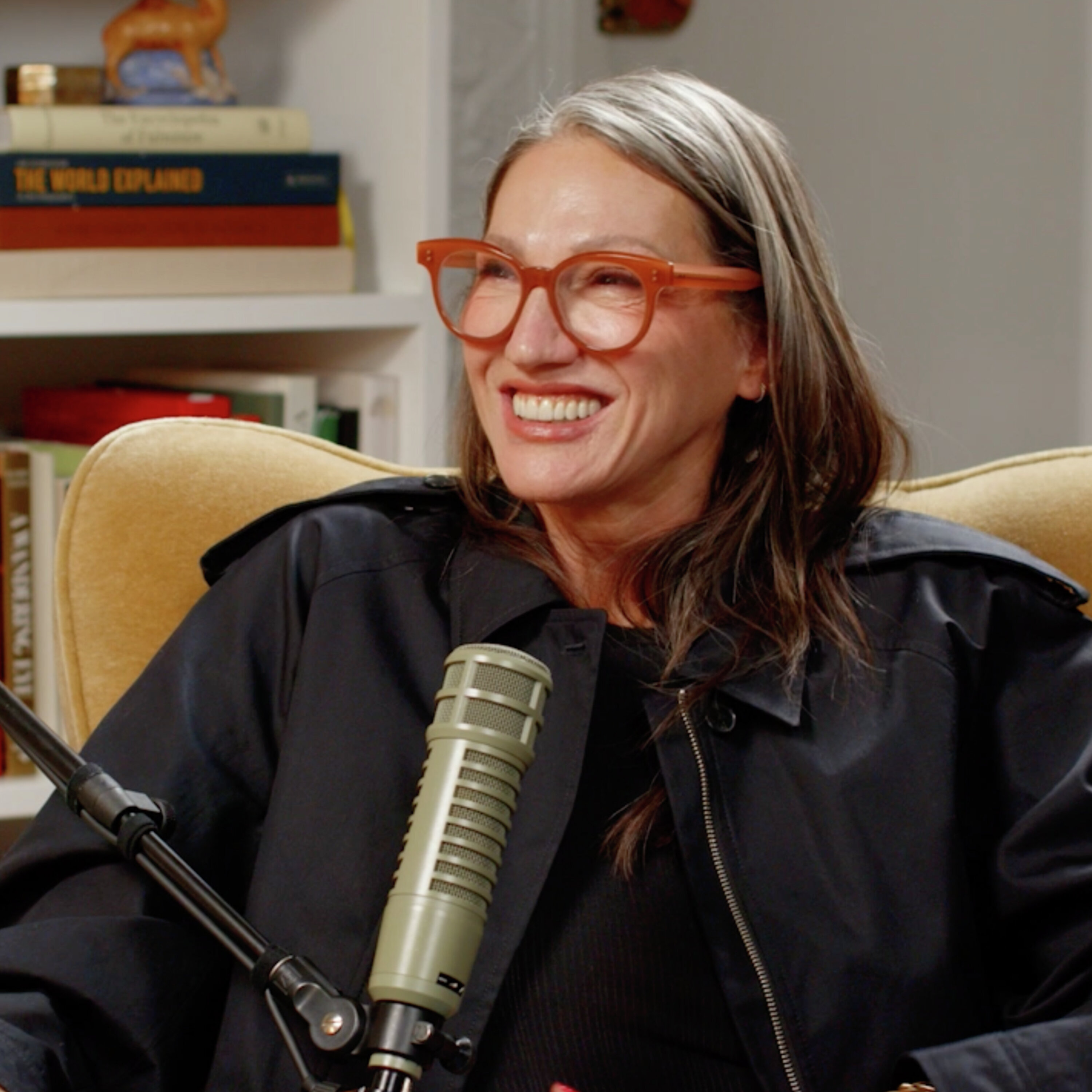
Loading summary
Transcript272 lines
- [00:06]
A
Pushkin. Some people see the world in black and white. Jenna Lyons spins an entire color wheel. As the longtime creative force behind J. Crew, she helped democratize fashion and shape a distinctly American aesthetic. But her color references were always global. Her instinct for contrast, proportion, and unexpected combinations changed the way a generation. Generation dressed. She did not grow up surrounded by access or abundance, but like many of the great originals, she's her own creation. Jenna's sensibility now extends far beyond clothing into interiors, objects, and just generally the way she composes her life. Where her travel was once defined by work, she now returns to the world with a sense of play and even wider eyes. From revisiting silk archives in Como to the erotic precision of shibori in Japan, informative summers in France, and the beauty of the color green, here is my conversation with the wonderful Jenna Lyons. Hi, Jenna.
- [01:11]
B
Hi, my love.
- [01:12]
A
I wanted to ask you first. Do you know what a bowerbird is?
- [01:16]
B
I do know what a bowerbird is.
- [01:17]
A
Yeah.
- [01:18]
B
Yes.
- [01:18]
A
A particular Australian type of bird. There's a particular one called a satin bowerbird. Do you know this specifically?
- [01:24]
B
Oh, I didn't know there was a satin bowerbird.
- [01:25]
A
There's one called a satin bowerbird. And just for, like, some explanation, a bowerbird is. Is a bird from Australia and Papua New guinea, like myself, that collects a particular color. It makes its own structure, and then it goes out in the world and collects particular things from a shade of blue.
- [01:43]
B
Yes.
- [01:44]
A
And so when I was thinking about talking to you, I thought about the bowerbird, because I think we share a sense of, like, color collection out on the road. And so if you were a bowerbird, what would be the color? Maybe what would be the first color when you're out traveling that you kind of recognize that you wanted to collect, if that makes sense.
- [02:01]
B
Green.
- [02:02]
A
Green, yes.
- [02:03]
B
I used to search, like, I remember the whole world opened up on first dibs and, like, all of these vintage places, and I would just go in and search a color. It's an amazing way to find things that you don't even know exist. But, like, between malachite and, you know, stained tiles, and I love goatskin that's been stained in green. I had an Aldo Toro piece that I sold in a fit one night. Don't know why, but, like, I love searching through color that way.
- [02:26]
A
There's a particular shade of green in Milan that I think is kind of. Have you been to Villanecchi?
- [02:32]
B
No.
- [02:32]
A
So Villanecchi is like the big house museum in Milan that has a Particular type of green. It was the house in I Am Love in the Luca Guadala movies. You'll have to go when you're there.
- [02:42]
B
I mean, I'm excited to go to Ceylon because I've only ever really been to Milan for work. So I used to go and when I would go, I was visiting Como and I would go to our print house, which was Rati. And so I oftentimes was not really getting to explore the city in the same way. It was always work based.
- [02:58]
A
Yeah, it's interesting, like fashion people, you know, have gone there. There's like such a, like maintained routine it seems when they go there. And I think it was like of this period where no one liked Milan or they had to go there like under duress. And I have a very different experience of it, as do I think a lot of people in the design world.
- [03:15]
B
I did not realize until I started doing more interior stuff and looking for inspiration and finding the du Maurier studio guys that I didn't really understand interior design the same way. Like, I had a much deeper connection to like fabrics and notions and things. You know, they made the most beautiful notions of buttons and zippers and things that I couldn't find anywhere else. But like it didn't look that beautiful from the outside. Like when you go to Milan, I don't remember Florence, you drive through and it's just stunning. But I never had that experience and I didn't get to go into anyone's home. So I kind of missed that.
- [03:47]
A
It's an interesting thing. Like Italian cities are so outward. Right. Rome is so expressive. Everything is of to the exterior, let's say, and exterior beauty. I mean, ironically, it's fashion city. But the thing about Milan. Have you ever seen the book in Milano, the entryways in Milan? I think that that was what, along with Salone, was the thing that flipped the coin.
- [04:08]
B
Yeah, I mean, I've definitely had a few moments that have flipped the coin for sure. But in my earlier days when I was going to Milan, I. I did not have the sense of appreciation, which I, I definitely do have much more now.
- [04:19]
A
I think it's really about the courtyard, the entryway. So it's changed a lot now, I think probably more than almost any city in Europe in the past 10 years. But those heavy doors that kept you out rather than invited you in, unless you were kind of in that Milanese thing. But you know, a lot of the buildings are the same. It's not like there's huge rapid development. Sure, yes, but not, not like you would see in an exploding city in that way. But its doors have swung open.
- [04:44]
B
I think the thing that I didn't realize about Milan, and I think because I was only eating in restaurants and it was. You don't get a sense of. There is a play on texture and color that I think the Milanese do in a way that no one else does.
- [04:57]
A
Correct.
- [04:58]
B
I remember the first time I saw the Du Maurier studio boys, and they were doing, like, these deep greens paired with, like, a weird pink and then an offset light fixture. And I was like, like, what the fuck is that? I just never seen anything like that. And just incredibly unusual placements of tile and color combinations. It didn't have that same rhythm of, like, Parisian, like, proper trying to be pretty, which I was so excited to see something that wasn't trying to be pretty. Ugly marble, weird marble. Huge, disproportionate sinks. Unusual, like, pairings of metals in bathrooms. I was like, these people are whack jobs, but I love it.
- [05:35]
A
Let's just backtrack a little bit. When you were working at J. Crew Crew, you used to go there to source silk.
- [05:42]
B
We would stay in Milan and go to Como from there because it was just an easier. Like, as a hub, and you couldn't fly directly into Como anyway. And it was a little bit of, like, meeting with some of our fabric vendors. Meeting with. We also had a shoe factory that was outside of Milan. And so we would go to Milan, stay there, but go to our shoe factory that was just outside of there. And then it was, you know, certainly to see what was going on in the industry. We were always looking to see, like, what's happening in Milan because it was indicative in the fashion industry of where things were going. And this was years ago where you didn't have the Internet, honestly, like, we were going to sort of get a sense of, like, what are Italians wearing? And I would just sit in the cafes and watch these women. I mean, it was. Granny style is my favorite.
- [06:23]
A
Oh, Shura. That's what they're called, Shura.
- [06:26]
B
I mean, it is the hottest thing. I'm so surprised I didn't know I was gay earlier on because I just was, like, obsessed with these old ladies. I couldn't. Their style riding bicycles. And it was totally different than French. Completely, completely different. Like a different, like, the attention to detail with jewelry. And it was always so different, too. I think if you look in France, like, there's a sort of a little bit more of a laissez faire. Like, they don't want to do their hair coiffed. They don't do their nails so much. They're, you know, same with British fashion. It's a little bit more wanting to be easy and kind of sultry and sexy in that way. Whereas in Milan, the women were buttoned up and like some random weird butter yellow shoe. And I'm like, I don't know what the fuck that is, but I love it. And it was just a totally different, you know, it changed the aperture for me of color, for sure. Like, I can distinctly remember the first time I fell in love with, like, deep merlot burgundy and blue. And it was this woman wearing this sort of cordovan colored leather skirt, blue shirt, beautiful gold earrings, the most un. Like, weird mint colored bag. And I was like, what the hell? And I just remember that. That. And then this other woman wearing mint pants with a red blouse, and it was like bright red with a red sweater tried around her. So that color massing idea, like, I grew up in California. Like, people wore dolphin shorts and like op T shirts. Like, it just didn't.
- [07:47]
A
Babe. I grew up in Brisbane. I get it.
- [07:50]
B
I was like completely having an out of body experience. Like, the color combinations were just so unusual. And so that color stacking idea, where it's like, you know, wearing the same color layered together or sort of slight tones, like it existed. But in Milan, it existed in a way that I hadn't seen before.
- [08:06]
A
I think Milan is in many ways like a matriarchal society because some of the people that control the city, in fact, many of them iconic women, industrialists. Right. And they're also of a particular age. They're occupying that space which is both like, business and confidence. It's not necessarily ornamental.
- [08:26]
B
I think in the United States, when you're a woman in business, you need to be professional. And professional doesn't often integrate with style.
- [08:33]
A
Correct.
- [08:34]
B
And sometimes it can actually seem like you're spending too much time on your appearance. Whereas I think in Italy, there is an appreciation. The men dress and when the women dress, it's looked upon unfavorably.
- [08:45]
A
It's not that they dress for armor, but the effect ends up that's not what they're trying to do. In fact, it's the reverse. But it ends up being like a really strong kind of way of presenting an armor.
- [08:56]
B
It's also really hot.
- [08:58]
A
We're going to Rati on our trip with Capital One. What's the history there with Rati?
- [09:04]
B
So J. Crew had historically been a palace. That really print was probably One of the most important elements. And it was also the launching pad for each season. So we would do. We were so big and we would ship a new capsule collection every month. And in all honesty, having a print, a beautiful print, was a good anchor. It was a way to set the store so the store team could say, this is the print, and then here's all the things that go around it. And so, you know, if I had a beautiful print of little sailboats, then it was easier to put a little black and white piping or navy and white piping, and then maybe a blue and white stripe and a little anchor moment. And all of a sudden the group comes together quite easily. And it's easy for the customer to understand. It was easy for us to design into. However, print in the United States is harder to find. It's not as much of an art. And I think what worked for us wasn't painterly things, but a lot of the print houses that would come to us in the United States had a lot of very painterly florals. And it just, it worked sometimes, but we couldn't anchor 12 deliveries a year in that. And so we really, as we started working with more and more Italian mills, we started really looking for high end print houses. And when we started working with ratti, they just opened up a whole, like roti can print, you know, 26 colors of a paisley. That's insane. Like, that's not normal. That doesn't happen in the United States. They use copper rollers still. They do all the print ways like it. Those kinds of things seem simple, but they weren't. We'd had no access to them, they were expensive, so we couldn't use them all the time. And you know, it was one of those things where it was a special thing. But when we did use it, I mean, we had one pink paisley that we did in silk and cotton, and we bought like, you know, 20,000 yards of that. Rati was used to getting orders of like 300, 500. You know, they were Italian, they were expensive. They were selling to Dolce Gabbana and these people who were making, you know, they were not making thousands and thousands of garments. I mean, we had this lobster print that we did from ratio. I think we made like 7,000 dresses. So that's a huge order. And so we ended up having an amazing relationship with them. They were wonderful to us. Anyway, so I would go and spend hours, like literally an entire day and then hang out with the lunch ladies. It's always like, it always comes back to the old ladies, Me and the old ladies.
- [11:11]
A
I'm going to take you one day to Kathmandu. I have a friend there, like, they. They create cashmere, which is, you know,
- [11:17]
B
I know all about cashmere talks.
- [11:19]
A
You do? You do? Of course. They have this extraordinary dyeing and weaving facility that have been doing the blankets for Hermes for 20 years.
- [11:29]
B
I've heard of that.
- [11:29]
A
Well, I feel like I got somewhat in your head for a second there because, you know, it's these greens and yellows or those color blocking, incredibly vivid Hermes.
- [11:39]
B
Well, I also think it makes you realize how. I mean, I've taken a bunch of people to make shirts for the first time. And what you realize is, like, how incredible and important it is choices are and how the choices that you make, whether it be with color or, you know, everyone always goes crazy when they make their first shirt because they can. The world is their oyster. But how refined choices are, like, where all the magic happens. Because when you think about it, like, you can pick anything. Right. And then all of a sudden that can be really ugly.
- [12:09]
A
Right.
- [12:09]
B
I could go wrong. But it's like the art of picking and getting to that point. I mean, so do you know about cashmere tops or how cashmere is selected?
- [12:17]
A
And I do a little bit only because, you know, I was preparing for our chat, but I'd love for you to explain a little bit what that means. Yeah.
- [12:25]
B
So we bought cashmere from Laurpiana. We were the second largest purchaser of cashmere. And the way that cashmere is purchased is through this process called top. So basically what happens is most of the cashmere, I would say 80% of the cashmere in the world comes out of Mongolia. And these little cashmere goats are, you know, groomed with their beautiful, like, the front part of their beard, basically, is this incredible soft cashmere yarn. And what happens is everyone from around the world goes in bids. And so Laura Piano, because they are a premier purveyor, they get to bid in the best. And so you. It's like an auction. And all of the tops, which is. Are basically the raw form of the yarn that's just been. It's not yarn yet. It's just the fluff from the goat gets put into these big bins. And what you're looking for is the whitest and the cleanest. And the reason is when you go to dye these beautiful colors, like, you don't want to have to bleach the yarn and then dye over it, because when you do that, it obviously degrades the quality of the yarn and also can make it stiffer and not as soft. And so you want the best quality yarn to get these really vibrant colors. You kind of can't do that with basic Chinese cashmere. Just. It never is going to feel the same. And so we were buying tonnage, so, like, Ralph Lauren was bigger than us at the time, and they bought the most, but we were buying, like, 8 tons, tons of raw cashmere tops. And I would get to go and, like, be there sometimes when they would pick, which was one of the best experiences I've ever had. When you feel that cashmere tops, the finest cashmere tops, and then you feel some of the stuff that is in the other vats, it's a totally different experience. And Laura Piana saves all of the baby cashmere for themselves. And it's no, no animals are harmed. They're just brushed. And they take all of the baby cashmere goats. So that, like, if you ever get a baby cashmere, if you go like, they're $700 or like this much, it's insane, but it's worth it.
- [14:05]
A
So that's. That's. That's why you get those prices.
- [14:08]
B
Yeah, but because we had. Were buying so much, we were able to get incredible quality and a much better price because we bought in such high volume.
- [14:16]
A
Okay, let's pull on the silk. The Silk Road. So I've been thinking a lot when you were. We were talking a little bit before about the kinds of trips and destinations you wanted to talk about. There was one, particularly with China. And I was like, thinking the other day that, you know, I don't think many people really realize, because it's such a fiber that we have in our lives, silk, that it's actually made from mulberries, Silkworms. Yeah, that scale, like, did you ever see the. It being made in that way?
- [14:46]
B
Well, so when I first joined J. Crew, and this is back in the 90s, so this is like Linda Evangelist on the COVID Day is like old school. We had a whole silk program. And I didn't know anything about silk at the time. And we weren't that big at the time. We weren't the scale we were when I left. But we still had a massive program. We had pants, oversized shirts. Lauren Hutton wearing a big oversized shirt. And we, as usual, we're making. You know, we had a silk pant that was very heavy, which was called a silk broadcloth. It's a plain weave. You know, different mummies. So silk is measured in mummy, which is basically like the weight. So like, you can have a habitai. You can have a silk broadcloth. You can have a silk kadi. You can have a silk twill. There's all these different silk weaves, and they all come in different weights. And so the weight, the higher the number, the finer the silk. So, like, a 22 mummy means the silk is very fine. If it's a six mummy, it's heavier, beefier, gutsier. It's kind of the same in sweaters. And we would make tons of it. And. And so I would go to. To Asia, and I. I mean, I remember, like, these people cultivating silkworm fact farms. We were like, I wasn't just going to Hong Kong. I was in the factories in China because that's where we would do the dyeing. So what most people don't realize is that oftentimes, like, if you're a company like J. Crew, you bought. You. You pick a swatch of something and you say, like, I like this sort of burnt orange. And then you send it to the mill, and. And they then take little vats, and they dye up little small swatches for you. That process takes a long time. Imagine they're doing that in inner China when we're picking the colors, and then they're sending it back to New York. And then I'm saying, can you make it 15% more pink, you know, or more red and a little bit more yellow? And then we send it back. And again, this is like snail mail days, so it can take a really long time. So when we were having a tight delivery window, I would go to the factory and literally, like, sit there with them while they would dye the. The fabric, and they would. And with silk, they dye it in these tufts, and then you have to twist it. Same thing with. With the yarn, and you would twist it. And so I would oftentimes not even be looking at real fabric. I would just be looking at twisted yarn for the sweater and twisted silks and these tufts and then lay it flat and then look it on its box and say, like, okay, what age were you?
- [16:51]
A
What's some, like, memorable? You must have gone dozens of times.
- [16:53]
B
Oh, my God. I meant so many times. I mean, I think what was really incredible was, like, I started going when I was, like, fresh out of college. I mean, my very first trip, I think I was 22. Like, I had never been to Asia in my life. I had no idea. And I had some pretty unusual experiences there. The first time I.
- [17:12]
A
But you texted me and said, like, a little bit what you wanted to Talk about. And then one of the notes about a China trip was no meds, which I was curious to talk about.
- [17:21]
B
Okay, well, all right. So there was one time where we were doing. It's called a listening tour. So we were getting ready to launch J. Crew in Asia, and we were doing a listening tour. And so that's where you go basically and meet with people who are in the finance world and say, like, what's happening in the country? And so we were deep in China or Shanghai, Beijing. We were like. But traveling in between and really seeing the country. And I think I was getting a urinary tract infection. And I don't know if anyone's ever had one, but they're brutal.
- [17:48]
A
Really.
- [17:49]
B
Oh, it's the worst. It burns when you pee. And it's not humane. It's like the curse of being a girl. And it is not. And men get them, but very rarely. Anyway, so I was dying. I was drinking a shit ton of cranberry juice and like a ton of water. And I was like, I'm. We had another four days in China. And I was like, I'm not going to make it four days. I have to get to a doctor. And I went to a doctor and I go into this doctor's office and he's like, I have no meds for you. I can't do anything for you. There's. We don't have anything here. And I'm like, well, what am I going to do? So by the time we realized that we're leaving, I have 104 fever. I am delirious. I have started to, like, hallucinate. I'm saying bizarre things. People are like, are you okay? And I'm like, where's my banana? Why is it stuck to my head? Like, I am like, out to lunch. Like, I've completely lost the plot. And I'm like, I need. And then we are going back. So we, like, we have to get to Hong Kong because there's nothing anyone can do for me. And we get stopped at the border because I'm loop de loop. It looks like I'm being trafficked. I am sweating. I like, I saw a picture of me. I lit. I looked unhinged. And I am completely sick.
- [18:52]
A
There's nothing worse than getting really sick on the. On the road. Like, that's a really long experience.
- [18:57]
B
Yeah. And I didn't look sick. Like, you can't. No one can see it. I mean, the only thing you could see was that I seemed unhinged and I was sweating profusely you know, I had a really high fever, but I didn't really look sick other than that. And they wouldn't let us into the. So we had to get someone to come and clear it. We had to get their doctor to come and meet me and take my temperature and say that I was indeed. The whole thing was insane. We get to Hong Kong and there's this woman named Magdalena, who I won't give her full name, but Magdalena, who was like our agent and she is very wealthy. I get picked up on the tarmac in a Bentley. I was like, okay, things are looking up. And they took me right into a doctor's office, put a shot in one butt cheek and a shot in my other butt cheek. One for the medication to actually fix it and one for the pain. And I just like, that was. I. All was well in the world, but I could not believe I couldn't get any meds at anywhere and no one could help me. And it was. I was. I'm not kidding you, I thought I had a banana stuck to my head.
- [19:49]
A
This episode of Traveling through is sponsored by Capital One. Capital One cardholders are passionate about unforgettable experiences. Together, we partner to connect these curious travelers to world cultures through expert guided journeys. From the peaks of Machu Picchu to the grand architecture of Vienna, these once in a lifetime trips take you somewhere truly off the beaten path. Through Capital One entertainment, eligible cardholders can book exclusive experiences and so much more, all while earning elevated rewards. Saver cardholders earn 8% cash back and Venture X earns 5x miles. Thanks to Capital One, your dream getaway is one step closer. Jumping from China to Japan. You've been there a lot, right, for.
- [20:28]
B
Well, we used to buy a lot of Japanese denim, and so I was going to visit some of the mills like Kaihara, and we also had a Japanese licensee, so we had stores in Japan. So we would work with them on what we were producing. For me, I have to say, the travel that I've done since I left J. Crew has been so much more enriching. I was always tired, stressed, so focused on work, relentless. It was just all night long. We weren't. We didn't. So much of what we were doing had to be done in person because we just didn't. It just. Things have changed so much. And I also don't think I realized when I was young how incredible my opportunity was. I was just so focused on work, but I don't think I even realized, like, I never demanded to go to a museum. I Never said, can we spend a day doing this? And looking around, it was just like, this is the schedule that we're doing.
- [21:17]
A
Yeah. I always think about, like, obviously, people traveling for business, but I also think about, like, diplomats and, like, they are in hotel rooms, office blocks, and then just back and forth everywhere.
- [21:30]
B
And you don't get to choose where you eat. No, that was the other thing.
- [21:32]
A
Well, I've got a good story, actually. Weirdly, I sat next to Madeleine Albright at a dinner in D.C. once, and she was obsessed with food. And so she used to tell me, like, when she would go to certain places, she would take one security guard with her and sneak out the exit or a side exit of the hotel and go and eat somewhere that she really wanted to. Particularly, she was telling me about, like, some, like, particular cake in Budapest that she always needed to go. And I always thought that was kind of amazing because I always think about, like, people that are traveling for 24 hours that are just in and out and they're never actually experiencing the place. They might have been to a hundred different countries, and they have absolutely no connection whatsoever to what's going on.
- [22:19]
B
Yeah. And the thing is, oftentimes we were being hosted by whatever factory or mill we were meeting. And, like, we needed to be respectful. They wanted to take us to dinner, they wanted to show us around. So we were seeing everything through their lens, which wasn't necessarily a creative lens or a design lens. It was like a they, you know, and also we were often the most senior people that were in, so they felt like they had to take us to the fanciest place. And so you don't get. It's not. That's not culture.
- [22:44]
A
Well, it's ironic because I think one thing that you and I both have in common, and I don't like this term, but we'll just use it for, like, shorthand. Is the interest in high and low. And when you're on those kinds of trips, you're always getting the high. That's kind of also very often kind of a soulless thing. And it's a very incomplete picture of a place.
- [23:01]
B
Right?
- [23:02]
A
Absolutely.
- [23:02]
B
Yeah. And I think, you know, when people are trying to impress you, it's very buttoned up and manufactured. There's no room for, like, the seams to show. And I think that's what's more interesting is, you know, I remember the first time I went to Japan and when we went to our Japanese licensees, she's the woman who was, like, walking. So she's like, you have to go to Kyoto. And I was like, well, that's not really on the my agenda. And she's like, no, no, no, we will work this out and we will take you to Kyoto. I got to stay in like a rokan. And I remember, like, I had a free day and I walked down the street and there was this man who had this beautiful shop on a corner. The whole side of the corner window was opened up, pushed back, and he just made brooms. And they were the most beautiful brooms I'd ever seen in my life. And I wanted to take them home. And she's like, you might want to think that through. I was like, nope, I'm taking. And I mean, they were. He was hand selecting and separating all the different reeds. And I'd never seen anything like that in my life. I was young. I mean, again, like, I didn't know that people made brooms. I mean, I knew the concept, but to see the level of accuracy and attention to detail and how he separated all the reeds and all the different styles and the different cuts. And then he showed me what you would use one broom for. And then going to like this kimono house that's for royalty. This woman, you know, she put this beautiful kimono on me. We wrapped up, I took that home. Then I got to go to this little restaurant where the emperors dine. It was the. The best sushi I've ever had in my entire life. But this was the third night in a row where I bumped my head because every. All the door frames were so low.
- [24:29]
A
Oh, my God. You and me.
- [24:31]
B
I was gonna say you probably had this problem too.
- [24:32]
A
Oh, my God.
- [24:33]
B
And I go to the bathroom in this beautiful, tiny 8 seat little restaurant and there's a step down to go to the bathroom. And it's dark, so I don't look up because I'm looking down because I can't see very well where I'm stepping. And I stepped down and there had was a very low beam and the step was much deeper than a normal step. So I really went down. I woke up I don't know how much longer with all of the geisha women in the that were. And I woke up with them patting me. And I was like, oh my God.
- [25:02]
A
I should know.
- [25:02]
B
I should have known I was gay. I was like, this is amazing. I just completely knocked myself out. I went home with a bruise and a cut across my forehead. But I loved it. I had the best time.
- [25:12]
A
I often think about, like, Japan as well going there. I always tell people to, like, plan somewhat, but don't plan too much because you'll get fomo. And then the amazing thing to do is just to walk in one of those things that no one else has told you about. It ends up being that thing that you tell a story of.
- [25:32]
B
That's true. I think the thing that also is so interesting is, like, Japan is that, like, complete paradox of, like, absolute restraint. Like, the level of quiet in design, in food, in actual experience and process that they are able to do. But then, like, they want to go party all night and do karaoke with outfits.
- [25:55]
A
And I'm like, did you do a bit of karaoke ever?
- [25:57]
B
Of course I did. Our Japanese licensee, I'll never forget this guy named Babara, and he was the most serious person I ever met until we got to karaoke. And then the gloves came off, and I turned around, and Babara is wearing, like, a blonde wig and, like, a tutu. And I was like, let's go. Like, what the fuck is happening?
- [26:15]
A
We.
- [26:15]
B
They just. They drank.
- [26:17]
A
I know.
- [26:17]
B
We were there until three in the morning. The entire trip, they did not look at me. They always looked at the man who was on the trip with us who was not as senior as I was. And they never. He would always say, you have to ask her. And I'd be like, what do you want to. It was just so ridiculous. Bob and I bonded that night. And on the table, on the dance floor. I mean, it wasn't a. It wasn't a table.
- [26:34]
A
What's your karaoke song, Jenna Lyons?
- [26:36]
B
I have to say my favorite karaoke song is Tainted Love. Soft sell.
- [26:40]
A
Oh, well, that's a good one.
- [26:41]
B
Yeah, it's a really good one. And also, Billy Ray was a preacher's son, and when does he come along?
- [26:47]
A
I'm just, like, not. I'm not good at karaoke. It's terrible.
- [26:50]
B
Terrible. I only have two songs.
- [26:51]
A
Okay.
- [26:51]
B
That's all I got.
- [26:52]
A
I think mine's probably like, a Prayer by Madonna. And that's really.
- [26:55]
B
But that's hard to sing well.
- [26:57]
A
Yeah, exactly. That's why I'm not very good at it.
- [26:59]
B
I pick things that I can actually sing.
- [27:00]
A
Yeah.
- [27:01]
B
And I know the words so I don't have to muddle through.
- [27:04]
A
Would you go back to Japan?
- [27:05]
B
I really want to go with the kids. Like, it's my favorite place.
- [27:08]
A
What would you, like, show them from things that you learned there? Like, what do you want to. What. How. How would they experience Japan?
- [27:14]
B
To me, what I like is that is the complete opposite land of, like, Tokyo. That is so bustling. And you know, all of these different kids who are dressing up in this sort of cosplay. Like, I could not believe the level of like bananas. How ridiculous their outfits were on just like a random Tuesday, you know, like they did. It did not matter. It was. This was not dress up day. They were just. This was just the way they lived like that. And also the sort of. There's a Tetris feel to Tokyo that just feels like everything is so connected and you don't really know where one thing starts and stops. And then the complete opposite of Kyoto, which is like the most like, it feels like a breath. Like the level of respite and quiet and intention and beauty and it just feels like this culture is pretty unique in the fact that it can hold these two completely diametrically opposed feelings is really. I just found it so beautiful and charming and alluring and the people are just so fucking lovely.
- [28:13]
A
Something that I did on the last time that I was there. I love plants and I would never be a good florist, but I really wanted to do an ikebana class. Oh God, you should do this.
- [28:23]
B
I'm. Yes, I will do it with you. Should we go?
- [28:26]
A
Yeah, for sure. So there's this academy of ikebana called Sugetsu, which is.
- [28:34]
B
Oh my fucking God, I'm obsessed. There's a few people. Things from this whole world of. I mean, in the Japanese world that is just. I don't know, how did that develop?
- [28:44]
A
This is the thing that blew my mind. So I. I went there thinking, oh yeah, we'll kind of, you know, I know that there's an art to it, of course. So I get there. This was a proper class and they were serious and so I was there with all of like the kind of mature age student aunties. Yeah, you would love it.
- [29:01]
B
I fit right in.
- [29:03]
A
I mean, it was unreal. And then so you arrive there, they have buckets and buckets and buckets of all different kinds of foliage, all different kinds of flowers. And you're sat up at the station and you know, you make your thing. You've got all of the rules. They're very kind of not in English, actually. Barely any translation. So you're kind of teaching.
- [29:21]
B
That's one too.
- [29:22]
A
Learning.
- [29:22]
B
When people don't speak your language.
- [29:24]
A
Yes.
- [29:24]
B
You actually get down to the fundamentals of what you really need to understand.
- [29:27]
A
Correct. Because they're looking dead in the eye and there's a calm thing and there's a guiding hand. And that was really good for me because I'm sure the theory would have been lost on me. I mean, I just would. It's my dream to go and, like, become a student at Sugetsu.
- [29:41]
B
There's. I was working with a project on a project for another friend, and in my deep dive, I ended up also finding this leather, like, tannery, and then also like a. I don't know what you would call it, an atelier for leather working. And this man made the most exquisite, exquisite, like, dog accessories. And I found him and I reached out to him and I'm like, would you be at all willing? Because I have two dogs. And I was like, is there? And he's like, oh, no. I. I was studying with a Japanese master, and these are just what I made with the Japanese master. I'm like, so can I find the Japanese? He's like, well, you have to be there for four months. And I was like. And then he's like. And it's. And so I kept going and he kept asking questions. He's like, and it's this expensive. And I was like, oh, to work with this man for four months costs almost like half million dollars.
- [30:26]
A
Oh, my God.
- [30:27]
B
Yeah. And I know clearly this man had a lot of money I'm not doing. But, you know, he only tr. He only trains, like, two people a year. And this is just what he does. And he's a master and he teaches, and the. The workmanship was insane. But, like, that's the kind of thing that you can find in Japan that you kind of can't find anywhere else.
- [30:41]
A
Yeah, I think it's like, I'm. Those living crafts or living artisanship is very interesting to me. I think there's, like, a role that travel can play in the world of, like, maintaining businesses for, like, I guess in Japan, maybe Italy, a handful of other places, India too. You know, those crafts are still living businesses, so they haven't become like tourists. Souvenir making. But there is a way, I think, that you can, like, have people experience those things from a travel perspective that then adds value kind of in back home, if that makes sense.
- [31:18]
B
Like so. But I also like the fact that you can't just do it as a. As a souvenir experience. Like, it requires months. And honestly, it looks like it. You know, I remember when I saw you said it was a class. I somehow in the back of my mind was like, oh, I can do that. And I'm like, I probably couldn't. It would take. You know, I went to art school for four years, and I think about, like, the difference of my draping and pattern making when I finished my schooling versus when I first started, like, took months for me to get the touch. And I also think that they have a different perspective on style. Like, they're. They're not willing to make it ugly.
- [31:49]
A
Well, the other thing as well is that, like, I've never been. I haven't been this kind of felt this judged, but judged. Judged in a good way, as when the lady came around, like, with my work. My boyfriend's an architect, so his was like. They were very much. Here is appealing. Yeah. And I'm supposed to be the person that likes the gardens and the plants. Anyway, she came around and I was like, sitting up straight and. No, and I think, like, the other thing about doing those things in. In the proper way is that not everyone gets a gold medal, you know, and that's. And she was like, no, that wasn't particularly good, but this was kind of good. And I don't know. I rec. I recommend anyone, if you've got like two full days going and doing a sugetsu ikibana class is definitely something that you could do. And you could do it with the kids actually too. Teenagers, right?
- [32:34]
B
Yeah. Yeah. And they in particular would love it. And the other one I love is shibari. Have you ever.
- [32:38]
A
I mean, no, I haven't been tied up shabari style, but I'm curious to know what that's. It's actually.
- [32:44]
B
The thing is it looks sexual, but it's kind of. I mean, it can be if you want it to be, but it actually is like this. This intimate experience. Like, it's very intimate. And like, it requires like, again, touch, feel.
- [32:57]
A
What is it exactly?
- [32:58]
B
So basically it's. There's a system of ropes and it's like you're pushing and pulling and then laying over and then twisting and. And you're not hurting the person. You're sort of putting them into a more constricted or sort of. But the end results are so beautiful. And the process of having it done, it feels actually incredibly intimate. It's not about hurting someone. It's not about controlling them. It's about this sort of interplay of how you adorn someone and how this person responds and how you move them. And it's about power and, you know, submission. But I've seen people do it and it is very hot. It's very sexy. So it could lead to sex.
- [33:35]
A
Well, I think it's like Japan. Like, the doorway is kind of through ritual. Right. That's what I always see like, almost anything. It's through, like, a ritual.
- [33:44]
B
It's like the ritual also leads often to something else like that there's so much ritual that it actually speaks to additional rituals or how, like, they start with one to translate to another that touches something. I know. So I. I just love the country so much. I want to go back.
- [33:58]
A
So I think, look, Japan is sort of like Italy for me. It's so dense.
- [34:01]
B
Yes.
- [34:02]
A
Endless. Like, just totally endless.
- [34:05]
B
That's what I love every time I go. Especially if you are with another person who lives there. Like, I like being with people who live there because they always show you their version. And people live so differently and, like, getting to see, you know, someone who's incredibly active, like, they fight. They have a tendency to want different things. But someone who's a little bit more of a hermit will take you to all their little local places. It's a totally different experience. I love.
- [34:26]
A
How do you and your partner Cass, like, travel together?
- [34:29]
B
Well, I mean, it's interesting. Both of us thought we didn't want to travel anymore, I think because we both had traveled for work so much. And then when Covid hit, it was such a good rest that we were both kind of relaxed. And we're like, I don't need to go anywhere. We can just go to the beach. But now that we've been traveling more together for fun and for either a wedding or an event or like, going to Italy for, you know, an opening party for Il Pellicana or something like that, like, we've been having more fun. So I think traveling with someone who has the same taste, like food profile and energy profile is critical. Like, you have to have the same desire.
- [35:03]
A
She has that.
- [35:04]
B
Thank God.
- [35:05]
A
Yeah.
- [35:05]
B
Like, we will share every meal. We always want to eat the same things. And I literally was sitting next to a couple at Il Buco on the beach this past weekend, and the two of them were talking and, like, one of them is vegan, the other one's gluten free. Like, they couldn't share a single thing.
- [35:18]
A
Nightmare.
- [35:19]
B
I. I don't know what I would do.
- [35:21]
A
So you. Do you enjoy traveling for food or. It's a big part of travel.
- [35:25]
B
I love it.
- [35:26]
A
Really?
- [35:26]
B
I love it. It's like my favorite thing. I remember when I was young, my, my. We didn't have a lot of money, and so my mom took us. There's this thing called Chez ami, which is. Have you ever heard of this?
- [35:35]
A
No.
- [35:35]
B
So she Des Ami translated means house of friends. And this was again before the Internet and my mom had this. It was a booklet. And all of these chateaus in France have been passed down to these families, but many of these families can't afford to maintain them. Oh, a cabin, because they were passed down over years. And these, you know, they're farmers a lot of times. And so they would offer up rooms in their chateau and you could come and my mom would always opt for the dinner. And my brother and I hated mushrooms, like, and goat cheese. The idea of eating the goat cheese was like the most like profoundly disgusting thing we could possibly imagine. But we'd probably only had mushrooms like on a slimy pizza or like out of a can that like where they were in liquid. So like no joke, like no reason we didn't like make sense that we didn't like the mushrooms. So we stayed with this one family from Chez. I mean this beautiful and house. And Madame Lamarque, who is the matrix of the house, she'd grown all these mushrooms and her husband had goats and he made goat cheese. And she made this mushroom and goat cheese tart. And my brother and I were like. And my mom looked at us and she said, you are going to eat a bite of the fork. Or like, I mean, I've never been so scared of my mother. I was the one. My mom was not that. Never been so scared. And my brother and I took a bite of the tart and it was. It was like sex. It was the best thing I'd ever had in my life. It was unfucking real. She had made the dough, goddamn goats made the cheese. The mushrooms came from the backyard. She picked the herbs from her yard. That mushroom tart, it was gone. We ate the entire thing. It was massive.
- [37:06]
A
That's peak good French food. That specific thing in the countryside. Like, that's exactly what you want.
- [37:11]
B
It was unrecognizable food for me. I mean, I was eating cuisine first
- [37:15]
A
kind of food doorway in.
- [37:18]
B
It was the first moment where I understood that a tomato wasn't just a tomato. Like the beefy green mealy ones that I got from our California grocery store were not like, that's not what they could look like. That basil was a leaf, not a dried up little powder. Like I'd never been exposed to food like that. We just didn't have anything like that. And my mom's a piano teacher and single mom. You know, I was eating lean cuisine because, like she was teaching and she
- [37:42]
A
took you on a trip.
- [37:43]
B
She met my father in, in France and she had a love affair with France. And so this was her way of, like, exposing us. So we would. We went to Chez every summer when I was a kid. And, like, we would, you know, we stayed with the Marks and the Nolos and the this.
- [37:56]
A
Does that still exist?
- [37:58]
B
No, I think Airbnb and all that has really changed.
- [38:00]
A
That's such a bummer.
- [38:02]
B
That's so great, because I think what is the difference is, like, if I didn't know that.
- [38:04]
A
I love finding out about these things.
- [38:06]
B
The local part was so nice, like, staying with the family, right? And then we would all go outside and play boule after dinner in, like, the sunset. And it was just so romantic, you know? Like, I didn't know life could be beautiful like that. I'd never seen anything like that. I mean, they were all just drinking wine and laughing. The neighbors would come over and we would just play bull. And I didn't need to talk. I didn't need to speak the language. My brother didn't need to speak. We didn't need to be good at anything. It was just so fucking fun. And I loved. I. It. It was really so romantic.
- [38:33]
A
Was your interest in that. In, like, style and fashion? Was that kind of. Did that come from any of that trip? Or was that more like this is the imagined reality from, like, your. Where you. Where you were in terms of your childhood? Like, is it. Was it a fantasy? Or did you, like, was those. Were those trips influential in that way?
- [38:51]
B
I mean, I think they were influential in shaping my view of style. I think it wasn't what drove me to be interested in it, but there's no question it, like, shifted the aperture completely. I grew up with. In California with, like, Baywatch and all of these, like, everyone looked the same. Every girl was blonde. Every girl had big boobs. Every. If you weren't blonde hair, blue eyes, but big boobs, you were not cute. And my. All of my friends were hot. I was so not hot. But, you know, I remember so distinctly. One of the daughters had long hair. She had it in this little French knot. And she wore this, like, red lip, bright pink cheek. You know, I grew up. All the girls were like black eyeliner. And I'd never seen a younger girl. She wasn't. I mean, she was probably 18, wearing a red lip. And it was the sun setting again. I should have known I was gay. All these moments. And she was just wearing jeans and a big, oversized white shirt. And, you know, again, like, I didn't connect real people. Effortless beauty to. I just didn't think it was real. It was the first time I started to understand, I just had been so part of, like, processed, manipulated beauty, you know, there was a. This young Asian girl who. Her parents, I think, were Filipino and they were living in the south of France. So she spoke French, but she was bronzed. And, you know, she was the most beautiful creature I'd ever seen. Her hair was sort of soft and wavy, and she would come over speaking French and I'd just be like.
- [40:16]
A
But it was just a fun thing as well. Like, when you're talking about people's trip memories, like, sometimes it's hard to pass out, you know, not what the truth of it is. Like, there's a real truth in all of it. But the nostalgia and romance of these trips kind of. They live large in our stories, right? And it's really nice to reflect on them because you kind of understand where you've come from.
- [40:41]
B
I remember I had a pen pal, which is. I went to a French school for three years, and so I had a pen pal. And I remember we did a trip where we did an exchange. And I remember sitting down the first night, and my mom had made, like, what we called meatloaf, but it wasn't really meatloaf. I don't really know what it was, but it was like a meatloaf adjacent thing. And she was like, oh, dear, bread. And my mom goes to the fridge. And my mom had spent a lot of time in French, and so she knew what this girl wanted. But my mom was like, I'm sorry, but this is what we have. And it was like Wonder Bread, which is not even really bread. And I will never forget going to her house and the first night, all the eating outside under the sky, all family style, this incredible meal. The bread that they had gotten from the bakery that morning, all the kids got a little glass of wine. They did. They. They basically did wine based on your age. So it was, you know, in ascending order. So they were training the kids how to drink.
- [41:35]
A
Yeah, it's a much better idea.
- [41:36]
B
Yeah, yeah. They were all getting little bits and it was just. And they passed the bread and I took a bite of the bread and I was like, oh, God. Like, the shame I felt around my Wonder Bread was real. I was like, I can't believe this girl has been eating this bread. And we gave her Wonder Bread.
- [41:51]
A
Well, I mean, then you've got a taste for the rest of your life. I think that's important too.
- [41:56]
B
Can you imagine what her experience was like? Yeah, you should interview her.
- [42:00]
A
You go to Paris quite often, just speaking in France, like that's just a very different France than what you're describing.
- [42:06]
B
Yeah, I think the south of France is. I mean, it's so different.
- [42:09]
A
Yeah.
- [42:09]
B
But I love Paris. I do. The architecture like slays me. I just cannot like get enough of those big French open windows and just. I don't know. There's something about the rhythm of Paris that just slays me. It never gets old.
- [42:22]
A
And you like go multiple times a year or just sort of, you know.
- [42:26]
B
Cass got a job, so I went with her. My friend got married there, so I went with him, went with her for that. And then the year before I didn't go. Like, it just doesn't. There's not like a. I go every year. It's just if I have an opportunity to go, I go.
- [42:38]
A
One place that I know is like important to you, but that I've never been to is Antwerp.
- [42:44]
B
One of the reasons that we started going is I think a lot of the work I did was also the store design. So it wasn't just the clothing, but like what does the store look like? And there was this little hotel called dewittel. Do you. Have you heard of this place? Yeah, I mean, just the. The most beautiful little hotel. And we wanted to see the Dries store. My boss at the time was obsessed with Dries. And I mean, I was as well and just get a sense of like what the fashion scene felt like. It was, you know, it was unusual because it's like Endermeister, as you said, Dirk Bickenberg's, which again was so different. They had this crazy store that. The Dries store. But then there were all these beautiful little furniture stores in this hotel I will never forget. I came downstairs to breakfast and I do this now and my kids remark on it, which I think is interesting. I came downstairs to breakfast and they had a candle lit at like 9 in the morning. Just a taper candle, one like. Like long chic. And I was like, that's the chicest thing I've ever seen in my life. And so now every morning I light candles.
- [43:39]
A
What's the colors of Antwerp?
- [43:41]
B
It's literally like bone almond cream and then a deep walnut.
- [43:46]
A
It is deep walnut, right?
- [43:47]
B
It is such a beautiful city. It is not that colorful, but they have these beautiful open squares. And the people who work there are like. The curation of the shops are incredible. Like the anime Lucifer store is stunning. The Dries store is stunning. And then the Dirk Bickenborg store is like a warehouse and totally random and weird and. But their point of view is. Is somewhat Scandinavian but somewhat European. They fit into this totally. And, like, the style there doesn't look like anywhere else. Anywhere else? Yeah.
- [44:18]
A
My boyfriend's Dutch, and it's very different.
- [44:20]
B
Oh, yeah. Well, it's.
- [44:22]
A
Aesthetically, is it? I don't know.
- [44:24]
B
Parts of it.
- [44:25]
A
I. Look, I've only been to Amsterdam once, but I haven't been to Belgium before.
- [44:29]
B
I don't know. I think there's something there. I think the French influence. But then being so close prox. You know, in close proximity to Finland, Sweden, stock like that kind of. There's something Scandinavian in the undertone, and then there is this European front. Like, it's just. They're in this unusual place, and I think they're also, you know, they're surrounded by all these different influences, I think. And there's just. It was the first place I ever went to the Panquotidien, which was, like, with. The first one was in.
- [44:58]
A
Oh, really?
- [44:58]
B
Yeah. I mean, I'd never been to one before, and then now they're everywhere. But I remember thinking how smart it was, those big open tables. I just thought it was the coolest thing ever.
- [45:06]
A
I think about places and colors as well. And so we did this little. Like, every year we do a New Year's card. And so I made this little card which is. If you look over the other side. So it's different colors with the names, kind of like just a, you know, paint swatch situation. But each of them is related to a destination.
- [45:22]
B
I love that. It's funny, when I close my eyes and squint, I often think of, like, I see towns in color and so.
- [45:30]
A
Yeah, well, it's all sorts of different things. You know, it's like the sort of slate gray of hutongs in Beijing, or it's like the yellow trees in Brazil. So it's all sorts of things. And I. I feel the same way about that. So I wanted to ask you, like, if you were thinking about a particular destination or. Or place that's on your mind that you'd like to go. And are you thinking through color at all?
- [45:55]
B
I want to go to Egypt so badly. I've never been to Egypt. Where do you want to go that you haven't been?
- [45:59]
A
I mean, I would love to go to Ethiopia. I mean, that kind of part of the world. East Africa. Have you ever heard of Socotra? There's an island off Yemen. It's this really strange, totally unique biodiversity hotspot. And they have these things called the dragon blood trees. It's like a Star wars landscape. Incredible turquoise water and then these trees that sort of fan up. They almost look like succulents, but they're not. It's just a very wild landscape. Kind of like what you would imagine, another planet entirely. So I really. I was gonna go, but I.
- [46:35]
B
That one I think might now happening.
- [46:38]
A
That is not happening.
- [46:39]
B
That's a little too close. Yeah, but where do you find the, like, where do you find that you decide you want to go?
- [46:44]
A
Like, I think, you know, being a former travel editor, like a fashion editor, like a whatever editor it is, you get a sense of what's in the wind. I remember that like, you know, magazine rule was three's a trend. Right. You get in travel, if a museum's opened, a hot restaurant and a hotel, you know, that's going to be on XYZ list.
- [47:04]
B
Oh, interesting.
- [47:04]
A
But sometimes I take references from, you know, of course you'll hear word of mouth, but then it might be a book that's interesting or. I don't know. I also, like, sometimes think the world is so interesting that you can almost just put your finger on a map. And I always find things.
- [47:21]
B
Are you a traveler who gets up early, early in the morning and goes out, or are you like, I'm gonna like, like, enjoy my morning coffee in bed?
- [47:27]
A
I do not believe in hotel breakfast. I do not believe in hotel breakfast. No, I don't. I'm food interested, let's say. I'm not going to say foodie, but I'm food interested. So I think you're wasting an opportunity to not get out on the streets to have breakfast with people, whether it's in like, you know, a bar in Italy. You're interacting even when you're traveling alone. Especially when I'm traveling.
- [47:49]
B
Oh, really?
- [47:50]
A
Yeah, especially when I'm. Especially when I'm traveling alone. But I recently saw a story about in praise of the hotel breakfast buffet. And I was like, actually, unless it's like a handful of amazing Asian hotels,
- [48:03]
B
breakfast is pretty fun. Il Pellicano's okay, Fine.
- [48:06]
A
And yes, there's a couple of like, yes. But I still. Even in Italy, I wouldn't eat breakfast. That's not my thing. I would go and have a coffee and maybe a Cornetto or something like that. But I don't know. I think you find. I always like to go to the market in the morning too. And very often, depending, depending on where you are, you find like these little spots.
- [48:23]
B
Wait, market. Like a food market? And are you cooking?
- [48:27]
A
No, I. I like you just Want to see. So what I do, the very first thing where I go to a place, if I can, is I go to the, the, the local market, farmers market, whatever that will be, because it's a road map to what you're going to order. You also understand the biodiversity. You also get the best tips from people. I mean, I'm coming through the food door. Like, where do you go? What's the first thing you do when you're in a particular place?
- [48:50]
B
I'm not as, like, connected to doing that at all, which I love that idea. Like, I'm trying to think if I went. Most of the time I'm trying to see people, but I often know someone or I often go someplace where I know someone because I like to know what someone's experience is in that place. Like, I like the insider track. Like, I always find that when people come to New York and they don't connect with somebody who lives here, I'm like, you're missing out on what is here for people who live here because it's different.
- [49:16]
A
Right.
- [49:16]
B
And so it's interesting to hear you say that. I'm not as confident in exploring things in that way, but I think that's a fantastic idea.
- [49:22]
A
You just have to be open to it.
- [49:25]
B
Yeah. What was the moment when you were younger that made you realize that travel was something that was important to you?
- [49:30]
A
Because my siblings were fighting in the back of the car and my dad had sat me up with a map and we were driving around Griswold style, National Lampoons European vacation with my three siblings, going from youth hostel to youth hostel around Europe. And Yeah, I just. Like, once you tied. Once I tied. This is before Google Maps, of course. Once I tied maps to history and to, like, navigation and landscape, somehow something clicked. Then it became. Yeah, something clicked. And also, like, I think when you come from a place that is like, far away, let's say, or you have a giant imagination, the things that I was reading in books started to come to life.
- [50:07]
B
Yeah.
- [50:07]
A
You know, the wind in the willows kind of thing.
- [50:09]
B
Yeah, yeah, yeah.
- [50:10]
A
Which is so alien to me from where I'm from.
- [50:12]
B
Yeah. If that makes sense. Yeah, No, I do. I think that was the thing I remember, like, like I was saying, like, when you start to see where the influences. Like, I remember that young girl with the red lip and everything. I'm like, oh, I can see now what a writer might have been describing when they wrote this book about so and so. Like, I started to understand, like, where the beauty was sourced and where the Images of people's minds came from. Because I just. My world was so homogenized when I was growing up. I mean, like, strip malls and, like, bad food, and it just, like. I couldn't believe where movies and books came from. I'm like, who could imagine this stuff? And then you start to live a little and you're like.
- [50:47]
A
Like, oh, you know, we were talking about, like, the inside track of a city. I sometimes like to go to Times Square, and I know that it's, like, not the most popular thing for New Yorkers.
- [50:57]
B
I'm going to Times Square today.
- [50:59]
A
Well, look, here's. Here's something. You know, when you're like, a child, a little person, and they're seeing something. I love seeing the kids when they're in a new place, they're traveling with their family, and you just see that they're literally changing in that moment, because all of a sudden, their possibilities are getting bigger. So I don't sometimes mind going to tourist attraction places, even if they're overrun. Yes. But I always find it kind of charming. And I think that's, like. I see a little bit myself. And I would venture to say you're probably your own creation. I'm my own creation in that way. You borrow all those influences and you kind of add them up. And I think it's like. Like, I love when. When people travel with their kids enough, but not too much.
- [51:46]
B
I will say that the traveling with phones is such a bummer. It's like, I remember sitting in the back of cars or on trains and you. Nothing to do with either to read or look out the window. And a lot of people can't read in a car, so you just look out the window and maybe listen to music. And now, like, the kids are like, oh, we have to, like, confiscate their phones. It's.
- [52:05]
A
My parents used to make us play I Spy, so when we were traveling
- [52:08]
B
down the road, I love I Spy. Right.
- [52:09]
A
And then you would find something. I mean, it's a bit different in Australia, where you can go for five hours on one road and there isn't very much. But, yeah, we did that. I remember that when we were. When we were touring around. I have, like, a few little questions that we kind of ask everyone that that comes through traveling through, and the first instinct is the right answer. So.
- [52:31]
B
I'm terrible at things. I'm telling you right now.
- [52:33]
A
What's a place you'd never return?
- [52:36]
B
The one place I will never, never go back to is Sierra Blanca, Texas. I almost died there.
- [52:42]
A
And where would you always return?
- [52:44]
B
I'll always go to southern Italy. I'll always go to southern France.
- [52:47]
A
A favorite hotel.
- [52:48]
B
I am a partial to Il Pellicano Mary Luisa. I love her. I think part of it is her.
- [52:55]
A
Yeah.
- [52:55]
B
Just her hospitality and the way that she makes you feel while you're there is just.
- [53:00]
A
Oh, and that unique vision, huh?
- [53:03]
B
That view is just otherworldly. I love it.
- [53:06]
A
A meal, restaurant taste that you'd like to re experience again.
- [53:12]
B
I love something that you really only get in France, which is called an Ile Flotante.
- [53:16]
A
Oh, yeah.
- [53:17]
B
I just think they're the weirdest, most beautiful, spectacular dessert I've ever had.
- [53:21]
A
Well, as an Australian who loves pavlova and I know it's not the same thing, but. Oh, I love pavlova. Meringue with custard that's.
- [53:28]
B
Well, it's not really meringue. It's like this fluffy ball of egg whites that have like caramel, like sort of those. It's the most delicious. And also just like strange and alien looking.
- [53:41]
A
I love that too. Actually.
- [53:43]
B
I love a pavlova too.
- [53:44]
A
A museum, cultural institution, gallery, Muse D Shop market.
- [53:50]
B
I mean, the place where I like found things that I just have never seen before and that like really feel special as they're in. In Kyoto there's this little Japanese market. But it was all home cleaning goods. So similar to the broom. And it was not that far from the little store that had the broom. Like all of these beautiful little handmade soaps and these little dishes for the soap and then little brushes and the sponges. It was just the most mesmerizing thing I'd ever seen. I would love to find it and go back. I don't know exactly where it was.
- [54:20]
A
Maybe it's going to be one of those things I often find when I'm on the road and there's something so magical that's sort of a bit. A bit brandless that I know I'm never going to experience again. It's almost like they appear like a mirage and then you never find them again and they live in your memory.
- [54:34]
B
I don't know if I could tell anyone how to get there.
- [54:37]
A
Where have you felt most out of place?
- [54:39]
B
California.
- [54:40]
A
And mostly at home.
- [54:42]
B
New York.
- [54:43]
A
Okay. So forgetting all of the constraints of life.
- [54:46]
B
Yes.
- [54:47]
A
Where would you most like to spend a weekend? A week, a month and a year?
- [54:51]
B
A weekend, I would say. I really want to visit the Ice Hotel. I've never been there and it's on my bucket list. And I don't like to be cold. So I don't want to spend too much time a week. I mean, I'll always take a week in the south of Italy. Like always. I would spend a month in like the Cotswolds. I do love like English countryside and my grandparents are English. Like I have an English passport, so. And I've never done it. I actually would love to do it. And then a year, if I could spend a year in Japan, like actually learn Japan. Japan's tough. Like there are no addresses. Like it's not. You need to be taken around. It's a really hard. I would love to understand Japan in a deeper way.
- [55:28]
A
Have you ever been to India before?
- [55:30]
B
I've never been to India. I was supposed to go three times and each time I had to cancel. So it's. I'm like champing at the bed.
- [55:37]
A
This is like for someone that I think of almost, you know. The reason I wanted to talk to you is because I think of you as like I said, a kind of color collector. A person that thinks, you know, I obviously don't have as fine tuned sense of color as you do, but I do think about places and I think about collecting those and understanding. I just, you know, when I'm dreaming of a place, I think of the color of them. And the irony of you not having gone to India is really incredible because you think of it as a colorful place, but if you stripped away the people and the built environment, it's actually like in many places very colorless.
- [56:10]
B
Is that true?
- [56:10]
A
Well, the landscape kind of. I mean, it depends. It's vast. But India, I think is like the ultimate eye education in color because everything goes upside down. It's almost like they use the. Whichever color you would think that they would use, they would use the complete opposite. So that's exciting for you that you get to go to India. I know that's where you need to go next.
- [56:28]
B
Well, I've been working. I don't want to say too much, but I'm potentially working on a project and it would take me there like to work with a factory. And so I'm hopeful. I am a little bit afraid of getting sick.
- [56:38]
A
Yeah, you will. But you know what? Like, it's just, look, I just tell people that they will and then they don't and they're thrilled. And the last question that I ask everyone, and this is sort of more big picture, what are you traveling through right now?
- [56:52]
B
Well, it depends on how you're asking that question. Are you asking for it in terms of like Metaphorically, in my mind and, like, as a person.
- [57:00]
A
Yeah.
- [57:01]
B
I've been in so long in my life reaching and trying to do the next thing, and I think I've sort of gotten to this place where I'm like, I don't feel the same need to. To I'm slowing down in a. In a healthy and gratifying way and a little bit more of, like, true. Smell the roses and actually enjoy. And I just was always rushing so much to get to the next thing and to reach the next goal, and I just have sort of pulled the plug on worrying about that so much.
- [57:31]
A
Well, ironic that you say that and that you want to get out in the world again. So it's a different kind of travel for you, right?
- [57:36]
B
It's so nice to be. I mean, even just listening to you talk about the markets, it's like, I can do that. I couldn't do any of these things before. I always was on someone else's timeline, and I always felt like I needed to, like, show up in a certain way and perform and do this and be respectful of the whoever. I'd gotten there, and now I'm on my own dime, and I'm like. Or being brought for a reason that maybe is about exploration, and it's just a different thing, but I think it's more. It's not just around travel. It's like, my entire life, I don't feel that need to chase the way I used to.
- [58:05]
A
Jenna, thank you so much. It's a real pleasure and honor.
- [58:09]
B
Thank you.
- [58:10]
A
Thanks for taking so much time with me.
- [58:13]
B
I adore you.