← Traveling Through with David Prior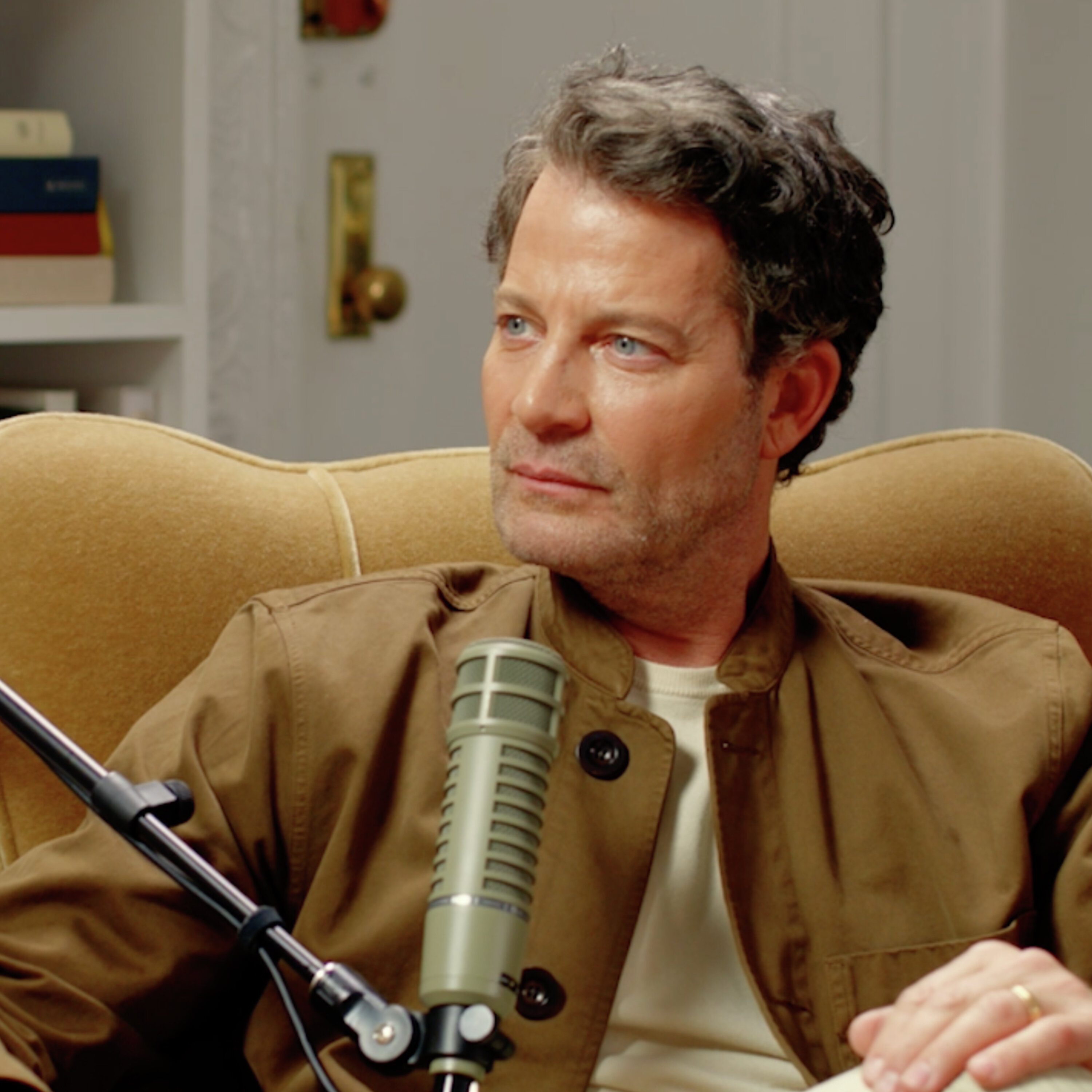
Loading summary
Transcript248 lines
- [00:00]
Nate Berkus
Foreign.
- [00:13]
Host
Some people are naturally at home in the world. Interior designer Nate Berkus is one of them. With a combination of impeccable Midwestern manners, telegenic looks, and a real talent for design. He rose to fame in 2002 when Oprah anointed him as her design expert. And he quickly became a fixture of living rooms across America. In 2004, Nate and his partner Fernando found themselves caught in the tsunami in Sri Lanka, and Fernando lost his life. The grief that followed might cause others to retreat from the world. Instead, Nate took away a deep sense of empathy from that experience, one that changed his approach to people and places in a deeply sincere way. On his travels, Nate collects objects and mementos with a rare intention, constantly adding to a living archive that follows him through his homes, projects, and and family life. In this chat, we connect about the made by hand in Mexico's Merida Palmer's Peerless Antique Fair, why he won't take his children to Venice just yet, and how we can all find a way to travel through grief. Here's my conversation with Nate Burkus. Nate, welcome.
- [01:20]
Nate Berkus
Thank you.
- [01:20]
Host
Super nice to have you.
- [01:21]
Nate Berkus
Thank you.
- [01:22]
Host
I wanted to ask you, I know you've had a book that came out recently called Foundations. What's the place that do you think probably was your aesthetic foundation when that you first traveled to that had the biggest impact?
- [01:35]
Nate Berkus
Growing up in the Midwest in a suburb of Minneapolis, it actually wasn't. We traveled as a family. We traveled starting at a very young age. But it actually wasn't travel for me. It was the sort of allure of a multi dealer antiques mall or an auction. My mom was an interior designer and I remember being so curious about the decorative arts and obviously she was collecting and buying for clients and projects and things like that. But you know, objects really tell a story. They represent sort of often when they've made it this far from their origin, they represent sort of the best of craft or the best of design or the most important wave of interest at a certain time or period in a culture. And so my eyes were actually opened aesthetically more not from seeing things when I was young, but. But seeing things. Not places, but things.
- [02:25]
Host
Is there an object that has stayed through all of your houses?
- [02:29]
Nate Berkus
There's several, actually. Jeremiah thinks that I am like, he calls me like a fancy hoarder, but I like when my eye travels around one of our spaces to land on things and have that space tell the story of us and of me and of our children. And I've always felt that interiors, the Best interiors really do represent the people that live in them, but also represent not just who they are currently, but who they've been, what they've loved, what they've lost, what they've seen, and probably equally as important, who they aspire to be.
- [03:01]
Host
I mean, that's why we do it in front of my bookplace with all of my. All of my knickknacks and things. And there's the lion right there that travels with me through all of my houses. Not that there's been that many, but that one's from Tamil Nadu in India, and I can't let go of him.
- [03:17]
Nate Berkus
Yeah, you shouldn't.
- [03:18]
Host
No, for sure. I listened to something that you had done several years ago, and it was about that. You went to Paris when you were 17.
- [03:27]
Nate Berkus
Yeah.
- [03:28]
Host
And the thing that you were most interested in was, aside from boys, history.
- [03:33]
Nate Berkus
Yeah.
- [03:33]
Host
So I was, like, curious what that means exactly, or what that meant for you when you were there.
- [03:39]
Nate Berkus
I think what it meant was that at 17, I was old enough to have this awareness of modern life happening in an ancient place. And in American interior design, I've always been really interested in things like architectural salvage and old doorknobs and salvaged fireplaces and old stone floors that have been reclaimed and all of these materials. But, you know, that was 20 years later. I think at the time, I was just so taken by the age of the place. And, you know, there's all these great design sort of concepts that happened. Andre Putman doing these apartments and these Hausmanian apartments and things like that, and the deeply, deeply deco movement against these sort of wedding cake moldings and the contrast of all of that. And I think that that was really formative for me. I was an intern at a costume jewelry designer. Her name is Dominique Orientes. I lived with a family in the 16th arrondissement in this grand old apartment. Wasn't particularly well furnished, but, you know, it didn't matter.
- [04:49]
Host
There was, like, a houseman style one.
- [04:51]
Nate Berkus
Yeah, Housman style, like, with the big kitchen and the enormous stove and then this sort of rickety table that the housekeeper would change the linen on it, you know, every two days, and. And it didn't match the napkins and whatever, and that was really wonderful. Like, I just. It was. It was this option that I discovered of being able to live with history in such a tangible way, and that never left me.
- [05:17]
Host
Is there other places that you return to when you go to Paris?
- [05:20]
Nate Berkus
Yeah, actually, I'll tell you a funny story. So when I lived in Paris and I was in Stagier, an intern. They were. There was this Vietnamese restaurant in the bottom of the office building. And for 5 francs, you could get this, like, beef alone on a baguette, or these, like, tiny egg rolls that they call nem. And I ate that for lunch every day. I was like, this is my favorite restaurant. It's amazing. So fast forward 10 years later, I'm back in the States. I've graduated from college, I've started my company, and I brought someone with me. And I was like, we have to go back to this Vietnamese restaurant. And it's so great, and I have such great memories. And I ate it every day, and I can taste it. I'm so excited. And we walked down the street, and I was like, I don't remember this being so dodgy. I was like, wait a minute. This cannot possibly be the restaurant. I remember the sandwiches were all in the window. And I was like, this cannot be it. It. Right? With the filthy glass and, like, the tile floors that looked like they hadn't been cleaned since my bar mitzvah. And I was like, this is really gross. And my friend was like, I am not eating here. Like, you're welcome to eat here, but, like, there is no way. So, I mean, you know, things change, obviously, as we change, but I have my favorite haunts in Paris. The Ritz Hotel. I love.
- [06:35]
Host
I've never stayed there before because. No. Which is kind of strange. I was coming from a trip somewhere that was a little. Not rough, but I was, like, getting off a plane. I'd had one or two outfits, and I'd had, like, a pair of shorts and, like, dirty shoes. And, you know, I was going to get changed into something, like, acceptable, but I walked into the hotel, and they were like. They wouldn't let me in. And so it was like my Pretty Woman moment.
- [06:59]
Nate Berkus
Yeah.
- [07:00]
Host
Like, big mistake. Huge. It was when I was. It was when I was.
- [07:04]
Nate Berkus
You're like.
- [07:05]
Host
I think I. Like. I had a friend who was talking about it the other day who's, like, in hotels, and. And she was like, you know, really speaking about what I think is unique, or what I understand to be unique about the Ritz, which is that sense of nostalgia and Totally. And, you know, that it's. That it's both timeless but timely. It's an alive institution. And it feels like it's sparkling, I guess, particularly now, since they did the renovation. So I don't hold a grudge. I have to say. It's like more of a. It's more of a story. That I enjoy now.
- [07:35]
Nate Berkus
I will tell you, though, that reminds me, that's why I'm loyal to Claridge's in London.
- [07:39]
Host
Okay.
- [07:39]
Nate Berkus
After the Indian Ocean tsunami, I was brought to London, flew from Colombo and Sri Lanka to London. And I was bandaged, wearing, like, ripped shorts and a tank top and, like, a sweatshirt half on and flip flops that didn't match. And I walked into Claridge's with friends and they said, welcome back, Mr. Burkus. You know, and I will always remember
- [08:07]
Host
that there's something different about the concierge or doorman in London. Like, that's really a profession. Yeah. And it's something that is earned over kind of decades. That's something really unique to. To London, I think. And I. I love Claridges as well. Like, particularly the little bar there, the Fumar.
- [08:26]
Nate Berkus
Yeah.
- [08:27]
Host
When you're talking about the tsunami, actually, that's the first time I remember in Australia that you came across on my radar because, you know, we're more. More close to that part of the world.
- [08:37]
Nate Berkus
Taught me a lot about hospitality, really was. Because I think that the Sri Lankans in general, you can't speak in general about any sort of population. Obviously, it's ridiculous. But very generally speaking, it's such an incredibly friendly place. And culturally, when you're visiting a country that is sort of trained and has placed importance on being good hosts, you can feel that, you know, that I'm sure, more than anyone.
- [09:02]
Host
Yeah. I feel like in Sri Lanka, even the colors are that gentle, soothing greens, browns, whites.
- [09:09]
Nate Berkus
Jeffrey Bawa.
- [09:10]
Host
Exactly.
- [09:11]
Nate Berkus
Of like, just this beautiful tranquility. And everyone's so connected to nature and all these things.
- [09:17]
Host
But it.
- [09:17]
Nate Berkus
I say that it taught me a lot about hospitality because the Sri Lankans, even though they had such incredible devastation, losing their homes, losing their loved ones, losing their children and their elders and their husbands and their wives and their partners and all these things. They were so concerned with the expats that were there. They could not believe, like, what did we need? What could they do to help no matter where we went? And that is also something that stayed with me for my whole life.
- [09:48]
Host
I've always wanted to ask you, have you traveled back to Sri Lanka? And would you.
- [09:52]
Nate Berkus
I. So this is such a good question. A year after the tsunami, at the time, I was on the Oprah show doing these makeovers on. On. On the Oprah Winfrey show in the States. I went on Oprah to talk about my experience in the tsunami weeks after. And the reason that I did that was because Oprah had said that she was going to raise money for the region that we were in, Fernando and me, and that she would waive all of the admin fees, et cetera, and whatever dollars were raised from her audience would go directly and be administered to the region of Potaville where we were. And that's exactly what she did. And it was several million dollars which translated into Sri Lankan rupees as a fortune. And then they came to me and said, what should we do with the money? And I said, I'm not a. Not for profit. I was vacationing. I don't know what they need. And so we partnered with these different.
- [10:46]
Host
How old were you then?
- [10:47]
Nate Berkus
I was 28. But they told us these agencies helped us figure out like feed the children and these very established agencies how to disperse the money. And one of the programs that was super important to me was that we were able to restore like the woman who had the fishing, the cottage on the shore, who served the fishermen coffee every morning. We built a new hut and got her her new supplies and we provided bicycles to the villagers. And we actually built this two story building that was a vocational school. It's a Muslim community. And so it was the only building because you couldn't see in from outside, where young men and young women were per religiously to be together. And so we built a vocational school in the village of Potaville and we named it after Fernando. A year to the date after the tsunami, I got a call from Oprah and she said, the PM of Sri Lanka has invited me to the opening of the vocational school that you helped to build. And I told them, I'm not doing that, but he should go do it. So I'm asking if you want to fly back. And I said, absolutely not. There's no. I'm sorry, I'm sure that you're going to frame this as a full circle moment and I'm sure you're right. I just don't have it in me to do it. I apologize and I appreciate the offer, but the answer is no. Definitively the answer is no. And she said, absolutely no pressure, I understand. Ten minutes later I called her back and I said, I changed my mind. She said, I know you're booked on a flight out in two days and this is the production crew that's going with you. And I said, how did you know who's coming with me? And she said, oh, Lisa Minor and this one and your friend Anne. And you know, all these people exactly who she knew I would want to make Me comfortable. I said, can I bring my little brother, like, as an emotional support animal? And she said, yes. And I said, okay, great. And I said, how did you know I was going to change my mind? And she said, because I know you. I know that you would never let that opportunity go by. So a year to the date December 26, I stood in the exact spot where we were, and it was one of the most restorative, most incredible moments of my life.
- [13:05]
Host
Well, maybe Oprah was the only person that could get you to do that.
- [13:08]
Nate Berkus
And it was like, no, she is not, like, particularly persuasive.
- [13:13]
Host
Really?
- [13:14]
Nate Berkus
No, because she's not. She's been a long time since she's had to talk anybody into anything. So, I mean, honestly, the ask went out and she met what she said. There was no pressure whatsoever around it. It didn't matter to. But I ended up going, obviously. And she knew it was be an enormous gift for me. And I think, more importantly, I knew it was going to be an enormous gift for me.
- [13:35]
Host
Yeah, I mean, I have a friend whose husband passed away last year, and they were amazing travelers and had like a few kids and just went absolutely everywhere. And she's now just slightly getting back on the path of going to the places that they. That they went to. And I'm really fascinated in this idea of this traveling through grief and how you return to those places because they hold so much memory. And it's challenging, but I do think it's probably a great catharsis.
- [14:07]
Nate Berkus
It is. And actually, you know, in preparation for this conversation, you had asked me about places that I really love, and one of them is Laos. And that's also connected to my tsunami experience because I had no ticket to go to Laos. I was in Chiang Mai with Jeremiah for exploring, like, sort of the north of Thailand. And. And we were meant to go down to the coast in Thailand. We weren't married. We had just been dating. So this is probably 13 years ago. And we were staying at the Dhara Devi, which is now. It's changed hands like 700 times.
- [14:40]
Host
It has those cannonball trees.
- [14:41]
Nate Berkus
Yes, they're so cool. And that, like, insane spa. And like, yeah, everything is delicious. And the night before, we were meant to go down to the coast of Thailand, not back to Sri Lanka. I was up all night, and Jeremiah woke up at like 4 in the morning and he realized that I was awake. And he said, what's wrong? And I said, I don't think I can do it. I feel like I have too much to lose. Like, I Just don't think I can go back to the coast. And he said, then we won't go. And I remember we were going to stay at an Amman in Thailand. And the next day the manager of the hotel called the Amman and sort of explained the situation and they said, well, we would welcome him at our property in the Long provay.
- [15:17]
Host
Yeah.
- [15:18]
Nate Berkus
I was like, okay, great. So that's how I ended up finding one of my favorite places I've ever been in my life. And that was an incredible, incredible trip that both Jeremiah and I still think of and hope to bring our children to one day.
- [15:31]
Host
I think it's one of the best hotels. I totally do.
- [15:34]
Nate Berkus
It's so cool.
- [15:35]
Host
Yeah.
- [15:35]
Nate Berkus
And French colonial. Former hospital.
- [15:37]
Host
Exactly.
- [15:38]
Nate Berkus
It's the land of sticky rice. Like, what could go wrong?
- [15:40]
Host
Yeah. And, you know, in Luang Prabang, you have, you know, it's, it's this language town on a river and it has, you know, the monks in saffron robes and it feels like of another era.
- [15:52]
Nate Berkus
And a night market. And the palace is also single story and.
- [15:57]
Host
Exactly.
- [15:57]
Nate Berkus
Mekong is so beautiful with the wooden boats. It's like, it's really, really incredible.
- [16:02]
Host
Yeah. And they've managed to maintain it in a way that maybe in some other towns and cities in that part of the world are less so.
- [16:10]
Nate Berkus
Yeah.
- [16:11]
Host
And I think actually those hotels, I think the Amman there does a really job of connecting to the community.
- [16:17]
Nate Berkus
Well, when we were staying there, the cultural attache to the hotel was the nephew of the last queen. And so he knew everybody and was like, taking us around and wanted to know what we were particularly interested in. And we went and made our offerings to the monks one morning. Jeremiah, I was like, what time is that? He's like, it's at 5. I was like, I'm not doing that. He was like, you're doing it because you'll never forget it. Of course he regretted it. No, I, I, we did it.
- [16:44]
Host
Okay. Yeah.
- [16:45]
Nate Berkus
I was the one that said I wanted.
- [16:46]
Host
Oh, you were? Okay.
- [16:46]
Nate Berkus
Yeah. I'm not, I'm not an early.
- [16:48]
Host
Well, I get that.
- [16:50]
Nate Berkus
Especially after Traveling, you know, 7,000 hours.
- [16:54]
Host
Brutal. Yeah.
- [16:55]
Nate Berkus
But I did it. And, you know, the monks were walking into the village and you're sort of at the end of the path and, and you don't look at them. You keep your head down and you sort of pass the eggs and things like that. But it was like such an incredible experience. Like, obviously. But the cultural attache to the hotel was super charming. And so, you know, I love that way of seeing A place.
- [17:19]
Host
Did you take any kind of design inspiration from Laos?
- [17:22]
Nate Berkus
Massively, yeah. I mean, the hotel itself is, as we mentioned, like a former French colonial hospital. I mean, it's.
- [17:30]
Host
Yeah. And beforehand, with Iman, they had sort of these very monastic, very modern, Kerry Hill designed spaces, which is why they became iconic in the way that they absolutely are. They defined a particular aesthetic. And then when they. This was one of the first ones where they broke into doing this. And.
- [17:46]
Nate Berkus
And I was so glad that they did, because, you know, the. The thatched ceilings and the sort of painted wood, primitive furniture, and, you know, it just all worked so well. And, you know, I like to explore a place. Like, I don't want to go to a great hotel and just stay in the hotel, obviously. How boring is that? But, you know, the night market is walkable, craft stores, all of that stuff. I was so into. In fact, I brought you one of the objects from my home that was from that trip. Should I get it? Yeah, yeah, I'm gonna get it. Yeah, you can hold one, and I'll hold one.
- [18:19]
Host
Okay. So I have no idea what these are. N. Okay.
- [18:22]
Nate Berkus
So I didn't have any idea what they were either. One of the things that we organized was this boat trip down the Mekong river to see this caves of all the. The Buddha, and. Which was incredible. And then on the way back, they. The boat stopped and docked on the Mekong, and we walked this main street of this super, super remote village, and there were shops. So obviously somebody had organized like this for people visiting. But they were the kinds of shops where, like, they were, like, old teak cases with broken glass panes, and, like, they would turn the light on. And each case, as you looked, and these were in there, and I was using my phone to translate, and I was like, what are they? And he just kept saying, they're silver. They're silver. And I was like, okay, how much are they? Because now I don't care what they are. I just want them right now. And he said, They're $200. And I put them back on the shelf. And Jeremiah, who had spotted them, I walked out without them. And he said, what are you doing? And I said, the guy wants $200. Like, we're in the middle of absolutely nowhere. He's insane. That is, like, so rude. It's like, we're like the farang. He's completely taking advantage of us. And Jeremiah was like, turn around. Go back into that shop. Give him his $200. Tell him, thank you. We are not leaving this village. Without those things. So we brought them back to the hotel, put them in the suitcase, and then brought them back to New York City and cleaned them up. And they were actually. They're silver tusk ornaments. Oh, isn't that cool?
- [19:58]
Host
Wow. How amazing.
- [19:59]
Nate Berkus
Yeah. And we use them actually with candles in them. But they're among sort of my favorite things. And when I talk so much in my book or in my practice and design about how things matter and how they should connect us to our memories, I mean, this is like the perfect memory. Me cheaping out in the middle of the most exotic place in the world. I would be furious with myself if I didn't have these. And Jeremiah reminding me again, I tell people all the time, when you see something incredible, just get it.
- [20:32]
Host
I mean, I have some of the most treasured things of all that I've just gone. Actually, you know what, I'm not going to haggle around this. I'm just going to go for it. And then sometimes you realize both that they have this immense sentimental value of the particular moment like you're describing, and. Or they actually might end up being valuable.
- [20:50]
Nate Berkus
Yeah.
- [20:51]
Host
Or really not.
- [20:52]
Nate Berkus
Yeah. Or not.
- [20:53]
Host
It doesn't matter. I think, Yeah, I think it's like
- [20:55]
Nate Berkus
it's just a tangible thing that wasn't meant to be a souvenir.
- [20:59]
Host
Right.
- [21:00]
Nate Berkus
I think that's always my framing around something. I hate things that were designed to be a souvenir. All these beautiful places, these wonderful countries that we visit and the markets have been taken over by things made in China and things made by machine. And it's like you see like these machine made blankets and you're like, what is happening? But when something's not designed to be taken with you, that to me is like always the best. It's like the only real rule of thumb.
- [21:27]
Host
Was it the same trip that when you went to Laos and also Cambodia?
- [21:31]
Nate Berkus
No, it wasn't. It was 20 years apart. All right, 15 years apart.
- [21:35]
Host
Okay.
- [21:36]
Nate Berkus
And Cambodia. I was very early on they were quite specific about going to the all the archeological sites. You had to walk in a single file line behind the guide. You couldn't venture off, you couldn't go off and take photos because they were still very much in the very early days of clearing all the landmines.
- [21:55]
Host
Right.
- [21:56]
Nate Berkus
So it was really dangerous. But I went there with Fernando.
- [21:59]
Host
Okay.
- [22:00]
Nate Berkus
So it was the same trip as the Indian Ocean tsunami for me.
- [22:04]
Host
Right.
- [22:05]
Nate Berkus
Started in Bangkok, went to Cambodia, went back to Thailand and then to Sri Lanka.
- [22:11]
Host
So Angkor Wat.
- [22:12]
Nate Berkus
Yeah.
- [22:13]
Host
And the temples. Did you how much time did you spend there?
- [22:17]
Nate Berkus
We were there for six days, I think, but it was like six real days because we had been in Southeast Asia for a beat. So it wasn't like we arrived exhausted. And, you know, it was absolutely phenomenal. I hear that it's changed entirely, right, from, like, that road from the airport is now resorts and all these, like, crazy casinos and all these things. And it was not that there were a few hotels in that area. The Amman hadn't opened there yet when I was there. And we stayed in, like, this sort of grand, kind of dusty hotel at the end of the square. But it was. We were picked up every day and brought exploring to a different site. And it was amazing.
- [22:58]
Host
Did you do hot air balloons or is that. No, that was pre. Yeah, I have a theory about, like, hot air balloons. I think the only chic thing to do is when there's a thousand of them or one of them.
- [23:08]
Nate Berkus
Yes.
- [23:08]
Host
And so I would actually. I would actually. I actually quite like to do. There's nothing more embarrassing than, like, three hot air balloons. Like, it's brutal. Yeah, exactly.
- [23:19]
Nate Berkus
It's like, it's. It starts to take on the form of, like, a tandem bike.
- [23:23]
Host
Because one of the things that I would love to do in the States and I've done something similar, is the Albuquerque hot air balloon. I have done that. Oh, my God.
- [23:30]
Nate Berkus
Yeah.
- [23:30]
Host
Was it kind of amazing?
- [23:31]
Nate Berkus
Yeah, it was. It was particularly great. I went with my. My stepfather and my brother, and he had organized that. And our last morning, that's what we did. And it was really cool. It was really, really cool. And I'm fascinated by the American Southwest as well.
- [23:47]
Host
Yeah, I love Santa Fe. I've spent a bit of time. Yeah, it's amazing. It's probably. Have you ever been to the. The Folk museum? Yeah, I mean. I mean, this tends to come up in almost every conversation of travel I have with anyone aesthetic. It's, like, insane.
- [24:04]
Nate Berkus
Well, it's also such an epicenter of crafts and design. I mean, really, if you look around, it's like, again, everything from, like, amazing. My mother used to call it a chunk of turquoise. I'm in pursuit of a chunk of turquoise. But, you know, it's just all the weaving and the blankets and the textiles mixed with the jewelry and all of that stuff. I mean. Yeah, bring it on.
- [24:25]
Host
It's one of the great American aesthetics.
- [24:27]
Nate Berkus
100% capitalized beautifully by Ralph.
- [24:30]
Host
Oh, that's true. Actually, I didn't think about that.
- [24:32]
Nate Berkus
Of course. Hello, country.
- [24:35]
Host
It's all really. Of course. Yeah, just on the. On the hot air balloon. I still do want to do that above the temples. Oh, dawn with a thousand of them. I think that's so beautiful. Yeah. And I sort of feel like I'm not the person that's so, like, orthodox about no places can't have visitors, you know, that it has to stay in the same way. Like, it's such a. Like a balance where, you know, some places are destroyed by too much tourism, but then you want people to see it. I. I'm. It's a constant friction point for me. Like, I. I think about, like, post pandemic going to so many different places, or actually during the pandemic, because I managed to be able to travel in some way. And then I would see places that were completely empty, and it was quite a depressing thing.
- [25:23]
Nate Berkus
Yeah.
- [25:24]
Host
A lot of people would talk about how a certain place was empty, like Venice, and that was honestly one of the most extraordinary things to see. I can't even imagine poetry in stone. But at the same time, if you think about the food culture there, the people there that work in hospitality.
- [25:44]
Nate Berkus
Well, almost all of them.
- [25:45]
Host
Well, exactly. And that was kind of. It a devastating thing to see. So, you know, it was a. It was kind of a great lesson. But do you often travel to Venice?
- [25:55]
Nate Berkus
I do, actually. I really love Venice. It's Jeremiah's favorite place. And actually, what's really interesting is that it's such a special place for Jeremiah and me that we've never brought the children. And so our kids are super well traveled. Our daughter was the lead flower girl in a friend's wedding in Rome at age three, you know, and we've been traveling since then. Our children. And whenever we're leaving, they usually say to us, but which Mexico?
- [26:19]
Host
Oh, God.
- [26:20]
Nate Berkus
Which is great.
- [26:20]
Host
Yeah, that's cool.
- [26:21]
Nate Berkus
You know, it's really. But, you know, the kids have been a lot of places, and obviously we spend a lot, a great deal of time in Portugal as well, but they've never been to Venice. And I think we're kind of saving it because it's really just special, for
- [26:34]
Host
sure, you know, And I think it's like, it's one of those things that the first time is. It, of course, reveals itself, like, forevermore. You can go a million times, a
- [26:46]
Nate Berkus
million times, but there's only one first time.
- [26:48]
Host
Correct.
- [26:48]
Nate Berkus
When the boat goes around the corner from the train station. It's just insane.
- [26:53]
Host
It's true. This episode of Traveling through is sponsored by Capital One. Capital One. Cardholders are passionate about unforgettable experiences. Together we partner to connect these curious travelers to world cultures through expert guided journeys. From the peaks of Machu Picchu to the grand architecture of Vienna, these once in a lifetime trips take you somewhere truly off the beaten path. Through Capital One entertainment, eligible cardholders can book exclusive experiences and so much more, all while earning elevated rewards. Saver cardholders earn 8% cash back and Venture X earns 5x miles. Thanks to Capital One, your dream getaway is one step closer. I went to Syria right before the war. And what was interesting then is that it wasn't full of junk because it wasn't geared to. You know, sometimes if you go to the Grand Bazaar in Istanbul or the Medina in Marrakech, you find things that are just obviously have nothing to do with the place. There are reproductions and that can be kind of sad.
- [27:53]
Nate Berkus
I was once at the Grand Bazaar and had to have this set of 12 bowls desperately. I had not seen the motif, I had not seen the glazing. I had not seen anything. They were like an ecot pattern on the exterior and then this really beautiful medallion in the bottom. And I hesitated because I didn't want to carry them. And then I. They of course were like, no problem, we can ship them. And I was like, okay, great. So I bought them and then I came home and they were in the anthropology catalog. I was like, what did I. What's happening?
- [28:22]
Host
Well, I mean I. I went with two of my closest friends last year actually, both whom are very spiritual and not about possessions. But evidently I took off down, down the kind of alley in, in the Grand Bazaar. And then I turned around and I was like, where are the girls?
- [28:40]
Nate Berkus
Like, what are they doing?
- [28:41]
Host
And I was completely lost. Had no idea. Backtracked a little bit and then it was counterfeit alley and what, what, what do I do? But then I go in there and they're like, these are perfectly Chanel. I mean they're probably the same makers, blah blah, blah, blah, blah. Anyway, so they left with Chanel shoes and I had to buy something in order to get them out of the store. Right.
- [29:01]
Nate Berkus
Just let me go.
- [29:02]
Host
I often travel to food markets. Jumping off point. When I go to a place, I tell people all the time my background is in food. So I look there and that's kind of my map to a menu or the seasons or even the environment. I understand that you go to markets, like flea markets, craft markets, local markets. Yeah. And we just did a trip together, Prior and Capital One and you to Jamerida, which I like. That's A place of great craft and things that you can find in the market.
- [29:31]
Nate Berkus
You know, it's also such an interesting intersection. Merida. I was very good friends with the painter and sculptor James Brown and his wife, Alexandra Brown. They had a publishing house in Merida. He painted in Merida. They raised their children in a hacienda in Oaxaca. Sort of left New York in the 80s. He was represented by Castelli. It was a really interesting time. And the children used to come greet visitors with, like, spiders crawling up their arms. And I remember the jeweler Kenny Lane was like, the Brown children are savages. And it's just this really, like, great world. But they were the ones that introduced me to Merida because they bought a. One of those great houses that looks like nothing from the street and then opens.
- [30:13]
Host
Unbelievable.
- [30:14]
Nate Berkus
They're so beautiful. They're so incredible. So my first trip was with them. And, you know, I think in travel and in life, we have these people who are sort of like our Sherpas, who guide us, and, like, whatever experience we have, if they're present, they make something that much more magical. And the Brown family was definitely like that for me in my 20s. And I remember being totally taken with Merida then. So to be able to bring a group of people back with Prior and Capital One was the most incredible experience for me because I have a lot of friends there. I love it there. I sort of, you know, am fascinated still by it. And it also is a city that's growing and has continued to grow in. I guess I'm not sure I'm the correct person to say, but in a
- [30:57]
Host
nice way, the right way. I agree with you. When you're going to Merida, what do you buy there? What do you take home?
- [31:03]
Nate Berkus
I mean, it's embarrassing. I had, like, a suitcase. Christie Slocum, who's here while we're recording, had to bring a suitcase of stuff from Merida to our home in Portugal because I needed it, because Architectural Digest was coming to shoot the house in Portugal a week after that trip. And so I was like, these tassels. I need these embroidered. I need these embroidered pillow covers for the children's beds.
- [31:26]
Host
Probably works well in, like, an Alentejo.
- [31:28]
Nate Berkus
That is. It does work.
- [31:29]
Host
Like, if you think about it like
- [31:31]
Nate Berkus
that whole, like, for sure, yeah, comport. And we're in the North Alentejo, so it's like. It's like a very rustic, kind of funny situation. The house is not. But. But all of my homes, all of my interiors have always been filled with Mexican craft since Day one. And my beach bag is from, you know, chop us. And, like, it's just. I, I, I, I've, I just feel very, I feel great surrounding myself with things that have been made by hand.
- [31:58]
Host
Well, it was literally what was about to come out of my mouth when I think of Mexico, and I think, you know, there's kind of superpowers of every place by hand is what I think about when we think about Mexico. And I think about it. From mole. Exactly. I think
- [32:17]
Nate Berkus
it's all crafted by hand. The chips.
- [32:19]
Host
Exactly.
- [32:20]
Nate Berkus
I mean, you know, and that's my, that is my biggest barometer for a Mexican destination, because I have traveled extensively throughout Mexico, the colonial cities and all these things, and inland, and the interior of the country I find more interesting than the coasts. But if you sit down and you have a bad chip, I'm out.
- [32:38]
Host
So why, why did you choose Portugal?
- [32:41]
Nate Berkus
We have conflicting stories about this in our family. I wanted visas for our family. It was during Trump's first presidency. Jeremiah wanted a beautiful place, and he's actually Portuguese on his mother's side.
- [32:56]
Host
Oh, I had no idea.
- [32:57]
Nate Berkus
Family from the Azores, which is why he looks like that, which is so annoying. Like, he had to come from an island where everybody's beautiful. It's like, we're exactly a wonder woman. Like, this is so stupid. So he has Portuguese background, does not speak Portuguese yet because it sort of died off with his grandmother. But we have a really good friend who lived in New York for 15 years, quit New York and moved back to Portugal. He's Portuguese, but not to Porto, where he was from, to this region in the Alentejo. That is really, really special. I went through this whole thing, you know, Marjorie Goobelman. Marjorie was doing this whole program. Mad Marge, the dj, Matt Marge.
- [33:38]
Host
I've never actually met her, but.
- [33:39]
Nate Berkus
Really?
- [33:39]
Host
No.
- [33:40]
Nate Berkus
Oh, she was like my first friend in New York.
- [33:41]
Host
Oh, really? She's so iconic.
- [33:43]
Nate Berkus
Yeah, beyond iconic. So she said to me, I'm leaving New York. I'm moving to Lisbon. I don't want to be a poor old lady. It's not a good look for me. I said, that's really true. That's a terrible look for you. No truer words ever spoken ironically, of course.
- [33:58]
Host
She would be the last person that would be like that.
- [34:01]
Nate Berkus
She would be. But I mean, who knows? She's very smart in that old waspy way. She knows exactly how much everything should cost. And she gets very excited with a €2 Uber. She calls me to tell me the call is probably more expensive than the Uber. But I will say that I went through this whole thing and did all the paperwork and the. It's a zoo and I hate stuff like that, like apostle documents and whatever. And then I put all the paperwork in front of Jeremiah and instead of signing it, he called our friend Andre Viana and said, isn't there anything, like, amazing? Have you seen anything? And Andre said, I actually was going to buy this farm. I don't need it, I don't want it. But it's so beautiful. I don't want anyone to ruin it come tomorrow. Which we did. And we bought it that afternoon. And then we flew home and looked at each other and we're sort of like, what have we done? But Portugal's been a really interesting place for me. It was never really on a bucket list. It was never something I paid attention to. I don't eat seafood, so all of those.
- [34:56]
Host
Okay. Yeah, but you're a little bit in your inland, right?
- [34:59]
Nate Berkus
We are inland, but we spent summers there as well. We rent a house at the beach in Comporto. Every other French.
- [35:06]
Host
Beautiful.
- [35:07]
Nate Berkus
Yeah, I love it. Our friends are always kind of inviting us to their desolate beaches. And sometimes we go, but often we stay at our club with the button where they bring you a sundae when you press it. So, I mean, we. We have really nice group of friends there. And we also have this incredibly beautiful parcel of land. It's an 18th century working farm with water channels and two springs. So it's completely self sustainable. We have sheep and three massive dogs and three peacock and olive trees and every fruit grove. And the fruit is delicious. And we make orange juice every morning. And I'm hesitant when I'm talking about it because I really have this sensitivity towards people from anywhere else who have successful careers and then they move to this rural place and they're like, it's so quiet. It's so amazing. And it's like, right. It's so quiet and so amazing because you have the money to be able to do that.
- [35:59]
Host
Hey. But I think that, like, yes and also no, because a lot of these communities are dying out. And if they don't get.
- [36:06]
Nate Berkus
That's the best part, because we are integrated into this village and the people that help us with the farm are all from the village. And so it's so great. And there's so much goodwill around our family and around our children in this area. And people don't bat an eye when they see two men with their kids in the grocery store. Never once. Conversely, they watch old episodes of Our makeover show in like, rural Portugal. And they're like, the guys.
- [36:33]
Host
The guys.
- [36:34]
Nate Berkus
The guys. And we're like, yes, we're the guys.
- [36:37]
Host
Now.
- [36:37]
Nate Berkus
How do you say, a pound of ground beef. So it's great.
- [36:41]
Host
So the Portuguese is coming along somehow.
- [36:43]
Nate Berkus
I mean, listen, I can sort of get by. I speak French and can get. Get my way through Spanish and Italian if I need to. So there's certain things I can understand when somebody's speaking to me, but I'm really. There's no vowels.
- [36:56]
Host
I'm completely lost with Portuguese.
- [36:58]
Nate Berkus
It's horrifying. Yeah, it's really hard.
- [37:00]
Host
It's really hard.
- [37:00]
Nate Berkus
It sounds like a cross between like Spanish and Russian to me. Like, it's just a very. Or some like. Or Czech or something. It's like. I, I don't. I. It's. It's. It's tough.
- [37:10]
Host
I know that there's. There's been such a huge expat surge and revival kind of. I remember going to Christian Louboutin's house because he was the. The like early adopter, very early of. Of Lisbon. And then of course, he has an incredible hotel in Miletus, which is just south of. Of Comporta. And I know there's a big excavation. It's a huge community there in, In Lisbon. And that's given a new life to it. And there's also risks. And I think that they need to thread the needle a little bit.
- [37:37]
Nate Berkus
They do.
- [37:38]
Host
But in the countryside, people, I think, forget that Portugal was like the poor man of Europe in a lot of ways and was under a fascist dictatorship until not that long ago.
- [37:48]
Nate Berkus
Well, the aristocracy and most of the wealthy families had to flee to Brazil for most of the 60s and some of the 70s as well. And when they returned, they came back to an economy that was really broken. So Portugal is like 30 years behind the rest of Europe. That has its charm. But there is this sort of innate joy that we've found. It's very, very family centric. It's obviously very focused on nature and preservation and slow sort of living and thoughtful interaction. And that obviously will have. Has universal appeal.
- [38:29]
Host
I have a friend, do you know Noe, who has the project in situ? Yeah. So effectively what in situ is is that they kind of work with particular communities to maintain and revive artisanal crafts. He's a very, very contemporary designer who just did this lighting collection for Dior, but he's got this amazing project. So he tries to look at the vern a particular place and then preserve it. I say that because there's two things that people I think don't really realize in Portugal. I wonder if you agree. Like, actually, if you've got made in Portugal shoes, you're on a winner.
- [39:04]
Nate Berkus
Right.
- [39:04]
Host
And then also sheets.
- [39:06]
Nate Berkus
Yeah.
- [39:06]
Host
And the embroidery, like you get into some of those nuns, like, it's unbelievable quality.
- [39:13]
Nate Berkus
And I would also say, you know, a lot of what I sell things, things at mass so I can pay for the gardener in Portugal, but, you know, I sell bath mats made in Portugal to put the money back into Portugal.
- [39:26]
Host
Well, there you go. Nate Burkus's bath mats are high quality.
- [39:28]
Nate Berkus
Exactly. There you go. But what I think is really interesting about craft as it applies to Portugal is that there is sort of nothing of bad quality. And even these mills that are mass producing things for these US or European department stores and things like that, even the Spanish department stores. I mean, most of the cotton, almost all the cotton in Spain is from Portugal. So it's like even those great kids clothes, like the most Spanish children's clothing is the most beautiful in the world to me. But like, all of that is made or the material is from Portugal. But there's just so much of that there, and it's so, so great.
- [40:08]
Host
Does it feel like that house has a sense of permanence for you?
- [40:10]
Nate Berkus
100%. We feel very much like the caretakers. Like that paddock campaign bas. You never own it. You just hang onto it to the next generation. It's like that's sort of what I feel is the calling around the house and sort of the tenant that we both feel and are very activated by. And interestingly enough, we renovated. Jeremiah did not me renovated one of the homes on the land on the farm for his parents. So his mom and stepfather live there full time. And we basically at any given moment have three generations are at. So that already sort of kicked off what I feel. And our daughter has already said that that's where she wants to be married. So I hope that's true.
- [40:58]
Host
So, Nate, we like, every time. Every time a friend comes on, I ask them some questions. Kind of like a lightning round, let's say. So where's a place that you would always return?
- [41:08]
Nate Berkus
Portugal.
- [41:09]
Host
Where's a place you never go back?
- [41:10]
Nate Berkus
Back. Cabo. But I'm forced to go back because everybody has a party there.
- [41:15]
Host
Really?
- [41:15]
Nate Berkus
Yes. Everyone from Los Angeles thinks it's the coolest place in the world.
- [41:20]
Host
Maybe I have no friends.
- [41:23]
Nate Berkus
Yeah, you don't know you have the right friends.
- [41:26]
Host
Do you have a favorite hotel?
- [41:27]
Nate Berkus
No, not one. I mean, I really love a well run hotel. Something sort of either historic or design forward.
- [41:35]
Host
What's the, what's the one that first comes to mind when you say that
- [41:39]
Nate Berkus
the Hacienda de San Antonio, which was leased by the Amman in Colima in Mexico. It was Alex Goldsmith's property and he
- [41:47]
Host
has Quichmala as well.
- [41:49]
Nate Berkus
Yes, yes. And it was this kind of incredible place in this dewy, foggy hilltop in the central highlands of Mexico. But I think it's still there, but it's not run by Amon any longer and. Not that that matters, but. But you know, it's sort of amazing.
- [42:06]
Host
Yeah, he had that fantastical, eccentric English thing that like sometimes when it's brought to bear in a particular place can make something truly magical.
- [42:14]
Nate Berkus
Magical. Yes, exactly.
- [42:16]
Host
What about a memorable meal or favorite restaurant?
- [42:19]
Nate Berkus
I kind of have a favorite restaurant everywhere I go. And it me. I mean everywhere I go. Like in Chicago where I have offices, it's Penny's Noodle Shop where you can have Thai food for $7. But it's, it's.
- [42:31]
Host
Chicago is a great food town.
- [42:32]
Nate Berkus
Oh, it's a great food town. In Milan, it's Langue. In Paris, it's Chez George in Lisbon. I actually like Je Ne Sais Quoi Asia. Like really into that menu. I think it makes me really. And our kids love it. So there's a spot wherever we are that I'm. That's sort of. We always go back to.
- [42:53]
Host
What about museum or cultural institution?
- [42:56]
Nate Berkus
I actually really like the Reina Sofia in Madrid. I'm not sure why I'm so drawn to it. So happy and comfortable there. Probably because the interiors are largely intact and I like to see that. I don't love an empty room. My eye kind of just skips over it too quickly. But when there's like furniture, it makes me really happy. I think here in New York, the Noye Gallery is. Is one of the most beautiful museums in the world.
- [43:21]
Host
Also one of the best gift shops.
- [43:22]
Nate Berkus
Yes. Incredible.
- [43:24]
Host
Yeah.
- [43:25]
Nate Berkus
And great library, like in that gift shop as well.
- [43:28]
Host
Okay, well, this is probably impossible for you, but shop or market? Oh, it's not good. It's interesting at all.
- [43:34]
Nate Berkus
Market.
- [43:34]
Host
Yeah.
- [43:35]
Nate Berkus
I think the best market in the entire world is the flea market in Parma.
- [43:42]
Host
Oh, wow.
- [43:43]
Nate Berkus
I mean, I cannot get. I mean it's not charming. It's a series of airplane hangars.
- [43:51]
Host
It's a convention center.
- [43:52]
Nate Berkus
It is for sure a convention center, but the hangars are divided. You've been. I'm sure.
- [43:57]
Host
Yeah. Actually for the first time. Really, I'M in October. Yeah.
- [44:00]
Nate Berkus
Oh, my God, I'm so jealous. I haven't been in a beach, but the first time I went, I was dating this guy who lived in Milan. A friend of mine was like, oh, yeah, I'm gonna go to Parma. It's a flea market, if you're interested. I'm like, if I'm interested. And I went, and I had nothing with me. And we were gonna go for a couple of hours and come back to Milan, and I bought a toothbrush. I got a hotel room. Yeah, I wore the same clothes. I was like, I'm not leaving exactly. Like, this could burn down, and I'm still gonna be the last person out of a bit.
- [44:31]
Host
You know, it's interesting because it's somewhat intact. You know, a lot of these fairs have been a little hollowed out by the online auction houses, but this one really remains nice. Yeah, it. It's definitely worth going. I have a great friend who helped me with my apartment in Milan called Fanny, who has Studio Drago. Yeah, yeah, yeah. And so she's sort of, like, guiding me gently and. Or not so gently in whatever. And we went there, and it was. Was kind of heaven. So I. I.
- [44:58]
Nate Berkus
Well, also, it was like a time in Milan when there was nothing to buy. There were, like, four antiques dealers or vintage dealers. And I remember this was JJ Martin and me before JJ Started her company. So she kind of had nothing to do. I certainly had nothing to do. And in Milane's slang, there's a. There's term called a shura, which, you know, JJ and I were like the veramente shura. Like, we were the housewives wearing, like, the Burberry raincoat and the gold jewelry and just hanging out at St. Ambrose and getting the sight in life, frankly,
- [45:35]
Host
to be a shura completely. I'm on the right track.
- [45:38]
Nate Berkus
You are doing a really good job, actually.
- [45:39]
Host
Well, maybe not my outfit in general.
- [45:41]
Nate Berkus
The attitude, the mental state is very, very much. I can feel it. It's a kindred spirit.
- [45:47]
Host
So I ask everyone where they would, in an ideal world, removing all constraints of our lives or distance, where they'd like to spend a weekend, a week, a month and a year.
- [46:00]
Nate Berkus
I would spend a weekend in maybe Rome, a week in the Yucatan. I don't want to be there for a month because my hair gets weird. I would be in for a. So a week in the Yucatan, a month in maybe Southeast Asia, like Vietnam, Thailand, Laos, something like that. Though now that I'm saying that out loud, it starts to feel a little Long, maybe traveling around in that region. Is that a fair answer?
- [46:30]
Host
Yeah, that's a fair answer.
- [46:31]
Nate Berkus
Okay. And a year would be at the farm in Portugal with the family.
- [46:34]
Host
The very last question I'll ask you and interpret it however you wish is what are you traveling through right now?
- [46:41]
Nate Berkus
Now, wow. I'm traveling through a lot right now. I'm traveling through the joys of fatherhood, which is incredibly rewarding in all these different ways. I'm also traveling through sort of a reboot of my brand, which has been really interesting. We've signed, like, sort of eight new licensing deals in the last two years, and we're working with all these really interesting partners in all these different categories. So I feel very re. Energized around that I'm traveling through what my next sort of television project should be, what it should look like, what it should be about. And there's lots of things swirling around that right now as well, that I, you know, I'm 53. I don't want to make, like, a decision just to be on tv. That's never been the goal. And I'm traveling through a mother who has dementia, which is, you know, my mom was such an incredibly forceful, wonderful sort of guide to me as a. As a child, as a teenager, and as a young business person. So it's a really interesting time for the family in that way.
- [47:47]
Host
We have to archive all of those memories and objects.
- [47:49]
Nate Berkus
Yeah, we do.
- [47:51]
Host
Thanks, Nate.
- [47:52]
Nate Berkus
Thank you.
- [47:52]
Host
It's been a real pleasure.