Podcast
Tricycle Talks
Hosted by Tricycle: The Buddhist Review · EN
Tricycle Talks: Listen to Buddhist teachers, writers, and thinkers on life's big questions. Hosted by James Shaheen, editor in chief of Tricycle: The Buddhist Review, the leading Buddhist magazine in the West. Life As It Is: Join James Shaheen with co-host Sharon Salzberg and learn how to bring Buddhist practice into your everyday life. Tricycle: The Buddhist Review creates award-winning editorial, podcasts, events, and video courses. Unlock access to all this Buddhist knowledge by subscribing to the magazine at tricycle.org/join
22episodes
Episodes
Newest firstAll episodes

A Practitioner’s Guide to the Diamond Sutra with Ken McLeod
3w ago01:03:12Tap to summarizeFor the past forty years, Ken McLeod has worked as a teacher and translator of Tibetan texts, practices, and rituals. With his new book, This Unexpected Jewel: Reading the Diamond Sutra, he presents a fresh and accessible translation of the Diamond Sutra, one of the most revered texts in the Buddhist tradition. In this episode of Tricycle Talks, Tricycle’s editor-in-chief, James Shaheen, sits down with McLeod to discuss how his first encounter with the Diamond Sutra caused his mind to stop, why he frames his translation as a practitioner’s translation rather than an academic’s, how the Diamond Sutra cuts through our tendency to rely on conceptual understanding and points to a different way of experiencing life, and the transformative power of reading the sutra aloud. Plus, McLeod reads a few passages from his translation of the Diamond Sutra.
Transcribe →
The Zen Art of Caregiving with Sister Tue Nghiem
4w ago00:55:34Tap to summarizeSister Tue Nghiem is a dharma teacher in the Plum Village tradition. She is currently based in Australia. In her new book, Caregiving and the Art of Presence: A Zen Nun's Journey of Love and Letting Go, she reflects on the challenges and unexpected gifts of caring for her mother in the final seven years of her life. In this episode of Life As It Is, Tricycle’s editor-in-chief, James Shaheen, and meditation teacher Sharon Salzberg sit down with Nghiem to discuss how she came to be her mother’s caregiver, what caring for her mother taught her about the importance of letting go, how suffering can be a catalyst for compassion, and what it means to cultivate the gift of non-fear. Plus, she leads a guided meditation.
Transcribe →
The Shamanic Voice of Kim Hyesoon with Jack Saebyok Jung
Jul 1501:05:20Tap to summarizeIn March 2014, the legendary avant-garde poet Kim Hyesoon embarked on her first foray into digital performance art. For a duration of eight months, she posted anonymously on the online blog of a major South Korean publisher under the moniker “Lady No.” Set in a fictional land called Aerok, or Korea spelled backward, the posts explore the anxieties and obsessions of modern Korean society, often using aspects of the occult to point at what is unspeakable or unsaid. In Lady No, poet Jack Saebyok Jung presents translations of these hybrid works into English for the first time. In this episode of Tricycle Talks, Tricycle’s editor-in-chief, James Shaheen, sits down with Jung to talk about how Kim Hyesoon’s poetry resists and outmaneuvers censorship, Hyesoon’s aspiration to achieve transparent poetry, how poetry can respond to the pressures of everyday life, and the shamanic dimensions of Hyesoon’s work. Plus, Jung reads a few poems from Lady No.
Transcribe →
The Courage to Choose Love with Tara Brach
Jun 2401:04:09Tap to summarizeTara Brach is the founder of the Insight Meditation Community of Washington, and she has been practicing and teaching meditation since 1975. She recently released a new book, The Courageous Heart Workbook: Choosing to Love in Perilous Times, which is a practical guide for awakening courage and cultivating compassion for ourselves and our world. In this episode of Tricycle Talks, Tricycle’s editor-in-chief, James Shaheen, sits down with Brach to talk about what courage looks like in our current moment, how choosing love can help counter the dangers of what she calls the trance of separation, how we can learn to recognize our own basic goodness, and the power of reconnecting with our aspiration and sense of what matters most. Plus, Brach leads a guided meditation.
Transcribe →
Engaged Compassion with Lobsang Tenzin Negi
Jun 1700:58:20Tap to summarizeLobsang Tenzin Negi is the cofounder and executive director of the Center for Contemplative Science and Compassion-Based Ethics at Emory University. He is also a professor in Emory’s Department of Religion. In his new book, Engaged Compassion: Seven Practices to Cultivate Resilience, Connection, and a Joyous Life, he builds on more than twenty years of research in laying out concrete practices for developing compassion for ourselves and others. In this episode of Life As It Is, Tricycle’s editor-in-chief, James Shaheen, and meditation teacher Sharon Salzberg sit down with Negi to discuss how he came to develop a model known as Cognitively Based Compassion Training, why he views compassion as a trainable skill, how Buddhist stories can help us understand and experience a sense of belonging and connection, and what he’s learned from his work with His Holiness the Dalai Lama. Plus, Negi leads a guided meditation.
Transcribe →
Reincarnating the Buddhas of Bamiyan with Tuan Andrew Nguyen
Jun 1000:48:42Tap to summarizeTuan Andrew Nguyen is a multidisciplinary artist whose work focuses on history, memory, and the ongoing impact of violence and war, particularly in his native Vietnam. He recently unveiled a new project on New York City’s High Line, which is a twenty-seven-foot-tall Buddha sculpture inspired by the Buddhas of Bamiyan titled The Light That Shines Through the Universe. In this episode of Tricycle Talks, Tricycle’s editor-in-chief, James Shaheen, sits down with Nguyen to discuss the backstory for his new installation, his process of transforming remnants of war into works of art, how storytelling can be an instrument of healing and resistance, and how teachings on reincarnation influence his artistic practice.
Transcribe →
Writing into the Void with Ruth Ozeki
May 2700:55:55Tap to summarizeRuth Ozeki is a novelist, filmmaker, and Zen priest. She recently published her first short story collection, The Typing Lady and Other Fictions. With characteristic wit and grace, Ozeki astutely explores themes of identity, longing, loss, and the clarity that comes with old age. In one story, a couple watches their ambitions roam the woods as ghosts; in another, an aging writer enlists her granddaughter to fake her death as a way of getting out of an upcoming book tour. In this episode of Tricycle Talks, Tricycle’s editor-in-chief, James Shaheen, sits down with Ozeki to discuss what drew her to the form of the short story, how the Buddhist teaching of not-self informs her writing, how writing short stories can be an act of surrender, and the lessons she learned from caring for her mother in the final years of her life. Plus, Ozeki reads a short excerpt from one of the stories in the collection.
Transcribe →
Finding Balance to Engage More Fully with Margaret Cullen
May 2001:02:17Tap to summarizeEquanimity can often be mistaken for passivity or indifference. But meditation teacher Margaret Cullen insists that it is actually about feeling the entire range of human experience—and, in the process, responding from a place of love and discernment. Cullen is a licensed psychotherapist and mindfulness-based stress reduction instructor, and she has taught mindfulness and contemplative practices around the world. In her new book, Quiet Strength: Find Peace, Feel Alive, and Love Boundlessly Through the Power of Equanimity, she explores how equanimity can help us respond to the challenges of our times with greater curiosity and compassion. In this episode of Life As It Is, Tricycle’s editor-in-chief, James Shaheen, and meditation teacher Sharon Salzberg sit down with Cullen to discuss the difference between equanimity and indifference, why equanimity is an expression of love, and how equanimity can help us engage more fully with the world rather than withdraw from it. Plus, Cullen leads a guided meditation.
Transcribe →
A Beginner’s Guide to Dark Retreat with Andrew Holecek
May 1300:47:38Tap to summarizeAndrew Holecek is an author and spiritual teacher in the Tibetan Buddhist tradition, and he leads seminars and retreats on meditation, dream yoga, and death and dying. For the past thirty years, he has been engaging in a form of esoteric practice known as dark retreat. In his new book, Total Eclipse of the Mind: Unleashing the Power of Darkness for Creativity, Healing, and Transformation, he lays out a comprehensive introduction to the practice of dark retreat and how it can utterly transform our relationship to ourselves and our world. In this episode of Tricycle Talks, Tricycle’s editor-in-chief, James Shaheen, sits down with Holecek to discuss what exactly a dark retreat is, why he views dark retreat as the most transformative practice he’s done, how spending time in darkness can help us recover a lost way of seeing, and what the darkness can teach us about our unconscious mind. Plus, Holecek offers practical guidelines for starting a dark retreat practice at home.
Transcribe →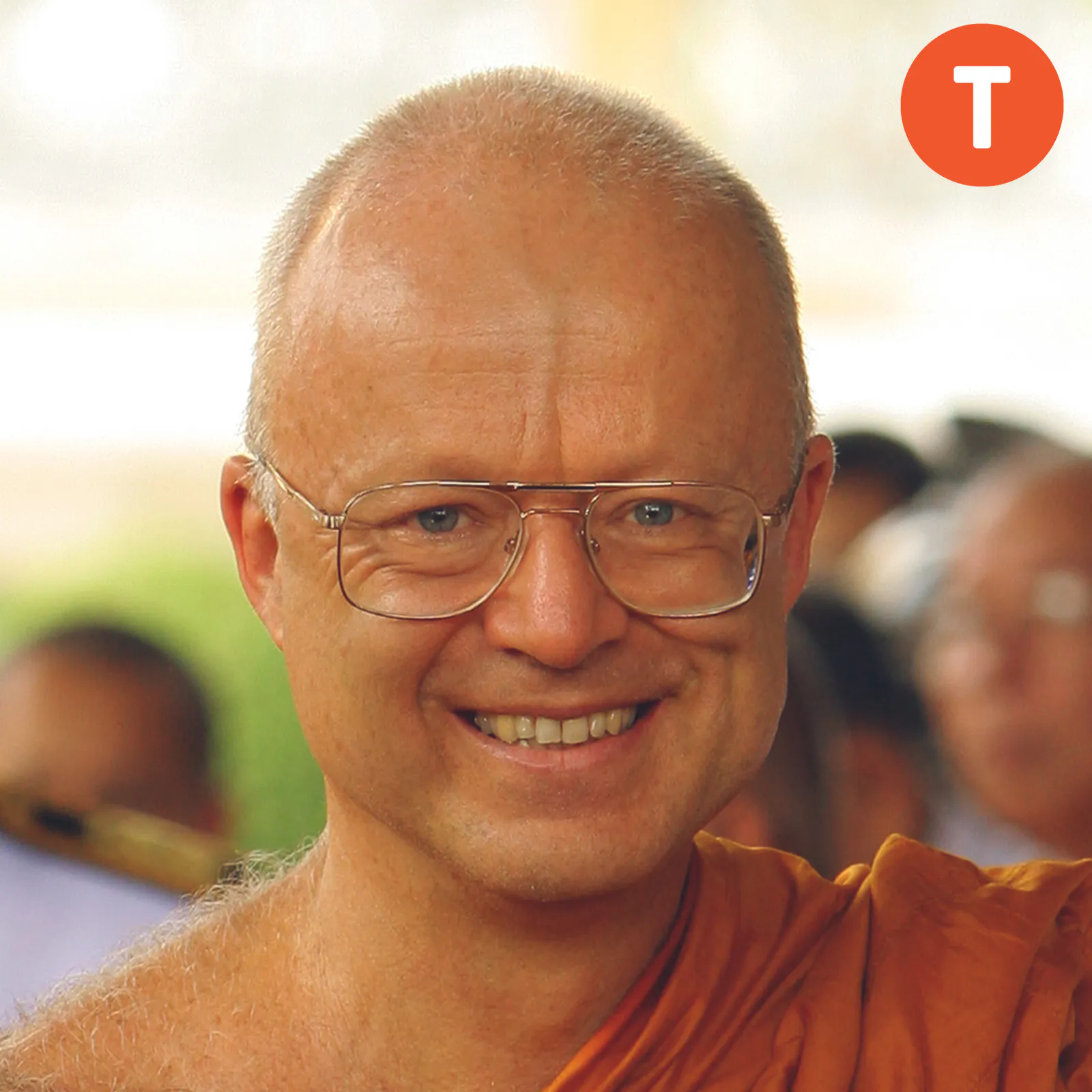
Did the Buddha Really Teach That There Is No Self?
Apr 2200:56:19Tap to summarizeThanissaro Bhikkhu is an American Theravada Buddhist monk trained in the Thai forest tradition. He currently serves as abbot of the Metta Forest Monastery in San Diego County and is a frequent contributor to Tricycle. Over the years, he has written extensively on the Buddhist concept of not-self, including the many misperceptions that have arisen about this teaching over the centuries. In this episode of Tricycle Talks, Tricycle’s editor-in-chief, James Shaheen, sits down with Thanissaro Bhikkhu to discuss why the Buddha refused to answer when he was asked whether there was a self, what it means to consider not-self as a strategy rather than an ontological truth, why perceptions of self and not-self are types of karma or activity, and why all views and perceptions are eventually discarded on the path to awakening.
Transcribe →