← True Crime Garage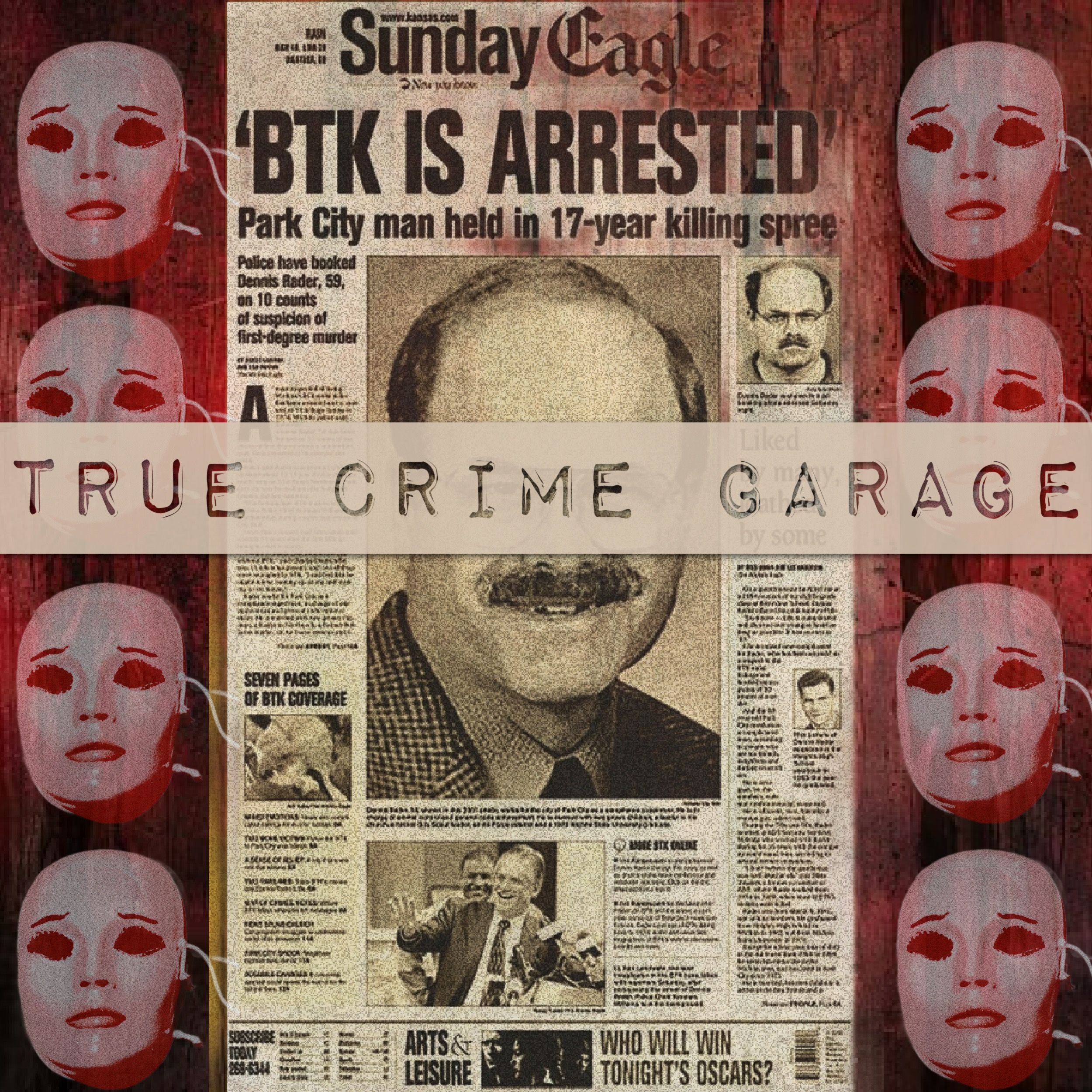
True Crime Garage
BTK /// Bind, Torture, Kill /// Part 4
00:50:30
BTK /// Bind, Torture, Kill /// Part 4 Released: 5-1-2018 Part 4 of 4 www.TrueCrimeGarage.com January 1974 - Wichita, Kansas - After years of fantasizing a killer emerges from the shadows and announces himself to the world. A dark haired man slipped into the home of the Otero's one morning as the children prepared for school. He murdered all four people inside the home. Later that same year he would attack and kill again before vanishing into hibernation. After many requests we have decided to take an in depth look into the dark, disturbing life and mind of Dennis Rader. Driven by what he called Factor X, Dennis was better known as the BTK. Beer of the Week - Demon Dweller by Green Man BreweryGarage Grade - 3 and 3 quarter bottle caps out of 5 Beer Fund: https://truecrimegarage.com/home
Loading summary
Transcript159 lines
- [00:00]
Advertiser
Introducing Instagram Teen Accounts A new way to keep your teen safer as they grow. Like making sure they always have their seatbelt on.
- [00:07]
Nick
Alright, buckle up. Good job.
- [00:09]
Advertiser
New Instagram Teen Accounts Automatic protections for who can contact your teen and the content they can see. Sometimes you have to choose between a great deal or a great experience. Other prepaid providers sticky with slow networks and price hikes. But with US Cellular Prepaid, getting a great deal doesn't mean sacrificing a great experience. US Cellular Prepaid offers great nationwide 5G without any gimmicks or hidden fees. And now you can get a free Samsung Galaxy A16.5G to make a great experience. Even better, stay connected without making sacrifices. Terms apply. Visit uscellular.com for detail.
- [01:25]
Nick
Welcome to True Crime Garage. Wherever you are, whatever you are doing, thanks for listening. I'm your host Nick and with me, as always, is a man that's never late to a great garage party. He is the captain.
- [01:37]
The Captain
Two drinks in and I'm playing with my lightsaber. It's good to be seen and it's good to see you. Thanks for listening. Thanks for telling a friend.
- [01:50]
Nick
Tonight we are drinking Dimwit by the good hard working men and women at the River City Brewing Company Garage. Grade three and a half bottle caps out of five. This is a great wit beer. It's citrusy, light and warm and today's beer was brought to us by these great guys and girls. First up we have Paula and Anna in Mount Pleasant, Michigan.
- [02:11]
The Captain
And a big shout out to Brina in the hills of Arizona.
- [02:14]
Nick
And a cheers to my friend Leah in British Columbia, Canada. Also up north we have Sketchy in Toronto.
- [02:20]
The Captain
And a big cheers mates to Megan in Boonton, New Jersey.
- [02:24]
Nick
Here's a team Nick shout out to Kate in Somerville, Massachusetts. And last but not least, a long distance cheers to Kane and Jessica in Fennel Bay, Australia. So thanks to everybody for filling up the fridge for this week's shows. If you want to help us out with next week's show, go to truecrimegarage.com and click on the donate button.
- [02:42]
The Captain
Also follow us on social media, Instagram, Twitter, Facebook, TrueCrimeGarage.
- [02:47]
Nick
That's enough of the business. Everybody gather round. Grab a chair, grab a beer. Let's talk some true crime. The following communication was sent to Kake TV and was titled the BTK Story Believed to be the autobiography of the killer the police were searching for, complete with an outline giving the titles to 13 chapters of the BTK story. They were 1. A Serial Killer is Born 2. Dawn 3. Fetish 4. Fantasy World 5. The Search Begins 6. BTK's Haunts 7. PJ's. 8. MO ID Ruse 9. Hits 10. Treasured Memories 11. The Final Curtain Call 12. Dusk 13. Will There Be More? In the spring of 1984, in 1989, Dennis Raider got a new job as a census field operations supervisor in Wichita, Kansas. Now, he liked this job for many reasons, mainly because the job required him to be out driving around in a truck. One of his favorite things was to eat his lunch in his truck and scout for possible new victims. He also had, among other strange hobbies, a hobby where he would scour magazines and newspapers for ads featuring women that caught his eye. He would cut out the images of the women he liked, and he would glue them to three by five index cards. Each day he would place one in his pocket and the card would ride along in the truck with him while he was out doing his job. Each day, he would write in his journals at home and talk like the women were real. So he would write things like, drove around today. Drove around town today with a sexy redhead.
- [05:23]
The Captain
Note to self, if I ever start doing this, jump off a bridge immediately.
- [05:27]
Nick
In 1991, he was hired by the compliance department in Park City as a compliance officer. This job required him to work with code violators, issuing tickets and catching dogs. There were varying stories regarding Raider at this job. Some would later say that Raider used the position to bully people. Some say he was just doing his job. And others even reported that Raider was nice and helpful. In all likelihood, he probably did not treat everyone the same way. And he definitely harassed some women during the time when he was working in this position. And there's one story in particular of a woman that had moved into town into Park City. And she stated that when she moved to Park City, she was single. And Raider must have taken a liking to her because he was very helpful, like, seemed to be checking on her from time to time, very pleasant, very nice to her. And he would see her often.
- [06:27]
The Captain
I think that's called stalking.
- [06:29]
Nick
Well, when she. When she got a boyfriend, he changed his song and dance. He really started harassing the woman and started harassing the boyfriend. He would issue them tickets for very minor infractions, almost seeming like he was making things up from time to time. And she said that he often would park his truck and sit and eat his lunch where he could see the house, where he could keep a visual monitoring of the house and maybe of her as well.
- [07:01]
The Captain
Again, that's called stalking.
- [07:02]
Nick
Regardless, he seemed to like this job and for many reasons, but mostly because it gave him some type of authority, giving him a badge and some power. Dolores d. Davis, age 62, was born in 1928 in Stella, Nebraska. She was raised on a farm. Now, she was an excellent cook who made everything from scratch. In 1961, after 12 years of marriage, a son and a daughter, d. And her husband divorce. Now, she was a fun, protective and devoted mother and grandmother. Adored by her family, her son and, you know, his. Her son always spoke to his mother on the phone on the weekends, sometimes for hours. When her children and grandchildren gathered for Christmas at her home in 1990, they spent much time together. But one memory that was created during that trip was they all sat together and watched the movie all dogs go to heaven. This. If anybody's seen this movie, you'll know it's an emotional movie. It did bring the family to tears. Now, Dee had just retired from her job of over 25 years as a secretary for a fuel company. She was passionate about animal rights issues and. And she enjoyed being a Mary Kay cosmetics sales consultant. Dennis Raider had spent a couple of months driving by her home and seeing her when he decided that she would be a good target.
- [08:30]
The Captain
Well, this is because btk found her attractive and she lived alone.
- [08:34]
Nick
In January of 1991, Dennis Raider was going to put together a plan to do a hit on her. Now, on the night of the 19th, Raider went to Dolores's home. Dolores was home inside, reading. Dennis waited outside for her to turn off the lights before he would break in. While he's out there, Raider is waiting outside. He's wondering. He cannot figure out how he's going to break into the house. He had already checked the doors and they were locked, and they were far too sturdy for him to pry them open. After she turned out the lights, Raider cut the phone line to the house. He then found a cinder block in someone's backyard. He carried it over near Dolores home. He lifted it up until it was shoulder high. He centered himself on a large sliding glass door in the back of the house. Rader launched the heavy block into the air and through the window, instantly shattering the glass. Dolores ran out of her bedroom screaming. She saw Rader standing inside her home. He told her it was cold outside and that he needed some warmth, some food and some money. He ordered her to return to the bedroom. He followed behind. Once inside the bedroom, Dennis Raider pulled a pair of handcuffs out of his pocket and put them on her wrist to try to calm the woman down. He kept telling her he just Needed her car keys, and then he would be gone in no time. Once she calmed down, Raider took the cuffs off of Dolores and tied her hands together with rope. He took a pair of pantyhose from one of the dresser drawers. He wrapped them around her neck, Strangling her until she was dead. Blood had started to come out of her ears, mouth, and nose. It took him about three minutes to strangle her. Raider then wrapped her body up in the blanket that was on the bed and carried her body out to the trunk of her car. Then he went back into the home and collected some jewelry and clothing of Dolores's. He then hopped into her car and drove off. He dumped her body in a culvert by a highway. Then he drove to another location and hid the trophies he had collected from her house in a safe spot so that he could retrieve them later. Then, and I find this to be awfully strange, he drove her car back to her house and put it in the garage, and then he strange, he walked, like, two miles to his own vehicle. I do find this incredibly strange, but here. One thing I do know about BTK is this. @ one of his crimes, he actually left the gun that he used during the crime at the crime scene. I don't know which crime scene that was. And he said that he had to go back and retrieve that gun. My guess is it might be this one, right.
- [11:33]
The Captain
That he's talking or his driving around and saw a bunch of cops and thought, I should just go back to the house and drop off the car at the house.
- [11:41]
Nick
Well, in a little behind the scenes thought here for everybody. That's kind of why I picked the beer this week, to be dimwit. We have this individual, Dennis Raider, that likes to portray himself of a certain intellect and to be very smart and cunning and outsmarting the police and outsmarting his victims, when in reality, he's just kind of a. A buffoon. You know, he's just kind of. Yeah, he's a dimwit. Very good. So I think maybe it might be this crime where he realized that he had left the gun, because he. He dumps her body in this culvert just to kind of conceal her. And then he decides to go hide these trophies that he intends to retrieve later. Driving her vehicle back to her home, Walking two miles to his own vehicle. And then once he gets his vehicle, he drives back to her body, Picks it up, and takes it to another location much further away. He decides that he's going to dump her here at this new location.
- [12:39]
Guest
Right.
- [12:40]
Nick
This is under a bridge out in the middle of nowhere. Now, the next day he's still all charged up and hopped up on these fantasies and thinking about the night before. The next day, he returned to the body. He placed a plastic mask over the face and put lipstick and makeup on the mask. And then he took several photos of the body. Two weeks later, the body was discovered. The murder was featured in the newspaper. The connection to BTK was not made, according to Dennis's journals, with each kill. He was extremely paranoid after his murders, each time expecting the police to show up at his door at any time. But each time that feeling would go away after about a month or so and after the paranoia left each time then he would be back out trolling for victims again.
- [13:35]
The Captain
This murder took place in 1991, but we're not going to hear from the BTK because he goes dark until 2004.
- [13:43]
Nick
Yeah, the whole time, I guess, living his life, doing normal things. More normal things, however it would be. What brought this on, I believe, is In January of 2004, the Wichita Eagle ran a story on the 30 year anniversary of the BTK case.
- [14:02]
Guest
Right.
- [14:02]
Nick
Two months later, in March of 2004, a letter arrived at the newspaper. According to the information on the envelope, the letter was from Bill Thomas Kilman. The return address was 1684 South Old Manor. The. The address was fake. There was no such place in Wichita. Now, people had always wondered if you think about the initials of Bill Thomas Kilman. So that's btk, right?
- [14:29]
The Captain
Yeah.
- [14:30]
Nick
And then the other thought was, was he playing some kind of game? You know, BTK would be an old man by now. And the address used was 1684 South Old Manor.
- [14:42]
Guest
Right.
- [14:42]
Nick
Anyway, inside the envelope they found photocopied snapshots of a woman who appeared to be either unconscious or dead. She's lying on a floor. It also contained a photocopy of a driver's license of a 28 year old Vicki Waggerly, whose 1986 murder had never been solved or linked to, to the BTK Strangler. On the letters BTK was written at the bottom of the page. There was also some type of code made up of letters and numbers. Police sent the code to code breakers, but they, they came up with nothing. They couldn't crack it.
- [15:23]
The Captain
Well, when you're stupid and you come up with a code, normally it's hard for anybody to crack it.
- [15:29]
Nick
Right.
- [15:29]
The Captain
Because it didn't make any sense in.
- [15:31]
Nick
2000, in the year 2000. This was four, four years before BTK ended his silence. The Wagerly cold case became hot. The Wichita police detectives, this is Kelly Otis and Dana Gouge. They were assigned to work on the unsolved 1986 killing of 28 year old Vicki Wagerly, a wife and a mother found bound and strangled in her home on West 13th Street. Now, the police had found a man's DNA. This was under the victim's fingernails. And in 2003, the lead homicide detective, Ken Landweire, remember we talked about him, he was one of the members of the Ghostbusters squad. By this point in his career, he's now the lead homicide detective for the Wichita, Kansas Police Department. Yeah, he had the two detectives on the case test the DNA that was found. Landwehr had always suspected that the Vicky Wager murder could be the work of btk. Now, as you know, when it comes to lab work, current cases take priority over the old one. So it was not until after the first communication from BTK in 2004 that they would get the results back.
- [16:47]
The Captain
Well, and it could have been as simple as, hey, we, he's made contact again. So they bumped up the priority.
- [16:53]
Nick
Yeah, yeah, they may have moved it to the front of the line, but shortly after he broke his silence, they received the results from those tests and the profile was entered into a newly developed national database of criminals. Now, there was no match for this. However, the DNA test showed that the same killer had been in the homes where BTK strangled four members of the Otoro family in 1974 and Nancy Fox in 1977. But once police saw the photocopy of the pictures, then the driver's license and the letters btk, the hunt was on. So police announced the startling new development and the news media pounced on this story. Police received over 1,000 tips over the course of the first weekend of this investigation that they just launched. Now, to handle the response from the public, police set up a command center at a law enforcement training academy. They needed elbow room for phone banks and for computers, and they just needed space to work on this thing, the sedge. The Sedgwick County Sheriff's Office assisted with data entry and research support. Callers gave police an overwhelming number of possible suspects names. Detective Landwear and crew decided suspects would be eliminated systematically and scientifically. Now, the eliminators would be as follows. One would be race. So the DNA profile showed the killer was a white male. So if you weren't a white male, you're eliminated.
- [18:35]
Guest
Right.
- [18:35]
Nick
Age. The calculation was based on the idea that the killer probably would have been at youngest 18 to maybe 20 years of age when he killed his first known victims.
- [18:46]
Guest
Right.
- [18:47]
Nick
The Otoros in January of 74. So the killer would be at this time 48 years or older. Now incarceration was also very much an eliminating factor because someone who was in jail or prison during any one of the murders was eliminated. Also, prisoners in recent years would have DNA on record and police knew that BTK DNA didn't match anything in the database.
- [19:13]
Guest
Right.
- [19:14]
Nick
The most important of all of the eliminating factors was of course, DNA. In a somewhat controversial move, investigators took 1600 DNA mouth swabs from men, mainly in and around Wichita. But a few came from people living out of the state. Almost all of these 1600 people volunteered and complied to submit their DNA.
- [19:40]
The Captain
Well, and the other crazy thing is now they're, they're realizing with the research that BTK wasn't dormant.
- [19:46]
Nick
Yeah, and actually a lot of people at this time had probably forgotten about btk. The Wichita was no longer afraid of this person. Most people had assumed that he had died or moved on. But yeah, like you said, you know, he, it wasn't that he wasn't dormant during this two and a half decades. He had just simply kept a lower profile than in his earlier killings. And now police had to wonder, as did the community, how many killings was he responsible for over the course of that time? On June 9th of 2004, what police would later call communication number three. This was found at the corner of first in Kansas, taped to a stop sign. One of the documents in the package graphically described the Oturo family murders. Also, there was a drawing of a nude female, bound, gagged and hanging from a rope. With the drawing were the words the sexual thrill is my bill such a douche. In July, workers at the public library discovered a clear plastic bag at the bottom of a book return bin. Written on the bag were the letters BTK. Inside were five sheets of paper. Two of the pages detailed BTK's involvement in the death of a troubled 19 year old man named Jake Allen. Allen's death was ruled a suicide. Now, Allen was a star athlete in high school who dreamed of being an optometrist. Allen was picked up and arrested by police. He and some buddies were out drinking and driving and they had alcohol in the car. After his arrest, he was convinced that he would never get into college. And it is believed because of this that he decided to take his own life by lying down on the train tracks. He was crushed almost beyond recognition. Now btk, however, wrote in this communication that he had been responsible for for the death of, as he put it, old Jakey after meeting him in a computer chat room and convincing the young man that he was in fact a private eye hunting for btk. The letter claimed that the young man, Jakey, had sexual perversions involving masturbation, bondage and homosexuality. And claimed Jakey agreed to help the fake private eye in his investigation to find btk. These, of course, are all lies. However, the police at the time did not know this. And this was. This was actually, you know, where I call Dennis Raider a dimwit. This may have been a smart move on his part just simply because the investigation at that time was white hot, right? And this, this is Dennis Raider throwing a wrench into that well oiled machine. Because then the police spent weeks focusing in on Jake Allen, conducting interviews, sifting through his computer, investigating if he was the latest BTK victim. But it was all for naught. It was. It was just a farce put on by Raider after he read about the boy's suicide in the newspaper. Now, what might not be a phony story is that also in this communication, BTK stated that he had some future female and maybe a child victim in mind, that he had spotted them and had already began to troll them. And he just had to, quote, work out the details.
- [23:37]
Skechers Advertiser
Serious Sketcher slip ins are the easiest, most innovative comfortable footwear ever. You just step in and they're on. You don't have to bend down, you don't even have to touch them. They're completely hands free. Just think, you never have to tie your shoes again. Skecher slip ins are for the whole family. They come in so many styles. Casual shoes, dress shoes, boots, work footwear, even sandals for the spring and the summer experience. Slip ins at a Skecher store, skechers.com or wherever stylish footwear is sold.
- [24:09]
Advertiser
The psychological thriller Criminal Minds Evolution is back and the hunt is on. This season, the criminal profilers from the behavioral analysis unit are tracking a network of serial killers connected by something far more dangerous than anyone expected. It's the kind of high stakes investigation that will keep you guessing and make you question who's really pulling the strings with edge of your seat storytelling. This is the season to watch. Catch the new season of Criminal Minds Evolution. Streaming May 8th. Exclusively on Paramount Plus.
- [24:46]
The Captain
All right, cheers, mates. We're drinking the dimwit. Let's get back to the dimwit.
- [24:51]
Nick
Cheers, captain. It was in October the BTK reached out again. What we're seeing here is a frequency.
- [24:59]
The Captain
He can't control himself at this point.
- [25:01]
Nick
Right, he's, he's enjoying this communication back and forth too much. At this point, this communication was found in a UPS Dropbox by one of their drivers. Again, it was a plastic bag with the initials BTK on it. Inside were three note cards, and on them were what BTK called his uno dose trace theory, stating that the world of the BTK is based around the number three and triangles. I could go into this. It, I, I, I know this stuff, but it makes little to no sense at all. Like, you know, like he would draw, like a triangle and it would at one point put BTK police.
- [25:48]
Guest
Right, right.
- [25:49]
Nick
Detectives, you know, or I'm sorry, BTK victims, police, you know, and then the other. Sun, heat, warmth. Like, it was just stuff that made no sense at all.
- [25:59]
Guest
Right.
- [26:00]
Nick
This communication also, it contained what is thought to be pieces of the killer's autobiography. And as usual, this was full of errors and misspellings.
- [26:12]
The Captain
It was now. And we kind of talked about this. We don't know if, if he was just an idiot and he was. Had misspellings or had errors or if he did this on purpose to, like, throw off the scent.
- [26:24]
Nick
Yeah. So do you want me to kind of fast forward a little bit since we're on that subject? Yeah, so, yes, you're exactly right. The FBI warned the local police department to not fall for what could be. What is commonly used when these guys make communications is a lot of them will purposely misspell things or they'll have grammatical errors. In this case, with btk, that was the thought, right? That was the thought. During the time of the investigation, after he was caught and after he was wrote out his own confessions, they saw those same. The guy couldn't spell and he couldn't write.
- [27:03]
The Captain
Well, he might have some form of dyslexia problem, you know, which would probably make him feel self conscious, which would probably lead him to want to feel powerful.
- [27:14]
Nick
Yeah, you know, I laughed there, but I only laughed there because I actually think maybe he's just more impulsive and less in control of himself than he thinks that he is. Right. And that, and that this bad spelling thing is something that has always been a part of him.
- [27:31]
Guest
Right.
- [27:32]
Nick
Now, speaking of communications, the next communication was as the others were strange. This was a strange one. And they seem to be getting more and more strange as they were getting more frequent. This time. It was a cereal box that was found inside. I'm sorry, Inside the cereal box, they found jewelry from one of his victims and a little doll, like a, like a Barbie doll. And the Barbie doll had bindings on it, and it was tied by the neck with a. To a little piece of pipe.
- [28:05]
The Captain
The.
- [28:05]
Nick
The box also contained a note card asking a question. Had the officers received number seven from the Home Depot parking lot? The answer to that question is they had not. So, so here's. Here's what he's doing, okay? He's kind of. He's kind of numbering his communications, right? If you.
- [28:28]
The Captain
Just like he named himself now, he's number. In his communications.
- [28:32]
Nick
He's not. He's not technically numbering them, but. But this would be the seventh communication that they received in 2004. And he's saying, wait a second. Did you receive number seven from the Home Depot parking lot? So.
- [28:46]
The Captain
But seven in the same year?
- [28:49]
Nick
Yes, seven in the same year.
- [28:51]
The Captain
I just want to be clear about that.
- [28:52]
Nick
Right? So what. What I'm getting at is this would be the seventh communication that they had received. It's the eighth one that he has sent to them. He's asking them, did you get number seven? Because he knows that sometimes they receive these things and they don't tell anybody.
- [29:07]
Guest
Right?
- [29:08]
Nick
His whole thing that. His. His whole. His whole ritualistic attitude here is he has to have that broadcasted. He has to get the notoriety for these communications. He has to see his name in the paper.
- [29:23]
The Captain
Right?
- [29:24]
Nick
And because he didn't, he wants to know, well, did you receive that and you're just keeping it quiet, or did you not find it?
- [29:30]
Guest
Right.
- [29:31]
Nick
Well, they had not received this. And the way that this worked out was they go to this Home Depot and they're. They're looking around. They search the store inside and out. They can't find anything from btk. They can't find any form of communication. Note, it should be pretty obvious once they find what they're looking for, because he almost always puts the initials BTK on the communications. So what they do is they get a bunch of the surveillance tape from the parking lot from the Home Depot, and on one piece of footage, this was from days before that, they spotted where an SUV had pulled into the almost empty parking lot. This would have been when the store was not open. Parking lot's almost empty. This SUV pulls in. Somebody gets out of the vehicle, walks across a short way across the parking lot, and has some kind of object in their hand, and they toss it into the back of a pickup truck, into the bed of a pickup truck. The crazy thing here, though, Captain, is the detectives, we have Landwear, who's been working this case for almost 20 years. We have all These other detectives that have been hunting this madman, could you imagine they're seeing what they believe to be BTK's vehicle?
- [30:50]
The Captain
Could you imagine what's going through their brains?
- [30:52]
Nick
They. Well, they're looking at a shadow. Like a shadow figure of the guy that they know and believe to be btk. The guy that they've been hunting all these years. They can, they're seeing him, but not his face. Well, what they end up doing is they have to get the. They have no idea what was thrown into the back of that truck or how they're going to find this thing.
- [31:14]
Guest
Right.
- [31:15]
The Captain
Well, maybe if they get the license plate number, they could track down the.
- [31:18]
Nick
The vehicle. They couldn't because it was too blurry. Too blurry. Plus, if they could do that, then you would think they could get BTK's license plate number. True, but think of the risk that he's okay.
- [31:30]
The Captain
We've covered so many retail cases lately. Please upgrade your cameras, people, please. It's ridiculous.
- [31:39]
Nick
Well, what they did, Captain, was they were able to decide that they could determine the approximate size and wheelbase of the vehicle that the suspect was driving. This was interesting because they actually really narrowed it down to a very few models, a very few vehicles and models. And what they were able to determine was that if in fact this vehicle was not stolen, that he was driving his own vehicle, let's say, right? He would be one of about 200. He would be one of about 2500 local residents that owned a vehicle matching this description.
- [32:19]
The Captain
Let's go knocking on doors, my friend.
- [32:22]
Nick
Well, that would be an option, but they actually came up with the communication before they would have to take that route. So what happened was the manager of the Home Depot put up flyers inside the store asking all of the employees, did you receive anything strange in your vehicle? Did you find anything weird and you don't know what it is, let us know. Well, a roommate of a guy that worked there, that owned a. The. The guy that worked there owned a pickup truck, right? His roommate had found a cereal box in the back of the dude's pickup truck.
- [32:59]
The Captain
Cinnamon Toast Crunch.
- [33:00]
Nick
It was Special K cereal. Oh, that's so cereal.
- [33:05]
The Captain
That's garbage.
- [33:06]
Nick
He was, he assumed that it was trash and he had thrown it away.
- [33:10]
The Captain
He assumed, right, because that cereals garbage.
- [33:13]
Nick
I like Special K. Now you're garbage. The trash had not been collected from the home yet, so they were able to retrieve this special case cereal box. This was recovered and inside there were. There was a two page document and on it was a long list of BTK's projects or what he called his PJs there. There was also a question, and this was asking Landwear, this was asking Landwear directly if BTK wanted to send a computer disk to them, could they trace it? And he asked them to give him the answer in the newspaper in the 1 ads under the miscellaneous section. And if they can't trace it, to put in the message, rex, it will be okay. Also, they should run the ad for several days so that BTK would not miss the ad if he were out of town or didn't pick up the paper that day.
- [34:09]
The Captain
Please run the ad multiple times for me.
- [34:11]
Nick
This was weird because now we have Raider wanting to start communicating by sending them floppy disk from computers. And for the first time, BTK is asking the police a question.
- [34:25]
The Captain
This is a dumb question.
- [34:26]
Nick
Rather than just kind of telling, you know, directing the conversation and telling them whatever he wants.
- [34:32]
The Captain
When your teacher tells you when they stand up in front of the classroom and they say students, there are no dumb questions, you say, yes, there is. When you're a serial killer, you do not ask the cops if they can trace something or not.
- [34:50]
Nick
The police, they went ahead and ran the ad in the newspaper. And their ad read, rex, go ahead and send a floppy. Well, On January of 2005, Dennis Raider became the elected president of council at the Christ Lutheran church.
- [35:09]
Guest
Right.
- [35:09]
Nick
On February 16th of that same year, a padded envelope arrived at KAKE tv. Inside were more index cards and a purple computer disk. The disc was turned over to the police analysts. The disk contained one message and the message said, this is a test see note card for further instruction. The note card said that any communication going forward from the killer would have a number on it. That way if one was lost, they would know.
- [35:43]
The Captain
Yeah. Or if somebody else was writing to them pretending to be the btk, that they wouldn't get mixed up.
- [35:50]
Nick
It only took the analyst a few more minutes to pull the information that they were searching for. This revealed that the author of the test message was someone named Dennis and the owner of the computer was the Christ Lutheran Church. Now this is going to sound completely crazy for somebody that you've looked for for 20 years. I mean, and when you factor all involved, you're talking about this is over a 30 year manhunt for this guy.
- [36:21]
Guest
Right.
- [36:22]
Nick
So what did they do? They did a quick Google search. And this quick Google search told the officers that Christ Lutheran Church was located in Park City.
- [36:31]
Guest
Right.
- [36:32]
Nick
And that A1 Dennis Raider was listed as the church's president. They put surveillance on Their subject, but they didn't jump on him and arrest him right away. They wanted to make sure that they had good, solid evidence on this guy to connect him to btk. Before the arrest, Lanwear wanted DNA from Raider to tie him to the DNA that was found at multiple crime scenes where BTK had killed. Right, but how were they going to get Dennis Raider's DNA without tipping him off? Well, this is. This is wild. So they start doing some digging on Dennis Raider, his background, and his family. One thing that they discovered is that his daughter Carrie had attended the University of Kansas State. While she was there, she had been treated or. Or received some kind of, you know, checkup or treatment at the health clinic there.
- [37:30]
The Captain
Yeah, they took her DNA.
- [37:32]
Nick
Yeah. So she was no longer. She was no longer a student there. She had graduated before, but they still had things that they believed that they could pull DNA from. So they get a court order and they go to the Kansas State University, they find these items, they get a court order to test them for DNA. And what they discover is that it tested positive, that the DNA that they tested was the daughter of the killer that they knew to be btk.
- [38:02]
Guest
Oh, good.
- [38:02]
The Captain
Because I just hate this guy, you know?
- [38:06]
Nick
Yeah, you and. I mean, you and the rest of the world. Right.
- [38:09]
The Captain
He's just. I hate him.
- [38:11]
Nick
So the. The task force that we have, they were worried that somehow the media might learn of Dennis Raider before they could arrest him. This was a concern because this had actually happened before. This was when they had. They. They. They had a guy that they liked as btk. His name was Roger Valdez, and they wanted to get DNA swab from him. He was one of the few people that didn't really want to comply and give them the DNA swab. And it was because through the media, he had heard that he was considered a prime suspect at the time. So they had a leak somewhere amongst this task force. They were worried, would Dennis Raider. Would this be leaked to the media and Dennis Raider catch wind of this? So they're going to have to move a little faster than they wanted to. However, for Raider, what the police wanted to do was map out precisely and coordinate a plan to simultaneously arrest him, search his home, other key places, and contact and interview his relatives all at the same time. So what they did was they organized. 215 officers and agents were assembled to take. To take this on.
- [39:24]
The Captain
Well, that's a lot of money.
- [39:26]
Nick
A lot of this was mostly for the searches that were going to be done.
- [39:29]
Guest
Right.
- [39:30]
Nick
So now they were going to use Dennis Raider's schedule against him. Raider was predictable, and the detectives knew this from following him over the course of that surveillance. They knew what time he went to work. They knew what time he came home for lunch every day, and so on and so forth. Now, the police knew that Raider always left his office at 12:15pm and arrived home for lunch to have lunch with his wife at 12:18pm each day. 3 minutes as raider drove onto Frontage Road, this is off of 61st street in Park City. An unmarked police car stopped him. There were plenty of guns drawn on him. An officer dragged him out of his truck. Now, at that point, we, the, the officers would later say, at that point, we're dealing with an individual we believe committed eight homicides. So we were taking no risk. We, we knew that he had used guns before and in previous crimes. So they drew guns on this guy. They took no risk. Now, Raider was handcuffed and he was searched moments later, Raider and Landwear, the guy who had been hunting him for 20 years, wait, did he have one.
- [40:43]
The Captain
Of those little creepy cards, his little flashcards he made? I wonder if he had one of.
- [40:48]
Nick
Those on his person at that time. I, I don't know.
- [40:51]
The Captain
Is he driving around with a redhead?
- [40:52]
Nick
That's interesting if he still had that hobby at the time.
- [40:56]
The Captain
Weirdo.
- [40:57]
Nick
But now we have these two individuals. We have the, the monster and the guy that's been hunting the monster for 20 years. They're finally face to face with each other, and they're, they're saying hello to one another. They're calling each other. Mr. At this point, in the back of the police car.
- [41:14]
The Captain
I'm not calling nobody.
- [41:15]
Nick
Mr. Police audiotaped the arrest from the car and you. And used in the transport of Raider and took aerial photographs from a helicopter as well.
- [41:27]
Guest
Right.
- [41:27]
Nick
They stated that he was. Dennis Raider was breathing hard during this time, as were the officers. And later, Landwear would go on record saying, I cannot tell you how much fun it was to finally take this guy down. It was a great day for everyone in law enforcement. Now, Bob Morton, who was a FBI behavioral analyst, and Detective Landwear, they were the ones that would conduct the initial interview with Dennis Raider. The idea here, Captain, was that Raider would respond to Landwear because he knew who he was. He knew him by name. He knew he was active on the BTK case for so long.
- [42:05]
Guest
Right.
- [42:06]
Nick
And Bob Morton, being from the FBI, well, this would boost Dennis Raider's ego. During the course of the interview, then, the teams of detectives interviewed Raider about the cases that they had been Assigned to. So we have all these murders, all these homicides. We have other detectives working some of these. Now that we had some detectives during the interviews, the only thing they spoke to Raider about was his communications with K A K E T V with law enforcement and so on. And the sheriff's personnel. They approached him about the Marine Hedge and Dolores Davis homicides. Now you, you have to keep in mind the sheriff's department had to work these two homicides because they took place outside of Wichita City. And not only that, they were abducted from, from another location and then dumped elsewhere.
- [42:58]
The Captain
So how long did they interview this creepo for?
- [43:01]
Nick
32 hours. They interviewed Dennis Raider and they, during that time they actually encouraged him to sleep, but he wouldn't, um, he did nap a couple of times, you know, very briefly, but they wanted him to get a good night's sleep and he did not want to. He wanted to talk. It was about three hours and 15 minutes into the initial interview when Raider looked at Bob Morton, the FBI agent. And Morton said to him, say who you are. And Dennis Raider answered, I'm BTK. Now, Raider's own DNA came back as a match about 12 hours after the start of the interviews.
- [43:44]
Guest
Right.
- [43:44]
Nick
He had learned that investigators by this time had already had his daughter's DNA and had linked that to him into btk. And so according to Detective Landwehr at this point, Raider has figured out that he has been put in a corner and he kind of, once that comes out with the DNA and once he realizes this is what's going on, right after about 12 or 13 hours into the interview, he's going to start telling them everything, I mean, everything.
- [44:17]
Guest
Right.
- [44:18]
Nick
And to the point that he was even trying to describe to them the. That code. Remember that code that they couldn't figure out?
- [44:26]
The Captain
Yeah, the shitty code.
- [44:27]
Nick
Yeah. He was trying to tell them that the letter that he mailed to The Eagle in 2004, what he had used was German fractional code that he claimed that he knew from his military background. And remember, they sent it and nobody could crack it because the code actually made no sense. He got it wrong when he tried to remember it and he.
- [44:48]
The Captain
Damn, dyslexia getting in the way again.
- [44:50]
Nick
Well, in the interview process, he tried to prove them wrong, trying to recall the code himself, which he couldn't.
- [44:59]
The Captain
Damn wit.
- [45:00]
Nick
Another interesting thing though here, Captain, was that during the course of the interview, Raider repeatedly tapped on the disc, on the computer disc. They put it on the interview table and they just kind of set it there right in front of him.
- [45:13]
Advertiser
Okay.
- [45:14]
The Captain
And he tapped on it.
- [45:16]
Nick
Well, he would tap on it throughout the course of the interview. And at some point, he looked at the officers, Landware in particular, and he asked him, why did you lie to me? And Landwehr said, because I'm trying to catch you. Yeah, why wouldn't I lie to you? I'm trying to catch you.
- [45:35]
The Captain
Yeah, you killed people, you son of a bitch. Yeah, we're going to lie to you.
- [45:39]
Nick
Well, I think. See, that's what. What's weird, though, is that. Okay, so something psychological had taken over with Dennis Raider. And this was actually something that the FBI had recommended that the police do a long time ago in their investigation. What they had recommended is that they create the Persona of some kind of super cop, all right? So that Dennis Raider would identify the. The investigation into him and to his killings through one person and one person only, that he could. He could take this. This detective, and he could put them on a pedestal. In his mind, he's now this super cop that is a worthy adversary of his, hunting him, somebody that is his equal. And through. Over the. Throughout the course of many years of looking at that one person and having this person that he considered to be an equal, he let his guard down to the point where he then believed that he could trust him, that his equal would be honest with him, and that the game of cat and mouse would continue forever. Well, that wasn't going to be the case, obviously. And the FBI did say that they believed with somebody, and they always believe this. Usually when a killer is willing to communicate multiple times with the media or law enforcement, is that usually they will lead them to. They will lead law enforcement to themselves. They will get themselves caught because their ego and because of their need to make these communications. Now, Raider did voice concern about how his arrest would affect his family, his church, and the city of Park City. When teams of investigators told Raider's wife and his grown son and daughter about his arrest, they were in disbelief. They had no idea that their husband or father was this monster. They did. They did exactly like they said they were planning to do. Remember, we said that they brought in 215 officers because they wanted to search his. All at the same time. They wanted to arrest him, search his home, interview his relatives.
- [47:54]
The Captain
And.
- [47:54]
Nick
And they did that. And some of them didn't even live in Witchita, Kansas. So what they did was they distributed officers out to those locations. They sat there and waited. And at. At that specific time, between 12:15 and 12:18 on that day, those officers were to go and bust into the home, knock on the door, do what you got to do. You need to be in these locations all at the same time. On March 1, 2005, Raiders bail was set at $10 million and a public defender was appointed to represent him. On May 3, the judge entered a not guilty plea on Raider's behalf, as Raider did not speak at his arraignment. However, on June 27, the. Which was the scheduled trial date.
- [48:45]
The Captain
Yeah.
- [48:45]
Nick
Dennis Raider changed his plea to guilty. The thought here was that he would save his family some anguish and shame of. Of going through the details of the crime. That was not to be because he was forced to describe the murders in detail during. He was. He was ordered to give a full confession, basically right now. Could there be some murders out there that he didn't confess to for some reason? Possible. It's possible. I doubt it. Like you said earlier, it seems to be that he wants the credit, let's say that's a terrible word, but that's what he wants. He wants the credit for his actions and for what he thinks to be some kind of career or some kind of great work that he believes that he did. Now, during the. And I'm sure some people have seen this by now, you can actually find the full confession online. I believe it's like 48 minutes long.
- [49:42]
The Captain
It's awful.
- [49:42]
Nick
It's very tough to listen to because he doesn't seem like he gives a. He seems like he's kind of giving the weather report to somebody when he talks about these crimes. One thing that I know that really sickened the family, his, his direct family, especially his daughter, was that one. They, they, they didn't believe he was guilty until they, you know, the next day when they found out, well, he confessed to police. Right.
- [50:08]
The Captain
They're like, the DNA matches, right?
- [50:09]
Nick
Well, they're like crap. You know, he did really do this. And then once he's in court, when he's going over the description of these murders, a lot of people thought that he may have purposely droned on about the murders of the two children. You know, most of his victims were adults. And a lot of people seem to think that he hovered around that a little longer than necessary. Maybe he took some kind of pleasure in talking about those specific murders out of the group. Yeah.
- [50:42]
The Captain
Yeah.
- [50:43]
Nick
So he offered no apologies. During the course of this confession and At Dennis Raider's Aug. 18 sentencing, victims families made their statements, after which Raider did apologize. In a rambling 30 minute monologue, Dennis Raider was sentenced to 10 consecutive life sentences with a minimum of 175 years to be served. Kansas had no death penalty at the time of the murders that he committed. So he is in solitary confinement with one hour of exercise per day and gets to shower three times per week.
- [51:21]
The Captain
And guess what that makes him?
- [51:22]
Nick
What?
- [51:23]
The Captain
One stinky piece of thanks for listening. Thanks for telling a friend. Thank you for sharing on social media. We would be nothing without you.
- [51:43]
Nick
We'll be here back in the garage next week and we want to see all of you here as well. Until then, be good, be kind, and don't litter it.