← True Crime Garage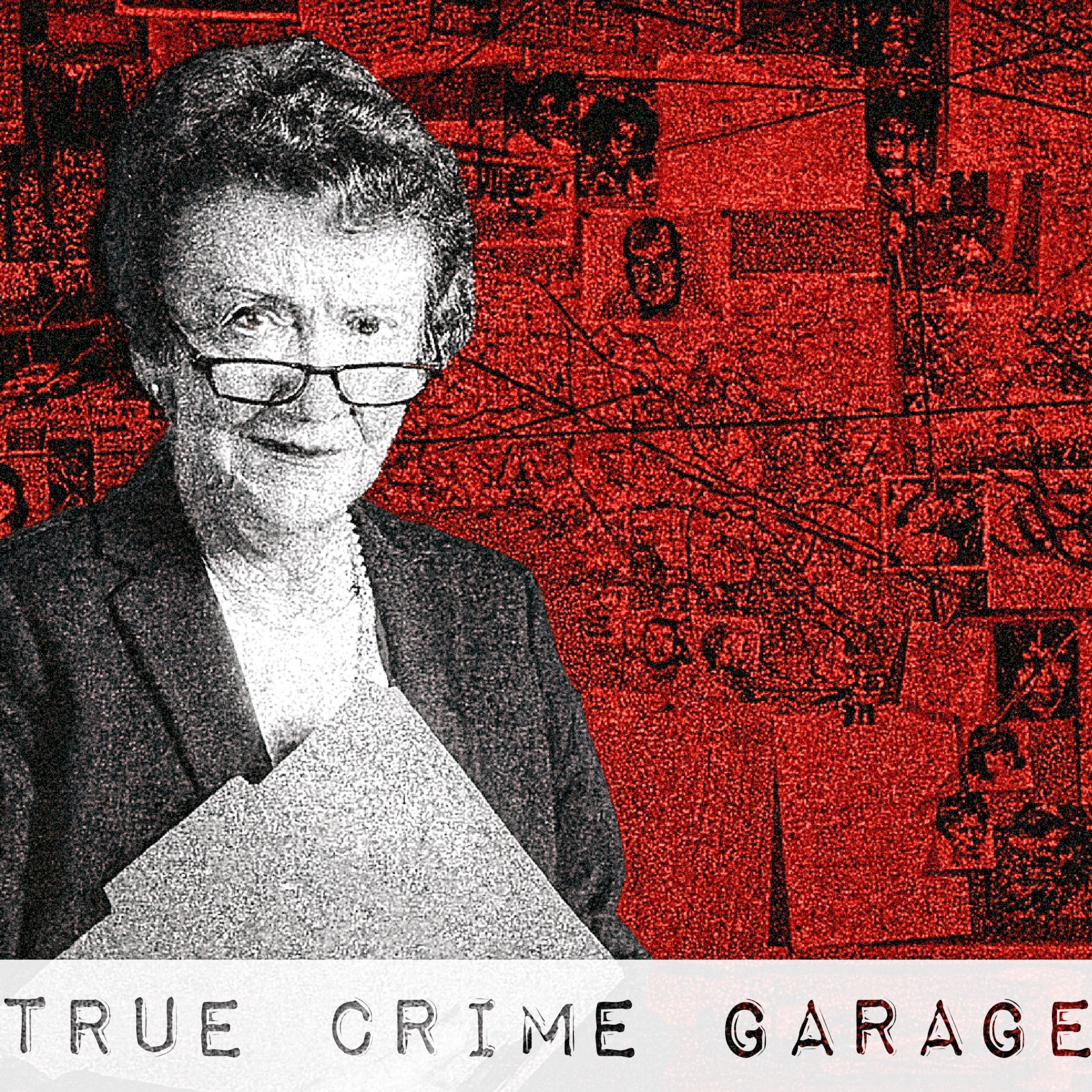
True Crime Garage
MindHunter /// Dr. Ann Burgess
00:46:45
MindHunter /// Dr. Ann Burgess Nic is overjoyed to have a conversation with the great Dr. Ann Burgess - F.B.I. consultant and 1st generation Mind Hunter. Thank you for your support. Sign up on the mailing list @ www.truecrimegarage.com
Loading summary
Transcript72 lines
- [00:01]
A
TV's number one drama High Potential returns with star Caitlin Olsen as the crime solving single mom with an IQ of 160. Every week, Morgan uses her unconventional style and brilliance to crack LAPD's most perplexing cases. It's the perfect blend of humor and mystery. She's breaking the mold without breaking a nail. New episodes of High potential Tuesdays, 10, 9 Central on ABC and stream on Hulu. Hi, neighbor. Welcome to Birch Lane, a Wayfair specialty brand. Our timeless furniture and decor is hand picked and crafted to bring joy for years to come. So get ready to celebrate it all, from big holiday gatherings to everyday moments at home. Decorate the mantel, gather around the table and bring fall to every room. Plus, it's all delivered fast and free. Shop classic style for Joyful living@birchlane.com.
- [01:14]
B
All right, with me, I have the wonderful and very impressive, the brilliant Dr. Anne Burgess. And I also have Stephen. Is it Constantine?
- [01:23]
C
Yep. You got it.
- [01:24]
B
Boom. Nailed it. All right. They are here to talk with us about their new book, A Killer by Design, Murderers, Mindhunters, and my quest to decipher the criminal mind. And for everyone out there that may not be aware, Dr. Anne Burgess is the real life woman and doctor behind the character, the female character from the hit Netflix series Mindhunter. So welcome both of you. Both of you are currently working at Boston College, do I have that right?
- [01:59]
A
Yes, School of Nursing. Connell School of Nursing.
- [02:01]
B
And how long have you been there? Dr.
- [02:03]
A
I've been. I started here back when actually the study was going on. Then I left to go to University of Pennsylvania and then back in 2000. So essentially back since 2000.
- [02:15]
B
One thing that I find absolutely fascinating about this new book is, is Mindhunter. The show really kind of shows us and highlights some of the very infant, the infancy of the behavior science unit. But your book really discusses a lot of stuff that was even pre behavior science unit and or behavioral science unit and sort of the genesis of how that all came about. And, and a lot of the behind the scenes work as well as your transition because you were a doctor before this whole thing got started, correct?
- [02:55]
A
That's right. I was.
- [02:57]
B
What was your expertise? Because you find yourself at the FBI in a very different way than many find themselves at the FBI, Right. Most people like aspire to be an FBI agent and they, they spend their whole life working toward that. They get educated, maybe they serve some time in the military. They, you know, keep their nose clean, stay out of trouble and hope one day that they can be an agent. But for you you're so brilliant that the FBI calls you on the phone and says, hey, we, we need to talk to her. Tell us a little bit about that.
- [03:27]
A
Sure. I was at Boston College and this was back at a time when the issue of rape was just starting to be, if you will, put on a front burner. The women's movement had been pushing for better treatment, better care for were victims. And so I, with a colleague, Linda Lytle Holmstrom, who was in the sociology department at Boston College, actually approached me to see if I would join her in a project on rape victims. And she was having trouble finding rape victims, which is still a problem. They are very, they're very hidden and very silent. But I knew that they would be coming into a hospital. And since I had access to the major hospitals in Boston, I said let me see if we can get access somehow. And I did. I was able to work the project through the Boston City Hospital. And we were called every time a rape victim came in. And we went right in at the time and we followed the victim. So that was over a one year period. We saw 146 people between the ages of 3 and 73. And that made up the basis, if you will, for the study. And out of that study came three rather important papers. One was the back in 1973 was just called the Rape Victim in the Emergency Room. And it was published in the American Journal of Nursing, which is our major journal. The year later, Linda and I started publishing what we call the rape trauma syndrome. And that was distributed to a larger audience, a psychiatric mental health audience. Well, at the same time as this was our study was going on, the FBI was getting pressure to do something about teaching rape investigation. And so Roy Hazelwood got tasked with that. That was his assignment. And he happened to be out on the west coast at the Los Angeles Police Department and was kind of bemoaning the fact that he had this new assignment. Did anybody know anything about rape, etc. And after his he actually talking on hostage negotiation, which was the big issue for them at that time. Rita connect police officer came up to him and said she had just read this article in the American Journal of Nursing. Now Rita was also a nurse. She was a nurse that then went on to become a police officer. But she told Roy that this article, maybe he would like to look up the authors because they were on the east coast. And Roy did. Actually I got a call from Roy. I was a little bit unnerving because the way they ask for you, they say this is the FBI and et cetera. And I'm sitting there thinking, oh, my.
- [06:22]
B
Gosh, they make it sound like you've done something wrong.
- [06:25]
A
I know, I know my income tax or something. And then I thought. And then I thought he said, well, did you write this article, the rape victim in the emergency room? And I thought, oh, my heavens, did I say something bad in that article? And then he relaxed a bit, and that very authoritative FBI voice went away. He was more relaxed, and he said, we'd like to invite you down to teach our agents about rape, since this is a new area, etc. Etc. And that's it. That's how it happened. I went down there. I was interested, and told him I wanted to see what they were teaching their investigators about rape, because that's something that I learned from the women's groups and rape crisis centers that they were not very happy with the way investigations were going. So that. And once I was down there, they were being told by their new director, who happened to be William Webster, that they had to start doing their own research because the FBI Academy was the education arm, if you will, of the FBI. And so I did do a project with Roy first, and then Roy had introduced me to Bob Ressler and to John Douglas. And once that happened, I think the rest of the book kind of goes into how we worked. It was first called the Criminal Personality Project because we wanted to do more than one type of criminal. And we actually started out with the serial killer, which, of course, is what the. The book is based on. But also, they were just starting a more organized way of doing profiling. And so that was a second prod. That was a second objective of that initial project.
- [08:16]
B
Well, and you become so valuable to what it is that they want to do in the future. Right. Because they're bringing you in, really, in large part from. And again, I'm just some dumb guy here taking a guess. But it looks to me like they bring you in because you have a. A wealth of knowledge and understanding in regard to these rape victims and, you know, sexual assault survivors and persons that had to go through that horrible experience. But they bring you in because they are now transitioning. The FBI is in a bit of a transition period where rather than just identifying and catching and stopping crime, we want to kind of learn and research why does this stuff happen and. And who commits these. But to have a good understanding of that, we also need to have a really good understanding of the. The victims as well.
- [09:09]
A
Absolutely. And victimology, if you notice in. In their writings and even today that Victimology is almost the very first thing that they look afford to analyze who the victim is when there's been a homicide. And I think the other important thing is they were getting these cases in which they couldn't come up with a motive. It wasn't, you know, like a white collar crime or it wasn't a criminal enterprise or something like that. And so that really is where we put a lot of effort in analyzing the data that we got from the 36 killers that we specifically studied. And that's where we understood that it was a sexual homicide. So we added a category to the existing categories for homicide. And as you say, yes, it's very, it was very important. I also had wanted to speak for the victim that didn't survive. I felt that we were, Linda and I were speaking for, obviously for victims who did survive. But there, there had to be something that we could say about the victim that did not. So that, that was one of my particular interests.
- [10:18]
B
And what I love and what I'm so fascinated and impressed by your work in, in direct regard to is you seem to me to be the one that's going to have to organize all the chaos, right? Like, like Douglas and Hazelwood and Wrestler. They all are, they, they all know what they're doing. They, you know, maybe not educated in the same ways that you are and don't share the same expertise, but they certainly have a bit of a knack for it. And you're kind of brought into not only help with the victimology and then understanding rape victims and, and just the, the crime of, of rape anyway, but the, but to organize what it is that they are already somewhat actively doing. Right. It's, it's, it's applying kind of, it's applying not just organization to it, but also how do we learn from what we're doing and then how do we teach others what we've learned?
- [11:17]
A
Right, that's exactly. But even more important was to get it written down. They had a, their profession was more word of mouth. They would teach about cases and so forth, but a lot wasn't written down. And so I can remember asking them what they were kind of a script were they using for interviewing the serial killers. And they didn't have one. It was like we just keep them talking. I thought, well, they certainly do talk. I mean, that is one characteristic of serial killers. They usually like to talk, but they didn't have any categories, any organization. And so as you say, that's exactly what the project was maybe. And Stephen was really good at pulling all of that out from what we did with the agents. And he can probably speak better to that part of the book.
- [12:09]
C
Yeah, absolutely. I would just add that one thing that's important to remember is in the late 70s, early 80s, when Dr. Burgess was doing her work with victims of sexual assault and sexual violence, it was actually one of the three most common crimes in the country at the time. But it was unknown, unresearched. And in response, the FBI was under immense pressure to start figuring out what they could do about this, how they could respond. And that's the reason that they really sought Dr. Burgess out, brought her in, is because she was pretty much the only person out there at the time that had any expertise on the topic.
- [12:47]
B
And there's so much science and psychology involved, especially when we talk about serial offenders. Right. Whether it be a serial rapist or a serial killer, there's so much to. To learn from. From them and their. Their actions and how they kind of. How they kind of become this, because with a lot of them, and, you know, it's probably as much nature as nurture in most cases, but there's, you know, they. They rarely wake up one day and just decide to start killing people or to start sexually assaulting people. There. There is something that they are kind of created, and there's a way to learn. We're never going to be able to turn the faucet completely off. Right. But there's. There is a way to kind of learn from it, not only to help us better detect these types of crimes, but also solve them and have some resolve.
- [13:45]
A
Yeah. So that was one of the points. How can we decrease the number of victims by understanding quicker what is triggering all this. And one thing you said is almost exactly what one of the serial killers said to me. He said, you know, I didn't wake up in the morning, get up in the morning and start thinking, this is what I'm going to do today. And that's what we tried to get at. So if that isn't what happened, then what did happen that took you down that road to kill so many victims? So that's why we were trying to explore the mind, the thinking patterns, because thoughts drive behavior. And that's what this was all about, is to try to find out what the thoughts were.
- [14:28]
B
And a lot of these creeps, they're fantasizing about this sort of stuff well in advance. And those fantasies are changing and evolving or devolving throughout a period of time until they end up actually, and. And I hate. Hate to phrase it this way because they're, these are horrible acts, but once they finally get up the courage to, to go out and, and try to live out one of these horrible fantasies that they've created.
- [14:56]
C
Yeah, that's, that's absolutely right. That's One thing that Dr. Burgess and the team really found in their studies was that fantasy was a common element. And these offenders practiced, rehearsed these fantasies over and over in their heads until fantasy itself became more authentic than reality. You know, fantasy to them was the sacred. And so they had to act that out. That was their compulsion, that was their need.
- [15:21]
B
Steven, talk about the book a little bit. And I mean like the behind the scenes type of stuff with the book, because there's no question about it, Dr. Burgess has led a very fascinating and brilliant career. So it, the, the interesting level was going to be a 10 no matter what. But now you come in and we're going to, we're going to piece this thing out and put together a story and, and, and add some storytelling to it. Tell us, what is your role in your working relationship with Dr. Burgess?
- [15:53]
C
Sure. Yeah, it was wonderful to work with Dr. Burgess. You know, she's smart, she's done amazing things. She's able to share her knowledge in really easily accessible ways, which is very helpful for writing the book. And one of her ideas early on with this book was not just to tell the story of the individual cases, which is something that had been done before, but, but was to sort of fold these individual cases into the greater story of profiling itself. How profiling got started, you know, how there was intense opposition to it at the beginning and what it took for it to become successful. So that's a story that's never really been told. And also telling it from her perspective as one of the few women that was in the FBI at that time and sort of that larger cultural context is really unique. And I learned a lot from her. I think readers will learn a lot from her as well. And it was just, you know, she's fantastic, she's really inspiring and I think a lot of that comes through in the book.
- [17:00]
B
Well, in Killer by Design is a fantastic book, but I want to give a little, a little praise that needs to be given here. So True Crime garage, we've done 540 some episodes and then off the record we've done over 130. So we've covered a lot of cases on this show. And now one thing that I really strive to do is I really, and this is my own sickness that I have and I don't think that there's a cure for it, but I have this drive that I have to have some kind of intimate knowledge or understanding of a case and of a crime and maybe even the perpetrator and, and victims themselves. And two tools that I keep in my, My toolbox here in the garage. And I. These are two of the, the most useful reference materials that I've collected over the years. One is the crime classification manual that. Dr. Burgess, you are directly responsible for this. I, I. And as well as the sexual homicide patterns and motives. So I wanted to make sure.
- [18:08]
A
Oh, thank you.
- [18:09]
B
I gave you some credit where credit is due. And thank you for those wonderful reference materials.
- [18:14]
C
They're.
- [18:15]
B
They're educational to me. The, the, the person that's never stepped foot inside of Quantico or any other FBI office for that matter.
- [18:23]
A
Very good, Very good.
- [18:25]
B
Let's talk about. Because Stephen kind of touched on this a little bit. You get the call from Roy Hazelwood. What, what's going through your mind, like after you get off the phone. Are you, are you excited? Do you look at this as an opportunity or do you look at it like it's the FBI? I don't want to piss them off. I'm at least going to take the meeting to, to, to make them happy. And again, John Douglas told me at the time when he joined the FBI, and this was his joke, his words was that the FBI was male, Yale or. Sorry, I'm gonna, I know I'm gonna get this wrong. Male pale. And Yale is what he said the. Described the FBI as when he joined. So you're a woman with this wonderful education and background and a superb expertise in something that they need to learn about. You have to feel very much like an outsider, not just, not just being a woman, but also your background.
- [19:19]
A
Well, I was more curious, I think is the word I would use. I felt I needed to do it because I had never gone before a totally male group. You know, I had only really up until that point talked to rape crisis centers, which is predominantly female or nursing groups, because we were trying to get all of the emergency room nurses educated on the care of the rape victim. So when that came across my desk, I thought, well, I should do it. I want to be fair, right? Equal males and females. And then I said, I want to know what they actually were learning. And I was always very curious about Quantico and all the stories I had heard. And I think then getting there was really something interesting because you fly into, into Washington Airport, not Dulles. We went to the other one and they put you in this car and you drive and drive and drive and it gets denser and denser and denser and it was at night and there are trees all. And I thought where is this place? And it's about an hour's drive and finally it kind of pops up like Brigadoon out of nowhere and that's it. So you get there at night and of course you're on the next morning. And that was going to be an interesting episode because they're all sitting there, they're all in their little look alike shirts, pencils and look like real students and they're sitting at these desks that have buzzers on it and they tell me that if I want to ask a question and get an answer I can ask it. And they people have to buzz the right answer and you can tell how many are getting your what you're saying and how many aren't. And they're throwing all of this technology at me which I was really impressed with because I teach and of course I always looking for new things but I ended up not obviously asking them any questions because I really didn't want to know if they knew the answers. But it turned out to be very positive. And after the lecture and going up for there, it's just like an academy. You know, you cafeteria walk through and meeting all the people. The others in the behavioral science unit was really a very positive, positive experience and I really felt comfortable and felt like if they asked me again I certainly would do it. So that was my first day, my first experience if you will, down at the Academy. TV's number one drama high potential returns with star Caitlin Olsen as the crime solving single mom with an IQ of 160. Every week Morgan uses her unconventional style and brilliance to crack LAPD's most perplexing cases. It's the perfect blend of humor and mystery. She's breaking the mold without breaking a nail. New episodes of high potential Tuesdays 10, 9 Central on ABC and stream on Hulu.
- [22:31]
B
Hey, this is Jeff Lewis from Radio Andy live and uncensored. Catch me talking with my friends about my latest obsessions, relationship issues and bodily ailments. With that kind of drama that seems to follow me, you never know what's going to happen.
- [22:44]
A
You can listen to Jeff Lewis live.
- [22:46]
B
At home or anywhere you are.
- [22:48]
A
Download the SiriusXM app for over 425 channels of ad free music, sports, entertainment and more. Subscribe now and get 3 months free offer details apply. Hi neighbor. Welcome to Birch Lane A Wayfair specialty brand where you'll find timeless furniture and decor for your fall refresh. To help you celebrate it all, from big holiday gatherings to everyday moments at home, shop classic style for Joyful living@birchlane.com.
- [23:16]
B
Sometimes an identity threat is a ring of professional hackers. And sometimes it's an overworked accountant who forgot to encrypt their connection while sending bank details.
- [23:25]
A
I need a coffee.
- [23:26]
B
And you need Lifelock. Because your info is in endless places. It only takes one mistake to expose you to identity theft. Lifelock monitors hundreds of millions of data points a second. If your identity is stolen, we'll fix it, guaranteed, or your money back. Save up to 40% your first year@lifelock.com special offer terms apply. What is it like? Most of us will never experience this part. You've experienced so many things that most of us never will. But what is it like to turn on your TV and see somebody playing a version of you or a dramatized create? You know, I know they took some creative liberties and things with, with some different directions on the show, but what is it like to be told we're making a show about a portion of your career and your. That we're making a character of you?
- [24:30]
A
Right. Well, see, I didn't even know about the show until I started getting mind this Netflix series evidently came out and I started getting requests to do interviews and I thought I better watch this. And you know, the first session, the first season, you know, they do something which I think would never have happened in a hostage negotiation. The guy that threatens to do what he was going to do actually does. And that was. I said, that's not right. They would, you know, neither Bob or John would ever do anything like that for hostage negotiations. So I was a little. That was kind of a curious reaction. And then the second, nothing. And then the third is where this Dr. Wendy Carr comes in. And I was really, really interested to see how much they get right or not get right. And I was very pleased to see that they got most of it right. In terms of what actually happened, that really came through. When the agents came up, they wanted to talk. I was impressed with what they were doing. We talked about a book and that whole scene where Douglas supposedly writes on his PA book did happen, actually did happen. What I didn't like is, I think you've already touched on that is the way they portrayed our backgrounds of the three of us. They, they couldn't have gotten them more. More wrong. You could say that they really dressed.
- [25:56]
B
Up the personal life of, of each individual. And you know, I've spoke to John Douglas a couple times and, and I know that they took, took a lot of liberties on his personal life. And I've had people, you know, it's, it's hard to distinguish for a lot of people the difference between TV and real life. And some people were not even really aware that this is sort of a version of what really happened and that there are real people behind some of those characters. And I've even had people ask me because I have a decent knowledge or, or some knowledge of, of the behind the scenes stuff back then just because I've read so many of the books that have been available over the years. I love Roy Hazelwood's books and wrestlers books. And of course Douglas, he seems like he, he's peddling a new book every year and every, every one of them are fascinating. But you know, so since I've read all the books I've had people say like you know, did did Wrestler really have those troubles with his child? And, and I'm like no, I, I like the personal life stuff is really dressed up to add some added which wasn't even needed. I mean the work that you guys were doing and, and the cases that you guys were working on were so exciting in their own that I don't think it was necessary to, to dress that stuff up. But it made for a very exciting show.
- [27:22]
A
Sure. Well, my son called me after he watch it and he said mother, what have.
- [27:31]
B
You know, everything son, don't worry about it. One thing. So take me through this real quick too because when you first come on at the FBI, you're acting more in a role of almost like a consultant. But at some point you become a real life FBI agent, is that correct?
- [27:49]
A
No, I never become an agent, but I come in as a consult, probably as a lecturer, then consultant, but never had nothing to do with, with the FBI as a agent.
- [28:02]
B
No, but you're working in, in, in the walls of, of Quantico and you are a very instrumental part in some of these meetings that they're having when they, when the quote unquote mindhunters are sitting around and kicking around ideas about the crimes the, the perpetrator and the victim. Like you, you, you are every bit of a mindhunter as these, the people that you worked with. I mean you, you provided so much knowledge as far as like post crime behavior by the perpetrator and, and really added a lot of the psychology of the, the of victimology and, and things of that nature. As well.
- [28:47]
A
Oh, right. Those sessions were so important, and that's actually what we decided to do for this book, is that luckily we had transcribed all of these profiling sessions and anything that they had done so it was not left to people's memory. And that looking at the crime scene, I mean, it was absolutely incredible to go to a session. They'd have all these crime scenes laying on the table. They'd all be sitting around, and they would just go back and forth and they were trying to figure out would be an unsolved case. And they would go back and forth to try to work out exactly what they could then put together in what they called the profile and send it back to the local police department that had made the request. And that's what we were trying. And Stephen can speak much more to that because he helped in the writing it so that it made more sense. It certainly made sense in terms of being there. But to organize it into some categories and things like that is what we tried to do and get published because we wanted to publish. Not only that was the promise that not only publish the book which you've mentioned as a sexual homicide, but to get some articles out to the wider audience. We published some of the papers in American Journal of Psychiatry and any of the other kinds of journals that would go out to not only law enforcement.
- [30:14]
C
Yeah. I think it's important to remember, too, that in the Hoover era of the FBI, it was completely closed. Outsiders, you know, you. You were either in or you weren't. And Dr. Burgess joined in her role just after that. So for her to be there as, you know, sort of in a consultant position was unheard of at the time. So she was, you know, she quickly carved out her own niche, and she was every bit as important to the beginnings of profiling and the BSU as any of the agents there. But just for her to be there in the first place was a really big deal.
- [30:51]
B
Well, and one thing that I think is absolutely fascinating, and it's kind of missed, I think a lot, is that, you know, detectives or beat cops will say, yeah, you know, there's a very big difference between FBI and what we do. And we don't. You know, maybe I don't understand what the profilers do, but. But in all reality, b, cops and detectives have been using their own form of profiling for. For decades before the FBI even started really organizing. The whole idea and. And educating. I mean, that. That's part of. Of solving crimes and always has been, you know, coming up with. With ideas about the victim, ideas about the perpetrator, why they did what they did, and profiling the crime scene itself. You guys are just taking this, you know, a hundred steps further and coming back to local law enforcement and saying, look, we've, we've kind of organized this, we've, we've learned much more about it and, and reinforcing. Hey, you're kind of already doing it. Now here's a way to do it better, more efficiently and use it at the local level.
- [32:05]
A
Sure. In fact, I was always amazed at one of the first things when I started watching them do this profiling. They were so focused on the car, if this was a car was involved. And would spend so much time on trying to figure out what type of car it was and how they could help the local police find them. And it got so funny that they, and they would match the car to the personality of the suspect. And so it would get so that they would say to one of us that were one of these outsiders, you know, what type of car they thought that we drove. So you're right that they were using the tools, if you will, that they were most familiar with and most comfortable with, which of course were cars. And I always had to laugh at that. But we moved them a little bit beyond the cars, that's for sure.
- [32:56]
B
So the book is called A Killer by Design. Murderers, Mindhunters and My quest to Decipher the Criminal mind. Tell me about one of the, one of the murders in the, in the book, just a little bit about one of the murders that, that you discussed.
- [33:15]
A
We start off with the murdering of the little newsboy out in Nebraska. And we like that to start because it was one that really caught the attention, we think of the outside group, if you will, outside of law enforcement. And that was where the body of a young 12 year old boy was found. And there are no clues, nothing to go on. And Bob Resser was the one that was assigned this. You know, each agent would get an assignment. Sometimes it was just they were rotating. But anyway, so he came up with the. We had profiled it as best we could when the information came in and it was like in September, late August and then nothing happened until November, late November when the snow started and the two hunters had come across this young boy half covered in snow. And that was important because the way that the victim had been left, they differed. And so they weren't sure was this the same person, the killer, the suspect? And as they went through the things they decided definitely it was and worked and tried to figure out how the why the leaving of the body was different in each of the two places, one being right by the side of the road and one being inside into a wooded area. And you could begin to see the escalation of the kinds of things, things that happened. So I think that was important because the whole community, this was very, very upsetting to the whole community. When the second profile, Bob changed his profile to where he was even identifying that he thought this was an airman off of Offutt Air Base, which was right there near the town. And he even got it to where I think the only thing he was off was was it a airman third class or an airman fourth class? I mean, he was that close. And when they finally, because they had used media to tell everybody to be on the lookout for certain things, it was a very observant teacher who happened to notice a suspicious car, got its license plate, all except, I think the last digit was able to call that in. And once they were, they quickly were able to figure out the last digit. And sure enough, they zeroed in on this Joubert. Jean Gilbert turned out to be who was at Offutt Air Base. And that was the other important thing about the case is when Bob was presenting the case at two agents in law enforcement back at Quantico after one of the classes, the detective came up to him and he said, boy, the case you just presented, Gilbert sounds so much like a case that I had in Maine. He was from Maine. And he went back, sent everything to Bob, they reviewed it again, and sure enough, that had been John Gilbert's first victim, and he had been a teenager at the time. And that was after that, he. It was unsolved. He joined the service. That's why he went into the service to get away and ended up out in Nebraska. So the Congressional Record was the place where this was written up. And everybody was given kudos for the work that they had done on it. I think, Stephen, you saw how the working of the groups together was really, really important.
- [36:47]
C
Yeah, absolutely. That's one of the reasons we, you know, chronologically it made sense, but also in terms of the effect that it had, that's why we kicked off with that case. There wasn't a lot of inter agency cooperation at the time. People were, you know, a little hesitant to necessarily trust or allow the FBI into their investigations. So one thing that was really big about that case, was it the Joubert case, was that it did rely on these different agencies and local investigators collaborating with their materials and their Insights and sharing it all with the BSU so that the BSU could come up with an incredibly accurate profile, which they did. Which, as you know, was just said. That's why it was recognized in the record of Congress. And once the word got out there that the BSU used profiling to help solve this case, that was going nowhere. That was sort of a catalyst, and people realized this is a tool that we could use as well. And so a lot of local law enforcement officials started reaching out to the BSU and asking for their help. And that was a big push forward in the eyes of the FBI and helping legitimize the whole process and to.
- [37:59]
B
Kind of flesh that out a little bit for the listeners here as far as the crimes go. The reason why the FBI, why Bob Ressler has to be brought in and profiling. Profiling was so important in this case. As both of you said, there's. There's really no leads for the local law enforcement to work off of at the time, because basically, you have a child abduction and unfortunately, later a body found, but we don't have witnesses to the abduction. We don't have witnesses to the. The body dump. And really, there's no breadcrumb trail until the FBI gets involved and starts telling the. The local detectives, you know, here's what we can. Here's what we think about the. The likely offender here. And, and really, that starts. Starts them on the right trail to apprehend a very dangerous individual who's committing one of the scariest crimes out there.
- [38:57]
C
Yeah, absolutely. There were not a lot of breadcrumbs. It was up to the agents to look at the crime scenes, and that was all they had to work with and to, you know, take from that and sort of parse information from that as to who the most likely suspect could be.
- [39:13]
B
Yeah. Why did he, you know, why did the offender abduct at the. The. The time and date when he did? And what does the body dump site tell us? And how the. The body is found and the injuries to the victim and how the victim is tied or not tied? Those are all things that wrestler and the team are going to come in and try to fill in those blanks and, and put meaning to those. Those different actions that were taken by the offender.
- [39:43]
C
Absolutely. And then Dr. Burgess also has all the transcripts from that case, from that profiling session and a lot of other cases we talk about in the book. So you really get to see how the different agents thought about the profiling process, what went into it, and what makes that Whole process tick. So it's. It's really interesting to just look at that in its rawest and cleanest form.
- [40:06]
A
Yeah. And the other. The other thing is John Joubert, when they. When he was arrested and getting ready for trial, gave many good interviews. He was very open about talking that most of the talking about those two crimes. Don't forget, he never admitted to or told about the earlier crime, but he. That was the start of finding out how we could interview. Have the agents interview the suspects, certainly after the. They were convicted, to get as much information as possible.
- [40:39]
B
I felt like with this killer that he was, in a weird way, after apprehended or. And probably most of his life, it sounded to me like he's trying to understand himself or why he does what he does or why he has the fantasies that he did.
- [40:53]
A
That's a characteristic of many of them that they don't know why. Remember even Monty Rissell in the Mindhunter series when they come in and the agent said, we're here to study people like you and why they do it. And he says, well, I hope you find out why I did it, because I don't know. And that was so classic for many of the serial killers. They didn't know.
- [41:19]
B
They know that they're off and they know that there's something wrong with them, but they don't know why they are the way they are.
- [41:25]
A
Right.
- [41:26]
B
One thing that I thought was so beautiful here, Doctor, was you kind of dedicated the book in memory of three of your former colleagues. Would you. Would you wonderful people that had fascinating careers and did such good work. Could you tell us about each of those former colleagues just a little bit?
- [41:46]
A
Sure. Sure is happy to. Certainly. Linda Lytle Holmstrom was most influential. She really got me into this whole field of victimology, if you will. And Linda really taught me more of the research part. She was schooled in the Chicago way of doing sociology, where you took very specific, copious notes on everything when you're doing an interview. So when we would go in to see a victim, each one of us would write up our own notes, type them up, and then share the copy so that we had her version, if you will, from the more sociological view, and then you had my more psychological one. So Linda was very, very good at writing up. We actually did three books from that data set. We did Rape Crisis and Recovery just to get the rape crisis group notified. And then she did. She took lead on the victim of rape, which was more the sociological part. So she. Her career was in the Health field, in the feminist field. She was a pretty strict feminist, and she was just wonderful in terms of teaching me that and certainly getting our material published in a variety of journals. That was the other thing as we published in. I think we published 25 separate articles from that whole data set, and they went into a variety of journals. And then Roy Hazelwood was certainly instrumental, as we've already said, to get me down to Quantico. And I wrote a. We wrote a textbook, Roy and I wrote a textbook for, called Rape Investigation. And we had five editions. I mean, it was a very well received book on the investigation. Roy was a very kind, very caring kind of agent, always interested in the victim. And so that was. And his career, of course, is pretty. Pretty much as is written up in the book. And then the third person is Bob Ressler. And Bob was really the. He really was the one behind getting this project going. He had started out by going in and interviewing criminals, saying that if he was going to have to teach criminal psychology, he better talk to some criminals so he'd understand them a bit. So he was spending time doing a lot of the. Like Squeaky Fromm, he interviewed that whole group out in California is kind of where he started. And I think he also started with Ed Kemper, but he had the idea he was also the used. He got into profiling well before John Douglas, because he. John Douglas was really the junior of the two partners. But Bob was mentored by Pat Mulaney and Howard Teton, who were the two agents that did what we called, I guess, more informal kinds of profiling. And so Bob would sit in on those and started learning the profiling there. Then Bob came and joined with Douglas for his partner. They always had each. All of the agents down there have. Have a partner on all of the work that they do. So those three who were so instrumental in terms of my career, I certainly felt it was. I certainly wanted to acknowledge the work that they had done.
- [45:40]
B
Stephen, is there anything that I didn't touch on that we want to make sure that we include for the listeners?
- [45:46]
C
Yeah, I think one thing that's really interesting to note about this book is it's not an academic book. It does touch on the profiling process and how that works, but it's definitely more about the experiences that Dr. Burgess and the agents had of going through the DSU and developing that in the late 70s and early 80s. And one thing that really stood out to me during the writing process was today this concept of serial killers is just sort of a cornerstone of Pop culture, you see it everywhere. It's talked about a lot. But back then, nobody had interest in them. There was very little attention even paid to them. Their crimes were considered sort of irrational and just dismissed as that. And so for the BSU to actually say there's something deeper here and if we can understand the behaviors, the psychology of this group, we can learn something that maybe we can apply to crimes at large and do something really good and beneficial, that was incredibly innovative. And it's just really curious and sort of just interesting to follow their thought processes as it developed and see the impact it made on, you know, investigations at large.
- [47:09]
B
Well, and one thing that I find that I think is really wonderful is that it, the book features some of some more well known cases, you know, talks about Ed Kemper or btk, but also some lesser known offenders, the Ski Mask Rapist, the Taco Bell Strangler. But the thing that I think is, is wonderful right now and really the timing of this fantastic book coming out is I feel like the general public is starving for more Mindhunter on Netflix. And I'm, I'm half well. So I just completed the last night, glass of bourbon in hand, next to the fire. I read the A Female killer chapter, so don't tell me how it ends. Dr. I, I'm about halfway through and I'm loving every minute of it. It's, it's like reading the show Mindhunter. For those that, that want more Mindhunter, it's a must read. Is there another book in the future though? Because your career is so fascinating and I know Stephen wants to tell more of your story. I'm hoping that this one wasn't too painful to put together and maybe that there'll be a another one here at some point.
- [48:24]
A
Stephen, you want to answer?
- [48:26]
C
There's definitely a lot of material. You know, as an academic, Dr. Burgess did save all these transcripts as we mentioned, but also video recordings of interviews with killers, photos, just all sorts of really fascinating and horrific stuff to see. So there's certainly plenty of material we will see. Time will tell.
- [48:47]
B
And I want to thank both of you. Both of you are absolutely brilliant. I want to thank you for tolerating me for the last 45 minutes and coming on here to talk about this fantastic book, A Killer by Design by the great Dr. Anne Burgess and Steven Constantine. Thank you both.
- [49:04]
A
Thank you.
- [49:05]
C
A pleasure. Thanks.
- [49:25]
B
Hey everybody, Ted Danson here to tell you about my podcast with my longtime friend and sometimes co host Woody Harrelson. It's called where everybody knows your name. And we're back for another season. I'm so excited to be joined this season by friends like John Mulaney, David Spade, Sarah Silverman, Ed Helms, and many more. You don't want to miss it. Listen to where everybody knows your name with me, Ted Danson and Woody Harrelson sometimes, wherever you get your podcasts.