← Trust Me: Cults, Extreme Belief, and Manipulation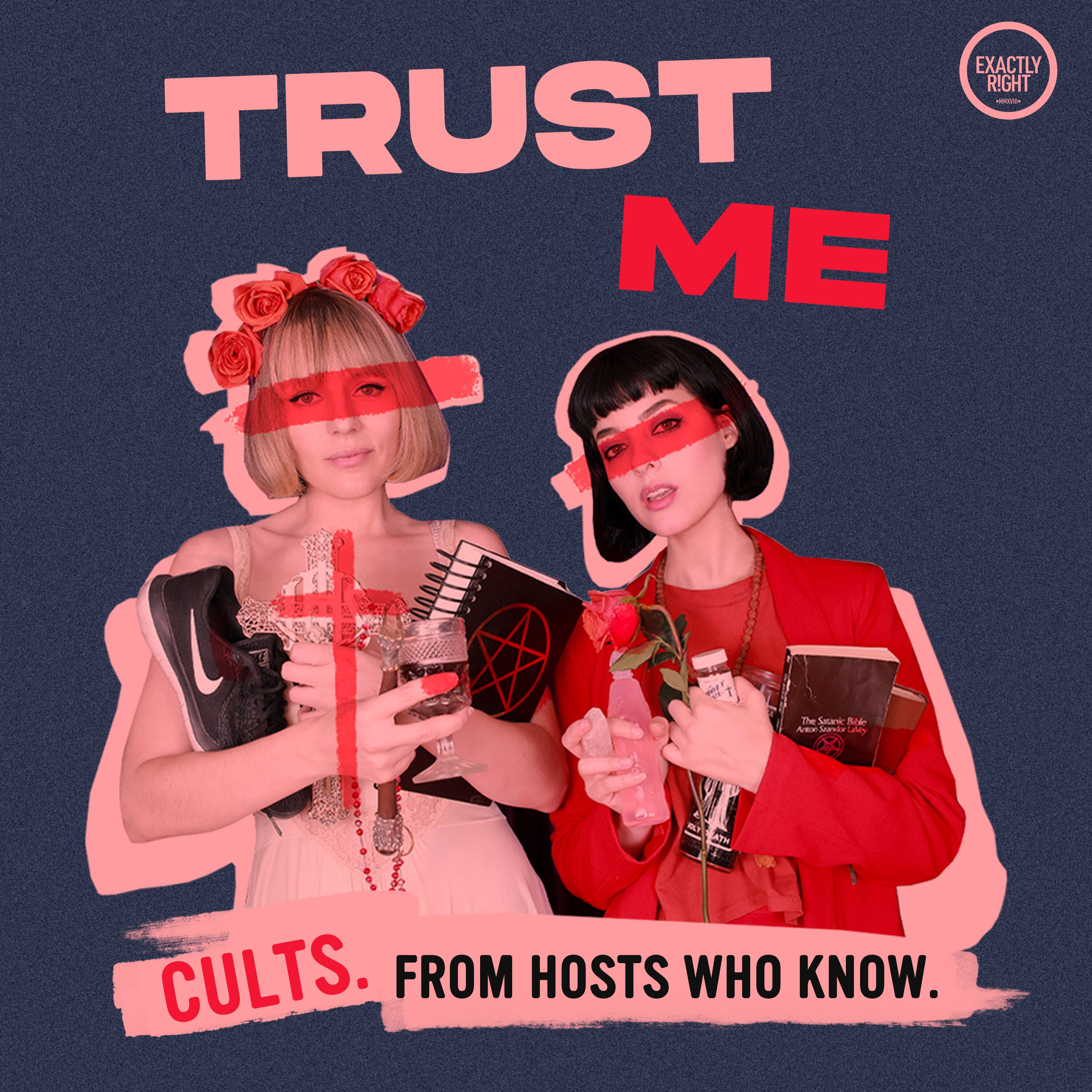
Trust Me: Cults, Extreme Belief, and Manipulation
Jane Borden - Cults Like Us: Puritans, Demagogues, and America’s Doomsday Obsession
01:01:56
Loading summary
Transcript349 lines
- [00:02]
Jane Borden
This is exactly right. Mint is still $15 a month for premium wireless. And if you haven't made the switch yet, here are 15 reasons why you should.
- [00:14]
Gwen Washington
1.
- [00:14]
Lola Blanc
It's $15 a month.
- [00:16]
Jane Borden
2. Seriously, it's $15 a month.
- [00:19]
Megan Elizabeth
3.
- [00:19]
Jane Borden
No big contracts.
- [00:21]
Lola Blanc
4. I use it. 5.
- [00:22]
Jane Borden
My mom uses it. Are you playing me off? That's what's happening, right? Okay, give it a try. @mintmobile.com Switch upfront payment of $45 for 3 month plan $15 per month Equ.
- [00:32]
Lola Blanc
New customer offer first 3 months only, then full price plan options available. Taxes and fees extra.
- [00:35]
Announcer
See mint mobile.com Life's messy. We're talking spills, stains, pets and kids. But with Annabe, you never have to stress about messes again. @washablesofas.com Discover Annabe sofas, the only fully machine washable sofas inside and out starting at just $699. Made with liquid and stain resistant fabrics, that means fewer stains and more peace of mind. Designed for real life, Our sofas feature changeable fabric covers allowing you to refresh your style anytime. Need flexibility? Our modular design lets you rearrange your sofa effortlessly. Perfect for cozy apartments or spacious homes. Plus, they're earth friendly and built to last. That's why over 200,000 happy customers have made the switch. Upgrade your space today. Visit washablesofas.com now and bring home a sofa made for life. That's washablesofas.com offers are subject to change and certain restrictions may apply.
- [01:39]
Gwen Washington
I'm Gwen Washington, the host of Snap Judgment from kqed. Every week we don't just tell stories, we drop you inside them. Real people, real voices, real moments that split a life in two. What do you believe? What do you risk? What do you want? Snap Judgment. New episodes every Thursday, wherever you get your podcast. Trust me.
- [02:10]
Lola Blanc
Do you trust me?
- [02:11]
Jane Borden
Would I ever lead you astray?
- [02:13]
Megan Elizabeth
Trust me.
- [02:14]
Lola Blanc
This is the truth.
- [02:15]
Gwen Washington
The only truth.
- [02:16]
Lola Blanc
If anybody ever tells you to just trust them, don't. Welcome to Trust Me, the podcast about cults. Extreme belief and manipulation from two former cult members who've actually experienced it.
- [02:28]
Jane Borden
I am Lola Blanc.
- [02:29]
Megan Elizabeth
And I'm Megan Elizabeth.
- [02:31]
Lola Blanc
And today our guest is Jane Borden, author of Cults like why Doomsday Thinking Drives America. Today, Jane's going to talk to us about why the Puritans were actually a high control group. How the ethos that working was a sign of righteousness informs our current American belief that having a lot of money is a sign of goodness and how pronatalism and the idea that the correct people should be having more babies is not only incredibly dangerous, but also another form of doomsdayism.
- [02:58]
Megan Elizabeth
We'll talk about the American monomyth and why it makes us interested in authoritarian style leadership. How the book of revelation is not quite what we think it is, how all this black and white thinking is just a way to make sense of the chaos and how self help and marketing are their own forms of cultic thinking.
- [03:16]
Lola Blanc
Before we get to our guest, Megan, what is the cultiest thing of the week for you?
- [03:20]
Megan Elizabeth
My cultiest thing of the week is just learning more about Lori Valo. Do you remember her?
- [03:24]
Lola Blanc
Yes. Of the Chad Daybell case?
- [03:26]
Megan Elizabeth
Yes, exactly. She's a woman who is accused of murdering her two children with her husband, Chad Daybell, who they're also accused of killing a whole slew of other people. He wrote, like, doomsday almost romance novels, in my opinion, that she got super obsessed with. And who knows if he believed it, but I do think she believed that they were coming true, kind of bringing in this new heralding in this kind of revelation into being. They ended up killing their two children. They found the bodies anyway. Chad Daybell has been sentenced to the death penalty. Okay. And I read that Lori is defending herself in court.
- [04:08]
Lola Blanc
No, she's not.
- [04:09]
Megan Elizabeth
Yes, she is.
- [04:10]
Jane Borden
Wow.
- [04:11]
Megan Elizabeth
And she is very good. I mean, don't get me wrong, she's going to be found guilty, but she's very good at, like, flirting.
- [04:21]
Lola Blanc
Are you watching the trial?
- [04:23]
Megan Elizabeth
No, but I watched the documentary and, like, she gets pulled over and she's just like, oh, my gosh, my lipstick. I can't find it. And the cops are like, oh, my God, where is it? And. And like, they let her go. She's very flirtatious and she's very good at getting out of things. So. Yeah, that's mine.
- [04:40]
Lola Blanc
What a fascinating person. Whenever somebody decides to represent themselves in court, I automatically assume that they are mentally, very mentally unwell, because why would you do that unless you're like, the sickest lawyer of all time? And even then you would know you want a team. Like, yeah, she.
- [04:57]
Megan Elizabeth
And she's not a lawyer. And she's like, I've been read books.
- [05:00]
Lola Blanc
Good for you, Laurie. You will end up in jail. And you should, and you should, and you should.
- [05:06]
Megan Elizabeth
This is the part where we go to your cultiest thing of the week, because we both do one. What's your cultiest thing of the week?
- [05:11]
Lola Blanc
My cultiest thing of the week is something I actually am gonna say. I don't think is a cult. But there are. There are just like elements of group gatherings that can feel cult y to me. Okay. So I started going to Al Anon. And for you who don't know what Al Anon is, because I've learned in the past few weeks that everybody thinks that Al Anon is just aa, which it's not. AA is for people who are alcoholics or addicts. Al Anon is for people who've been affected by people who are alcoholics or addicts. So if you know your mom's an alcoholic, if your loved one is an addict, that's the program that you go to. And it's also a 12 step program. It's just a slightly different program. There's a lot of like, you know, people like me who have. Who are extremely type A and want to fix everything and make everything better, which is.
- [06:05]
Megan Elizabeth
Yeah. Are you going to Al Anon because your co host is an alcoholic?
- [06:09]
Lola Blanc
Oh, my God, I can't believe it took me this long.
- [06:14]
Megan Elizabeth
I'm in the program too, guys. It's fine.
- [06:17]
Lola Blanc
The AA one.
- [06:18]
Jane Borden
Yeah, yeah, yeah.
- [06:19]
Lola Blanc
My brother is an addict. And people who, you know, have listened to some of our old episodes will know that that's been an ongoing thing. He did. He did overdose and he has a brain injury now. But I actually went because of a breakup that happened and just kind of some realizations I'd had about some of my own patterns. And. And it's my first 12 step program. I mean, I've gone to like a couple to support people, you know, but it's the first one I'm going to for myself. So I'm getting the most, like, clear window into how it works. It's really interesting. Like, what I love about it and what I think prevents it from being a cult is that there's no central leadership and responsibilities change hands all the time. So there really isn't room for someone to be like, this is the way to do it. Or at least there's. There are safeguards against that.
- [07:00]
Megan Elizabeth
Yep.
- [07:01]
Lola Blanc
Um, but of course, some of the other things that will happen in any kind of support group or recurring gathering, I think are like the language. There's like language that everybody uses. There's like catchphrases and slogans and I'm like, I don't. Why are you all saying the same thing?
- [07:19]
Jane Borden
I don't.
- [07:19]
Lola Blanc
Yeah, I don't know what that means.
- [07:21]
Megan Elizabeth
You know, it's your secret language.
- [07:23]
Lola Blanc
Yeah, you have. There is a secret language. And obviously this is not what everybody does. But like, some people will get up and talk, and I'll notice they're applying the Al Anon principles to everything in their life as opposed to just the things it applies to, which also, you know, as we know, like, when you think one thing is the answer to all things in your life, that can be maybe making it too important.
- [07:47]
Megan Elizabeth
Totally.
- [07:48]
Lola Blanc
But, like, it's great. Yeah, it's great. And I think it's really helpful. And if anyone actually does have an addict in their life like me, I recommend going. Even though I'm so uncomfortable when I'm there because I'm like this. I feel vulnerable in front of people and not like, in the podcast way where I'm like, just talk. But, like, I have to, like, actually, you know, it's different.
- [08:09]
Megan Elizabeth
And if anybody has an addict in their brain like me, go take care of it. The only thing I don't like is when they refer to it as a family. Ooh, yeah, yeah, yeah. That one's like, no, we're not.
- [08:21]
Lola Blanc
Yeah. Sometimes the higher power talk bothers me as an atheist, but I have been to meetings where they're very good about not overusing, like, God language and more just saying higher power and. But yeah, it's. What an interesting new thing in my life.
- [08:37]
Megan Elizabeth
Absolutely shocking. Honestly. I'm very proud of you. But it can feel.
- [08:41]
Lola Blanc
Yeah, but sometimes we need that.
- [08:44]
Megan Elizabeth
I had no idea that the Puritans were one of the most impactful cults in American history, and they just came in hot from the beginning.
- [08:51]
Lola Blanc
And to provide some context for this episode, because we. We were a little hazy on some of this history, and maybe some of y' all are too. Here's just a little, little overview to set us up. Okay. The Puritans left England because they wanted to create their own improved, more extreme purified version of the Church of England, which they thought hadn't gone far enough in its reforms after breaking away from the Catholic Church. They were like, I didn't know that. Yeah, same. The Church of England was trying to establish itself as, like, a mandatory religion. And the Puritans believed that they should be able to do the religion however they wanted without, like, a leader or a state head or whatever telling them how to do it and running the show. But they didn't actually want religious pluralism. They just wanted to create a society where they could do religion their way and make everyone else also do it that way, which is the same thing, ironically. And then they settled in the Massachusetts bay Colony in 1630, and within 10 years, they were the colonies majority group. So it informed so much of what America became after that.
- [09:53]
Megan Elizabeth
Yeah, and they didn't even expect to be there for 10 years. They thought the apocalypse was high noon arriving.
- [09:59]
Lola Blanc
Which is what Jane Borden is going to tell us all about.
- [10:02]
Megan Elizabeth
Let's do it.
- [10:09]
Announcer
There's nothing like sinking into luxury. At washablesofas.com, you'll find the Annabe sofa which combines ultimate comfort and design at an affordable price. And get this, it's the only sofa that's fully machine washable from top to bottom. Starting at only $699. The stain resistant performance fabric slipcovers and cloud like frame duvet can go straight into your wash. Perfect for anyone with kids, pets or anyone who loves an easy to clean spotless sofa. With a modular design and changeable slipcovers, you can customize your sofa to fit any space and style. Whether you need a single chair, loveseat or a luxuriously large sectional, Annabe has you covered. Visit washablesofas.com to upgrade your home. Right now you can shop up to 60% off store wide with a 30 day money back guarantee. Shop now@washablesofas.com Add a little to your life. Offers are subject to change and certain restrictions may apply.
- [11:10]
Jane Borden
Hi, I'm Cindy Crawford and I'm the founder of Meaningful Beauty. Well I don't know about you, but like I never liked being being told, oh wow, you look so good for your age. Like why even bother saying that? Why don't you just say you look.
- [11:24]
Lola Blanc
Great at any age, Every age.
- [11:26]
Jane Borden
That's what Meaningful Beauty is all about. We create products that make you feel confident in your skin at the age you are now. Meaningful Beauty.
- [11:36]
Megan Elizabeth
Beautiful skin at every age.
- [11:38]
Lola Blanc
Learn more@meaningful beauty.com.
- [11:45]
Gwen Washington
You think you know Snap Judgment? Yes, it's on NPR. It's a podcast. It's storytelling. But Snap has gone deeper, stranger, wilder. We've taken you places that the New York Times, the Rolling Stones, the Ambies, the Webbys, the Gracies all stood up for. Welcome to the Podcast hall of Fame. Glenn Washington award winning stories, original beats, soundscapes that drop you into the heart of the story. Find Snap Touch from KQED every Thursday wherever you get your podcasts.
- [12:20]
Lola Blanc
Welcome Jane Borden to Trust Me. Thank you so much for joining us.
- [12:23]
Jane Borden
Thank you for having me. I'm excited to be here.
- [12:26]
Lola Blanc
You're here with us today because you wrote a book called Cults like why Doomsday Thinking Drives America, which seems somewhat relevant right now to our culture. What inspired you to Write this book, first of all.
- [12:41]
Jane Borden
To answer those questions. What's going on? How did we get here? Why is this happening? I had become very preoccupied with the division in the nation after Trump's first election. How can people who are really mostly the same be so divided or see themselves as so divided? Where's that coming from? And so I had all that rolling around in my brain while I was also doing some cult reporting for Vanity Fair. And I was a religious studies major in college. And I've sort of always been interested in belief. And so in this sort of muck of things rolling around in my brain, it dawned on me one day that the Puritans were kind of a cult. I mean, if people today looked back at them, we would call them a cult. Yeah.
- [13:28]
Lola Blanc
Can you tell us why that is? Because I really. My knowledge of Puritans is, like, from some third grade class where we. A picture book, like, maybe had a turkey or something.
- [13:38]
Megan Elizabeth
Like, you were like, yeah, tracing your hand. And that's the extra. I was reading this like it was a fairy tale. Like, I had no idea any of it was real.
- [13:48]
Jane Borden
Well, we don't learn those parts. Cause they're a little inconvenient or unflattering at least. Right. But the Puritans, first of all, they were a doomsday group. So they believed the end was very near and they hoped they were among the chosen. And they were fleeing England because they thought that Armageddon was. Was coming to England. They thought God was first going to punish England before the rest of the world.
- [14:13]
Megan Elizabeth
Yeah.
- [14:14]
Jane Borden
And they thought England's crime was that it had not purified the Church of England enough. It had not made it distinct enough from the Catholic Church.
- [14:23]
Lola Blanc
Right. I did not realize that they were just more extreme than the church that they were fleeing. Like, in my head, I was like, oh, they just wanted to practice religious freedom. But it sounds like they were like, you guys aren't letting us be extreme enough. And you aren't, like, going hard enough in your religion.
- [14:40]
Jane Borden
Yeah. And they were derided. I mean, they were called hot Protestants, which I love.
- [14:45]
Lola Blanc
Nice.
- [14:46]
Jane Borden
And, you know, they got executed. They were spit on. They were not popular, these people. And you can kind of understand why. I mean, you know, they didn't dance. There was no. You weren't even allowed to, like, love your kids or your spouse very much. Because if you loved anything more than God, that was bad.
- [15:06]
Megan Elizabeth
They were kind of boring to a degree. Like, if they were at a dinner party, you'd be like, leave.
- [15:12]
Jane Borden
Right.
- [15:12]
Lola Blanc
But do you Must we spit on people for being boring?
- [15:16]
Megan Elizabeth
Well, I, I, I mean, I don't know if this is the quite the right moment for it, but that leads to a big persecution complex, Right?
- [15:23]
Jane Borden
Exactly.
- [15:23]
Megan Elizabeth
Everyone hates me. Everyone hates us. We're going to.
- [15:27]
Jane Borden
But guess what? God loves us.
- [15:28]
Lola Blanc
Yeah.
- [15:29]
Megan Elizabeth
And you're going to pay for.
- [15:30]
Jane Borden
And you're going to pay. That's right.
- [15:32]
Lola Blanc
So can you tell us a little bit about how the Puritans were, in fact, a high control group when they got here and how that kind of evolved?
- [15:40]
Jane Borden
Yeah. So, you know, high control group means belief was controlled, behavior was controlled, information intake controlled. They did this by pushing conformity. It was a culture of punishment. So everything you could be punished for, I mean, it was kind of, I don't know how they lived their lives. In constant fear is how they live their lives, which is motivating, you know, to conform. But, for example, swearing was illegal. Flirting, gossiping. You couldn't disagree with the minister. A woman got turned in by her servant because the servant overheard her expressing a disagreement with the minister. It was illegal to skip church. The servant people were turned into informants. And so you were walking on eggshells all the time. They made it very difficult to get into the church. So there was this thing that you desperately wanted that was always just out of reach. And so the idea was that no one knows who is or isn't going to be saved on doomsday, because only God knows that. And also he's chosen it, you know, before you were born. But they were still like, we're pretty sure we know, and we're pretty sure we are sure.
- [16:52]
Megan Elizabeth
Right, right.
- [16:54]
Jane Borden
And so the way they determined that or proved it was just by looking within. You know, just kind of sit with yourself and look for signs of grace. And if you feel like you find it, then you're probably among the chosen, and therefore you can gain entry into the church. But the longer the Puritan settlement was around in Boston, the harder they made entry into the church to get. This was very much because the magistrates wanted to hold onto power. They were corrupted by power. And the more people who could get into the church, the less power they had. And so they started telling people, you know, are you sure? Are you sure you found grace? Maybe you should go look again. There's probably wickedness in there somewhere. And so church numbers shrank, and this all led to a variety of crises because they were a theocracy. And how do you govern at any rate? And so there's all these stories about in the second and third generations about people who get power holding onto it and not letting go. And sometimes they would change the rules rather than seed power, which is something we always see in high control groups and cults. So really what we're talking about is power always.
- [18:08]
Announcer
Let's be real Life happens, kids spill, pets shed and accidents are inevitable. Find a sofa that can can keep up@washablesofas.com Starting at just $699, our sofas are fully machine washable inside and out so you can say goodbye to stains and hello to worry free living. Made with liquid and stain resistant fabrics, they're kid proof, pet friendly and built for everyday life. Plus changeable fabric covers let you refresh your sofa whenever you want. Neat flexibility. Our modular design lets you rearrange your sofa anytime to fit your space, whether it's a growing family room or a cozy apartment. Plus, they're earth friendly and trusted by over 200,000 happy customers. It's time to upgrade to a stress free mess proof sofa. Visit washablesofas.com today and save that's washablesofas.com offers are subject to change and certain restrictions may apply.
- [19:07]
Jane Borden
Hi, I'm Cindy Crawford and I'm the founder of Meaningful Beauty. Well, I don't know about you, but like, I never liked being told, oh wow, you look so good for your age. Like, why even bother saying that? Why don't you just say you look.
- [19:20]
Lola Blanc
Great at any age, every age.
- [19:23]
Jane Borden
That's what Meaningful Beauty is all about. We create products that make you feel confident in your skin at the age you are now. Meaningful Beauty, beautiful skin at every age.
- [19:35]
Lola Blanc
Learn more@meaningfulbeauty.com.
- [19:42]
Gwen Washington
You think you know snap judgment. Yes, it's on NPR. It's a podcast. It's storytelling. But Snap has gone deeper, stranger, wilder. We've taken you places that the New York Times, the Rolling Stones, the Ambies, the Webbies, the Gracies all stood up for. Welcome to the Podcast hall of Fame. Glenn Washington Award winning stories, original beats, soundscapes that drop you into the heart of the story. Find Snap Judgment from KQED every Thursday wherever you get your podcast.
- [20:17]
Lola Blanc
So what are the origins of this sort of doomsday thinking? Or is this just. Has this just always been around, like in every religion? Or is this a uniquely American thing?
- [20:27]
Jane Borden
I think it's especially American, but it's certainly not unique. Apocalyptic thinking in general, which just means thinking that the world is gonna end. That instead of everything being a circle, it's a line with a destination that is A relatively new development. It pretty much came about with monotheism, with the development of monotheism. So it started with the Zoroastrians and from there it very much influenced Judaism. And from there, you know, the Christianity, the Jesus cult, as some called it, was an apocalyptic group. Christianity is an apocalyptic religion in many ways. And we've moved away from that. Modern Christianity has, but it's there at the roots. And then it flared hugely around following the Reformation and the Puritans brought it to America.
- [21:15]
Megan Elizabeth
Can you say a little bit about Roger Williams?
- [21:18]
Lola Blanc
Yeah.
- [21:18]
Jane Borden
So he was a radical among the radicals. He showed up shortly after the Puritans set up shop in Boston and began criticizing the church magistrates. He thought that the church in Boston had not gone far enough to purify itself of the evils of the satanic Pope.
- [21:40]
Megan Elizabeth
Right.
- [21:42]
Jane Borden
He basically thought we should be worshiping the way Jesus and his apostles did. So no structure, no church. He would only pray with his wife. In later years, he only prayed alone. And so he kind of wanted to burn it all down. And the church was not happy about this. They tried to kick him out. He caught wind of it, fled south and essentially founded Rhode Island. And what's fascinating to me about him is that he's become the grandfather of the separation of church and state. Like the establishment clause, the First Amendment came from his ideas. But ultimately he was just trying to bring Jesus back. He just wanted more church. He thought Jesus isn't gonna come back unless you get rid of church structure. And I want Jesus to come back.
- [22:31]
Megan Elizabeth
Everybody wants the world to end so bad.
- [22:34]
Jane Borden
Everything wants. They wanna see it and they wanna.
- [22:35]
Megan Elizabeth
See everybody go to hell more than they even wanna go to heaven. They wanna see their enemies go to hell, get punished.
- [22:41]
Lola Blanc
That's right.
- [22:42]
Megan Elizabeth
It's freaking weird.
- [22:44]
Jane Borden
Yeah. I write about this poem, the Day of Doom, which is considered America's first bestseller. It was hugely popular in Puritan New England. And it's the story of doomsday. It's a long form poem and I think 220 some standas are dedicated to people getting it right, like wailing and begging for mercy and being denied and thrown into the lake of fire.
- [23:05]
Megan Elizabeth
Gnashing of teeth is gnashing of teeth stuck in my brain.
- [23:08]
Jane Borden
But before any of that happens, the saints, the elect, the chosen are pulled up to heaven so they can help and watch. That's their first reward.
- [23:16]
Lola Blanc
My goodness.
- [23:17]
Jane Borden
To see their loved ones and their friends. God. Yeah.
- [23:21]
Lola Blanc
Anything to feel special.
- [23:22]
Megan Elizabeth
Yeah.
- [23:24]
Lola Blanc
You wrote about how their values of like, hard work and how this was virtuous to be, like, kind of constantly working, because that meant you were righteous somehow because you weren't distracted. How did that, like, stick in American culture? And how does it relate to kind of what we see today in evangelical culture?
- [23:42]
Jane Borden
Why we worship billionaires?
- [23:44]
Lola Blanc
Yeah.
- [23:45]
Jane Borden
Yeah. This one's interesting because the Puritans were very clear on the boat on the way over. You know, they said, you will give to your neighbor if your neighbor needs it, even if you think you're not gonna get that money back. That's just how we roll. Get on board or go back to England, you know. But over time, this shifted because of their idea that the way you worshiped God was by having a calling, by working. They thought that God only created us because he wanted to be worshiped, and that the way we did it was by working hard. So the harder you worked, the more you loved God. So what that meant is that if you're working really hard, you're gonna start accruing wealth. It's inevitable. And so is wealth then really bad, or is it just a sign of how much you love God and a sign that maybe he loves you in turn if he's rewarding you? Right, yes. So then eventually, over time, it became okay to acquire money. Acquisitiveness stopped being this evil sin and started being something good and righteous.
- [24:46]
Megan Elizabeth
Yeah. Because also, if you have grace, then you would get wealth. So it's this kind of circular thinking that begins to.
- [24:55]
Jane Borden
And therefore, if you have wealth, you must have grace.
- [24:57]
Megan Elizabeth
Yes.
- [24:58]
Jane Borden
And so John Rockefeller famously said that he got his money from God.
- [25:03]
Lola Blanc
But of course, the people who believe this are generally people who are buying into an unscientific, shall we say, reality? Because we know that having wealth is what enables you to create more wealth. Like the bootstraps. Can you talk a little bit about the bootstraps myth of America?
- [25:22]
Jane Borden
Yeah, it is a myth. I believe that people who follow this doctrine that the wealthy are. That the number in your bank account represents your moral character. Right. Because the inverse of the wealthy being among the chosen is that the impoverished are sinners. Yeah, Right. The idea is, if you're poor, well, surely that God wants you to be poor. You know, God assessed you and decided you weren't worthy. And so why should we help the poor? Sin should be punished. Right. And so we see this, this bootstrapping ethic preached to the poor, when, in fact, there are constraints set in place that keep them from ever becoming rich. Because when you have money, you don't want to give it away. And so this doctrine becomes a very handy justification to not just hold your wealth, but, as I argue in the book, actually mine the lower classes of their wealth. Because again, if you see them as sinners, you see them as just another part of the natural world which, according to the puritan ethos, we're supposed to be mining and extracting from and using for our own benefit.
- [26:34]
Megan Elizabeth
Oh, God. It's baked in there.
- [26:39]
Jane Borden
It's baked in there.
- [26:39]
Lola Blanc
It's really baked in.
- [26:40]
Megan Elizabeth
I mean, it really.
- [26:42]
Lola Blanc
It reminds me of the Law of Attraction that like, you are. You just aren't thinking. You're not doing it right if you're not attracting enough like wealth and success into your life.
- [26:50]
Megan Elizabeth
Yeah. What I took away from this in a bigger way was like, luck is so scary for Americans to wrap their head around. And probably, you know, many cultures like randomness. The randomness, the fear of the unknown. So that everything must have a reason and a reward or a punishment.
- [27:09]
Lola Blanc
Yes. The world is just. It's the just world hypothesis. Right. Which is that cognitive bias where we, we are prone to believing that things are the way they are because they're supposed to be that way and because the world is just. So if somebody is really wealthy, they must be wealthy because they did good things and they are correct and righteous, and if they're poor, it must be their fault.
- [27:31]
Jane Borden
That makes things easier to accept than the chaos.
- [27:34]
Lola Blanc
Yeah, the chaos. We talk about the chaos a lot. It is really difficult to accept the chaos.
- [27:40]
Jane Borden
Yeah. And that's what feels cult like thinking. Right. Trying to create order out of chaos.
- [27:45]
Lola Blanc
Yeah. So I want to hear a bit about the American Monomyth. Where does that come from and what is it?
- [27:54]
Jane Borden
So in the 1970s, a couple of scholars named John Shelton Lawrence and Robert Jewett started chatting about the Vietnam War and how it was possible that Americans could be stomaching so much violence. Right. And over time, and over time, they realized they started to see this pattern in pop culture. And they eventually named it the American Monomyth. And it's a trope that you see in film and comic books, westerns. And the basic storyline is that there's a small Edenic, like community that's under threat and the government and the police force are ill equipped. They can't stop it. What's everyone gonna do? Oh, wow. Here comes this hero, this outsider who literally appears out of nowhere. Or they're within the community, but they're like a loner in the community.
- [28:48]
Megan Elizabeth
Right.
- [28:50]
Jane Borden
And they kill all the bad guys essentially with scalpel precision. And then they Disappear from whence they came. And so the solution is always violence. And like I said, it's precise. So there are never innocent casualties, only the bad guys die. Therefore it's like a cleansing violence. It's a righteous violence. And Jouette and Lawrence traced this to something called Indian captivity narratives, which came out of the Puritan era. And these were true life stories written by people who had been captured and then rescued from, you know, native communities. And it was always a violent rescue. And then the wilderness was cleansed and then became safe again for the white settlers afterward was the idea. And so this genre really exploded in the 20s and 30s with the development of westerns and of superhero comics. But it's in everything. I mean, there were three movies out last month that follow this trope.
- [29:55]
Lola Blanc
Oh, which ones?
- [29:56]
Jane Borden
The Accountant.
- [29:57]
Lola Blanc
Okay, I haven't. I mean, I probably haven't seen any of them, but go on.
- [30:02]
Jane Borden
What'S the one with Rami Malek where he goes out on a vigilante killing spree for everyone who killed his wife?
- [30:09]
Lola Blanc
Oh, I don't know if that's forgetting that one.
- [30:10]
Jane Borden
Yeah, that's a good one.
- [30:11]
Megan Elizabeth
The hero.
- [30:12]
Lola Blanc
I'm real behind on movies right now.
- [30:13]
Jane Borden
It's, you know, they're vigilante narrator, like Death Wish.
- [30:16]
Megan Elizabeth
Yeah, yeah.
- [30:17]
Jane Borden
Is an American Monolith, Star wars, even Jaws. I mean, you really start to see it everywhere if you're looking. But so where I really see the origin of this, you know, if you wanna go back farther than the Indian captivity narratives is in the book of Revelation.
- [30:33]
Megan Elizabeth
Please tell us about this because it is so fascinating. What is the Book of Revelation and how did we get it wrong?
- [30:41]
Jane Borden
Oh my gosh. So the book of Revelation was written around 90 CE and it's a work of anti Roman propaganda. It was written by one of Jesus's, an early follower, this guy John of Patmos is what he's called, and he was a Jew, Right. And it was written in response to the Roman occupation. So I believe it was 66. Rome just destroyed Jerusalem. The Jews had tried to fight back and it was horrific and so their thinking was, okay, but Jesus is coming back any day now. He said he was going to be back in a generation. In our lifetime. It had been 60 years and he still hadn't come back. And so basically this guy John of Patmos delivered the rescue narrative that the community needed.
- [31:37]
Lola Blanc
Interesting.
- [31:38]
Jane Borden
And so it's a story of divine retribution and it's very much coded. Scholars can tell that it's written about Rome, so the various headed beasts you know, one head is for each of the Roman emperors. The 666 is a reference to Nero. People think that the mark of the beast referenced Roman coins because a lot of Jews at the time didn't want to carry around Roman money because, you know, their God.
- [32:07]
Megan Elizabeth
False God on the money.
- [32:08]
Jane Borden
Yeah, false God on the money, exactly. So in the story of Revelation, there is again this outsider who kind of shows up out of nowhere to kick off the retribution. And it's Jesus in this case. He appears as a slaughtered lamb. As the innocent slaughtered lamb whose hand is sort of pushed as the one who's chosen to begin opening all these scrolls which reigns terror on the earth. Incredibly violent. Ecstatically violent. The Book of Revelation, at one point, an angel collects all of the wicked on the earth. This is the Grapes of Wrath reference. He collects all the grapes of the earth, which is the wicked, and puts them in a giant winepress and smushes them. And so much blood comes out that it.
- [32:58]
Lola Blanc
Oh, my God.
- [32:59]
Jane Borden
That it creates a river as high as a horse's bridle that flows for 200 miles.
- [33:04]
Lola Blanc
Okay. It's really creative, though. You have to hand it to him.
- [33:07]
Megan Elizabeth
I know. And I just want to state for the record, growing up and the cult that I did, we read this as completely literal. I would get tucked into my little bed every night and think about Revelations and just be like, I'm so scared. And whenever we would leave to go anywhere, the two by two parents would go, is that what you want to be wearing when Jesus comes back to the earth? Is this where you want to be going when Jesus comes back to the Earth?
- [33:33]
Lola Blanc
Because you are. You'll be squished like a grape.
- [33:35]
Megan Elizabeth
Like a grape. I just wanted to go to the mall and I'd be like, God, gadzooks. Or Heaven, I don't know.
- [33:41]
Jane Borden
Oh, my God.
- [33:43]
Lola Blanc
Love Gadzooks. I like, forgot about it. For the last 20 years. You mentioned how, like, this is just like a completely different Jesus from the Old Testament or from the previous Jesus.
- [34:01]
Jane Borden
It's like from actual Jesus.
- [34:03]
Megan Elizabeth
Yeah.
- [34:03]
Lola Blanc
It's like if you were writing this character in a screenplay, you'd be like, why does he suddenly completely change everything about his motivation and his behavior? And I would be like, this character doesn't make any sense. Please rewrite it. Yeah, it's like misunderstood. Who wrote this chapter, Right?
- [34:20]
Jane Borden
Yeah. So the reason Revelation got canonized is in part because people thought John was like John the Apostle, the guy who wrote the Gospel of John. Although that's also up for debate. But that John, they thought it was that John. So they thought, well, anything this guy wrote needs to be in the Bible. But in fact it was written by another John, which was a bit of an oopsie.
- [34:42]
Lola Blanc
So wild.
- [34:44]
Jane Borden
Yeah. And there were, you know, there were some people at the time who, who saw the distinction and kind of raised their hands, but they didn't, they didn't win the day. And there were also people at the time, when I say at the time, I mean when the New Testament was canonized, who were like, this is insane. You know? Yeah, it's, it's, it feels a little insane.
- [35:06]
Lola Blanc
It's interesting how much that influenced so, so much of the rest of history and like, you know, used as a justification for so much violence.
- [35:16]
Megan Elizabeth
Yeah, this guy was just journaling. He was just fantasy, like doing a fantasy revenge, little vision board fantasy. And now my like whole childhood was ruined.
- [35:25]
Lola Blanc
Right. Yeah, well, it's all about. And a number of other things.
- [35:31]
Megan Elizabeth
I mean, but for real, like the planet was just like forever fucked because he had a little fantasy, he had.
- [35:36]
Jane Borden
A vision and he was in the spirit. Right. Which is what you did back then before you. So there were lots of revelations at the time. His wasn't the only one. It's just the one that stood the test of time. But you would get in the spirit. So whether that means they were taking mind altering substances or like spinning around in circles until they got dizzy, you know. Yeah.
- [35:56]
Lola Blanc
I'm gonna quote you because I wrote a quote about the American Monomyth. Okay. The American monomyth undermines our nation's founding ideology, democracy. It subconsciously encourages the public to forego the messy, laborious and painstaking process of cooperation and compromise by instead waiting for a superhero and then granting that figure unlimited and unchecked power. It creates a passive public desiring a totalitarian leader. This is so interesting to me because I don't feel drawn to these stories. I don't know if you feel drawn to these stories, but certainly every man I've ever dated has been drawn to these stories. It feels like such a masculine thing. Do you find that there is more of a craving for that authoritarian style leadership in particular periods or right now, in particular, what makes us crave that? Or at least what makes men crave that?
- [36:53]
Jane Borden
Well, indoctrination into it, as we all have been in America, not least because of these narratives showing up in every film, especially today, it feels like. But also as, you know, cult like thinking increases during times of crisis. So whether that's people joining Cults, like the number, the proliferation of cults or whether that's just increases at the society level in the kind of cult like thinking I explore in the book. And so we are experiencing a time of extreme crisis right now. Sociologists point specifically to technological revolution. Social media has completely changed the way we communicate with one another. The algorithms have changed the way we live. AI, of course, we don't even know yet how that's gonna reshape society.
- [37:41]
Megan Elizabeth
Global warming doing us no favors.
- [37:43]
Jane Borden
Global warming being the biggest crisis humanity has yet faced. Social upheaval. So MeToo, the quote unquote woke movement. America's gonna be minority majority soon. These are leading people to freak out. This is leading to political backlash, which we've seen. It's also leading to huge increases in cult like thinking. And the most pressing crisis in my opinion, facing Americans right now is income inequality. Majority of Americans are chronically under resourced. And there's nothing that causes your world to wobble more again that chaos. Right. Than being unresourced. And so we're seeing huge increases in cult like thinking right now. And I think it's swept Donald Trump into the White House.
- [38:29]
Lola Blanc
Yeah, because.
- [38:30]
Jane Borden
Because we want an autocrat. We, we are currently flirting with autocracy.
- [38:34]
Lola Blanc
To say the least. Yes. Yeah. It's like when we are in survival mode, all we want is some hope for relief and for somebody to fix it and make it better. And when someone comes in with easy answers and black and white thinking and says, I will fix it, I will make it better, of course we're gonna be drawn to that. And especially in times of great division where we are being told by media over and over again, the people who disagree with us are bad and evil and wrong and we should be against them. We're just so primed right now for the situation that we're currently in with leadership that is not interested in checks on its power at all, which is how cults operate. The inability to critique, the inability to question, to dissent in any way, like that is authoritarianism. And that is exactly the same as cults.
- [39:25]
Jane Borden
And we saw that happening with the Puritans after the antinomian controversy, which was basically just a time when this woman, Anne Hutchinson, was like, hey, I disagree with you. And they were like, shut it down.
- [39:38]
Megan Elizabeth
Anne Hutchinson sounded so cool.
- [39:40]
Jane Borden
She sounds cool, right? Yeah, yeah. I mean, I don't know. These people were all little crazy.
- [39:46]
Megan Elizabeth
They were all puritans.
- [39:47]
Jane Borden
Yeah, right, right, right. We like them because we feel like they were fighting the enemy, but we might not want to hang out with him at dinner. Hard to say. Hard to say.
- [39:54]
Lola Blanc
Yeah.
- [39:55]
Jane Borden
But, yeah. So they quashed dissent. They did away with the practice of question and answers after sermons because it was too vexing, which is like what we see happening right now. With Trump shutting down universities, they banished Hutchinson and a bunch of other people who fled to the new colony of Rhode island, where all the radicals went. That was around the time they founded Harvard. And there were lots of reasons behind Harvard's founding, but one of them was to indoctrinate youth. I mean, they really brought down the hammer in response to critique.
- [40:28]
Lola Blanc
Fascinating, considering Harvard is the one school that is standing up to Trump right now. You drew a connection between doomsdayism and this panic right now about declining birth rates. And I just would love to hear more about how some of these ideas are just another form of doomsday things thinking.
- [40:48]
Jane Borden
Yeah. So people who ascribe to pronatalist thinking have a variety of beliefs. So I don't want to loop everyone under one umbrella, but some of the people in that movement believe that if elites in America specifically stop having kids, that that's going to be the end of civilization. So inherent in that already is the assumption that America and Western civilization is civilization. Right. Which is the chosen nation, chosen people thing, which is very Puritan and very.
- [41:20]
Lola Blanc
Rooted in white supremacy.
- [41:22]
Jane Borden
Yep. The myth of the Anglo Saxon and all that. So the idea behind pronatalism that is shared by the eugenics movement is that only really certain people should be having more kids. Right. And so we hear some in the pronatalist movement saying, you know, let's give child tax credits and, you know, money for universal pre K and that sort of thing. But we also hear people like. Well, for example, Elon Musk was quoted by an anonymous friend as, like, encouraging all his rich friends to have kids. So it's whose genesis do we want to spread? Right. And ultimately, I believe this is all just a way for people with power to replicate their own power. That's what's happening in the eugenics movement, and I think that's what's happening now. And that's what cult leaders do. I mean, Elon Musk has had 13 kids, I think, at this point that we know of. Warren Jeffs had 60. Malachi York had 300. Jeffrey Epstein had plans to seed the earth by impregnating up to 20 women at a time.
- [42:36]
Lola Blanc
Oh, my God.
- [42:37]
Jane Borden
Until. I don't know. And so this is power replicating itself, and this is people behaving like gods. Trying to literally reshape society in their own image.
- [42:49]
Megan Elizabeth
Yeah. And saying, we have a lot of money, so we're inherently good.
- [42:52]
Lola Blanc
We're virtuous and.
- [42:53]
Megan Elizabeth
Virtuous and chosen by God. And so we'll just replicate it. There was an interesting part of your book about sterilization and how back in the day people would be like, you guys shouldn't have kids. And we choose who should have more and who shouldn't have any.
- [43:08]
Jane Borden
There were mass sterilizations in the. This was at the beginning of the 20th century, between 60 and 70,000Americans were sterilized. A lot. Most out here in California.
- [43:19]
Megan Elizabeth
Yeah.
- [43:20]
Jane Borden
And the Supreme Court ruling, the Buck v. Bell ruling that said it was legal to do that is still on the books.
- [43:28]
Megan Elizabeth
Wow.
- [43:28]
Jane Borden
But so the justification for I get to choose who does and doesn't procreate, and I'm gonna base it on replicating the power of rich white people. The justification for that is the search for perfectionism, the pursuit of perfectionism, which is occult like thinking, which comes from the Puritans. So the idea is like, maybe we don't have to wait for God to deliver New Jerusalem as he does at the end of the book of Revelation. Maybe we can reach New Jerusalem ourselves. If we perfect society, if we perfect human civilization, then we will create heaven for ourselves. And that's what we saw happening before and during the eugenics movement.
- [44:16]
Lola Blanc
Real quick, y', all, to give some context for the landscape of pronatalism today and how it relates to eugenics and racism. At Natalcon, the pronatalist convention in 2023, a far right businessman presented on the importance of men only spaces and said, the Civil Rights act of 1964 and its progeny are probably the single most destructive set of laws in American history and all should be wiped forever from the history of this nation. You can see why this is a problem. The organizer of natalcon has promoted people like discredited race science advocate Charles Murray, who thinks poor women have low IQs because of their inferiority and therefore should not have children, and has described love between men and women as a relationship between superior and inferior. Obviously, there are a ton of extremely dangerous ideas in this movement. We will do a full episode on that kind of thinking very soon to dive deeper into some of those beliefs.
- [45:10]
Megan Elizabeth
It reminds me of the human potential movement, which is kind of this very American idea that we all have within us. This almost Jesus like potential to be perfect. It's been going on for forever. Think and grow rich. All of these books or is like you're thinking is the root of the problems. And heaven is here in your brain. There's a part of Christ in you that's totally pure. And just fix your brain and you'll get there. And if you don't get better, then you haven't fixed your brain.
- [45:39]
Jane Borden
Right. And so you should keep paying for my course. Courses.
- [45:42]
Megan Elizabeth
Yeah, yeah. I'm. I'm really susceptible to self help. And we all are. Yeah.
- [45:48]
Jane Borden
And there's nothing wrong with self help. The problem is that we get exploited by people who are trying to take our money. Yes. And they do it via our latent indoctrination.
- [45:59]
Megan Elizabeth
Yeah. Yeah. And just the never ending pursuit of more and better and heaven and perfect.
- [46:05]
Lola Blanc
Yeah.
- [46:06]
Jane Borden
And the studies suggest that the more we engage in self reflection, constantly looking inward and trying to improve ourselves, it makes us sick. It doesn't make us happier. It doesn't make us better.
- [46:18]
Lola Blanc
I was so. This was so interesting to me. You mentioned Rena Raphael's book.
- [46:23]
Jane Borden
Oh, I love her.
- [46:24]
Lola Blanc
How she describes the modern spiritual consumer as creating individualized, bespoke practices and belief systems by basically picking and choosing, you know, spirituality. But then you, you talked about this 2018 study. I thought this study was so interesting. So I'm, I'm just gonna read an excerpt of your writing from your book for our listeners. A 2018 study identified among its participants two basic strategies for seeking happiness. One social and one individual. The study determined that people with the goals of seeing friends and family more, joining a nonprofit or helping people in need reported increased life satisfaction. A year later, those who focused on goals such as staying healthy, finding a better job, or quitting smoking reported no increase in life satisfaction. In fact, the self focused road to happiness was even less effective than having no plans for action at all. That is so interesting.
- [47:18]
Megan Elizabeth
Period.
- [47:19]
Lola Blanc
Why is it just because we're looping on, like almost this obsessive, like, am I happy yet? Am I happy yet? Am I happy yet?
- [47:27]
Jane Borden
I think so.
- [47:28]
Lola Blanc
Yeah.
- [47:28]
Jane Borden
Yeah. I mean, I think that's part of it. I think the other part of it is that actual sources of happiness come from community, come from mutual aid, which.
- [47:36]
Megan Elizabeth
Is also what cults give people, which is the problem.
- [47:38]
Lola Blanc
I know. That's so tricky.
- [47:40]
Megan Elizabeth
It's so tricky. It's like it's such a delicate little framework. Yeah, yeah. But community is what ultimately seems to raise people's lived experience.
- [47:53]
Lola Blanc
Yeah. And it just like hammers home for me that the self help, which you, you wrote about, the self help culture, is sort of a never ending, like it's A bottomless. The goal will never really be achieved because it does become this endless cycle of we need to purchase more courses, more books, more seminars. And that's by design. Right. Like if the answer was actually achievable, they would stop making money from it.
- [48:18]
Jane Borden
Right. They would cease to be a customer.
- [48:20]
Megan Elizabeth
Yeah, they're just creat courses for you. So I went to the Tony Robbins conference where we walked across hot coals chanting. I think it was like, I believe in me or something. Anyway, then afterwards you're like, oh my God, yay, I've overcome this huge fear. And then he's like, and here's a bundle for the next part. And I remember being really young and being like, well, this is fucking crazy.
- [48:47]
Lola Blanc
A bundle?
- [48:49]
Megan Elizabeth
Yeah, a bundle. Like a wellness bundle, like classes and.
- [48:52]
Jane Borden
More for you to buy.
- [48:53]
Megan Elizabeth
More for you to buy.
- [48:54]
Jane Borden
You thought you'd reached the destination.
- [48:56]
Megan Elizabeth
I thought I'd reached nirvana. I was a firewalker. And no, there was lots more to do and I was very sad and I didn't do it, but a lot of people did. And I can see why. If I had the money, I probably would have. But yeah, kind of creating this breaking down is what he did. Sorry, Tony, if you're listening to this, just these groups kind of break you down on the beginning part and are like you're nothing and then build you back up and then you're kind of hooked and you're in the cycle.
- [49:27]
Jane Borden
That's what cults do. They break you down and rebuild you in their own image.
- [49:31]
Lola Blanc
Well, and as you pointed out in the book, that's also what advertising and marketing do. And can you talk a little about Edward Bernays?
- [49:39]
Jane Borden
Is that what he's saying? The father of spin, which is a great book I relied on quite a bit. He considered himself to have invented more or less public relations. That's not exactly true. But being a spin master, he wrote his own narrative. He was the nephew of Sigmund Freud. And so he began his career. Not Bo baby, but okay, yeah, a little bit. He began his career working in what would later be known as pr. And he went to visit his uncle and came back to New York just full of beans about this idea of what if I take my uncle's ideas about the subconscious and desire and apply it to advertising.
- [50:27]
Megan Elizabeth
What a perfect storm.
- [50:28]
Jane Borden
Wow. Yeah. And became incredibly successful, revolutionized the industry and changed the way we purchase. So before then, before Bernays bb, basically advertising was needs based. Like, hey, we have this product, you might need it. Do you need it? It's pretty cool if you do. And that's oversimplifying things a little bit. But after Bernays this advertisement is going to create in you a need that did not previously exist. And we're going to do that by tickling your latent desires and your latent indoctrination. And then you're going to see this as the cure for what ails you.
- [51:12]
Lola Blanc
It's so smart, it's so brilliant, it's so Freudian.
- [51:16]
Megan Elizabeth
He was able to incorporate symbolism and just cut straight to your unconscious brain.
- [51:21]
Lola Blanc
I mean it's like a mini little cult creating a need and then filling it. It's genius if what you want to do is make a lot of money. But then didn't political figures in America sort of take notice and become interested?
- [51:35]
Jane Borden
Yes. So at the time America was overproducing and there was a glut. There was too much stuff headed into the marketplace. And so the problem was do we scale back these engines of production which could be bad for the economy or do we find another way? And so they heard about what Bernays was doing and were like hey, can you find a way to convince people to buy all these things that they don't need?
- [52:02]
Megan Elizabeth
Sure can, sure can.
- [52:04]
Jane Borden
And that's really when the American economy became addicted to the consumer marketplace as a driver.
- [52:11]
Lola Blanc
What a lovely thing that happened. It's been really good for all of us.
- [52:17]
Jane Borden
Yeah. Bernays was a fascinating character and you can tell that he maybe did question a little bit of his motives because he would espouse ideas publicly that were a little counter to what he believed. But he certainly didn't have a lot of compunction about doing what he did. And a reporter during the Nazi regime found a copy of Bernays book in Goebbels office on his shelves.
- [52:46]
Megan Elizabeth
Wow.
- [52:47]
Lola Blanc
I mean it makes sense because you do have to manipulate like you have to exploit people's inner desires in order to convince them that you of anything. But especially you really need to like convince them that an entire group of people is so horrible that they all deserve to die. I mean like the different forms that manipulation takes and how much we are all manipulatable and how much that is exploited by people in power. It just never ceases to amaze me. It is all so connected. Yeah.
- [53:18]
Megan Elizabeth
And it's easy to feel super hopeless about all of it. Yeah.
- [53:23]
Jane Borden
Yeah. And that was a concern for me when I started researching and writing the book.
- [53:27]
Megan Elizabeth
I bet.
- [53:28]
Jane Borden
But I ultimately found a lot of hope because when we see the magic trick we stop falling for It. And I think when we don't recognize that these beliefs are driving us, then we're gonna be exploited again and again. But when we can see, oh, this is not the way life is or the way, I think this is one driving idea among many and I can take it or leave it, then we're less likely to be exploited. And so I think when we can recognize and then acknowledge and articulate the ways puritan doomsday ideology is still driving America up, the less likely we are to fall prey to it.
- [54:13]
Megan Elizabeth
Can you give us an example of that? Can you take that from like the unconscious to the conscious, so to speak, and tell. I'm curious of what it would look like in myself of like, I have a thought and then I undo it. How?
- [54:29]
Lola Blanc
Great question.
- [54:31]
Jane Borden
Yeah, well, I think, you know, I think you experienced it at the end of that Tony Robbins thing, right? You know, oh, this is the end. I reached nirvana. Oh, no, wait, you're telling me there's more. You know, you very easily could have said, oh, yeah, no, I'm not there yet.
- [54:45]
Megan Elizabeth
Right, right.
- [54:47]
Jane Borden
Yeah, yeah, yeah.
- [54:49]
Lola Blanc
For me, it's like, I think especially just given social media and we know how quickly oversimplified information spreads because it's just easier to process in our brains. But, like, if we can get better at noticing the underlying narrative, like, is a group of people being demonized here? Am I being encouraged to think in black and white here? Am I being told that there's one group that is the reason for all of my problems? My biggest hope with this podcast is to foster that kind of thinking in people. Just literally pausing and being like, what am I being told to believe about others? Am I being sold an easy solution that maybe is oversimplified? Like, you know, Daniel Kahneman talks about just like literally pausing to examine our biases instead of just being on autopilot alone can do so much work for us. Right?
- [55:47]
Megan Elizabeth
Yeah, yeah. No, I mean, it's the pause.
- [55:50]
Lola Blanc
It's the pause.
- [55:51]
Jane Borden
It's the pause.
- [55:52]
Lola Blanc
Yeah, but it's hard to pause. It's hard to pause in such a fast paced world when we're on social media all the time and we're being told, you know, and you just want to.
- [56:00]
Megan Elizabeth
Sometimes you just want to go shopping and it's like kind of bad, you know, and it's like, but that's how I stay. It's just the whole system is just so.
- [56:12]
Jane Borden
Yeah. And it's hard to pause when you're in crisis.
- [56:14]
Lola Blanc
Yes.
- [56:15]
Jane Borden
And people who wish to manipulate us want to Keep us in crisis. Yeah, and that's why, because you can't pause. And that's what thought terminating cliches are. They mitigate the pause. And I talk about the cult watch where it's always striking now o', clock, the time is now. You have to act now. Which as we also see in advertising, totally Michael Flynn had some big post on X today about the dangers and the evils and we have to fight and we have to fight now. And the time is, it's almost too late. And you know, it's a rallying cry.
- [56:51]
Lola Blanc
Okay, my one question about that is because like you're absolutely right. Also there are genuine systemic oppressions that occur that actually do need to be fought. You know, when people are deprived of due process, when civilians are harmed who should not be, and it's when the.
- [57:11]
Megan Elizabeth
World'S about to actually end from global.
- [57:13]
Lola Blanc
Warming, when science, when science is destroyed, you know, like. So how do you think that we can differentiate between panic, fear mongering that's meant to demonize people and genuine fighting of injustice?
- [57:31]
Jane Borden
Well, it's interested that you say due process. Just gonna pull this pause thread a little more. But that's what due process is, is a pause. Right. You're not gonna just execute a person, they're gonna have a trial, et cetera, et cetera. That's what checks and balances are. They're pause. So you don't actually get to make this decision. You know, the executive branch, we're gonna have a say and it's gonna be this process. And everything takes forever and there's a lot of red tape and bureaucracy gets demonized by autocratic factions, I think because they're trying to mitigate the pause. I don't know if that answered your.
- [58:09]
Lola Blanc
Question, but yeah, kind of like if we are genuinely interested in truth, then investigation should be encouraged and it is discouraged when it is a party that is only seeking power. And I think for folks who are interested in upholding justice and fighting oppression, authentically seeking truth and seeking it from multiple sources and not just one is the goal. Because truth is how you understand what happened and how to not recreate that. Does this make any sense?
- [58:44]
Megan Elizabeth
I'm lost, but I think you're not.
- [58:50]
Jane Borden
Well, it just gets so complicated because then that exact advice gets co opted. I mean, think about QAnon talking about do the research.
- [58:59]
Lola Blanc
Well sure, but they want you to do the research from their one guy with a blog.
- [59:04]
Jane Borden
Sure.
- [59:05]
Lola Blanc
Which is different from myriads external reliable sources. But that is a whole nother conversation because the meaning of a reliable source has become completely meaningless.
- [59:16]
Jane Borden
Right.
- [59:17]
Lola Blanc
But there is such a thing. And like, one of the things we talk about a lot as well is just the importance of having a variety of sources. And like, even if you have a variety of sources, it's still possible for them to all be coming kind of from the same place and from the same thinking patterns. So the idea is to diversify not just in your community, but beyond your community. But it's easier said than done in the algorithms that we are currently locked into.
- [59:45]
Jane Borden
The algorithms are part of the problem for sure.
- [59:47]
Lola Blanc
Yeah.
- [59:48]
Jane Borden
I describe the algorithms as cult leaders. Yes, yeah, yeah. Because they, the goal is to entrap us. Right. They do that by isolating us from our real life communities, which they achieve by feeding us extreme content because it has higher chances of engagement. And by love bombing us with likes and bells and notifications and things, they spread disinformation which literally mitigates our ability to control what we do and don't believe. And the whole point is to extract money to make money off of us. Right, right. By taking our attention for their advertisers and our data. Of course. I think they're the most successful cult leaders ever.
- [60:28]
Lola Blanc
Oh my God, that is so true. Yes. Yeah, we've said it a million times. So sorry for repeating ourselves all the time, old listeners. But, but like, I think some people have this idea that the information is out there, so of course you can just find it. But the reality is we are. I'm in such a different bubble of social media than some of my friends. Like we are seeing completely different realities and that is not our faults, that is the faults of corporations that are trying to extract money from us.
- [60:57]
Jane Borden
Yeah, Control your environments. Another commonality.
- [61:01]
Lola Blanc
Yeah, okay, let's land on something hopeful. Okay. Where's the hope?
- [61:09]
Megan Elizabeth
So, yes, you mentioned there's some hope in this and we'd love to get hooked into that.
- [61:14]
Lola Blanc
Feed it to us.
- [61:15]
Megan Elizabeth
Yes, spoon, feed that to all of us, please.
- [61:19]
Jane Borden
I think the most radical thing we can do in our current environment is to care for one another. It sounds so cliche and hackneyed, but community and mutual aid. I think we have to bridge divides because cult like thinking feeds off of division. Cults feed off of division. And we are separated now from people who we think are so different from us. And as you said, reading multiple news sources, talking to people who have different ideas, we have to find ways to bridge the divide. And I think that happens a lot via community and mutual aid. I think we need to bridge the Divisions within ourselves, the so called human spirit divide. As you know, cult leaders profit off of a divided self. That's how they conquer you.
- [62:07]
Megan Elizabeth
Right.
- [62:08]
Jane Borden
So I think ultimately bridging divides and turning toward one another.
- [62:12]
Lola Blanc
And that's very hard to do on the Internet currently. So this is my new thing is let's get the fuck offline and try to forge community where we live and with people that in the past 10 years maybe we wouldn't talk to because we'd be so online. I feel like learning how to engage with each other in real life is maybe the most important thing we have right now. And you just have to make sure you don't make another.
- [62:38]
Megan Elizabeth
Yeah, I have one last question for you because I genuinely want to know the answer because I want to do it. When you say kind of like fix the gap in yourself, what does that look like? How do I do that? How do we do that?
- [62:56]
Jane Borden
A friend of mine, once, we were at a party and he said he feels like his body is a wheelchair that carries his brain around. And I think about that all the time because I feel a little bit the same way. I think I've created a hierarchy within myself of my brain is at the top and my body's at the bottom. And of course that's not true. And even though I know it's not true, I can't help but feel that way. And I think the more I find personally that I can bridge that gap when I get into my body, which I do through dancing, cool. Swimming, you know, hiking.
- [63:36]
Megan Elizabeth
Yeah, it sounds like kill a million birds with one stone and go for a walk with your friends.
- [63:41]
Jane Borden
Yeah, go for a walk with someone ideologically opposed to. You.
- [63:48]
Lola Blanc
Did that. It's hard.
- [63:51]
Megan Elizabeth
Yeah. Okay, cool. Thank you for explaining that.
- [63:54]
Jane Borden
I also want to add to this list of hope, by the way, based on our conversations. The pause. Yeah, I love that. Lean into the pause.
- [64:01]
Lola Blanc
Lean into the pause and the pause. For me, like, often I'll have sort of conflicting ideas inside myself. Like, even if I'm feeling connected to my body, there might be like a thought that I'm fighting or like that's something that's subconscious that I haven't yet brought to the conscious. And the pause can help me name and identify what that inner battle is. And like, once I bring it to the surface, it is so much less powerful. But that's for me, that's what makes me feel divided, is when I have like two, you know. Cognitive dissonance.
- [64:33]
Megan Elizabeth
Yeah, cognitive dissonance. Well, this is a fascinating book and this has been a really great conversation that I've learned a lot from.
- [64:40]
Lola Blanc
Tell us the name of your book again and where people can find it.
- [64:43]
Jane Borden
It's called Cults. Like why Doomsday Thinking Drives America. And you can find it, I think, anywhere at this point. It's still available everywhere, and I do hope people will be interest because I really want to spread awareness. You know, as cult leaders say, I'm trying to make the world a better place.
- [65:03]
Megan Elizabeth
Great.
- [65:04]
Lola Blanc
Amazing.
- [65:05]
Jane Borden
Thank you.
- [65:06]
Lola Blanc
Thank you so much.
- [65:07]
Jane Borden
Thanks, guys.
- [65:08]
Lola Blanc
Okay, that concludes our interview with the amazing Jane Borden.
- [65:13]
Megan Elizabeth
Yeah. And I think it's worth noting that the last chapter of this book is about love has one. And Amy Carlson. And we did do an interview with her daughter, Maddie Stroud. So give that one a listen.
- [65:22]
Jane Borden
For sure.
- [65:23]
Lola Blanc
And now's the part of the episode where I ask Megan if she would join this cult. Megan, would you join this cult of the Puritans?
- [65:32]
Megan Elizabeth
Absolutely not. There is no way, number one, I'm not sailing across the ocean. No, in general.
- [65:39]
Lola Blanc
You're just you.
- [65:40]
Megan Elizabeth
No in general now. Sure, if it's like a great cruise ship or something.
- [65:44]
Lola Blanc
Okay. I mean, cruise trips are fun as hell.
- [65:48]
Megan Elizabeth
Just letting you know I'm not on the Mayflower. Do you get it? Like, no.
- [65:54]
Lola Blanc
Oh, I think I would have been, like, adventure.
- [65:56]
Megan Elizabeth
No. And I don't think I would have left the Catholic Church. Like, they had pageantry. They had ritual.
- [66:02]
Lola Blanc
Beautiful iconography.
- [66:03]
Jane Borden
Yeah.
- [66:04]
Megan Elizabeth
Just, like, weren't there even wigs at some point? Like, I'm not leaving that.
- [66:08]
Lola Blanc
I don't know if that was a Catholic thing so much as an Arab thing.
- [66:12]
Megan Elizabeth
Fucking cool.
- [66:13]
Lola Blanc
Sure.
- [66:15]
Megan Elizabeth
And then you want me to wear, like, wooden shoes in Massachusetts. No.
- [66:20]
Lola Blanc
Okay. She's a no on Puritans.
- [66:22]
Megan Elizabeth
Absolutely not.
- [66:23]
Lola Blanc
Yeah. I think it's a tough. It's a tough one to swallow.
- [66:26]
Megan Elizabeth
It's a tough one.
- [66:28]
Lola Blanc
I don't think. I don't think I'm becoming a Puritan.
- [66:30]
Megan Elizabeth
No. No.
- [66:32]
Lola Blanc
Yeah.
- [66:32]
Megan Elizabeth
Yeah.
- [66:34]
Lola Blanc
But, you know, it is. It is really interesting to think about the roots of America and how we became what we are today and how it's evolved. And there's so many more episodes I want to do on this. Like, kind of even just thinking about Manifest Destiny. Like, do you remember learning about Manifest Destiny? Again? These are concepts I haven't thought about since I was a child. But it's like, you know, the belief that, like, we're chosen and special and we deserve to have this land and those other people are evil. Like, it's all very cult y. From the beginning.
- [67:06]
Megan Elizabeth
Yeah, so I wouldn't join the Puritans, but there's so many groups that I would join and we're gonna get into a lot of them with our conversations together. So on that note, stay tuned. Stay tuned. Rate us 5 stars. Do whatever you want and remember to follow your gut. Watch out for red flags and never ever trust me.
- [67:27]
Jane Borden
Bye.
- [67:29]
Lola Blanc
This has been an exactly right production hosted by me, Lola Blanc and me Megan Elizabeth.
- [67:34]
Megan Elizabeth
Our senior producer is Ji Ha Lee.
- [67:36]
Lola Blanc
This episode was mixed by John Bradley.
- [67:38]
Megan Elizabeth
Our Associate producer is Christina Chamber and our guest booker is Patrick Cotner.
- [67:43]
Lola Blanc
Our theme song was composed by Holly Amber Church.
- [67:46]
Megan Elizabeth
Trust Me is executive produced by Karen Kilgerth, Georgia Hardstark and Danielle Kramer.
- [67:51]
Lola Blanc
You can find us on Instagram @TrustMePodcast or on TikTok USMeCult podcast got your.
- [67:57]
Megan Elizabeth
Own story about cults, extreme belief or manipulation? Shoot us an email@trustmepodmail.com Listen to Trust.
- [68:03]
Lola Blanc
Me on the iHeartRadio app, Apple Podcasts or wherever you get your podcasts.
- [68:16]
Announcer
Let's be real Life happens. Kids spill, pets shed and accidents are inevitable. Find a sofa that can keep up@washablesofas.com starting at just $699. Our sofas are fully machine washable inside and out so you can say goodbye to stains and hello to worry free living. Made with liquid and stain resistant fabrics, they're kid proof, pet friendly and built for everyday life. Plus changeable fabric covers let you refresh your sofa whenever you want. Neat flexibility. Our modular design lets you rearrange your sofa anytime to fit your space whether it's a growing family room or a cozy apartment. Plus they're earth friendly and trusted by over 200,000 happy customers. It's time to upgrade to a stress free mess proof sofa. Visit washablesofas.com today and save that's washablesofas.com offers are subject to change and certain restrictions may apply.
- [69:15]
Lola Blanc
Every day has a to do list, but adding Enjoy Belvita to yours can help you knock out the rest of it. Belveda Breakfast Biscuits are a tasty and convenient breakfast option when paired with low fat yogurt and fruit that provides steady energy all morning while Belvita Energy Snack Bites give you the perfect mid morning refuel. Best part? They both taste great so make the most out of your morning with a bite of Velveeta. Pick up a pack of Velveeta at your local store today.
- [69:45]
Gwen Washington
Fox one is now live. It's the new way to stream all your Fox favorites. All in one place. That means NFL Sundays and college football games. Breaking news with the Fox voices you trust and your favorite show streamed as they happen. So nothing gets spoiled with Fox one. You get it all live. Edge of your seat plays. Jaw dropping moments and that feeling like you're right there in the action. Start your seven day trial today. Offers are subject to change. Go to Fox one for complete terms and conditions. Fox one, we live for life. Streaming now.