← Trust Me: Cults, Extreme Belief, and Manipulation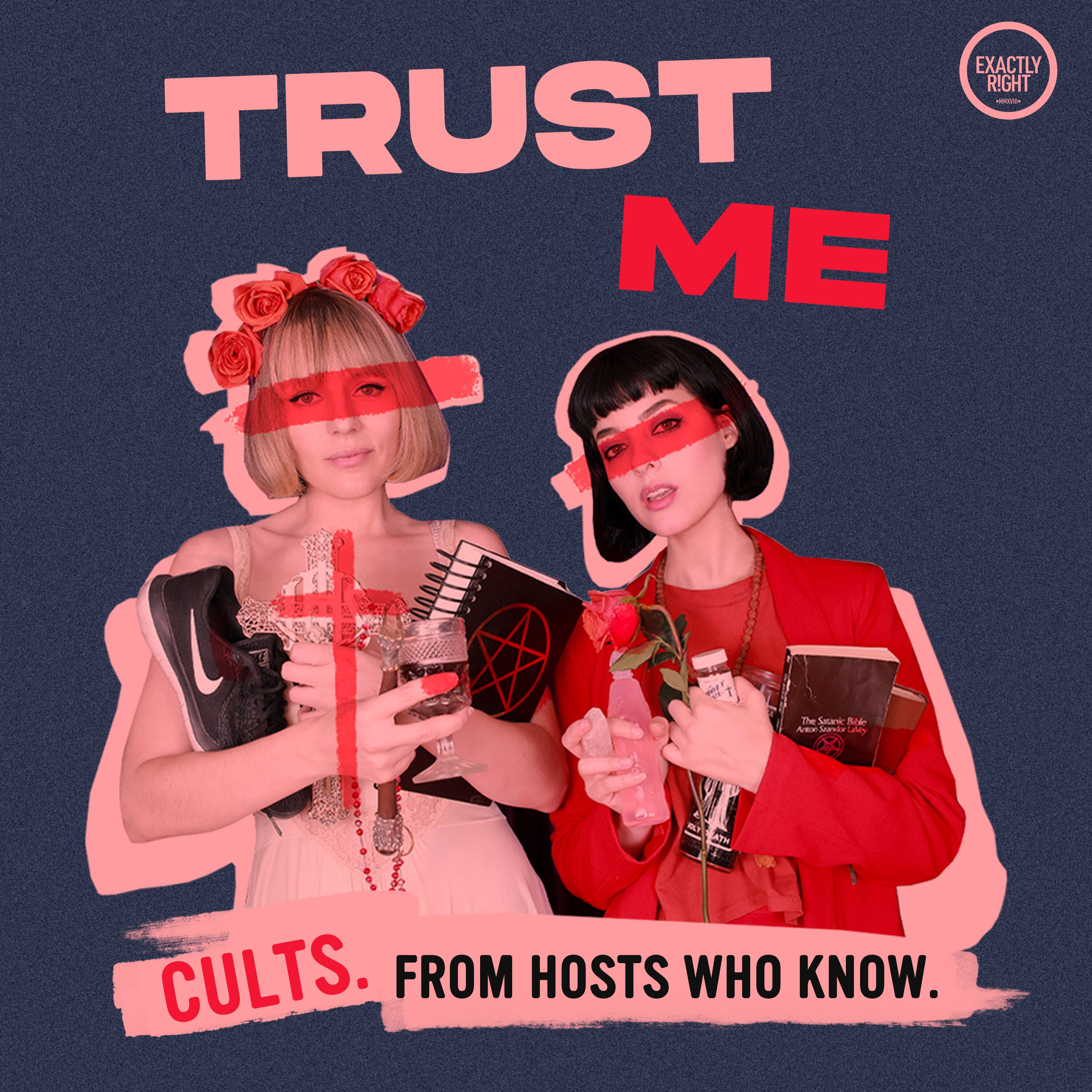
Trust Me: Cults, Extreme Belief, and Manipulation
Jonathan Hirsch, Part 2 - Meditation, Getting Blessed, and Leaving Adidam
01:03:55
Loading summary
Transcript353 lines
- [00:02]
Lola Blanc
This is exactly right. Hey, this is U.S. olympic gold medalist Tara Davis Woodhull.
- [00:10]
Hunter Woodhull
And I'm U.S. paralympic gold medalist Hunter Woodhull.
- [00:12]
Lola Blanc
As athletes, our lives are about having.
- [00:14]
Jonathan Hirsch
A clear path and a team that you can absolutely trust.
- [00:18]
Lola Blanc
So when it came to getting the best mortgage, we chose PennyMac. PennyMac is proud to be the official mortgage provider of Team USA and you.
- [00:25]
Jonathan Hirsch
Learn more at pennymac.com pennymac loan services, llc/housing lender nmls id 35953 licensed financial protection and innovation under the California Residential Mortgage Lending act, conditions and restrictions may apply.
- [00:37]
Hunter Woodhull
Picture chicken nuggets in your head. Okay, now forget them because Taco Bell's crispy chicken nuggets are here. And they're nothing like the nuggets you know, all white meat chicken coated in tortilla chips for that signature Taco Bell crunch. A nugget like that calls for a sauce that can keep up. Introducing Hidden Valley Diablo Ranch, the iconic ranch you love. Fired up with Taco Bell Diablo sauce. Bold meets Boulder. Ranch meets Diablo.
- [01:01]
Jonathan Hirsch
And it works.
- [01:03]
Hunter Woodhull
Crispy chicken nuggets from Taco Bell, a brand new classic at participating US Taco Bell locations for a limited time only while supplies last.
- [01:12]
Advertisement Voice
Revitalize your bathroom with big savings at lowes. Get up to 40% off select vanities and free delivery during our bath savings event. Plus, get up to 40% off select shower heads. No matter what style you're looking for, we've got you covered. Shop for your bathroom refresh at Lowe's. We help you save while supplies last selection varies by location.
- [01:42]
Jonathan Hirsch
Trust me.
- [01:43]
Advertisement Voice
Do you trust me?
- [01:45]
Jonathan Hirsch
Would I ever lead you astray?
- [01:46]
Megan Elizabeth
Trust me.
- [01:47]
Advertisement Voice
This is the truth.
- [01:48]
Jonathan Hirsch
The only truth.
- [01:50]
Lola Blanc
If anybody ever tells you to just trust them, don't.
- [01:54]
Megan Elizabeth
Hello.
- [01:54]
Lola Blanc
We record these episodes in advance, so I'm just gonna add a quick insert here because if you're listening, in America, the mood in our nation is heav week and it doesn't feel right to not address it. Alex Preddy, an American citizen and an ICU nurse who was holding his phone to film and not brandishing the gun he was legally carrying on him, was killed by immigration officers in Minneapolis while on the ground just a couple of weeks after Renee Goode was killed by ICE when driving away, her killer can be heard on video calling her a after he shot her to death. Both of these people were there to observe, as is their legal right to protect their communities from the escalating violence of federal agents in our country who Trump claims are there to protect Americans who feels safer. The Trump administration's rush to characterize the victims of these extrajudicial killings as deserving terrorists, despite video evidence clearly showing that they pose no threat, should alarm us all. Don't listen to your eyes and ears. Listen to what I say, not what you see. For those who haven't been following immigration policy in the US and maybe don't understand what all the fuss is about, I know a lot of people think that people on the left are just being hysterical, which, of course, sometimes we are. In May of last year, Stephen Miller, White House Senior Advisor, and DHS Secretary Kristi Noem, both of whom are openly anti immigrant. Stephen Miller has made an entire career of fear mongering about how immigrants are going to destroy white culture. They ordered ICE to stop focusing on people with criminal records and just try to reach a goal of 3,000 arrests per day so they could arrest as many people as possible. There's been a nearly 600% increase in average daily arrests since Trump's 2025 inauguration. So that means people with no criminal record are being stopped in public spaces. More people are being racially profiled. And now, even though we're spending billions of dollars on this, nearly 75% of people detained by ICE have no criminal convictions. I have said this before. I will say it again. Undocumented immigrants commit crimes at a lower rate than people who are born in America. They also pay taxes into services they don't get access to. So what is it really about in a country that purports to be free when an armed force of federal officers is being instructed to not only meet a quota of arrests rooted in nothing but ideology, and not only being instructed to deport people who opposed Trump's policies, as we saw with pro Palestine protesters, but also they are now using force against protesters who are simply legally observing. And that force is lethal. We should all be alarmed because that is not what free countries do. That is what authoritarian countries do. As always, I encourage everybody to call your representatives and tell them to do something and not just make a an angry tweet. All right, that's the end of my rant. Carry on with cults. Welcome to Trust Me, the podcast about cults and extreme belief and manipulation from two cult kids who've actually experienced it. I'm Lola Blanc.
- [04:42]
Megan Elizabeth
And I'm Megan Elizabeth.
- [04:44]
Lola Blanc
This week is part two with Jonathan Hirsch, podcaster, producer and author, who grew up in the cult of New Age guru Franklin Jones, commonly known as Adi Da. Last week we learned about the leader and how Jonathan's parents joined the group and this week, he's going to tell us about the group's theatrical weekly meditations, what it was like getting blessed by Franklin Jones, and how different members saw some of the same things that had happened completely differently, depending on whether they still believed in him later or not.
- [05:11]
Megan Elizabeth
It's so interesting. We'll talk about the lawsuits and allegations against Jones, how the cult panic of the time impacted the way his followers saw it, how Jonathan left himself, and the importance of being able to admit when you're wrong.
- [05:24]
Lola Blanc
Our favorite, our favorite thing that's so easy and fun to do.
- [05:30]
Megan Elizabeth
It's so fun. I love it.
- [05:33]
Lola Blanc
Same. Before we jump in with our fabulous guest, Jonathan, Megan, kindly tell me your cultiest thing.
- [05:44]
Megan Elizabeth
This week a new docu series was released on hbo. It's called Andrea the Cult behind the Killer. A lot of people will probably remember Andrea Yates from the early 2000s. She killed five of her children and she was on the COVID of every magazine, every newspaper. Very salacious story, but we never really got a clear behind the scene picture of what was actually going on with Andrea. And our second interview ever on this podcast, the Trust Me podcast, was with Moses Storm, who is in this documentary. He was in this cult and I would love for people to go listen to the episode. I myself have not watched this docu series yet on hbo. It, it's very heavy. I'm going to, I'm planning on it, but it's something you gotta be really ready for. It's the worst case scenario of what can happen in these dynamics that we talk about all the time.
- [06:38]
Lola Blanc
Yeah, I, I really have to limit my, my doc intake when it comes to topics like this because it's, it is just really, really tough to watch. But Moses does a really amazing job in our interview with him of finding that balance between, like, talking about what happened. And also he's a comedian and he's like so fucking funny. So he of course peppers it with his unique blend of humor.
- [07:04]
Megan Elizabeth
Yeah, he has an HBO comedy special called Trash White that's one of the funniest things I've ever seen in my life. Only he could hold this story with the grace that makes it one of my favorite episodes we've ever done, while also being one of the scariest topics we've ever covered. So I will be watching the documentary this week or the docu series, what have you. But you know, I'm gonna make sure that I like, I have a copy with friends the next day or something planned because it's just.
- [07:39]
Lola Blanc
Yeah, yeah, yeah.
- [07:41]
Megan Elizabeth
What's Your cultiest thing.
- [07:42]
Lola Blanc
Um, I saw a commercial for a company which I will not name, but a company that is a network of psychics.
- [07:54]
Megan Elizabeth
Okay.
- [07:55]
Lola Blanc
And the language that they used was astonishing to me because it literally is like spelling out very explicitly what we say so often, you know, is one of the strong motivations for joining a cult, which is the need for certainty. And the line is literally. Thankfully, with the help of our insightful guidance, you can clear away the doubt and experience the joy of certainty. They're not even hiding that. What they're selling is this thing that is truly impossible to provide. I just was like, this is crazy. But it's also such a smart marketing tactic because there is so much happening in the world right now. There's so much uncertainty, so much turbulence and turmoil and we're all freaking out. And you know, I think it's something we're all craving so much. And it's like this company is like, just talk to one of our psychic specialists and we'll give you everything you need. And I'm like, this is such bullshit.
- [09:06]
Megan Elizabeth
And yeah, I mean you can know it's bullshit and still do it. I have a friend who has become addicted to TikTok, Fortune or card readers and she's like, I know it's stupid, I want to stop, but it's almost become like a tic.
- [09:23]
Lola Blanc
Oh, interesting. I mean, I. We've talked about having Bob Nygaard on again soon. I'm going to text him. For those who have not heard the Bob Nygaard episode, he is like a psychic buster. He is like a private investigator who finds self proclaimed psychics who are. Are basically just taking people's entire life savings and dangling this like, oh, but I need a little more money if you want this answer. They need a little more money if you want, you know, and it's a crime. Yeah, but he like gathers everything and then gets them busted and it's so cool and you know, whatever y' all believe. I think we can all agree that.
- [10:02]
Megan Elizabeth
Taking people's life savings is wrong.
- [10:04]
Lola Blanc
Yes. And taking advantage of people in vulnerable moments in their lives is wrong. Agreement. Yeah. And that is what this network is not even hiding that they're trying to do.
- [10:17]
Megan Elizabeth
Oh my God. Well, give me the number.
- [10:27]
Lola Blanc
So anyway, that's that.
- [10:29]
Megan Elizabeth
Well, shall we talk to Jonathan?
- [10:31]
Lola Blanc
We shall.
- [10:39]
Hunter Woodhull
Support for the show comes from public, the investing platform for those who take it seriously. On public, you can build a multi asset portfolio of stocks, bonds, options, crypto and now generated assets which allow you to turn any idea into an investable Index with AI it all starts with your prompt. From renewable energy companies with high free cash flow to semiconductor suppliers growing revenue over 20% year over year, you can literally type any prompt and put the AI to work. It screens thousands of stocks, builds a one of a kind index and lets you back test it against the S&P 500. Then you can invest in a few clicks. Generated assets are like EFTs with infinite possibilities, completely customizable and based on your thesis, not someone else's. Go to public.com podcast and earn an uncapped 1% bonus when you transfer your portfolio. That's public.com podcast paid for by Public Investing Brokerage Services by Open to the Public Investing Inc. Member FINRA SIPC Advisory Services by Public Advisors llc SEC Registered Advisor Generated Assets is an interactive analysis tool. Output is for informational purposes only and is not investment recommendation or advice. Complete disclosures available at public.com disclosures hey.
- [11:48]
Lola Blanc
This is US Olympic gold medalist Tara.
- [11:50]
Hunter Woodhull
Davis Woodhull and I'm US Paralympic gold medalist Hunter Woodhull.
- [11:54]
Lola Blanc
As athletes, our lives are about having.
- [11:55]
Jonathan Hirsch
A clear path and a team that you can absolutely trust.
- [11:59]
Lola Blanc
So when it came to getting the best mortgage, we chose PennyMac. PennyMac is proud to be the official mortgage provider of Team USA and you.
- [12:06]
Jonathan Hirsch
Learn more at pennymac.com PennyMac Loan Services, LLC equal housing lender NMLS ID 35953 licensed by the Department of Financial Protection and Innovation under the California Residential Mortgage Lending Act. Conditions and restrictions may apply. Well, the holidays have come and gone once again, but if you've forgotten to get that special someone in your life a gift. Well, Mint Mobile is extending their holiday offer of half off unlimited wireless. So here's the idea. You get it now, you call it an early present for next year. What do you have to lose? Give it a try@mintmobile.com Switch limited time.
- [12:38]
Megan Elizabeth
50% off regular price for new customers.
- [12:39]
Lola Blanc
Upfront payment required $45 for three months, $90 for six months or $180 for 12 month plan taxes and fees. Extra speeds may slow after 50 gigabytes per month when network is busy see Terms. I did want to ask you about that conflict that you must have felt so you're a kid. Do you believe in it? First of all, before this moment with your father where he's like shit or get off the pot or whatever?
- [13:05]
Jonathan Hirsch
Yeah, I mean, no, I think I wasn't being necessarily asked to believe it, but it was like in the periphery, you know. I think we would go to the Sunday events or Whatever they called them Guruvara, which was like, Guru Day. Yeah. Sunday. And on the day when everybody, you know, in the wider Christian world is resting, we are worshiping the guru. He's probably resting somewhere. He is technically resting now forever. Yeah. Yeah. We're not.
- [13:38]
Megan Elizabeth
No, we're not.
- [13:39]
Jonathan Hirsch
We're never resting.
- [13:40]
Lola Blanc
No.
- [13:43]
Jonathan Hirsch
But I didn't wholeheartedly believe it, nor was there sort of like an imposition on me to believe it. But, yes, after a while, I wanted to believe it. And I think one of the things that I've talked a lot about and that I struggled with as a teenager was reconciling my desire to believe it. The experiences that, you know, manipulated or not, which, you know, when you went to these public sittings, these meditations with Jones, they were highly orchestrated. They were very theatrical, the way they were put together with the music and the lights. And you had to wait in line, you know, to go and give him a flower and put it at his feet. And then he looked at you with those eyes.
- [14:27]
Lola Blanc
Oh, wow.
- [14:28]
Jonathan Hirsch
And that was supposed to be the blessing. So that whole experience you can perceive as something different than what it is. And it was very difficult for me, even as a young adult, to write about that and confess that. And I talk about that in the series. Just how I couldn't quite make sense of what had happened that day, the first time I sat in one of these things, because it was. Yeah, it was very orchestrated, as the best way I can describe it.
- [14:54]
Lola Blanc
But what did that feel like for you?
- [14:56]
Jonathan Hirsch
It felt like you have so much anticipation about this moment. Your parents are telling you he's this powerful person. You're hearing people scream and shout his name and they're, like, chanting. All these chants are basically like South Indian traditional chants that are, like, translated into Jones speak. So, like, his name is in it instead of Shiva or Vishnu. And you spend hours, at least the first time I spent hours in this environment where you're, like, chanting. Chanting.
- [15:32]
Megan Elizabeth
I mean, that sounds like a rave or something.
- [15:34]
Jonathan Hirsch
Yeah. Without the drugs.
- [15:36]
Megan Elizabeth
Yeah. You're like in a new reality.
- [15:38]
Lola Blanc
Of course that's going to create. It's a heightened sensory experience, prolonged. And it's among other people. Like, regardless of who's doing it or what the context is, like, that's gonna. That's gonna be very likely to create a peak experience.
- [15:51]
Jonathan Hirsch
Exactly. And you're sort of building up to it. I'm building my whole life up into this moment. It's loud, it's cold outside. We're outside. We're literally at this Massive gate in front of his house. And then you kind of go in one by one, and everybody goes in. You finally get to the front of line. It's like that, you know, new restaurant that you want to try, and you're just like, you have to get in. Yeah. Literally, you open the door and there's supposedly infinity.
- [16:14]
Lola Blanc
Oh, my God.
- [16:16]
Megan Elizabeth
But also, it was like, I've seen that on acid.
- [16:20]
Jonathan Hirsch
Right, right, right. Okay, I gotta try that. So. So, you know, you get in the room and there's also. I remember the whoosh of, like, warm air. Like, I had just been in the cold for hours, anticipating this moment. And you're in this, like, little entryway.
- [16:33]
Megan Elizabeth
God, this man's a good producer.
- [16:35]
Jonathan Hirsch
He's an excellent producer. That is a very good way of putting it. Like, the show is for you for approximately three to five seconds, but you will wait hours for it.
- [16:46]
Lola Blanc
Wow.
- [16:47]
Jonathan Hirsch
And so you get there. You get to the front, and he's on this raised dais, hence the cardboard cutout of him sitting. He's like, sitting on this massive chair.
- [16:57]
Megan Elizabeth
You're like, I've seen that before.
- [16:58]
Jonathan Hirsch
Yeah, got it. That explains a lot. All the awkward dinner parties at my house.
- [17:07]
Megan Elizabeth
Yeah.
- [17:08]
Jonathan Hirsch
We actually never had dinner parties at our house. But it's funny to think of the idea of everybody showing up and they're just being him there, Frank, in the corner.
- [17:16]
Megan Elizabeth
So you're just, like, sitting there with this three to five seconds, feeling the vibe.
- [17:21]
Jonathan Hirsch
You have a flower and you put it at his feet and you bow. And then you look up and he looks you in the eyes, and that's it. Boom. That's the moment you've been waiting for.
- [17:32]
Lola Blanc
And he doesn't say anything.
- [17:33]
Jonathan Hirsch
Doesn't say anything.
- [17:34]
Megan Elizabeth
So smart. You're looking at us in the eyes and it's.
- [17:38]
Jonathan Hirsch
Yes.
- [17:39]
Lola Blanc
Sorry.
- [17:39]
Jonathan Hirsch
I should know better as a producer. Explain what I'm doing.
- [17:43]
Lola Blanc
And out of context, that might not have been anything, but you've been. This whole thing has been built up for you your entire life. Yes. And eye contact always feels a little bit intimate. Direct eye contact. Very uncomfortable sometimes as we all look.
- [17:57]
Megan Elizabeth
At each other's eyes.
- [17:58]
Hunter Woodhull
I know.
- [18:02]
Megan Elizabeth
Well, that brings me to something that happened earlier, and we can just touch on it quickly. But there was, you know, a sex party going on and somebody got burned with a cigarette.
- [18:12]
Jonathan Hirsch
Yes.
- [18:13]
Megan Elizabeth
So there's two different complete stories about this. One is, like, normal and one is heightened.
- [18:20]
Jonathan Hirsch
Yes.
- [18:21]
Megan Elizabeth
So basically, a woman gets burned with a cigarette during an orgy.
- [18:26]
Jonathan Hirsch
Yes.
- [18:26]
Megan Elizabeth
Some people believe that they saw him touch her and like fire exploded. And she became one with him for a second and was healed. There was something, something healed. And then other people were like, he burned her with a cigarette. And it's just so interesting how when you are in these heightened states, somebody can be like, he sat there and looked at you for two seconds. And you can be experiencing somebody touching you with fire and being healed. It's like all narrative. Somehow.
- [18:57]
Jonathan Hirsch
It is. And just the poet that imbued Jones's philosophy. And if it hit right for you, his followers, it's indistinguishable from your own sort of personal, private machinations about the veritability of the experience itself. So if you want to believe it, in other words, you will believe it.
- [19:22]
Megan Elizabeth
And you will feel it.
- [19:23]
Jonathan Hirsch
Yeah. I remember there were these tapes of these, like, flute scored readings of his that I remember listening to when I was a kid. And it was like followers who were reading them. And in one of them, and like, even as you're saying that, I'm like thinking, like, how do I explain what you felt inside? There was like literal childhood tapes. And in one of them, very specifically, it says, this is Jones's words describing himself basically in the way people should see him and view him. This is in the early days. It became far more complicated later. Anyways, he says, he smiles at you. You notice him. Everything has already died. This is the other world. Whoa. And that's like the pacing at which it's read. So you're just like, we got the flute music going on. It's just really vibing for a certain demo.
- [20:15]
Lola Blanc
I mean, even just hearing you say that, I was like, yeah, yeah, take me there.
- [20:20]
Jonathan Hirsch
You notice him. Everything has already died. So you just have this sense that, like, he is everywhere and always with you, and you're building a narrative as a community around this beautiful world in which you sort of go to the other side and he's waiting there for you. He knows it and you do not. And everything miraculous in the world comes from him.
- [20:46]
Megan Elizabeth
Do you think he knew he was full of shit?
- [20:50]
Jonathan Hirsch
I have thoughts about that. I think, like many of these gurus and teachers, where things get sort of where they become increasingly more important within their own cosmology over time. I do wonder sometimes if he saw what his followers wanted from him and just kept doubling down on it.
- [21:16]
Megan Elizabeth
How far do you think it could have gone? Because I imagine Jonestown is happening around this time. His name happens to be Jones. He has an island. I'm assuming a lot of parallels were drawn in the news.
- [21:29]
Lola Blanc
Yeah.
- [21:29]
Jonathan Hirsch
After the Jonestown Massacre. People literally went up to Franklin Jones's compound in Northern California and threw tomatoes at the door or whatever.
- [21:37]
Megan Elizabeth
Oh, I thought that was just in like ancient kingdoms.
- [21:42]
Jonathan Hirsch
Yeah, this was.
- [21:42]
Megan Elizabeth
They actually got tomatoes thrown at them. Wow. Okay. Okay.
- [21:45]
Jonathan Hirsch
Yeah, that's the story that was told. No tomatoes were documented anywhere in a place that I could have known. I don't know if they were rotten tomatoes or real tomatoes. Fresh tomatoes. No actual primary source people were buried for y'.
- [22:01]
Hunter Woodhull
All.
- [22:01]
Jonathan Hirsch
They were.
- [22:08]
Hunter Woodhull
Support for the show comes from Public, the investing platform for those who take it seriously. On Public, you can build a multi asset portfolio of stocks, bonds, options, crypto and now generated assets which allow you to turn any idea into an investable index with AI. It all starts with your prompt. From renewable energy companies with high free cash flow to semiconductor suppliers growing revenue over 20% year over year, you can literally type any prompt and put the AI to work. It screens thousands of stocks, builds a one of a kind index, and lets you back test it against the S&P 500. Then you can invest in a few clicks. Generated assets are like EFTs with infinite possibilities, completely customizable and based on your thesis, not someone else's. Go to public.com podcast and earn an uncapped 1% bonus when you transfer your portfolio. That's public.com podcast paid for by Public Investing Brokerage Services by Open to the Public Investing Inc. Member FINRA SIPC Advisory Services by Public Advisors, llc. SEC Registered Advisor Generated Assets is an interactive analysis tool. Output is for informational purposes only and is not investment recommendation or advice. Complete disclosures available at public.com disclosures hey.
- [23:18]
Lola Blanc
This is US Olympic gold medalist Tara.
- [23:20]
Hunter Woodhull
Davis Woodhull and I'm US Paralympic gold medalist Hunter Woodhull.
- [23:23]
Lola Blanc
As athletes, our lives are about having.
- [23:25]
Jonathan Hirsch
A clear path and a team that you can absolutely trust.
- [23:28]
Lola Blanc
So when it came to getting the best mortgage, we chose PennyMac. PennyMac is proud to be the official mortgage provider of Team USA and you.
- [23:36]
Jonathan Hirsch
Learn more at pennymac.com PennyMac Loan Services, LLC equal housing lender NMLS ID 35953 licensed by the Department of Financial Protection and Innovation under the California Residential Mortgage Lending Act. Conditions and restrictions may apply.
- [23:47]
Advertisement Voice
The new year means new health goals not just for your body, but for your finances too. But did you know financial health is directly related to identity protection? You need lifelock because your personal info is in endless places that are outside of your control. It only takes one mistake, and not even your mistake, to expose you to identity theft and lost funds Lifelock monitors hundreds of millions of data points per second and alerts you to threats you could miss on your own. If your identity is stolen, LifeLock's US based restoration specialist will fix it, backed by the million dollar protection package. In fact, restoration is guaranteed or your subscription money back. Don't face drained accounts, fraudulent loans or other financial losses from identity theft alone. Resolve to make identity, health and wealth part of your New year's goals with LifeLock. Visit lifelock.com iheart and save up to 40% your first year. That's 40% off. At lifelock.com iheart terms apply.
- [24:53]
Lola Blanc
Can you explain a little bit what the actual lawsuits were and what the allegations were about?
- [24:59]
Jonathan Hirsch
Yeah, so there were. The allegations were that Jones was manipulating people into doing things that would harm themselves, including like uncoupling from their own partner and demanding that they sort of like bend to his will, which included like sex acts and things like that. The allegations themselves never went to any kind of trial, so they were settled out of court, as far as we know. But that that information was never made public record. So he ultimately denied any claims that he used coercive tactics or manipulation, that he was assaulting people sexually or otherwise. Though those claims are, you know, expressed by people in the podcast and certainly were in the public forum.
- [25:53]
Lola Blanc
Yeah, well, Tanya, who we mentioned earlier, is on the podcast talking about a couple of instances, one in which there was a part a naked party where she was told she had to shave everyone's pubes. There was one evening in which he announced he wanted to sleep with as many women as he can and had them all cycle into his room. And mind you, this is literally like God. So you what? Are you going to not do it if God wants this from you? And Tanya, although she had a partner who she loved, was one of the women who was told to do this. So, I mean, there are firsthand accounts of these things happening.
- [26:31]
Jonathan Hirsch
Yes.
- [26:31]
Lola Blanc
They just happened to not go to court for it, Right?
- [26:34]
Jonathan Hirsch
That is correct. And I think people who remain followers would likely continue to deny that those experiences were what people like Tanya made them out to be, which I think is itself so interesting that there are people who believe so deeply in the spiritual primacy of Jones that these experiences that were very clearly detailed as abuse would be seen either as both alternately misconstrued or an opportunity for some kind of spiritual gift that was not appreciated.
- [27:18]
Lola Blanc
Right. Oh my God. Before you came here, we were watching some stuff on YouTube and we saw a follower who was a woman who basically on like a Year ago, accused some of the people who came forward with allegations of just being after money sorting the state.
- [27:36]
Megan Elizabeth
And.
- [27:37]
Lola Blanc
Yeah, which is, yeah, fascinating that after all this time. And I assume it's a decent number of people who had things to say about what happened to them.
- [27:47]
Jonathan Hirsch
Many, many people who did not go on the record, many people who I've met over the years who have reached out to me privately after the show came out, even, you know, who I think, you know, just a testament to the power of storytelling too, that just having the word out there does become for some people, a baseline of understanding that makes them feel like they've been heard. And I was grateful for those kinds of messages because it made me feel like, despite the fact that many of these people I grew up with, none of whom I'm really in contact with anymore, in large part because of what was said on the podcast, even though I think I. And we were talking about this earlier, but I went to great lengths to try to be understanding of why people would have joined Jones's group of maybe even why Jones thought that what he was doing was right or whatever. Trying to. Trying to think about these things in the best possible light and still struggling, but trying to. I think it would probably have been made the series differently today, but I was a different person then. None of those people that I knew who I grew up with in the group could really understand or appreciate that, because to them, this was a divine being. Jones was not Franklin Jones. He was Adi Da Samraj. He was a physical incarnation of God come down into a human form to save everybody from the dark times. What they called the Kali Yuga dark times.
- [29:29]
Lola Blanc
I know dark times.
- [29:30]
Jonathan Hirsch
It's a very long dark time. You know, they gave themselves a super long window for that.
- [29:35]
Lola Blanc
Okay, cool.
- [29:35]
Jonathan Hirsch
Sort of joking. It is sort of part of like, you know, some religious ideas about eras of times.
- [29:43]
Lola Blanc
Okay, interesting.
- [29:43]
Megan Elizabeth
Well, the Edge of Aquarius is like supposed to be the new light age, right?
- [29:47]
Jonathan Hirsch
Yeah, it's something. It's like that. Um. And, you know, so not to denigrate big world religion in. In. In. In sort of suggesting that that itself is not an idea, but the way I think it was sort of used within the group was as this kind of indicator of the dangers. And there's so many awfulness of the world.
- [30:08]
Megan Elizabeth
There's so many really smart people in the group. And I. I think one of our. One of the things that we always like to get across is that stupid people are not who joins these groups. And I could see somebody listening who's very smart who's still in it being like these people do not get it. They're not listening. They're not, they don't understand. It's not clacking for them. What did Justin Bieber say? It's not clacking for you, but like they're just projecting their own intelligence onto his teachings. So like they might be believing something very smart and cool, but like.
- [30:42]
Jonathan Hirsch
Yeah, but to use another Justin Bieber phrase, I'm going to stand on my business here.
- [30:46]
Megan Elizabeth
Yes.
- [30:47]
Jonathan Hirsch
Standing on business and say that, um, you can define words out of existence until they mean nothing. And I think that is to me the crux of what that thinking, when it becomes cult like starts to engender in some people that I have met with in this group and other groups who are so sure that the vision of reality that they've been sold is too beautiful and glorious to let go of. They will try to iron out all of the nuance and split all the hairs until it makes sense.
- [31:23]
Lola Blanc
Yeah, because it's not an intellectual thing, it's an emotional thing.
- [31:26]
Jonathan Hirsch
Yes.
- [31:26]
Lola Blanc
If we are going through life and we're grasping on the things and then someone introduces us to a teaching in a way that's giving us a peak experience that gives us relief from that and this feeling of transcendence and connection to all beings. Like, of course we're going to want to go towards that and then we're going to find ways to intellectualize why it's logical and why it makes sense. But at the core, underneath, we are emotional creatures and that's how we make our decisions 100%.
- [31:50]
Jonathan Hirsch
And you know, I was talking to Joe Simhart a little while ago, who your listeners may know was like this kind of well known exit counselor deprogrammer involved in a lot of these groups, like getting in the weeds with some of these cult groups in the 80s. And he's of the mind and I'm just paraphrasing him, so I don't want to directly quote him since he's not here to speak to it. But the impression I got from a conversation we had was, you know, some of the people who join these groups are some of the most intelligent people because they're able to sort of bend to the possibility they'll be open minded, able to sort of like critically imagine a world where this might be true. What do we know? Jones is saying that there's like, you know, in some of these talks that we adhere in a reality you cannot see. And the core of that reality is your own illusion that you are not a part of it. And you're like, maybe he's right. And how could I prove that he's not?
- [32:50]
Megan Elizabeth
Yeah.
- [32:51]
Lola Blanc
I mean, it requires some cognitive flexibility. And then the cults shut down that flexibility and make it rigid. But that's like, what brings us in.
- [32:59]
Jonathan Hirsch
Right?
- [33:00]
Megan Elizabeth
And that's a. And that's a great point. Like, how do I know if it's true? I don't. And he kind of even towards the end, really started playing on that. Like, you guys are not enlightened. And it's not like you can be like, yeah, I am.
- [33:11]
Jonathan Hirsch
Cause only he knows how am I not myself?
- [33:13]
Megan Elizabeth
Yeah, yeah, yeah.
- [33:14]
Jonathan Hirsch
You know.
- [33:17]
Lola Blanc
So when your parents joined and then when you were growing up, like, how did they and you kind of square reconcile this history of these allegations and him being in the news, you know, as this dangerous figure?
- [33:32]
Jonathan Hirsch
Like, they had different responses when I've asked them about that. I think they alternately felt like the media and the news was sensational. And, you know, by the mid to late 80s, there was quite a bit of controversy around cult groups. This is after Jonestown. People who are anti cult advocates, exit counselors, people like Rick Ross or appearing Rick Allen Ross is like, appearing on, you know, daytime TV shows and talking about some of these groups, literally on, you know, Oprah, Oprah, 48 hours, like news programs, like deprogramming people. There was quite a bit of concern about groups that Jones was sort of lumped into. I think they perceived all of that.
- [34:19]
Lola Blanc
As just like a panic.
- [34:21]
Jonathan Hirsch
Yeah. Judgment masquerading as concern.
- [34:25]
Megan Elizabeth
From your. From your perspective now, do you think that this group had a Jonestown potential?
- [34:31]
Jonathan Hirsch
I think any high control group does. I really think that it is possible. And, you know, there were people who were really on the margins who could have done bad things to themselves or to others. And in my knowledge, there were no murders or serious like, you know, people committing suicide or anything like that. In relationship to Jones group we talk about, you know, when I started to dig, dig deep into the first group my parents were involved in, there was a young woman who took her life, in large part, it was understood, because of her relationship to this teacher. And that really hit home for me when I started to look into. Her name was Brenda Kerber. And when I started to look into that story, it definitely resonated for me in thinking about what I was raised in, that I never saw anything like that when I was growing up. But I think whatever the group, when you are offering the answer to the entire universe and why we're here and what we're doing, the stakes couldn't possibly be higher. And people who arrive at an alternative idea of that answer, who don't maybe accept the conventional wisdom or thoughts about why we're here and what it means. Those people, I feel like, are disproportionately going to be people who already feel like they're on the margins, who feel like society is not answering the questions that they need to answer. So they are imperiled in the sense that they may be suffering in a more elevated way than your average person. Does that make sense? I'm trying to. I'm kind of dancing around it because I don't want to. Like, I'm not trying to say that any of these groups did. The groups that my parents were involved in actually did that to a person. I do not know that, but I do know that, like, vulnerable people who are searching for something that's outside of the boundaries of conventional society, that feels like a pretty dangerous position to be in.
- [36:45]
Lola Blanc
Well, any. And like, yes, vulnerable people join, but then also, like, the minute all of your trust and all of your faith and all of your life is put into the hands of one individual who gets power hungry, and often they, like, you know, seem to unravel and get paranoid as they get older and people start to leave, like, that's. I think you're basically entirely at the whims of. At the whimsicalness of who is at the top and who is controlling your life. And, like, lucky that they don't happen to want to, you know, that this Jones didn't happen to want everybody to die. But how many groups, if the leader were to go in that direction, would lead people into that direction? Because again, once you have accepted the premise that this person is God or directly in touch with God or knows things that nobody else in the world knows, well, what choice do you have but to listen to them?
- [37:44]
Jonathan Hirsch
Yeah. And I could not agree with that more. And the line in the sand feels like a very thin line. Last year, I spent quite a bit of time looking into another cult group.
- [38:00]
Lola Blanc
Which one?
- [38:01]
Megan Elizabeth
We're gonna have you on the podcast.
- [38:02]
Lola Blanc
Like, 40 hours on the podcast. I know I said seven. You said 40. We'll.
- [38:07]
Jonathan Hirsch
I will accept any and all offers between seven and 40. Seems like a great range to be in. Lots to discuss. But there's a group in the Dallas area in the 1970s and 80s called the conscious Development of Mind, Body and Spirit.
- [38:24]
Lola Blanc
God all have such great names. Okay.
- [38:27]
Jonathan Hirsch
Such. I mean, these could all be indie bands. Terry Hoffman was the leader of that group. And Terri Hoffman was this kind of spiritual advisor. She was a very odd person. She was, like, not who you'd think of. She was not particularly charismatic, which can.
- [38:45]
Megan Elizabeth
Also be charismatic somehow.
- [38:46]
Jonathan Hirsch
She had this kind of raggedy prophet, street prophet kind of vibe to her.
- [38:50]
Lola Blanc
Yeah. Street profit. Okay.
- [38:51]
Jonathan Hirsch
Yeah.
- [38:51]
Megan Elizabeth
Yeah.
- [38:51]
Jonathan Hirsch
I mean, well, she talked about being an orphan, which was maybe true. Maybe not like birth records. Anyway, the point is, she started a group which in their documents suggest that there is some other plane that we can be on if we sort of practice her regimen. And a number of her followers mysteriously committed suicide, some of whom even talked about that plane, the purple plane, that they would go to.
- [39:25]
Megan Elizabeth
Shit. That's what we're seeing with ChatGPT now.
- [39:28]
Jonathan Hirsch
Yeah, it's really frightening. And in the case of Hoffman, you know, the IRS and the FBI and local law enforcement did get involved because it seemed coincidentally that a number of the people who took their lives, left their stuff, left their life insurance policies to the Grove.
- [39:50]
Megan Elizabeth
Damn it.
- [39:50]
Lola Blanc
Oh, I have things to say about this, but I can't right now because I need to wait until more comes out. But okay.
- [39:58]
Jonathan Hirsch
Yeah, to that point. Right. Like, there is a range in high control groups of what appears to just be harmless, if you want to call it harmless. It certainly didn't feel that way to me. But like, harmless worship of an individual through, you know, ritualized practices like meditation, offering flowers, putting ash on the picture of them and.
- [40:26]
Lola Blanc
Yeah. What's a ritual? No problem.
- [40:28]
Jonathan Hirsch
Yeah, right. Like, do you. You know, or him or whatever.
- [40:35]
Megan Elizabeth
Mostly him.
- [40:37]
Jonathan Hirsch
Mostly him. Yeah. Try to do you. It's not gonna work out to you. There's really only one room for one at the top.
- [40:44]
Megan Elizabeth
I think about Moses Storm. I think he was like our second guest, I think, in a great episode, said something about how he was really fearful when he was younger, that his mom was. I don't wanna butcher his quote, but, sorry, Moses, if you hear this, but that his mom might hurt them. Because, you know, once your soul is a certain age, I think it's like 10 or 12. You're now responsible for going to heaven or hell. And a woman in the group that he was in killed her children, and he worried that that might be his fate. And I have talked to several people who were just raised normal Christian who kind of felt that way. Like, maybe, you know, before I'm actually a sinner because this damnation thing feels very real.
- [41:30]
Lola Blanc
Something to save me, ultimately.
- [41:33]
Megan Elizabeth
Yeah.
- [41:33]
Lola Blanc
Oh, wow. Interesting.
- [41:35]
Megan Elizabeth
Yeah.
- [41:35]
Lola Blanc
Speaking of putting all of your faith and belief into a leader. You hit a point in your teenage years where you did in fact do that. Can you tell us about that?
- [41:44]
Jonathan Hirsch
Yeah. And I think it, it sort of apologies for time shifting a little bit here. I think, you know, part of what brought me to that place was a desire to be, as we discussed, sort of like closer to my parents belief system and sort of fall in line with what they wanted. But then also, you know, being in these highly organized, kind of social, socially engineered environments where you're in front of the GRU and he's doing all this stuff and looking at you a certain way and you feel like, you know, you've experienced something or not, but you're not sure. But, you know, there was a lot of that. I remember I walked out of that first meditation, they call it a darshan. I remember I exited the room and the cold air hit me again because the room was temperature controlled, very nice. Everything was expensive. Like everything was decorated. He's on the top of this podium, you know, or the pulling, what do you call it, like a dais. He's like on sitting there way above you, you know. And then the cold air hit me and I just started crying and I just burst into tears because I just felt like I didn't even know what it was that I had just experienced. What did that mean? What was it? And so I think I spent increasingly the years from that point forward until we left the group when I was about 17, both willing myself to believe that what I saw wasn't the cigarette burn, but was the magical electric fire of divine healing. Yeah, yeah, right. So. And I tried to articulate this, and I have over the years tried to articulate this, that there's like, it was like living in both of those worlds at the same time between, like, okay, in order for me to know what he says he knows, and I don't know I have to worship him as God. But is it going to get there? But if I question it, is it going to actually make it hard for me to get there? I had to. The part of the practice, the practice was disabling the doubt that you had about his spiritual ubiquity. So it was accepted and cleverly positioned as something to both arrest yourself of, but also something that you might feel because you can't tell people they don't feel a certain way and have them stick around. But you can be like, yeah, you don't believe that I'm God, but that's normal. Keep believing until you believe it. And so I, having been through that, still feel like for many of the people in that group who, like, the person you saw on the Internet, like, doggedly believe that all these allegations are salacious, ignorant, I feel like those people must, on some fundamental level, live with that doubt. There is no way, as a human being to live with that doubt, because I do not believe that he is God.
- [44:50]
Megan Elizabeth
And some people just go straight to their unconscious, you know, like, they don't. I think they just unconsciously feel that, and they don't even know know that they do. Yeah.
- [44:59]
Jonathan Hirsch
I don't know if you guys have encountered this with other people you've talked to, but I find myself both wanting to explain the bare bones of my experience with y', all, but also to interrogate how it might happen, because there's a pedestrian answer to that question, which is, yeah, I believed it. I sat there. I worshiped him. I willed myself into these experiences that I thought were, like, me experiencing him. You were like. You were literally told to breathe and visualize him coming into your body.
- [45:30]
Lola Blanc
Oh, wow.
- [45:31]
Jonathan Hirsch
Yes. That was why, from the top of your head, he came down like a roller coaster.
- [45:36]
Lola Blanc
Wow.
- [45:37]
Jonathan Hirsch
Through the chakras or whatever, and then down up the back of your spine.
- [45:40]
Lola Blanc
I don't get out of my body. I don't want you in there.
- [45:43]
Jonathan Hirsch
We're supposed to want him in there.
- [45:45]
Lola Blanc
Oh, God.
- [45:47]
Jonathan Hirsch
So, like, there's a level of operationalizing, if you will, of the practice of submitting yourself to this person that you could follow almost by rote and not have to question the actual mechanics of it. I don't think I've ever mentioned that piece before publicly. And to see your reaction to it just, like, gave me the heebie jeebies. Right? Because I'm like, oh, yeah. Oh, yeah. That is weird. You know, like, shit.
- [46:16]
Lola Blanc
Yeah.
- [46:17]
Jonathan Hirsch
So, yes, I think I believed it. I practiced the disciplines, but on some very deep level, unconscious maybe. I felt like I was always questioning whether or not this was something real.
- [46:32]
Lola Blanc
Yeah. Like, you would have the emotional experience of it, but there's always a part of you that's like, was that just. Was that manufactured? Like, part of you always wonders that.
- [46:42]
Jonathan Hirsch
Yes.
- [46:43]
Lola Blanc
Yeah. That is so interesting. I have told the story a million times, so apologies to our listeners, but when I believed in my cult leader, I was, you know, praying. And I'm sure you've heard this as well. I was praying to bear my testimony by myself. And I got this. Like, I, like, couldn't bring myself to finish the sentence. I know that blank is a true Prophet. And I took note of it. I was like, I'll just, like, think about that later. I just won't worry about that right now. But, like, both things were there simultaneously. Like, I felt really wrapped up in this. The excitement of being chosen, you know, being. I'm separated from my mom, but it feels like. Which is really difficult. But I'm like, okay, I'm suffering for a higher purpose. And, like, it feels like I'm in a. You know, in a movie. Like, I'm a. I'm fucking Han Solo or something.
- [47:36]
Jonathan Hirsch
Yeah.
- [47:37]
Lola Blanc
Or. Sorry, not Han Solo, the other one.
- [47:39]
Jonathan Hirsch
I don't know anything about Star Wars. So you just.
- [47:41]
Lola Blanc
Luke Skywalker. I was like, I'm Luke Skywalker.
- [47:45]
Jonathan Hirsch
Are they the same person? No, no.
- [47:47]
Lola Blanc
Cute guys.
- [47:51]
Megan Elizabeth
Even.
- [47:51]
Jonathan Hirsch
I know that. I'm screaming in here, oh, my God.
- [47:57]
Lola Blanc
Hilarious. Okay, Not Star wars. People in this room. It's great. But, you know, like. But at the same time, I have this other thing that, like, coexists with it at the same time, and I'm.
- [48:07]
Megan Elizabeth
Cognitive dissonance.
- [48:08]
Lola Blanc
Yeah, yeah, yeah, yeah. It's true. Like, we do answer this question typically, like, kind of one or the other, depending on where it's most leaning at that time. But the truth is, most of the time, it's multiple things. We have multiple minds about it at the same time. And part of it might just not be conscious yet or as conscious. I think people who have not experienced what the three of us have in some fashion or the immortals. Yes, yes. Or who haven't, you know, delved into the world of cult survivors or whatever. Like, we'll hear people like us talk about cognitive dissonance and talk about how, you know, on some level we know. And I've heard people be like, well, you know, though, so why don't you just leave? Because you obviously know, and that. That's the thing I kind of just want to push back against. Because, like, even when you have a feeling like you have all of these other feelings that are so much bigger and they're gaslit. Yes. And you are being actively manipulated, you are surrounded by people who believe the same thing. It's your community. It's your identity. Your life is being controlled. And so even if part of you on some level might have an inkling, you don't know that that inkling is real.
- [49:19]
Megan Elizabeth
And your top of that inkling is like. Well, in my case, the devil, you know.
- [49:23]
Lola Blanc
Yeah, yeah, yeah, yeah, Exactly. You're given a framework for what that inkling means that prevents you from actually recognizing it as critical.
- [49:31]
Megan Elizabeth
Thinking.
- [49:32]
Jonathan Hirsch
The ego.
- [49:33]
Megan Elizabeth
Exactly.
- [49:35]
Lola Blanc
The energy.
- [49:36]
Megan Elizabeth
Ego.
- [49:37]
Jonathan Hirsch
Yeah. Yeah. That's what you have to find. You have to find that discomfort and find a way to let it go. And I think even when you have, like, if you believe this is a thing, like a snapping moment, you know, where you sort of, like, have an. About. About what you believe, or if it's more gradual, whatever, the sort of process of kind of disintegrating, tangling yourself from the beliefs. There is. There's just a thread that will always be there. At least for me. There's, like, knowledge that you can. You can wander down a rabbit hole somewhere and end up with a set of beliefs that you realize in that moment you didn't want, but have no way of being able to kind of really delineate how you got there.
- [50:22]
Megan Elizabeth
Yeah. And the leader doesn't even know.
- [50:24]
Lola Blanc
Yeah, that's true.
- [50:25]
Jonathan Hirsch
Which is. To the. Which when I'm asked about, do I think that Jones wanted this group to be the way that it was? I don't think he did. And he actually publicly said that he would say, only the worst of men, only the worst of mankind come to me. You know, he had this little way of talking, and he would say, like, only the worst of mankind come to me. This idea that, like, his followers were not shining citizens, which is its own.
- [50:55]
Megan Elizabeth
That's so hard to be clear.
- [50:57]
Jonathan Hirsch
Like, these people dedicated their lives to this person.
- [51:00]
Lola Blanc
Yeah.
- [51:01]
Jonathan Hirsch
And people endured this kind of harsh language from him. We get into it a little bit.
- [51:06]
Lola Blanc
He was such a strong. He's really mean to them. Yeah.
- [51:09]
Megan Elizabeth
And then so loving and so fucked. Yeah.
- [51:12]
Jonathan Hirsch
And for our. Maybe our 9th or 10th conversation of the. Between 7 and 41. You know, my dad was, in a way, aspired ultimately to be like him. And I just wrote a book about him. He just passed away this year, and.
- [51:28]
Lola Blanc
I'm sorry.
- [51:29]
Jonathan Hirsch
Yeah. Thank you. I mean, it was both. It was both a very sad moment. But he also had been struggling with dementia for almost a decade.
- [51:39]
Lola Blanc
Heartbreaking. Yeah.
- [51:40]
Jonathan Hirsch
So it. You know, I think there was some relief there, too. But, you know, my dad was. It was. It's almost easier for me to acknowledge his behavior as abusive, even though in many ways his behavior was precisely the kind of behavior that people in the group experienced. You know, but he wanted to be like him, you know, wanted to have that authority, wanted to be able to sort of pin somebody. Something Jones would do. Sorry, I'm going all over the map. But something Jones would do is, like, pick people out. Like, he would have these, like, groups where people would Ask questions. And sometimes people would ask a question that seemed benign. Like, you'd watch it. You'd be like, this is legitimately no different than the question that came before it from somebody else. But he would, like, get it in his head and he would totally destroy that person. Just scapegoat them, just completely eviscerate them, like, down to the bones of who he said that they were. And that was supposed to be a blessing. And people in the group will tell you that, but they'll almost tell it to you sometimes. Some of them with a kind of like. Like, in an exalting way, the blessing of his fierce criticism.
- [52:55]
Lola Blanc
Oh, my God. No, no.
- [52:57]
Jonathan Hirsch
Yeah.
- [52:58]
Megan Elizabeth
It's so. Acting classes in la. Those, like, negative acting classes, you and you see it, they scapegoat somebody that, like, somebody will ask a question and somebody will do a scene, and that scene was just terrible. And you're like, what the fuck are you talking about? Anyway?
- [53:12]
Lola Blanc
Yeah, I haven't been to those.
- [53:13]
Jonathan Hirsch
Oh, yeah. Break you down to build you up.
- [53:15]
Megan Elizabeth
So ugly. Yeah.
- [53:18]
Jonathan Hirsch
The problem with that whole notion, even if there's some rationale behind it, which I don't think that there is, but the problem with that notion is there is a vacuum that appears when one person submits their own agency to another that is filled by the person who's saying they're helping you become something better.
- [53:38]
Lola Blanc
Right.
- [53:39]
Jonathan Hirsch
And then just gobbles it up. That's, like, insatiable, you know, need to have that, you know, that bigger sense of who they are or whatever they think that they're doing. I mean, I'm just psychoanalyzing Jones now, but, like. Yeah, Yeah. I mean, I have always found it difficult to answer those kinds of questions directly. And I think I'm okay with living in a territory of thinking as a human being on this planet for as long as I'm here, which is forever.
- [54:11]
Lola Blanc
I was like, is he about to.
- [54:12]
Megan Elizabeth
Forget we're living forever?
- [54:15]
Jonathan Hirsch
I'm comfortable with living with the idea that I could have and can at any moment, wander into somebody else's coercive story and lose myself. Not that I will. Not that that's very likely, given everything that I've been through and what I do with my life on a daily basis.
- [54:37]
Megan Elizabeth
But it's possible it gives you the resilience to be wrong.
- [54:41]
Jonathan Hirsch
Yeah, right. Because part of this is the idea that you aren't ever wrong. The whole reason I did, dear Franklin Jones, was I wanted my parents to understand, just for a moment, that this linear trajectory they thought that we were on towards spiritual fulfillment, that they would literally say to me that they were like, freeing themselves of all these karmic attachments to ego and to lives that they had past lives they lived all this stuff about, like, that was supposed to be reaching towards their spiritual enlightenment, their freedom, their absorption into Jones, that because they were doing that work somehow this was like a genetic inheritance for me and that I was gonna get it and be better off. Which is a little bit puzzling if you think that you live multiple lives too. Like, which life does it, like, reset in the next one? Do I carry it over? Like, is this a debt? Wow. It's convoluted. But they believed in some way there was a trajectory that we were on together and that it was going to be, you know, that this was better. And I think for me, I just wanted them to acknowledge the possibility that maybe we went down, like maybe on a little bit of a wild goose chase there and that, like, you can make mistakes in life and still be on the path. They wanted to believe so much that there were no side channels that they went off on, that they didn't make any mistakes, that this was all grist for the mill. And I don't believe that it was. That's all I wanted them to do was acknowledge that it was possible we made a mistake somewhere along the line, even if it was just, hey, things were pretty good until the 90s and then it got a little weird and we ducked, but it wasn't possible for them. And my dad and I were estranged from each other after the podcast came out for that exact reason. And frankly, I don't. And I'll say this, I don't care. I don't think my mom and I were ever the same after this either.
- [56:46]
Megan Elizabeth
Really. I mean, I am so impressed with this. Podcast people do not talk to their friends, parents. How you talk to your parents in this class. I mean, and I don't mean that you're being disrespectful at all. No, not at all. You really just say, hey, here's what happened. And some of it's so vast, like, uncomfortable, and you sat with that in a way that I am not able to do.
- [57:09]
Jonathan Hirsch
Well, I appreciate you saying that. I don't think my parents were able to sit with it in a way that they could embrace, despite the fact that I think they would want both of them individually to believe that they were the most open minded, the most transgressive, the most forward thinking people out there. And yet they couldn't acknowledge in their own son, a sense that this maybe wasn't all wine and roses for him.
- [57:39]
Lola Blanc
Right.
- [57:39]
Jonathan Hirsch
And I think, to your point, that ability to acknowledge mistake is so important to not falling prey to a high control environment, because the high control environment establishes an objective truth, squishy and elusive as it might be, that you need to aspire towards enlightenment, salvation, whatever it is. And you can't ever question that. Your questioning is the process of getting there. And yet mistakes changing courses in life, pivoting, restarting. That's what makes us better. That's what makes us whole. That's what makes us human.
- [58:29]
Lola Blanc
Right. And not restarting because God decided we should, but.
- [58:34]
Jonathan Hirsch
Right.
- [58:34]
Lola Blanc
Yeah, because, oh, maybe that was wrong with what we were just doing.
- [58:37]
Megan Elizabeth
Oops.
- [58:38]
Jonathan Hirsch
Okay, yeah, let me redo that. I mean, I think that's our humanity. I think as a dad, I've got two boys now, one who's seven and one who is like 21 months. And I think about the little dude, if I operated from the point of view that he needed to live in a world where he never made mistakes, how dangerous that would be when he was, like, belly flopping on a chair earlier today and tipping over to the side. If I didn't believe that, it was like if I caught him and maybe he hurt himself and he needed to be comforted, but then reminded that maybe he shouldn't sit on that chair. Isn't that the nature of parenting? You grow up, you get older, your kids make mistakes. Somebody, I don't know, heaven forbid, crashes a car or gets a bad grade on a test. If I was living in some world where mistakes were not an option, I would be fighting against the nature of reality.
- [59:38]
Lola Blanc
But so many people do. Yes, so many. I mean, so many people in the political sphere, that's like their entire M.O. the way that they operate. Even in relationships, I find it difficult. It's difficult to find people who can acknowledge that. I mean, it's. And I struggled with acknowledging that. I still do, you know? Like, it's one of the hardest things, I think, as a human to be able to have that humility and say, I was wrong, I hurt someone, and I'm gonna do better.
- [60:08]
Jonathan Hirsch
Right.
- [60:09]
Megan Elizabeth
And I think, like, with the 12 steps, we are, like, really covering everything. But, you know, like, one of the goals of it is that you do say, I made a mistake, I was wrong here. And you realize, like, oh, I didn't die.
- [60:22]
Lola Blanc
Yes.
- [60:22]
Megan Elizabeth
That wasn't that big of a deal. It's like doing it is so much harder than experiencing it. After So I don't know.
- [60:29]
Lola Blanc
Basically, we all should just get better at saying we were wrong sometimes and apologizing, and it's really not that big of a deal. Yeah, it's, like, fine.
- [60:38]
Jonathan Hirsch
Yes, it is completely fine. To make mistakes and to move on with your life and to find a way to be somebody else than what you were a moment earlier. And I think that's a beautiful. It's a beautiful part of life, but it's such a beautiful dream, too, that, like, there is some other side, you know, that where everything is perfect, where you are perfect, where you don't die.
- [61:07]
Megan Elizabeth
Yeah, yeah, yeah. Exactly. Yeah. Selling the dream.
- [61:12]
Lola Blanc
Yeah.
- [61:13]
Megan Elizabeth
Wow.
- [61:13]
Lola Blanc
Well, we should wrap up soon.
- [61:17]
Jonathan Hirsch
I was like. I just looked at my watches. You were like.
- [61:21]
Lola Blanc
I know, I know. I mean, briefly.
- [61:24]
Jonathan Hirsch
Yes.
- [61:25]
Lola Blanc
How did you come to leave? How did you, your family, come to leave? How did you come to leave?
- [61:30]
Jonathan Hirsch
So funny. We're just getting to this now. So much to cover. But, like, there was another acupuncturist in the picture. Oh, yes.
- [61:38]
Megan Elizabeth
He was cheating.
- [61:39]
Jonathan Hirsch
He was cheating on my parents with another acupuncturist. Or they were disinvited from their regular appointment as his acupuncturist. And I think they believed it had to do with the fact that he was seeing another acupuncturist. They believed he was having, like, a sexual relationship with that person. I don't actually know. I cannot remember whether or not she denied that fact or whether or not she spoke about it.
- [62:07]
Megan Elizabeth
Your dad was like, I know my unlicensed acupuncture.
- [62:10]
Lola Blanc
Yeah.
- [62:11]
Megan Elizabeth
He's, like, better than this woman.
- [62:12]
Lola Blanc
Yeah.
- [62:12]
Jonathan Hirsch
I may not have gone to acupuncture, so. But I know my gut. And you cheated. No, but I think they. They felt she had sort of inter intervened on their unique relationship with Jones and they were kind of, like, spun out from there, and my dad lost it. He definitely was not happy. He was convinced at that point that Jones was a bad person. Like, funny that that was what sent him over the edge. But at one point, he was going to write his own scathing memoir about being in the group. He was gonna call it Vampire's Kiss. Ooh, yes. Feels like maybe an Anne rice novel.
- [62:50]
Lola Blanc
Yeah, 100%. But I love it.
- [62:52]
Jonathan Hirsch
I think it needs some workshopping. Vampire's Kiss. Maybe it was Kiss of the. No, no, that is an Anne Rice. So he was quite upset. He wanted to leave, and I didn't wanna go.
- [63:07]
Megan Elizabeth
Oh.
- [63:07]
Jonathan Hirsch
I didn't want to leave. I was still wedded to this group at this Point. I had built my whole life around it. I had left high school. I was homeschooled, living in Northern California, part of the group. I didn't want to leave. I used to hide a picture of Jones in my room from my parents because I didn't want them to see that I still had it up. Wow. So those last months, year before, it just kind of like everything just sort of. Then there was just a long. A long period of almost like recovering. Like we had just come down from this thing. I don't even know if I was completely out of it yet. You know what I mean? I just felt like I was in this ugh. State for quite some time. But my dad was the one who wanted to leave, and my mom, of course, did whatever he wanted to do. And then, you know, eventually I came to probably a far more pointed conclusion about Jones than he did in the end, because till the day my dad died, he believed that Jones was. He even says it in the series. He's like, you know, you can be enlightened and still be an asshole. Was his belief. Jones could be all these things. A manipulator, you know, cheater with a. Acupuncture. Yeah, yeah, Acupuncture.
- [64:24]
Megan Elizabeth
Well, of course, because that's. That's making you grow, Right. So it's part of it.
- [64:28]
Jonathan Hirsch
Yeah. So he believed that that was like, almost part of it. Part of the group, part of the, you know, part of this tradition of spiritual teachers who challenge, you know, in. In Buddhism and Hinduism called them, like, crazy wise teachers.
- [64:41]
Megan Elizabeth
Yeah.
- [64:42]
Lola Blanc
Why. Why leave? Why did they leave altogether instead of just accepting that they were run of the mill members?
- [64:48]
Jonathan Hirsch
I think he must have had his own kind of snapping moment.
- [64:52]
Megan Elizabeth
Yeah.
- [64:53]
Lola Blanc
Just probably hurt a lot.
- [64:54]
Jonathan Hirsch
Yeah. And he did want to be his own mini Jones, you know, so, like, he would host these meditations on Sundays.
- [65:01]
Megan Elizabeth
Oh, really?
- [65:02]
Jonathan Hirsch
Yeah, My dad would after that.
- [65:04]
Lola Blanc
Interesting. So the cult never formed.
- [65:07]
Jonathan Hirsch
Yeah, no, it didn't stick with him. He was less charismatic.
- [65:11]
Megan Elizabeth
And it didn't stick with Jones either. Like, at the end of his life, he was like, we don't have enough people. Why is this only reaching a thousand people? None of you are enlightened. Like, I don't like it.
- [65:20]
Lola Blanc
It's all your fault.
- [65:21]
Megan Elizabeth
You guys did a bad job.
- [65:23]
Jonathan Hirsch
You know, there were seven stages of life in Jones's like, oh. Group, in his philosophy, as far as I know, nobody made it past 1.2.
- [65:33]
Megan Elizabeth
Holy.
- [65:34]
Jonathan Hirsch
So you'd be like. You'd get like, level one.
- [65:36]
Megan Elizabeth
So Scientology.
- [65:38]
Jonathan Hirsch
Yeah. And he did dabble in that before starting.
- [65:41]
Lola Blanc
Of course.
- [65:42]
Jonathan Hirsch
Yes.
- [65:43]
Megan Elizabeth
Holy moly. Well, thank you for covering every corner of cults with us, life in general. I've learned a lot today.
- [65:53]
Jonathan Hirsch
Oh, my God, it's been such a pleasure. I so grateful to have a chance to meet you guys and talk about all this stuff.
- [66:00]
Lola Blanc
And, you know, you have so many projects.
- [66:04]
Jonathan Hirsch
Yes.
- [66:05]
Lola Blanc
What are you doing right now?
- [66:07]
Jonathan Hirsch
Well, I continue to make documentary series. I head up something for Sony's podcast division called the Binge, which is like true crime docs. I produce some of them. I help to edit and executive produce the other ones. So, yeah, I mean, people can find me anywhere. Instagram maybe, I don't know.
- [66:27]
Megan Elizabeth
Yep.
- [66:27]
Jonathan Hirsch
Yeah.
- [66:28]
Lola Blanc
And the podcast that we've been referring to throughout this episode was called Dear Franklin Jones.
- [66:32]
Jonathan Hirsch
Yes.
- [66:33]
Lola Blanc
And you also wrote a book that I feel you should mention.
- [66:36]
Jonathan Hirsch
Yes, I should mention the book. Thank you. I wrote a book for Simon and Schuster that came out this year called the Mind Is Losing My Father to a Cult and Dementia. And it sort of, I think, picks up where Dear Franklin Jones leaves off and digs into my life with my dad. After I did the series, we backtrack a little bit and talk about my childhood too, but mostly through the lens of my relationship to him because we were effectively estranged after Dear Franklin Jones came out and then he got sick with dementia and that began the many years long journey towards, you know, illness and ultimately death, which I will not myself be incurring.
- [67:25]
Megan Elizabeth
Yes.
- [67:27]
Jonathan Hirsch
Had to get one last one in there.
- [67:29]
Megan Elizabeth
One last.
- [67:31]
Jonathan Hirsch
But, yeah, the Mind is Burning is the name of the. Of the book.
- [67:35]
Lola Blanc
Thank you so much for joining us and for coming into the studio.
- [67:38]
Jonathan Hirsch
Oh, my God. My pleasure. This has been the most delightful and enjoyable conversation about cults that I have ever had.
- [67:46]
Lola Blanc
Oh, my God.
- [67:47]
Jonathan Hirsch
Thank you.
- [67:48]
Megan Elizabeth
Yeah, thank you.
- [67:49]
Jonathan Hirsch
It's been really, really fun.
- [67:51]
Megan Elizabeth
All right, that concludes the second part of our interview with Jonathan. And today, Lila, we're going to do something a little out of the ordinary. I'm going to ask you, you yourself, would you join this cult?
- [68:06]
Lola Blanc
I mean, I don't think this'll be a surprise to anyone, but probably not.
- [68:10]
Megan Elizabeth
No.
- [68:11]
Lola Blanc
I mean, okay, here's what I like. I do like the meditation aspect and I do like ritual. I do like those things.
- [68:21]
Megan Elizabeth
They would just need to call it like mindfulness and discipline.
- [68:26]
Lola Blanc
Yes, exactly. Improve. Improve yourself.
- [68:31]
Megan Elizabeth
Yeah.
- [68:32]
Lola Blanc
And like, I gotta say, like, I find his face so compelling that I feel.
- [68:35]
Megan Elizabeth
You're speaking of the leader, of course.
- [68:37]
Lola Blanc
Yes, the leader. Adi da Franklin Jones, not Jonathan Hirsch. Although, love Jonathan.
- [68:43]
Megan Elizabeth
Yes. I mean, you're obsessed with this man's face.
- [68:46]
Lola Blanc
It's just so like, I think as a director I'm like, you know, like some faces are just so interesting and you like want them as a character actor or whatever. Like that's kind of how I feel. I'm like, I want to cast this man posthumously and like have him play a weirdo in a movie. Like, I just find his face very interesting. But I don't think ultimately that new age groups are my kind of groups.
- [69:08]
Megan Elizabeth
Well, that's fine. Leave them all for me. More for me.
- [69:12]
Lola Blanc
Okay. So greedy.
- [69:16]
Megan Elizabeth
Thanks for listening to us. Another week you guys. As always, remember to rate us 5 stars and remember to grab some Trust me merch@exactlyrightstore.com and as always, remember to follow your gut. Watch out for red flags and never ever trust me.
- [69:36]
Lola Blanc
Bye. This has been an exactly right production.
- [69:41]
Megan Elizabeth
Hosted by me, Lola Blanc and me Megan Elizabeth. Our senior producer is Ji Ha Lee.
- [69:46]
Lola Blanc
This episode was mixed by John Bradley.
- [69:48]
Megan Elizabeth
Our our associate producer is Christina Chamberlain and our guest booker is Patrick Cotner.
- [69:53]
Lola Blanc
Our theme song was composed by Holly Amber Church.
- [69:56]
Megan Elizabeth
Trust Me is executive produced by Karen Kilgarith, Georgia Hardstark and Danielle Kramer.
- [70:01]
Lola Blanc
You can find us on Instagram usmepodcast or on TikTok at trustmecultpodcast.
- [70:06]
Megan Elizabeth
Got your own story about cults, extreme belief or manipulation? Shoot us an email@trustmepodmail.com Listen to Trust.
- [70:13]
Lola Blanc
Me on the iHeartRadio app, Apple Podcasts or wherever you get your podcasts.
- [70:24]
Jonathan Hirsch
The new era of UFC on Paramount plus comes out swinging. Highlight machine Justin Gaethje collides with Patty the Baddie Pimblet in a must see high octane main event. Plus Sean Suga o' Malley faces off against son Yudong in a stand up or floor filled with high level striking. Pay per view just got knocked out stream UFC 324 live on January 24th only on Paramount plus visit paramountplus.com UFC to get started. This is Julian Edelman from Dudes on Dudes with Gronk and Jewels. Sunday mornings I've got my game day ritual, coffee, lucky socks and now new morning Uncrustable sandwiches. It's all about that 12 gram protein boost with the new Uncrustables Bright eyed Berry or up and apple flavors. Bright Eye Berries got a feisty receiver energy up an apple. Your classic do it all tight end, soft pillowy, packed with protein and easy enough for Gronk to grab from the freezer. Whether you're on the couch, driving to the tailgate, or heading to the locker room. New Morning Uncrustable Sandwiches are the MVP of snacks. Your new Sunday kickoff ritual starts here with New Morning Uncrustable sandwiches packed with 12 grams of protein.
- [71:56]
Advertisement Voice
The new year brings new health goals and wealth goals. Protecting your identity is an important step. Your info is in endless places that could expose you to identity theft, leading to lost funds. LifeLock monitors millions of data points per second. If your identity is stolen, LifeLock's restoration specialist will fix it, guaranteed, or your money back. Resolve to make identity, health, and wealth part of your New year's goals with LifeLock. Save up to 40% your first year. Visit lifelock.com iheart Terms apply.