← Twenty Thousand Hertz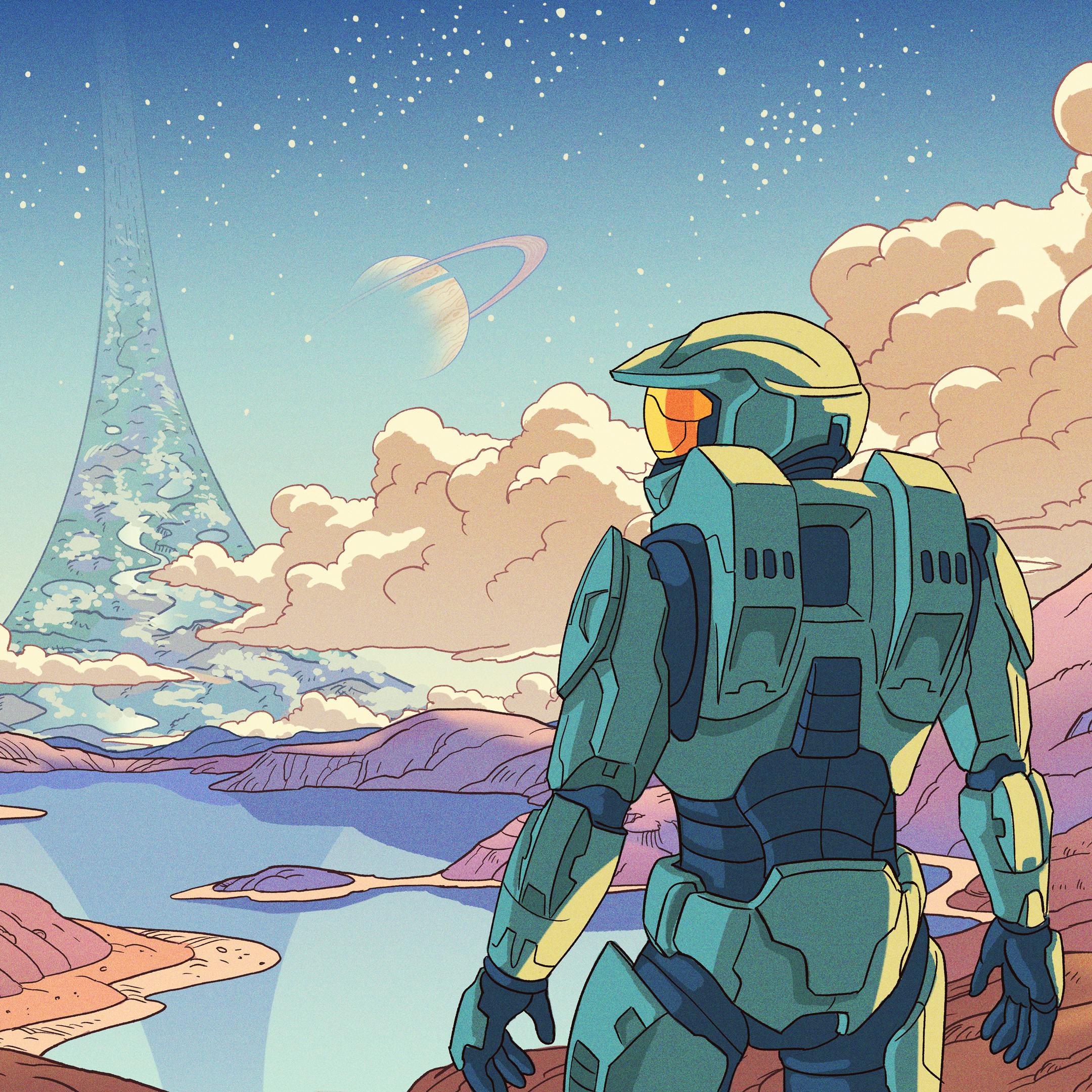
Twenty Thousand Hertz
“The Autumn, She’s Been Hit!” The wish that changed Halo forever
00:46:35
The incredible story behind a single line of dialogue in Halo.
Loading summary
Transcript51 lines
- [00:00]
Dallas Taylor
I'll let you in on a little secret. One of my absolute favorite things about making this podcast is sharing stories made by other creative people like reporters, YouTubers, filmmakers and especially other podcasters. So if you hear an amazing sound related story that you think we should play here on 20,000 hertz, please tell me about it. You can email me directly@dallastyk.org or send me a message on any social media you see me on. And this is not a limited time offer. You can do this anytime. Like in two years from now. If you hear something cool, send me a note. It's my favorite thing. Ever since my years of playing trumpet in my high school band, I've been a huge fan of jazz. It's a wide ranging genre that has something for everyone and that's why I highly recommend you'll Hear it the number one jazz podcast. On their show, they explore everything from what to practice to the latest releases to the secrets behind the greatest jazz albums of all time. For instance, they recently broke down the histories and harmonies of Steely Dan's iconic album Asia. You'll hear it Music explored. Follow the show on Apple podcasts, Spotify or YouTube.
- [01:14]
Brian Johnson
You're listening to 20,000HZ. I'm Dallas Taylor.
- [01:21]
Brian Morton
I came on the podcast to share a story and in my opinion it's about the most special line of video game dialogue ever recorded.
- [01:30]
Brian Johnson
That's Brian Johnson.
- [01:32]
Brian Morton
I am not much of a storyteller. I'm kind of private. But this is sort of the one story I enjoy telling and it's because I'm definitely not the main character Someone else's story. I'm the supporting cast.
- [01:50]
Brian Johnson
As it happens, the main character in Brian's story is also named Brian.
- [01:54]
Brian Morton
My best buddy, Brian Morton. Brian and I, we just have a lot in common. Brian and I have the same first name. We were both born in 84. We lived a few blocks from each other. We had known each other since we were toddlers because we went to the same babysitter. So we both had freckles and thick glasses when we were young boys and our schoolmates thought we were twins. Looking back, I think that wasn't just a recognition of our physical similarities, but that our friendship resembled more of like a brotherhood. I remember our first day of first grade. Moving from my tiny kindergarten class to the big public school was scary for 6 year old me and when I walked into my classroom I was nervous and I'm suddenly hugged by Brian. We didn't know we were going to be classmates. I just remember standing Standing in the doorway, being hugged by Brian and thinking, hey, as long as we're together in first grade, everything's gonna be okay. Brian and I, we had that idyllic upbringing of going outside and riding bikes all day and then going inside to play video games at night. So I'm playing my brother's older video game systems. Brian was always way ahead of me, kind of dragging me along. And he's getting into computer gaming, which is way different than playing Nintendo. This is like 1995, 96. So we're barely 11 or 12. And he calls me up to his house one day because he's got a new game for me to try called Marathon. I'm running around a dark spaceship by myself, and he kind of leaves the room. He's letting me figure out the buttons. And suddenly there's someone else in the game with me, following me around. And I hear him yell out from the other room, hey, don't shoot. That's me. And I'm like, what do you mean that's you? And he's like, no, that's me. I'm in the game with you. And my mind was blown because I didn't know that was possible. Multiplayer back then meant you were either on the same arcade or tv. He was actually networked with me playing, and it was like seeing into the future. And I'm like, who made this game? And he says, it's Bungie.
- [04:17]
Brian Johnson
Bungie is an American video game developer. At the time, they were an independent company based out of a small studio in Chicago. But they were on their way to the big leagues at this time.
- [04:29]
Brian Morton
They're making hit after hit. They've made the Marathons, the Fallen Lords, Myth, Soulblighter, Oni. Brian and I are playing these games like our lives depend on it. As teenagers, Bungie were just rock stars to us. We consumed every bit of information about them, their employees, and their games, the way other kids might like with sports teams or something.
- [04:51]
Brian Johnson
As well as video games, the two Brian shared another music.
- [04:56]
Brian Morton
We come from very musical families. Our moms were both English teachers and piano players. Brian's dad was actually a composer and a former maestro of our local symphony. We're musicians, you know, we're both playing instruments since we were young. So when we're first hearing Bungie's music and their games, we're really falling in love with these thoughtfully composed, classically inspired, romantic, cinematic scores. They had all these unique influences in them, and it was so rare to hear music approached so thoughtfully in video games. And this was the work of Marty O'Donnell. Marty was the composer of all of Bungie's work post marathon, and his music and sound effects, they became the soundtrack to our lives.
- [05:56]
Brian Johnson
In the late 90s, Brian and Brian start to hear rumors about a huge new project that Bung working on.
- [06:03]
Brian Morton
And then in 1999, Steve Jobs, he goes out onto the stage at Mac World and introduces a new video game. But this is one of the coolest I've ever seen. This game is going to ship early next year from Bungie, and this is the first time anybody has ever seen it. And the game being announced was Halo. And so I'm very happy to welcome on the stage Jason Jones. Jason Jones, one of the founding members of Bungie. He's one of our rock star idols. He walks out and he plays this teaser trailer. It starts with what sounds like a chorus of monks chanting an ancient and sacred melody. And there's these images of, like, a space marine exploring a foreign ring world. There are aliens and strange symbols and military vehicles, these vast landscapes. And then the music erupts into, like, this cinematic blend of, like, world percussion and intricate string arrangements. For us teenage boys, this world premiere, first glimpse of Halo, it ignited our imaginations, and we're excited to play this game. But we're so excited to see Bungie become the studio we always thought they'd become. Not long after this, Brian gets a pain in his hip. And at first we thought it might be from a hard tackle he took when we were playing intramural football in high school. But this is like a dull, deep ache that just wasn't going away. His parents, friend Don, wasted no time. They're just the most loving parents, always very involved, proactive, and they get him looked at immediately. And something wasn't right just from looking at the scans. So January of 2001, all of us, friends and family, would learn this new word that would sort of change all of our lives. Brian is 16 years old, and he is diagnosed officially with Ewing sarcoma. The pain in his hip is a tumor, and hewing sarcoma is a rare bone cancer that primarily affects children and young adults. And it is nasty. It's especially nasty in 2001. The literature of the times says that the survival rate of healing Sarcoma is like 40 to 60% or so, depending on the progression. But the doctors are pretty optimistic that they had found it early and that it was localized. So Brian is now going into high school, and he's starting chemotherapy. And throughout high school. I honestly don't have any memories of Brian complaining about his cancer, his diagnosis? Not to me or anyone. You know, he's just this happy. Go. Lucky kid. He's laughing, he's encouraging, he's sweet. We're making movies together and gaming, playing lots of music, making recordings. Brian, despite losing his hair and sometimes feeling a little sick, he appeared to me at the time to have a really typical life and just innocent kids having fun in high school. Looking back on it, I kind of now realize Brian was really good at putting on a brave face. And inside, he was dealing with a lot of thoughts and ideas that the rest of us teenagers couldn't imagine that most of us as adults today haven't faced. Shortly after his diagnosis, he is contacted by Make a Wish foundation because he's critically ill. And the packet that they sent him from a Make a Wish allowed you to both write and draw your wish. And it was only later I realized that they allow you to draw your wish because sadly, some of the children that they work with are so young, they can't write yet. And so when he told me he got his packet, I was on the phone with him, urging him, like, hey, take your time. Let's logically go through and optimize your best choices for a wish. And he just starts giggling. He's like, dude, just come over. I already filled the packet out, so now I'm worried. I came over and he shows me his drawings, and it's of he and his family standing in front of a building that said Bungie on it. And so I'm just looking at it, trying to put it together, and I notice there's a fifth person in the drawing. And I start asking him. He's like, dude, it's you. Me and my family, we're going to Bungie. We're gonna play Halo. That's my wish. And I couldn't believe it. I was amazed. He didn't even need to think about it or sleep on it. This is what he wanted. I was so honored that he wanted to share this with me. But Brian shared everything with me at that point. You know, everything that was good in his life, that was just him.
- [11:45]
Brian Johnson
After receiving Brian's request, Make a Wish reaches out to Bungie. But since Halo was first announced by Steve Jobs, things have changed for the small game studio.
- [11:54]
Brian Morton
They're actually bought by Microsoft. During this time, Microsoft announced they're jumping into the gaming market, and they have an idea for a new console that they're going to call the Xbox. And they need their killer launch title to sell this console. And so when Bungie put the industry on notice, Microsoft noticed. So Bungie is now in Redmond on the Microsoft campus.
- [12:17]
Brian Johnson
Redmond is a suburb of Seattle where Microsoft is based. At first, Brian's request takes Bungie by surprise.
- [12:26]
Brian Morton
When Bungie finds out that a child with cancer has one wish and is to visit their studio, they were also very confused. And they're asking the same thing. Is he sure about this wish? Are you guys talking to the right Bungie? Are you sure this isn't a mix up and a kid that wants to go bungee jumping?
- [12:47]
Brian Johnson
In the end, they confirm that it is the right bungee and it is a real wish. And the company agrees to make it happen.
- [12:54]
Brian Morton
The date for us to Visit them is August 12th through 18th, 2001. They want to make a whole week out of it. Just a few weeks before we're going to start our senior year in high school. So you got to put yourself in our shoes. Like Make a Wish has pulled out all the stops were being flown out, all expenses paid. There's two nice hotel rooms, one just for Brian and I, and then an adjoining suite for his mom and dad and his little brother Jamin. I'm just there as a sidekick. I'm just there to support him and make him laugh and just make sure he's the happiest kid in the world along with his family. And so we're being driven around Seattle for the week, visiting Pike Street Market. We're eating at five star restaurants. We do Mount Rainier, museums, the harbor aquariums. And as a kid from small town Pennsylvania, I'm eating my first $100 steak while overlooking the Seattle cityscape and the Space Needle. The first five days have gone by in the blink of an eye. And now we're coming up on the 17th, which is wish day, and we can hardly sleep the night before. We're going over our strategic plan to maximize our time at bungee.
- [14:12]
Brian Johnson
Finally, the morning arrives for the 17th.
- [14:17]
Brian Morton
They're asking us to meet them outside of our hotel early. So we say hello. And then a white stretch limousine drives up. The driver gets out. I remember his name was Jay. And he opens the door door for us. You just got to put yourselves in the shoes of two teenagers. We huddle in and we're just balling out in this white stretch limousine.
- [14:40]
Brian Johnson
But before they can party too hard, the representatives from Make a Wish and Microsoft need to get serious for a minute.
- [14:47]
Brian Morton
They needed us to understand that this had never been done. This hadn't been done by Make A wish or Microsoft or any other game studio that what we are seeing is top secret. We have signed our lives away. NDAs. And I remember this specifically. They said we're going to be with the elite review team with Microsoft. Basically meant we'd have an army of lawyers following us around inside as we saw stuff we shouldn't be seeing. We pull into Microsoft campus and it's still early morning. And one of the first things I remember doing, we're kind of touring the facility and we walk into some type of research lab and a dude in a literal white coat tells us, hey, follow me. He motions for us to follow him. We go into a room where he proudly unplugs a prototype Xbox. He holds it up to his chest and he just drops it on the floor. And then he's a big guy, I remember, and he jumps on the Xbox with all his weight, then he picks it back up and he plugs it back in. And he proudly says, this is an Xbox. And he's super proud of the build quality. So that's the first time we saw an Xbox. Were they probably the first kids to see them? I don't know. But we get to play some games. They show us Fusion Frenzy, Project Gotham Racing. Get ready.
- [16:13]
Dallas Taylor
Three, two, one, go.
- [16:19]
Brian Morton
It was super awesome to be sitting in a Microsoft lab playing unreleased games on a brand new, unreleased secret console. And I started to appreciate the brilliance of Brian's wish, because anyone could go to rock concerts in Disneyland. But what we were doing, money couldn't buy this experience. This was special. And it felt like we passed our initial test and Willy Wonka was going to let us see more of his factory because slowly the lawyers started disappearing. We get back in the limo and it's time to go to Bungie headquarters. And I remember it's on a different part of the campus and so our hearts are pounding. But when we walk inside, Bungie are as starstruck to meet Brian as we are to meet him, which was unexpected. You know, they're kind of in awe of the love this critically ill young man has for them in their work. And they're just super honored that he's there. And they're introducing themselves. And we have lunch with our heroes, Jason and Alex, the co founders of the company. And the lunch would be like. It would be like if Star wars nerds met George Lucas and could ask him every question about Star wars lore. And finally Jason Jones says, enough talk, it's time to play the game. And Brian and I get real quiet. We're in a dark room with screens set up and they put headphones on us and we're just thrown right into the middle of this Halo single player campaign. And this is Halo. We're holding an Xbox controller, We're playing an Xbox. We're playing Halo, the envy of probably about a billion other kids on the earth. And remember, after dying a few times, I just look over and just enjoy watching Brian experience his dream coming true. I don't remember anyone else there. It's weird. I just remember us together in that room. It was really special. Next, they take us to a play pit. A play pit is where there's a bunch of screens and game stations together so that game developers can sit together and test and play through the game as a team. So they load us into a multiplayer map and we get to play with them. Brian and I are just speechless playing Halo with Bungie.
- [19:14]
Brian Johnson
After the break, Brian gets immortalized in Halo history.
- [19:27]
Dallas Taylor
Artificial intelligence is advancing rapidly and almost every industry is finding ways to use it. Even here in my audio world, there are AI tools that are really useful. But AI isn't magic. It needs computing power and infrastructure to make it work. That's where Oracle Cloud infrastructure, or oci, comes in. It's built for businesses that need serious power for AI, machine learning and high performance computing. And it's designed to keep costs under control. Compared to the competition, OCI costs 50% less for processing and 80% less for networking. That means you get premium performance without the premium price tag. Right now, Oracle is offering to cut your current cloud bill in half if you move to OCI. The offer is for new US customers with minimum financial commitment. The offer ends on March 31, so sign up now. See if your company qualifies for this special offer@oracle.com 20K. That's oracle.com 2 0K. Congratulations to Teresa Krasto for getting last episode's mystery sound right. That's the audio logo for Spyglass Entertainment, a production company that formed in 1998. The music was composed by Randy Adelman, who composed the scores for movies like Ghostbusters 2, the Mask and Angels in the Outfield. And here's this episode's mystery Sound. If you know that sound, tell us at the web address. Mystery.2000. Anyone who guesses it right will be entered to win one of our super soft 20,000Hz T shirts. Finally, a quick reminder that my sound design company, Defacto Sound, is the same team that makes this very podcast. So 20,000 hertz depends directly on the business we get at Dafakto to survive and thrive. So if you work on anything that needs pristine sound, visit defactosound.com and say hello through the contact form. Some of the most successful brands out there, like Aloe, Allbirds and Skims, aren't just great at making products, they're also great at selling them. And behind the scenes, they all use the same tool. Shopify. With Shopify, you can sell wherever your customers are on your website, in a brick and mortar store and across social media. Essentially, anywhere they're scrolling, they can find your products. One of Shopify's most impactful features is Shop Pay, which can save customers information across Shopify websites. This speeds up checkout and boosts conversions by up to 50%. That means less abandoned carts and more sales. Upgrade your business and get the same checkout as companies like Allbirds, Death Wish Coffee and Aviator Nation. Sign up for your $1 per month trial period at shopify.com 20k all lowercase go to shopify.comtwo 0k to upgrade your selling today. That's shopify.com 20k over the last few years, I've been taking my health more seriously and nutrition is a huge part of that journey. But sometimes I just run out of time to cook a healthy meal from scratch. That's where Factor comes in. Factor delivers chef crafted dietitian approved meals that are ready to eat in just two minutes. They're fresh, they're never frozen, and they're consistently delicious. That way I can eat healthy without spending all that time on prep, cooking and cleanup. With Factor, you can pick from 40 meals across eight dietary preferences like calorie, smart, protein plus, and keto. Factor even has grab and go options like smoothies and snacks, so you'll always have something healthy on hand. And the Tropical Citrus smoothie is especially nice. Eat Smart with Factor get started@factormeals.com FactorPodcast and use code FactorPodcast to get 50% off your first box plus free shipping. That's Code Factor Podcast at FactorMeals.com Factor Podcast to get 50% off plus free shipping on your first box.
- [23:49]
Brian Johnson
It'S 2001. Brian Morden and Brian Johnson are on the Microsoft campus, touring the studio of their favorite game developer, Bungie. There the two friends get to meet their heroes and even play an unreleased version of Halo.
- [24:05]
Brian Morton
So this make a Wish date. It's blowing Brian's biggest expectations out of the water already. Brian got to do everything and meet everyone he wanted, except for one guy we were getting towards the end of our time there. And Brian asks if Marty O'Donnell's there, our favorite composer. He's the one writing the music we've come to love. And Marty's there. He comes out and he greets us and he brings us and the family into his studio and he shows off the music and sound effects of the game. He played us, you know, the famous Halo theme. And he's soloing different instruments and vocals on the mixing board. He's talking about, you know, how he came up with the melody. He played us some new music from the game and he's just. He's kind of excited to answer all of our questions about Halo and past projects and geeking out about music with us. And when it seemed like Brian had run out of questions for Marty, Marty goes, hey, this game is coming out in a few months and we need some good screams and exertions for all these marines in the game. And he pointed to the vocal booth in his studio. And Brian being Brian, he kind of sheepishly looks at me, expecting me to be the one to go in, as I think he had deemed me the better voice actor. And Brian's shy, you know, he's just always thinking of others. That's the way he was being inclusive, even on his wish day. And Marty reads my mind and reminds him, hey, that Brian isn't the one with cancer. So Brian nervously gets in the booth to make his voice acting debut. And we don't know it at the time, but Halo is. It's an audio masterpiece. The soundtrack, the effects, the VO and tech. When it's released, it would have an unprecedented like 40,000 lines of dialogue. It's the first game in 5:1, and Brian's about to be part of it. So he's nervous at first, as anyone would be. And Marty is a pro voice director. He's loosening him up, getting him to laugh. And suddenly Brian is a natural. And he's cutting the. He's screaming into the microphone. And Marty's like, that's a good one, Brian. We can use this. And they're screaming back and forth at each other. And I don't know if to this day if Marty planned this, but he gets an idea and he says, you know, there's a line left that I still haven't recorded for the game. You know, the game's coming out in a couple months. He's like, the line is the autumn she's been hit and you need to really scream it like you're in disbelief. And Brian does his first take and he's kind of laughing midway through, you know, trying to become an actor. And then the, the second take he does, it's my head. He gets his voice to crack like a pro. And Marty, Marty yells, that's it. You're in the game, Brian. We're using that. And we couldn't believe it. I remember Brian lets out just the happiest giggle you could ever hear, and it's just pure joy, you know, not only is Brian's voice going to be part of Halo forever, he's like a character in the game now. And I can't tell you what it meant to be in the room and share that moment where, that moment when your best friend's dream comes true and I got a front row seat with his family and I will just forever be grateful to be part of that. The next thing we know, we're saying goodbye, we're back in the limo, we're kind of just sitting there grinning silently, just giggling, thinking about what just happened this moment. It's hard to put into words what this game and company and community meant to us for this podcast audience maybe. Imagine you're a young girl whose favorite actress, Kate Winslet, and your wish is to meet her. And not only do you meet her, she invites you to a movie she's acting in called Titanic. And then she invites you to be an extra in a scene with her and gives you a line to say in the movie, like, even though I was there to support him, the impact this moment had on me was profound. Getting a glimpse of what it was like to work in games and be in a game studio, that experience would pull me towards the game industry. It was just like a magnet and I felt that belonging and that magnet pulling me. When Halo comes out, it's a phenomenon. Halo would be one of the great first person shooters of all time. It's on a scale and scope that no one's ever seen. And to this day, it's a $10 billion franchise and has many more sequels and books and action figures, TV shows. So when we get the game, our first playthrough, we find that Brian is in one of the most important cutscenes of the game. We're gonna make it, aren't we, sir? I don't want to die out here. The Autumn is the name of the giant ship that had just escaped from Planet Reach, and it is humanity's last hope and master chief. The main character is standing beside a brave marine as they are escaping on this dropship and the Marine's yelling, the Autumn she's been hit. The ship we're escaping from is taking fire. The autumn, she's been hit.
- [30:19]
Dallas Taylor
I knew it.
- [30:20]
Brian Morton
The autumn's exception. Accelerating keys is going in manual. And so this mysterious line now actually makes sense. And Brian wasn't just in the game. He's a character. And he's not just a character. He's like in a big story moment. Sure you wouldn't rather take a seat. We'll be fine. When Brian finishes his last round of chemo treatment, we throw an end of chemo party, which of course is a giant Halo LAN party.
- [30:57]
Dallas Taylor
A LAN party was when you brought all your consoles or gaming PCs to the same place and connected them to the same network so you could all play together.
- [31:09]
Brian Morton
We filled up his church basement with Xboxes and televisions, copies of Halo. We had catering from his favorite Italian place, and most importantly, lots and lots of friends. We just lock ourselves in and play Halo all night and party. And we'd periodically stop and watch Brian's cut scene together and cheer when he'd say his line. You know, Brian's a rock star, and it was just such a happy day. We ate food and played Halo until we fall asleep or our forearms are too sore to hold the controller anymore.
- [31:55]
Brian Johnson
After completing chemo, Brian's cancer goes into remission. He starts making plans for college and tries to get back to a normal life.
- [32:03]
Brian Morton
Brian would get his driver's license, we'd go to prom. We graduate high school together. And as Brian would report in for his checkups, the remission was unfortunately brief. You get the really tough news that they detected cancer cells. This next round of chemo and radiation was awful, worse than the cancer. And at this time, he got accepted to university to pursue video editing. But he's not going to be able to do that. He's battling for his life. I go off to music school. I'm visiting him on the weekends at the Children's Hospital at Pittsburgh or when.
- [32:47]
Brian Johnson
He'S home for a little while. The two friends keep playing games together online.
- [32:52]
Brian Morton
But soon I wasn't seeing Brian online anymore. He's getting really sick. The cancer's spreading, and Brian's dad is letting me know that Brian's too weak. You know, he can barely use the computer. And Brian's spirit is unbreakable. He wants to keep fighting. His mind's there, his spirit's there. But it's really hard for him to see his body betray him. His dad told me that at one point he just asked to be cut in half. Like, just cut Me in half. Just get rid of this stuff. I just want to live. He's willing to do experimental treatments, anything, because he just has so much to live for.
- [33:40]
Brian Johnson
Cut to Valentine's Day, 2003. Brian Johnson is away at college.
- [33:45]
Brian Morton
I got a call from Fred Bryant's dad that Brian's kidneys have failed. They sent him home from the hospital, and he's waiting for me at home. My dad picked me up and we drove back to our hometown in silence. He dropped me straight off at Brian's house. I called our other really close friend from high school to come over so we can say goodbye together. And Brian's on a gurney in the living room waiting for me. And man, it is so rare when you actually get to say goodbye to a loved one. You know, most people never get that chance. And this is another opportunity Brian gives me. I held his hand, told him, you know, it'd be okay. And I'm not a very mature college kid, so I don't know what to do. It's really hard. Our friend doesn't know what to do either. He calls Bungie and he actually gets a hold of Marty O'Donnell on the phone. I can't imagine what was going through Marty's mind when he gets a call that there's a kid on his deathbed and he wants to talk to you. I couldn't hear the whole conversation, you know, because I'm just hearing Brian's side. But Marty makes a promise to Brian that he's going to be in every Bungie game, released forever. That he had made an impact on Bungie and he'd be in all their games. And Brian is, you know, he's touched. He's finding out he's gonna be immortalized. And Brian's dad comes over, he says, just stay with us. Stay the night, take Brian's room. And so I tell Brian I'm gonna see him in the morning. And we go to bed. And Fred wakes us up in the morning to let us know Brian has passed that night in their arms with his family. And they held him all night. And, you know, we're. We're stunned. We thought Brian, we thought maybe he'd make it through the night. So we didn't want to think that that'd be the last time we would see him. His funeral was in the same church. We had our big and of chemo lamp party, you know, the church where his mom played organ. And we all, all of us, we played in his service. So it felt like our last concert with Brian. Of many concerts we played together and it was clear that there were a lot of other people Brian had a huge impact on. In the short time he was with us, there wasn't an empty seat. People are standing in the aisles, they're going out the back door and we're just playing our instruments, just belting out these songs for him that he would have loved. I remember at the time, it just felt like this was the end of his battle that had lasted ages. But looking back now and I realize this was all 26 months since he was diagnosed. He had lived this entire lifetime of highs and lows in this short 26 month period.
- [37:07]
Brian Johnson
Brian's mom, dawn, formed a charity in his remembrance called the Brian Morden Foundation. It raises money to fund research into Ewing sarcoma and helps support patients and families dealing with childhood cancer. They also give scholarships to students from Brian's high school.
- [37:23]
Brian Morton
Dawn made Brian a promise. She'd do everything she could to make sure no other kid had to go through what he did.
- [37:32]
Brian Johnson
Over the years, Bungie has kept their promise too, and put Brian somewhere in every game.
- [37:38]
Brian Morton
Brian's family received what were essentially periodic small payouts for Brian's single line of dialogue because it was being included in other games. Bungie and Marty and Jay were sneaking it into every Halo game and even.
- [37:56]
Brian Johnson
Destiny, and it went beyond just that single line.
- [38:00]
Brian Morton
So they snuck his image and references to him and they have other voice actors in the games, even mention him in some really obscure parts of games that were only shared with me and his family. Some of these things I can't control. When they happen, they might have a 1 in 10,000 chance of triggering. So they had let me hear them trigger them, and I know where I can go if I want a chance to hear them. It's something just kind of for us and for Bungee.
- [38:40]
Brian Johnson
After his friend's passing, Brian Johnson goes back to music school. Then he sets his sights on the video game industry. But it's an uphill battle.
- [38:51]
Brian Morton
Fast forward to 2014. I'm kind of at a low point. I've given my 20s to trying to get into game audio. I'm almost 30. You know, my friends are in careers, they're having children, they're starting families, and I'm really struggling. And I'm starting to feel kind of foolish for how hard I've held onto this vision of working in a game studio. So I would do my best to embrace my inner Brian Morton to be an optimist through to the end, because that was the one thing Cancer never got from him. And I can say that because I had the privilege of being there with him through the end. So I was going to hold out hope. I felt like if someone, anyone, would just give me a chance to show what I could do, I would be able to seize on the opportunity. Brian had given me so much in life, given me my friends, my passions. I wanted to carry his legacy with me into games. It was that year, 12 years since his passing, that I found something really unusual. I found a job listing for a paid sound designer apprenticeship at a post production house. Hello, this is something new. This was a post house that worked in television, film, and occasionally video game projects. Uh oh, that's two out of three. And then amazingly, it. It was only a few hours south of me in Washington D.C. so this is three out of three. This is rare, you know, sound design, video games, paid internship nearby. So I immediately send them my demo reel and I am ecstatic to receive an interview. And the studio owner, he comes on Skype. It's incredibly warm, made me feel at ease. He recognized you? University I went to for school on my resume. And he's a musician himself. And by the end of the interview, he just asked me, hey, you want to come down to D.C. in like two weeks you can start work. And I'm getting my chance. So I'm 30 years old and I'm going to become an apprentice sound designer. So I have this six month contract at this post house and I'm meeting the team outside of the Bungee trip. These are the first professional sound designers I've ever met. So I become like a sponge. I'm learning everything I can. I get to work on lots of projects and I even get to work on a trailer for a video game. My first game work, my contract is winding down and I remember the owner telling me about an idea he has that he's really excited about. He had an idea to start a podcast about sound. If you haven't figured it out by now, this idea would become the 20,000 Hz podcast. So my big break came from this podcast's own Dallas Taylor. He was the owner of Defacto Sound and he is the one who plucked me out of obscurity. And his team mentored me. And I will forever be grateful for the chance that he took on me. I finished my apprenticeship with Dallas within the month. I'm interviewing at four different studios and I accept an offer. And before I know it, Activision Games has movers packing up my belongings and moving me to a new Home near their video game studio. And I'm going to be a sound designer for Call of Duty, the biggest game in the world. On my first day at work, I got that feeling of being like a 15 year old again walking in the bungee, except I'm not the guest there. I'm walking to my office where I'm going to be making the game this time. And so when I get into my office, all I can do is sit down, take it in, look up and tell Brian, hey, we did it. We made it, buddy. We're here. So I'm now a principal sound designer for cinematics at Blizzard Entertainment. And it is a dream come true to help tell stories of some of our video games through sound. I get to help tell the stories of World of Warcraft, Overwatch, Diablo, Hearthstone, and I love, love, love going to work every day. And Blizzard Entertainment is a studio inside Microsoft. So I feel like I've come full circle from Brian's Microsoft Make a Wish visit. I'm the one able to give young people tours all around our Blizzard campus, maybe see their heroes, maybe give them some inspiration, help them find their North Star. So I help out aspiring and upcoming game audio folk as often as I can. In the course of a week, I'll get dozens of questions from the sound design community. Awesome group of people. But the most common one is I want to work in games. How did you get into video games and when did you know that's what you wanted to do? And I get to reply, let me tell you about my best buddy, Brian. It's funny because when I was young and I would share parts of this story, it was, you know, kind of all about the heroic lengths Microsoft and Make a Wish took to make Brian's wish come true. But I was, I was kind of getting the story all wrong. You know, it's been 20 years, but over 20 years since Brian has passed. And it's not Bungie that I'm in awe of. It's of course Brian. He's the rock star, he's the hero, he was the generous one. And all the good things that came out of the horror of Brian's cancer battle was simply his goodwill and nature kind of being reflected back on to him. Having Brian as a friend is one of the best things to ever happen to me. I am grateful for every minute I got to be with him. I wish I had told him that more. But now I can kind of share it with the world on your podcast. What a special young guy he was and the impact he had on everyone he met.
- [45:54]
Brian Johnson
20,000 Hz is produced out of the Sound Design studios of Defacto Sound. Hear more@DefactoSound.com thank you to Brian Johnson for sharing such a deeply personal story. I want to remind you about the incredible work being done by the Make A Wish foundation and the Brian Morden Foundation. Make A Wish has been fulfilling the wishes of kids with critical illnesses for almost 40 years. Meanwhile, the Brian Morden foundation supports kids and their families in their fight against cancer and helps fund research into treatments for Ewing Sarcoma. We've donated a portion of this episode's ad revenue to these two groups and I encourage anyone listening to make a donation as well. You can find the donate links in the show Notes of this episode. This episode was written and produced by Daniel Cima and Casey Emerling with help from Grace East. It was sound designed and mixed by.
- [46:46]
Dallas Taylor
Graham Gold and Colin Devarney.
- [46:49]
Brian Johnson
I'm Dallas Taylor. Thanks for listening.
- [46:57]
Brian Morton
SA.