![[Un]Churned – The No. 1 Podcast for Customer Retention cover](https://d3t3ozftmdmh3i.cloudfront.net/staging/podcast_uploaded_nologo/40344000/40344000-1759325757098-ebbb3cde389fe.jpg)
Podcast
[Un]Churned – The No. 1 Podcast for Customer Retention
Hosted by Gainsight · EN
If you're experimenting with automation, questioning the traditional post-sales model, or trying to drive more value with less headcount, you're in the right place. AI won’t fix churn, but these conversations might.
Retention is the new growth, AI is rewriting the rules. Hosted by Josh Schachter, SVP of Atlas at Gainsight, [Un]Churned—the No. 1 podcast for retention and Customer Success leaders—features real talk with the sharpest minds in the Customer Success space. We dig into how teams are scaling smarter, activating AI agents, and redesigning the customer journey for lasting impact.
50episodes
Episodes
Newest firstAll episodes
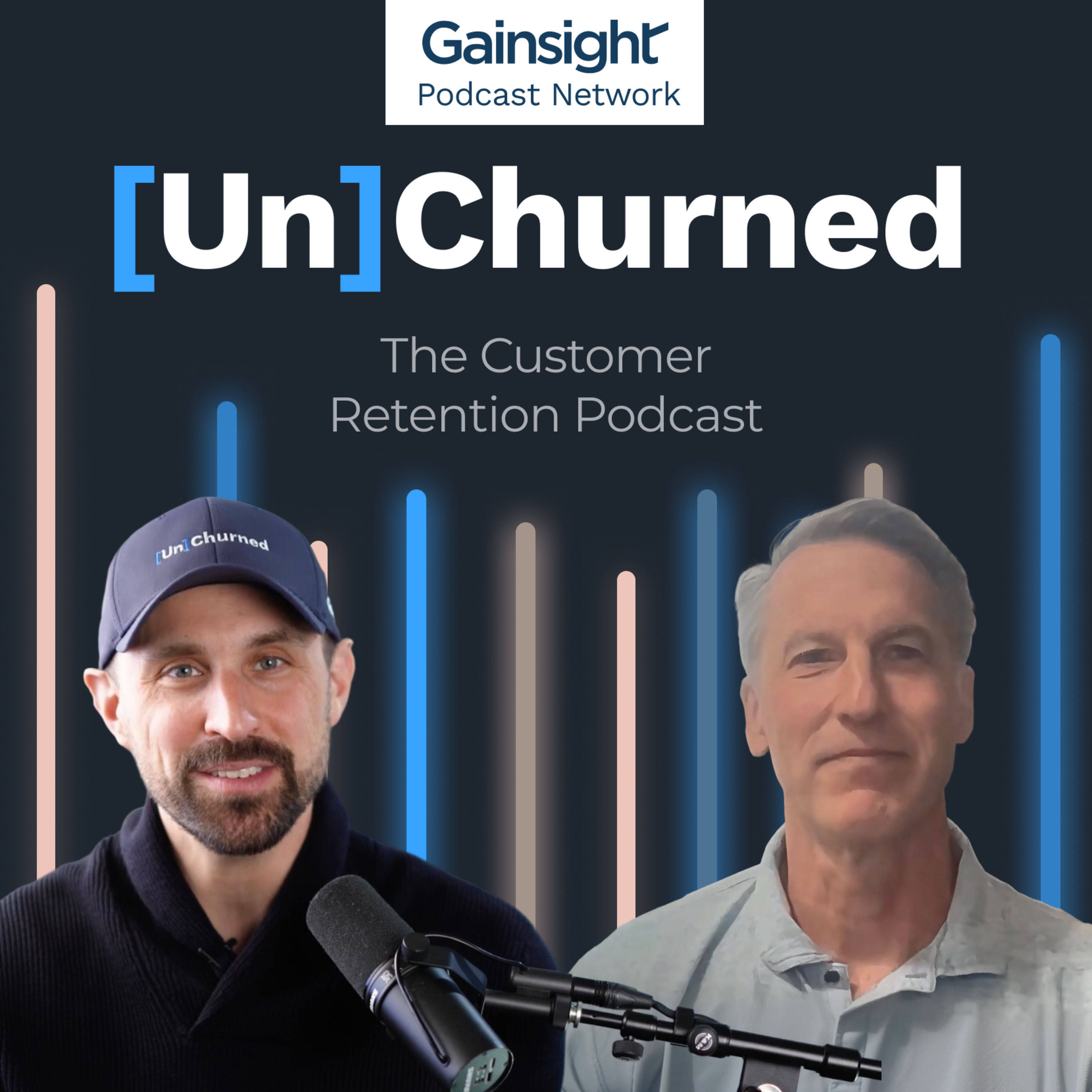
Ironclad's CCO Reveals How AI Actually Predicts Churn ft. Rob Edmondson
May 600:26:52Tap to summarizeHeading to Vegas this May? Join Josh at Pulse 2026 and come say hi—your oversized fluorescent daiquiri is on him. No catch.Grab your ticket at gainsightpulse.com and use code UNCHURNED for a special rate.Rob Edmondson, CCO at Ironclad - an AI contracting platform - brings a military-grade operating philosophy to customer outcomes: mission first, people always.In this episode, he breaks down what happened when his team used AI to predict churn — and why the results blew up their assumptions about what "good adoption" actually looks like.Rob reveals how down-market customers who adopted AI features too early actually churned more, why enterprise renewal patterns look nothing like daily usage. He also gets honest about the governance-vs-freedom tension every leader is navigating with AI tools right now.---Timestamps0:00 - Preview & introduction1:40 - Meet Rob Edmondson, CCO of Ironclad4:01 - Rob's career origin story5:03 - "Mission first, people always" - leadership from the military9:15 - How Rob enables a people-first culture across his teams11:05 - Using AI internally to predict churn & the surprising findings14:22 - Building a four-stage maturity model from churn prediction data16:35 - The AI vibe check: governance vs. freedom balancing act20:20 - Can you mandate AI usage? 21:57 - Tying every AI agent to an OKR22:40 - Ironclad's OKRs & Driving AI feature adoption---What You’ll Learn- How Ironclad built an AI model that predicts churn six months out- The difference between enterprise and SMB "digital signatures" of healthy customers- How to build a four-stage customer maturity model with measurable adoption gates- Why Rob ties CSM compensation to stage-progression KPIs, not activity metrics- What "mission first, people always" means when translated from the military to SaaS- How Ironclad balances AI governance with giving teams freedom to experiment- What an AI roadmap looks like when every agent is tied to an OKR---Want the playbook, not just the conversation? Subscribe for deep-dive, actionable breakdowns from every episode at unchurned.substack.com.---Where to Find the GuestRob Edmondson: https://www.linkedin.com/in/redmondson/---Where to Find Josh:LinkedIn: https://www.linkedin.com/in/jschachter/Unchurned Substack: https://unchurned.substack.com/
Transcribe →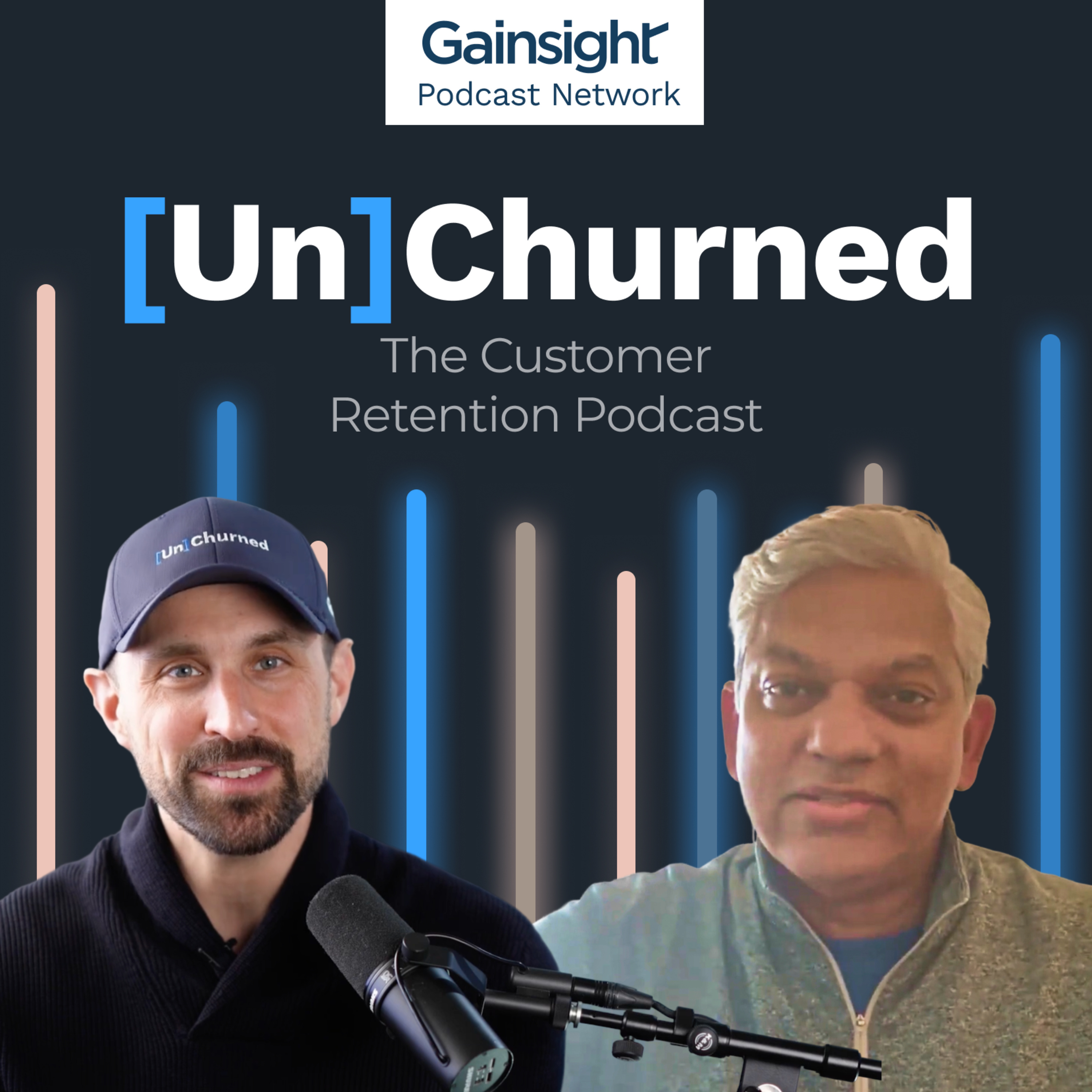
The Surprising Way Microsoft Does Customer Success at Scale ft. Pradeep Raman (Microsoft)
Apr 2900:21:56Tap to summarizeHeading to Vegas this May? Join Josh at Pulse 2026 and come say hi—your oversized fluorescent daiquiri is on him. No catch.Grab your ticket at gainsightpulse.com and use code UNCHURNED for a special rate.When your customer success org covers all of Azure — Microsoft's $60B+ cloud business — "deployment" isn't a checkbox. It's a global operation spanning thousands of projects, 180+ people, and a fully invested delivery model where Microsoft does the first leg of the journey for free.Pradeep Raman, Vice President, Customer Success at Microsoft, breaks down Microsoft's "commit to consume" metric, why they staff at N-1 by design, how agentic AI is replacing intake teams internally, and why no customer celebrates signing a contract — only deploying one.Pradeep who has spent over 27 years with Microsoft started in consulting, learned new tech on plane rides to customer sites, once asked Bill Gates to pin a customer's logo to his shirt (security wasn't thrilled), and now runs the CS strategy and Cloud Accelerate Factory for Azure.---Timestamps0:00 - Preview & introduction1:24 - Meet Pradeep Raman & his 27-year run at Microsoft3:25 - The Bill Gates pin story4:30 - What "VP of CS" means at Microsoft's scale6:45 - Cloud Accelerate Factory: free deployment for all Azure customers10:45 - "No customer celebrates signing an agreement"11:48 - Goal-setting & OKRs: Commit to Consume & Next Best Action15:25 - Agentic AI and modernization as top priorities16:37 - Building AI enablement inside the CS team20:40 - "I didn't think I'd survive 20 minutes of the interview"---What You’ll Learn- How Microsoft measures CS with a single "commit to consume" KPI — and why it changes everything- What the Cloud Accelerate Factory is and why Microsoft offers free hands-on deployment to any Azure customer- Microsoft's N-1 staffing philosophy: hire fewer people than needed, then make it work- How Pradeep's team is using custom agentic AI (analyst agents, architect agents) to scale internal processes- Why AI transformation fails when your data and apps sit in legacy environments- The evolution of CS at Microsoft — from sales support function to growth engine---Want the playbook, not just the conversation? Subscribe for deep-dive, actionable breakdowns from every episode at unchurned.substack.com.---Where to Find the GuestPradeep Raman: https://www.linkedin.com/in/pradeep-raman-41a12a11/---Where to Find Josh:LinkedIn: https://www.linkedin.com/in/jschachter/Unchurned Substack: https://unchurned.substack.com/
Transcribe →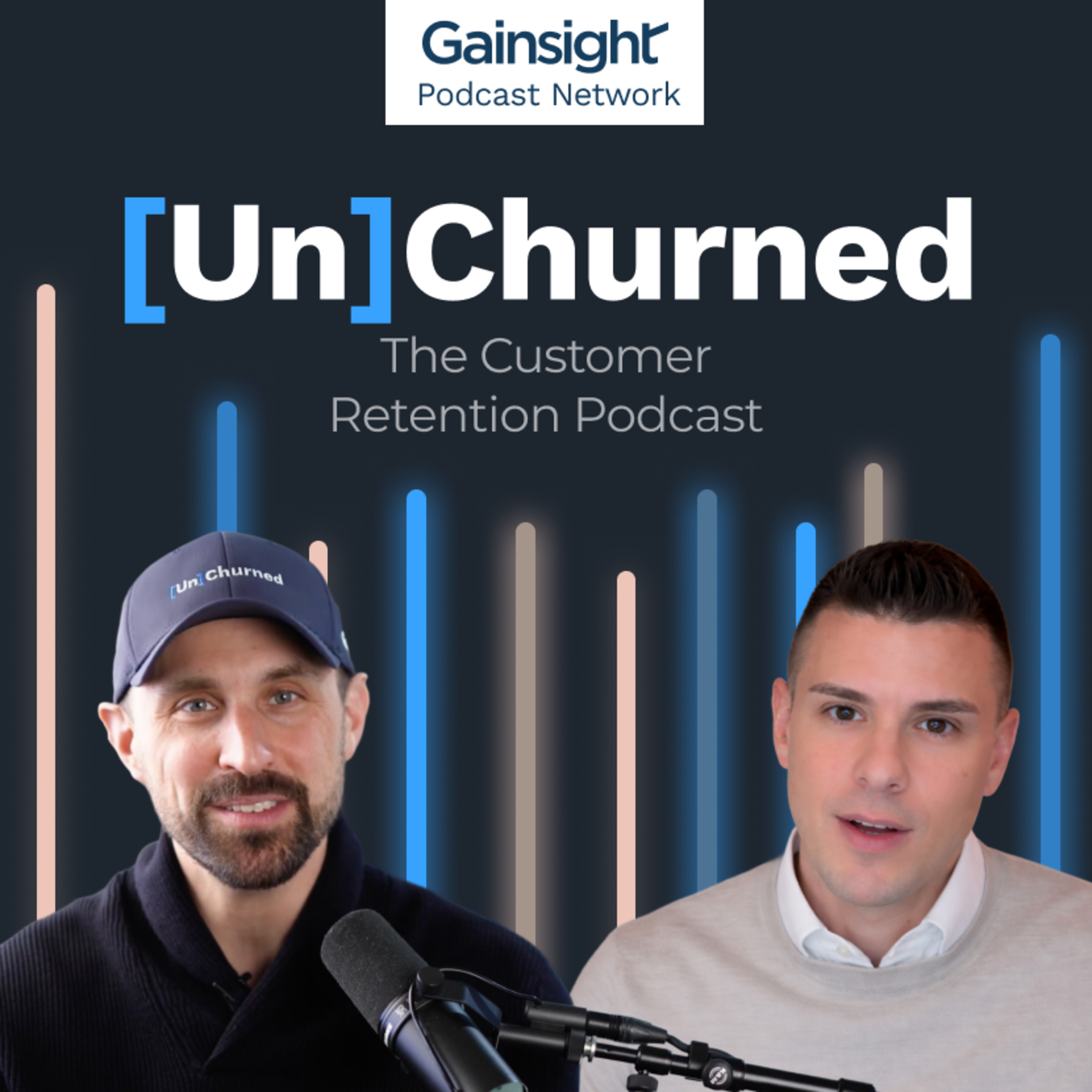
The CCO Who Also Owns Sales (Here's Why It Works) ft. Brad Casemore (PartsSource)
Apr 2200:29:45Tap to summarizeHeading to Vegas this May? Join Josh at Pulse 2026 and come say hi—your oversized fluorescent daiquiri is on him. No catch.Grab your ticket at gainsightpulse.com and use code UNCHURNED for a special rate.When healthcare equipment goes down, healthcare goes down. That's the world Brad Casemore operates in — where a broken MRI or a failed sterilization unit isn't an inconvenience, it's a crisis.In this episode, Brad, Chief Customer & Growth Officer at PartsSource breaks down why merging the CCO and CGO roles actually makes sense. He makes the case that customer value and revenue growth are the same motion, not separate departments, and walks through exactly how he's built his org to reflect that. If you're a CS leader wondering whether you should own more of the business, this is the episode.Brad also shares how he's plugging AI agents directly into the RACI model — not as a gimmick, but as a deliberate workforce strategy. Humans accountable, agents responsible. The result? One part of his business went from low-90s retention to 99.6%. This is what the future of CS operations actually looks like in practice.---Timestamps0:00 - Preview & introduction1:24 - Meet Brad Casemore & overview of PartsSource4:17 - The marketplace, service network, training, and predictive monitoring explained10:46 - Post-sales inside a 750-person company with a surprisingly complex portfolio13:17 - The CCO + CGO role; why Brad took it and what changed15:55 - Key learnings from stepping into the growth seat17:57 - The attribution model CS leaders need to steal from sales19:45 - Putting AI in the RACI: how Brad's team went from low-90s to 99.6% retention25:15 - Systems thinking, curiosity, and getting comfortable being uncomfortable28:02 - Pulse 2025 and what Brad's watching in AI---What You’ll Learn- When CCO and CGO roles merge and the org structure to make it work- How to map the full customer lifecycle so pre-sales and post-sales are pulling in the same direction- The attribution lesson CS leaders are missing that sales and marketing figured out years ago- How to build a consistent customer experience across a long-tail of thousands of accounts without burning out your team- Why Brad puts AI agents directly into the RACI model — and what that means for team design- The proactive CS shift that moved retention from the low-90s to 99.6%- What aspiring CS leaders need to develop to grow into an executive seat ---Want the playbook, not just the conversation? Subscribe for deep-dive, actionable breakdowns from every episode at unchurned.substack.com.---Where to Find the GuestBrad's LinkedIn: https://www.linkedin.com/in/bradocasemore/---Where to Find Josh:LinkedIn: https://www.linkedin.com/in/jschachter/Unchurned Substack: https://unchurned.substack.com/
Transcribe →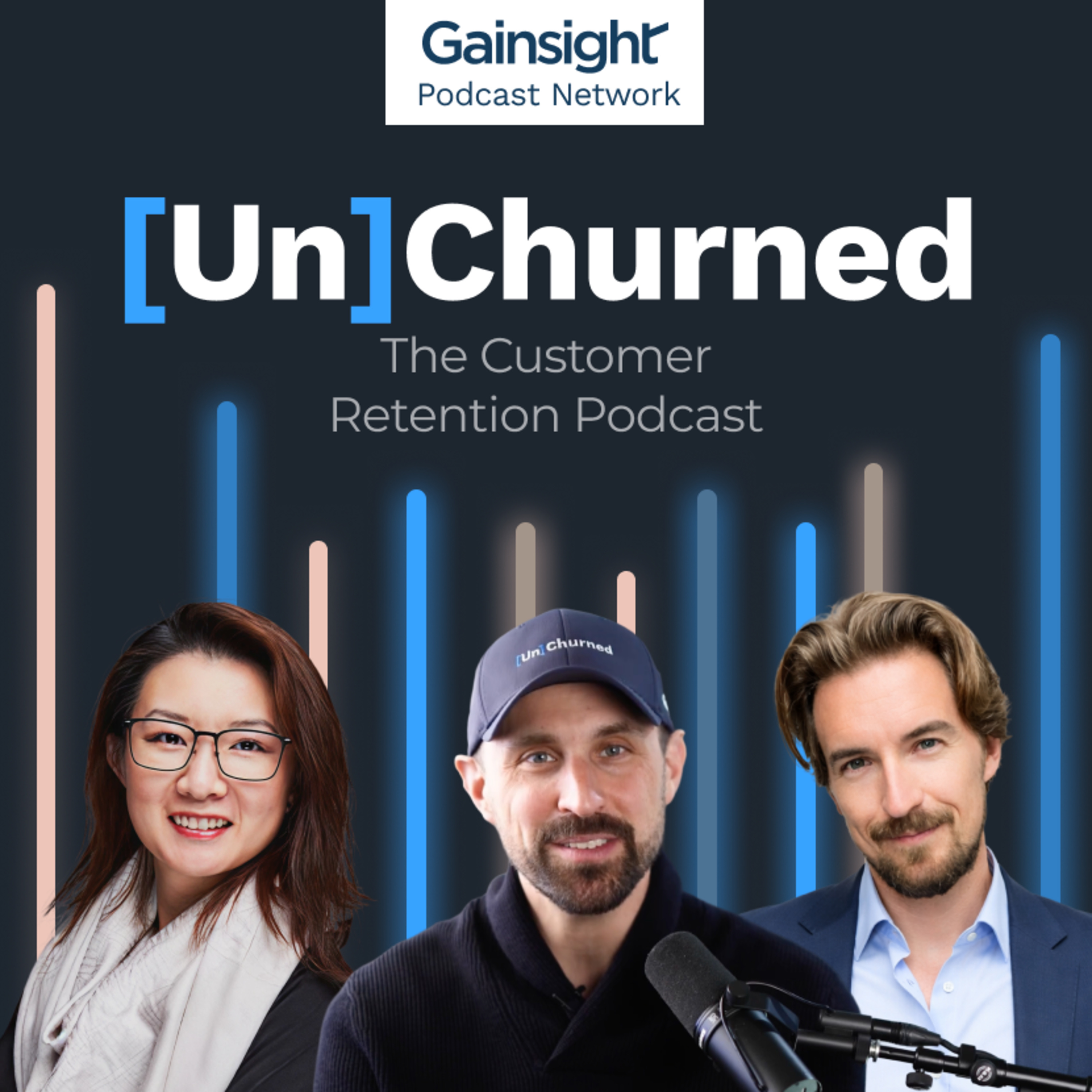
Inside Google's AI-First Post-Sales Playbook ft. Brady Bluhm (Gainsight) & Diane Wu (Google)
Apr 1500:41:02Tap to summarizeHeading to Vegas this May? Join Josh at Pulse 2026 and come say hi—your oversized fluorescent daiquiri is on him. No catch.Grab your ticket at gainsightpulse.com and use code UNCHURNED for a special rate.Knowledge used to be the CSM's edge. Not anymore.Diane Wu, Global Head of Customer Success & Experience at Google Cloud Security, operates where every touchpoint is mission-critical — and standing still is falling behind. In this episode, she sits down with Brady Bluhm & Josh Schachter of Gainsight to unpack what the CSM role actually becomes when AI handles the knowledge layer. The answer: context, curation, and hyper-personalization at scale.Diane shares how her team is using NotebookLM and Gemini to compress hours of customer research into minutes, why her best CSMs were the hardest to get onto new AI tools (and why that makes complete sense), and what two-phase AI adoption really looks like on the ground. Brady brings a builder's lens — talking about juggling AI agents, closing 2-year-old CTAs with one prompt, and why the traditional product UI might not survive the next two years.If you lead a post-sales team or work in customer success, this conversation will reframe how you think about productivity, coverage models, and the human role in an AI-first world.---Timestamps0:00 - Preview & introduction1:40 - Meet Brady Bluhm (Gainsight) & Diane Wu (Google)3:00 - Diane's role: Google Cloud Security & the post-sales mission5:25 - The shift from access to curation8:28 - Brady: how AI is changing CSM onboarding and memory10:55 - Are you saving time or just doing more? 12:34 - How AI changes coverage models and the 1:many CSM ratio18:00 - Diane's tactical playbook for running parallel customer analyses 22:05 - Brady's "can I do this with AI?" framework and skill-building loop24:00 - How much time should you spend tuning your AI setup?26:31 - Why your top CSMs are the hardest to get on new AI tools31:21 - LLMs will become the new workspace32:59 - Two-phase LLM adoption and why the UI is going away34:15 - Closing 2-year-old CTAs with one prompt37:47 - Hyper-personalization at scale for Google Cloud---What You’ll Learn- Why knowledge is no longer the CSM's differentiator — and what replaces it- How Diane's team at Google Cloud Security uses NotebookLM as a living customer notebook- Why your best CSMs resist AI adoption the most- How AI is reshaping CSM coverage models and the 1:many ratio- Brady's two-question AI habit that keeps him ahead every week- What the Gainsight MCP unlocked — and what it means for the future of CS tooling- Why the traditional application UI may disappear — and what replaces it- How to create "wow moments" that actually drive AI adoption across your team---Want the playbook, not just the conversation? Subscribe for deep-dive, actionable breakdowns from every episode at unchurned.substack.com.---Where to Find the GuestsDiane Wu's LinkedIn: https://www.linkedin.com/in/diane-wu/Brady Bluhm's LinkedIn: https://www.linkedin.com/in/bradybluhm/---Where to Find Josh:LinkedIn: https://www.linkedin.com/in/jschachter/Unchurned Substack: https://unchurned.substack.com/
Transcribe →
The Future of GTM Might Belong to Answer Engines ft. Eric Gilpin (G2)
Apr 800:33:34Tap to summarizeHeading to Vegas this May? Join Josh at Pulse 2026 and come say hi—your oversized fluorescent daiquiri is on him. No catch.Grab your ticket at gainsightpulse.com and use code UNCHURNED for a special rate.Watch Eric Gilpin, President of Go-To-Market at G2, reveal how he’s building the first-ever unified revenue org in a 210,000-product marketplace. In this episode, he takes us behind the scenes of G2’s “zero daylight” alignment strategy and how it led to a game-changing 31% YoY traffic spike. Discover why G2 made the controversial bet to let LLMs scrape their data (and why competitors are now paying the price), how to flip buyer intent into “churn intent” to catch customers before they leave, and how the difference between “freelancers” and “contractors” became worth $600M+ in revenue. This is marketplace strategy 101, told by someone who’s spent 25+ years perfecting it. Essential listening for GTM leaders, CS teams, and anyone building in B2B SaaS.---Timestamps0:00 - Preview & introduction1:28 - Meet Eric Gilpin & overview of G26:50 - How Upwork scaled from $30M to $650M in gross sales volume10:00 - Building G2’s first President of Go-To-Market role11:13 - Zero daylight: Aligning marketing, BDRs, and all revenue teams16:42 - Pivoting narrative from “SEO review site” to AEO visibility engine18:15 - G2’s “Hunter Hunter” post-sales org (60% growth from expansion)21:00 - The highest-value CS activities (hint: it’s not quarterly review sends)23:23 - Self-serve + AI automation for the 150,000 SMB products25:23 - The churn intent27:28 - Why G2 allowed LLMs to train on their data31:55 - Nostalgia and denial kill businesses---What You’ll Learn- How to eliminate silos by achieving “zero daylight” between marketing, sales, and revenue teams- The whitespace model G2 uses to find expansion revenue- How to build a “churn intent” system using buyer signals to catch churn before it happens- Why allowing LLMs to scrape your data early creates a competitive moat- The subtle power of reframing to unlock enterprise adoption and market perception- Why is constantly challenging your own status quo the only defense against disruption---Want the playbook, not just the conversation? Subscribe for deep-dive, actionable breakdowns from every episode at unchurned.substack.com.---Where to Find Eric GilpinLinkedIn: https://www.linkedin.com/in/ericgilpin/---Where to Find Josh:LinkedIn: https://www.linkedin.com/in/jschachter/Unchurned Substack: https://unchurned.substack.com/
Transcribe →
Why Replit's CRO is Hiring 200 GTM People in 12 Months ft. Ghazi Masood (Replit)
Apr 100:34:21Tap to summarizeHeading to Vegas this May? Join Josh at Pulse 2026 and come say hi—your oversized fluorescent daiquiri is on him. No catch.Grab your ticket at gainsightpulse.com and use code UNCHURNED for a special rate.What does the future of CS actually look like? Ghazi Masood, CRO of Replit, has some strong opinions and the growth numbers to back them up.In one year, Replit went from $2M to $150M in revenue. Now they're targeting $1B. And while most companies are still debating AI strategy, Ghazi is already rebuilding his entire GTM org around it — scaling from 40 to 230 people, scrapping the traditional CSM model, and betting that the next billion software creators won't write a single line of code.In this episode, Ghazi breaks down how he's building post-sales for the AI era, why he replaced CSMs with "product advocates," and what it looks like when your entire team builds their own tools — including their own version of Clari and a customer health dashboard, both built on Replit itself.He also shares his take on the future of SaaS, how enterprises are quietly wrapping AI layers on top of Salesforce and Workday, and why Cursor, Claude, and OpenAI aren't keeping him up at night.If you're in Customer Success, Revenue, or CS Ops, this episode will challenge how you think about your role.---Timestamps0:00 - Preview & Introduction1:25 - Meet Ghazi Masood & Overview of Replit4:40 - Building the GTM infrastructure7:30 - How anyone at Replit can build internal tools9:00 - Managing chaos when everyone becomes a creator12:40 - Enterprise security & governance guardrails15:47 - Are Cursor, Claude & OpenAI real competitors?18:10 - Usage-based pricing explained19:17 - Post-sales strategy for non-technical users23:53 - Hiring 200 people in 12 months24:40 - The future of SaaS26:56 - SMBs replacing Workday and Tableau with Replit30:40 - Lessons from Auth0 and Retool32:32 - What Ghazi looks for when hiring---What You’ll Learn- What enterprise customers are quietly building on top of their existing SaaS tools — and what it means for vendors- How SMBs are replacing Workday, Tableau, and traditional CRMs entirely by building on Replit- How to handle churn when 90% of your users have zero technical background- The governance and security guardrails that got Replit into financial services and government accounts- How to structure a GTM catalog library so your team stops duplicating each other's work- Ghazi's take on whether SaaS is dying — and why the answer is completely different depending on company size- Why product passion matters more to Ghazi than years of sales experience when hiring- How Replit thinks about competitive threats from Cursor, Claude Code and OpenAI — and why they're not losing sleep over any of them---Want the playbook, not just the conversation? Subscribe for deep-dive, actionable breakdowns from every episode at unchurned.substack.com.---Where to Find Ghazi MasoodLinkedIn: https://www.linkedin.com/in/ghazi-masood-09195a2/---Where to Find Josh:LinkedIn: https://www.linkedin.com/in/jschachter/Unchurned Substack: https://unchurned.substack.com/
Transcribe →
How monday.com Turned CSMs Into Revenue Owners ft. Cassie Vaughn (monday.com)
Mar 2500:27:44Tap to summarizeHeading to Vegas this May?Join Josh at Pulse 2026 and come say hi—your oversized fluorescent daiquiri is on him. No catch.Grab your ticket at gainsightpulse.com and use code UNCHURNED for a special rate.CS is going through an identity crisis. Is it product? Is it relationships? Is it revenue?According to Cassie Vaughn (RVP of CS at monday.com)… it’s now all three, and AI is forcing it to be so. In this episode of Unchurned, Cassie breaks down what’s actually changing inside modern CS orgs after scaling from CSM to leading a 100+ person team—and why most companies are still getting it wrong.You’ll hear why “value” is still more storytelling than science, why health scores can’t be trusted, and why the future CSM won’t just manage customers… they’ll manage agents.But here’s the twist: as AI automates more of the work, the human side of Customer Success is becoming even more critical. Monday.com is literally doubling down on time spent with customers—while everyone else is trying to scale it away.Cassie also shares the bold bet they made: turning CSMs into revenue owners with variable comp—and why, in a consumption world, CS might actually be more commercial than sales.---Timestamps0:00 - Preview & Introduction1:10 - Cassie’s journey from being a CSM to RVP4:15 - What’s changed in CS over the last 6 years6:13 - Why measuring customer value is still broken9:35 - Why monday.com doubled time with customers12:37 - The rise of the “agent manager” CSM14:07 - Scaling CS with AI vs human touch16:47 - Why CSMs are more commercial than sales18:10 - Challenges of shifting to revenue ownership19:30 - Why CSMs should think commercially & not trust health scores21:50 - Stop being a generalist: career advice23:26 - AI fluency as the #1 priority for 202625:25 - Lightning round: F1, food, and fun---What You’ll Learn* Why has no one cracked customer value measurement* How to build value narratives that actually land with executives* What AI should automate—and what should stay human* Why the future CSM is an “agent manager”* How monday.com is doubling customer time in an AI era* Why CSMs should be more commercial than sales* How to introduce variable comp for Customer Success* Why health scores are not enough (and what to do instead)---Want the playbook, not just the conversation? Subscribe for deep-dive, actionable breakdowns from every episode at unchurned.substack.com.---Where to Find Cassie VaughnLinkedIn: https://www.linkedin.com/in/cassiebrown/---Where to Find Josh:LinkedIn: https://www.linkedin.com/in/jschachter/Unchurned Substack: https://unchurned.substack.com/
Transcribe →
How OpenAI Built a Champion Network to Drive AI Adoption ft. Christina Meng (OpenAI)
Mar 1800:43:35Tap to summarizeReady to churn less and win more? 🏆 Subscribe for a simple, once-a-month rundown of the episodes at gainsight.com/unchurnedMost companies treat AI rollouts like software deployments. But according to Christina Meng (OpenAI), AI adoption isn’t a technology problem — it’s a human transformation challenge.In this episode of Unchurned, Josh Schachter sits down with Christina, the leader behind the OpenAI Champion Program, to explore how OpenAI empowers the people inside organizations who are driving AI adoption from within: champions.Christina explains how OpenAI structures its champion ecosystem with executive champions, champion leads, and internal champions, and how these groups work together to drive real AI transformation across enterprise organizations.She also shares how she built the OpenAI Champion Program from the ground up, why many companies struggle to sustain AI usage after the initial hype, and why customer success teams need to rethink how they measure adoption.Finally, they discuss how champion communities can become one of the most powerful engines for product adoption, customer engagement, and long-term growth in SaaS.---Timestamps0:00 - Preview & Introduction1:30 - Meet Christina Meng (OpenAI)3:05 - Christina’s Experience at Slack4:50 - What a Champion Program actually is7:27 - How Slack ran a 4,000-member champion community10:00 - Who the champions are at Slack & OpenAI11:40 - The 3 types of champions (executive, lead, internal)12:50 - Executive champion engagement strategies19:58 - How champion roundtables work27:50 - What internal champions actually do30:00 - Christina’s background and musical theatre31:00 - A week in the life of a champion program leader32:10 - Working with CS & product teams at OpenAI34:20 - Measuring champion program success37:20 - Why companies need customer education & champion programs40:25 - How Christina uses AI and Codex in her workflow---What You’ll Learn* What champion programs actually are and why they matter for SaaS companies* The difference between customer advocates and customer champions* How OpenAI structures its Champion Network across enterprise customers* The 3 types of champions driving AI adoption in organizations* Why AI adoption fails when treated as a simple tech rollout* How companies are building internal AI champion networks* How OpenAI gathers product feedback from champions* How to measure activation and sustained product adoption---Want the playbook, not just the conversation? Subscribe for deep-dive, actionable breakdowns from every episode at unchurned.substack.com.---Where to Find Christina MengLinkedIn: https://www.linkedin.com/in/christina-meng-78858725/---Where to Find Josh:LinkedIn: https://www.linkedin.com/in/jschachter/Unchurned Substack: https://unchurned.substack.com/
Transcribe →
How Slido Cut Support Tickets by 70% With AI ft. Jo Massie (Slido)
Mar 1300:18:41Tap to summarizeReady to churn less and win more? 🏆 Subscribe for a simple, once-a-month rundown of the episodes at gainsight.com/unchurnedWhat does it actually take to move from human-first customer success to digital-first at scale?In this episode of Unchurned, host Jenny Calvert sits down with Jo Massie, COO at Slido, to unpack how her team is transforming customer experience using AI, community-led support, and product-led growth.Jo shares how Slido’s lean team manages marketing, customer success, and most of sales under one customer organization—and how aligning these functions unlocks faster execution, stronger feedback loops, and better customer outcomes.They dive into how Slido is using AI chatbots to deflect 70% of support tickets, how their community became the center of their digital hub, and how experimentation and MVP thinking are key to surviving rapid AI innovation.Jo also explains how Slido evolved after being acquired by Cisco, adapting from startup speed to enterprise scale while maintaining agility and experimentation.If you're building digital-first customer success, PLG motions, or AI-enabled support, this episode is packed with practical insights.---Timestamps0:00 - Preview & Introduction0:41 - Meet Jo Massie & Jo's Role at Slido2:21 - Breaking down silos with a digital team4:00 - How AI chatbots reduced support escalations5:48 - Using AI to scale the customer voice program7:20 - Community-first support strategy9:50 - Hiring for diversity of thinking vs specialization11:30 - Slido’s acquisition by Cisco and the enterprise shift13:05 - The pace of AI innovation and what excites Jo most14:36 - Digital teams running weekly sprints for speed16:43 - Advice for companies starting digital-first strategies---What You’ll Learn* How Slido transitioned from human-first to digital-first customer success* Why the community is becoming the new support channel* How AI chatbots reduced support escalations to just 30% of tickets * The role of AI in customer voice programs* Lessons from scaling inside Cisco after Slido’s acquisition---Want the playbook, not just the conversation? Subscribe for deep-dive, actionable breakdowns from every episode at unchurned.substack.com.---Where to Find Jo MassieLinkedIn: https://www.linkedin.com/in/jomassie/---Where to Find Jenny:LinkedIn: https://www.linkedin.com/in/jennycalvert/---Where to Find Josh:LinkedIn: https://www.linkedin.com/in/jschachter/Unchurned Substack: https://unchurned.substack.com/
Transcribe →
How CS Leaders Can Build Relationships Between Meetings to Drive Retention & Expansion ft.Darren McKee (531 Social)
Mar 1200:41:08Tap to summarizeReady to churn less and win more? 🏆 Subscribe for a simple, once-a-month rundown of the episodes at gainsight.com/unchurnedCustomer Success is changing fast, and many CS leaders are realizing that staying visible to customers between meetings is becoming essential.In this episode of Unchurned, host Josh Schachter sits down with social selling expert Darren McKee to explore how LinkedIn can become a powerful engine for building relationships, staying top of mind with customers, and driving revenue growth.Darren shares how he went from traditional sales to building a massive LinkedIn following through consistent posting and authentic storytelling — and how companies can turn employees into a distributed marketing and relationship engine.The conversation dives into why CS leaders must become teachers in their industry, how social presence builds customer trust, and why authentic content often drives more business than traditional outreach.If you're in Customer Success, Sales, or GTM leadership, this episode will give you a practical playbook for building relationships and staying relevant in an increasingly digital world.---Timestamps0:00 - Preview & Introduction1:23 - Meet Darren McKee3:40 - Growing a LinkedIn audience through daily posting7:00 - Why CS leaders should be active on LinkedIn9:23 - Why human connection matters more than ever online11:00 - How social selling drives real revenue (for startups & even billion-dollar companies)16:00 - The 4 pillars of LinkedIn content (with examples)28:21 - The Power of “Dwell Time”29:30 - Authentic posts vs polished marketing posts34:05 - Should employees be paid for posting on LinkedIn?38:12 - The 5-3-1 LinkedIn engagement framework---What You’ll Learn• Why Customer Success leaders should be active on LinkedIn• How social visibility can help drive retention, expansion, and stronger relationships• Why authentic storytelling outperforms polished marketing posts• Darren McKee’s 5-3-1 daily engagement framework for building relationships on LinkedIn• How companies can turn employees into a distributed marketing and relationship engine• How to engage customers online between QBRs and formal meetings to stay relevant---Want the playbook, not just the conversation? Subscribe for deep-dive, actionable breakdowns from every episode at unchurned.substack.com.---Where to Find Darren McKeeLinkedIn: https://www.linkedin.com/in/darrenmckeesales/---Where to Find Josh:LinkedIn: https://www.linkedin.com/in/jschachter/Unchurned Substack: https://unchurned.substack.com/
Transcribe →