![[Un]Churned – The No. 1 Podcast for Customer Retention cover](https://d3t3ozftmdmh3i.cloudfront.net/staging/podcast_uploaded_nologo/40344000/40344000-1759325757098-ebbb3cde389fe.jpg)
Podcast
[Un]Churned – The No. 1 Podcast for Customer Retention
Hosted by Gainsight · EN
If you're experimenting with automation, questioning the traditional post-sales model, or trying to drive more value with less headcount, you're in the right place. AI won’t fix churn, but these conversations might.
Retention is the new growth, AI is rewriting the rules. Hosted by Josh Schachter, SVP of Atlas at Gainsight, [Un]Churned—the No. 1 podcast for retention and Customer Success leaders—features real talk with the sharpest minds in the Customer Success space. We dig into how teams are scaling smarter, activating AI agents, and redesigning the customer journey for lasting impact.
50episodes
Episodes
Newest firstAll episodes
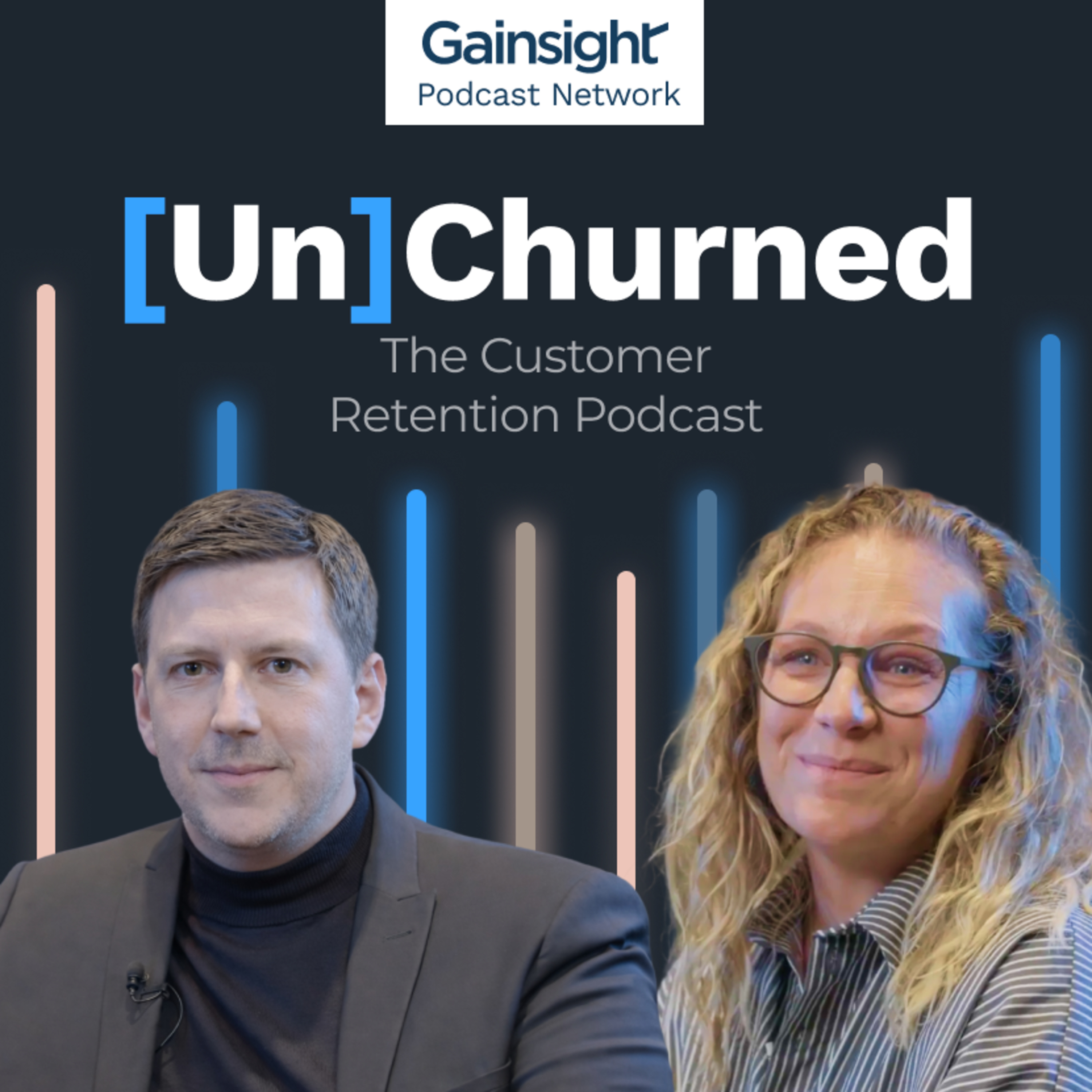
Inside SAP’s Scaled Customer Success Strategy ft. Carsten Schütz (SAP)
Mar 600:25:14Tap to summarizeReady to churn less and win more? 🏆 Subscribe for a simple, once-a-month rundown of the episodes at gainsight.com/unchurnedIn this episode of Unchurned, Jenny Calvert sits down with Carsten Schütz, VP & Global Head of Scaled CS at SAP, to talk about how modern CS teams must evolve to serve thousands of customers without losing the human touch.Carsten shares how his journey from startup CSM to SAP executive reshaped his thinking about scale, specialization, and the real role of AI in customer success.The conversation dives deep into why the traditional “hire more CSMs” model doesn’t work anymore, how AI agents can support the long tail of customers, and why product usage data—not just sentiment—is the future of customer health.One of the biggest takeaways: AI isn’t replacing customer success. It’s enabling teams to finally support the majority of customers who currently receive little to no human interaction. ---Timestamps0:00 - Preview & Introduction0:55 - Meet Carsten Schütz 4:25 - The real answer to the generalist vs specialist debate6:20 - What customers actually want from their CSMs7:57 - What makes a truly valuable QBR9:18 - Why AI is essential for the 80% of customers at scale 11:08 - The importance of keeping the human touch12:02 - Using AI to drive adoption, detect risk, and churn prevention13:55 - Why product usage data is critical for customer health16:28 - What CS leaders should look for when hiring today19:04 - How AI is changing how younger professionals work20:55 - “This is the worst AI will ever be.”21:48 - Q4 renewal strategy and human connection23:33 - Why in-person conferences still matter---What You’ll Learn* Why 80% of customers require a scalable CS strategy* Why the generalist vs specialist debate is the wrong question* How product usage data reveals hidden churn risks* Why CS teams must think beyond 1-to-1 engagement* How to scale digital engagement without losing human connection* Why the future of CS is human-first, AI-powered---Want the playbook, not just the conversation? Subscribe for deep-dive, actionable breakdowns from every episode at unchurned.substack.com.---Where to Find Carsten SchützLinkedIn: https://www.linkedin.com/in/carstenschuetz/---Where to Find Jenny:LinkedIn: https://www.linkedin.com/in/jennycalvert/---Where to Find Josh:LinkedIn: https://www.linkedin.com/in/jschachter/Unchurned Substack: https://unchurned.substack.com/
Transcribe →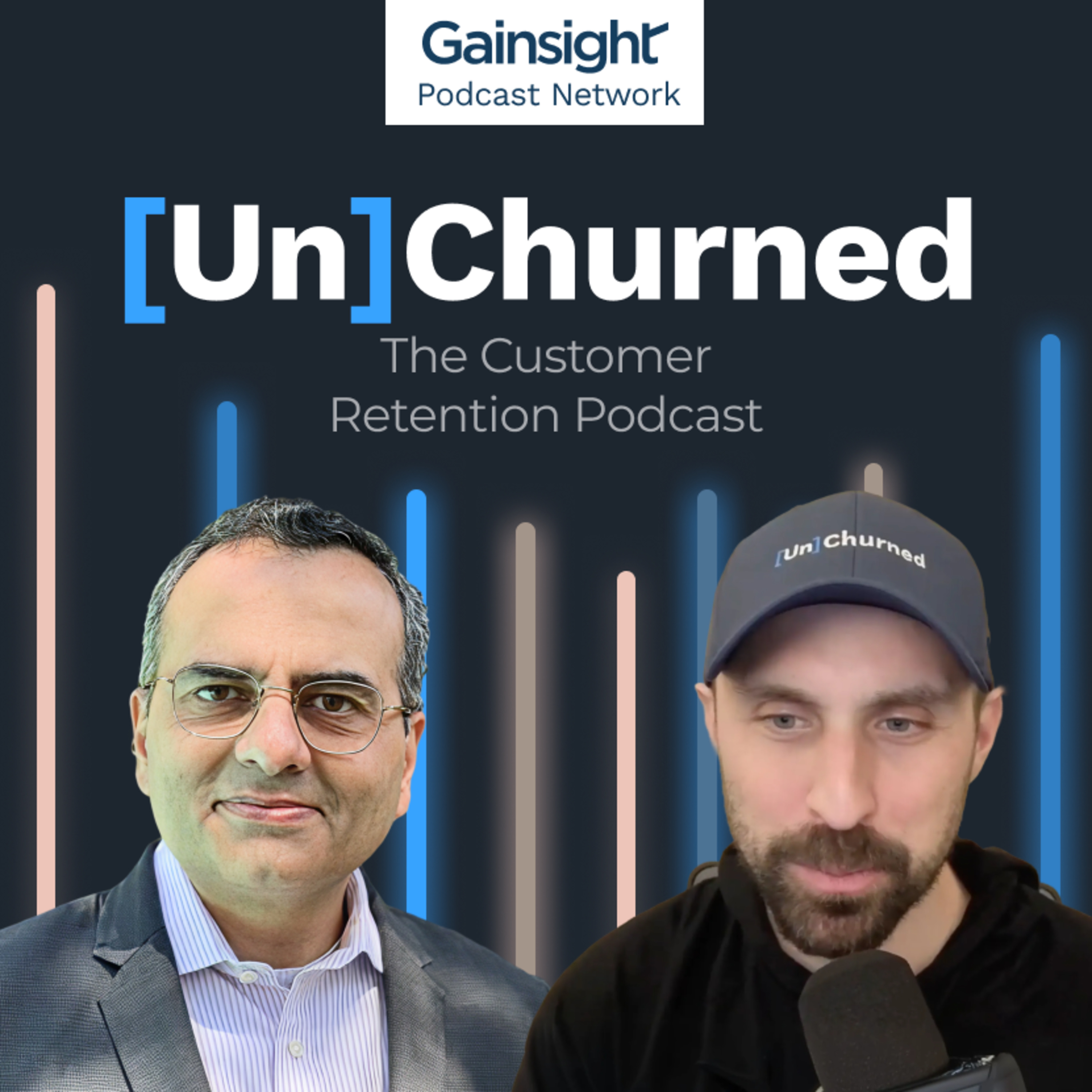
How This Ex-CRO Is Making CS Impossible to Ignore ft. Manish Chawla (PowerSchool)
Mar 400:37:34Tap to summarizeReady to churn less and win more? 🏆 Subscribe for a simple, once-a-month rundown of the episodes at gainsight.com/unchurnedCustomer Success doesn’t become mission-critical because you say it is. It becomes mission-critical when it owns revenue.In this episode of Unchurned, Josh Schachter sits down with Manish Chawla, CCO at PowerSchool, to talk about what it actually takes to make CS essential — to customers and to the company.Manish doesn’t come from traditional CS. He’s been a CRO. A GM. He learned that the only truth that matters is what the customer believes.Now he’s applying that lens to CS.At PowerSchool, CSMs don’t just manage relationships. They carry GRR and expansion targets. AI isn’t a premium add-on — it’s table stakes. And cost-to-serve must go down while customer experience goes up.This isn’t theory. It’s operational.If Customer Success isn’t tied directly to profit, it risks becoming optional. And optional doesn’t survive.This episode is for operators who want CS at the revenue table — not watching from the sidelines.---Timestamps0:00 - Preview & Introduction1:25 - Meet Manish Chawla & Overview of PowerSchool3:35 - From consulting to CRO to CCO6:13 - Why execution matters more than strategy8:35 - Bringing a commercial mindset to Customer Success10:52 - Should CSMs carry revenue? (GRR & expansion targets)16:20 - Making CS mission-critical inside the company17:42 - Cost-to-serve: Driving efficiency without hurting CX18:50 - Scaling through digital CS. partner & ecosystems21:25 - Designing CS for K-12 and vertical SaaS28:30 - AI is table stakes (and customers won’t pay extra)30:51 - Using AI internally to increase productivity32:25 - Building a CS engineering team35:45 - Becoming essential to customers---What You’ll Learn* Why CSMs carry GRR and expansion targets — not just NPS* Why AI is table stakes (and why customers won’t pay extra for it)* How to lower cost-to-serve without lowering experience* How to tie CS directly to the CEO’s revenue equation* Why vertical SaaS demands deep domain fluency in CS hiring* How to position the CSM as the COO to the AE’s CEO---Want the playbook, not just the conversation? Subscribe for deep-dive, actionable breakdowns from every episode at unchurned.substack.com.---Where to Find the GuestsManish's LinkedIn: https://www.linkedin.com/in/manishchawla1/---Where to Find Josh:LinkedIn: https://www.linkedin.com/in/jschachter/Unchurned Substack: https://unchurned.substack.com/
Transcribe →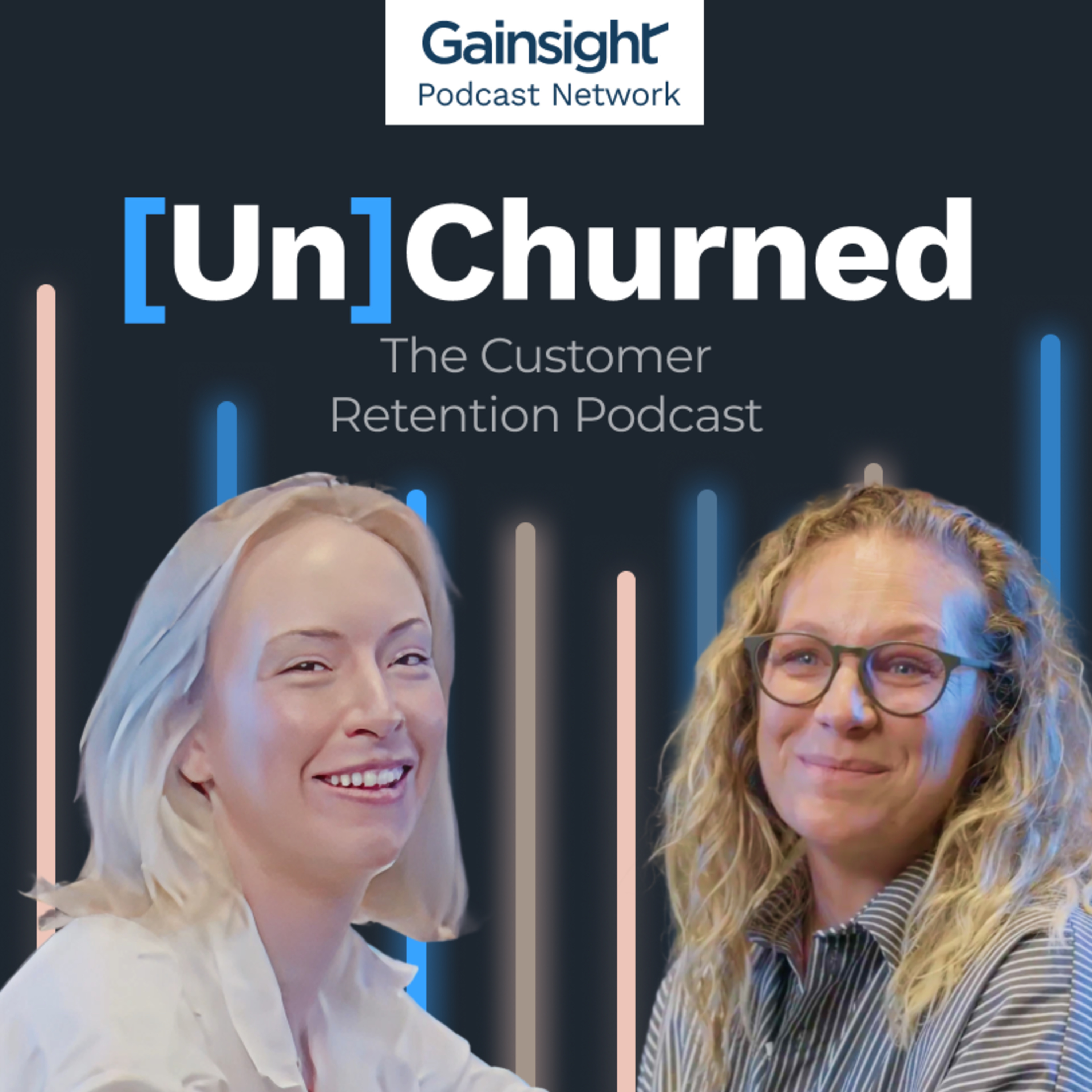
How We Turn Churn Into Comebacks (The Revenue Hiding Inside Your Churn) ft. Eleanora White (Supermetrics)
Feb 2700:15:48Tap to summarizeReady to churn less and win more? 🏆 Subscribe for a simple, once-a-month rundown of the episodes at gainsight.com/unchurnedIs the future CSM a generalist empowered by specialist AI agents?Live from Pulse Europe, Eleanora White, Global Head of CS & Solutions Architects at Supermetrics, joins Jenny Calvert to break down how her team is operationalizing Agentic AI inside customer success.From internal AI agents that reduce friction…To customer-facing automation at scale…To autonomous agents that challenge and pressure-test insights…Supermetrics is building a 3-phase AI roadmap that reshapes how CSMs work — without replacing the human relationship.If you’re working on AI adoption or retention strategy — this episode is your blueprint.---Timestamps0:00 - Preview & Introduction0:40 - Meet Eleanora White 1:10 - AI as a Team Member3:39 - Supermetrics’ 3-Phase AI Strategy5:38 - Removing Friction with Internal AI6:49 - The Future CSM Profile9:00 - Hitting GRR Targets in Q411:03 - The “Stay-Alive” Retention Strategy13:15 - Win-Back Metrics & LTV14:27 - What’s Next for 2026---What You’ll Learn* Why the best CSMs will become AI-powered generalists* How to structure CS teams in the agentic era* How Agentic AI can serve CSMs internally before customers* The “stay-alive contract” retention strategy to increase long-term LTV* How to win customers back without hurting GRR* Why discovery is the most underrated CSM skill---Want the playbook, not just the conversation? Subscribe for deep-dive, actionable breakdowns from every episode at unchurned.substack.com.---Where to Find the GuestsEleanora's LinkedIn: https://www.linkedin.com/in/eleanora-white/---Where to Find Jenny:LinkedIn: https://www.linkedin.com/in/jennycalvert/---Where to Find Josh:LinkedIn: https://www.linkedin.com/in/jschachter/Unchurned Substack: https://unchurned.substack.com/
Transcribe →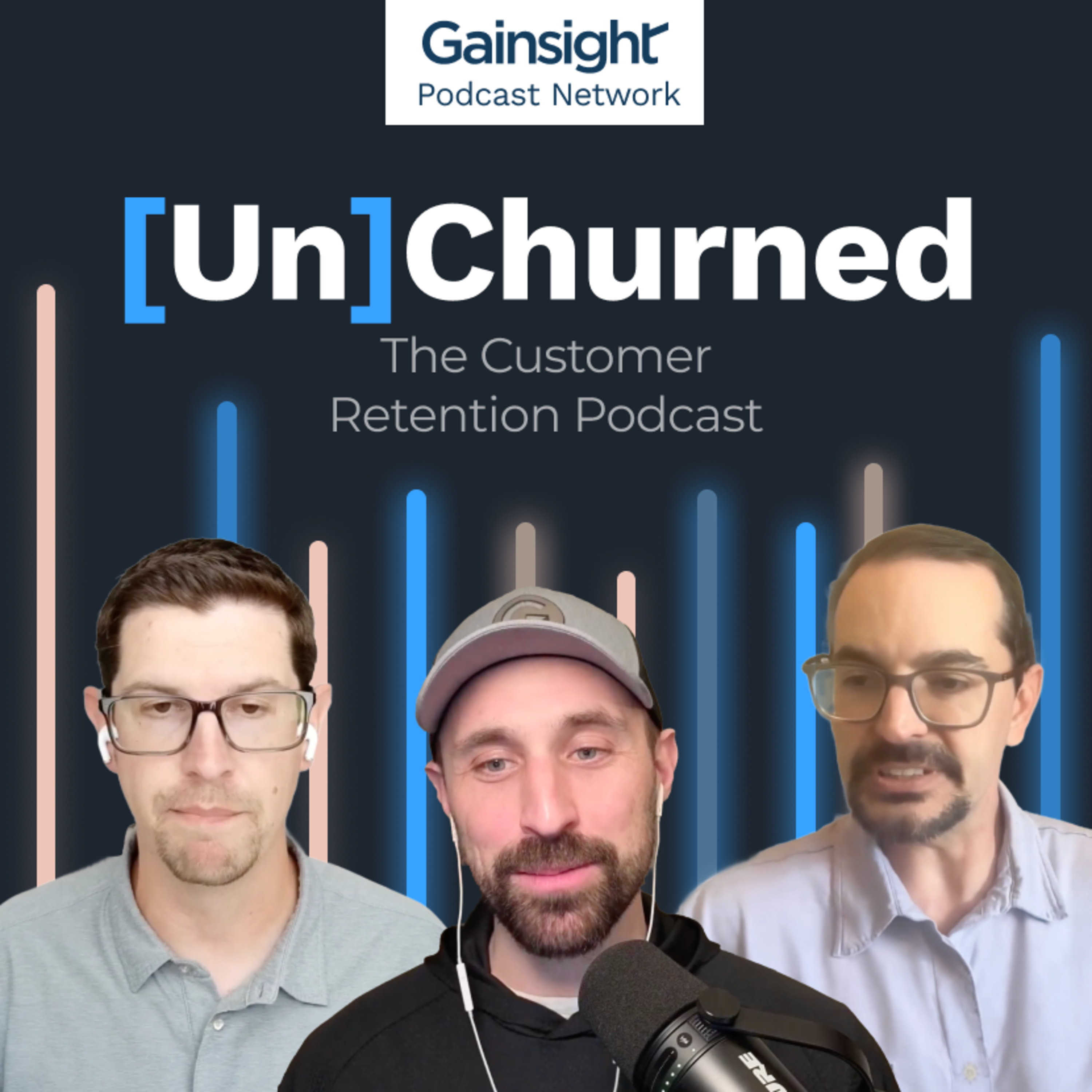
B2B Communities Aren't Dead, Your Outdated Metrics Are ft.Jon Wishart & Brian Oblinger
Feb 2500:37:53Tap to summarizeReady to churn less and win more? 🏆 Subscribe for a simple, once-a-month rundown of the episodes at gainsight.com/unchurnedIs community in B2B SaaS a cost center — or a growth engine hiding in plain sight?In this episode of Unchurned, Josh Schachter sits down with Jon Wishart and community strategist Brian Oblinger to break down what community really means beyond vanity metrics and buzzwords.They explore how community drives retention (GRR), expansion, and customer success — and why most companies are measuring it wrong. Plus, they unpack how AI is reshaping search, traffic, and discoverability, and why declining pageviews don’t mean declining value.If you’re building, scaling, or rethinking your community strategy, this episode will change how you think about impact — and the future of customer connection.---Timestamps0:00 - Preview & Introduction1:45 - Meet Jon Wishart & Brian Oblinger7:56 - What community in B2B SaaS actually is9:00 - The “eras” of community ownership (Support → CS → Marketing → Product)12:30 - Is community a cost center? And measuring impact18:15 - The CFO conversation: investment vs expense19:35 - AI, traffic declines, and community panic21:30 - Why AI isn’t killing community26:42 - The shift from “How do I?” to “How do we?” 30:40 - How community impacts feature development strategy 33:13 - Starting from zero: advice for new community builders---What You’ll Learn* The core definition of community in B2B SaaS (without the fluff)* How community drives retention, expansion, and lower support costs* Why operational metrics (posts, members, pageviews) are outdated* How to measure community’s business impact using cohort analysis* What AI is really doing to search traffic and discoverability* Why declining traffic doesn’t mean declining value* How to future-proof your community strategy* The fundamentals every new community leader must get right---Want the playbook, not just the conversation? Subscribe for deep-dive, actionable breakdowns from every episode at unchurned.substack.com.---Where to Find the GuestsBrian's LinkedIn: https://www.linkedin.com/in/jon-wishart/Jon's LinkedIn: https://www.linkedin.com/in/jon-wishart/---Where to Find Josh:LinkedIn: https://www.linkedin.com/in/jschachter/Unchurned Substack: https://unchurned.substack.com/
Transcribe →
75% of SaaS Companies Will Disappear ft. Brett Queener (Bonfire Ventures)
Feb 2000:16:03Tap to summarizeReady to churn less and win more? 🏆 Subscribe for a simple, once-a-month rundown of the episodes at gainsight.com/unchurned 18 months ago, venture capitalist Brett Queener made a bold prediction: 75% of customer-facing software companies would disappear. Now he’s back—with receipts.On this episode of Unchurned, Brett explains why traditional SaaS moats have collapsed, why “system of record” is no longer defensible, and why we’ve entered a new era of agentic software—where you don’t buy tools anymore… You hire them.Brett introduces what he calls the Judgment Layer—the only remaining defensible advantage in AI-powered products. In a world where agents can build, code, write, and self-organize, your job shifts from operator to manager. And your product’s job shifts from workflow engine to embedded judgment engine.If you build, invest in, or buy software, this episode is required listening.---Timestamps0:00 - Preview & Introduction2:15 - From GPT moment to Agents4:02 - Survival in the AI era6:50 - Meet Brett8:00 - Why SaaS moats disappeared10:40 - The Judgment Layer explained & Feedback loops13:58 - Hiring software vs. buying software---What You’ll Learn* Why most SaaS companies are now replaceable* Why embedded judgment is more valuable than workflow automation* The new decision framework for buy vs. build* Why the humanities may outperform pure STEM in the AI era* What founders must build to remain defensible---Want the playbook, not just the conversation? Subscribe for deep-dive, actionable breakdowns from every episode at unchurned.substack.com.---Where to Find Brett QueenerLinkedIn: https://www.linkedin.com/in/brettqueener/Substack Article: https://queener.substack.com/p/in-the-end-it-may-just-be-judgementBonfire Ventures: https://www.bonfirevc.com/---Where to Find Josh:LinkedIn: https://www.linkedin.com/in/jschachter/Unchurned Substack: https://unchurned.substack.com/
Transcribe →
What Consumption-Based CS Looks Like Inside a $100B Company ft. Jared Collins (Dell)
Feb 1800:24:47Tap to summarizeReady to churn less and win more? 🏆 Subscribe for a simple, once-a-month rundown of the episodes at gainsight.com/unchurned What happens when you bring consumption-based customer success into a company?In this episode of Unchurned, Jared Collins, Senior Director of Customer Success at Dell Technologies, shares how the Apex team is building a modern CS engine inside a $100B infrastructure giant.Unlike SaaS companies that can deploy value instantly, Dell Apex operates in a world of physical logistics, supply chain constraints, and long hardware lead times. That means customer success isn’t just about adoption — it’s about anticipation.Jared breaks down how his team connects data sources across the enterprise, builds trigger-based playbooks, partners deeply with sales, and prepares for an AI-driven future where customer signals surface before customers even recognize the need.---Timestamps0:00 - Preview & Introduction1:25 - Meet Jared Collins & Overview of Dell Apex 3:55 - The operational reality of shipping infrastructure5:52 - Why CS must anticipate months ahead (lead times + forecasting)8:20 - Working inside a $100B company: complexity vs opportunity9:53 - Enabling CSMs for success to build strategic relationships11:20 - Becoming data strategists: Building health scores across multiple business units13:15 - Data → Triggers → Playbooks: the operational CS framework16:46 - AI in CS: why foundations matter more than hype19:20 - What success looks like for Apex CS in the next 1–2 years21:55 - What Jared loves about Dell---What You’ll Learn* Why hardware logistics fundamentally changes how CS operates* How to build proactive CS using data triggers and standardized playbooks* How to integrate CS inside a massive enterprise organization* The difference between CapEx and consumption-based thinking* Why AI only works if your data foundations are clean* How to free CSMs to focus on strategic relationship-building* What “good” looks like for CS inside infrastructure businesses---Want the playbook, not just the conversation? Subscribe for deep-dive, actionable breakdowns from every episode at unchurned.substack.com.---Where to Find Jared CollinsLinkedIn: https://www.linkedin.com/in/jaredrcollins/---Where to Find Josh:LinkedIn: https://www.linkedin.com/in/jschachter/Unchurned Substack: https://unchurned.substack.com/
Transcribe →
A Masterclass in Category Creation from the Leaders at Gong and Gainsight ft. Udi Ledergor (Gong) & Lauren Olerich (Gainsight)
Feb 1100:48:51Tap to summarizeReady to churn less and win more? 🏆 Subscribe for a simple, once-a-month rundown of the episodes at gainsight.com/unchurned Udi Ledergor joined Gong as employee #13 and marketer #1, helping build it from a 12-person startup to a category-defining revenue intelligence leader. As Chief Evangelist and author of "Courageous Marketing," he's learned one hard truth: if you don't have product-market-fit, no amount of marketing genius will save you.In this conversation with Josh Schachter and Lauren Olerich, Udi shares the real indicators of product-market-fit, when companies should actually hire their first marketer, and how Gong evolved through multiple category iterations—from conversation intelligence to their current positioning as an AI operating system for revenue teams.The discussion digs into Gong's "brand as person" exercise that created consistency across everything from content voice to event experiences, why data-driven content about salespeople cursing went viral, and the value of leaving raving fans everywhere you go. Udi's 27-year working relationship with Gong's CEO proves that burning bridges is career suicide in a small industry.For anyone building brands, creating categories, or wondering if their startup is ready for marketing investment, this episode cuts through the fluff with practical frameworks and hard-won lessons.---Do you love great TV? Lauren co-hosts a podcast about popular TV show finales called The Finale Pod. Take a listen on Apple Podcasts, Spotify, or wherever you get your podcasts---Timestamps0:00 - Preview & Introduction0:54 - Meet Udi Ledergor and Lauren Olerich 4:00 - Udi's early journey at Gong7:00 - When should you hire your first marketer? 10:55 - Lauren's early journey at Gainsight14:00 - How Gong created the revenue intelligence category in 201922:58 - Diamond is forever28:10 - Pulse predates Gainsight32:17 - Early struggle at Gainsight33:40 - The importance of domain expertise41:52 - Brand as human: The exercise that creates consistency across everything---What You’ll Learn* Evaluating product-market-fit for marketing to succeed* How to create consistent tone across content, events, and category positioning* Real tactics behind building and evolving categories across 10 years* Why leaving raving fans at every company matters more than titles* How a 27-year working relationship led to employee #13 becoming Chief Evangelist* How data-driven content can go viral while staying perfectly on-brand* When to publish the controversial insights your competitors are too afraid to share---Want the playbook, not just the conversation? Subscribe for deep-dive, actionable breakdowns from every episode at unchurned.substack.com.---Where to Find Udi LedergorLinkedIn: https://www.linkedin.com/in/udiledergor/Book "Courageous Marketing": https://www.udiledergor.com/bookWhere to Find Lauren OlereichLinkedIn: https://www.linkedin.com/in/laurenolerich/The Finale Pod: Apple Podcasts | Spotify---Where to Find Josh:LinkedIn: https://www.linkedin.com/in/jschachter/Unchurned Substack: https://unchurned.substack.com/
Transcribe →How Do You Measure AI Proficiency in Your CS Team? ft. Guy Galon (Obrela)
Feb 600:15:31Tap to summarizeReady to churn less and win more? 🏆 Subscribe for a simple, once-a-month rundown of the episodes at gainsight.com/unchurned Guy Galon, CCO at Obrela, joins Jenny Calvert at Pulse Europe in Dublin to discuss how he's transforming CS hiring and operations for the AI era. In this conversation, Guy explains how he measures AI capability in his team, why he's building some AI tools internally at a cybersecurity company, and his three big bets for AI in 2026. Guy tackles the generalist vs. specialist debate, explains why his technical background as a software engineer helped him earn credibility as a CS leader, and explores the emerging question: What does it mean to manage AI agents? From performance reviews for bots to getting CS leaders a real seat at the revenue forecasting table, this conversation covers the practical and philosophical challenges of leading customer success in 2026.---Timestamps0:00 - Preview & Introduction0:54 - Meet Guy Galon, CCO at Obrela2:27 - The Generalist vs. Specialist Debate in the Age of AI3:35 - The Multifaceted CSM Framework: Origins and Evolution4:47 - How to Measure AI Proficiency6:05 - 2026 AI Strategy8:03 - What Changes When AI Delivers on These Three Promises9:41 - Q4 Advice: Think in 8-10 Weeks, Not 1211:30 - Getting CS a Seat at the Revenue Forecasting Table13:00 - The Human Element AI Can't Replace: Trust and Influence14:14 - The Future of Managing AI Agents---What You’ll Learn* How the Multifaceted CSM Framework helps identify talent across five key capability areas* How to balance AI innovation with data compliance in highly regulated industries like cybersecurity* How to move CS from execution-focused roles to strategic contributors in revenue forecasting* The difference between building internal AI capabilities vs. using external tools in customer success* What it might look like to manage AI agents in the future (priorities, objectives, performance reviews)---Want the playbook, not just the conversation? Subscribe for deep-dive, actionable breakdowns from every episode at unchurned.substack.com.---Where to Find Guy GalonLinkedIn: https://www.linkedin.com/in/guy-galon-b1a80/---Where to Find Josh:LinkedIn: https://www.linkedin.com/in/jschachter/Unchurned Substack: https://unchurned.substack.com/
Transcribe →
What Happens When You Apply Digital Motions to Your Biggest Accounts? ft. Christine Lavery (Conga)
Feb 400:34:02Tap to summarizeReady to churn less and win more? 🏆 Subscribe for a simple, once-a-month rundown of the episodes at gainsight.com/unchurned Christine Lavery, VP of Customer Success at Conga, shares why the traditional approach to digital customer success is broken and how she's applying digital motions across all customer tiers—not just the long tail.Christine discusses her two major priorities for 2026: implementing product analytics as the foundation for customer outcomes and rolling out SMART goals to move from vague value conversations to measurable impact. She also explores how AI is transforming customer intelligence by synthesizing structured data (product analytics) with unstructured data (emails, support tickets, NPS verbatims) to create a complete picture of customer health.---Timestamps0:00 - Preview & Introduction1:25 - Meet Christine Lavery2:15 - Overview of Conga3:05 - Conga's acquisition of PROS and the future of CPQ4:04 - Structure of Christine's 100-person global CS organization6:35 - Why digital motions shouldn't be "long tail only."9:52 - Mapping customer journeys and communication strategies13:42 - Collaboration between CS, Product, and Marketing19:42 - Reporting to revenue and driving growth25:30 - Breaking down the SMART goals framework for customer outcomes27:42 - How AI fits into product analytics and customer intelligence31:27 - Why CS leaders must fight for a seat at the table---What You’ll Learn* Why limiting digital customer success motions to only "long tail" customers is a mistake * How to scale one-to-many strategies across enterprise and strategic accounts* How to use SMART goals to transform vague "value" conversations into measurable customer outcomes that clearly demonstrate ROI* The difference between basic product analytics and sophisticated use-case tracking that helps you coach customers to better outcomes* How AI synthesizes structured data (product usage) and unstructured data (emails, support tickets, NPS) to create a complete picture of customer health* Why CS leaders must actively fight for a seat at the executive table---Want the playbook, not just the conversation? Subscribe for deep-dive, actionable breakdowns from every episode at unchurned.substack.com.---Where to Find Christine LaveryLinkedIn: https://www.linkedin.com/in/christine-lavery/---Where to Find Josh:LinkedIn: https://www.linkedin.com/in/jschachter/Unchurned Substack: https://unchurned.substack.com/
Transcribe →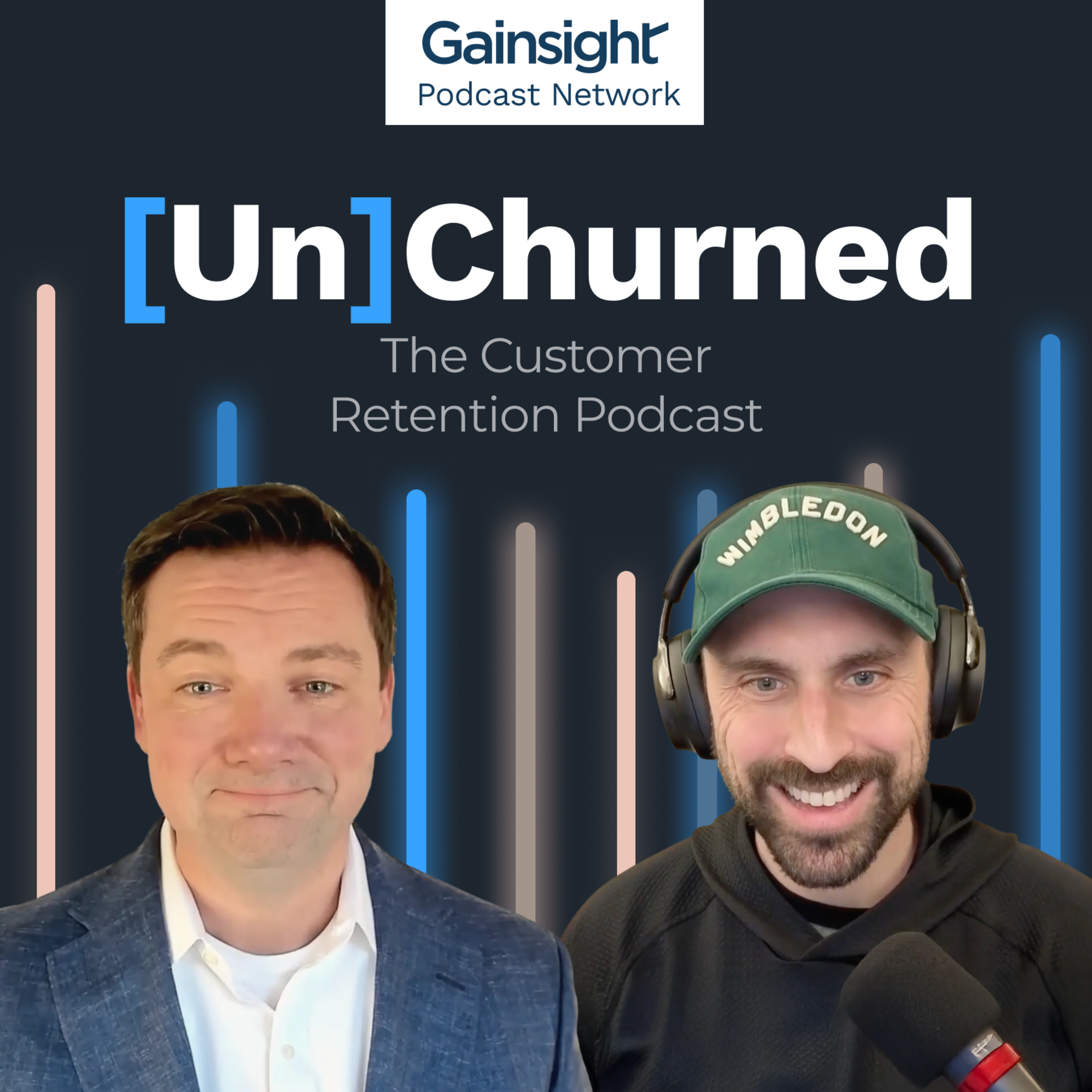
This CCO Won't Ask His Team What He Wouldn't Do Himself (And Why) ft. Jim Richmond (Smartling)
Jan 2800:29:08Tap to summarizeReady to churn less and win more? 🏆 Subscribe for a simple, once-a-month rundown of the episodes at gainsight.com/unchurnedJim Richmond is the Chief Customer Officer at Smartling, an AI-powered translation company doing AI "before it was cool" since 2009. Leading 50 professionals across support, services, and customer success, Jim shares his 2026 playbook: why GRR is his North Star, how he's building systems to scale 4x, and why role specialization beats generalization in the AI era.Jim reveals how AI bots eliminated single-touch support tickets at Smartling, why he still carries his own book of business as a CCO, and his career advice for aspiring leaders to build the professional empathy that makes them an authentic partner.---Timestamps0:00 - Preview & Introduction1:25 - Meet Jim Richmond 1:50 - Smartling Overview4:33 - 2026 Priorities: GRR as the North Star metric6:30 - Building a four-quarter forecast9:40 - Building systems for 4x growth12:24 - Forecasting to eliminate surprises14:55 - Will AI make CSMs more generalized or specialized?18:32 - How AI bots eliminated single-touch support tickets21:42 - What it's like being a first-time Chief Customer Officer23:38 - The rule of thirds: How a CCO allocates time25:10 - Why this CCO still carries his own book of business25:52 - Seek out a diversity of experiences---What You’ll Learn* How to build a four-quarter forecast that eliminates revenue surprises* Why role specialization creates more operational leverage than generalization* How AI bots eliminated single-touch support tickets at Smartling* Why leading from the front means carrying your own book of business* How to build professional empathy by seeking diverse experiences across sales, CS, and services---Want the playbook, not just the conversation? Subscribe for deep-dive, actionable breakdowns from every episode at unchurned.substack.com.---Where to Find Jim Richmond LinkedIn: https://www.linkedin.com/in/jimrichmondatl/---Where to Find Josh:LinkedIn: https://www.linkedin.com/in/jschachter/Unchurned Substack: https://unchurned.substack.com/
Transcribe →