Loading summary
Transcript59 lines
- [00:00]
Podcast Announcer
This is an iHeart podcast.
- [00:02]
Richard MacLean Smith
Guaranteed human, no web design experience, no problem. Wix Harmony makes it easy to create a professional website. Just describe what you want and it builds the entire site with the business tools you need. Plus an AI agent named Aria is there to help with ideas or tasks along the way. With over 20 years of innovation, WIX continues to lead in website technology. Try it for free@wix.com Harmony that's Wix W-I X.com Harmony Craving something specific? From global flavors to viral snacks, TikTok has it all. If you can dream it, you can make it right at home. Find your next favorite dish on TikTok.
- [00:47]
Jonas Brothers
Hey guys, it's us, the Jonas brothers. I'm Joe. I'm Kevin. And I'm Nick. And guess what? We created our own podcast called hey Jonas.
- [00:55]
Richard MacLean Smith
We invented a podcast.
- [00:56]
Jonas Brothers
Well, we didn't invent it, we. We just contributed to it. We're the first people to do podcasts. We get to ask other people questions because we're sick and tired of being asked questions. Well, sick and tired is a strong way to put it, but you know, tired and sick. Tired and sick. Listen to hey Jonas on the iHeartRadio
- [01:10]
Richard MacLean Smith
app, Apple Podcasts or wherever you get your podcasts. Just listen.
- [01:14]
Jonas Brothers
We don't care where you hear it.
- [01:16]
Robert Smigel
Another podcast from some SNL late night comedy guy not quite on Humor Me with Robert Smigel and Friends. Me and hilarious guests from Bob Odenkirk to David Letterman help make you funnier this week. My guests SNL's Mikey Day and head writer Streeter Seidel help an acapella band with their between songs banter. Where does your group perform? We do some retirement homes. Those people are starving for banter. Listen to Humor Me with Robert Smigel and friends on the iHeartRadio app, Apple Podcasts or wherever you get your podcasts.
- [01:47]
Richard MacLean Smith
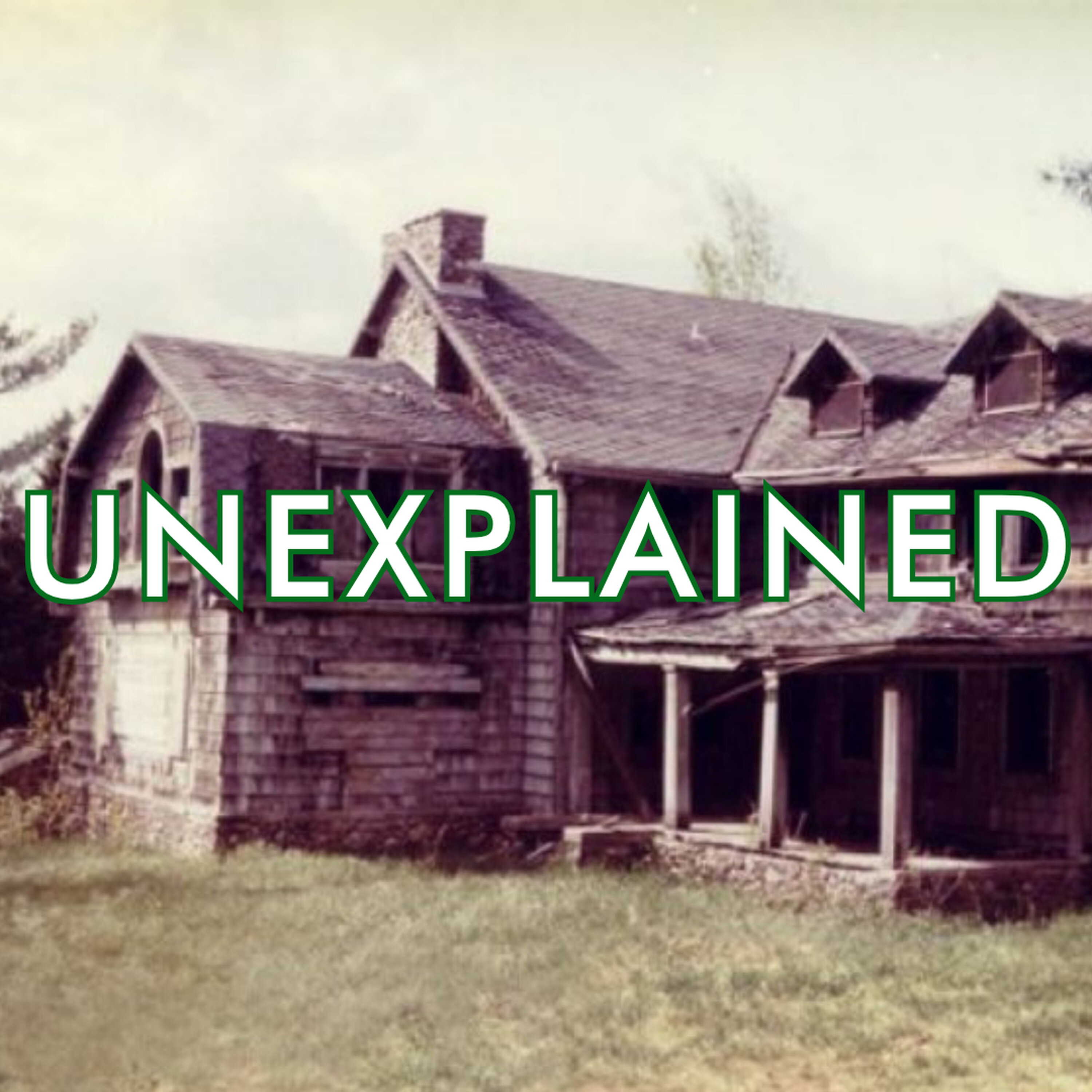
Hello, it's Richard McLean Smith here with some more events news. I'm delighted to say I'll be performing at this year's Edinburgh Festival. Fringe Unexplained has beguiled listeners for over a decade with real life tales of the strange and mysterious. But now, for the first time, I'll be taking the podcast to the Fringe, where I'll be giving a live interpretation of the Flannan Isles lighthouse mystery. The year is 1900. Three lighthouse keepers stand watch on a desolate island far from home until one day they completely vanish from the face of the earth. So if you'd like to see me tell that story in person, I'LL be performing from August 7th to the 29th at 10pm in Theatre 3 of the Space at the Surgeons Hall. I would dearly love you all to come. Tickets are on sale now. Just search Unexplained Live at the Fringe. Or you can go to unexplainedpodcast.com events and find the link there. Or if you like, you can go to thespaceuk.com shows2026forward/ unexplained live. I look forward to seeing you there. On a balmy day in the summer of 1969, a classic low sprung station wagon bumps gingerly along a dirt road through the backwoods of Villas county in northeastern Wisconsin. As the car rounds a corner, the woodland suddenly gives way to a clearing, revealing the placid waters of West Bay Lake beyond. But something else comes into view too, a rambling clapboard mansion partially hidden within the trees. It's a complete hodgepodge of styles, part faux Georgian, part Greek Revival, with hints of classic New England here and there. 30 year old ginger Hinshaw, her straight mouse, brown hair hanging just below her shoulders, leans out of the passenger window, utterly captivated by it. The property and its outbuildings had been vacant for years and were in desperate need of some tlc. The windows were broken, the roof sagged, while inside was a mess of peeling paint and wallpaper. But Ginger didn't care. She fell in love the moment she saw the pictures of it. Seeing it now in the flesh as it were, only strengthened her desire to buy it. Ginger had recently remarried and her husband, Arnold, owned a construction company. Together they could restore the place into a marvellous family home and build a new life together. Arnold is almost as excited as his wife as they pull up outside, squeezing Ginger's hand as they trade excited looks. But in the backseat, Ginger's nine year old daughter, April, one of six that she and Arnold share between them, is less enthused. As she gets out of the car and stares up at the property's eerily dark gable windows, she feels a sudden coldness come over her. Without any of her mother's optimism, she sees nothing but a decrepit, oversized cabin with a low slung porch that was far darker than it had any right to be under the warm midday sun, though she can't quite articulate exactly how it makes her feel. What she does know is that she absolutely doesn't want to live here. But the Hinsaws will ignore April's reservations and within weeks complete their purchase of the property. The place has had many names over the years, Lilac Hills, the Lamont mansion, and most recently, Summer Wind. And over the course of the next few months, it will completely and utterly tear the family apart. You're listening to Unexplained, and I'm Richard Maclean Smith. According to most accounts, Summerwind, as it was most recently known, was built in the early 1900s as a fishing lodge. In 1916, then called Lilac Hills, it was apparently purchased by Robert Lamont, who at the time was vice president of a company owned by American Steel Foundries. Later, he would serve as the Secretary of Commerce for President Herbert Hoover. Lamont is rumoured to have employed a firm of Chicago based architects to remodel the mansion. Allegedly, the work took two years to complete, during which time there were bizarre stories that some of the rooms appeared inexplicably to change their dimensions from day to day. Then, Sometime in the 1930s, a number of strange stories from the family. Servants spoke began to surface. It was said that doors opened and closed on their own. Sometimes disembodied voices were heard and apparitions had even been seen, including a translucent woman milling about the property's driveway. The Lamonts apparently didn't believe any of it until one night, Robert Lamont and his wife Helen were home alone having dinner. As they ate dessert, Robert looked up to see a strange shadow like figure standing in the doorway that led to the basement stairs. He was allegedly so startled that he grabbed a pistol from a kitchen drawer and fired twice at the shadowy figure, only for the bullets to go straight into the door and the figure vanish moments later. The family are said to have abandoned the house soon after. All of which was completely unknown to Ginger and Arnold Hinshaw when they moved in. In those first few weeks, flush with the effervescent enthusiasm of a new homeowner, Ginger got started on all the much needed renovations, beginning with repainting and wallpapering. But things soon became difficult when the Hinshaws tried to find local contractors to help with the more complicated work. The responses were initially enthusiastic, but as soon as they mentioned the name Summerwind, the contractors suddenly found they were too busy or were lacking the required materials. Ginger couldn't understand why exactly, but assumed it was simply to do with the sheer amount of work that was needed. And so in the meantime, they pressed on with the renovations alone. One day, Ginger was rummaging through a bedroom closet when she found a roll of musty old papers. Opening them up, she was surprised to find that they were the original plans for the house. But even more Surprising was what she found in them. As she continued to unroll the papers, a long wooden object slipped out from inside them. That's weird, she thought, holding the item up to the light. Though she couldn't be sure what it was exactly. It appeared to be an old Native American peace pipe. After finding the pipe, for some strange reason, Ginger felt more driven than ever to restore Summer Wind to its former glory. Something about the physicality of it all. Wrapped up in those old papers, holding them in her hands, she felt momentarily transported right back in time to when the house was first built. She began to feel sorry for how it had been so mercilessly abandoned and left to rot all these years. And she had the sudden burning urge to make it whole again. Ginger's restoration efforts became obsessive. At one point, she even tried out 11 different colours for the interior woodwork before alighting on the right one. But while Ginger's passions for the renovations grew, almost as if the two were inversely proportional to each other, her husband Arnold's just as suddenly began to wane. So the story goes, it all started when Arnold apparently discovered a crawlspace behind a closet in one of the bedrooms. When he peered inside it, he saw what appeared to be the carcass of some kind of animal. But he didn't quite have the angle to see what it was exactly. Too small to fit in the space himself, he asked one of his daughters to go inside and find out what was in there. The girl dutifully took a torch and squeezed into the space, only to let out a horrified scream moments later. The strange shape, it turned out, was apparently a human skull, still covered in thick strands of dark, dark hair. Rather than remove it, Arnold is said to have made the questionable decision to simply plaster over the wall, leaving the skull in there. It was supposedly his belief that the remains had been placed there for a reason and shouldn't be disturbed. It was around this time that Arnold began to notice something strange. Sometimes he would leave a room and come back, only to find a chair had been moved. Other times, it seemed he only needed to turn his back for a moment, and a chair would be swiftly positioned a different way by invisible hands. Ginger had noticed it, too. More than that, at times. With the kids at school and Arnold out for work, Ginger had the distinct sense that she wasn't entirely alone in the house. As time went by, Arnold became increasingly distracted and seemed incapable of completing any household task that he began. Instead, he spent most of his free time sombrely playing an electric organ that he'd bought himself as a moving in present. And as the months went by, Arnold just became more and more withdrawn. First he stopped helping with the renovations, claiming he didn't have the energy for it. Then he stopped his own construction work too. He began sleeping through the day, seeming to wake only to play the organ. And if he woke in the middle of the night, he'd play it then too, filling the house with its mournful tones. Vibe coding is everywhere right now, but it's not just for apps anymore. Now it's making its way into website creation. WIX has introduced WIX Harmony, a vibe coder for websites that lets you type what you want and generate a site ready to use right away, complete with forms, payments, security and more built in. And WIX Harmony doesn't require AI for everything. You can still click and edit anything manually or select an element and have Aria, your AI agent make the updates for you. It's a smart solution to the frustration of repeatedly prompting AI just to make small changes. Try it for free@wix.com Harmony that's Wix. Wix.com Harmony hey, it's us, the Jonas Brothers.
- [13:06]
Jonas Brothers
And guess what? We have some big news.
- [13:07]
Richard MacLean Smith
What's the news?
- [13:08]
Jonas Brothers
Huge news. We created our own podcast called hey Jonas.
- [13:12]
Richard MacLean Smith
We invented a podcast.
- [13:14]
Jonas Brothers
Well, we didn't invent it, we just contributed to people to do podcasts. Pretty. Yeah, pretty wide range of podcasts starting a trend. But this one's extra special.
- [13:23]
Richard MacLean Smith
So how did we.
- [13:23]
Jonas Brothers
How do we actually come up with
- [13:24]
Richard MacLean Smith
the name hey Jonas?
- [13:25]
Jonas Brothers
Guys, I honestly don't remember.
- [13:27]
Richard MacLean Smith
I think it was on a call
- [13:28]
Jonas Brothers
about what we should call it and
- [13:31]
Richard MacLean Smith
well, we were thinking.
- [13:31]
Jonas Brothers
I'm originally calling it one of the early names of our band before Jonas Brothers. This is how you guys remember it going down? Yes, I have a very different memory of this. We were talking about a thing a bit for the podcast. People could call in and say hey Jonas. And then I wrote down on my little notepad hey Jonas and offered it up as a potential title for the podcast. But thanks for remembering that. Guys, listen to hey Jonas on the iHeartRadio app, Apple Podcasts or wherever you get your podcast. Just listen. We don't care where you hear it.
- [14:03]
Robert Smigel
Another podcast from some SNL late night comedy guy not quite on Humor Me with Robert Smigel and friends. Me and hilarious guests from Bob Odenkirk to David Letterman help make you funnier. This week. My guests SNL's Mikey Day and head writer Streeter Seidel help an acapella band with their between songs. Banter where does your group perform? We do some retirement homes. Those people are starving for banter. Listen to Humor Me with Robert Smigel and friends on the iHeartRadio app, Apple Podcasts or wherever you get your podcasts.
- [14:34]
Renee Stubbs
The French Open is one of the toughest tests in tennis, and I know firsthand because I competed there myself. I'm Renee Stubbs, and on the Renee Stubbs Tennis Podcast, I'm breaking down everything happening at Roland Garros, every match, every upset, and what it really takes to win on clay. Jen Chin went.
- [14:53]
Richard MacLean Smith
I mean, she went down a three to Rybakina, but I'm delighted she's an
- [14:58]
Renee Stubbs
outsider to win the French for me
- [14:59]
Richard MacLean Smith
and she likes clay.
- [15:01]
Renee Stubbs
Listen, Lena Rybakina is arguably the best player in the world right now and actually can win on any surface because if she's serving well, good luck. Consider this your courtside seat to the French Open. Listen to the Renee Stubbs Tennis podcast on the iHeartRadio app, Apple Podcasts, or wherever you get your podcasts.
- [15:19]
Podcast Announcer
Presented by Capital One, founding partner of iHeart Women's Sports.
- [15:27]
Richard MacLean Smith
As Arnold's despondency grew worse, he became uncharacteristically angry and began shouting at the children and Ginger at the slightest provocation. One evening, he berated Ginger for leaving their bedroom window open, even though she distinctly remembered closing it. Then it happened again and again. Each time, the enraged Arnold would accuse Ginger of deliberately leaving the window open to provoke him. In the end, Ginger decided just to nail the window shut. Soon Arnold stopped talking altogether, much to Ginger and the children's distress. When he wasn't lying in bed, he spent his time wandering around the mansion's rooms as if looking for something or just standing silently on the veranda, staring out over the lake for minutes at a time. At some point, the children managed to domesticate a local raccoon. When it escaped one day, Arnold again became inexplicably angry and ordered them all outside in the middle of the night to go and look for it. When they couldn't find it, he revealed the sickening truth. He had killed it to teach them a lesson, he said. One day, Ginger was at home alone when she became convinced she could hear a deep and strong male voice call calling out to her from the floor above. Ginger. Ginger. It cooed. With the floorboards gently creaking at each step, Ginger slowly walked up the stairs, then along the upstairs corridor to where the sound appeared to be coming from. Turning a corner, she saw for the briefest moment what she later described as a dark, shadowy figure. Ginger was convinced she was just hallucinating from all the stress and tiredness of the last few months. So she decided to take a break and invited some friends over to show them what she'd been working on all this time. After giving them a tour of the house, Ginger and her friends retired to the lounge, where they had some drinks and chatted amiably together. Later, as Ginger was getting more drinks from the kitchen, she heard a piercing scream coming from the lounge. Ginger rushed in, only to find her friends in a state of abject horror. According to them, they'd just seen a ghostly form walk in and out of the room. Without even giving Ginger time to digest it all, they grabbed their things and left. It was only after the apparent incident with her friends that Ginger is said to have begun to think a little deeper about everything that had been going on. The moving chairs, Arnold's strange moods, the unrelenting sense that her family were not the only inhabitants of the house, and the shadowy figure she was almost certain she'd seen days before. She couldn't believe she was even thinking it. But was it completely out of the realms of possibility that Summer Wind was haunted? Meanwhile, as Arnold's moods grew ever darker, his organ playing grew increasingly dissonant and ominous. Disturbed by the strange tonal shift, Ginger asked if he could play something else instead. But Arnold refused, claiming that it was the only thing that gave him pleasure in life. By now, he had lost his construction business and seemingly his entire sense of self, though Arnold's children were more forgiving of his behaviour. For Ginger's children, for whom Arnold was a relative stranger, his presence was starting to feel deeply threatening. As winter fell, the Henshaw family's life at Summerwind reached a crisis point. Struggling to pay the fear fuel bills, the whole family hauled their mattresses downstairs and took to sleeping together in the living room to keep warm. After several months of unpaid bills, the utility companies disconnected the heating and electricity altogether. Then the water pump supplying the house with fresh water broke, leaving the family with the only option of having to get their water from the lake. The grand dream of their luxury lakeshore life had turned into a nightmare of fear, depression and a struggle for survival. With things at breaking point, Ginger knew that something had to change. Having finally admitted defeat, she walked to a neighbour's house and phoned her father. To her and the children's immense relief, he arrived a few hours later in his camper van and took them all away. According to some reports, Arnold didn't Go with them. Having apparently succumbed to a full on mental breakdown, he was instead admitted to a psychiatric hospital. By the spring of 1972, Ginger and her and Arnold's children had moved to Canada, determined to start a new life. But she couldn't stop thinking about Summer Wind, all the while vowing never to return to the house. However, events were about to summon her back. When Ginger is said to have first described everything that happened at Summerwind to her father, he simply didn't believe her. But over time, like his daughter, Raymond Boba found that he too had begun to think obsessively about the house. So much so that after some months, he arranged a viewing of the property. Accompanying Raymond on the journey was his son Ray, recently home from the American Vietnam War. As father and son toured the partially restored mansion, much like Ginger had done all those months before, they couldn't help thinking just how perfect the place could be if given the right attention. They wouldn't even need much help, they reasoned, since Raymond had carpentry skills and Ray was a dab hand at plastering. A few weeks later, Raymond Boba became the latest owner of Summerwind. When he told Ginger, she was distraught. Not only was she angry that her father had brought the house back into her life, knowing how it had destroyed her family, but now he was at risk too. After much pleading from his daughter, Raymond agreed that while he was working on the house, he'd stay in his motorhome rather than the property itself. In the meantime, an undaunted Ray got to work. Later in the evening of that first day, as night began to fall, Ray appeared at his father's motorhome, clearly having been unsettled by something. When Raymond asked what the matter was, Ray denied that there was anything wrong, but still told his father that with regret, he wouldn't be able to work on the house for a few days because he had broken some equipment and needed to replace it. But Raymond was unconvinced. He knew his son was hiding something. That night in his motorhome, in the shadow of Summer Wind, he began to wonder if Ginger's stories about all the strange goings on were actually true. And so he apparently asked her back to the property to see if they could get to the bottom of it all. When Ginger arrived, it was immediately clear to her that Ray, for whatever reason, was hiding something. So she devised a plan to try and coax it out of. Since leaving the property, Ginger had apparently been studying techniques for hypnosis and asked her brother if he'd let her try it. Out on him. Ray reluctantly agreed, and before long, Ginger had put him in a deep trance. When Ginger began to question Ray about the house, his leg started shaking. Then he started speaking, but as Raymond told it later, it wasn't Ray's normal voice that came out. You are weak. I am strong, he said in a spiteful and angry tone. Then, bizarrely, he claimed to be very old and had seven children, which he despised. But Rey didn't have any children. Terrified that she'd somehow connected with a demonic entity through her brother's body, Ginger commanded whatever was speaking to her to leave. Ray then went quiet and eventually came round. When Ginger played him back a recording she'd made of the session, he was stunned and claimed not to remember any of it. Ray then apparently agreed to tell his sister and father what he'd experienced the day before at the mansion. He said that he was upstairs in the hallway alone, when he suddenly felt like there was someone else there. Then he heard two voices followed by gunshots that seemed to come from the kitchen. He raced downstairs, expecting to confront someone, but found no one there at all. But in the air was the faint odour of what he took to be gunpowder. Hurriedly, he opened the back door to see if anyone was outside, but again, there was nobody there. Heading back into the cat kitchen, he apparently found himself being drawn to the door that led from the kitchen to the basement. There were two strange holes in it that had clearly been there for years. They looked to him like bullet holes. Then the hairs on the back of his neck stood on end, as though he could sense someone standing right behind him. Ray claimed that he turned to see a dark spectral figure radiating nothing but pure evil. Ray said he then turned and ran on pure instinct all the way to his truck before driving off at speed. Vibe coding is everywhere right now, but it's not just for apps anymore. Now it's making its way into website creation. Wix has introduced Wix Harmony, a Vibe coder for websites that lets you type what you want and generate a site ready to use right away, complete with forms, payments, security and more built in. And WIX Harmony doesn't require AI for everything. You can still click and edit anything manually or select an element and have Aria, your AI agent, make the updates for you. It's a smart solution to the frustration of repeatedly prompting AI just to make small changes. Try it for free@wix.com Harmony that's Wix W-I X.com Harmony hey, it's us, the Jonas Brothers.
- [26:39]
Jonas Brothers
And guess what? We have some Big news.
- [26:40]
Richard MacLean Smith
What's the news?
- [26:41]
Jonas Brothers
Huge news. We created our own podcast called hey Jonas. Jonas.
- [26:46]
Richard MacLean Smith
We invented a podcast.
- [26:47]
Jonas Brothers
Well, we didn't invent it, we. We just contributed to it. First people to do podcasts. Pretty. Yeah, pretty wide range of podcasts, but this one's extra special.
- [26:56]
Richard MacLean Smith
So how did we.
- [26:57]
Jonas Brothers
How do we actually come up with
- [26:58]
Richard MacLean Smith
the name hey Jonas?
- [26:59]
Jonas Brothers
Guys, I honestly don't remember.
- [27:01]
Richard MacLean Smith
I think it was on a call
- [27:02]
Jonas Brothers
about what we should call it and
- [27:04]
Richard MacLean Smith
well, we were thinking.
- [27:05]
Jonas Brothers
I'm originally calling it one of the early names of our band before Jonas Brothers. This is how you guys remember it going down? Yes, I have a very different memory of this. We were talking about a thing a bit for the podcast where people could call in and say, hey Jonas. And then I wrote down on my little notepad hey Jonas and offered it up as a potential title for the podcast. But thanks for remembering that. Guys, Listen to Hey Jonas on the iHeartRadio app, Apple Podcasts or wherever you get your podcast.
- [27:34]
Richard MacLean Smith
Just listen.
- [27:35]
Jonas Brothers
We don't care where you hear it.
- [27:37]
Robert Smigel
Another podcast from some SNL late night comedy guy. Not quite on Humor Me with Robert Smigel and friends. We me and hilarious guests from Bob Odenkirk to David Letterman help make you funnier this week. My guests, SNL's Mikey Day and head writer Streeter Seidel help an acapella band with their between songs banter. Where does your group perform? We do some retirement homes. Those people are starving for banter. Listen to Humor Me with Robert Smigel and friends on the iHeartRadio app, Apple Podcasts or wherever you get your podcasts.
- [28:08]
Renee Stubbs
The French Open is one of the toughest tests in tennis and I know firsthand because I competed there myself. I'm Renee Stubbs and on the Renee Stubbs Tennis Podcast, I'm breaking down everything happening at Roland Garris. Every match, every upset and what it really takes to win on clay. Jen Shenwin.
- [28:26]
Richard MacLean Smith
She won. I mean, she went down in three to Rybakina, but I'm delighted.
- [28:31]
Renee Stubbs
She's an outsider to win the French for me and she likes clay. Listen, Lena Rybakina is arguably the best player in the world right now and I actually win on any surface because if she's serving well, good luck. Consider this your courtside seat to the French Open. Listen to the Renee Stubbs Tennis podcast on the iHeartRadio app, Apple Podcasts or wherever you get your podcasts.
- [28:52]
Podcast Announcer
Presented by Capital One, founding partner of iHeart Women's Sports.
- [29:01]
Richard MacLean Smith
After hearing Ray's story, his father, Raymond, was reminded of how Robert Lamont had apparently reported seeing seeing a ghost and fired two shots at it many years before. Without knowing why exactly, Raymond asked his daughter if she could hypnotise him too. Perhaps they might learn something else, he thought, though he was a bit less suggestible than his son. Ginger is said to have eventually succeeded in putting Raymond in a trance. As Raymond would later detail in a book, he also began to talk. He described descending into the basement of Summerwind and moving toward a back wall. There he found a hidden chamber behind the wall, inside which was an old wooden box. And inside the box was a land Grant written in 1767, and at the bottom of the document was the name Jonathan Carver. Raymond claimed to have come out of the trance with the no recollection of this apparent vision and no idea who Jonathan Carver was the following day. Raymond is then said to have gone to the local library, where, after some research, he was amazed to discover there was a man of some note named Jonathan Carver who'd been alive in 1767. Jonathan Carver, who absolutely was a real person, was essentially a British citizen, born in Weymouth, Massachusetts, in 1710, when, after teaching himself surveying and cartography, he joined the Massachusetts Colonial Militia and fought in the French and Indian War, as it was known. In 1761, he became captain of a regiment, but decided to quit the army two years later to go exploring instead. Over the next few years, he travelled along the northern coast of Lake Michigan and up the Fox river and the Mississippi into what is now Minnesota, keeping detailed logs of everything he saw, including his many encounters with indigenous tribes. When Carver finally returned home, he expected to receive a claim and financial rewards for his explorations from the British King George iii, whom he believed had commissioned his trip. But George and his court weren't interested in his achievements. In 1769, John Carver traveled to England to press his claims for remuneration. Unfortunately for him, he had apparently been labouring under a misapprehension. The British government and the King had no interest in rewarding him for his expedition. In the end, Carver was left only with his maps, logbooks and journals, along with significant debts and simmering resentment. Determined to salvage something from his efforts, Carver spent the next nine years preparing the story of his travels for publication. A book was finally published in London in 1778, with the rather dry title of Travels through the Interior Parts of North America in the years 1766 to 1768. Nonetheless, it gave readers a vivid description of the rich lands and native inhabitants of the upper Mississippi River Valley and after some months proved to be a big success. In the end, more than 30 editions would be printed. But sadly, Jonathan Carver didn't live long enough to enjoy the success of, or reaped the financial rewards for his efforts and died, still impoverished in Paris, France in January 1780, just before the book sales began to take off. Carver was buried in a potter's field, a term for a pauper's grave, on unconsecrated ground. A fate of the destitute and those with no social status. Carver's misfortunes didn't end after his death. By 1844, the popularity of travels to the interior had greatly declined and some historians began to claim that it consisted of made up stories written while Carver was living in London. It wasn't until 1909 that a letter written by Carver back in 1767 came to light that proved the details in Carver's book were most likely true after all. Then Raymond Bobert reached what was for him the most exciting part of Jonathan Carver's story. The third edition of Carver's book contained a controversial claim that two Dakota so Native American chiefs had granted Carver a large tract of land in eastern Wisconsin, estimated around 12,000 miles, for helping to resolve a dispute between them and a neighbouring tribal group. If it were true, Carver and his descendants could lay claim to being some of the wealthiest people in the world, if only they could find the proof. As it happened, Carver's descendants very much pursued the claim, but since no document verifying it was ever found, nothing could be done to help them. It's said that when Raymond relayed everything he'd learned about John Carver back to his daughter Ginger, she couldn't help but think back to that strange pipe she'd found wrapped up in the original blueprints for the mansion. Might that have had something to do with it all? She wondered. And so, despite everything the place had done to them, Ginger, Raymond and Ray plucked up their courage and went back to Summerwind. As Raymond later wrote, the three of them are said to have carefully retraced the steps which Raymond apparently took in his trance, beginning with the stairs leading into the basement. As they descended into the dark with their torches, everything was eerily quiet as they carried on toward the back wall to where Raymond said he saw the hidden chamber with nothing else. With nothing else for it, Ray began to chip away at the wall until some of the brickwork fell away, revealing, much to their astonishment, a cavity in the space behind. But to their intense disappointment, there was nothing there. And nor was the apparent box to be found anywhere else in the house. In the end, the family had little choice but to give up looking for it. In 1979, Raymond Bober published a book called the Carver A Paranormal Experience, in which he detailed all the strange occurrences that are claimed to have befallen his family and theorised that it was none other than the bitter spirit of Jonathan Carver who was responsible for it. Whatever the truth, at the very least Boba's book helped to keep the paranormal stories about Summer wind alive. In 1980, Life magazine published a photo essay titled Terrifying Tales of Nine Haunted Houses, which included the Wisconsin Mansion. Then, on a night in June 1988, amid a violent storm, it is said that a thunderous clap split the sky and a bolt of lightning shot out of it, striking the mansion and setting it ablaze. By the following afternoon it had burned completely to the ground. Today, Summer Wind's reputation as one of America's most haunted houses has faded. Its remote location on private property with hardly any standing remains has discouraged all but the most determined ghost hunters from visiting. But locals still call it the Lamont Mansion, and ghost stories continue to linger. From time to time, it's said that the smell of fire can be sensed, that a ghostly figure is glimpsed, and that the murmuring of disembodied voices can be heard wafting among the ruins. Could it be that Jonathan Carver's spirit is still restlessly seeking to claim what he always felt he was owed? Either way, whether the alleged hauntings really happened, whether Carver was ever granted a large tract of land around Summerwind, and whether his resentful spirit still haunts the ruined mansion continues to remain unexplained. This episode was written by Diane Hope and Richard Maclean Smith. Thank you, as ever, for listening. Unexplained is an AV Club Productions podcast created by Richard McLean Smith. All other elements of the podcast, including the music, are also produced by me, Richard McLean Smith. Unexplained, the book and audiobook is now available to buy worldwide. You can purchase from Amazon, Barnes and Noble, Waterstones and other books stores. Please subscribe to and rate the show wherever you get your podcasts and feel free to get in touch with any thoughts or ideas regarding the stories you've heard on the show. Perhaps you have an explanation or a story of your own you'd like to share. You can find out more@ unexplainedpodcast.com and reach us online through X&BLUESKY@ unexplainedpod and facebook@facebook.com unexplained podcast.
- [39:11]
Jonas Brothers
Hey guys, it's us, the Jonas Brothers.
- [39:13]
Robert Smigel
I'm Joe.
- [39:14]
Jonas Brothers
I'm Kevin. And I'm Nick. And guess what? We created our own podcast called hey Jonas.
- [39:19]
Richard MacLean Smith
We invented a podcast.
- [39:21]
Jonas Brothers
Well, we didn't invent it. We. We just contributed to it. We're the first people to do podcasts. We get to ask other people questions because we're sick and tired of being asked questions. Well, sick and tired is a strong way to put it, but you know, tired and sick. Tired and sick.
- [39:33]
Richard MacLean Smith
Listen to hey Jonas on the iHeartRadio app, Apple Podcasts or wherever you get your podcasts. Just listen. We don't care where you hear it.
- [39:40]
Robert Smigel
Another podcast from some SNL late night comedy guy not quite on Humor Me with Robert Smigel and four Me and hilarious guests from Bob Odenkirk to David Letterman help make you funnier this week. My guests SNL's Mikey Day and head writer Streeter Seidel help an acapella band with their between songs banter. Where does your group perform? We do some retirement homes. Those people are starving for banter. Listen to Humor Me with Robert Smigel and friends on the iHeartRadio app, Apple Podcasts or wherever you get your podcasts.
- [40:11]
Podcast Announcer
Why are we all so obsessed with romance on the Radio 831 podcast? Join us, Sanjanah Bhasker and Ty Taylor McCall as we unpack all the trending tropes, fuzzy adaptations, booktok drama and celebrity love stories with hot takes and sharp guests. Each episode digs into what these stories reveal about desire, fantasy, identity and how we love. Now Listen to the Radio 831 podcast on the iHeartRadio app, Apple Podcasts or wherever you get your podcasts. Hey, I'm Deanna Maria Riva and on my new podcast How Hard Can It Be? I call on my Gen X squad. From Ohio to Hollywood as we navigate midlife's most famous fantastic bs unfiltered conversations from night sweats to fupas to scheduling sex. Wait, what sex? Is it just me or does every woman my age want to look at Pinterest instead of having sex? Sometimes they say we can't polish a turd, but we're sure gonna try. So let's get blunt with laughs, tears or tears of laughter. Listen to How Hard Can It Be with Diana Maria Riva on the iHeartRadio app, Apple Podcasts or wherever you get your podcasts. This is an iHeart podcast. Guaranteed Human.