Podcast
Unfrozen
Hosted by Daniel Safarik and Greg Lindsay · EN
A podcast on architecture and urbanism.
20episodes
Episodes
Newest firstAll episodes

108. NORTH
Nov 1600:52:20Tap to summarizeJesse M. Keenan is the Favrot II Associate Professor of Sustainable Real Estate and Urban Planning at the School of Architecture and the Built Environment at Tulane University. In his upcoming book North: The Future of Post-Climate America, he outlines the complexities of America’s handling of climate change and its effects on not only migration, mitigation, and real estate, but also our institutions and societal fabric. Simultaneous conclusions: There are no climate havens, but adapt we will. Join us for the fascinating Unfrozen interview. -- Intro/Outro: “System Error,” by The Cooper Vane -- Discussed: San Francisco Federal Reserve Bank report on reversal of the migration to the Sun Belt “What Climate Change Will Do to America by Mid-Century” - The Atlantic Climate gentrification: from theory to empiricism in Miami-Dade County, Florida Sean Becketti, Freddie Mac, April 2016: Will Markets Absorb Climate Change? A Climate Minsky Moment? Mitigation vs adaptation vs resilience Rachel Minnery’s efforts at the AIA to include climate adaptation as part of architects’ standards and duty of care “Climate-proof Duluth” in the New York Times There were never any climate havens: The Guardian The lesson of Asheville: The flooding was the beginning of its role as a “receiving zone,” not the end “Climate havens” = media clickbait Marketing of Buffalo as a “climate haven” by Mayor Byron R. Brown Alan Mallach’s Unfrozen take on reviving legacy cities “This is about growth management and urban planning 101 at the regional and local level” For many “climate havens” rhetoric is not about recruiting new residents; climate mobility is a rhetorical arm for the existing residents for core sustainability development. “The Midwest will ultimately grow for the exact same reason the Sun Belt grew” Storming the Wall by Todd Miller The Climate Credit Score Hurricane Pass, Pinellas County, Florida “Sodom & Gorlando” Climate intelligence arms race, e.g., AlphaGeo Spencer Glendon – “The money is slow and dumb”
Transcribe →
107. Spectropolis
Oct 1800:44:39Tap to summarizeJust in time for Halloween comes a spooky story of speculation and specters in the world of real estate. Joshua Comaroff, a professor at National University of Singapore, is the author of Spectropolis: The Enchantment of Capital in Singapore. He tells Unfrozen that, despite being one of the most assertively modern nations in the world, mysticism and geomancy are very much part of the design and construction process in the island nation-state. Woe be to the development (and its occupants) that does not undertake elaborate rituals and pay the requisite respect (and sometimes burnt “hell money” offerings) to ghosts that may be resident on the site. We hope you enjoy this tale of spirits and the material world… -- Intro/Outro: “Beancounter,” by the Cooper Vane -- Discussed: Hell money, in sextillion-dollar denominations Feng shui People’s Action Party Ghost Month (Ghost Festival) Bomoh (Malay spirit doctor) Winchester Mystery House ION Orchard Gateway, by I.M. Pei AI Ghosts John Calvin’s hatred of speculation The Clayford Sisters Thanatechnology
Transcribe →
106. Insurrection
Oct 1500:56:43Tap to summarizeDepending on how you look at it, it is either a great or rough time out there for speculative fiction, as reality continues to bite at the heels of even the most dystopian visions. Jason Tester is a futurist with a knack for telling prescient stories about our imminent urban realities, in a startlingly graphic way. The visually compelling Insurrection: an American Future predicted troop deployments in San Francisco in early January 2025; by June, a real-life version of that story began unfolding in Los Angeles, then Washington, Chicago, and Portland. Tester gazes into the abyss with Unfrozen, in another episode a bit too close for comfort. -- Intro/Outro: “System Error,” by The Cooper Vane -- Discussed: Institute for the Future What Is The Insurrection Act? Here’s What Happens If Trump Invokes Law Sisters of Perpetual Indulgence Frogs of Portland Ilana Lipsett Meta Ray-Bans Frend.AI ImmigrationOS San Francisco Proposition E - Police drone authorization The beleaguered Whole Foods on Market ICE Ramming in Chicago Grand juries say no to sandwich crimes DDS Waymo Jam Barbara Walter at UC San Diego: How Civil Wars Start Abyss gazing UrbanistAI One Big Beautiful Bill One Big Beautiful Aftermath
Transcribe →
105. The House of Dr. Koolhaas
Oct 400:32:00Tap to summarizeRem Koolhaas is nothing if not enigmatic, which makes him and his first major built work, the Villa dal’Alva, Paris (1990), an ideal first subject of the “Gumshoe” series of architectural mysteries. Cutting through the conventions of academic jargon and trade press, The House of Dr. Koolhaas reopens the “cold case” of Koolhaas and examines evidence in a pulp-detective novel format. Unfrozen turns the lamp back on writer/editor team Francoise Fromonot and Thomas Weaver. -- Intro/Outro: “Beancounter,” by the Cooper Vane -- Discussed: Gumshoe Architectural Mystery Series Thomas Weaver (AA Files) Villa d’Alva, OMA S, M, L, XL Luis Bunuel City of Glass by Paul Auster Ways of Seeing by John Berger Aramis, or the Love of Technology by Bruno Latour The Purloined Letter by Edgar Allen Poe Mannerism Madelon Vreisendorp with Teri Wehn-Damisch: The Film of Delirious New York Countryside, The Future Dali’s paranoiac-critical method Le Corbusier’s Villa Savoye Next up: Oscar Neimayer’s Communist Party Headquarters, Paris, by Littell Shaw Then: The Parthenon Then: Case Study House by Craig Ellwood Poelzig’s I.G. Farben Building, Frankfurt Raymond Chandler James Ellroy
Transcribe →
104. Make Gaza GREAT Again
Sep 1000:32:03Tap to summarizeDismayed by the destruction and death in Gaza? Fear not, the wizards at Boston Consulting Group have a plan – a 38-slide deck that will Make Gaza GREAT Again. It’s a molten nugget of consultant-speak, SimCity planning moves, weirdly proportioned AI slop renderings, and tokenized real estate transactions that place a thin veil of “solutioneering” over what looks an awful lot like ethnic cleansing. Don’t worry – it will all be covered by private investment and all kinds of familiar corporations in the tech, design, construction and security businesses are invited, whether they know it or not. Our hot take on this hottest of messes. Discussed: Washington Post article Wall Street Journal article Financial Times article GREAT Trust deck Pre-GREAT Trust Hebrew version of the deck Gaza Riviera TikTok video Scarlett Johansson on SNL: Complicit Boston Consulting Group Gaza Humanitarian Foundation Tony Blair Institute Ebenezer Howard Baron von Haussmann SimCity Paul Romer’s Charter Cities Shout back to Episode 92, The Hidden Globe AECOM Studio Boeri Architetti IMEC = India-Middle East Corridor UN rapporteur communique on Gaza report: Economy of Occupation to an Economy of Genocide
Transcribe →
103. Going for Zero
Aug 1700:37:38Tap to summarizeA former president of the American Institute of Architects (AIA), Carl Elefante has led the field in finding common ground between two things seemingly in conflict: sustainable design and historic preservation. He is a Principal Emeritus with Quinn Evans and a charter member of the Climate Heritage Network. In addition to his work on the intersection of historic preservation and sustainability, he has spent decades focusing on building-sector decarbonization, community vitality, and urbanism. His new book is Going for Zero: Decarbonizing the Built Environment on the Path to Our Urban Future. Intro/Outro: “24 Hour Limes,” by The Cooper Vane -- Discussed: The Greenest Building is the One That is Already Built Work and the City, by Frank Duffy MASS Design Group Kéré Architecture Lo-TEK Design by Radical Indigenism, by Julia Watson Empire State Building retrofit vs One World Trade Center: Both LEED Gold Passive House PassiveLogic WUFI Modeling Susan Roth Mini-splits
Transcribe →
102. Revitalize | Resettle
Aug 3, 202500:38:15Tap to summarizeHillary Brown, Professor Emerita of Architecture at the City College of New York, joins Unfrozen to discuss her book Revitalize | Resettle, which explores how climate migration and rural revitalization can solve interlinked crises. Brown emphasizes that large U.S. cities alone cannot absorb climate-displaced populations due to infrastructural limits and rising costs. Instead, she proposes strategic resettlement in small towns and “micropolitan areas”—places often overlooked but rich in cultural value and potential. -- Intro/Outro: “24-Hour Limes” by The Cooper Vane -- Discussed: Hero towns leading the charge to accept climate migrants and flourish: Clinton, IA: Brownfield redevelopment and corridor revitalization Gorham and Milan, NH: Community Forest and Open Space Conservation Program Madison, IN: Main Street Program Morris, NY: Livingston County Development Group Norfolk, NE: North Fork Whitewater Park Ord, NE: Vibrant Future Fund Rock Port, MO: Wind Capital Group – First town in U.S. to be 100% wind-powered West Windsor, VT: Ascutney revitalization Jesse Keenan – Climate-Proof Duluth New York State Small-Town Revitalization T-Mobile hometown grants Parag Khanna, ecstatic nomad
Transcribe →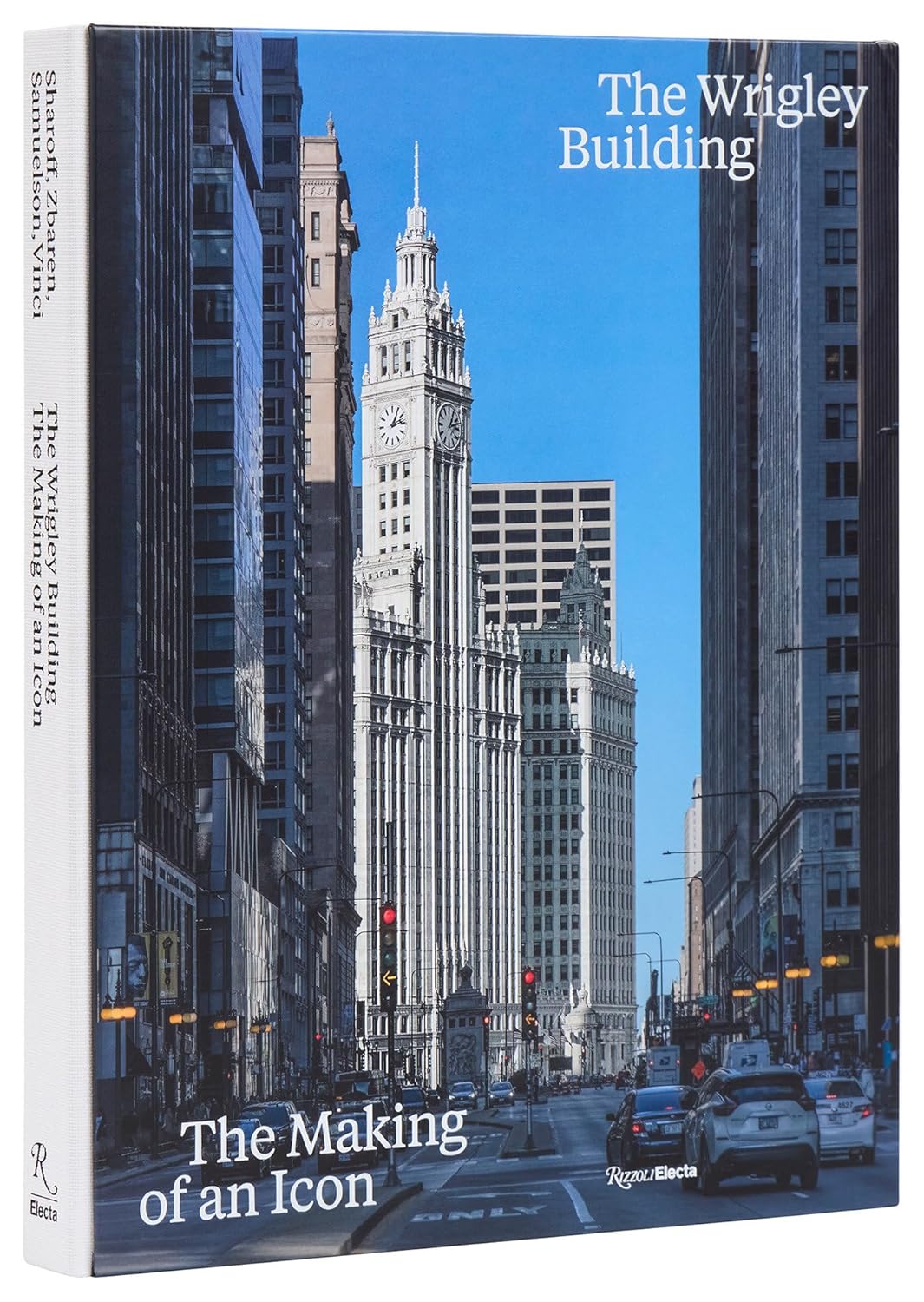
101. The Wrigley Building: The Making of an Icon
Jul 6, 202500:32:45Tap to summarizeChicago’s Wrigley Building, constructed in 1921, is the “whited sepulcher” of Michigan Avenue, gleaming in terra cotta like the rows of teeth ostensibly cleansed by Wrigley’s Chewing Gum, the company that built the Beaux-Arts edifice. But its extravagant looks are only part of the story. Unfrozen hosts Robert Sharoff and William Zbaren, who wrote and photographed the new book from Rizzoli, The Wrigley Building: The Making of an Icon, to hear the rest. -- Intro / Outro: “24 Hour Limes,” by The Cooper Vane -- Discussed: Graham, Anderson, Probst & White Charles Beersman Julia Morgan Arts Club of Chicago Joe Mansueto Joe and Rika Mansueto Library, Helmut Jahn, 2011 John Vinci Phillip Wrigley William Hale “Big Bill” Thompson Girilda Tower, Seville Chateau Chambord, Loire Valley, France New York Municipal Building, Stanford White, 1914 The Carter Family Tribune Tower, Howells and Hood, 1925 London Guarantee Building, Alfred Alschuler, 1923 333 North Michigan Avenue, Holabird & Roche, 1928 Belden-Stratford Hotel, Meyer Fridstein, 1923 Waldor-Astoria Chicago, Lucien Lagrange, 2009 Chicago Fire Stadium Stanley Tigerman Studio Blue, Cheryl Towler Weese
Transcribe →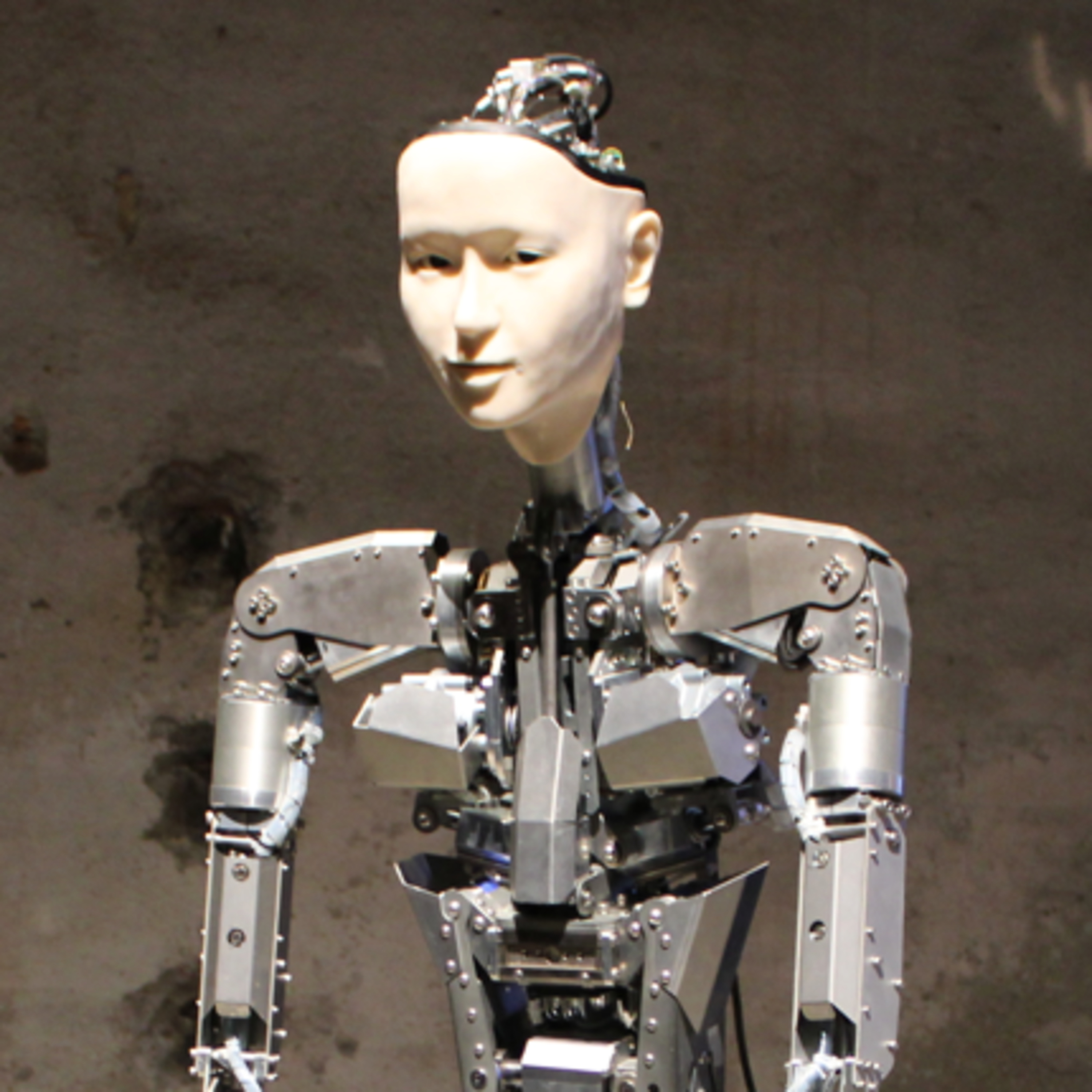
100. Dancing About Architecture
May 20, 202501:15:40Tap to summarizeThe Unfrozen crew hit the 19th Venice Architecture Biennale with all the furious energy our 100th episode deserved. A rollicking roundup of robots, pans, picks, porches and pavilions, with special guest interviews: Michele Champagne, Kate Wagner, Marisa Moran Jahn, Bekim Ramku, Rafi Segal, Jeanne Gang, and Mark Cavagnero. And finally, while Rome picked a pontiff, we had our own mini-conclave in Venice and humbly offered up our picks for the 20th Biennale curator. Join us for this extra special centenary episode. -- Intro/Outro: “Bounder of Adventure,” by The Cooper Vane -- Discussed: - Olly Wainwright: Can robots make the perfect Aperol spritz? – Venice Architecture Biennale 2025 review | Architecture | The Guardian - Rowan Moore: Venice Architecture Biennale review: ‘a hot mess of pretension’ | The Observer - The New York Architecture Review crew: Nicolas, Chloe and Sammy - International Exhibition in the Arsenale o Robots, hemp, bio-concrete, 8-point font with AI-assisted summaries o Kate Crawford and Vladan Joier’s megascale text: Calculating Empires o Bjarke Ingels Group’s entry: Ancient Future, with Bhutanese carvers paced by an ABB robot o Christopher Hawthorne’s Speaker’s Corner o Shades of Rem Koolhaas’ 2014 Fundamentals edition - Kate Wagner’s review: o Dated techno-optimism o Cannibalism of architecture by art and exhibition design - National Pavilions: o Austria: “Agency for Better Living” o Canada: “Picoplanktonics” by The Living Room Collective o Denmark: “Build of Site” o Estonia: “Let Me Warm You” o Romania: “Human Scale” o Saudi Arabia: “The Um Slaim School: An Architecture of Connection” o Slovenia: “Master Builders” o South Korea: “Little Toad, Little Toad”, but mainly this cat o Spain: “Internalities: Architectures for Territorial Equilibrium” o UAE: “Pressure Cooker” o USA: “Porch: An Architecture of Generosity” § Curators: · Peter MacKeith, Fay Jones School of Architecture, University of Arkansas · Rod Bigelow, Executive Director, Crystal Bridges Museum of Art · Marlon Blackwell, Marlon Blackwell Architects · Susan Chin, Design Connects · Stephen Burks, Man Made § Shades of the timber-themed 2021 exhibit, but with a twist § Interview with Mark Cavagnero, Mark Cavagnero Associates, on participation in Porch and his work updating the original 1969 design of the Oakland Museum of California by Kevin Roche and Dan Kiley o Uzbekistan: A Matter of Radiance - Interview with collaborators on Art-Tek Tulltorja, conversion of former brick works into a tech hub and community center, Pristina, Kosovo: o Rafi Segal, Associate Professor, Architecture & Urbanism, MIT o Marisa Moran Jahn, Director, Integrated Design,Parsons School of Design o Bekim Ramku, OUD+ Architects o Nol Binakaj, OUD+ Architects - Interview with Jeanne Gang, amidst a Bio-Blitz powered by the iNaturalist app and featuring a “disco ball for bees” - Unfrozen’s nominations for 2027 Biennale curator: o Carolyn Whitzman, Senior Housing Researcher, Schoolof Cities, University of Toronto and author of Home Truths: Fixing Canada’s Housing Crisis o Diane Longboat, Senior Manager, StrategicInitiatives, Center for Addiction and Mental Health, Toronto § See: Sweat lodge at the Center o Patrick Bellew, Chief Sustainability Officer, Surbana Jurong (Atelier Ten) § Gardens by the Bay cooling system,powered by incinerated tree trimming waste o Peter Barber, Peter Barber Architects o Eyal Weizman, Forensic Architecture - Stafford Beer: “The purpose of the system is what it does.”
Transcribe →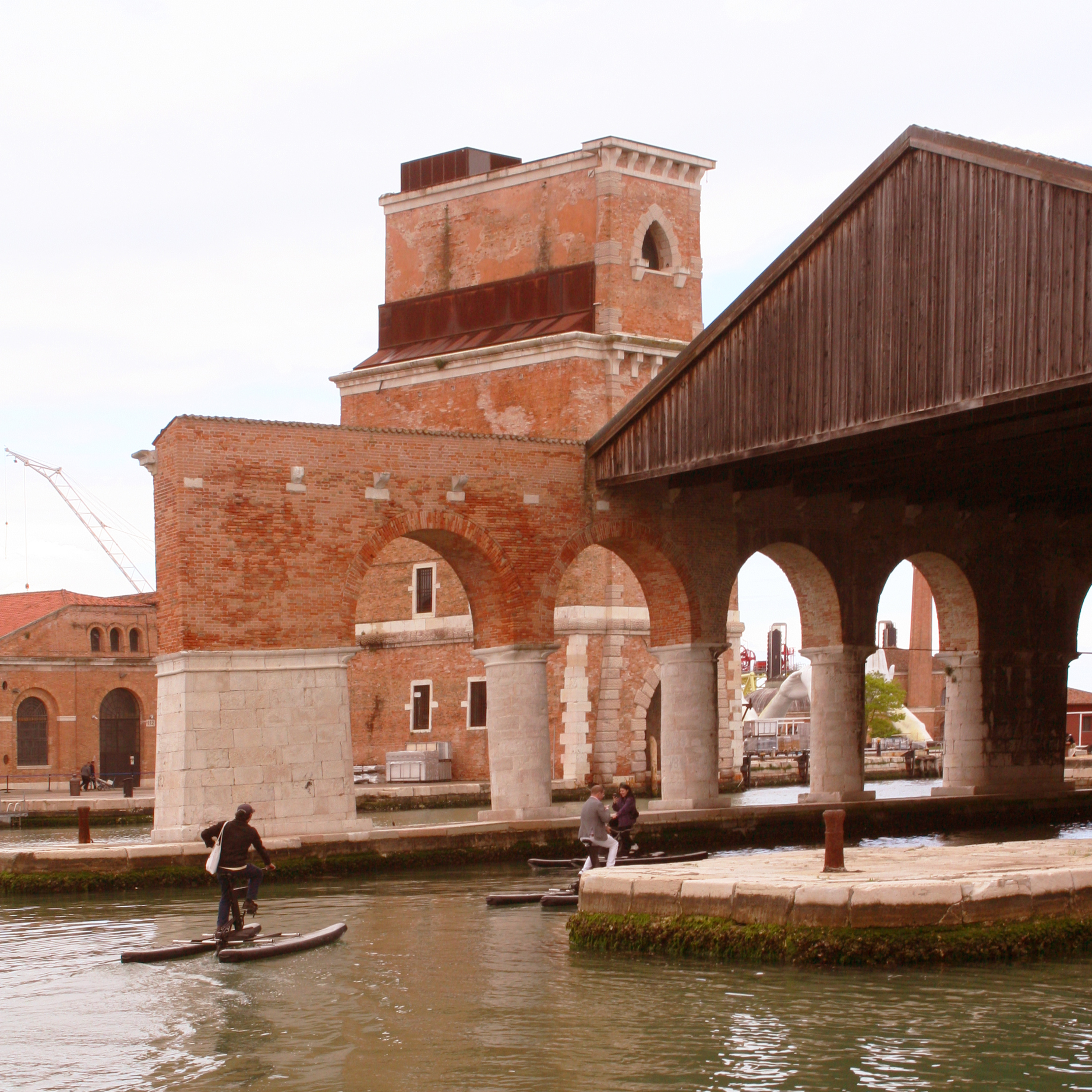
99. The Venetian Scheme
May 10, 202500:33:51Tap to summarizeThe Unfrozen squad descends on Venice to experience inperson the full blunt force of the Biennale. Special guests include: Carlo Ratti, the curator of the 19th Architecture Biennale, Anastasia Sukhoroslova, CEO of All Things Urban, and Michele Champagne, graphic artist and contributor to Volume magazine. -- Intro/Outro: “Bounder of Adventure” by The Cooper Vane
Transcribe →