← Unhinged & Immoral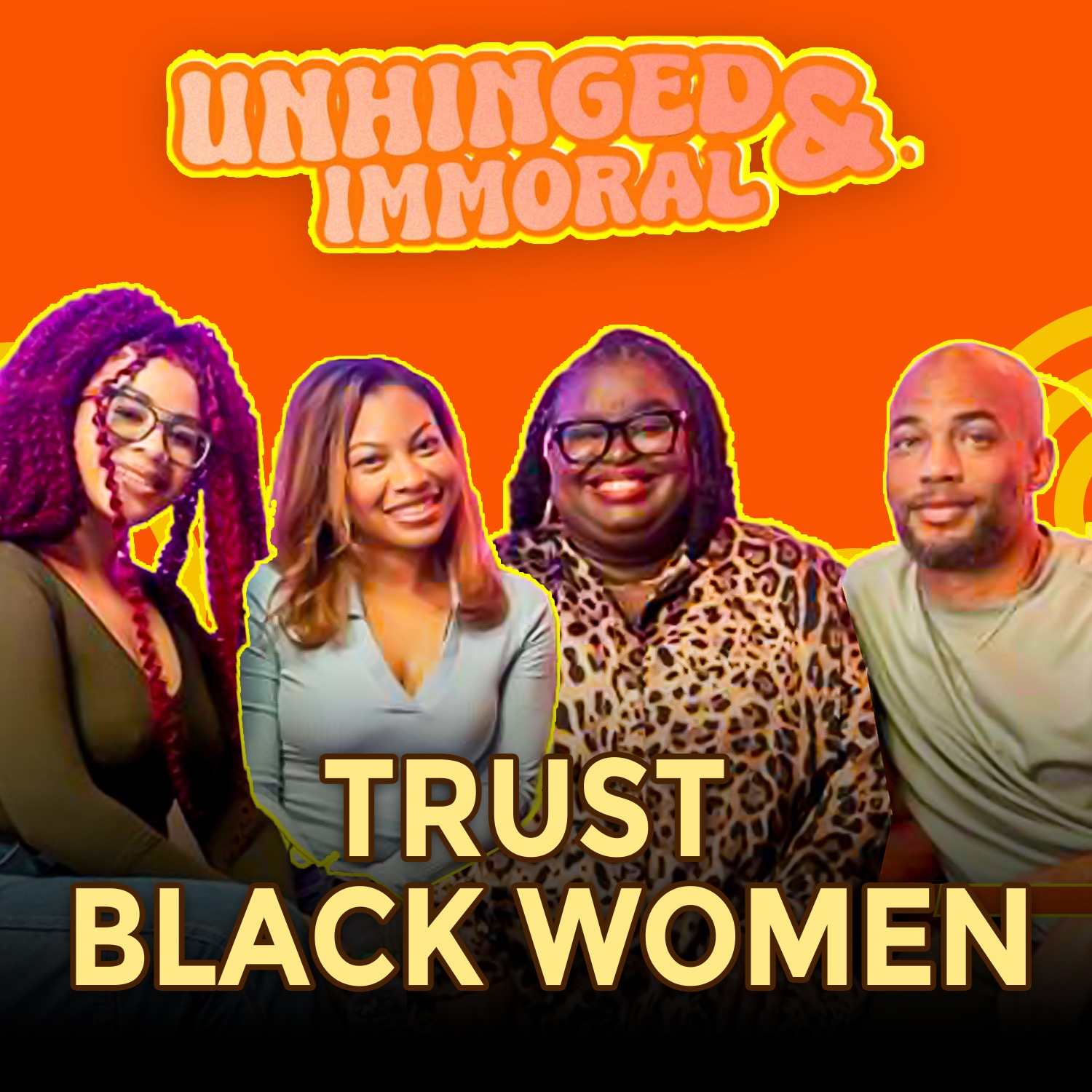
Unhinged & Immoral
Trust black women with Kendrick Sampson & Monica Simpson | Unhinged & Immoral EP 60
01:22:30
Loading summary
Transcript529 lines
- [00:01]
VRBO Advertiser
You know what they say. Early bird gets the ultimate vacation home. Book early and save over $120 with VRBO because early gets you closer to the action, whether it's waves lapping at the shore or snoozing in a hammock that overlooks. Well, whatever you want it to so you can all enjoy the payoff come summer with VRBO's early booking deals. Rise and shine. Average savings $141. Select homes only.
- [00:31]
Post University Advertiser
Post people do not wait for the perfect time. They learn between shifts and family dinners. At Post University. Online education is built for busy schedules so you can keep moving forward without putting life on hold. And post makes it personal with support from real people who care about your goals. Become a Post person. Learn more at post Edu.
- [01:00]
Host
And that's what we need. We do okay. And we also have here Kendrick Sampson. Well, well, well. Y' all may know him as Nathan.
- [01:08]
Monica Ray
Yeah.
- [01:09]
Host
Do people keep calling you Nathan in the streets?
- [01:11]
Kendrick Sampson
I don't know. I ignore it. I only hear Kendrick. I only hear Kendrick.
- [01:16]
Host
Oh, okay.
- [01:16]
Monica Ray
Come on now.
- [01:17]
Kendrick Sampson
Of course, you know.
- [01:18]
Host
Yes. Also in how to Get Away with Murder, the Vampire Diaries, All American. And also an activist in them streets.
- [01:24]
Kendrick Sampson
You know what I'm saying? Be in the streets, a good time
- [01:27]
Host
and fighting for the people with the
- [01:28]
Kendrick Sampson
big dog over here. You know what I'm saying? Executive director.
- [01:33]
Host
Yes. Yes. Well, welcome to Unhinged and Immoral. You know, we are going to be talking about some serious things.
- [01:40]
Co-host/Panelist
We have serious face.
- [01:41]
Host
This is our serious face. It's going to get political. Cuz everything is political.
- [01:45]
Monica Ray
Everything is political.
- [01:46]
Host
But it is unhinged, immoral. So we're going to also cut up. Let's do it a little bit as we naturally do. Okay, let's get straight into it. I. I'm very curious to know how both of you got into advocacy and activism work.
- [02:00]
Monica Ray
Yeah, I'm sorry.
- [02:02]
Kendrick Sampson
Yeah, you the big mom. So you started Inspire me.
- [02:07]
Monica Ray
So I grew up in a very small rural town in North Carolina. Like one of those one stop light towns. It's called Wingate, North Carolina. Nobody knows where it's from, but in this town and because of the, where it was situated in the world, like the. The building that was like one of the biggest buildings on our city was the Jesse Helms Welcome Center. And so those who don't know Jesse Helms was a very racist, not great individual. And so I grew up with that as my backdrop. And I grew up in a place that was very black and white. I grew up in a single Parent home. And so the experiences I had in my community, I was having so many questions, like, why are the police always over here? Why is it that, you know, we can't get access to the things that we need in this community? And I didn't have language around, like, the economic justice of a thing or criminal justice or abolition. Like, these are words I had to learn very, very much later in life. But those experiences in my life is what really led me to this work of social justice. I also grew up in a town where almost every young girl in my church, which was the epicenter of my community, was pregnant. Before graduating high school, we only had comprehensive sex education. Nobody had access to really understanding what was going on with their bodies. And I was always that little girl sitting in rooms, grown people asking questions that we're never getting any answers to. And I think one of the most pivotal moments for me, outside of, like, realizing that I didn't have what I needed around my own bodily autonomy and, like, being able to make those decisions for myself, was having an encounter with police in my community at a very young age. And that I. After that happened, I was like, mama, we gotta, like, let's fight for this. Let's do this. And realizing that my mother felt so helpless in a lot of ways. And I was like, there has to be a way for me to do life in a way where these are not my circumstances and these are not the circumstances of my community. So all of those things and a myriad of other things is what led me towards understanding that I knew that I wanted to do work in this world that was changing the conditions for other people because I wanted them changed for myself. And when I came out in my hbcu, thought that was gonna be a fun experience. And it was on many levels. But it was. However, I realized how even in that instance, you know, bodily autonomy came up to me there. And feeling like I was being ostracized because I was a gay student in a College in the 99 and 2000s. It was not an easy time. It was a fun time, but it was not an easy time to come out as a gay black woman on an hbcu. And so so many of those experiences led me towards this work. And, yeah, that's kind of like what really got me started, you know, from, like, those beginning kind of experiences for myself.
- [04:47]
Kendrick Sampson
Come on. Y2K gay.
- [04:51]
Monica Ray
I am so gonna make a T shirt that says that. Y2K gay.
- [04:54]
Kendrick Sampson
You said that. 9.
- [04:55]
Host
What HBCU did you go to Monica?
- [04:57]
Monica Ray
I went to Johnson C. Smith University in Charlotte, North Carolina. And I loved it. I mean, it was an incredible experience. But I did drop out of school like three times. Like when I came out, it took
- [05:07]
Host
me a minute to finish.
- [05:08]
Monica Ray
I mean, you know what I'm saying? And for me it was again, I was a great student, but because when I came out it was just so hard. And so I dropped out like three times and I eventually finished and finished really, really well. But yeah, that was my HBCU experience.
- [05:22]
Host
Wonderful.
- [05:23]
Co-host/Panelist
Well, I can't say it's changed too much.
- [05:26]
Host
Even when we was there, it was like that.
- [05:28]
Kendrick Sampson
This was fantastic. I've been inspired. I'm going to go. Nah, that was really bad. I mean, I ain't got the college stories because didn't quite make it there. I went to Samson University. That is my last name. In the streets of la.
- [05:43]
Co-host/Panelist
Just figured out Sam Houston. I was gonna be like, oh, nah,
- [05:46]
Kendrick Sampson
nah, nah, not quite.
- [05:49]
Host
You feel me?
- [05:51]
Kendrick Sampson
No, honestly, mine was just that I was always a misfit. I didn't fit in nowhere and I didn't mind it, you know, I just wanted to figure out why. And it made me study different cultures. I mean, even we were always on the crux of something. We was always on the edge or something in between worlds. Like my family was super, super country, but they had made it to the city and we lived literally between the country and the city. My grandma's town was like 300 people and I was always. We also had white, Mexican and black folks in the family. And the black folks in the family didn't like the white folks to mask with very good reason, you know what I mean?
- [06:39]
Co-host/Panelist
You know what I mean?
- [06:41]
Kendrick Sampson
And there were different politics and understanding. I had to go to a different school every year. Literally every single year we got either kicked out, had to move whatever it was. And I always had to figure out what the culture was and how to thrive in it despite. Despite not fitting in. And my goal always in high school, I did. We created the first cause there were fraternities, high school fraternities and sororities stepping into Houston. Yeah, in Houston. And our school was so racist they kicked ours out for popping once. We did a little and they said, you gotta.
- [07:15]
Co-host/Panelist
They said, no, you got some.
- [07:16]
Kendrick Sampson
It won't pop once.
- [07:16]
Monica Ray
Damn.
- [07:17]
Host
It's just too hard for me.
- [07:19]
Kendrick Sampson
Was good glute and it was. They said we were gang for popping.
- [07:24]
Co-host/Panelist
For popping.
- [07:25]
Kendrick Sampson
Here's the thing. And so I went on. This was my. I didn't think it was activism by any means, but I Went around and got a petition from all the teachers. This shit was racist. Blah, blah, blah, blah, blah.
- [07:36]
Co-host/Panelist
Exactly.
- [07:37]
Kendrick Sampson
I didn't think it at the time at all, at all. We was more worried about everybody was getting shot back then. AstroWorld was getting shut down. And, you know, we were trying to figure out how to save each other. But I was like, what's gonna save us is having this little misfit crew over here. We don't fit in. We gonna F together over here and we gonna do what we need to do to make sure that we're good in this school and that we make that mother, you know, who kicked us out pay, you know, and make sure he has the consequences for his actions. But they were extremely racist. I thought I would move to LA and find something completely different. I was. My goal was as soon as I graduate, you know, they can't be racist
- [08:14]
Host
on the west coast, but there's hippies.
- [08:15]
Kendrick Sampson
Not as the South. No, it's not gonna be that way,
- [08:20]
Host
I tell you. It's just a different brand, institutional around my way.
- [08:24]
Kendrick Sampson
You know what I'm saying? And the first, my first I went to this church. I thought this woman, Marilyn Beauvien, who is now my sister, but she, at the time, you know, my mom introduced me. She was friends with her boss, and so she became family super quickly. First person I met, I thought she was a producer. I thought she was gonna be putting me in movies. She put me in church. Okay, let's sit you down real quick. She wanted me to have a really tight. It was a very small, 200, 300 person church and she wanted me to have a tight community. And that Pastor Frank Wilson ended up being from Houston and he would always make sure I was fed. And I really looked up to him. And what he said was, he told us that during the holidays, everybody go and ask each other for gifts. He was like, jesus wasn't there for y' all to have a gift given. He was like, what would the gift to Jesus be on his birthday? Cause you like people coming to your birthday and asking for gifts. And so he was like, you gotta go and talk to the folks that need it, you know? So we all went that year. We were like, no presents. This is when I was 18. No presents. Let's go to the homeless shelter and serve all day. It was a life changing experience. Cause I realized it wasn't for them, it was for me. Cause I was getting checked. Somebody asked for mustard and I was over there like, we ain't got no mustard. You got ketchup and they was like, get that motherfucker some mustard. You know, what you here for? Yeah, get him some mustard.
- [09:51]
Host
Just get him some mustard.
- [09:52]
Kendrick Sampson
And sitting there talking with folks all day literally changed my life because so many of them, I'm sitting there like, the homeless population in Houston, I mean, in la, the unhoused population in LA is so massive and extensive. And you realize some of these are like my cousin. They got the same stories, but they would be in a trailer or something like that where I'm from. But here, it's so unaffordable that they here and studying all the reasons for that, you know, addiction, employment, shelter. The root causes of it is actually what led me into, like, straight to abolition. It led me into state violence. Yeah, Literally state violence and all that. I was like, what is the solution? What's the solution? What's the solution? Oh, these systems ain't ever been built for us. This is intentional. We think we cause it. We like, cousin, why you ain't got no money? Because it's set up for you to have no money.
- [10:51]
Host
Yeah, yeah, yeah.
- [10:51]
Kendrick Sampson
You know, that's so real. That was my journey, was always trying to find a place for the misfits and knowing that the misfits are the ones that change the world.
- [11:01]
Monica Ray
I didn't know we had this church connection. You know what I'm saying?
- [11:04]
Kendrick Sampson
Amen.
- [11:04]
Co-host/Panelist
Amen and hallelujah.
- [11:06]
Monica Ray
Hallelujah. The interesting thing about the church, though, is that it did get the community thing. I have, like, all the check marks, too. But going back to the piece of my story around, like, how it impacted me around activism is because it's also where I learned. Where all the. I learned all the isms, also in church, right? It's like, oh, why can't the women speak from the pulpit?
- [11:28]
Host
Okay, Come on.
- [11:29]
Monica Ray
Sexism, patriarchy. Why are you all shaming the woman who gets pregnant out of wedlock and putting her before the whole church to be, you know, just, like, scorned, like, but the dude that got her pregnant is sitting in the deacon role, but he ain't getting scorned. What is that right? And then my church organist, I loved him, bless his soul. He is now an ancestor, but he died very unexpectedly. And I remember asking the question, like, what happened to him? And my mother was like, oh, he just had pneumonia. But nobody was talking about hiv, aids. They weren't talking about him in his fullness. They only wanted that, what he was giving to the church. And so, like, as much as I love the community aspect so much of that I just resonate with. But just also reiterating in my experience too, this is where I started to see all those types of things come to a head. Because again, it was the epicenter of my community in my very small town, you know. So anyway, I just wanted.
- [12:21]
Kendrick Sampson
Or even how gay folks is leading us into the spirit. But they every time trying to make them hide.
- [12:28]
Monica Ray
Right.
- [12:29]
Kendrick Sampson
You know what I'm saying? And condemning them. But you about to put them right up there with you get what I'm saying?
- [12:34]
Monica Ray
Absolutely.
- [12:35]
Kendrick Sampson
The gift of the spirit.
- [12:38]
Co-host/Panelist
I've made jokes that people have got mad at me on TikTok for that. Like the it factor of gospel music is homosexuality.
- [12:46]
Host
Well, yes.
- [12:47]
Monica Ray
Come on, come on.
- [12:49]
Co-host/Panelist
I don't know. Let's do a dissertation.
- [12:50]
Kendrick Sampson
Go ahead and go and start a dissertation. Let's talk about it.
- [12:53]
Co-host/Panelist
Well, if we go down the names,
- [12:56]
Monica Ray
you know, it seems like there's a
- [12:59]
Co-host/Panelist
theme here and it's not just the big stars.
- [13:02]
Host
You can go to your church on
- [13:03]
Co-host/Panelist
Sunday and see every time it's a
- [13:05]
Host
thing like every last one, there's a
- [13:08]
Kendrick Sampson
study on how close gay people are to God. I think that people need to know a lot closer. Right? You know what I'm saying? There's a divine thing in it. Right? You know what I'm saying? Divine connection. It's not a mistake that the people who are most vulnerable and connected to the art, to the expression of the spirit happen to be the ones that need to be freed because they're stripped
- [13:38]
Host
down to their most true self. And I think that to stand in your fullness, in your queerness, in a society that is against that, there's no way you could. You could not also represent the person who is most tied directly to that level of spirituality.
- [13:53]
Kendrick Sampson
I mean, the same reason that black men, you know what I'm saying?
- [13:55]
Monica Ray
Hey, hey, hey.
- [13:56]
Kendrick Sampson
You know what I'm saying? For some reason it's always what you say, the most appealing. You know what I'm saying?
- [14:02]
Co-host/Panelist
What the hotel be saying.
- [14:03]
Monica Ray
We all the Israelites, we was gangs. No, don't worry. No, don't worry. The OG sometimes let me tell you something about the hotel. We can have a whole conversation about them. But when I need to be healed, you know, I don't know who I'm gonna go to a hotep. Because they know all about the herbs.
- [14:23]
Co-host/Panelist
Go away.
- [14:24]
Monica Ray
Go away.
- [14:25]
Kendrick Sampson
Go away, go away.
- [14:28]
Monica Ray
They add a benefit to our society. They can make a mean tea. They can make a tea, a tincture, okay.
- [14:34]
Host
You just gotta, you know, throw some of that stuff.
- [14:37]
Monica Ray
Listen, listen.
- [14:38]
Co-host/Panelist
I'll be a little funky in there.
- [14:40]
Monica Ray
I'll be a queen today. Let me get that tincture. You know what I'm saying?
- [14:44]
Host
Anyway, okay, let's get into this roundtable. I wanna know what prompted this idea for you.
- [14:50]
Monica Ray
Yeah.
- [14:50]
Host
Like, what made you think, let me call a couple of these black men at this table and let them tell us how they gonna protect us. First of all, you tore that. You did that. Yeah, actually. Let me know what you gonna do. Tell me.
- [15:04]
Monica Ray
Yeah, yeah. You know, it's interesting. This has been a vision and an idea, you know, for a couple of years, actually. And so in this work of reproductive justice, for those who may not know about this movement and its work, it's a movement that was created by Black women in 1994. And we talk about reproductive justice as a more holistic way of thinking about what we need to truly have bodily autonomy and our human rights realized in this country. Right. And so we talk about RJ Reproductive justice as a human right to bodily autonomy to be able to have the children that we want and the ways that we want to prevent or end pregnancies without shame, but with dignity to be able to parent the children that we have in healthy and safe environments. Like, this framework is just so powerful. It's a movement that is my movement home. But it allowed me to, like, bring all parts of myself into my work. Right. And as we do this work, and we've seen these attacks mount up against us, right? Against us. From abortion bans to maternal mortality rates where black women are dying three to four times higher than child in childbirth. We've seen the Diddy stories, we've seen Epstein files. We've seen all of these things that impact our ability to be able to truly have our own autonomy and self determination of our bodies. We had to start asking ourselves questions as activists and leaders in this movement. When are we going to have conversation with men? How are we going to have conversations with men? Because it's not that we haven't had men support this work, because I don't ever want that to be the narrative. But we realized that there were some gaps in terms of just pathways for men to enter into this conversation. And more importantly, how do we create a container and a space for them to do their work first? Because it's one thing to say, hey, come and join us and be on these front lines, which we were just in a conversation not too long ago about, because we just had Trayvon Martin's. It's not an anniversary that's the wrong word, but, you know, remembering this young man's life that was so violently taken from us, Right? And we remember how everybody goes in the street because we had to. Right? But in Georgia alone, just to give an example, we've lost three black women because of maternal health issues and abortion bans. Right? And we don't see the same kind of turnout with people coming in the streets doing the same thing and forcing the state to be accountable for what they have done and what they haven't done. And so, again, these are the types of gaps that we were identifying. And so I was just like, we got to bring men into the room, and we got to let them have their conversation and talk about their barriers, their own stories. Because just like we have to come into an understanding of our stories, of how these systems impact us, they got to do the same things for themselves. And will that then create a safer environment for us to do the work together collectively? And so the idea of bringing black men who were willing to be vulnerable enough to step into a conversation like that, and using the framing of our Trust Black Women campaign, which was intentionally created in 2010 as a direct response to racists and anti abortion people trying to come after our ability to make our own decisions as black women, it's like, how do we bring black men in under that particular frame? Because we wear these T shirts to say trust black women all the time. And if I had a dollar for every black man that came up to me and was like, well, why do I need to trust black women? Well, I don't trust all of them. And so I was just like, we're gonna put them in a room and see how. See how this really plays out. And so we had partnered with Build Power and Kendrick, who had building. We've been building a relationship for quite a few years, and he was showing up in our movements work so powerfully, so intentionally. And I was like, there's no other person I would do this with other than him. And it was like, well, how do we then create an environment to bring the right type of players to the table? And so as two teams, we came together to think about what this room needed to look like. We knew we wanted it to be intergenerational, and it needed to be. We knew that we wanted to have black men across gender orientation. So there were black gay men, black trans men in this conversation, men with different perspectives, men who have had different experiences. And so after really doing a lot of work, praise be to our teams for doing a lot of all of that combing through so many different people to think about. We got the gentleman that we got, and we got all of them to say yes, you know, to coming into this experience, to really build out this platform and this conversation that we're hoping is going to grow into something even bigger for our movement.
- [19:28]
Co-host/Panelist
Yeah, I love that.
- [19:29]
Host
I think them saying yes was a lot, too.
- [19:32]
Monica Ray
Absolutely.
- [19:33]
Host
Because I think what I've seen, when we have the conversation of black men and Black women's divisiveness, it turns into hellfire.
- [19:46]
Monica Ray
Absolutely.
- [19:47]
Host
And it's difficult to sometimes have those conversations as a black woman with black men, because it's like, almost a block. I've heard so many times Black men say out of their mouth that they don't believe they have more privilege than black women.
- [20:01]
Monica Ray
Oh, yeah. Yeah.
- [20:03]
Host
If 1 plus 1 equals 21, you know, it's wild.
- [20:07]
Monica Ray
I mean, the patriarchy is. It's a blinding thing.
- [20:09]
Host
Yeah.
- [20:10]
Monica Ray
You know, it's really hard, and it's not always safe to have those conversations. Right. I mean, there's also a personal piece of this for me. You know, I talked earlier about, you know, coming out in college and all the different things. And I'm also a survivor of sexual assault, you know, so I've definitely had a. You know, as many black women have had so many experiences, you know, against, you know, these systems of oppression that has shown up in my life in a lot of ways. But I had made a decision at some point in my life that I just did not believe that there was going to be a black man that would protect me if he did not have any opportunity or just even a possibility of being with me sexually. I did not believe it was possible other than my brother. You know what I'm saying? But then I'm always protective of him because we're also taught to be protective. And so, no, I don't want my brother to go off on somebody because then he's gonna go to jail. You get what I'm saying? So it was just like, one of those interesting things where I just. I really felt like I was walking in the world, having to protect myself all the time.
- [21:06]
Host
Never feeling a sense of comfort.
- [21:08]
Monica Ray
No, absolutely not. Right. And I had made that the norm. And I'm like, that's actually not okay. It's actually not okay. And so even that was a part of this vision for me is I know if I. And I've been. I've done. I've read all the books. I've. All the therapies, like, I'm in this work every single day. And if I'm having these. These feelings, and if I'm still walking around thinking like this, then what does that look like for so many black women across this country and around the world? Right. And so, again, there is this personal part of this for me too, not just about what does it mean for us to build better opportunities, for us to build more collective power, which is what this is about for us, and to. And to help us dismantle these systems that are killing us every single day. But it was also personal for me. Like, I want to be in deep relationship and trust and in love spaces with my brothers. You know what I'm saying? And I'm grateful I have that, you know, with brothers like Kendrick and stuff like that. But it's like, how do we build more opportunities for more black women to also have that too?
- [22:06]
Host
Yeah, for sure.
- [22:07]
Co-host/Panelist
With that. Oh, sorry. With that experience, like your personal experience, having done the sit down roundtable, working with Kendrick, do you feel like black men are misunderstood at this point or are they just under. Communicating?
- [22:20]
Monica Ray
I think both. I absolutely think both. I think that being a witness in that room to so many personal stories that were being shared at that table, all of which, you know, we probably can't even, like, hold a container for, to hear those stories from men in such a vulnerable way. Of course, my empathy and my sympathy was just like, in the room, it's like, damn, there's a lot that these brothers are managing and navigating and also having to step over and. And it has contributed to them showing up in the ways that they have, because everybody has a story. That's the thing that is so important to our work in reproductive justice. Everybody has a story, a myriad of them. And if we are not taking time to understand those stories, then we're not going to be able to truly understand each other. So I got to see that. And so I do think that there are spaces where men are misunderstood because of just the way that they have to then interact and react to these systems, that we're also doing the same thing too. And I also think that there is a lot more work that needs to be done right at the same time. So I think it's absolutely both.
- [23:22]
Host
Yeah, right. There was something you talked about, Kendrick in the beginning where you said, and we've actually talked about this before as well, is sometimes we lose people when we start to get into the academic terminology and we start to kind of put on our elitist, I'm so smart hat where we're trying to talk to people. And I think that that's a critique across the left. And. And we lose people so much when it's like, we can get them if we just keep it a buck. Let's just. Let's just talk like we talk. And I think that also when talking to men who don't necessarily have the understanding to unpack all of these systems and isms, when we start talking that way, it's gonna get lost in translation. And so what's the. How do we approach these conversations then, without using these terms, but also not necessarily dropping those terms down? Cause I do think that language is important, and these words are important too. Like, we should also say the things. So, like, what's the midpoint? What do we do?
- [24:22]
Kendrick Sampson
I mean, so our organization build power. I know that my folks are having a little flashbacks right now. They're having a little trauma flashes. Cause I'm always like, how do we make this more relatable?
- [24:40]
Monica Ray
That's right.
- [24:40]
Kendrick Sampson
How can we make this. You know, my family, I told y', all, we was between the hood and the country. We was between the city and rural and came from all types of different backgrounds, politics. And I realized a lot of it was terminology. A lot of it was shit that doesn't make sense or they didn't have the time. You know, Houston, the culture is slow. It's chopped and screwed, you know, chopped and screwed. And they used to call me slow. This so slow. My brain. And I used to think that that was a problem. I used to think it was. You know, I had to take more time. I had to take extra periods on tests. I had to, like, meaning more time on tests and things like that. And then I realized now, especially with everything moving at the pace that it's moving and just being chaos headlines 24 7, that it is a superpower to be able to slow down. And the systems constantly have us in chaos and survival mode so that we don't slow down and ask the proper questions and think, what does that mean? What does that word even mean? Can you break that down into, you know, you gotta go piss today. Like, I don't want to hear. You know what I'm saying? I don't want to hear about the urinary productive. You know, hold on now. You know, tell me how that relates to me on a regular. And. And honestly, it's how we get free. It's how we are more powerful and not realizing that we're standing in each other's way. And a lot of the time, we don't have the conversations we need to have because we don't take that time to slow down. And more than anything, I want. You know, as much as I love, you know, I love encouraging folks to read I Am stories. Like, since I was born, I was, like, buried in stories. I think they're one of the most powerful and central tools for our power. And understanding each other's story and taking that time to slow down is, in my opinion, the answer. The answer to understanding each other and taking the time to break down why we're doing certain practices, why we have different traditions, but realizing at the end of the day, our life is supposed to be about eating, you know, taking the shit somewhere you ain't got to step in it, you know, drinking clean water and helping each other out. And when we realize we're standing in each other's way or that there's no way. When we're talking about birth, injustice and the way that Monica. I'm gonna mess it up defines. Tell me the exact definition of reproductive justice. Yeah. Oh, the human race, but the three.
- [27:32]
Monica Ray
Oh, it's human rights to bodily autonomy, to have children, to not have children, and to parent.
- [27:37]
Kendrick Sampson
To have children, to not have children and to parent. That's one. Like, if it was broken down to me like that, like, it's also, you know. Yeah, yeah. Like, if you told me reproductive justice when I'm on the street and I'm
- [27:51]
Host
like, you know, whatever that means.
- [27:52]
Kendrick Sampson
You know, I'm like, all right, well, bless y'.
- [27:54]
Host
All.
- [27:55]
Kendrick Sampson
Yeah, that's cool. That's real nice. Yeah, I feel that. Yeah.
- [27:58]
Host
Just.
- [28:00]
Kendrick Sampson
But if you show me. And I don't think that's the responsibility on a woman. That's why I think that a lot of us need to have. We're just scared to have those conversations with each other.
- [28:09]
Monica Ray
That's it.
- [28:10]
Kendrick Sampson
Constantly. Because we're afraid that we gonna be judged for being too. They gonna call us gay. They gonna call us weak. They gonna call us a woman. You know what I'm saying? And we don't realize that that translates to hate, that that translates to blocking our own power, that we could be so much more powerful if we stood into and nourished each other, you know what I'm saying? And understood each other, especially our stories.
- [28:34]
Monica Ray
And this is why we wanted him to moderate, to be quite honest.
- [28:36]
Host
Right.
- [28:37]
Monica Ray
Like, that was intentional. Of course we wanted the male to moderate. Like, I wasn't gonna moderate this panel or Sister Song wasn't gonna do that. And we wanted to be able to trust who it was that was moderating. And what Kendrick has been doing over the past few years now has been, you know, showing up in reproductive justice spaces with us, supporting the work that we do, helping to amplify the work that we do. And so to hear him. Actually, I don't think I told you this yet, but when you were moderating and you were, like, giving the brothers the definition, it was just like, Kendrick just said that.
- [29:07]
Co-host/Panelist
My baby.
- [29:09]
Kendrick Sampson
No, my baby.
- [29:13]
Monica Ray
You know, like, it was just so powerful to, like, see that and to experience that. And the way that he was able to constantly, throughout the roundtable, just reground the brothers and, like, this is what this means. This is what that means. We not going to talk about that because we don't have all the information about that. Like, the way that he was just able to bring them in and out of that, but to also keep it so real for them so that we didn't, you know, what you all saw was unscripted. I mean, there was some guidance that we wanted to have, right? But. But it was unscripted. We left it completely raw. We did not ask them to not say certain words or anything like that because we didn't want to put any parameters on them that would not allow them to show up as authentically and real as they needed to in the moment. And I'm grateful that everybody leaned into that. But your moderation, right. In particular, and helping to keep us grounded in. How does this make sense? Do you understand what that means? Let's say it again. Like, all of those different things really help to keep them in. Grounded right in the conversation.
- [30:11]
Host
I think it translated that way for me as a viewer. I'm like, they respect that, brother.
- [30:17]
Monica Ray
They did, yeah.
- [30:18]
Host
You said, hold on, hold on.
- [30:19]
Monica Ray
Yeah.
- [30:20]
Host
Cause I wouldn't know what to do if they got the hooting and hollering.
- [30:23]
Monica Ray
Boys, stop.
- [30:24]
Co-host/Panelist
Guys, boys, stop.
- [30:26]
Kendrick Sampson
Meanwhile, I'm over there, like, they good.
- [30:28]
Monica Ray
They fine. So I know we're gonna talk about it. Cause we know the Internet talks about it. Yes. But, you know, in that experience of the moment where all of the energy came to a head, I am a trained black woman to try to make everything right, right? And so I had the skill set to do so. I also had respect in the room. So I stepped in, right? Cause I'm like, yo, what's up? There was a small cameo of me you all saw in the thing. I'm just like, hey, hey, hey. Right? And what happened in that moment with Kendrick, though, this is where I knew that the trust Was, like, so real between us. Because I'm getting ready to shut it down or at least try to bring it down. And Kendrick was like, no, Monica got it. And I just had to throw my hands up and just sit down. And that was an experience for me as a black woman who. Cause I'm gonna say this about us black women. It's our superpower. And it's, you know, it's a thing for us to have to, like, relinquish that power. And I had to do that in that moment. But I trusted this black man, too.
- [31:28]
Host
Cause that was the important part, right?
- [31:29]
Monica Ray
Cause that was the important part. I trusted that he was gonna be able to do that. And what I witnessed in that moment was that black men are gonna have to have these conversations in this way. There's no other way for us to get around it. Like, masculinity and all of that stuff that's in them.
- [31:44]
Host
It's gonna come out.
- [31:45]
Monica Ray
It's gonna have to come out. And it's gotta come out with them. So it doesn't come out with us.
- [31:49]
Host
Please.
- [31:50]
Monica Ray
Do you see what I'm saying? Like, it hasn't come out on me. It doesn't come out on me, so it doesn't come out on us. And that was one of the biggest things I wanted my team and I wanted our movement leaders and folks to see is that as badly as we wanna work with our brothers. Cause I know we do. We gotta give them time to do that so that we don't have to absorb any more of that trauma. Right? And so that was just a. You know, it was a hard moment, but it was a beautiful moment in some ways, for us to understand what we really dealing with here. You know what I'm saying?
- [32:18]
Kendrick Sampson
I realize. Yeah. And I also realized that most of our transformation, most of our breakthroughs, most of our power is right on the other side of them argument, Right? Like, meaning, like, we get into it. The way our ego work, obviously, is much different from y'.
- [32:33]
Co-host/Panelist
All.
- [32:33]
Monica Ray
Well.
- [32:33]
Kendrick Sampson
And we be in these ego battles, and the ego battles we don't even realize is really over. What you mean? What you mean by that? It could be taken care of.
- [32:44]
Host
Cause what I heard you just say.
- [32:46]
Co-host/Panelist
Yeah.
- [32:46]
Kendrick Sampson
Cause what I heard you say. But instead, I'm in defense mode already. I heard you say this. And I'mma prove to you that I'm not.
- [32:52]
Monica Ray
Bitch.
- [32:53]
Host
Yeah.
- [32:53]
Kendrick Sampson
Why are you calling me? Why are you calling yourself that? What you gonna do is be a bitch? Because now I gotta call you something so that I'm not the. And then y' all get back and forth and don't realize now we not
- [33:07]
Host
even talking about what we was talking about.
- [33:08]
Kendrick Sampson
What did you mean by that?
- [33:09]
Monica Ray
Yeah, that's it.
- [33:10]
Kendrick Sampson
What you meant by that.
- [33:10]
Monica Ray
That was it. That was it.
- [33:11]
Kendrick Sampson
Right on the other side of those conversations. Right on the other side of those arguments, especially with the way black folks talk. You know what I'm saying?
- [33:19]
Host
We already did.
- [33:20]
Kendrick Sampson
You know what I'm saying? But those are. You know, those happen to be. Obviously, you know, we have too many conflicts in the world, but those. There's a line that is crossed, that it turns into harm.
- [33:41]
Host
Yeah. Yes.
- [33:42]
Kendrick Sampson
But there's a. Before. That line is hard to decipher for black people, especially because other people already interpret us as harmful.
- [33:53]
Host
Right.
- [33:53]
Kendrick Sampson
Our skin is harmful.
- [33:54]
Host
And that's what I feel.
- [33:56]
Monica Ray
It was wild.
- [33:57]
Kendrick Sampson
But I love. I love those moments. I thrive in those moments. I'm like. If you see on one of them, they start getting heated and I get a little. I get. I'm like.
- [34:08]
Host
I said, look at Missy.
- [34:09]
Kendrick Sampson
I said, go ahead, Go ahead.
- [34:13]
Host
I love watching my aunties, all three child.
- [34:16]
Monica Ray
You know what I'm saying?
- [34:17]
Kendrick Sampson
Just going, oh, it's about to go there. Okay, okay. This about to be real good. This got to be good. But it could also go bad, right?
- [34:24]
Host
So you gotta.
- [34:25]
Kendrick Sampson
The complete opposite direction.
- [34:26]
Monica Ray
That's true. That's true.
- [34:27]
Kendrick Sampson
But you feel, you know, the folks in there, I understood and spent time with them before, felt their energy. And I do think we need to have more. More of that. And honestly, listen, if y' all see my reactions, it's gonna be a different. Yeah, but like, the people that I love. Luke.
- [34:45]
Host
Luke, yeah.
- [34:47]
Co-host/Panelist
He was such a good addition.
- [34:48]
Kendrick Sampson
For a minute, I knew he was gonna come in and bless, give us all the. He can give lectures. And that man stays quiet. Sometimes I be like, nigga, you need to be on a pulpit. You need to be. You know what I'm saying?
- [35:03]
Host
No, I think everything he. The perspective he brought was very refreshing. He didn't talk a lot, but every time he spoke, it was like, mm. Now that was very intentional. Now that was good. I like that.
- [35:14]
Monica Ray
Very intentional.
- [35:14]
Host
And I really enjoyed that. I can't remember exactly who mentioned it, but y' all all kind of agreed that there was a need for black men to find the value in black women outside of our relationships with them, right? Like, not just your romantic relationships. Not just cause that's your sister or. Cause that's your mama, but we do need to look out for each other. And I remember not too long ago, Deontay Kyle, host of the Grizzly Nicks podcast, mentioned something like this, like, hey, we are to be accountable for our other brothers. And they called him all type of pandering.
- [35:47]
Monica Ray
Oh, my God, shut up. Biracial. And.
- [35:51]
Host
And to imagine how it must feel.
- [35:53]
Monica Ray
Yeah.
- [35:54]
Host
So as black women, watching them call him all these type of things for advocating for us. It's like, we were so close, y'. All.
- [36:00]
VRBO Advertiser
We was.
- [36:00]
Kendrick Sampson
But that's why we needed Deontay Cow, because he's a very much. I said what? I said what you got to say.
- [36:07]
Host
Yeah. And I'mma double down.
- [36:09]
Kendrick Sampson
And I'mma double down. And at the end of this, you gonna repost it.
- [36:14]
Host
Okay. And did indeed. But I do think that's very important. Cause I've heard that so many times where people's like, I mean, it ain't got nothing to do with me. I'm gonna keep my. I'm make sure mine say, well, okay, I guess.
- [36:27]
Monica Ray
Yeah.
- [36:27]
Host
But where's the community?
- [36:28]
Monica Ray
Where's the community?
- [36:29]
Host
We used to be a community.
- [36:31]
Monica Ray
I mean, you know, Clifton gave many examples as to why that has shifted and changed. But. And that's. No, I love me some Clifton, actually. He has a little special place in my heart. But we did. We did. And I do think that there's been so many things, you know, historical, but also just relational and societal. Like, that has just, like, really made it difficult, you know, for these types of our relationships to be as strong as we need them to be. But I think that we're at such a critical time right now where we don't have a choice.
- [37:03]
Co-host/Panelist
Yeah.
- [37:03]
Monica Ray
Like, we truly. I think this was also. The timing of this was also important for us because we do not have a choice. This. This environment, this political moment, you know, this environmental moment, all the things that we are living in right now, it is screaming to us, if you do not do what you need to do to be better connected, to be more in community with each other, then you're not going to. You're not gonna make it to the other side.
- [37:30]
Co-host/Panelist
Yeah.
- [37:31]
Monica Ray
And I think that that is what is our opportunity in this moment, to be quite honest, is to. Is to shift that. Shift the culture of that and to shift that dynamic. And that is what I'm excited to see when I look at how this. How this moved. I mean, we did not have a media partner for this. We didn't. You know, I mean, we're a social justice organization. Let's be very, very clear. We are a social justice organization, and more specifically, one that is representing a movement that is usually on the periphery of social justice work. Right. Like, we're not a civil rights organization per se or a big, you know, racial justice organization. But our work is all about the intersections of all of those things, and it doesn't exist. Exclude bodily autonomy. It actually centers it. Right. And so that does sometimes put us on the periphery of work. But to see this roundtable take off in the way that it did and how it moved in such a powerful way, I know that that was partly because we had really influential people and we were intentional about having influential people to help start this conversation for us. But I also think it speaks to the moment that people are hungry for these types of conversations. They want to see what does it look like for us to do this differently as black women and black men. And so we're excited about the virality of a thing, if that's a word now. I guess it is these days, but we're even more excited about the organizing opportunity that we have on the other side of this.
- [38:52]
Kendrick Sampson
Yeah. And I really appreciate it because, you know, years ago, I got on one of these campaigns, Bernie or something, and I was going down. I was in Texas, and. And there were all of these statistics emerging, these headlines about Texas having the highest black woman mortality. Mortality.
- [39:15]
Monica Ray
Black maternal mortality.
- [39:15]
Kendrick Sampson
Yeah, Maternal mortality. My God. Maternal mortality.
- [39:21]
Monica Ray
Yeah. That's it. That's it. That's it. Take your time.
- [39:25]
Co-host/Panelist
You had it.
- [39:25]
Monica Ray
Take your time.
- [39:26]
Kendrick Sampson
You know, Texas had the highest black woman maternal mortality rate, and I didn't even know what that was meaning. Obviously, I could figure it out by the words, but I'm like, oh, they're tracking this by.
- [39:38]
Monica Ray
Yeah, absolutely.
- [39:38]
Kendrick Sampson
Oh, so then let's take a look into the reasonings behind. Because it is kind of obvious to me, but then realizing how many people in Texas that I grew up with had no idea about this, that is what sparked this desire to have these conversations and have them on a regular basis with the folks that I know about black women's bodies, about how we respect or disrespect, what our relationship and understanding of them is and how the systems intersect they are attacking. If black women have the highest maternal mortality rate in Texas, that means they're targeting black women. And if you don't realize that we have to have a further conversation because your people being targeted, that's it. The people that you love, that you say, that you protect, that you claim to love, you're not loving them the way that you should right now, because you don't have the information you need, and you're not making the decisions obviously that you need to make. But having those conversations with, you know, my h. Town, homie, you know, George consciously is gonna hold it down. And his, you know, with his teaching and debate passed. And Daniel gave an incredible perspective. I think he's the one who actually brought up the point that you were talking and accountability around us or George. But seeing all these folks, I know Clifton's son really well and having that personal connection to them and see them work through differences and all, even the ones that do know social justice, I know have different perspectives because I know them pretty well, and that gave me the encouragement to see them argue things out, and that gave me encouragement that we can have real conversations, that I could do this with my people.
- [41:29]
Monica Ray
That's right.
- [41:29]
Kendrick Sampson
That I could get my folks from. From childhood that ain't got none of these talking things.
- [41:36]
Monica Ray
Right, right, right.
- [41:38]
Kendrick Sampson
Not one.
- [41:38]
Monica Ray
Yeah, that's right.
- [41:39]
Kendrick Sampson
That's right.
- [41:40]
Host
It's definitely a continued conversation. And maternity. Listen, it's a really tough wing.
- [41:49]
Monica Ray
It is.
- [41:49]
Host
Reproductive rights is tough because no one. I wouldn't say no one. A lot of people don't understand it in general. Even women. Even women who have had children don't understand it. Listen, it's a lot. It's difficult. I am a labor doula. Well, I just retired, actually.
- [42:07]
Monica Ray
But yes, come on. Labor doula.
- [42:10]
Kendrick Sampson
I was about to say, when we get into that, I saw that. I was like, wait a minute.
- [42:13]
Monica Ray
I love this. Thank you for your sermon.
- [42:16]
Post University Advertiser
The sun's shining, birds are singing, and all feels right in the world until
- [42:22]
American Psychiatric Association Advertiser
the season changes and suddenly you lose your motivation to get out of bed. In fact, one in five people experience some form of depression no matter the season or time of year.
- [42:31]
Post University Advertiser
At the American Psychiatric association foundation, our vision is to build a mentally healthy nation for all, because we want you to live your best life and be your best you all year round.
- [42:42]
American Psychiatric Association Advertiser
Please visit mentallyhealthynation.org to learn more.
- [42:45]
Host
Thank you. And a part of that, the reasoning to which I decided to go into that line of work was number one, my own labor and delivery story, which was. Was its own thing.
- [42:58]
Monica Ray
Yeah, that's right.
- [42:58]
Host
And learning about the statistics of black women dying. And I'm like, well, what. What's going on? Yeah, what's going. We.
- [43:05]
Monica Ray
We.
- [43:05]
Host
Hold on now. Something ain't right. That just don't make no sense. And what's always going to be the case is whenever we have these laws that get passed, it's always going to hurt those more marginalized groups, first and foremost and the hardest. And that's really just kind of what it is. I remember talking to somebody about how these abortion bans are going to negatively affect women who want their children. I'm like, y' all don't understand how all the things are connected, correlated. There are doctors leaving hospitals because they can't perform their jobs. There are hospitals closing, maternity wings closing.
- [43:39]
Monica Ray
And the criminalization that doctors are now scared of being faced with, which is also causing them to want to shrink and not be able to provide healthcare in the ways that we need them to. Absolutely.
- [43:48]
Co-host/Panelist
Yeah.
- [43:48]
Host
And even when with the funding aspect, like, there's so many things that we got to fix for the maternity wing, like, it's so bad when it comes to funding. We already know healthcare is underfunded.
- [43:59]
Monica Ray
Absolutely.
- [44:00]
Host
But the maternity wing is even more underfunded.
- [44:03]
Monica Ray
It's hard.
- [44:04]
Host
They're always understaffed. I mean, people gonna be having them babies, y'.
- [44:07]
Co-host/Panelist
All.
- [44:07]
Host
I don't know what y' all thought was gonna happen. And if you ban an abortion, more people gonna have babies. So you would think that more funding would go.
- [44:14]
Kendrick Sampson
Thank God.
- [44:15]
Host
So now it lets me know. This is a scheme that Todd set up.
- [44:18]
Monica Ray
Todd is always setting up schemes.
- [44:20]
Co-host/Panelist
Todd ain't never always tell me that.
- [44:24]
Monica Ray
You know, it's really interesting because I don't think that enough people understand the interconnectedness of it. All. Right. I think that people think about babies over here. They think about sex over here. They think about abortion way over there. Because we don't ever want to talk about that. Like, we think about fertility or infertility over here. We think about all of these things in these very interesting buckets and silos and. And that is not helpful for us. When you think about what you just said Jameela about, and most people don't even understand about all these different things. It's because we were not taught to.
- [44:57]
Co-host/Panelist
Yeah.
- [44:57]
Monica Ray
At all. I grew up in a town that was abstinence only sex education, which means they were saying, don't do it.
- [45:02]
Host
Just don't do it.
- [45:03]
Monica Ray
Don't do it. I was definitely doing it.
- [45:05]
Host
Yeah. Cause now I'm interested.
- [45:06]
Monica Ray
Yeah, I'm gonna do it.
- [45:07]
Host
I'm out.
- [45:08]
Monica Ray
So, I mean, people are gonna do it.
- [45:10]
Co-host/Panelist
Yeah.
- [45:11]
Monica Ray
And I remember y' all real talk. This is so funny. For my prom, they were like, if y' all sign the prom promise and don't have sex during promise, you will then get a certificate to get a pizza from Pizza Hut. And I Am a girl that loves food and I love Pizza Hut back in the day. And so I was like, well, I'm assigned this prom promise and get this pizza. Cause I got my sausage pizza. And I definitely had sex at prom for sure. You know what I'm saying?
- [45:35]
Host
And I'm so nice in boots after. Thank you.
- [45:37]
Monica Ray
Every single time. But I'm saying all those funny and silly things to say that we are not taught about our bodies. We're not given comprehensive, culturally relevant sex education. So people are starting at zero.
- [45:48]
Host
Yeah.
- [45:49]
Monica Ray
And they're starting at zero. And then you just start going to doing it. And then all of the consequences of doing it, right. We're just like, oh, do I need to check myself for STDs or whatever. Okay, cool. Oh, am I pregnant? How do I know I'm pregnant? Can I have this baby? And do I have everything I need to. The purpose of this work of reproductive justice is helping people understand that all of this is a continuum. It's all connected to each other. And if you believe in racial justice, if you believe in black liberation, if you believe in all these things that black folks are putting their fists in the air for every single day, and you're not putting your fist in the air for reproductive justice and for maternal health and for black women to be able to have the abortions that they need and to be safe. If you're not putting in your fist in the air, then you are. You have a very short sighted view of liberation, in my opinion. Right. Because these things are not. They're all inextricably linked to each other.
- [46:42]
Kendrick Sampson
Yeah. You cutting yourself off from your true power.
- [46:45]
Monica Ray
Listen, listen. And you know, we go through these conversations a lot in our communities with folks about abortion specifically. And it was just so cool for the men to have that conversation the way that they did during the roundtable too, because we know it's a very politically, morally charged kind of conversation. You know, our church roots, our respectability, politics, you know, all the different things make these types of conversations around sex and more specifically abortion very hard for people to have. And what we always say to people is, you can have whatever view you want to. I'm not out here trying to be your evangelist to make you a thing. What I am saying though, is that the government and nobody else should be making any laws that make it impossible for me to be able to have access to what I need for my own health care. And in Georgia, we lost two black women. We told them Sister Song was at the forefront of fighting against this Abortion ban from the very beginning. We sued the state, the governor, all the different things. Right. And we're still in a battle around these things. But we told them that if you put this abortion ban in place, that black women are gonna die. Yeah, yeah, we said that.
- [47:50]
Host
Yeah.
- [47:50]
Monica Ray
And.
- [47:51]
Host
And we keep saying it, and we keep saying it.
- [47:52]
Monica Ray
And the first reports that came out. Thank God to ProPublica for putting those things out, but the first reports that came out was that two black women lost their lives because of this abortion ban.
- [48:03]
Host
Yeah.
- [48:03]
Co-host/Panelist
Yeah.
- [48:03]
Monica Ray
You know what I'm saying? So it's just, like, I need people to understand the severity of this issue. It is not just about whether or not you want to talk about it or not. People are losing their lives. They are dying, just like our babies were dying in the streets to police brutality. Just like folks are dying, you know what I'm saying? In way too many ways in this country. So we have to see how it's all connected. And. And to have black men finally having that conversation in the ways that they were during this roundtable, for me, is a really big step in the right direction, too.
- [48:32]
Co-host/Panelist
Yeah. Because everything is interconnected. Like, when it comes to language, when it comes to this and that, the part that y' all said about trying to break it down and make it simple really stuck out to me.
- [48:44]
Monica Ray
Yeah.
- [48:45]
Co-host/Panelist
My dad didn't graduate high school, but my mom has multiple degrees. And so in a way, I've always had, like, a natural code switch, because the way that I speak to my mother is very different than the way I speak to my father. My father is a hood. Right. So it's like, it's not the same vibe. And I think being y' all skill to be able to make everyone understand, even with the way that you are moderating is so important, because some of this stuff is very complex. And I do feel like we are at the cusp of, like, making. Making n words understand. We're so close. We're so close.
- [49:19]
Host
We're so close.
- [49:21]
Co-host/Panelist
It's like every time I'm on social media and the folks start throwing out big words, I'm always like, yeah, because I start thinking of my. Of my. Like just watching my parents argue, and sometimes my mom would throw out them words like it's a true story.
- [49:34]
Host
I think I'm stupid.
- [49:35]
Kendrick Sampson
My mom and dad were arguing, so now you pontificating.
- [49:39]
Host
She literally says.
- [49:41]
Co-host/Panelist
She said, I loathe you. And he was like, why are you
- [49:46]
Monica Ray
telling me you love me?
- [49:47]
Host
And we in the argument.
- [49:48]
Co-host/Panelist
And it's like, Even at, like, 10 years old, I'm like, there is a disconnect here.
- [49:54]
Kendrick Sampson
I can see it, but you can't.
- [49:55]
Host
Yeah, there's always a disconnect. We are so close, but yet so far away in a way that's like. I just wish I could hold everyone's hand. Like, no, you guys are actually all saying the exact same thing. Yeah, Yeah. Y' all are all realizing the same issues. It's just something about how to get there. And I think that's also kind of a little bit of my frustration. One thing about me, I'm gonna have my foot on the necks of the Democrats.
- [50:19]
Kendrick Sampson
Go ahead and come on and put them on the neck. I'll join you.
- [50:25]
Host
It's like, y', all, listen. Y' all are supposed to be the party of the people.
- [50:29]
Monica Ray
Right? That's what they said.
- [50:30]
Host
Right? That's what y' all had said, Don. That's what y' all had said since we only got the two, and this is what we got to work with.
- [50:36]
Monica Ray
Mm.
- [50:37]
Co-host/Panelist
Mm.
- [50:39]
Monica Ray
Please.
- [50:40]
Host
And it's so frustrating watching debates, watching them have conversations centered around social justice, and it be so lackluster and so pointless. What are you really doing? How is that different, baby?
- [50:58]
Monica Ray
You.
- [50:58]
Host
You. Something very simple. Well, we did say we was going. We wanted to have body cams for the police.
- [51:04]
Monica Ray
Oh.
- [51:05]
Host
The ones who recorded these things.
- [51:06]
Monica Ray
But did we say we needed police? I don't.
- [51:08]
Host
That's what. You must say that, though.
- [51:10]
Kendrick Sampson
Get rid of them.
- [51:11]
Host
That's not what we.
- [51:12]
Monica Ray
That's not what we had said.
- [51:14]
Host
No, we said to remove them.
- [51:17]
Kendrick Sampson
Yeah, yeah, yeah, yeah, yeah.
- [51:18]
Host
We did give them cameras, however, to film the murders.
- [51:21]
Co-host/Panelist
And now we watching the documentary.
- [51:22]
Host
So what now?
- [51:23]
Kendrick Sampson
Right now you finna edit them together?
- [51:25]
Host
It's frustrating.
- [51:26]
Monica Ray
I mean, wow.
- [51:27]
Host
And then with the reproductive conversation, something that just really irks me that Democrats do is when the Republicans get to doing they thing, you know, they gonna throw out they talking points. They're killing babies at nine months. They pulling it right at the back. What frustrates me is the way the Democrats don't know how to discount the misinformation. They kind of just try to get back to their original talking point before they say, actually, none of that's happening. This is what's happening. This is why it's important. Like, instead of just trying to stick to the old regular talking points, I think it's so important that we use very raw language. You know what I mean?
- [52:05]
Kendrick Sampson
That's. Yeah, that's the. Cause it's not. They have no interest in they're not a party of the people. Neither one of the parties are the party. But what I will say is Republicans, to be real evil motherfuckers, are really connecting with us easier than the Democrats. The Democrats are out there. I mean, just think about it. Maternal mortality rate. I've been saying that for however long I've known it, and I still can't say it. So if you run around, be like, hey, do y' all want to study and talk about the maternal mortality rate today?
- [52:42]
Host
Yeah.
- [52:43]
Kendrick Sampson
Nah. Did you know that more black women in Texas are dying in birth than any other race? Did you know that your people are dying and being targeted in the hospitals?
- [52:54]
Monica Ray
Yeah, yeah, yeah, yeah.
- [52:55]
Kendrick Sampson
Did you know that you know, not bodily autonomy, the ability to control your
- [53:00]
Monica Ray
body, yes, you want to make a
- [53:01]
Kendrick Sampson
choice, but you want to make your own decision about your body is no different in the. In the. In the. In the delivery room than it is in prison.
- [53:09]
Host
Hello.
- [53:10]
Monica Ray
I mean, they're.
- [53:11]
Kendrick Sampson
They're working to control your body, your labor, in two ways. Right? You know what I'm saying? And how do you.
- [53:29]
Co-host/Panelist
Two different things.
- [53:31]
Monica Ray
That was good.
- [53:31]
Kendrick Sampson
Yeah, that was good right there.
- [53:33]
Host
I like that.
- [53:33]
Kendrick Sampson
But, like, understanding what those things are, even having the storytelling ability think about, like, simple things. Like, I was like, the other day when we started this, the roundtables, I was sitting there thinking about where power started from. We talking about how we. How do we get. How do we, you know, get back to the black power movement, like, actually building power.
- [53:55]
Co-host/Panelist
I thought we was talking about the
- [53:56]
Kendrick Sampson
show, understanding, you know, what power really is. And I'm like, where did power originate? Oh, who was the original? Who birthed power? She was black people. You know what I'm saying? So if something that simple and thinking about where our power came from and how we connect to it and how we should be nurturing it, protecting it, and submitting to it. You know what I'm saying?
- [54:29]
Monica Ray
It should not surprise us that they are doing everything they're powerful to suppress and. Or take out that original power source.
- [54:36]
Kendrick Sampson
But Republicans easily say the simple words like, are they trying to kill your baby? They taking over your bathroom? And why are we not taking the truth and making it that much more simple?
- [54:50]
Host
You know what I mean?
- [54:51]
Co-host/Panelist
The politician in Louisiana, he goes viral all the time, but he has a pro police ad where he was like, if you don't want to be protected by the police, how about you tell a crackhead? And it goes by Georgia, actually.
- [55:02]
Monica Ray
Or is it Georgia?
- [55:03]
Kendrick Sampson
Yes, exactly.
- [55:05]
Co-host/Panelist
Southern state. But it's like, that's what I'm talking about. Do you want a crackhead? First of all, crackheads are the most protective things to protect me at the bus stop.
- [55:12]
Monica Ray
So I can argue they'll get that note fixed too.
- [55:14]
Kendrick Sampson
Actually do a good job.
- [55:16]
Co-host/Panelist
I'm here to tell you some good people. I'm telling you something or no. But that's the point.
- [55:21]
Host
Yeah. That's one thing that Republicans got right, unfortunately. Right. Because it makes sense for their base, baby. When Nixon got that Southern strategy together and they just kept reinventing it and adjusting it for the times, they don't have to do much. They have been saying the same things for 40, 50 years.
- [55:41]
Monica Ray
I mean, I could argue even longer than that. But I think what is really interesting in these times is I think both of you were saying this in very different ways, but it's the same. It's like, how do you come against hypocrisy, lies, misinformation? It is by telling the truth. Yeah, but you have to make the truth more irresistible than the lies. Right. That's what we have to do. And I think that.
- [56:08]
Kendrick Sampson
Come on, Tony Cade Bambara.
- [56:09]
Monica Ray
Toni Cade Bambara. All right, blessings. But it's the truth. Like, we have to make it more irresistible. And I think that that's. I know that that's what Bill Power's about. I know that that's what Sistersong is about. It is about how do we make our work more irresistible than the opposition? How do we make the truth? How do we make, you know, what we know we need for ourselves and our communities? How do we make that more irresistible? Because we have been force fed, you know, so much controversy and so much, you know, division. Like, I think that that's why the clips of Joseph and Clifton having their moment, that is what people grabbed onto the most. Because there was a lot of beauty in that whole conversation that a lot of people were talking about. So I'm sure that most people saw. But the thing that gave us the moment of, like, pushing this thing up to the front is people were like, oh, they fighting?
- [57:00]
Host
Yeah.
- [57:00]
Monica Ray
Oh, somebody came for Clifton. Oh, you know, all these different things started coming out in the media. And it's fine. We'll take that and we will continue to, like, let you all know what it was really about. But that's what we are programmed to pay attention to first. Right. It's like, oh, somebody's fighting. Oh, somebody's going off on someone. Oh, somebody's reading somebody. Oh, whatever. Right. So. And I love a good read. There's no this to that. But I think that that's what we are up against, which means that we're going to have to be even more culturally creative in the ways that we do this work. And I said this during the time because I did some work when Vice President Kamala Harris was in office. And one of the things I said to her and her team, which I was honored to do, I told them the truth. I was like, nobody's listening to what you all are saying.
- [57:46]
Host
We got to have a conversation because
- [57:48]
Monica Ray
it's not resonating with anything. And so this conversation that these politicians need to have now and who they need to have at the center of their work, it's the wrong folks, to be quite honest. The way that we talk about culture shift at Sistersong is that you have to center the creatives, right? They are the architects, archetype architects of these strategies. So if they are that, then why are they not on your teams? Why are you not bringing them in? And not in, like, a way of just, like, tokenizing them, but genuinely seeing their expertise?
- [58:18]
Co-host/Panelist
You know, I was talking with my friend Shay, Shameless Shay Plug. And one of my homegirls is running for office in Houston, Tracy Gibson. And we were kind of H town. H town, you feel me? I'm a rap. And we were talking about, obviously trying to strategize with her as social media content creators, but also talking about, like, the tactics that Republicans use and how they have influencers on payroll and how it's so, so covert. They'll give them talking points, but, like, just put it in your regular content. There's this person that I follow, I don't follow him, but he pops up my for you page. And I didn't even realize what he was doing until I was being told what he was doing. He's. He's a veteran. My daddy's a veteran. So, you know, I've, you know, I do believe in the veteran stuff.
- [59:04]
Monica Ray
Yeah.
- [59:05]
Co-host/Panelist
And he. The grenades, The I. The I.E.P.S, or. No, that's the thing in school.
- [59:11]
Kendrick Sampson
IED, not a grenade, but IED.
- [59:14]
Co-host/Panelist
You know what I'm talking about? He's a survivor of that. And so it's altered his face in a way where he has kind of a permanent smile. But he's like a bodybuilder. And he's always so positive. And he's like, yeah, dude, we're just gonna. Just gonna pump some. Get some pumps. And it's like he'll say little things in his videos, though, where he's like, yeah, dude, you know Just protecting the country. And it's like you don't catch it
- [59:33]
Host
unless you catch it because it's not
- [59:35]
Co-host/Panelist
covert of his content. And you're hearing it constantly. And it makes it cultural and it makes it cultural. And it's like we were kind of talking about how Democrats and people on the left have not figured it out to do like that.
- [59:49]
Kendrick Sampson
I don't want to give them that much credit. I think they have figured it the fuck out and they're not doing what they know works.
- [59:55]
Host
They know. They absolutely know. And I seen somebody online talking about how we have an alt right pipeline and we need to really invest in our alt left pipeline.
- [60:04]
Co-host/Panelist
No, for real, because it's real.
- [60:06]
Host
I actually had a conversation with a congressman from Ohio and something I specifically asked him, I was like, listen, and y' all are Democrats, right? Y', all, y' all talk to your base. Why is it that when the base is asking for something specifically, y' all twist it and change it, right? Because we asked for a defunding of the police, right? We was really asking for abolition. But you know, there's a step, you know, there's a step. We said defund the police and y' all said, got you. Y' all even ran on defunding the police. Then when you get in there, you switch it, you added budget to them, you increase the funding continuously. But we already know the answer. Something that, that they will not admit is because they're getting that funding from the PACs.
- [60:45]
Monica Ray
Absolutely.
- [60:45]
Host
Same PACs.
- [60:46]
Monica Ray
Is the capitalism of a thing. It's the capitalism of all the things.
- [60:50]
Host
Yeah.
- [60:50]
Kendrick Sampson
They're worried about their profit.
- [60:52]
Host
Yes.
- [60:52]
Monica Ray
Yeah. Who was that? Dick Gregory. If you put property rights and capitalism over human rights and you tampering with nature and that's what he said, it's such a thing that. And this is why I love the reproductive justice framework so much, because it's rooted in human rights. And I'm not saying that we still can't critique what happens, you know, to create the universal declaration of human rights, because there's lots of things that we could critique there too. But it's important for us to understand one, our connection to the global world, right? But also like we knew what the, and this is what the original women of this movement talked about the Constitution. And like this two party system, like all of this is only gonna give us but so much, right? So how do we think about, again, a more holistic way of us thinking about our human rights, you know, and what does that mean for us in terms of how do we show up, how do we advocate, how do we organize all the different things? But it's exhausting right now. It's an exhausting time.
- [61:51]
Co-host/Panelist
So many things.
- [61:52]
Monica Ray
Because there's so many things. But I am. I know that there is so much power in our culture. There's so much power in, like, what we've been able to build out and develop as black people, like you all doing yalls podcasts, like us doing the work with our organizations. Like, we have so many strongholds and so many opportunities for us to, like, really build out something huge here. But it is gonna require us being able to work together to do it. And I think that's the missing part. We can put the critiques that we have on these Democrats or the. Whoever, we can put that to the side for a moment, 1,000%. If we don't take this as an opportunity, as black people across media, across social justice, across all of our sectors, industries, and all of that, to find the ways for us to work together, then we're gonna keep being on the losing side. We will continue to be in a reactionary mode, and we will not push ourselves to the place where we need to be to be thinking proactively and to really be creating the type of solutions that we want. But even in that, it requires some people to be able to want to relinquish power.
- [62:55]
Host
Yeah, but I do.
- [62:56]
Kendrick Sampson
And I also. I do think that we're at a pivotal time with all the. With all the chaos and transitions.
- [63:02]
Monica Ray
I agree.
- [63:03]
Kendrick Sampson
Where people are, like, in 2020, there was a moment, everybody out there screaming defund and saying abolition. And they're like, yeah.
- [63:11]
Co-host/Panelist
And they had squares on his table.
- [63:14]
Kendrick Sampson
And it wasn't a coincidence that it was a time when we were forced to take care of each other.
- [63:18]
Monica Ray
Exactly.
- [63:20]
Kendrick Sampson
We were forced to take care of each other. Everybody was talking about mutual aid. Everybody.
- [63:25]
Host
It was tender. I said, do something.
- [63:27]
Kendrick Sampson
Well, the other thing I don't think we realize is it was at a time when the systems were shut down.
- [63:35]
Host
Yeah, that's good. That's good, that's good.
- [63:38]
Kendrick Sampson
And so we had to think about each other in a way that actually built power.
- [63:43]
Host
Yeah.
- [63:43]
Co-host/Panelist
Yeah.
- [63:44]
Kendrick Sampson
And right now, we're at that moment where the systems are having to shut down.
- [63:49]
Monica Ray
They have to.
- [63:50]
Kendrick Sampson
And they're attacking each other because they're trying to figure it out. While they're trying to figure it out, we need to remember that they haven't ever figured it out it out before. They've always stolen it from us, the Democrats and the Republicans aren't ever gonna make the right decisions. The people are the people. If we're talking and we're talking about the people, obviously there's all the people in America, but I'm talking about our people. You know what I'm saying? Blackstone, when we talking about Tony Cade Bambara, talking about making the revolution irresistible. Who makes the revolution irresistible? Powerful are we than we're actually using. They want every corporation TikTok all of these that are generating billions of dollars and making all these political headlines to the point that presidents are trying to recruit billionaires to buy the platform. Who are they making money off of? Who are the trends coming from? Who makes those platforms irresistible? The whole time, we have been the ones since the beginning of what they thought this nation should be. We are the ones who have made it irresistible. And we need to make sure that we gear that toward revolution.
- [64:58]
Monica Ray
That's it. That's it. 1,000%. That is it. That is the bottom line. And we gotta be willing to be at the table together in order to figure out how to do that shit together. That's just it. That's it. And so we gotta crash down our silos because I'm here for all of what you just said. I feel like we should pass a collection plate after that. Let me give a coin. And I feel like what we are up against is how do we start to break down those barriers, our silos, you know what I'm saying? In order to be able to build and do that. And that's one of the things, you know, shameless plug. It's not even shameless, it's a plug. Like we have our national conference that we're doing in August in Chicago, August 6th through the 9th. And, you know, we see this as a true third space kind of gathering space, not a conference. Like we use that as a word, but it's not really what we're doing there. And this year, our goal with this, this, with our space that we all have, it's called let's Talk about Sex Intentionally, right? Because it brings people in in a different kind of way. But the goal is it makes it irresistible. But what we want to do this year is really build out an opportunity for us to see how all of our work connects, right? Like to really put reproductive justice in. Take it from just the theory and the way that we talk about it, but to actually help people understand and see what it looks like. And so we are calling all of our people in this year, right? And so because it's time, it's just really, really time for us to make that happen. So we hope. I know we want y' all up in the building. Yeah, we know our people's already gonna be in the building. We're doing this together. But I think it's gonna. I think it's hopefully gonna be at least one of those spaces where we will create an opportunity for black people to actually see how we all connect and how this all works together. And we can start thinking about what we want to build together on the other side of that.
- [66:48]
Host
And it's going to happen. The thing with being radicalized, once you have that awakening moment, you start to see all the tethers. You start to see all the threads that connect. And it's like, it's so hard to go backwards once you've been radicalized. So I think it's important that we just keep flooding the media space of all the things because. Because we are radicalizing these people one by one.
- [67:12]
Kendrick Sampson
I mean, we even think we're to ourselves. I mean, we think about something complex, even irresistible. Break that down. You can't resist it. What does that mean?
- [67:19]
Host
You know what I'm saying?
- [67:21]
Kendrick Sampson
You know what I mean? It's something so enticing and that I can't refuse it. I can't reject it. You know what I'm saying? Whatever that is. But we've come up with these terms for a long time. This is an excellent piece. It's dope. You know what I'm saying? You know what I'm saying? And now everybody wanna use that, right? To the point that woke became the main political movement for the folks that it wasn't ever intended for.
- [67:46]
Host
You ain't even using it right.
- [67:47]
Kendrick Sampson
You know what I'm using? I'm saying that I am awake now. I am so aware. I don't have to use none of your words. I'm woke. And they said, oh, I figured out what this is 15, 20 years later.
- [68:01]
Host
Let's create a movement and let's make it corny.
- [68:04]
Kendrick Sampson
But how Woke wasn't even an intention to be a movie. Think about how powerful, just culturally, it was just to come up with just
- [68:12]
Host
our natural language just to come up,
- [68:14]
Kendrick Sampson
you know what I'm saying?
- [68:15]
Host
We just like that.
- [68:16]
Kendrick Sampson
You know what I'm saying?
- [68:17]
Host
I just was scared, which is why
- [68:18]
Monica Ray
they had to demonize it, make it horrible and all that. It's just so fascinating to see how this shit works. Like, it is so, so fascinating. But it's why I love. It's why I love culture, though. It's why I love to like get into it and dissect it. And I mean, it is truly like my passion to do work in this particular kind of way. And it's wild. Yeah.
- [68:38]
Kendrick Sampson
And then. And real quick, that is what I've been focusing on lately. You know, culture. We always think about culture days and shit like that, where people can bring their food to school or like a parade is culture. But what we don't really realize is culture. Even though we make it irresistible because we are who we are and we do what we do. Culture is really survival.
- [69:00]
Host
Yeah.
- [69:00]
Kendrick Sampson
It's how you find what food in the land is safe to eat. How do you identify it? How do you make taste good enough to eat whatever it is? Where can you use the restroom? How do you use the restroom? How do you talk about it? It's literally survival.
- [69:15]
Monica Ray
When you're here or not, how do
- [69:17]
Kendrick Sampson
you take care of each other? That is our culture. And the reason our culture has been so powerful and strong is because it's connected to the original. You know what I'm saying? The og, the first culture, the first power. And that is what we need to make sure that when we're talking about cultural movements, a lot of time in philanthropy and movements, when we think about cultural movements, we're thinking about art, we're thinking about. Making people behave differently and having conversations and events. But I think what people really, that's how it's translated to people outside of those spaces. We know that what our intention is in the movement. But a lot of people, when they come to it, they're like, oh, an event, you know what I'm saying? But, but I think we really need to start thinking about how closely the things that we celebrate that we're like, I can't believe you always do that. Why you say that when you get ready to. Are actually connected to our survival and our true power.
- [70:16]
Monica Ray
Absolutely.
- [70:17]
Host
So I want to ask a question specifically about there's a. You know, we have our rogue group of people in our black community that I think, and not even I think I know the, the Republicans, the right side of the aisle, they have been surveilling our community and they know exactly who to go to to try to, you know, infiltrate and bring them onto their side. And we noticed that because we can look at the, the voting trends, right. There's a sector group of black men who feel alienated, isolated from community and they are usually pulled into right wing conspiracies. How can we combat that? How can we create some space for those People who feel a level of, you know, distance within the black community so that we don't continue to lose them to that path because they're making it appealing for them. They're. They're. They're shucking and jiving, but we're gonna lose people. Yeah.
- [71:13]
Monica Ray
I mean, I think Harriet told us that a long time ago. She did.
- [71:15]
Host
She was knocking folks out.
- [71:16]
Monica Ray
She was like, if you can't go this way, then you can't. You know what I'm saying? So, I mean, shout out to Harriet Tubman. But I just think that I would
- [71:23]
Kendrick Sampson
have freed a hundred more if they knew they were.
- [71:25]
Monica Ray
If they knew they were slaves. I think that what is real about this particular demographic. Do I think that some of them are turnable? Sure. I'm an optimist. I'm a revolutionary. I believe so much is possible. But do there are so many. There are too many people still, in my opinion, committed to upholding white delusional culture because they think it is going to save them.
- [71:48]
Host
And they think one day is gonna be their turn.
- [71:49]
Monica Ray
They think it's going to be their saving force. And I'm gonna be able to do what they do. Right. When I think of a Clarence Thomas, when I think of, I mean, you know, who I can't stand, right? Yes. Like, these people really do believe that these systems are going to protect them. They truly believe that. They think that massa is gonna keep them in the big house, you know what I'm saying? And they don't understand what they're being used for. So I think that there are. There's a lot of. Of strategies to think about. How do you try to bring some of those people back in? I think that that's really all about personal relationships and storytelling and different things like that. But I've accepted the fact that everybody ain't gonna be able to go, you
- [72:29]
Host
know, Dr. Umar said, I can't psychologize all you niggas.
- [72:34]
Kendrick Sampson
What's the percentage? They said we need what percent to change the world. I mean, change the country. Shift the country. Something like 3%.
- [72:45]
Host
It gotta be small.
- [72:46]
Kendrick Sampson
It does not have to be. I'm not gonna say small, but it does not. I just. The bigger point. Don't take 3% as gospel by any means. But there's a famous quote around the actual percentage that we need to shift power in this country. And every time I hear it, it's way lower than I would expect it to be. And I see so many people in Congress now and my comments and other people's comments saying, yeah, but you know, people talking about revolution or taking this regime out and how much power we actually have, everybody's saying, yeah, but we need everybody. We don't.
- [73:24]
Host
Yeah, we don't.
- [73:25]
Kendrick Sampson
That's the thing. We don't need everybody. We have to culture. You know, going back to that is the way that we turn our power into systems. There's evil cultures based in domination. There's beneficial, healthy cultures. And we have to. Instead of depending, our whole thing is this, you know, we can't leave it to the Republicans. So what are the Democrats gonna do to bring our people around? Democrats aren't ever going to bring our people around. That was not our party. That is not. It ain't ever gonna. Neither one of these are ever gonna be our party. You know who our party is? Us. Us. We cannot depend on any political party to create the space for black men to feel like they belong, to be understood to have those conversations. The Republicans think they know who to target, but the people, I guarantee the ones that are going over today's side ain't the ones who's gonna get us free. Ain't gonna be the ones that build our power. Can we attract them over to this side? Yeah, we can have these people and they might be a part of the revolution. Absolutely. But are they gonna be the transformation if they was that easy to. You know what I'm saying? So our main thing, I believe right now is to create the spaces for that slowdown. Create the spaces where we don't need the technology. We don't have the technology in the room. We don't have headlines. We are there to connect with each other. A lot of these young people with all the AI and all this are losing the skill to just connect, to understand who somebody is, what they're saying and digest how that affects them and how they need to respond. We need to be having those conversations and understanding what you're going through. Because a lot of the time when we do, we realize that they've explored some things that we haven't and that we're suffering from the same thing.
- [75:19]
Co-host/Panelist
Listen.
- [75:20]
Kendrick Sampson
And that's how we come to those solutions.
- [75:22]
Monica Ray
Yeah, it's about the connections. Authentic, real people connection.
- [75:27]
Host
We always say bring back the community. We are always advocating for community because that's really all we have. Because when gets shut down.
- [75:36]
Kendrick Sampson
Absolutely.
- [75:36]
Host
Who you gonna go to? That neighbor, hopefully. If you know him.
- [75:40]
Monica Ray
Listen, do you know your neighbor? I'm grateful I know my neighbor.
- [75:45]
Kendrick Sampson
You better count on it. Natural disaster. They over here bombing every fucking country create new enemies for us. At the end of the day, when it comes to. Can I. You gonna fight?
- [75:57]
Co-host/Panelist
Yeah.
- [75:57]
Kendrick Sampson
You got good knuckles.
- [75:58]
Host
Yeah.
- [75:59]
Kendrick Sampson
You know what I'm saying?
- [76:00]
Host
What do we ever have?
- [76:01]
Kendrick Sampson
Yeah. What's your skill?
- [76:03]
Monica Ray
What is your skill?
- [76:03]
Kendrick Sampson
Can you take care of the kids?
- [76:05]
Host
Hello.
- [76:06]
Kendrick Sampson
Can I trust you with my kids?
- [76:07]
Host
What you about to do?
- [76:08]
Monica Ray
Listen, you know how to make these tinctures?
- [76:10]
Kendrick Sampson
You know?
- [76:10]
Monica Ray
Yeah.
- [76:13]
Kendrick Sampson
Where the hotels at? Where the hotel.
- [76:16]
Monica Ray
Teachers.
- [76:16]
Host
Come on now.
- [76:17]
Kendrick Sampson
Hope teachers.
- [76:18]
Monica Ray
Clarissa. Cause she gonna fight everybody.
- [76:20]
Co-host/Panelist
Listen.
- [76:22]
Kendrick Sampson
We gonna call them hoteptures.
- [76:25]
Co-host/Panelist
Hoteptures, Brandon, Period. That's how, you know we.
- [76:29]
Kendrick Sampson
And I'mma find that Y2 gay shirt, too.
- [76:31]
Co-host/Panelist
They keep walking around five minutes, and we just ignoring it.
- [76:34]
Host
Like, I do want you to let the people know how they can get involved with Sister Song and all the things. Cause we need some involvement now that they've been revolutionized.
- [76:45]
Monica Ray
Come on. Well, first of all, let me just thank you all again. This is absolutely incredible. And we are so grateful to be in partnership with Build Power and continuing to build together. So a couple of things. One, a lot of folks have asked us, can we have these conversations in other places? Are you going to do another roundtable? We have so much more coming down the pipe around that we want to build these conversations out. We want more black men to be in conversation with each other. We want more of those influential people who want to get down like they saw our brothers get down. We want them to be doing that with us. And so there isn't. The door is open, you know, around that. And we're creating as many pathways, hopefully, for more people to do that with us. We also have a toolkit that we're putting out for folks to be able to have community conversations just like this. And we want to be able to get that data and to build that together so that we can really think about what our solutions can be together. We also want to see black men and black women together having these conversations. Right? So there is a whole, like, theory and process and beautiful journey that we want to take with this. So stay tuned for all of that. You can follow us on all of our channels for all of that work. We also are about to roll out some really, really good work around our conference, y'. All. Like, that is where we really need for people to come if you want to get tapped into this work, if you want to keep building on this work with us. Our national let's Talk about Sex conference this year again, is really about the broader humanity of the things bringing all of Our people in together. That is where we're going to be building together in August. So we need people to tap in and to be there. If you've never been, when I tell y', all, people show up. Like, come on. Last conference, Lil Kim was in the building.
- [78:16]
Kendrick Sampson
Lil Kim was in the building. And guess who I got to meet?
- [78:21]
Monica Ray
Duran Bernard.
- [78:24]
Kendrick Sampson
Come on. Congratulations on the gram. Let's go, Duran.
- [78:29]
Co-host/Panelist
Oh, my God.
- [78:30]
Monica Ray
Anyway, I just keep seeing him running on that stage. Anyway, it was amazing. I'm telling you all to say that this is where we need people to be, right? And to really make this connection.
- [78:41]
Kendrick Sampson
You got workshops with jazz and King and Jazz. Absolutely. You know what I'm saying?
- [78:47]
Monica Ray
All the things like, this is where you're bringing the content. This is where you're gonna get access to the content. It's where you're gonna have a good time. It's where you're gonna build community. It's where you're gonna get political education. It's where you're get skills. Like, this is what we create for the people. Right? And we just don't want activists in the room. We want everybody in the room. Right? Get off work for the weekend and come to Chicago and come get in
- [79:09]
Host
this water, and it's gonna still be good and warm and it's gonna be summertime. I can't do all that
- [79:19]
Kendrick Sampson
cold wind. But the summer is magical.
- [79:22]
Monica Ray
It's magical.
- [79:23]
Host
I can't wait.
- [79:24]
Monica Ray
Gonna be doing big things there. So we need folks tapped into that. The other thing that I really wanna make sure people know is that you can be a member of our organization and you get access to so much other really dope stuff. So that's another way you can get tapped into us. Like, we're trying to give everybody every possible pathway to get tapped in. Our culture work is really important. We have a documentary that we unleashed around for the love of the culture. So you just go to sistersong dot dot dot dot net. You go to our website, you go to our Instagrams. Like, there are so many pathways for folks, but we need you in August in Chicago. And we almost definitely need you all to tap into this black man's roundtable and help us move this out into as many communities as possible.
- [80:01]
Host
Absolutely. Woo.
- [80:02]
Co-host/Panelist
You had me feeling like Willow Smith at Red Table Talk the whole time. Just like, yes, I'm not.
- [80:12]
Kendrick Sampson
Oh, my God. Mr. Richard.
- [80:14]
Co-host/Panelist
Yeah. Literally.
- [80:17]
Monica Ray
We love you, Willow.
- [80:18]
Host
I love me some Willow. Wow. Thank y' all so much.
- [80:20]
Co-host/Panelist
Thank you.
- [80:21]
Monica Ray
We're so grateful.
- [80:22]
Host
We love all things black. Women, reproductive justice. Have that baby. Don't have that baby. Be a parent.
- [80:28]
Co-host/Panelist
Shout out to my abortion baby daddy, listen, come on.
- [80:31]
Kendrick Sampson
You know, and the biggest thing the environment was for me was like, making sure that you advocate and ain't got shit to do. It's her and everybody she connected to.
- [80:41]
Co-host/Panelist
Yeah.
- [80:41]
Kendrick Sampson
You know what I'm saying? That's it, everybody.
- [80:43]
Monica Ray
That's it. That's it.
- [80:45]
Co-host/Panelist
Period.
- [80:46]
Monica Ray
Good stuff, y'. All.
- [80:47]
Host
Thank you so much.
- [80:47]
Co-host/Panelist
Thank you so much. This has been another episode of Unhinged anymore. You know where to find us. Did you put the sistersong at?
- [80:55]
Monica Ray
Oh, I'm so sorry. I'm really horrible at this. It's SisterSong Woc. That's where you can find all things. Link Tree gets you to the website, gets you to the conference, gets you to the black men's roundtable, gets you to the trust Black women work. Gets you to membership, gets you to our f marry kill pod. Everything is there. All the things SisterSongWoc go there and
- [81:16]
Co-host/Panelist
then Kendrick, what's your ATS?
- [81:18]
Kendrick Sampson
Mine's Kendrick38. You know, that's my favorite number.
- [81:23]
Monica Ray
3 8.
- [81:23]
Kendrick Sampson
My birthday coming up March 8th. You know what I'm saying?
- [81:26]
Host
Is that when they got connection?
- [81:28]
Kendrick Sampson
Yeah, yeah, yeah.
- [81:29]
Co-host/Panelist
Is that a connection?
- [81:30]
Kendrick Sampson
Yeah. I'm a Pisces.
- [81:32]
Co-host/Panelist
We didn't even get into Pisces.
- [81:33]
Kendrick Sampson
Men thorough Pisces. I understand that. I've heard a lot of things about us, but I don't know.
- [81:38]
Monica Ray
I don't know.
- [81:39]
Kendrick Sampson
I love us. We just seem to be really good and cool. But, yeah, you know, I'm a Pisces. I'm a Scorpio moon, if anybody wants to know. Aries Rising, you know what I'm saying?
- [81:51]
Monica Ray
This makes so much sense.
- [81:52]
Kendrick Sampson
Since I'm an Aries Rising, I'd like to party from Pisces to Aries season.
- [81:58]
Monica Ray
We gonna be at ht.
- [81:59]
Kendrick Sampson
How we gonna be in la, you know what I'm saying? We're gonna be out here playing. We're having a good time. But you can go to Kendrick 38 at Kendrick 38 and build power. It's also our biggest. Build Power is our organization. It's our biggest fundraiser of the year. The same way that Pastor Pastor Frank told me not to take no presents that year for Christmas. I carried that over to my birthday since I was 18 because I didn't ever like acting like I like the presents that people got me. And it just gave me a lot of anxiety just figuring out everything about me. I'm like, I can make something Incredible.
- [82:32]
Host
Absolutely.
- [82:32]
Kendrick Sampson
And so it's our biggest fundraiser of the year. We have a really good time on the cabinet doing the thing.
- [82:37]
Monica Ray
Let me tell you something. It's a good listen time.
- [82:41]
Kendrick Sampson
So y' all make sure y'. All. Y' all follow build power as well. We're build power. You could spell it out, but it's B L-PWR on all our socials and buildpower.com. yeah.
- [82:52]
Monica Ray
Oh, and it's Artivist Monica Ray. I'm really horrible at this, y'.
- [82:55]
Kendrick Sampson
All. Yes, artivista too.
- [82:58]
Monica Ray
I'm really, really bad at this. I am your official finance auntie captain. You can find all things about, you know, the work that I do across all the different things there too. So artivist.
- [83:06]
Kendrick Sampson
And everybody's gonna be able to figure it out. Wait, you say it clearly one time.
- [83:11]
Monica Ray
Artivist Monica Ray.
- [83:13]
Kendrick Sampson
But when you said sister song, everybody gonna know what you meant. But when you said sister song, dot, dot dot dot, I was like, oh, y' all got something special. I said, wait a minute. I said sistersong dot dot dot net. I'm saying, wait a minute.
- [83:28]
Monica Ray
I don't know what it is.
- [83:29]
Kendrick Sampson
I like it.
- [83:29]
Monica Ray
Go to it. It's encrypted.
- [83:32]
Kendrick Sampson
You better dot, dot, dot it pow.
- [83:35]
Monica Ray
Three times.
- [83:35]
Kendrick Sampson
I'm about to do that for Bill Power.
- [83:37]
Monica Ray
BillPower. I know it's not.
- [83:40]
Host
Google it don't show up.
- [83:43]
Kendrick Sampson
But it is sistersong.net and artivist A R T I V I S T Monica Ray.
- [83:51]
Monica Ray
R A Y E R A Y
- [83:52]
Kendrick Sampson
with an E on the end of it.
- [83:55]
Monica Ray
Y' all are amazing.
- [83:55]
Host
Y' all are amazing. Thank y' all so much and we'll see y' all next week.
- [83:58]
Co-host/Panelist
Bye,
- [84:00]
VRBO Advertiser
early birds. Always rise to the occasion for summer vacation planning because early gets you closer to the action. So don't be late. Book your next vacation early on VRBO and save over $120. Rise and shine. Average savings $141.
- [84:15]
Post University Advertiser
Select homes only the sun shining, birds are singing, and all feels right in the world.
- [84:22]
American Psychiatric Association Advertiser
Until the season changes and suddenly you lose your motivation to get out of bed. In fact, one in five people experience some form of depression, no matter the season or time of year.
- [84:31]
Post University Advertiser
At the American Psychiatric association foundation, our vision is to build a mentally healthy nation for all, because we want you to live your best life and be your best you all year round.
- [84:42]
American Psychiatric Association Advertiser
Please visit mentallyhealthynation.org to learn more.