← unPAUSED with Dr. Mary Claire Haver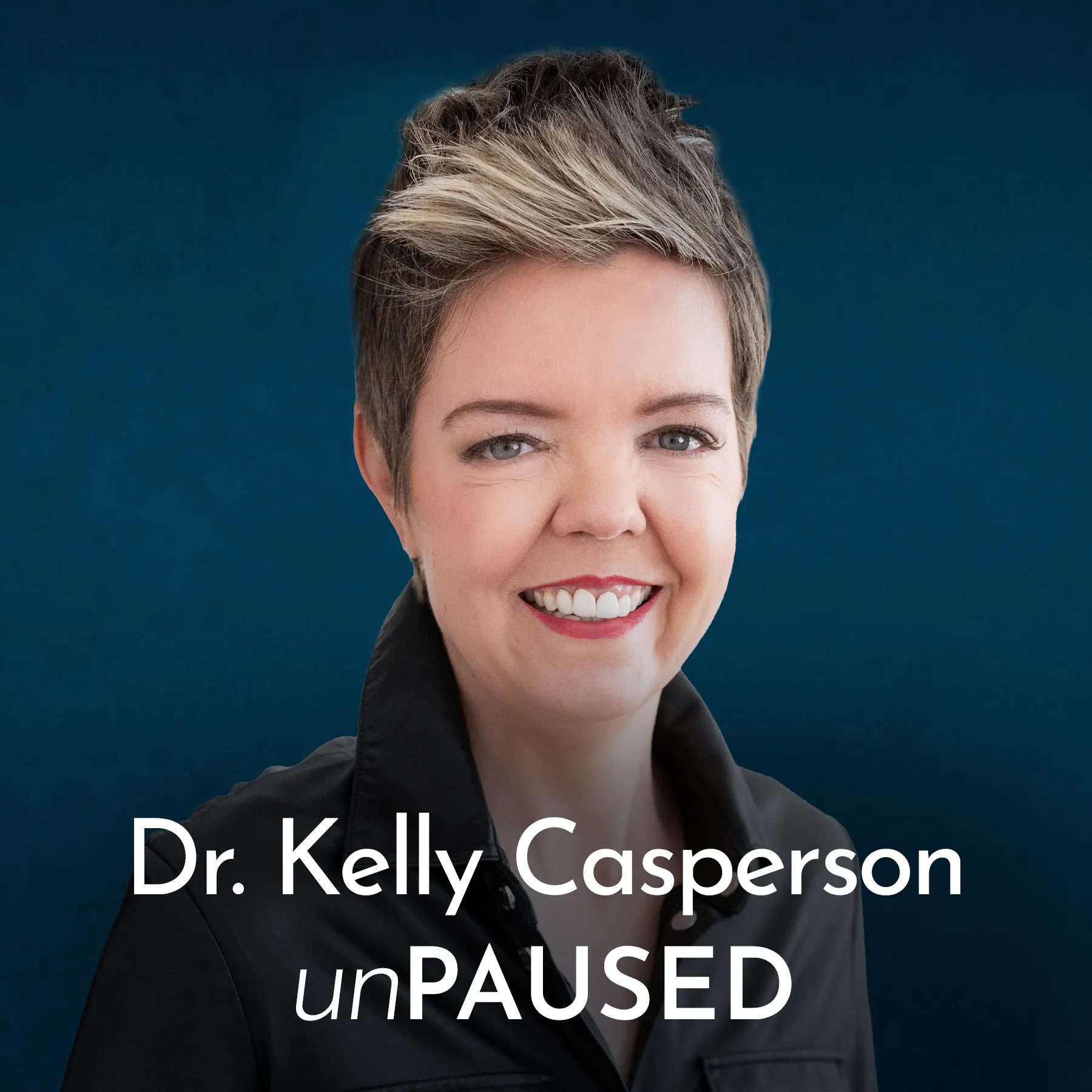
unPAUSED with Dr. Mary Claire Haver
Sexual Health, Libido, and Orgasm: What Medicine Missed with Dr. Kelly Casperson
01:07:05
Loading summary
Transcript265 lines
- [00:00]
Dr. Kelly Casperson
If you're not thinking about sex in a way that is, you know, pro sex, that impairs your sexual health too. So biggest sex organ is the brain. Dopamine pathway is super interesting because dopamine is released on pursuing something found to be rewarding. Why is that important with sex? You can't take me out to dinner and feed me cold chicken and mushy broccoli and then say, well, why don't you like food, Kelly? Well, I don't like mushy broccoli. You can't. I, I can't desire something that's not rewarding to me. And so, so many women. And this was very interesting. So a male researcher, I was interviewing him for my podcast about women's sexual health and desire and he knows a lot about this. And I'm like, wait, hold on, you're assuming women are having sex worth desiring? And he's like, well, yeah. And I'm at that moment, I was like, whoa, that's such a male centric way to think about sex. Cuz you're having desirable sex, right? These women are having mushy broccoli sex and feeling beat up about it because they don't desire sex.
- [01:15]
Dr. Mary Claire Haver
The views and opinions expressed on Unpause
- [01:18]
Podcast Announcer/Producer
are those of the talent and guests
- [01:20]
Dr. Mary Claire Haver
alone and are provided for informational and entertainment purposes only. No part of this podcast or any
- [01:26]
Podcast Announcer/Producer
related materials are intended to be a
- [01:28]
Dr. Mary Claire Haver
substitute for professional medical advice, diagnosis or treatment. Today's episode is special for me because my guest is not just someone I admire professionally. She's a very good friend and one of the people who has most changed how I practice medicine. Dr. Kelly Casperson was the first person who made the sex based differences in sexual health care click for me in a way I could not unsee. We approach men's sexual health in a structured, resourced manner as something to be taken seriously. But we approach women's sexual health with silence, dismissal, and an attitude of that's normal.
- [02:08]
Podcast Announcer/Producer
Kelly has been calling this out for
- [02:09]
Dr. Mary Claire Haver
years, and she's been giving women and clinicians the language, the science, and the permission to do better.
- [02:16]
Podcast Announcer/Producer
She has a gift for taking topics
- [02:18]
Dr. Mary Claire Haver
that have been wrapped in shame and turning them into something clear, actionable, and even hopeful. She's done this in the podcast you are not Broken and in her two books, you are not Broken and the Menopause Moment. They've all changed my life and they've changed my practice of medicine. Today we're going to talk about what women were never taught, what medicine has ignored, and what actually works. We're going to talk about desire, pain, orgasm, changes, vulvovaginal symptoms, and the real world clinical pathways that help women feel like themselves again. And yes, we're going to talk about testosterone. This is the topic that floods my inbox, confuses clinicians, and gets women into trouble. When it is handled casually. Kelly is the person I trust most to cut through the noise and I can't wait to have this conversation. I'm Dr. Mary Claire Haver, a board certified obstetrician and gynecologist and certified menopause practitioner. I'm also an adjunct professor of obstetrics and gynecology at the University of Texas Medical Branch. Welcome to Unpaused, the podcast where we cut through the silence and talk about what it really takes for women to thrive in the second half of life.
- [03:39]
Podcast Announcer/Producer
Mother's Day is coming and if you're stuck on what to get, let me make this very simple for you two. Jennie Bird if you want something that actually feels thoughtful, Jenny Bird is your one stop shop. They have everything from earrings to bracelets to personalized monogram necklaces. So you can choose something that genuinely feels like her, not something you grabbed at the last minute. I have a pair of their silver linen hoop earrings and I love how easily they go with everything. Effortless and polished. And here's what makes this an easy option. These are the pieces she's actually going to wear, the ones she can throw on in seconds and instantly feel more put together. They ship fast so you're not stressing about timing. And when it arrives, the packaging is so beautiful it already feels like a complete gift the second it hits your doorstep. So this Mother's Day, don't complicate or stress out about what to get. Just go with Jenny Bird. It's a meaningful gift and and a timeless piece she'll reach for every time. You can get 20% off your first order with Jenny Bird by visiting jenny-bird.com and use the code unpaused at checkout. This podcast is sponsored by MIDI Health, the first virtual clinic created for women by women for the treatment of menopause. Don't let anyone tell you menopause is something you have to suffer through alone. MIDI can help. Visit joinmitty.com to learn more.
- [05:11]
Dr. Mary Claire Haver
Doctor Kelly Casperson welcome to Unpause.
- [05:15]
Dr. Kelly Casperson
Thank you for having me.
- [05:17]
Dr. Mary Claire Haver
I'm so excited. You are one of the most requested guests.
- [05:20]
Dr. Kelly Casperson
Stop it.
- [05:21]
Dr. Mary Claire Haver
That we have had. So what always fascinated me about your training because I did obgyn, which is female health and really bikini Medicine, you know, which is fine, but that you actually train to take care of both men and women in urology. So you talking about how you were so struck by the sex based differences, can you talk about that?
- [05:48]
Dr. Kelly Casperson
Yeah, I think it really has set up, you know, in the current circumstance, who are the players and the interesting voices in this space. And I think the female physicians, the female urologist, specifically, because we see this gender disparity lens really strongly. And we trained with the boys. Right. We trained with the men. Right now in America we have a thousand female urologists out of about 10,000 urologists. So still, I still get, I didn't know women could be urologists. Like.
- [06:15]
Dr. Mary Claire Haver
Right. Or you didn't know that urologist took care of anything other than the penis. Yeah, you know, I'm like, what is a urologist?
- [06:22]
Dr. Kelly Casperson
So urologist is a surgical subspecialist of the genital urinary organs. So starting at the top, adrenal glands, kidneys, ureters connect to the bladder, bladder pees out of the urethra to go into the toilet. And then the reproductive organs of the male, stereotypically so testicles, scrotum, penis, prostate. And a lot of urologists, not all help with prolapse, bladder leakage, incontinence, stress, incontinence, leaking when you cough, sneeze, laugh, overactive bladder, which is urgency, frequency, getting up at night to pee a lot. And really, you know, my story was I had a patient change my life. She was a bladder cancer patient and we did a very radical surgery. It was invasive. Bladder cancer cured her. And I became very bonded with her. And that was, as far as my story goes, really important because this wasn't a stranger crying in my office that I didn't know. I love her. And she was crying in my office because of her sexless marriage. And as I'm handing her the box of Kleenex, I'm realizing I don't know how to help you, but I know how to help the men. We urologists stereotypically are very comfortable with testosterone. We're very comfortable with Viagra, we're very comfortable in talking about quality of life that matters in regards to sexual health, that is our bread and butter. Urologists do that, but not with women. And so I'm handing her the box of Kleenex and I'm thinking, I don't know how to help her. Who does? And I was told in training women were difficult. They take too much time. And don't worry, the gynecologists are taking care of them.
- [07:50]
Dr. Mary Claire Haver
Anyway, no, we weren't.
- [07:51]
Dr. Kelly Casperson
Right. So that's when I found out. So then I started my deep dive and I spent about a year just deep diving on female sexual medicine. Because I'm like, do we have any research? Yes, we actually do. It's just not getting out to the people. And then we have Hollywood, which tells us wrong stuff all the time.
- [08:06]
Dr. Mary Claire Haver
But we like, what. What is Hollywood saying?
- [08:08]
Dr. Kelly Casperson
Spontaneous sexual desire is normal. You should be hot and heavy and ready to go in. An instant sex takes one minute. Nobody has any problems with it. Certainly we aren't dealing with pain or like bad knees or bad hips or, you know, a cold.
- [08:22]
Dr. Mary Claire Haver
Right.
- [08:22]
Dr. Kelly Casperson
Like real life in sex. And then everybody has an orgasm at the exact same time. And then you also have lots of time for sex. Like you're just hanging out, having sex all the time. So basically, Hollywood's wrong about everything and sex. And so was at a Ishwish conference.
- [08:39]
Dr. Mary Claire Haver
International Society.
- [08:40]
Dr. Kelly Casperson
Ishwish is international society for the study of women's sexual health started by a urologist. It's been around for over 20 years. Was actually started because of Viagra. So go back. Viagra was released in America in 1998.
- [08:53]
Dr. Mary Claire Haver
Oh, I remember.
- [08:54]
Dr. Kelly Casperson
Yeah, it was.
- [08:54]
Dr. Mary Claire Haver
I was a resident.
- [08:55]
Dr. Kelly Casperson
Big deal. So it was a fail. Failed. But it was a blood pressure study medication. And the men wouldn't give their study medication back because they were getting erections. Before Viagra, erections were all in your head. It was a psychological problem because we didn't have any treatment for it. And so now they said, wait, you're telling me there could be a medication that helps erections? So Erwin Goldstein, the urologist is on the paper, I think New England Journal of Medicine that got Viagra basically approved. And men didn't call his office. Women called his office and they said, what do you have for us? And he said, go to the gynecologist, see what they have for you. So they did. And then they came back to Goldstein and they said, they don't have anything for us. What do you have for us? So we started, in part, the International Society for the Study of Women's Sexual Health, because the women came after Viagra came out saying, what do you have for us?
- [09:47]
Dr. Mary Claire Haver
Where do all those Viagra laden penises go?
- [09:49]
Dr. Kelly Casperson
Right? So I recently did a reel. I was like, okay, Viagra was FDA approved in 1998. And I just was part of the team that got the unboxing of vaginal estrogen in 2025. We've got 27 years of mismatched relationships. And these are both blood flow drugs, by the way. Viagra is a blood flow drug. Vaginal estrogen is a blood flow drug. It helps blood flow to the female pelvis, which is important for arousal. Not that anybody would know that because we didn't get any sex in.
- [10:18]
Dr. Mary Claire Haver
Well, we will break all that down, but keep going.
- [10:20]
Dr. Kelly Casperson
I'm learning everything I can because of this woman. And I go to Ishwish, and I see a gynecologist that trained at one of the best places in Texas. I was a med student with her. We did our general surgery rotation together. And I said, why are you here? And she said, because I didn't learn any of this either.
- [10:37]
Dr. Mary Claire Haver
Yeah, nothing.
- [10:38]
Dr. Kelly Casperson
And that was my like, oh, we all think that you guys are getting help over here.
- [10:44]
Dr. Mary Claire Haver
No.
- [10:44]
Dr. Kelly Casperson
But you're not.
- [10:44]
Dr. Mary Claire Haver
No.
- [10:45]
Dr. Kelly Casperson
I mean, in all fairness, the OB GYNs are busy. You guys are busy, right? And they're like, you should take on everything, including all the hormones and all the sex med. It's like, there's what, 30,000 OB GYNs in America right now, maybe. And we've seen the projections of the need that we're going to have in, like, five years from now with the OB GYNs. Like, we can't put this all on OB guidance. There's not enough. And to think, I mean, Even to think 50% of the population is supposed to go to one type of doctor for all of your healthcare, that's insanity. That's putting women in a box. So I just started, like, learning everything I could. And I loved podcasts. So seven years ago, I started my you are not broken podcast because of that woman and me not knowing anything about female sexual health. And here we are.
- [11:30]
Dr. Mary Claire Haver
What do you mean by you are not broken?
- [11:32]
Dr. Kelly Casperson
I called the book and then the first. The first book in the podcast, you are not Broken. Because I was, like, thinking of a name like Dr. Casperson's podcast. Like, what are you going to call this thing? Right? And women kept coming in and they'd say, I'm so broken. I don't have an orgasm by putting a penis in my vagina. They wouldn't say it exactly like that, but that's the gist. And I'm like, well, you know, only, like, 30% of women have an orgasm by putting a penis in a vagina. You're not broken. They just didn't have the facts. Another one, a woman's like, I've never had an orgasm. And I'm like, well, 10% of women have never had an Orgasm, Never.
- [12:05]
Dr. Mary Claire Haver
And we did know that.
- [12:06]
Dr. Kelly Casperson
And we don't think it's because your body's broken. We think it's because of the social, cultural world you're living in that says don't touch yourself, you shouldn't want sex. Pleasure is bad. Oh, by the way, we never told you what the clitoris is. Right. So it's not that your body can't experience pleasure. You've just been kind of shrouded from the possibilities of your pleasure because of our society. So I don't have an orgasm. You're not broken. I don't have an orgasm when a penis goes in my vagina. You're not broken.
- [12:34]
Dr. Mary Claire Haver
In our clinics, we have an hour visit. We were able to step outside of the, what has become the medical model with insurance based and give the gift of time. But they have to unpack the trauma. You have to give them time to unpack the trauma and express their brokenness. So then you can like put them back together.
- [12:54]
Dr. Kelly Casperson
Do you find that social media is so amazing? Because I just, I'm a better doctor because.
- [12:58]
Dr. Mary Claire Haver
Me too.
- [12:59]
Podcast Announcer/Producer
Totally.
- [12:59]
Dr. Kelly Casperson
Because the door was open to the truth of the American people. I would not have known the suffering.
- [13:07]
Dr. Mary Claire Haver
70% of the symptoms that I've learned had not a thousand women told me that they had frozen shoulder with menopause or tinnitus, ringing in the ears or palpitations or, you know, like, like a thousand women all expressing the same thing. Isn't women making up stories in their heads?
- [13:23]
Dr. Kelly Casperson
Yeah, yeah, totally. We all think we're doing a very good job. But then you open the door to your cell phone to the world, and you see, I'm on my fourth doctor, I'm on my fifth doctor. My doctor told me this. And you're like, oh, we think we're doing a good job, but the truth might be different. But this is the point of the 15 minute visit when doctors suggest things for sexual health. Just use lube, just have a glass of wine, just do it anyways, Just listen to some music, just light a candle. Like it comes across as very dismissive because you haven't bonded with that person yet. You haven't heard their problem yet. You're just offering a quick solution. And so that's why I'm like, I know the doctors are coming from a good place by offering suggestions of platitude.
- [14:07]
Podcast Announcer/Producer
Yeah.
- [14:07]
Dr. Kelly Casperson
But it's not landing right. And so it's like you've got to work with the fact that this woman who might be 56 years old has had 56 years of really crappy sex education. She might not know what a vulva is. And here we are in our very rushed time trying to offer a solution, and it doesn't land. So I know that we're well meaning, but it's like there's so much to unpack that even offering quick solutions kind of looks like you're not listening very well.
- [14:38]
Dr. Mary Claire Haver
When did you. Something click for you about female pleasure? You said you fell in love with female pleasure. How is your practice now?
- [14:45]
Dr. Kelly Casperson
I mean, to me, I'm like, sexual pleasure is a right, it's a birthright. It's how your body was built. And a lot of this is gender equality for me. And looking at how society prioritizes one group's pleasure and really labels or stigmatizes or dismisses the other person's pleasure.
- [15:03]
Dr. Mary Claire Haver
Give me examples of that.
- [15:05]
Dr. Kelly Casperson
We put a woman in a bikini to sell a cheeseburger on an ad for the Super Bowl. So we're taking somebody's pleasure and saying, hey, enjoy some pleasure while we're trying to sell you a cheeseburger. Right? So there's. That genders, you know, in your face like they're sexual beings. Here's something that sexually pleases you. Let's try to sell cars and cheeseburgers with it, right? So society is so out in the open in using male sexuality as a. As a basically a means of advertisement, Right? Sometimes to the detriment of the female body and what your worth is. And then you have the female. Did you get taught clitoris in sex ed?
- [15:41]
Dr. Mary Claire Haver
I went to Catholic school, Kelly. There's no such thing as sex ed.
- [15:45]
Dr. Kelly Casperson
No. What? The hexaclitoris, right? And so I remember we had. My mom got us the book the Wonderful Way that Babies are Made. And like, the stork was in there and Jesus was in there. And I'm not sure how the whole plot got together, but, like, I remember that book, but to me, like, it just makes no sense. 90% of men are heterosexual. They get testosterone, they get Viagra, they get validated and right in your office,
- [16:08]
Dr. Mary Claire Haver
you're giving out these prescriptions every day.
- [16:10]
Dr. Kelly Casperson
Yes. Because your quality of life matters. Your quality of life matters.
- [16:14]
Dr. Mary Claire Haver
And what happens to the women coming in with the exact same complaints?
- [16:17]
Dr. Kelly Casperson
You don't get hormones because you still have a period. You're just too. You're too uptight. You're just stressed, need to relax, right?
- [16:24]
Dr. Mary Claire Haver
Like, get a new husband and I
- [16:25]
Dr. Kelly Casperson
get a new husband. I get it. Like, I get. Stress does affect sexual health. But to say that that's the only thing that's going on with no evaluation, with a 10 minute visit, it's like we blew you off. Now you're supposed to be sleeping with these people that will proudly tell you quality of life matters. And if you look just as surgeries, right. So urologists take out prostates. And it would be malpractice if a urologist took out a prostate and didn't counsel the man on risks of decreased ejaculation and erectile dysfunction. You must have those conversations prior to operating on a prostate. And then you. I'm not a gynecologist, and you can correct me, but you have women who have sexual structures operated on or very nearby. And zero.
- [17:10]
Dr. Mary Claire Haver
We have no. The counseling. Did not know we counseled about surgical complications, blood loss, infection, you know, but I don't remember anything about a change in sexual function on any of the, you know, counseling. You know, we have those standard forms, medical, legal forms and stuff. We never counseled about that when we took out ovaries or. Or did any genital surgeries.
- [17:30]
Dr. Kelly Casperson
I remember early, early in my social media life, there was a group of physicians and they were talking about, do you take out the cervix or the hysterectomy? And me kind of going to Ishwish and learning about Dr. Goldstein's data of like, the cervix for some people is an important sexual structure. Not everybody, but some people probably should ask about that before you talk about cervix sparing or not hysterectomy. And they're like, there's no data. And then I published, I said, these are the papers looking at the innervation of the cervix and the effect on sexual health. And then the response is, but there's not a lot of data. So it's like, dismissed every. Like, there's no data, then there's not enough data. And it's like, when are you gonna realize that these people have sexual health issues in their pelvis? And so do these people. We all started from the same thing. We just care about these people's quality of life better. So, you know, to me, again, it's gender equality until the end of, like. That's my why of like, I just want the same thing for women that men get. And the other thing I see a lot is you're medicalizing women. You're medicalizing them if you're trying to give them Addie or you're trying to give them hormones. And I'm like, did anybody say we were medicalizing the men in 1998 when we came up with Viagra, did anybody say Pfizer, you shouldn't make billions of dollars of from solving their problems from
- [18:49]
Dr. Mary Claire Haver
a non erect penis. Yeah.
- [18:51]
Dr. Kelly Casperson
So we're only medicalizing again. We're keeping women from having what men already have.
- [18:57]
Dr. Mary Claire Haver
Let's do some sex med 101 for our listeners because none of us learned anything in our sex education, if you got any. It was basically sex education was how to not get pregnant, don't get a
- [19:08]
Dr. Kelly Casperson
disease and don't get pregnant, you know,
- [19:10]
Dr. Mary Claire Haver
and those are important things.
- [19:11]
Dr. Kelly Casperson
Take a test, they're important things. But for the average, let's say midlife person who might, you know, they've got birth control, they're in a long term committed relationship that has nothing to do with their sex life at all. And we've just left them hanging.
- [19:27]
Dr. Mary Claire Haver
In my residency, So I did OBGYN, we had full blocks, about 60ish percent of my training, maybe 55 was obstetrics. Important stuff, right? How to get someone pregnant, keep them pregnant and you know, healthy and get the baby delivered and then all the postpartum care, okay, fine, then it's a four year residency. Then we had gynecology where everything else was lumped in and that was pediatric gynecology, gen oncology, all the cancer stuff. So ovarian cancer, vulvar cancer, vaginal cancer, all those, you know, we had full blocks on that. We had reproductive endocrinology, which is ended up being a catch all for helping people get pregnant who were struggling to get pregnant. In the REI block which we had two rotations in four years of residency, so two six week blocks, one lecture per week on menopause, that was it. And nothing on sex med, absolutely nothing. I didn't know that there was any treatments available. So I get out of my residency and I think I am a well prepared obgyn. And granted what we focused on in the residency program was not sex med. No one came in complaining of much or we were thought that they were a little bit crazy because that's also what we were taught. Women somaticize psychological issues. But I'm getting out and I have my gynecology patients and as I'm walking out the door after they're well woman, they're like one more thing. They would gather the courage and take a deep breath to admit in their little paper gowns, you know, with their butts on the, on the paper start talking about sexual dysfunction. And I was a deer in the headlights. I had no idea how to Help them. And so many were. I was shocked by the percentage of patients, well educated, resourced women who were complaining with tears in their eyes. And I had no idea what to do. Nothing.
- [21:14]
Dr. Kelly Casperson
It's not life threatening, right? And in our training, I'm not excusing our training, I'm just being like, you know, it's hard to argue that getting a baby out safely in cancer isn't more important when you're like, we've got 80 topics and two minutes to teach everything. But as far as quality of life goes, sexual health is huge. It's absolutely huge. And so, like, disproportionately of like, uterine cancer is awful, but it's thankfully pretty rare. Sex is everybody, right? So, like, as a percentage of, like, maybe we should learn things in percentage to how much it affects people. Sex med affects everybody. And so when you think of it like that, you're like, whoa, we are really underserved in our education for it. And I think about that because I didn't learn it in med school. I operated around the clitoris and didn't know that the clitoris had. Had, you know, these.
- [22:05]
Dr. Mary Claire Haver
No look like Gumby.
- [22:06]
Dr. Kelly Casperson
Yeah, it looks like a penis that's kind of been widened. And because they're the same structures. And I'm like, you're telling me I've been putting midurethral slings around the clitoris bodies for a decade and I didn't know that? Yes, that's what we're telling you. And so I come to this very humbly of, like, if I didn't know, I don't assume anybody else knows.
- [22:27]
Dr. Mary Claire Haver
No, I never know.
- [22:28]
Dr. Kelly Casperson
I'm the surgeon in the pelvis. It's been amazing.
- [22:31]
Dr. Mary Claire Haver
I mean, I think of all of the laceration repairs from obstetrics that we did, and we were literally just throwing sutures to stop bleeding and repair anatomy without any thought of where.
- [22:42]
Dr. Kelly Casperson
Yeah, scars hurt. Right? And scars, especially episiotomy scars, it's a thinned of tissue. That's what a scar is. And then when perimenopause and post menopause hits and we lose our protection from our hormones down there, those episiotomy scars get really tender and painful. And often they're around that 6 o' clock part of the vulva. And so I always call it the six o' clock spot, but that gets really thinned and irritated. And so I'll do an exam and I'll be like, did you have an episiotomy? And they're like, oh, yeah, right there. It's like that's what hurts. Wow. So it like it'll come back, come
- [23:12]
Dr. Mary Claire Haver
back years and years after delivery, especially
- [23:15]
Dr. Kelly Casperson
as the hormones change.
- [23:21]
Podcast Announcer/Producer
Many of you know I've spent my career pushing for better medical standards for women. MIDI Health is on that same mission, delivering the kind of care women have always deserved. For too long, women have been told to just deal with perimenopause and menopause symptoms. Your labs are normal. This is just a part of aging. Eat less, work out more. That approach failed us, and it's exactly why both my work and Mitty's exist. Midlife and menopause aren't the beginning of the end. They're a critical window of opportunity. But education is only half the battle. Women need access to clinicians who actually understand the science of female aging. That's the gap MITI was built to close. Mitti is focused on health span, not just lifespan. That means looking at your metabolic health, bone density, cardiovascular risk and cognitive function. It's the kind of proactive, evidence based care I've always believed women deserve. And it's exactly what MITI delivers. And here's what matters most. Women in all 50 states can access this care covered by insurance with clinicians trained in the latest menopause and longevity science. Because your zip code should never determine your access to quality menopause care, book your virtual Visit today@joinmitty.com that's Join Midi
- [24:48]
Lloyd Lockridge
hi, my name is Lloyd Lockridge and I'm the host of a new podcast from Odyssey called Family Lore. In this podcast I'm going to have people on to tell unusual and sometimes far fetched stories about their families.
- [25:00]
Dr. Kelly Casperson
I've heard my whole life that she invented the margarita.
- [25:02]
Lloyd Lockridge
And then we're going to investigate those stories and find out how much of it is true. He gets a patent one month before
- [25:08]
Dr. Kelly Casperson
the Wright Brothers oh my God.
- [25:10]
Lloyd Lockridge
Please follow and listen to Family Law an Odyssey podcast available now on Apple Podcasts, Spotify or wherever you get your shows.
- [25:19]
Podcast Announcer/Producer
I've been doing a little spring reset with my closet, cutting down to fewer pieces that I actually want to wear. That's why Quince keeps showing up for me. Their spring collection is built around premium materials, 100% European linen, organic cotton, beautifully soft denim pieces that feel elevated without the inflated price tag. Most styles start around $50. Their spring collection is lightweight, breathable and just effortless to wear. And their accessories are just as lovely. I've had my eye on one of their leather bags made from 100% hand woven Italian leather. What I really Appreciate is that Quince works directly with ethical factories and cuts out the middleman. So you're paying for quality, materials and craftsmanship, not just a label. For me, their stretch silk tie neck blouses have become a staple. The fabric is substantial, but still soft. The fit is beautifully tailored. And honestly, the price made me double check because it almost felt too good to be true. Refresh your spring wardrobe with quince. Go to quince.com unpaused for free shipping and 365 day returns. Now available in Canada too. Go to q u I-n c e.com unpaused for free Shipping and 365 day returns. Quince.com unpaused.
- [26:47]
Dr. Mary Claire Haver
Walk me through the few male sexual response cycle.
- [26:49]
Dr. Kelly Casperson
You gotta go way back to the 1950s, and we had Masters and Johnson and the Kinseys and the researchers, which was very groundbreaking because nobody had really documented sexual health cycle by then. And so stereotypically, it's kind of a rise up a hill and then a drop off. What do I mean? Desire, arousal, and then orgasm and then resolution. Right? Now, desire was assumed because if you're somebody in the 1950s traveling to the Midwest to have Kinsey and Johnson tie electrodes up to you and watch you have sex, desire is kind of implied, right? So they actually didn't have desire on there in the beginning. It was just like arousal, orgasm, resolution. They put desire at the beginning. Well, if you put desire at the beginning, you're kind of broken if you don't have desire because it's at the beginning. Right? Even though these people had no desire issues, they were like a little voyeuristic. They're like, I volunteer as a tribute to understand human sexuality.
- [27:43]
Dr. Mary Claire Haver
Yeah, yeah, yeah.
- [27:44]
Dr. Kelly Casperson
They were willing to go. Rosemary Besson comes along well after, and she says, but women's desire doesn't always happen before they have sex. It could happen during sex. Desire for sex can happen after sex. And the example I give of that is like, you have amazing sex and then you look at your beloved and you're like, that was so good. That was awesome. I forgot how good that is. Remind me how good that is again. We should do that again. That's me desiring sex right after I had sex, right? And so what we do is we think sex is this very linear, again, male model, very linear way of having sex. And women feel ultimately broken because they're not sitting around desiring sex all the time. And I'm like, of course you're not sitting around desiring sex all the time. You've Got a job, you've got kids, you've got a household to manage, you're busy and you're not in a sexual context. Right. Like this is very unsexual to me right now and I'm not interested in having sex. A lot of women will respond to being in a sexual context. I feel safe right now. I feel safe enough to have sex. I feel like I'm connected to you. That allows me to want to have sex. Right. And so our society, again, what does Hollywood get wrong about? Sex is like, everybody thinks desire has to happen first and then no sex because you don't have any desire. Instead of how the female sexual response cycle happens, thanks to Rosemary Besson and others, is put yourself in a nice place, prioritize sex. If you want it in your life, the desire will come. That's called responsive desire. Right. But Hollywood tells us about spontaneous desire where desire comes first. Go find somebody to have sex with. Instead of like, I want sex in my life, let's prioritize it. Am I safe? Are we connected right now? Are we doing things that are arousing? Oh, yeah, yeah. Sex is good. Let's have sex now. Right? And so instead of waiting for the breeze of desire to blow in, we gotta create the sexual circumstances that we want to be part of.
- [29:40]
Dr. Mary Claire Haver
What's the difference between desire and arousal?
- [29:42]
Dr. Kelly Casperson
Good question. So I think of arousal as blood flow, right. And nobody thinks of the female pelvis as blood flow. But when you think of a penis
- [29:50]
Dr. Mary Claire Haver
just like a man.
- [29:50]
Dr. Kelly Casperson
Yeah. When you think of a penis at an erection, how does it get big and hard? Blood flow. And so the clitoris is the same. The clitoris will engorge with blood. And that surrounding the vulva, the whole pelvis fills with blood. And to me, I'm like, that's why you can't just put something in the vagina without being aroused. Number one, it can be traumatic and painful. Right. Blood flow helps the tissues be resilient and help tolerate what's going to happen. Because I always joke, I'm like, the pelvis is like, is this a tampon? Like, what's your plan with this Right now, you've got to let your pelvis know what the plan is. So blood flow is helpful. New, exciting research looking at the role of vibration. And a lot of people will think a vibrator means putting something inside your pelvis, inside your vagina. That's not what these researchers did. They took vibrators, they put em on the outside of the vulva with no pretense. Of like this is how you need to do it or that you have to have an orgasm, just putting it on the outside of the vulva, increase blood flow, improve sexual function, help desire. And the prelim data says this might actually help with signs of atrophy and lichen sclerosis. Yes, we need more data on that. But it's not the vibrator and it's not the sex, it's the blood flow that's helping that. And then you think, well yeah, blood flow is good for our brain, it's good for our heart, it's good for our muscles. It's kind of a no brainer that blood flow is good for your pelvis. Right. So when I think about arousal, I really think about blood flow. Now where we're really lacking in research, we know tons about erectile dysfunction. Right. Impaired blood flow as men get older affects the rigidity or the firmness or the time span of which the penis can be and stay hard. We know that heart disease affects it, diabetes affects it, smoking affects it, drugs, drugs affect it. Well studied. Same anatomy in females, not studied at all. We know that women with diabetes have more sexual dysfunction. Same with women with other medical issues, but it is not studied. Like the erection is studied, but same same clitoris, penis same same.
- [31:53]
Dr. Mary Claire Haver
Wow. Let's talk about the brain. What are the role of the neurotransmitters, Dopamine, serotonin and what is the reward pathway?
- [32:01]
Dr. Kelly Casperson
Yeah, the brain is the biggest sex organ and it plays a huge role. And I always like, you know, that's kind of when I got into like coaching and understanding the brain. Because I can give you vaginal estrogen, I can send you to a pelvic floor physical therapist, I can give you a really good pelvis, we can fix prolapse, we can help with leakage. But if you're not thinking about sex in a way that is pro sex, that impairs your sexual health too. So biggest sex organ is the brain. Dopamine pathway is super interesting because dopamine is released on pursuing something found to be rewarding. Why is that important with sex? You can't take me out to dinner and feed me cold chicken and mushy broccoli and then say, well, why don't you like food, Kelly? Well, I don't like mushy broccoli. I can't desire something that's not rewarding to me. And so so many women. And this was very interesting. So a male researcher, I was interviewing him for my podcast about women's sexual health. And desire. And he knows a lot about this. And I'm like, wait, hold on. You're assuming women are having sex worth desiring. And he's like, well, yeah. And I'm at that moment, I was like, whoa, that's such a male centric way to think about sex. Because you're having desirable sex. Right. These women are having mushy broccoli sex and feeling beat up about it because they don't desire sex.
- [33:23]
Dr. Mary Claire Haver
Do we have percentages here?
- [33:24]
Dr. Kelly Casperson
Do we know you can use orgasm as a proxy for quote, unquote, good sex? Right. Where the experts will be like, you can have good sex and not have an orgasm. Like, we can get.
- [33:34]
Dr. Mary Claire Haver
We can get New Orleans, vice versa.
- [33:35]
Dr. Kelly Casperson
Yeah, but let's use orgasm as a proxy.
- [33:37]
Dr. Mary Claire Haver
You can have an orgasm and think it's shitty sex.
- [33:39]
Dr. Kelly Casperson
You can have an orgasm and think it's shitty sex. Absolutely. So let's look at the orgasm gap most pronounced in heterosexual couples. So what they did, and it's interesting because they did a recent study and an old study, and the orgasm gap has not gotten better. Decades have gone by not getting better. Right. So the group with the largest disparity in chance of orgasm with having sex is the heterosexual man, clocking in at around 97% orgasm with intimacy with the heterosexual woman who clocks in around 60% of the time. Same sex lesbian, same sex gay men, they're all pretty matched up, up much higher. I think the lesbians are like high 80s. Gay men are up high 90s. The heterosexual female has the least amount of orgasm of any of those people. And 60% is if she's in a long term, loving, committed relationship.
- [34:33]
Dr. Mary Claire Haver
I think they only studied women in long term, loving, committed relationships.
- [34:36]
Dr. Kelly Casperson
Yes. But then they studied hookup sex in college. And this is what you need to tell your daughters. So if it's hookup sex in college, he still has an orgasm. High 90s. She has an orgasm 7% of the time. Oh. So to me, I'm like, honey, what are you participating in this game for? Risk of disease, risk of pregnancy, risk of societal shame, 7% chance of orgasm. Don't play at that table in Vegas. Like, it doesn't make sense. That was a big aha for me is like, oh. The male researcher of female sexual desire thinks she's having sex worth desiring and that she's just not desiring it.
- [35:12]
Dr. Mary Claire Haver
And that's where sex education comes in.
- [35:14]
Dr. Kelly Casperson
You think, yeah, well, you know, you talk to a woman will come in and she'll be like, I, I like,
- [35:18]
Dr. Mary Claire Haver
he's happy he's getting off. He is having an orgasm. And, like.
- [35:22]
Dr. Kelly Casperson
And usually he has no idea that it could be a different way, right? Like, because we. We didn't get taught about sex, let alone how to talk about communicating about sex.
- [35:31]
Dr. Mary Claire Haver
Oh, God, no.
- [35:32]
Dr. Kelly Casperson
Let alone talking about communicating about bad sex, right? So it's like, oh, we got some work to do. So I always say talk about sex when it's good. Like, just normalize talking about good sex. That was so great. I love it when we do that. Tuesday. Tuesday morning seemed to be a good time for us to do that, right? Let's just talk about having good sex because inevitably the sex might get not good. I'm stressed. I've got a deadline at work. My mom's sick, the kids need me more. I just had a baby. Now we got rocky road sex, right? If we can talk about it when it's good, we're all the more prepared to be like, I love it when it's good. And we've already got that bond about talking about it. Let's talk about it when it's rocky. So a lot of women will come in and they'll be like, I don't desire sex. I use a party metaphor. When you're at the party, is the party good? Do you like being at the party? And they'll be like, oh, yeah, love the party. Love it. Always great. Happy to be taken to the party. Don't always want to go to a party, but happy that I'm at the party. Like, great. Just prioritize partying. Go have great parties, right? Versus, no, I don't even like going to the party. The party's kind of gray. The party's kind of blah. And I think that's, you know, going back to the dopamine pathway. When we talk about hypoactive sexual desire disorder and when we should do a medication for it, it's like, sex is gray. It's gray, but it used to be amazing. And it's not a relationship problem. Our relationship's great, but it used to be awesome. And it's just not that anymore. Maybe it's a neurotransmitter issue. Maybe it is the brain. And that's where these medications come in. They are safe, they're effective. They've been completely derided by the media because, again, the men get the Viagra and the women. What do you need that for?
- [37:16]
Dr. Mary Claire Haver
So let's go there. So what are the drugs you're talking about? There's two FDA approved medications. You're talking about right now. And they work in the level of the brain.
- [37:24]
Dr. Kelly Casperson
Yep. They both work theorized to work in the dopamine pathway or to influence the dopamine pathway to help you want to desire something worth desiring. That's the stereotype. Are you just going to make a bunch of horny women who are going to go off and do crazy things? No, no, no, no. That's not what we're trying to do here. She had a great sexual relationship. Just the lights got dimmed. Let's help her out. Maybe it's a neurotransmitter issue. Incredibly safe. The Addie and which is full of Anserin is the generic. Been around for quite a while. Just got FDA approved for 65 and under. We should definitely talk about that. It's one pill a day. You take it at night. And it's not an on demand drug. So you have to have it in your kind of like an antidepressant or a high blood pressure medication. Like you have to just keep taking the medication in order for it to work. Take it for a couple of months to see if it helps or not. And if it doesn't help you then can stop. The problem is many people's insurance in America has sexual health riders. A lot of people don't know this. So you're not going to get your Viagra covered.
- [38:25]
Dr. Mary Claire Haver
For women or for men.
- [38:26]
Dr. Kelly Casperson
All people.
- [38:27]
Podcast Announcer/Producer
All people.
- [38:28]
Dr. Kelly Casperson
But the good news is Viagra is generic and cheap.
- [38:30]
Dr. Mary Claire Haver
It's 13 cents. Yeah.
- [38:32]
Dr. Kelly Casperson
And Addie is not. It is still on on brand just for people who are looking for it. Then fill Rx P H I L R X is the pharmacy and you can go to addi.com because you can't just go to Walgreens and get this medication.
- [38:46]
Dr. Mary Claire Haver
Yeah.
- [38:46]
Dr. Kelly Casperson
Especially pharmacy if you want to get it. The other one is called Vylisi or Brimalanitide. That is an injectable more of an on demand desire medication. It just doesn't have as much use. I would say I don't know in America like how much people are actually prescribing one versus the other. Has more nausea than Addie does. So that's bothersome to some people. They'll take an anti nausea medication. Being nauseous isn't very sexy. So it's not a great side effect if you're trying to have sex. What's super interesting about Addi though is it's FDA approved for women. It's in a pink box. What percentage of those prescriptions are taken by men? 10%.
- [39:28]
Dr. Mary Claire Haver
Really?
- [39:28]
Dr. Kelly Casperson
Pink box, FDA approved for women. 10% of the prescriptions are taken by men. Why? Because it's a brain drug. We all have brains. It works the same. So there's actually published literature of men with trouble with orgasm. And it helps. It helps men with desire. So it's not that it only works in female brains. It was just designed and FDA approved for that.
- [39:50]
Dr. Mary Claire Haver
How much of women's sexual dysfunction is biology and how much is culture? How much is stress?
- [39:58]
Dr. Kelly Casperson
I don't know if I've ever seen a breakdown. And my argument would be like, I don't think everything affects everything. And that's what the sex therapist would say. That's what the testosterone researchers would say is like, society affects our biology, and our biology affects how you are in the world. And it's so intertwined. But we certainly see distress with desire go up with age. So that might be more of a biology thing. But stereotypically, women are not thought of as biologic in the way that men are. Right. Like, where men are, like, maybe this is a hormone problem. Like, you know, how many women have doctors who are like, your sexual health issue. Maybe it's a blood flow problem. Maybe it's a neurotransmitter.
- [40:44]
Dr. Mary Claire Haver
I mean, unless they're sex not trained.
- [40:46]
Dr. Kelly Casperson
Yeah. The fact is we're blaming everything on society for women, and we're biologic beings also.
- [40:53]
Dr. Mary Claire Haver
What do you think is the most important scientific fact about women's sexual health? That is just not being taught.
- [40:59]
Dr. Kelly Casperson
Women can have orgasms as easily as men. I mean, and I see this perpetuated a lot. People will be like, women take longer. Well, there's a very awesome bisexual study. So they took bisexual women and they said, when you're partnered with a man and you're partnered with a woman, number one, how frequent do you have orgasms and how long does it take? You literally put a penis in the bedroom and her chance of orgasm goes down. Same biology. Yeah. Different partner. Which tells you a lot, again, about society. Who gets the privilege of having an orgasm and then sex ends. The man. Right. Stereotypically. And so I just. I think that bisexual study is like, such a glamorous way of being. Like, women are not difficult. Women do not take longer. Women sometimes need to take time to have arousal ways. But that doesn't mean we're difficult.
- [41:48]
Dr. Mary Claire Haver
Why do so many women confuse libido with arousal? What is libido?
- [41:52]
Dr. Kelly Casperson
Nobody got any sex ed. So that's my answer to everything. So libido is thought of as the desire to Pursue something. It actually comes from Freud. So Freud is the. Such a good word. It's like libidinous. It's like the pursuit of something. So like the pursuit of food, the pursuit of water, the pursuit of sleep. And the less you have it, the more you pursue it because it's like life saving, right? So it's these innate drives. And so Freud said, libido, or desire for sex, is an innate drive. And so especially with the responsive desire folk, they're like, I must be broken because I don't desire this. Like, if I'm thirsty, I desire water, right? And the joke is like, some men will be like, but I feel like I will die if I don't have sex. And I'm like, I know, but you won't die. Like food and water, right? So it goes all the way back to Freud, and he messed up a lot of things for us. Famously, he said that the vagina orgasm is the adult orgasm. The clitoris orgasm is the infantile orgasm. So to be an adult woman. Have you ever heard that? No. So to be an adult woman, you must have an orgasm vaginally, AKA your husband must provide it by putting something in your vagina. Okay. Well, if that's the truth.
- [43:08]
Dr. Mary Claire Haver
Oh, I've never even heard of a vaginal orgasm.
- [43:10]
Dr. Kelly Casperson
Wait, there's more. So if that's. If Freud says it's the truth, and that's the truth, you as a woman who wants to be an adult woman but can't, what would you do then? You can have a surgery that can move your clitoris closer to your vagina. Yes. In an age without antibiotics, these women were trying to surgically take their clitoris and put it closer to the vagina because Freud said, that's the adult organ. It's fixed. And very famous women of the time had these surgeries, you can only imagine. No anesthesia, no antibiotics. So if anybody's wondering, Freud was wrong. You'll get into the tantric people not to. I'm not downplaying them, but they'll be like, I had a woman come and she's like, I want to tell women about the 17 different ways to have an orgasm. And I'm like, they're. They struggle to have one. Can we work on one? Like. Like, don't give them, you know, like, here's 17 different ways of. Like, they're going to be like, let's. You're happy with one, let's learn one first, right? I was like, oh, my God. I thought I was broken. Now I'm really broken because there's 16 other ones I haven't done yet. To me, I'm like most people think the stimulating the clitoris, however you're gonna do that, is the orgasm. But there is research that people can stimulate their ear and have an orgasm and you can dream and have an orgasm and right. So like our bodies are wonderfully complex and intertwined, but the clitoris is the organ of pleasure. The vagina is close, but we don't rub a scrotum and wonder why a man doesn't have an orgasm. It's close, but it's not his organ of pleasure.
- [44:48]
Podcast Announcer/Producer
I used to think a good makeup routine meant doing more more products, more layers, more time in the mirror. But the reality is the heavier everything got, the less it actually looked like me. As my skin has changed with age, I've become much more intentional. I want it to look healthy, hydrated and natural, not covered up. That's exactly why I love Jones Road Beauty. Their Miracle Balm is one of those products that actually enhances your skin instead of masking it. It gives you that effortless natural glow. Clean ingredients, nothing heavy, nothing clogging. Just makeup that genuinely works with your skin, not against it. They also just launched the Jones Road Lip Recharge, a lip treatment that hydrates and smooths on contact while nourishing over time. One step gives you the comfort of a balm, the benefits of a treatment and a beautiful soft shine. It comes in nine shades and even has a cooling metal applicator. Modern day makeup that's clean, strategic and multifunctional for effortless routines for a limited time. Our listeners are getting a free Shimmer face oil on their first purchase when they use the code unpaused at checkout. Just head to Jonesroadbeauty.com and use the code unpaused at checkout. After your purchase, they will ask you where you heard about them. Please support our show and tell them our show sent you.
- [46:15]
Lemonade Pet Insurance Advertiser
If you're the proud parent of a puppy or kitten, you know you can't pet proof your entire life. There simply isn't a sock drawer high enough or a couch cover thick enough. But you can pet proof your wallet with Lemonade Pet Insurance. Whether it's an unexpected accident or a routine checkup, Lemonade can cover up to 90% of the bill. Plus they can handle claims in as little as two seconds. So before you turn into a complete helicopter pet parent, get a'@lemonade.com pet.
- [46:42]
Progressive Insurance Advertiser
You're listening to this podcast so I know you've got A curious mind. Here's a helpful fact you might not know yet. Drivers who switch and save with Progressive save over $900 on average. Pop over to progressive.com and answer some questions and you'll get a quick quote with discounts that are easy to come by. In fact, 99% of their auto customers earn at least one discount. Visit progressive.com and see if you can enjoy a little cash back. Progressive Casualty Insurance Company and affiliates national average 12 month savings of $946 by new customers surveyed who saved with Progressive between June 2024 and May 2025. Potential savings will vary.
- [47:22]
Dr. Mary Claire Haver
Why are women saved still being gaslit about sexual function today?
- [47:25]
Dr. Kelly Casperson
Because nobody knows anything about sex. Like doctors got no sex ed.
- [47:29]
Dr. Mary Claire Haver
No.
- [47:30]
Dr. Kelly Casperson
But they're the authority on her having access to solutions that can help her sex life. Right. So it's like if you don't know what you're talking about, A, learn like you know I did, or B, keep your mouth shut, refer out, refer out. And Ishwes will say that Ishwish will say the International Society for the Study of Women's Sexual Health. They'll say, you don't have to be an expert on everything, but refer out, refer out as needed. And I think you know why I wrote my first book, you are not broken is so much help can happen from a little bit of sex ed. Yeah, a little bit of sex ed.
- [48:05]
Dr. Mary Claire Haver
Just validation.
- [48:06]
Dr. Kelly Casperson
Just validation of like, oh, you need to incorporate the clitoris in pleasure. I didn't know that. I thought I was broken. Right. So it's like so much refer out. Books, podcasts, classes, sex therapists when needed. Like doctors don't have to know it all, but don't tell people wrong things.
- [48:26]
Dr. Mary Claire Haver
Yeah. What is an orgasm from a medical standpoint?
- [48:29]
Dr. Kelly Casperson
An orgasm, it's, you know, there, there is an old saying of like, you know porn when you see it. Like, like, define porn. Well, you know it when you see it. So orgasm, that's what the, the experts will be like, you know, when you see it, it is a rhythmic contraction of the pelvic floor in.06 second intervals.
- [48:44]
Dr. Mary Claire Haver
What is the pelvic floor?
- [48:46]
Dr. Kelly Casperson
Pelvic floor is a whole bunch of muscles that sit. You can't see them, you can't flex them like a bicep, but they sit in the base of the pelvis and they hold in your bladder.
- [48:55]
Dr. Mary Claire Haver
Flexing them right now.
- [48:55]
Dr. Kelly Casperson
Flexing them right now. They hold in your pelvic organs. Right. And they hold in your pee and they can get weakened with childbirth and
- [49:03]
Dr. Mary Claire Haver
they Contract with coughing, with smoking, with orgasm.
- [49:07]
Dr. Kelly Casperson
Usually happens after stimulation, arousal and then it's a release basically of a buildup. And that release is 0.6 second rhythmic contractions lasting for a couple of seconds to many, many, many minutes. For most people. Incredibly pleasing. For some people, it can be. People can get profound headaches afterwards or pelvic pain afterwards.
- [49:30]
Dr. Mary Claire Haver
But by and large, what's happening in the brain?
- [49:32]
Dr. Kelly Casperson
I have a really awesome sex therapist friend and he's like, in the brain you're dumb and happy with an orgasm. And what he means by that is the frontal lobe, which is our cognitive center. It is our planning, thinking, worry center. Literally has to be shut off. You can't have a frontal lobe activation and have an orgasm at the same time. I know, it's so cool. So they put people in MRIs to actually prove it. They're like, and that went dark and you had an orgasm and you can't engage both at the same time. And that's why some people, you know, sex is different, means different things for different people. But where it comes close to, you know, Valhalla and spiritual and the present moment and just this release of all your worry from the world is because your frontal lobe goes dark in order to experience pleasure. It's very cool.
- [50:20]
Dr. Mary Claire Haver
So I advise patients who are struggling with like middle of the night awakenings and having racing thoughts. You know, usually if they can't self soothe to go back to bed or do bucks breathing or meditation, I'm like, have an orgasm. And that will stop those thoughts right in their tracks and see if that will help sleep. Is that crazy of me to prescribe that?
- [50:39]
Dr. Kelly Casperson
I think it's crazy to me. I'm like, make sure she's comfortable with sex. You have a decentral again, it's like the, you know, if you just say,
- [50:46]
Dr. Mary Claire Haver
I do say, how do you feel about orgasm? Do you masturbate?
- [50:48]
Dr. Kelly Casperson
You know, there's some recently published data saying that orgasm helps decrease menopausal symptoms. Wonderful. I, I believe it. We're, we're cutting off kind of the paying attention to anything else part of the brain with an orgasm. It's, that's neuroscience. And I worry that the, you know, the popular press takes that research and they're like, solve your hot flashes with
- [51:10]
Dr. Mary Claire Haver
or I've seen articles like that. And I'm like, you just need to come more.
- [51:13]
Dr. Kelly Casperson
Yeah. And when you feel like crap telling somebody go have an orgasm, like with no sex ed, with no support, maybe they've had mushy broccoli their whole Life. It can come across kind of obtuse.
- [51:24]
Dr. Mary Claire Haver
I've had patients say, well, that sounds nice, but my partner will get mad at me.
- [51:30]
Dr. Kelly Casperson
Yeah. Yeah. Some people think that there's only so many orgasms that you're allowed to have in a week and that they almost be paired with your partner. Like, did you sign that marriage contract? Right. And did you ever ask your partner, am I only allowed to have orgasms with you? Right. Nobody's ever asked their partner that. But we don't get taught how to communicate about sex, so we assume things about our partner. A big thing that women assume is when a man has erectile dysfunction, that she's unattractive, she's unlovable, and he's having an affair. It's a blood flow problem. It usually doesn't mean all of those things. But if you can't communicate, we assume. Right? And sometimes we assume. Worst case scenario.
- [52:08]
Dr. Mary Claire Haver
What is the most persistent orgasm myth that you would love to retire?
- [52:14]
Dr. Kelly Casperson
That it's difficult for women to have an orgasm or that it always takes longer? Like it's a burden for us or we're less gifted. It kind of has this undertone of, like, it's just not gonna be easy for you.
- [52:28]
Dr. Mary Claire Haver
What happens to the orgasm?
- [52:29]
Dr. Kelly Casperson
With normal aging, orgasm can diminish for several reasons. Number one, it's a pelvic floor contraction. It's a muscle contraction. We lose muscle as we age. Right. So if we don't have as strong of pelvic floor, the experience of orgasm might be less. In addition, we need hormones to help blood flow. Big. The big hormones for blood flow in our pelvis. Estrogen, testosterone, dhea. They did this awesome study where they gave women testosterone, and they took an ultrasound probe and they put it on their clitoral artery and just watched the blood flow of the clitoral artery go up. After they gave them testosterone, I'm like, has anybody ever told you testosterone helps orgasm? So as our hormones go down, the orgasm can kind of feel blunted. Not as strong. Little more challenging to get over the hill.
- [53:14]
Dr. Mary Claire Haver
Right.
- [53:15]
Dr. Kelly Casperson
Like, I like it. I got arousal. I think, no, not gonna happen today. Right. So there are challenges that can happen. Most people.
- [53:22]
Dr. Mary Claire Haver
Why?
- [53:23]
Dr. Kelly Casperson
Hormones going down, pelvic floor going down.
- [53:25]
Dr. Mary Claire Haver
Like atrophy, specifically. Yeah. So atrophy, what's happening to the nerves? What's happening?
- [53:31]
Dr. Kelly Casperson
You know, do you have diabetes going on? Do you have high blood pressure going on? Do we have other comorbidities along with aging? Right. And then as hormones go down, we lose our lubrication. We Lose our blood flow. We. We might lose our architecture. Like, so the thing that always breaks the Internet, right, is when you're like.
- [53:46]
Dr. Mary Claire Haver
And my biggest substack, like, hundreds of thousands of views, is the one I wrote about how the anatomy of the vulva can change with age.
- [53:52]
Dr. Kelly Casperson
Yeah, yeah, yeah. And menopause. It went to, like, these things go to the top of the people on social media. They're like, you can't see I brought a clitoris, right? I've brought a clitoris. But, yeah, people are like, does the vagina go away? And I'm like, you don't know what a vagina and a vulva is.
- [54:05]
Dr. Mary Claire Haver
Like, please pull out the clitoris.
- [54:06]
Dr. Kelly Casperson
Vagina's different.
- [54:07]
Dr. Mary Claire Haver
Oh, it's tiny.
- [54:08]
Dr. Kelly Casperson
I got a tiny clitoris.
- [54:10]
Dr. Mary Claire Haver
It looks like Gumby. For those of you watching on YouTube.
- [54:13]
Dr. Kelly Casperson
So all we see in the. In the female pelvis is the head of the clitoris. The gland looks like a penis. Looks like a. Yeah, it's shocking, right? Look at that. It looks like a penis. So. Same, same. So head of the clitoris is head of the penis. Okay. Shaft of the clitoris. Shaft of penis. And these are the crura, or the bulbs of the clitoris, which wrap around the vulva.
- [54:32]
Dr. Mary Claire Haver
So the vulva, where is the vagina in all of this?
- [54:35]
Dr. Kelly Casperson
Right here. My finger there. So you can see that the crura and the bodies of the clitoris wraps around the vulva. Now, again, your skin's going to be here, right?
- [54:43]
Dr. Mary Claire Haver
So where's the ischio cavernosus in the
- [54:45]
Dr. Kelly Casperson
bulvo in the male equivalent.
- [54:48]
Dr. Mary Claire Haver
Yeah, yeah.
- [54:49]
Dr. Kelly Casperson
Here, these things. Okay. The body and the croissants.
- [54:51]
Dr. Mary Claire Haver
Because that is what we were taught to look for when we were reconstructing the pelvic anatomy after laceration from obstetrics.
- [54:58]
Dr. Kelly Casperson
Impressive.
- [54:59]
Dr. Mary Claire Haver
And. But I didn't realize I was throwing big, giant sutures of chromic into the clitoris.
- [55:05]
Dr. Kelly Casperson
Well, when people are hemorrhaging, you need to do what you need to do. But then it would be kind to ask afterwards, like, how's sexual function? The other big myth we should get rid of is that women should be good to go sexually active six weeks after childbirth. No, there's no data in that. No data. I, like, asked how many you were probably on. I'm like, where's the data that says, why? Six weeks. Six weeks.
- [55:25]
Dr. Mary Claire Haver
Good to go?
- [55:25]
Dr. Kelly Casperson
Is the good to go.
- [55:27]
Dr. Mary Claire Haver
I can't tell you how many patients came back in horrific pain. What we know now is that she had gsm. It wasn't full menopause. But she had general urinary syndrome because her estrogen was so low, because she was nursing her baby. And we suppress our estrogen, we suppress ovulation when we nurse. It is nature's way of spacing out children biologically. And so no estrogen, the vulva takes a hit. I know. And so all her architecture changes, her lubrication changes, her pain changes, and she's having horrifically painful sex.
- [55:57]
Dr. Kelly Casperson
And then she likely has a male partner who doesn't know any of this is happening, is having his own, like, wait, there's a baby now? And what's my role? And am I still loved? And oftentimes sex is a connection for him. Right. So the connection's broken now and they don't know how to communicate about this. So big, big, big relationship issues because nobody got a decent sex ed or an understanding of what happens.
- [56:20]
Dr. Mary Claire Haver
What are the earliest sexual changes that we can see in perimenopause that women often miss or internalize as failure?
- [56:27]
Dr. Kelly Casperson
Well, desire is a big one. So as hormones go down and the stereotype is testosterone is the desire hormone, but estrogen is too. I mean, I know you've seen this. Like, you get a woman on an estrogen patch and she's like, I'm good, I'm having fun again. It's all I needed. Right. And there's older literature on it. Nothing's being studied in the world of hormones much right now in sexual health with women. But there are older studies saying estrogen's role in sexual health certainly involve our health. So when hormones change, desire can go down, but also just moisture lubrication. Everybody was so happy when we got genital urinary syndrome of menopause. And now we have general urinary syndrome of menopause guidelines. But the only people that aren't happy with that are the people who are like, but genital urinary syndrome of menopause happens before menopause and during breastfeeding and with cancer treatments. And like, so now we, anytime you
- [57:17]
Dr. Mary Claire Haver
have a low estrogen, whenever you have
- [57:19]
Dr. Kelly Casperson
a low hormone state, Right? And so again, the stereotype, birth control pills, you don't get any treatment because you're still having periods. Which is super stupid because we don't tell a man he can't have testosterone or Viagra because he has a little bit of. You get a little bit of a boner, dude. So you don't get any of that. That's what we're telling women. You have a little bit of a period still. You don't get any of this. But as you know, the amount of hormones needed to produce a period, not even ovulating, just produce a period, is actually very low, Right? Very, very low amount. But we're using that as a marker of if you're allowed to have help or not.
- [57:53]
Dr. Mary Claire Haver
I mean, what we've learned or what I've learned in the last three or four years and especially getting ready for the new perimenopause and writing the book, is the period. The menstrual cycle changes are the last things you know, like, like stuff's happening in the brain, in the bones, you know, palpitations, skin changes well before your hormones get low enough to affect your periods.
- [58:16]
Dr. Kelly Casperson
And if you look at the data on who's affected most by hypoactive sexual desire disorder, so low desire and what
- [58:22]
Dr. Mary Claire Haver
is hypoactive sexual desire disorder, so low
- [58:25]
Dr. Kelly Casperson
desire for sex and bothered by it, with no other known cause, meaning relationship issues, other health issues, stuff like that.
- [58:36]
Podcast Announcer/Producer
Now it's time for the MIDI Pause. I'm Dr. Mary Claire Haver, host of the podcast Unpaused, bringing you a word from Midi Health. Today, we're talking about perimenopause. Perimenopause is driven by fluctuating hormone levels and can trigger dozens of symptoms, including irregular periods, breast soreness, hot flashes, moodiness, insomnia, and weight gain. But here's the good news. Midihealth is dedicated to changing how perimenopause is treated with a personalized approach tailored to each women's specific needs. Women come to Midi Health to address the symptoms of perimenopause and menopause they see and feel every day. What you may not know is that perimenopause is often diagnosed by symptoms alone. There is no perfect blood test to determine if a woman is in perimenopause due to the wildly fluctuating hormone levels. A discussion with your doctor about your symptoms can lead to answers and possible treatment, including changes to your eating and nutrition, possible over the counter supplements, and potential hormone therapy. With the right treatment, you can ease uncomfortable symptoms. Let me add perimenopause is a natural, expected phase of life that a woman will experience if she's fortunate to live long enough. And the more we talk about it, the less mysterious and isolating it becomes. Progress starts with a personal plan. That's why the MITI approach centers on a holistic combination of solutions, from medications to lifestyle changes in a care plan that works for your body and needs. As the nation's fastest growing women's telehealth company MITI provides accessible insurance covered services. Building on its leadership in perimenopause and menopause, MIDI fills the critical health gaps women face at every age and life stage. If you want a clinician in your corner who understands what your body and brain need right now, that's exactly what MIDI is built for. Go to join Midi.com, join Midi.com and connect with one of their clinicians today.
- [60:45]
Dr. Mary Claire Haver
What do you tell the woman? So let me. Let me take a caveat for a second. Who says, I don't want to have sex and I don't care?
- [60:52]
Dr. Kelly Casperson
Thank you for bringing this up.
- [60:53]
Dr. Mary Claire Haver
I don't care.
- [60:54]
Dr. Kelly Casperson
Thank you for bringing up this.
- [60:55]
Dr. Mary Claire Haver
I tell you, there's a war on the Internet. Every time I post about female sexual desire, about half of the comments are women who are like, I don't give
- [61:04]
Dr. Kelly Casperson
a fuck if I ever. You know, like, that needs to be talked about. Because I'm like, we need to talk about. Because right now we're just talking about hsdd. I have low desire and I care. Who's talking about. I don't have desire and I don't care. Because I would argue with no data or research to back me up, that that effect on relationships is as big, if not more big, than honey, I want to. I just don't feel like it, but I want to. And I'm bothered by it versus honey. I don't care.
- [61:35]
Dr. Mary Claire Haver
I don't want it to be part of my life anymore.
- [61:37]
Dr. Kelly Casperson
Right. And nobody's talking about that, but it's very common.
- [61:42]
Dr. Mary Claire Haver
And at least on the Internet.
- [61:43]
Dr. Kelly Casperson
At least on the Internet. And you don't complain to your doctor about it.
- [61:46]
Dr. Mary Claire Haver
You only complain if you want to do it again.
- [61:49]
Dr. Kelly Casperson
Yes, exactly. Right. And so there. There's a lot to unpack. A lot to unpack.
- [61:54]
Dr. Mary Claire Haver
Let's unpack it. Like, women are taking notes.
- [61:56]
Dr. Kelly Casperson
Were you having mushy broccoli in the first place? Were you having 7% orgasm in the first place? Was sex all about his gratification and not yours? You might not ever want bad sex again. And you're finally at a point in your life where you're like, I'm willing to actually say that, thank you very much. And we must realize we probably got into this relationship because it was sexual. Let's honor that and respect that and say, just because one, we're kind of gendering here. But it could be any gender in any part of the relationship where they were like, we got into this because of sex. This was a sexual relationship. One of us has decided, I'm fine without it. That's significant. That's a true fracture in that relationship. And we don't want to dismiss either partner's important point in this.
- [62:42]
Dr. Mary Claire Haver
What do you do? How do you counsel?
- [62:45]
Dr. Kelly Casperson
I think it's.
- [62:45]
Dr. Mary Claire Haver
Is divorce the only answer?
- [62:47]
Dr. Kelly Casperson
I don't think so. But just talking about it, what is. Most people don't know they're in our. They're in a long term relationship. Most people don't know. What does sex mean to you? What does this mean to you? Why do we do this? When you have sex with me, what do you get out of it? Like, these are like the things we'd never learn to talk about. And I, you know, I learned this from my sex therapist friends and I go home to my husband and I'm like, what's sex mean to you? We've been married for like over 15 years before I asked him this question. I'm like, well into my social media sex ed career.
- [63:15]
Dr. Mary Claire Haver
Right.
- [63:15]
Dr. Kelly Casperson
And I'm like, what's sex mean to you? And he's like, well, sex means X, Y and Z. And I'm like, no shit, didn't know that. Right. And so you're like, if I'm like, hey, I could take or leave sex, but maybe your partner takes, wants to have sex. We need to talk about that. What's sex mean to you? Like, just starting to communicate of why don't you want it without shame? Out of curiosity. Judgment free zone. Maybe we need a therapist to help us communicate. Maybe the communication's already so bad.
- [63:45]
Dr. Mary Claire Haver
Right.
- [63:45]
Dr. Kelly Casperson
Maybe we have a lot of blame and shame and assumptions going on. Maybe we need support. But again, going back to, like, what if we taught people how to talk about sex when it was good so that we can talk about sex when it's bad?
- [63:57]
Dr. Mary Claire Haver
I've had patients and lots of people in my comment or in my DMs, they won't say this in public who say, I'm totally fine taking care of myself. I orgasm on demand. I'm happy to masturbate. I don't care if I have a partner.
- [64:12]
Dr. Kelly Casperson
Awesome. I mean, I always say, like, I'm
- [64:14]
Dr. Mary Claire Haver
not here, but it's affecting the relationship.
- [64:16]
Dr. Kelly Casperson
Oh, so you're partnered.
- [64:18]
Dr. Mary Claire Haver
Yeah.
- [64:18]
Dr. Kelly Casperson
You just don't want to be with your partner. Yeah. Separate. You're in a partnership. We need to communicate with that. Right. What's going on? Why are, why are we not bonded? Why are we not close? Right. Why can't we talk to. Why are we texting a stranger in a DM instead of talking to the person in your house. Right. It's like, we're so uncomfortable talking about sex, but like, I can tell a stranger all about my sex life. It's like, oh, that's really interesting, isn't it?
- [64:44]
Dr. Mary Claire Haver
Well, it's so wrapped up in the emotional part of it and upsetting someone and how they don't feel loved or care, you know, it just. There's so much more to it, you know, reassign to this physical relationship.
- [64:59]
Dr. Kelly Casperson
Yeah. And maybe you don't want sex because you have untreated depression or you have low hormones or you have a health condition, but we're making it be a personality flaw. Right. Again, women get blamed as being. It's all psychological. Like, no, maybe you have a health condition. Maybe your thyroid's like crazy out of whack and that's why you don't want to have sex. Right. So that's what the sex med doctor is like. Let's look into some things. What are you doing? You know, the other thing going back to like, desire and pleasure and stuff is like, how much pleasure do you have in your life in the first place?
- [65:29]
Dr. Mary Claire Haver
Talk to me about the word natural and how it's being weaponized against women.
- [65:34]
Dr. Kelly Casperson
Well, dying in childbirth is natural. Wearing socks is not natural. Right. So natural tends to mean something that is within nature. And what humans have done to that is we've assumed superiority to that natural world. Likely because we live so far out of the natural world right now, we forgot how deadly it is. Right. Cause it's like, it's very easy to live in a climate controlled, beautiful condo with a steady food supply and clean water and be like, nature's nice. Like, no, we created this because nature wasn't nice. And we died in childbirth. And you had a femur fracture and you died because of blunt force trauma. Right. And I was. So I was researching it for my second book and it's called the Naturalistic Fallacy. And it is a thought error that because something is from. From nature, it is therefore superior or better.
- [66:26]
Dr. Mary Claire Haver
So I see, I see it a lot. I see on social media and wellness
- [66:30]
Dr. Kelly Casperson
culture, what is it? It plays into an. It's just another tool in a toolbox to control women. Like, don't you know, you need to
- [66:38]
Dr. Mary Claire Haver
be perfect and natural and 25 forever.
- [66:42]
Dr. Kelly Casperson
You need to be young forever. Yeah. Don't age, by the way. Like the most. The most natural thing on the planet is things are born and then age and then die. That's the most natural thing. And we're like, yeah, but don't do that, but do everything else naturally. Like once you can step back and actually see the like social construct on all of this, like, it's just an immense level of bullshit.
- [67:03]
Dr. Mary Claire Haver
And then I see a lot of people who want to fight, you know, why would you treat menopause or the things that are happening because of your menopause? This is natural. You are meant to do this.
- [67:15]
Dr. Kelly Casperson
Yeah.
- [67:16]
Dr. Mary Claire Haver
What is your comment for that?
- [67:17]
Dr. Kelly Casperson
Well, flossing isn't natural, but it makes it, it extends the lifespan of our gums and our teeth. I mean, I first have to break down the natural myth, right? And then I also break down the, like, we treat everything else in medicine to help quality of life. Like thyroid, replace that. Pancreas, replace that. Heart valve, replace that. Hip, replace that. Teeth, replace that. Hearing aids, check. Glasses, check, check. Hair, check. Like everything. Because then once you, you have to point that out to people because they can't see the sea they're swimming in, right? So you're like, wait, we take care of, that's medicine. We take care of everything. Dry eyes, check. Pimples, check, right? Everything except for the ovary, not that one. Everything else, but not that one. So once you kind of point that out to people, they can see their thought of like, oh, that is kind of weird, isn't it? It's kind of weird that one organ is the organ. We've decided not to help out, to ignore, to ignore or to say, you know, that's the natural. I never like, well, sorry, you know, got gum disease. That's natural. Like, we don't do it with anything else. And I always say, like, I'm not here to make you have sex. I'm not here to make you have hormones. I don't care. It's your life. But I care profoundly that you have the education that you need to make your own decision and that you know how to advocate to help you in making that decision. That's my jam. But if you take hormones or not, I don't care. I'm not going to live in your body. But I know enough to be like, hormones are basic building blocks and if you choose to outlive them, that's what we're doing. We're choosing to outlive them. Antibiotics alone increased human life expectancy by 26 years.
- [68:58]
Dr. Mary Claire Haver
Really?
- [68:58]
Dr. Kelly Casperson
We are choosing to outlive our hormones. We have climate controlled buildings. We're choosing to not freeze, Right? Like, we're choosing to live very long. If you choose to not replace the building blocks tissues can suffer and they will change. Whether you feel that suffering or not, things change. That's just facts. I just, I want people to have the information because I feel like we're jumping to a conclusion about what should be done with no education about it.
- [69:28]
Dr. Mary Claire Haver
You can find Kelly through her website@kellycaspersonmd.com where you can listen to her podcast, you Are Not Broken and find links to all her books as well as to more information on her clinic, the Casperson Clinic. You can find full episodes of unpaused on YouTube at Dr. Mary Claire, I'd love to hear from you about this topic and anything else that's on your mind. You can find me on Instagram Dr. Maryclair and get honest, accurate information on health, fitness and navigating midlife@thepauselife.com My new book, the New Perimenopause, is available everywhere you buy books. If you're loving this podcast, I have an important request. Please take a moment to follow Unpaused on your favorite podcast app. Following and listening is what pushes this information to more women who need it. So if this podcast has helped you feel seen, understood, or supported, hit follow right now so you never miss an episode.
- [70:27]
Podcast Announcer/Producer
Thank you for being here with me.
- [70:29]
Dr. Mary Claire Haver
Let's keep going Unpaused. Unpaused is presented by Odysee in conjunction with pod people. I'm your host, Dr. Mary Claire Haver. The views and opinions expressed on Unpaused
- [70:42]
Podcast Announcer/Producer
are those of the talent and guests
- [70:44]
Dr. Mary Claire Haver
alone and are provided for informational and entertainment purposes only. No part of this podcast or any
- [70:50]
Podcast Announcer/Producer
related materials are intended to be a
- [70:52]
Dr. Mary Claire Haver
substitute for professional medical advice, diagnosis, or treatment.
- [70:57]
Podcast Announcer/Producer
This episode was sponsored by midihealth, the first virtual clinic created for women by women for the treatment of menopause. Don't let anyone tell you menopause is something you have to suffer through alone. Mitti can help. Visit joinmitty.com to learn more.
- [71:14]
Dr. Mary Claire Haver
Perimenopause is not early menopause. It is its own distinct biological phase,
- [71:20]
Podcast Announcer/Producer
and it has been largely ignored.
- [71:23]
Dr. Mary Claire Haver
My new book, the New Perimenopause, is
- [71:25]
Podcast Announcer/Producer
about the seven to 10 years before periods stop, a transition that is anything but gentle. Hormones fluctuate wildly, and for many women,
- [71:34]
Dr. Mary Claire Haver
this is when anxiety, brain fog, sleep disruption, weight changes, mood shifts, joint pain, and that unsettling feeling of I don't
- [71:42]
Podcast Announcer/Producer
feel like myself anymore begin long before anyone says the word menopause. Perimenopause often starts quietly. It shows up in the brain first, then the body, then everywhere else.
- [71:55]
Dr. Mary Claire Haver
And all too often, women are told nothing is wrong.
- [71:59]
Podcast Announcer/Producer
I wrote the New Perimenopause because you deserve answers before things spiral, you deserve
- [72:05]
Dr. Mary Claire Haver
care before burnout, and you deserve a
- [72:08]
Podcast Announcer/Producer
clear roadmap for a transition that medicine has ignored for far too long. The New Perimenopause is now available everywhere. Books are sold. Learn more and order your copy@thepauselife.com.