← unPAUSED with Dr. Mary Claire Haver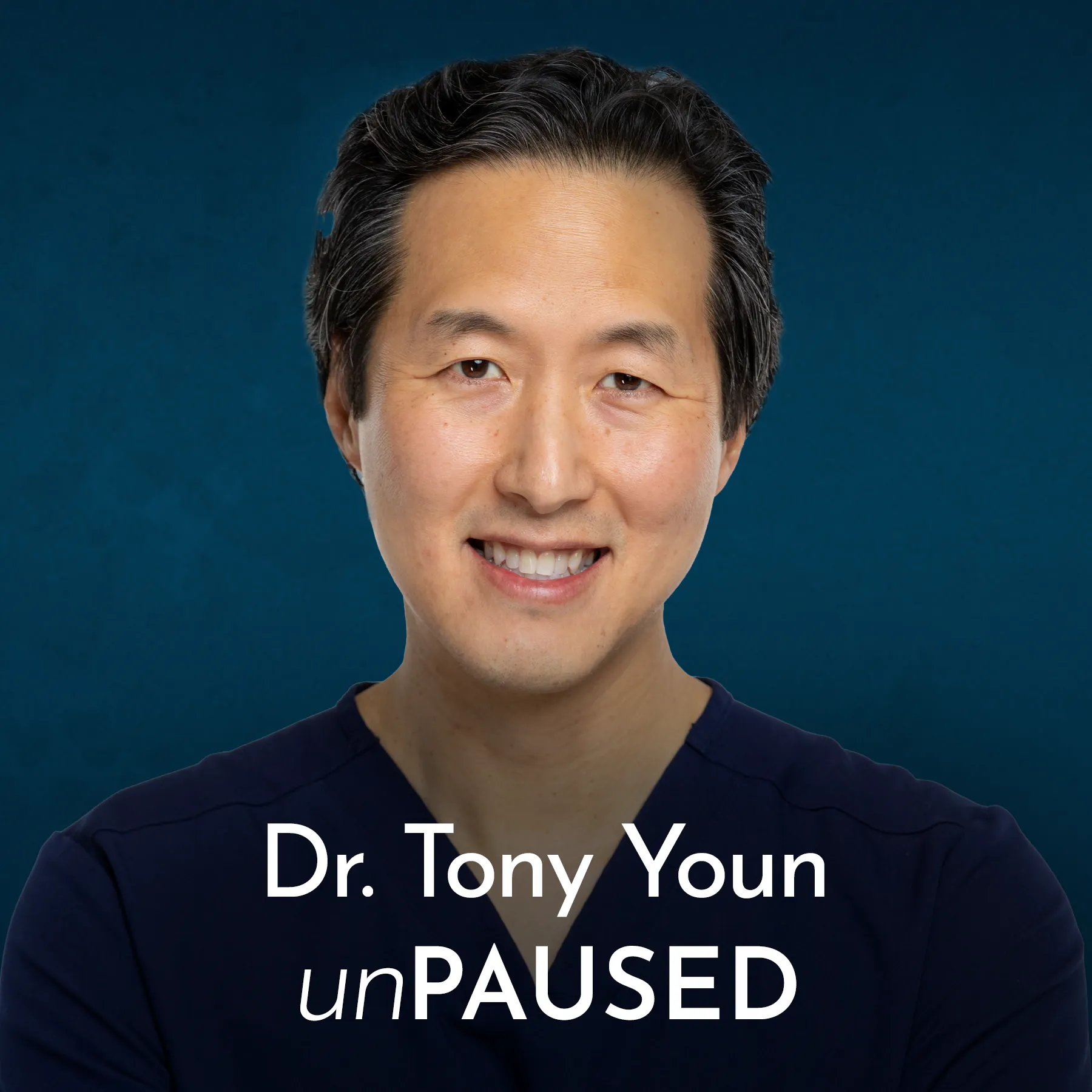
unPAUSED with Dr. Mary Claire Haver
The Holistic Plastic Surgeon: Devices, Ozempic Face, and What Your Habits Do to Aging Skin
00:42:21
Loading summary
Transcript125 lines
- [00:00]
A
What about a woman who has spent thousands on non surgical procedures? I mean, and you're like, no, it's time, you know, chasing result. When does she know? When is it time?
- [00:11]
B
Okay, so one thing that we cannot treat non surgically is really just excess loose skin. Okay, skin is a little bit loose, a little bit loose. And yes, Morpheus 8 like radiofrequency microneedling, yes, lasers can help and stuff like that. But, but when there's truly a lot of excess skin, unfortunately there's nothing you can do about it other than cut it out. And the problem with cutting it out is it creates lengthy scars.
- [00:45]
A
The views and opinions expressed on Unpause are those of the talent and guests alone and are provided for informational and entertainment purposes only. No part of this podcast or any related materials are intended to be a substitute for professional medical advice, diagnosis or treatment. In part one of our conversation with board certified plastic surgeon Dr. Tony Yoon, we reframe the way we think about skin in midlife. It isn't just about aging well or finding the right products. It's about biology, estrogen loss, changes, collagen, healing, hydration and structure at the cellular level. Once you understand that, the entire conversation around skincare procedures and expectations starts to look very different. This episode is part two of that conversation. Dr. Yoon walks us through what works and what doesn't when it comes to devices, lasers and treatments. From IPL and CO2 lasers to microneedling and red light therapy, what's worth your money and what isn't. He also draws a clear line between non invasive treatments and the point where surgery may be the only real option, breaking down the trade offs in a way most patients never hear. And then we zoom out because you can't out procedure your lifestyle. We talk about the daily habits that shape how your skin sleep, stress, sugar and inflammation and cut through the overwhelming noise of modern skin care. If you've ever wondered where to start, what to skip, or how to think about all of this without getting swept up in the extremes, this conversation is for you. I'm Dr. Mary Claire Haver, a board certified obstetrician and gynecologist and certified menopause practitioner. I'm also an adjunct professor of obstetrics and gynecology at the University of Texas Medical Branch. Welcome to Unpaused, the podcast where we cut through the silence and talk about what it really takes for women to thrive in the second half of life.
- [02:57]
B
This episode is brought to you by Progressive Insurance. Do you ever think about switching insurance companies to see if you could save some cash. Progressive makes it easy. Just drop in some details about yourself and see if you're eligible to save money when you bundle your home and auto policies. The process only takes minutes and it could mean hundreds more in your pocket. Visit progressive.com after this episode to see if you could save Progressive Casualty Insurance Company and affiliates. Potential savings will vary. Not available in all states.
- [03:24]
A
Expedia and visit Scotland. Invite you to come experience the beauty that awaits in Scotland. The sweep of wild coastlines, quiet lochs and untamed landscapes. Fresh cuisine that feels rooted in the land. Come experience the kind of stillness that stays with you long after you leave. Plan your Scottish escape today@expedia.com VisitScotland. All right, let's move on to devices. Love devices or like talking about them. Let's talk about ipl. That's an old one that's been around, that technology's been around for a long time.
- [04:08]
B
Good bang for your buck. Okay, so IPL stands for intense pulse light. And essentially it is a great treatment if you've got spots. So hyperpigmentation, sunspots, age spots, liver spots, those are all names for essentially the same thing. And it's melanin clumping in your skin due to excess UV radiation. Now, for some reason, and I don't know exactly why women after menopause seem to develop that more, I do think that what we do see when we're in our 40s and 50s and older is we are seeing in the creation of spots. We're seeing the aging and the sun damage that we had when we were much younger.
- [04:41]
A
Yeah.
- [04:41]
B
Because I get patients that come to see me all the time, they say, look, I've got all these spots. Dr. You, I wear sunblock every day. I wear a hat. I'm not accumulating where are these coming from? And I firmly believe that this is sun damage from when you were younger. And so ipl, great way to treat it using light energy. So what it does is it will actually turn those spots darker and within one to two weeks, those spots, a lot of them will actually slough off. Most people will need a few treatments. This is something you do typically in an office setting. Because these IPL devices are not super, super expensive. They're usually a bit less expensive than a true laser treatment.
- [05:13]
A
Okay.
- [05:14]
B
And that's why I think it's great bang for the buck.
- [05:15]
A
Are there any at home IPLs available?
- [05:17]
B
There are some at home IPLs question about how effective they are. So for at home, like light based devices, I would stick more with the hair removal. There are at home hair removal devices I think that can be moderately beneficial. But the at home ipl, I'm still on the fence with it. I think they can be helpful if you're trying it. I just don't know how truly effective they are because even in the office, you do need at least three to four IPL treatments to truly get rid of that pigment. As nicely as you'd like to combine ipl, though, with a good brightening cream, because that way you're going to get an inside, outside combination.
- [05:50]
A
Magic. All right, what about CO2 laser? Everybody's talking about it right now.
- [05:55]
B
So CO2 laser basically is kind of like the original ablative laser. And the way you want to describe it is that.
- [06:02]
A
So CO2 is carbon dioxide.
- [06:03]
B
Carbon dioxide, yep. And it's ablative, meaning that it burns the skin. All of these skin tightening treatments, essentially the. The ones that use energy, typically are creating heat in the deeper skin. And when you heat the collagen of the skin to a certain temperature, it causes the collagen to actually heal in a tighter fashion. So it's kind of like that log cabin we talked about the beginning of the podcast. And those logs start to fray, they start to fall apart when you laser it and you heat the. That, that cabinet essentially to a certain temperature. That collagen will tight afterwards. So lasers will do that by using light energy. They target essentially a chromophore or a color, and then they heat that color up. IPL also, you know, to, to an extent does that. There is radio frequency that will do that, ultrasound based devices that will do that. So really they all kind of do the same thing, creating heat in the deeper skin. The original lasers did that by literally burning the skin from the top all the way down. And it'll be like literally leveling everything. And those are very effective for certain really tough skin conditions. Like if you've got really bad pitted acne, acne scarring, then that could be really helpful. People with really advanced sun damage. But the problem is, is those CO2 lasers are really aggressive. You feel like a burn patient. You're oozing for, you know, a week or two, a lot of redness and even potential risk of pigmentation problems. There are people who get that and then they come out and they literally look like a ghost because the melanin has actually been destroyed for some of them. So those are not being used all that much anymore. Now they're using them in a fractional pattern, in which case what you're doing is instead of just burning all the skin all the way down, you're burning a fraction of the skin.
- [07:37]
A
Okay.
- [07:37]
B
Or a pixelated version. So it's tiny little columns of, of skin that you're burning all the way down. You're getting that heat there that's causing the skin tightening. But you're also getting some exfoliation of the skin. Because you're burning, you know, some of that skin at the surface. But because you're leaving all the skin, you know that's not being actually burned around it, then you can actually heal much faster. Okay.
- [07:57]
A
And still get.
- [07:57]
B
So that's a CO2 laser. And so those are still being used. I think if you're looking for the most aggressive rejuvenation treatment, then that's a fractional laser. Like a CO2 is probably the way to go.
- [08:06]
A
And then in that same vein, and we'll come back to other, other topical, other devices. I don't want to forget about this is I'm seeing a lot of chemical peels. Yeah, so. So getting rid of the top layer of skin.
- [08:19]
B
Exactly. So chemical peels will do it in, in a different way. But essentially what you're doing then is you're an acid to the surface of the skin and it will essentially just burn the surface of the skin and it will go to a certain depth. Same thing like with the laser. Now deeper peels can go into the dermis and that can do more of a change. Other peels are more superficial. And really it's the length that you peel that is going to determine your results. So there are chemical peels that are lunchtime peels that are a mild exfoliation that can do much feel a little softer afterwards. No big deal. There are peels that have like a one to three day downtime where that's a little more of an aggressive exfoliation to. To peels that are seven to 10 days. That's kind of the deepest that we go in my office. It's more of a moderate depth chemical peel. Now you're in that superficial dermis, so you're past the epidermis or the upper layer skin. You're into that little slightly into that deeper layer skin. And then there are peels like the phenol peel that go even deeper and those can get kind of scary. I'm not a fan of those. The problem with that is phenol. It's a poison. And what happens is if you put too much phenol in the skin, you can get cardiac arrhythmias. And people can actually die from it. And so you have to actually peel a quadrant of the face at a time and give it time because you have to give your, your body time to actually clear the phenol from the system. You need the liver and the kidneys to eventually excrete it for a facial treatment. That's a lot when you're thinking. Yeah, so it's not being done much. I see videos from people overseas using it. The thing with peels that are good is that they're. You don't have the overhead of a laser that may cost $200,000. And so the doctor or the aesthetician performing it is not going to charge as much because you know, it may, it may be a hundred bucks for the supplies of a peel. So bang for your buck with chemical peels can be very, very good. But the negative with peels is that it little longer for you to heal from it, you know, to get a similar result. And then like I said, when you go really deep with a phenol, that, that is when it gets potentially dangerous.
- [10:06]
A
Okay, so walk me through the classes of lasers. So we talked about CO2. I mean they, they have different depths. It's also confusing. It's like an Alphabet soup.
- [10:14]
B
And then there's different brand names and. Yeah, so I think with lasers you have to keep in mind that lasers all have different purposes. So there's certain lasers that are primarily made for like tattoo pigment. So those are pico lasers. They can also be used for anti aging too though. So a lot of lasers can be good for one thing and so, so for other stuff. And then people, because they have it and they paid two or three hundred thousand dollars for it, they kind of recommend it to everybody. And so what you have to consider with the laser is what it's truly good for. So there are certain lasers, like an alexandrite laser is great for hair removal. Okay, so that's what you want to do. But if you're a person of color, then alexandrite's not going to be good for you. You want to use an ND YAG laser. And then there are other lasers, like a pulsed dye laser, that's great for vascularity, you know, so if you've got, let's say, a lot of redness to your skin. If you've got port wine stains, it's used for that. It's used better for scarring. And so it's. There's so many out there that I think the first thing you have to keep in Mind is that some doctors will buy one laser and use it for everything.
- [11:15]
A
Yeah.
- [11:16]
B
And so, ideally, if you're going to get a laser treatment, you want to go to a place that has a number of different options so that you know that they're not just recommending the same thing for everybody, and that may not be the best option for you.
- [11:26]
A
What about the Morpheus type? I know there's a few on the market now where you get needles in the skin plus heat.
- [11:33]
B
So, as I mentioned earlier, with lasers, the idea is you heat the collagen, the deeper collagen, to a certain temperature, and it causes the collagen to tighten. Microneedling originally originated as the dermal rollers, where they're like little rolling pins with tiny pins on it. And it would create tiny little pokes in the skin. And the trauma from those pokes essentially causes the collagen to get damaged. And then, like I said before, it heals in a tighter fashion. So the idea behind radio frequency microneedling is that you get the little pokes in the skin and those needles go to a certain depth, but they are insulated up until the tip of the needle. And the tip of the needle emits radio frequency energy, or heat, to heat up the deep skin. So the needles will go in, release the heat, and then come out. So you get a twofer with that treatment. You get the needle poke and you get the deep heating. And if somebody is being proactive with it, you can apply growth factors, you can apply exosomes to the surface of the skin. There are different things you can apply. You can apply pdrn, the salmon DNA on the surface that will then seep into those tiny holes and help to rejuvenate the skin as well that way. So RF microneedling, I think, is great for non invasive skin tightening. Right now, it's the gold standard. I'll explain where it can work really well, but where the concern is, okay, so if you've got an area like say, hey, I don't want to facelift, but I got a little bit of loose skin here on my neck. Can I do RF microneedling for it? Typically, yes. Like, I actually get it done myself every four to six months to try to prevent this from drooping. But if the needles go too deep and the energy is too high, there is a belief that it can actually cause the underlying fat to potentially be damaged.
- [13:04]
A
Okay.
- [13:05]
B
And so the knock on it is, if it's done overly aggressively, you could potentially get fat loss from it. And we don't want Fat loss in, let's say in our cheeks, especially because we lose fat there. If you get a little fat loss in the neck, a lot of people won't mind that so much.
- [13:18]
A
What about at home devices? What would you recommend? What works? Are any of them really worth the money?
- [13:24]
B
So the first one I would definitely recommend for pretty much anybody is red light therapy. Red light therapy has been shown in studies after typically the studies that seen the idea is red light therapy is energy. And you talked about mitochondria and stuff. And as we get older, our skin cells produce less mitochondria, less ATP. The belief is that red light therapy will basically energize the mitochondria to create more ATP. But even more than that, there are studies have actually looked at collagen and elastin in the skin after undergoing red light therapy. And studies that I've seen two months of regular red light therapy will increase the collagen elastin in the skin. Now it's not super, super dramatic, okay? It's just like taking a collagen supplement. You know, I fully believe in collagen supplements. I know you do too. But it's not the same as applying retinol to your skin.
- [14:09]
A
Right.
- [14:09]
B
You can't expect the same benefits, but it does seem to definitely help. And for me, the way I look at red light therapy is there's so many people out there, you know, who, they can't spend a thousand dollars for a treatment every couple months at a doctor's office. But what they can potentially afford is, you know, four or five hundred dollars for a laser mask or a tabletop device that they can use for years to help with stimulating collagen production. Keeping in mind that the benefits still are modest, but there are definite benefits there.
- [14:37]
A
So I see some influencers sitting in front of a giant red light panel like morning while they're vibrating and doing all these things. Would you recommend that for all skin?
- [14:47]
B
I think it's good. You know, I. So what I do is I actually have an infrared sauna and we. Ours has red light with it. Honestly, like the best thing I ever bought for myself is a treadmill. My wife and I, because I would probably be 30 pounds heavier right now if I didn't have one.
- [15:00]
A
I turned mine into a walking desk. I mean, I work on it.
- [15:03]
B
There you go.
- [15:04]
A
Every day I'm at home, the second
- [15:05]
B
best thing I think I've ever gotten is our sunlight and sauna. It's beneficial in more ways than one. So that I'm a full Believer in that.
- [15:12]
A
Okay. Any other at home devices?
- [15:13]
B
Okay, so number one is red light therapy. I think the number two, if you want to do something, but you have to be careful with it, is at home micro needling.
- [15:20]
A
Okay.
- [15:21]
B
So I'm not talking about dermal rollers, but actual dermal stampers. Okay.
- [15:25]
A
What's the difference? Because I did buy a roller one day off of TikTok.
- [15:28]
B
Yeah. So the idea with rollers, if you ask any dermatologist, they'll tell you that it tends to tear at the skin because it's on a roller. And the pins don't go just directly, they kind of roll over it that you can get tearing. There are dermal stampers, actually, there are devices that have removable heads that have the. The pins in it that are sterile where you can go ahead and stamp the areas.
- [15:49]
A
I tried those before and it came with some serum that you put on top.
- [15:53]
B
Exactly. And those, I think, can be pretty effective. You just have to be careful because you have to follow the instructions. You don't want to keep reusing the head because you can get an infection. You want to make sure that you're not going at an angle so you don't, you know, cause something to break in it. You just want to be careful with it and follow those instructions. And if that's the. The case and it's not some black market one that you, you know, buy on ebay or something, then I think it could be very beneficial. Just be careful. You don't want to micro needle your face and then put just anything on your skin. Because if you got, let's say, a real pungent moisturizer that's not made to, let's say, go a little bit deep in your skin, then you don't want to apply it right away. Okay. Because you do have the tiny little holes afterwards. So that's why they come with those special serums. Those are in general safe, but you don't want to just apply anything over top.
- [16:37]
A
Okay. Many of you know I've spent my career pushing for better medical standards for women. MIDI Health is on that same mission, delivering the kind of care women have always deserved. For too long, women have been told to just deal with perimenopause and menopause symptoms. Your labs are normal. This is just a part of aging. Eat less, work out more. That approach failed us. And it's exactly why both my work and Mitty's exist. Midlife and menopause aren't the beginning of the end. They're a critical window of Opportunity. But education is only half the battle. Women need access to clinicians who actually understand the science of female aging. That's the gap MITI was built to close. MITI is focused on health Spanish, not just lifespan. That means looking at your metabolic health, bone density, cardiovascular risk and cognitive function. It's the kind of proactive, evidence based care I've always believed women deserve. And it's exactly what MITI delivers. And here's what matters most. Women in all 50 states can access this care covered by insurance with clinicians trained in the latest menopause and longevity science. Because your zip code should never determine your access to quality menopause care. Book your virtual visit today@join midi.com that's join midi.com
- [18:10]
B
have you ever felt like you were living just a B or B plus life? It's so dangerous to live that. More dangerous than a B minus or a C plus life? Because when you're living a B or B life, you don't change it. You think it's good enough. Is it?
- [18:24]
A
I'm Susie Welch.
- [18:25]
B
I host a podcast called Becoming you. People think okay, an A plus life is not available to me, but there is a way. We are all in the process of becoming ourselves. Listen to Becoming youg wherever you get your podcasts.
- [18:44]
A
What about a woman who has spent thousands on non surgical procedures? I mean, and you're like, no, it's time, you know, chasing a result. When does she know? When is it time?
- [18:55]
B
Okay, so one thing that we cannot treat non surgically is really just excess loose skin. Okay, Skin is a little bit loose, a little bit loose. And yes, Morpheus say like radiofrequency microneedling, yes, lasers can help and stuff like that. But when there's truly a lot of excess skin, unfortunately there's nothing you can do about it other than cut it out. And the problem with cutting it out is it creates lengthy scars. And that's the big trade off.
- [19:20]
A
And you do do facelifts, correct?
- [19:22]
B
Yes, so I do facelifts.
- [19:24]
A
What is a facelift?
- [19:25]
B
A facelift, basically. In general, it's an operation. I do it under general anesthetic. Some doctors don't. Where you make incisions around the ears, you elevate the skin to a certain extent, you tighten up the muscle layer, remove or reshape the fat and then you cut the extra skin out.
- [19:41]
A
I didn't realize the fat part.
- [19:42]
B
Yeah. So some people will re drape the fat, some people will remove. It just depends on the anatomy of the patient. Um, but essentially it's dealing with removing skin, tightening up of the muscle layer, and repositioning the fat and. Or removing some of the fat. And in everybody who has a facelift, they will get scars typically in front of and behind the ears, oftentimes a scar underneath the chin as well. And the thing to keep in mind with a facelift is that's the big trade off. You cannot predict how those scars are going to heal, no matter what somebody tells you of, like, I'm great at scars. Your scars will heal based off of how your body heals those scars, not what a surgeon does. And a surgeon can operate on you for three or four hours. They can remove the sutures to prevent track marks. But what they can't do is cause your scars to heal in a certain way, because your scars will heal 24 hours a day, seven days a week, for literally two years. And what a surgeon can do in the three or four hour operation pales in comparison to what your body does during that time. And you and I both know, we're both surgeons, and you operate on somebody. And I've seen patients where they get a thick scar from their appendectomy, but their C section scar looks fine.
- [20:46]
A
Right. And my scars are not all the same. You know, it's just.
- [20:48]
B
And I think hormones have something to do with it, too. I think that I have seen patients where I've operated on them more than once. And for some reason, the first time, they heal great. The second time, their scars got thick. And I do think that hormones may have something to do with it. I just don't know exactly what and how. But the thing is, we cannot predict how good a scar will heal. So you are trading removing that skin for those scars. And you have to be okay with that because if you're not, you don't want to regret the operation.
- [21:12]
A
So let's talk a little bit about, you know, aging as a woman. 80% of your patients are female, correct?
- [21:18]
B
Yes. Yep.
- [21:19]
A
And I do feel much more pressure than my husband does aging. He doesn't think about it the same way that I do. The way that my skin looks, the way that my face looks, you know, other parts of my body look. And I absolutely love being 57. Like, I feel like I'm living the best time of my life. But, like, watching certain parts of my face change is. Can be distressing. And so, you know, if you do too little, you're letting yourself go. If you do too much, you're vain.
- [21:46]
B
Yeah.
- [21:47]
A
Like, how do you counsel your patients about that?
- [21:48]
B
Or, I mean, I think it's first thing we have to realize society is not kind to women who age. I can't tell you how many patients told me that I feel invisible after I get to a certain age because I. I'm not 20 years old anymore. And then, just like you said, then they get some stuff done, and, you know, people judge them for it and say that they're vain. And it really is. It's a difficult place to be. And I sympathize with my patients and my followers who tell me these stories all the time. I think that a couple of things to keep in mind. The first thing I think is that we all have a desire to feel good about how we look. And that desire, I think, is really universal, and it's in men as well. And it can be something as simple as how you feel when you go to the store and you buy a new outfit and you wear that outfit out and you just feel good. Like there's this part of you that feels good because you're wearing a new outfit and other people may not even notice it, but you feel that it's a great thing. You know, it's a good thing. There's no nothing wrong with it. Obviously, getting a cosmetic procedure is a similar type of a feeling, but obviously you're doing something different with that. And I think the way I would recommend people to think about it is, number one, don't feel guilty if you want to get that feeling, because I think we all want that. Even men do, too. And number two, we're all on a certain continuum of what we are willing to do for that. And wherever you are on that continuum, it's okay. I have patients of mine who will do Botox, but they don't want to do filler, and other people who will have surgery. And wherever you are on that whole continuum, it's okay, you know, as long as you're happy with that. If you are considering a cosmetic procedure, the thing that I would recommend that you really, really take into account is kind of this principle that I have in holistic plastic surgery. But it's do the least amount of procedures necessary to make you happy, okay? Because you never regret not getting something done, especially when you're talking about surgery. You only regret when you did something that maybe you shouldn't have, okay? So if you're not ready and if you're not 100% gung ho. So it's like if somebody says, hey, I'm thinking about a facelift. You know, I've gone through menopause I'm 55, I've had some changes and stuff. Do you think it's the right time for me? I'll tell them, look, you'll know it's the right time. When you really, really dislike the appearance of the lower face and the neck so much that the thought of spending tens of thousands of dollars going under the knife for three or four hours getting permanent scars in front of and behind the ears, that we cannot guarantee how they're going to heal in the end, with the potential risk of complications, the thinking about all that, you are still excited to do it because, man, you can't stand looking at this turkey gobbler neck or the jowls, whatever, then maybe that's the right time for you. But if the fear is more or the concern is more of these complications than the excitement, then maybe it's best to wait, you know, because at some point maybe you'll get there.
- [24:31]
A
If you could rewrite the standard of care for aesthetic medicine the way that we're kind of rewriting the standard of care for menopause, what would that look like? You just briefly mentioned and we're going to get into this, you are the world's holistic plastic surgeon. And so, you know, we're going to talk about lifestyle here. Yeah, but how would you rewrite that?
- [24:52]
B
So I would look at it the whole kind of anti aging as like you're building a house. And when you build a house, the foundation of the house is what you always start with. And what's the foundation of anti aging? It's really what you eat.
- [25:03]
A
Yeah.
- [25:03]
B
So that's going to be the foundation. That's the first thing I recommend. If you're thinking, hey, I'm not liking what I'm seeing or I want to prevent the aging, what do I do? The first things to think about is your diet. Second thing after that is going to be skincare. Okay. Because it can be very, very effective along with supplements. Actually, probably number two would be supplements and then skincare going in order of how much they are technically as a foundation. So let's say the first floor is going to be supplement. Second floor of the house is going to be skin care. And then the attic of the house is going to be the non invasive or minimally invasive treatments. And then the spire way at the top or the chimney, that's actual surgery.
- [25:38]
A
Okay.
- [25:38]
B
Okay. And you may not need that, which is totally fine. But anybody can stop at any of that point. Like you may say, hey, you know what, I built the house and I Just want a one floor ranch and you're doing supplements and a good diet and wearing your sunscreen and that's good for you, that's fine, you know, but if you want to take it up higher, you can always add those added floors if you'd like. The big thing, really, that I would want to change a paradigm. There's, I think there's too many plastic surgeons who are a cut first mentality. And for me, my goal of being a plastic surgeon is to keep my patients out of the operating room and keeping plastic surgery only as a last resort.
- [26:21]
A
Let's talk about lifestyle factors. Well, first of all, can we out procedure a lifestyle that is not conducive to healthy. You cannot healthy life.
- [26:29]
B
No. Although, you know, there are interesting studies that show that the younger you look, the healthier you are and the longer that you live in general. Okay. This is a general fact. So they've actually taken twins and have done twin studies and the twin that actually looked younger tended to be healthier and live longer.
- [26:46]
A
Which you think about it, we're talking cosmetics, we're talking, you know, why does this twin look younger? Probably because they eat better and they sleep more and they exercise. Bad habits and they all the things. All right, let's get into habits then. Sleep.
- [26:59]
B
So sleep is going to be huge. And really, I mean, you've talked about sleep on your podcast before. It's a such a hard thing after menopause. But it is so, so incredibly important. Just like stress, you know, sleep and stress I put together.
- [27:11]
A
Okay.
- [27:11]
B
The good thing is there's a lot of tools that you can use. You know, I tell you, my mom, she called me, gosh, this was probably about nine months ago. She called me because she was supposed to come visit and she said, tony, I have to cancel my trip because I cannot sleep. And she said, I'm literally sleeping one night out of every three. Two nights in a row she would not sleep. And then she would sleep the third night and then go another two nights. And so we put her on a bunch of. We've tried different supplements. I tried L theanine, we tried magnesium. Each of those would work from like once or twice, one or two nights, and then it would go back. And you know, the thing that really made the big difference, I called a friend of mine, he was a gynecologist, and he said, well, put her on some progesterone. So I started on the progesterone and it was a game changer.
- [27:53]
A
Wow.
- [27:54]
B
Absolute game changer.
- [27:54]
A
And she's in her 80s, she just
- [27:56]
B
turned 80, just less than a year ago. And she had never been on any really HRT because she was part of that group where they're like, no, don't do it, don't do it. And she's always had sleeping problems, but not to the extent where it just recently got so bad for her. And that progesterone that's like, saved her life.
- [28:13]
A
We need more studies, but in our patient population, you know, it's a miracle. We know it converts to allopregnitolone, which goes into the brain and binds to the GABA receptor, which causes relaxation. And I mean, for our patients, it is night and day for their sleep. I mean, it's not hot flashes waking them up. You know, this is like that 3am cortisol spike for whatever reason. And GABA just seems to kind of row, row right over that. You've touched on stress. What about sugar?
- [28:38]
B
So sugar is the great ager of the skin. So sugar ages the skin in two different ways. Actually, I just put an email out today all about sugar to my followers. But really what it is is two things. It's glycation, meaning that sugar will actually bond to the collagen of your skin as well as the collagen of all the other parts of your body and will deform those collagen fibers. So we're getting back to that kind of that log cabin with this tight, tight logs. And sugar will actually bind to it and will cause those logs to kind of kink and be in an abnormal position, essentially. And those hybrids, that SUG protein combination are called advanced glycation end products or ages. And so that happens in the skin, but also happens in all these other parts of the body too. So sugar really ages the skin with that. Plus you get these chronic insulin spikes, which can cause chronic inflammation. On top of that, having too much insulin can also increase issues with acne and a lot of skin disorders too. So sugar really is a great ager of the skin.
- [29:31]
A
So how much sugar is there? Amount of sugar that's okay for.
- [29:34]
B
The way I look at it with my followers is I tell them, look, just try to reduce what you have. So I encourage people, don't worry, like, oh, I gotta get rid of sugar. Just reduce. You know, start by reducing it. You know, if you're having a can of soda pop a day, maybe switch to, you know, half a can. You know, then maybe even do one every two days or something like that. Really trying to reduce it is gonna be huge.
- [29:53]
A
And that's the main place that people are getting sugar in their diets, that's,
- [29:57]
B
I think, the easiest drinks.
- [29:58]
A
Yeah, and the coffee drinks now and energy drinks, too.
- [30:01]
B
It's like all of those that are just not. Not good for you.
- [30:04]
A
Inflammation and skin aging, you mentioned that briefly. Can you talk a little bit more about that connection?
- [30:10]
B
Yeah. So inflammation is one of the main agers of the skin, along with collagen degradation, along with oxidation. Inflammation is. And one of the things really is the whole sugar thing. And so that's going to create chronic inflammation by actually causing those insulin spikes. But also inflammation comes from the gut, too. And so that's where certain types of foods that you eat can really help with inflammation as well. So we can talk about products like antioxidants that can help with it. There are certain things actually in your diet that can help with overall chronic inflammation. So eating good, healthy sources of fat, so cold water, fish, nuts and seeds, you know, all that's great to try to get those healthy fats. Avocados, olive oil, and so really reducing inflammation. For me, the way I look at inflammation is sugar and microbiome. And so doing things for the microbiome can really help with overall chronic inflammation. And so that's going to be taking a daily probiotic and. Or eating good fermented foods as well.
- [31:04]
A
What about fiber?
- [31:05]
B
I mean, fiber is huge, you know, so that's going to be the prebiotic. And was it like 90% of Americans are deficient in fiber?
- [31:12]
A
Yeah, I think the average American woman, of course, I only look at female data. So that's our audience. I know the data for men, though. For this one, women get 10 to 12 grams per day.
- [31:20]
B
Yeah.
- [31:21]
A
For female cardio, for gut health, it's 25. For men it's 35. But for cardiovascular health, add another 10.
- [31:28]
B
Yeah.
- [31:29]
A
So it's. It's amazing. So we're getting half to a third to a fourth of what we really should be getting. And most of your fiber, I mean, here, this is from a doctor who sells a fiber supplement, but you really should get most of it from food because those foods are packed with all the other things that we need.
- [31:44]
B
Yeah. That's why I don't understand the carnivore diet, because there's so little fiber in it. And I don't understand how you can go without. But yeah, and I think people need to realize there's soluble and insoluble fiber. They work kind of differently. And I think a lot of people forget about soluble fiber. A lot of people now and I'm taking psyllium husk. I think it's great. And honestly, it makes bowel movement so much easier and less messy, I guess is the way to describe it. So I'm a huge fan of fiber. As far as the impacts of fiber on the skin, I think that, you know, I would look at that more as a microbiome type of a thing and reducing inflammation just because you've got a healthy microbiome. I don't know of any studies that have ever looked at technically fiber and skin and aging necessarily, but I think you're looking at kind of the whole holistic body and the whole way.
- [32:28]
A
So just the good basic anti inflammatory diet that's high in fiber. Okay, what about, like you said, carnivore, Are there, you know, is there too much protein that's bad for skin? Has anybody looked at protein?
- [32:39]
B
So, I mean, I think from the skin standpoint, collagen is a protein and we do have to get enough protein in our body in order to support that collagen. And with the collagen loss, you know, looking at from a purely vein and aging, you know, skin aging perspective, you definitely need enough protein in your diet. Now how much protein that is to help to support collagen production, I don't think that's really been elucidated yet. What we have seen though, in general is that the reduction in collagen in the body and how long it takes to kind of, you know, replenish it, that seems to follow a lot of what you see in the bones as well.
- [33:13]
A
Right. Like I tell my patients, the same thing that gives you, you know, from as far as food, nutrition, supplements and exercise. The same things that help your heart, help your brain, help your gut, help
- [33:24]
B
your, I mean, 100%. But interestingly, it's very similar amounts. So when you're looking at aging of the skin, you see a similar reduction in collagen in the same way as you see with the bones and the muscles and all that as well. So it's interesting. But in general, I would say increase the amount of protein in general because we do know that it's necessary for collagen production. How much is necessary? Like I said, I think is still
- [33:45]
A
being figured out before we jump into supplements, because I know everyone's interested. What is ozempic base?
- [33:51]
B
So ozempic obviously causes weight loss, and with weight loss you lose fat in the face too. And fat does provide structure to the skin. Okay. So if you, it helps to plump the skin out. And when the skin is not plumped out, it drops. And that's some of what we're seeing with Ozempic face. But there are other things to keep in mind. GLP1s also have an anti inflammatory effect. Now we're still learning just how much of an anti inflammatory effect, how you know, how much that and what that does. But that can be actually beneficial for the skin. But then at the same time we do know that there are stem cells that are created by fat. And so there are some early studies that are showing that losing some of those stem cells from the fat reducing may cause negative impacts on the skin. I've actually talked to a few plastic surgeons which I found this really interesting because I see now in my practice, I swear 70% of my patients are on GLP1s.
- [34:40]
A
We prescribe them in our clinic. Not to everyone you know, but we use them.
- [34:43]
B
I see a lot of patients with it. I have plastic surgeons that tell me that they believe that being on a GLP1 and losing weight on GLP1 impacts the quality of the collagen of your skin different than losing it in a different way. Wow. I have not seen that in my patients. I had one doctor tell me that when he does breast surgery now if it's a patient who's on a GLP1, he'll use actual mesh as a way to stabilize things because of the effects of collagen on this, on the tissues. Wow. I have not seen that in my patients personally yet, but maybe I just haven't seen enough of it yet to really say so. I think the jury is still out on that. But that's really Ozempic faces kind of that rapid weight loss causing the loose skin. There are things you can do. Injecting fat into the face is a, is a surgical way to do it. Fillers, bio stimulators, those are other ways to try to improve it.
- [35:32]
A
What about supplements? What do you recommend? What's the evidence say?
- [35:36]
B
So first one is going to be my favorite one is collagen. And the evidence is pretty strong with collagen.
- [35:42]
A
Okay, what about the naysayers who are saying, oh you, what do they say? That it all just breaks down amino acids. Yeah.
- [35:48]
B
So first of all, just to set up the general data is actually quite strong. There are meta analyses, thousands of patients that have found that taking a daily hydrolyzed collagen supplement can improve the hydration of your skin, the quality of your skin. It can help improve fine lines and wrinkles and the collagen content in the skin there have even Been biopsies done of patients who've been on collagen supplements and found an increase in the pre collagen precursors in the skin.
- [36:11]
A
Okay.
- [36:12]
B
So I do think that it's pretty straightforward, that it definitely helps. That being said, but how much collagen is necessary? Okay. Because there are some studies that are very small amounts, like 2 or 3 grams of collagen a day is minimum for it. My recommendation would be at least 10 grams a day if you're going to do collagen. So the key really then is the hydrolyzed collagen. That's the key because it is true. Collagen is a large protein and if you put, let's say, a collagen cream on your skin, it's going to do nothing because it's just a big protein sitting on the surface of your skin. So then the question is, how do you know that actually gets absorbed through your gut into your bloodstream? And so the key really is hydrolyzing collagen. Take that large protein and they break it down into its individual amino acids and peptides. Peptides are short chains of amino acids. Those are much smaller. And those are the ideas that they are going to be absorbed now when they actually, they actually have done a study looking at patients who have taken collagen hydrolyzed collagen supplements and they've actually drawn their blood and found an increase in the, in collagen pre collagen precursors in the blood in those patients.
- [37:13]
A
Okay.
- [37:13]
B
So there are actual studies that do show that it does get absorbed, but once again, it depends on the quality of the collagen. One question a lot of people ask is, what about bone broth then? Is there any, are there any studies to support bone broth that's almost pure collagen into improving the skin? There are no studies on bone broth that have ever been done that I know of. I'm still watching to see, but so far, still none. But it does seem to make sense. And a lot of people tell you that, oh yeah, I drink bone broth and it does seem to improve my skin, my hair, my nails and all that.
- [37:38]
A
What about other supplements? Anything else?
- [37:41]
B
So I am bullish on some general supplements. Like I'm not a biohacker. So fiber, I think is so, so important. I do think a daily multivitamin is good because I do think our food's not as nutritious as it used to be. There's so much ultra processed foods that we're eating. I'm a fan of taking a daily probiotic, 3 billion or more colony forming units. I think Omega 3 fatty acid supplement is good. And then ideally, if you can get like an antioxidant mixture of antioxidants, I think that's good as well. Those would be kind of basic ones for me that I think, think really people really wouldn't argue. You know, right now one of the big things that people are talking about is like NAD and NMN and nr. Not a lot of science to support those yet. I think we'll see. You know, some people are saying that that can help promote longevity. For your listeners with wanting, okay, what exactly is nad? NAD is a natural occurring substance in our body that helps to essentially extract energy from the food that we eat. And so people are doing IVs of NAD. IV drips.
- [38:36]
A
I heard it. We don't absorb it very well. If you're going to do it, you
- [38:38]
B
can't do oral nad. So people are doing the drift. But the problem with the drips for me, you know, is that I spent a couple years in the surgical ICUs and we've been in the hospitals and we know that sometimes people get older. Getting IV access can be very difficult for some older people. And, you know, you can always get access by doing a central line where you put a big IV into their neck or into their groin. My fear with people who are doing all these IV treatments like hydration and NAD is that you are scarring up your vein every time you, you know, put an IV into it. And are you going to get to the point where at some point you need those veins but you can't really use them because they've been all scarred up from treatments I didn't really benefit from. And so I'm not a fan of iv. If you want to try nad, I do have friends of mine who say, oh, I take NR or nmn. These are precursors to nad. You can do those orally. I tried NR for several months and really didn't feel anything different. But you can increase NAD levels by exercising. There's a good way.
- [39:33]
A
Which we do every day.
- [39:34]
B
Exactly. So, I mean, you don't necessarily need to spend the money if you want to try the oral. I think you want to spend the money. It's. You can try it. But yeah, the IV, I discourage people.
- [39:44]
A
Awesome. Dr. Anthony Yoon, Tony, thank you so much for coming to Unpause. You've educated our audience. I'm sure they're going to rush out of here and go right to their drugstore and start picking out products and calling their plastic surgeons. To find out more about Dr. Yoon and his products, go to his website yoonbeauty.com you can also follow him on Instagram at Tony Yoon MD or on YouTube. Dr. Tony his newest book, Younger for Life is available wherever you buy your books. I would love to hear from you about this topic and anything else that's on your mind. You can find me on Instagram @Dr.maryclaire and get honest, accurate information on health, fitness and navigating midlife@thepauselife.com My new book, the New Perimenopause is available now everywhere you buy books and through our website. If you're loving this podcast, be sure to click Follow on your favorite podcast app so you never miss an episode. While you're there, leave us a review and share the show with women you love. We would be so grateful. You can also find full episodes on YouTube. Unpaused is presented by Odysee in collaboration with Pod People. I'm your host, Dr. Mary Claire Haver. The views and opinions expressed on Unpaused are those of the talent and guests are that alone and are provided for informational and entertainment purposes only. No part of this podcast or any related materials are intended to be a substitute for professional medical advice, diagnosis or treatment.