← unSILOed with Greg LaBlanc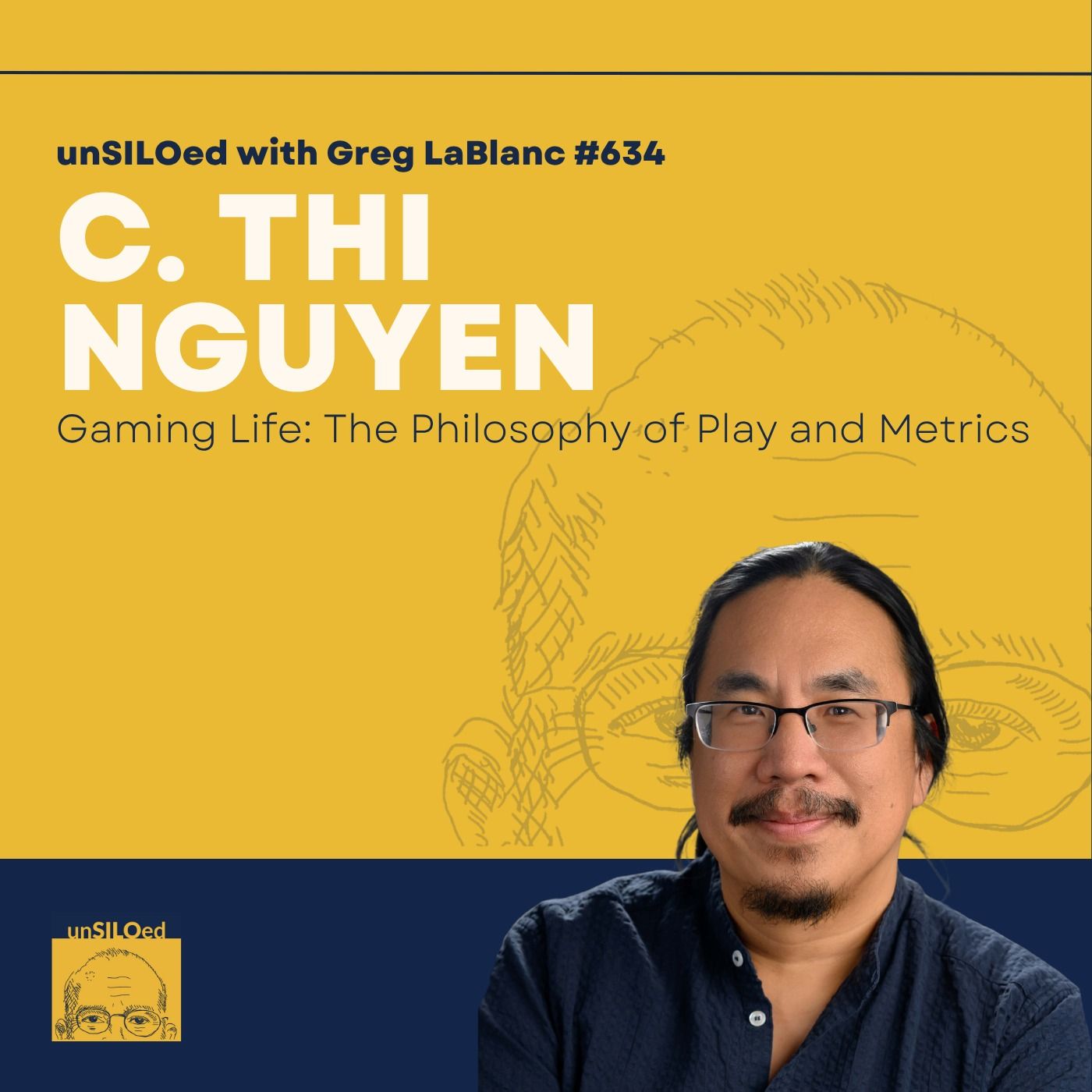
unSILOed with Greg LaBlanc
634. Gaming Life: The Philosophy of Play and Metrics with C. Thi Nguyen
00:59:33
When the concept of ‘gamifying life’ comes up, scoring is transparent and portable but strips nuance, creating a gap between what’s measurable and what matters. When codifying everything through metrics, massive amounts of nuance is lost, so how can we utilize game theory without reducing everything to a high score? C. Thi Nguyen is a professor of philosophy at the University of Utah. He is also the author of the books The Score: How to Stop Playing Somebody Else's Game, The Routledge Handbook of Philosophy of Games, and Games: Agency As Art. Greg and Thi discuss the differences between genuine gameplay and institutional metrics and gamification. Thi explains Huizinga’s “magic circle” concept, where games create a temporary space with altered meanings and low real-world stakes, enabling intense striving without value capture. Drawing also on Bernard Suits, Thi frames games as voluntarily taking on unnecessary obstacles and distinguishes achievement play (valuing winning) from str...
Loading summary