← Unsung History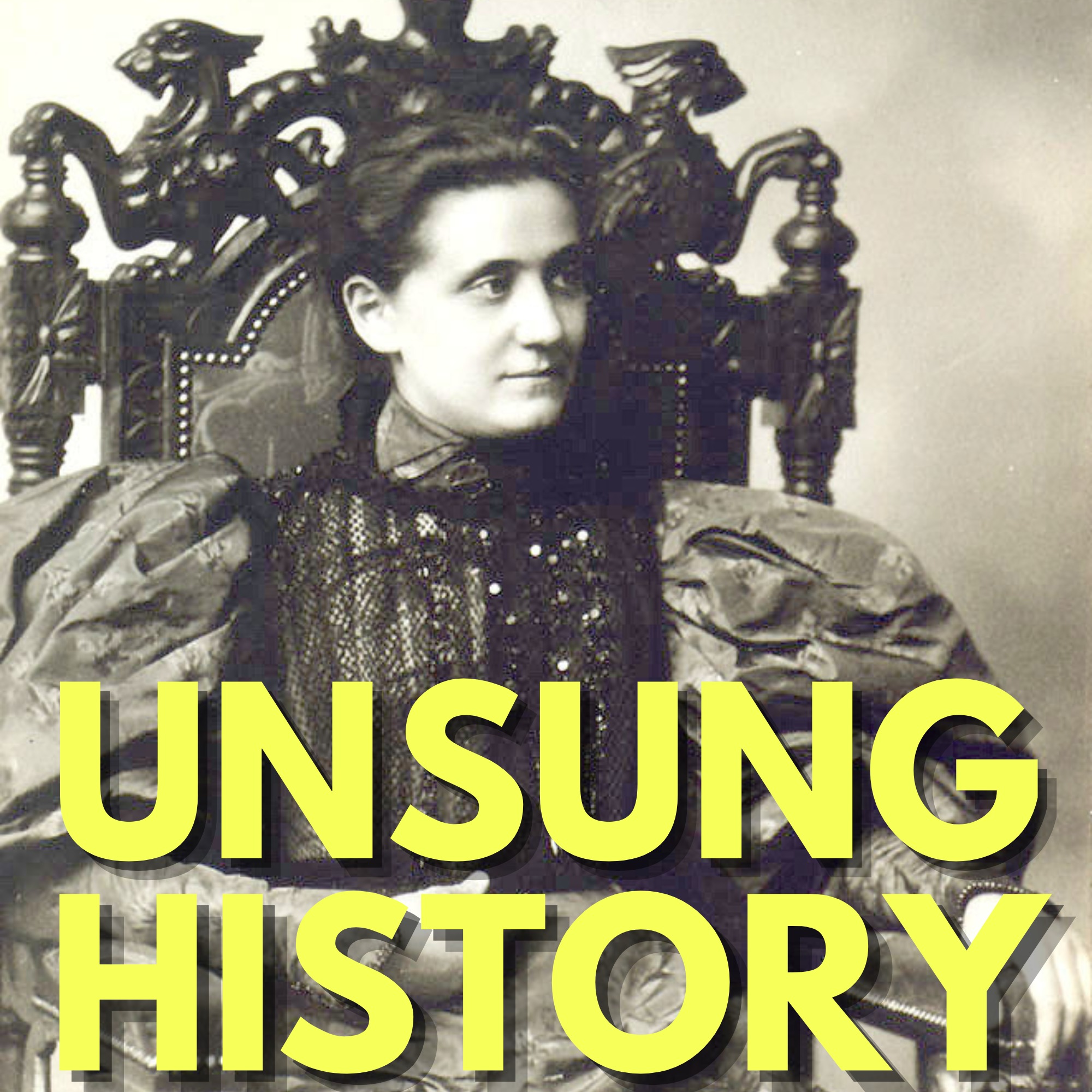
Loading summary
Transcript59 lines
- [00:00]
Moji Alawodial
Hi, I'm Moji Alawodial from the Feminist Buzzkills Live pod, the only podcast that helps you navigate the news in this post. Pro Anti Abortion Hellscape. Each week with co host Liz Winstead, we dissect all the news from that sketchy intersection of abortion and misogyny with providers and activists working on the ground. The cherry on top is we have amazing comedy guests who help us laugh through the rage. Feminist buzz kills. Live drops Fridays wherever you podcast, listen and subscribe. Because when BS is popping, we pop off.
- [00:30]
Jody Hamilton
Hey, it's Jody Hamilton and Sean Smith Pierce. Here's a taste of what you might have missed from the Politics Bar.
- [00:36]
Sean Smith Pierce
Jodi, I was listening to you this morning filling in for Steph. You and Chris were debating, and just for the record, Jody is right. Chris's argument is that there is some truth to what's being said about the left being in their own information silo. Right.
- [00:51]
Jody Hamilton
Basically, we started talking about how Gavin Newsom has invited people on his podcast High Up MAGA guys.
- [00:58]
Kelly Therese Pollack
Yeah.
- [00:58]
Sean Smith Pierce
Well known right wing propagandists. That's what they are.
- [01:01]
Jody Hamilton
Yeah. And my argument is he shouldn't be inviting them because nobody on that side is listening to Gavin Newsom.
- [01:08]
Sean Smith Pierce
Right. It doesn't help to bring propagandists into a sphere where truth matters because they're just gonna lie their asses off anyway.
- [01:16]
Moji Alawodial
Right.
- [01:16]
Sean Smith Pierce
So here is a public service message for Chris Lavoy. Jody Hamilton is right. Catch all that and more weeknights at the Politics Bar. Available through your favorite progressive radio station, your favorite podcast player, or online anytime@thepoliticsbar.com
- [01:31]
Kelly Therese Pollack
this is unsung history, the podcast where we discuss people and events in American history that haven't always received a lot of attention. I'm your host, Kelly Therese Pollack. I'll start each episode with a brief introduction to the topic and then talk to someone who knows a lot more than I do. Be sure to subscribe to Unsung History on your favorite podcasting app so you never miss an episode. And please tell your friends, family, neighbors, colleagues, maybe even strangers to listen to.
- [02:08]
Narrator (Unsung History episode)
In 1877, at the Rockford Female Seminary in Rockford, Illinois, two young women met and became fast friends, reading together outside of classes works by the great moralists of the day. The two women were both from small Illinois towns. Jayden Adams was born on September 6, 1860, in Cedarville, Illinois, which in 1890 had a population of 326. An Ellen Gates star was born on March 19, 1859, in Leona, Illinois. Which in 1890 had a population of 664. Starr left after one year at the college due to financial difficulties. She headed to Chicago to teach school while Adams completed her coursework. Adams was awarded a bachelor's degree in 1882 after the seminary became the Rockford College for women. In 1888, the two friends traveled together to Europe. While in London, they visited a settlement house on the east end called Twainby Hall. Twainbee hall had opened just four years earlier. Founded by married couple Samuel and Henrietta Barnett, the goal was for wealthy, well educated reformers to live amongst the poor people they hoped to serve so they could learn firsthand about their needs and so that they could provide education and other social services to the community. Adams and Starr decided to bring that model to the United States and they searched for an appropriate neighborhood in Chicago to locate their settlement, with Adams writing to her sister that they were looking up different slums. Starr had lived in Chicago for a decade by that point, but Adams was new to the city and they were advised in their search by city elites who of course, didn't live in any of the neighborhoods they were searching. The decision became easier when Charles J. Hull died in 1889, leaving behind a mansion and a large estate in an otherwise poverty stricken area of the 19th Ward on South Halsted street between Polk and Taylor, in the neighborhood west of the Chicago river where the University of Illinois Chicago now sits. At the time, the boundaries of the 19th Ward were Van Buren street to the north, 12th street, which was later renamed Roosevelt, to the south, the Chicago river to the east and Throop street to the west. In total, the ward was less than 1 square mile. Hull House opened its doors in September 1889, holding ethnic receptions for their Italian neighbors on October 12th and for their German neighbors on October 18th. However, they didn't hold a reception for the largest ethnic group in the neighborhood, the Irish. Adams and Starr moved into Hull House and they were soon joined by other reformers. In 1891, Florence Kelly moved in with her three young children, having left her abusive husband in New York. Kelly was roughly the same age as Adams and Starr, having been born to a Quaker family in Philadelphia on September 12, 1859. She was educated at Cornell University and later earned a law degree from Northwestern University in Chicago. Kelly began working as an investigator for the Bureau of Labor Statistics of Illinois, researching sweatshops in Chicago, including doing door to door surveys. The resulting report, produced by the agency, estimated that 6,000 of the city's 9,000 sweatshop workers were girls and Kelly began speaking about the research when Democrat John Peter Altgeld was inaugurated as Illinois governor in January 1893. The sweatshop issue was a high priority, and in June 1893 Altgeld appointed Kelly as the first female chief state factory inspector in the entire United States. In 1895, Hull House published its first book, Hull House Maps and Papers, which included data from Kelly and essays by Kelly, Adams, Starr, Julia Lathrop, and others. The area studied in the work, though, included only a small section of the 19th Ward and a portion of the 1st Ward on the east side of the Chicago river, which was demographically very different from the 19th. Hull house maps and Papers was well reviewed, although it wasn't exactly a bestseller. While the reformers at Hull House were often lauded for their good work in the community, they also made enemies. Chief among them Alderman Johnny Powers. Powers was born in Ireland in the early 1850s, immigrating to the United States in 1872. By the time he ran for city council in 1888, Powers owned a grocery store and a saloon. As an Irish Catholic immigrant, Powers fit into and understood the 19th Ward in a way that the Hull House residents could not. The alarm over the number of girls working in sweatshops had led the Illinois legislature in 1889 to pass what was called the Edwards Act, a law requiring children aged 7 to 14 to attend school for at least 16 weeks a year. Controversially, though, the Board of Education had approval over which schools counted, angering the immigrant populations who sent their children to parochial schools. Even after the act was repealed and replaced by a compromised version, Florence Kelly and Hull House continued to clamor for more public schooling, arguing that there were not enough seats for the children of their ward, but their numbers did not count the seats in parochial schools. Powers tapped into neighborhood anger and backed the parochial schools. In 1896 and 1898, Hull House backed opponents of Powers in the aldermanic elections, alleging rampant corruption by Powers. After the residents of the ward reelected Powers both times, Adams and her Hull House counterparts gave up on electoral politics. Adams used her battles with Powers to inform her later writings, especially Democracy and social ethics. In 1902, Adams, who was a founding member of the National Child Labor Committee, served as president of the National Conference of Charities and corrections from 1909 to 1915 and won the Nobel Peace Prize in 1931. She lived at Hull House until her death on May 21, 1935. Starr founded the Chicago Society of Arts and Crafts in 1897 and was a member of the Women's Trade Union League helping to organize striking garment workers. She was paralyzed from surgery complications and later died in a Roman Catholic convent in Suffern, New York, on February 10, 1940. Kelly, who went on to lead the National Consumers League and who helped organize the national association for the Advancement of Colored People, naacp, and who was a vice president of the National American Women's Suffrage association, died in Philadelphia on February 17, 1932. Except for a brief stint in the Illinois legislature, Powers served on the Chicago city council until 1927, and he died at home on May 19, 1930. Joining me in this episode is Dr. Terrence J. McDonald, emeritus professor of history at the University of Michigan and author of Nearly Jane Addams, Johnny Powers and the Progressive Political Imagination.
- [12:45]
Kelly Therese Pollack
Hi, Terry. Thanks so much for joining me today.
- [12:48]
Dr. Terrence J. McDonald
I'm delighted to be here. Thanks for having me.
- [12:51]
Kelly Therese Pollack
Yeah. So I always love reading anything about Chicago, living in Chicago, a huge Chicago booster. But I'm wondering what got you started on thinking about this project, thinking about Chicago. I know you've written some about San Francisco as well. So what was the inspiration here?
- [13:11]
Dr. Terrence J. McDonald
Well, actually, the story may be a little bit long, but I actually was asked in the long time ago to do a new edition of Plunkett of Tammany hall, which is this famous little series of supposed interviews with a machine politician in New York City. And so I in, in the course of doing that, I came across, I began reading all of the literature on political machines and political corruption and these kinds of things. And I came across Adams's famous sort of abbreviated essay called why the Word Boss Rules. And actually I included that in the reader that I developed based on that to show that there were ideas out there in the world that influenced the way the Plunkett of Tammany hall was actually composed when it was published in 1906. So I'd been, I found that her, her account of the, of politics and her ward extremely interesting. And really, I began to say, wow, I mean, that, that would be pretty interesting to, to, to look into. I then came across the work of Ellen Skerritt on the Irish in the Hull House neighborhood. And I actually went down to the Hull House Museum in the area around, around there and took a walk through the neighborhood. And at that moment I realized, you know, there's a really interesting story here. And then I began to work on it.
- [14:24]
Kelly Therese Pollack
Seriously, what did that work look like? What were the kinds of sources you were tapping into? How are you putting together this book?
- [14:34]
Dr. Terrence J. McDonald
Well, I think the obvious thing for readers familiar with Jane Addams is that There was a significant imbalance between the information available about her, which is quite large, and the information about Johnny Powers, her political nemesis in those days. And so really, one of the challenges, I think for anyone thinking about this is what was the community like? It's very poorly documented relative to. To the enormous documentation having to do with Hull House and the settlers in Hull House. And so I think that one of the big challenges of the work for me was actually embedding myself in the ward around Hull House, not necessarily in Hull House, although certainly I looked at that too, and trying to reconstruct the sort of social and political matrix in which these two people, Jane Addams on the one side, Johnny Powers on the other, actually worked and interacted with. And so setting that context, Chicago in the 1890s, the 19th Ward in the 1890s, Jane Addams and Hull House in the 1890s, Johnny Powers in the Democratic Party in the 1890s. I think I tried to keep a balance in that as best I could. That was the big challenge of the work, I think.
- [15:42]
Kelly Therese Pollack
Let's set some of that context then. What does Chicago politics look like in the 1890s? What's an alderman? You know, what, what role do they play?
- [15:54]
Dr. Terrence J. McDonald
Sure. It will help readers, I think, realize that the 1890s is very much like today. I mean, there are many commentators who think of that as the first Gilded Age, and this is the second Gilded Age. And so many of the currents that are sort of really rumbling through Chicago in those days are. Will be familiar if you think a little bit about it. So you had a political system that was not extraordinarily responsive to the residents or to anybody else. It was the Chicago city government was underfunded, it wasn't enormously powerful. And the aldermen were elected by ward. There were two for each ward, which meant that any given time there were going to be about 70 aldermen. It was a huge deliberative body. There was a mayor and a city council. The mayor actually was relatively powerful by the time of the 1890s, mapped onto this political system was the most foreign born city in America. By 1890, Chicago was enormously foreign born. It was blowing up with economic development and industrialization. It was the cockpit of enormous amounts of social change and conflict, class, ethnic, otherwise. And then you had the development of a struggle in the city over parochial schools in 1892, which really kind of revealed there was a tremendous amount of nativistic feelings about immigrants. So here you have the most foreign born city in America and an elite that's extremely concerned about having the immigrants there at all to some extent. And sort of what happens then is that Jane Addams opens up hull house in 1889 and she parachutes into. She had never set foot in Chicago before she came there in January of 1889. She was full of goodwill, she was enormously courageous. She was very thoughtful about what she wanted to try to accomplish. But she came down into this system that was a boiling political and social cauldron in many ways, and set out to really kind of establish a new way of thinking about service to others and also urban politics beginning in 1889.
- [17:54]
Kelly Therese Pollack
What was the 19th Ward itself like? You know, you write some about how Jane Addams kind of accidentally chose it, like it wasn't. It wasn't a very purposeful, deliberate choice to be there. But, you know, what. What was this place that she ended up in?
- [18:11]
Dr. Terrence J. McDonald
So the 19th Ward was relatively. Relatively small, but it had 50,000 people in it at this time. It was on the. On the west side of what was called the Chicago river in those days. So the Ward 1, more famous Ward 1, the downtown ward, was across the river from the 19th Ward. So it wasn't that kind of a place. It was enormously immigrant, but not necessarily enormously foreign born. By the 1890s, about half of the ward was native born. Even though there were a lot of different ethnic groups in the ward, it was significantly Catholic. There were five Catholic churches within a short walking distance of Hull House, for example, and those Catholic churches were ethnically designated. So you had a German church, a Bohemian church, a Bohemian Catholic church, a French Catholic church, et cetera. And then you had the largest Irish Catholic church in Chicago, Holy Family Church, which was this very significant Catholic presence in the 19th Ward. It was a mixed ward economically, although it wasn't full of industrialization. But, for example, you might have a bar next to a funeral home next to a small factory next to Hull House. So it was that kind of a jumble of mixture of economics and residences.
- [19:23]
Kelly Therese Pollack
Talk to me about Johnny Powers and what his rise to power looks like, and he seems very much a creature of the 19th Ward in the way that Jane Addams obviously wasn't.
- [19:37]
Dr. Terrence J. McDonald
It's important to understand that there was incredible turnover on the city council in those days. A very small number of people even ran for a second term, let alone staying on for a long period of time. So ironically, the sort of front door of running for alderman wasn't. If you had done sort of, as it were, paid your dues to the Political party wasn't very difficult. In the early parts when Johnny Powers ran, there was not a secret ballot either. So essentially you would take, you'd pick up the ballot on the morning of the election and you'd drop it off a colored ballot that was very distinctive and obvious and drop it off at the, at the, at, at another kind of party headquarters, and that's how you voted. So it's important to understand this kind of, was a kind of a face to face political situation. And the key thing was getting nominated and then after that, of course, campaigning. But in this ward, it turned out that it was overwhelmingly Irish and the Irish were overwhelmingly Democrats. And so running for office in this ward, if you were an Irish Catholic Democrat, was one thing compared to another ward where there might be a lot of other kind of ethnic groups or what have you. So Powers comes to the United States around 1872. These records aren't completely clear, but it seems like that his uncle is already here. He's opened a grocery store, actually not that far from what would come to be Hull House. He began working for his uncle in the grocery store. In those days, the grocery stores also had a curtained area where they sold alcohol. So it's likely that he was involved with that early on. He then met a woman who owned a bar and they got married and then he ended up owning a bar. So he had a bar and a grocery store, both of them in the sort of northern parts of the war of the 19th Ward. So he became a sort of a recognizable sort of, let's call it, business figure in the ward. Not connected with the most historic families or anything like that, but certainly an obvious, you know, kind of a person. So he was, he himself was Irish Catholic. He sent his children to Catholic schools. He was embedded, as it were, in this culture. He was then sponsored for his first term, which he ran in 1888, by a very distinguished family who came before him. And after that he was elected every two years really, until the, until the 1920s.
- [21:45]
Kelly Therese Pollack
And being an alderman now perhaps isn't quite as powerful a thing, but back then there was a fair amount he could control and certainly ways he could make money off having that role. What did that look like?
- [22:00]
Dr. Terrence J. McDonald
Well, so ironically, the authority of the aldermen in Chicago is surprisingly durable. I mean, even now, aldermen have authority over things that happened in their ward. So in the 19th century, they had vast authority. I mean, certain kinds of business permits they could authorize or not. Certain kinds of improvements they certainly were involved in, you know, can we pave this street? Can we change this alley? That kind of stuff. The alderman was involved in that. They also had a huge role, not surprisingly, in the issuing of franchises to companies. And those, of course, were worth a lot of money to the company and probably worth a lot to the aldermen as well. The surprising thing about this, so the opportunity you would think, for aldermen would be great, but the problem is, I mean, surprisingly, almost no one wanted to be one after one term. So you had this irony in a way, that there was these opportunities for people, but not very many people wanted to do that job. And part of it, of course, was because the aldermen were always held in this kind of low esteem. So to be an alderman was simultaneously to be a genuine representative of your community and a villain as far as reformers were concerned, because you thought to be corrupt. And so it was this odd kind of position. But, yes, many opportunities for corruption, many opportunities for real service and for standing for things in your neighborhood and ward, which were sometimes coincidental, but nonetheless, you did. You did it, or you had to do it. And in the long run, then you know your careers. Only a handful of people stayed on more than two terms on the city council, no matter what.
- [23:32]
Kelly Therese Pollack
Addams and Powers, of course, eventually become kind of enemies, in a sense. But what is Adams initially, Adams and Starr, what are they trying to do when they, you know, they don't come to Chicago thinking they're going to pick
- [23:47]
Narrator (Unsung History episode)
a fight with alderman.
- [23:48]
Kelly Therese Pollack
So what are they trying to do when they first establish Hull House? What is the goal there?
- [23:54]
Dr. Terrence J. McDonald
So I think it's important that another author has pointed out that Adams and Starr were sort of energized by the reading of philosophy and fiction when they were in college together. And they began a conversation then that continued until 1889, about the idea of sort of taking an important role in society. In reality, it's important to point out they didn't have much experience with this kind of thing. They were both from small towns in Illinois. They hadn't encountered immigrants or very many poor people. They came from relatively well off families. Adam's much better off than Starr. And so basically, they came to Chicago with this really great desire to help, to help the situation, but a very unclear notion of what that would entail. And at an important point in advance, Jane Addams actually visited Toynbee hall in England, which, of course, was the great example of a settlement, that everyone who wanted to think about settlements would try to go to Toynbee hall and look around and she was very taken with that idea of plunking yourself down in an area of relatively poor and needy people and then essentially providing services to them to go forward. What's remarkable about the two of them is this, this. They, they actually made it happen. They actually opened up a place to do this, and they threw the doors open very rapidly after, after coming to Hull House in September of 1889, not really knowing a thing about what they were going to have to do in the ward and how that was going to actually kind of set out. So they were full of genuine goodwill. They, they were serious about trying to help people. They were not completely clear about what that might mean. And ironically, for the first couple of years they were in the war, no one politically paid that much attention to them. Johnny Powers comes to hull house in 1893, and he's clearly trying to co opt. Who are these people? I mean, what are they doing in the ward? On the one hand, women were basically barred from political participation. They weren't really a political threat. But he clearly wanted to co op them. So he comes to Hull House and says, how would you like to hand out my Christmas turkeys this year? And of course, Jane Addams and the settlers say, absolutely not. And that's kind of the beginning of this, of this kind of tension between the two of them from 1893 until 1898.
- [26:08]
Kelly Therese Pollack
Hull House, Adams, Florence Kelly, they do sort of an early form of sociology. They're trying to think about the neighborhood, what it looks like, who it is, what. What are the things they are able to accomplish in that, and then what do they miss in?
- [26:26]
Dr. Terrence J. McDonald
Well, I think it's important to understand the background that all the settlers came from, whether they were in Chicago or elsewhere. I mean, these were people who were relatively well off because you certainly couldn't make money working in a settlement. I want to emphasize something. Choosing to live in a settlement was so courageous because basically you were living in a neighborhood that was full of death, and you were moving into the neighborhood at the age of 20, 22, 24. And really in those days, risking your life because there was no cure for typhoid, pneumonia, any of these kinds of diseases. So it's important to first of all say, to make this decision was huge. These were very special people and all the settlers, and certainly Adams as well. But the problem was there weren't very many ways to get distance on themselves or on American culture at that point. So, as I point out, and college education was admired in the classical curriculum, you know, there really wasn't much engagement. Even if you went to college, and of course most of the settlers did, you wouldn't get much information about contemporary America or even American history for that matter. And so you would, you would. The challenge would be to think about how can I step back from my own prejudices and think about what I'm trying to do for the people who are very, very different from me? That was the great challenge, I think, for settlers and in America there was a kind of conventional. I mean, most. Many of the non immigrant people were conventionally nativistic in it to various degrees. They were. They were worried about immigrants in general. They were worried about Catholicism, they were worried about radicalism among the immigrants. And they were always kind of worried about these immigrants having foreign connections. They might be. Their allegiance might be to a foreign potentate like the Pope, for example, or they might be subversive. All these things are boiling around in the environment when people think about immigrants. And that was going to be a significant impediment with not very many ways of overcoming it. So essentially it wasn't that Adams and Kelly and Starr were these ferocious nativists, but they brought with them conventional attitudes. They ended up in a war that was overwhelmingly Catholic, and yet they were all, to begin with, right off the bat, suspicious of Catholicism. When you think about what it was like for Adams and Starr when they first started doing this In January of 1889, they were with the Chicago elite. They were overwhelmingly Protestant. They were elite. They very well had things to say about the Irish politicians in those days. So they were given a sort of inoculation before they even arrived. Quite frankly, they would have been one of their guides. One of the people they stayed with over the summer was a former mayor who'd been driven out of office because he stood for temperance. Well, he had an attitude about Irish and Germans, I'm quite certain. So they kind of arrived with these conventional attitudes which then may or may not have been interference. And the great test of this was that they opened up these receptions for ethnic groups in the ward. A German knight, an Italian night, but there was never one for the Irish, who were the overwhelming majority of the ward. So there was a reluctance to engage in that kind of way with that group right off the bat.
- [29:33]
Kelly Therese Pollack
So they produce this work, Hull House maps and papers. What. What is the goal that they're trying to accomplish with this? What does it do? What. What does it fall short on?
- [29:45]
Dr. Terrence J. McDonald
Yeah, I mean, the, the book is a complicated mixture of different kinds of work and different kinds of interpretation on the one hand, it's based on, to some extent, it's based on a survey that, a very, very detailed survey. Historians would give anything to find the original documents from that survey, which asked something like 50 questions of every residence in a very small area of the 19th Ward. It's all those are all gone as far as we can tell. So there was a lot of information available. Almost none of the essays in the book dealt with that information. So you had this ability to do a sort of sociological, deep sociological analysis of the neighborhood, of a portion of the neighborhood, by no means the whole ward. And yet in those days, ironically, not surprisingly, not very many people knew what to do with that kind of stuff. It was a lot of information. How do you, you know, they really weren't very great with statistics or these kinds of things. So on the one hand, you had an empirical basis that was important and profound, and yet that was the subject only of one chapter of Hull House Maps and Papers. And the rest of it ironically became kind of impressionistic and not based on that data. And in fact, there were essays on different ethnic groups, not including the biggest groups, the Germans and the. And the Irish, which kind of retailed some more sort of ethnic stereotypes and actually kind of made the ward out to be actually worse off than it was. Now it's important to understand that this wasn't a survey of the whole war. The book wasn't focusing on the whole world, but it was read as if it was the whole war. And actually many historians have thought that too. So, I mean, in a funny way, the best parts of the ward, what the Irish would have said were the best parts of the ward, weren't included in the study at all. So it really wasn't a study of the group that had the most political power in the 19th Ward. So I think what happened was then there were a lot of things coming out at the same time trying to define what a slum was. And because of this, let's call it the contemporary conversation about slums, it was read as another slum book, another book about the slums. And that then backfired to some extent when political opponents of Adams and Hull House criticized them for calling the neighborhood a slum. So it was a really complicated document in that sense. And its political implications were negative in the long run for Hull House.
- [32:02]
Kelly Therese Pollack
You mentioned earlier this fight over parochial schools. So what is going on here? What is the high minded goal of reformers and what's the actuality of the fight that they have?
- [32:17]
Dr. Terrence J. McDonald
Yeah, so I'm a Political historian. And a profound lesson of politics in America is unintended consequences. You know, you start off to solve a problem, and it turns up in solving that problem, you raise another one or, you know, who knows about it. So, I mean, there's all these kinds of possibilities for these contingencies and rethinkings that need to be done that sometimes get done and sometimes don't. So what happened in Chicago in particular, was that there was a horrified discovery in the 1880s that young women were being exploited by manufacturers, by retailers, and they were doing that, and some of them were children. And it was a horrible situation for these women and children. And so the cry went out to try to do something about this problem. And what the people in the town focused on was the fact that there was a very weak, almost unenforceable law on compulsory education. So most children were not going to school. They weren't being forced to go to school because the law was. Which had been passed in 1883, was very weak. So the cry went out to reform the schools. The conversation involved a surprisingly wide number of people who sort of testified about it in various meetings. But at the end of the day, a group of relatively elite Chicago authors, including women in the Chicago Women's Club, wrote a bill, proposed a bill that basically said that, yes, compulsory education is required, there will be truant offices to enforce it, and the local school boards of the public schools will determine which parochial schools are qualified to basically be places where the requirement could be satisfied. Now, that bill passed unanimously. It's called the Edwards act, passed unanimously, almost unanimously, through the state legislature, almost at the same time as the one in Wisconsin called the Bennett act passed in Wisconsin. It was entirely intended to strengthen a weak compulsory education bill. But it had this fatal flaw, which, to a great extent, it was going to subordinate the parochial schools to the public school boards. This was intolerable, ironically, to the two largest immigrant groups in Chicago, Irish and Germans, who had the largest systems of parochial schools. And it set off an explosion in the city over this question of control to a great extent that would go on for the next. For the next two years. Now, in response to this, though, what happened was a kind of a bubbling nativism became empowered. And the attack on immigrants for objecting to being subordinated to the public school boards was, in my opinion, beyond really anything that anyone expected. And so you ended up then having this really important battle between nativists, avowed nativists, not necessarily the people in Hull House, and their ethnic defenders, who would ultimately include John Peter Alkel, the famous governor of Illinois, who was elected in 1892. And he made that issue, repealing this offensive act, the centerpiece of his political campaign. And he was elected and the Democrats took both houses of the state legislature and the bill was withdrawn right after his inauguration in 1893. But the lesson of that for the immigrants was that you really had to be careful and get mobilized to protect these kind of things. And so they began to be a little bit more politically and ethnically self conscious about these kinds of things. In the past, they had been mobilized over temperance, but no one ever thought that there would be an attack on the parochial schools. So this was quite a wake up call for them. And that then became built in to some extent to the ethnic political culture of a lot of wards in the city where you had a significant either Irish or German presence in the war with parochial schools to go with it.
- [35:57]
Kelly Therese Pollack
Catholic schools are still a huge presence in Chicago. Yeah, I don't know what the percentage is, but it's a large portion of students, especially in the K through 8, go to Catholic schools.
- [36:08]
Dr. Terrence J. McDonald
Yeah. Chicago had the largest system of Catholic schools and the most children in the Catholic schools and the most teachers in the Catholic schools through the 1880s and 1890s. This was a huge leak, large scale Catholic success story. And they would have said, and each parish had its own school. And of course, that meant that there were multiple schools around Hull house in the 19th Ward. And honestly, the failure of the settlers to understand that and the centrality of these schools and the lives of the immigrants who are certainly hard pressed, the very fact that they could send their children to school was surprising. And in fact, you know, contemporary researchers were surprised when they discovered it. So this was a significant and sad error on the part of the people in Hollis to get on the wrong side of this issue. And Florence Kelly continued to criticize this situation long after the bill had been repealed. So it was a significant obstacle, it seems to me, to the, as it were, the integration of the settlers into the neighborhood.
- [37:10]
Kelly Therese Pollack
We've started to get at this. But both Jane Addams and Johnny Powers would have said they were trying to do the best they could for the people of the Night, 18th Ward. How do they end up becoming enemies and on different sides of the political fight?
- [37:26]
Dr. Terrence J. McDonald
I want to say this, of course, is the great question. It has been the great question, and the answer is very complicated. So ironically, throughout these years, and I mean the whole 19th century, I should say, let's say the second half the 19th century, there never was an instance when a Chicago City councilman was convicted of bribery, not one. So there was charges and countercharges. Oh, there's corruption in this administration, this corruption in that administration. This person's getting rich off of his, off of his office. This person is getting rich off of his office. Those charges, those political charges were constant. Every, every administration, ironically, regardless of which party it was, was accused of boodling. But the problem is that no one was ever, it was never proven. So you have this on the one hand, then you have these people who were they probably making money from some of these things. It would be odd to think that they weren't. Although ironically, a lot of them didn't want to stay long enough to actually have the authority to do that. So it was probably the case that Powers and others on the city council were making money from permits or maybe even selling certain kinds of policy, but no one could ever prove it. All right? So the reformers decided to make that the point of their thing. Now, the reformers had a double edged kind of feeling. On the one hand, they didn't like the immigrants running the city government anyway. But the charge that they were corrupt, that elections were corrupt, that everything was corrupt, does it sound familiar? I mean, there was a certain kind of attitude going on here in the reformers. So on the one hand, as far as the outsiders were concerned, Powers was a corrupt problem on the city council and in the city. And not only that, but he drilled his supporters to the polls by offering them financial incentives. So that was the starting point of reformers. And that would include the Chicago Civic Federation, Chicago Women's Club, the whole, whole group of mostly elite organizations that were going to be against Powers. And they were probably right about that. That is, there's, it's, it's probably true that he was making some money from his, from his position. So the reformers, who would ultimately include Adams and Kelly and others, wanted to obviously eliminate the corrupt politicians from the city government. And their view was that it, if they simply publicized this corruption, then it would be easy for them to overthrow the political regime that sponsored it as far as they were concerned. What that ignored, of course, was the embeddedness of these politicians in the wards. And of course that was something that I, in a funny way, it's surprising that they didn't quite understand that. So what they ended up doing, really, and what Powers finally figured out he could say he was doing was Powers thought, ultimately I'm defending the ward against these downtown people who are criticizing everything that we do and you should vote for me because I'm going to. I'm going to prevent this from. This criticism from. From happening and this. Whatever might be bad about. And in the back of those minds then were things like the parochial school struggle. That is, that he didn't say that. He didn't ever say, I'm the man who stood up for the parochial schools. But the fact is they knew that he was one of them in many ways, and that, you know, and that people at Hull House and other reformers weren't. So you had this battle where the ideological focus and the really kind of our inherited image was on the corruption, but in the neighborhood it was different. And people were thought to be part of the culture of that ward, usually as opposed to. And so the argument was going to be uneven in a certain kind of way. Charges never proven of corruption versus embeddedness in a neighborhood which was clear every day of the week.
- [40:57]
Kelly Therese Pollack
Adams, after being unsuccessful in her attempts to oust Powers, kind of withdraws from trying to do anything in politics. But she spends time reflecting on what happened. And some of her famous writings are about that. What were the kinds of lessons that she learned from this? What does she later think about the role of people like Powers?
- [41:22]
Dr. Terrence J. McDonald
Sure. Importantly, you know, she starts the writing while she's in the battle with Powers. So she's really starting to lecture about these issues. She's raising questions about these issues beginning in 1818 97, after one strong campaign against him, and that's another big one in 1898. So on the one hand, she's writing in the middle of things in a certain kind of a way, and she was saying something deeply humane, which is that the problems in urban politics are not caused by ignorant foreigners being driven to the polls by people with strong, you know, kind of political authority, let's say. So she wanted to find a way to not blame the immigrants for urban corruption. And the way she did that was by basically saying people in the wards have great economic needs. These corrupt politicians meet those needs. Reformers complain about the situation, but don't meet those needs. And the way we can solve this problem is not by hectoring the immigrants about reform, but instead actually meeting those needs. So what she was working on was a theory, A theory, a theory of the state to give it a kind of a grand name. That is, how can we move government into the role of a service providing organization, legitimate services that will actually meet the needs of immigrants and therefore will change the nature of corruption in the American city. It was an important work. It had Huge recognition by people. Her book, Democracy and social ethics in 1902 is widely reviewed and praised for this insight into this. The problem with it was that it was wrong. In other words, immigrants were not. Certainly had needs, but that wasn't all they were. They were bearers of a culture which had needs and a need for recognition, which was the one thing that, to some extent, Adams and the settlers, and for that matter, settlers elsewhere as well, found it hard to deliver. And not because they were bad people, but because they had a hard time essentially understanding that culture and how important that was to the immigrants themselves.
- [43:20]
Kelly Therese Pollack
This is obviously from your book, a complex, nuanced story. We end up, though, with this image of, you know, Saint Jane. Jane Addams is the good guy, Johnny Powers is the bad guy. How does that end up being the legacy?
- [43:38]
Dr. Terrence J. McDonald
Well, of course, in the Progressive Era, not surprisingly, it's the reformers who write the stories. I mean, so basically, one of the. As I said at the beginning, one of the challenges for telling the story of Johnny Powers is Powers himself and most of the other politicians didn't ever write a memoir. He didn't have an archive. He didn't really. So all you know about him, to some extent, it's what you can find out in the paper and the kinds of things that he did and that sort of business. And so a funny. It's fun. It's very, very different. So the progressives get to tell the story. And this, of course, is a famous problem in history, that it's the elite and the powerful that. That have the narrative. So we got the narrative which was that Adams was right and Powers was wrong. And in reality, obviously, it's a little bit more complicated than that. Adams was humane and courageous and a genuine person meeting some important needs in the ward. At the same time, she was unable really to understand this power of ethnic culture, which I think actually in this period is the beginning of what we now today call identity politics. That is an idea of identification west, diverse cultures in American cities trying to figure out what's in that culture. How can I deal with that culture? How important are these ideas for political action? I think they're increasingly important. In any case, she was unable to recognize that her writing was profoundly important. And as she pointed out, it was not a criticism of immigrants. It was a criticism of reformers who failed to recognize this. But to some extent, she made a similar mistake and that she didn't really recognize what ethnic culture was.
- [45:14]
Kelly Therese Pollack
I would like to encourage listeners to read your book. I think it's fascinating look at both Jane Addams and the City of Chicago and the 19th Ward. Can you tell listeners how they can get a copy?
- [45:27]
Dr. Terrence J. McDonald
Yes, the book was officially released on June 23rd, so it's available on Amazon. It's available in all the formats on Amazon. It's available from the University of Chicago Press, and I'm hearing that a number of bookstores in Chicago, unsurprisingly, are including it. And now it's also in the bookstore at the Newberry Library.
- [45:48]
Kelly Therese Pollack
Is there anything else you want to make sure we talk about?
- [45:52]
Dr. Terrence J. McDonald
One of my commitments in writing the book was to try to be as embedded as possible in that moment, not this moment. But there are, to me, some implications of this study for contemporary things. And this is this question about identity politics. What is identity politics today? How do we think about identity politics? Are people making the same mistake today about these identities of various kinds as they were in the 1890s? And I don't take a position on that in the book because I was kind of trying to be radically contextualized and no one was talking about that, I can assure you, in the 1890s. But I think it is important to understand that we tend to sort of typecast and sort of characterize ethnic groups and other groups, sexual groups, other kinds of groups in a certain kind of way, rather than saying what's important in this conversation about these identities that are now coming into the political arena just as they were in the 1890s and asking for recognition, asking for certain kinds of accommodations. So this is a long standing issue, I think, in American politics, and maybe one that the book may or may not. It doesn't directly, but it may or may not have things to say about today too.
- [47:00]
Kelly Therese Pollack
Terry, thank you so much for joining me. I really enjoyed reading the book and I've loved talking to you.
- [47:07]
Dr. Terrence J. McDonald
Thanks very much.
- [47:33]
Kelly Therese Pollack
Thanks for listening to Unsung History. Please subscribe to Unsung History on your favorite podcasting app. You can find the sources used for this episode in a full episode transcript@unsunghistorypodcast.com to the best of our knowledge, all audio and images used by Unsung History are in the public domain or are user's permission. You can find us on Twitter or Instagram nsunghistory or on Facebook @Unsung Historypodcast. To contact us with questions, corrections, praise or episode suggestions, please email kellynsunghistorypodcast.com if you enjoyed this podcast, please rate, review and tell everyone you know. Bye.
- [48:13]
Host 1 (Rainy Day Rabbit Holes)
History is messy. It's weird, Wild and anything but boring. Rainy Day Rabbit Holes is a history podcast about unhinged stories that make you stop and ask. Wait, is this real life?
- [48:24]
Host 2 (Rainy Day Rabbit Holes)
From crazy disasters and tasty scandals to enlightening and surprising, heartwarming tales, we explore the moments where people behave badly and sometimes beautifully.
- [48:34]
Host 1 (Rainy Day Rabbit Holes)
We've got naughty politicians, cultural chaos, and a deep love for the Pacific Northwest, including Bigfoot.
- [48:41]
Host 2 (Rainy Day Rabbit Holes)
It's thoughtful, irreverent, occasionally serious, and always entertaining. Let's Fall down the Rabbit Hole MSW Media.
- [48:57]
Host 1 (Rainy Day Rabbit Holes)
History is messy. It's weird, wild, and anything but boring. Rainy Day Rabbit Holes is a history podcast about unhinged stories that make you you stop and ask. Wait, is this real life?
- [49:08]
Host 2 (Rainy Day Rabbit Holes)
From crazy disasters and tasty scandals to enlightening and surprising, heartwarming tales, we explore the moments where people behave badly and sometimes beautifully.
- [49:18]
Host 1 (Rainy Day Rabbit Holes)
We've got naughty politicians, cultural chaos, and a deep love for the Pacific Northwest, including Bigfoot.
- [49:25]
Host 2 (Rainy Day Rabbit Holes)
It's thoughtful, irreverent, occasionally serious, and always entertaining. Let's Fall down the Rabbit Hole MSW Media.