← Unsung History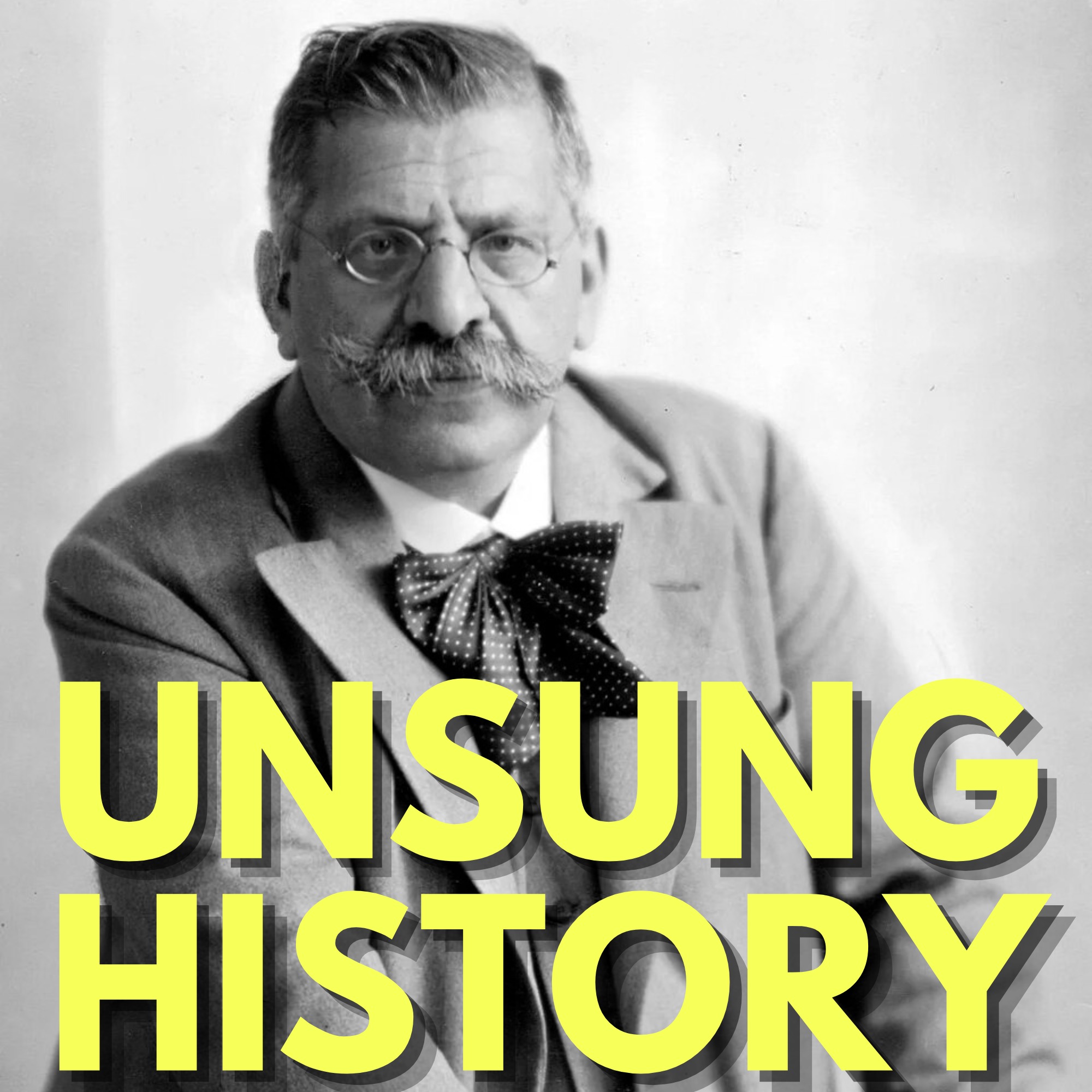
Unsung History
Magnus Hirschfeld, Dora Richter, and the Institute for Sexual Science in Weimar Germany
00:44:47
Loading summary
Transcript34 lines
- [00:00]
A
This is Unsung History, the podcast where we discuss people and events in American history that haven't always received a lot of attention. I'm your host, Kelly Therese Pollack. I'll start each episode with a brief introduction to the topic and then talk to someone who knows a lot more than I do. Be sure to subscribe to Unsung History on your favorite podcasting app so you never miss an episode. And please tell your friends, family, neighbors, colleagues, maybe even strangers to listen to. In mid May 1897, in the Berlin apartment of Dr. Magnus Hirschfeld, the Scientific Humanitarian Committee was formed. Hirschfeld, who was 29 years old at the time, was a German physician who studied human sexuality. In 1896 he had written Sappho and Socrates, arguing that homosexuality was inborn. Hirschfeld himself was gay, but it was the suicide of one of his patients, a gay army lieutenant who couldn't live with the shame of his own sexuality, that drove Hirschfeld into what became his life's work. One of the major goals of the Scientific Humanitarian Committee, whose motto was Per scientium ad justitiam through science to justice, was to advocate for the Repeal of paragraph 175 of the German legal code. When the various German states unified into the German Empire in January 1871, under Chancellor Otto von Bismarck of Prussia, they adopted paragraph 175 from the Prussian Criminal Code. It read, unnatural fornication, whether between persons of the male sex or of humans with beasts, is punished with imprisonment with the further punishment of a prompt loss of civil rights. Unquote. Hirschfeld and the SHC petitioned to repeal paragraph 175, gathering 6,000 signatures in support. Auguste Bebel, the chair of the Social Democratic Party of Germany, brought the petition to the German parliament, but they didn't have the votes to overturn the law. As Hirschfeld continued his research, he expanded his work to look not just at sexuality but also at gender. In 1910, Hirschfeld published a book about people we would now consider transgender. He called them transvestites, a term that he coined to describe people who like to dress across gender, the literal meaning of the word. It initially surprised Hirschfeld to realize that many of these people were not homosexual and that sexuality and gender were separate. In the book, he went so far as to reject the gender binary in theory at least, though his writing did not always succeed. In that rejection, Hirschfeld came to understand and conceptualize of a broad spectrum of gender, sex and sexuality, encompassing external genitalia and sexual drive, along with the newly discovered sex hormones. Where Hirschfeld had written in 1904 about homosexuality as the third sex. He now posited that there were 43 million possible combinations of gender, sex and sexuality. Crossdressing was not illegal in Germany, but crossdressers were often jailed for public indecency. Hirschfeld worked with the Berlin police to develop the transvestitenschein, or transvestite certificate. With a medical diagnosis provided by Hirschfeld, people could now legally cross dress. Although at first it did not provide legal sex or name change, it did prevent legal consequences for gender expression, at least for people with the pass. At the end of the First World War, the defeated German Empire fell. Kaiser Wilhelm II abdicated and the Weimar Republic was formed. It was in this newly democratic country that the Institute for Sexual Science opened in Berlin in 1919. Headed by Hirschfeld, the Institute was designed to be both a place for research and education and a medical and counseling facility. It included an immense library of books, photographs and diagrams. The same year that the Institute opened, Hirschfeld co wrote and appeared in a silent melodramatic film called Anders als die Andern, or Different from the Others, in which a gay violinist is blackmailed and the ensuing scandal leads him to suicide. Hirschfeld felt that extortion and blackmail were the real problem, and he hoped that his film would help lead to the removal of paragraph 175. Anders Wells d' Ondern was a box office sensation, but the government reacted by instituting a censorship code that pulled the film out of theaters. In 1923, a patient named Dora Richter arrived at the institute. Born Rudolf Richter in a small village in 1892, Dora knew she was a girl from an early age and had lived as a woman as much as she was able to, including working as a waitress and as an actress. At the urging of a boyfriend, Dora watched Der Steinish film, a documentary that described glandular functions and sex organs and and showed variations in humans that Hirschfeld had described as intermediaries, those whose physical makeup and or sexuality were, in the view of the day, abnormal. When Dora arrived at the Institute, she explained that she wanted to be rid of her male genitalia. At the Institute she she first underwent castration, removal of the testicles, and then, eight years later, panectomy, removal of the penis. A few months after that, Dora was the first recorded person to undergo vaginoplasty or the creation of a vagina. In September 1928, Hirschfeld met with the Reich Minister of Justice, Dr. Erich Koch Weser, where he pushed for legal reform. Hirschfeld followed that by inviting members of the Reichstag to the institute to learn more about the people they treated there. In October 1929, the Criminal Law Committee of the Reichstag voted 15 to 13 to recommend deleting paragraph 175. But it wasn't to be. As the Weimar Republic began to collapse, it was never brought forward for a vote. In the July 1932 elections, the Nazi Party became the largest party of the Reichstag. And in January 1931, the aging President Paul von Hindenburg appointed Adolf Hitler as Chancellor. The next month, Nazis set fire to the Reichstag building, and Hitler, claiming it was the work of Communists, convinced parliament to grant him power to make laws without their approval. By this point, Hirschfeld was considered the enemy. And in May 1933, students from the German Student Union vandalized the institute. Stormtroopers raided the building, appropriating anything of value and burning thousands of books and case histories. The exiled Hirschfeld never returned to Germany, dying in nice on his 67th birthday in 1935. Dora Richter, living as a woman, died in Bavaria in 1966 at the age of 74. Joining me in this episode is historian and novelist Dr. Brandy Scalace, author of the A Weimar Story.
- [10:25]
B
It.
- [10:51]
A
Hi, Brandy. Thanks so much for joining me today.
- [10:54]
B
Thank you very much for having me. It's good to be here.
- [10:56]
A
Yeah. Excited to talk to you about this book. Although the subject's not entirely exciting, but
- [11:03]
B
there's a lot more hope in it than I think people, people would necessarily guess from the subject matter. Yes, yes, indeed.
- [11:10]
A
So you've written lots of books. I'm wondering what took you down the path to writing this particular book.
- [11:16]
B
Gosh. Well, I myself am on the broad spectrum of gender, I suppose, and I wanted. I'd been working on an article several years ago now on the first phalloplasty. So the first time a, an FTM had a phalloplasty surgery, and it was Michael Dillon was the, the person. And it's a fascinating story because the surgeon who performed it was also very, very famous for plastic surgery fixes on soldiers faces after World War I. And in fact, Lindsay Fitzharris wrote a whole book called Facemaker about that doctor. So I was researching that angle and while I was talking about it, there was just kind of a casual, in one of the research, sort of casual dropping in of someone named Dora Richter and Magnus Hirschfeld in the Institute for Sexology. And I am a medical historian and I'm, you know, somebody for whom these themes are probably present. And I had never heard of this. And I thought, that seems strange. Now, granted, partly because of my work and the work of others in tandem. I do think people know those names now. But this was about. Not quite a decade ago, about six, six, seven years ago, when I first encountered the story. And the first thing I did was I thought, well, I'll write an article about it for Scientific American. Which earned me 500, like, angry messages from people saying I should die in a field. So this was Twitter. This was the Twitter days, right, where people were like, oh, no. And all I had said was like, hey, transgender is not new. Look. We were performing gender confirmation surgeries over a hundred years ago, and people were like, you should die. I thought, well, this seems to have hit a button. Maybe I should write a whole book about it. So I did. And it. I. I think at some point, I'm gonna have to write an essay called My Worst Best Book Experience about the process, but that it took me about three years, and it came out just last year.
- [13:07]
A
I am imagining that this story must have taken a lot of piecing together. There's lots of disparate strands here. Can you talk some about the sources that you're able to use, the things that you can find out? Of course, some of the sources were destroyed. So there's some stuff you can't find.
- [13:25]
B
Yeah, this was a little bit like. I felt like an archaeologist, right. Or maybe a paleontologist. You just took these little pieces of. Of remaining fragments, and you have to try and build a picture out of this. So the first thing I had to do was figure out what was there and what we could. Was there enough there to tell a story? And the. One of the most key pieces of information is I found out Dora Richter. A lot of people think Lily Elba is the first transgender woman to have the. The surgery. Have gender confirming surgery. But she's not. It's Dora Richter. But Dora Richter is sort of a relatively unknown. She was not glamorous, she was not well moneyed, she was not well supported, a very blue collar. And so I. I found out that her intake interview had been preserved in an unpublished dissertation at an archive in Berlin. And so I had to go get that story, which was so difficult to get out of Berlin. And it was. There was Covid, and I had to, you know, go through all the things to try and. And get there. And then Russia invading Ukraine had just happened. So you had. All these people had kind of flooded into Berlin from the Ukraine, which is only 500 miles away or something. And then I accidentally Because I didn't know that Russia was going to invade. The Ukraine had gotten a hotel, like, right by the Russian embassy, so there's razor wire, people with machine guns. Like, it was just a whole experience on top of the general bureaucracy of trying to get anything out of an archive and especially an archive in Germany and Berlin. So it was very, very difficult. But I finally got that piece. And once I had that piece, I thought, okay, now I have something that I can hang the story on. Because I didn't just want to give you a bunch of factoids. I wanted to tell a personal story of somebody who lived their life that way, who. Who was a transgender person going through life that way in this period leading up to 1933 and the Nazis sort of taking over and the fall of Weimar. And so I thought, okay, I've got my. My person now I have to go and hunt out the ghosts and the edges and the fringes and. And see what else is there. And I had a lot of help. There were basically, it was myself and other other transgender people who. Who were searching their history. Basically. They were the best network. They were. They were. These were not researchers, but they were people who were willing to go and. And hunt for things. And all of this kind of fanning out and then me doing the deep dive in archives and translating a lot of things out of Ger, putting together what I believe. I can say this without fear of contradiction. This is probably the most complete record that there is. And I also. There's a timeline that I've put together in the back with all the sources and the glossaries and all these other things. And I had it fact checked, actually, by Raf Doza, who runs the Hirschfeld Archive in Berlin. And he, you know, he was super helpful because it's hard to keep all of these things straight. So, yes, it was like a really horrible puzzle to try and put together, and I spent a lot of time lying on my floor crying. But that is part of my writing process. I should just say, like, I do do that as part of writing, but more so with this book than other books I have written.
- [16:43]
A
And in addition to having to translate from German, they're also using a completely separate set of terminology to talk about all of these topics than we use today. Can you talk some about that process of kind of sorting out what is meant by different terms and how people are thinking about themselves and their patients?
- [17:03]
B
You know, the wonderful thing about language is that it's living and it's constantly changing and it's constantly shifting to and words make the world. So what words you use really matter. So, for instance, just to use an example, queer used to be. Had become a Slurpee. And then queer people sort of took it back and were like, no, it's not. But, you know, if you drop somebody from 1950 into today and they found out there was, like, queer studies, they'd be like, I don't understand what's happening. So, you know, it's really interesting how words can be taken back in this time period. You have all kinds of new words coming online because this is also. This is a science history. It's a history of science, history of hormone science. And they were just discovering the. The hormone and the gene were both kind of named at the same time, basically. And so you have genetics, you have all of these things coming. And they were looking for words they didn't even have. The word homosexual and heterosexual was coined in this time period. So they didn't have that originally. And there was lots of euphemisms. The. They called themselves Uranians at one point. And it has to do with. Well, there's a whole lot of things behind that, sort of mythologies behind it. But it really was a period of flowering in terms of linguistics and the use of this terminology in science. So they didn't have a word for transgender. That's really pretty new. Transvestite was used for a long time. Even Hirschfeld. Magnus Hirschfeld, who. Who is studying all of this, he's a sexologist, uses transvestite, but then realizes, like, it doesn't quite work because he's like, well, that says it's about changing your clothes, but clearly that's not what's. That's not the only thing going on here. This is a very embodied. You know, these people feel as though they are in a body that is incorrect. He's one of the people who pioneered early surgeries and early hormone treatments. And so he was looking for a word that worked, and he couldn't find one. But he did recognize that it was a spectrum. And he thought, okay, there's no such thing as, like, the. The man man, the all the way man, and there's no such thing as, like, the all the way woman. These are fictions. And everyone is on this spectrum. And he thought there was like 40 million combination you could have, which is a lot of combinations. But the term he ultimately lands on is the intermediaries, which is what I chose for the title of the book, perhaps incorrectly, because I do think a lot of people don't know what the book is about. But, yeah, the intermediaries. Because he thought, okay, we are natural, naturally occurring forms, just as there are in nature, and there can be intermediate forms between. Between species, between. You know, he was thinking in terms of Darwinian evolution, so he chose it for that reason. But also he thought of himself as an intermediary for LGBTQ people. And so that was kind of the term he typically used. He felt it was more accurate than saying transvestite, which didn't quite. Didn't quite get there.
- [19:55]
A
Your subtitle is a Weimar story. And it's impossible to separate out this story from the wild politics and machinations of what's happening in the country. And I think it might be surprising to people to understand just how accepted for some of this history, homosexuality is and. And even transgenderism and how close they came to actually that. Yeah, making things welcome and opening.
- [20:26]
B
That was literally the most. I can. That was the most shocking thing about the research, was that we almost want. There were almost not Nazis, like, we. We were really close to there not being Nazis, and now here they are. There's a lot of very strange overlap and. And comparison between then and now and what we're seeing right now. Because Nazis did not spring fully formed like Athena from the forehead of Zeus. Right. You know, it. It came about slowly. It was embedded in misogyny of the 19th century and a kind of fear and backlash against industrialization, where you had women taking on roles that were unusual to them. Right. They were going into the workplace and they wanted to vote crazy, and there was a backlash against that. And so you had people grappling around concepts of gender apart from gay, lesbian, transgender, like, just. Just in terms of them being like, women need to go back in that box, damn it. And they. You had this conflict that then began like a snowball rolling downhill to pick up other enemies. Right. So the. The right backlash to these kinds of concepts started with women and then picked up, like, gay people and men they didn't think were manly enough, and then transgender people, and then, oh, yeah, well, let's throw in minorities of other sorts, you know, and they accused. They actually some of the Jewish hatred that they. That they threw in. The anti. Semitism was wrapped around concepts that Jewish people were somehow homosexual and too feminine, and we're going to corrupt the boys. And so they just mash all of these things together and went, you know, full on into this hateful kind of space. But that happens in 1933. This is happening slowly over time in the middle of the Weimar. You have this moment where people are like, we don't want that to happen. And they do their best to stop it. And you have several times where they almost overturn the anti homosexual statutes. You have the approval of transvestite. Transvestite licenses, which was basically, you could carry it around in your pocket. No one could arrest you, harass you, because you had this license from a doctor that said, I'm allowed to dress this way and to, you know, perform the gender that. That feels most natural to myself. And you also had an acceptance where you might not expect it. There's wonderful stories that Herschel tells about a day labor. I think he's like a bricklayer or something. And his son falls in love with a dressmaker. Dressmakers were men. Falls in love with a man, a rather feminine man, and brings him home. And the bricklayer dad is like, well, you know, at least he's happy. But he brings a friend, and then his other son falls in love with another dressmaker who's a friend of the. So both his sons fall in love with other men. And the bricklayer dad is just like, eh, they're happy, right? He's uneducated. He's not, you know, he's not the type that you would expect to be, like, welcoming with open arms. So there were people just going, eh, this is okay. Hirschfeld took all of these surveys and these stories and published them to show people, look, this is not a weird, strange, unusual thing. Look at how many people say, yeah, I'm somewhere on this, this giant spectrum. And he loved surveys. There were so many surveys. But it was great because he would just, you know, you'd get stuff back from like, you know, the. The equivalent of pipe fitters being like, yeah, I'm kind of gay. Sure. You know, and it was wonderful for him to be able to do that. And people got kind of comfortable with it and kind of like, okay, maybe this is normal. The new hormone science said that your brain, your. Your conscious mind was not always in charge of what was inside your body. And they thought, maybe this is scientific and you could be born this way. And he promoted this concept, and it looked two different times like we were gonna. That that was what was gonna win. And I sometimes think about where we would be a hundred years later if it had, you know, if we hadn't accidentally fallen into the clutches of Nazis and backlash and all of this other stuff. But. So that's what's fun about reading this book is you realize Nazis are not all powerful. They were never a foregone conclusion we were so close, and it would have just taken a little bit more of a tip, and we might have ousted them. And that means we can fight those fights today. You know, you look at that and go, oh, that's not a foregone conclusion. That means right now, with the right politics that are pushing, you know, anti LGBTQ and anti trans and anti woman and anti immigrant and all this, we can push back against that. They're not all powerful. They're not a foregone conclusion either. So the. The turmoil and extraordinary politics of this time period, it's kind of nice to look at that as well. It's not exactly the same as what's happening now, but as an interesting blueprint to go, okay, this is how they fought. This is what gave them hope throughout all of this, because they didn't just. They didn't just fight. They had balls. They had, like, grand galas, right, where everybody dressed up and were fabulous. You know, they did wonderful. They got married. They. They. They were changing their. Their pronouns and their genders. And while this was going on. So it's good to remember, I think it's very now, very now and very United States to remember that when you look at that unsung history, it provides you a sense of where. Of where we can draw strength, you know, and that you. Your joy is permitted and, in fact, necessary as fuel to get you through these times.
- [25:44]
A
Hirschfeld and other people he was working with on some of these campaigns, though, of course differed on tactics and. And probably didn't agree on a whole lot, would just agree on one particular thing. Like, we want to repeal paragraph 175. Could you talk some about the choices that Hirschfeld made, about the kind of tactics he wanted to use and ways that, while understandable, we might not completely agree with.
- [26:10]
B
So you have to think about the fact that there were factions even among those who were not on the side of the Nazis. Right? One division were the masculinists. And I bet this is going to sound real familiar to people in terms of today, right? It's like a whole YouTube culture, but a hundred years ago. So you have these. They were gay men, but they were like, gay man, he, man, woman haters. They. They did not think women had any value at all except for bearing children. They thought they were stupid, basically, and not worth talking to. And they thought that the most manly men would only date other men. Like, that was kind of where they went with it. I don't think many of the YouTubers and TikTokers realize how close they are to that. But yeah, if you banish all the women, there's kind of only, you know. So they, they had this idea that, yes, they wanted paragraph 175 overturned. Yes, they wanted gay men to be permitted to be gay men, but they didn't necessarily want to accord any of those rights to women. And they also, some of them, Adolf Brand in particular, had a very, he, he wanted to forcibly out people and do some other things, were quite, almost violent in tactic, which was not necessarily a great idea and did not actually go very well for him in the end either. But Hirschfeld, he, he didn't feel that way. Hirschfeld was considered too feminine by Adolf Brand partly because he himself was a very, his personality. He was not, he was not an, you know, Ubermensch, right. He was not a superman. But also he had a lot of women friends and his sister was a suffragette. She was somebody who was fighting for the right to vote and, and achieved, helped to achieve that. Helene Stoker, she was a huge amazing feminist in the time period and she sort of schools Hirschfeld repeatedly on things when she doesn't think he's pushing enough for women's rights. Like for a while he didn't really focus on lesbians and he didn't really focus on FTM women transitioning to men. And she was like, no, no, no, like you're going to, you have to take, you know, take everybody. So he, he kind of realized, okay, that was important. And he begins to shift his focus and he accepts women and women. And Hirschfeld's version of LGBTQ rights joined together as they realize they have a sort of common foe. Whereas the masculinists ultimately fall away from that alliance and end up siding more with the Nazis. Unfortunately, again, does not go very well for them in the end because they thought that they would be safe and then they weren't. The Nazis eventually come for them too. Ernst Rohm, who was Hitler's right hand man, was an openly gay man who gets murdered on the night of Long Knives and then Hitler does basically a purge after that. So people think, think that they'll be safe and they're not. And Hirschfeld himself doesn't. I mean, Helene Stoker also has some problems. She tends to be very, a bit, a bit racist, a bit classist. I, I hesitate to say that, but you know, she really kind of, her, her understanding of people was not always completely open. On the bright side though, both she and Hirschfeld were willing to hear from people who did take umbrage against these kind of More racist notions being like, no, no, no, no, you can't have some of the women. You have to. You have to free all of the women. You can't have some of the gay people. You need all of the gay people. And Herschel becomes much more focused on the problems of racism after the Nazis begin to be a problem, partly because he is suddenly attacked for his own race, for. For being Jewish. And he kind of makes a realization and he becomes more understanding. But for. For many years, he was a social Darwinist, which is bad. It's not good. So. And unfortunately, the. The fissures between these groups were pried open by the right. They. They did that on purpose. They intentionally were separating the. From everyone else because they knew they couldn't win against them as a unified front. They knew that they would lose, and so they had to divide and conquer. And I think that's. That, too, is a lesson for us today.
- [30:13]
A
Let's talk about Dora Richter, then. You know, it's fascinating to think about the life of someone who is trans, doesn't have that terminology, but, you know, she knows from an early age that she doesn't fit in the body that she has. And this is, of course, long before social media, before an ability to, like, you know, Google what's going on, or how do I find other people like me? Can you talk to them about her life, the journey she goes on, and eventually has this kind of miraculous way of living as herself?
- [30:48]
B
Yes. So I love Dora Richter for so many reasons, and she was an excellent choice. So, first of all, Dora is so lovable. Like, she's this unsinkable Persona. But also. And I, And I chose her partly because there are skeptics out there. And I think she's a great case for showing that someone can know they're transgender from a very early age. She grew up in a community called Siphon. Siphon. I think I'm pronouncing that right. And it's in the. Or mountains in Bohemia. And this is rural with a capital R. Like, it's. There's tiny little community, just a few hundred people, probably it's a very small farming community on the side of a mountain that they're very cut off from places and other people. And she grows up. She has a relatively large family. Her father is quite strict, and I think there's some money problems, some drinking problems. There's. There's issues. And she. When she's. She's the second child or the third child, I kind of forget now, forget my own work. But she grows up with. With girls with sisters and believes she is one of them. She thinks of herself as a sister. And this comes to a head when she's about four years old, because between three and four children up to a certain age kind of wore the same kind of clothes. And then once they got to a certain age, you put the boys in trousers and you put the girls in dresses. And that was the first big problem, because Dora was like, I don't wear trousers. I don't. I'm not a boy. I'm a girl. And this was a constant, ongoing battle with her father. She had been christened as Rudolph, and he just was not going to accept anything else. Now, her mother was more understanding. Her mother actually taught her to make lace and taught her the same way she taught the other girls, but she wasn't allowed to practice it openly. She couldn't out sitting out there making lace in front of her dad. Right? This was. This was not an okay thing. But she's. She's convinced she's a girl. She doesn't know why her parents won't let her wear dresses, and she doesn't become aware of. Of what the issue is until she is with some playmates. She basically sees that. She sees someone else's genitalia and goes, well, that doesn't look like mine. What is wrong with me? And her response is she attempts to remove her phallus. She does this first. She tries to wind a string around it really tight, and thank goodness, they stomp her from. That would. That would have gone very badly. Later, she thinks maybe she could use a razor to cut it off. I mean, there's very, very serious situation where she just is like, I don't know what this is. I need to get it off me. It doesn't. It's not supposed to be there. And after her failed attempts to do this, she's like 12 or 13. She. She tries to commit suicide for the first time because she just cannot live in this strange body that she doesn't understand. Now, I. I use this as an example because Dora lived so remote. There was. She had never met another gay person. She says this openly in her. In her intake interview. She'd never met any other transgender person. She was surrounded by family members who were trying to enforce very strict gender norms. And, you know, there's no TikTok. Like, she didn't. She didn't catch it from somebody. Right? She just knew. And I think that that makes her so easy. Not that I think that's the only way this Happens, because it isn't. But I think it makes it easy for people to kind of understand, like, okay, there's just nowhere else she could have gotten this idea. And she lives as much as she can. By the time she's 16, she's away from home. She, she lives as a woman as often as possible, and she passes as a woman, has boyfriends, and she's pretty good at kind of getting around the problems of that. But occasionally she has a really terrible experience. She gets outed by. By a boyfriend, and it really damages her. So from the rest of her life, she will basically get into relationships. And then the minute they get just a little too serious and she thinks they're getting a little too close, she runs away. And, and this is so sad because she just has this heart to love people. And she always says, I wanted to be loved as myself. She didn't want to be loved as a gay man, she wanted to be loved as a woman. And there's. I mean, she was even had. She was engaged, she had marriage proposals, and she would just flee these situations because she feared there was no way of keeping them in the dark about, about her physical anatomy. So, you know, but we follow her experiences. She's an actress for a time, she's a waitress. She also works as a man sometimes, too. And so she has this double life and terrible things happen to her. She's assaulted. She. She experiences what it's like to be a woman in all the ways, actually. She's even attacked by a family member. She's assaulted, sexually assaulted by a family member, an uncle, and just terrible things. And yet she doesn't. She never gives up. She has such hope for the future and such joy. And she's a musician. She loves music and birds and flowers and she has pet pigeons and she talks to her pigeons. This is just lovely. I mean, you. I love her. I think if you get a lot, if you read my book, there's no way that you can't just think she's adorable. But what ultimately happens is now she's still living far enough away that in the. She lives in the south part of Germany, where Hirschfeld's influence is less. It's much more right wing down there. And she hasn't heard about Herschel, who's made a film. He's made a film about being, you know, gay and all, all of these things. And then you have other people in his circuit with hormone science coming out with films saying, like, oh, there's these intermediate kind of things going on. She doesn't know this, but she accidentally gets caught in her boy clothes, in her man clothes, by a guy she's dating. And she's like, oh, this is it. It's over. And she's apologizing to him, and he says, actually, wait, wait, no. You know, I. There's this film I saw. And instead of casting her off, he says, oh, you need to. You need to meet this Hirschfeld guy, right? You need to go. You need to go to the city. So she does. She goes to Berlin, and she goes to the Institute of Sexology, where she's accepted in. She goes through the intake process, and she begins her journey toward a gender confirmation surgery. But she has no money, so she also ends up working at the institute as a maid. And she becomes, like, a dead mom to, like, all the other maids, all these transgender women who are working as mates because many of them had trouble finding jobs after they got transition surgeries. And so the institute was also acting as a placement agency for these people, and they would employ some of them. And so she's downstairs being den mom. I mean, it's just amazing. All the way up until 1933. 1933, we know. The Nazis take over. They burn the institute. Well, they burn the institute's library. They take over the building. And for years, everybody thought that she perished in that attack. And it was only literally, like, counting down days to the end of my work that we made the discovery that she, in fact, survived.
- [37:23]
A
Such a wonderful story.
- [37:25]
B
It's so exciting. Yeah, it was. It was really fun because the woman who made the discovery is a trans woman. And we had been conversing while we were doing all this research, and actually, her. She got an article out prior to the book coming out, but we were sort of discovered it in real time. She texted me. She's like, I think I found something. I think I found something. We. We discovered that Dora's name and gender had been changed on her birth certificate, but it had been changed, like, in 19, like, way after the. The fall of the Institute. And we're like, well, she would have had to have been part of that. So we begin researching, and here she. Not only did she survive, she went back and lived in Siphon for a while and opened a lace making shop as a woman. And then later she was a very good cook. And so she worked as a. As a cook in a couple places. Ends up being the. The Russian incursion, right? They're sort of taking over. The Soviet Union is growing. So she gets. She has to flee siphon and she has to immigrate back to Germany, where her immigration papers are. Like, she's just some woman, right? So she's. She's just Dora, this woman who immigrates to Germany from. From the border regions, and she lives out her life in this other small town, living with her brother, we think. And we know this because my friend who discovered this decides to go to the town and she. She's basically. She lives in. In Germany. And I. I don't. So she was texting me. She went around just asking all the old people, like, the older they were, the better. She was like, hey, do you remember somebody named Dora Richter? And she found two people who were quite elderly but were children when Dora Richter was still living in the town. She doesn't die until, like, the 60s when she. She lives to be a ripe old age. And they remembered her because she kept a pet pigeon in her purse and she would go, like, dine out and she'd drop little crumbs and could just imagine, like, hearing this little dropping crumbs in there. And they remember that she laughed a lot. And I thought, how wonderful. Like, she doesn't have any kind of grave marker. That's fancy. You know, we know where Lily Elba is buried. I've been there in Dresden. But the thing is, she passed as a woman so well that nobody ever thought of her as sort of a transgender icon. She just lived and died much the way I think she would have wanted to.
- [39:28]
A
In addition to your medical history books, you've also written a couple of mystery novels. And I wonder if you could just talk a little bit about, like, does one style of writing inform the other? How do you think about that?
- [39:40]
B
You know, it's. It's interesting. I. There. It is a very different process for me for. For writing them, but you'll note certain themes kind of run through them. I'm a historian, so my mystery novels have this. Usually the mystery on some level, hinges on history. And in the first one, a little bit, and then more so in the second one, there's art history and family history involved. They also both are. And this is true of my other work as well, really interested in social justice and representation. So the lead character in my. In the two that are out now is autistic. I am autistic as well. And so you get. There's other neurodivergent characters in the book. There's also other queer characters in the book. There's. In both books and. And one very important and sort of central character, his transgender in the second book. And so it's, it's. It's that thematically, all of these things are so important to me that. Bringing the history to life and bringing the margin origins to the center. So the mystery books, they're real mysteries. You know, people get murdered. People get murdered in England in a small town, you know, like they do. And so that's, that's the, the basis, but surrounding that is this other sense of representation and culture and, and, and justice.
- [40:57]
A
I read lots of mystery novels set in small towns in England, and I loved yours.
- [41:02]
B
Oh, thank you so much. I. I'm actually just finished a thriller, so hopefully we'll. I hope that there's more in the Jo Jones. The first one is called the Framed Women of Ardmore House. And the second one is called the Dead Come to Stay. And you don't actually have to read them in order, but you can. And that's sort of like the golden age mystery, you know, you don't have to read them in order, but you. You get a little extra something if you do. I have a plan for a Christmas novel, so hopefully I will manage to convince my publisher that I should. I should write a third one. But you. You just never know in this climate.
- [41:31]
A
Could you please tell listeners how they can get copies of both the Intermediaries and your novels?
- [41:38]
B
Absolutely. So the nice thing is the Intermediaries was published by W.W. norton and Company, so it's really broadly available. You can get it at most bookstores. You can order it online. I actually have the Peculiar Book Club, which is my. My podcast and show, YouTube show. We have our own bookshop.org site where you can purchase things there, too. And we have Intermediaries. And it's actually on sale over there, I think. So those are all good places. And my fiction is much the same. It's published with Hanover Square, HarperCollins, and so it's pretty widely available right now. The Dead Come to Stay. I'm still seeing it in bookshops because it came out less than a year ago. Sometimes you can still catch the Framed Women. Unfortunately, there's not paperbacks of any of these things, which I apologize for, but there's great audiobooks for all of them.
- [42:24]
A
Maybe movies someday.
- [42:26]
B
I. You know. So the Framed Women of Ardmore House is under an agreement right now, and we do have a screenwriter and a couple of other folks attached. So there's a film agent who is attempting to shop it right now as an ongoing series. So they would actually do it as like, you know, a continuing Midsomer Murders, like writ large. I would love that.
- [42:45]
A
For 20 seasons or.
- [42:46]
B
Yeah, yeah. Oh, God, I would love that. Yeah, you know, I'll just keep writing them and stuff. But yeah, we. We have a couple of interested folks and we. We'll see. We'll see what happens.
- [42:57]
A
Is there anything else you wanted to make sure we talk about?
- [43:00]
B
I think just if you can, if you can do it, please do patronize authors, particularly author about books that have to do with LGBTQ themes. It's a really tough time right now for any author, but in particularly those who, under this administration are trying to tell stories about gay and lesbian people, about transgender people. It's a. It's rough and there have been a lot of backlash. A lot of these authors are getting a lot of hate online, and online is often where we have to be. So, you know, in as much as you can. Not just mine, but lots of other people have written great books in the past year and I'd say get out there, buy them, say good things about them, review them, get them from libraries. We absolutely love to see it.
- [43:41]
A
Brandy, thank you so much for speaking with me today.
- [43:44]
B
Thank you for having me. I love Unsung History. Thanks for listening to Unsung History. Please subscribe to Unsung History on your favorite podcasting app. You can find the sources used for this episode in a full episode transcript@unsunghistorypodcast.com to the best of our knowledge, all audio and images used by Unsung History are in the public domain or are used with permission. To contact us with questions, corrections, praise, or episode suggestions, please email kellynsunghistorypodcast.com if you enjoyed this podcast. Please rate, review, and tell everyone you know. Bye.