← Unsung History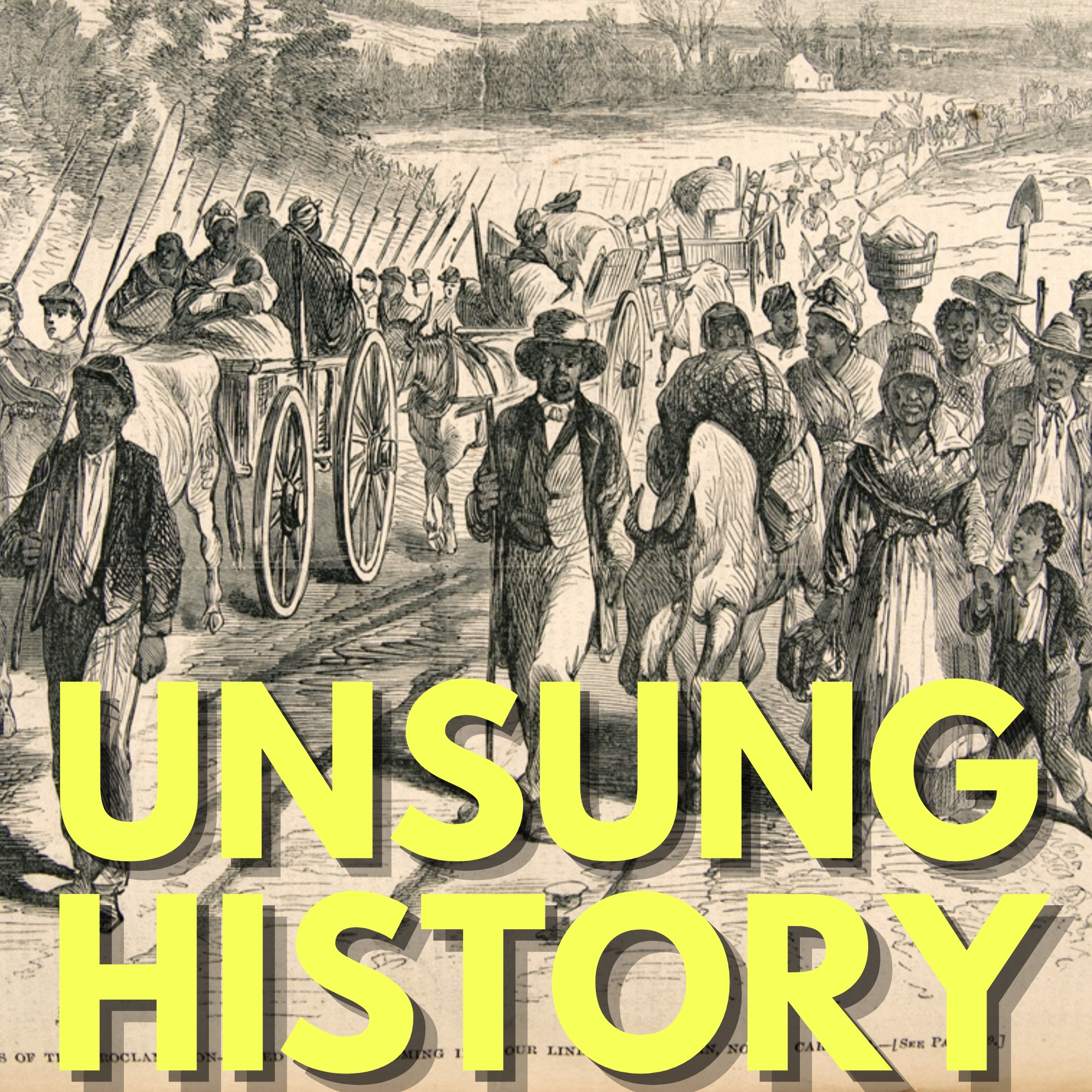
Loading summary
Transcript296 lines
- [00:01]
Laura Packard
Care Talk with Laura Packard is a podcast covering healthcare in America from a progressive perspective. Our healthcare system is broken and we all know insurance companies are out of control. If you don't have health insurance or don't understand the differences between insurance plans, or have surprise medical bills out of control prescription drug costs, or can't get the care you need, listen to Care Talk with Laura Packard weekly on Tuesdays. What's going to happen to your health care under the Trump administration? From prescription drug prices to health insurance costs, from health care for seniors and people with disabilities to reproductive care, from care for veterans to public health, including vaccinations, healthcare experts answer your questions every week and they go in depth on Medicare, Medicaid, the Affordable Care act, private insurance and more. Go to healthcarevoices.org caretalk or search for CareTalk with Laura Packard on your favorite podcast app App to listen Today this
- [01:00]
Kelly Therese Pollack
is Unsung History, the podcast where we discuss people and events in American history that haven't always received a lot of attention. I'm your host Kelly Therese Pollack. I'll start each episode with a brief introduction to the topic and then talk to someone who knows a lot more than I do. Be sure to subscribe to Unsung History on your favorite podcasting app so you never miss an episode. And please tell your friends, family, neighbors, colleagues, maybe even strangers to listen to.
- [01:38]
Narrator/Host of Unsung History
Captive Africans first arrived in Virginia in 1619, forcibly shipped there aboard the White lion to provide unfree labor for the colonists. The colonists were already extracting labor from white indentured servants and from enslaved Native Americans, but the labor shortage was so acute that the colonists began to import enslaved people to British North America from Africa in such huge numbers that by 1700 there were more than 25,000 enslaved Africans living there. Perhaps unsurprisingly, the people that the colonists enslaved and forced to labor resisted this fate by fleeing or by fighting back enslaved people. Running away was such a problem that by 1641, the Maryland General assembly passed an act against Fugitives which declared it a felony for any apprentice servant to depart away secretly from his or her master or dame, then being with intent to convey him or herself away out of the province. Those who assisted the so called fugitives could also be punished by servitude or death. The General assembly later added that in order to apprehend the fugitive servants, constables could pursue with hue and cry, or in other words, with a passe comitatus, a group of citizens deputized to enforce the law. As the enslaved labor force shifted quickly to one that was primarily africans or those of african descent. Lawmakers reacted by creating racialized legislation. A 1680 law in Virginia outlined, quote, it shall not be lawful for any negro or other slave to carry or arm himself with any club, staff, gun, sword, or any other weapon of defense or offense, Nor to go or depart from his master's ground Without a certificate from his master or mistress or overseer, and such permission not to be granted, but upon particular and necessary occasions. A decade later, south carolina took things a step further by not just requiring that enslaved people carry passes, but also by granting authority to all white civilians, Just by virtue of their skin color, to interrogate any person with darker skin and to demand to see their pests. By 1701, South Carolina law expanded the power of those white interrogators, Giving them the authority to assault or even kill any black person who refused to show their pests. And when constables in charleston needed help catching runaways, they could call a posse comitatus and impress white men into service in search of runaways. White enslavers worried not just about the loss of their enslaved workforce, but also about violent rebellion by the enslaved. Armed uprisings were not frequent, but the threat was real. So concerned were lawmakers in south carolina about potential threat that in August 1739, the General assembly passed a law requiring that all white men carry loaded pistols into church when they attended services. The law also required that church officials report those who did not. Just weeks later, on September 9, their fears were realized when an enslaved man named jemmy, who was later called cato, Launched the largest slave rebellion in british north america. Near a branch of the stono river, Jemmy and his troops raided a warehouse, Beheading two white men and stealing weapons. They marched to the beat of a drum and shouted liberty. While seeking out enslavers to kill and stealing additional guns. They were caught while celebrating when the lieutenant governor spotted their camp and gathered a posse who killed 30 of the rebels and captured more who were sold into slavery in the west indies. Cato fled and may have made it to florida. In the aftermath of the stono rebellion, the south carolina legislature adopted a 20 page slave code that presumed that every black person was a slave unless the contrary can be made appear. Enslavers, including women, Were required to assume monthly patrol duties in their patrol districts. Those patrolling in the district were not just required to demand passes from black people, but also to search the living quarters of the enslaved. Other colonies developed their own patrol systems, Sometimes in the wake of rebellions like stono during the American Revolution, the British took advantage of the desire of enslaved people to escape and in an attempt to destabilize Virginia, Lord Dunmore declared martial law and proclaimed that all indentured servants, Negroes or others who joined the British army would be given their freedom. Dunmore was forced out of Virginia, but other British officers pursued similar strategies. When the British surrendered in September 1781, they refused to return former slaves to the Americans. The British commander, Sir Guy Carleton, produced a book of Negroes for Washington that listed where around 3,000 formerly enslaved people had settled, including in Nova Scotia, London and Sierra Leone. Promising freedom to the enslaved may not have won the revolution for the British, but it continued to spur the fears of enslavers in the southern states. During the Civil War, the Union army pursued similar tactics. With so many white men in the south busy fighting and unable to patrol, enslaved people began to emancipate themselves, running toward the Union army and freedom. At first the Union army had no policy to deal with the self emancipators. But as early as May 1861, Union Brigadier General Benjamin Butler began hiring former slaves. And in the summer of 1862, the Union began to accept self emancipated men into the army. The January 1863 Emancipation Proclamation legally freed all enslaved people in the Confederacy. Although in practice, until those areas were liberated by the Union army, many people remained enslaved. In December 1865, the 13th Amendment to the Constitution was ratified, outlawing slavery everywhere in the United States, including in the border states that had been exempt from the Emancipation Proclamation. The end of slavery though, was not the end of white violence against black people in the United States, especially in the South. Joining me in this episode is Dr. Gautham Rao, Associate professor of History at American University in Washington D.C. and author of White Policing American Slavery.
- [11:19]
Interviewer
Yeah.
- [11:46]
Narrator/Host of Unsung History
Hi Gautham, thanks so much for joining me today.
- [11:49]
Dr. Gautham Rao
Thank you so much for having me on.
- [11:50]
Interviewer
I was going to say I'm excited to talk to you. This is not the most happy of topics to talk about, but I'm very much looking forward to the conversation. Want to start by hearing a little bit about why you wrote this book. I understand you've been working on this topic thinking about it for a very long time, but of course you had another book previous to this, so why did you decide for your second book this is what you wanted to write about?
- [12:15]
Dr. Gautham Rao
So I started working on this book completely unrelated to the topic of slavery. I was really interested in the question of why do people obey the law and why do people do what they're supposed to do.
- [12:29]
And ultimately, you know, you get to
- [12:31]
a place where that becomes about the fear of consequences.
- [12:35]
And in the case of law enforcement,
- [12:39]
it's really about compulsion, right? The idea that you're being the law says you have to do this, and you feel a compulsion to do it.
- [12:46]
And so I started looking at some of the phenomena in the book that
- [12:50]
end up being about slavery, initially looking at it in a totally different context, but the more and more I got into it in American history, and the further back I went, the more I kept seeing the idea of compulsory, obligatory service to the government or the state as being connected to the problem of unruly or rebellious enslaved people.
- [13:15]
And so that's where this all started
- [13:17]
back in about 2003, when I first started thinking about it.
- [13:21]
And, you know, as I started to
- [13:23]
piece that together and see those connections
- [13:25]
become more evident moving forward, you know,
- [13:29]
it was difficult to avoid seeing connections with the everyday horrific things that were happening in terms of racialized policing in America. And certainly by the time I got into the past decade or so, that
- [13:44]
racialized policing narrative in American, The American
- [13:48]
present was really bringing back for me some pretty poignant stories that I was seeing in the American past.
- [13:55]
So connecting past and present then in the book became.
- [13:59]
Became the goal. And as you mentioned, I have been working on a long time, and I gave some dates that will date me and provide my. My age to the listener, but it has changed so much over time and almost unrecognizable from where I did begin.
- [14:14]
Interviewer
You deliberately wrote this book to be accessible to a broader audience. I wonder if you could talk a little bit about what that looks like, what the difference is between writing for just an academic audience versus a broader one.
- [14:27]
Dr. Gautham Rao
So for me, I had never done anything like this.
- [14:30]
I'd never written anything that was this length, that was for a broader public.
- [14:36]
And that's, I think, part of the
- [14:39]
training of a historian is that we are told that it's crucial to become the specialist in one area and to really kind of build out your bona fides in that area and to write
- [14:52]
for the approval of the people who
- [14:54]
know that area and adjacent topics.
- [14:57]
And so, you know, I'm a real.
- [15:01]
I'm.
- [15:01]
I don't mean to toot my own
- [15:03]
horn here, but I'm like a huge nerd beyond, beyond normal levels of nerdiness.
- [15:07]
And, like, I love just reading footnotes.
- [15:10]
You know, this is my favorite thing. And I love historiography and the philosophy of history. And so all this stuff was how I kind of informed my approach to being a historian. And I'd written this book out fully at about double the length. It was about 250,000 words, so a little bit more than double. And I'd written it before, academic historians in mind. And I was workshopping chapters, and I kept getting feedback from friends and people
- [15:39]
who knew the topic that, you know, this is an important topic.
- [15:42]
You should probably try to see if you can at least get. Get it to a bigger audience. And I kept saying, well, how does one do that?
- [15:50]
You know, without thinking that it was.
- [15:51]
It was the way I was framing it. It was just about marketing or something like that.
- [15:56]
And it was really around 2016, 2017,
- [15:58]
where I had some. Some serious chats with people who told me, no, you. You really need to rewrite it. And so having written it out, I then sat down to redo the whole
- [16:07]
thing and, you know, realized that the
- [16:10]
stories that I wanted to tell were fascinating, and I could include more biographical details and more of the Kanye kind of poignant scenery that will draw our reader in without really losing what I was aiming to convey about the nature of a slaveholder's government.
- [16:33]
And so, you know, it was a lot. It was probably the toughest thing I've done in my career to try to
- [16:38]
translate what I'd done in an academic setting to.
- [16:42]
Without losing kind of the rigor.
- [16:43]
I was aiming for translating it for a broader audience. It meant that every word was painstaking and every paragraph had to be structured a certain way. And the stories, again, have to be compelling, but they also have to have a point.
- [16:57]
So, you know, I won't.
- [16:58]
I won't lie to you. It was really challenging, and it's not something that now dissuades me from trying again. But I certainly have a great appreciation for kind of the varieties of history, if you will, the idea of different kinds of histories appealing to different kinds of audiences.
- [17:16]
And too often, I think, in academic
- [17:18]
circles, we're prone to critiquing the more popular type. History is saying, oh, it's easier. And what I learned is that it's certainly not, at least from a writing perspective, at all, easier.
- [17:30]
Interviewer
The title of this book is White Power. You talk in the book about deputizing whiteness. What does that mean in the context of this history, in the context of the work that you're doing? What does it mean to be using whiteness not just as sort of an accident or something, but as the actual defining character of this power?
- [17:57]
Dr. Gautham Rao
The use of deputizing whiteness in the Book is a really good example of
- [18:03]
the difference, I think, between doing this kind of project for a broader audience versus doing it for an academic one. Within the academic world, of course, the concept of whiteness is its own enormous literature, really impressive, that spans different field history and American studies, sociology.
- [18:21]
And you know, one could write this book certainly from.
- [18:24]
From the perspective of, of all those fields and the many insights of brilliant scholars. I took a much more literal approach here, which was to look at the laws themselves and the extent to which race was explicitly part of how the laws are formulated. So let's think about a basic law that was common to American slavery, which was the pass law. The idea that every enslaved person in public space needed to have a master's
- [18:55]
pass, explaining why they were there, what they were doing there and how long
- [18:58]
they could be there, Basic parameters of it.
- [19:01]
This is a well known thing.
- [19:02]
It shows up in textbooks and things of that nature. But what I saw kind of under discussed was the idea that the person who might be asking and irrigating an enslaved person about the past, were they doing so as a civilian or as law enforcement?
- [19:18]
And that I think was kind of
- [19:20]
a new twist in thinking about whiteness here. Because in theory, any white person could stop any person of color, even if they didn't know they were enslaved, and say, what are you doing here? Where's your past? Then the burden is on the person being asked the questions to prove that they are either not enslaved or, or if they are enslaved, that they're there for the right reasons.
- [19:42]
So in my view, thinking about today, things like stop and frisk and traffic
- [19:48]
stops and things of that nature, what's the difference really between the person asking about the past and the police officer
- [19:56]
today doing the stop and frisk?
- [19:58]
And there are differences, and they're both subtle and obvious, but I think at the core they share the idea that the interrogator has a level of legal authority that they're, that they're drawing upon, which gives them, puts them in the position to be able to do that.
- [20:16]
So I was re.
- [20:17]
Envisioning whiteness, the term. Right. In a kind of literal sense there, that any white person could be endowed with these police powers.
- [20:25]
So that made them both private people.
- [20:28]
Yes, but also that moment they're kind of shot through with legal authority.
- [20:33]
So I mean that's, that's one really powerful example.
- [20:37]
More often, even in the statutes you see, in the laws themselves, you see
- [20:42]
the language of able bodied white men
- [20:45]
being the people that should be deputized. And so that opens Its own set of questions, right, about what does able mean in that context? Who counts as a man? Does this mean that women and girls were exempted?
- [20:59]
So, you know, I think there are
- [21:01]
ways to think about this more abstractly. I was looking at it fairly concretely though.
- [21:06]
Interviewer
I think you just started to get at this. But it's not just that white men have a legal authority to be doing these things, but have a legal, in some cases, obligation to be policing, to be acting in certain ways, either as part of the patrol or are required to bring a gun to church in one instance. What does that look like? Why are these communities putting not just authority but obligation onto the white men?
- [21:42]
Dr. Gautham Rao
So the heart of the story I try to tell in the book is ultimately one of failure about white power
- [21:51]
and the idea that white enslavers believed
- [21:55]
that they could themselves handle the threat of runaways first or vandals second, vagrants all the way through the scale here to, to rebels and insurrectionists, as they called them. This was the great myth that they told themselves that they, the, the so called superior race could, could do this. But the reality became very clear quite early that this was not the case.
- [22:20]
And in fact, they needed a government.
- [22:23]
It wasn't just a private association of white men who were going to be able to control the enormous numbers of captive enslaved people that they were trying to subjugate. And so we end up with a dual idea. First this injunction, this obligation of white citizenship to be armed, to be vigilant and to be active.
- [22:45]
But on the other hand, a kind
- [22:47]
of tacit acknowledgement that we just can't depend on each other's vigilance and violence. Right? That's not enough. There needs to be state institutions, there has to be a constable, there has to be a justice of peace, a slave patrol, military detachments to control the problem.
- [23:03]
So it's an interweaved story that, that
- [23:06]
goes from the 1600s all the way through the Civil War. About this white obligation on the one hand, but also this understanding that it simply isn't, isn't enough and they need more force.
- [23:19]
That's kind of, to me, the lesson of, of the enslavers politics going from
- [23:25]
the 17th century through the 19th century is the demand for more force in greater places in a broader geography.
- [23:33]
And I don't just mean violence by that.
- [23:35]
I mean the ability to compel in different ways. This is kind of at the heart of it. The question about white obligation also raises another aspect, that it goes slightly underdeveloped
- [23:47]
in this project, but it's something now
- [23:49]
I'm working on in the context of a. Of a book project about the Confederacy, the legal history of the Confederacy, which is that I believe strongly that slavery necessitated an alternate understanding of what constitutionalism was.
- [24:04]
And tend to think of it now
- [24:06]
as being anchored in the idea of liberal rights, property rights and other rights, personal rights.
- [24:12]
But I think that slavery necessitated a
- [24:14]
different understanding of the relationship between citizen and state that was based around the concept of obligations owed to the state in exchange for freedom as opposed to rights owed to the citizen. And in that sense, if you think about white vigilance and the duty to be vigilant, I think it fits that pattern of constitutional development very clearly leads
- [24:38]
Interviewer
to some odd tensions to where, you know, many of the southern states where people are enslaved want the federal government to stay out of their business until they need the help of the federal government for things like recovering fugitives and things like that. Can you talk some about that? That tension that keeps showing up.
- [25:03]
Dr. Gautham Rao
The Southern enslavers in particular their.
- [25:08]
Their almost hyper fixation on having state
- [25:12]
authority, both themselves as agents of the state, but also having the nearby the military as part of the force available to them. This has been to me the single most overlooked thing that I saw in the literature about southern slavers.
- [25:30]
And to me this is for them
- [25:32]
probably a great victory in their ideology and the language and the rhetoric and the extraordinarily powerful megaphone that they had, both in terms of their own time. But also looking into some of the more apologetic pro slavery accounts, historical accounts that come through in the 20th century,
- [25:53]
the idea that enslavers were inherently anti
- [25:56]
statist and that they were against government authority as much as they could be.
- [26:01]
I mean the reality of the situation
- [26:04]
was far from that. And I think they were extraordinarily opportunistic about their anti statism but it was almost always accompanied by the opposite, which was a demand for state activities.
- [26:18]
Whether that's the federal government in terms
- [26:20]
of the fugitive slave things, but. But also thinking about the role of an expansionist empire, right. The role of a federal government in bringing new dominions into the republic for. For enslavers to push both the slave trade and the cotton kingdom, so to speak, that seeing the work of people like Matthew Karp or Walter Johnson. To me those are as much demands about state power as features of slave renditioning.
- [26:49]
So it is fascinating that we've, as
- [26:52]
historians have tended to amplify slavers anti statist rhetoric around tax policy while kind of thinking of these other areas of Imperial expansion, fugitive slaves as other things. Right. A different.
- [27:08]
So yeah, I do think, you know, it's.
- [27:11]
It is hypocrisy.
- [27:13]
Certainly it wouldn't be the first time
- [27:14]
in American history that we've seen. We've seen that certainly I think today
- [27:18]
more of some very libertarian sounding demands
- [27:23]
on the state are end up being pretty statist in terms of redistribution or military force or things of that nature. So it does fit that kind of pattern. But these were. There's certainly not inherently anti status just because they were enslavers.
- [27:40]
Interviewer
One of the reasons of course that they need this force and this policing is because enslaved people are not just meekly enslaved, but are actively regularly trying to rebel, trying to leave the situation, trying to foment insurrection. What does that look like over time? What is it that these enslavers are responding to?
- [28:05]
Dr. Gautham Rao
This is one of the great mysteries
- [28:07]
of the project in that, you know,
- [28:09]
on the one hand the literature that historians have developed on slave insurrections as the enslavers called them as insurrections or rebellions, which I think carries a different connotation. Right. We have so much and we know a great deal. And I opened the book with one of the great. The Stono Rebellion, one of the most kind of fantastic examples. But throughout the book reference these very important events.
- [28:36]
But what was fascinating was it only
- [28:38]
took the threat of an insurrection, even the possibility, the mere possibility of it to really kick this enslaver state into gear.
- [28:48]
And so the question you asked me
- [28:51]
was what, what it looks like, the
- [28:53]
dynamic on the ground.
- [28:54]
Right.
- [28:54]
And the answer to that is that
- [28:57]
there were so many different dynamics at times. There were actual insurrections. There were certainly acts of rebellion that could have been extrapolated into something deeper or bigger.
- [29:07]
But in the enslaver mind it didn't,
- [29:10]
it was, it was very challenging for them to disambiguate these categories.
- [29:15]
And they became prone to seeing minor
- [29:19]
acts of autonomy or rebellion survival even as being encoded as something greater.
- [29:26]
I mean, it really does to me
- [29:28]
confirm the framework that the historian Vincent Browne has offered in his remarkable book Tacky's Rebellion. Thinking about this as a dynamic between enslavers and so called rebels, as a long term period of warfare, rarely between warring parties. And especially for the enslavers, you know, they become, they're deeply fascinated with these apocalyptic stories of slave rebellions. The Haitian rebellion captures the enslaver mind so deeply that they're thinking about it, you know, on the eve of the Civil War, even as a possibility.
- [30:02]
So you know, at Times it could be a possible rebellion where, you know,
- [30:06]
you have, like stone, a great example,
- [30:09]
marching in military formation and demanding freedom, demanding liberty. And other times it was just a
- [30:17]
rumor, perhaps a fantastic rumor that catches fire. And that really is the consequences of the enslavers believing that they were constantly under siege because they knew what they were doing was so horrible to human beings.
- [30:31]
And the consequence of that was living
- [30:34]
in a world of fear which drives the entire story.
- [30:38]
Interviewer
And yet they kept doing things like expand places where they needed to allow enslaved people a certain amount of freedom of movement. They relied on them to run errands and things where it meant that people had opportunities to escape. I guess that's not a question exactly, but if. If your goal is to keep people in a certain place doing a certain thing, it. It seems contradictory to then allow for possibilities that you're then trying to police.
- [31:11]
Dr. Gautham Rao
Yes, the seemingly contradictory world of control versus demanding labor of supposed captives, that puts them in positions of autonomy or relative or greater autonomy than they might have under immediate supervision. This is one of the great push and pull issues that we see. And looking at how enslavers are trying to manage their workforce, you know, this is as much a story about capitalism as anything else, and political economy, both of those things.
- [31:44]
So the world of enslaver capitalism is
- [31:48]
not a simple one. And it requires complicated labor arrangements. It requires a expansive geography, a really,
- [31:57]
really challenging calendar and timeline when it
- [32:01]
comes to harvesting, production, movement of goods, things like this, in which the enslaved people that are supposedly under their control are going to have to undertake acts over space and time.
- [32:14]
And so it means they'll be exposed
- [32:17]
to possibilities of escape or other forms of rebellion or resistance, on the one hand.
- [32:23]
On the other, you know, this is. These societies, particularly the southern colonies and
- [32:29]
states, become very quickly enamored with the possibility of extracting as much labor as possible from enslaved people. And that occurs both on the plantation, so to speak, but also in the context of how colonies and states are getting stuff done for the public.
- [32:46]
So this is one of the stories
- [32:48]
that we see coming through in the work of the historian Ryan Quintana. His book Making a Slave State about South Carolina as both colonial and early
- [32:56]
state where, you know, there's almost no work, public work project in South Carolina
- [33:03]
that will not use enslaved people. And so here you're thinking about road construction.
- [33:07]
You know, the great example of public
- [33:12]
space, literally the construction of public space,
- [33:14]
is using enslaved labor, so clearly exposing
- [33:17]
then the possibility of escape or other things.
- [33:20]
You know, this was from the enslaver perspective and the states, colonies and states,
- [33:25]
it's all about extracting as much labor as possible. And they're willing to run the risk, the repeated risk and the proven risk
- [33:32]
of exposing themselves to the thing they
- [33:35]
feared most in order to maximize what was possible without labor.
- [33:40]
Interviewer
When we get to the Civil War, it seems like perhaps creating the Confederate states and fighting the Union was not well thought out in terms of they're doing it to protect the institution of slavery and yet the very protections that they have been using, they can't use because other white men are off fighting. So how, how is that working? During the Civil War it seems like there were still attempts to do this patrolling and policing, but you know, is obviously very difficult when your person power is stretched very thin.
- [34:18]
Dr. Gautham Rao
The phrase that you used in referencing this was that it didn't seem all
- [34:21]
that well thought out.
- [34:22]
And I think that might be one
- [34:23]
of the greater understatements that, that I've heard about this context here.
- [34:27]
Because you know, there really wasn't a
- [34:30]
plan up until there had to be one. And so this was a problem, you
- [34:35]
know, in the book, I, I try
- [34:36]
to build this up as a historical problem that they were well aware of the enslavers on the eve of the Civil War.
- [34:42]
You know, they'd gone through this in
- [34:43]
the American Revolution, they'd gone through it in the War of 1812. They had seen exactly what happens when these so called men, white men of a certain age, had to do other things.
- [34:57]
And you know, during the Revolution and
- [34:59]
the War of 1812, it was fairly catastrophic in places like Virginia, coastal Virginia, where enslaved people saw that the traditional vigilance and violence and governing apparatus, policing apparatus, had disappeared and, and took matters into their own hands and, and crossed
- [35:16]
lines, any lines, and in some cases
- [35:19]
became British citizens or you know, other possibilities there. So this was not a new problem. They knew all about it. And yet there seems to have been no real cognizance of what, what they were about to, to undertake, even though the knowledge was there. And it becomes apparent really quickly as the, as the Confederacy attempts to build a fighting force.
- [35:44]
You know, one of the issues here
- [35:46]
was that at least at a cultural level that the Confederacy, you know, was built on a certain vision of manhood and masculinity that was deeply connected with the lore of the southern man's martial abilities and the idea that a Confederate soldier was equivalent to X amount of Northern soldiers because of their natural prowess.
- [36:09]
And I think they believed a bit
- [36:12]
of that, quite a bit of that at several Levels.
- [36:15]
And so the idea that, you know, maybe they wouldn't need every single white
- [36:18]
man to, to do this work, that was one issue. The other issue was this other myth that the, the enslavers were telling themselves about the, the so called loyal enslaved person. The idea that the, you know, the slaves love them and they would not.
- [36:33]
They would.
- [36:34]
Why would they run away? These stories are overblown by abolitionists trying to cause trouble, but the master slave relationship was a sacred one for them.
- [36:42]
And yeah, again, they knew better. You know, they'd spent the better part
- [36:45]
of the 1850s crying about the Fugitive Slave Law, which was all about enslaved
- [36:50]
people, you know, seeking freedom and self emancipating. And so these are two myths that
- [36:56]
were so clearly, you know, obvious and should have been, there should have been a more practical understanding of it.
- [37:02]
But that's the nature of the Confederacy in a lot of ways, is trying
- [37:07]
to indulge the very mythologies that they're then, then extinguishing fires about or trying to on the ground. So it ends up being a catastrophic thing for the south in terms of conscription and the Confederacy. You end up by 1864 with, with
- [37:27]
very old men or people who have
- [37:29]
been turned away for military service, for
- [37:32]
medical reasons, young kids, women who are
- [37:36]
less accustomed to, certainly accustomed to practicing violence on a plantation.
- [37:41]
Yes, but not necessarily in a kind
- [37:44]
of mass vigilance or public vigilance setting where, you know, violence and arms might be used more commonly. So yeah, it was a disaster and it didn't take long.
- [37:57]
You know, wherever Union troops showed up,
- [37:59]
you would see enslaved people.
- [38:01]
You know, running away is not even
- [38:02]
the right word because if it's just a matter of moving oneself from point A to point B without any, any real vigilance or policing barriers, then, you know, it's self emancipation at a simpler level.
- [38:16]
So that becomes the story. And you know, scholars, I think quite
- [38:21]
rightly point to the fact that the Emancipation Proclamation accelerates a process that was already in force by the time Lincoln utters those words.
- [38:32]
Interviewer
This story, of course, should end with the end of the Civil war and the 13th amendment. And it does not end. So talk to me about what continues to happen, why your book goes beyond that time period.
- [38:49]
Dr. Gautham Rao
One of the big questions for me
- [38:50]
about Reconstruction was just how it was possible for a military occupation to be underway, for the radical Republicans in Congress to be passing incredible legislation and ratifying the Reconstruction Amendments. So how was it possible at that very moment of genesis, really, of a new concept of American freedom for groups like the Klan or the White League to suddenly become so empowered. And so that was my entry point into this issue.
- [39:25]
And initially I had conceived of discussing
- [39:29]
Reconstruction as a kind of zippy epilogue to the whole story.
- [39:32]
But the more I got into it,
- [39:34]
I said, you know, gosh, it's the same, first of all, the same people that. That were involved in the slave policing, you know, concept and institutions who were
- [39:44]
then in the Confederate military and then,
- [39:46]
you know, lo and behold, happened a part of the Klan or other such groups thereafter. So there's really a great deal of continuity here between the Civil War and the immediate aftermath, and I would argue a fair amount of continuity between that immediate aftermath of the Civil War and what we typically partition off as. As the. The beginning of the Jim Crow era. So to me, yes, you can absolutely tell that things are changing rapidly.
- [40:16]
The idea of, you know, an emancipated
- [40:19]
population seeking political autonomy, seeking political office and pressing rights claims into the 20th century, that's all very new, but it coexists with this other story about the slow, painful and bloody expiration of the older policing practices, which now, you know,
- [40:39]
after the Reconstruction Amendments, move really into
- [40:42]
this shadowy world that's outside the law. It's no longer a commission or a badge that is facilitating these acts, but rather white grievance that becomes something like the law. And it's not the law, but it's something like it.
- [40:58]
And, you know, during Reconstruction and the
- [41:03]
1870s in particular, you start to see these white paramilitary groups, I call them, kind of quite pointedly in the book, repeatedly invoke the language of white replacement.
- [41:15]
The idea of white people being replaced, the idea of.
- [41:19]
Called the law of Negro rule, as
- [41:21]
they put it, which was, you know,
- [41:23]
at the expense of white rights, any. Any augmentation of the condition of black Americans what came at the expense, they believed, of white freedom and liberty.
- [41:33]
So, yeah, I thought it was.
- [41:34]
It was pretty obvious to me that this was. This was the last chapter really, of the policing story that had developed. It's not implausible to think about a policing system that develops over two centuries,
- [41:47]
really, that it's going to take some
- [41:49]
time, really, to bring it down. The Reconstruction is famously referred to as the unfinished revolution in a lot of ways. And I think one of the things that goes unfinished, unfortunately, is I said the expiration of the old mode of policing.
- [42:06]
That might be overstating it, you know,
- [42:07]
and I think it doesn't quite get pushed out of its place entirely. Unfortunately, it goes a bit underground. And we do see, of course, the recurring language in the 20th century and even today now, especially of the idea of white vigilance and justifications of white police violence.
- [42:27]
Interviewer
I want to ask, you've written several amicus briefs and things for Supreme Court cases. Could you talk a little bit about the role of historians in helping to inform the court when they're thinking about various really important cases that they're deciding?
- [42:49]
Dr. Gautham Rao
The role of historians today, I think
- [42:51]
is so vastly different than it was when I started as an undergraduate and as a grad student.
- [43:00]
Today, the majority of historians in the
- [43:03]
United States at least don't teach in academic departments. They're public historians and they do remarkable work in places like museums, community centers, schools, secondary education. And I would certainly include podcasts and other such public facing venues. Right. Is where this labor is occurring.
- [43:23]
And in my view it is in
- [43:25]
part for civic betterment, but also in the case of the Supreme Court cases, I do think the Supreme Court has put what they call history and tradition as the new standard of what Americans rights should be.
- [43:40]
And so that I think, you know, they have, it is the Supreme Court
- [43:43]
that has made historians more relevant to their work, rather than historians deciding that they were going to go find a new playground, which the Supreme Court.
- [43:52]
And so, you know, I, I've gotten
- [43:54]
involved in a few cases where to me, the claims about early American history where I, I happen to know some
- [44:01]
of the things they were trying to
- [44:02]
talk about were so blatantly incorrect in how they were being referenced that I thought I had a place to sort of say actually the, you know, the historian's famous, you know, injunction as well, actually.
- [44:16]
And in this case, I think it
- [44:17]
fits pretty pretty neatly.
- [44:19]
And so my approach has been, as
- [44:21]
things with the current Supreme Court have gotten further into this history and tradition litmus test and human rights have become the, become whether we're talking about the Dobbs case and reproductive rights or other
- [44:34]
things, to me, I think the historian's role is twofold.
- [44:37]
So on the one hand, I think for the long term there has to be a record of alternatives that future generations know that the Supreme Court's version of the past need not be the authoritative one. It might be the one that won that decision, but that there were other people who knew frankly better about what the past was. And there should be a record that is accessible and a usable past for future generations of lawyers and historians and others who seek to reclaim human rights that may have been lost.
- [45:14]
On the more direct level. And the second register is that I
- [45:18]
view this when it comes to human rights being on trial Really, I view it like a house on fire. And if you are a historian and you have that kind of knowledge and you may just have the bucket of water, that makes a difference. And so there's a chance that you're talking into the void and your amicus brief will be ignored entirely, as I'm certain is the case in several that I've been a part of.
- [45:42]
But you never know if it ends
- [45:43]
up being that magic bucket of water. So you may as well try, because the stakes are pretty high.
- [45:49]
Narrator/Host of Unsung History
On a slightly more fun note, I understand you're writing about the West Wing,
- [45:54]
Interviewer
one of my favorite shows, so wonder if you could just give us a little preview of what that. That research is about.
- [46:02]
Dr. Gautham Rao
I started teaching a class here at American University about the West Wing a couple years back, and it was students who actually bugged me to do it because I was slipping in some West Wing references into slides and things of that nature. And a couple of them said, you know, a lot of kids our age love it. And I say kids in a joking
- [46:22]
way, but I was skeptical. And then I said, you know, I'll try. And they weren't kidding around because there
- [46:29]
is a great deal of interest among younger generations about the show, whether they watch it with their parents during the pandemic or kind of got interested in it separately.
- [46:38]
I can't really explain quite what it
- [46:41]
is that captivates people who are. Who are younger than I am about the show, but it's there, and I
- [46:46]
got into it and I started doing
- [46:48]
these lectures about it. I'm particularly interested about how the show was repackaging history lessons, essentially for public consumption. And so the show is a kind
- [46:58]
of teacher and decided I would write
- [47:01]
it up and see what happened.
- [47:02]
And I've written a book that thinks
- [47:05]
about the show as a vehicle for telling American history stories, both about the
- [47:11]
presidency and other things.
- [47:12]
It's also, of course, a kind of cipher about 1990s politics. Right. So rethinking the comparisons between, you know, Jed Bartlett, what president or presidents does Jed Bartlett evoke, and getting into the senior staff and stuff like that.
- [47:28]
So it is comparatively a lot of
- [47:30]
fun to the other research I've been doing in my life for quite a while.
- [47:34]
And so I'm into it there. But, you know, even there, I think
- [47:37]
there's a kind of more serious element to it, which is there's a whole cottage industry about the West Wing, which is a hate industry. And people love to say, ah, the West Ring ruined American politics.
- [47:49]
And, you know, it made us think
- [47:51]
about this fantasy of a great past
- [47:54]
and everything like that. And I disagree so strongly that it
- [47:59]
became a kind of thing in the book to not necessarily redeem the show or say it was great trying to take a more critical look at it.
- [48:05]
But, you know, the idea that a
- [48:07]
TV show that not everyone watched really changed the entire landscape of American politics seems slightly outlandish on the one hand.
- [48:15]
And on the other hand, if you
- [48:16]
actually watch the show, they lose more often than they win in the Bartlett administration. So it was really a show about coping with not getting your way and outside forces and the transformation of American conservatism, which is a streak running through the show. A post 911 world in which whether you want to talk about things like health policy, you're going to have to talk about terrorism and national security front and center and military policy.
- [48:42]
So, you know, there is a kind
- [48:44]
of contemporary salience to it. Much as I'd like to make it a kind of more fun pop, pop history, there is a bit of a serious edge to it as well.
- [48:53]
But yeah, it is. You know, I'm, I'm working on it, learning a lot about the generation because
- [48:59]
I was, I was a kid in the 90s.
- [49:01]
So learning about the adult stuff going
- [49:03]
on through stuff and it's, it is a very different endeavor than what I've been up to.
- [49:09]
Interviewer
I look forward to seeing that one in the future and getting a chance to read it. For now though, I want to encourage listeners to read your incredible book White Power. Can you tell them how they can get a copy?
- [49:22]
Dr. Gautham Rao
So White Power Policing American Slavery is available for pre order at pretty much anywhere you would buy your books, whether
- [49:30]
that is direct from the University of
- [49:33]
North Carolina Press or from sites such as Amazon. If you put in the title White Power Policing American Slavery, you will get my book. Of course, the title might lead you to some other titles as well, which we like a bit less, but you'll find mine as well.
- [49:48]
Interviewer
Is there anything else you wanted to make sure we talk about?
- [49:52]
Dr. Gautham Rao
That's all. I'm just thrilled to be part of this amazing podcast that I love to listen to myself.
- [49:58]
Interviewer
Thank you so much for speaking with me. I really enjoyed the conversation and I think thinking about these topics has really expanded my view of the south and deputizing whiteness. So thank you.
- [50:13]
Dr. Gautham Rao
Thank you.
- [50:52]
Unsung History Outro Host
Thanks for listening to Unsung History. Please subscribe to Unsung History on your favorite podcasting app. You can find the sources used for this episode and a full episode transcript@unsunghistorypodcast.com to the best of our knowledge, all audio and images used by Unsung History are in the public domain or are used with permission. You can find us on Twitter or Instagram nsunghistory or on Facebook @Unsung Historypodcast. To contact us with questions, corrections, praise or episode suggestions, please email kellynsunghistorypodcast.com if you enjoyed this podcast, please rate, review and tell everyone you know. Bye.
- [51:31]
Rainy Day Rabbit Holes Podcast Host
History is messy. It's weird, wild and anything but boring. Rainy Day Rabbit Holes is a history podcast about unhinged stories that make you stop and ask, wait, is this real life? From crazy disasters and tasty scandals to enlightening and surprising heartwarming tales, we explore the moments where people behave badly and sometimes beautifully. We've got naughty politicians, cultural chaos, and a deep love for the Pacific Northwest, including Bigfoot. It's thoughtful, irreverent, occasionally serious, and always entertaining. Let's Fall down the Rabbit Hole MSW Media.