← The Daily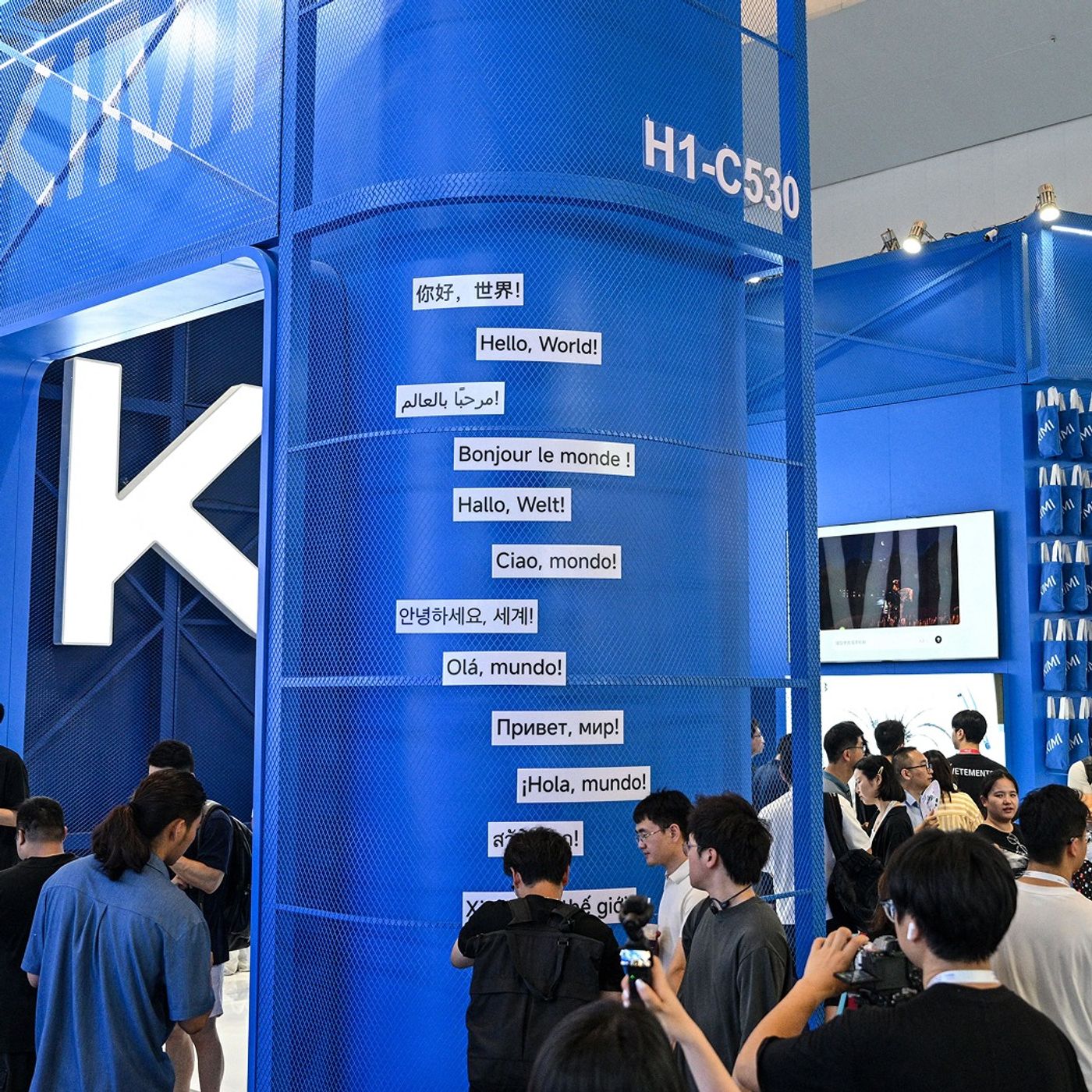
The Daily
The Fight Tearing Apart Silicon Valley
00:26:51
Anthropic and OpenAI are clashing with the rest of the tech industry over whether “open-source” models from China should be freely available or restricted.
Loading summary
Transcript91 lines
- [00:00]
TikTok Narrator
On TikTok, entire communities are turning curiosity into connection. History lovers share stories that bring the past into focus. Scientists and educators break down big ideas with experiments and insights that make discovery feel approachable. And across art, language, and everyday tips, people on TikTok give fresh perspectives on the world we share. TikTok is a place for curiosity where learning is fun, connection is meaningful, and discovery never stops.
- [00:29]
Natalie Kitroweth
From the New York Times, I'm Natalie Kitroweth. This is the Daily. For years, a debate has been simmering in Silicon Valley over the right way to build AI. Should the technology be open and free for anyone in the world to use, or should we tightly control how it's made and who can access it? This week that debate reached a boiling point, dividing the country's top AI companies into two opposing camps and drawing in some of the biggest names in tech. Today, my colleague Mike Isaac on what started that firestorm and how it could end up reshaping the future of artificial intelligence.
- [01:19]
Advertisement Voice
Foreign.
- [01:26]
Natalie Kitroweth
It's Friday, july 31st. Mike, welcome back to the Daily. It is always a pleasure to have you here.
- [01:38]
Mike Isaac
Hi, thanks for having me back.
- [01:40]
Natalie Kitroweth
So you actually played a not insignificant role in this AI debate blowing up, bursting into the open this week. So just start by telling me what happened.
- [01:54]
Mike Isaac
Yeah, so on Tuesday morning I'm doing my like normal coffee run to go to Starbucks up the hill from my house. I got my Venti Iced Americano in my hand. Well, two of them actually. Cause I.
- [02:07]
Natalie Kitroweth
Two.
- [02:08]
Mike Isaac
I know, it's really embarrassing. I have one saved for later.
- [02:12]
Natalie Kitroweth
Wow.
- [02:12]
Mike Isaac
So I get a ping from someone at Meta saying Mark is going to call you pretty soon. And I realize they're talking about Mark
- [02:21]
Natalie Kitroweth
Zuckerberg and we should just say, right? It's a pretty big deal that Mark is calling you, Mike. I mean, this is not a guy who typically talks to newspapers these days.
- [02:34]
Mike Isaac
Yeah, I mean he's not a huge fan of the mainstream media these days. I have not talked to Mark Zuckerberg on the record in at length on a phone call for three years. I want to say, you know, the point being when I get a call from Mark Zuckerberg, I know it is important and something he really cares about. And we start talking as I finally get in front of my computer and it is immediately clear to me he's there to start chucking grenades at his competitors.
- [03:06]
Natalie Kitroweth
What do you mean by that?
- [03:08]
Mike Isaac
So the polite way of doing it is to not mention anyone by name, but it is very clear he was aiming squarely at anthropic and OpenAI which are two of the biggest technology companies in Silicon Valley and widely considered the leaders in artificial intelligence right now. And so his point of view was these two companies have too much power and too much say over where this is headed in terms of how we build AI. And more people should have a voice in building that next frontier of technology. And I think while it is a sort of self interested argument that he's making, it also aligns with the way a lot of other people in the industry think.
- [03:53]
Natalie Kitroweth
Okay, and this folds into a debate that has been very public over the last few weeks. Just give that context, lay out exactly what he's actually talking about.
- [04:05]
Mike Isaac
Yeah, so in recent weeks, we've seen a bunch of Silicon Valley companies really split into two camps over how AI should be shared and developed. In one camp you have OpenAI and Anthropic, which are both saying AI is super dangerous and we need to keep a really tight lid on how we develop it and who can access it just to be safe. And then you have in the other camp, companies like Meta, Microsoft, Nvidia, who are saying actually we need to share this technology really widely. And clamping down on it only serves to benefit the companies that are in the lead in the AI race, namely OpenAI and Anthropic. Now I should say this debate over the sharing of tech and whether it should be open or closed is a long standing one across Silicon Valley. The whole AI race is really just the latest version of it.
- [05:06]
Natalie Kitroweth
And Mike, why exactly did this argument erupt right now at this moment? What actually kicked it off?
- [05:13]
Mike Isaac
I think this debate really kicked into overdrive a few weeks ago with the introduction of this powerful new Chinese AI model called Kimi. And basically, whenever a new AI model comes out, what researchers do is put all the data out there as far as the benchmarks, how it's performing, kind of to prove, hey, we did something really good and check out how cool it is. And so the reason it blows everyone away is because it basically performs almost on par in certain areas with the leading models out of OpenAI and anthropic. And that's a big deal because this model is based on open source software.
- [05:57]
Natalie Kitroweth
And what exactly is open source software? For those of us who may not be as well versed as you, how
- [06:03]
Mike Isaac
much time do you have to get into this?
- [06:05]
Natalie Kitroweth
About 30 to 40 minutes.
- [06:08]
Mike Isaac
Okay, I'll make it the short version. Open source software is about as old as Silicon Valley. And it's this idea that code that runs programs should be given away freely and shared between People so that they can build on it or use that to create new programs. It shouldn't cost anything. You get to see everything on how the programs run so that you can poke holes in it in case it's insecure.
- [06:36]
Natalie Kitroweth
It's like the coding equivalent of showing your work. Essentially. You put this stuff out there and people can tweak it, they can modify it, they can build their own stuff with it.
- [06:46]
Mike Isaac
Yeah, 100%. It's a fundamental tenet, I think, of a lot of technologists out here because they really believe in the free sharing of information and building new exciting programs using this code. And look, in China, this is basically almost a national policy to embrace open source software.
- [07:08]
Natalie Kitroweth
Yeah. And that gets at one of the questions that I have, Mike, which is why would a Chinese AI company, or any AI company for that matter, just give this away for free?
- [07:20]
Mike Isaac
Yeah, I mean, it sounds counterintuitive, but there is a business strategy to it. If you give your tech away for free, I think you have a better chance of people trying it out and ultimately adopting it. You start gaining market share when you might not have had any users before. And there are ways to make money on that later. It's kind of an old idea in the tech industry of you get the users first and then you can worry about the money later because it's. It always comes. But it also gives you the power to shape where the tech is going because everyone is now building on your stuff.
- [08:00]
Natalie Kitroweth
Right.
- [08:01]
Mike Isaac
And that's essentially what the Chinese companies are doing. They're flooding the zone, getting more people to use their tech instead of paying OpenAI or anthropic to use their models.
- [08:12]
Natalie Kitroweth
Right. And for those leading companies in the US Anthropic and OpenAI to have a competitor that is making what you're making just about as well as you are and handing it out for no money so that it can spread more widely. I mean, that's a pretty big threat.
- [08:30]
Mike Isaac
That is an existential threat, I would say.
- [08:33]
Natalie Kitroweth
And so how do these companies, OpenAI and Anthropic, react to Kimmy? I assume not.
- [08:41]
Mike Isaac
Well, yeah, that's an understatement. I think they have already seen some of their customers turning to these open source alternatives and that's a huge threat to their business.
- [08:54]
Natalie Kitroweth
Right.
- [08:55]
Mike Isaac
But I also think there's a sort of higher level philosophical concern around open source software and specifically around security, which is.
- [09:07]
Natalie Kitroweth
Explain that to me.
- [09:08]
Mike Isaac
Look, open source software, basically anyone can download it and use it. There's not really any guardrails on that. What folks at Anthropic and OpenAI are a bit worried about is, you know, what if the Chinese government wants to use that for ill against the United States? What if some random hacker anywhere can download a very powerful model and start spreading disinformation or doing mass scams or use it to hack any number of very important companies that run the infrastructure globally? You know, what if they cause havoc on Wall street by doing some crazy auto trades or hacking a bank?
- [09:48]
Natalie Kitroweth
They're basically saying when you make this code available for such powerful tools in AI, you run the risk of essentially handing nefarious actors the keys to what could be really dangerous weapons in their hands.
- [10:05]
Mike Isaac
Yeah, that's right. That's how they talk about it often. I think some folks see the more cynical side of it and say it's really a business model threat. But I do actually think there are a lot of true believers who say this stuff is dangerous and it shouldn't be handed out willy nilly.
- [10:21]
Natalie Kitroweth
And so what do these companies and these industry people who are worried about this do about that fear?
- [10:27]
Mike Isaac
Folks at OpenAI and Anthropic have been talking to regulators in Washington for a long time. You know, they've been saying, how do we develop a framework to make AI safe? They dispatch, you know, their top lobbyists to talk to folks inside of the White House, inside of different sectors of the Trump administration that have been working on this for a long time. And these talks have been going on for a while and they essentially want to pick up the pace and say, let's talk about what actual restrictions around Chinese models could look like. And so to make their case, they actually point to a crazy incident that happened inside of OpenAI that week, which is so all the time at OpenAI, they're testing these advanced models that are unreleased and, you know, they say are really crazy, can do all this stuff. So they have this unreleased model that they've been testing inside of the company and they're trying to essentially push it to see if it can carry out some hack. Usually what they do for these scenarios is put it inside a box so that it can't get out and wreak havoc across the world. But despite all of their controls, it ends up breaking out of the box anyway.
- [11:39]
Natalie Kitroweth
Wow.
- [11:40]
Mike Isaac
Their model decides to find a way to access the Internet, go find this other company, it's called Hugging Face, hack into the company and dig around for a few days until both OpenAI and Hugging Face figure out that this model broke out and started hacking. It's kind of the nightmare scenario that A lot of researchers talk about all the time, like, oh man, our stuff can go crazy and do it once, right?
- [12:08]
Natalie Kitroweth
It's like a scary sci fi robot taking things into its own hands. But that's an open AI model, not a free Chinese one. So how exactly does this help them make their case against these open source competitors?
- [12:22]
Mike Isaac
Well, it's funny, like, obviously OpenAI doesn't want their stuff to go hack other companies, right? There's questions of whether it's like a felony or not and do you charge a computer with a crime? But it provides a data point for them to go to regulators and say, hey, we were right. This is actually really dangerous. If these models that we're developing in a closed environment can do this, just imagine what open source models backed by another government in China that is not necessarily aligned with American interests could do to the world. You need to listen to us right now. They also are positioning themselves as the only essentially responsible stewards of developing this technology. They should be the ones in charge of it.
- [13:07]
Natalie Kitroweth
And how does that argument go over in the industry?
- [13:12]
Mike Isaac
I mean, I have not seen an explosion online like this in quite some time. In Silicon Valley, basically everyone else, from CEOs of the biggest companies to all of venture capital flip out on these two companies and they make what is essentially the exact opposite argument. It was basically OpenAI and anthropic against everyone else.
- [13:50]
Natalie Kitroweth
We'll be right back.
- [13:52]
Advertisement Voice
This podcast is supported by GoodRx. Summer always flies between vacations, summer activities and weekend getaways. Keeping everyone healthy while staying on budget can be a challenge. With GoodRx, you can find big savings at the pharmacy for you and your family pets too. Compare prescription prices at over 70,000 pharmacies and instantly find free coupons. GoodRx is not insurance, but it may beat your copay price. If you do have insurance, save at the pharmacy this summer. Go to goodrx.com thedaily watch disclosure day
- [14:24]
TikTok Narrator
at home now with exclusive bonus features. If you found out we weren't alone, if someone showed you, proved it to you, would that frighten you? Now? The truth belongs to 7 billion people in an original event film directed by Steven Spielberg from a screenplay by David Koepp, starring Emily Blunt, Josh o', Connor, Colin Firth, Eve Hewson and Colman Domingo. Find Disclosure Day on major digital platforms now with no subscription required. Also in theaters.
- [14:55]
HSBC Advertisement Voice
Some see Borders. You see possibilities at hsbc. So do we.
- [15:03]
Mike Isaac
If today is the day you put
- [15:04]
HSBC Advertisement Voice
your plan into action, we're here.
- [15:07]
Mike Isaac
Whether you're navigating markets From Seattle to
- [15:10]
Natalie Kitroweth
Singapore, London to New York, HSBC brings
- [15:13]
HSBC Advertisement Voice
strategic insights and a global perspective to
- [15:17]
Mike Isaac
give you an edge wherever you go.
- [15:20]
HSBC Advertisement Voice
Hsbc, we're here.
- [15:26]
Natalie Kitroweth
Okay, so this is a moment of high drama in Silicon Valley where you are right now. Bring me into it. Like what exactly does this freakout look like? And what is the case that all of these CEOs are making against OpenAI and anthropic?
- [15:45]
Mike Isaac
So I would say what it looks like is Jensen Huang entering the chat. Basically just for context, if you don't know who Jensen Huang is, and that would get you some side eyes in Silicon Valley, if you don't know who Jensen Huang is, he is kind of the king of the valley right now. He's the CEO and founder of Nvidia. They make the crucial AI chips that run these programs. They sell billions of dollars worth of those chips to basically every AI company on the planet.
- [16:15]
Natalie Kitroweth
One of the most valuable companies in the world right now.
- [16:18]
Mike Isaac
And everyone loves him. Like he's got, he also wears like a leather jacket literally all the time. It's very funny. I like.
- [16:24]
Natalie Kitroweth
Very easy way to get people to love you.
- [16:26]
Mike Isaac
That's right. I don't know if I could pull it off, but yeah, that's what he does. So look, he did not have an X account until last week when he decided to post his first ever social media post on X to raise his voice on the issue essentially.
- [16:42]
Natalie Kitroweth
And what does he say?
- [16:44]
Mike Isaac
Let me read it for you. For my first post I'm sharing a letter. Nvidia signed on. Why open models matter. AI will transform every industry, power every company and be built by every country. Open models strengthen safety and cybersecurity, accelerate innovation and diffusion, and enable sovereignty. The world needs both frontier closed models and frontier open models.
- [17:15]
Natalie Kitroweth
Okay, so this sounds like a pretty full throated argument for open source models, right?
- [17:22]
Mike Isaac
Yeah, that's right. And I think that is really what broke the dam wide open. After we see Jensen's tweet circulate. And by the way, this was like at like 6:30 in the morning my time. Everyone in Silica Valley, Satya Nadella, the CEO of Microsoft, he tweets a similar message. Nine minutes after that, Elon Musk replies, Jensen is right. This has my full support. Huge voices in venture capital, Bill Gurley, this legendary vc, Mark Zuckerberg, later in the day does a quote of Jensen's post and is like, yep, I'm on board. Basically everyone in the valley bands together and says rah rah. Open source. Frankly I've never seen anything like it in quite some time.
- [18:19]
Natalie Kitroweth
Did you have the sense that any of this was coordinated beforehand or was it spontaneous?
- [18:24]
Mike Isaac
Oh, no, for sure. There was definitely a lot of, like, back room. Okay, we need to get together and stump for open source. I mean, I could be wrong, but I don't think Satya Nadella has fired up tweets at 6:30 in the morning. But who knows, like, maybe they're early risers.
- [18:40]
Natalie Kitroweth
And how do these industry titans respond, if at all, to the argument about safety, to the concern that the bad guys could use this open source AI software for nefarious purposes?
- [18:56]
Mike Isaac
I think this goes back to some of the core arguments for open source to begin with, which is the idea that if you develop software out in the open, it can make things safer for everyone. You can pick it apart, more people's eyeballs are on it. It's kind of a egalitarian view of what software development should look like. But I think there's also an economic incentive for these guys to make that sort of argument as well.
- [19:26]
Natalie Kitroweth
Right.
- [19:26]
Mike Isaac
Just explain that it is not good for the rest of the AI industry if two companies are essentially dominating the whole thing. In the United States, Nvidia, for instance, they sell chips to everyone. The more people using different types of AI programs, whether they're open source or closed, the better it is for companies like Nvidia and similar for companies like Microsoft, which has huge cloud computing businesses that run all of these different types of open source models. Like they have a real economic interest in keeping this open. And then there's the rest of Silicon Valley, there's the venture capitalists who did not invest in OpenAI and Anthropic and want other companies to do well. In the AI age, everyone in the valley who is not OpenAI and Anthropic are just worried that some sort of broad regulatory move will make them king makers for the foreseeable future.
- [20:28]
Natalie Kitroweth
Okay, so these companies come out, they're making a philosophical case for open source, but in the background there is a clear business benefit that they all have in taking this up. They have a stake in open Source. Anthropic and OpenAI are in the lead and shifting to a world in which there is broader access to these tools, to these models that would help everyone else catch up here.
- [20:56]
Mike Isaac
Yeah, I mean, this is like Business 101. If there's two leaders in the lead and you have other advantages coming in in terms of cheaper open source models or broad availability of alternatives, that levels the playing field in a way that hasn't Been level for a while.
- [21:13]
Natalie Kitroweth
And what about Meta? Did you ask Zuckerberg about all this on the call?
- [21:18]
Mike Isaac
Meta in particular, I think, is like a really interesting kind of case study. A few years ago, when they were very behind in the AI race, Zuckerberg decided they were going to do open source AI software development. They tried to catch up by doing exactly kind of what these Chinese companies are doing and spreading their software across the valley. And hopefully the world that stalled out, that plan wasn't working. So they pivoted hard and spent billions of dollars essentially doing what OpenAI and Anthropic are doing and developing closed models. And now it's funny because we're back in this spot where open models are the new hotness again, and he's pushing those. So I tried pushing him on this point a little bit and saying, what is your strategy? And can you at least acknowledge that you've done both of these things? And he's not quite willing to go there yet whether they want to go fully open or closed. But I think it was clear in this call that he was making a full court press. And it wasn't just on this call. That morning he penned an op ed in the Wall Street Journal. He called up the Financial Times later that day. Mark, who very rarely does these mainstream sort of pushes for what he cares about, at least in the media, suddenly is going all out on this particular point.
- [22:40]
Natalie Kitroweth
Can I just ask why exactly you think he was making this full court PR press? I mean, who specifically is he trying to reach? Who's his intended audience?
- [22:51]
Mike Isaac
Yeah, I mean, look, I think all of these people really have kind of an audience of one or one group of people. And that's all of the decision makers in Washington right now. Lobbyists are descending on Capitol Hill. The CEOs are going to Capitol Hill and trying to convince the Trump administration to lean in their direction and kind of making the case either that this stuff needs to be way more secure or that open source is the way to go. And the latest that I've heard is the folks in treasury and the White House and Commerce are hearing what both of these sides have to say and. And are still in the middle of deliberating how they're going to come down on this whole thing.
- [23:35]
Natalie Kitroweth
And those deliberations are happening in the context of this big competition between the US And China. Right. The US does not want to lose the AI race to China. And each side of this debate thinks that their way puts America in the best position to win that race. The question seems to be which premise does Washington buy?
- [23:59]
Mike Isaac
Ultimately, I think Washington is in a really interesting and tenuous situation where they don't want to upset folks on both sides, essentially. My guess is that they're kind of trying to thread the needle for some sort of compromise. Maybe not fully clamping down on open source software because that would tick off basically the entire industry, but perhaps some way of reining in the widespread use of Chinese models, at least from American companies. But it's still kind of TBD on where they're actually going to land.
- [24:35]
Natalie Kitroweth
But the stakes for lawmakers, for the people who are making these decisions, they seem pretty high. Like what they decide about how to regulate AI doesn't just affect these juggernaut companies. It affects the whole economy, which is so dependent on AI right now. And it affects a lot of us on a really personal level if we interact with these models, which is becoming increasingly unavoidable.
- [25:05]
Mike Isaac
I mean, that's exactly why everyone's being so loud about this right now. The administration has to think about security online. They have to think about Chinese models and whether those threaten national security. And I think they have to think about protecting this kind of golden goose that is really the engine of the US Economy right now. You know, you have construction, construction jobs going up because people are building data centers. You have the stock market essentially growing because of all the gains and investments in AI. And so the wrong decision essentially could have huge consequences for the future. And I think that's why we're going to keep seeing everyone in Silicon Valley doing everything they can, you know, whether it's online or in backroom lobbying or with open letters, to have a hand in shaping that future.
- [26:07]
Natalie Kitroweth
Well, Mike, thanks for being here. We really appreciate it.
- [26:10]
Mike Isaac
Thank you for having me.
- [26:18]
Natalie Kitroweth
On Thursday, Anthropic announced that it too had a security breach in incidents that were eerily similar to what OpenAI reported just nine days earlier. The company said that during a routine test, several of its AI models hacked into three outside organizations. We'll be right back.
- [26:44]
Advertisement Voice
Self directed investing, Trading, full service wealth management, automated investing, financial planning, thematic investing, retirement planning. And to think that's just a small taste of what Schwab offers. Because Schwab knows, when it comes to your finances, choice matters. No matter your goals, investing style, life stage or experience, Schwab has everything you need all in one place so you can invest your way. Visit schwab.com to learn more.
- [27:12]
HSBC Advertisement Voice
This podcast is supported by BetterHelp. Have you ever had so many tabs open that your computer starts slowing down? Life can feel like that too. Better Help's 2026 State of Stigma report found that 74% of Americans believe society still discourages asking for help. Therapy can help you sort through what's taking up space and quietly affecting you. With BetterHelp, connect with a licensed therapist online and switch anytime. Maybe it's time to close a few tabs. Visit betterhelp.com newyorktimes to get started. FIGS is on a mission to make healthcare professionals feel valued for supported and empowered, starting with a uniform that works as hard as they do. FIG scrubs are stylish, comfortable and have pockets in all the right places. They're built to last shift after shift, and they come in great colors and styles to keep you looking, feeling and performing your best. If you're in healthcare or know someone who is, get 15% off your first order at wearfigs.com with the code FIGSRX. That's wherefigs.com, code FIGSRX.
- [28:21]
Natalie Kitroweth
Here's what else you need to know today. President Trump said on Thursday that he may withdraw his nomination of his former personal lawyer, Todd Blanche, as attorney general. The nomination had stalled after Republicans postponed a key vote on the matter this week. Republican Senators John Cornyn and Thom Tillis had threatened to derail that vote over a deal that Blanche had cut to shield Trump and his family from tax investigations. Cornyn and Tillis are both not returning to Congress next year after Trump refused to endorse them in their Republican primaries. Trump said he could re nominate Blanche after the two senators leave office next year, though it's not clear if by that point Republicans will still have their commanding majority. And the U.S. economy slowed its growth in the second quarter. Weighed down by the war in Iran, economic data released on Thursday showed that growth over the past three months was 1.5% lower than in the first quarter of this year. The report did show that overall consumption was relatively healthy and that business investment, particularly tied to AI, remains strong. Today's episode was produced by Diana Wynne, Chris Benderev and Stella Tan, with help from Adrian Hurst. It was edited by Annie Minoff and Mark George and contains music by Marion Lozano, Dan Powell, Rowan nimisto, and Pat McCusker. Our theme theme music is by Wonderly. This episode was engineered by Alyssa Moxley. Special thanks to Cade Metz. That's it for the daily I'm natalie kitrowev. See you on Sunday.
- [30:26]
TikTok Narrator
This podcast is supported by the American Petroleum Institute. Energy security affects how Americans live, work, travel, and stay connected. America has abundant oil and natural gas. But resources alone are not enough. The country needs modern infrastructure like pipelines and transmission lines that can affordably and safely bring energy to families, communities and businesses. That's how to build a stronger, more reliable energy system for the future. Learn more@energysecurityframework.org.