← The Daily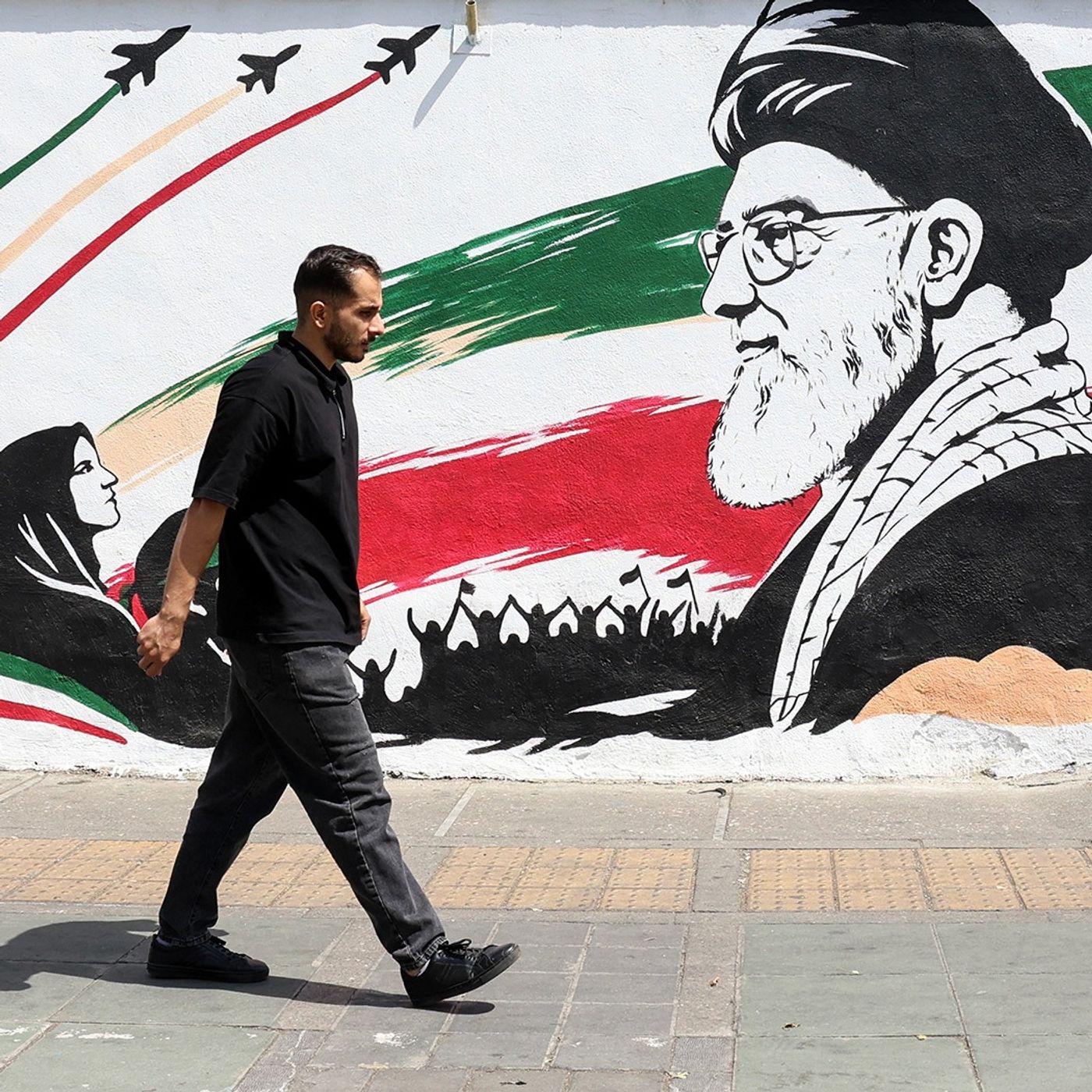
The Daily
The Iranians Who Want More War
00:29:18
Fractures in Tehran are pitting a faction favoring negotiation with Washington against hard-liners who oppose making a deal with the United States.
Loading summary
Transcript93 lines
- [00:01]
Michael Barbaro
The New York Times app has all this stuff that you may not have seen.
- [00:04]
Listener 1
The way the tabs are at the top with all of the different sections,
- [00:07]
Michael Barbaro
I can immediately navigate to something that
- [00:10]
matches what I'm feeling.
- [00:11]
Farnaz Fassihi
I go to games always doing the
- [00:13]
Michael Barbaro
mini, doing the wordle.
- [00:14]
Listener 1
I loved how much content it exposed me to things that I never would have thought to turn to a news app for.
- [00:20]
Reporter/Correspondent
This app is essential.
- [00:22]
Farnaz Fassihi
The New York Times app. All of the Times all in one place. Download it now@nytimes.com app
- [00:32]
Michael Barbaro
from the New York Times. I'm Michael Balbaro. This is the Daily. After 13 consecutive days of airstrikes, the United States and Iran have temporarily paused their fighting. But the conflict could resume at any moment. And inside Iran, a small but powerful faction is determined to make sure that it does. Today, Abdi Latif Tahir and Farnaz Fasihi explain the profound divisions within Iran about whether to keep fighting or to try to make Peace. It's Tuesday, July 28th.
- [01:26]
Reporter/Correspondent
This was a very choreographed event from the beginning.
- [01:33]
Michael Barbaro
A few weeks ago the Iranian government allowed my colleague Abdi Latif Tahir into the country immediately.
- [01:41]
Reporter/Correspondent
We landed in Tehran, we got through immigration and essentially you're met there by your minder.
- [01:48]
Michael Barbaro
So it was not long after the US And Iran had signed a tentative peace deal and Abdi became the first Times reporter to get into Iran in months.
- [01:59]
Reporter/Correspondent
We had two government appointed translators and a guide who pretty much went everywhere with us. We could not leave the hotel essentially without planning with them where we wanted to go, what we wanted to see.
- [02:14]
Michael Barbaro
And he was there for a very specific purpose, to observe the multi day funeral service for Iran's former Ayatollah Ali Khamenei, who had been killed by the US And Israel in the early days
- [02:28]
of the Iran war.
- [02:29]
And Abdi says his every movement at the funeral services was heavily monitored.
- [02:36]
Reporter/Correspondent
They listened in on pretty much all the interviews and one of the minders was also very open with us and essentially he told me that yes, at the end of every day he basically was expected to like send a report about our activities, where we went, what we did during that day.
- [03:00]
Michael Barbaro
Abdi, why do you think that Iran let you into the country?
- [03:04]
What do you think that they wanted you to see?
- [03:09]
Reporter/Correspondent
I think they definitely wanted us to see the way people had come out to mourn Ali Khamenei, the supreme leader. So we were very much in the middle of the capital, the center of Tehran, for days on end. You couldn't escape the soundscape that was coming from outside. The chanting, the mourning, the wailing. You kind of felt that you had been signed up for this very much stage managed, choreographed scene.
- [03:42]
Farnaz Fassihi
Salaam Fairmunde.
- [03:47]
Reporter/Correspondent
So you had the first day where the dignitaries from all across the world came to pay their respects. And then there was a procession held at Azadi Square in which the body of Khamenei and his relatives were now being viewed by the public. And there were millions who showed up that day, throughout the day, and essentially, like, you know, came to see the bodies. Despite the heat, despite the haze, despite everything else, people came from all over the country. They were young, they were old, they were on wheelchairs, they were on crutches. The journalists were definitely being allowed to, like, go on bridges and on top of the buildings so that we could see the sea of people who are coming through. So you definitely got a sense that even the access to these buildings were choreographed in such a way that it was like you had to see, you had to experience how everybody has come from all over the country to mourn their leader.
- [04:45]
Michael Barbaro
And is grief the prevailing feeling that you get from this crowd? What exactly are you hearing from them?
- [04:54]
Reporter/Correspondent
You know, many people, you know, are in tears. They were very sad, but they. Even when they were crying, you know, their expressions would very quickly harden into anger and defiance, obviously.
- [05:08]
Fereshtech Sultan Ali
Ask her to introduce yourself.
- [05:10]
Reporter/Correspondent
And I remember talking to this woman. Her name was Fereshtech Sultan Ali. And I watched her for a while before I approached her because she was carrying this flag that talked about revenge. And. But she was, like, really in tears. And at some point when she calmed down, like, you know, I approached her and very quickly this idea of negotiations came up, and she was very opposed to that.
- [05:35]
Fereshtech Sultan Ali
I'm against negotiations. Reach out in the streets. Don't negotiate. No negotiation, just revenge.
- [05:42]
Reporter/Correspondent
And I was like, well, it seems like the guns have silenced now, and essentially that has even allowed for this massive funeral to happen. And she said, yes, that's okay, but we do not want these talks. We do not want these negotiations. We want revenge for our slain leader, and we want revenge for everyone else who was killed and all the institutions that were impacted. And she said something that I will not forget.
- [06:09]
Fereshtech Sultan Ali
So people are not afraid of. Make us welcome the dead. You're all.
- [06:17]
Reporter/Correspondent
She said that, you know, Trump cannot scare us with death.
- [06:20]
Michael Barbaro
Trump cannot scare us with death. In other words, we're willing to die in order to seek this revenge.
- [06:26]
Reporter/Correspondent
People did not want diplomacy. They did not want the talks. They were not for compromising. There was definitely a Lot of calls for the killing of Trump. There was definitely a lot of death to America, death to Israel. And I think if there's one word that really defined these public mourning ceremonies, it's the word revenge, which is in taqam, we saw that written in English, in Arabic, in Farsi. It was on banners, it was on posters, it was on flags. Like, you know, people were wearing shirts that basically said that. And pretty much like the dozens and dozens of people that I interviewed throughout my time in Iran at these massive ceremonies and processions, that is the message everybody wanted to leave with me, that we will not compromise and we want revenge for our slain leader.
- [07:23]
Michael Barbaro
The timing of what you're seeing here seems extremely important because these crowds demanding revenge, demanding that Trump be killed, they know full well that their government has. Has just signed a peace agreement, this memorandum of understanding with the United States and with President Trump. And what they're calling for is the exact opposite of that. So how do they square that?
- [07:49]
Reporter/Correspondent
So during these public mourning ceremonies, the public very much showed how they felt about some of these political leaders who had gone and had taken part in the negotiations with the United States. So you had, for instance, Iran's president and Iran's foreign minister then showing up to these. And they were confronted and targeted by crowds who basically were very angry at the fact that they had taken part in these diplomatic talks. President Pazechian, you know, was nearly knocked to the ground by these crowds who were shouting, death to the compromiser. Death to the appeaser. And his security forces essentially rushed to evacuate him.
- [08:33]
Farnaz Fassihi
Rivals on the sky.
- [08:35]
Michael Barbaro
Rivals on the.
- [08:37]
Reporter/Correspondent
You had a foreign minister, Arakchi, who, you know, some of the people in the crowd started throwing stones at him. They were very hostile. They were chanting, you know, basically calling him a traitor. And essentially, he also had to flee the scene where he was. And it was so indicative of the ways in which revenge and avenging the supreme leader had become so central to how people. At least the people who showed up for these ceremonies and how they felt about that.
- [09:08]
Michael Barbaro
Right, because in this highly choreographed scene that the government is putting on and wants you to see, the mourners are actually turning on the government's leaders. That's how deep these divisions are.
- [09:22]
Reporter/Correspondent
Exactly. And you have, like, all these hardliners, right, who are very much opposed to these negotiations and diplomacy with the United States. And the only thing that they talk about and they think about and they repeat consistently is that we want Interqam. Interqam. Revenge. Revenge.
- [09:49]
Michael Barbaro
It was amid these intense calls for revenge as the Ayatollah's funeral drew to a close, that the divisions Abdi saw on the streets played out on an even bigger scale. In a surprise move, Iran struck three
- [10:06]
ships in the Strait of Hormuz, a
- [10:08]
Farnaz Fassihi
US Official telling me that this was
- [10:10]
Reporter/Correspondent
a gross violation of the Memorandum of Understanding by Iran and that delicate peace
- [10:16]
Michael Barbaro
agreement with the United States began to crumble. After the break, my colleague Farnaz Fassihi on the war playing out inside of Iran's government. We'll be right back.
- [10:47]
Sponsor Voice
This podcast is supported by bank of America Private Bank.
- [10:50]
You're cut from a different cloth and with bank of America Private bank, you have an entire team tailored to your needs, with wealth and business strategies built for the biggest ambitions like yours. Whatever your passion, unlock more powerful possibilities@private bank.bankofamerica.com what would you like the power to do? Bank of America Official bank of the FIFA World Cup 2026 bank of America Private bank is a division of bank of America, NA member, FDIC and a wholly owned subsidiary of bank of America Corporation.
- [11:21]
Dan Egan
This message comes from Betterment. Dan Egan, VP of Behavioral Finance and Investing, explains how Betterment takes the time consuming work out of smart investing.
- [11:30]
Sponsor Voice
I was doing all of these things that were pretty straightforward to implement. I just needed to spend my time doing them. Betterment automates the same good practices so that I know I'm doing portfolio management and goal based planning without me having to spend hours of my life doing it.
- [11:45]
Dan Egan
Learn more@betterment.com investing involves risk performance not guaranteed.
- [11:50]
Sponsor Voice
This podcast is supported by BetterHelp. Have you ever had so many tabs open that your computer starts slowing down? Life can feel like that too. Better Help's 2026 State of Stigma report found that 74% of Americans believe society still discourages asking for help. Therapy can help you sort through what's taking up space and quietly affecting you. With BetterHelp, connect with a licensed therapist online and switch anytime. Maybe it's time to close a few tabs. Visit betterhelp.com newyorktimes to get started.
- [12:24]
Michael Barbaro
Farnaz Abdi just described this profound divide that was on display during the Ayatollah's funeral between hardline religious supporters of the regime and the government officials who negotiated a peace deal with the US and when Iran attacked US ships, the first question I think quite logically was who was responsible for that decision? And had these hardliners persuaded the government to restart this war?
- [12:52]
Farnaz Fassihi
Well, that's a really good question. I think we haven't reached a definitive answer on exactly who made the decision or how. What has been seen as a provocative act to attack these ships really came about right after this. The United States said in briefings to our colleagues that the Iranian mediators that they'd been in touch with told the United States that it wasn't us, that these were like rogue hardline elements within the Revolutionary Guards that had disappeared, decided to attack the ships. I think this was one of the very few and only attacks that they didn't officially claim and issue a statement saying, we did this. When I reached out to sources, I heard the same thing from a source, that the attack on the ship came as a surprise to the president, to the foreign minister, and it was sort of seen as hardliners who have been advocating to drag Iran back to the war and derailed the talks. You know, taking this kind of an action.
- [13:53]
Michael Barbaro
I mean, I just want to. I just want to say that that's quite an extraordinary prospect that hardliners were so intent on ending this peace process and undermining the memorandum of understanding that had been reached by the official Iranian government that they would launch an attack against the United States to do that.
- [14:17]
Farnaz Fassihi
Exactly. It's extraordinary because it's. If this is true, if the hardliners would, on their own, without central command, decide to take such a consequential step with massive consequences for Iran, for the 90 million people there, for the region, what does that say about sort of the disarray within the Iranian rank and file, like, who made that decision? This speaks to the massive divide in the system at this very pivotal, critical time in the country's political history. It seems like Iran's government and leadership is at war with itself.
- [14:57]
Michael Barbaro
Well, Farnaz, that's really what we want to talk to you about as such an expert on the internal workings of Iran, this emerging war inside Iran over the war itself and who is winning at the moment and what it means for the future of the conflict. So help us understand the various factions that are currently at war with each other.
- [15:24]
Farnaz Fassihi
Well, I'll start by saying that political differences and infighting within Iran's political circles is not new. They've always sort of existed in Iran's modern politics, the Islamic Republic's rule. But what's really new here is that it's happening within the conservative camp. Right. You've traditionally had the conservatives that sort of believe in a more ideological view of governing and the reformers who wanted to keep the Islamic Republic rule, but reform and change, but that's not what's happening. Now, within the conservative group that runs the country right now, that holds power, which includes the powerful Revolutionary Guards generals, the. There's major differences and fractures.
- [16:11]
Michael Barbaro
Okay, well, help us understand the divisions within this conservative world of Iran's leadership.
- [16:18]
Farnaz Fassihi
So on one side, you have the ultra hardliners, led by a politician named Saeed Al Jalili. They have a worldview that says Iran must never engage with the United States, Israel must be destroyed. That this ideological Islamist extremist view that was sort of the beginning of this revolution is very much how they plan to rule.
- [16:48]
Ashley
Right.
- [16:48]
Farnaz Fassihi
Don't talk to the United States. Continue fighting. And this faction is a minority, but still has constituents. There are the people that come out every time the government wants to rally its supporters onto the streets. And at the funeral of the late senior Ayatollah Khamenei, these are the people who were bused from all over the country, came out in millions were waving red flags of revenge. So this is the core constituent of the system.
- [17:17]
Michael Barbaro
Got it.
- [17:18]
Farnaz Fassihi
And thus they can't really be ignored and set aside. Right. Because they're always there, no matter what. They always show up for the regime. Right.
- [17:29]
Michael Barbaro
So this is the religious base and foundation for this theocracy.
- [17:33]
Farnaz Fassihi
Right, Exactly. They're the foundation for the theocracy. If I were to say what their numbers are in Iran's 90 million, I would say somewhere between 10 to 20%, judging from the numbers of the polls where they always show up and the candidates that they pick. So they are a minority, but they're a very vocal and loyal minority.
- [17:52]
Michael Barbaro
And who's on the other side of this divide?
- [17:54]
Farnaz Fassihi
So on the other side of the divide is really the senior leadership of the government and many powerful generals of the Revolutionary Guards. This coalition represents. Represents the pragmatics within the system. General Muhammad Baghrek Ali Baf, the Speaker of Parliament and the person leading negotiations with the United States, has done repeated interviews on state television and has said in statements that, look, we have to take whatever leverage we've gained in the war and turn it into diplomacy. That diplomacy is not a sign of defeat or surrender, but we can actually make some gains by negotiating with the United States. We can't fight endlessly. We have to open up Iran economically. We have to get rid of the sanctions. So this group is of the view that these hardline policies of let's fight until our last breath, let's drag the country into chaos and instability is not really the direction they want to take the country.
- [18:55]
Michael Barbaro
Right. So these would seem to be the peace seekers the people who struck a deal with the US because they want to preserve what's left of their country and rebuild it rather than fight endlessly at the risk of having nothing thing left in Iran at the end of this conflict. Does this group include Iran's current Supreme leader, the son of the late Ayatollah who was killed by Israel and the US that would seem to be a key question.
- [19:21]
Farnaz Fassihi
It's a key question because both sides are trying to claim Moshtab Al Khamenei, the new supreme leader. He's been absent from view because he's in hiding, fearing assassination.
- [19:33]
Sponsor Voice
Right.
- [19:33]
Farnaz Fassihi
We've talked about this, and nobody has heard his voice because sources say that his face was burned in the airstrikes on their compound and his vocal cords were damaged. And I think this absence of Mushtaba Khamenei has created a real void. And in that void, where the father used to have a yes or no vote, he had authority to have sort of a final say over matters. The son doesn't have that authority. He doesn't have that religious clout. He doesn't have that political clout. So this has created a kind of space where these divisions can fester.
- [20:10]
Michael Barbaro
You're saying without a supreme leader who can shut down these kinds of divisions or paper over them and call the shots, then even though, for example, the hardliners are a minority, they can exert a fair amount of influence. They can perhaps, I know, we're not sure, even maybe restart the war because there isn't a strong enough person to ensure that there's real unity in the leadership.
- [20:35]
Farnaz Fassihi
Right, Exactly. There's no unity in the leadership. You know, I think that Mujtaba has, to the extent that he's issued written statements, has said, put your differences aside, that these divisions are being closely watched by Iran's enemies, and it suggests that we're weak. But nobody's really listening to him. I mean, that's the remarkable thing. Like, you have, like the hardliner supporters and rallies shout the only way we will believe that most of us supports this deal or supports the policies if we hear from him directly or we see him. And lawmakers that are aligned with the hardliners have even publicly accused the government of staging a coup to bypass the supreme leader.
- [21:19]
Michael Barbaro
So the hardliners, if I'm hearing this correctly, are suggesting that the pragmatists making peace with the US May be doing that without the authorization of the supreme Leader. They're questioning the legitimacy of the peace process.
- [21:35]
Farnaz Fassihi
Exactly. And in its own defense the pragmatists have all come out and said, look, everything we're doing is with Moshapa's approval. We would not make any critical decisions, including negotiations or concessions to the United States, without the Supreme Leader's involvement, and we have his backing. So this is, you know, both sides trying to claim support of Mujtaba, and Mujtaba being on their team without him really coming out clearly and saying which side he's clearly endorsing.
- [22:09]
Michael Barbaro
So far, Fernaz, you're really describing a conflict within Iran's government. This small group of hardliners who are undoing the work of a much larger group of pragmatists. Based on previous conversations you and I have had on this show, I feel safe in assuming that the majority of Iranians, you've often put it at 70 to 80% of the country's population that just want peace and just want to go about their lives and are not so attached to any one vision of an ideology in Iran that they don't like the fact that this peace has been disrupted by the hardliners. So what are they saying and do they have any influence over any of this?
- [22:53]
Farnaz Fassihi
I think that there is a very large silent majority of Iranians who don't want the war, but also don't necessarily like the Islamic Republic regime or support it. They feel like their lives and livelihoods are being upended by these radical decisions that the hardliners are making with very direct consequences on their lives, on their safety, on their future. And they are very angry at the hardliners and they are saying that we didn't want the war, we don't want our infrastructure to be ruined. The economy is at a near collapse. There's 400% inflation on basic groceries. So Iranians are under tremendous amount of pressure and uncertainty, and we hear this all the time, that the majority of Iranians feel like they are caught in the crossfires of the United States, Israel and the regime. And they're being squeezed and nobody's really thinking about their well being and what they really want. There was this online petition that was going on that really captured this sense where Iranians were digitally signing on to this petition saying, let's send all the hardliners, the lawmakers and the politicians who are calling for constant war to the south of Iran where they would be under nightly bombardments and they would see the consequences of what they're advocating for because they're sitting in the safety of their bunkers and they're advocating for war against the country, its infrastructure. And its people.
- [24:33]
Michael Barbaro
Well, Farnaz, let's say that the Supreme Leader were to decide in the coming days or weeks that he's fed up with this infighting, that he recognizes that a minority within a minority, the hardliners within the conservative leadership, are dragging the country back into war, and he's tired of it. And he were to make a public appearance, use his own voice, let's say that's suddenly possible, which could, in theory, satisfy these hardliners who, you know, really want to hear from him directly. And he says, stop it. Enter the peace process. Honor the peace process. Let's rebuild Iran. Let's end this phase of this conflict. Could he do that? Would that message carry enough weight to silence these hardliners?
- [25:15]
Farnaz Fassihi
It's a very good question, but it's one that remains unclear, partly because Moshe Khamenei was a man in the shadows. Not a whole lot is known about him or his style of leadership. So it's really hard to gauge exactly how he will rule when he surfaces and how much clout he will have. It's also a very risky prospect for him, Michael, because to do that, he would essentially have to declare that he fully trusts the United States and President Trump, and that despite the many times that the US has, in Iran's view, negated its obligations both under the first nuclear deal, exiting from that, and then attacking Iran in the midst of negotiations, several times, that he's sort of saying that I put my full trust in this deal with the United States. That's a very difficult thing, I think, for Iran's Supreme Leader to do. So I think more realistically, even when he emerges, he's going to try to navigate everybody and try to appeal to all sides, just to allow himself a little bit of leverage everywhere and enough distance to claim it if it works and disown it if it falls apart.
- [26:33]
Michael Barbaro
So the reason the Supreme Leader is unlikely to ever take sides as firmly as I just outlined is because it would risk his legitimacy with the hardliners in a way that he cannot tolerate.
- [26:45]
Farnaz Fassihi
Right, Exactly. I mean, you have to remember that the Islamic Republic was created on this idea of fighting America, fighting Israel, of anti Western ideals. And for the Supreme Leader to completely do away with that and for the hardliners to set aside that animosity and that hostility, it would basically be the end of the Islamic Republic as we've known it. And if that gone, then what is left of the Islamic Republic, it's going to be a new Iran, a new system. And I think that's why they're fighting so hard because they know if the pragmatists win, if really a peace deal, lasting peace deal with the United States works, that they're going to basically be even more marginalized.
- [27:38]
Michael Barbaro
And what's now become very clear is that when the United States and Israel started this war, they thought that taking out the ayatollah would mean taking out this revolutionary fervor and toppling it. And instead, it's still very much alive and still too potent a force for even the ayatollah's son and successor to confront.
- [28:06]
Farnaz Fassihi
That's exactly right. I mean, you've heard President Trump say repeatedly that the war has brought regime change in Iran, but there's been no regime change. And in fact, what we're seeing is that the country has become more militarized, that the hardliners are becoming more entrenched, and that Iran's now being led by a supreme leader that doesn't have the kind of absolute power and clout to guide things one way or the other.
- [28:43]
Michael Barbaro
Well, Furnaz, thank you very much. Appreciate it.
- [28:46]
Farnaz Fassihi
Thank you for having me, Michael.
- [28:52]
Michael Barbaro
In an interview with NBC News, the U.S. ambassador to the United Nations, Mike Waltz, acknowledged that divisions inside Iran's government have made it increasingly difficult for the Trump administration to negotiate a peace deal.
- [29:08]
Mike Waltz
What we are constantly seeing is on the Iranian regime side, they are divided. There is internal fighting. Some are seeking the guidance of the supreme leader. Others want to move into a different direction. And that makes it hugely challenging from a diplomatic standpoint. But to get to some reasonable resolution here, I would take the president very seriously if I was the Iranian regime. The US Military is.
- [29:33]
Michael Barbaro
We'll be right back.
- [29:40]
Ashley
Hi, this is Ashley. I live in San Francisco with my boyfriend. We would love to officially share my New York Times subscription with separate logins. We both love cooking, love being in the kitchen, but I'm a 30 minute and under efficient dinner girly. I want a sheet pan meal. He is very elaborate. He wants to get into the storytelling. I want to be able to save my easy meals and check off the ones that I've completed. And I think him having his own profile would be great.
- [30:09]
Sponsor Voice
Ashley, we heard you. It's why we created the New York Times family subscription. You get your own login and Mr. Elaborate gets his, plus room for two others. Find out more@nytimes.com family
- [30:24]
Michael Barbaro
here's what else you need to know. Today in Spain and France, officials are warning that extreme heat in the coming days could intensify what they're already calling the worst wildfire season in modern history. In southwestern France, the wildfires have burned through nearly 300,000 acres and displaced at least 200,000 people, one of the largest peacetime evacuations in France's history. Meanwhile, in Spain, The country's prime minister said that the the fires there have burned through hundreds of thousands of acres, and he said that the climate emergency that scientists have been warning about for years had arrived. The new heat wave is expected to hit both Spain and France starting on Wednesday. Today's episode was produced by Jack Desadoro, Rochelle Baja and Shannon Lynn. It was edited by Devin Taylor and Rob Zivko and contains music by Marion Lozano and Sophia Landman. Our theme music is by Wonderly. This episode was engineered by Chris Wood. Special thanks to Michael Adams, Mikhail Galustov and Parin Behrouzzi. That's it for the Daily I'm Michael Barbaro. See you tomorrow.
- [32:08]
Sponsor Voice
What would you do if you could get more More dinner parties with friends, more gear for your garageband, more places to discover. What would you do if you could get more at Shell this summer with the Phil Lucky Sweepstakes? Stop by Shell, scan the QR code at the pump and enter for a chance to win $100,000 or free fuel for a year. No Purchase necessary. Ends 11:59pm Central Time August 28. Open to USDC residents 21/plus. Visit Shell US Phil Lucky for rules and entry details.